

Transformational capacity and the influence of place and identity
Open accessThe DOI matches its Crossref record; 67 of the 67 references it cites were found in a registry or an index.
Abstract
Climate change is altering the productivity of natural resources with far-reaching implications for those who depend on them. Resource-dependent industries and communities need the capacity to adapt to a range of climate risks if they are to remain viable. In some instances, the scale and nature of the likely impacts means that transformations of function or structure will be required. Transformations represent a switch to a distinct new system where a different suite of factors become important in the design and implementation of response strategies. There is a critical gap in knowledge on understanding transformational capacity and its influences. On the basis of current knowledge on adaptive capacity we propose four foundations for measuring transformational capacity: (1) how risks and uncertainty are managed, (2) the extent of skills in planning, learning and reorganizing, (3) the level of financial and psychological flexibility to undertake change and (4) the willingness to undertake change. We test the influence of place attachment and occupational identity on transformational capacity using the Australian peanut industry, which is presently assessing significant structural change in response to predicted climatic changes. Survey data from 88% of peanut farmers in Queensland show a strong negative correlation between transformational capacity and both place attachment and occupational attachment, suggesting that whilst these factors may be important positive influences on the capacity to adapt to incremental change, they act as barriers to transformational change.
Overview
The claims and statistics of this paper haven’t been checked yet.
Free: it reads the open-access text and checks the first 5 claims that cite a source we can check. Create a free account to check every claim.
Integrity signals
Registry
Cites
Statistics
Figures
Verification
Claims the paper makes
The claims and statistics of this paper haven’t been checked yet.
Free: it reads the open-access text and checks the first 5 claims that cite a source we can check. Create a free account to check every claim.
Claims other papers make about this one
Each is checked against this paper’s own text: does it say what the citing paper says it does?
The source backs part of the claim, not all of it — or backs it for a different population, condition or comparison.
In the citing paper
“The wound inflicted to this symbolic domain causes more complex psychopathological consequences, such as identity disorders (164) or long-term personality changes (119), as seen in trauma related to extreme weather events and loss of familiar landscape, or dissociative syndromes (165) as seen in trauma related to extreme events or in migratory syndromes.”
From The Impact of Climate Change on Mental Health: A Systematic Descriptive Review (2020) · cites this paper as [164]
Experimental — accuracy not yet measured
Self-check
Percentages, sums and reported differences re-computed from the paper’s own numbers.
The self-check needs the paper’s full text.
Citations
Cites
Resilience, Adaptability and Transformability in Social–ecological Systems
Walker, B., Holling, C. S., Carpenter, S. R., & Kinzig, A. P. (2004) · Ecology and Society · doi:10.5751/es-00650-090205 · Cited by 7,821
Catastrophic shifts in ecosystems
Scheffer, M., Carpenter, S., Foley, J. A., Folke, C., & Walker, B. (2001) · Nature · doi:10.1038/35098000 · Cited by 7,510 · cited 1×
“Whether resource systems will adapt, transform or collapse as the effects of climate change progress depends in part on balance between ‘desirable’ to ‘undesirable’ states and the trajectory of the system [22, 23].”
BackgroundAdaptation, adaptive capacity and vulnerability
Smit, B., & Wandel, J. (2006) · Global Environmental Change · doi:10.1016/j.gloenvcha.2006.03.008 · Cited by 5,282 · cited 1×
“resources necessary for adapting to change [5, 32, 36].”
Solomon, S. (2007) · Medical Entomology and Zoology · Cited by 4,149
From Metaphor to Measurement: Resilience of What to What?
Carpenter, S., Walker, B., Anderies, J. M., & Abel, N. (2001) · Ecosystems · doi:10.1007/s10021-001-0045-9 · Cited by 3,496
Panarchy: Understanding Transformations in Human and Natural Systems
Price, M. F. (2003) · Biological Conservation · doi:10.1016/s0006-3207(03)00041-7 · Cited by 3,293 · cited 2×
“Transformation is a process that involves crossing ecological or social thresholds [7].”
BackgroundResilience and Sustainable Development: Building Adaptive Capacity in a World of Transformations
Folke, C., Carpenter, S., Elmqvist, T., Gunderson, L., Holling, C. S., & Walker, B. (2002) · AMBIO: A Journal of the Human Environment · doi:10.1579/0044-7447-31.5.437 · Cited by 3,136 · cited 1×
“Farmers, fishers, foresters, graziers and the industries that define them may need to consider innovative strategies for generating income or translocating to where conditions are more amenable to making a living [10, 11].”
BackgroundAre there social limits to adaptation to climate change?
Adger, W. N., Dessai, S., Goulden, M., Hulme, M., Lorenzoni, I., Nelson, D. R., Naess, L. O., Wolf, J., & Wreford, A. (2009) · Climatic Change · doi:10.1007/s10584-008-9520-z · Cited by 2,501 · cited 1×
“One critical factor likely to influence transformational capacity is the attachment that resource users have with their place [31, 44, 46].”
BackgroundSelf-citationAdaptation to Environmental Change: Contributions of a Resilience Framework
Nelson, D. R., Adger, W. N., & Brown, K. (2007) · Annual Review of Environment and Resources · doi:10.1146/annurev.energy.32.051807.090348 · Cited by 2,142
Self-citationAdapting agriculture to climate change
Howden, S. M., Soussana, J.-F., Tubiello, F. N., Chhetri, N., Dunlop, M., & Meinke, H. (2007) · Proceedings of the National Academy of Sciences · doi:10.1073/pnas.0701890104 · Cited by 2,124 · cited 1×
“Given that it will be difficult to change the levels of place attachment and occupational identities of individuals that have high levels of each, and that approaches for dealing with current climate challenges will be insufficient for dealing with future climate challenges, targeting investments to improve farmers’ c…”
BackgroundAdaptive Comanagement for Building Resilience in Social?Ecological Systems
Olsson, P., Folke, C., & Berkes, F. (2004) · Environmental Management · doi:10.1007/s00267-003-0101-7 · Cited by 1,863
A framework to diagnose barriers to climate change adaptation
Moser, S. C., & Ekstrom, J. A. (2010) · Proceedings of the National Academy of Sciences · doi:10.1073/pnas.1007887107 · Cited by 1,708
The physics of wind-blown sand and dust
Kok, J. F., Parteli, E. J. R., Michaels, T. I., & Karam, D. B. (2012) · Reports on Progress in Physics · doi:10.1088/0034-4885/75/10/106901 · Cited by 1,608
TWIGGER-ROSS, C. L., & UZZELL, D. L. (1996) · Journal of Environmental Psychology · doi:10.1006/jevp.1996.0017 · Cited by 1,374
Social Vulnerability to Climate Change and Extremes in Coastal Vietnam
Neil Adger, W. (1999) · World Development · doi:10.1016/s0305-750x(98)00136-3 · Cited by 1,338 · cited 1×
“resources necessary for adapting to change [5, 32, 36].”
Self-citationShooting the Rapids: Navigating Transitions to Adaptive Governance of Social-Ecological Systems
Olsson, P., Gunderson, L. H., Carpenter, S. R., Ryan, P., Lebel, L., Folke, C., & Holling, C. S. (2006) · Ecology and Society · doi:10.5751/es-01595-110118 · Cited by 1,324
The livelihoods approach and management of small-scale fisheries
Allison, E. H., & Ellis, F. (2001) · Marine Policy · doi:10.1016/s0308-597x(01)00023-9 · Cited by 1,317
Combining Science and Traditional Ecological Knowledge: Monitoring Populations for Co-Management
Moller, H., Berkes, F., Lyver, P. O., & Kislalioglu, M. (2004) · Ecology and Society · doi:10.5751/es-00675-090302 · Cited by 980
Understanding adaptation: What can social capital offer assessments of adaptive capacity?
Pelling, M., & High, C. (2005) · Global Environmental Change · doi:10.1016/j.gloenvcha.2005.02.001 · Cited by 938 · cited 1×
“Attachment to place may enhance the capacity of resource users to adapt to a change in the region where their attachment acts to motivate individuals to identify novel solutions and create a sustainable future [49].”
BackgroundOlsson, P., Folke, C., & Hahn, T. (2004) · Ecology and Society · doi:10.5751/es-00683-090402 · Cited by 902
Devine-Wright, P., & Howes, Y. (2010) · Journal of Environmental Psychology · doi:10.1016/j.jenvp.2010.01.008 · Cited by 892 · cited 1×
“changing places or changes to the place itself are important for psychological and emotional well-being [52].”
BackgroundFood crises, food regimes and food movements: rumblings of reform or tides of transformation?
Holt Giménez, E., & Shattuck, A. (2011) · Journal of Peasant Studies · doi:10.1080/03066150.2010.538578 · Cited by 886 · cited 1×
“Other attempts at major transformations have been less successful or have even turned out to be maladaptive [20]; examples include the de-linking of community from government, or food crises during periods of political stagnation [21].”
BackgroundEarly warning of climate tipping points
Lenton, T. M. (2011) · Nature Climate Change · doi:10.1038/nclimate1143 · Cited by 839
Adapting to Climate Change: Social-Ecological Resilience in a Canadian Western Arctic Community
Berkes, F., & Jolly, D. (2002) · Conservation Ecology · doi:10.5751/es-00342-050218 · Cited by 805 · cited 1×
“Whether resource systems will adapt, transform or collapse as the effects of climate change progress depends in part on balance between ‘desirable’ to ‘undesirable’ states and the trajectory of the system [22, 23].”
BackgroundInforming adaptation responses to climate change through theories of transformation
Park, S. E., Marshall, N. A., Jakku, E., Dowd, A. M., Howden, S. M., Mendham, E., & Fleming, A. (2012) · Global Environmental Change · doi:10.1016/j.gloenvcha.2011.10.003 · Cited by 675
Self-citationFair adaptation to climate change
Paavola, J., & Adger, W. N. (2006) · Ecological Economics · doi:10.1016/j.ecolecon.2005.03.015 · Cited by 646 · cited 1×
“Creating supportive policy environments that enable lower-risk change pathways and provide well-matched incentives for effective transformation are also likely to be important [61–63].”
BackgroundSelf-citationFairness in Adaptation to Climate Change
(2006) · The MIT Press eBooks · doi:10.7551/mitpress/2957.001.0001 · Cited by 634
Navigating transformations in governance of Chilean marine coastal resources
Gelcich, S., Hughes, T. P., Olsson, P., Folke, C., Defeo, O., Fernández, M., Foale, S., Gunderson, L. H., Rodríguez-Sickert, C., Scheffer, M., et al. (2010) · Proceedings of the National Academy of Sciences · doi:10.1073/pnas.1012021107 · Cited by 606 · cited 1×
“capacity exists across scales and that transformations result in a ‘desirable’ outcome that benefits both society and ecosystems [24–26].”
BackgroundThresholds in Ecological and Social–Ecological Systems: a Developing Database
Walker, B., & Meyers, J. A. (2004) · Ecology and Society · doi:10.5751/es-00664-090203 · Cited by 543 · cited 1×
“Like any response or adaptive action, transformations can lead to ‘desirable’ or ‘undesirable’ outcomes where ‘desirable’ transformations provide substantial and widely distributed benefits [18].”
BackgroundVulnerability of coastal communities to key impacts of climate change on coral reef fisheries
Cinner, J. E., McClanahan, T. R., Graham, N. A. J., Daw, T. M., Maina, J., Stead, S. M., Wamukota, A., Brown, K., & Bodin, Ö. (2012) · Global Environmental Change · doi:10.1016/j.gloenvcha.2011.09.018 · Cited by 512
Self-citationPelling, M., High, C., Dearing, J., & Smith, D. (2008) · Environment and Planning A: Economy and Space · doi:10.1068/a39148 · Cited by 452
Migration, Remittances, Livelihood Trajectories, and Social Resilience
Adger, W. N., Kelly, P. M., Winkels, A., Huy, L. Q., & Locke, C. (2002) · AMBIO: A Journal of the Human Environment · doi:10.1579/0044-7447-31.4.358 · Cited by 425 · cited 2×
“Place attachment can thus contribute to the success of some climate adaptations [57, 58], whilst acting to impair others [24].”
BackgroundSelf-citationTransformational adaptation: agriculture and climate change
Rickards, L., & Howden, S. M. (2012) · Crop & Pasture Science · doi:10.1071/cp11172 · Cited by 417 · cited 1×
“Factors such as place attachment and occupational identity, which are effectively unaccounted for in climate policy to date [8, 59], and are important potential barriers to climate adaptations which involve changing place or identity, are important considerations.”
BackgroundObserved adaptation to climate change: UK evidence of transition to a well-adapting society
Tompkins, E. L., Adger, W. N., Boyd, E., Nicholson-Cole, S., Weatherhead, K., & Arnell, N. (2010) · Global Environmental Change · doi:10.1016/j.gloenvcha.2010.05.001 · Cited by 391
Self-citationDessai, S., & Hulme, M. (2007) · Global Environmental Change · doi:10.1016/j.gloenvcha.2006.11.005 · Cited by 379 · cited 1×
“experimenting with options [38]; recognizing and responding to effective feedback mechanisms [6]; employing adaptive”
BackgroundThe Rauischholzhausen Agenda for Road Ecology
Roedenbeck, I. A., Fahrig, L., Findlay, C. S., Houlahan, J. E., Jaeger, J. A. G., Klar, N., Kramer-Schadt, S., & van der Grift, E. A. (2007) · Ecology and Society · doi:10.5751/es-02011-120111 · Cited by 378
Adger, W. N., Barnett, J., Chapin, F. S., & Ellemor, H. (2011) · Global Environmental Politics · doi:10.1162/glep_a_00051 · Cited by 372
Self-citationNavigating the transition to ecosystem-based management of the Great Barrier Reef, Australia
Olsson, P., Folke, C., & Hughes, T. P. (2008) · Proceedings of the National Academy of Sciences · doi:10.1073/pnas.0706905105 · Cited by 360
Social Capital and Communities of Place1
Flora, J. L. (1998) · Rural Sociology · doi:10.1111/j.1549-0831.1998.tb00689.x · Cited by 358
Lobao, L., & Meyer, K. (2001) · Annual Review of Sociology · doi:10.1146/annurev.soc.27.1.103 · Cited by 339 · cited 1×
“Agricultural transformations have often incorporated new technologies into their planning and practice, leading to higher productivity [19].”
BackgroundNelson, R., Kokic, P., Crimp, S., Martin, P., Meinke, H., Howden, S. M., de Voil, P., & Nidumolu, U. (2010) · Environmental Science & Policy · doi:10.1016/j.envsci.2009.09.007 · Cited by 336
Social Capital in Rural and Urban Communities1
Hofferth, S. L., & Iceland, J. (1998) · Rural Sociology · doi:10.1111/j.1549-0831.1998.tb00693.x · Cited by 333
Marshall, N. A., & Marshall, P. A. (2007) · Ecology and Society · doi:10.5751/es-01940-120101 · Cited by 322
Self-citationManaging private and public adaptation to climate change
Tompkins, E. L., & Eakin, H. (2012) · Global Environmental Change · doi:10.1016/j.gloenvcha.2011.09.010 · Cited by 273
Examining the Effects of Community Satisfaction and Attachment on Individual Well‐Being*
Theodori, G. L. (2001) · Rural Sociology · doi:10.1111/j.1549-0831.2001.tb00087.x · Cited by 267 · cited 1×
“attachment brings resources such as networks, social capital, local knowledge and a sense of well-being into a region [55].”
BackgroundFrank, E., Eakin, H., & López-Carr, D. (2011) · Global Environmental Change · doi:10.1016/j.gloenvcha.2010.11.001 · Cited by 248
(2010) · CSIRO Publishing eBooks · doi:10.1071/9780643098084 · Cited by 243
Understanding social resilience to climate variability in primary enterprises and industries
Marshall, N. A. (2010) · Global Environmental Change · doi:10.1016/j.gloenvcha.2009.10.003 · Cited by 242
Self-citationIntroduction to the special issue: Place, identity and environmental behaviour
Devine-Wright, P., & Clayton, S. (2010) · Journal of Environmental Psychology · doi:10.1016/s0272-4944(10)00078-2 · Cited by 199 · cited 3×
“have some sort of common life together and are, to some extent, separate from the rest of society [48].”
BackgroundCrop yield reduction in the tropics under climate change: Processes and uncertainties
Challinor, A. J., & Wheeler, T. R. (2008) · Agricultural and Forest Meteorology · doi:10.1016/j.agrformet.2007.09.015 · Cited by 199 · cited 1×
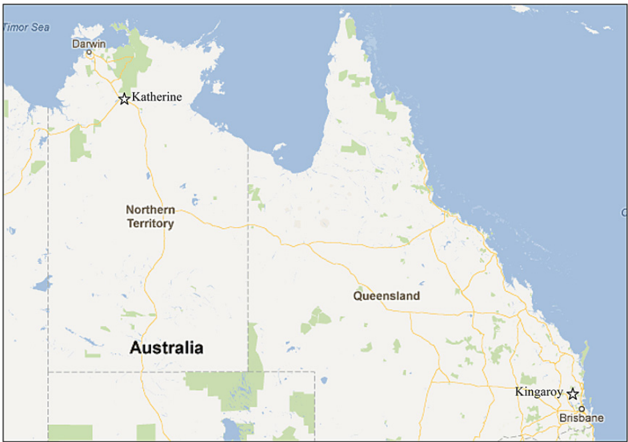
“Lower than average rainfall over the past 25 years in south-east Queensland, the traditional home of growing peanuts, has significantly affected the quality and quantity of peanuts produced (by about 30% in value) [54].”
BackgroundMoser, S. C. (2009) · Applied Geography · doi:10.1016/j.apgeog.2009.09.003 · Cited by 189 · cited 1×
“Factors such as place attachment and occupational identity, which are effectively unaccounted for in climate policy to date [8, 59], and are important potential barriers to climate adaptations which involve changing place or identity, are important considerations.”
BackgroundNelson, R., Kokic, P., Crimp, S., Meinke, H., & Howden, S. M. (2010) · Environmental Science & Policy · doi:10.1016/j.envsci.2009.09.006 · Cited by 177
The Elements of Identification with an Occupation
Becker, H. S., & Carper, J. (1956) · American Sociological Review · doi:10.2307/2089290 · Cited by 175 · cited 3×
“activities that are work-oriented are likely to develop a strong attachment to their occupation [51].”
BackgroundInfluentialGood Friends in Bad Times? Social Networks and Job Search among the Unemployed in Sweden
Korpi, T. (2001) · Acta Sociologica · doi:10.1177/000169930104400204 · Cited by 164 · cited 1×
“Place attachment can thus contribute to the success of some climate adaptations [57, 58], whilst acting to impair others [24].”
BackgroundHow Resource Dependency Can Influence Social Resilience within a Primary Resource Industry*
Marshall, N. A., Fenton, D. M., Marshall, P. A., & Sutton, S. G. (2007) · Rural Sociology · doi:10.1526/003601107781799254 · Cited by 156 · cited 5×
“One critical factor likely to influence transformational capacity is the attachment that resource users have with their place [31, 44, 46].”
BackgroundMethodResultInfluentialSelf-citationWilbanks, T. J., & Kates, R. W. (2010) · Annals of the Association of American Geographers · doi:10.1080/00045608.2010.500200 · Cited by 153
Marshall, N., Gordon, I. J., & Ash, A. J. (2010) · Climatic Change · doi:10.1007/s10584-010-9962-y · Cited by 146
Self-citationThe Elements of Identification with an Occupation
Carper, J. (2017) · Sociological Work · doi:10.4324/9781315129983-12 · Cited by 142
Responding to bushfire risk: the need for transformative adaptation
O’Neill, S. J., & Handmer, J. (2012) · Environmental Research Letters · doi:10.1088/1748-9326/7/1/014018 · Cited by 118
Rapid Climate Change and Society: Assessing Responses and Thresholds
Niemeyer, S., Petts, J., & Hobson, K. (2005) · Risk Analysis · doi:10.1111/j.1539-6924.2005.00691.x · Cited by 117
Can policy perception influence social resilience to policy change?
Marshall, N. (2007) · Fisheries Research · doi:10.1016/j.fishres.2007.06.008 · Cited by 116 · cited 2×
“Autonomy and choice, as well as coercion by circumstance or government action, for example, are central to how individuals perceive and undergo transformation [16, 17].”
BackgroundSelf-citationInstitutions and change: The challenge of building adaptive capacity in Latin America
Eakin, H. C., & Lemos, M. C. (2009) · Global Environmental Change · doi:10.1016/j.gloenvcha.2009.08.002 · Cited by 95 · cited 1×
“other research on governmental and organizational elements of change [28, 29] and because individual adaptation has”
BackgroundRural sociology and the environment
(1989) · Choice Reviews Online · doi:10.5860/choice.26-5353 · Cited by 84
WOTTON, H. R., & Strange, R. (1987) · Applied and Environmental Microbiology · doi:10.1128/aem.53.2.270-273.1987 · Cited by 69 · cited 1×
“Peanuts are particularly sensitive to water stress: too little water can cause a toxic fungus (Aspergillus flavus) to grow in the inner shell such that the peanut becomes unsuitable for human consumption [53].”
BackgroundAssessing Resource Dependency on the Rangelands as a Measure of Climate Sensitivity
Marshall, N. A. (2011) · Society & Natural Resources · doi:10.1080/08941920.2010.509856 · Cited by 48 · cited 2×
“For example, other studies have shown that the extent to which individuals are socially and economically dependent on a natural resource is an important influence [44, 45].”
BackgroundMethodSelf-citationProgress in global environmental change
Adger, W. N., Brown, K. M., & Conway, D. (2010) · Global Environmental Change · doi:10.1016/j.gloenvcha.2010.07.007 · Cited by 31 · cited 1×
“These two concepts are significantly under-represented in climate-change decision-making [33, 48], yet they are potentially important influences that need to be considered before successful transformation strategies can be planned.”
BackgroundSelf-citation
Research works printed but not linked: 1
- Gallopin G 2002 Planning for resilience: scenarios, suprises, and branch points Panarchy: Understanding Transformations in Human and Natural Systems ed L Gunderson and C S Holling (Washington, DC: Island Press) pp 361-92
Cited by
The Impact of Climate Change on Mental Health: A Systematic Descriptive Review
Cianconi, P., Betrò, S., & Janiri, L. (2020) · Frontiers in Psychiatry · doi:10.3389/fpsyt.2020.00074 · Cited by 1,320
“The wound inflicted to this symbolic domain causes more complex psychopatho log ica l consequences, such as identity disorders (164) or long-term personality changes (119), as seen in trauma related to extreme weather events and loss of familiar landscape, or dissociative syndromes (165) as seen in trauma related to e…”
BackgroundReconceptualising adaptation to climate change as part of pathways of change and response
Wise, R. M., Fazey, I., Stafford Smith, M., Park, S. E., Eakin, H. C., Archer Van Garderen, E. R. M., & Campbell, B. (2014) · Global Environmental Change · doi:10.1016/j.gloenvcha.2013.12.002 · Cited by 980
“Second, there are numerous studies that characterise the limits and barriers to, and opportunities from adaptation (e.g., Adger et al., 2009; Burch, 2010; Moser and Ekstrom, 2010; Nielsen and Reenberg, 2010; Sietz et al., 2011; Marshall et al., 2012).”
BackgroundSelf-citationFolke, C. (2016) · Ecology and Society · doi:10.5751/es-09088-210444 · Cited by 982
Building adaptive capacity to climate change in tropical coastal communities
Cinner, J. E., Adger, W. N., Allison, E. H., Barnes, M. L., Brown, K., Cohen, P. J., Gelcich, S., Hicks, C. C., Hughes, T. P., Lau, J., et al. (2018) · Nature Climate Change · doi:10.1038/s41558-017-0065-x · Cited by 770
Self-citationPelling, M., O’Brien, K., & Matyas, D. (2015) · Climatic Change · doi:10.1007/s10584-014-1303-0 · Cited by 769
“…for incremental adaptation can also block transformation: in an analysis of adaptive capacity amongst peanut farmers in Queensland, Australia, Marshall et al. (2012) found that while place and professional attachment were drivers for incremental adaptation, they were barriers for…”
Background
Metadata
- Authors
- Marshall, N. A., Park, S. E., Adger, W. N., Brown, K., & Howden, S. M.
- Affiliations
- Commonwealth Scientific and Industrial Research Organisation (AU)
- University of Exeter (GB)
- Corresponding author
- Marshall, N A
- Venue
- Environmental Research Letters
- Publisher
- IOP Publishing
- Published
- 2012-09-01
- Volume
- 7
- Issue
- 3
- Pages
- 034022
- ISSN
- 1748-9326 (ISSN-L)
- OpenAlex
- W2161709017
- Cited by
- 305
- References
- 67
- Citations by year
- 2026: 14 · 2025: 14 · 2024: 12 · 2023: 24 · 2022: 26 · 2021: 26 · 2020: 25 · 2019: 26 · 2018: 34 · 2017: 22 · 2016: 18 · 2015: 23 · 2014: 23 · 2013: 15 · 2012: 2
- FWCI
- 16.75
- Type
- journal article
- Language
- en
- Open access
- gold
- doi.org
- Licence
- cc-by-nc-sa
- Locations
- Environmental Research Letters (publishedVersion, cc-by-nc-sa)
- UEA Digital Repository (University of East Anglia) (acceptedVersion, cc-by-nc-sa)
- DOAJ (DOAJ: Directory of Open Access Journals) (submittedVersion)
- ANU Open Research (Australian National University) (submittedVersion)
- Funders
- Commonwealth Scientific and Industrial Research Organisation
- Economic and Social Research Council (ES/F041357/1)
- Topics
- Physical Sciences › Environmental Science › Global and Planetary Change › Sustainability and Climate Change Governance
- Life Sciences › Agricultural and Biological Sciences › Agronomy and Crop Science › Climate change impacts on agriculture
- Social Sciences › Sociology and Political Science › Climate Change Communication and Perception
- Keywords
- adaptive capacity, climate change adaptation, place attachment, occupational identity, resource-dependent communities, peanut industry, agricultural adaptation, willingness to change, structural change
About these checks
Registry, retraction, Cites and statistics results are computed, not judged, with one exception: a printed reference that no index lists is read once by a model before it counts as a citation error. Claims are extracted by a model and kept only when their quote appears verbatim in the text; each cited source is then checked, with a model’s help, for whether it says what the claim relies on. Those verdicts can be wrong — read the claim’s quote and the cited source before relying on one.
Statistics and arithmetic are recomputed, not judged.
Confidence bands are shown only for fields calibrated on our annotated test set. None is calibrated yet, so no band is shown.
What counts as a claim ›How we measure confidence ›How we check this ›
Are you an author, or do you see a problem with this page? Request a review
Data sources
Bibliographic data: Semantic Scholar, OpenAlex, Crossref.
Contains information from the Semantic Scholar Academic Graph Datasets, made available under the ODC Attribution License (ODC-BY 1.0).
Semantic Scholar’s data is described in: Kinney, R., et al. (2023). The Semantic Scholar Open Data Platform. arXiv:2301.10140.
