

The growing importance of scope 3 greenhouse gas emissions from industry
Open accessThe DOI matches its Crossref record; 57 of the 57 references it cites were found in a registry or an index.
Abstract
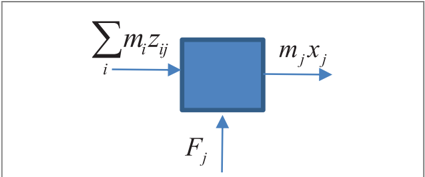
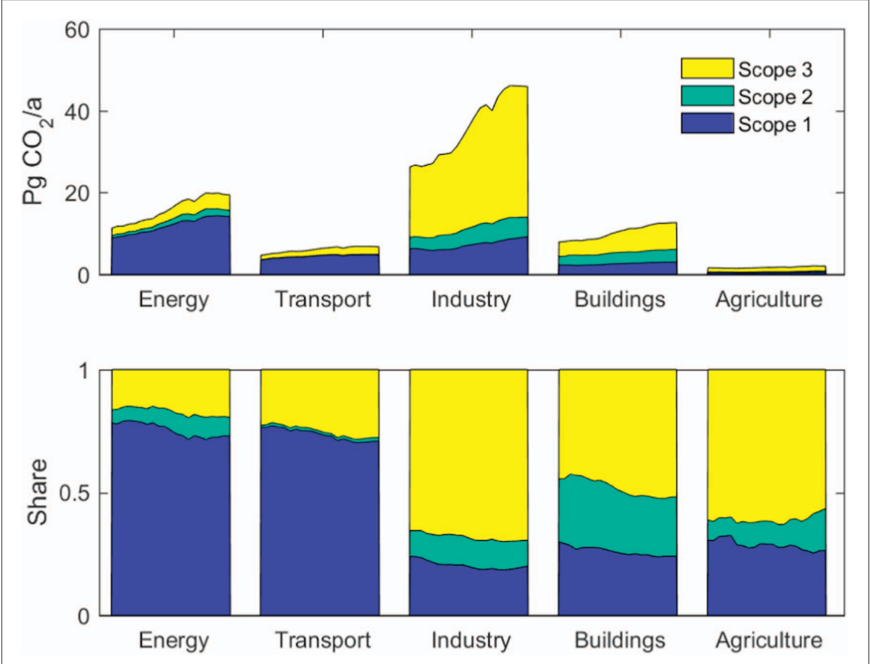
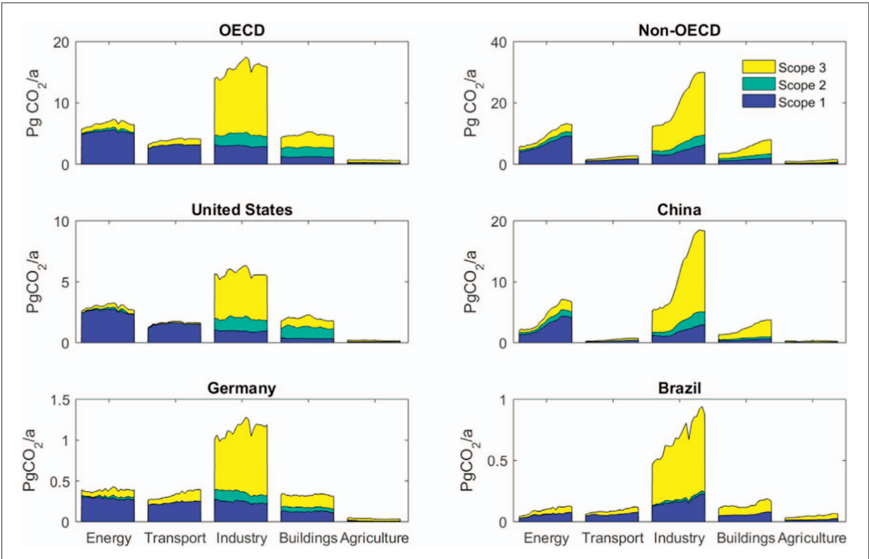
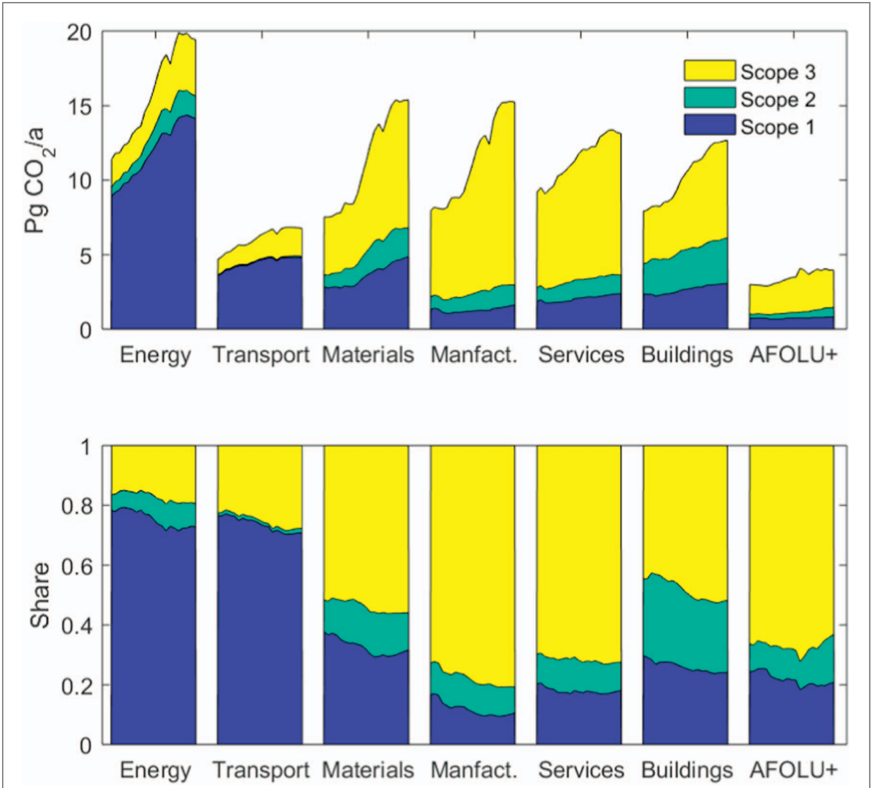
Carbon reporting is increasingly focussing on indirect emissions that occur in the supply chain of establishments. The GHG protocol, a corporate standard, distinguishes scope 2 (emissions associated with electricity consumption) and scope 3 (emissions associated with other inputs), in addition to scope 1 emissions (occurring directly at the facility or company in question). However, the magnitude and growth trajectory of scopes 2 and 3 emissions at the economy-wide level is unknown. Here we conduct an input–output investigation of indirect carbon dioxide (CO 2 ) emissions for the global economy organized in five sectors—energy supply, transport, industry, buildings, and agriculture and forestry—as defined by the Intergovernmental Panel on Climate Change (IPCC). In comparison to previous work that looks at indirect emissions of consumption, we present the first economy-wide analysis of indirect emissions of gross production. The goal of the work is thus to capture the potential agency different sectors have over supply chain emissions, rather allocating emissions between production and consumption. Between 1995 and 2015, global scopes 1, 2, and 3 emissions grew by 47%, 78%, and 84%, to 32, 10, and 45 Pg CO 2 , respectively. Globally, the industry sector was most important with scope 2 emissions of 5 Pg and scope 3 emissions of 32 Pg. For buildings, scope 3 emissions of 7 Pg were twice as high as direct emissions. Industry and buildings stood in marked contrast to energy and transport, where direct emissions accounted for >70% of total emissions responsibility. Most of the growth happened in developing countries. The proposed analysis scheme could improve the integration of sector chapters in future IPCC reports.
Overview
The claims and statistics of this paper haven’t been checked yet.
Free: it reads the open-access text and checks the first 5 claims that cite a source we can check. Create a free account to check every claim.
Integrity signals
Registry
Cites
Statistics
Figures



Verification
Claims the paper makes
The claims and statistics of this paper haven’t been checked yet.
Free: it reads the open-access text and checks the first 5 claims that cite a source we can check. Create a free account to check every claim.
Claims other papers make about this one
Each is checked against this paper’s own text: does it say what the citing paper says it does?
The source backs part of the claim, not all of it — or backs it for a different population, condition or comparison.
In the citing paper
“Materials constituted 55% of the carbon footprint of vehicle and transport equipment manufacturing of 1.6 Gt [27,42,119].”
From Material efficiency strategies to reducing greenhouse gas emissions associated with buildings, vehicles, and electronics—a review (2019) · cites this paper as [42]
Experimental — accuracy not yet measuredThe cited source says what the claim attributes to it.
In the citing paper
“GHGemissions can be added along the supply chain to calculate the carbon footprint or embodied emissions of a product (1, 49).”
From Carbon Leakage, Consumption, and Trade (2022) · cites this paper as [49]
In the citing paper
“According to EXIO-BASE, production of materials (figure 3) accounted for 56% of the carbon footprint of the construction sector, or 3.3 Gt CO 2 [42].”
From Material efficiency strategies to reducing greenhouse gas emissions associated with buildings, vehicles, and electronics—a review (2019) · cites this paper as [42]
Self-check
Percentages, sums and reported differences re-computed from the paper’s own numbers.
The self-check needs the paper’s full text.
Citations
Cites
Change, I. P. O. C. (2015) · Cambridge University Press eBooks · doi:10.1017/cbo9781107415416 · Cited by 4,693
Climate change 2014 : mitigation of climate change
Edenhofer, O., Pichs-Madruga, R., & Sokona, Y. (2014) · University of North Texas Digital Library (University of North Texas) · Cited by 1,975
Carbon Footprint of Nations: A Global, Trade-Linked Analysis
Hertwich, E. G., & Peters, G. P. (2009) · Environmental Science & Technology · doi:10.1021/es803496a · Cited by 1,715
Self-citationComparative Environmental Life Cycle Assessment of Conventional and Electric Vehicles
Hawkins, T. R., Singh, B., Majeau‐Bettez, G., & Strømman, A. H. (2013) · Journal of Industrial Ecology · doi:10.1111/j.1530-9290.2012.00532.x · Cited by 1,670
Growth in emission transfers via international trade from 1990 to 2008
Peters, G. P., Minx, J. C., Weber, C. L., & Edenhofer, O. (2011) · Proceedings of the National Academy of Sciences · doi:10.1073/pnas.1006388108 · Cited by 1,599
The material footprint of nations
Wiedmann, T. O., Schandl, H., Lenzen, M., Moran, D., Suh, S., West, J., & Kanemoto, K. (2015) · Proceedings of the National Academy of Sciences · doi:10.1073/pnas.1220362110 · Cited by 1,597
Household actions can provide a behavioral wedge to rapidly reduce US carbon emissions
Dietz, T., Gardner, G. T., Gilligan, J., Stern, P. C., & Vandenbergh, M. P. (2009) · Proceedings of the National Academy of Sciences · doi:10.1073/pnas.0908738106 · Cited by 1,450
Emerging approaches, challenges and opportunities in life cycle assessment
Hellweg, S., & Milà i Canals, L. (2014) · Science · doi:10.1126/science.1248361 · Cited by 1,416
CO2Embodied in International Trade with Implications for Global Climate Policy
Peters, G. P., & Hertwich, E. G. (2008) · Environmental Science & Technology · doi:10.1021/es072023k · Cited by 1,243
Self-citationInternational trade drives biodiversity threats in developing nations
Lenzen, M., Moran, D., Kanemoto, K., Foran, B., Lobefaro, L., & Geschke, A. (2012) · Nature · doi:10.1038/nature11145 · Cited by 1,238
Research works printed but not linked: 3
- Bhatia P, 2011, Corporate Value Chain (Scope 3) Accounting and Reporting Standard
- Lenzen M, 2004, J. Appl. Input-Output Anal., 10, 1
- Bruckner T ed Edenhofer O, 2014, Climate Change 2014: Mitigation of Climate Change
Cited by
Items 201–300 of 490
Tausch, L., & Magacho, G. (2025) · Economic Systems Research · doi:10.1080/09535314.2025.2520308 · Cited by 5
“…models has led to a substantial increase in the environmental footprint of industrial production, as well as a significant redistribution of environmental impacts across industries and countries (Hertwich & Wood, 2018; Södersten et al., 2018a, 2018b, 2020; Xu et al., 2023; Ye et al., 2021, 2023).”
InfluentialSustainable and transparent purchasing in the automotive industry
Bunzendahl, S., & Papula, J. (2023) · Journal of Entrepreneurship and Sustainability Issues · doi:10.9770/jesi.2023.10.4(13 · Cited by 5
Charpentier, F., Martins, B., & Bourcier, P. (2023) · International Conference on ICT for Sustainability (ICT4S) · doi:10.1109/ict4s58814.2023.00024 · Cited by 5
“Moreover, it has been shown that it is also suitable to calculate the upstream footprints of intermediate sectors, using the EIO-LCA approach [14] and similar approaches [15,16]. its country or its world region (defined as a group of countries).”
MethodBaginski, L., Viana, M. E. F., Wänke, P., Antunes, J. J. M., Tan, Y., Jabbour, C. J. C., & Roubaud, D. (2024) · Journal of Environmental Management · doi:10.1016/j.jenvman.2024.121955 · Cited by 5
Planetary impact shifts from fossil fuels to material extractionPreprint
Creutzig, F., Azevedo, I., Berrill, P., Edelenbosch, O. Y., Fishman, T., Haberl, H., Hertwich, E. G., Krey, V., Lima, A. T., Makov, T., et al. (2024) · Authorea · doi:10.22541/au.171901018.84864468/v1 · Cited by 5
Self-citationEmerging Trends and Challenges in Supply Chain Management and Sustainability
Castillo‐Pérez, I., Perez, N., Gálvez‐Sánchez, F. J., & Moreno, A. R. (2025) · Sustainable Development · doi:10.1002/sd.70534 · Cited by 4
McNamara, B., Huntzinger, D. N., Nielsen, E. A., & Rushforth, R. R. (2025) · Carbon Management · doi:10.1080/17583004.2025.2473916 · Cited by 4
“At the same time, it is well established that the value chain represents the majority of GHG emissions for many industries and sectors [54,55].”
A comparative overview of city-level carbon accounting: Key processes and considerations
Fan, L., & Guan, H. (2025) · AIMS environmental science · doi:10.3934/environsci.2025018 · Cited by 4
A carbon footprint: the full water cycle in the Balearic Islands
Cruz‐Pérez, N., Rodríguez‐Martín, J., García, C., Rodríguez‐Lozano, P., Tirado, D., García‐Gil, A., & Cerezal, J. C. S. (2023) · Sustainable Water Resources Management · doi:10.1007/s40899-023-00901-7 · Cited by 4
Hadji-Lazaro, P. (2024) · Ecological Economics · doi:10.1016/j.ecolecon.2024.108466 · Cited by 4
Muñoz-Arango, A. M., Vargas‐Salgado, C., Alfonso-Solar, D., & Koutra, S. (2025) · Journal of Cleaner Production · doi:10.1016/j.jclepro.2025.145017 · Cited by 4
Fiedler, G. B., & Lundie, S. (2025) · Journal of Cleaner Production · doi:10.1016/j.jclepro.2025.145781 · Cited by 4
Lv, T., Geng, C., Fu, S., Zhao, Q., Hu, H., & Zhang, X. (2025) · Environment Development and Sustainability · doi:10.1007/s10668-025-06436-5 · Cited by 4
Diao, C.-C., & Wu, C. (2022) · ACS Omega · doi:10.1021/acsomega.1c06776 · Cited by 4
Why Is the Australian Health Sector So Far behind in Practising Climate-Related Disclosures?
Deweerdt, T. (2022) · International Journal of Environmental Research and Public Health · doi:10.3390/ijerph191912822 · Cited by 4
“Scope 3 includes all other indirect emissions that occur in a company’s value chain [37].”
BackgroundConsumption structure optimization for reducing energy footprint
Jiang, M., Suo, C., Wu, L., & Berrill, P. (2022) · Economic Systems Research · doi:10.1080/09535314.2022.2142528 · Cited by 4
Marini, M., Pigosso, D. C. A., Pieroni, M., & McAloone, T. C. (2024) · NordDesign Conference (NordDesign) · doi:10.35199/norddesign2024.33 · Cited by 4
An Impact Inheritance Approach to the Estimation of the Carbon Footprints of Economic Activities
Charpentier, F. (2022) · International Conference on ICT for Sustainability (ICT4S) · doi:10.1109/ict4s55073.2022.00025 · Cited by 4
Production and consumption-based accounting of emissions
Makarov, I. A., & Alataş, S. (2023) · Elsevier eBooks · doi:10.1016/b978-0-44-313776-1.00099-4 · Cited by 4
Group Reasoning Emission Estimation NetworksPreprint
Guo, Y., Qian, X., Credit, K., & Ma, J. (2025) · arXiv (Cornell University) · doi:10.48550/arxiv.2502.06874 · Cited by 4
“These regulations are based on the GHG Protocol Corporate Standard, which defines emissions across three scopes: Scope 1 direct emissions, Scope 2 indirect emissions from electricity consumption, and Scope 3 all other indirect emissions across the value chain [10].”
Latva-Hakuni, E. (2020) · Jyväskylä University Digital Archive (University of Jyväskylä) · Cited by 4
BARO GARCIA, A. (2023) · Theseus (Ammattikorkeakoulujen) · Cited by 4
Rethinking Economic Transformation for Sustainable and Inclusive Development: Turning a Corner?
Scheja, E., & Kim, K. B. (2024) · Edward Elgar Publishing eBooks · doi:10.4337/9781035348466 · Cited by 3
Pandey, A. K., Pratap, S., & Habibi, M. K. K. (2025) · International Journal of Production Research · doi:10.1080/00207543.2025.2541864 · Cited by 3
“0 technologies for emissions tracking and management within supply chains (Cañas et al. 2021; Hertwich and Wood 2018).”
Retegi, J., van der Kamp, B. J., & Igartua, J. I. (2026) · Gases · doi:10.3390/gases6010012 · Cited by 3
B2B sales management in a circular economy: multilevel implications and future directions
Hautamäki, P., & Aarikka‐Stenroos, L. (2026) · Journal of Personal Selling and Sales Management · doi:10.1080/08853134.2026.2635468 · Cited by 3
“They also encourage firms to reduce their greenhouse gas emissions by managing their direct (Scope 1), energy-related (Scope 2), and value chain (Scope 3) 1 emissions (Hertwich and Wood 2018; McKinsey 2024; Sairanen and Aarikka-Stenroos 2024).”
A mini review of greenhouse gas emissions and mitigation strategies in the building sector
Li, J. B., & Li, Y. Q. (2026) · International Journal of Building Pathology and Adaptation · doi:10.1108/ijbpa-05-2025-0130 · Cited by 3
Indirect emission accounting and effectiveness of market regulation toward sustainability
Szendrey, O., & Dombi, M. (2024) · Prosperitas · doi:10.31570/prosp_2023_0103 · Cited by 3
Design Principles for Sustainable Field Service Management
Bernardo, A., Antunes, J., & Barata, J. (2024) · IEEE Conference on Business Informatics · doi:10.1109/cbi62504.2024.00036 · Cited by 3
“When the word “emission” was added to the search keywords, only three studies were found [24], [26], [27].”
Betts-Davies, S., Owen, A., Barrett, J., Brockway, P. E., & Norman, J. (2025) · Scientific Reports · doi:10.1038/s41598-025-01495-0 · Cited by 3
“This stems from the premise that each sector in an input– output table produces a homogeneous good with a single impact vector 57 .”
Renewable energy innovations: Synergy of technology and sustainable development
Ткаченко, А. М., & Ismayilov, V. (2025) · Management and Business · doi:10.59214/mb/2.2024.43 · Cited by 3
A framework for ground-up life cycle assessment of novel, carbon-storing building materials
Kane, S., Bose, B., Hendrickson, T. P., Jin, F., Nordahl, S. L., Scown, C. D., & Miller, S. A. (2025) · Energy & Environmental Science · doi:10.1039/d5ee02728d · Cited by 3
Environmentalism and Social Impact of the Green Marketing Strategy
McConnell, A. (2021) · Cited by 3
Classification Systems for Setting Net-Zero Targets for Industries
Teske, S., Nagrath, K., & Niklas, S. (2022) · Springer eBooks · doi:10.1007/978-3-030-99177-7_4 · Cited by 3
Genc, U., Hardaway, K., Landrum, N. E., & Mulrow, J. (2024) · Cleaner and Responsible Consumption · doi:10.1016/j.clrc.2024.100235 · Cited by 3
Wong, W.-S.-E. (2024) · International Journal of Innovation and Business Strategy (IJIBS) · doi:10.11113/ijibs.v19.168 · Cited by 2
Pelzeter, A. (2022) · The International Journal of Life Cycle Assessment · doi:10.1007/s11367-022-02065-6 · Cited by 3
“They are often characterised by high indirect CO2e emissions along the value chain (Hertwich and Wood 2018; Klaaßen and Stoll 2020; Suh 2006; World Resources Institute and World Business Council for Sustainable Development 2011a).”
BackgroundEsport Ecosystem, Financial Behavior, and Carbon Emissions in Indonesian Urban Area
Sujata, P. D. K., Sardjono, S. B., & Hendratno, S. P. (2022) · Asia Pacific Information Technology Conference (APIT) · doi:10.1145/3512353.3512371 · Cited by 3
“Stated earlier that scope 3 carbon emissions is associated with the use of products sold and employee commuting [16].”
BackgroundTrends in the sustainability reporting: A case study of European mining industry
Ivic, A. (2020) · Skemman · Cited by 3
Corporate carbon reporting and disclosures: a quality rating framework
Xu, F. (2024) · Edinburgh Napier Research Repository (Edinburgh Napier University) · doi:10.17869/enu.2024.3789817 · Cited by 3
Complexity in measuring the higher education institution scope 3 emissions
Nayak, A. (2023) · Open Access Institutional Repository at Robert Gordon University (Robert Gordon University) · doi:10.48526/rgu-wt-2271448 · Cited by 3
The Scope of Scope-3Preprint
Croce, M. M., Fernàndez-Fuertes, R., Guinez, N., Méndez, A. I., & Tebaldi, C. (2025) · SSRN Electronic Journal · doi:10.2139/ssrn.5667951 · Cited by 3
Bilek, G. M., Calvi, R., Daniel, E., & Méchouar, Y. (2024) · Logistique & Management · doi:10.1080/12507970.2024.2421211 · Cited by 2
An Automated Tool for Freight Carbon Footprint Estimation: Insights from an Automotive Case Study
Lehmam, S., Hassani, H. E., & Rabhi, L. (2025) · Future Transportation · doi:10.3390/futuretransp5030107 · Cited by 2
Pandansari, T., Kusbandiyah, A., Hapsari, I. M., & Handayani, E. (2025) · The International Conference on Sustainable Economics Management and Accounting Proceeding · doi:10.32424/icsema.1.1.249 · Cited by 2
Case studies in decarbonization of the petroleum industry
Noshad, N., Ilyas, S. U., Krishna, S., Lock, S. S. M., & Ridha, S. (2025) · Elsevier eBooks · doi:10.1016/b978-0-443-31524-4.00009-5 · Cited by 2
Comparing ICT Greenhouse Gas Emissions to the Rest of the Economy
Charpentier, F., Blain, J., Axenbeck, J., & Kunkel, S. (2025) · International Conference on ICT for Sustainability (ICT4S) · doi:10.1109/ict4s68164.2025.00032 · Cited by 2
“On the other hand, IOA techniques have emerged to calculate sectors footprints in general [10,11] and more particularly in the case of ICT [12-13], thus introducing a new set of ICT footprint indicators, complementary to those obtained through the common LCA/GHGP approach.”
Pérez-Sánchez, L. À., & Aguilar‐Hernández, G. A. (2026) · Sustainable Production and Consumption · doi:10.1016/j.spc.2026.02.011 · Cited by 3
Sector-specific climate policies for a green industrial transition with public support
Hansen, O. W., & Koslowski, M. (2026) · Climate Policy · doi:10.1080/14693062.2026.2651852 · Cited by 2
Merenchige, U. A. W. D., Wang, B., & Ji, S. (2026) · The International Journal of Life Cycle Assessment · doi:10.1007/s11367-026-02639-8 · Cited by 2
“…emissions and lack granularity at the product level, especially when scope 3 emissions are dominant as these, often accounts exceeding 70% of total industrial emissions (Matthews et al. 2008 ; Steinmann et al. 2014 ; Harangozo and Szigeti 2017 ; Hertwich and Wood 2018 ; Huijbregts et al. 2020).”
Uchendu, C., Okorie, O., Khosravi, F., Connop, S. P., Haddad, H., & Medas, M. (2026) · Business Strategy and the Environment · doi:10.1002/bse.71056 · Cited by 2
Beruniy, A., Pardaev, J., Saydamenova, D., Namozov, J., Jumaev, N., Rakhimov, A., & Tojiboyevna, E. I. (2026) · Economies · doi:10.3390/economies14080346 · Cited by 2
“Similarly, Hertwich and Wood (2018) employed a multi-regional input-output (MRIO) model using global data for 1995–2015 and demonstrated that indirect emissions increased more rapidly than direct emissions, with the industrial sector accounting for the largest share of supply-chain emissions.”
A Framework for Assessing the Climate Impacts of Research and Innovation Projects and Programmes
Martinuzzi, A., Hametner, M., Windsperger, A., & Brunnhuber, N. (2023) · Sustainability · doi:10.3390/su152416600 · Cited by 2
Deng, W., Liang, Q., Shuai, Y., Shen, X., & Yi, L. (2024) · Energies · doi:10.3390/en17235951 · Cited by 2
Rüdele, K., Linke, B. S., & Wolf, M. (2025) · Cleaner Environmental Systems · doi:10.1016/j.cesys.2025.100277 · Cited by 2
Attribution Science: Insights into Climate Change and Its Consequences
Phillips, C. A., Merner, L. D., & Otto, F. E. L. (2025) · Cambridge University Press eBooks · doi:10.1017/9781009409155.004 · Cited by 2
Maher, A., Boyd, F., & Böhm, S. (2025) · Energy Research & Social Science · doi:10.1016/j.erss.2025.104301 · Cited by 2
The Market Reaction to Climate Risk: Evidence from the European Banking Industry
Battaglia, F., Busato, F., & Taddeo, S. (2023) · Palgrave Macmillan studies in banking and financial institutions · doi:10.1007/978-3-031-24876-4_1 · Cited by 2
The dissemination of the “Shell sentence” and compliance with the Paris AgreementPreprint
Santiago, L. A. L., Arce, G., Cadarso, M., Ortiz, M., & Zafrilla, J. E. (2021) · Research Square · doi:10.21203/rs.3.rs-910470/v1 · Cited by 2
Maltais, A., Gardner, T. A., Godar, J., Lazarus, M., & Mete, G. (2021) · doi:10.51414/sei2021.023 · Cited by 2
Climate Management in Organizations: Pathways to Climate Neutrality
Horsch, D., Will, M., Brauweiler, J., & Hildebrandt, J. (2021) · Encyclopedia of the UN sustainable development goals · doi:10.1007/978-3-319-71059-4_134-1 · Cited by 2
The Scope 4 Emission: Neutralized Carbon EmissionsPreprint
Liu, Z., & Wang, G. (2024) · arXiv (Cornell University) · doi:10.48550/arxiv.2410.10891 · Cited by 2
Chatterjee, A., & Ranganathan, S. (2024) · arXiv (Cornell University) · doi:10.48550/arxiv.2409.03769 · Cited by 2
“A detailed comparison of the merits and drawbacks of these methods is beyond the scope of this paper, but relevant references are provided for further study[12, 13, 14].”
BackgroundThe Scope of Net Zero: The Use of Carbon Emission Data to Achieve Portfolio Goals
Furdak, R. E., Nilsen-Ames, T., Tomm, A.-M., Wee, J., & Xiang, V. (2024) · doi:10.56227/24.1.34 · Cited by 2
Measuring Climate Transition Risk at the Regional Level with an Application to Community Banks
Berlin, M., Byun, S. J., D'Erasmo, P. N., & Yu, E. G. (2025) · Working paper · doi:10.21799/frbp.wp.2025.11 · Cited by 2
Santhosh Kumar, A. (2023) · Aaltodoc (Aalto University) · Cited by 2
Sports and Greenhouse Gas Emissions: Building A Better Framework For Sustainable Sports Operations
Anahory, A. (2022) · Digital Commons - University of South Florida (University of South Florida) · Cited by 2
A New Approach to Improve Sustainability: The Role of Organizational Life Cycle Assessment (O-LCA)
Vinci, G., D’Ascenzo, F., Ruggeri, M., & Zaki, M. G. (2024) · Circular economy and sustainability · doi:10.1007/978-3-031-55206-9_39 · Cited by 1
State-led carbon data value chain development: a case study of the Republic of Korea
In, S. Y., Zegas, G., & Baek, Y. J. (2024) · Climate Policy · doi:10.1080/14693062.2024.2371385 · Cited by 1
“Companies pay closer attention to their Scope 3 emissions, which extend beyond their direct operations and electricity use to include supply chain operations and end-product use by customers (Hertwich & Wood, 2018; WRI/WBCSD, 2004).”
What can green investors learn from funds' value chain carbon footprint? Evidence from Spain
López, L. A., & López, R. (2025) · Green Finance · doi:10.3934/gf.2025012 · Cited by 1
Huang, Y.-R., Lee, L.-C., Lee, C., & Yadav, N. P. (2025) · Environment Development and Sustainability · doi:10.1007/s10668-025-06528-2 · Cited by 1
Tavanti, M. (2025) · Springer eBooks · doi:10.1007/978-3-031-93467-4_4 · Cited by 1
Investment-Related Scope 3 Emissions: Ownership, Financial Control, and Calculation Methods
Çalışkan, M. M. T. (2025) · Akdeniz Üniversitesi İktisadi ve İdari Bilimler Fakültesi Dergisi · doi:10.25294/auiibfd.1640953 · Cited by 1
An Analysis of the Sustainable Investment Performance of SADC-Listed Firms
Ametefe, F. K., Kitulazzi, D., Karimu, A., & Azasu, S. (2025) · CSR, sustainability, ethics & governance · doi:10.1007/978-3-031-96205-9_1 · Cited by 1
Yuan, Q., Cai, H., Khan, N. U., Xia, M., Xu, Y., Pan, L., & Hassan, F. A. (2025) · Journal of Environmental Management · doi:10.1016/j.jenvman.2025.127846 · Cited by 1
Building a hydrogen economy: Does France have the industrial capacity for a low-carbon transition?
Guionie, R., Lemiale, L., & Loisel, R. (2025) · Journal of Policy Modeling · doi:10.1016/j.jpolmod.2025.11.001 · Cited by 1
Kirui, T., Cheptonui, F., Opetsi, G., Matheka, J., & Gbadrive, S. W. (2023) · Research journal in business and economics. · doi:10.61424/rjbe.v1i1.526 · Cited by 1
“Coverage of downstream emissions categories remains particularly limited, with categories 10 (Processing of Sold Products), 12 (End-of-Life Treatment), and 13 (Downstream Leased Assets) measured by only 20-34% of organizations.”
Sun, W., & Shen, L. (2026) · Sustainability · doi:10.3390/su18020742 · Cited by 2
Greenhouse gas ( GHG ) emissions estimation of hazardous waste in oil and gas industry for 2020–2024
Nurjaya, L. A. N. W., Nurherdiana, S. D., Saputro, E. A., & Jalil, M. J. (2026) · Environmental Progress & Sustainable Energy · doi:10.1002/ep.70334 · Cited by 1
Khandelwal, N., & Behera, S. K. (2026) · Environment Development and Sustainability · doi:10.1007/s10668-025-07272-3 · Cited by 1
Nagarajan, D., Bhuvaneswari, T., Suppiah, Y., & Shyaman, V. P. (2026) · Circular Economy and Sustainability · doi:10.1007/s43615-026-00725-5 · Cited by 1
“Carbon Emissions ( CO 2 e ) – from production, storage, transportation (Scope 1–3) [15]: The Carbon Emissions ( CO 2 e ) rule looks at the eco hit of supply chain work.”
Digital carbon footprint of common data environments in ISO 19650-compliant construction projects
Caldeira, H. A., Martínez, P. L., & Rogage, K. (2026) · Smart and Sustainable Built Environment · doi:10.1108/sasbe-08-2025-0512 · Cited by 1
Strategies and recommendations for embedding sustainability in innovation and design processes
Höpfl, L., Dolezalek, P., Peter, C., Brem, A., & Wirzberger, M. (2026) · Scientific Reports · doi:10.1038/s41598-026-42854-9 · Cited by 1
Thanopoulou, H. A., & Kokkolis, A. P. (2026) · Sustainability · doi:10.3390/su18062918 · Cited by 1
Seol, S., Lim, J., Kim, E., Lee, S., Kwon, D., Jeong, I., Lee, D., & Lee, J. (2026) · Journal of Climate Change Research · doi:10.15531/ksccr.2026.17.1.017 · Cited by 1
Zhang, Z., Li, Y., Lai, D., Zhou, N., Zhan, Q., & Wang, W. (2026) · Frontiers in Energy Research · doi:10.3389/fenrg.2026.1811386 · Cited by 1
Keuschnigg, I., Kaupa, C., Setzer, J., Merner, L. D., Turowski, K., Lachapelle, P. R., Shyrock, A., & Tandon, A. (2025) · Netherlands International Law Review · doi:10.1007/s40802-026-00288-0 · Cited by 1
“34 Hertwich and Wood (2018).”
Mubarok, H., Setiawan, B., Kristanto, A., Iriani, S. S., Utami, P. L., & Yossatorn, Y. (2026) · E3S Web of Conferences · doi:10.1051/e3sconf/202670904002 · Cited by 1
Ahmed, A. H., Paramati, S. R., Sharma, C., & Arafat, I. (2026) · Business Strategy and the Environment · doi:10.1002/bse.70964 · Cited by 1
Anzules-Falcones, W., Martin‐Castilla, J., & Tulcanaza-Prieto, A. B. (2026) · Quality & Quantity · doi:10.1007/s11135-026-02793-z · Cited by 1
“…interpretation: while it is theoretically consistent with the diffusion-of-responsibility and attribution ambiguity arguments (Downar et al. 2021; Hertwich and Wood 2018), it may also partly reflect the well-documented measurement limitations of Scope 3 data, including the use of proxy estimates…”
Bauer, E., Rundel, F., Alt, S., & Bies, L. M. (2026) · Sustainability · doi:10.3390/su18147074 · Cited by 1
Cöster, M., Iveroth, E., Petri, C.-J., & Westelius, A. (2026) · Journal of Cleaner Production · doi:10.1016/j.jclepro.2026.149213 · Cited by 1
“Hertwich and Wood (2018) conclude that in various industries – among others the forest industry – Scope 3 emissions have had the largest increase; they grew by 84% between 1995 and 2015.”
Ruan, L., Sahore, N. S., Almasabi, S. S., Vaio, A. D., & Papa, A. (2026) · Business Strategy and the Environment · doi:10.1002/bse.71537 · Cited by 1
Tuning ROS 2 for Energy-Efficient Navigation: Empirical Insights from Costmap 2D Configurations
Albonico, M., Wortmann, A., & Malavolta, I. (2026) · Proceedings - IEEE International Conference on Robotics and Automation/Proceedings · doi:10.1109/icra57385.2026.11697502 · Cited by 1
“As the demand for autonomous navigation grows, there is a need to reduce energy consumption, both for extending operational time (and consequently, increasing safety) and for minimizing environmental impact [1].”
Completing the SME carbon profile: scalable prediction of scope 3 emissions
Phillpotts, A., Owen, A., Norman, J., Trendl, A., Gathergood, J., Jobst, N., & Leake, D. (2026) · Journal of Industrial Ecology · doi:10.1007/s44498-026-00003-5 · Cited by 1
Intersectoral Linkages in Kazakhstan’s Energy Sector: A Comparative Leontief Analysis
ТЛЕУЛИНА, Б., Tasmaganbetov, A. B., & Kurmanalina, A. (2026) · Eurasian Journal of Economic and Business Studies · doi:10.47703/2789-8253-2026-3-111-127 · Cited by 1
Shrader‐Frechette, K. (2022) · Advances in Environmental and Engineering Research · doi:10.21926/aeer.2203031 · Cited by 1
Killing from Both Ends: A Re-Definition of Road Traffic Mortality
Vasu, P. R., & Jeswani, H. (2023) · ARAI Journal of Mobility Technology · doi:10.37285/ajmt.3.1.1 · Cited by 1
Green marketing strategies and their effect on the environment
(2022) · ASERC Journal of Socio-Economic Studies · doi:10.30546/2663-7251.2022.5.1.70 · Cited by 1
Application of Life Cycle Assessment (LCA) in the Fast-Moving Consumer Goods Sector
Atarisharghi, E., Bataleblu, A. A., Emer, A., Golser, M., Rauch, E., & Matt, D. T. (2024) · Lecture notes in mechanical engineering · doi:10.1007/978-3-031-56474-1_19 · Cited by 1
Metadata
- Authors
- Hertwich, E. G., & Wood, R.
- Affiliations
- Yale University (US)
- Norwegian University of Science and Technology (NO)
- Corresponding author
- Hertwich, Edgar G
- Venue
- Environmental Research Letters
- Publisher
- IOP Publishing
- Published
- 2018-10-05
- Volume
- 13
- Issue
- 10
- Pages
- 104013
- ISSN
- 1748-9326 (ISSN-L)
- OpenAlex
- W2891897243
- Cited by
- 350
- References
- 57
- Citations by year
- 2026: 67 · 2025: 70 · 2024: 60 · 2023: 58 · 2022: 47 · 2021: 26 · 2020: 9 · 2019: 13
- FWCI
- 6.03
- Type
- journal article
- Language
- en
- Open access
- gold
- doi.org
- Licence
- cc-by
- iopscience.iop.org/info/page/text-and-data-mining (tdm)
- creativecommons.org/licenses/by/3.0/ (vor)
- Locations
- Environmental Research Letters (publishedVersion, cc-by)
- DOAJ (DOAJ: Directory of Open Access Journals) (submittedVersion)
- NORA - Norwegian Open Research Archives (submittedVersion, cc-by)
- Topics
- Physical Sciences › Environmental Science › Environmental Engineering › Environmental Impact and Sustainability
- Physical Sciences › Environmental Science › Environmental Engineering › Sustainability and Ecological Systems Analysis
- Social Sciences › Economics, Econometrics and Finance › Economics and Econometrics › Climate Change Policy and Economics
- Keywords
- Scope 3 emissions, indirect greenhouse gas emissions, supply chain emissions, industry sectors, CO2 emissions, GHG Protocol, input-output analysis, energy supply, transport sector, building sector, agriculture and forestry, developing countries
About these checks
Registry, retraction, Cites and statistics results are computed, not judged, with one exception: a printed reference that no index lists is read once by a model before it counts as a citation error. Claims are extracted by a model and kept only when their quote appears verbatim in the text; each cited source is then checked, with a model’s help, for whether it says what the claim relies on. Those verdicts can be wrong — read the claim’s quote and the cited source before relying on one.
Statistics and arithmetic are recomputed, not judged.
Confidence bands are shown only for fields calibrated on our annotated test set. None is calibrated yet, so no band is shown.
What counts as a claim ›How we measure confidence ›How we check this ›
Are you an author, or do you see a problem with this page? Request a review
Data sources
Bibliographic data: Semantic Scholar, OpenAlex, Crossref.
Contains information from the Semantic Scholar Academic Graph Datasets, made available under the ODC Attribution License (ODC-BY 1.0).
Semantic Scholar’s data is described in: Kinney, R., et al. (2023). The Semantic Scholar Open Data Platform. arXiv:2301.10140.
