

ProteinBERT: a universal deep-learning model of protein sequence and function
Open accessPublished version of a preprint
The DOI matches its Crossref record; 48 of the 48 references it cites were found in a registry or an index.
Abstract
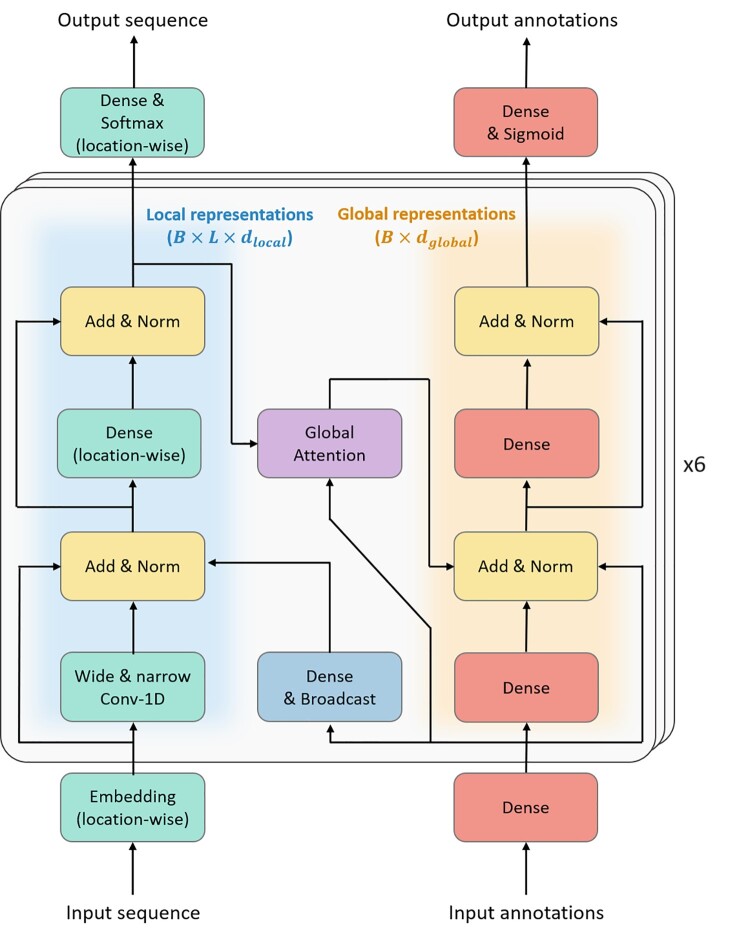
Summary: Self-supervised deep language modeling has shown unprecedented success across natural language tasks, and has recently been repurposed to biological sequences. However, existing models and pretraining methods are designed and optimized for text analysis. We introduce ProteinBERT, a deep language model specifically designed for proteins. Our pretraining scheme combines language modeling with a novel task of Gene Ontology (GO) annotation prediction. We introduce novel architectural elements that make the model highly efficient and flexible to long sequences. The architecture of ProteinBERT consists of both local and global representations, allowing end-to-end processing of these types of inputs and outputs. ProteinBERT obtains near state-of-the-art performance, and sometimes exceeds it, on multiple benchmarks covering diverse protein properties (including protein structure, post-translational modifications and biophysical attributes), despite using a far smaller and faster model than competing deep-learning methods. Overall, ProteinBERT provides an efficient framework for rapidly training protein predictors, even with limited labeled data. Availability and implementation: Code and pretrained model weights are available at https://github.com/nadavbra/protein_bert. Supplementary information: Supplementary data are available at Bioinformatics online.
Overview
The claims and statistics of this paper haven’t been checked yet.
Free: it reads the open-access text and checks the first 5 claims that cite a source we can check. Create a free account to check every claim.
Integrity signals
Registry
Cites
Statistics
Figures

Verification
Claims the paper makes
The claims and statistics of this paper haven’t been checked yet.
Free: it reads the open-access text and checks the first 5 claims that cite a source we can check. Create a free account to check every claim.
Claims other papers make about this one
Each is checked against this paper’s own text: does it say what the citing paper says it does?
The source backs part of the claim, not all of it — or backs it for a different population, condition or comparison.
In the citing paper
“In biology applications, deep learning has been employed to learn the structure of DNA and protein sequences [6,7]”
From Challenges in AI-driven Biomedical Multimodal Data Fusion and Analysis (2025) · cites this paper as [7]
Experimental — accuracy not yet measured
Self-check
Percentages, sums and reported differences re-computed from the paper’s own numbers.
The self-check needs the paper’s full text.
Citations
Cites
Basic local alignment search tool
Altschul, S. F., Gish, W., Miller, W., Myers, E. W., & Lipman, D. J. (1990) · Journal of Molecular Biology · doi:10.1006/jmbi.1990.9999 · Cited by 98,669
Gapped BLAST and PSI-BLAST: a new generation of protein database search programs
Altschul, S. (1997) · Nucleic Acids Research · doi:10.1093/nar/25.17.3389 · Cited by 73,302
BERT: Pre-training of Deep Bidirectional Transformers for Language Understanding
Devlin, J., Chang, M.-W., Lee, K., & Toutanova, K. (2019) · Proceedings of the 2019 Conference of the North American Chapter of the Association for Computational Linguistics: Human Language Technologies, Volume 1 (Long and Short Papers) · doi:10.18653/v1/n19-1423 · Cited by 54,325
Gene Ontology: tool for the unification of biology
Ashburner, M., Ball, C. A., Blake, J. A., Botstein, D., Butler, H., Cherry, J. M., Davis, A. P., Dolinski, K., Dwight, S. S., Eppig, J. T., et al. (2000) · Nature Genetics · doi:10.1038/75556 · Cited by 43,206
Pan, S. J., & Yang, Q. (2010) · IEEE Transactions on Knowledge and Data Engineering · doi:10.1109/tkde.2009.191 · Cited by 23,387 · cited 1×
“According to the transfer-learning paradigm, a model is first pre-trained on one task, and then fine-tuned on other downstream tasks of interest [7–9].”
MethodLanguage Models are Few-Shot Learners
Brown, T. B., Mann, B., Ryder, N., Subbiah, M., Kaplan, J., Dhariwal, P., Neelakantan, A., Shyam, P., Sastry, G., Askell, A., et al. (2020) · arXiv · doi:10.48550/arxiv.2005.14165 · Cited by 23,372
Advances in neural information processing systems 7
(1996) · Computers & Mathematics with Applications · doi:10.1016/s0898-1221(96)90463-0 · Cited by 14,281
Exploring the Limits of Transfer Learning with a Unified Text-to-Text Transformer
Raffel, C., Shazeer, N., Roberts, A., Lee, K., Narang, S., Matena, M., Zhou, Y., Li, W., & Liu, P. J. (2019) · arXiv · doi:10.48550/arxiv.1910.10683 · Cited by 10,929
XLNet: Generalized Autoregressive Pretraining for Language Understanding
Yang, Z., Dai, Z., Yang, Y., Carbonell, J., Salakhutdinov, R., & Le, Q. V. (2019) · arXiv · doi:10.48550/arxiv.1906.08237 · Cited by 6,687
Pfam: the protein families database
Finn, R. D., Bateman, A., Clements, J., Coggill, P., Eberhardt, R. Y., Eddy, S. R., Heger, A., Hetherington, K., Holm, L., Mistry, J., et al. (2014) · Nucleic Acids Research · doi:10.1093/nar/gkt1223 · Cited by 6,148 · cited 1×
“To this day, protein research is still dominated by classical sequence-similarity methods (such as BLAST [18] and hidden Markov models [19]), in contrast to domains such as computer vision which have become dominated by deep learning.”
Method
Research works printed but not linked: 2
- Abadi, 2016, 12th USENIX Symposium on Operating Systems Design and Implementation (OSDI16), 265
- Radford, 2019, Language models are unsupervised multitask learners, OpenAI Blog, 1, 9
Cited by
Items 801–900 of 1,005
Advances in Language-Model-Informed Protein–Nucleic Acid Binding Site Prediction
Tarafder, S., Wang, X., Roche, R., & Bhattacharya, D. (2025) · Methods in molecular biology · doi:10.1007/978-1-0716-4623-6_9 · Cited by 1
Gou, W., Tan, Y., Liu, C., Li, M., Fan, G., & Yu, H. (2025) · Journal of Chemical Information and Modeling · doi:10.1021/acs.jcim.5c00856 · Cited by 1
Jin, J., & Li, J. (2025) · Journal of Chemical Information and Modeling · doi:10.1021/acs.jcim.5c00838 · Cited by 1
Exo-Tox: Identifying Exotoxins from secreted bacterial proteins
Krueger, T., Durmaz, D. A., & Soto, L. F. J. (2025) · BioData Mining · doi:10.1186/s13040-025-00469-2 · Cited by 1
Prediction of liquid-phase separation proteins using Siamese network with feature fusion
Yang, Y., Liu, Q., Liu, J., & Yang, J. (2025) · Briefings in Bioinformatics · doi:10.1093/bib/bbaf393 · Cited by 1
Huang, R., Liang, J., Sun, Z., Chen, X., Wei, M.-H., Zeng, Y., Fan, Z.-H., He, Q., Wang, Y., Ou, L., et al. (2025) · Briefings in Bioinformatics · doi:10.1093/bib/bbaf401 · Cited by 1
Wang, H., Hu, G., & Yau, S. S. ‐. (2025) · Briefings in Bioinformatics · doi:10.1093/bib/bbaf459 · Cited by 1
Computational biology for cell-free systems
Acharya, M., & Mani, I. (2025) · Progress in molecular biology and translational science · doi:10.1016/bs.pmbts.2025.08.007 · Cited by 1
Huang, L., Yu, X., Li, S., Chen, Q., Xu, D., & Zhao, Q. (2025) · Briefings in Bioinformatics · doi:10.1093/bib/bbaf481 · Cited by 1
Predictive Modeling of Multi-Label Enzyme Substrate Using Machine Learning
Tariq, S., Sarwar, M. U., Hanif, M. K., & Khan, M. I. (2025) · IEEE Access · doi:10.1109/access.2025.3615796 · Cited by 1
Adaptive Disorder as the Hallmark of Nanobodies Antigen-Binding Loops
Bagordo, D., Trèves, G., Santorsola, M., Colombo, G., & Lescai, F. (2026) · Journal of Chemical Information and Modeling · doi:10.1021/acs.jcim.6c00716 · Cited by 1
A Scalable and Robust Ensemble Deep Learning Method for Predicting Drug-Target Interactions
Cheng, Z., Yan, Q., Ding, D., & Ding, Y. (2025) · Interdisciplinary Sciences Computational Life Sciences · doi:10.1007/s12539-025-00774-8 · Cited by 1
DARKIN: a zero-shot benchmark for phosphosite–dark kinase association using protein language models
Sunar, E. A., Işık, Z., Pekey, M., Cinbiş, R. G., & Taştan, Ö. (2025) · Bioinformatics · doi:10.1093/bioinformatics/btaf480 · Cited by 1
Nair, P. M., Steinberg, D., Resende, T., Suarez, A. F. L., Power, H. T., Ong, C. S., Sairam, V., CHENG, S., Fragata, L., Serafini, A., et al. (2026) · Lab on a Chip · doi:10.1101/2025.11.02.685536 · Cited by 1
Dutta, P., & Ghosal, T. (2025) · International Conference for High Performance Computing, Networking, Storage and Analysis (SC) · doi:10.1145/3731599.3767345 · Cited by 1
Zhou, Y., & Wang, T. (2025) · The Journal of Chemical Physics · doi:10.1063/5.0300029 · Cited by 1
Quantum-Enhanced Conditional GAN for Targeted Molecule Design
Baidya, A., Singh, M. P., & Dubey, S. K. (2025) · International Conference on Reliability, Infocom Technologies and Optimization (Trends and Future Directions) (ICRITO) · doi:10.1109/icrito66076.2025.11241874 · Cited by 1
ProtBERT-Based Prediction of Functional TRPV Sequences for Oral Cancer Pain
Yadalam, P. K. (2025) · The Journal of Basic and Clinical Dentistry · doi:10.64471/30rcas82 · Cited by 1
PREDICTIVE MODELS FOR CREATIVE TALENT IDENTIFICATION
Behera, D. B., Singh, P., Patil, S., Mahajan, S., Jain, R., & Khurana, D. S. (2025) · ShodhKosh Journal of Visual and Performing Arts · doi:10.29121/shodhkosh.v6.i1s.2025.6666 · Cited by 1
Deep generative modeling captures maturation-dependent pairing patterns in human antibodies
Brönnimann, L., Lemmin, T., & Rodella, C. (2025) · iScience · doi:10.1016/j.isci.2025.114447 · Cited by 1
SenSeqNet : A Deep Learning Framework for Cellular Senescence Detection From Protein Sequences
Jiang, H., Deng, D., Yuan, Y. L., Ren, J., Yang, X., Liu, S., Tan, B., Lin, L., & Lubin, L. I. U. (2025) · Aging Cell · doi:10.1111/acel.70344 · Cited by 1
Muhammad, B. L., Kim, H., Aliyu, I., Shehu, H. A., & Ki, J. (2026) · Toxins · doi:10.3390/toxins18010026 · Cited by 1
Delivering artificial intelligence–ready genomics with the Maize Genetics and Genomics Database
Haley, O. C., Tibbs‐Cortes, L. E., Harding, S. F., Poretsky, E., Cannon, E. K. S., Portwood, J. L., Gardiner, J. M., Sen, T. Z., Kim, H.-S., Woodhouse, M. R., et al. (2026) · Genetics · doi:10.1093/genetics/iyag005 · Cited by 1
Provasi, D., Konovalov, K. A., Riina, N., Cullen, O., & Filizola, M. (2026) · Journal of Chemical Information and Modeling · doi:10.1021/acs.jcim.5c01858 · Cited by 1
Zhang, J., Feng, H., Wei, H., & Zhu, Z. (2025) · IEEE International Conference on Bioinformatics and Biomedicine (BIBM) · doi:10.1109/bibm66473.2025.11356678 · Cited by 1
Cross-Granularity Representations for Biological Sequences: Insights From ESM and BiGCARP
Xiao, H., Breitling, R., Takano, E., & Álvarez, M. A. (2025) · IEEE International Conference on Bioinformatics and Biomedicine (BIBM) · doi:10.1109/bibm66473.2025.11356265 · Cited by 1
Artificial Intelligence in Human Genetics
Brandes, N. (2026) · Annual Review of Genomics and Human Genetics · doi:10.1146/annurev-genom-111124-032550 · Cited by 1
Self-citationShuvo, S. B., Mamun, T. B., & Acharya, U. R. (2026) · Next Materials · doi:10.1016/j.nxmate.2026.101868 · Cited by 1
Context-informed subgraph foundation models enable interpretable protein-function prediction
Zhou, Z., Rao, J., Zhang, Z., Ma, R., Yang, J., & Zheng, S. (2026) · Cell Systems · doi:10.1016/j.cels.2026.101535 · Cited by 1
Grozdanić, S. D., Poleksić, A., Racic, D., Bock, D., Lazic, T., & Kuehn, M. H. (2026) · Animals · doi:10.3390/ani16071051 · Cited by 1
A sequence knowledge-guided deep learning method for single-cell multi-omics translation
Zhao, M., Li, J., Jiang, Y., Yan, J., Tang, X., Liang, C., Tang, J., & Guo, F. (2026) · Genome biology · doi:10.1186/s13059-026-04070-6 · Cited by 1
Yu, Y.-H., Hong, H.-T., & Yang, T.-H. (2026) · Journal of Cheminformatics · doi:10.1186/s13321-026-01197-3 · Cited by 1
Rahimzadeh, F., Khanli, L. M., Salehpour, P., & Golabi, F. (2026) · Expert Systems with Applications · doi:10.1016/j.eswa.2026.132559 · Cited by 1
ZHANG, X.-B., Zhang, L., Li, R., Dan-Dan, L. I., Zhang, B.-W., Mao, K.-Y., Xiao-Li, S. U. N., Chen, D., Liu, X., & XIONG, Y. (2026) · Shengming kexue · doi:10.3724/cbls.2026033 · Cited by 1
Kell, D. B., & Roberts, I. (2026) · Chemical Society Reviews · doi:10.1039/d5cs01387a · Cited by 1
Ye, H., 郑长容, Wang, L., Wang, Y., & Xue, Z. (2026) · Computational Biology and Chemistry · doi:10.1016/j.compbiolchem.2026.109130 · Cited by 1
Zhu, L., Lin, Y., & Yang, S. (2026) · Interdisciplinary Sciences Computational Life Sciences · doi:10.1007/s12539-026-00849-0 · Cited by 1
ProtDML: label-aware representation learning for broad-spectrum protein function prediction
Kan, Y., & Yi, G. (2026) · Briefings in Bioinformatics · doi:10.1093/bib/bbag293 · Cited by 1
Zhu, Q. (2026) · BIO Web of Conferences · doi:10.1051/bioconf/202623702016 · Cited by 1
Explainable machine learning reveals evolutionary signals in influenza haemagglutinin
Meyer, A. G. (2026) · Journal of The Royal Society Interface · doi:10.1098/rsif.2025.1302 · Cited by 1
Huang, Y., Ge, R., Wu, L., Sun, Y., Wang, Z., & Cao, M. (2026) · ACS Synthetic Biology · doi:10.1021/acssynbio.6c00199 · Cited by 1
Zhang, R., Zhang, Y., Deng, Z., Wang, P., Fan, L., Guo, F., Luo, H., Wang, Y., Tu, T., Yao, B., et al. (2026) · Bioresource Technology · doi:10.1016/j.biortech.2026.135309 · Cited by 1
AI-Driven Protein Research: From Prediction to Design
Min, G., & Peng, H. (2026) · Methods in molecular biology · doi:10.1007/978-1-0716-5249-7_13 · Cited by 1
Zhou, P., Li, K., Gan, Y., Zhang, Y., Mei, L., & Shang, S. (2026) · Molecular Diversity · doi:10.1007/s11030-026-11665-5 · Cited by 1
Li, T., Li, J., Wang, L., Huang, H., & Wu, Q. (2026) · PLoS Genetics · doi:10.1371/journal.pgen.1012242 · Cited by 1
A deep learning–based score to evaluate multiple sequence alignments
Serok, N., Polonsky, K., Ashkenazy, H., Mayrose, I., Thorne, J. L., & Pupko, T. (2026) · Molecular Biology and Evolution · doi:10.1093/molbev/msag173 · Cited by 1
Jiang, Q., Guan, J., Yu, D., Singh, P., Pelekos, G., Lo, E. C. M., & Wang, J. (2026) · Antibody Therapeutics · doi:10.1093/abt/tbag039 · Cited by 1
Domain generalization meets mutual bi-attention: A novel approach to drug-target prediction
Yang, J., Li, W., Qian, K., & Cheng, Z. (2026) · Neurocomputing · doi:10.1016/j.neucom.2026.134626 · Cited by 1
Artificial intelligence can support the chemical design of multiepitope vaccine nanocarriers
Garcia-Atutxa, I., & Villanueva‐Flores, F. (2026) · Discover Chemistry. · doi:10.1007/s44371-026-00929-6 · Cited by 1
Zhang, J., Wu, Z., Su, J., Zhang, X., Li, Y., Li, Z., & Li, C. (2026) · Briefings in Bioinformatics · doi:10.1093/bib/bbag450 · Cited by 1
Li, L., Soriano, L. D., Kedir, W. M., Hoch, F. L., & Loke, D. K. (2026) · Molecular Biomedicine · doi:10.1186/s43556-026-00498-1 · Cited by 1
BioSequence2Vec: Efficient Embedding Generation for Biological Sequences
Ali, S., Sardar, U., Patterson, M., & Khan, I. (2023) · Lecture notes in computer science · doi:10.1007/978-3-031-33377-4_14 · Cited by 1
Sports health information prediction system based on deep learning network
Liu, J., & Wang, S. (2023) · Internet Technology Letters · doi:10.1002/itl2.434 · Cited by 1
BERT-based classification of fungi protein sequences with multiple GO labels
Ahn, S.-Y., & Lee, S.-W. (2023) · ACM Conference on Research in Adaptive and Convergent Systems (RACS) · doi:10.1145/3599957.3606249 · Cited by 1
Liu, T., Song, C., & Wang, C. (2023) · Mathematical Biosciences & Engineering · doi:10.3934/mbe.2024063 · Cited by 1
Stone, J. D., Tabrizi, H. B., & Shamsuddin, R. (2023) · IEEE International Conference on Bioinformatics and Biomedicine (BIBM) · doi:10.1109/bibm58861.2023.10385640 · Cited by 1
Sparse Attention-Based Neural Networks for Code Classification
Xiang, Z., Zhang, Z., & Liu, Q. (2023) · International Conference on Digital Society and Intelligent Systems (DSInS) · doi:10.1109/dsins60115.2023.10455451 · Cited by 1
An introduction to the application of deep learning in the biomedical field
Ruisong, W. A. N. G., Shengnan, W. A. N. G., & Tieliu, S. H. I. (2024) · Scientia Sinica Vitae · doi:10.1360/ssv-2023-0297 · Cited by 1
How Much Do DNA and Protein Deep Embeddings Preserve Biological Information?
Tolloso, M., Galfrè, S. G., Pavone, A., Podda, M., Sîrbu, A., & Priami, C. (2024) · Lecture notes in computer science · doi:10.1007/978-3-031-71671-3_15 · Cited by 1
Site-specific prediction of O-GlcNAc modification in proteins using evolutionary scale model
Khalid, A., Kaleem, A., Qazi, W. M., Abdullah, R., Iqtedar, M., & Naz, S. (2024) · PLoS ONE · doi:10.1371/journal.pone.0316215 · Cited by 1
Wang, T., Yang, H. J., Xu, T., Teng, Y., Miao, Y., & Wu, M. (2025) · AI Med · doi:10.71423/aimed.20250102 · Cited by 1
Almalki, B., & Liao, L. (2025) · International Journal of Molecular Sciences · doi:10.3390/ijms26094270 · Cited by 1
Ranking Protein–Protein Models with Large Language Models and Graph Neural Networks
Xu, X., & Bonvin, A. M. J. J. (2025) · Methods in molecular biology · doi:10.1007/978-1-0716-4623-6_4 · Cited by 1
Zhou, M., He, J., Liu, X., Huang, J., Zhang, J., Li, J., Huang, X., & Guo, Q. (2025) · International Journal of Biological Macromolecules · doi:10.1016/j.ijbiomac.2025.146324 · Cited by 1
Nafi, M. M. I., & Mohaimin, A. A. (2024) · Bioinformatics Advances · doi:10.1093/bioadv/vbaf204 · Cited by 1
Docking-Aware Attention: Dynamic Protein Representations through Molecular Context Integration
Sicherman, A., & Radinsky, K. (2025) · ACM International Conference on Information and Knowledge Management (CIKM) · doi:10.1145/3746252.3761061 · Cited by 1
Wang, L. (2025) · International Conference on Biomedicine and Intelligent Technology (ICBIT) · doi:10.1117/12.3089022 · Cited by 1
Lin, P., & Brandes, N. (2026) · Genetics in Medicine · doi:10.1016/j.gim.2026.102692 · Cited by 1
Self-citationProtein Sequence Design with Batch Bayesian OptimisationPreprint
Zong, C. (2023) · arXiv (Cornell University) · doi:10.48550/arxiv.2303.10429 · Cited by 1
ResDTA: Predicting Drug-Target Binding Affinity Using Residual Skip ConnectionsPreprint
Ghosh, P., & Haque, M. A. (2023) · arXiv (Cornell University) · doi:10.48550/arxiv.2303.11434 · Cited by 1
Nanotope: A Graph Neural Network-Based Model for Nanobody paratope predictionPreprint
Meng, X., Li, S., Li, R., Huang, B., & Wang, X. (2023) · bioRxiv (Cold Spring Harbor Laboratory) · doi:10.1101/2023.09.27.559671 · Cited by 1
PRIMED for the Future: Purposing Raw Intake for Machine Learning-Enabled Detection (Final Report)
Sandholtz, S. H., (NNSA), U. N. N. S. A., Valdes, C., Mulakken, N., Torres, M. W., Avila-Herrera, A., Drocco, J. A., Marti, J., Allen, J., Jaing, C. J., et al. (2023) · OSTI OAI (U.S. Department of Energy Office of Scientific and Technical Information) · doi:10.2172/2204943 · Cited by 1
A cross-attention transformer encoder for paired sequence dataPreprint
Dens, C., Laukens, K., Meysman, P., & Bittremieux, W. (2023) · bioRxiv (Cold Spring Harbor Laboratory) · doi:10.1101/2023.12.11.571066 · Cited by 1
Chopin, B. (2023) · theses.fr (ABES) · doi:10.70675/962c46ccz2f40z44e3z8846z3a1ffd0eda30 · Cited by 1
Target specific peptide design using latent space approximate trajectory collectorPreprint
Lin, T., Chen, S., Basu, R., Pei, D., Cheng, X., & Kara, L. B. (2024) · Research Square · doi:10.21203/rs.3.pex-2185/v1 · Cited by 1
Ruoshi, Z. (2024) · eDiss (Georg-August-Universität Göttingen) · doi:10.53846/goediss-10594 · Cited by 1
Identification and study of Prolyl Oligopeptidases and related sequences in bacterial lineagesPreprint
Nayak, S. D., & Sowdhamini, R. (2024) · bioRxiv (Cold Spring Harbor Laboratory) · doi:10.1101/2024.09.22.614393 · Cited by 1
Hybrid Transformer and Neural Network Configuration for Protein Classification Using Amino AcidsPreprint
Labiosa, N., Kohli, A., Chung, C., & Korban, C. (2024) · bioRxiv (Cold Spring Harbor Laboratory) · doi:10.1101/2024.10.31.621421 · Cited by 1
Sivtsov, V., Papanikolaou, A., Zereik, E., Ruggiero, E., Bonsignorio, F., & Bonini, C. (2025) · doi:10.36227/techrxiv.173602820.07276099/v1 · Cited by 1
Human Genome Book:Words,Sentences and ParagraphsPreprint
Wang, L. (2025) · bioRxiv (Cold Spring Harbor Laboratory) · doi:10.1101/2025.01.23.634629 · Cited by 1
Scaling Structure Aware Virtual Screening to Billions of Molecules with SPRINT.Preprint
McNutt, A. T., Adduri, A., Ellington, C. N., Dayao, M. T., Xing, E. P., Mohimani, H., & Koes, D. R. (2025) · PubMed Central · Cited by 1
Semantical and Geometrical Protein Encoding Toward Enhanced Bioactivity and ThermostabilityPreprint
Tan, Y., Zhong, B., Zheng, L., Fan, G., & Hong, L. (2025) · eLife · doi:10.7554/elife.98033.3 · Cited by 2
Protein Language Model Identifies Disordered, Conserved Motifs Driving Phase SeparationPreprint
Zhang, Y., Zheng, J., & Zhang, B. (2025) · eLife · doi:10.7554/elife.105309.1 · Cited by 1
HAVEN: Hierarchical Attention for Viral protEin-based host iNferencePreprint
Antony, B., Haghani, M., Lauring, A. S., Karpatne, A., & Murali, T. M. (2025) · bioRxiv (Cold Spring Harbor Laboratory) · doi:10.1101/2025.06.09.658367 · Cited by 1
Rethinking Representation Complexity in Drug–Target Prediction via Supervised Vector QuantizationPreprint
Chen, J., Zhang, Y., Lu, L., Wu, M., Chen, Z., Imoto, S., & Li, C. (2025) · bioRxiv (Cold Spring Harbor Laboratory) · doi:10.1101/2025.06.13.659523 · Cited by 1
Allosteric Site Prediction Using Protein Language Models and Orthosteric ConditioningPreprint
Eccleston, R. C., & Furnham, N. (2025) · bioRxiv (Cold Spring Harbor Laboratory) · doi:10.1101/2025.06.27.662060 · Cited by 1
Protein Language Model Identifies Disordered, Conserved Motifs Implicated in Phase SeparationPreprint
Zhang, Y., Zheng, J., & Zhang, B. (2025) · eLife · doi:10.7554/elife.105309.2 · Cited by 1
Understanding and Evaluating Genomic Language Models
Kapoor, A. (2025) · San José State University ScholarWorks (San Jose State University) · doi:10.31979/etd.ku9u-4cne · Cited by 1
A deep learning and co-conservation framework enable discovery of non-canonical Cas proteinsPreprint
He, B., Qi, C., Feng, Y., Liu, D., Wu, R., Wang, Z., Wang, D., Yue, Z., Zhang, Y., Lan, H., et al. (2025) · bioRxiv (Cold Spring Harbor Laboratory) · doi:10.1101/2025.09.30.679098 · Cited by 1
Exploring the Performance of Perforated Backpropagation through Further ExperimentsPreprint
Brenner, R., Davis, E., Chaudhari, R., Morse, R., Chen, J., Liu, X., You, Z., & Itti, L. (2025) · arXiv (Cornell University) · doi:10.48550/arxiv.2506.00356 · Cited by 1
Large Numbers of New Human Paralogs DiscoveredPreprint
Pradeep, B. K., Deng, W., Hemmat, M. A., Daniels, I., & Jernigan, R. L. (2025) · bioRxiv (Cold Spring Harbor Laboratory) · doi:10.1101/2025.10.15.680306 · Cited by 1
Odyssey: reconstructing evolution through emergent consensus in the global proteomePreprint
Singhal, A., Venkatasubramanian, S., Moushegian, S., Strutt, S. C., Lin, M. Y., & Lee, C. (2025) · bioRxiv (Cold Spring Harbor Laboratory) · doi:10.1101/2025.10.15.682677 · Cited by 1
Ramsahoye, M., & Alistar, M. (2025) · bioRxiv (Cold Spring Harbor Laboratory) · doi:10.1101/2025.10.31.685784 · Cited by 1
Patjoshi, S., Madan, S., & Fröhlich, H. (2025) · bioRxiv (Cold Spring Harbor Laboratory) · doi:10.1101/2025.11.05.686884 · Cited by 1
Boosting In-Silicon Directed Evolution with Fine-Tuned Protein Language Model and Tree SearchPreprint
Yang, Y., Wang, Y., Li, J., Pei, G., Han, D., Chen, G., & Heng, P. (2025) · arXiv (Cornell University) · doi:10.48550/arxiv.2511.09900 · Cited by 1
TCR-EML: Explainable Model Layers for TCR-pMHC PredictionPreprint
Li, J., Yin, Z., Ding, Z., Landry, S. J., & Mettu, R. R. (2025) · PubMed Central · doi:10.48550/arxiv.2510.04377 · Cited by 1
XAI-Driven Deep Learning for Protein Sequence Functional Group ClassificationPreprint
Chakraborty, P., & Bhargava, A. (2025) · arXiv (Cornell University) · doi:10.48550/arxiv.2511.13791 · Cited by 1
SOPPCL: Sequence-based Order Parameter Prediction with Contrastive LearningPreprint
Wang, Q., Xiao, X., Zhang, X., Jiang, B., & Liu, M. (2025) · ChemRxiv · doi:10.26434/chemrxiv-2025-201mq · Cited by 1
Jiang, D., Dai, Z., Zhang, L., Yu, Q., Sun, H., & Tian, F. (2025) · arXiv (Cornell University) · doi:10.48550/arxiv.2505.07896 · Cited by 1
Protein as a Second Language for LLMsPreprint
Chen, X., Li, Z., Gao, M., Zhang, Y., Leong, C. T., Li, H., & Chen, J. (2025) · arXiv (Cornell University) · doi:10.48550/arxiv.2510.11188 · Cited by 1
Metadata
- Authors
- Brandes, N., Ofer, D., Peleg, Y., Rappoport, N., & Linial, M.
- Affiliations
- Hebrew University of Jerusalem (IL)
- Deep Trading Ltd. , Haifa 3508401, Israel
- Ben-Gurion University of the Negev (IL)
- Department of Biological Chemistry, The Alexander Silberman Institute of Life Sciences, The Hebrew University of Jerusalem, Jerusalem 9190401, Israel
- Corresponding author
- Brandes, Nadav
- Venue
- Bioinformatics
- Publisher
- Oxford University Press (OUP)
- Published
- 2022-02-10
- Volume
- 38
- Issue
- 8
- Pages
- 2102-2110
- ISSN
- 1367-4803 (ISSN-L)
- 1367-4811
- PMC
- PMC9386727
- OpenAlex
- W4205773061
- Cited by
- 1,009
- References
- 44
- Citations by year
- 2026: 248 · 2025: 355 · 2024: 241 · 2023: 127 · 2022: 34
- FWCI
- 62.19
- Type
- journal article
- Language
- en
- Open access
- hybrid
- doi.org
- Licence
- Locations
- Bioinformatics (publishedVersion, cc-by)
- bioRxiv (Cold Spring Harbor Laboratory) (acceptedVersion, cc-by)
- PubMed Central (publishedVersion, cc-by)
- PubMed (publishedVersion)
- Funders
- Israel Science Foundation (2753/20)
- Topics
- Life Sciences › Biochemistry, Genetics and Molecular Biology › Molecular Biology › Machine Learning in Bioinformatics
- Life Sciences › Biochemistry, Genetics and Molecular Biology › Molecular Biology › Protein Structure and Dynamics
- Physical Sciences › Computer Science › Artificial Intelligence › Machine Learning in Healthcare
- Keywords
- protein sequence representation, protein function prediction, protein structure prediction, long sequence modeling
- MeSH terms
- Deep Learning, Amino Acid Sequence, Language, Natural Language Processing, Proteins
About these checks
Registry, retraction, Cites and statistics results are computed, not judged, with one exception: a printed reference that no index lists is read once by a model before it counts as a citation error. Claims are extracted by a model and kept only when their quote appears verbatim in the text; each cited source is then checked, with a model’s help, for whether it says what the claim relies on. Those verdicts can be wrong — read the claim’s quote and the cited source before relying on one.
Statistics and arithmetic are recomputed, not judged.
Confidence bands are shown only for fields calibrated on our annotated test set. None is calibrated yet, so no band is shown.
What counts as a claim ›How we measure confidence ›How we check this ›
Are you an author, or do you see a problem with this page? Request a review
Data sources
Bibliographic data: Semantic Scholar, OpenAlex, Crossref.
Contains information from the Semantic Scholar Academic Graph Datasets, made available under the ODC Attribution License (ODC-BY 1.0).
Semantic Scholar’s data is described in: Kinney, R., et al. (2023). The Semantic Scholar Open Data Platform. arXiv:2301.10140.
