

ProteinBERT: a universal deep-learning model of protein sequence and function
Open accessPublished version of a preprint
The DOI matches its Crossref record; 48 of the 48 references it cites were found in a registry or an index.
Abstract
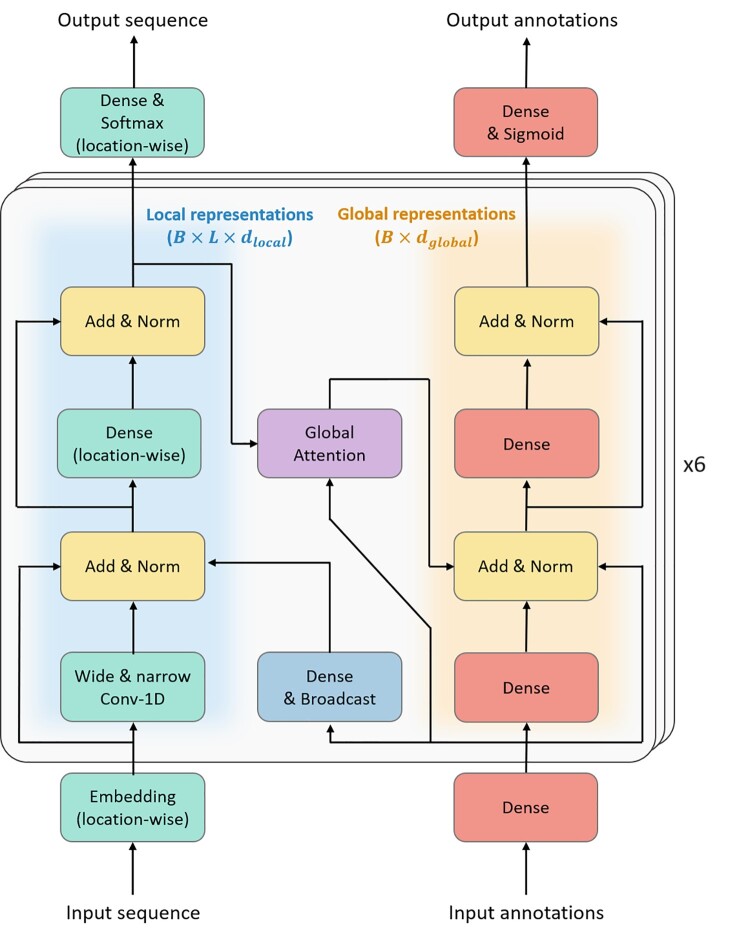
Summary: Self-supervised deep language modeling has shown unprecedented success across natural language tasks, and has recently been repurposed to biological sequences. However, existing models and pretraining methods are designed and optimized for text analysis. We introduce ProteinBERT, a deep language model specifically designed for proteins. Our pretraining scheme combines language modeling with a novel task of Gene Ontology (GO) annotation prediction. We introduce novel architectural elements that make the model highly efficient and flexible to long sequences. The architecture of ProteinBERT consists of both local and global representations, allowing end-to-end processing of these types of inputs and outputs. ProteinBERT obtains near state-of-the-art performance, and sometimes exceeds it, on multiple benchmarks covering diverse protein properties (including protein structure, post-translational modifications and biophysical attributes), despite using a far smaller and faster model than competing deep-learning methods. Overall, ProteinBERT provides an efficient framework for rapidly training protein predictors, even with limited labeled data. Availability and implementation: Code and pretrained model weights are available at https://github.com/nadavbra/protein_bert. Supplementary information: Supplementary data are available at Bioinformatics online.
Overview
The claims and statistics of this paper haven’t been checked yet.
Free: it reads the open-access text and checks the first 5 claims that cite a source we can check. Create a free account to check every claim.
Integrity signals
Registry
Cites
Statistics
Figures

Verification
Claims the paper makes
The claims and statistics of this paper haven’t been checked yet.
Free: it reads the open-access text and checks the first 5 claims that cite a source we can check. Create a free account to check every claim.
Claims other papers make about this one
Each is checked against this paper’s own text: does it say what the citing paper says it does?
The source backs part of the claim, not all of it — or backs it for a different population, condition or comparison.
In the citing paper
“In biology applications, deep learning has been employed to learn the structure of DNA and protein sequences [6,7]”
From Challenges in AI-driven Biomedical Multimodal Data Fusion and Analysis (2025) · cites this paper as [7]
Experimental — accuracy not yet measured
Self-check
Percentages, sums and reported differences re-computed from the paper’s own numbers.
The self-check needs the paper’s full text.
Citations
Cites
Basic local alignment search tool
Altschul, S. F., Gish, W., Miller, W., Myers, E. W., & Lipman, D. J. (1990) · Journal of Molecular Biology · doi:10.1006/jmbi.1990.9999 · Cited by 98,669
Gapped BLAST and PSI-BLAST: a new generation of protein database search programs
Altschul, S. (1997) · Nucleic Acids Research · doi:10.1093/nar/25.17.3389 · Cited by 73,302
BERT: Pre-training of Deep Bidirectional Transformers for Language Understanding
Devlin, J., Chang, M.-W., Lee, K., & Toutanova, K. (2019) · Proceedings of the 2019 Conference of the North American Chapter of the Association for Computational Linguistics: Human Language Technologies, Volume 1 (Long and Short Papers) · doi:10.18653/v1/n19-1423 · Cited by 54,325
Gene Ontology: tool for the unification of biology
Ashburner, M., Ball, C. A., Blake, J. A., Botstein, D., Butler, H., Cherry, J. M., Davis, A. P., Dolinski, K., Dwight, S. S., Eppig, J. T., et al. (2000) · Nature Genetics · doi:10.1038/75556 · Cited by 43,206
Pan, S. J., & Yang, Q. (2010) · IEEE Transactions on Knowledge and Data Engineering · doi:10.1109/tkde.2009.191 · Cited by 23,387 · cited 1×
“According to the transfer-learning paradigm, a model is first pre-trained on one task, and then fine-tuned on other downstream tasks of interest [7–9].”
MethodLanguage Models are Few-Shot Learners
Brown, T. B., Mann, B., Ryder, N., Subbiah, M., Kaplan, J., Dhariwal, P., Neelakantan, A., Shyam, P., Sastry, G., Askell, A., et al. (2020) · arXiv · doi:10.48550/arxiv.2005.14165 · Cited by 23,372
Advances in neural information processing systems 7
(1996) · Computers & Mathematics with Applications · doi:10.1016/s0898-1221(96)90463-0 · Cited by 14,281
Exploring the Limits of Transfer Learning with a Unified Text-to-Text Transformer
Raffel, C., Shazeer, N., Roberts, A., Lee, K., Narang, S., Matena, M., Zhou, Y., Li, W., & Liu, P. J. (2019) · arXiv · doi:10.48550/arxiv.1910.10683 · Cited by 10,929
XLNet: Generalized Autoregressive Pretraining for Language Understanding
Yang, Z., Dai, Z., Yang, Y., Carbonell, J., Salakhutdinov, R., & Le, Q. V. (2019) · arXiv · doi:10.48550/arxiv.1906.08237 · Cited by 6,687
Pfam: the protein families database
Finn, R. D., Bateman, A., Clements, J., Coggill, P., Eberhardt, R. Y., Eddy, S. R., Heger, A., Hetherington, K., Holm, L., Mistry, J., et al. (2014) · Nucleic Acids Research · doi:10.1093/nar/gkt1223 · Cited by 6,148 · cited 1×
“To this day, protein research is still dominated by classical sequence-similarity methods (such as BLAST [18] and hidden Markov models [19]), in contrast to domains such as computer vision which have become dominated by deep learning.”
Method
Research works printed but not linked: 2
- Abadi, 2016, 12th USENIX Symposium on Operating Systems Design and Implementation (OSDI16), 265
- Radford, 2019, Language models are unsupervised multitask learners, OpenAI Blog, 1, 9
Cited by
Items 601–700 of 1,005
DAMPE: Fusing intrinsic and extrinsic information for protein function prediction
Zheng, R., Wang, Z., Qiao, A., Xie, J., Rao, J., & Yang, Y. (2026) · Information Fusion · doi:10.1016/j.inffus.2026.104549 · Cited by 4
Macaulay, O., Jararweh, A., Arredondo, D., Tafoya, L. E., Poshiya, S., Hu, Y., Oyebamiji, O., Zhang, Y., Amos, C. I., Virupakshappa, K., et al. (2026) · Nature Communications · doi:10.1038/s41467-026-78454-4 · Cited by 4
Population Diversity at the Single-Cell Level
Gordon, M. G., Kathail, P., Choy, B., Kim, M. C., Mazumder, T., Gearing, M., & Ye, C. (2024) · Annual Review of Genomics and Human Genetics · doi:10.1146/annurev-genom-021623-083207 · Cited by 4
Protein language model-based prediction for plant miRNA encoded peptides
Yue, Y., Fan, H., Zhao, J., & Xia, J. (2025) · PeerJ Computer Science · doi:10.7717/peerj-cs.2733 · Cited by 4
Pandey, A., Chen, W., & Keten, S. (2025) · Journal of Chemical Information and Modeling · doi:10.1021/acs.jcim.5c00205 · Cited by 4
TSLAmy: A Novel Amyloid Hexapeptide Aggregation Prediction Approach Based on Two-Stage Learning
Huang, L., Jiang, Q., Xiong, Y., Zhang, G., & Shao, D. (2025) · IEEE Journal of Biomedical and Health Informatics · doi:10.1109/jbhi.2025.3567518 · Cited by 4
Shi, H., Lin, Y., Liu, D., & Zou, Q. (2026) · PLoS Computational Biology · doi:10.1371/journal.pcbi.1013397 · Cited by 4
Compression and k -Mer Based Approach for Anticancer Peptide Analysis
Ali, S., Ali, T. E., Chourasia, P., & Patterson, M. (2026) · IEEE Transactions on Computational Biology and Bioinformatics · doi:10.1109/tcbbio.2026.3685197 · Cited by 4
Guo, L., Yan, X., Lu, Y., Nie, S., Ge, M., Li, Y. R., Li, W., Zhang, L., Liang, D., Zhao, Y., et al. (2026) · Angewandte Chemie · doi:10.1002/ange.7768514 · Cited by 4
Guo, L., Yan, X., Lu, Y., Nie, S., Ge, M., Li, Y., Li, W., Zhang, X., Liang, D., Zhao, Y., et al. (2026) · Angewandte Chemie International Edition · doi:10.1002/anie.7768514 · Cited by 4
A Study on the Application of Protein Language Models in the Analysis of Membrane Proteins
Ghazikhani, H., & Butler, G. (2023) · Lecture notes in networks and systems · doi:10.1007/978-3-031-23210-7_14 · Cited by 4
A Novel Classification Method for Antimicrobial Peptides Based on ProteinBERT
Lü, J., Zhang, H., Jin, C., & Quan, X. (2023) · Chinese Control Conference (CCC) · doi:10.23919/ccc58697.2023.10240596 · Cited by 4
T Cell Receptor Protein Sequences and Sparse Coding: A Novel Approach to Cancer Classification
Tayebi, Z., Ali, S., Chourasia, P., Murad, T., & Patterson, M. (2023) · Communications in computer and information science · doi:10.1007/978-981-99-8141-0_17 · Cited by 4
Lv, Z., Wei, X., Hu, S., Lin, G., & Qiu, W. (2024) · Analytical Biochemistry · doi:10.1016/j.ab.2024.115460 · Cited by 4
Yadalam, P. K., Ramadoss, R., Rathinavelu, P. K., & Kumar, J. K. (2023) · Journal of Pioneering Medical Science · doi:10.61091/jpms202312311 · Cited by 4
A Transferability-Based Method for Evaluating the Protein Representation Learning
Hu, F., Zhang, W., Huang, H., Wang, L., Li, Y., & Yin, P. (2024) · IEEE Journal of Biomedical and Health Informatics · doi:10.1109/jbhi.2024.3370680 · Cited by 4
Improving Bi-LSTM for High Accuracy Protein Sequence Family Classifier
Roslidar, R., Brilianty, N., Alhamdi, M. J., Nurbadriani, C. N., Harnelly, E., & Zulkarnain, Z. (2024) · Indonesian Journal of Electrical Engineering and Informatics (IJEEI) · doi:10.52549/.v12i1.4732 · Cited by 4
EsmTemp - Transfer Learning Approach for Predicting Protein Thermostability
Sułek, A., Jończyk, J., Orzechowski, P., Hamed, A. A., & Wodziński, M. (2024) · Lecture notes in computer science · doi:10.1007/978-3-031-63759-9_23 · Cited by 4
Llama-TCR: Generate De Novo TCR with Large Language Model
Zhou, J., Wu, Z., Man, M., Wu, Y., Linh, L. D., Dai, M., Liu, Y., & Goh, R. S. M. (2024) · IEEE Conference on Artificial Intelligence (CAI) · doi:10.1109/cai59869.2024.00158 · Cited by 4
Niu, B., Lee, B., Wang, L., Chen, W., & Johnson, J. (2024) · Antibodies · doi:10.3390/antib13030074 · Cited by 4
Sun, J., Song, J., Kim, J., Kang, S., Park, E., Seo, S.-W., & Min, K. (2024) · RSC Advances · doi:10.1039/d4ra06285j · Cited by 4
Improving drug–target affinity prediction by adaptive self-supervised learning
Ye, Q., & Sun, Y. (2025) · PeerJ Computer Science · doi:10.7717/peerj-cs.2622 · Cited by 4
Zhang, J., Yan, Z., Zeng, H., & Zhu, Z. (2024) · IEEE International Conference on Bioinformatics and Biomedicine (BIBM) · doi:10.1109/bibm62325.2024.10822859 · Cited by 4
Unaligning Everything: Or Aligning Any Text to Any Image in Multimodal Models
Salman, S., Shams, M., Nishino, M., & Liu, X. (2025) · International Joint Conference on Neural Networks (IJCNN) · doi:10.1109/ijcnn64981.2025.11228287 · Cited by 4
Luo, X., Tong, F., Zhao, W., Zheng, X., Li, J., Li, J., & Zhao, D. (2023) · mAbs · doi:10.1080/19420862.2023.2285904 · Cited by 4
Yehorova, D., Crean, R., Kasson, P. M., & Kamerlin, S. C. L. (2024) · Faraday Discussions · doi:10.1039/d4fd00018h · Cited by 4
A Universal Non-parametric Approach for Improved Molecular Sequence Analysis
Ali, S., Ali, T. E., Chourasia, P., & Patterson, M. (2024) · Lecture notes in computer science · doi:10.1007/978-981-97-2238-9_15 · Cited by 4
Predicting enzyme substrate chemical structure with protein language modelsPreprint
Jinich, A., Nazia, S. Z., Tellez, A. V., Rappoport, D., AlQuraishi, M., & Rhee, K. Y. (2022) · bioRxiv (Cold Spring Harbor Laboratory) · doi:10.1101/2022.09.28.509940 · Cited by 4
ProtFIM: Fill-in-Middle Protein Sequence Design via Protein Language ModelsPreprint
Lee, Y., & Yu, H. (2023) · arXiv (Cornell University) · doi:10.48550/arxiv.2303.16452 · Cited by 4
What the protein!? Computational methods for predicting microbial protein functionsPreprint
Grigson, S. R., & Edwards, R. P. (2023) · OSF Preprints (OSF Preprints) · doi:10.31219/osf.io/jhmta · Cited by 4
Do Domain-Specific Protein Language Models Outperform General Models on Immunology-Related Tasks?Preprint
Deutschmann, N., Pélissier, A., Weber, A., Gao, S., Bogojeska, J., & Martínez, M. R. (2023) · bioRxiv (Cold Spring Harbor Laboratory) · doi:10.1101/2023.10.17.562795 · Cited by 4
Fang, X., Yu, C., Tian, S., & Liu, H. (2024) · arXiv (Cornell University) · doi:10.48550/arxiv.2406.16995 · Cited by 4
Shah, A., & Jayaratnam, S. (2024) · arXiv (Cornell University) · doi:10.48550/arxiv.2411.05966 · Cited by 4
LLaMA-Gene: A General-purpose Gene Task Large Language Model Based on Instruction Fine-tuningPreprint
Wang, L. (2024) · arXiv (Cornell University) · doi:10.48550/arxiv.2412.00471 · Cited by 4
LANTERN: Leveraging Large Language Models and Transformers for Enhanced Molecular InteractionsPreprint
Ha, C. N., Pham, P., & Hy, T. S. (2025) · bioRxiv (Cold Spring Harbor Laboratory) · doi:10.1101/2025.02.10.637522 · Cited by 4
EC-Bench: a benchmark for enzyme commission number prediction
Davoudi, S., Henry, C. S., Miller, C. S., & Banaei-Kashani, F. (2026) · Bioinformatics Advances · doi:10.1093/bioadv/vbag004 · Cited by 3
Zhu, L., Chen, W., & Yang, S. (2025) · Expert Systems with Applications · doi:10.1016/j.eswa.2025.127991 · Cited by 3
Liu, Y., Wang, X., Zhong, H., Zhai, J., Gong, X., & Lu, T. (2025) · Briefings in Bioinformatics · doi:10.1093/bib/bbaf242 · Cited by 3
NeuroPpred-MSN: A Neuropeptide Prediction Model Based on Multi-feature Fusion and Siamese Networks
Wen, J., Chen, M., Shen, Y., Wang, H., Wei, Z., Gu, L., & Zhu, X. (2025) · Interdisciplinary Sciences Computational Life Sciences · doi:10.1007/s12539-025-00730-6 · Cited by 3
Pre-trained language models for protein and molecular design
Zhang, E., Pan, Z., Yao, Z., Dong, T., Chen, G., Deng, T., Chen, S., & Chen, C. Y. (2025) · Physical Chemistry Chemical Physics · doi:10.1039/d5cp00785b · Cited by 3
A Survey of Pretrained Protein Language Models
Pokharel, S., Pratyush, P., Chaudhari, M., Heinzinger, M., Caragea, D., Saigo, H., & KC, D. B. (2025) · Methods in molecular biology · doi:10.1007/978-1-0716-4623-6_1 · Cited by 4
Advancing the accuracy of clathrin protein prediction through multi-source protein language models
Shoombuatong, W., Schaduangrat, N., Mookdarsanit, P., Nikom, J., & Mookdarsanit, L. (2025) · Scientific Reports · doi:10.1038/s41598-025-08510-4 · Cited by 3
Li, X. D., Perez, R. M., Ferrie, J. J., Petersson, E. J., & Giannakoulias, S. G. (2025) · International Journal of Molecular Sciences · doi:10.3390/ijms26157125 · Cited by 3
Can Large Language Models Classify and Generate Antimicrobial Resistance Genes?
Yoo, H., Shin, H., & ROSEN, G. L. (2025) · Workshop on Biomedical Language Processing (BioNLP) · doi:10.18653/v1/2025.bionlp-1.21 · Cited by 3
An efficient machine-learning framework for predicting protein post-translational modification sites
Elreify, H. M., El‐Samie, F. E. A., Dessouky, M. I., Torkey, H., El‐Khamy, S. E., & Shalaby, W. A. (2025) · Scientific Reports · doi:10.1038/s41598-025-13178-x · Cited by 3
Graph based link prediction for epilepsy drug discovery
Shi, X., Sundareswaran, R., Shanmugapriya, M., Jayaguptha, N., & Khan, A. (2025) · Scientific Reports · doi:10.1038/s41598-025-14550-7 · Cited by 3
B‐EPIC: A Transformer‐Based Language Model for Decoding B Cell Immunodominance Patterns
Liang, J., Wang, Y., Sun, C., Liu, T., Wu, Z., Chen, L., Chen, L., Li, P., Li, Z., Zhang, C., et al. (2025) · Advanced Science · doi:10.1002/advs.202508896 · Cited by 3
TCNeKP: A Novel Deep Learning Architecture for Enzyme Catalytic Activity Prediction
Lei, Y., Liu, R., Yu, H., Xu, W., Long, T., & Hu, M. Y. (2025) · Journal of Chemical Information and Modeling · doi:10.1021/acs.jcim.5c01830 · Cited by 3
Directed optimization and generation of yeast promoter sequences driven by deep learning
Wang, C., Li, S., Guo, X., Geng, S., Qu, K., Li, M., Wang, C., Zhou, X., Ren, W., Pan, S., et al. (2025) · International Journal of Biological Macromolecules · doi:10.1016/j.ijbiomac.2025.148505 · Cited by 3
Yang, K., Chen, Y., Wei, Y., Xiang, M., Zhuo, L., Fu, X., Cao, D., & Zhang, W. (2025) · Journal of Chemical Information and Modeling · doi:10.1021/acs.jcim.5c01907 · Cited by 3
Leveraging large language models for enzymatic reaction prediction and characterization
Fruscia, L. D., & Weber, J. M. (2025) · Digital Discovery · doi:10.1039/d5dd00187k · Cited by 3
M3Site: multiclass multimodal learning for protein active site identification and classification
Ouyang, S., Luo, Y., Cai, H., Su, K., Liao, F., Zhan, N., Zhao, H., Yin, T., Zhao, L., & Shan, D. (2025) · Briefings in Bioinformatics · doi:10.1093/bib/bbaf590 · Cited by 3
Zhang, Y., Li, J., Zhao, S. J., Tan, H., Sun, H., Xiong, Y., & Wei, D. (2025) · IEEE Journal of Biomedical and Health Informatics · doi:10.1109/jbhi.2025.3625158 · Cited by 3
Elucidating the Structure and Activation Mechanisms of GPCRs Using Modern Computational and AI Tools
Uba, A. İ. (2025) · Cell Biochemistry and Biophysics · doi:10.1007/s12013-025-01977-y · Cited by 3
Arora, P., Abhigyan, R., Periwal, N., Agrawal, L., Sood, V., & Kaur, B. (2026) · Scientific Reports · doi:10.1038/s41598-026-35977-6 · Cited by 3
Accelerated discovery of thermophilic biocatalysts for marine polysaccharide bioprocessing via ETopt
Liu, C., Li, B., Jiang, H. W., Sun, J., Ren, J., Huang, X., Xu, P., Li, M., Xin, Y., Chen, S., et al. (2026) · International Journal of Biological Macromolecules · doi:10.1016/j.ijbiomac.2026.151068 · Cited by 3
Ren, C., He, D., & Huang, J. (2026) · Briefings in Bioinformatics · doi:10.1093/bib/bbag095 · Cited by 3
Repurposing AI for protein interactions and dynamics: opportunities, limitations, and lessons
Özdemir, E. S., Jang, H., Nussinov, R., Gürsoy, A., & Keskin, Ö. (2026) · Frontiers in Bioinformatics · doi:10.3389/fbinf.2026.1749317 · Cited by 3
Yan, K., Li, M., Chen, S., Liu, T., Hao, J., Liu, B., & Li, Z. (2026) · PLoS Computational Biology · doi:10.1371/journal.pcbi.1014084 · Cited by 3
A lightweight TcrLM model predicts T cell receptor and epitope binding specificity
Yu, C., Fang, X., Tian, S., Luo, J., & Liu, H. (2026) · Cell Reports Methods · doi:10.1016/j.crmeth.2026.101378 · Cited by 3
An artificial intelligence model for accurate drug-target affinity prediction in medicinal chemistry
Mi, J., Sun, J. H., Li, J. S., Li, C., & Wan, J. (2026) · European Journal of Medicinal Chemistry · doi:10.1016/j.ejmech.2026.118840 · Cited by 3
Su, S., Tanaka, N., Ushiku, Y., & Takahashi, K. (2026) · ACS Applied Materials & Interfaces · doi:10.1021/acsami.5c25223 · Cited by 3
Jayawardena, A., Hung, A., Qiao, G. G., & Hajizadeh, E. (2026) · Progress in Polymer Science · doi:10.1016/j.progpolymsci.2026.102119 · Cited by 3
Feng, Y., Fan, L., Wen, Q., Xu, X. X., He, Q., Fu, X., Liu, J., Tian, J., Yang, M., & Xing, J. (2026) · Journal of Agricultural and Food Chemistry · doi:10.1021/acs.jafc.6c00484 · Cited by 3
Hierarchical Contrastive Learning for Protein–Protein Interaction Prediction Across Organisms
Liu, S., Liang, B., Fang, Y., Jiang, Z., & Xu, R. (2026) · International Journal of Molecular Sciences · doi:10.3390/ijms27146242 · Cited by 3
NucleicBERT interprets RNA sequence space through self-supervised language modelling
Upadhyay, U., Herold, J. M., Götz, M., & Schug, A. H. (2026) · Nature Machine Intelligence · doi:10.1038/s42256-026-01295-9 · Cited by 3
HormoNet: a deep learning approach for hormone-drug interaction prediction
Emami, N., & Ferdousi, R. (2024) · BMC Bioinformatics · doi:10.1186/s12859-024-05708-7 · Cited by 3
Systematic discovery of DNA-binding tandem repeat proteins
Hu, X., Zhang, X. J., Sun, W. C., Liu, C., Deng, P., Cao, Y., Zhang, C., Xu, N., Zhang, T., Zhang, Y. E., et al. (2024) · Nucleic Acids Research · doi:10.1093/nar/gkae710 · Cited by 3
Efficiently Predicting Mutational Effect on Homologous Proteins by Evolution Encoding
Zhong, Z., & Mottin, D. (2024) · Lecture notes in computer science · doi:10.1007/978-3-031-70368-3_24 · Cited by 3
Recent advances in the integration of protein mechanics and machine learning
Chen, Y., & Chang, S. (2024) · Extreme Mechanics Letters · doi:10.1016/j.eml.2024.102236 · Cited by 3
AI for Science in the Era of Large Language Models
Bi, Z., Xu, M., Tang, J., & Wang, X. (2024) · doi:10.18653/v1/2024.emnlp-tutorials.5 · Cited by 3
SCOP: A Sequence-Structure Contrast-Aware Framework for Protein Function Prediction
Ma, R., He, C., Zheng, H., Wang, X., Wang, H., Zhang, Y., & Duan, L. (2024) · IEEE International Conference on Bioinformatics and Biomedicine (BIBM) · doi:10.1109/bibm62325.2024.10822541 · Cited by 3
CPE-Pro: A Structure-Sensitive Deep Learning Method for Protein Representation and Origin Evaluation
Gou, W., Ge, W., Tan, Y., Li, M., Fan, G., & Yu, H. (2025) · Interdisciplinary Sciences Computational Life Sciences · doi:10.1007/s12539-025-00732-4 · Cited by 3
Mind the gap: An embedding guide to safely travel in sequence space
Wu, A., Trolliet, Q., Rajendran, A., Lála, J., & Angioletti‐Uberti, S. (2026) · PLoS Computational Biology · doi:10.1371/journal.pcbi.1014433 · Cited by 3
Yao, L., Wang, F., Xie, P., Guan, J., Zhao, Z., He, X., Liu, X., Chiang, Y., & Lee, T.-Y. (2025) · Journal of Chemical Information and Modeling · doi:10.1021/acs.jcim.5c00860 · Cited by 3
Liu, J., Luo, Z., Wang, R., Li, X., Sun, Y., Chen, Z., & Zhang, Y. (2025) · PLoS Computational Biology · doi:10.1371/journal.pcbi.1013268 · Cited by 3
Zero-shot learning with subsequence reordering pretraining for compound-protein interaction
Zhang, H., Liu, Z., Meng, K., Chen, J., Wu, J. X., Du, B., Lin, D., Che, Y., & Hu, W. (2026) · Knowledge-Based Systems · doi:10.1016/j.knosys.2026.115587 · Cited by 3
Li, N., Yang, Z., Wang, J., & Lin, H. (2023) · IEEE Journal of Biomedical and Health Informatics · doi:10.1109/jbhi.2023.3273333 · Cited by 3
PCD2Vec: A Poisson Correction Distance Based Approach for Viral Host Classification
Ali, S., Murad, T., & Patterson, M. (2023) · International Joint Conference on Neural Networks (IJCNN) · doi:10.1109/ijcnn54540.2023.10191311 · Cited by 3
PDB2Vec: Using 3D Structural Information for Improved Protein Analysis
Ali, S., Chourasia, P., & Patterson, M. (2023) · Lecture notes in computer science · doi:10.1007/978-981-99-7074-2_29 · Cited by 3
Malik, M. S., Le, V. T., Shah, S. M. A., & Ou, Y. (2024) · Journal of Biomolecular Structure and Dynamics · doi:10.1080/07391102.2024.2431664 · Cited by 3
Peptide Sequencing Via Protein Language Models
Pham, T. L. H., Saurav, J. R., Omere, A. A., Heyl, C. J., Nasr, M. S., Reynolds, C. R., Veerla, J. P., Shang, H. H., Jaworski, J. W., Ravenscraft, A., et al. (2024) · ACM International Conference on Bioinformatics, Computational Biology, and Health Informatics (ACM-BCB) · doi:10.1145/3698587.3701385 · Cited by 3
Ji, Y., Shang, J., Guan, J., Zou, W. H., Liao, H., Tang, X., & Sun, Y. (2024) · GigaScience · doi:10.1093/gigascience/giae104 · Cited by 3
Karakoltzidis, A., Karakitsios, S., & Sarigiannis, D. A. (2025) · NAM journal. · doi:10.1016/j.namjnl.2025.100012 · Cited by 3
Hist2Vec: A histogram and kernel-based embedding method for molecular sequence analysis
Ali, S., Ali, T. E., Mansoor, H., Chourasia, P., & Patterson, M. (2025) · Expert Systems with Applications · doi:10.1016/j.eswa.2025.126859 · Cited by 3
Zhang, Y., Deng, J., Dong, M., Wu, J., Zhao, Q., Gao, X., & Xiong, D. (2025) · Neural Networks · doi:10.1016/j.neunet.2025.107476 · Cited by 4
Leipart, V., Carmona, O. G., Orengo, C. A., Fraternali, F., & Amdam, G. V. (2025) · iScience · doi:10.1016/j.isci.2025.113241 · Cited by 3
Quintana, F., Treangen, T. J., & Kavraki, L. E. (2023) · ACM International Conference on Bioinformatics, Computational Biology, and Health Informatics (ACM-BCB) · doi:10.1145/3584371.3612953 · Cited by 3
Automated annotation of disease subtypes
Ofer, D., & Linial, M. (2024) · Journal of Biomedical Informatics · doi:10.1016/j.jbi.2024.104650 · Cited by 3
Self-citationWang, Z., Li, X.-G., Xie, Y., Wen, Z., Jin, R., Takada, H., & Nagatomi, R. (2024) · IEEE Access · doi:10.1109/access.2024.3416461 · Cited by 3
Mishra, S., Misra, O., & Bhattacharya, M. (2024) · IEEE International Conference on Bioinformatics and Biomedicine (BIBM) · doi:10.1109/bibm62325.2024.10821747 · Cited by 3
Peptriever: a Bi-Encoder approach for large-scale protein–peptide binding search
Gurvich, R., Markel, G., Tanoli, Z., & Meirson, T. (2024) · Bioinformatics · doi:10.1093/bioinformatics/btae303 · Cited by 3
Whats next? Forecasting scientific research trendsPreprint
Ofer, D., & Linial, M. (2023) · arXiv (Cornell University) · doi:10.48550/arxiv.2305.04133 · Cited by 3
Self-citationMulti-level Protein Representation Learning for Blind Mutational Effect PredictionPreprint
Tan, Y., Zhou, B., Jiang, Y., Wang, Y., & Hong, L. (2023) · arXiv.org · doi:10.48550/arxiv.2306.04899 · Cited by 3
DYMAG: Rethinking Message Passing Using Dynamical-systems-based WaveformsPreprint
Bhaskar, D., Sun, X., Zhang, Y., Xu, C., Afrasiyabi, A., Viswanath, S., Fasina, O., Nickel, M., Wolf, G., Perlmutter, M., et al. (2023) · arXiv (Cornell University) · doi:10.48550/arxiv.2309.09924 · Cited by 3
FS-mutant: A Few-shot Learning Benchmark for Protein Mutants MiningPreprint
Li, M., Yu, H., Fan, G., Zhou, Z., Tan, P., & Hong, L. (2024) · Research Square · doi:10.21203/rs.3.rs-3987561/v1 · Cited by 3
Towards a Dataset for State of the Art Protein Toxin ClassificationPreprint
Challacombe, C. A., & Haas, N. S. (2024) · bioRxiv (Cold Spring Harbor Laboratory) · doi:10.1101/2024.04.14.589430 · Cited by 3
Semantical and Geometrical Protein Encoding Toward Enhanced Bioactivity and ThermostabilityPreprint
Tan, Y., Zhong, B., Zheng, L., Fan, G., & Hong, L. (2024) · eLife · doi:10.7554/elife.98033.1 · Cited by 3
Fine-tuning of conditional Transformers for the generation of functionally characterized enzymesPreprint
Nicolini, M., Saitto, E., Franco, R. E. J., Cavalleri, E., Mesiti, M., Galeano, A., Malchiodi, D., Paccanaro, A., Robinson, P. N., Casiraghi, E., et al. (2024) · bioRxiv (Cold Spring Harbor Laboratory) · doi:10.1101/2024.08.10.607430 · Cited by 3
RNA-Protein Interaction Classification via Sequence EmbeddingsPreprint
Matus, D., Runge, F., Franke, J. K. H., Gerne, L., Uhl, M., Hutter, F., & Backofen, R. (2024) · bioRxiv (Cold Spring Harbor Laboratory) · doi:10.1101/2024.11.08.622607 · Cited by 3
Metadata
- Authors
- Brandes, N., Ofer, D., Peleg, Y., Rappoport, N., & Linial, M.
- Affiliations
- Hebrew University of Jerusalem (IL)
- Deep Trading Ltd. , Haifa 3508401, Israel
- Ben-Gurion University of the Negev (IL)
- Department of Biological Chemistry, The Alexander Silberman Institute of Life Sciences, The Hebrew University of Jerusalem, Jerusalem 9190401, Israel
- Corresponding author
- Brandes, Nadav
- Venue
- Bioinformatics
- Publisher
- Oxford University Press (OUP)
- Published
- 2022-02-10
- Volume
- 38
- Issue
- 8
- Pages
- 2102-2110
- ISSN
- 1367-4803 (ISSN-L)
- 1367-4811
- PMC
- PMC9386727
- OpenAlex
- W4205773061
- Cited by
- 1,009
- References
- 44
- Citations by year
- 2026: 248 · 2025: 355 · 2024: 241 · 2023: 127 · 2022: 34
- FWCI
- 62.19
- Type
- journal article
- Language
- en
- Open access
- hybrid
- doi.org
- Licence
- Locations
- Bioinformatics (publishedVersion, cc-by)
- bioRxiv (Cold Spring Harbor Laboratory) (acceptedVersion, cc-by)
- PubMed Central (publishedVersion, cc-by)
- PubMed (publishedVersion)
- Funders
- Israel Science Foundation (2753/20)
- Topics
- Life Sciences › Biochemistry, Genetics and Molecular Biology › Molecular Biology › Machine Learning in Bioinformatics
- Life Sciences › Biochemistry, Genetics and Molecular Biology › Molecular Biology › Protein Structure and Dynamics
- Physical Sciences › Computer Science › Artificial Intelligence › Machine Learning in Healthcare
- Keywords
- protein sequence representation, protein function prediction, protein structure prediction, long sequence modeling
- MeSH terms
- Deep Learning, Amino Acid Sequence, Language, Natural Language Processing, Proteins
About these checks
Registry, retraction, Cites and statistics results are computed, not judged, with one exception: a printed reference that no index lists is read once by a model before it counts as a citation error. Claims are extracted by a model and kept only when their quote appears verbatim in the text; each cited source is then checked, with a model’s help, for whether it says what the claim relies on. Those verdicts can be wrong — read the claim’s quote and the cited source before relying on one.
Statistics and arithmetic are recomputed, not judged.
Confidence bands are shown only for fields calibrated on our annotated test set. None is calibrated yet, so no band is shown.
What counts as a claim ›How we measure confidence ›How we check this ›
Are you an author, or do you see a problem with this page? Request a review
Data sources
Bibliographic data: Semantic Scholar, OpenAlex, Crossref.
Contains information from the Semantic Scholar Academic Graph Datasets, made available under the ODC Attribution License (ODC-BY 1.0).
Semantic Scholar’s data is described in: Kinney, R., et al. (2023). The Semantic Scholar Open Data Platform. arXiv:2301.10140.
