

ProteinBERT: a universal deep-learning model of protein sequence and function
Open accessPublished version of a preprint
The DOI matches its Crossref record; 48 of the 48 references it cites were found in a registry or an index.
Abstract
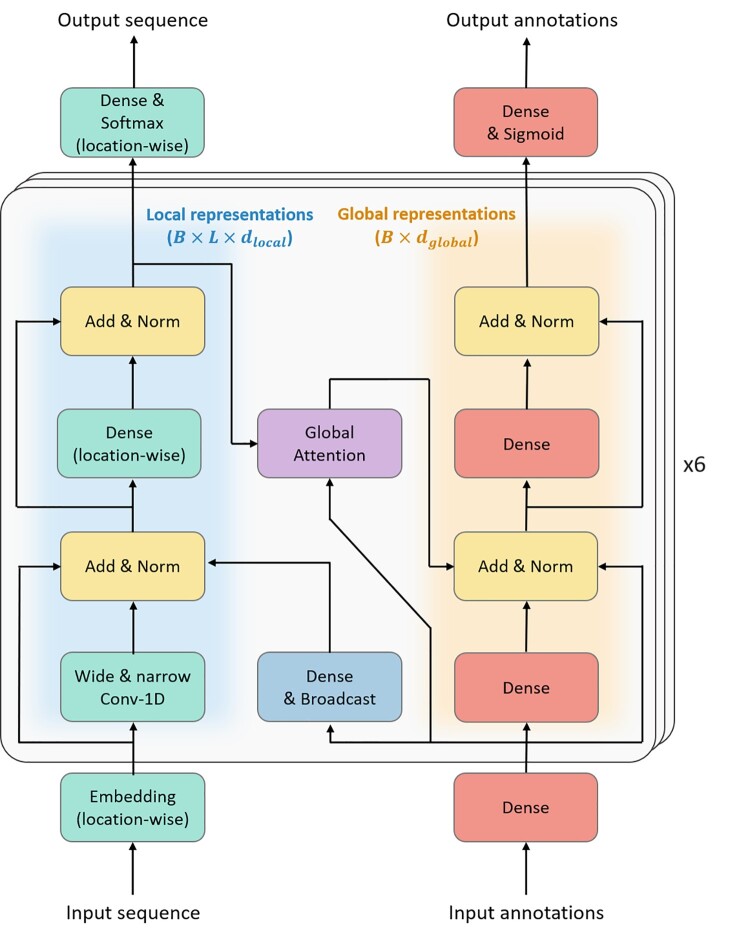
Summary: Self-supervised deep language modeling has shown unprecedented success across natural language tasks, and has recently been repurposed to biological sequences. However, existing models and pretraining methods are designed and optimized for text analysis. We introduce ProteinBERT, a deep language model specifically designed for proteins. Our pretraining scheme combines language modeling with a novel task of Gene Ontology (GO) annotation prediction. We introduce novel architectural elements that make the model highly efficient and flexible to long sequences. The architecture of ProteinBERT consists of both local and global representations, allowing end-to-end processing of these types of inputs and outputs. ProteinBERT obtains near state-of-the-art performance, and sometimes exceeds it, on multiple benchmarks covering diverse protein properties (including protein structure, post-translational modifications and biophysical attributes), despite using a far smaller and faster model than competing deep-learning methods. Overall, ProteinBERT provides an efficient framework for rapidly training protein predictors, even with limited labeled data. Availability and implementation: Code and pretrained model weights are available at https://github.com/nadavbra/protein_bert. Supplementary information: Supplementary data are available at Bioinformatics online.
Overview
The claims and statistics of this paper haven’t been checked yet.
Free: it reads the open-access text and checks the first 5 claims that cite a source we can check. Create a free account to check every claim.
Integrity signals
Registry
Cites
Statistics
Figures

Verification
Claims the paper makes
The claims and statistics of this paper haven’t been checked yet.
Free: it reads the open-access text and checks the first 5 claims that cite a source we can check. Create a free account to check every claim.
Claims other papers make about this one
Each is checked against this paper’s own text: does it say what the citing paper says it does?
The source backs part of the claim, not all of it — or backs it for a different population, condition or comparison.
In the citing paper
“In biology applications, deep learning has been employed to learn the structure of DNA and protein sequences [6,7]”
From Challenges in AI-driven Biomedical Multimodal Data Fusion and Analysis (2025) · cites this paper as [7]
Experimental — accuracy not yet measured
Self-check
Percentages, sums and reported differences re-computed from the paper’s own numbers.
The self-check needs the paper’s full text.
Citations
Cites
Basic local alignment search tool
Altschul, S. F., Gish, W., Miller, W., Myers, E. W., & Lipman, D. J. (1990) · Journal of Molecular Biology · doi:10.1006/jmbi.1990.9999 · Cited by 98,669
Gapped BLAST and PSI-BLAST: a new generation of protein database search programs
Altschul, S. (1997) · Nucleic Acids Research · doi:10.1093/nar/25.17.3389 · Cited by 73,302
BERT: Pre-training of Deep Bidirectional Transformers for Language Understanding
Devlin, J., Chang, M.-W., Lee, K., & Toutanova, K. (2019) · Proceedings of the 2019 Conference of the North American Chapter of the Association for Computational Linguistics: Human Language Technologies, Volume 1 (Long and Short Papers) · doi:10.18653/v1/n19-1423 · Cited by 54,325
Gene Ontology: tool for the unification of biology
Ashburner, M., Ball, C. A., Blake, J. A., Botstein, D., Butler, H., Cherry, J. M., Davis, A. P., Dolinski, K., Dwight, S. S., Eppig, J. T., et al. (2000) · Nature Genetics · doi:10.1038/75556 · Cited by 43,206
Pan, S. J., & Yang, Q. (2010) · IEEE Transactions on Knowledge and Data Engineering · doi:10.1109/tkde.2009.191 · Cited by 23,387 · cited 1×
“According to the transfer-learning paradigm, a model is first pre-trained on one task, and then fine-tuned on other downstream tasks of interest [7–9].”
MethodLanguage Models are Few-Shot Learners
Brown, T. B., Mann, B., Ryder, N., Subbiah, M., Kaplan, J., Dhariwal, P., Neelakantan, A., Shyam, P., Sastry, G., Askell, A., et al. (2020) · arXiv · doi:10.48550/arxiv.2005.14165 · Cited by 23,372
Advances in neural information processing systems 7
(1996) · Computers & Mathematics with Applications · doi:10.1016/s0898-1221(96)90463-0 · Cited by 14,281
Exploring the Limits of Transfer Learning with a Unified Text-to-Text Transformer
Raffel, C., Shazeer, N., Roberts, A., Lee, K., Narang, S., Matena, M., Zhou, Y., Li, W., & Liu, P. J. (2019) · arXiv · doi:10.48550/arxiv.1910.10683 · Cited by 10,929
XLNet: Generalized Autoregressive Pretraining for Language Understanding
Yang, Z., Dai, Z., Yang, Y., Carbonell, J., Salakhutdinov, R., & Le, Q. V. (2019) · arXiv · doi:10.48550/arxiv.1906.08237 · Cited by 6,687
Pfam: the protein families database
Finn, R. D., Bateman, A., Clements, J., Coggill, P., Eberhardt, R. Y., Eddy, S. R., Heger, A., Hetherington, K., Holm, L., Mistry, J., et al. (2014) · Nucleic Acids Research · doi:10.1093/nar/gkt1223 · Cited by 6,148 · cited 1×
“To this day, protein research is still dominated by classical sequence-similarity methods (such as BLAST [18] and hidden Markov models [19]), in contrast to domains such as computer vision which have become dominated by deep learning.”
Method
Research works printed but not linked: 2
- Abadi, 2016, 12th USENIX Symposium on Operating Systems Design and Implementation (OSDI16), 265
- Radford, 2019, Language models are unsupervised multitask learners, OpenAI Blog, 1, 9
Cited by
Items 301–400 of 1,005
Han, R., Liu, X., Pan, T., Xu, J., Wang, X., Lan, W., Li, Z., Wang, Z., Song, J., Wang, G., et al. (2025) · Proceedings of the AAAI Conference on Artificial Intelligence · doi:10.1609/aaai.v39i1.32001 · Cited by 17
DeepProtein: deep learning library and benchmark for protein sequence learning
Xie, J., Li, Y., & Fu, T. (2025) · Bioinformatics · doi:10.1093/bioinformatics/btaf165 · Cited by 16
Biomolecular Interaction Prediction: The Era of AI
Wang, H., Meng, X., & Zhang, Y. (2025) · Advanced Science · doi:10.1002/advs.202509501 · Cited by 16
Cheng, S., Chen, Y., Cao, Y. H., Huang, X., Liu, B., Liu, M., Jiang, S., & Jiang, L. (2025) · Trends in Food Science & Technology · doi:10.1016/j.tifs.2025.105216 · Cited by 16
Latent Diffusion Models for Controllable RNA Sequence GenerationPreprint
Huang, K., Yang, Y., Fu, K., Chu, Y., Cong, L., & Wang, M. (2024) · arXiv (Cornell University) · doi:10.48550/arxiv.2409.09828 · Cited by 16
Zhong, G., Zhao, Y., Zhuang, D., Chung, W. K., & Shen, Y. (2025) · Nature Communications · doi:10.1038/s41467-025-62318-4 · Cited by 15
“At the genetic level, only about 2% of clinically observed missense variants are classi fi ed as pathogenic or benign, while the majority remain of uncertain clinical signi fi cance 8 .”
Kulikova, A. V., Diaz, D. J., Chen, T., Cole, T. J., Ellington, A. D., & Wilke, C. O. (2023) · Scientific Reports · doi:10.1038/s41598-023-40247-w · Cited by 15
Protein Function Prediction With Functional and Topological Knowledge of Gene Ontology
Zhao, Y., Yang, Z., Hong, Y., Yang, Y., Wang, L., Zhang, Y., Lin, H., & Wang, J. (2023) · IEEE Transactions on NanoBioscience · doi:10.1109/tnb.2023.3278033 · Cited by 15
Advances in protein solubility and thermodynamics: quantification, instrumentation, and perspectives
Ferreira, J., & Castro, F. (2023) · CrystEngComm · doi:10.1039/d3ce00757j · Cited by 15
Predicting Protein Functions Based on Heterogeneous Graph Attention Technique
Zhao, Y., Yang, Z., Wang, L., Zhang, Y., Lin, H., & Wang, J. (2024) · IEEE Journal of Biomedical and Health Informatics · doi:10.1109/jbhi.2024.3357834 · Cited by 15
Wang, Z., Meng, J., Dai, Q., Li, H., Xia, S., Yang, R., & Luan, Y. (2024) · Expert Systems with Applications · doi:10.1016/j.eswa.2024.124168 · Cited by 15
Fine-tuning protein embeddings for functional similarity evaluation
Dickson, A. M., & Mofrad, M. R. K. (2024) · Bioinformatics · doi:10.1093/bioinformatics/btae445 · Cited by 16
Feng, T., Chen, X. G., Wu, S. V., Tang, W., Zhou, H., & Fang, Z. (2025) · Microbial Genomics · doi:10.1099/mgen.0.001355 · Cited by 15
Angelis, J., Schröder, E. A., Xiao, Z., Gabriel, W., & Wilhelm, M. (2025) · PROTEOMICS · doi:10.1002/pmic.202400398 · Cited by 15
Han, Y., He, F., Shao, Q., Wang, D., & Xu, D. H. (2025) · Biomolecules · doi:10.3390/biom15060843 · Cited by 15
Wu, W., Wang, C., Chen, L., Yin, M., Zhu, Y., Fu, K., Ye, J., Xiong, H., & Wang, Z. (2025) · ACM SIGKDD Conference on Knowledge Discovery and Data Mining (KDD) · doi:10.1145/3711896.3737138 · Cited by 17
A pan-disease and population-level single-cell TCRαβ repertoire reference
Xue, Z., Wu, L., Gao, B. X., Tian, R., Chen, Y., Qi, Y., Dong, T., Bai, Y., Zhao, Y. S., He, B., et al. (2025) · Cell Discovery · doi:10.1038/s41421-025-00836-7 · Cited by 15
Transfer learning on protein language models improves antimicrobial peptide classification
Georgoulis, E., Zervou, M. A., & Pantazis, Y. (2025) · Scientific Reports · doi:10.1038/s41598-025-21223-y · Cited by 15
Enhancing kinase-inhibitor activity and selectivity prediction through contrastive learning
Tian, Y., Lu, R., Gong, X., Zhao, W., Li, Y., Wang, X., Jia, X., Li, Q., Yang, Y., Tong, H. H. Y., et al. (2025) · Nature Communications · doi:10.1038/s41467-025-65869-8 · Cited by 15
Bal, R., Xiao, Y., & Wang, W. W. (2023) · arXiv (Cornell University) · doi:10.48550/arxiv.2310.04017 · Cited by 15
(2023) · doi:10.1101/2023.03.20.533508 · Cited by 15
Fine-tuning protein language models unlocks the potential of underrepresented viral proteomes
Sawhney, R., Ferrell, B. D., Dejean, T., Schreiber, Z., Harrigan, W., Polson, S. W., Wommack, K. E., & Belcaid, M. (2025) · PeerJ · doi:10.7717/peerj.19919 · Cited by 14
Large language models transform biological research: from architecture to utilization
Wang, T., & Luo, Z. (2025) · Science China Information Sciences · doi:10.1007/s11432-024-4466-3 · Cited by 14
Wen, T., Wang, J., Lu, R., Tan, S., Li, P., Yao, X., Liu, H., Yi, Z., Li, L., Liu, S., et al. (2023) · European Journal of Medicinal Chemistry · doi:10.1016/j.ejmech.2023.115199 · Cited by 14
Pan, F., Liu, D., Tuersuntuoheti, T., Xing, H., Zhu, Z., Fang, Y., Zhao, L., Zhao, L., Li, X., Le, Y., et al. (2024) · Food Science of Animal Products · doi:10.26599/fsap.2024.9240053 · Cited by 14
Discovery of potential antidiabetic peptides using deep learning
Yue, J., Xu, J., Li, T., Li, Y., Chen, Z., Liang, S., Liu, Z., & Wang, Y. (2024) · Computers in Biology and Medicine · doi:10.1016/j.compbiomed.2024.109013 · Cited by 14
Kabir, A., Moldwin, A., Bromberg, Y., & Shehu, A. (2024) · Bioinformatics Advances · doi:10.1093/bioadv/vbae119 · Cited by 16
Zhu, L., Yang, Q., & Yang, S. (2024) · International Journal of Biological Macromolecules · doi:10.1016/j.ijbiomac.2024.136172 · Cited by 14
Deep learning in nuclear medicine: from imaging to therapy
Zhang, M.-X., Liu, P., Zhang, M.-D., Su, P., Shang, H.-S., Zhu, J., Wang, D., Ji, X., & Liao, Q.-M. (2025) · Annals of Nuclear Medicine · doi:10.1007/s12149-025-02031-w · Cited by 14
Predicting specificity of TCR-pMHC interactions using machine-learning and biophysical models
Culka, M., Lounsbury, N., Thrift, W. J., Nerli, S., Wallace, A., Nikolényi, G., Orlova, D. Y., Mukhyala, K., & AlQuraishi, M. (2026) · Cell Systems · doi:10.1016/j.cels.2026.101700 · Cited by 14
Deep learning methods for protein representation and function prediction: A comprehensive overview
Wang, M.-Q., Nie, Z.-W., He, Y.-H., Vasilakos, A., Cheng, Q., & Ren, Z. (2025) · Engineering applications of artificial intelligence · doi:10.1016/j.engappai.2025.110977 · Cited by 9
Asim, M. N., Asif, T., Hassan, F., & Dengel, A. (2025) · Database · doi:10.1093/database/baaf027 · Cited by 14
Luo, Y., & Cai, J. (2025) · Current Proteomics · doi:10.2174/0115701646374018250227075247 · Cited by 15
Jiang, L., Yang, X., Guo, X., Li, D., Li, J., Wuchty, S., Shi, W., & Zhang, Z. (2025) · Briefings in Bioinformatics · doi:10.1093/bib/bbaf461 · Cited by 15
Krzynowek, A., Snoeks, J., & Faust, K. (2026) · PLoS Computational Biology · doi:10.1371/journal.pcbi.1013892 · Cited by 15
Inferring microRNA regulation: A proteome perspective
Ofer, D., & Linial, M. (2022) · Frontiers in Molecular Biosciences · doi:10.3389/fmolb.2022.916639 · Cited by 14
Self-citationKang, Y., Chen, J., Hu, X.-R., Jiang, Y., & Zhong, L. S. (2023) · CrystEngComm · doi:10.1039/d3ce00535f · Cited by 14
Do domain-specific protein language models outperform general models on immunology-related tasks?
Deutschmann, N., Pélissier, A., Weber, A., Gao, S., Bogojeska, J., & Martínez, M. R. (2024) · ImmunoInformatics · doi:10.1016/j.immuno.2024.100036 · Cited by 14
Exploring the sequence-function space of microbial fucosidases
Gascueña, A. M., Wu, H., Wang, R., Owen, C. D., Hernando, P. J., Monaco, S., Penner, M., Xing, K., Gall, G. L., Gardner, R. A., et al. (2024) · Communications Chemistry · doi:10.1038/s42004-024-01212-4 · Cited by 15
Fine-Tuning Protein Language Models Unlocks the Potential of Underrepresented Viral Proteomes
Sawhney, R., Ferrell, B., Dejean, T., Schreiber, Z., Harrigan, W., Polson, S. W., Wommack, K. E., & Belcaid, M. (2025) · doi:10.1101/2025.04.17.649224 · Cited by 14
Bhat, S., Palepu, K., Hong, L., Mao, J., Ye, T., Iyer, R., Zhao, L., Chen, T., Vincoff, S., Watson, R., et al. (2023) · doi:10.1101/2023.06.26.546591 · Cited by 14
Collectively encoding protein properties enriches protein language models
An, J., & Weng, X. (2022) · BMC Bioinformatics · doi:10.1186/s12859-022-05031-z · Cited by 13
Unveiling the ghost: machine learning’s impact on the landscape of virology
Bowyer, S., Allen, D. J., & Furnham, N. (2025) · Journal of General Virology · doi:10.1099/jgv.0.002067 · Cited by 13
Wagner, N., Baumer, E., Lyubman, I., Shimony, Y., Bracha, N., Martins, L., Potnis, N., Chang, J. H., Teper, D., Koebnik, R., et al. (2025) · Bioinformatics · doi:10.1093/bioinformatics/btaf272 · Cited by 13
Pugh, C. W. J., Nuñez-Valencia, P. G., Dias, M., & Frazer, J. (2025) · neural information processing systems · doi:10.52202/085713-4359 · Cited by 13
Generative prediction of real-world prevalent SARS-CoV-2 mutation with in silico virus evolution
Liu, X., Nie, Z., Si, H.-R., Shen, X., Liu, Y., Huang, X., Dong, T., Xu, F., Ren, Z., Zhou, P., et al. (2025) · Briefings in Bioinformatics · doi:10.1093/bib/bbaf276 · Cited by 13
Ahmed, S., Emon, M. I., Moumi, N. A., Huang, L., Zhou, D., Vikesland, P. J., Pruden, A. J., & Zhang, L. (2025) · Scientific Reports · doi:10.1038/s41598-025-14545-4 · Cited by 13
SPACE: STRING proteins as complementary embeddings
Hu, D., Szklarczyk, D., von Mering, C., & Jensen, L. J. (2025) · Bioinformatics · doi:10.1093/bioinformatics/btaf496 · Cited by 13
Autoregressive enzyme function prediction with multi-scale multi-modality fusion
Rong, D., Zhong, B., Zheng, W., Hong, L., & Liu, N. (2025) · Briefings in Bioinformatics · doi:10.1093/bib/bbaf476 · Cited by 13
A survey of downstream applications of evolutionary scale modeling protein language models
Yang, Q., Yu, J., & Zheng, J. (2025) · Quantitative Biology · doi:10.1002/qub2.70013 · Cited by 14
Advances in microplastic mitigation: current progress and future directions
Gaur, V. K., Raheja, Y., Gaur, P., Kumar, N., Sharma, P., Kumar, A., & Srivastava, J. K. (2025) · Archives of Microbiology · doi:10.1007/s00203-025-04530-w · Cited by 13
BioMedKG: multimodal contrastive representation learning in augmented BioMedical knowledge graphs
Dang, T., Nguyen, V. T. D., Le, M. T., & Hy, T. S. (2025) · Frontiers in Systems Biology · doi:10.3389/fsysb.2025.1651930 · Cited by 13
MolEncoder: towards optimal masked language modeling for molecules
Krüger, F. P., Österbacka, N., Kabeshov, M., Engkvist, O., & Tetko, I. V. (2025) · Digital Discovery · doi:10.1039/d5dd00369e · Cited by 13
RP3Net: a deep learning model for predicting recombinant protein production in Escherichia coli
Tankhilevich, E., Cuesta, S. M., Barrett, I. P., Berg, C., Schiavone, L. H., & Leach, A. R. (2026) · Bioinformatics · doi:10.1093/bioinformatics/btag003 · Cited by 14
Generative AI for synthetic biology: Designing biological parts, circuits, and genomes
Kim, N., Carluccio, G. D., Zhang, K., & Collins, J. J. (2026) · Cell Systems · doi:10.1016/j.cels.2026.101533 · Cited by 13
SPRoBERTa: protein embedding learning with local fragment modeling
Wu, L., Yin, C., Zhu, J., Wu, Z., He, L., Xia, Y., Xie, S., Qin, T., & Liu, T. (2022) · Briefings in Bioinformatics · doi:10.1093/bib/bbac401 · Cited by 13
LBCE-XGB: A XGBoost Model for Predicting Linear B-Cell Epitopes Based on BERT Embeddings
Liu, Y., Liu, Y., Wang, S., & Zhu, X. (2023) · Interdisciplinary Sciences Computational Life Sciences · doi:10.1007/s12539-023-00549-z · Cited by 13
Pandey, A., Chen, W., & Keten, S. (2024) · Communications Materials · doi:10.1038/s43246-024-00519-y · Cited by 13
Zhu, L., Chen, Z., & Yang, S. (2024) · Interdisciplinary Sciences Computational Life Sciences · doi:10.1007/s12539-024-00673-4 · Cited by 13
Linguistic Laws Meet Protein Sequences: A Comparative Analysis of Subword Tokenization Methods
Suyunu, B., Taylan, E., & Özgür, A. (2024) · IEEE International Conference on Bioinformatics and Biomedicine (BIBM) · doi:10.1109/bibm62325.2024.10822826 · Cited by 13
Are Protein Language Models Compute Optimal?Preprint
Serrano, Y., Ciudad, Á., & Molina, A. (2024) · arXiv (Cornell University) · doi:10.48550/arxiv.2406.07249 · Cited by 13
From Prompt to Pipeline: Large Language Models for Scientific Workflow Development in BioinformaticsPreprint
Alam, K., & Roy, B. (2025) · Research Square · doi:10.21203/rs.3.rs-7642675/v1 · Cited by 13
MULAN: multimodal protein language model for sequence and structure encoding
Frolova, D., Pak, M., Litvin, A., Sharov, I., Ivankov, D., & Oseledets, I. (2024) · Bioinformatics Advances · doi:10.1093/bioadv/vbaf117 · Cited by 12
Amino acid sequence encodes protein abundance shaped by protein stability at reduced synthesis cost
(2024) · doi:10.1002/pro.5239 · Cited by 12
Dai, Z., Deng, F., & Sung, H. H. (2026) · Non-coding RNA Research · doi:10.1016/j.ncrna.2026.06.004 · Cited by 12
Kernelized Hypergraph Neural Networks
Feng, Y., Zhang, Y., Ying, S., Du, S., & Gao, Y. (2025) · IEEE Transactions on Pattern Analysis and Machine Intelligence · doi:10.1109/tpami.2025.3585179 · Cited by 12
Bahri, S., Sutikno, S., Ariffin, W. N. J. W., & Widodo, H. (2025) · Jurnal Ilmiah Ilmu Terapan Universitas Jambi|JIITUJ| · doi:10.22437/jiituj.v9i3.46608 · Cited by 12
Predictive and therapeutic applications of protein language models.
Furui, K., Sakano, K., & Ohue, M. (2025) · Allergology International · doi:10.1016/j.alit.2025.08.004 · Cited by 10
ALLM-Ab: Active Learning-Driven Antibody Optimization Using Fine-Tuned Protein Language Models
Furui, K., & Ohue, M. (2025) · Journal of Chemical Information and Modeling · doi:10.1021/acs.jcim.5c01577 · Cited by 12
Rethinking Text-based Protein Understanding: Retrieval or LLM?
Wu, J., Liu, Z., Cao, H., Li, H., Feng, B., Shu, Z., Yu, K., Li, Y., & Li, Y. (2025) · Conference on Empirical Methods in Natural Language Processing (EMNLP) · doi:10.18653/v1/2025.emnlp-main.1211 · Cited by 12
The DNA dialect: a comprehensive guide to pretrained genomic language models
Veiner, M., & Supek, F. (2026) · Molecular Systems Biology · doi:10.1038/s44320-025-00184-4 · Cited by 12
AI-accelerated therapeutic antibody development: practical insights
Santuari, L., Salvy, M. B., Xénarios, I., & Arpat, A. B. (2024) · Frontiers in Drug Discovery · doi:10.3389/fddsv.2024.1447867 · Cited by 12
Wang, H., Zhao, L., Yu, Z., Zeng, X., & Shi, S. (2024) · PROTEOMICS · doi:10.1002/pmic.202400210 · Cited by 12
Protein sequence classification using natural language processing techniques
Perveen, H., & Weeds, J. (2025) · Discover Artificial Intelligence · doi:10.1007/s44163-025-00304-x · Cited by 12
Chu, S. K. S., & Wei, K. Y. (2023) · arXiv (Cornell University) · doi:10.48550/arxiv.2301.02748 · Cited by 12
Context-Aware Amino Acid Embedding Advances Analysis of TCR-Epitope InteractionsPreprint
Zhang, P., Bang, S., Cai, M., & Lee, H. (2023) · bioRxiv (Cold Spring Harbor Laboratory) · doi:10.1101/2023.04.12.536635 · Cited by 12
Zhu, X., Qin, C., Wang, F., Yang, F., He, B., Zhao, Y., & Yao, J. (2024) · bioRxiv (Cold Spring Harbor Laboratory) · doi:10.1101/2024.06.24.600337 · Cited by 12
Lyra: An Efficient and Expressive Subquadratic Architecture for Modeling Biological SequencesPreprint
Ramesh, K., Siddiqui, S. M., Gu, A., Mitzenmacher, M., & Sabeti, P. C. (2025) · arXiv (Cornell University) · doi:10.48550/arxiv.2503.16351 · Cited by 12
Ho, W., Huang, H., & Huang, J. (2023) · Protein Science · doi:10.1002/pro.4739 · Cited by 11
Allman, B. E., Vieira, L., Diaz, D. J., & Wilke, C. O. (2025) · Journal of The Royal Society Interface · doi:10.1098/rsif.2024.0598 · Cited by 11
Kwon, H., Du, Z., & Li, Y. (2024) · International Journal of Biological Macromolecules · doi:10.1016/j.ijbiomac.2024.134601 · Cited by 11
Lü, X., Fan, S., Lü, R., Zong, L., Xia, Z., Jin, Y., Zhang, Z., & Yang, Z. (2025) · International Journal of Biological Macromolecules · doi:10.1016/j.ijbiomac.2025.141024 · Cited by 11
Computational methods for binding site prediction on macromolecules
Kozlovskii, I., & Popov, P. A. (2025) · Quarterly Reviews of Biophysics · doi:10.1017/s003358352500006x · Cited by 12
A large language model for predicting neurotoxic peptides and neurotoxins
Rathore, A. S., Jain, S., Choudhury, S., & Raghava, G. P. S. (2025) · Protein Science · doi:10.1002/pro.70200 · Cited by 11
NetStart 2.0: prediction of eukaryotic translation initiation sites using a protein language model
Nielsen, L. S., Pedersen, A. G., Winther, O., & Nielsen, H. (2025) · BMC Bioinformatics · doi:10.1186/s12859-025-06220-2 · Cited by 11
De Novo Design of High-Performance Sec-type Signal Peptide via a Hybrid Deep Learning Architecture
Dai, X., Meng, X.-C., Zhou, Y., Li, Z., Ji, Y., Schwaneberg, U., & Li, Z. (2025) · JACS Au · doi:10.1021/jacsau.5c00757 · Cited by 12
B-cell epitope prediction in the age of machine learning: advancements and challenges
Gabellieri, F., Singh, A., Gupta, S., Bensmail, H., Castiglione, F., & Mall, R. (2026) · Journal of Translational Medicine · doi:10.1186/s12967-025-07673-y · Cited by 11
AI-enhanced CRISPR diagnostics: From gRNA design to Cas protein engineering and signal analytics
Li, Q., & Lin, X. (2026) · TrAC Trends in Analytical Chemistry · doi:10.1016/j.trac.2026.118704 · Cited by 11
Does protein pretrained language model facilitate the prediction of protein–ligand interaction?
Zhang, W., Hu, F., Wang, L., & Yin, P. (2023) · Methods · doi:10.1016/j.ymeth.2023.08.016 · Cited by 11
Clark, J. D., Mi, X., Mitchell, D. A., & Shukla, D. (2024) · Digital Discovery · doi:10.1039/d4dd00170b · Cited by 11
Detecting anomalous proteins using deep representations
Michael-Pitschaze, T., Cohen, N., Ofer, D., Hoshen, Y., & Linial, M. (2024) · NAR Genomics and Bioinformatics · doi:10.1093/nargab/lqae021 · Cited by 11
Self-citationA novel data augmentation approach for influenza A subtype prediction based on HA proteins
Sohrabi, M. A., Zare‐Mirakabad, F., Ghidary, S. S., Saadat, M., & Sadegh‐Zadeh, S. (2024) · Computers in Biology and Medicine · doi:10.1016/j.compbiomed.2024.108316 · Cited by 11
Wang, B., & Li, W. (2024) · Genes · doi:10.3390/genes15081090 · Cited by 11
Hyena architecture enables fast and efficient protein language modeling
Zhang, Y., Bian, B., & Okumura, M. (2024) · iMetaOmics. · doi:10.1002/imo2.45 · Cited by 11
Zhang, S., Jiang, Z., Huang, R., Huang, W., Peng, S., Mo, S., Zhu, L., Li, P., Zhang, Z., Pan, E., et al. (2025) · Advanced Science · doi:10.1002/advs.202502723 · Cited by 11
TCR2vec: a deep representation learning framework of T-cell receptor sequence and functionPreprint
Jiang, Y., Huo, M., Zhang, P., Zou, Y., & Li, S. C. (2023) · bioRxiv (Cold Spring Harbor Laboratory) · doi:10.1101/2023.03.31.535142 · Cited by 11
Context-Aware Amino Acid Embedding Advances Analysis of TCR-Epitope InteractionsPreprint
Zhang, P., Bang, S., Cai, M., & Lee, H. (2023) · doi:10.7554/elife.88837.1 · Cited by 11
Predicting Anti-microbial Resistance using Large Language ModelsPreprint
Yoo, H., Sokhansanj, B. A., Brown, J. R., & ROSEN, G. L. (2024) · arXiv (Cornell University) · doi:10.48550/arxiv.2401.00642 · Cited by 11
Self-Guided Masked Autoencoders for Domain-Agnostic Self-Supervised LearningPreprint
Xie, J., Lee, Y., Chen, A. S., & Finn, C. (2024) · arXiv (Cornell University) · doi:10.48550/arxiv.2402.14789 · Cited by 11
Scaling Structure Aware Virtual Screening to Billions of Molecules with SPRINTPreprint
McNutt, A. T., Adduri, A., Ellington, C. N., Dayao, M. T., Xing, E. P., Mohimani, H., & Koes, D. R. (2024) · arXiv (Cornell University) · doi:10.48550/arxiv.2411.15418 · Cited by 11
Metadata
- Authors
- Brandes, N., Ofer, D., Peleg, Y., Rappoport, N., & Linial, M.
- Affiliations
- Hebrew University of Jerusalem (IL)
- Deep Trading Ltd. , Haifa 3508401, Israel
- Ben-Gurion University of the Negev (IL)
- Department of Biological Chemistry, The Alexander Silberman Institute of Life Sciences, The Hebrew University of Jerusalem, Jerusalem 9190401, Israel
- Corresponding author
- Brandes, Nadav
- Venue
- Bioinformatics
- Publisher
- Oxford University Press (OUP)
- Published
- 2022-02-10
- Volume
- 38
- Issue
- 8
- Pages
- 2102-2110
- ISSN
- 1367-4803 (ISSN-L)
- 1367-4811
- PMC
- PMC9386727
- OpenAlex
- W4205773061
- Cited by
- 1,009
- References
- 44
- Citations by year
- 2026: 248 · 2025: 355 · 2024: 241 · 2023: 127 · 2022: 34
- FWCI
- 62.19
- Type
- journal article
- Language
- en
- Open access
- hybrid
- doi.org
- Licence
- Locations
- Bioinformatics (publishedVersion, cc-by)
- bioRxiv (Cold Spring Harbor Laboratory) (acceptedVersion, cc-by)
- PubMed Central (publishedVersion, cc-by)
- PubMed (publishedVersion)
- Funders
- Israel Science Foundation (2753/20)
- Topics
- Life Sciences › Biochemistry, Genetics and Molecular Biology › Molecular Biology › Machine Learning in Bioinformatics
- Life Sciences › Biochemistry, Genetics and Molecular Biology › Molecular Biology › Protein Structure and Dynamics
- Physical Sciences › Computer Science › Artificial Intelligence › Machine Learning in Healthcare
- Keywords
- protein sequence representation, protein function prediction, protein structure prediction, long sequence modeling
- MeSH terms
- Deep Learning, Amino Acid Sequence, Language, Natural Language Processing, Proteins
About these checks
Registry, retraction, Cites and statistics results are computed, not judged, with one exception: a printed reference that no index lists is read once by a model before it counts as a citation error. Claims are extracted by a model and kept only when their quote appears verbatim in the text; each cited source is then checked, with a model’s help, for whether it says what the claim relies on. Those verdicts can be wrong — read the claim’s quote and the cited source before relying on one.
Statistics and arithmetic are recomputed, not judged.
Confidence bands are shown only for fields calibrated on our annotated test set. None is calibrated yet, so no band is shown.
What counts as a claim ›How we measure confidence ›How we check this ›
Are you an author, or do you see a problem with this page? Request a review
Data sources
Bibliographic data: Semantic Scholar, OpenAlex, Crossref.
Contains information from the Semantic Scholar Academic Graph Datasets, made available under the ODC Attribution License (ODC-BY 1.0).
Semantic Scholar’s data is described in: Kinney, R., et al. (2023). The Semantic Scholar Open Data Platform. arXiv:2301.10140.
