

MOLI: multi-omics late integration with deep neural networks for drug response prediction
Open accessPublished version of a preprint
The DOI matches its Crossref record; 48 of the 49 references it cites were found in a registry or an index.
Abstract
Motivation: Historically, gene expression has been shown to be the most informative data for drug response prediction. Recent evidence suggests that integrating additional omics can improve the prediction accuracy which raises the question of how to integrate the additional omics. Regardless of the integration strategy, clinical utility and translatability are crucial. Thus, we reasoned a multi-omics approach combined with clinical datasets would improve drug response prediction and clinical relevance. Results: We propose MOLI, a multi-omics late integration method based on deep neural networks. MOLI takes somatic mutation, copy number aberration and gene expression data as input, and integrates them for drug response prediction. MOLI uses type-specific encoding sub-networks to learn features for each omics type, concatenates them into one representation and optimizes this representation via a combined cost function consisting of a triplet loss and a binary cross-entropy loss. The former makes the representations of responder samples more similar to each other and different from the non-responders, and the latter makes this representation predictive of the response values. We validate MOLI on in vitro and in vivo datasets for five chemotherapy agents and two targeted therapeutics. Compared to state-of-the-art single-omics and early integration multi-omics methods, MOLI achieves higher prediction accuracy in external validations. Moreover, a significant improvement in MOLI’s performance is observed for targeted drugs when training on a pan-drug input, i.e. using all the drugs with the same target compared to training only on drug-specific inputs. MOLI’s high predictive power suggests it may have utility in precision oncology. Availability and implementation: https://github.com/hosseinshn/MOLI. Supplementary information: Supplementary data are available at Bioinformatics online.
Overview
The claims and statistics of this paper haven’t been checked yet.
Free: it reads the open-access text and checks the first 5 claims that cite a source we can check. Create a free account to check every claim.
Integrity signals
Registry
Cites
Statistics
Figures
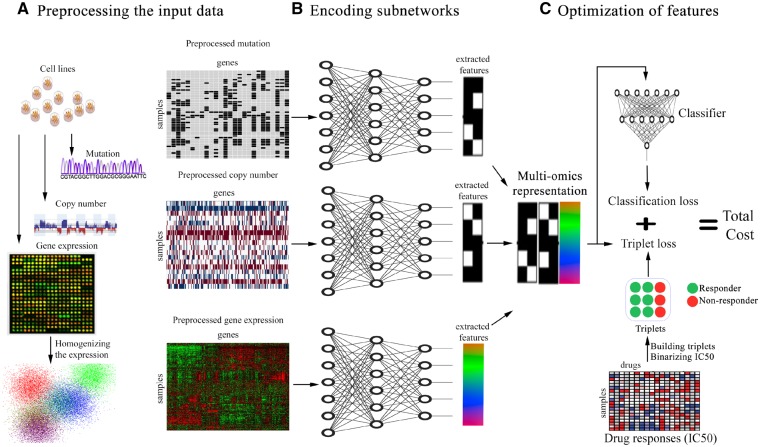
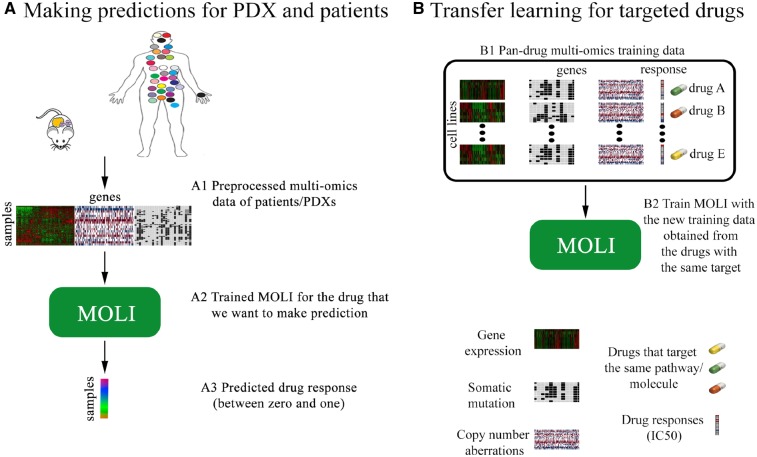
Verification
Claims the paper makes
The claims and statistics of this paper haven’t been checked yet.
Free: it reads the open-access text and checks the first 5 claims that cite a source we can check. Create a free account to check every claim.
Claims other papers make about this one
Each is checked against this paper’s own text: does it say what the citing paper says it does?
The cited source says what the claim attributes to it.
In the citing paper
“MOLI (multi-omics late integration) (Sharifi-Noghabi et al., 2019) method used type-specific encoding sub-networks to learn features from somatic mutation, CNA and gene expression data independently and then later concatenated them for predicting the response to a given drug.”
From Using machine learning approaches for multi-omics data analysis: A review (2021) · cites this paper as Sharifi-Noghabi et al., 2019
Self-check
Percentages, sums and reported differences re-computed from the paper’s own numbers.
The self-check needs the paper’s full text.
Citations
Cites
Pan, S. J., & Yang, Q. (2010) · IEEE Transactions on Knowledge and Data Engineering · doi:10.1109/tkde.2009.191 · Cited by 23,387
RSEM: accurate transcript quantification from RNA-Seq data with or without a reference genome
Li, B., & Dewey, C. N. (2011) · BMC Bioinformatics · doi:10.1186/1471-2105-12-323 · Cited by 22,179
FaceNet: A unified embedding for face recognition and clustering
Schroff, F., Kalenichenko, D., & Philbin, J. (2015) · 2015 IEEE Conference on Computer Vision and Pattern Recognition (CVPR) · doi:10.1109/cvpr.2015.7298682 · Cited by 15,267 · cited 3×
“To the best of our knowledge, MOLI is the first end-to-end late integration method with deep neural networks that optimizes this representation via a combined cost function consisting of a triplet loss function (Schroff et al., 2015) and a binary cross-entropy loss function.”
BackgroundMethodInfluentialProceedings of IEEE Conference on Computer Vision and Pattern Recognition
(1993) · Proceedings of IEEE Conference on Computer Vision and Pattern Recognition · doi:10.1109/cvpr.1993.341010 · Cited by 14,265
(2016) · Cited by 11,679
The cancer genome atlas pan-cancer analysis project
The Cancer Genome Atlas Research Network, Weinstein, J. N., Collisson, E. A., Mills, G. B., Shaw, K. R. M., Ozenberger, B. A., Ellrott, K., Shmulevich, I., Sander, C., & Stuart, J. M. (2013) · Nature Genetics · doi:10.1038/ng.2764 · Cited by 9,092
Adjusting batch effects in microarray expression data using empirical Bayes methods
Johnson, W. E., Li, C., & Rabinovic, A. (2007) · Biostatistics · doi:10.1093/biostatistics/kxj037 · Cited by 8,658
(2010) · Cited by 8,261
The Cancer Cell Line Encyclopedia enables predictive modelling of anticancer drug sensitivity
Barretina, J., Caponigro, G., Stransky, N., Venkatesan, K., Margolin, A. A., Kim, S., Wilson, C. J., Lehár, J., Kryukov, G. V., Sonkin, D., et al. (2012) · Nature · doi:10.1038/nature11003 · Cited by 7,950 · cited 3×
“We note that the classifier was validated only on CCLE cell lines without studying its translatability to patients or PDX models.”
BackgroundVogelstein, B., Papadopoulos, N., Velculescu, V. E., Zhou, S., Diaz, L. A., & Kinzler, K. W. (2013) · Science · doi:10.1126/science.1235122 · Cited by 7,863 · cited 1×
“However, inreality, themajorityofthesegenomicalterationsseemtohavenoimpact on cancer development (Vogelstein et al. , 2013) and might appear just by chance.”
Background
Research works printed but not linked: 1
- Khakabimamaghani, 2016, CC BY: PSB 2016 proceedings are published as Open Access chapters by World Scientific Publishing Company and distributed under the terms of the Creative Commons Attribution (CC BY) 4.0 License, 345
Cited by
Items 201–300 of 488
Qiao, Y., Li, C., Chen, C., Wu, P., Yang, Y., Xie, M., Liu, N., & Gu, J. (2025) · Drug Design Development and Therapy · doi:10.2147/dddt.s523836 · Cited by 11
Interpretable Drug Response Prediction using a Knowledge-based Neural Network
Snow, O., Sharifi-Noghabi, H., Lu, J., Zolotareva, O. I., Lee, M., & Ester, M. (2021) · ACM SIGKDD Conference on Knowledge Discovery and Data Mining (KDD) · doi:10.1145/3447548.3467212 · Cited by 11
Self-citationLee, D., & Kim, S. (2021) · Korean Journal of Pediatrics · doi:10.3345/cep.2021.01438 · Cited by 12
OmicsTIDE: interactive exploration of trends in multi-omics data
Harbig, T. A., Fratte, J., Krone, M., & Nieselt, K. (2022) · Bioinformatics Advances · doi:10.1093/bioadv/vbac093 · Cited by 11
Hui, Y., Wang, Q., & Zhou, X. (2025) · Information Fusion · doi:10.1016/j.inffus.2025.103147 · Cited by 10
MOFNet: a deep learning framework for multi-omics data fusion in cancer subtype classification
Zhang, G., Zhang, C., Li, P., Sun, D., Yang, Z., & Liu, Z. (2025) · Molecular Omics · doi:10.1039/d5mo00221d · Cited by 10
Gene-centric multi-omics integration with convolutional encoders for cancer drug response prediction
Lee, M., Kim, P., Joe, H., & Kim, H. (2022) · Computers in Biology and Medicine · doi:10.1016/j.compbiomed.2022.106192 · Cited by 10
DROEG: a method for cancer drug response prediction based on omics and essential genes integration
Wu, P., Sun, R., Fahira, A., Chen, Y., Jiangzhou, H., Wang, K., Yang, Q., Dai, Y., Pan, D., Shi, Y., et al. (2023) · Briefings in Bioinformatics · doi:10.1093/bib/bbad003 · Cited by 10
Almutiri, T., Alomar, K., & Alganmi, N. A. (2023) · International Journal of Advanced Computer Science and Applications · doi:10.14569/ijacsa.2023.0140550 · Cited by 10
Baek, B., Jang, E., Park, S., Park, S., Williams, D. R., Jung, D., & Lee, H. (2024) · PLoS ONE · doi:10.1371/journal.pone.0295629 · Cited by 10
Multilayer network approaches to omics data integration in digital twins for cancer research
Chenel, H., Marku, M., James, T. J., Zinovyev, A. Y., & Pancaldi, V. (2026) · Frontiers in Systems Biology · doi:10.3389/fsysb.2026.1776941 · Cited by 10
Drug Efficacy Recommendation System of Glioblastoma (GBM) Using Deep Learning
Naveed, S., Husnain, M., Samad, A., Ikram, A., Afreen, H., Gilanie, G., & Alsubaie, N. M. (2024) · IEEE Access · doi:10.1109/access.2024.3514912 · Cited by 10
A multi-view multi-omics model for cancer drug response prediction
Wang, Z., Wang, Z., Huang, Y., Lu, L., & Fu, Y. (2022) · Applied Intelligence · doi:10.1007/s10489-022-03294-w · Cited by 10
Hu, X., Zhang, P., Zhang, J., & Deng, L. (2024) · IEEE Journal of Biomedical and Health Informatics · doi:10.1109/jbhi.2024.3417014 · Cited by 9
HCLGT-DRP: Hypergraph contrastive learning and graph transformer for drug response prediction
Zhang, W., & Qiu, H. (2025) · Expert Systems with Applications · doi:10.1016/j.eswa.2025.129320 · Cited by 9
Park, H., Yamaguchi, R., Imoto, S., & Miyano, S. (2022) · PLoS ONE · doi:10.1371/journal.pone.0261630 · Cited by 9
Bakhtiar, H., Helzer, K. T., Park, Y., Chen, Y., Rydzewski, N. R., Bootsma, M. L., Shi, Y., Harari, P. M., Sharifi, M. N., Sjöström, M., et al. (2022) · npj Genomic Medicine · doi:10.1038/s41525-022-00328-7 · Cited by 9
Cui, Y.-C., Chen, H.-O., Lin, P., & Chiang, J.-H. (2024) · Journal of Personalized Medicine · doi:10.3390/jpm14070694 · Cited by 9
Pak, M., Bang, D., Sung, I., Kim, S., & Lee, S. (2024) · Frontiers in Genetics · doi:10.3389/fgene.2024.1441558 · Cited by 9
Mo, H., Breitling, R., Francavilla, C., & Schwartz, J. (2022) · Current Opinion in Endocrine and Metabolic Research · doi:10.1016/j.coemr.2022.100350 · Cited by 9
Alfatemi, A., Peng, H., Rong, W., Zhang, B., & Cai, H. (2022) · BMC Medical Informatics and Decision Making · doi:10.1186/s12911-022-01938-y · Cited by 9
Machine Learning Approaches for Multi-omics Data Integration in Medicine
Yağın, F. H. (2023) · Springer eBooks · doi:10.1007/978-3-031-36502-7_3 · Cited by 9
Zhang, Y., Shi, R., Chen, C., Duan, M., Liu, S., Ren, Y., Huang, L., Dai, X., & Zhou, F. (2019) · IEEE Access · doi:10.1109/access.2019.2960373 · Cited by 9
AutoOmics: New multimodal approach for multi-omics research
Xu, C., Liu, D., Zhang, L., Xu, Z., He, W., Jiang, H., Zheng, M., & Qiao, N. (2021) · Artificial Intelligence in the Life Sciences · doi:10.1016/j.ailsci.2021.100012 · Cited by 9
Wang, H., Li, H., Han, J., Feng, Z., Deng, H., & Han, X. (2023) · Computational Biology and Chemistry · doi:10.1016/j.compbiolchem.2023.107906 · Cited by 9
A Comprehensive Protocol and Step-by-Step Guide for Multi-Omics Integration in Biological Research
Adam, E., Zanoaga, M. D., Rota, R., & Cominetti, O. (2025) · Journal of Visualized Experiments · doi:10.3791/66995 · Cited by 8
Li, D., Liao, K., Yan, B., Huang, J., Zhang, J., Chen, Y., Zhu, J., Zhi, S., & Chen, P. (2025) · Frontiers in Oncology · doi:10.3389/fonc.2025.1622600 · Cited by 8
Alpsoy, S., & Sezerman, O. U. (2025) · Scientific Reports · doi:10.1038/s41598-025-23435-8 · Cited by 8
Fan, X., Shi, J., Shang, Y., & Xu, H. (2026) · Frontiers in Molecular Biosciences · doi:10.3389/fmolb.2026.1795133 · Cited by 8
MOBILE pipeline enables identification of context-specific networks and regulatory mechanisms
Erdem, C., Gross, S. M., Heiser, L. M., & Birtwistle, M. R. (2023) · Nature Communications · doi:10.1038/s41467-023-39729-2 · Cited by 8
Widespread redundancy in -omics profiles of cancer mutation states
Crawford, J., Christensen, B. C., Chikina, M. D., & Greene, C. S. (2022) · Genome biology · doi:10.1186/s13059-022-02705-y · Cited by 10
Predicting clinical drug response from model systems by non-linear subspace-based transfer learningPreprint
Mourragui, S. M. C., Loog, M., Vis, D. J., Moore, K., Manjón, A. G., van de Wiel, M. A., Reinders, M. J. T., & Wessels, L. F. A. (2020) · bioRxiv (Cold Spring Harbor Laboratory) · doi:10.1101/2020.06.29.177139 · Cited by 8
Wu, Z., Fu, Z., Yu, X., & Chen, J. (2024) · Critical Reviews in Environmental Science and Technology · doi:10.1080/10643389.2024.2320753 · Cited by 7
A review of multi-omics integration techniques across five machine learning method families
Olowolayemo, A., Souag, A., Sirlantzis, K., Turner, S., & Wilson, C. M. (2026) · Bioinformatics Advances · doi:10.1093/bioadv/vbag108 · Cited by 7
DBDNMF: A Dual Branch Deep Neural Matrix Factorization method for drug response prediction
Liu, H., Wang, F., Yu, J., Pan, Y., Gong, C., Zhang, L., & Zhang, L. (2024) · PLoS Computational Biology · doi:10.1371/journal.pcbi.1012012 · Cited by 7
Li, K., Shen, B., Feng, F., Li, X., Wang, Y., Feng, N., Tang, Z., Ma, L., & Li, H. (2024) · Journal of Pharmaceutical Analysis · doi:10.1016/j.jpha.2024.101128 · Cited by 7
Ward, B., Yombi, J. C., Balligand, J., Cani, P. D., Collet, J., Greef, J. D., Dewulf, J. P., Gatto, L., Haufroid, V., Jodogne, S., et al. (2022) · Viruses · doi:10.3390/v14071373 · Cited by 7
NeuPD—A Neural Network-Based Approach to Predict Antineoplastic Drug Response
Shahzad, M., Tahir, M. A., Alhussein, M. A., Mobin, A., Malick, R. A. S., & Anwar, M. S. (2023) · Diagnostics · doi:10.3390/diagnostics13122043 · Cited by 7
A Practical Guide to Integrating Multimodal Machine Learning and Metabolic Modeling
Vijayakumar, S., Magazzù, G., Moon, P., Occhipinti, A., & Angione, C. (2022) · Methods in molecular biology · doi:10.1007/978-1-0716-1831-8_5 · Cited by 7
Yeh, S., Paithankar, S., Chen, R., Xing, J., Sun, M., Liu, K., Zhou, J., & Chen, B. (2024) · Genomics Proteomics & Bioinformatics · doi:10.1093/gpbjnl/qzad008 · Cited by 6
Narykov, O., Zhu, Y., Brettin, T. S., Evrard, Y. A., Partin, A., Xia, F., Shukla, M. P., Vasanthakumari, P., Doroshow, J. H., & Stevens, R. L. (2025) · Briefings in Bioinformatics · doi:10.1093/bib/bbaf134 · Cited by 6
Nguyen, P. K., Bui, X. L., & Le, N. Q. K. (2025) · Springer handbooks · doi:10.1007/978-3-031-81728-1_37 · Cited by 7
Multi‐omics applications in health and diseases
Amarapathy, S., & Tyagi, S. (2026) · Progress in molecular biology and translational science · doi:10.1016/bs.pmbts.2026.01.012 · Cited by 7
Liu, Z., Lyu, K., Li, Y., sun, X., Gao, X., & Yu, B. (2026) · Journal of Medicinal Chemistry · doi:10.1021/acs.jmedchem.5c03438 · Cited by 6
A Machine Learning-Based Approach Using Multi-omics Data to Predict Metabolic Pathways
Niranjan, V., Uttarkar, A., Kaul, A., & Varghese, M. (2022) · Methods in molecular biology · doi:10.1007/978-1-0716-2617-7_19 · Cited by 6
Saeed, D., Xing, H., AlBadani, B., Li, F., Al-Sabri, R., Abdullah, M., & Rehman, A. (2025) · BMC Bioinformatics · doi:10.1186/s12859-024-05987-0 · Cited by 6
The application of artificial intelligence to drug sensitivity prediction
Li, X., Wu, X., Wan, X., Zhong, F., Cui, C., Chen, Y., Chen, L., Chen, K., Jiang, H., & Zheng, M. (2020) · Chinese Science Bulletin (Chinese Version) · doi:10.1360/tb-2020-0557 · Cited by 6
SetQuence & SetOmic: Deep set transformers for whole genome and exome tumour analysis
Jurenaite, N., León-Periñán, D., Donath, V., Torge, S., & Jäkel, R. (2023) · Biosystems · doi:10.1016/j.biosystems.2023.105095 · Cited by 6
Zheng, Y., Zhang, L., He, S., Xie, Z., Zhang, J., Ge, C., Sun, G., Huang, J., & Li, H. (2022) · BMJ Open · doi:10.1136/bmjopen-2022-067447 · Cited by 6
Incomplete time-series gene expression in integrative study for islet autoimmunity prediction
Ahmed, K. T., Cheng, S. L. A., Li, Q., Yong, J., & Zhang, W. (2022) · Briefings in Bioinformatics · doi:10.1093/bib/bbac537 · Cited by 6
SetQuence & SetOmic: Deep Set Transformer-based Representations of Cancer Multi-Omics
Jurenaite, N., León-Periñán, D., Donath, V., Torge, S., & Jäkel, R. (2022) · 2022 IEEE Conference on Computational Intelligence in Bioinformatics and Computational Biology (CIBCB) · doi:10.1109/cibcb55180.2022.9863058 · Cited by 5
“Both supervised and unsupervised Machine Learning (ML) methods have been widely used for cancer data analysis [6]– [9] and integration of multiple omic sources into a single model has shown improved accuracy in multiple oncologyrelevant classification tasks [10], [11].”
MethodPredicting transcriptional changes induced by molecules with MiTCP
Yang, K., Cheng, J., Cao, S., Pan, X., Shen, H., & Yuan, Y. (2024) · Briefings in Bioinformatics · doi:10.1093/bib/bbaf006 · Cited by 5
He, Y., Li, S., Lan, H., Long, W., Zhai, S., Li, M., & Wen, Z. (2025) · International Journal of Molecular Sciences · doi:10.3390/ijms26094365 · Cited by 5
Suryawanshi, M. V., Bagban, I., & Patne, A. Y. (2025) · Targets · doi:10.3390/targets3040031 · Cited by 5
Drug sensitivity prediction across cancer cell lines with a focus on sarcoma
Xerxa, E., Koch, S., Vanni, S., Vita, A. D., & Bajorath, J. (2026) · Artificial Intelligence in the Life Sciences · doi:10.1016/j.ailsci.2026.100157 · Cited by 5
GCNPath: introspecting drug response prediction with pathway-guided graph convolution networks
Yoon, H. J., & Lee, M. (2026) · Communications Biology · doi:10.1038/s42003-026-09957-5 · Cited by 5
Decoding disease and therapy through multiomics integration and systems analysis
Mathew, M. J., Mathew, J., Chacko, R. M., Bayry, J., & Zagury, J. (2026) · Briefings in Bioinformatics · doi:10.1093/bib/bbag311 · Cited by 6
Habiba, U. (2026) · doi:10.63125/teryrs73 · Cited by 5
DiffRS-net: A Novel Framework for Classifying Breast Cancer Subtypes on Multi-Omics Data
Zeng, P., Huang, C., & Huang, Y. (2024) · Applied Sciences · doi:10.3390/app14072728 · Cited by 5
Tang, H., Zhong, J.-Y., Yu, X., Chai, H., Liu, R., & Zeng, T. (2024) · iScience · doi:10.1016/j.isci.2024.111131 · Cited by 5
Wang, H., Han, X., Ren, J., Cheng, H., Li, H., Li, Y., & Li, X. (2023) · Mathematical Biosciences & Engineering · doi:10.3934/mbe.2024031 · Cited by 5
Xie, J., Zhang, Z., Li, Y., Rao, J., & Yang, Y. (2024) · IEEE International Conference on Bioinformatics and Biomedicine (BIBM) · doi:10.1109/bibm62325.2024.10822211 · Cited by 5
Harnessing Deep Learning for Omics in an Era of COVID-19
Jahanyar, B., Tabatabaee, H., & Rowhanimanesh, A. (2023) · OMICS A Journal of Integrative Biology · doi:10.1089/omi.2022.0155 · Cited by 5
Towards a Better Model with Dual Transformer for Drug Response PredictionPreprint
Li, K., Wu, J., Du, B., Petoukhov, S. V., Xu, H., Xiao, Z., & Hu, W. (2024) · SSRN Electronic Journal · doi:10.2139/ssrn.4930694 · Cited by 5
Contrastive Learning for Omics-guided Whole-slide Visual Embedding RepresentationPreprint
Yu, S., Kim, Y., Kim, H., Lee, S., & Kim, K. (2025) · bioRxiv (Cold Spring Harbor Laboratory) · doi:10.1101/2025.01.12.632280 · Cited by 5
Learning chemical sensitivity reveals mechanisms of cellular response
Connell, W., Garcia, K., Goodarzi, H., & Keiser, M. J. (2024) · Communications Biology · doi:10.1038/s42003-024-06865-4 · Cited by 4
Xie, X., Wang, F., Wang, G., Zhu, W., Du, X., & Wang, H. (2024) · Artificial Intelligence in Medicine · doi:10.1016/j.artmed.2024.102864 · Cited by 4
Dong, Y., Zhang, Y., Qian, Y., Zhao, Y., Yang, Z., & Feng, X. (2025) · PLoS Computational Biology · doi:10.1371/journal.pcbi.1012748 · Cited by 4
Importance of genetic ancestry in pharmacogenomics for precision medicine
Venkatesh, R., Keat, K., Salvatore, M., Cindi, Z., Hall, M. A., & Ritchie, M. D. (2025) · Pharmacogenomics · doi:10.1080/14622416.2026.2620360 · Cited by 4
Kong, J., Kim, J.-H., Kim, D., Lee, K., Lee, J., Han, S. K., Kim, I., Lim, S., Park, M., Shin, S., et al. (2023) · Patterns · doi:10.1016/j.patter.2023.100736 · Cited by 4
Pan, Q., Liu, Y., & Wei, S. (2024) · Medicine · doi:10.1097/md.0000000000037591 · Cited by 4
Licciardi, A., Fiannaca, A., Rosa, M. L., Urso, A. M., & Paglia, L. L. (2024) · Procedia Computer Science · doi:10.1016/j.procs.2024.09.180 · Cited by 4
A semi-supervised weighted SPCA- and convolution KAN-based model for drug response prediction
Miao, R., Zhong, B.-J., Mei, X.-Y., Dong, X. L., Ou, Y.-D., Liang, Y., Yu, H., Wang, Y., & Dong, Z.-H. (2025) · Frontiers in Genetics · doi:10.3389/fgene.2025.1532651 · Cited by 4
Wang, Y., & Lam, H. (2025) · Information Fusion · doi:10.1016/j.inffus.2025.103170 · Cited by 4
Kumar, S., & Goel, P. (2025) · Methods in molecular biology · doi:10.1007/978-1-0716-4690-8_20 · Cited by 4
A multi-modal genomic knowledge distillation framework for drug response prediction
Ge, S., Sun, S., Xu, H., Cheng, Q. S., & Ren, Z. (2025) · Applied Intelligence · doi:10.1007/s10489-025-06768-9 · Cited by 4
Progress of bioinformatics studies for multi-omics and multi-modal data in complex diseases
Liu, X., & Lü, Z. (2024) · Chinese Science Bulletin (Chinese Version) · doi:10.1360/tb-2024-0416 · Cited by 4
Nithinsha, S., & Anusuya, S. (2023) · International Journal of Electrical and Electronics Engineering · doi:10.14445/23488379/ijeee-v10i5p105 · Cited by 4
Overbeek, J., Partin, A., Brettin, T. S., Chia, N., Narykov, O., Vasanthakumari, P., Wilke, A., Zhu, Y., Clyde, A., Jones, S. E., et al. (2024) · arXiv (Cornell University) · doi:10.48550/arxiv.2409.12215 · Cited by 4
Tensor-Based Approaches for Omics Data Analysis: Applications, Challenges, and Future Directions
Khoshnam, A., Chafamo, D., & Tokcan, N. (2025) · La Matematica · doi:10.1007/s44007-025-00149-x · Cited by 3
Artificial intelligence for drug target identification
Li, Y., Huang, J., Sheng, Y., Wei, C., Liu, M., Wang, X., Chen, Y., Li, X., & Zheng, M. (2025) · Annual reports in medicinal chemistry · doi:10.1016/bs.armc.2025.08.002 · Cited by 3
Artificial Intelligence in Modern Deep-Learning QSAR
Shaikh, S., Alte, A., Pande, V., Wagh, V., & Suryawanshi, J. (2025) · Journal of Education Technology in Health Sciences · doi:10.18231/j.jeths.30178.1764230559 · Cited by 4
Consistency of feature attribution in deep learning architectures for multi-omics
Claborne, D. M., Flores, J. E., Erwin, S., Durell, L., Degnan, D. J., Richardson, R. E., Fore, R., & Bramer, L. (2026) · Scientific Reports · doi:10.1038/s41598-026-58312-5 · Cited by 3
Real, K. S. D., Swamy, V. S., Arcagni, J., Wang, E., Rabadan, R., & Rubio, Á. (2026) · Briefings in Bioinformatics · doi:10.1093/bib/bbag225 · Cited by 3
A powerful representation learning method for enhanced analysis of incomplete multi-omics data
Ballard, J. L., Dai, Z., Shen, L., Long, Q., & Initiative, A. D. N. (2026) · npj Systems Biology and Applications · doi:10.1038/s41540-026-00759-3 · Cited by 3
Discriminative fusion of moments-aligned latent representation of multimodality medical data
Xie, J., Zhong, W., Yang, R., Wang, L., & Zhen, X. (2023) · Physics in Medicine and Biology · doi:10.1088/1361-6560/ad1271 · Cited by 3
Biomarker discovery using multimodal data with the potential application in lung tumor diagnosis
Liu, R., Wang, K., Wang, S., & Zhang, Q. (2023) · IEEE International Conference on Bioinformatics and Biomedicine (BIBM) · doi:10.1109/bibm58861.2023.10385354 · Cited by 3
Wang, H., Han, X., Niu, S., Cheng, H., Ren, J., & Duan, Y.-M. (2024) · PLoS ONE · doi:10.1371/journal.pone.0315924 · Cited by 3
Integrating edge features and complementary attention mechanism for drug response prediction
Li, C., Wang, M., Tang, C., & Zhu, Y. (2025) · Knowledge-Based Systems · doi:10.1016/j.knosys.2025.113508 · Cited by 3
Monotherapy cancer drug-blind response prediction is limited to intraclass generalization
Herbert, W. G., Chia, N., Jensen, P. A., & Walther-Antonio, M. R. S. (2026) · PLoS Computational Biology · doi:10.1371/journal.pcbi.1013232 · Cited by 3
AIC50: An Innovative Machine Learning Approach to Precise IC50 Prediction
Obi, E., Mbatuegwu, D., Yentumi, J. A., & Ajayi, O. O. (2024) · Advances in Multidisciplinary & Scientific Research Journal Publication · doi:10.22624/aims/maths/v12n4p3 · Cited by 3
Hajim, W. I., Zainudin, S., Daud, K. M., & Alheeti, K. M. A. (2024) · PeerJ Computer Science · doi:10.7717/peerj-cs.2520 · Cited by 3
MACHINE LEARNING APPROACHES FOR INTEGRATIVE MULTI-OMICS DATA ANALYSIS OF CANCER: A SYSTEMATIC REVIEW
Hassan, A. M., Naeem, S. M., Eldosoky, M. A. A., & Mabrouk, M. S. (2025) · Biomedical Engineering Applications Basis and Communications · doi:10.4015/s1016237225300044 · Cited by 3
A Hybrid Convolutional Network for Prediction of Anti-cancer Drug Response
Bai, J., Han, R., & Guo, C. (2021) · International Conference on Information Science and Technology · doi:10.1109/icist52614.2021.9440620 · Cited by 3
Multi-armed bandit approach for multi-omics integration
Raj, A. K., & Mirzaei, G. (2022) · IEEE International Conference on Bioinformatics and Biomedicine (BIBM) · doi:10.1109/bibm55620.2022.9995631 · Cited by 3
Percolate: An Exponential Family JIVE Model to Design DNA-Based Predictors of Drug Response
Mourragui, S. M. C., Loog, M., van Nee, M. M., van de Wiel, M. A., Reinders, M. J. T., & Wessels, L. F. A. (2023) · Lecture notes in computer science · doi:10.1007/978-3-031-29119-7_8 · Cited by 3
Biomarker discovery in multi-omics datasets using tensor decompositions; A comprehensive review
Koleini, F., Gemperline, P. J., & Tabrizi, N. (2023) · EPiC series in computing · doi:10.29007/8xdb · Cited by 3
Feature selection translates drug response predictors from cell lines to patients
Yuan, S., Chen, Y., Tsai, C.-H., Chen, H., & Shieh, G. S. (2023) · Frontiers in Genetics · doi:10.3389/fgene.2023.1217414 · Cited by 3
AutoGenome V2: New Multimodal Approach Developed for Multi-Omics ResearchPreprint
Xu, C., Liu, D., Zhang, L., Xu, Z., He, W., Wang, D., Zheng, M., & Qiao, N. (2020) · bioRxiv (Cold Spring Harbor Laboratory) · doi:10.1101/2020.04.02.021345 · Cited by 3
Latent-variable models for drug response prediction and genetic testing
Rampášek, L. (2020) · TSpace (University of Toronto) · Cited by 3
Metadata
- Authors
- Sharifi-Noghabi, H., Zolotareva, O., Collins, C. C., & Ester, M.
- Affiliations
- Simon Fraser University (CA)
- Bielefeld University (DE)
- University of British Columbia (CA)
- Corresponding author
- Collins, Colin C
- Ester, Martin
- Venue
- Bioinformatics
- Publisher
- Oxford University Press (OUP)
- Published
- 2019-07
- Volume
- 35
- Issue
- 14
- Pages
- i501-i509
- ISSN
- 1367-4803 (ISSN-L)
- 1367-4811
- PMC
- PMC6612815
- OpenAlex
- W2955502047
- Cited by
- 421
- References
- 49
- Citations by year
- 2026: 60 · 2025: 71 · 2024: 85 · 2023: 58 · 2022: 58 · 2021: 58 · 2020: 26 · 2019: 5
- FWCI
- 25.12
- Type
- journal article
- Language
- en
- Open access
- hybrid
- doi.org
- Licence
- Locations
- Bioinformatics (publishedVersion, cc-by-nc)
- bioRxiv (Cold Spring Harbor Laboratory) (acceptedVersion, cc-by-nc-nd)
- Europe PMC (PubMed Central) (publishedVersion, cc-by-nc)
- PubMed Central (publishedVersion, cc-by-nc)
- PubMed (publishedVersion)
- PUB – Publications at Bielefeld University (Bielefeld University) (submittedVersion)
- Funders
- Canada Foundation for Innovation (33440)
- The Canadian Institutes of Health Research (PJT-153073)
- Terry Fox Foundation (201012TFF)
- National Science and Engineering Research Council of Canada (R611347)
- Topics
- Life Sciences › Pharmacology, Toxicology and Pharmaceutics › Drug Discovery › Computational Drug Discovery Methods
- Life Sciences › Biochemistry, Genetics and Molecular Biology › Molecular Biology › Gene expression and cancer classification
- Life Sciences › Biochemistry, Genetics and Molecular Biology › Cancer Research › Cancer Genomics and Diagnostics
- Keywords
- drug response prediction, multi-omics integration, somatic mutations, copy number alterations, gene expression, deep neural network, triplet loss, precision oncology, chemotherapy, targeted therapy
- MeSH terms
- Algorithms, Antineoplastic Agents, Pharmaceutical Preparations, Forecasting, Humans, Neoplasms, Neural Networks, Computer, Precision Medicine
About these checks
Registry, retraction, Cites and statistics results are computed, not judged, with one exception: a printed reference that no index lists is read once by a model before it counts as a citation error. Claims are extracted by a model and kept only when their quote appears verbatim in the text; each cited source is then checked, with a model’s help, for whether it says what the claim relies on. Those verdicts can be wrong — read the claim’s quote and the cited source before relying on one.
Statistics and arithmetic are recomputed, not judged.
Confidence bands are shown only for fields calibrated on our annotated test set. None is calibrated yet, so no band is shown.
What counts as a claim ›How we measure confidence ›How we check this ›
Are you an author, or do you see a problem with this page? Request a review
Data sources
Bibliographic data: Semantic Scholar, OpenAlex, Crossref.
Contains information from the Semantic Scholar Academic Graph Datasets, made available under the ODC Attribution License (ODC-BY 1.0).
Semantic Scholar’s data is described in: Kinney, R., et al. (2023). The Semantic Scholar Open Data Platform. arXiv:2301.10140.
