

BioBERT: a pre-trained biomedical language representation model for biomedical text mining
Open accessThe DOI matches its Crossref record; 48 of the 48 references it cites were found in a registry or an index.
Abstract
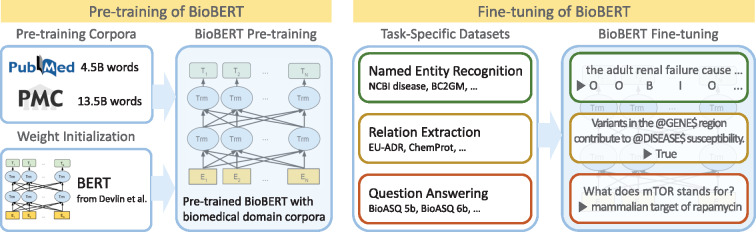
Motivation: Biomedical text mining is becoming increasingly important as the number of biomedical documents rapidly grows. With the progress in natural language processing (NLP), extracting valuable information from biomedical literature has gained popularity among researchers, and deep learning has boosted the development of effective biomedical text mining models. However, directly applying the advancements in NLP to biomedical text mining often yields unsatisfactory results due to a word distribution shift from general domain corpora to biomedical corpora. In this article, we investigate how the recently introduced pre-trained language model BERT can be adapted for biomedical corpora. Results: We introduce BioBERT (Bidirectional Encoder Representations from Transformers for Biomedical Text Mining), which is a domain-specific language representation model pre-trained on large-scale biomedical corpora. With almost the same architecture across tasks, BioBERT largely outperforms BERT and previous state-of-the-art models in a variety of biomedical text mining tasks when pre-trained on biomedical corpora. While BERT obtains performance comparable to that of previous state-of-the-art models, BioBERT significantly outperforms them on the following three representative biomedical text mining tasks: biomedical named entity recognition (0.62% F1 score improvement), biomedical relation extraction (2.80% F1 score improvement) and biomedical question answering (12.24% MRR improvement). Our analysis results show that pre-training BERT on biomedical corpora helps it to understand complex biomedical texts. Availability and implementation: We make the pre-trained weights of BioBERT freely available at https://github.com/naver/biobert-pretrained, and the source code for fine-tuning BioBERT available at https://github.com/dmis-lab/biobert.
Overview
The claims and statistics of this paper haven’t been checked yet.
Free: it reads the open-access text and checks the first 5 claims that cite a source we can check. Create a free account to check every claim.
Integrity signals
Registry
Cites
Statistics
Figures
Verification
Claims the paper makes
The claims and statistics of this paper haven’t been checked yet.
Free: it reads the open-access text and checks the first 5 claims that cite a source we can check. Create a free account to check every claim.
Claims other papers make about this one
Each is checked against this paper’s own text: does it say what the citing paper says it does?
The source backs part of the claim, not all of it — or backs it for a different population, condition or comparison.
In the citing paper
“Transformer models have proven their strong capabilities on learning long-term dependency on natural language processing tasks [19-21], and more recently on computer vision tasks [22-24].”
From DFDT: An End-to-End DeepFake Detection Framework Using Vision Transformer (2022) · cites this paper as [21]
Experimental — accuracy not yet measuredThe source backs part of the claim, not all of it — or backs it for a different population, condition or comparison.
In the citing paper
“A BioBERT-based model44 outperformed rule-based and traditional machine learning approaches.”
From Text classification models for assessing the completeness of randomized controlled trial publications based on CONSORT reporting guidelines (2024) · cites this paper as [44]
Experimental — accuracy not yet measuredThe source backs part of the claim, not all of it — or backs it for a different population, condition or comparison.
In the citing paper
“Popular LLMs, such as GPT-4, Llama, and BERT, often require large memory capacity13,58–61, making it challenging to run them on devices with limited memory, such as embedded systems, laptops, and mobile phones62.”
From Foundation metrics for evaluating effectiveness of healthcare conversations powered by generative AI (2024) · cites this paper as [61]
Experimental — accuracy not yet measuredThe source backs part of the claim, not all of it — or backs it for a different population, condition or comparison.
In the citing paper
“Healthcare represents a compelling domain for LLM use because the vast majority of actionable patient data is locked within unstructured clinical text, including electronic health records, clinical notes, and biomedical literature [4,5].”
From Explainability of decoder-only clinical large language models: A scoping review (2026) · cites this paper as [4]
Experimental — accuracy not yet measuredThe source backs part of the claim, not all of it — or backs it for a different population, condition or comparison.
In the citing paper
“Conventional natural language processing (NLP) approaches suffer from limited scalability and generalizability, and struggle to interpret implicit or vague temporal expressions.”
From TimeX: Phenotype Onset Extraction from Clinical Narratives (2026) · cites this paper as [20]
Experimental — accuracy not yet measured
14 more claims about this paper
Create a free account to see every claim other papers make about this one.
Self-check
Percentages, sums and reported differences re-computed from the paper’s own numbers.
The self-check needs the paper’s full text.
Citations
Cites
Vaswani, A., Shazeer, N., Parmar, N., Uszkoreit, J., Jones, L., Gomez, A. N., Kaiser, L., & Polosukhin, I. (2017) · arXiv · doi:10.48550/arxiv.1706.03762 · Cited by 120,404
LeCun, Y., Bengio, Y., & Hinton, G. (2015) · Nature · doi:10.1038/nature14539 · Cited by 84,126
Exploiting Generative AI to Scale up Intelligent Tutoring Systems
Jakubův, J., Chvalovský, K., Goertzel, Z., Kaliszyk, C., Olšák, M., Piotrowski, B., Schulz, S., Suda, M., & Urban, J. (2023) · DROPS (Schloss Dagstuhl – Leibniz Center for Informatics) · doi:10.4230/lipics.itp.2023.19 · Cited by 76,658
BERT: Pre-training of Deep Bidirectional Transformers for Language Understanding
Devlin, J., Chang, M.-W., Lee, K., & Toutanova, K. (2018) · arXiv · doi:10.48550/arxiv.1810.04805 · Cited by 73,173 · cited 3×
“BERT (Devlin et al., 2019) is a contextualized word representation model that is based on a masked language model and pretrained using bidirectional transformers (Vaswani et al., 2017). Due to the nature of language modeling where future words cannot be seen, previous language models were limited to a combination of t…”
BackgroundMethodInfluentialBERT: Pre-training of Deep Bidirectional Transformers for Language Understanding
Devlin, J., Chang, M.-W., Lee, K., & Toutanova, K. (2019) · Proceedings of the 2019 Conference of the North American Chapter of the Association for Computational Linguistics: Human Language Technologies, Volume 1 (Long and Short Papers) · doi:10.18653/v1/n19-1423 · Cited by 54,325 · cited 3×
“BERT (Devlin et al., 2019) is a contextualized word representation model that is based on a masked language model and pretrained using bidirectional transformers (Vaswani et al., 2017). Due to the nature of language modeling where future words cannot be seen, previous language models were limited to a combination of t…”
BackgroundMethodInfluentialGlove: Global Vectors for Word Representation
Pennington, J., Socher, R., & Manning, C. (2014) · Proceedings of the 2014 Conference on Empirical Methods in Natural Language Processing (EMNLP) · doi:10.3115/v1/d14-1162 · Cited by 34,071
Distributed Representations of Words and Phrases and their Compositionality
Mikolov, T., Sutskever, I., Chen, K., Corrado, G., & Dean, J. (2013) · arXiv · doi:10.48550/arxiv.1310.4546 · Cited by 24,533
Deep Contextualized Word Representations
Peters, M., Neumann, M., Iyyer, M., Gardner, M., Clark, C., Lee, K., & Zettlemoyer, L. (2018) · Proceedings of the 2018 Conference of the North American Chapter of the Association for Computational Linguistics: Human Language Technologies, Volume 1 (Long Papers) · doi:10.18653/v1/n18-1202 · Cited by 11,983 · cited 2×
“For instance, ELMo (Peters et al. , 2018) uses a bidirectional language model while CoVe (McCann et al. , 2017) uses machine translation to embed context information into word representations.”
BackgroundMethodSQuAD: 100,000+ Questions for Machine Comprehension of Text
Rajpurkar, P., Zhang, J., Lopyrev, K., & Liang, P. (2016) · Proceedings of the 2016 Conference on Empirical Methods in Natural Language Processing · doi:10.18653/v1/d16-1264 · Cited by 6,208
Google's Neural Machine Translation System: Bridging the Gap between Human and Machine Translation
Wu, Y., Schuster, M., Chen, Z., Le, Q. V., Norouzi, M., Macherey, W., Krikun, M., Cao, Y., Gao, Q., Macherey, K., et al. (2016) · arXiv · doi:10.48550/arxiv.1609.08144 · Cited by 5,319 · cited 2×
“One of the common settings while fine-tuning BERT (BioBERT) is the use of “main” — 2019/2/5 — 1:36 — page 4 — #4 Lee et al. WordPiece tokenization (Wu et al. , 2016) which can mitigate the out-of-vocabulary issue.”
Background
Research works printed but not linked: 1
- Krallinger M. et al (2017) Overview of the BioCreative VI chemical-protein interaction track. In: Proceedings of the BioCreative VI Workshop, Bethesda, MD, USA, pp. 141– 146. https://academic.oup.com/database/article/doi/10.1093/database/bay073/5055578. · doi:10.1093/database/bay073/5055578
Cited by
Items 701–800 of 1,099
Searching Images for Consensus
Tizhoosh, H. R., Diamandis, P., Campbell, C. J. V., Safarpoor, A., Kalra, S., Maleki, D., Riasatian, A., & Babaie, M. (2021) · The American Journal of Pathology · doi:10.1016/j.ajpath.2021.01.015 · Cited by 59
“BioBert 68 attempted to fi ne-tune the BERT model with varied medical corpora types such as PubMed abstracts, PubMed Central full-text articles, and other general corpora to be used in downstream NLP tasks such as entity recognition, relation extraction, and image search.”
MethodABioNER: A BERT‐Based Model for Arabic Biomedical Named‐Entity Recognition
Boudjellal, N., Zhang, H., Khan, A., Ahmad, A., Naseem, R., Shang, J., & Dai, L. (2021) · Complexity · doi:10.1155/2021/6633213 · Cited by 68
End-to-end Named Entity Recognition and Relation Extraction using Pre-trained Language ModelsPreprint
Giorgi, J., Wang, X., Sahar, N., Shin, W. Y., Bader, G. D., & Wang, B. (2019) · arXiv (Cornell University) · doi:10.48550/arxiv.1912.13415 · Cited by 69
“For biomedical corpora, we used the weights from BioBERT (Lee et al., 2019), which recently demonstrated state-of-the-art performance for biomedical NER, RE and QA.”
MethodMao, C., Xu, J., Rasmussen, L., Li, Y., Adekkanattu, P., Pacheco, J., Bonakdarpour, B., Vassar, R., Shen, L., Jiang, G., et al. (2023) · Journal of Biomedical Informatics · doi:10.1016/j.jbi.2023.104442 · Cited by 67
srBERT: automatic article classification model for systematic review using BERT
Aum, S., & Choe, S. (2021) · Systematic Reviews · doi:10.1186/s13643-021-01763-w · Cited by 48
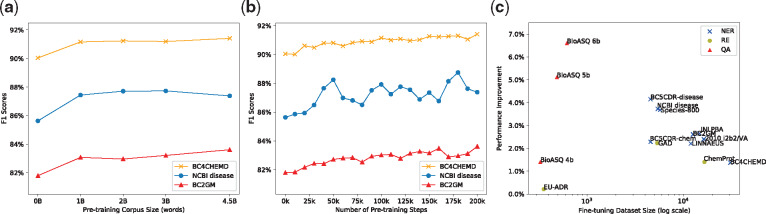
“For example, for the bioBERT model [31], which had been trained using biomedical corpus, it was reported that 200 K and 270 K pre-training steps were optimal.”
MethodMultimodal reasoning based on knowledge graph embedding for specific diseases
Zhu, C., Yang, Z., Xia, X., Li, N., Zhong, F., & Liu, L. (2022) · Bioinformatics · doi:10.1093/bioinformatics/btac085 · Cited by 67
Prompt-Based Rule Discovery and Boosting for Interactive Weakly-Supervised Learning
Zhang, R., Yu, Y., Shetty, P., Song, L., & Zhang, C. (2022) · Proceedings of the conference - Association for Computational Linguistics. Meeting · doi:10.18653/v1/2022.acl-long.55 · Cited by 67
Predicting medical specialty from text based on a domain-specific pre-trained BERT
Kim, Y., Kim, J.-H., Kim, Y., Song, S., & Joo, H. J. (2022) · International Journal of Medical Informatics · doi:10.1016/j.ijmedinf.2022.104956 · Cited by 67
Linguistically inspired roadmap for building biologically reliable protein language models
Vu, M. H., Akbar, R., Robert, P. A., Swiatczak, B., Sandve, G. K., Greiff, V., & Haug, D. T. T. (2023) · Nature Machine Intelligence · doi:10.1038/s42256-023-00637-1 · Cited by 54
“Data points in the pre-training dataset thus define the language that LMs model: for example, BERT, an LM pre-trained on English Wikipedia and an English book corpus would be a model of formal English 1 , while BioBERT, which is pre-trained on biomedical texts 42 is a model of biomedical English.”
BackgroundMethodPHEE: A Dataset for Pharmacovigilance Event Extraction from Text
Sun, Z., Li, J., Pergola, G., Wallace, B., John, B., Greene, N., Kim, J., & He, Y. (2022) · Conference on Empirical Methods in Natural Language Processing (EMNLP) · doi:10.18653/v1/2022.emnlp-main.376 · Cited by 67
SemEval-2024 Task 2: Safe Biomedical Natural Language Inference for Clinical Trials
Jullien, M., Valentino, M., & Freitas, A. (2024) · International Workshop on Semantic Evaluation (SemEval) · doi:10.18653/v1/2024.semeval-1.271 · Cited by 67
Alba, C., Xue, B., Abraham, J., Kannampallil, T., & Lu, C. (2025) · npj Digital Medicine · doi:10.1038/s41746-025-01489-2 · Cited by 67
“However, unlike Clinical-BERT, BioClinicalBERT was based on the BioBERT model [50], which itself was trained on 4.5 billion words of PubMed abstracts and 13.5 billion words of PubMed Central full-text articles.”
InfluentialBAYDİLİ, I., Taşçı, B., & Taşçı, G. (2025) · Behavioral Sciences · doi:10.3390/bs15030352 · Cited by 68
“It outperforms general-purpose models in tasks like named entity recognition, relation extraction, and question answering, making it particularly effective for biomedical applications (Lee et al., 2020).”
Improving biomedical named entity recognition with syntactic information
Tian, Y., Wang, S., Song, Y., Xia, F., He, M., & Li, K. (2020) · BMC Bioinformatics · doi:10.1186/s12859-020-03834-6 · Cited by 67
UMLS-based data augmentation for natural language processing of clinical research literature
Kang, T., Perotte, A., Tang, Y., Ta, C., & Weng, C. (2021) · Journal of the American Medical Informatics Association · doi:10.1093/jamia/ocaa309 · Cited by 55
“Models pretrained on biomedical corpus, such as BioBERT, have demonstrated their effectiveness in biomedical NLP, 13,14 although they operate on a prohibitively large number of parameters, and are known to require high-end infrastructure and heavy run-time memory.”
BackgroundMethodThe 2019 n2c2/UMass Lowell shared task on clinical concept normalization
Luo, Y.-F., Henry, S., Wang, Y., Shen, F., Uzuner, O., & Rumshisky, A. (2020) · Journal of the American Medical Informatics Association · doi:10.1093/jamia/ocaa106 · Cited by 54
An Interdisciplinary Outlook on Large Language Models for Scientific ResearchPreprint
Boyko, J., Cohen, J., Fox, N. A., Veiga, M. H., Li, J. I.-H., Liu, J., Modenesi, B., Rauch, A. H., Reid, K. N., Tribedi, S., et al. (2023) · arXiv (Cornell University) · doi:10.48550/arxiv.2311.04929 · Cited by 67
“One example is BioBERT [84], which is the BERT model fine-tuned on biomedical texts and has shown significant improvement over off-the-shelf models in carrying out biomedical text-mining tasks.”
RadGraph: Extracting Clinical Entities and Relations from Radiology Reports
Jain, S., Agrawal, A., Saporta, A., Truong, S. Q., Duong, D. N., Bui, T., Chambon, P., Zhang, Y., Lungren, M. P., Ng, A. Y., et al. (2021) · arXiv · doi:10.48550/arxiv.2106.14463 · Cited by 66
“Biomedical pretraining For each of our approaches, in addition to using BERT weight initializations, we use weight initializations from four different biomedical pretrained models, which are BioBERT [33], Bio+ClinicalBERT [34], PubMedBERT [35], and BlueBERT [36].”
MethodMEDTO: Medical Data to Ontology Matching Using Hybrid Graph Neural Networks
Hao, J., Lei, C., Efthymiou, V., Quamar, A., Özcan, F., Sun, Y., & Wang, W. W. (2021) · ACM SIGKDD Conference on Knowledge Discovery and Data Mining (KDD) · doi:10.1145/3447548.3467138 · Cited by 66
Stealing Machine Learning Models: Attacks and Countermeasures for Generative Adversarial Networks
Hu, H., & Pang, J. (2021) · Annual Computer Security Applications Conference · doi:10.1145/3485832.3485838 · Cited by 67
“Over the past few years, machine learning, deep learning in particular, has gained significant advances in a variety of areas, such as computer vision [6, 32, 33, 63] and natural language processing (NLP) [15, 35].”
BackgroundPTM4Tag: sharpening tag recommendation of stack overflow posts with pre-trained models
He, J., Xu, B., Yang, Z., Han, D., Yang, C., & Lo, D. (2022) · Proceedings of the 30th IEEE/ACM International Conference on Program Comprehension · doi:10.1145/3524610.3527897 · Cited by 43
Accurate Clinical and Biomedical Named Entity Recognition at Scale
Kocaman, V., & Talby, D. (2022) · Software Impacts · doi:10.1016/j.simpa.2022.100373 · Cited by 39
Al-Garadi, M. A., Yang, Y., & Sarker, A. (2022) · Healthcare · doi:10.3390/healthcare10112270 · Cited by 69
“The primary NLP model in this architecture is BioBERT [87].”
MethodGPT-4 can pass the Korean National Licensing Examination for Korean Medicine Doctors
Jang, D., Yun, T.-R., Lee, C.-Y., Kwon, Y.-K., & Kim, C.-E. (2023) · PLOS Digital Health · doi:10.1371/journal.pdig.0000416 · Cited by 59
Clinical Information Retrieval: A Literature Review
Sivarajkumar, S., Mohammad, H. A., Oniani, D., Roberts, K. E., Hersh, W., Liu, H., He, D., Visweswaran, S., & Wang, Y. (2024) · Journal of Healthcare Informatics Research · doi:10.1007/s41666-024-00159-4 · Cited by 67
“BERT-based clinical language models like BioBERT [86] and clinical BERT [87] have enabled researchers to contextualize query and document embeddings for different clinical IR applications including patient cohort retrieval.”
Pre-trained language models in medicine: A survey
Luo, X., Deng, Z., Yang, B., & Luo, M. Y. (2024) · Artificial Intelligence in Medicine · doi:10.1016/j.artmed.2024.102904 · Cited by 66
Causal relationship extraction from biomedical text using deep neural models: A comprehensive survey
Akkasi, A., & Moens, M.-F. (2021) · Journal of Biomedical Informatics · doi:10.1016/j.jbi.2021.103820 · Cited by 66
Adapt-and-distill: Developing small, fast and effective pretrained language models for domains
Yao, Y., Huang, S., Wang, W., Dong, L., & Wei, F. (2021) · Findings of the Association for Computational Linguistics: ACL-IJCNLP 2021 · doi:10.18653/v1/2021.findings-acl.40 · Cited by 15
Unlocking Hardware Security Assurance: The Potential of LLMsPreprint
Meng, X., Srivastava, A., Arunachalam, A., Ray, A., Silva, P. H., Psiakis, R., Makris, Y., & Basu, K. (2023) · arXiv (Cornell University) · doi:10.48550/arxiv.2308.11042 · Cited by 66
“…in the biomedical field, such as BioBERT, has shown that text and documents can provide essential information in specialized domains to fine-tune the general Bidi-rectional Encoder Representations from Transformers (BERT) language model for text generation and phrase classification [15], [35].”
BackgroundWan, Y., Liu, Y., Ajith, A., Grazian, C., Hoex, B., Zhang, W., Kit, C., Xie, T., & Foster, I. T. (2024) · arXiv (Cornell University) · doi:10.48550/arxiv.2405.09939 · Cited by 68
“Besides general applications,this trend has perme-ated the natural sciences, giving rise to domain-specific models like BioBERT (Lee et al., 2020), Med-PALM (Singhal et al., 2022), and Galactica (Taylor et al., 2022).”
MethodFoundation Models in Computational Pathology: A Review of Challenges, Opportunities, and ImpactPreprint
Bilal, M., Aadam, Raza, M., Altherwy, Y. N., Alsuhaibani, A., Abduljabbar, A., Almarshad, F. A., Golding, P., & Rajpoot, N. (2025) · arXiv (Cornell University) · doi:10.48550/arxiv.2502.08333 · Cited by 66
Moqurrab, S. A., Tariq, N., Anjum, A., Asheralieva, A., Malik, S. U. R., Malik, H., Pervaiz, H., & Gill, S. S. (2022) · Wireless Personal Communications · doi:10.1007/s11277-021-09323-0 · Cited by 65
“Recently, contextual embedding-based models have been proposed using both character-level and token-level representation to improve MER accuracy, for instance Word2Vec [18], GloVec [19], ELMO [20], Bert [21], and Bio-Bert [22].”
BackgroundMethodInfluentialCampillos-Llanos, L., Valverde-Mateos, A., Capllonch-Carrión, A., & Moreno-Sandoval, A. (2021) · BMC Medical Informatics and Decision Making · doi:10.1186/s12911-021-01395-z · Cited by 65
“In particular, using data from the domain to train a Spanish medical BERT or medical Flair embeddings, similar to the BioBERT [75] or HunFlair models [76], respectively.”
MethodChat GPT and artificial intelligence in medical writing: concerns and ethical considerations
Doyal, A. S., Sender, D., Nanda, M., & Serrano, R. A. (2023) · Cureus · doi:10.7759/cureus.43292 · Cited by 65
“If a model is trained on a dataset containing "fake news," it will produce consistently inaccurate text [7].”
Text Representations and Word Embeddings: Vectorizing Textual Data
Egger, R. (2022) · Tourism on the verge · doi:10.1007/978-3-030-88389-8_16 · Cited by 65
Yang, M., Huang, L., Huang, H., Tang, H., Zhang, N., Yang, H., Wu, J., & Mu, F. (2022) · Nucleic Acids Research · doi:10.1093/nar/gkac326 · Cited by 67
“Unlike models trained on general domain corpora, SciBERT (25) and BioBERT (26) are proposed based on BERT backbone and trained on a large amount of multidisciplinary scientific literature and biomedical text corpus, respectively.”
MethodIn-BoXBART: Get Instructions into Biomedical Multi-Task Learning
Parmar, M., Mishra, S., Purohit, M., Luo, M., Mohammad, M., & Baral, C. (2022) · Findings of the Association for Computational Linguistics: NAACL 2022 · doi:10.18653/v1/2022.findings-naacl.10 · Cited by 20
Knowledge graph assisted end-to-end medical dialog generation
Varshney, D., Zafar, A., Behera, N. K., & Ekbal, A. (2023) · Artificial Intelligence in Medicine · doi:10.1016/j.artmed.2023.102535 · Cited by 45
A review of enzyme design in catalytic stability by artificial intelligence
Ming, Y., Wang, W., Yin, R., Zeng, M., Tang, L., Tang, S., & Li, M. (2023) · Briefings in Bioinformatics · doi:10.1093/bib/bbad065 · Cited by 65
ESCOXLM-R: Multilingual Taxonomy-driven Pre-training for the Job Market Domain
Zhang, M., van der Goot, R., & Plank, B. (2023) · Proceedings of the conference - Association for Computational Linguistics. Meeting · doi:10.18653/v1/2023.acl-long.662 · Cited by 65
Wang, H., Zhao, S., Qiang, Z., Li, Z., Liu, C., Xi, N., Du, Y., Qin, B., & Liu, T. (2025) · ACM Transactions on Knowledge Discovery from Data · doi:10.1145/3686807 · Cited by 65
“Various trials have been made to pre-train the models with the corpora in the biomedical domain (Peng, Yan, and Lu 2019; Lee et al. 2020; Huang, Altosaar, and Ranganath 2019; Luo et al. 2022), learn domain-specific vocabulary for better representation (Lewis et al. 2020; Gu et al. 2021), or provide…”
Arsenyan, V., Bughdaryan, S., Shaya, F., Small, K. W., & Shahnazaryan, D. (2024) · Workshop on Biomedical Language Processing (BioNLP) · doi:10.18653/v1/2024.bionlp-1.23 · Cited by 67
“To account for this, we use the BioBERT NER model to extract a list of diseases, denoted as D note , present in the record.”
MethodNamed Entity Recognition in Twitter: A Dataset and Analysis on Short-Term Temporal Shifts
Ushio, A., Barbieri, F., Sousa, V., Neves, L., & Camacho-Collados, J. (2022) · Conference of the Asia-Pacific Chapter of the Association for Computational Linguistics and the International Joint Conference on Natural Language Processing (AACL-IJCNLP) · doi:10.18653/v1/2022.aacl-main.25 · Cited by 65
Atakpa, M. I. (2021) · International Journal of Scientific Research in Computer Science Engineering and Information Technology · doi:10.32628/cseit2064813 · Cited by 67
Transfer Learning for Named Entity Recognition in Financial and Biomedical Documents
Francis, S., Landeghem, J. V., & Moens, M. (2019) · Information · doi:10.3390/info10080248 · Cited by 65
“The effect of transfer learning is more evident when the target training set size is small, with the improvements diminishing gradually or not seen when the target training set obtains its full size.”
BackgroundPoerner, N., Waltinger, U., & Schütze, H. (2020) · Findings of the Association for Computational Linguistics: EMNLP (Findings of EMNLP) · doi:10.18653/v1/2020.findings-emnlp.134 · Cited by 66
Gajendran, S., Manjula, D., & Sugumaran, V. (2020) · Journal of Biomedical Informatics · doi:10.1016/j.jbi.2020.103609 · Cited by 65
LMFlow: An Extensible Toolkit for Finetuning and Inference of Large Foundation ModelsPreprint
Diao, S., Pan, R. N., Dong, H., Shum, K., Zhang, J., Xiong, W., & Zhang, T. (2023) · arXiv (Cornell University) · doi:10.48550/arxiv.2306.12420 · Cited by 67
“…endeavor to bridge the divide between pretraining domains and downstream domains has led to the adoption of a prevalent approach, known as continuous pretraining [4, 1, 15, 21], which involves the ongoing pretraining on an extensive collection of unlabeled data that is specific to a given domain.”
BackgroundDeepOnto: A Python package for ontology engineering with deep learning
He, Y., Chen, J., Dong, H., Horrocks, I. R., Allocca, C., Kim, T., & Sapkota, B. (2024) · Semantic Web · doi:10.3233/sw-243568 · Cited by 65
Yim, W.-W., Fu, Y., Ben Abacha, A., Snider, N., Lin, T., & Yetisgen, M. (2023) · Scientific Data · doi:10.1038/s41597-023-02487-3 · Cited by 64
ClinicalT5: A Generative Language Model for Clinical Text
Lu, Q., Dou, D., & Nguyen, T. (2022) · Findings of the Association for Computational Linguistics: EMNLP 2022 · doi:10.18653/v1/2022.findings-emnlp.398 · Cited by 64
“…are BERT (Devlin et al., 2019) variants fine-tuned to biomedical text, e.g., BioBERT is trained on PubMed abstracts and PMC full text articles (Lee et al., 2020) and SciBERT is trained on the full text of biomedical and computer science papers from the Semantic Scholar corpus (Beltagy et al.,…”
BackgroundMethodInfluentialMehra, S., Louka, R., & Zhang, Y. (2022) · International Conference on Embedded Systems and Applications (EMSA) · doi:10.5121/csit.2022.120616 · Cited by 64
“BioBERT [12] authors, similarly (similar architecture as followed by FinBERT), pre-trained BERT with Biomedical corpora in addition to the English language corpora it was already trained on.”
SsciBERT: a pre-trained language model for social science texts
Shen, S., Liu, J., Lin, L., Huang, Y., Zhang, L., Liu, C., Feng, Y., & Wang, D. (2022) · Scientometrics · doi:10.1007/s11192-022-04602-4 · Cited by 64
“The data has been cleaned, sorted, and processed to form a standard and contributed to a series of pre-trained models based on domain-specific data, such as SciBERT (Beltagy et al., 2019), BioBERT (Lee et al., 2019), PubmedBERT (Rasmy, Xiang, Xie, Tao, & Zhi, 2021), ExpBERT (Murty, Koh, & Liang, 2020), FinBERT (Yang,…”
MethodLarge language models for oncological applications
Sorin, V., Barash, Y., Konen, E., & Klang, E. (2023) · Journal of Cancer Research and Clinical Oncology · doi:10.1007/s00432-023-04824-w · Cited by 64
“For example, BioBERT was trained on PubMed publications (Lee 2019).”
MethodMEGACare: Knowledge-guided multi-view hypergraph predictive framework for healthcare
Wu, J., He, K., Mao, R., Li, C., & Cambria, E. (2023) · Information Fusion · doi:10.1016/j.inffus.2023.101939 · Cited by 64
“The Bio-Clinical BERT model was initialized from ioBERT [43] and trained on all MIMIC notes [21].”
MethodHealthFC: Verifying Health Claims with Evidence-Based Medical Fact-Checking
Vladika, J., Schneider, P., & Matthes, F. (2024) · Language Resources and Evaluation Conference (LREC) · doi:10.63317/3soozndxgt86 · Cited by 67
“This includes models like SciBERT (Beltagy et al., 2019) and BioBERT (Lee et al., 2020).”
InfluentialBiomedical named entity recognition and linking datasets: survey and our recent development
Huang, M.-S., Lai, P.-T., Lin, P.-Y., You, Y.-T., Tsai, R. T., & Hsu, W.-L. (2020) · Briefings in Bioinformatics · doi:10.1093/bib/bbaa054 · Cited by 64
Self-Attention Networks for Code Search
Fang, S., Tan, Y., Zhang, T., & Liu, Y. (2021) · Information and Software Technology · doi:10.1016/j.infsof.2021.106542 · Cited by 64
Guillarme, N. L., & Thuiller, W. (2021) · Methods in Ecology and Evolution · doi:10.1111/2041-210x.13778 · Cited by 65
“…2019), including general purpose language represen - tation models such as BERT (Devlin et al., 2018) and XLNet (Yang et al., 2019), and domain-specific language models, such as SciBERT (Beltagy et al., 2019) for scientific text processing and BioBERT (Lee et al., 2020) for biomedical text mining.”
BackgroundMethodInfluentialTweetBERT: A Pretrained Language Representation Model for Twitter Text AnalysisPreprint
Qudar, M. M. A., & Mago, V. (2020) · arXiv (Cornell University) · doi:10.48550/arxiv.2010.11091 · Cited by 65
Giordano, V., Chiarello, F., Melluso, N., Fantoni, G., & Bonaccorsi, A. J. (2021) · IEEE Transactions on Engineering Management · doi:10.1109/tem.2021.3078231 · Cited by 64
“[33] reached state of the art in recognizing NEs in the context of biomedical entities, obtaining an f1 score of 89.61 for diseases, 94.26 for drugs, and 78.58 for Gene and Proteins names.”
BackgroundInfluentialLi, J., Wei, Q., Ghiasvand, O., Chen, M., Lobanov, V. S., Weng, C., & Xu, H. (2022) · BMC Medical Informatics and Decision Making · doi:10.1186/s12911-022-01967-7 · Cited by 63
A Comparison of SVM Against Pre-trained Language Models (PLMs) for Text Classification Tasks
Wahba, Y., Madhavji, N. H., & Steinbacher, J. (2023) · Lecture notes in computer science · doi:10.1007/978-3-031-25891-6_23 · Cited by 63
Mitra, A., Pradhan, R., Melamed, R., Chen, K., Hoaglin, D. C., Tucker, K. L., Reisman, J. I., Yang, Z., Liu, W., Tsai, J., et al. (2023) · JAMA Network Open · doi:10.1001/jamanetworkopen.2023.3079 · Cited by 64
Lightweight transformers for clinical natural language processing
Rohanian, O., Nouriborji, M., Jauncey, H., Kouchaki, S., Nooralahzadeh, F., Clifton, L., Merson, L., & Clifton, D. A. (2024) · Natural Language Engineering · doi:10.1017/s1351324923000542 · Cited by 65
“…use fine-tuning to adapt them to clinical notes (van Aken et al. 2021; Agnikula Kshatriya et al. 2021) or use continual learning and further pre-train a model like BERT or BioBERT (Lee et al. 2020a) on clinical texts (Si et al. 2019; Alsentzer et al. 2019; Qiu et al. 2020). associated with them.”
MethodInfluentialDataset Inference for Self-Supervised Models
Dziedzic, A., Duan, H., Kaleem, M. A., Dhawan, N., Guan, J., Cattan, Y., Boenisch, F., & Papernot, N. (2022) · neural information processing systems · doi:10.52202/068431-0876 · Cited by 63
Abdel‐Basset, M., Hawash, H., Elhoseny, M., Chakrabortty, R. K., & Ryan, M. J. (2020) · IEEE Access · doi:10.1109/access.2020.3024238 · Cited by 62
“Transformer models [63], [64] could be employed to generate more informative sequential data representation.”
MethodNaseem, U., Musiał, K., Eklund, P., & Prasad, M. (2020) · International Joint Conference on Neural Networks (IJCNN) · doi:10.1109/ijcnn48605.2020.9206808 · Cited by 63
“A noticeable drop is observed in the performance when we remove BioBERT from our model for all datasets.”
MethodInfluentialTerminology and Lexicography Research and Practice
Goyens, M., Ducos, J., Vigneron, F., & Fourneau, I. (2013) · Terminology and lexicography research and practice · doi:10.1075/tlrp · Cited by 63
Improving reference prioritisation with PICO recognition.
Brockmeier, A. J., Ju, M., Przybyła, P., & Ananiadou, S. (2019) · BMC Medical Informatics and Decision Making · doi:10.1186/s12911-019-0992-8 · Cited by 62
“As suggested by a reviewer, we use the context-dependent word vectors from the BERT language model [126], specifically the BioBert model trained on PubMed abstracts to better reflect the language of biomedical research papers [127] .”
Medical large language models are susceptible to targeted misinformation attacks
Han, T., Nebelung, S., Khader, F., Wang, T., Müller-Franzes, G., Kuhl, C., Försch, S., Kleesiek, J., Haarburger, C., Bressem, K. K., et al. (2024) · npj Digital Medicine · doi:10.1038/s41746-024-01282-7 · Cited by 62
Ouyang, L., Yuan, Y., Cao, Y., & Wang, F. (2021) · Information Sciences · doi:10.1016/j.ins.2021.04.021 · Cited by 63
“Benefiting from its powerful data mining capabilities, the emerging AI technology has been witnessed to provide valuable solutions for many recent researches areas, including digital image processing [63,65], natural language processing [62,25] and multimodal analysis [16,64].”
A Machine-Generated View of the Role of Blood Glucose Levels in the Severity of COVID-19
Logette, E., Lorin, C., Favreau, C., Oshurko, E., Coggan, J. S., Casalegno, F., Sy, M. F., Monney, C., Bertschy, M., Delattre, É., et al. (2021) · Frontiers in Public Health · doi:10.3389/fpubh.2021.695139 · Cited by 64
“In order to compute the relevance score, we used a machine learning model based on BioBERT (429) and fine-tuned on the CORD-19 corpus in order to produce sentence embeddings vectors.”
MethodNested Named Entity Recognition as Latent Lexicalized Constituency Parsing
Lou, C., Yang, S., & Tu, K. (2022) · Proceedings of the conference - Association for Computational Linguistics. Meeting · doi:10.18653/v1/2022.acl-long.428 · Cited by 62
Liu, Y., Zhang, R., Li, T., Jiang, J., Ma, J., & Wang, P. (2022) · Journal of Molecular Graphics and Modelling · doi:10.1016/j.jmgm.2022.108344 · Cited by 62
On the effectiveness of compact biomedical transformers
Rohanian, O., Nouriborji, M., Kouchaki, S., & Clifton, D. A. (2023) · Bioinformatics · doi:10.1093/bioinformatics/btad103 · Cited by 62
A multimodal multidomain multilingual medical foundation model for zero shot clinical diagnosis
Liu, F., Zheng, L., Yin, Q., Huang, J., Luo, J., Thakur, A., Branson, K., Schwab, P., Yin, B., Wu, X., et al. (2025) · npj Digital Medicine · doi:10.1038/s41746-024-01339-7 · Cited by 62
Robust Transfer Learning with Pretrained Language Models through Adapters
Han, W., Pang, B., & Wu, Y. N. (2021) · Proceedings of the 59th Annual Meeting of the Association for Computational Linguistics and the 11th International Joint Conference on Natural Language Processing (Volume 2: Short Papers) · doi:10.18653/v1/2021.acl-short.108 · Cited by 37
“Despite the success of the standard sequential transfer learning approach, recent works (Gururangan et al., 2020; Lee et al., 2020; Nguyen et al., 2020) have explored domain-specific or taskspecific unsupervised pretraining, that is, masked language model training on the downstream task data before the final supervise…”
BackgroundWu, Z., Zhang, L., Cao, C., Yu, X., Liu, Z., Zhao, L., Li, Y., Dai, H., Ma, C., Li, G., et al. (2025) · IEEE Transactions on Big Data · doi:10.1109/tbdata.2025.3536928 · Cited by 63
“BioBERT: BioBERT (Bidirectional Encoder Representations from Trans-formers for Biomedical Text Mining) [46] is a domain-specific language representation model pre-trained on large-scale biomedical corpora PubMed abstracts (PubMed) and PubMed Central full-text articles (PMC).”
BackgroundFlemotomos, N., Martínez, V. R., Chen, Z., Creed, T. A., Atkins, D. C., & Narayanan, S. S. (2021) · PLoS ONE · doi:10.1371/journal.pone.0258639 · Cited by 62
Zhang, T., Cai, Z., Wang, C., Qiu, M., Yang, B., & He, X. (2021) · doi:10.18653/v1/2021.acl-long.457 · Cited by 61
“(1) BioBERT (Lee et al., 2020), BlueBERT (Peng et al.”
InfluentialTaming Pre-trained Language Models with N-gram Representations for Low-Resource Domain Adaptation
Diao, S., Xu, R., Su, H., Jiang, Y., Song, Y., & Zhang, T. (2021) · doi:10.18653/v1/2021.acl-long.259 · Cited by 61
“Towards filling the gaps, the main research stream (Beltagy et al., 2019; Alsentzer et al., 2019; Huang et al., 2019; Lee et al., 2020) on adapting pre-trained language models starts from a generic model (e.g., BERT, RoBERTa) and then continues pre-training with similar objectives on a large-scale…”
BackgroundMethodInfluentialLiterature-Augmented Clinical Outcome Prediction
Naik, A., Parasa, S., Feldman, S., Wang, L. L., & Hope, T. (2022) · Findings of the Association for Computational Linguistics: NAACL · doi:10.18653/v1/2022.findings-naacl.33 · Cited by 61
ClinicalRadioBERT: Knowledge-Infused Few Shot Learning for Clinical Notes Named Entity Recognition
Rezayi, S., Dai, H., Liu, Z., Wu, Z., Hebbar, A., Burns, A. H., Zhao, L., Zhu, D., Li, Q., Liu, W., et al. (2022) · Lecture notes in computer science · doi:10.1007/978-3-031-21014-3_28 · Cited by 61
Zhao, J., Huang, S., & Cole, J. M. (2023) · Journal of Chemical Information and Modeling · doi:10.1021/acs.jcim.2c01259 · Cited by 61
Academic Surgery in the Era of Large Language Models: A Review
Rengers, T. A., Thiels, C. A., & Salehinejad, H. (2024) · JAMA Surgery · doi:10.1001/jamasurg.2023.6496 · Cited by 62
Lamsal, R., Rodriguez, M. A., & Karunasekera, S. A. (2024) · Knowledge-Based Systems · doi:10.1016/j.knosys.2024.111916 · Cited by 62
“BioBERT, which was introduced in [3], was pre-trained on biomedical texts, including PubMed abstracts (PubMed) and PubMed Central full-text articles (PMC), using the same architecture as BERT.”
BackgroundMethodHarnessing Text Insights With Visual Alignment for Medical Image Segmentation
Zeng, Q., Luo, H., Lu, Z., Xie, Y., Wang, Z., Zhang, Y., & Xia, Y. (2025) · IEEE Transactions on Medical Imaging · doi:10.1109/tmi.2025.3601359 · Cited by 62
“In parallel, LMs [9], [48], [49], [50] have enriched visual tasks by extracting insights from text data.”
Named Entity Recognition From Biomedical Texts Using a Fusion Attention-Based BiLSTM-CRF
Wei, H., Gao, M., Zhou, A., Chen, F., Wen, Q., Wang, C., & Lu, M. (2019) · IEEE Access · doi:10.1109/access.2019.2920734 · Cited by 61
Klein, A. Z., Alimova, I., Flores, I., Magge, A., Miftahutdinov, Z., Minard, A.-L., O’Connor, K., Sarker, A., Tutubalina, E. V., Weissenbacher, D., et al. (2020) · HAL · Cited by 61
Deep learning to automate the labelling of head MRI datasets for computer vision applications
Wood, D. A., Kafiabadi, S., Busaidi, A. A., Guilhem, E., Lynch, J., Townend, M., Montvila, A., Kiik, M., Siddiqui, J., Gadapa, N., et al. (2021) · European Radiology · doi:10.1007/s00330-021-08132-0 · Cited by 63
“We adapted BioBERT for report classification by adding a custom attention module which aggregates individual word vectors into a fixed-dimensional representation for each report, as well as a fully connected neural network with a single hidden layer which takes this vector representation as its input and outputs the p…”
BackgroundMethodInfluentialAn emotional classification method of Chinese short comment text based on ELECTRA
Zhang, S., Yu, H., & Zhu, G. (2021) · Connection Science · doi:10.1080/09540091.2021.1985968 · Cited by 61
“A model pre-trained on a specific corpus can perform vector representation learning for a specific domain language (Zhang, Wu et al., 2020; Lee et al., 2020) and obtain its text features.”
BackgroundMethodJuriBERT: A Masked-Language Model Adaptation for French Legal Text
Douka, S., Abdine, H., Vazirgiannis, M., Hamdani, R. E., & Amariles, D. R. (2021) · Natural Legal Language Processing Workshop (NLLP) · doi:10.18653/v1/2021.nllp-1.9 · Cited by 61
MultiVerS: Improving scientific claim verification with weak supervision and full-document context
Wadden, D., Lo, K., Wang, L., Cohan, A., Beltagy, I., & Hajishirzi, H. (2022) · Findings of the Association for Computational Linguistics: NAACL 2022 · doi:10.18653/v1/2022.findings-naacl.6 · Cited by 60
“Domain adaptation for scientific text has been studied in a number of works, including Gururangan et al. (2020); Beltagy et al. (2019); Lee et al. (2020); Gu et al. (2021).”
BackgroundA Multimodal Knowledge-enhanced Whole-slide Pathology Foundation Model
Xu, Y., Wang, Y., Zhou, F., Ma, J., Jin, C., Yang, S., Li, J., Zhang, Z., Zhao, C., Zhou, H., et al. (2024) · arXiv · doi:10.48550/arxiv.2407.15362 · Cited by 60
“On the whole, mSTAR has clearly outperformed other SOTA methods by a wide margin.”
Kim, Y., Lee, J. H., Choi, S., Lee, J. M., Kim, J.-H., Seok, J., & Joo, H. J. (2020) · Scientific Reports · doi:10.1038/s41598-020-77258-w · Cited by 60
“Lee et al. proposed an adjusted BERT that is additionally pre-trained with biomedical materials (bioBERT) 12 and employed it to perform representative NLP tasks.”
MethodSelf-citationA GPT-2 Language Model for Biomedical Texts in Portuguese
Schneider, E. T. R., de Souza, J. V. A., Gumiel, Y. B., Moro, C. M. C., & Paraíso, E. C. (2021) · Proceedings - IEEE Symposium on Computer-Based Medical Systems · doi:10.1109/cbms52027.2021.00056 · Cited by 63
Li, X., Ren, J. F., Zhang, W., Zhang, Z., Yu, J., Wu, J., Sun, H., Zhou, S., Yan, K., Yan, X., et al. (2022) · Pharmacological Research · doi:10.1016/j.phrs.2022.106185 · Cited by 62
Efficient Hierarchical Domain Adaptation for Pretrained Language Models
Chronopoulou, A., Peters, M., & Dodge, J. (2022) · Proceedings of the 2022 Conference of the North American Chapter of the Association for Computational Linguistics: Human Language Technologies · doi:10.18653/v1/2022.naacl-main.96 · Cited by 24
Study of Word Embeddings for Enhanced Cyber Security Named Entity Recognition
Srivastava, S., Paul, B., & Gupta, D. (2023) · Procedia Computer Science · doi:10.1016/j.procs.2023.01.027 · Cited by 60
Metadata
- Authors
- Lee, J., Yoon, W., Kim, S., Kim, D., Kim, S., So, C. H., & Kang, J.
- Affiliations
- Korea University (KR)
- Corresponding author
- Kang, Jaewoo
- Venue
- Bioinformatics
- Publisher
- Oxford University Press (OUP)
- Published
- 2019-09-10
- Volume
- 36
- Issue
- 4
- Pages
- 1234-1240
- ISSN
- 1367-4803 (ISSN-L)
- 1367-4811
- PMC
- PMC7703786
- OpenAlex
- W2911489562
- Semantic Scholar
- 1e43c7084bdcb6b3102afaf301cce10faead2702
- Cited by
- 7,218
- References
- 46
- Citations by year
- 2026: 1144 · 2025: 1386 · 2024: 1118 · 2023: 1100 · 2022: 940 · 2021: 861 · 2020: 532 · 2019: 133
- FWCI
- 204.40
- Type
- journal article
- Language
- en
- Open access
- hybrid
- doi.org
- Licence
- Locations
- Bioinformatics (publishedVersion, cc-by)
- PubMed Central (publishedVersion, cc-by)
- PubMed (publishedVersion)
- arXiv (Cornell University) (submittedVersion)
- arXiv (Cornell University)
- Funders
- National Research Foundation of Korea(NRF) funded by the Korea government (NRF-2017R1A2A1A17069645, NRF-2017M3C4A7065887, NRF-2014M3C9A3063541)
- Topics
- Health Sciences › Medicine › Health Informatics › Biomedical Text Mining and Ontologies
- Physical Sciences › Computer Science › Artificial Intelligence › Topic Modeling
- Physical Sciences › Computer Science › Artificial Intelligence › Machine Learning in Healthcare
- Keywords
- BioBERT, pre-trained language models, BERT, biomedical text mining, biomedical named entity recognition, biomedical relation extraction, biomedical question answering, fine-tuning
- MeSH terms
- Language, Natural Language Processing, Software, Data Mining
About these checks
Registry, retraction, Cites and statistics results are computed, not judged, with one exception: a printed reference that no index lists is read once by a model before it counts as a citation error. Claims are extracted by a model and kept only when their quote appears verbatim in the text; each cited source is then checked, with a model’s help, for whether it says what the claim relies on. Those verdicts can be wrong — read the claim’s quote and the cited source before relying on one.
Statistics and arithmetic are recomputed, not judged.
Confidence bands are shown only for fields calibrated on our annotated test set. None is calibrated yet, so no band is shown.
What counts as a claim ›How we measure confidence ›How we check this ›
Are you an author, or do you see a problem with this page? Request a review
Data sources
Bibliographic data: Semantic Scholar, OpenAlex, Crossref.
Contains information from the Semantic Scholar Academic Graph Datasets, made available under the ODC Attribution License (ODC-BY 1.0).
Semantic Scholar’s data is described in: Kinney, R., et al. (2023). The Semantic Scholar Open Data Platform. arXiv:2301.10140.
