

The DOI matches its Crossref record; 75 of the 75 references it cites were found in a registry or an index.
Reduced spontaneous but relatively normal deliberate vicarious representations in psychopathy
Open accessAbstract
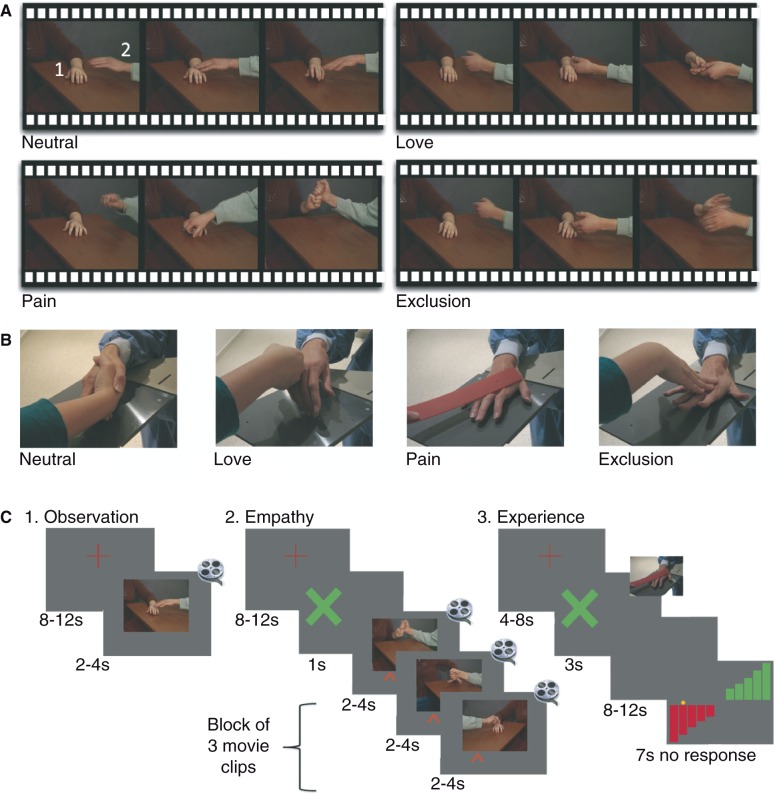
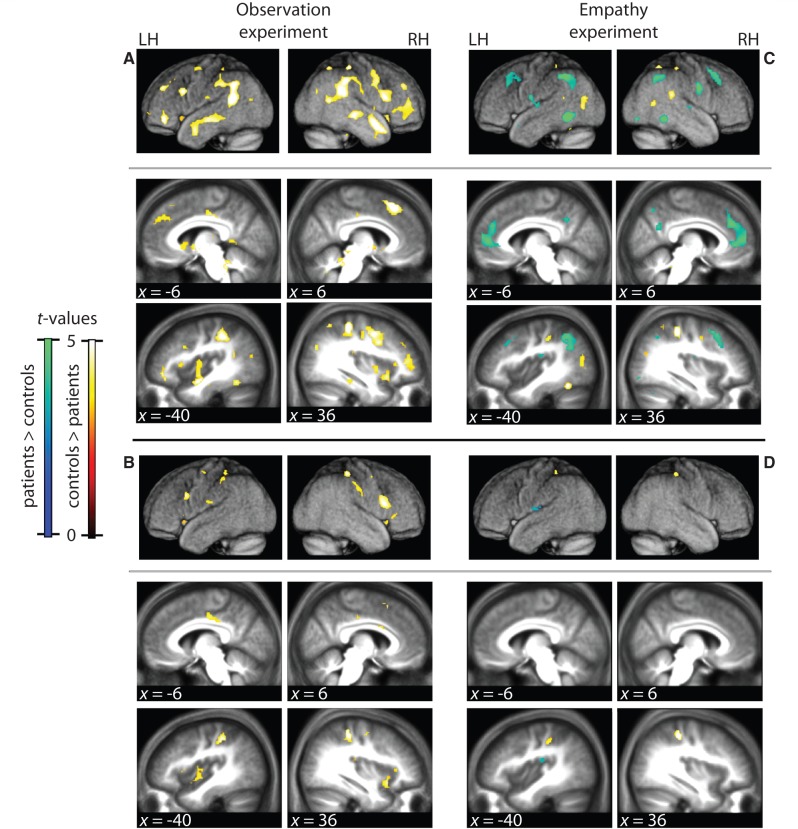
Psychopathy is a personality disorder associated with a profound lack of empathy. Neuroscientists have associated empathy and its interindividual variation with how strongly participants activate brain regions involved in their own actions, emotions and sensations while viewing those of others. Here we compared brain activity of 18 psychopathic offenders with 26 control subjects while viewing video clips of emotional hand interactions and while experiencing similar interactions. Brain regions involved in experiencing these interactions were not spontaneously activated as strongly in the patient group while viewing the video clips. However, this group difference was markedly reduced when we specifically instructed participants to feel with the actors in the videos. Our results suggest that psychopathy is not a simple incapacity for vicarious activations but rather reduced spontaneous vicarious activations co-existing with relatively normal deliberate counterparts.
Overview
The claims and statistics of this paper haven’t been checked yet.
Run the check — free, no account needed. It reads the open-access text and checks the sources it cites.
Integrity signals
Registry
Cites
Statistics
Figures
Verification
Claims the paper makes
The claims and statistics of this paper haven’t been checked yet.
Run the check — free, no account needed. It reads the open-access text and checks the sources it cites.
Claims other papers make about this one
Each is checked against this paper’s own text: does it say what the citing paper says it does?
In the citing paper
“In line with such independent functions, selective impairments in empathy or ToM have been observed in different psychopathologies such as autism and psychopathy.”
From On the interaction of social affect and cognition: empathy, compassion and theory of mind (2018) · cites this paper as [36]
Self-check
Percentages, sums and reported differences re-computed from the paper’s own numbers.
The self-check needs the paper’s full text.
Citations
Cites
Maldjian, J. A., Laurienti, P. J., Kraft, R., & Burdette, J. H. (2003) · NeuroImage · doi:10.1016/s1053-8119(03)00169-1 · Cited by 5,066 · cited 2×
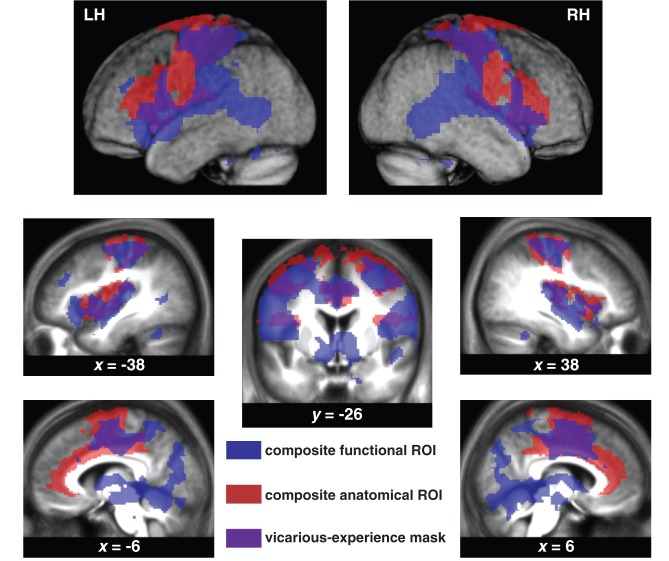
“, 2007) or the AAL atlas of the WFU Pickatlas (Maldjian et al., 2003) for regions not yet included in the Anatomy ToolBox and then combined them into a single composite anatomical region of interest using a logical ‘OR’ (Fig.”
Method(1998) · Cited by 4,172
Empathy for Pain Involves the Affective but not Sensory Components of Pain
Singer, T., Seymour, B., O'Doherty, J., Kaube, H., Dolan, R. J., & Frith, C. D. (2004) · Science · doi:10.1126/science.1093535 · Cited by 3,929
Meeting of minds: the medial frontal cortex and social cognition
Amodio, D. M., & Frith, C. D. (2006) · Nature Reviews Neuroscience · doi:10.1038/nrn1884 · Cited by 3,782 · cited 1×
“…in regions (outside the region of interest), associated with conscious menta- lizing (including the medial prefrontal cortex and the temporal pole) (Amodio and Frith, 2006; Van Overwalle and Baetens, 2009), and deliberate reappraisal (dorsolateral prefrontal cortex and angular gyrus, Ochsner et…”
BackgroundBoth of Us Disgusted in My Insula
Wicker, B., Keysers, C., Plailly, J., Royet, J.-P., Gallese, V., & Rizzolatti, G. (2003) · Neuron · doi:10.1016/s0896-6273(03)00679-2 · Cited by 2,185
Misunderstanding analysis of covariance.
Miller, G. A., & Chapman, J. P. (2001) · Journal of Abnormal Psychology · doi:10.1037/0021-843x.110.1.40 · Cited by 2,136 · cited 1×
“Unfortunately, as these variables were highly correlated with the factor Group [e.g. r(Group, Substance abuse) = 0.86], disentangling their contribution through inclusion of nuisance covariates in our analyses is impossible (Miller and Chapman, 2001).”
BackgroundInfluentialOchsner, K. N., Ray, R. D., Cooper, J. C., Robertson, E. R., Chopra, S., Gabrieli, J. D. E., & Gross, J. J. (2004) · NeuroImage · doi:10.1016/j.neuroimage.2004.06.030 · Cited by 2,113 · cited 1×
“…the region of interest), associated with conscious menta- lizing (including the medial prefrontal cortex and the temporal pole) (Amodio and Frith, 2006; Van Overwalle and Baetens, 2009), and deliberate reappraisal (dorsolateral prefrontal cortex and angular gyrus, Ochsner et al., 2004).”
BackgroundLamm, C., Decety, J., & Singer, T. (2011) · NeuroImage · doi:10.1016/j.neuroimage.2010.10.014 · Cited by 2,016 · cited 3×
“…activations in brain regions (insula and cin- gulate cortex) normally associated with feeling similar emotions oneself (Bastiaansen et al., 2009; Lamm et al., 2011), and wit- nessing what others do and sense recruits one’s own motor and somatosensory cortices (Pineda, 2008; Keysers and…”
BackgroundMethodThe empathic brain: how, when and why?
de Vignemont, F., & Singer, T. (2006) · Trends in Cognitive Sciences · doi:10.1016/j.tics.2006.08.008 · Cited by 1,846
Empathic neural responses are modulated by the perceived fairness of others
Singer, T., Seymour, B., O'Doherty, J. P., Stephan, K. E., Dolan, R. J., & Frith, C. D. (2006) · Nature · doi:10.1038/nature04271 · Cited by 1,726 · cited 2×
“Those defined using the AAL included the insula and the anterior/mid cingulate (Wicker et al., 2003; Singer et al., 2004, 2006; Jabbi et al., 2007; Bastiaansen et al., 2009; Lamm et al., 2011).”
Method
Research works printed but not linked: 4
- Hare, 1991, The Hare psychopathy checklist-revised
- Hare, 2001, De Psychopathie Checklist revised
- Lord, 1999, Autism diagnostic observation schedule. Manual
- Luteijn, 2004, GIT 2: Groninger intelligentie test 2
Cited by
Sorted by citations
Items 201–300 of 318
Dugre, J. R., & Potvin, S. (2024) · European Child & Adolescent Psychiatry · doi:10.1007/s00787-024-02557-w · Cited by 6
“Indeed, brain activity of the pSTG has been found in children with disruptive behavior disorders [40, 47] and adults with psychopathy [3, 33, 50] and correlate with severity of CD [30].”
Psychopathy and Psychotic Disorders
Anderson, J. R., & Kosson, D. S. (2022) · Dangerous behavior in clinical and forensic psychology · doi:10.1007/978-3-030-83156-1_7 · Cited by 4
Compton, S. A. H., Ritchie, M. B., Oliver, L. D., Finger, E. C., & Mitchell, D. G. V. (2022) · Social Neuroscience · doi:10.1080/17470919.2022.2095018 · Cited by 4
“…in individuals with socio-emotional difficulties, including community samples with higher psychopathic traits (Fecteau et al., 2008; Khvatskaya & Lenzenweger, 2016), patients with autism-spectrum disorder (Minio-Paluello et al., 2009), and criminal offenders with psychopathy (Meffert et al., 2013).”
BackgroundImplicit Bias Scenario Design: What Can We Learn from Cognitive Science?
Gilbert, M., & Keyser, V. (2022) · Clinical Simulation in Nursing · doi:10.1016/j.ecns.2022.08.003 · Cited by 4
Anderson, S. A. S., Hawes, D. J., & Snow, P. C. (2024) · European Child & Adolescent Psychiatry · doi:10.1007/s00787-023-02356-9 · Cited by 4
“There is some evidence that individuals high in CU or psychopathic traits are capable of engaging in both cognitive PT [64] and affective PT [65] when provided with such goal directed attentional instructions.”
BackgroundVolition as a modulator of the intergroup empathy bias
Caspar, É. A., Nicolay, E., Banderembaho, F., & Pech, G. P. (2024) · Social Neuroscience · doi:10.1080/17470919.2024.2446816 · Cited by 4
“Because of these vicarious activations, we generally prefer not to hurt others, as we understand their pain (de Waal & Preston, 2017; Hein et al., 2010; Meffert et al., 2013).”
The Neurobiological Underpinnings of Psychopathy
Brito, S. A. D., & Mitchell, I. (2018) · Wiley eBooks · doi:10.1002/9781118650868.ch9 · Cited by 5
Using physiological biomarkers in forensic psychiatry: a scoping review
Mens, J., Masthoff, E., Bogaerts, S., & Heus, P. (2025) · Frontiers in Psychiatry · doi:10.3389/fpsyt.2025.1580615 · Cited by 4
Baskurt, S., & Harkins, L. (2023) · Journal of Sexual Aggression · doi:10.1080/13552600.2023.2237991 · Cited by 3
“A similar pattern of results was obtained in other studies by Me ff ert et al. (2013) and Arbuckle and Shane (2017), in which a Magnetic resonance imaging (MRI) scan was utilised to examine participants ’ neural reactions while attempting to maximise or minimise their empathy for people in pain.”
Callous-Unemotional Traits and Empathy
Alshukri, S., Lewis, K., & Centifanti, L. C. M. (2022) · Springer eBooks · doi:10.1007/978-3-030-80882-2_7 · Cited by 3
Mental Disorders as Failures of Attention
Sinnott-Armstrong, W. P., Soter, L. K., & Summers, J. S. (2024) · Crítica (México D F En línea) · doi:10.22201/iifs.18704905e.2024.1528 · Cited by 3
Evil, Terrorism and Psychiatry
(2019) · Cambridge University Press eBooks · doi:10.1017/9781108569095 · Cited by 3
Neuroimaging Studies of Psychopathy
Pujara, M. S., & Koenigs, M. R. (2014) · Springer eBooks · doi:10.1007/978-3-642-40384-2_28 · Cited by 3
Kunaharan, S., Halpin, S. A., Sitharthan, T., & Walla, P. (2020) · Archives of Sexual Behavior · doi:10.1007/s10508-019-01550-8 · Cited by 3
Branković, M., Međedović, J. M., & Budžak, A. (2025) · Current Psychology · doi:10.1007/s12144-025-08261-5 · Cited by 2
“At the same time, they can be activated deliberately on explicit instruction (Meffert et al., 2013).”
Psychopathy, neuroscience, and critical issues: A legal primer
Danagher, L. (2025) · International Journal of Law and Psychiatry · doi:10.1016/j.ijlp.2025.102139 · Cited by 5
Matthaeus, H., & Singer, T. (2025) · Cambridge University Press eBooks · doi:10.1017/9781009342919.031 · Cited by 2
Herpertz, S. C., & Bronisch, T. (2017) · Springer eBooks · doi:10.1007/978-3-662-49295-6_79 · Cited by 3
The criminalisation of corporate psychopaths: a holistic inquiry
Danagher, L. (2023) · Current Issues in Criminal Justice · doi:10.1080/10345329.2023.2207233 · Cited by 2
Culpability for offenses in frontotemporal dementia and other brain disorders
Mendez, M. F. (2023) · International Journal of Law and Psychiatry · doi:10.1016/j.ijlp.2023.101909 · Cited by 3
Kemple, J. D. (2016) · Cited by 2
From Vicarious Actions to Moral Behavior
Keysers, C., & Gazzola, V. (2016) · Issues in science and religion: publications of the European Society for the Study of Science and Theology · doi:10.1007/978-3-319-26769-2_8 · Cited by 2
Empathy as a Method: from the Philosophical Point of View
Karyagina, T. D. (2017) · Counseling Psychology and Psychotherapy · doi:10.17759/cpp.2015230510 · Cited by 2
Larsen, R. R. (2020) · Philosophical Explorations · doi:10.1080/13869795.2020.1799662 · Cited by 2
RESTORATIVE JUSTICE AND PSYCHOPATHIC TRAITS: THE PERSPECTIVE OF BELGIAN PRACTITIONERS
Bisback, A. (2022) · Contemporary Challenges The Global Crime Justice and Security Journal · doi:10.2218/ccj.v3.7050 · Cited by 2
“Empathy can be activated deliberately when a psychopath is asked to empathize with someone (Meffert et al., 2013).”
BackgroundKılıçaslan, A. K., Yıldız, S., Emir, B. S., & Kılıç, F. (2022) · La Presse Médicale Open · doi:10.1016/j.lpmope.2022.100034 · Cited by 2
Galván, K. X. D., Gutiérrez, A. L., González, J. D. J. G., & Shejet, F. O. (2023) · Edupsykhé Revista de Psicología y Educación · doi:10.57087/edupsykhe.v20i1.4533 · Cited by 2
Neuro-computational mechanisms of action-outcome learning under moral conflictPreprint
Fornari, L., Ioumpa, K., Nostro, A. D., Evans, N. J., Angelis, L. D., Paracampo, R., Gallo, S., Spezio, M., Keysers, C., & Gazzola, V. (2020) · bioRxiv (Cold Spring Harbor Laboratory) · doi:10.1101/2020.06.10.143891 · Cited by 2
Offending in individuals with autistic spectrum disorder : a study of risk and need
Turner, T. (2015) · University of Birmingham Institutional Research Archive (University of Birmingham) · Cited by 2
Il gaslighting come forma di abuso emotivo nella relazione di dipendenza affettiva
Cantelmi, T., Pensavalli, M., & Serafini, P. (2021) · MODELLI DELLA MENTE · doi:10.3280/mdm1-2021oa12639 · Cited by 1
dos Santos, A. (2022) · Springer eBooks · doi:10.1007/978-3-031-08556-7_1 · Cited by 1
The paradox of empathy for pain: Personality, adversity, and affective resonance in psychiatry
Souchon, M., Calati, R., Segui, L. G., Roopchand, M. B., Foster, A. E., Maisto, M., Romano, D., Delvecchio, G., Brambilla, P., Madeddu, F., et al. (2026) · The European Journal of Psychiatry · doi:10.1016/j.ejpsy.2026.100343 · Cited by 1
Lv, C., Song, D., Ni, J., Qing, H., & Quan, Z. (2026) · Progress in Neurobiology · doi:10.1016/j.pneurobio.2026.102892 · Cited by 2
Howcroft, A., Benford, S., Valstar, M., & Blake, H. (2026) · JMIR Research Protocols · doi:10.2196/93078 · Cited by 1
“This is partly because the term is used in different contexts, such as health care [1], psychology [2], philosophy [3], neuroscience [4], and even machine learning [5].”
Timelessness and Time Dependence of Human Consciousness From a Scientific Western Viewpoint
Jansen, F. K. (2014) · Philosophy study · doi:10.17265/2159-5313/2014.08.001 · Cited by 1
“Imaging brain studies show that psychopathics criminals feel less empathy than controls (Meffert et al. 2013).”
BackgroundOxytocin shapes the priorities and neural representations of attitudes and values
Hurlemann, R., Marsh, N., Schultz, J., & Scheele, D. (2017) · Behavioral and Brain Sciences · doi:10.1017/s0140525x16000807 · Cited by 1
Was ist antisoziales Verhalten?
Sachse, R., & von Franqué, F. (2019) · Psychotherapie: Praxis · doi:10.1007/978-3-662-59279-3_2 · Cited by 1
Weitere psychologische Komponenten von Interaktionsspielen
Sachse, R., & von Franqué, F. (2019) · Psychotherapie: Praxis · doi:10.1007/978-3-662-59279-3_7 · Cited by 1
Brooks, N., Fritzon, K., & Watt, B. D. (2019) · Springer eBooks · doi:10.1007/978-3-030-27188-6_1 · Cited by 1
Moral Responsibility and the Psychopath: The Value of Others
Baxter, J. (2021) · Cited by 1
Herpertz, S. C., & Bronisch, T. (2016) · Springer eBooks · doi:10.1007/978-3-642-45028-0_79-1 · Cited by 1
Neuroimaging Studies of Psychopathy
Deming, P., & Koenigs, M. R. (2020) · Springer eBooks · doi:10.1007/978-3-030-57231-0_27 · Cited by 1
Kim, A., & Kim, Y. Y. (2024) · Biological Psychology · doi:10.1016/j.biopsycho.2024.108810 · Cited by 1
Feeling, Caring, Knowing Revisited: Three Components of Empathy and Psychopathic and Autistic Traits
Brazil, K. J., Kurganov, S., Moore, M., & Forth, A. E. (2024) · Journal of Psychopathology and Behavioral Assessment · doi:10.1007/s10862-024-10164-x · Cited by 5
“…with affective or sympathetic empathy in autism (Dziobek et al., 2008 ; Rieffe et al., 2021) and that motivating participants with psychopathic traits tend to eliminate affective and cognitive empathy issues (Drayton et al., 2018 ; Meffert et al., 2013) provides some support for our conclusion.”
Psychopathy: Morally Incapacitated Persons
Maibom, H. L. (2015) · Springer eBooks · doi:10.1007/978-94-017-8706-2_56-1 · Cited by 1
Brain Alterations Potentially Associated with Aggression and Terrorism
Bogerts, B., Schöne, M., & Breitschuh, S. (2019) · Cambridge University Press eBooks · doi:10.1017/9781108569095.010 · Cited by 1
Khorashad, S. K., & Khosrowabadi, R. (2022) · Quarterly Review of Film and Video · doi:10.1080/10509208.2022.2156251 · Cited by 3
“…Gazzola, Rizzolatti, et al. 2007b, Gazzola, van der Worp, et al. 2007a; Keysers, Kaas, and Gazzola 2010; Lamm, Decety, and Singer 2011; Mar 2011; Meffert et al. 2013; Rizzolatti and Craighero 2004; Saxe and Kanwisher 2003; Schurz et al. 2014; Singer et al. 2004), have significant activity in…”
BackgroundAntisocial behaviour in adolescents: exploring and improving emotion processing deficits
Hubble, K. (2015) · ORCA Online Research @Cardiff (Cardiff University) · Cited by 1
Harm to others acts as a cingulate dependent negative reinforcer in ratPreprint
Hernandez-Lallement, J., Attah, A. T., Gazzola, V., & Keysers, C. (2019) · bioRxiv (Cold Spring Harbor Laboratory) · doi:10.1101/808949 · Cited by 1
“Accordingly, it has been argued that psychiatric disorders characterized by anti-social behavior [2,4] might stem from malfunctioning or biased vicarious emotions [5,6].”
BackgroundLisi, M. P., Fusaro, M., & Aglioti, S. M. (2023) · doi:10.31234/osf.io/reujt · Cited by 1
Wolf, R. C., & Koenigs, M. R. (2015)
Haaxma, R. (2016) · Neuropraxis · doi:10.1007/s12474-016-0119-2
“Een gebrek aan empathie is te objectiveren met functionele beeldvorming [17].”
BackgroundShaping Emotions That Shape the World
Davis, M. H., & Peters, K. E. (2016) · Issues in science and religion: publications of the European Society for the Study of Science and Theology · doi:10.1007/978-3-319-26769-2_4
Distinguishing and connecting self and others
Cui, F. (2013)
Aportes sobre el correlato neuroanatómico de la personalidad
Ben-Hur Palma, H., & Elizabeth Horta, R. (2016) · Revista chilena de neuro-psiquiatría · doi:10.4067/s0717-92272016000300006
Psychopathy and the Effect of Imitation on Empathetic Pain
Lasko, E. N. (2017)
Meyza, K. Z. (2018) · Elsevier eBooks · doi:10.1016/b978-0-12-805397-3.00014-0
Carraro, L., Spironelli, C., Poli, E., Bobbio, A., Castelli, L., Arcuri, L., & Angrilli, A. (2018) · International Journal of Law and Psychiatry · doi:10.1016/j.ijlp.2018.05.002
Ghiron, M. (2017) · City Research Online (City University London)
Šamánková, D., Preiss, M., & Příhodová, T. (2018) · Springer eBooks · doi:10.1007/978-3-319-89536-9_5
Kunaharan, S. (2019) · Figshare
Усенко, Г. А., Мухтарович, Б. С., Wasendin, D. V., Usenko, A. G., Belkina, O. M., Анатольевна, Ш. Н., & Zabara, V. G. (2017) · Bulletin of the Russian Military Medical Academy · doi:10.17816/brmma12171
Publisher Correction: Psychopathy
Brito, S. A. D., Forth, A. E., Baskin-sommers, A. R., Brazil, I. A., Kimonis, E. R., Pardini, D. A., Frick, P. J., Blair, J., & Viding, E. M. (2021) · Nature Reviews Disease Primers · doi:10.1038/s41572-021-00294-x
Emotional Mirrors in the Rat's Anterior Cingulate CortexPreprint
Carrillo, M., Han, Y., Migliorati, F., Liu, M., Gazzola, V., & Keysers, C. (2018) · SSRN Electronic Journal · doi:10.2139/ssrn.3299451
Viaje al centro. Más allá de la alienación y del autismo
García, J. M. (2002) · Revista Padres y Maestros / Journal of Parents and Teachers
Brain and Behaviour Perspective
Howard, R., & Duggan, C. F. (2022) · Cambridge University Press eBooks · doi:10.1017/9781911623892.005
姜, 振. (2021) · Advances in Psychology · doi:10.12677/ap.2021.1112326
Flor, H., & Foell, J. (2020) · doi:10.1002/9781119159322.ch16
Psychopathy and Neurodevelopmental Disorders
Bohall, G., Vitale, J. E., & Lemon, D. (2022) · Dangerous behavior in clinical and forensic psychology · doi:10.1007/978-3-030-83156-1_6
Dans les griffes du « gaslighting »
Hartmann, C. (2022) · Cerveau & Psycho · doi:10.3917/cerpsy.144.0082
Maibom, H. L. (2022) · Oxford University Press eBooks · doi:10.1093/oso/9780197637081.003.0007
The Self as Agent, the Self as Observer
Maibom, H. L. (2022) · Oxford University Press eBooks · doi:10.1093/oso/9780197637081.003.0004
Maibom, H. L. (2022) · Oxford University Press eBooks · doi:10.1093/oso/9780197637081.003.0010 · Cited by 1
Maibom, H. L. (2022) · Oxford University Press eBooks · doi:10.1093/oso/9780197637081.003.0011
Maibom, H. L. (2022) · Oxford University Press eBooks · doi:10.1093/oso/9780197637081.003.0001
Maibom, H. L. (2022) · Oxford University Press eBooks · doi:10.1093/oso/9780197637081.003.0008
Maibom, H. L. (2022) · Oxford University Press eBooks · doi:10.1093/oso/9780197637081.003.0003
Maibom, H. L. (2022) · Oxford University Press eBooks · doi:10.1093/oso/9780197637081.003.0005
Maibom, H. L. (2022) · Oxford University Press eBooks · doi:10.1093/oso/9780197637081.002.0007
Maibom, H. L. (2022) · Oxford University Press eBooks · doi:10.1093/oso/9780197637081.002.0003
Maibom, H. L. (2022) · Oxford University Press eBooks · doi:10.1093/oso/9780197637081.003.0006
Maibom, H. L. (2022) · Oxford University Press eBooks · doi:10.1093/oso/9780197637081.002.0004
Maibom, H. L. (2022) · Oxford University Press eBooks · doi:10.1093/oso/9780197637081.003.0002
Maibom, H. L. (2022) · Oxford University Press eBooks · doi:10.1093/oso/9780197637081.003.0009
Vicarious Stress in Juvenile Rats
Ali, E. (2022) · Carleton University's Institutional Repository (MacOdrum Library, Carleton University) · doi:10.22215/etd/2022-15177
Cerebral Support for Making Donation-Related Decision with Altruistic and Egoistic Motives
Shepelenko, A., & Kosonogov, V. (2023) · Neuroscience and Behavioral Physiology · doi:10.1007/s11055-023-01413-9
“At the same time, patients with psychopathy [Meffert et al., 2013] and hyperactivity syndrome [Abdel-Hamid et al., 2019] may lose empathy without detriment to the mentalization process.”
BackgroundAberrant type 2 dopamine receptor availability in criminal psychopathyPreprint
Lukkarinen, L., Tuisku, J., Sun, L., Helin, S., Karlsson, H. K., Venetjoki, N., Salomaa, M., Rautio, P., Hirvonen, J., Lauerma, H., et al. (2023) · bioRxiv (Cold Spring Harbor Laboratory) · doi:10.1101/2023.06.21.545877
“When deliberately asked to empathize with others, psychopaths show nearly normal responses in the brain’s social perception and empathy networks (58).”
BackgroundDark Tetrad and Empathy among Male and Female Adults: A Review
Ishmeet Kaur, A. A. (2023) · Journal of chemical health risks · doi:10.52783/jchr.v13.i4.1131
“Even though self-report measures have shown a consistent lack of empathy, brain scans showed traces of empathic characteristics in psychopathy (Meffert et al. 2013; Decety et al. 2009).”
Carlos Barrera, P. (2023) · ACTA PSICOLÓGICA PERUANA · doi:10.56891/acpp.v8i1.387 · Cited by 2
High Psychopathic Trait Individuals’ Decisions to Empathize are Influenced by Power DynamicsPreprint
Stewart, K., & Shane, M. S. (2024) · Research Square · doi:10.21203/rs.3.rs-4002136/v1
The Role of Parenting Style and Childhood Friendship in Predicting Risk of Adulthood Psychopathy
Gu, X. (2024) · Lecture Notes in Education Psychology and Public Media · doi:10.54254/2753-7048/46/20230674
In the I of the beholder: an attempt to capture the implicit self-concept regarding psychopathy
Krüppel, J., Yoon, D., Zerres, K., Brunner, F., & Mokros, A. (2024) · Frontiers in Psychology · doi:10.3389/fpsyg.2024.1346029
Revealed masks: Facial mimicry after oxytocin administration in forensic psychopathic patients
Rijnders, R. J. P., Boxtel, A. V., de Wied, M. A., van Honk, J., Kempes, M. M., & Bos, P. A. (2024) · Journal of Psychiatric Research · doi:10.1016/j.jpsychires.2024.06.032
Compassion in Eastern and Western Cultures from Ren and Heart of Ceyin
马, 冰. (2024) · Advances in Psychology · doi:10.12677/ap.2024.149641
Investigating the Factor Structure of the Japanese Version of the Interpersonal Reactivity Index
Himichi, T., Kawamura, Y., & Goto, T. (2024) · Japanese Psychological Research · doi:10.1111/jpr.12567
Metadata
- Authors
- Meffert, H., Gazzola, V., den Boer, J. A., Bartels, A. A. J., & Keysers, C.
- Affiliations
- Netherlands Institute for Neuroscience (NL)
- Corresponding author
- Keysers, Christian
- Venue
- Brain
- Publisher
- Oxford University Press (OUP)
- Published
- 2013-07-23
- Volume
- 136
- Issue
- 8
- Pages
- 2550-2562
- ISSN
- 0006-8950 (ISSN-L)
- 1460-2156
- PMC
- PMC3722356
- OpenAlex
- W2171909033
- Cited by
- 318
- References
- 75
- Citations by year
- 2026: 9 · 2025: 15 · 2024: 19 · 2023: 15 · 2022: 50 · 2021: 20 · 2020: 25 · 2019: 28 · 2018: 32 · 2017: 31 · 2016: 25 · 2015: 26 · 2014: 21 · 2013: 1
- FWCI
- 27.04
- Type
- journal article
- Language
- en
- Open access
- hybrid
- doi.org
- Licence
- cc-by-nc
- Locations
- Brain (publishedVersion, cc-by-nc)
- Europe PMC (PubMed Central) (publishedVersion, cc-by-nc)
- PubMed Central (publishedVersion, cc-by-nc)
- PubMed (publishedVersion)
- KNAW Research Portal (The Royal Netherlands Academy of Arts and Sciences) (publishedVersion, other-oa)
- KNAW research portal (Royal Academy of Art and Sciences (KNAW)) (publishedVersion, other-oa)
- Data Archiving and Networked Services (DANS) (submittedVersion, other-oa)
- University of Groningen research database (University of Groningen / Centre for Information Technology) (submittedVersion)
- Funders
- Nederlandse Organisatie voor Wetenschappelijk Onderzoek (452-04-305, 451-09-006)
- Topics
- Social Sciences › Psychology › Clinical Psychology › Psychopathy, Forensic Psychiatry, Sexual Offending
- Social Sciences › Psychology › Social Psychology › Action Observation and Synchronization
- Life Sciences › Neuroscience › Cognitive Neuroscience › Neural and Behavioral Psychology Studies
- Keywords
- psychopathy, empathy, spontaneous activation, video viewing, psychopathic offenders, neural basis of empathy, individual differences
- MeSH terms
- Adolescent, Adult, Antisocial Personality Disorder, Brain, Empathy, Humans, Magnetic Resonance Imaging, Male, Middle Aged, Social Perception, Criminals
About these checks
Registry, retraction, Cites and statistics results are computed, not judged, with one exception: a printed reference that no index lists is read once by a model before it counts as a citation error. Claims are extracted by a model and kept only when their quote appears verbatim in the text; each cited source is then checked, with a model’s help, for whether it says what the claim relies on. Those verdicts can be wrong — read the claim’s quote and the cited source before relying on one.
Statistics and arithmetic are recomputed, not judged.
Confidence bands are shown only for fields calibrated on our annotated test set. None is calibrated yet, so no band is shown.
What counts as a claim ›How we measure confidence ›How we check this ›
Are you an author, or do you see a problem with this page? Request a review
