

The DOI matches its Crossref record; 46 of the 46 references it cites were found in a registry or an index.
Combined effects of scanning ultrasound and a tau-specific single chain antibody in a tau transgenic mouse model
Open accessAbstract
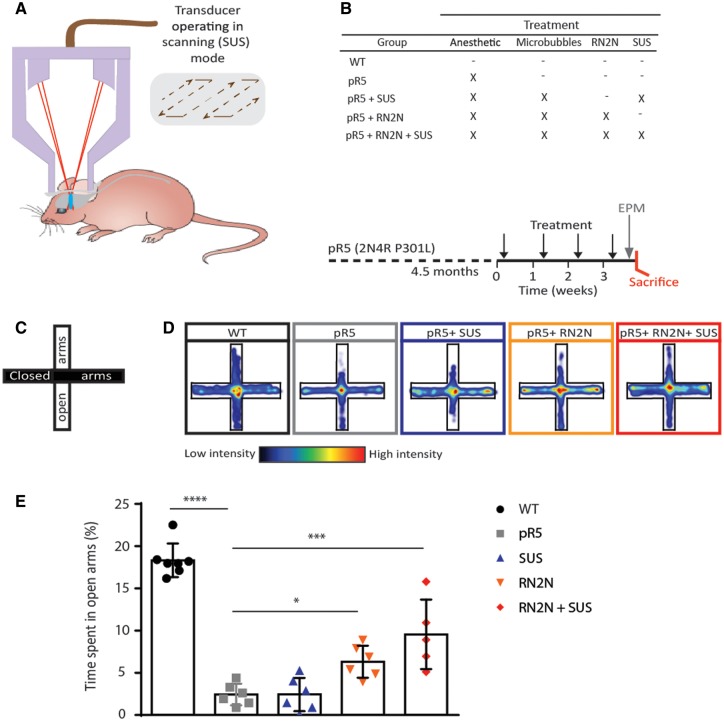
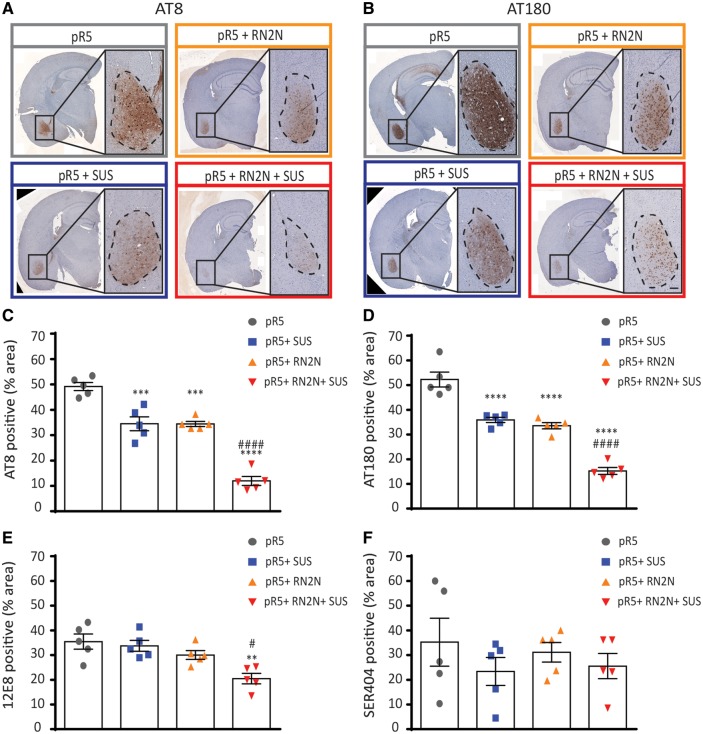
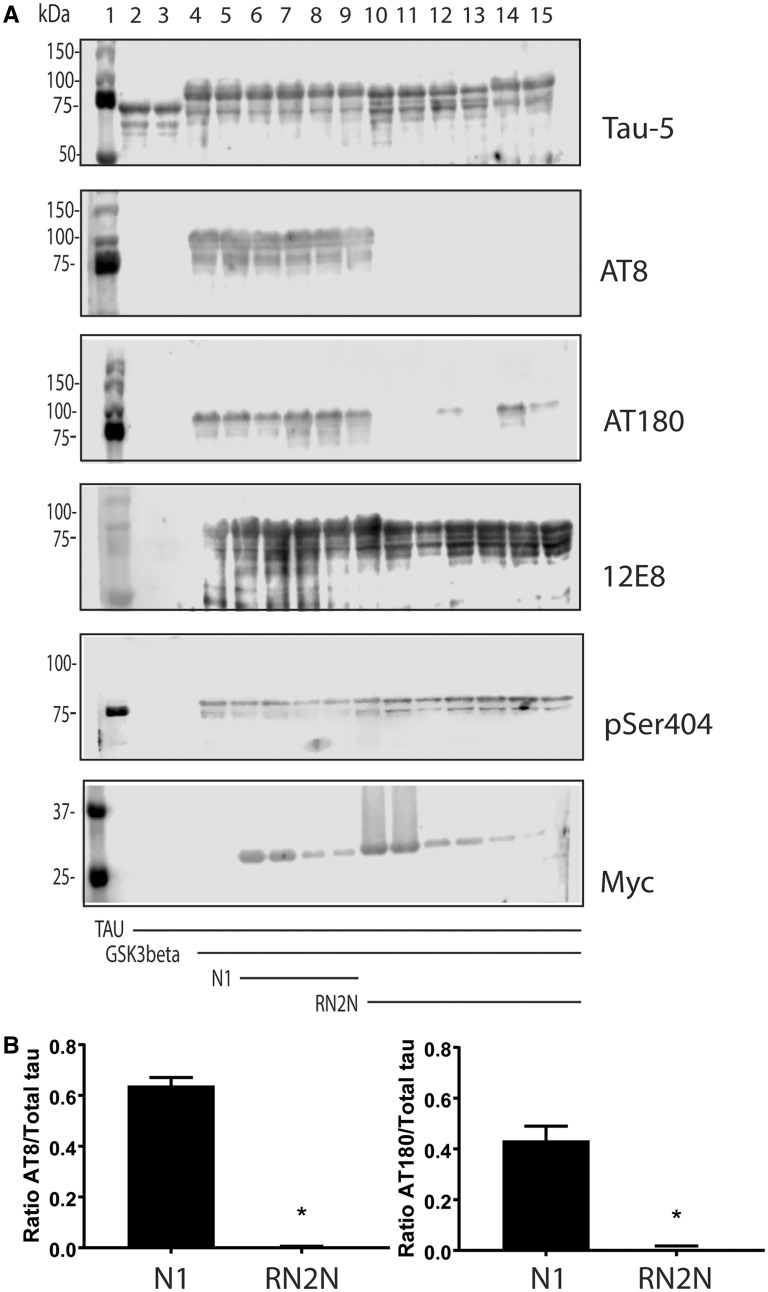
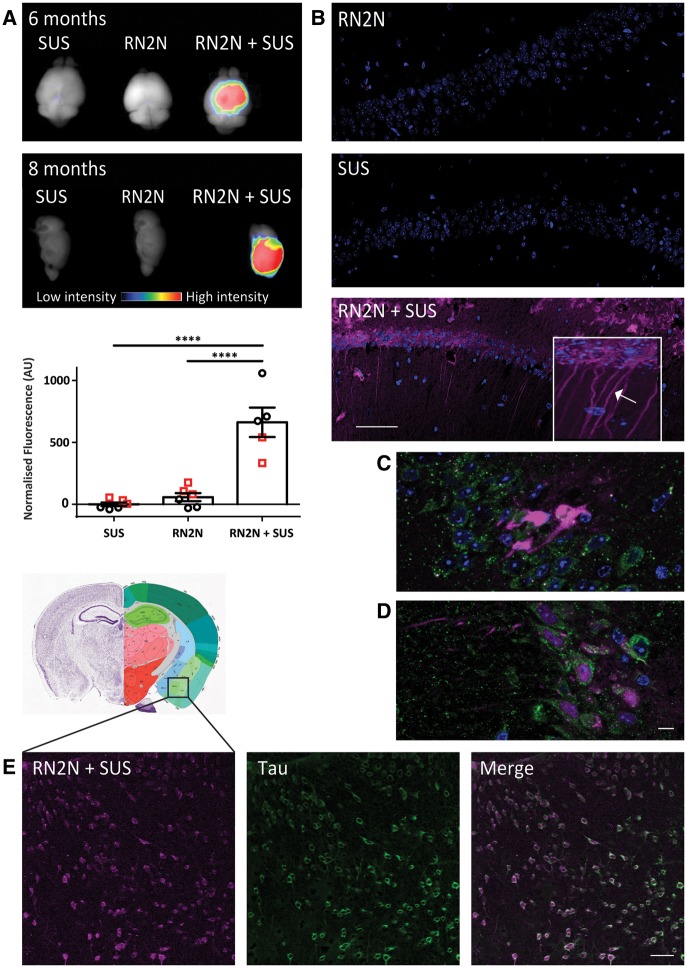
Alzheimer's disease is characterized by the deposition of amyloid-β as extracellular plaques and hyperphosphorylated tau as intracellular neurofibrillary tangles. Tau pathology characterizes not only Alzheimer's disease, but also many other tauopathies, presenting tau as an attractive therapeutic target. Passive tau immunotherapy has been previously explored; however, because only a small fraction of peripherally delivered antibodies crosses the blood-brain barrier, enters the brain and engages with tau that forms intracellular aggregates, more efficient ways of antibody delivery and neuronal uptake are warranted. In the brain, tau exists as multiple isoforms. Here, we investigated the efficacy of a novel 2N tau isoform-specific single chain antibody fragment, RN2N, delivered by passive immunization in the P301L human tau transgenic pR5 mouse model. We demonstrate that, in treated mice, RN2N reduces anxiety-like behaviour and phosphorylation of tau at distinct sites. When administration of RN2N was combined with focused ultrasound in a scanning mode (scanning ultrasound), RN2N delivery into the brain and uptake by neurons were markedly increased, and efficacy was significantly enhanced. Our study provides evidence that scanning ultrasound is a viable tool to enhance the delivery of biologics across the blood-brain barrier and improve therapeutic outcomes and further presents single-chain antibodies as an alternative to full-length antibodies.
Overview
The claims and statistics of this paper haven’t been checked yet.
Run the check — free, no account needed. It reads the open-access text and checks the sources it cites.
Integrity signals
Registry
Cites
Statistics
Figures
Verification
Claims the paper makes
The claims and statistics of this paper haven’t been checked yet.
Run the check — free, no account needed. It reads the open-access text and checks the sources it cites.
Claims other papers make about this one
Each is checked against this paper’s own text: does it say what the citing paper says it does?
In the citing paper
“Moreover, antibody fragments have been shown to reduce tau levels in vivo225,226.”
From Tau-targeting therapies for Alzheimer disease (2018) · cites this paper as [225]
Self-check
Percentages, sums and reported differences re-computed from the paper’s own numbers.
The self-check needs the paper’s full text.
Citations
Cites
Amyloid oligomers exacerbate tau pathology in a mouse model of tauopathy
Selenica, M.-L. B., Brownlow, M., Jimenez, J. P., Lee, D. C., Pena, G., Dickey, C. A., Gordon, M. N., & Morgan, D. (2013) · Neurodegenerative Diseases · doi:10.1159/000337230 · Cited by 10,359
The use of the elevated plus maze as an assay of anxiety-related behavior in rodents
Walf, A. A., & Frye, C. A. (2007) · Nature Protocols · doi:10.1038/nprot.2007.44 · Cited by 3,035
Dendritic Function of Tau Mediates Amyloid-β Toxicity in Alzheimer's Disease Mouse Models
Ittner, L. M., Ke, Y. D., Delerue, F., Bi, M., Gladbach, A., van Eersel, J., Wölfing, H., Chieng, B. C., Christie, M. J., Napier, I. A., et al. (2010) · Cell · doi:10.1016/j.cell.2010.06.036 · Cited by 1,821
Self-citationVarghese, F., Bukhari, A. B., Malhotra, R., & De, A. (2014) · PLoS ONE · doi:10.1371/journal.pone.0096801 · Cited by 1,318
Goedert, M., & Jakes, R. (1990) · The EMBO Journal · doi:10.1002/j.1460-2075.1990.tb07870.x · Cited by 929 · cited 1×
“In the adult human brain, 2N tau is under-represented compared to the 0N and 1N isoforms and is estimated to comprise 9% of total tau (Goedert and Jakes, 1990).”
Yanamandra, K., Kfoury, N., Jiang, H., Mahan, T. E., Ma, S., Maloney, S. E., Wozniak, D. F., Diamond, M. I., & Holtzman, D. M. (2013) · Neuron · doi:10.1016/j.neuron.2013.07.046 · Cited by 574
Scanning ultrasound removes amyloid-β and restores memory in an Alzheimer’s disease mouse model
Leinenga, G., & Götz, J. (2015) · Science Translational Medicine · doi:10.1126/scitranslmed.aaa2512 · Cited by 498
Self-citationTau filament formation in transgenic mice expressing P301L tau
Götz, J., Chen, F., Barmettler, R., & Nitsch, R. M. (2001) · Journal of Biological Chemistry · doi:10.1074/jbc.m006531200 · Cited by 495
Self-citationBiernat, J., Mandelkow, E. M., Schröter, C., Lichtenberg‐Kraag, B., Steiner, B., Berling, B., Meyer, H., Mercken, M., Vandermeeren, A., & Goedert, M. (1992) · The EMBO Journal · doi:10.1002/j.1460-2075.1992.tb05204.x · Cited by 484
Jordão, J. F., Ayala‐Grosso, C. A., Markham, K. A., Huang, Y., Chopra, R., McLaurin, J., Hynynen, K., & Aubert, I. (2010) · PLoS ONE · doi:10.1371/journal.pone.0010549 · Cited by 390
Cited by
Sorted by citations
Tau-targeting therapies for Alzheimer disease
Congdon, E. E., & Sigurdsson, E. M. (2018) · Nature Reviews Neurology · doi:10.1038/s41582-018-0013-z · Cited by 1,113
Blood-brain barrier opening in Alzheimer’s disease using MR-guided focused ultrasound
Lipsman, N., Meng, Y., Bethune, A. J., Huang, Y., Lam, B., Masellis, M., Herrmann, N., Heyn, C., Aubert, I., Boutet, A., et al. (2018) · Nature Communications · doi:10.1038/s41467-018-04529-6 · Cited by 950
The blood-brain barrier: Physiology and strategies for drug delivery
Pandit, R., Chen, L., & Götz, J. (2020) · Advanced Drug Delivery Reviews · doi:10.1016/j.addr.2019.11.009 · Cited by 651
Self-citationApplications of focused ultrasound in the brain: from thermoablation to drug delivery
Meng, Y., Hynynen, K., & Lipsman, N. (2020) · Nature Reviews Neurology · doi:10.1038/s41582-020-00418-z · Cited by 528
Abrahao, A., Meng, Y., Llinas, M., Huang, Y., Hamani, C., Mainprize, T., Aubert, I., Heyn, C., Black, S. E., Hynynen, K., et al. (2019) · Nature Communications · doi:10.1038/s41467-019-12426-9 · Cited by 476
Metadata
- Authors
- Nisbet, R. M., Van der Jeugd, A., Leinenga, G., Evans, H. T., Janowicz, P. W., & Götz, J.
- Affiliations
- The University of Queensland (AU)
- Clem Jones Centre for Ageing Dementia Research, Queensland Brain Institute, The University of Queensland, St Lucia Campus, Brisbane, QLD 4072, Australia
- Corresponding author
- Götz, Jürgen
- Venue
- Brain
- Publisher
- Oxford University Press (OUP)
- Published
- 2017-04-04
- Volume
- 140
- Issue
- 5
- Pages
- 1220-1230
- ISSN
- 0006-8950 (ISSN-L)
- 1460-2156
- PMC
- PMC5405237
- OpenAlex
- W2605011026
- Cited by
- 187
- References
- 46
- Citations by year
- 2026: 7 · 2025: 15 · 2024: 22 · 2023: 17 · 2022: 20 · 2021: 31 · 2020: 25 · 2019: 17 · 2018: 25 · 2017: 8
- FWCI
- 15.18
- Type
- journal article
- Language
- en
- Open access
- hybrid
- doi.org
- Licence
- Locations
- Brain (publishedVersion, cc-by-nc)
- Europe PMC (PubMed Central) (publishedVersion, cc-by-nc)
- PubMed Central (publishedVersion, cc-by-nc)
- PubMed (publishedVersion)
- Funders
- estate of Dr Clem Jones AO
- State Government of Queensland
- Federal Government of Australia (ACT900116)
- The Brain Foundation
- Australian Research Council (DP13300101932)
- National Health and Medical Research Council of Australia (APP1037746, APP1003150)
- Topics
- Life Sciences › Neuroscience › Cellular and Molecular Neuroscience › Alzheimer's disease research and treatments
- Physical Sciences › Engineering › Biomedical Engineering › Ultrasound and Hyperthermia Applications
- Life Sciences › Neuroscience › Neurology › Barrier Structure and Function Studies
- Keywords
- tau pathology, Alzheimer's disease, single-chain antibody, passive immunotherapy, blood-brain barrier, tau phosphorylation, anxiety-like behavior, tau immunotherapy
- MeSH terms
- Animals, Antibodies, Brain, Combined Modality Therapy, Disease Models, Animal, Humans, Immunization, Passive, Mice, Transgenic, Neurons, Phosphorylation, Ultrasonic Therapy, tau Proteins, Maze Learning, Protein Isoforms, Tauopathies, Mice
About these checks
Registry, retraction, Cites and statistics results are computed, not judged, with one exception: a printed reference that no index lists is read once by a model before it counts as a citation error. Claims are extracted by a model and kept only when their quote appears verbatim in the text; each cited source is then checked, with a model’s help, for whether it says what the claim relies on. Those verdicts can be wrong — read the claim’s quote and the cited source before relying on one.
Statistics and arithmetic are recomputed, not judged.
Confidence bands are shown only for fields calibrated on our annotated test set. None is calibrated yet, so no band is shown.
What counts as a claim ›How we measure confidence ›How we check this ›
Are you an author, or do you see a problem with this page? Request a review
