

The DOI matches its Crossref record; 16 of the 16 references it cites were found in a registry or an index.
Epilepsy in the mTORopathies: opportunities for precision medicine
Abstract
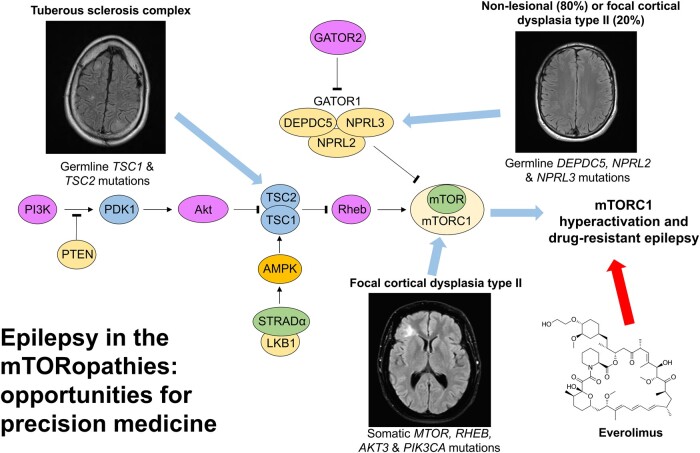
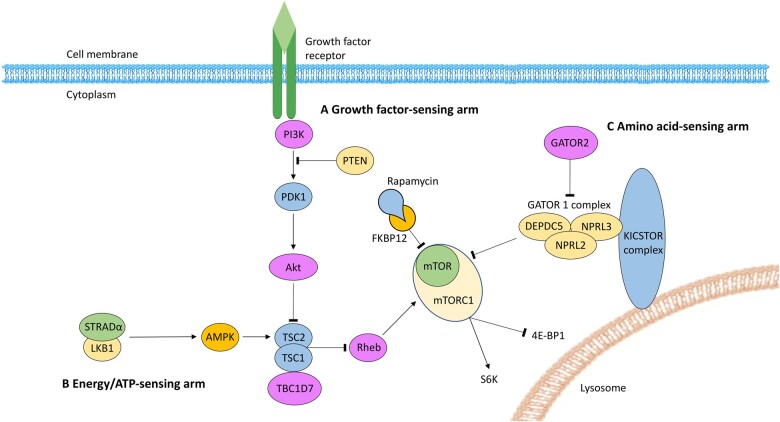
The mechanistic target of rapamycin signalling pathway serves as a ubiquitous regulator of cell metabolism, growth, proliferation and survival. The main cellular activity of the mechanistic target of rapamycin cascade funnels through mechanistic target of rapamycin complex 1, which is inhibited by rapamycin, a macrolide compound produced by the bacterium Streptomyces hygroscopicus. Pathogenic variants in genes encoding upstream regulators of mechanistic target of rapamycin complex 1 cause epilepsies and neurodevelopmental disorders. Tuberous sclerosis complex is a multisystem disorder caused by mutations in mechanistic target of rapamycin regulators TSC1 or TSC2, with prominent neurological manifestations including epilepsy, focal cortical dysplasia and neuropsychiatric disorders. Focal cortical dysplasia type II results from somatic brain mutations in mechanistic target of rapamycin pathway activators MTOR, AKT3, PIK3CA and RHEB and is a major cause of drug-resistant epilepsy. DEPDC5, NPRL2 and NPRL3 code for subunits of the GTPase-activating protein (GAP) activity towards Rags 1 complex (GATOR1), the principal amino acid-sensing regulator of mechanistic target of rapamycin complex 1. Germline pathogenic variants in GATOR1 genes cause non-lesional focal epilepsies and epilepsies associated with malformations of cortical development. Collectively, the mTORopathies are characterized by excessive mechanistic target of rapamycin pathway activation and drug-resistant epilepsy. In the first large-scale precision medicine trial in a genetically mediated epilepsy, everolimus (a synthetic analogue of rapamycin) was effective at reducing seizure frequency in people with tuberous sclerosis complex. Rapamycin reduced seizures in rodent models of DEPDC5-related epilepsy and focal cortical dysplasia type II. This review outlines a personalized medicine approach to the management of epilepsies in the mTORopathies. We advocate for early diagnostic sequencing of mechanistic target of rapamycin pathway genes in drug-resistant epilepsy, as identification of a pathogenic variant may point to an occult dysplasia in apparently non-lesional epilepsy or may uncover important prognostic information including, an increased risk of sudden unexpected death in epilepsy in the GATORopathies or favourable epilepsy surgery outcomes in focal cortical dysplasia type II due to somatic brain mutations. Lastly, we discuss the potential therapeutic application of mechanistic target of rapamycin inhibitors for drug-resistant seizures in GATOR1-related epilepsies and focal cortical dysplasia type II.
Overview
The claims and statistics of this paper haven’t been checked yet.
Run the check — free, no account needed. It reads the open-access text and checks the sources it cites.
Integrity signals
Registry
Cites
Statistics
Figures
Verification
Claims the paper makes
The claims and statistics of this paper haven’t been checked yet.
Run the check — free, no account needed. It reads the open-access text and checks the sources it cites.
Claims other papers make about this one
Each is checked against this paper’s own text: does it say what the citing paper says it does?
In the citing paper
“As might be expected, rapamycin has shown significant benefits in mouse models of mTORopathies 46, diseases resulting from genetic activation of mTOR, including tuberous sclerosis complex and some epilepsies.”
From Targeting the biology of aging with mTOR inhibitors (2023) · cites this paper as [46]
Self-check
Percentages, sums and reported differences re-computed from the paper’s own numbers.
The self-check needs the paper’s full text.
Citations
Cites
Finding of Rare Disease Genes (FORGE) Canada Consortium, Rivière, J.-B., Mirzaa, G. M., O'Roak, B. J., Beddaoui, M., Alcantara, D., Conway, R. L., St-Onge, J., Schwartzentruber, J. A., Gripp, K. W., et al. (2012) · Nature Genetics · doi:10.1038/ng.2331 · Cited by 741
Marsh, D. (1998) · Human Molecular Genetics · doi:10.1093/hmg/7.3.507 · Cited by 653
Regulation of neuronal morphology and function by the tumor suppressors Tsc1 and Tsc2
Tavazoie, S. F., Alvarez, V. A., Ridenour, D. A., Kwiatkowski, D. J., & Sabatini, B. L. (2005) · Nature Neuroscience · doi:10.1038/nn1566 · Cited by 497
Rapid whole-genome sequencing decreases infant morbidity and cost of hospitalization
Farnaes, L., Hildreth, A., Sweeney, N. M., Clark, M. M., Chowdhury, S., Nahas, S., Cakici, J. A., Benson, W., Kaplan, R. H., Kronick, R., et al. (2018) · npj Genomic Medicine · doi:10.1038/s41525-018-0049-4 · Cited by 445
Tuberous Sclerosis Associated Neuropsychiatric Disorders (TAND) and the TAND Checklist
de Vries, P. J., Whittemore, V. H., Leclezio, L., Byars, A. W., Dunn, D., Ess, K. C., Hook, D., King, B. H., Sahin, M., & Jansen, A. (2015) · Pediatric Neurology · doi:10.1016/j.pediatrneurol.2014.10.004 · Cited by 371
Dissecting the genetic basis of focal cortical dysplasia: a large cohort study
Baldassari, S., Ribierre, T., Marsan, E., Adle-Biassette, H., Ferrand-Sorbets, S., Bulteau, C., Dorison, N., Fohlen, M., Polivka, M., Weckhuysen, S., et al. (2019) · Acta Neuropathologica · doi:10.1007/s00401-019-02061-5 · Cited by 356
Mutations of DEPDC5 cause autosomal dominant focal epilepsies
Ishida, S., Picard, F., Rudolf, G., Noé, E., Achaz, G., Thomas, P., Genton, P., Mundwiller, E., Wolff, M., Marescaux, C., et al. (2013) · Nature Genetics · doi:10.1038/ng.2601 · Cited by 269
Ricos, M. G., Hodgson, B. L., Pippucci, T., Saidin, A., Ong, Y. S., Heron, S. E., Licchetta, L., Bisulli, F., Bayly, M. A., Hughes, J., et al. (2016) · Annals of Neurology · doi:10.1002/ana.24547 · Cited by 246
Ribierre, T., Deleuze, C., Bacq, A., Baldassari, S., Marsan, E., Chipaux, M., Muraca, G., Roussel, D., Navarro, V., Leguern, E., et al. (2018) · Journal of Clinical Investigation · doi:10.1172/jci99384 · Cited by 241
The genomic landscape of tuberous sclerosis complex
Martin, K. R., Zhou, W., Bowman, M. J., Shih, J., Au, K. S., Dittenhafer-Reed, K. E., Sisson, K. A., Koeman, J., Weisenberger, D. J., Cottingham, S. L., et al. (2017) · Nature Communications · doi:10.1038/ncomms15816 · Cited by 238
Biallelic TSC gene inactivation in tuberous sclerosis complex
Crino, P. B., Aronica, E., Baltuch, G., & Nathanson, K. L. (2010) · Neurology · doi:10.1212/wnl.0b013e3181e04325 · Cited by 153
Precise detection of low-level somatic mutation in resected epilepsy brain tissue
Sim, N. S., Ko, A., Kim, W. K., Kim, S. H., Kim, J. S., Shim, K.-W., Aronica, E., Mijnsbergen, C., Spliet, W. G. M., Koh, H. Y., et al. (2019) · Acta Neuropathologica · doi:10.1007/s00401-019-02052-6 · Cited by 137
Everolimus for treatment of tuberous sclerosis complex‐associated neuropsychiatric disorders
Krueger, D. A., Sadhwani, A., Byars, A. W., de Vries, P. J., Franz, D. N., Whittemore, V. H., Filip‐Dhima, R., Murray, D., Kapur, K., & Sahin, M. (2017) · Annals of Clinical and Translational Neurology · doi:10.1002/acn3.494 · Cited by 133
Iffland, P. H., Carson, V., Bordey, A., & Crino, P. B. (2019) · Epilepsia · doi:10.1111/epi.16370 · Cited by 84 · cited 8×
“Everolimus has proven efficacy in TSC-related DRE,12 with rare reports of mTOR inhibitor use for epilepsy in non-TSC mTORopathies.128,132 Parallel group randomized controlled trials of mTOR inhibitors may not be feasible in rare mTORopathies, like the GATORopathies.”
BackgroundInfluentialmTOR signaling pathway genes in focal epilepsies
Baulac, S. (2016) · Progress in Brain Research · doi:10.1016/bs.pbr.2016.04.013 · Cited by 84
Cerebrospinal fluid liquid biopsy for detecting somatic mosaicism in brain
Ye, Z., Chatterton, Z., Pflueger, J., Damiano, J. A., McQuillan, L., Simon Harvey, A., Malone, S., Do, H., Maixner, W., Schneider, A., et al. (2021) · Brain Communications · doi:10.1093/braincomms/fcaa235 · Cited by 77
Research works printed but not linked: 154
- Helbig, 2016, Diagnostic exome sequencing provides a molecular diagnosis for a significant proportion of patients with epilepsy, Genet Med, 18, 898, 10.1038/gim.2015.186 · DOI
- Benson, 2020, A comparison of genomic diagnostics in adults and children with epilepsy and comorbid intellectual disability, Eur J Hum Genet, 28, 1066, 10.1038/s41431-020-0610-3 · DOI
- Krenn, 2020, Diagnostic exome sequencing in non-acquired focal epilepsies highlights a major role of GATOR1 complex genes, J Med Genet, 57, 624, 10.1136/jmedgenet-2019-106658 · DOI
- Kearney, 2019, Tackling epilepsy with high-definition precision medicine: A review, JAMA Neurol, 76, 1109, 10.1001/jamaneurol.2019.2384 · DOI
- Ellis, 2020, Epilepsy genetics: Clinical impacts and biological insights, Lancet Neurol, 19, 93, 10.1016/S1474-4422(19)30269-8 · DOI
- Crino, 2016, The mTOR signalling cascade: Paving new roads to cure neurological disease, Nat Rev Neurol, 12, 379, 10.1038/nrneurol.2016.81 · DOI · Paper page
- Henske, 2016, Tuberous sclerosis complex, Nat Rev Dis Primers, 2, 16035, 10.1038/nrdp.2016.35 · DOI
- Baldassari, 2019, The landscape of epilepsy-related GATOR1 variants, Genet Med, 21, 398, 10.1038/s41436-018-0060-2 · DOI
- French, 2016, Adjunctive everolimus therapy for treatment-resistant focal-onset seizures associated with tuberous sclerosis (EXIST-3): A phase 3, randomised, double-blind, placebo-controlled study, Lancet, 388, 2153, 10.1016/S0140-6736(16)31419-2 · DOI · Paper page
- Laplante, 2012, mTOR signaling in growth control and disease, Cell, 149, 274, 10.1016/j.cell.2012.03.017 · DOI · Paper page
- Lasarge, 2014, Mechanisms regulating neuronal excitability and seizure development following mTOR pathway hyperactivation, Front Mol Neurosci, 7, 18, 10.3389/fnmol.2014.00018 · DOI
- Jacinto, 2004, Mammalian TOR complex 2 controls the actin cytoskeleton and is rapamycin insensitive, Nat Cell Biol, 6, 1122, 10.1038/ncb1183 · DOI
- Lipton, 2014, The neurology of mTOR, Neuron, 84, 275, 10.1016/j.neuron.2014.09.034 · DOI
- Wolfson, 2017, KICSTOR recruits GATOR1 to the lysosome and is necessary for nutrients to regulate mTORC1, Nature, 543, 438, 10.1038/nature21423 · DOI
- Baldassari, 2016, GATOR1 complex: The common genetic actor in focal epilepsies, J Med Genet, 53, 503, 10.1136/jmedgenet-2016-103883 · DOI · Paper page
- Parker, 2013, Rapamycin prevents seizures after depletion of STRADA in a rare neurodevelopmental disorder, Sci Transl Med, 5, 182ra53, 10.1126/scitranslmed.3005271 · DOI
- Gordo, 2018, mTOR mutations in Smith-Kingsmore syndrome: Four additional patients and a review, Clin Genet, 93, 762, 10.1111/cge.13135 · DOI
- Nakamura, 2014, AKT3 and PIK3R2 mutations in two patients with megalencephaly-related syndromes: MCAP and MPPH, Clin Genet, 85, 396, 10.1111/cge.12188 · DOI
- Severino, 2020, Definitions and classification of malformations of cortical development: Practical guidelines, Brain, 143, 2874, 10.1093/brain/awaa174 · DOI
- Lee, 2020, Genetic characterization identifies bottom-of-sulcus dysplasia as an mTORopathy, Neurology, 95, e2542, 10.1212/WNL.0000000000010670 · DOI
- Jansen, 2015, PI3K/AKT pathway mutations cause a spectrum of brain malformations from megalencephaly to focal cortical dysplasia, Brain, 138, 1613, 10.1093/brain/awv045 · DOI · Paper page
- Lim, 2015, Brain somatic mutations in MTOR cause focal cortical dysplasia type II leading to intractable epilepsy, Nat Med, 21, 395, 10.1038/nm.3824 · DOI
- Lee, 2012, De novo somatic mutations in components of the PI3K-AKT3-mTOR pathway cause hemimegalencephaly, Nat Genet, 44, 941, 10.1038/ng.2329 · DOI · Paper page
- D’Gama, 2017, Somatic mutations activating the mTOR pathway in dorsal telencephalic progenitors cause a continuum of cortical dysplasias, Cell Rep, 21, 3754, 10.1016/j.celrep.2017.11.106 · DOI
- D'Gama, 2015, Mammalian target of rapamycin pathway mutations cause hemimegalencephaly and focal cortical dysplasia, Ann Neurol, 77, 720, 10.1002/ana.24357 · DOI
- Knudson, 1971, Mutation and cancer: Statistical study of retinoblastoma, Proc Natl Acad Sci U S A, 68, 820, 10.1073/pnas.68.4.820 · DOI · Paper page
- Lee, 2019, Second-hit DEPDC5 mutation is limited to dysmorphic neurons in cortical dysplasia type IIA, Ann Clin Transl Neurol, 6, 1338, 10.1002/acn3.50815 · DOI
- Baulac, 2015, Familial focal epilepsy with focal cortical dysplasia due to DEPDC5 mutations, Ann Neurol, 77, 675, 10.1002/ana.24368 · DOI
- Abs, 2013, TORC1-dependent epilepsy caused by acute biallelic Tsc1 deletion in adult mice, Ann Neurol, 74, 569, 10.1002/ana.23943 · DOI
- Baybis, 2004, mTOR cascade activation distinguishes tubers from focal cortical dysplasia, Ann Neurol, 56, 478, 10.1002/ana.20211 · DOI
- Ljungberg, 2006, Activation of mammalian target of rapamycin in cytomegalic neurons of human cortical dysplasia, Ann Neurol, 60, 420, 10.1002/ana.20949 · DOI
- Schick, 2007, Differential Pi3K-pathway activation in cortical tubers and focal cortical dysplasias with balloon cells, Brain Pathol, 17, 165, 10.1111/j.1750-3639.2007.00059.x · DOI
- Cepeda, 2003, Morphological and electrophysiological characterization of abnormal cell types in pediatric cortical dysplasia, J Neurosci Res, 72, 472, 10.1002/jnr.10604 · DOI
- Cepeda, 2006, Epileptogenesis in pediatric cortical dysplasia: The dysmature cerebral developmental hypothesis, Epilepsy Behav, 9, 219, 10.1016/j.yebeh.2006.05.012 · DOI
- Talos, 2008, Cell-specific alterations of glutamate receptor expression in tuberous sclerosis complex cortical tubers, Ann Neurol, 63, 454, 10.1002/ana.21342 · DOI · Paper page
- Iffland, 2017, Focal cortical dysplasia: Gene mutations, cell signaling, and therapeutic implications, Annu Rev Pathol, 12, 547, 10.1146/annurev-pathol-052016-100138 · DOI
- Cepeda, 2014, Pacemaker GABA synaptic activity may contribute to network synchronization in pediatric cortical dysplasia, Neurobiol Dis, 62, 208, 10.1016/j.nbd.2013.10.001 · DOI
- Nguyen, 2015, mTOR inhibition suppresses established epilepsy in a mouse model of cortical dysplasia, Epilepsia, 56, 636, 10.1111/epi.12946 · DOI
- Zeng, 2008, Rapamycin prevents epilepsy in a mouse model of tuberous sclerosis complex, Ann Neurol, 63, 444, 10.1002/ana.21331 · DOI · Paper page
- Zeng, 2011, Tsc2 gene inactivation causes a more severe epilepsy phenotype than Tsc1 inactivation in a mouse model of tuberous sclerosis complex, Hum Mol Genet, 20, 445, 10.1093/hmg/ddq491 · DOI
- Hsieh, 2016, Convulsive seizures from experimental focal cortical dysplasia occur independently of cell misplacement, Nat Commun, 7, 11753, 10.1038/ncomms11753 · DOI
- Marsan, 2016, Depdc5 knockout rat: A novel model of mTORopathy, Neurobiol Dis, 89, 180, 10.1016/j.nbd.2016.02.010 · DOI
- Yuskaitis, 2018, A mouse model of DEPDC5-related epilepsy: Neuronal loss of Depdc5 causes dysplastic and ectopic neurons, increased mTOR signaling, and seizure susceptibility, Neurobiol Dis, 111, 91, 10.1016/j.nbd.2017.12.010 · DOI
- Hu, 2018, Somatic Depdc5 deletion recapitulates electroclinical features of human focal cortical dysplasia type IIA, Ann Neurol, 84, 140, 10.1002/ana.25272 · DOI
- Klofas, 2020, Prevention of premature death and seizures in a Depdc5 mouse epilepsy model through inhibition of mTORC1, Hum Mol Genet, 29, 1365, 10.1093/hmg/ddaa068 · DOI
- Hoogeveen-Westerveld, 2011, Functional assessment of variants in the TSC1 and TSC2 genes identified in individuals with tuberous sclerosis complex, Hum Mutat, 32, 424, 10.1002/humu.21451 · DOI
- van Kranenburg, 2015, Preliminary functional assessment and classification of DEPDC5 variants associated with focal epilepsy, Hum Mutat, 36, 200, 10.1002/humu.22723 · DOI
- Dawson, 2020, Functional screening of GATOR1 complex variants reveals a role for mTORC1 deregulation in FCD and focal epilepsy, Neurobiol Dis, 134, 104640, 10.1016/j.nbd.2019.104640 · DOI
- Mirzaa, 2016, Association of MTOR mutations with developmental brain disorders, including megalencephaly, focal cortical dysplasia, and pigmentary mosaicism, JAMA Neurol, 73, 836, 10.1001/jamaneurol.2016.0363 · DOI
- Zhao, 2019, A brain somatic RHEB doublet mutation causes focal cortical dysplasia type II, Exp Mol Med, 51, 1, 10.1038/s12276-019-0277-4 · DOI
- Sim, 2016, Familial cortical dysplasia caused by mutation in the mammalian target of rapamycin regulator NPRL3, Ann Neurol, 79, 132, 10.1002/ana.24502 · DOI
- Scerri, 2015, Familial cortical dysplasia type IIA caused by a germline mutation in DEPDC5, Ann Clin Transl Neurol, 2, 575, 10.1002/acn3.191 · DOI
- Weckhuysen, 2016, Involvement of GATOR complex genes in familial focal epilepsies and focal cortical dysplasia, Epilepsia, 57, 994, 10.1111/epi.13391 · DOI
- Bi, 2016, Whole exome sequencing identifies the first STRADA point mutation in a patient with polyhydramnios, megalencephaly, and symptomatic epilepsy syndrome (PMSE), Am J Med Genet A, 170, 2181, 10.1002/ajmg.a.37727 · DOI
- Nelson, 2018, Novel homozygous deletion in STRADA gene associated with polyhydramnios, megalencephaly, and epilepsy in 2 siblings: Implications for diagnosis and treatment, J Child Neurol, 33, 925, 10.1177/0883073818802724 · DOI
- Alsaif, 2021, Two further cases of polyhydramnios, megalencephaly, and symptomatic epilepsy syndrome, caused by a truncating variant in STRADA, Am J Med Genet A, 185, 604, 10.1002/ajmg.a.61990 · DOI
- Aerden, 2021, Homozygous missense STRADA mutation in a patient with polyhydramnios, megalencephaly and symptomatic epilepsy syndrome, Clin Dysmorphol, 30, 121, 10.1097/MCD.0000000000000368 · DOI
- Orlova, 2010, STRADalpha deficiency results in aberrant mTORC1 signaling during corticogenesis in humans and mice, J Clin Invest, 120, 1591, 10.1172/JCI41592 · DOI
- Dabora, 2001, Mutational analysis in a cohort of 224 tuberous sclerosis patients indicates increased severity of TSC2, compared with TSC1, disease in multiple organs, Am J Hum Genet, 68, 64, 10.1086/316951 · DOI
- Tyburczy, 2015, Mosaic and intronic mutations in TSC1/TSC2 explain the majority of TSC patients with no mutation identified by conventional testing, PLoS Genet, 11, e1005637, 10.1371/journal.pgen.1005637 · DOI
- Holmes, 2007, Tuberous sclerosis complex and epilepsy: Recent developments and future challenges, Epilepsia, 48, 617, 10.1111/j.1528-1167.2007.01035.x · DOI
- Chu-Shore, 2009, The natural history of epilepsy in tuberous sclerosis complex, Epilepsia, 51, 1236, 10.1111/j.1528-1167.2009.02474.x · DOI
- Joinson, 2003, Learning disability and epilepsy in an epidemiological sample of individuals with tuberous sclerosis complex, Psychol Med, 33, 335, 10.1017/S0033291702007092 · DOI · Paper page
- Numis, 2011, Identification of risk factors for autism spectrum disorders in tuberous sclerosis complex, Neurology, 76, 981, 10.1212/WNL.0b013e3182104347 · DOI
- van Eeghen, 2012, Genotype and cognitive phenotype of patients with tuberous sclerosis complex, Eur J Hum Genet, 20, 510, 10.1038/ejhg.2011.241 · DOI
- Ogórek, 2020, TSC2 pathogenic variants are predictive of severe clinical manifestations in TSC infants: Results of the EPISTOP study, Genet Med, 22, 1489, 10.1038/s41436-020-0823-4 · DOI
- Salussolia, 2019, Genetic etiologies, diagnosis, and treatment of tuberous sclerosis complex, Annu Rev Genomics Hum Genet, 20, 217, 10.1146/annurev-genom-083118-015354 · DOI · Paper page
- Ruppe, 2014, Developmental brain abnormalities in tuberous sclerosis complex: A comparative tissue analysis of cortical tubers and perituberal cortex, Epilepsia, 55, 539, 10.1111/epi.12545 · DOI
- Liu, 2020, Resective epilepsy surgery in tuberous sclerosis complex: A nationwide multicentre retrospective study from China, Brain, 143, 570, 10.1093/brain/awz411 · DOI
- Chu-Shore, 2009, Progressive multifocal cystlike cortical tubers in tuberous sclerosis complex: Clinical and neuropathologic findings, Epilepsia, 50, 2648, 10.1111/j.1528-1167.2009.02193.x · DOI
- Wu, 2019, Scalp EEG spikes predict impending epilepsy in TSC infants: A longitudinal observational study, Epilepsia, 60, 2428, 10.1111/epi.16379 · DOI
- Kotulska, 2021, Prevention of epilepsy in infants with tuberous sclerosis complex in the EPISTOP trial, Ann Neurol, 89, 304, 10.1002/ana.25956 · DOI
- MacKeigan, 2015, Differentiating the mTOR inhibitors everolimus and sirolimus in the treatment of tuberous sclerosis complex, Neuro Oncol, 17, 1550, 10.1093/neuonc/nov152 · DOI
- Hudes, 2007, Temsirolimus, interferon alfa, or both for advanced renal-cell carcinoma, N Engl J Med, 356, 2271, 10.1056/NEJMoa066838 · DOI
- Mita, 2008, Phase I trial of the novel mammalian target of rapamycin inhibitor deforolimus (AP23573; MK-8669) administered intravenously daily for 5 days every 2 weeks to patients with advanced malignancies, J Clin Oncol, 26, 361, 10.1200/JCO.2007.12.0345 · DOI
- Bissler, 2008, Sirolimus for angiomyolipoma in tuberous sclerosis complex or lymphangioleiomyomatosis, N Engl J Med, 358, 140, 10.1056/NEJMoa063564 · DOI
- Franz, 2013, Efficacy and safety of everolimus for subependymal giant cell astrocytomas associated with tuberous sclerosis complex (EXIST-1): A multicentre, randomised, placebo-controlled phase 3 trial, Lancet, 381, 125, 10.1016/S0140-6736(12)61134-9 · DOI · Paper page
- Bissler, 2013, Everolimus for angiomyolipoma associated with tuberous sclerosis complex or sporadic lymphangioleiomyomatosis (EXIST-2): A multicentre, randomised, double-blind, placebo-controlled trial, Lancet, 381, 817, 10.1016/S0140-6736(12)61767-X · DOI
- Franz, 2018, Everolimus for treatment-refractory seizures in TSC: Extension of a randomized controlled trial, Neurol Clin Pract, 8, 412, 10.1212/CPJ.0000000000000514 · DOI · Paper page
- Kingswood, 2021, TuberOus SClerosis registry to increAse disease awareness (TOSCA) post-authorisation safety study of everolimus in patients with tuberous sclerosis complex, Front Neurol, 12, 630378, 10.3389/fneur.2021.630378 · DOI
- Willems, 2021, Efficacy, retention and tolerability of everolimus in patients with tuberous sclerosis complex: A survey-based study on patients' perspectives, CNS Drugs, 1107, 10.1007/s40263-021-00839-4 · DOI
- Shipkova, 2016, Therapeutic drug monitoring of everolimus: A consensus report, Ther Drug Monit, 38, 143, 10.1097/FTD.0000000000000260 · DOI
- Franz, 2016, Long-term use of everolimus in patients with tuberous sclerosis complex: Final results from the EXIST-1 study, PLoS One, 11, e0158476, 10.1371/journal.pone.0158476 · DOI
- Mingarelli, 2018, Dramatic relapse of seizures after everolimus withdrawal, Eur J Paediatr Neurol, 22, 203, 10.1016/j.ejpn.2017.07.018 · DOI
- Ventura-Aguiar, 2016, Safety of mTOR inhibitors in adult solid organ transplantation, Expert Opin Drug Saf, 15, 303, 10.1517/14740338.2016.1132698 · DOI
- Curatolo, 2015, Neurological and neuropsychiatric aspects of tuberous sclerosis complex, Lancet Neurol, 14, 733, 10.1016/S1474-4422(15)00069-1 · DOI · Paper page
- Rensing, 2015, Intermittent dosing of rapamycin maintains antiepileptogenic effects in a mouse model of tuberous sclerosis complex, Epilepsia, 56, 1088, 10.1111/epi.13031 · DOI
- Formisano, 2020, Mechanisms of resistance to mTOR inhibitors, Crit Rev Oncol Hematol, 147, 102886, 10.1016/j.critrevonc.2020.102886 · DOI
- Bonazzi, 2020, Discovery of a brain-penetrant ATP-competitive inhibitor of the mechanistic target of rapamycin (mTOR) for CNS disorders, J Med Chem, 63, 1068, 10.1021/acs.jmedchem.9b01398 · DOI
- Thiele, 2021, Add-on cannabidiol treatment for drug-resistant seizures in tuberous sclerosis complex: A placebo-controlled randomized clinical trial, JAMA Neurol, 285, 10.1001/jamaneurol.2020.4607 · DOI · Paper page
- Ebrahimi-Fakhari, 2020, Cannabidiol elevates mechanistic target of rapamycin inhibitor levels in patients with tuberous sclerosis complex, Pediatr Neurol, 105, 59, 10.1016/j.pediatrneurol.2019.11.017 · DOI
- Overwater, 2019, A randomized controlled trial with everolimus for IQ and autism in tuberous sclerosis complex, Neurology, 93, e200, 10.1212/WNL.0000000000007749 · DOI
- Randell, 2016, The use of everolimus in the treatment of neurocognitive problems in tuberous sclerosis (TRON): study protocol for a randomised controlled trial, Trials, 17, 398, 10.1186/s13063-016-1446-6 · DOI
- Saffari, 2019, Safety and efficacy of mTOR inhibitor treatment in patients with tuberous sclerosis complex under 2 years of age - a multicenter retrospective study, Orphanet J Rare Dis, 14, 96, 10.1186/s13023-019-1077-6 · DOI
- Way, 2012, The differential effects of prenatal and/or postnatal rapamycin on neurodevelopmental defects and cognition in a neuroglial mouse model of tuberous sclerosis complex, Hum Mol Genet, 21, 3226, 10.1093/hmg/dds156 · DOI
- Kingsmore, 2019, A randomized, controlled trial of the analytic and diagnostic performance of singleton and trio, rapid genome and exome sequencing in ill infants, Am J Hum Genet, 105, 719, 10.1016/j.ajhg.2019.08.009 · DOI
- Cheah, 2021, Gene therapy for tuberous sclerosis complex type 2 in a mouse model by delivery of AAV9 encoding a condensed form of tuberin, Sci Adv, 7, eabb1703, 10.1126/sciadv.abb1703 · DOI · Paper page
- Dibbens, 2013, Mutations in DEPDC5 cause familial focal epilepsy with variable foci, Nat Genet, 45, 546, 10.1038/ng.2599 · DOI · Paper page
- 2017, Ultra-rare genetic variation in common epilepsies: a case-control sequencing study, Lancet Neurol, 16, 135, 10.1016/S1474-4422(16)30359-3 · DOI
- 2019, Ultra-rare genetic variation in the epilepsies: A whole-exome sequencing study of 17,606 individuals, Am J Hum Genet, 105, 267, 10.1016/j.ajhg.2019.05.020 · DOI
- Martin, 2014, A recurrent mutation in DEPDC5 predisposes to focal epilepsies in the French-Canadian population, Clin Genet, 86, 570, 10.1111/cge.12311 · DOI
- Picard, 2014, DEPDC5 mutations in families presenting as autosomal dominant nocturnal frontal lobe epilepsy, Neurology, 82, 2101, 10.1212/WNL.0000000000000488 · DOI
- Korenke, 2016, Nocturnal frontal lobe epilepsy caused by a mutation in the GATOR1 complex gene NPRL3, Epilepsia, 57, e60, 10.1111/epi.13307 · DOI
- Pippucci, 2015, Epilepsy with auditory features: A heterogeneous clinico-molecular disease, Neurol Genet, 1, e5, 10.1212/NXG.0000000000000005 · DOI
- Carvill, 2015, Epileptic spasms are a feature of DEPDC5 mTORopathy, Neurol Genet, 1, e17, 10.1212/NXG.0000000000000016 · DOI · Paper page
- Lal, 2014, DEPDC5 mutations in genetic focal epilepsies of childhood, Ann Neurol, 75, 788, 10.1002/ana.24127 · DOI
- Scheffer, 2014, Mutations in mammalian target of rapamycin regulator DEPDC5 cause focal epilepsy with brain malformations, Ann Neurol, 75, 782, 10.1002/ana.24126 · DOI
- Canavati, 2019, Inclusion of hemimegalencephaly into the phenotypic spectrum of NPRL3 pathogenic variants in familial focal epilepsy with variable foci, Epilepsia, 60, e67, 10.1111/epi.15665 · DOI
- Burger, 2017, Autistic siblings with novel mutations in two different genes: Insight for genetic workups of autistic siblings and connection to mitochondrial dysfunction, Front Pediatr, 5, 219, 10.3389/fped.2017.00219 · DOI
- Bagnall, 2016, Exome-based analysis of cardiac arrhythmia, respiratory control, and epilepsy genes in sudden unexpected death in epilepsy, Ann Neurol, 79, 522, 10.1002/ana.24596 · DOI
- Kowalczyk, 2012, Nprl3 is required for normal development of the cardiovascular system, Mamm Genome, 23, 404, 10.1007/s00335-012-9398-y · DOI
- Hughes, 2017, Knockout of the epilepsy gene Depdc5 in mice causes severe embryonic dysmorphology with hyperactivity of mTORC1 signalling, Sci Rep, 7, 12618, 10.1038/s41598-017-12574-2 · DOI
- Nascimento, 2015, Two definite cases of sudden unexpected death in epilepsy in a family with a DEPDC5 mutation, Neurol Genet, 1, e28, 10.1212/NXG.0000000000000028 · DOI
- Vawter-Lee, 2019, Clinical Letter: A case report of targeted therapy with sirolimus for NPRL3 epilepsy, Seizure, 73, 43, 10.1016/j.seizure.2019.10.007 · DOI
- Stevelink, 2018, Epilepsy surgery for patients with genetic refractory epilepsy: a systematic review, Epileptic Disord, 20, 99, 10.1684/epd.2018.0959 · DOI
- Blumcke, 2017, Histopathological findings in brain tissue obtained during epilepsy surgery, N Engl J Med, 377, 1648, 10.1056/NEJMoa1703784 · DOI
- Marsan, 2018, Review: Mechanistic target of rapamycin (mTOR) pathway, focal cortical dysplasia and epilepsy, Neuropathol Appl Neurobiol, 44, 6, 10.1111/nan.12463 · DOI
- Xu, 2019, mTOR inhibitors as a new therapeutic strategy in treatment resistant epilepsy in hemimegalencephaly: A case report, J Child Neurol, 34, 132, 10.1177/0883073818813238 · DOI
- Venot, 2018, Targeted therapy in patients with PIK3CA-related overgrowth syndrome, Nature, 558, 540, 10.1038/s41586-018-0217-9 · DOI
- Forde, 2021, Clinical experience with the AKT1 inhibitor miransertib in two children with PIK3CA-related overgrowth syndrome, Orphanet J Rare Dis, 16, 109, 10.1186/s13023-021-01745-0 · DOI
- Pan, 2015, Brain tumor mutations detected in cerebral spinal fluid, Clin Chem, 61, 514, 10.1373/clinchem.2014.235457 · DOI
- Kim, 2021, Detection of brain somatic mutations in cerebrospinal fluid from refractory epilepsy patients, Ann Neurol, 89, 1248, 10.1002/ana.26080 · DOI
- Müller, 2021, Systematic review of N-of-1 studies in rare genetic neurodevelopmental disorders: The power of 1, Neurology, 96, 529, 10.1212/WNL.0000000000011597 · DOI
- Blackston, 2019, Comparison of aggregated N-of-1 trials with parallel and crossover randomized controlled trials using simulation studies, Healthcare (Basel), 7, 137, 10.3390/healthcare7040137 · DOI
- Tidball, 2020, Variant-specific changes in persistent or resurgent sodium current in SCN8A-related epilepsy patient-derived neurons, Brain, 143, 3025, 10.1093/brain/awaa247 · DOI
- Sidira, 2021, Hemimegalencephaly and tuberous sclerosis complex: A rare yet challenging association, Eur J Paediatr Neurol, 30, 58, 10.1016/j.ejpn.2020.12.007 · DOI
- Lim, 2017, Somatic mutations in TSC1 and TSC2 cause focal cortical dysplasia, Am J Hum Genet, 100, 454, 10.1016/j.ajhg.2017.01.030 · DOI
- Capo-Chichi, 2013, Disruption of TBC1D7, a subunit of the TSC1-TSC2 protein complex, in intellectual disability and megalencephaly, J Med Genet, 50, 740, 10.1136/jmedgenet-2013-101680 · DOI
- Alfaiz, 2014, TBC1D7 mutations are associated with intellectual disability, macrocrania, patellar dislocation, and celiac disease, Hum Mutat, 35, 447, 10.1002/humu.22529 · DOI
- Cen, 2017, De novo mutation in DEPDC5 associated with unilateral pachygyria and intractable epilepsy, Seizure, 50, 1, 10.1016/j.seizure.2017.03.014 · DOI
- Møller, 2016, Germline and somatic mutations in the MTOR gene in focal cortical dysplasia and epilepsy, Neurol Genet, 2, e118, 10.1212/NXG.0000000000000118 · DOI
- Mirzaa, 2012, Megalencephaly-capillary malformation (MCAP) and megalencephaly-polydactyly-polymicrogyria-hydrocephalus (MPPH) syndromes: Two closely related disorders of brain overgrowth and abnormal brain and body morphogenesis, Am J Med Genet A, 158a, 269, 10.1002/ajmg.a.34402 · DOI
- Lindhurst, 2011, A mosaic activating mutation in AKT1 associated with the Proteus syndrome, N Engl J Med, 365, 611, 10.1056/NEJMoa1104017 · DOI
- Mirzaa, 2016, PIK3CA-associated developmental disorders exhibit distinct classes of mutations with variable expression and tissue distribution, JCI Insight, 1, e87623, 10.1172/jci.insight.87623 · DOI
- Mirzaa, 2015, Characterisation of mutations of the phosphoinositide-3-kinase regulatory subunit, PIK3R2, in perisylvian polymicrogyria: a next-generation sequencing study, Lancet Neurol, 14, 1182, 10.1016/S1474-4422(15)00278-1 · DOI
- Edmondson, 2015, Overgrowth syndromes, J Pediatr Genet, 4, 136, 10.1055/s-0035-1564440 · DOI
- Butler, 2005, Subset of individuals with autism spectrum disorders and extreme macrocephaly associated with germline PTEN tumour suppressor gene mutations, J Med Genet, 42, 318, 10.1136/jmg.2004.024646 · DOI · Paper page
- Child, 2013, Mystery case: Cowden syndrome presenting with partial epilepsy related to focal cortical dysplasia, Neurology, 81, e98, 10.1212/WNL.0b013e3182a55ef0 · DOI
- Shao, 2020, Polymicrogyria is associated with pathogenic variants in PTEN, Ann Neurol, 88, 1153, 10.1002/ana.25904 · DOI
- Koboldt, 2021, PTEN somatic mutations contribute to spectrum of cerebral overgrowth, Brain, 10.1093/brain/awab173 · DOI
- Basel-Vanagaite, 2013, Biallelic SZT2 mutations cause infantile encephalopathy with epilepsy and dysmorphic corpus callosum, Am J Hum Genet, 93, 524, 10.1016/j.ajhg.2013.07.005 · DOI
- Venkatesan, 2016, Early-life epileptic encephalopathy secondary to SZT2 pathogenic recessive variants, Epileptic Disord, 18, 195, 10.1684/epd.2016.0828 · DOI
- Baple, 2014, Mutations in KPTN cause macrocephaly, neurodevelopmental delay, and seizures, Am J Hum Genet, 94, 87, 10.1016/j.ajhg.2013.10.001 · DOI
- Pajusalu, 2015, Novel homozygous mutation in KPTN gene causing a familial intellectual disability-macrocephaly syndrome, Am J Med Genet A, 167a, 1913, 10.1002/ajmg.a.37105 · DOI
- Serkova, 2001, Sirolimus, but not the structurally related RAD (everolimus), enhances the negative effects of cyclosporine on mitochondrial metabolism in the rat brain, Br J Pharmacol, 133, 875, 10.1038/sj.bjp.0704142 · DOI
- Messina, 2007, Tuberous sclerosis preclinical studies: Timing of treatment, combination of a rapamycin analog (CCI-779) and interferon-gamma, and comparison of rapamycin to CCI-779, BMC Pharmacol, 7, 14, 10.1186/1471-2210-7-14 · DOI
- Schuler, 1997, SDZ RAD, a new rapamycin derivative: Pharmacological properties in vitro and in vivo, Transplantation, 64, 36, 10.1097/00007890-199707150-00008 · DOI
- Metcalf, 2004, Structure- based design of AP23573, a phosphorus-containing analog of rapamycin for anti-tumor therapy
- Grenier, 2021, Mucocutaneous adverse events associated with oral sirolimus for the treatment of vascular anomalies, JAMA Dermatol, 157, 233, 10.1001/jamadermatol.2020.5180 · DOI
- Weiner, 2007, Pneumonitis associated with sirolimus: Clinical characteristics, risk factors and outcome–a single-centre experience and review of the literature, Nephrol Dial Transplant, 22, 3631, 10.1093/ndt/gfm420 · DOI
- Rodríguez-Moreno, 2009, Sirolimus and everolimus induced pneumonitis in adult renal allograft recipients: Experience in a center, Transplant Proc, 41, 2163, 10.1016/j.transproceed.2009.06.003 · DOI
- Lo Muzio, 2018, Oral stomatitis and mTOR inhibitors: A review of current evidence in 20,915 patients, Oral Dis, 24, 144, 10.1111/odi.12795 · DOI
- Atkinson, 2014, Mammalian target of rapamycin (mTOR) inhibitor-associated non-infectious pneumonitis in patients with renal cell cancer: Predictors, management, and outcomes, BJU Int, 113, 376, 10.1111/bju.12420 · DOI
- Albiges, 2012, Incidence and management of mTOR inhibitor-associated pneumonitis in patients with metastatic renal cell carcinoma, Ann Oncol, 23, 1943, 10.1093/annonc/mds115 · DOI
Cited by
Sorted by citations
Targeting the biology of aging with mTOR inhibitors
Mannick, J. B., & Lamming, D. W. (2023) · Nature Aging · doi:10.1038/s43587-023-00416-y · Cited by 372
Developmental and epileptic encephalopathies: from genetic heterogeneity to phenotypic continuum
Guerrini, R., Conti, V., Mantegazza, M., Balestrini, S., Galanopoulou, A. S., & Benfenati, F. (2023) · Physiological Reviews · doi:10.1152/physrev.00063.2021 · Cited by 196
Metadata
- Authors
- Moloney, P. B., Cavalleri, G. L., & Delanty, N.
- Affiliations
- FutureNeuro, the Science Foundation Ireland Research Centre for Chronic and Rare Neurological Diseases, Royal College of Surgeons in Ireland, Dublin, D02 VN51, Ireland
- Venue
- Brain Communications
- Publisher
- Oxford University Press (OUP)
- Published
- 2021-09-25
- Volume
- 3
- Issue
- 4
- ISSN
- 2632-1297
- PMC
- PMC8495134
- Cited by
- 125
- References
- 16
- Language
- en
About these checks
Registry, retraction, Cites and statistics results are computed, not judged, with one exception: a printed reference that no index lists is read once by a model before it counts as a citation error. Claims are extracted by a model and kept only when their quote appears verbatim in the text; each cited source is then checked, with a model’s help, for whether it says what the claim relies on. Those verdicts can be wrong — read the claim’s quote and the cited source before relying on one.
Statistics and arithmetic are recomputed, not judged.
Confidence bands are shown only for fields calibrated on our annotated test set. None is calibrated yet, so no band is shown.
What counts as a claim ›How we measure confidence ›How we check this ›
Are you an author, or do you see a problem with this page? Request a review
