

Gender Differences in Connectome-based Predictions of Individualized Intelligence Quotient and Sub-domain Scores
Open accessThe DOI matches its Crossref record; 80 of the 80 references it cites were found in a registry or an index.
Abstract
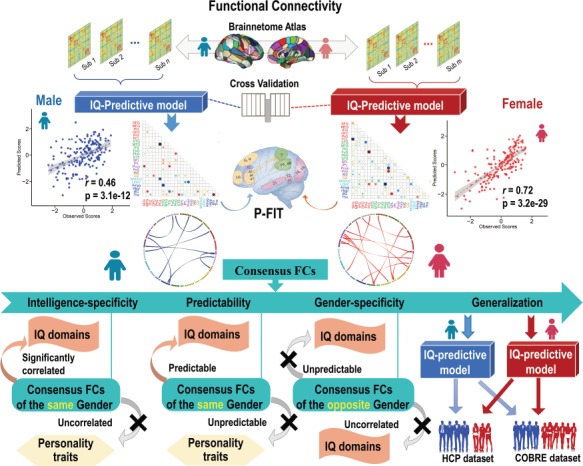
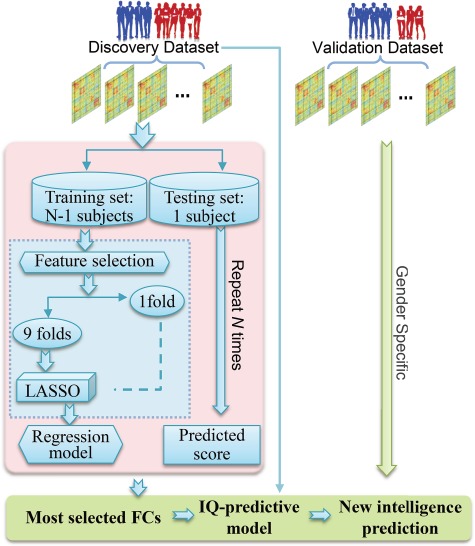
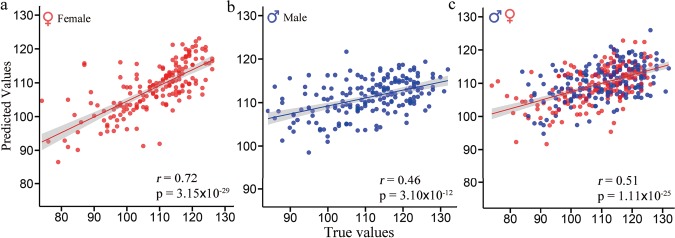
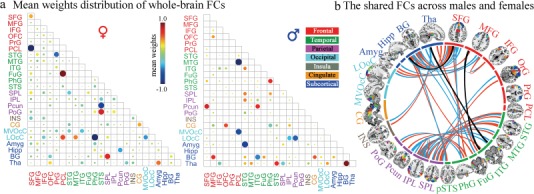
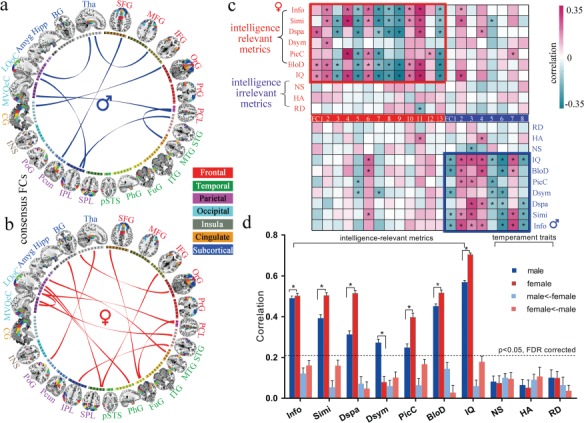
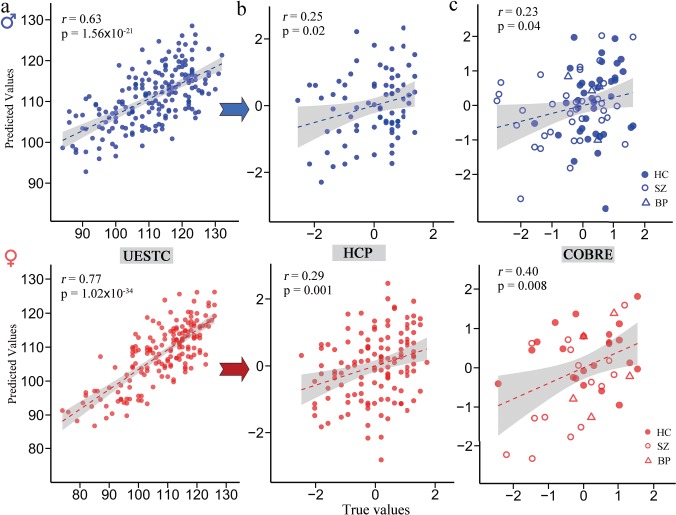
Scores on intelligence tests are strongly predictive of various important life outcomes. However, the gender discrepancy on intelligence quotient (IQ) prediction using brain imaging variables has not been studied. To this aim, we predicted individual IQ scores for males and females separately using whole-brain functional connectivity (FC). Robust predictions of intellectual capabilities were achieved across three independent data sets (680 subjects) and two intelligence measurements (IQ and fluid intelligence) using the same model within each gender. Interestingly, we found that intelligence of males and females were underpinned by different neurobiological correlates, which are consistent with their respective superiority in cognitive domains (visuospatial vs verbal ability). In addition, the identified FC patterns are uniquely predictive on IQ and its sub-domain scores only within the same gender but neither for the opposite gender nor on the IQ-irrelevant measures such as temperament traits. Moreover, females exhibit significantly higher IQ predictability than males in the discovery cohort. This findings facilitate our understanding of the biological basis of intelligence by demonstrating that intelligence is underpinned by a variety of complex neural mechanisms that engage an interacting network of regions—particularly prefrontal–parietal and basal ganglia—whereas the network pattern differs between genders.
Overview
The claims and statistics of this paper haven’t been checked yet.
Free: it reads the open-access text and checks the first 5 claims that cite a source we can check. Create a free account to check every claim.
Integrity signals
Registry
Cites
Statistics
Figures
Verification
Claims the paper makes
The claims and statistics of this paper haven’t been checked yet.
Free: it reads the open-access text and checks the first 5 claims that cite a source we can check. Create a free account to check every claim.
Claims other papers make about this one
Each is checked against this paper’s own text: does it say what the citing paper says it does?
In the citing paper
“However, in an fMRI study, the resting-state brain connectivity features that predicted higher IQ differed between neurotypical males and females223.”
From Sex and gender in neurodevelopmental conditions (2023) · cites this paper as [223]
Self-check
Percentages, sums and reported differences re-computed from the paper’s own numbers.
The self-check needs the paper’s full text.
Citations
Cites
A psychobiological model of temperament and character
Cloninger, C. R. (1993) · Archives of General Psychiatry · doi:10.1001/archpsyc.1993.01820240059008 · Cited by 5,458 · cited 1×
“The intelligence-specificity of the identified consensus FCs for each gender was tested by calculating correlations between the consensus FCs and IQ, six intellectual sub-domain, and three temperament traits [harm avoidance (HA), novelty seeking (NS), and reward dependence (RD)] scores (Cloninger et al. 1993), both in…”
MethodTests for comparing elements of a correlation matrix
Steiger, J. H. (1980) · Psychological Bulletin · doi:10.1037/0033-2909.87.2.245 · Cited by 4,621
The Human Brainnetome Atlas: A New Brain Atlas Based on Connectional Architecture
Fan, L., Li, H., Zhuo, J., Zhang, Y., Wang, J., Chen, L., Yang, Z., Chu, C., Xie, S., Laird, A. R., et al. (2016) · Cerebral Cortex · doi:10.1093/cercor/bhw157 · Cited by 2,998 · cited 3×
“For all three data sets, the preprocessed functional MRI data were parcellated using Brainnetome Atlas (Fan et al. 2016) (https://www.nitrc.org/projects/bn_atlas), resulting in 246 regions of interests (ROIs) that can serve as 210 cortical and 36 subcortical nodes for calculating fine FCs (Jiang et al. 2017).”
Self-citationFunctional connectome fingerprinting: Identifying individuals using patterns of brain connectivity
Finn, E. S., Shen, X., Scheinost, D., Rosenberg, M. D., Huang, J., Chun, M. M., Papademetris, X., & Constable, R. T. (2015) · Nature Neuroscience · doi:10.1038/nn.4135 · Cited by 2,747 · cited 1×
“2019), the predicted range was narrower than the observed range; therefore, the model may be most successful at generating predictions of IQ level relative to other subjects (Finn et al. 2015).”
BackgroundThe g factor: the science of mental ability
(1998) · Choice Reviews Online · doi:10.5860/choice.36-2443 · Cited by 2,746
Improving fluid intelligence with training on working memory
Jaeggi, S. M., Buschkuehl, M., Jonides, J., & Perrig, W. J. (2008) · Proceedings of the National Academy of Sciences · doi:10.1073/pnas.0801268105 · Cited by 2,187 · cited 1×
“The gF is the capacity to reason and solve novel problems, independent of any knowledge from the past (Jaeggi et al. 2008), which is highly correlated with IQ (Snow et al.”
BackgroundPrediction of individual brain maturity using fMRI
Dosenbach, N. U. F., Nardos, B., Cohen, A. L., Fair, D. A., Power, J. D., Church, J. A., Nelson, S. M., Wig, G. S., Vogel, A. C., Lessov-Schlaggar, C. N., et al. (2010) · Science · doi:10.1126/science.1194144 · Cited by 2,183 · cited 2×
“with a 100% occurrence rate), we obtained the “consensus FCs” (Dosenbach et al. 2010; Liu et al. 2018).”
BackgroundResultContributions of memory circuits to language: the declarative/procedural model
Ullman, M. T. (2004) · Cognition · doi:10.1016/j.cognition.2003.10.008 · Cited by 1,893
Intelligence and educational achievement
Deary, I. J., Strand, S., Smith, P., & Fernandes, C. (2007) · Intelligence · doi:10.1016/j.intell.2006.02.001 · Cited by 1,723 · cited 1×
“Compared with fluid intelligence (gF), IQ is a more generalizable and complex construct, which is also strongly predictive of various important life outcomes including educational achievement, occupational attainment, social mobility and job performance (Deary et al. 2007).”
BackgroundAdvances in the psychology of human intelligence
Eysenck, H. J. (1983) · Behaviour Research and Therapy · doi:10.1016/0005-7967(83)90111-0 · Cited by 1,563
Research works printed but not linked: 1
- Robnik-Sikonja M, Kononenko I 1997 An adaptation of Relief for attribute estimation in regression In: Fisher DH, editor. editor ICML. Burlington (MA): Morgan Kaufmann pp. 296– 304.
Cited by
Sui, J., Jiang, R., Bustillo, J., & Calhoun, V. (2020) · Biological Psychiatry · doi:10.1016/j.biopsych.2020.02.016 · Cited by 309
Self-citationSex and gender in neurodevelopmental conditions
Bölte, S., Neufeld, J., Marschik, P. B., Williams, Z. J., Gallagher, L., & Lai, M.-C. (2023) · Nature Reviews Neurology · doi:10.1038/s41582-023-00774-6 · Cited by 249
Intelligence and creativity share a common cognitive and neural basis.
Frith, E., Elbich, D., Christensen, A. P., Rosenberg, M. D., Chen, Q., Kane, M. J., Silvia, P. J., Seli, P., & Beaty, R. E. (2021) · Journal of Experimental Psychology General · doi:10.1037/xge0000958 · Cited by 159
“Regarding intelligence, Finn et al. (2015) and others (e.g., Jiang et al., 2020) have used connectome prediction methods to reliably predict individual fluid intelligence using resting-state fMRI data, demonstrating that variation in intelligence can be reliably detected from patterns of…”
MethodJiang, R., Zuo, N., Ford, J. M., Qi, S., Zhi, D., Zhuo, C., Xu, Y., Fu, Z., Bustillo, J., Turner, J. A., et al. (2019) · NeuroImage · doi:10.1016/j.neuroimage.2019.116370 · Cited by 153
“…have demonstrated that connectome-based models are strongly predictive of various behavioral aspects (Dubois et al., 2018; Finn et al., 2015; Hsu et al., 2018; Jiang et al., 2019, Jiang et al., 2019; Lake et al., 2019; Liu et al., 2018; Wang et al., 2018; Yamashita et al., 2018; Yip et al., 2019).”
Self-citationMachine learning prediction of cognition from functional connectivity: Are feature weights reliable?
Tian, Y., & Zalesky, A. (2021) · NeuroImage · doi:10.1016/j.neuroimage.2021.118648 · Cited by 119
Dhamala, E., Jamison, K. W., Jaywant, A., Dennis, S., & Kuceyeski, A. F. (2021) · Human Brain Mapping · doi:10.1002/hbm.25420 · Cited by 116
“such as gender and ethnicity, may influence the relationship between connectomics and cognition (Jiang et al., 2020).”
BackgroundAzevedo, T., Campbell, A., Romero-García, R., Passamonti, L., Bethlehem, R. A. I., Lió, P., & Toschi, N. (2022) · Medical Image Analysis · doi:10.1016/j.media.2022.102471 · Cited by 94
When your brain looks older than expected: combined lifestyle risk and BrainAGE
Bittner, N., Jockwitz, C., Franke, K., Gaser, C., Moebus, S., Bayen, U. J., Amunts, K., & Caspers, S. (2021) · Brain Structure and Function · doi:10.1007/s00429-020-02184-6 · Cited by 92
“The algorithm was trained seperately for female and male participants, considering that different features may be relevant for age prediction in females and males, as has been shown for intelligence prediction (Jiang et al. 2020) and for social characteristics (Kiesow et al.”
BackgroundMethodInfluentialDhamala, E., Yeo, B. T. T., & Holmes, A. J. (2023) · Biological Psychiatry · doi:10.1016/j.biopsych.2022.09.024 · Cited by 91
“Similarly, predictions of cognitive and personality traits can fail to generalize across sexes(88, 126-128).”
Brain imaging-based machine learning in autism spectrum disorder: methods and applications
Xu, M., Calhoun, V. D., Jiang, R., Yan, W., & Sui, J. (2021) · Journal of Neuroscience Methods · doi:10.1016/j.jneumeth.2021.109271 · Cited by 81
“Furthermore, combining multimodal brain imaging data could give comprehensive views of brain organizations, and facilitate to reveal complex, cross-modal alterations associated with the intrinsic pathology of disorders (Jiang et al., 2020a, 2020c; Qi et al., 2020a).”
BackgroundSelf-citationChen, J., Ooi, L. Q. R., Tan, T. W. K., Zhang, S., Li, J., Asplund, C. L., Eickhoff, S. B., Bzdok, D., Holmes, A. J., & Yeo, B. T. T. (2023) · NeuroImage · doi:10.1016/j.neuroimage.2023.120115 · Cited by 71
“In the case of linear models, most previous studies have interpreted the regression weights (Jiang et al., 2020; Sripada et al., 2020; Cropley et al., 2021; Xiao et al., 2021) of predictive models.”
Self-citationA Neuroimaging Signature of Cognitive Aging from Whole‐Brain Functional Connectivity
Jiang, R., Scheinost, D., Zuo, N., Wu, J., Qi, S., Liang, Q., Zhi, D., Luo, N., Chung, Y., Liu, S., et al. (2022) · Advanced Science · doi:10.1002/advs.202201621 · Cited by 69
Self-citationVieira, B. H., Pamplona, G. S. P., Fachinello, K., Silva, A. K., Foss, M. P., & Salmón, C. E. G. (2022) · Intelligence · doi:10.1016/j.intell.2022.101654 · Cited by 70
Dhamala, E., Ooi, L. Q. R., Chen, J., Kong, R., Anderson, K. M., Chin, R., Yeo, B. T. T., & Holmes, A. J. (2022) · NeuroImage · doi:10.1016/j.neuroimage.2022.119485 · Cited by 63
Common and unique multimodal covarying patterns in autism spectrum disorder subtypes
Qi, S., Morris, R., Turner, J. A., Fu, Z., Jiang, R., Deramus, T. P., Zhi, D., Calhoun, V. D., & Sui, J. (2020) · Molecular Autism · doi:10.1186/s13229-020-00397-4 · Cited by 58
Self-citationA hierarchical model of early brain functional network development
Gao, W. (2025) · Trends in Cognitive Sciences · doi:10.1016/j.tics.2025.04.001 · Cited by 53
Jiao, C.-N., Gao, Y.-L., Ge, D., Shang, J., & Liu, J. (2024) · Engineering Applications of Artificial Intelligence · doi:10.1016/j.engappai.2023.107782 · Cited by 51
Functional brain networks are associated with both sex and gender in children
Dhamala, E., Bassett, D. S., Yeo, B. T. T., & Holmes, A. J. (2024) · Science Advances · doi:10.1126/sciadv.adn4202 · Cited by 49
“In recent years, researchers have sought to relate these differences in the presentation of psychiatric illnesses to patterns of functional brain organization ( 5 , 19 – 24 ).”
BackgroundBrain-Based Predictions of Psychiatric Illness–Linked Behaviors Across the Sexes
Dhamala, E., Ooi, L. Q. R., Chen, J., Ricard, J. A., Berkeley, E., Chopra, S., Qu, Y. L., Zhang, X.-H., Lawhead, C., Yeo, B. T. T., et al. (2023) · Biological Psychiatry · doi:10.1016/j.biopsych.2023.03.025 · Cited by 46
DSAM: A deep learning framework for analyzing temporal and spatial dynamics in brain networks
Thapaliya, B., Miller, R. L., Chen, J., Wang, Y., Akbaş, E., Sapkota, R., Ray, B., Suresh, P., Ghimire, S., Calhoun, V. D., et al. (2025) · Medical Image Analysis · doi:10.1016/j.media.2025.103462 · Cited by 45
“To evaluate the performance and validity of our model, we conducted proof-of-concept experiments using a widely recognized binary sex prediction task Jiang et al. [2019], Weis et al. [2019].”
Self-citationChopra, S., Dhamala, E., Lawhead, C., Ricard, J. A., Orchard, E. R., An, L., Chen, P., Wulan, N., Kumar, P., Rubenstein, A., et al. (2024) · Science Advances · doi:10.1126/sciadv.adn1862 · Cited by 45
“Inter-regional functional coupling of hemodynamic signals measured with functional magnetic resonance imaging (fMRI), here termed functional connectivity, has recently emerged as a powerful and robust predictor of global cognitive functioning in healthy populations ( 23 – 27 ).”
From gifted to high potential and twice exceptional: A state-of-the-art meta-review
Desvaux, T., Danna, J., Velay, J., & Frey, A. (2023) · Applied Neuropsychology Child · doi:10.1080/21622965.2023.2252950 · Cited by 41
“Jiang et al. (2020), demonstrated that in female subjects, functional connectivity nodes (FC) in P-FIT regions as well as regions of the visual word form area, implicated in low-level processes of letters identification and high-level processes of word meaning were found to be better predictors of…”
BackgroundDecoding Task-Based fMRI Data with Graph Neural Networks, Considering Individual Differences
Saeidi, M., Karwowski, W., Farahani, F. V., Fiok, K., Hancock, P. A., Sawyer, B. D., Christov‐Moore, L., & Douglas, P. K. (2022) · Brain Sciences · doi:10.3390/brainsci12081094 · Cited by 41
Sun, H., Jiang, R., Qi, S., Narr, K. L., Wade, B., Upston, J., Espinoza, R. T., Jones, T., Calhoun, V. D., Abbott, C., et al. (2019) · NeuroImage Clinical · doi:10.1016/j.nicl.2019.102080 · Cited by 39
Self-citationJiang, R., Woo, C., Qi, S., Wu, J., & Sui, J. (2022) · IEEE Signal Processing Magazine · doi:10.1109/msp.2022.3155951 · Cited by 38
Self-citationYeung, H. W., Stolicyn, A., Buchanan, C. R., Tucker–Drob, E. M., Bastin, M. E., Luz, S. F., McIntosh, A. M., Whalley, H. C., Cox, S. R., & Smith, K. (2022) · Human Brain Mapping · doi:10.1002/hbm.26182 · Cited by 37
“…the development of the Connectome-based Predictive Modelling approach and application of the Support Vector Machines for predicting cognitive ability, behavioral measures and clinical outcomes (Finn et al., 2015; Gong and He, 2015; Griffa et al., 2013; Jiang et al., 2020a; Payabvash et al., 2019).”
MethodDhamala, E., Jamison, K. W., Jaywant, A., & Kuceyeski, A. F. (2021) · Human Brain Mapping · doi:10.1002/hbm.25709 · Cited by 32
Maglanoc, L. A., Kaufmann, T., van der Meer, D., Marquand, A. F., Wolfers, T., Jonassen, R., Hilland, E., Andreassen, O. A., Landrø, N. I., & Westlye, L. T. (2019) · Biological Psychiatry · doi:10.1016/j.biopsych.2019.10.011 · Cited by 31
Feng, G., Wang, Y., Huang, W., Chen, H., Dai, Z., Ma, G., Li, X., Zhang, Z., & Shu, N. (2022) · Human Brain Mapping · doi:10.1002/hbm.25883 · Cited by 28
“To date, the functional connectome has been widely applied to predict fluid intelligence (Jiang et al., 2020), attention (Gao et al., 2020; Rosenberg et al., 2016), processing speed (Fountain-Zaragoza et al., 2019), working memory (Jangraw et al., 2018), creativity (Beaty et al., 2018), and…”
MethodThe biological basis of intelligence: Benchmark findings
Hilger, K., Spinath, F. M., Troche, S. J., & Schubert, A. (2022) · Intelligence · doi:10.1016/j.intell.2022.101665 · Cited by 29
Predicting cognitive scores with graph neural networks through sample selection learning
Hanik, M., Demirtaş, M. A., Gharsallaoui, M. A., & Rekik, I. (2021) · Brain Imaging and Behavior · doi:10.1007/s11682-021-00585-7 · Cited by 25
“For instance, recent papers (Pamplona et al., 2015; Shen et al., 2017; Dubois et al., 2018; Dadi et al., 2019; Dryburgh et al., 2020; Jiang et al., 2020; He et al., 2020) have shown that the cognitive ability of a person can be predicted quite accurately from the human connectome, indicating that the brain cognitive a…”
BackgroundFunctional connectomes linking child-parent relationships with psychological problems in adolescence
Itahashi, T., Okada, N., Ando, S., Yamasaki, S., Koshiyama, D., Morita, K., Yahata, N., Koike, S., Nishida, A., Kasai, K., et al. (2020) · NeuroImage · doi:10.1016/j.neuroimage.2020.117013 · Cited by 24
“Given the evidence of gender-specific brain-behavior relationships (Jiang et al., 2019; Nostro et al., 2018), we split the participants into two groups based on child’s sex and built a separate prediction model for each group.”
Dreszer, J., Grochowski, M., Lewandowska, M., Nikadon, J., Gorgol, J., Bałaj, B., Finc, K., Duch, W., Kałamała, P., Chuderski, A., et al. (2020) · Human Brain Mapping · doi:10.1002/hbm.25162 · Cited by 23
Hierarchical modelling of functional brain networks in population and individuals from big fMRI data
Farahibozorg, S.-R., Bijsterbosch, J. D., Gong, W., Jbabdi, S., Smith, S. M., Harrison, S. J., & Woolrich, M. W. (2021) · NeuroImage · doi:10.1016/j.neuroimage.2021.118513 · Cited by 23
Tang, S., Wu, Z., Cao, H., Chen, X., Wu, G., Tan, W., Liu, D., Yang, J., Long, Y., & Liu, Z. (2022) · Frontiers in Aging Neuroscience · doi:10.3389/fnagi.2021.809853 · Cited by 23
On the Design of Student Assessment Model Based on Intelligence Quotient Using Machine Learning
Kathirisetty, N., Jadeja, R. B., Garg, D., & Thakkar, H. K. (2022) · IEEE Access · doi:10.1109/access.2022.3171807 · Cited by 23
Wu, J., Li, J., Eickhoff, S. B., Hoffstaedter, F., Hanke, M., Yeo, B. T. T., & Genon, S. (2022) · NeuroImage · doi:10.1016/j.neuroimage.2022.119569 · Cited by 23
Self-citationConnectome-based prediction of eating disorder-associated symptomatology
Chen, X., Dong, D., Zhou, F., Gao, X., Liu, Y., Wang, J., Qin, J., Tian, Y., Xiao, M., Xu, X., et al. (2022) · Psychological Medicine · doi:10.1017/s0033291722003026 · Cited by 21
“The realigned images were spatially normalized to the Montreal Neurological Institute (MNI) space with a resolution voxel size of 2 × 2 × 2 mm 3 (e.g. Jiang et al., 2020).”
MethodCharacterization of metabolic landscape in hepatocellular carcinoma
Wu, J., Xue, R., Jiang, R., & Meng, Q. (2021) · World Journal of Gastrointestinal Oncology · doi:10.4251/wjgo.v13.i9.1144 · Cited by 21
Self-citationA functional connectome signature of blood pressure in >30 000 participants from the UK biobank
Jiang, R., Calhoun, V. D., Noble, S., Sui, J., Liang, Q., Qi, S., & Scheinost, D. (2022) · Cardiovascular Research · doi:10.1093/cvr/cvac116 · Cited by 21
Self-citationTetereva, A., Knodt, A. R., Melzer, T. R., van der Vliet, W., Gibson, B., Hariri, A. R., Whitman, E. T., Li, J., Khakpoor, F. L., Deng, J. D., et al. (2025) · PNAS Nexus · doi:10.1093/pnasnexus/pgaf175 · Cited by 21
Self-citationMulti-Scale FC-Based Multi-Order GCN: A Novel Model for Predicting Individual Behavior From fMRI
Wen, X., Cao, Q., Jing, B., & Zhang, D. (2024) · IEEE Transactions on Neural Systems and Rehabilitation Engineering · doi:10.1109/tnsre.2024.3357059 · Cited by 20
“…models not only help to explore the relationship between subtle differences in brain characteristics and specific behaviors [11], [12], [13], [14], but also identify potential individual behavioral problems [15], [16], [17], such as cognitive or psychological disorders, enabling the earlier…”
BackgroundMethodWei, L., Jing, B., & Li, J. (2020) · Human Brain Mapping · doi:10.1002/hbm.24947 · Cited by 20
“…provides sparse representation by driving redundant features to zero-valued weights, and performs well in investigation of reward-related behavior (Ferenczi et al., 2016), mental state (Haufe et al., 2014), temperament metrics (Jiang et al., 2018), and intelligence quotient (Jiang et al., 2019).”
BackgroundMethodSelf-citationZhao, C., Jiang, R., Bustillo, J., Kochunov, P., Turner, J. A., Liang, C., Fu, Z., Zhang, D., Qi, S., & Calhoun, V. D. (2024) · Human Brain Mapping · doi:10.1002/hbm.26694 · Cited by 19
“This model combines feature selection and machine learning and has been previously employed to predict cognitive domain scores, symptoms severity, and personality traits (Beaty et al., 2018; Feng et al., 2022; Jiang, Calhoun, et al., 2020; Jiang, Zuo, et al., 2020; Shen et al., 2017).”
MethodResultInfluentialSelf-citationThe Subgrouping Structure of Newborns with Heterogenous Brain–Behavior Relationships
Chen, Y., Liu, S., Salzwedel, A., Stephens, R. L., Cornea, E. A., Goldman, B. D., Gilmore, J. H., & Gao, W. (2020) · Cerebral Cortex · doi:10.1093/cercor/bhaa226 · Cited by 19
Comparative survey of multigraph integration methods for holistic brain connectivity mapping
Chaari, N., Akdağ, H. C., & Rekik, I. (2023) · Medical Image Analysis · doi:10.1016/j.media.2023.102741 · Cited by 19
Yu, J., Kanchi, M. M., Rawtaer, I., Feng, L., Kumar, A. P., Kua, E. H., & Mahendran, R. (2020) · Cortex · doi:10.1016/j.cortex.2020.08.006 · Cited by 17
Xue, X., Su, R., Li, Z., Bu, X., Dang, P., Yu, S., Wang, Z.-X., Chen, D., Zeng, T.-A., Liu, M., et al. (2021) · Neuroscience Bulletin · doi:10.1007/s12264-021-00761-1 · Cited by 17
Adkinson, B. D., Rosenblatt, M., Dadashkarimi, J., Tejavibulya, L., Jiang, R., Noble, S., & Scheinost, D. (2024) · Developmental Cognitive Neuroscience · doi:10.1016/j.dcn.2024.101464 · Cited by 17
“Many brain-behavior associations may exhibit sex differences, where sex-specific models could be needed (Dhamala et al., 2023; Greene et al., 2018; Jiang et al., 2020, 2020; Yip et al., 2023).”
Self-citationConnectome-based prediction of global cognitive performance in people with HIV
Yang, F. N., Hassanzadeh‐Behbahani, S., Bronshteyn, M., Dawson, M., Kumar, P. N., Moore, D. J., Ellis, R. J., & Jiang, X. (2021) · NeuroImage Clinical · doi:10.1016/j.nicl.2021.102677 · Cited by 16
Executive function-related functional connectomes predict intellectual abilities
He, L., Liu, W., Zhuang, K., Meng, J., & Qiu, J. (2021) · Intelligence · doi:10.1016/j.intell.2021.101527 · Cited by 16
Sex-specific lesion pattern of functional outcomes after stroke
Bonkhoff, A. K., Bretzner, M., Hong, S., Schirmer, M. D., Cohen, A. L., Regenhardt, R. W., Donahue, K., Nardin, M., Dalca, A. V., Giese, A., et al. (2022) · Brain Communications · doi:10.1093/braincomms/fcac020 · Cited by 16
Insights into Sex and Gender Differences in Brain and Psychopathologies Using Big Data
Zelco, A., Wapeesittipan, P., & Joshi, A. (2023) · Life · doi:10.3390/life13081676 · Cited by 15
“The brain mechanisms that support intelligence involve a network of interconnected regions, including the prefrontal-parietal and basal ganglia, and the network architecture varies between sex and genders [43].”
BackgroundFeng, A., Luo, N., Zhao, W., Calhoun, V. D., Jiang, R., Zhi, D., Shi, W., Jiang, T., Yu, S. P., Xu, Y., et al. (2022) · Human Brain Mapping · doi:10.1002/hbm.25862 · Cited by 15
“linear regression (Jiang, Calhoun, Zuo, Lin, & Sui, 2018; Jiang et al., 2020) on the identified ICs to predict the PANSS scores.”
BackgroundMethodInfluentialSelf-citationMapping the white-matter functional connectome: a personal perspective
Li, J., Chen, H., & Liao, W. (2025) · Psychoradiology · doi:10.1093/psyrad/kkaf028 · Cited by 15
“Previous studies have shown that intelligence is caused by a variety of complex neural mechanisms engaging an interacting functional network of brain GM regions (Jiang et al ., 2020 ) or WM regions (J. Li et al ., 2020a ).”
Self-citationDadashkarimi, J., Karbasi, A., Liang, Q., Rosenblatt, M., Noble, S., Foster, M. L., Rodriguez, R. X., Adkinson, B. D., Ye, J., Sun, H., et al. (2022) · Medical Image Analysis · doi:10.1016/j.media.2023.102864 · Cited by 14
Self-citationThe Transition From Homogeneous to Heterogeneous Machine Learning in Neuropsychiatric Research
Zhao, Q., Nooner, K. B., Tapert, S. F., Adeli, E., Pohl, K. M., Kuceyeski, A. F., & Sabuncu, M. R. (2024) · Biological Psychiatry Global Open Science · doi:10.1016/j.bpsgos.2024.100397 · Cited by 13
Multivariate resting-state functional connectomes predict and characterize obesity phenotypes
Wang, J., Dong, D., Liu, Y., Yang, Y., Chen, X., He, Q., Lei, X., Feng, T., Qiu, J., & Chen, H. (2023) · Cerebral Cortex · doi:10.1093/cercor/bhad122 · Cited by 13
Plinio, S. D., Perrucci, M. G., Ferrara, G., Sergi, M. R., Tommasi, M., Martino, M., Saggino, A., & Ebisch, S. J. H. (2025) · NeuroImage · doi:10.1016/j.neuroimage.2025.121094 · Cited by 12
“Age and sex were included as covariates of non-interest (Simon et al., 2020; Jiang et al., 2020).”
Do Different Types of Intelligence and Its Implicit Theories Vary Based on Gender and Grade Level?
Ayoub, A., Aljughaiman, A. M., Alabbasi, A. M. A., & Hamza, E. A. (2022) · Frontiers in Psychology · doi:10.3389/fpsyg.2021.712330 · Cited by 13
Li, L., Liang, Z., Li, G., Xu, H., Yang, X., Liu, X., Zhang, X., Wang, J., Zhang, Z., & Zhou, Y. (2024) · CNS Neuroscience & Therapeutics · doi:10.1111/cns.14684 · Cited by 11
“20,24,25 The original multiclass problem was translated into a series of binary comparisons, 26 and linear SVM classifiers 27 were trained on RSFC data.”
Method[Executive functioning and metacognition in high intellectual capacity].
Riba, S. S. I. (2024) · RIUR (Universidad de La Rioja) · Cited by 10
Chaari, N., Akdağ, H. C., & Rekik, I. (2020) · Brain Imaging and Behavior · doi:10.1007/s11682-020-00404-5 · Cited by 10
“Several human neuroimaging studies have been conducted to analyze brain connectivity between regions with respect to gender differences providing fundamental insights into the organization and integration of brain networks in male and female populations (Ingalhalikar et al. 2014; Jiang et al. 2019).”
BackgroundA deep spatiotemporal graph learning architecture for brain connectivity analysis
Azevedo, T., Passamonti, L., Lió, P., & Toschi, N. (2020) · Annual International Conference of the IEEE Engineering in Medicine and Biology Society (EMBC) · doi:10.1109/embc44109.2020.9175360 · Cited by 10
“As proof-of-concept, we tackle the well-known problem of predicting sex from brain data [14][15].”
BackgroundOhnishi, T., Toda, W., Itagaki, S., Sato, A., Matsumoto, J., Ito, H., Ishii, S., Miura, I., & Yabe, H. (2023) · Frontiers in Psychiatry · doi:10.3389/fpsyt.2023.1093522 · Cited by 9
“Due to the existence of the relationship between white matter development and connectome and intelligence (54, 55), control participants with high IQ affected the results of this study.”
ResultA radiomics-based brain network in T1 images: construction, attributes, and applications
Liu, H., Ma, Z., Wei, L., Chen, Z., Peng, Y., Jiao, Z., Bai, H. X., & Jing, B. (2024) · Cerebral Cortex · doi:10.1093/cercor/bhae016 · Cited by 9
Yu, J., Rawtaer, I., Feng, L., Kua, E. H., & Mahendran, R. (2021) · Progress in Neuro-Psychopharmacology and Biological Psychiatry · doi:10.1016/j.pnpbp.2021.110329 · Cited by 9
Wen, X., Cao, Q., & Zhang, D. (2022) · IEEE International Conference on Bioinformatics and Biomedicine (BIBM) · doi:10.1109/bibm55620.2022.9995097 · Cited by 8
Differential predictability of cognitive profiles from brain structure in older males and females
Jockwitz, C., Krämer, C., Dellani, P. R., & Caspers, S. (2023) · GeroScience · doi:10.1007/s11357-023-00934-y · Cited by 8
“For example, Jiang, Calhoun [41] have demonstrated that intelligence can be predicted more accurately from FC data in females (r = 0.72) compared to males (r = 0.46) across three different cohorts of young adults.”
BackgroundInfluentialDNA and IQ: Big deal or much ado about nothing? – A meta-analysis
Oxley, F. A. R., Wilding, K., & von Stumm, S. (2024) · Intelligence · doi:10.1016/j.intell.2024.101871 · Cited by 8
Li, X., Towe, S. L., Bell, R. P., Jiang, R., Hall, S. A., Calhoun, V. D., Meade, C. S., & Sui, J. (2023) · IEEE Journal of Biomedical and Health Informatics · doi:10.1109/jbhi.2023.3240508 · Cited by 8
“To maximize predictive accuracy using optimal p-value thresholds determined by the data, we selected edges obtained from significant correlations [44], [45].”
BackgroundMethodSelf-citationFingelkurts, A. A., & Fingelkurts, A. A. (2023) · Brain Sciences · doi:10.3390/brainsci13030520 · Cited by 7
Predictability of intelligence and age from structural connectomes
Kopetzky, S. J., Li, Y., Kaiser, M., Butz‐Ostendorf, M., & Initiative, A. D. N. (2024) · PLoS ONE · doi:10.1371/journal.pone.0301599 · Cited by 7
Feng, P., Jiang, R., Wei, L., Calhoun, V. D., Jing, B., Li, J., & Jing Sui (Beijing Normal University), my correct affiliation is beijing normal university, N. Q. U. O. S. A. T. (2022) · Cerebral Cortex · doi:10.1093/cercor/bhac189 · Cited by 7
Self-citationConnectome-based prediction of marital quality in husbands’ processing of spousal interactions
Ma, S., Zhang, J., Song, K., Zhao, R., Fang, R.-H., Wang, L., Yao, S.-T., Hu, Y., Jiang, X., Potenza, M. N., et al. (2022) · Social Cognitive and Affective Neuroscience · doi:10.1093/scan/nsac034 · Cited by 6
“Using both resting-state and task-based functional magnetic resonance imaging (fMRI), CPM has recently been used to reliably predict intelligence (Jiang et al., 2020), divergent thinking (Beaty et al., 2018), personality and temperament traits (Hsu et al., 2018; Jiang et al., 2018) and loneliness…”
BackgroundMethodInfluentialIndividualized prediction of future cognition based on developmental changes in cortical anatomy
Khundrakpam, B. S., Booij, L., Jeon, S., Karama, S., Tohka, J., & Evans, A. C. (2022) · Neuroimage Reports · doi:10.1016/j.ynirp.2022.100127 · Cited by 6
“…modeling has been used to achieve predictions of various cognitive measures, such as intelligence (Sripada et al., 2019; Dubois et al., 2018; Jiang et al., 2020; Ferguson et al., 2017), attention (Rosenberg et al., 2015), working memory (Yamashita et al., 2015, 2018; Bertolero et al.,…”
Richard‐Devantoy, S., Badillo, I., Bertrand, J., Dicker, M., Banikyan, A., Turecki, G., Geoffroy, M., & Orri, M. (2022) · Journal of Affective Disorders · doi:10.1016/j.jad.2022.12.146 · Cited by 6
Dhamala, E., Jamison, K. W., Jaywant, A., & Kuceyeski, A. F. (2021) · bioRxiv (Cold Spring Harbor Laboratory) · doi:10.1101/2021.02.17.431670 · Cited by 6
Multiscale modes of functional brain connectivity
Farahibozorg, S.-R., Harrison, S. J., Bijsterbosch, J. D., Woolrich, M. W., & Smith, S. M. (2025) · Imaging Neuroscience · doi:10.1162/imag.a.1031 · Cited by 5
Generalizable predictive modeling of semantic processing ability from functional brain connectivity
Meng, D., Wang, S., Wong, P. C. M., & Feng, G. (2022) · Human Brain Mapping · doi:10.1002/hbm.25953 · Cited by 5
Computing brain networks with complex dynamics
Rǎdulescu, A., Nakuci, J., Evans, S., & Muldoon, S. F. (2023) · Neural Computing and Applications · doi:10.1007/s00521-023-08903-4 · Cited by 5
“…these three sets are undeniable, they are also subtle, especially when set against the theoretical potential for variability in shape as compared to the more dramatic differences in shape observed between the examples in Figure 2, in response to making only local changes to the network connectivity.”
BackgroundWeak and unstable prediction of personality from the structural connectome
Rauland, A., Jung, K., Satterthwaite, T. D., Cieslak, M., Reetz, K., Eickhoff, S. B., & Popovych, O. V. (2025) · Imaging Neuroscience · doi:10.1162/imag_a_00416 · Cited by 5
Intelligence and academic performance: Is it all in your head?Preprint
Bottenhorn, K. L., Bartley, J. E., Riedel, M. C., Salo, T., Bravo, E. I., Odean, R., Nazareth, A., Laird, R. W., Musser, E. D., Pruden, S. M., et al. (2021) · bioRxiv (Cold Spring Harbor Laboratory) · doi:10.1101/2021.01.23.427928 · Cited by 5
Contextualizing Positionality, Intersectionality, and Intelligence in the Anthropocene
Suzuki, L. A., Caso, T. J., Yucel, A., Asad, A., & Kokaze, H. (2024) · Journal of Intelligence · doi:10.3390/jintelligence12040045 · Cited by 4
“Often these disparities reflected in the research literature have focused on race (Roberts et al. 2020) and gender and sexual orientation (Cirillo et al. 2020; Jiang et al. 2020).”
Backgroundde Lacy, N., Kutz, J. N., & Calhoun, V. D. (2020) · Cognitive Neuroscience · doi:10.1080/17588928.2020.1793752 · Cited by 4
Self-citationLiu, C., Li, L., Zhu, D., Lin, S., Ren, L., Zhen, W., Tan, W., Wang, L., Tian, L., Wang, Q., et al. (2024) · Journal of Affective Disorders · doi:10.1016/j.jad.2024.02.030 · Cited by 4
Früh, D., Mendl-Heinisch, C., Bittner, N., Weis, S., & Caspers, S. (2025) · Human Brain Mapping · doi:10.1002/hbm.70191 · Cited by 3
“…results have been mainly reported for samples derived from the HCP (age range: 22–37 years) or for samples that also included cognitively impaired individuals (OASIS-3; age range = 42–95 years; Dhamala et al. 2021; Jiang et al. 2020a; Kwak et al. 2021; Rasero et al. 2021; Tomasi and Volkow 2020).”
InfluentialHu, P., Wang, P., Zhao, R., Yang, H., & Biswal, B. B. (2023) · Frontiers in Neuroscience · doi:10.3389/fnins.2023.1248610 · Cited by 3
Rodrigues, I. D., Silva, J. D. C., Carvalho, E., Paiva, V. D. A., Santana, C. P., Silveira, S. D. A., & Bastos, G. S. (2023) · Revista Brasileira de Computação Aplicada · doi:10.5335/rbca.v15i2.14338 · Cited by 3
Causal invariance guides interpretable graph contrastive learning in fMRI analysis
Wei, B., Zeng, W., Shi, Y., & Zhang, H. (2025) · Alexandria Engineering Journal · doi:10.1016/j.aej.2025.01.043 · Cited by 3
Xu, H.-Z., Peng, X.-R., Liu, Y., Lei, X., & Yu, J. (2021) · Neuroscience · doi:10.1016/j.neuroscience.2021.11.018 · Cited by 3
Sex-specific intra- and inter-hemispheric structural connectivity related to divergent thinking
Zhang, H., Lei, H. C., Fan, L., Zhang, Y., Li, T., & Qiu, J. (2022) · Neuroscience Letters · doi:10.1016/j.neulet.2022.136513 · Cited by 3
Self-citationSui, J., Feng, A., Feng, Y., Zhi, D., Jiang, R., Fu, Z., Xu, M., Zhao, M., Yu, S., Stevens, M., et al. (2023) · Research Square · doi:10.21203/rs.3.rs-3272441/v1 · Cited by 3
Self-citationHierarchical Graph Learning with Small-World Brain Connectomes for Cognitive Prediction
Jiang, Y. Y., He, Z., Peng, Z., & Yuan, Y. (2024) · Lecture notes in computer science · doi:10.1007/978-3-031-72086-4_29 · Cited by 2
Gu, Y., Guo, L., Cai, X., Yang, Q., Sun, J., Li, Y., Zhu, J., Zhang, W., Huang, P., Jiang, Y., et al. (2024) · European Journal of Neuroscience · doi:10.1111/ejn.16559 · Cited by 2
“Coherent with our findings, Jiang et al. (2020), by employing CPM to predict individual IQ scores, found that females showed significantly higher IQ predictability than males.”
Sub-Connection Learning for fMRI-Based Brain Functional Network
Huang, H., Zhu, Z., Ge, Y., Deng, R., & Chen, Z.-M. (2026) · IEEE Transactions on Neural Systems and Rehabilitation Engineering · doi:10.1109/tnsre.2026.3658628 · Cited by 2
“Owing to the excellent performance of brain network functional analysis in discriminating brain functional diseases, its application has become increasingly prevalent in the diagnosis of ASD [3], AD [4], and other neuroimaging-based diagnostic studies [5], [6].”
Dynamic causal modeling of low-density resting-state EEG in long-term meditation practitioners
Rho, G., Bossi, F., Norbu, N., Kechok, J., Sherab, N., Soepa, J., Thakchoe, J., Greco, A., Scilingo, E. P., Vanello, N., et al. (2026) · Scientific Reports · doi:10.1038/s41598-026-41310-y · Cited by 2
Qian, L., Ding, N., Fang, H., Xiao, T., Sun, B., Gao, H., & Ke, X. (2025) · European Child & Adolescent Psychiatry · doi:10.1007/s00787-025-02775-w · Cited by 2
“For instance, Jiang et al. [25] constructed a prediction model of individual intelligence using brain functional connectivity (FC), while Beaty et al. [26] achieved robust predictions of individual creativity and assessed its generalizability across three external cohorts.”
Lei, Z., Jin, Z., Xie, K., Li, S., Feng, L., Zhang, J., & Li, L. (2024) · NeuroImage · doi:10.1016/j.neuroimage.2024.120552 · Cited by 2
“Notably, 3 of these appeared in the 95 % iterations of the LOOCV, so they were defined as substantial communication connectivity (Jiang et al., 2020; Rosenberg et al., 2016).”
BackgroundMethodLi, Z., Fang, H., Fan, W., Wu, J., Cui, J., Li, B., & Wang, C. (2024) · Cerebral Cortex · doi:10.1093/cercor/bhae374 · Cited by 2
Metadata
- Authors
- Jiang, R., Calhoun, V. D., Fan, L., Zuo, N., Jung, R., Qi, S., Lin, D., Li, J., Zhuo, C., Song, M., Fu, Z., Jiang, T., & Sui, J.
- Affiliations
- Chinese Academy of Sciences (CN)
- Georgia Institute of Technology (US)
- University of New Mexico (US)
- Nankai University (CN)
- University of Electronic Science and Technology of China (CN)
- Brainnetome Center and National Laboratory of Pattern Recognition, Institute of Automation, Chinese Academy of Sciences, Beijing, 100190, China
- Corresponding author
- Jiang, Tianzi
- ORCID
- Venue
- Cerebral Cortex
- Publisher
- Oxford University Press (OUP)
- Published
- 2019-07-29
- Volume
- 30
- Issue
- 3
- Pages
- 888-900
- ISSN
- 1047-3211 (ISSN-L)
- 1460-2199
- PMC
- PMC7132922
- OpenAlex
- W2965700737
- Cited by
- 126
- References
- 80
- Citations by year
- 2026: 6 · 2025: 14 · 2024: 23 · 2023: 18 · 2022: 31 · 2021: 18 · 2020: 13 · 2019: 3
- FWCI
- 9.44
- Type
- journal article
- Language
- en
- Open access
- hybrid
- doi.org
- Licence
- Locations
- Cerebral Cortex (publishedVersion, cc-by-nc)
- PubMed Central (publishedVersion, cc-by-nc)
- PubMed (publishedVersion)
- Funders
- National Science Foundation (1539067)
- National Institutes of Health (P30GM122734, P20GM103472, 1R01MH094524, 1R56MH117107, 1R01EB005846)
- Topics
- Life Sciences › Neuroscience › Cognitive Neuroscience › Functional Brain Connectivity Studies
- Social Sciences › Psychology › Experimental and Cognitive Psychology › Cognitive Abilities and Testing
- Health Sciences › Medicine › Radiology, Nuclear Medicine and Imaging › Advanced Neuroimaging Techniques and Applications
- Keywords
- functional connectivity, gender differences, fluid intelligence, visuospatial ability, verbal ability, basal ganglia, connectome
- MeSH terms
- Adolescent, Adult, Brain, Female, Humans, Intelligence, Intelligence Tests, Magnetic Resonance Imaging, Male, Sex Characteristics, Cohort Studies, Young Adult, Connectome
About these checks
Registry, retraction, Cites and statistics results are computed, not judged, with one exception: a printed reference that no index lists is read once by a model before it counts as a citation error. Claims are extracted by a model and kept only when their quote appears verbatim in the text; each cited source is then checked, with a model’s help, for whether it says what the claim relies on. Those verdicts can be wrong — read the claim’s quote and the cited source before relying on one.
Statistics and arithmetic are recomputed, not judged.
Confidence bands are shown only for fields calibrated on our annotated test set. None is calibrated yet, so no band is shown.
What counts as a claim ›How we measure confidence ›How we check this ›
Are you an author, or do you see a problem with this page? Request a review
Data sources
Bibliographic data: Semantic Scholar, OpenAlex, Crossref.
Contains information from the Semantic Scholar Academic Graph Datasets, made available under the ODC Attribution License (ODC-BY 1.0).
Semantic Scholar’s data is described in: Kinney, R., et al. (2023). The Semantic Scholar Open Data Platform. arXiv:2301.10140.
