

Impact of cardiovascular risk factors and genetics on 10-year absolute risk of dementia: risk charts for targeted prevention
Open accessThe DOI matches its Crossref record; 43 of the 43 references it cites were found in a registry or an index.
Abstract
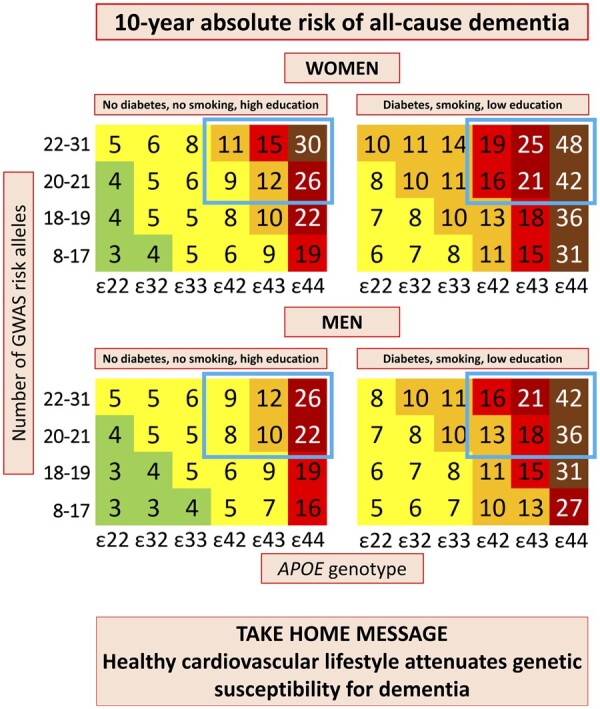
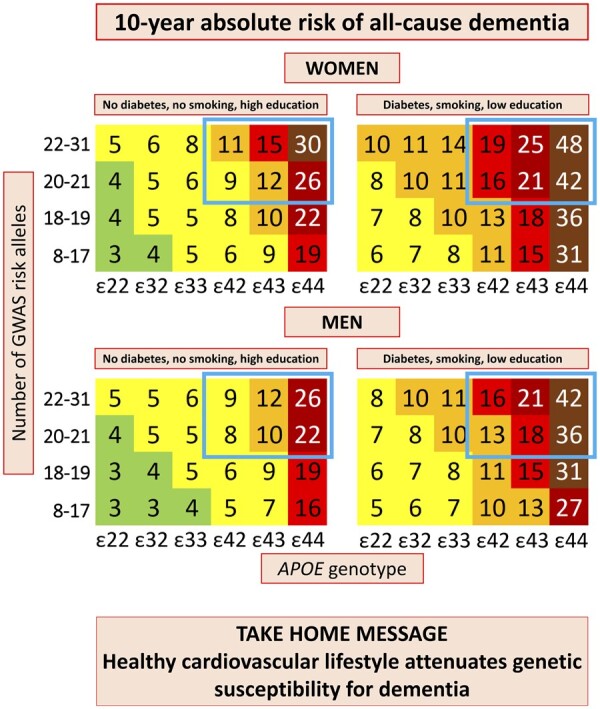
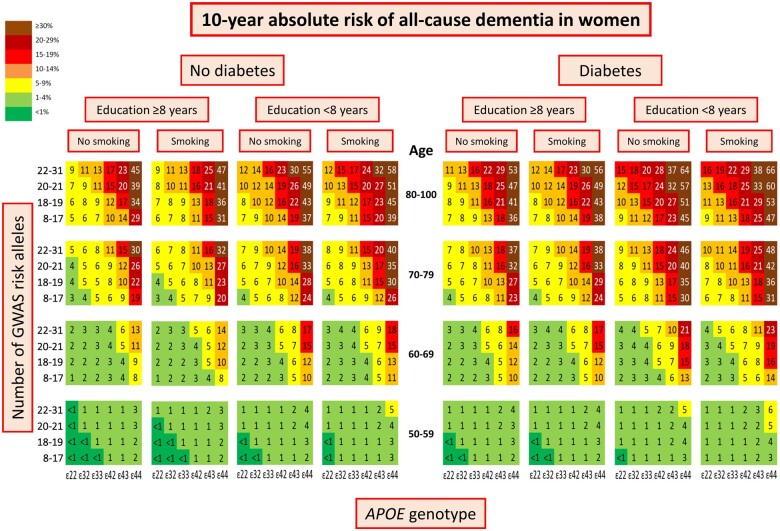
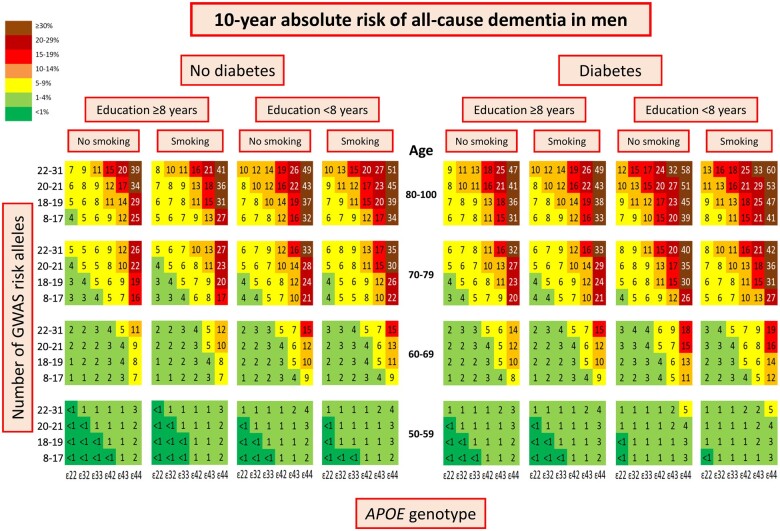
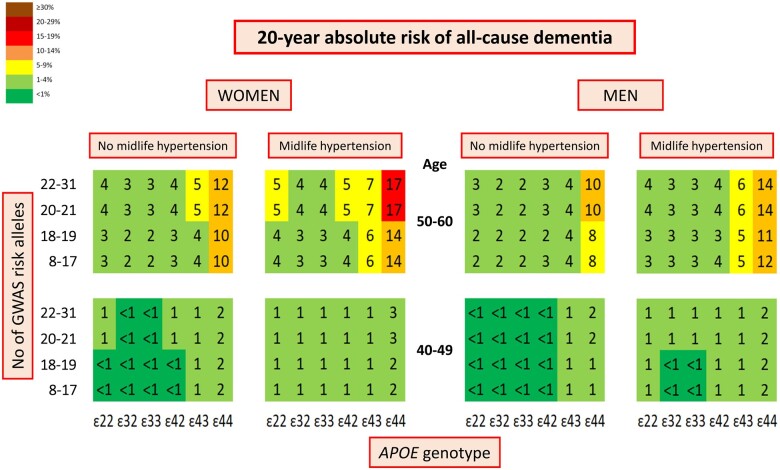
Aims: Dementia is a major global challenge for health and social care in aging populations. A third of all dementia may be preventable due to cardiovascular risk factors. Intensive multi-domain intervention trials targeting primarily cardiovascular risk factors show improved cognitive function in people at risk. Such interventions will, however, be expensive to implement in all individuals at risk and will represent unrealistic economic tasks for most societies. Therefore, a risk score identifying high-risk individuals is warranted. Methods and results: In 61 664 individuals from two prospective cohorts of the Danish general population, we generated 10-year absolute risk scores for all-cause dementia from cardiovascular risk factors and genetics. In both sexes, 10-year absolute risk of all-cause dementia increased with increasing age, number of apolipoprotein E (APOE) ɛ4 alleles, number of genome-wide association studies (GWAS) risk alleles, and cardiovascular risk factors. The highest 10-year absolute risks of all-cause dementia seen in smoking women with diabetes, low education, APOE ɛ44 genotype, and 22–31 GWAS risk alleles were 6%, 23%, 48%, and 66% in those aged 50–59, 60–69, 70–79, and 80–100, respectively. Corresponding values for men were 5%, 19%, 42%, and 60%, respectively. Conclusion: Ten-year absolute risk of all-cause dementia increased with age, APOE ɛ4 alleles, GWAS risk alleles, diabetes, low education, and smoking in both women and men. Ten-year absolute risk charts for dementia will facilitate identification of high-risk individuals, those who likely will benefit the most from an early intervention against cardiovascular risk factors.
Overview
The claims and statistics of this paper haven’t been checked yet.
Free: it reads the open-access text and checks the first 5 claims that cite a source we can check. Create a free account to check every claim.
Integrity signals
Registry
Cites
Statistics
Figures
Verification
Claims the paper makes
The claims and statistics of this paper haven’t been checked yet.
Free: it reads the open-access text and checks the first 5 claims that cite a source we can check. Create a free account to check every claim.
Self-check
Percentages, sums and reported differences re-computed from the paper’s own numbers.
The self-check needs the paper’s full text.
Citations
Cites
Regression shrinkage and selection via the lasso
Tibshirani, R. (1996) · Journal of the Royal Statistical Society Series B: Statistical Methodology · doi:10.1111/j.2517-6161.1996.tb02080.x · Cited by 51,482
A Proportional Hazards Model for the Subdistribution of a Competing Risk
Fine, J. P., & Gray, R. J. (1999) · Journal of the American Statistical Association · doi:10.1080/01621459.1999.10474144 · Cited by 14,290
Multiple imputation using chained equations: Issues and guidance for practice
White, I. R., Royston, P., & Wood, A. M. (2011) · Statistics in Medicine · doi:10.1002/sim.4067 · Cited by 9,792 · cited 1×
“Missing data on covariates were imputed from age, sex, and population by multiple imputation.(16) Missing values were <1% for modifiable risk factors.”
MethodMach, F., Baigent, C., Catapano, A. L., Koskinas, K. C., Casula, M., Badimon, L., Chapman, M. J., De Backer, G. G., Delgado, V., Ference, B. A., et al. (2020) · European Heart Journal · doi:10.1093/eurheartj/ehz455 · Cited by 8,961
Dementia prevention, intervention, and care
Livingston, G., Sommerlad, A., Orgeta, V., Costafreda, S. G., Huntley, J., Ames, D., Ballard, C., Banerjee, S., Burns, A., Cohen-Mansfield, J., et al. (2017) · The Lancet · doi:10.1016/s0140-6736(17)31363-6 · Cited by 6,072 · cited 10×
“Individuals with higher educational level tolerate more severe brain pathology without developing clinical dementia compared with individuals with lower educational level.(1,26) However, it is also likely that those with low education have a less favourable lifestyle than those with high education, potentially explain…”
BackgroundInfluentialMach, F., Baigent, C., Catapano, A. L., Koskinas, K. C., Casula, M., Badimon, L., Chapman, M. J., De Backer, G. G., Delgado, V., Ference, B. A., et al. (2019) · Atherosclerosis · doi:10.1016/j.atherosclerosis.2019.08.014 · Cited by 4,854
Meta-Analysis of 74,046 Individuals Identifies 11 New Susceptibility Loci for Alzheimer’s Disease
(EADI), E. A. D. I., Lambert, J.-C., (GERAD), G. A. E. R. I. A. D., Alzheimer's Disease Genetic Consortium (ADGC), (CHARGE), C. F. H. A. A. R. I. G. E., Ibrahim-Verbaas, C. A., Harold, D., Naj, A. C., Sims, R., Bellenguez, C., et al. (2013) · Nature Genetics · doi:10.1038/ng.2802 · Cited by 4,336
The Danish National Patient Register
Lynge, E., Sandegaard, J. L., & Rebolj, M. (2011) · Scandinavian Journal of Public Health · doi:10.1177/1403494811401482 · Cited by 3,968
Ngandu, T., Lehtisalo, J., Solomon, A., Levälahti, E., Ahtiluoto, S., Antikainen, R., Bäckman, L., Hänninen, T., Jula, A., Laatikainen, T., et al. (2015) · The Lancet · doi:10.1016/s0140-6736(15)60461-5 · Cited by 3,689 · cited 3×
“These findings are supported by a comprehensive intervention trial targeting primarily vascular risk factors leading to improved cognitive function in people at risk of dementia.(2,3) However, such intensive and staff-requiring interventions will be expensive to implement in all at risk of dementia and will represent…”
BackgroundForecasting the global burden of Alzheimer's disease
Brookmeyer, R., Johnson, E., Ziegler‐Graham, K., & Arrighi, H. M. (2007) · Alzheimer's & Dementia · doi:10.1016/j.jalz.2007.04.381 · Cited by 3,370 · cited 1×
“A key recommendation is to be ambitious about prevention, focusing on interventions to build up resilience and healthier lifestyles,(1) because postponing dementia just for a couple of years would enable many more to reach the end of life without developing dementia.(1,6) The exact nature of prevention and whether it…”
BackgroundKhera, A. V., Chaffin, M., Aragam, K. G., Haas, M. E., Roselli, C., Choi, S. H., Natarajan, P., Lander, E. S., Lubitz, S. A., Ellinor, P. T., et al. (2018) · Nature Genetics · doi:10.1038/s41588-018-0183-z · Cited by 2,953 · cited 1×
“For cardiovascular disease, implementation of genetic risk scores for primary prevention is anticipated to reach clinical practice in the near future.(32) The genetic contribution to common”
BackgroundAlzheimer Disease Genetics Consortium (ADGC), Kunkle, B. W., The European Alzheimer’s Disease Initiative (EADI), Cohorts for Heart and Aging Research in Genomic Epidemiology Consortium (CHARGE), Genetic and Environmental Risk in AD/Defining Genetic, P. A. E. R. F. A. D. C. (., Grenier-Boley, B., Sims, R., Bis, J. C., Damotte, V., Naj, A. C., et al. (2019) · Nature Genetics · doi:10.1038/s41588-019-0358-2 · Cited by 2,946
Potential for primary prevention of Alzheimer's disease: an analysis of population-based data
Norton, S., Matthews, F. E., Barnes, D. E., Yaffe, K., & Brayne, C. (2014) · The Lancet Neurology · doi:10.1016/s1474-4422(14)70136-x · Cited by 2,466 · cited 1×
“However, recent estimates from the Lancet Commission based on randomized controlled trials like FINGER(2,3) and preDIVA(4) suggest that a third of all dementia may be preventable,(1) primarily by treating wellestablished cardiovascular risk factors such as diabetes, hypertension, smoking, and physical inactivity.(5) A…”
MethodThe Danish Register of Causes of Death
Helweg-Larsen, K. (2011) · Scandinavian Journal of Public Health · doi:10.1177/1403494811399958 · Cited by 1,732
Baumgart, M., Snyder, H. M., Carrillo, M. C., Fazio, S., Kim, H., & Johns, H. (2015) · Alzheimer's & Dementia · doi:10.1016/j.jalz.2015.05.016 · Cited by 1,660 · cited 3×
“current evidence for the association between alcohol intake and risk of dementia is unclear.(1,7) Intervention trials to prevent dementia has shown that decreasing the risk of dementia requires extensive multidomain interventions.”
BackgroundThe Rotterdam Study: objectives and design update
Hofman, A., Breteler, M. M. B., van Duijn, C. M., Krestin, G. P., Pols, H. A., Stricker, B. H. C., Tiemeier, H., Uitterlinden, A. G., Vingerling, J. R., & Witteman, J. C. M. (2007) · European Journal of Epidemiology · doi:10.1007/s10654-007-9199-x · Cited by 1,395
Incidence of dementia over three decades in the Framingham heart study
Satizabal, C. L., Beiser, A. S., Chouraki, V., Chêne, G., Dufouil, C., & Seshadri, S. (2016) · New England Journal of Medicine · doi:10.1056/nejmoa1504327 · Cited by 1,051 · cited 2×
“Diabetes is strongly associated with increased risk of dementia.7 One potential mechanism may be that peripheral insulin anomalies cause a decrease in brain insulin production, which can impair amyloid clearance.1 Also, inflammation and high blood glucose concentrations are suggested as potential mechanisms by which d…”
BackgroundLoss-of-Function Mutations in APOC3 and Risk of Ischemic Vascular Disease
Jørgensen, A. B., Frikke-Schmidt, R., Nordestgaard, B. G., & Tybjærg-Hansen, A. (2014) · New England Journal of Medicine · doi:10.1056/nejmoa1308027 · Cited by 919
Self-citationBeydoun, M. A., Beydoun, H. A., Gamaldo, A. A., Teel, A., Zonderman, A. B., & Wang, Y. (2014) · BMC Public Health · doi:10.1186/1471-2458-14-643 · Cited by 671 · cited 1×
“Low educational level, equivalent to a maximum of finalized primary school, as a potential modifiable risk factor has shown the most consistent association with risk of dementia.(23,24) Satizabal et al.”
Backgroundvan Charante, E. P. M., Richard, E., Eurelings, L. S., van Dalen, J.-W., Ligthart, S. A., van Bussel, E. F., Hoevenaar-Blom, M. P., Vermeulen, M., & van Gool, W. A. (2016) · The Lancet · doi:10.1016/s0140-6736(16)30950-3 · Cited by 611 · cited 2×
“Intervention trials to prevent dementia has shown that decreasing the risk of dementia requires extensive multidomain interventions.(2,4,31) The preDIVA trial ‘provided modestly enhanced care to”
BackgroundThe Effects of Tobacco Smoke and Nicotine on Cognition and the Brain
Swan, G. E., & Lessov-Schlaggar, C. N. (2007) · Neuropsychology Review · doi:10.1007/s11065-007-9035-9 · Cited by 580 · cited 1×
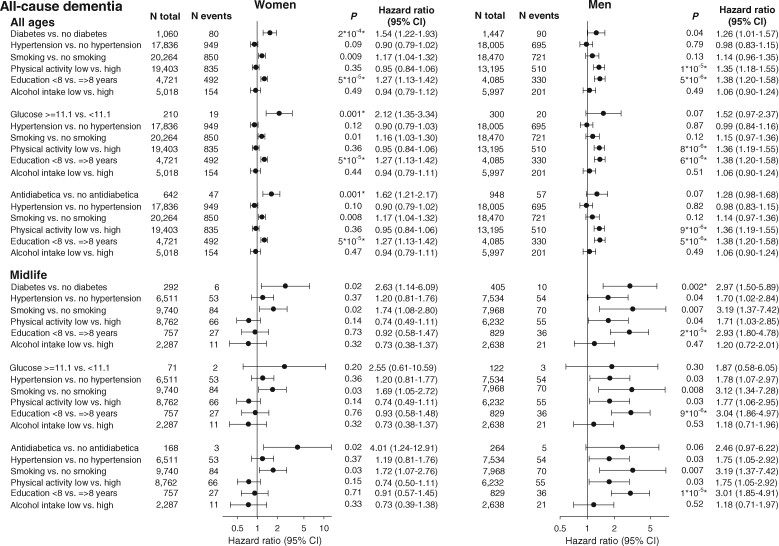
“Smoking associates with increased risk of dementia,(24,27) and is likely mediated by cardiovascular pathology and the content of neurotoxins in cigarette smoke.(1,28) Midlife hypertension is consistently associated with increased risk of dementia(1,5,29)—an association we can confirm at least for men in the present st…”
BackgroundDisclosure of APOE Genotype for Risk of Alzheimer's Disease
Green, R. C., Roberts, J. S., Cupples, L. A., Relkin, N. R., Whitehouse, P. J., Brown, T., Eckert, S. L., Butson, M., Sadovnick, A. D., Quaid, K. A., et al. (2009) · New England Journal of Medicine · doi:10.1056/nejmoa0809578 · Cited by 554 · cited 1×
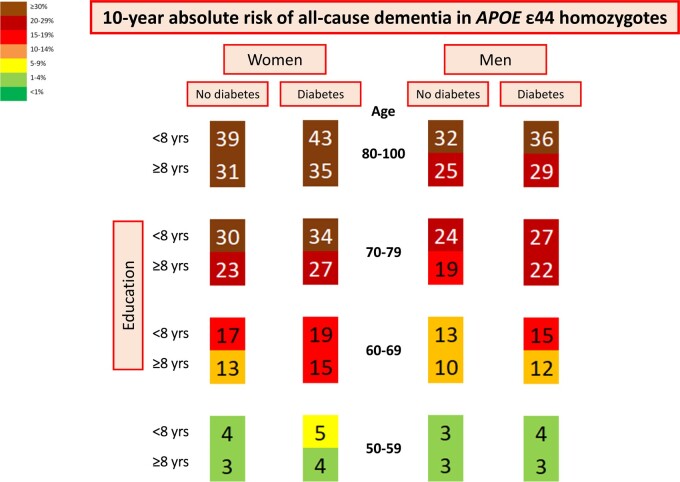
“tion to risk of Alzheimer’s disease does not result in emotional distress, even with no available treatment.(34) Importantly, we now show that among APOE e44 homozygotes 10-year absolute risk Figure 5 Ten-year absolute risk of all-cause dementia in APOE e44 homozygotes.”
BackgroundFrikke-Schmidt, R. (2008) · JAMA · doi:10.1001/jama.299.21.2524 · Cited by 464
Self-citationRosenberg, A., Ngandu, T., Rusanen, M., Antikainen, R., Bäckman, L., Havulinna, S., Hänninen, T., Laatikainen, T., Lehtisalo, J., Levälahti, E., et al. (2018) · Alzheimer's & Dementia · doi:10.1016/j.jalz.2017.09.006 · Cited by 421 · cited 2×
“These findings are supported by a comprehensive intervention trial targeting primarily vascular risk factors leading to improved cognitive function in people at risk of dementia.(2,3) However, such intensive and staff-requiring interventions will be expensive to implement in all at risk of dementia and will represent…”
BackgroundThe Rotterdam Study: 2016 objectives and design update
Hofman, A., Brusselle, G. G. O., Murad, S. D., van Duijn, C. M., Franco, O. H., Goedegebure, A., Ikram, M. A., Klaver, C. C. W., Nijsten, T. E. C., Peeters, R. P., et al. (2015) · European Journal of Epidemiology · doi:10.1007/s10654-015-0082-x · Cited by 382
Zhong, G., Wang, Y., Zhang, Y., Guo, J. J., & Zhao, Y. (2015) · PLOS ONE · doi:10.1371/journal.pone.0118333 · Cited by 362
Common variants in Alzheimer’s disease and risk stratification by polygenic risk scores
de Rojas, I., Moreno-Grau, S., Tesi, N., Grenier-Boley, B., Andrade, V., Jansen, I. E., Pedersen, N. L., Stringa, N., Zettergren, A., Hernández, I., et al. (2021) · Nature Communications · doi:10.1038/s41467-021-22491-8 · Cited by 324
Self-citationKivimäki, M., Singh-Manoux, A., Pentti, J., Sabia, S., Nyberg, S. T., Alfredsson, L., Goldberg, M., Knutsson, A., Koskenvuo, M., Koskinen, A., et al. (2019) · BMJ · doi:10.1136/bmj.l1495 · Cited by 313
van der Lee, S. J., Wolters, F. J., Ikram, M. K., Hofman, A., Ikram, M. A., Amin, N., & van Duijn, C. M. (2018) · The Lancet Neurology · doi:10.1016/s1474-4422(18)30053-x · Cited by 298
Education and dementia: a meta-analytic study
Caamaño-Isorna, F., Corral, M., Montes-Martínez, A., & Takkouche, B. (2006) · Neuroepidemiology · doi:10.1159/000093378 · Cited by 288 · cited 1×
“Low educational level, equivalent to a maximum of finalized primary school, as a potential modifiable risk factor has shown the most consistent association with risk of dementia.(23,24) Satizabal et al.”
BackgroundValidity of Dementia Diagnoses in the Danish Hospital Registers
Phung, T. K. T., Andersen, B. B., Høgh, P., Kessing, L. V., Mortensen, P. B., & Waldemar, G. (2007) · Dementia and Geriatric Cognitive Disorders · doi:10.1159/000107084 · Cited by 279
Midlife risk score for the prediction of dementia four decades later
Exalto, L. G., Quesenberry, C. P., Barnes, D., Kivipelto, M., Biessels, G. J., & Whitmer, R. A. (2014) · Alzheimer's & Dementia · doi:10.1016/j.jalz.2013.05.1772 · Cited by 276 · cited 2×
“Since 2006 several risk prediction models for dementia, mainly focusing on cardiovascular risk factors, blood biomarkers, cognitive testing, and brain imaging, have been published.(1,8,20,21) These risk scores are based on scoring systems summing up points for the different test results, cardiovascular risk factors, a…”
BackgroundAssociation of Lifetime Intellectual Enrichment With Cognitive Decline in the Older Population
Vemuri, P., Lesnick, T. G., Przybelski, S. A., Machulda, M., Knopman, D. S., Mielke, M. M., Roberts, R. O., Geda, Y. E., Rocca, W. A., Petersen, R. C., et al. (2014) · JAMA Neurology · doi:10.1001/jamaneurol.2014.963 · Cited by 224 · cited 1×
“Individuals with higher educational level tolerate more severe brain pathology without developing clinical dementia compared with individuals with lower educational level.(1,26) However, it is also likely that those with low education have a less favourable lifestyle than those with high education, potentially explain…”
BackgroundA summary risk score for the prediction of Alzheimer disease in elderly persons
Reitz, C., Tang, M.-X., Schupf, N., Manly, J. J., Mayeux, R., & Luchsinger, J. A. (2010) · Archives of Neurology · doi:10.1001/archneurol.2010.136 · Cited by 199 · cited 1×
“Since 2006 several risk prediction models for dementia, mainly focusing on cardiovascular risk factors, blood biomarkers, cognitive testing, and brain imaging, have been published.(1,8,20,21) These risk scores are based on scoring systems summing up points for the different test results, cardiovascular risk factors, a…”
BackgroundMidlife Hypertension and Alzheimer’s Disease: A Systematic Review and Meta-Analysis
Lennon, M. J., Makkar, S. R., Crawford, J. D., & Sachdev, P. S. (2019) · Journal of Alzheimer’s Disease · doi:10.3233/jad-190474 · Cited by 190
Plasma levels of apolipoprotein Eand risk of dementia in the general population
Rasmussen, K. L., Tybjærg‐Hansen, A., Nordestgaard, B. G., & Frikke‐Schmidt, R. (2015) · Annals of Neurology · doi:10.1002/ana.24326 · Cited by 156 · cited 1×
“Arg176Cys on the same allele.(13,15) The rare e1 allele is defined by the presence of both variants on the same allele.”
BackgroundSelf-citationAbsolute 10-year risk of dementia by age, sex and APOE genotype: a population-based cohort study
Rasmussen, K. L., Tybjærg-Hansen, A., Nordestgaard, B. G., & Frikke-Schmidt, R. (2018) · Canadian Medical Association Journal · doi:10.1503/cmaj.180066 · Cited by 91
Self-citationRasmussen, K. L., Tybjærg-Hansen, A., Nordestgaard, B. G., & Frikke-Schmidt, R. (2019) · European Heart Journal · doi:10.1093/eurheartj/ehz402 · Cited by 86
Self-citationRasmussen, K. L., Tybjærg‐Hansen, A., Nordestgaard, B. G., & Frikke‐Schmidt, R. (2018) · Alzheimer's & Dementia · doi:10.1016/j.jalz.2017.05.006 · Cited by 75
Self-citationLi, J., Ogrodnik, M., Devine, S., Auerbach, S. H., Wolf, P. A., & Au, R. (2017) · Alzheimer s & Dementia · doi:10.1016/j.jalz.2017.04.013 · Cited by 74 · cited 1×
“Since 2006 several risk prediction models for dementia, mainly focusing on cardiovascular risk factors, blood biomarkers, cognitive testing, and brain imaging, have been published.(1,8,20,21) These risk scores are based on scoring systems summing up points for the different test results, cardiovascular risk factors, a…”
BackgroundKunkle, B., Grenier-Boley, B., Sims, R., Bis, J., Naj, A., Boland, A., Vronskaya, M., van der Lee, S., Amlie-Wolf, A., Bellenguez, C., et al. (2018) · doi:10.1101/294629 · Cited by 35
de Rojas, I., Moreno-Grau, S., Tesi, N., Grenier-Boley, B., Andrade, V., Jansen, I., Pedersen, N. L., Stringa, N., Zettergren, A., Hernández, I., et al. (2019) · doi:10.1101/19012021 · Cited by 28
Reduce vascular risk to prevent dementia?
Schneider, L. S. S. (2016) · The Lancet · doi:10.1016/s0140-6736(16)31129-1 · Cited by 15 · cited 1×
“Intervention trials to prevent dementia has shown that decreasing the risk of dementia requires extensive multidomain interventions.(2,4,31) The preDIVA trial ‘provided modestly enhanced care to”
Background
Cited by
Dementia prevention, intervention, and care: 2024 report of the Lancet standing Commission
Livingston, G., Huntley, J., Liu, K. Y., Costafreda, S. G., Selbæk, G., Alladi, S., Ames, D., Banerjee, S., Burns, A., Brayne, C., et al. (2024) · The Lancet · doi:10.1016/s0140-6736(24)01296-0 · Cited by 3,860
(2022) · European Journal of Cardio-Thoracic Surgery · doi:10.1093/ejcts/ezag193 · Cited by 184
Cardiometabolic multimorbidity and incident dementia: the Swedish twin registry
Dove, A., Guo, J., Marseglia, A., Fastbom, J., Vetrano, D. L., Fratiglioni, L., Pedersen, N. L., & Xu, W. (2023) · European Heart Journal · doi:10.1093/eurheartj/ehac744 · Cited by 140
Cardiometabolic multimorbidity, genetic risk, and dementia: a prospective cohort study
Tai, X. Y., Veldsman, M., Lyall, D. M., Littlejohns, T. J., Langa, K. M., Husain, M., Ranson, J. M., & Llewellyn, D. J. (2022) · The Lancet Healthy Longevity · doi:10.1016/s2666-7568(22)00117-9 · Cited by 159
Shared Risk Factors between Dementia and Atherosclerotic Cardiovascular Disease
Nordestgaard, L. T., Christoffersen, M., & Frikke‐Schmidt, R. (2022) · International Journal of Molecular Sciences · doi:10.3390/ijms23179777 · Cited by 141
Self-citation
Metadata
- Authors
- Juul Rasmussen, I., Rasmussen, K. L., Nordestgaard, B. G., Tybjærg-Hansen, A., & Frikke-Schmidt, R.
- Affiliations
- Department of Clinical Biochemistry, Rigshospitalet, Copenhagen University Hospital , Blegdamsvej 9, DK-2100 Copenhagen, Denmark
- Herlev Hospital (DK)
- University of Copenhagen (DK)
- Venue
- European Heart Journal
- Publisher
- Oxford University Press (OUP)
- Published
- 2020-10-06
- Volume
- 41
- Issue
- 41
- Pages
- 4024-4033
- ISSN
- 0195-668X (ISSN-L)
- 1522-9645
- PMC
- PMC7672536
- OpenAlex
- W3092368489
- Semantic Scholar
- 4286a385fdaec15edcddc287fd2209cd698b696a
- Cited by
- 73
- References
- 41
- Citations by year
- 2026: 6 · 2025: 7 · 2024: 12 · 2023: 11 · 2022: 22 · 2021: 8 · 2020: 6
- FWCI
- 8.57
- Type
- journal article
- Language
- en
- Open access
- hybrid
- doi.org
- Licence
- Locations
- European Heart Journal (publishedVersion, cc-by-nc)
- PubMed Central (publishedVersion, cc-by-nc)
- PubMed (publishedVersion)
- Research at the University of Copenhagen (University of Copenhagen) (publishedVersion, cc-by-nc)
- Funders
- Danish Medical Research Council (10-081618)
- Research Council at Rigshospitalet
- Danish Alzheimer Research Foundation
- Lundbeck Foundation (R278-2018-804)
- Topics
- Health Sciences › Medicine › Psychiatry and Mental health › Dementia and Cognitive Impairment Research
- Life Sciences › Neuroscience › Cellular and Molecular Neuroscience › Alzheimer's disease research and treatments
- Social Sciences › Psychology › Experimental and Cognitive Psychology › Cognitive Abilities and Testing
- Keywords
- dementia, cardiovascular risk factors, APOE ε4, risk alleles, genome-wide association study, risk charts, dementia prevention, smoking, diabetes mellitus, low educational attainment, sex differences, multidomain intervention
- MeSH terms
- Heart Disease Risk Factors, Cardiovascular Diseases, Dementia, Female, Genotype, Humans, Male, Middle Aged, Prospective Studies, Risk Factors, Cohort Studies, Apolipoprotein E4, Genome-Wide Association Study
About these checks
Registry, retraction, Cites and statistics results are computed, not judged, with one exception: a printed reference that no index lists is read once by a model before it counts as a citation error. Claims are extracted by a model and kept only when their quote appears verbatim in the text; each cited source is then checked, with a model’s help, for whether it says what the claim relies on. Those verdicts can be wrong — read the claim’s quote and the cited source before relying on one.
Statistics and arithmetic are recomputed, not judged.
Confidence bands are shown only for fields calibrated on our annotated test set. None is calibrated yet, so no band is shown.
What counts as a claim ›How we measure confidence ›How we check this ›
Are you an author, or do you see a problem with this page? Request a review
Data sources
Bibliographic data: Semantic Scholar, OpenAlex, Crossref.
Contains information from the Semantic Scholar Academic Graph Datasets, made available under the ODC Attribution License (ODC-BY 1.0).
Semantic Scholar’s data is described in: Kinney, R., et al. (2023). The Semantic Scholar Open Data Platform. arXiv:2301.10140.
