

Steroidal and non-steroidal mineralocorticoid receptor antagonists in cardiorenal medicine
Open accessThe DOI matches its Crossref record; 89 of the 89 references it cites were found in a registry or an index.
Abstract
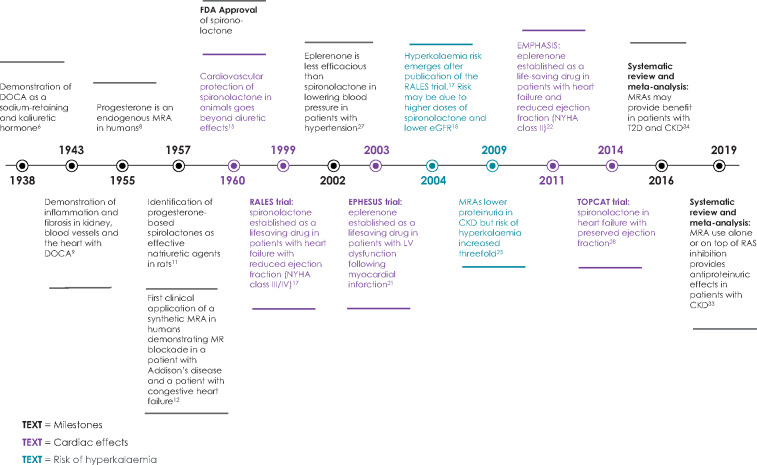
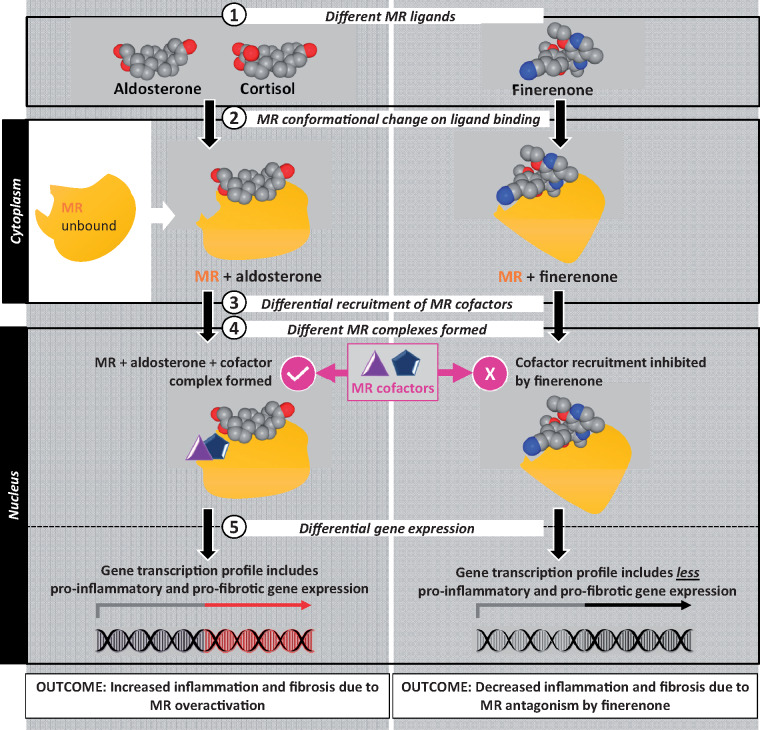
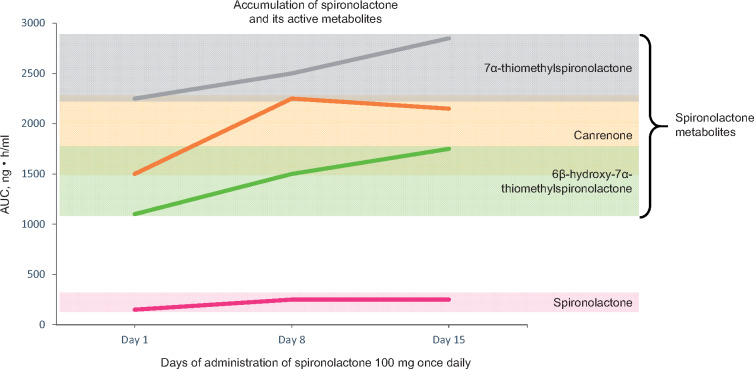
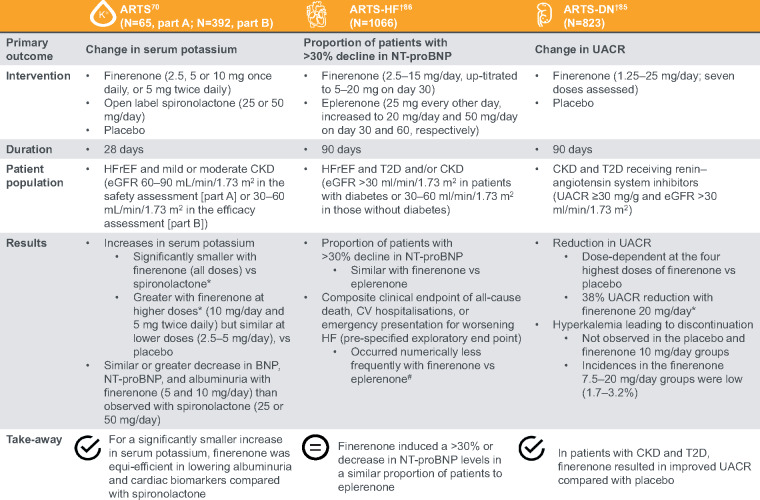
This review covers the last 80 years of remarkable progress in the development of mineralocorticoid receptor (MR) antagonists (MRAs) from synthesis of the first mineralocorticoid to trials of nonsteroidal MRAs. The MR is a nuclear receptor expressed in many tissues/cell types including the kidney, heart, immune cells, and fibroblasts. The MR directly affects target gene expression—primarily fluid, electrolyte and haemodynamic homeostasis, and also, but less appreciated, tissue remodelling. Pathophysiological overactivation of the MR leads to inflammation and fibrosis in cardiorenal disease. We discuss the mechanisms of action of nonsteroidal MRAs and how they differ from steroidal MRAs. Nonsteroidal MRAs have demonstrated important differences in their distribution, binding mode to the MR and subsequent gene expression. For example, the novel nonsteroidal MRA finerenone has a balanced distribution between the heart and kidney compared with spironolactone, which is preferentially concentrated in the kidneys. Compared with eplerenone, equinatriuretic doses of finerenone show more potent anti-inflammatory and anti-fibrotic effects on the kidney in rodent models. Overall, nonsteroidal MRAs appear to demonstrate a better benefit–risk ratio than steroidal MRAs, where risk is measured as the propensity for hyperkalaemia. Among patients with Type 2 diabetes, several Phase II studies of finerenone show promising results, supporting benefits on the heart and kidneys. Furthermore, finerenone significantly reduced the combined primary endpoint (chronic kidney disease progression, kidney failure, or kidney death) vs. placebo when added to the standard of care in a large Phase III trial.
Overview
The claims and statistics of this paper haven’t been checked yet.
Free: it reads the open-access text and checks the first 5 claims that cite a source we can check. Create a free account to check every claim.
Integrity signals
Registry
Cites
Statistics
Figures
Verification
Claims the paper makes
The claims and statistics of this paper haven’t been checked yet.
Free: it reads the open-access text and checks the first 5 claims that cite a source we can check. Create a free account to check every claim.
Claims other papers make about this one
Each is checked against this paper’s own text: does it say what the citing paper says it does?
The source backs part of the claim, not all of it — or backs it for a different population, condition or comparison.
In the citing paper
“As a nonsteroidal, selective mineralocorticoid receptor antagonist, finerenone has been shown to have potent anti-inflammatory and antifibrotic effects while reducing the urinary albumin-to-creatinine ratio, which may be related to its benefits in renal outcome and HHF [67–70].”
From Network meta-analysis on the effects of finerenone versus SGLT2 inhibitors and GLP-1 receptor agonists on cardiovascular and renal outcomes in patients with type 2 diabetes mellitus and chronic kidney disease (2022) · cites this paper as [70]
Experimental — accuracy not yet measuredThe source backs part of the claim, not all of it — or backs it for a different population, condition or comparison.
In the citing paper
“There are two different classes of MRAs, steroidal and nonsteroidal, with one group not extrapolatable to the other (124).”
From 11. Chronic Kidney Disease and Risk Management: Standards of Care in Diabetes—2025 (2025) · cites this paper as [124]
Experimental — accuracy not yet measuredThe source backs part of the claim, not all of it — or backs it for a different population, condition or comparison.
In the citing paper
“Novel nonsteroidal MRA, such as fi nerenone and esaxerenone, are more selective for mineralocorticoid receptors and have been noted to offer similar reductions in albuminuria but with a lower risk of hyperkalemia.”
From KDIGO 2022 Clinical Practice Guideline for Diabetes Management in Chronic Kidney Disease (2022) · cites this paper as [160]
Experimental — accuracy not yet measuredThe source backs part of the claim, not all of it — or backs it for a different population, condition or comparison.
In the citing paper
“Evidence suggests that overactivation of the mineralocorticoid receptor (MR) leads to inflammation and fibrosis in the heart, kidneys, and vasculature where the MR is extensively expressed that can drive CKD and cardiovascular disease progression.8”
From Cardiovascular and kidney outcomes with finerenone in patients with type 2 diabetes and chronic kidney disease: the FIDELITY pooled analysis (2022) · cites this paper as [8]
Experimental — accuracy not yet measuredThe cited source says what the claim attributes to it.
In the citing paper
“Finerenone is a novel, selective, nonsteroidal MR antagonist (MRA) that blocks MR-mediated sodium reabsorption and MR overactivation and has demonstrated anti-inflammatory and anti-fibrotic effects in preclinical kidney and cardiovascular disease models.8 , 9”
From Cardiovascular and kidney outcomes with finerenone in patients with type 2 diabetes and chronic kidney disease: the FIDELITY pooled analysis (2022) · cites this paper as [8]
2 more claims about this paper
Create a free account to see every claim other papers make about this one.
Self-check
Percentages, sums and reported differences re-computed from the paper’s own numbers.
The self-check needs the paper’s full text.
Citations
Cites
McDonagh, T. A., Metra, M., Adamo, M., Gardner, R. S., Baumbach, A., Böhm, M., Burri, H., Butler, J., Čelutkienė, J., Chioncel, O., et al. (2021) · European Heart Journal · doi:10.1093/eurheartj/ehab670 · Cited by 19,442
Ahmed, A., Jorna, T., & Bhandari, S. (2016) · Nephron · doi:10.1159/000447068 · Cited by 11,717
2016 ESC Guidelines for the diagnosis and treatment of acute and chronic heart failure
Ponikowski, P., Voors, A. A., Anker, S. D., Bueno, H., Cleland, J. G. F., Coats, A. J. S., Falk, V., González-Juanatey, J. R., Harjola, V.-P., Jankowska, E. A., et al. (2016) · European Heart Journal · doi:10.1093/eurheartj/ehw128 · Cited by 11,429
Self-citationThe Effect of Spironolactone on Morbidity and Mortality in Patients with Severe Heart Failure
Pitt, B., Zannad, F., Remme, W. J., Cody, R., Castaigne, A., Perez, A., Palensky, J., & Wittes, J. (1999) · New England Journal of Medicine · doi:10.1056/nejm199909023411001 · Cited by 9,214
Self-citationPitt, B., Remme, W., Zannad, F., Neaton, J., Martinez, F., Roniker, B., Bittman, R., Hurley, S., Kleiman, J., & Gatlin, M. (2003) · New England Journal of Medicine · doi:10.1056/nejmoa030207 · Cited by 4,941
Self-citationEplerenone in patients with systolic heart failure and mild symptoms
Zannad, F., McMurray, J. J. V., Krum, H., van Veldhuisen, D. J., Swedberg, K., Shi, H., Vincent, J., Pocock, S. J., & Pitt, B. (2011) · New England Journal of Medicine · doi:10.1056/nejmoa1009492 · Cited by 3,111 · cited 1×
“among patients with LVEF <_30% and a recent (<_6 months) admission for CV reasons and mild HF symptoms (NYHA Class II).(22)”
BackgroundSelf-citationSpironolactone for heart failure with preserved ejection fraction
Pitt, B., Pfeffer, M. A., Assmann, S. F., Boineau, R., Anand, I. S., Claggett, B., Clausell, N., Desai, A. S., Diaz, R., Fleg, J. L., et al. (2014) · New England Journal of Medicine · doi:10.1056/nejmoa1313731 · Cited by 2,809 · cited 2×
“5 mmol/L).(28) In 2016, the Aldosterone Blockade Early After Acute Myocardial Infarction (ALBATROSS; N = 1603) trial was published.”
BackgroundDevelopment of a second-generation antiandrogen for treatment of advanced prostate cancer.
Tran, C., Ouk, S., Clegg, N. J., Chen, Y., Watson, P. A., Arora, V., Wongvipat, J., Smith-Jones, P. M., Yoo, D., Kwon, A., et al. (2009) · Science · doi:10.1126/science.1168175 · Cited by 2,292
Weber, K. T., & Brilla, C. G. (1991) · Circulation · doi:10.1161/01.cir.83.6.1849 · Cited by 2,027
Arriza, J. L., Weinberger, C., Cerelli, G., Glaser, T. M., Handelin, B. L., Housman, D. E., & Evans, R. M. (1987) · Science · doi:10.1126/science.3037703 · Cited by 1,946
Rates of hyperkalemia after publication of the Randomized Aldactone Evaluation Study
Juurlink, D. N., Mamdani, M. M., Lee, D. S., Kopp, A., Austin, P. C., Laupacis, A., & Redelmeier, D. A. (2004) · New England Journal of Medicine · doi:10.1056/nejmoa040135 · Cited by 1,761
Enzalutamide with Standard First-Line Therapy in Metastatic Prostate Cancer
Davis, I. D., Martin, A. J., Stockler, M. R., Begbie, S., Chi, K. N., Chowdhury, S., Coskinas, X., Frydenberg, M., Hague, W. E., Horvath, L. G., et al. (2019) · New England Journal of Medicine · doi:10.1056/nejmoa1903835 · Cited by 1,633 · cited 1×
“Even within the class of non-steroidal antagonists, remarkably different effects on the androgen receptors have been observed, for example the nonsteroidal anti-androgen drugs enzalutamide and bicalutamide; in recent trials, these molecular pathways translate to meaningful differences in important patient outcomes.(56…”
BackgroundPfeffer, M. A., Claggett, B., Assmann, S. F., Boineau, R., Anand, I. S., Clausell, N., Desai, A. S., Diaz, R., Fleg, J. L., Gordeev, I., et al. (2015) · Circulation · doi:10.1161/circulationaha.114.013255 · Cited by 1,065
Seckl, J. R., & Walker, B. R. (2001) · Endocrinology · doi:10.1210/endo.142.4.8114 · Cited by 714
Bakris, G. L., Agarwal, R., Chan, J. C., Cooper, M. E., Gansevoort, R. T., Haller, H., Remuzzi, G., Rossing, P., Schmieder, R. E., Nowack, C., et al. (2015) · JAMA · doi:10.1001/jama.2015.10081 · Cited by 708
Self-citationActivating mineralocorticoid receptor mutation in hypertension exacerbated by pregnancy
Geller, D. S., Farhi, A., Pinkerton, N., Fradley, M., Moritz, M., Spitzer, A., Meinke, G., Tsai, F. T. F., Sigler, P. B., & Lifton, R. P. (2000) · Science · doi:10.1126/science.289.5476.119 · Cited by 675
Pitt, B., Kober, L., Ponikowski, P., Gheorghiade, M., Filippatos, G., Krum, H., Nowack, C., Kolkhof, P., Kim, S.-Y., & Zannad, F. (2013) · European Heart Journal · doi:10.1093/eurheartj/eht187 · Cited by 591
Self-citationContribution of aldosterone to cardiovascular and renal inflammation and fibrosis
Brown, N. J. (2013) · Nature Reviews Nephrology · doi:10.1038/nrneph.2013.110 · Cited by 451
Filippatos, G., Anker, S. D., Böhm, M., Gheorghiade, M., Køber, L., Krum, H., Maggioni, A. P., Ponikowski, P., Voors, A. A., Zannad, F., et al. (2016) · European Heart Journal · doi:10.1093/eurheartj/ehw132 · Cited by 446
Self-citationKolkhof, P., Delbeck, M., Kretschmer, A., Steinke, W., Hartmann, E., Bärfacker, L., Eitner, F., Albrecht-Küpper, B., & Schäfer, S. (2014) · Journal of Cardiovascular Pharmacology · doi:10.1097/fjc.0000000000000091 · Cited by 430 · cited 5×
“Compared with eplerenone in models of cardiac fibrosis, finerenone also demonstrated qualitatively different effects on pro-fibrotic gene expression and measures of inflammation and fibrosis.(62,68) However, the benefits of MRAs on kidney and cardiac outcomes need to be balanced against the risk of hyperkalaemia.”
BackgroundInfluentialSelf-citationThe incidence and implications of aldosterone breakthrough
Bomback, A. S., & Klemmer, P. J. (2007) · Nature Clinical Practice Nephrology · doi:10.1038/ncpneph0575 · Cited by 420
Mineralocorticoid receptor knockout mice: Pathophysiology of Na + metabolism
Berger, S., Bleich, M., Schmid, W., Cole, T. J., Peters, J., Watanabe, H., Kriz, W., Warth, R., Greger, R., & Schütz, G. (1998) · Proceedings of the National Academy of Sciences · doi:10.1073/pnas.95.16.9424 · Cited by 418
Eplerenone, a selective aldosterone blocker, in mild-to-moderate hypertension
Weinberger, M. H., Roniker, B., Krause, S. L., & Weiss, R. J. (2002) · American Journal of Hypertension · doi:10.1016/s0895-7061(02)02957-6 · Cited by 388
Usher, M. G., Duan, S. Z., Ivaschenko, C. Y., Frieler, R. A., Berger, S., Schütz, G., Lumeng, C. N., & Mortensen, R. M. (2010) · Journal of Clinical Investigation · doi:10.1172/jci41080 · Cited by 383
Agarwal, R., Rossignol, P., Romero, A., Garza, D., Mayo, M. R., Warren, S., Ma, J., White, W. B., & Williams, B. (2019) · The Lancet · doi:10.1016/s0140-6736(19)32135-x · Cited by 368
Self-citationRickard, A. J., Morgan, J., Tesch, G., Funder, J. W., Fuller, P. J., & Young, M. J. (2009) · Hypertension · doi:10.1161/hypertensionaha.109.131110 · Cited by 303
Nuclear Receptor Coregulators and Human Disease
Lonard, D. M., Lanz, R. B., & O’Malley, B. W. (2007) · Endocrine Reviews · doi:10.1210/er.2007-0012 · Cited by 302
Grune, J., Beyhoff, N., Smeir, E., Chudek, R., Blumrich, A., Ban, Z., Brix, S., Betz, I. R., Schupp, M., Foryst-Ludwig, A., et al. (2018) · Hypertension · doi:10.1161/hypertensionaha.117.10360 · Cited by 292
Self-citationEdwards, N. C., Steeds, R. P., Stewart, P. M., Ferro, C. J., & Townend, J. N. (2009) · Journal of the American College of Cardiology · doi:10.1016/j.jacc.2009.03.066 · Cited by 286
Conditional Mineralocorticoid Receptor Expression in the Heart Leads to Life-Threatening Arrhythmias
Ouvrard-Pascaud, A., Sainte-Marie, Y., Bénitah, J.-P., Perrier, R., Soukaseum, C., Cat, A. N. D., Royer, A., Le Quang, K., Charpentier, F., Demolombe, S., et al. (2005) · Circulation · doi:10.1161/circulationaha.104.503706 · Cited by 272
Bärfacker, L., Kuhl, A., Hillisch, A., Grosser, R., Figueroa‐Pérez, S., Heckroth, H., Nitsche, A., Ergüden, J., Gielen‐Haertwig, H., Schlemmer, K., et al. (2012) · ChemMedChem · doi:10.1002/cmdc.201200081 · Cited by 270
Self-citationKolkhof, P., & Bärfacker, L. (2017) · Journal of Endocrinology · doi:10.1530/joe-16-0600 · Cited by 262
Self-citationMineralocorticoid receptor antagonists and kidney diseases: pathophysiological basis
Barrera-Chimal, J., Girerd, S., & Jaisser, F. (2019) · Kidney International · doi:10.1016/j.kint.2019.02.030 · Cited by 261
Navaneethan, S. D., Nigwekar, S. U., Sehgal, A. R., & Strippoli, G. F. M. (2009) · Clinical Journal of the American Society of Nephrology · doi:10.2215/cjn.04750908 · Cited by 258
Drug-Induced Reduction in Albuminuria Is Associated with Subsequent Renoprotection: A Meta-Analysis
Lambers Heerspink, H. J., Kröpelin, T. F., Hoekman, J., & de Zeeuw, D. (2015) · Journal of the American Society of Nephrology · doi:10.1681/asn.2014070688 · Cited by 242
Fraccarollo, D., Berger, S., Galuppo, P., Kneitz, S., Hein, L., Schütz, G., Frantz, S., Ertl, G., & Bauersachs, J. (2011) · Circulation · doi:10.1161/circulationaha.110.983023 · Cited by 226
Self-citationMalignant hypertension produced by treatment with desoxycorticosterone acetate and sodium chloride
(1943) · American Heart Journal · doi:10.1016/s0002-8703(43)90306-0 · Cited by 220
Ruilope, L. M., Agarwal, R., Anker, S. D., Bakris, G. L., Filippatos, G., Nowack, C., Kolkhof, P., Joseph, A., Mentenich, N., Pitt, B., et al. (2019) · American Journal of Nephrology · doi:10.1159/000503712 · Cited by 214
Self-citationAmazit, L., Le Billan, F., Kolkhof, P., Lamribet, K., Viengchareun, S., Fay, M. R., Khan, J. A., Hillisch, A., Lombès, M., Rafestin-Oblin, M.-E., et al. (2015) · Journal of Biological Chemistry · doi:10.1074/jbc.m115.657957 · Cited by 196
Self-citationAldosterone antagonists for preventing the progression of chronic kidney disease
Bolignano, D., Palmer, S. C., Navaneethan, S. D., & Strippoli, G. F. (2014) · Cochrane Database of Systematic Reviews · doi:10.1002/14651858.cd007004.pub3 · Cited by 189
The evolution of aldosterone antagonists
Garthwaite, S. M., & McMahon, E. G. (2004) · Molecular and Cellular Endocrinology · doi:10.1016/j.mce.2003.10.005 · Cited by 189
THE METABOLIC EFFECTS OF PROGESTERONE IN MAN*†
LANDAU, R. L., BERGENSTAL, D. M., LUGIBIHL, K., & KASCHT, M. (1955) · The Journal of Clinical Endocrinology & Metabolism · doi:10.1210/jcem-15-10-1194 · Cited by 189
Montalescot, G., Pitt, B., Lopez de Sa, E., Hamm, C. W., Flather, M., Verheugt, F., Shi, H., Turgonyi, E., Orri, M., Vincent, J., et al. (2014) · European Heart Journal · doi:10.1093/eurheartj/ehu164 · Cited by 187
Self-citationBakris, G. L., Agarwal, R., Anker, S. D., Pitt, B., Ruilope, L. M., Nowack, C., Kolkhof, P., Ferreira, A. C., Schloemer, P., Filippatos, G., et al. (2019) · American Journal of Nephrology · doi:10.1159/000503713 · Cited by 184
Self-citationBarrera-Chimal, J., Estrela, G. R., Lechner, S. M., Giraud, S., El Moghrabi, S., Kaaki, S., Kolkhof, P., Hauet, T., & Jaisser, F. (2018) · Kidney International · doi:10.1016/j.kint.2017.12.016 · Cited by 183
Self-citationKolkhof, P., Jaisser, F., Kim, S.-Y., Filippatos, G., Nowack, C., & Pitt, B. (2016) · Handbook of Experimental Pharmacology · doi:10.1007/164_2016_76 · Cited by 180
Self-citationDesoxy‐cortico‐steron (21‐Oxy‐progesteron) aus Δ5‐3‐Oxy‐ätio‐cholensäure
Steiger, M., & Reichstein, T. (1937) · Helvetica Chimica Acta · doi:10.1002/hlca.193702001158 · Cited by 176
Molecular pharmacology of the mineralocorticoid receptor: Prospects for novel therapeutics
Kolkhof, P., & Borden, S. A. (2011) · Molecular and Cellular Endocrinology · doi:10.1016/j.mce.2011.06.025 · Cited by 172
Self-citationAldosterone antagonists for preventing the progression of chronic kidney disease
Navaneethan, S. D., Nigwekar, S. U., & Strippoli, G. F. (2008) · Cochrane Database of Systematic Reviews · doi:10.1002/14651858.cd007004 · Cited by 166
Sodium Diuresis Induced by Steroidal Antagonists of Aldosterone
Liddle, G. W. (1957) · Science · doi:10.1126/science.126.3281.1016 · Cited by 160
Early Aldosterone Blockade in Acute Myocardial Infarction
Beygui, F., Cayla, G., Roule, V., Roubille, F., Delarche, N., Silvain, J., BELLE, E. V., Belle, L., Galinier, M., Motreff, P., et al. (2016) · Journal of the American College of Cardiology · doi:10.1016/j.jacc.2016.02.033 · Cited by 150
Self-citationDirect and Indirect Mineralocorticoid Effects Determine Distal Salt Transport
Terker, A. S., Yarbrough, B., Ferdaus, M. Z., Lazelle, R. A., Erspamer, K. J., Meermeier, N. P., Park, H. J., McCormick, J. A., Yang, C.-L., & Ellison, D. H. (2016) · Journal of the American Society of Nephrology · doi:10.1681/asn.2015070815 · Cited by 138
Spironolactone Metabolism: Steady‐State Serum Levels of the Sulfur‐Containing Metabolites
Gardiner, P., Schrode, K., Quinlan, D., Martin, B. K., Boreham, D. R., Rogers, M. S., Stubbs, K., Smith, M., & Karim, A. (1989) · The Journal of Clinical Pharmacology · doi:10.1002/j.1552-4604.1989.tb03339.x · Cited by 134
Lattenist, L., Lechner, S. M., Messaoudi, S., Le Mercier, A., El Moghrabi, S., Prince, S., Bobadilla, N. A., Kolkhof, P., Jaisser, F., & Barrera-Chimal, J. (2017) · Hypertension · doi:10.1161/hypertensionaha.116.08526 · Cited by 133
Self-citationNonsteroidal antagonists of the mineralocorticoid receptor
Kolkhof, P., Nowack, C., & Eitner, F. (2015) · Current Opinion in Nephrology & Hypertension · doi:10.1097/mnh.0000000000000147 · Cited by 129
Self-citationImpairment of Sodium Balance in Mice Deficient in Renal Principal Cell Mineralocorticoid Receptor
Ronzaud, C., Loffing, J., Bleich, M., Gretz, N., Gröne, H., Schütz, G., & Berger, S. (2007) · Journal of the American Society of Nephrology · doi:10.1681/asn.2006090975 · Cited by 124
THE EFFECT OF SEX HORMONES ON THE RENAL EXCRETION OF ELECTROLYTES
Thorn, G. W., & Engel, L. L. (1938) · Journal of Experimental Medicine · doi:10.1084/jem.68.3.299 · Cited by 120
Le Menuet, D., Isnard, R., Bichara, M., Viengchareun, S., Muffat-Joly, M., Walker, F., Zennaro, M.-C., & Lombès, M. (2001) · Journal of Biological Chemistry · doi:10.1074/jbc.m103984200 · Cited by 117
Frieler, R. A., Meng, H., Duan, S. Z., Berger, S., Schütz, G., He, Y., Xi, G., Wang, M. M., & Mortensen, R. M. (2011) · Stroke · doi:10.1161/strokeaha.110.598441 · Cited by 112
Charytan, D. M., Himmelfarb, J., Ikizler, T. A., Raj, D. S., Hsu, J. Y., Landis, J. R., Anderson, A. H., Hung, A. M., Mehrotra, R., Sharma, S., et al. (2018) · Kidney International · doi:10.1016/j.kint.2018.08.034 · Cited by 112
Quach, K., Lvtvyn, L., Baigent, C., Bueti, J., Garg, A. X., Hawley, C. M., Haynes, R., Manns, B., Perkovic, V., Rabbat, C. G., et al. (2016) · American Journal of Kidney Diseases · doi:10.1053/j.ajkd.2016.04.011 · Cited by 109
Ito, S., Shikata, K., Nangaku, M., Okuda, Y., & Sawanobori, T. (2019) · Clinical Journal of the American Society of Nephrology · doi:10.2215/cjn.14751218 · Cited by 107 · cited 1×
“placebo.(3) Differences in clinical effects between nonsteroidal MRAs, such as BP and hyperkalaemia, appear to exist based on indirect comparisons, but definitive conclusions cannot be made without head-to-head studies.”
BackgroundSpironolactone use and renal toxicity: population based longitudinal analysis
Li, W., Struthers, A. D., Fahey, T. P., Watson, A. D., & MacDonald, T. M. (2010) · BMJ · doi:10.1136/bmj.c1768 · Cited by 104
Alexandrou, M.-E., Papagianni, A., Tsapas, A., Loutradis, C., Boutou, A., Piperidou, A., Papadopoulou, D., Ruilope, L., Bakris, G., & Sarafidis, P. (2019) · Journal of Hypertension · doi:10.1097/hjh.0000000000002187 · Cited by 101
Self-citationCella, J. A., & Kagawa, C. M. (1957) · Journal of the American Chemical Society · doi:10.1021/ja01574a058 · Cited by 91
Treatment of Heart Failure with Spironolactone — Trial and Tribulations
McMurray, J. J. V., & O’Meara, E. (2004) · New England Journal of Medicine · doi:10.1056/nejmp048144 · Cited by 87
Esaxerenone: First Global Approval
Duggan, S. T. (2019) · Drugs · doi:10.1007/s40265-019-01073-5 · Cited by 85
Steroidal Aldosterone Blockers. II1
Cella, J. A., & Tweit, R. C. (1959) · The Journal of Organic Chemistry · doi:10.1021/jo01090a019 · Cited by 77
Fuller, P. J., Yang, J., & Young, M. J. (2017) · Journal of Endocrinology · doi:10.1530/joe-17-0060 · Cited by 74
Gerisch, M., Heinig, R., Engelen, A., Lang, D., Kolkhof, P., Radtke, M., Platzek, J., Lovis, K., Rohde, G., & Schwarz, T. (2018) · Drug Metabolism and Disposition · doi:10.1124/dmd.118.083337 · Cited by 72
Self-citationHeinig, R., Kimmeskamp‐Kirschbaum, N., Halabi, A., & Lentini, S. (2016) · Clinical Pharmacology in Drug Development · doi:10.1002/cpdd.263 · Cited by 70
Myeloid Mineralocorticoid Receptor Activation Contributes to Progressive Kidney Disease
Huang, L. L., Nikolic-Paterson, D. J., Han, Y., Ozols, E., Ma, F. Y., Young, M. J., & Tesch, G. H. (2014) · Journal of the American Society of Nephrology · doi:10.1681/asn.2012111094 · Cited by 67
Δ5‐3‐Oxy‐ätio‐cholensäure und einige ihrer Umwandlungsprodukte
Steiger, M., & Reichstein, T. (1937) · Helvetica Chimica Acta · doi:10.1002/hlca.193702001150 · Cited by 66
Lentini, S., Heinig, R., Kimmeskamp‐Kirschbaum, N., & Wensing, G. (2016) · Fundamental & Clinical Pharmacology · doi:10.1111/fcp.12170 · Cited by 63
Steroidal Aldosterone Blockers. III1,2
Brown, E. A., MUIR, R. D., & Cella, J. A. (1960) · The Journal of Organic Chemistry · doi:10.1021/jo01071a027 · Cited by 63
Protection by a Steroid-Spirolactone Against Certain Types of Cardiac Necroses.
Selye, H. (1960) · Experimental Biology and Medicine · doi:10.3181/00379727-104-25782 · Cited by 62
Shen, J. Z., Morgan, J., Tesch, G. H., Rickard, A. J., Chrissobolis, S., Drummond, G. R., Fuller, P. J., & Young, M. J. (2016) · Endocrinology · doi:10.1210/en.2016-1040 · Cited by 61
Appropriateness of Spironolactone Prescribing in Heart Failure Patients: A Population-Based Study
Ko, D. T., Juurlink, D. N., Mamdani, M., You, J. J., Wang, J. T., Donovan, L. R., & Tu, J. V. (2006) · Journal of Cardiac Failure · doi:10.1016/j.cardfail.2006.01.003 · Cited by 60
Central regulation of blood pressure by the mineralocorticoid receptor
Gomez-Sanchez, E. P., & Gomez-Sanchez, C. E. (2012) · Molecular and Cellular Endocrinology · doi:10.1016/j.mce.2011.05.005 · Cited by 58
The multifaceted mineralocorticoid receptor
Gomez‐Sanchez, E., & Gomez‐Sanchez, C. E. (2014) · Comprehensive Physiology · doi:10.1002/j.2040-4603.2014.tb00569.x · Cited by 55
Orena, S., Maurer, T. S., She, L., Eudy, R., Bernardo, V., Dash, D., Loria, P., Banker, M. E., Tugnait, M., Okerberg, C. V., et al. (2013) · Frontiers in Pharmacology · doi:10.3389/fphar.2013.00115 · Cited by 54
Adult nephron-specific MR-deficient mice develop a severe renal PHA-1 phenotype
Canonica, J., Sergi, C., Maillard, M. P., Klusoňová, P., Odermatt, A., Koesters, R., Loffing‐Cueni, D., Loffing, J., Rossier, B. C., Frateschi, S., et al. (2016) · Pflügers Archiv - European Journal of Physiology · doi:10.1007/s00424-015-1785-2 · Cited by 51
THE EFFECT OF CORTICOSTERONE AND RELATED COMPOUNDS ON THE RENAL EXCRETION OF ELECTROLYTES
Thorn, G. W., Engel, L. L., & Eisenberg, H. (1938) · The Journal of Experimental Medicine · doi:10.1084/jem.68.2.161 · Cited by 50
Chen, H., Sun, F., Zhong, X., Shao, Y., Yoshimura, A., & Liu, Y. (2013) · Kidney & Blood Pressure Research · doi:10.1159/000355736 · Cited by 46
The safety of mineralocorticoid antagonists in maintenance hemodialysis patients: two steps forward
Rossignol, P., Frimat, L., & Zannad, F. M. (2019) · Kidney International · doi:10.1016/j.kint.2018.12.006 · Cited by 28
Self-citationEFFECTS OF MINERALOCORTICOID RECEPTOR ANTAGONISTS IN PROTEINURIC KIDNEY DISEASE
Alexandrou, M. E., Sarafidis, P. A., Loutradis, C., Τσάπας, Α., Boutou, A., Piperidou, A., Papadopoulou, D., Papagianni, A. A., Ruilope, L. M., & Bakris, G. L. (2019) · Journal of Hypertension · doi:10.1097/01.hjh.0000572588.75269.4e · Cited by 27
Self-citationNonsteroidal mineralocorticoid antagonists in diabetic kidney disease
Dojki, F. K., & Bakris, G. L. (2017) · Current Opinion in Nephrology & Hypertension · doi:10.1097/mnh.0000000000000340 · Cited by 26
Self-citationBlankenburg, M., Fett, A.-K., Eisenring, S., Haas, G., & Gay, A. (2019) · BMC Nephrology · doi:10.1186/s12882-019-1348-4 · Cited by 21
[No mutations in Drosophila melanogaster due to 1-allyl-3,5-diethyl-6-chlorouracil (ACIU)].
Platt, D., & Pauli, H. H. (1972) · PubMed · Cited by 10
Research works printed but not linked: 1
- Platt, 1972, Studies on organ- and subcellular distribution of 3H-spironolactone in animals, Arzneimittelforschung, 22, 1801
Cited by
Mancia, G., Kreutz, R., Brunström, M., Burnier, M., Grassi, G., Januszewicz, A., Muiesan, M. L., Tsioufis, K., Agabiti-Rosei, E., Algharably, E. A. E., et al. (2023) · Journal of Hypertension · doi:10.1097/hjh.0000000000003480 · Cited by 3,473
Effect of finerenone on chronic kidney disease outcomes in type 2 diabetes
Bakris, G. L., Agarwal, R., Anker, S. D., Pitt, B., Ruilope, L. M., Rossing, P., Kolkhof, P., Nowack, C., Schloemer, P., Joseph, A., et al. (2020) · New England Journal of Medicine · doi:10.1056/nejmoa2025845 · Cited by 2,935
Self-citationCardiovascular events with finerenone in kidney disease and type 2 diabetes
Pitt, B., Filippatos, G., Agarwal, R., Anker, S. D., Bakris, G. L., Rossing, P., Joseph, A., Kolkhof, P., Nowack, C., Schloemer, P., et al. (2021) · New England Journal of Medicine · doi:10.1056/nejmoa2110956 · Cited by 1,814
Self-citationKDIGO 2022 Clinical Practice Guideline for Diabetes Management in Chronic Kidney Disease
Rossing, P., Caramori, M. L., Chan, J. C. N., Heerspink, H. J. L., Hurst, C., Khunti, K., Liew, A., Michos, E. D., Navaneethan, S. D., Olowu, W. A., et al. (2022) · Kidney International · doi:10.1016/j.kint.2022.06.008 · Cited by 1,373
Agarwal, R., Filippatos, G., Pitt, B., Anker, S. D., Rossing, P., Joseph, A., Kolkhof, P., Nowack, C., Gebel, M., Ruilope, L. M., et al. (2022) · European Heart Journal · doi:10.1093/eurheartj/ehab777 · Cited by 1,317
“Owing to its mechanism of action, finerenone treatment is expected to increase serum potassium concentration through MR antagonism.(8)”
BackgroundSelf-citation
Metadata
- Authors
- Agarwal, R., Kolkhof, P., Bakris, G., Bauersachs, J., Haller, H., Wada, T., & Zannad, F.
- Affiliations
- Indiana University School of Medicine (US)
- Bayer (Germany) (DE)
- University of Chicago (US)
- Medizinische Hochschule Hannover (DE)
- Kanazawa University (JP)
- French Clinical Research Infrastructure Network (FR)
- Corresponding author
- Agarwal, Rajiv
- ORCID
- Venue
- European Heart Journal
- Publisher
- Oxford University Press (OUP)
- Published
- 2020-10-25
- Volume
- 42
- Issue
- 2
- Pages
- 152-161
- ISSN
- 0195-668X (ISSN-L)
- 1522-9645
- PMC
- PMC7813624
- OpenAlex
- W3093851112
- Semantic Scholar
- e09459a4d1362eb4adafab389334faf062c18ec2
- Cited by
- 638
- References
- 89
- Citations by year
- 2026: 140 · 2025: 129 · 2024: 114 · 2023: 103 · 2022: 97 · 2021: 50 · 2020: 5
- FWCI
- 9.87
- Type
- journal article
- Language
- en
- Open access
- hybrid
- doi.org
- Licence
- Locations
- European Heart Journal (publishedVersion, other-oa)
- PubMed Central (publishedVersion, cc-by-nc)
- PubMed (publishedVersion)
- HAL (submittedVersion, cc-by-nc)
- IUScholarWorks (Indiana University) (submittedVersion, cc-by-nc)
- Topics
- Health Sciences › Medicine › Endocrinology, Diabetes and Metabolism › Hormonal Regulation and Hypertension
- Health Sciences › Medicine › Cardiology and Cardiovascular Medicine › Renin-Angiotensin System Studies
- Health Sciences › Medicine › Nephrology › Chronic Kidney Disease and Diabetes
- Keywords
- mineralocorticoid receptor antagonists, finerenone, spironolactone, eplerenone, cardiorenal disease, renal fibrosis, inflammation, tissue remodeling, hyperkalemia, type 2 diabetes, chronic kidney disease progression, drug development history
- MeSH terms
- Mineralocorticoid Receptor Antagonists, Diabetes Mellitus, Type 2, Heart Failure, Humans, Mineralocorticoids, Spironolactone
About these checks
Registry, retraction, Cites and statistics results are computed, not judged, with one exception: a printed reference that no index lists is read once by a model before it counts as a citation error. Claims are extracted by a model and kept only when their quote appears verbatim in the text; each cited source is then checked, with a model’s help, for whether it says what the claim relies on. Those verdicts can be wrong — read the claim’s quote and the cited source before relying on one.
Statistics and arithmetic are recomputed, not judged.
Confidence bands are shown only for fields calibrated on our annotated test set. None is calibrated yet, so no band is shown.
What counts as a claim ›How we measure confidence ›How we check this ›
Are you an author, or do you see a problem with this page? Request a review
Data sources
Bibliographic data: Semantic Scholar, OpenAlex, Crossref.
Contains information from the Semantic Scholar Academic Graph Datasets, made available under the ODC Attribution License (ODC-BY 1.0).
Semantic Scholar’s data is described in: Kinney, R., et al. (2023). The Semantic Scholar Open Data Platform. arXiv:2301.10140.
