

Drug evaluation in cardiomyocytes derived from human induced pluripotent stem cells carrying a long QT syndrome type 2 mutation
Open accessThe DOI matches its Crossref record; 41 of the 42 references it cites were found in a registry or an index.
Abstract
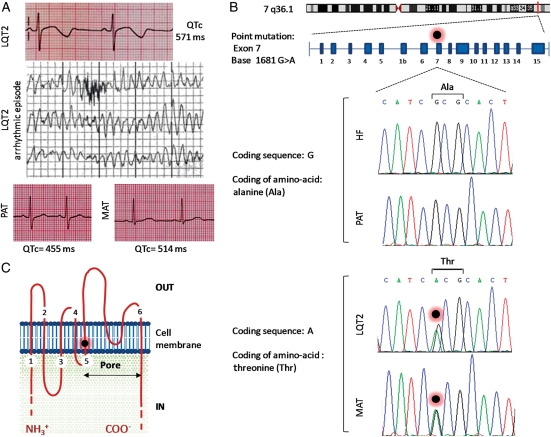
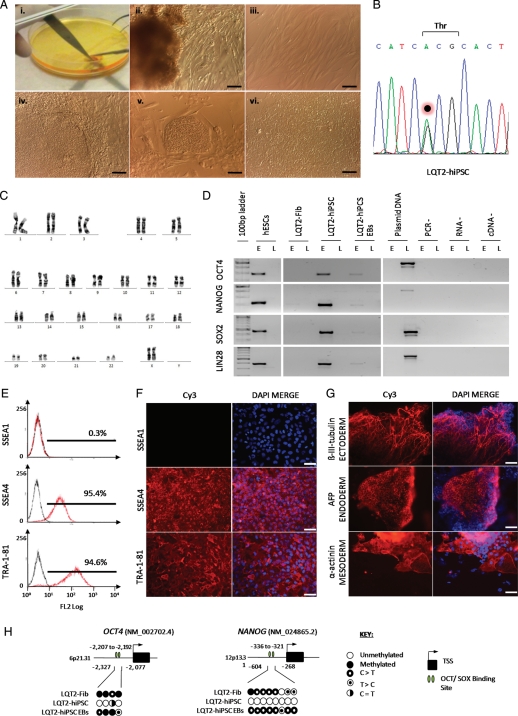
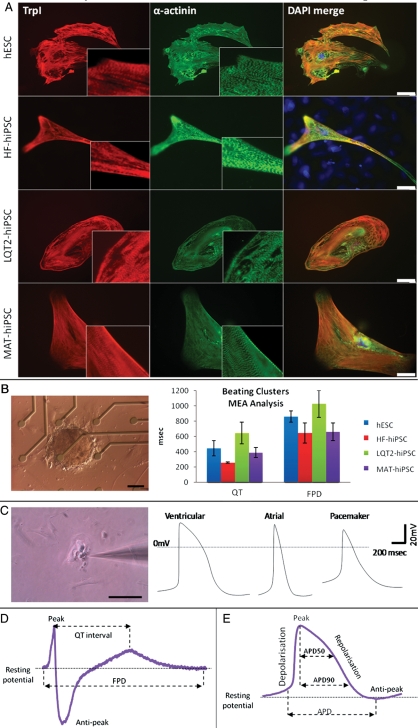
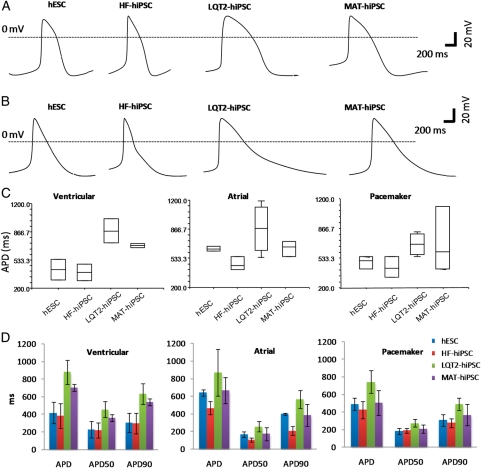
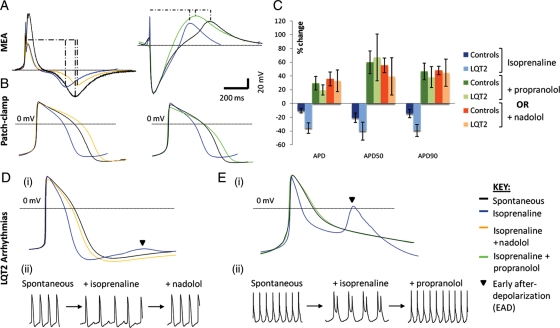
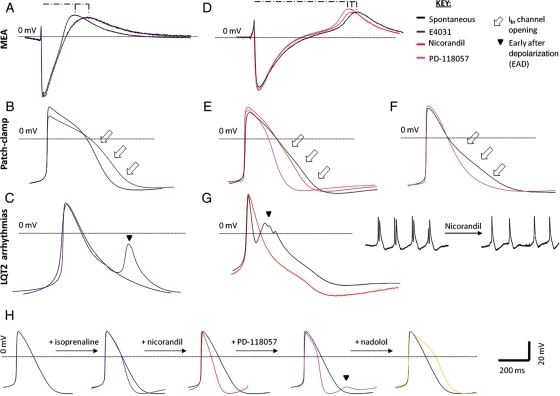
AIMS: Congenital long QT syndromes (LQTSs) are associated with prolonged ventricular repolarization and sudden cardiac death. Limitations to existing clinical therapeutic management strategies prompted us to develop a novel human in vitro drug-evaluation system for LQTS type 2 (LQT2) that will complement the existing in vitro and in vivo models. METHODS AND RESULTS: Skin fibroblasts from a patient with a KCNH2 G1681A mutation (encodes I(Kr) potassium ion channel) were reprogrammed to human induced pluripotent stem cells (hiPSCs), which were subsequently differentiated to functional cardiomyocytes. Relative to controls (including the patient's mother), multi-electrode array and patch-clamp electrophysiology of LQT2-hiPSC cardiomyocytes showed prolonged field/action potential duration. When LQT2-hiPSC cardiomyocytes were exposed to E4031 (an I(Kr) blocker), arrhythmias developed and these presented as early after depolarizations (EADs) in the action potentials. In contrast to control cardiomyocytes, LQT2-hiPSC cardiomyocytes also developed EADs when challenged with the clinically used stressor, isoprenaline. This effect was reversed by β-blockers, propranolol, and nadolol, the latter being used for the patient's therapy. Treatment of cardiomyocytes with experimental potassium channel enhancers, nicorandil and PD118057, caused action potential shortening and in some cases could abolish EADs. Notably, combined treatment with isoprenaline (enhancers/isoprenaline) caused EADs, but this effect was reversed by nadolol. CONCLUSIONS: Findings from this paper demonstrate that patient LQT2-hiPSC cardiomyocytes respond appropriately to clinically relevant pharmacology and will be a valuable human in vitro model for testing experimental drug combinations.
Overview
The claims and statistics of this paper haven’t been checked yet.
Free: it reads the open-access text and checks the first 5 claims that cite a source we can check. Create a free account to check every claim.
Integrity signals
Registry
Cites
Statistics
Figures
Verification
Claims the paper makes
The claims and statistics of this paper haven’t been checked yet.
Free: it reads the open-access text and checks the first 5 claims that cite a source we can check. Create a free account to check every claim.
Claims other papers make about this one
Each is checked against this paper’s own text: does it say what the citing paper says it does?
The source backs part of the claim, not all of it — or backs it for a different population, condition or comparison.
In the citing paper
“Traditionally, animal models, primary cells, embryonic stem cells (ESC), and immortalized cell lines derived from tumor cells are used to model a variety of human diseases [8,9,10,11].”
From Utility of iPSC-Derived Cells for Disease Modeling, Drug Development, and Cell Therapy (2022) · cites this paper as [10]
Experimental — accuracy not yet measuredThe cited source says what the claim attributes to it.
In the citing paper
“Matsa et al. used type-2 LQTS patients iPSC-derived cardiomyocytes to show that treatment with experimental potassium channel enhancers, nicorandil and PD118057, can cause action potential shortening [10].”
From Utility of iPSC-Derived Cells for Disease Modeling, Drug Development, and Cell Therapy (2022) · cites this paper as [10]
Self-check
Percentages, sums and reported differences re-computed from the paper’s own numbers.
The self-check needs the paper’s full text.
Citations
Cites
Induced Pluripotent Stem Cell Lines Derived from Human Somatic Cells
Yu, J., Vodyanik, M. A., Smuga-Otto, K., Antosiewicz-Bourget, J., Frane, J. L., Tian, S., Nie, J., Jonsdottir, G. A., Ruotti, V., Stewart, R., et al. (2007) · Science · doi:10.1126/science.1151526 · Cited by 10,310 · cited 2×
“Induced pluripotency involves reprogramming of somatic cells into human induced pluripotent stem cells (hiPSCs) by introducing genetic factors such as OCT4, SOX2, NANOG, and LIN28.”
Drug-induced prolongation of the QT interval
Roden, D. M. (2004) · New England Journal of Medicine · doi:10.1056/nejmra032426 · Cited by 1,965
Schwartz, P. J., Priori, S. G., Spazzolini, C., Moss, A. J., Vincent, G. M., Napolitano, C., Denjoy, I., Guicheney, P., Breithardt, G., Keating, M. T., et al. (2001) · Circulation · doi:10.1161/01.cir.103.1.89 · Cited by 1,779
hERG potassium channels and cardiac arrhythmia
Sanguinetti, M. C., & Tristani-Firouzi, M. (2006) · Nature · doi:10.1038/nature04710 · Cited by 1,572
Risk Stratification in the Long-QT Syndrome
Priori, S. G., Schwartz, P. J., Napolitano, C., Bloise, R., Ronchetti, E., Grillo, M., Vicentini, A., Spazzolini, C., Nastoli, J., Bottelli, G., et al. (2003) · New England Journal of Medicine · doi:10.1056/nejmoa022147 · Cited by 1,459
Patient-Specific Induced Pluripotent Stem-Cell Models for Long-QT Syndrome
Moretti, A., Bellin, M., Welling, A., Jung, C. B., Lam, J. T., Bott-Flügel, L., Dorn, T., Goedel, A., Höhnke, C., Hofmann, F., et al. (2010) · New England Journal of Medicine · doi:10.1056/nejmoa0908679 · Cited by 1,251
Modelling the long QT syndrome with induced pluripotent stem cells
Itzhaki, I., Maizels, L., Huber, I., Zwi-Dantsis, L., Caspi, O., Winterstern, A., Feldman, O., Gepstein, A., Arbel, G., Hammerman, H., et al. (2011) · Nature · doi:10.1038/nature09747 · Cited by 1,049
Mummery, C., Ward-van Oostwaard, D., Doevendans, P., Spijker, R., van den Brink, S., Hassink, R., van der Heyden, M., Opthof, T., Pera, M., de la Riviere, A. B., et al. (2003) · Circulation · doi:10.1161/01.cir.0000068356.38592.68 · Cited by 1,001
Effectiveness and Limitations of β-Blocker Therapy in Congenital Long-QT Syndrome
Moss, A. J., Zareba, W., Hall, W. J., Schwartz, P. J., Crampton, R. S., Benhorin, J., Vincent, G. M., Locati, E. H., Priori, S. G., Napolitano, C., et al. (2000) · Circulation · doi:10.1161/01.cir.101.6.616 · Cited by 841
Idiopathic long QT syndrome: Progress and questions
Schwartz, P. J. (1985) · American Heart Journal · doi:10.1016/0002-8703(85)90626-x · Cited by 629 · cited 1×
“manifestations varying from palpitations, syncope (fainting), and seizures(2,3) to cardiac arrest and sudden death.(4) Long QT syndrome has been associated with over 500 different mutations in at least 13 genes encoding cardiac ion channel proteins.”
Cited by
Items 101–200 of 387
Kurokawa, Y. K., & George, S. C. (2016) · Advanced Drug Delivery Reviews · doi:10.1016/j.addr.2015.07.004 · Cited by 59
Goldring, C., Antoine, D. J., Bonner, F., Crozier, J., Denning, C., Fontana, R. J., Hanley, N. A., Hay, D. C., Ingelman‐Sundberg, M., Juhila, S., et al. (2017) · Hepatology · doi:10.1002/hep.28886 · Cited by 58
Self-citationMaizels, L., Huber, I., Arbel, G., Tijsen, A. J., Gepstein, A., Khoury, A., & Gepstein, L. (2017) · Circulation Arrhythmia and Electrophysiology · doi:10.1161/circep.116.004725 · Cited by 61
Cardiac Stem Cell Biology: Glimpse of the Past, Present, and Future
Matsa, E., Sallam, K., & Wu, J. C. (2014) · Circulation Research · doi:10.1161/circresaha.113.302895 · Cited by 60
Self-citationDetection of genetic cardiac diseases by Ca2+ transient profiles using machine learning methods
Juhola, M., Joutsijoki, H., Penttinen, K., & Aalto‐Setälä, K. (2018) · Scientific Reports · doi:10.1038/s41598-018-27695-5 · Cited by 61
Long QT Syndrome Modelling with Cardiomyocytes Derived from Human-induced Pluripotent Stem Cells
Sala, L., Gnecchi, M., & Schwartz, P. J. (2019) · Arrhythmia & Electrophysiology Review · doi:10.15420/aer.2019.1.1 · Cited by 54
“Clinical LQT2 triggers of arrhythmias include sudden auditory stimuli or loud noises and while these cannot be properly mimicked in vitro, alternatives as a stimulation with positive inotropes, alone or in combination with IKs blockers, are a widely used strategy to exacerbate arrhythmias in these cells.(56,69)”
Cardiomyocytes derived from human pluripotent stem cells for drug screening
Zeevi‐Levin, N., Itskovitz‐Eldor, J., & Binah, O. (2012) · Pharmacology & Therapeutics · doi:10.1016/j.pharmthera.2012.01.005 · Cited by 60
Pharmacoelectrophysiology of Viral-Free Induced Pluripotent Stem Cell–Derived Human Cardiomyocytes
Mehta, A. K., Chung, Y. Y., Sequiera, G. L., Wong, P., Liew, R., & SHIM, W. S. N. (2012) · Toxicological Sciences · doi:10.1093/toxsci/kfs309 · Cited by 57
Rajamohan, D., Kalra, S., Hoang, M. D., George, V. T., Staniforth, A., Russell, H., Yang, X., & Denning, C. N. (2016) · Stem Cells and Development · doi:10.1089/scd.2015.0253 · Cited by 64
Self-citationRecent developments in coatings on biodegradable Mg alloys: A review
Yang, J., Zhang, Z., Yao, W., Wu, Y., Gao, Y., Yang, Y., Wu, L., Serdechnova, M., Blawert, C., & Pan, F. (2025) · Journal of Magnesium and Alloys · doi:10.1016/j.jma.2025.01.027 · Cited by 57
Laurila, E. M., Ahola, A., Hyttinen, J., & Aalto‐Setälä, K. (2015) · Biochimica et Biophysica Acta (BBA) - Molecular Cell Research · doi:10.1016/j.bbamcr.2015.12.013 · Cited by 62
Embryonic type Na+ channel β-subunit, SCN3B masks the disease phenotype of Brugada syndrome
Okata, S., Yuasa, S., Suzuki, T., Ito, S., Makita, N., Yoshida, T., Li, M., Kurokawa, J., Seki, T., Egashira, T., et al. (2016) · Scientific Reports · doi:10.1038/srep34198 · Cited by 56
“Indeed, there are some reports of the manifestation of specific (early onset) human disease phenotypes by iPSCs 5–8 .”
Induced Pluripotent Stem Cell-Derived Cardiomyocytes: A Versatile Tool for Arrhythmia Research
Sinnecker, D., Goedel, A., Laugwitz, K., & Moretti, A. (2013) · Circulation Research · doi:10.1161/circresaha.112.268623 · Cited by 59
Pourrier, M., & Fedida, D. (2020) · International Journal of Molecular Sciences · doi:10.3390/ijms21020657 · Cited by 57
Cardiovascular Disease Modeling Using Patient-Specific Induced Pluripotent Stem Cells
Tanaka, A., Yuasa, S., Node, K., & Fukuda, K. (2015) · International Journal of Molecular Sciences · doi:10.3390/ijms160818894 · Cited by 55
The Promise and Challenge of Induced Pluripotent Stem Cells for Cardiovascular Applications
Youssef, A. A., Ross, E. G., Bolli, R., Pepine, C. J., Leeper, N. J., & Yang, P. C. (2016) · JACC: Basic to Translational Science · doi:10.1016/j.jacbts.2016.06.010 · Cited by 50
New and TALENted Genome Engineering Toolbox
Campbell, J. M., Hartjes, K. A., Nelson, T. J., Xu, X., & Ekker, S. C. (2013) · Circulation Research · doi:10.1161/circresaha.113.301765 · Cited by 53
STRAIGHT-IN enables high-throughput targeting of large DNA payloads in human pluripotent stem cells
Blanch-Asensio, A., Grandela, C., Brandão, K. O., de Korte, T., Mei, H., Ariyurek, Y., Yiangou, L., Mol, M. P. H., van Meer, B. J., Kloet, S. L., et al. (2022) · Cell Reports Methods · doi:10.1016/j.crmeth.2022.100300 · Cited by 49
Dixon, J. E., Dick, E., Rajamohan, D., Shakesheff, K. M., & Denning, C. N. (2011) · Molecular Therapy · doi:10.1038/mt.2011.125 · Cited by 53
Self-citationConcise Review: Cardiac Disease Modeling Using Induced Pluripotent Stem Cells
Yang, C., Al-Aama, J. Y., Stojković, M., Keavney, B. D., Trafford, A. W., Lako, M., & Armstrong, L. (2015) · Stem Cells · doi:10.1002/stem.2070 · Cited by 56
Precision Medicine and cardiac channelopathies: when dreams meet reality
Gnecchi, M., Sala, L., & Schwartz, P. J. (2021) · European Heart Journal · doi:10.1093/eurheartj/ehab007 · Cited by 47
Induced Pluripotent Stem Cells for the Study of Cardiovascular Disease
Savla, J. J., Nelson, B., Perry, C. N., & ADLER, E. D. (2014) · Journal of the American College of Cardiology · doi:10.1016/j.jacc.2014.05.038 · Cited by 48
Doyle, M. J., Lohr, J. L., Chapman, C. S., Koyano‐Nakagawa, N., Garry, M. G., & Garry, D. J. (2015) · Stem Cell Reviews and Reports · doi:10.1007/s12015-015-9596-6 · Cited by 48
Riedel, M., Jou, C. J., Lai, S., Lux, R. L., Moreno, A. P., Spitzer, K. W., Christians, E., Tristani-Firouzi, M., & Benjamin, I. J. (2014) · Stem Cell Reports · doi:10.1016/j.stemcr.2014.04.017 · Cited by 44
Zatti, S., Martewicz, S., Serena, E., Uno, N., Giobbe, G., Kazuki, Y., Oshimura, M., & Elvassore, N. (2014) · Molecular Therapy - Methods & Clinical Development · doi:10.1038/mtm.2013.1 · Cited by 43
Cardiac disease modeling using induced pluripotent stem cell-derived human cardiomyocytes
Dell’Era, P. (2015) · World Journal of Stem Cells · doi:10.4252/wjsc.v7.i2.329 · Cited by 42
The march of pluripotent stem cells in cardiovascular regenerative medicine
Abou-Saleh, H., Zouein, F. A., EL‐Yazbi, A. F., Sanoudou, D., Raynaud, C. M., Rao, C., Pintus, G., Dehaini, H., & Eid, A. H. (2018) · Stem Cell Research & Therapy · doi:10.1186/s13287-018-0947-5 · Cited by 53
Brandão, K. O., van den Brink, L., Miller, D. C., Grandela, C., van Meer, B. J., Mol, M. P. H., de Korte, T., Tertoolen, L. G. J., Mummery, C. L., Sala, L., et al. (2020) · Stem Cell Reports · doi:10.1016/j.stemcr.2020.10.005 · Cited by 43
Induced Pluripotent Stem Cell Potential in Medicine, Specifically Focused on Reproductive Medicine
Botman, O., & Wyns, C. (2014) · Frontiers in Surgery · doi:10.3389/fsurg.2014.00005 · Cited by 42
iPSCs and small molecules: a reciprocal effort towards better approaches for drug discovery
Zhang, R., Zhang, L., & Xie, X. (2013) · Acta Pharmacologica Sinica · doi:10.1038/aps.2013.21 · Cited by 46
Mioulane, M., Foldes, G., Ali, N. N., Schneider, M. D., & Harding, S. E. (2012) · Journal of Cardiovascular Translational Research · doi:10.1007/s12265-012-9396-1 · Cited by 40
Kiviaho, A., Ahola, A., Larsson, K., Penttinen, K., Swan, H., Pekkanen-Mattila, M., Venäläinen, H., Paavola, K., Hyttinen, J., & Aalto‐Setälä, K. (2015) · IJC Heart & Vasculature · doi:10.1016/j.ijcha.2015.04.008 · Cited by 48
Human iPSCs and Genome Editing Technologies for Precision Cardiovascular Tissue Engineering
Gähwiler, E. K. N., Motta, S. E., Martin, M., Nugraha, B., Hoerstrup, S. P., & Emmert, M. Y. (2021) · Frontiers in Cell and Developmental Biology · doi:10.3389/fcell.2021.639699 · Cited by 45
Modeling Inherited Cardiac Disorders: A Cell Is Worth a Thousand Genes
Sallam, K., Kodo, K., & Wu, J. C. (2014) · Circulation Journal · doi:10.1253/circj.cj-14-0182 · Cited by 42
Parrotta, E. I., Angelis, M. T. D., Scalise, S., Candeloro, P., Santamaria, G., Paonessa, M., Coluccio, M. L., Perozziello, G., Vitis, S. D., Sgura, A., et al. (2017) · Stem Cell Research & Therapy · doi:10.1186/s13287-017-0720-1 · Cited by 41
Experimental Models of Brugada syndrome
Sendfeld, F., Selga, E., Scornik, F. S., Pérez, G. J., Mills, N. L., & Brugada, R. (2019) · International Journal of Molecular Sciences · doi:10.3390/ijms20092123 · Cited by 42
El‐Battrawy, I., Lang, S., Zhao, Z., Akın, İ., Yücel, G., Meister, S., Patocskai, B., Behnes, M., Rudic, B., Tülümen, E., et al. (2016) · PLoS ONE · doi:10.1371/journal.pone.0166143 · Cited by 44
Brink, L., Grandela, C., Mummery, C. L., & Davis, R. P. (2020) · Stem Cells · doi:10.1002/stem.3110 · Cited by 38
Molecular and cellular neurocardiology in heart disease
Habecker, B. A., Bers, D. M., Birren, S. J., Chang, R. B., Herring, N., Kay, M. W., Li, D., Mendelowitz, D., Mongillo, M., Montgomery, J. M., et al. (2024) · The Journal of Physiology · doi:10.1113/jp284739 · Cited by 43
“…method, which applies glycogen synthase kinase 3 inhibitors and Wnt signalling inhibitors modulating the Wnt/ β -catenin pathway, a critical regulator of CM differentiation, became the dominant protocol in the following decade (Lyra-Leite et al., 2022; Matsa et al., 2011; Paige et al., 2010).”
Lopez-Izquierdo, A., Warren, M., Riedel, M., Cho, S., Lai, S., Lux, R. L., Spitzer, K. W., Benjamin, I. J., Tristani-Firouzi, M., & Jou, C. J. (2014) · American Journal of Physiology-Heart and Circulatory Physiology · doi:10.1152/ajpheart.00344.2014 · Cited by 37
Gong, Y., Chen, Z., Li, Y., Ai, X., Yan, B., Wang, H., Qiu, L., Tan, Y., Witman, N., Wang, W., et al. (2020) · ACS Nano · doi:10.1021/acsnano.0c01745 · Cited by 37
Differentiation and enrichment of cardiomyocytes from human pluripotent stem cells
Xu, C. (2012) · Journal of Molecular and Cellular Cardiology · doi:10.1016/j.yjmcc.2012.03.012 · Cited by 40
Kraushaar, U., Meyer, T., Hess, D., Gepstein, L., L Mummery, C., R Braam, S., & Guenther, E. (2012) · Expert Opinion on Drug Safety · doi:10.1517/14740338.2012.639358 · Cited by 36
Patient-Specific Induced Pluripotent Stem Cells for Disease Modeling and Phenotypic Drug Discovery
Tang, S., Xie, M., Cao, N., & Ding, S. (2015) · Journal of Medicinal Chemistry · doi:10.1021/acs.jmedchem.5b00789 · Cited by 40
Human Inducible Pluripotent Stem Cells and Autism Spectrum Disorder: Emerging Technologies
Nestor, M. W., Phillips, A. W., Artimovich, E., Nestor, J. E., Hussman, J. P., & Blatt, G. J. (2016) · Autism Research · doi:10.1002/aur.1570 · Cited by 35
Takaki, T., Inagaki, A., Chonabayashi, K., Inoue, K., Miki, K., Ohno, S., Makiyama, T., Horie, M., & Yoshida, Y. (2019) · Stem Cells International · doi:10.1155/2019/7532657 · Cited by 37
“7, respectively, as previously reported (Supplementary Figure 2) [27, 28].”
Shortcomings of Animal Models and the Rise of Engineered Human Cardiac Tissue
Fine, B. M., & Vunjak‐Novakovic, G. (2017) · ACS Biomaterials Science & Engineering · doi:10.1021/acsbiomaterials.6b00662 · Cited by 37
Joshi, J., Albers, C., Smole, N., Guo, S., & Smith, S. A. (2024) · Frontiers in Physiology · doi:10.3389/fphys.2024.1475152 · Cited by 33
Gene mutations in cardiac arrhythmias: a review of recent evidence in ion channelopathies
Sung, R. J., Hsiao, Tien, Lo, C., Juang, J. J., & Wang, Y.-H. (2013) · The Application of Clinical Genetics · doi:10.2147/tacg.s29676 · Cited by 38
Kim, K., Lee, Y., Jung, K. B., Kim, Y., Jang, E., Lee, M., Son, M., & Lee, H. J. (2024) · Advanced Materials · doi:10.1002/adma.202412953 · Cited by 40
Medicina personalizada: diagnóstico genético de cardiopatías/canalopatías hereditarias
Ackerman, M. J., Marcou, C. A., & Tester, D. J. (2013) · Revista Española de Cardiología · doi:10.1016/j.recesp.2012.12.010 · Cited by 39
Shah, D., Prajapati, C., Penttinen, K., Cherian, R. M., Koivumäki, J. T., Alexanova, A., Hyttinen, J., & Aalto-Setälä, K. (2020) · Cells · doi:10.3390/cells9051153 · Cited by 31
Building a new strategy for treating heart failure using Induced Pluripotent Stem Cells
Miyagawa, S., & Sawa, Y. (2018) · Journal of Cardiology · doi:10.1016/j.jjcc.2018.05.002 · Cited by 33
Feng, L., Zhang, J., Lee, C., Kim, G., Liu, F., Petersen, A. J., Lim, E., Anderson, C. L., Orland, K. M., Robertson, G. A., et al. (2021) · Circulation Arrhythmia and Electrophysiology · doi:10.1161/circep.120.009343 · Cited by 37
Common Ancestry-Specific Ion Channel Variants Predispose to Drug-Induced Arrhythmias
Wada, Y., Yang, T., Shaffer, C. M., Daniel, L. L., Glazer, A. M., Davogustto, G., Lowery, B. D., Farber‐Eger, E. H., Wells, Q. S., & Roden, D. M. (2022) · Circulation · doi:10.1161/circulationaha.121.054883 · Cited by 31
Mathematical modelling of the action potential of human embryonic stem cell derived cardiomyocytes
Paci, M., Sartiani, L., Lungo, M. D., Jaconi, M. E., Mugelli, A., Cerbai, E., & Severi, S. (2012) · BioMedical Engineering OnLine · doi:10.1186/1475-925x-11-61 · Cited by 37
“(including drug testing) in CMs from induced pluripotent stem cells carrying genetic mutations [51,52]; the development of disease-specific cell lines for genetic cardiac dis-”
Personalized Medicine: Genetic Diagnosis for Inherited Cardiomyopathies/Channelopathies
Ackerman, M. J., Marcou, C. A., & Tester, D. J. (2013) · Revista Española de Cardiología (English Edition) · doi:10.1016/j.rec.2012.12.010 · Cited by 36
Durdağı, S., Guo, J., Lees‐Miller, J. P., Noskov, S. Y., & Duff, H. J. (2012) · Journal of Pharmacology and Experimental Therapeutics · doi:10.1124/jpet.111.189159 · Cited by 30
Stem cell models as an in vitro model for predictive toxicology
Lynch, S., Pridgeon, C. S., Duckworth, C. A., Sharma, P., Park, B. K., & Goldring, C. E. (2019) · Biochemical Journal · doi:10.1042/bcj20170780 · Cited by 36
Sachinidis, A. (2020) · Cells · doi:10.3390/cells9041001 · Cited by 34
Novel Insights into Disease Modeling Using Induced Pluripotent Stem Cells
Egashira, T., Yuasa, S., & Fukuda, K. (2013) · Biological and Pharmaceutical Bulletin · doi:10.1248/bpb.b12-00960 · Cited by 32
Disease modelling using human iPSCs
Chamberlain, S. J. (2016) · Human Molecular Genetics · doi:10.1093/hmg/ddw209 · Cited by 32
Mesquita, F., Arantes, P. C., Kasai-Brunswick, T. H., Araujo, D. S., Gubert, F., Monnerat, G., dos Santos, D. S., Neiman, G., Leitão, I. C., Barbosa, R. A. Q., et al. (2019) · Scientific Reports · doi:10.1038/s41598-019-55837-w · Cited by 29
McGivern, J. V., & Ebert, A. D. (2013) · Advanced Drug Delivery Reviews · doi:10.1016/j.addr.2013.11.012 · Cited by 30
Selvakumar, D., Reyes, L., & Chong, J. J. H. (2022) · Current Cardiology Reports · doi:10.1007/s11886-022-01666-9 · Cited by 30
Miller, D. C., Harmer, S. C., Poliandri, A., Nobles, M., Edwards, E. C., Ware, J. S., Sharp, T. V., McKay, T. R., Dunkel, L., Lambiase, P. D., et al. (2017) · Stem Cell Research · doi:10.1016/j.scr.2017.11.003 · Cited by 31
Arrhythmia Mechanisms in Human Induced Pluripotent Stem Cell–Derived Cardiomyocytes
Paci, M., Penttinen, K., Pekkanen-Mattila, M., & Koivumäki, J. T. (2020) · Journal of Cardiovascular Pharmacology · doi:10.1097/fjc.0000000000000972 · Cited by 27
Zhu, K., Bao, X., Wang, Y., Lu, T., & Zhang, L. (2022) · Biomedicine & Pharmacotherapy · doi:10.1016/j.biopha.2022.113970 · Cited by 31
Veldhuizen, J., Mann, H. F., Karamanova, N., Horn, W. D. V., Migrino, R. Q., Brafman, D. A., & Nikkhah, M. (2022) · Science Advances · doi:10.1126/sciadv.abq6720 · Cited by 27
Modeling Long-QT Syndromes with iPS Cells
Sinnecker, D., Goedel, A., Dorn, T., Dirschinger, R. J., Moretti, A., & Laugwitz, K. (2012) · Journal of Cardiovascular Translational Research · doi:10.1007/s12265-012-9416-1 · Cited by 27
Lee, S., Lee, H.-A., Choi, S. W., Kim, S. J., & Kim, K. (2016) · Toxicology and Applied Pharmacology · doi:10.1016/j.taap.2016.01.015 · Cited by 27
Silencing of CCR4-NOT complex subunits affects heart structure and function
Elmeń, L., Volpato, C. B., Kervadec, A., Pineda, S. B., Kalvakuri, S., Alayari, N. N., Foco, L., Pramstaller, P. P., Ocorr, K. A., Rossini, A., et al. (2020) · Disease Models & Mechanisms · doi:10.1242/dmm.044727 · Cited by 25
“A number of studies (Itzhaki et al., 2011; Matsa et al., 2011; Lahti et al., 2012) have shown that hiPSC-CMs from patients with longQT syndromes consistently show prolonged APD phenotypes, suggesting that APD modulation in hiPSC-CMs represents a reliable model system to evaluate the role of candidate genes for QT-inte…”
Kuusela, J., Kujala, V. J., Kiviaho, A., Ojala, M., Swan, H., KONTULA, K. K., & Aalto‐Setälä, K. (2016) · SpringerPlus · doi:10.1186/s40064-016-1889-y · Cited by 31
Delivery of Inorganic Polyphosphate into Cells Using Amphipathic Oligocarbonate Transporters
Fernandes-Cunha, G. M., McKinlay, C. J., Vargas, J. R., Jessen, H. J., Waymouth, R. M., & Wender, P. A. (2018) · ACS Central Science · doi:10.1021/acscentsci.8b00470 · Cited by 31
Verkerk, A. O., Marchal, G. A., Zegers, J. G., Kawasaki, M., Driessen, A. H. G., Remme, C. A., de Groot, J. R., & Wilders, R. (2021) · Frontiers in Pharmacology · doi:10.3389/fphar.2021.649414 · Cited by 25
Induced pluripotent stem cells in research and therapy.
Teoh, H.-K., & Cheong, S. (2012) · PubMed · Cited by 29
Human Pluripotent Stem Cells for Modeling Toxicity
Sison-Young, R. L. C., Kia, R., Heslop, J. A., Kelly, L., Rowe, C., Cross, M. J., Kitteringham, N. R., Hanley, N. A., Park, B. K., & Goldring, C. E. (2012) · Advances in pharmacology · doi:10.1016/b978-0-12-398339-8.00006-9 · Cited by 28
The Application of Induced Pluripotent Stem Cells in Cardiac Disease Modeling and Drug Testing
Ye, L., Ni, X., Zhao, Z., Lei, W., & Hu, S. (2018) · Journal of Cardiovascular Translational Research · doi:10.1007/s12265-018-9811-3 · Cited by 27
Christidi, E., Huang, H., & Brunham, L. R. (2018) · Drug Discovery Today Technologies · doi:10.1016/j.ddtec.2018.06.002 · Cited by 26
Will iPSC-cardiomyocytes revolutionize the discovery of drugs for heart disease?
Bruyneel, A. A. N., McKeithan, W. L., Feyen, D. A. M., & Mercola, M. A. (2018) · Current Opinion in Pharmacology · doi:10.1016/j.coph.2018.07.003 · Cited by 27
Harnessing the Potential of Stem Cells for Disease Modeling: Progress and Promises
Argentati, C., Tortorella, I., Bazzucchi, M., Morena, F., & Martino, S. (2020) · Journal of Personalized Medicine · doi:10.3390/jpm10010008 · Cited by 25
In Vitro Uses of Human Pluripotent Stem Cell-Derived Cardiomyocytes
Matsa, E., & Denning, C. N. (2012) · Journal of Cardiovascular Translational Research · doi:10.1007/s12265-012-9376-5 · Cited by 26
Self-citationModeling heart disease in a dish: From somatic cells to disease-relevant cardiomyocytes
Zanella, F., Lyon, R. C., & Sheikh, F. (2013) · Trends in Cardiovascular Medicine · doi:10.1016/j.tcm.2013.06.002 · Cited by 25
Xiang, Y., Liu, H., Yang, W., Xu, Z., Wu, Y., Tang, Z., Zhu, Z., Zeng, Z., Wang, D., Wang, T., et al. (2022) · Microsystems & Nanoengineering · doi:10.1038/s41378-022-00408-9 · Cited by 24
New drug discovery of cardiac anti-arrhythmic drugs: insights in animal models
Sharma, A. K., Singh, S., Bhat, M., Gill, K., Zaid, M., Kumar, S., Shakya, A., Tantray, J., Jose, D., Gupta, R., et al. (2023) · Scientific Reports · doi:10.1038/s41598-023-41942-4 · Cited by 26
Six, A. J., Backus, B. E., Kingma, A. E. C., & Kaandorp, S. I. (2012) · Netherlands Heart Journal · doi:10.1007/s12471-012-0322-6 · Cited by 23
Modeling Inherited Arrhythmia Disorders Using Induced Pluripotent Stem Cell-Derived Cardiomyocytes
Bezzerides, V. J., Zhang, D., & Pu, W. T. (2016) · Circulation Journal · doi:10.1253/circj.cj-16-1113 · Cited by 26
Duncan, G., Firth, K., George, V. T., Hoang, M. D., Staniforth, A., Smith, G. L., & Denning, C. N. (2017) · Stem Cells and Development · doi:10.1089/scd.2017.0172 · Cited by 29
Self-citationPrecision medicine for long QT syndrome: patient-specific iPSCs take the lead
Yu, Y., Deschênes, I., & Zhao, M. (2023) · Expert Reviews in Molecular Medicine · doi:10.1017/erm.2022.43 · Cited by 24
“In some instances, nicorandil, PD118057, and ICA-105574 treatment in LQTS2 iPSC-CMs resulted in APD shortening and EAD elimination (Refs 111, 112), which is consistent with clinical regimens.”
Human induced pluripotent stem cell for modeling cardiovascular diseases
Liang, P., & Du, J. (2014) · Regenerative Medicine Research · doi:10.1186/2050-490x-2-4 · Cited by 28
Scaffold-based and scaffold-free cardiac constructs for drug testing
Arai, K., Kitsuka, T., & Nakayama, K. (2021) · Biofabrication · doi:10.1088/1758-5090/ac1257 · Cited by 22
“[20] Matsa E, Rajamohan D, Dick E, Young L, Mellor I,”
Guo, X., Ayala, J. E., Gonzalez, M., Stancescu, M., Lambert, S., & Hickman, J. J. (2012) · Biomaterials · doi:10.1016/j.biomaterials.2012.04.042 · Cited by 21
Kamdar, F. D., Kamdar, A. K., Koyano‐Nakagawa, N., Garry, M. G., & Garry, D. J. (2015) · Journal of Cardiac Failure · doi:10.1016/j.cardfail.2015.04.010 · Cited by 22
“[21] Matsa E, Rajamohan D, Dick E, Young L, Mellor I, Staniforth A, et al.”
A type of itaconic acid modified polyacrylate with good mechanical performance and biocompatibility
Liu, Y., Yuan, J., Ma, H., Zhu, C., Zhang, D., Ding, Y. M., Gao, C., & Wu, Y. (2019) · Reactive and Functional Polymers · doi:10.1016/j.reactfunctpolym.2019.104320 · Cited by 21
Gao, J., Makiyama, T., Yamamoto, Y., Kobayashi, T., Aoki, H., Maurissen, T. L., Wuriyanghai, Y., Kashiwa, A., Imamura, T., Aizawa, T., et al. (2023) · Circulation Arrhythmia and Electrophysiology · doi:10.1161/circep.122.011387 · Cited by 20
Innovation in safety pharmacology testing
Pugsley, M. K., Towart, R., Authier, S., Gallacher, D. J., & Curtis, M. J. (2011) · Journal of Pharmacological and Toxicological Methods · doi:10.1016/j.vascn.2011.05.005 · Cited by 20
Li, J., Minami, I., Yu, L., Tsuji, K., Nakajima, M., Qiao, J., Suzuki, M., Shimono, K., Nakatsuji, N., Kotera, H., et al. (2016) · Stem Cells International · doi:10.1155/2016/2634013 · Cited by 22
“It is then important to form tissue-like CM constructs, rather than nonorganized cellular clusters [2–5], for more reliable drug assessment and myocardial regeneration [2–6].”
Cardiovascular Drug Discovery: A Perspective from a Research-Based Pharmaceutical Company
Gromo, G., Mann, J., & Fitzgerald, J. D. (2014) · Cold Spring Harbor Perspectives in Medicine · doi:10.1101/cshperspect.a014092 · Cited by 19
Shemer, Y., Mekies, L. N., Jehuda, R. B., Baskin, P., Shulman, R., Eisen, B., Regev, D., Arbustini, E., Gerull, B., Gherghiceanu, M., et al. (2021) · International Journal of Molecular Sciences · doi:10.3390/ijms22157874 · Cited by 23
Modeling mutation-specific arrhythmogenic phenotypes in isogenic human iPSC-derived cardiac tissues
Maurissen, T. L., Kawatou, M., López-Dávila, V., Minatoya, K., Yamashita, J. K., & Woltjen, K. (2024) · Scientific Reports · doi:10.1038/s41598-024-52871-1 · Cited by 19
Metadata
- Authors
- Matsa, E., Rajamohan, D., Dick, E., Young, L., Mellor, I., Staniforth, A., & Denning, C.
- Affiliations
- University of Nottingham (GB)
- Queen's Medical Centre (GB)
- Corresponding author
- Denning, Chris
- Venue
- European Heart Journal
- Publisher
- Oxford University Press (OUP)
- Published
- 2011-03-02
- Volume
- 32
- Issue
- 8
- Pages
- 952-962
- ISSN
- 0195-668X (ISSN-L)
- 1522-9645
- PMC
- PMC3076668
- OpenAlex
- W2155235762
- Cited by
- 389
- References
- 42
- Citations by year
- 2026: 4 · 2025: 8 · 2024: 7 · 2023: 10 · 2022: 14 · 2021: 23 · 2020: 19 · 2019: 22 · 2018: 21 · 2017: 30 · 2016: 38 · 2015: 45 · 2014: 42 · 2013: 44 · 2012: 45
- FWCI
- 32.44
- Type
- journal article
- Language
- en
- Open access
- green
- www.ncbi.nlm.nih.gov
- Licence
- cc-by-nc
- Locations
- European Heart Journal (publishedVersion)
- Europe PMC (PubMed Central) (publishedVersion, cc-by-nc)
- PubMed Central (publishedVersion, cc-by-nc)
- PubMed (publishedVersion)
- Funders
- British Heart Foundation (PG/09/027/27141)
- Medical Research Council
- Biotechnology and Biological Sciences Research Council (BB/E006159/1, BBS/B/06164)
- Topics
- Health Sciences › Medicine › Cardiology and Cardiovascular Medicine › Cardiac electrophysiology and arrhythmias
- Life Sciences › Biochemistry, Genetics and Molecular Biology › Molecular Biology › Pluripotent Stem Cells Research
- Life Sciences › Biochemistry, Genetics and Molecular Biology › Molecular Biology › Ion channel regulation and function
- Keywords
- long QT syndrome type 2, drug evaluation, early afterdepolarizations, action potential duration, isoproterenol, beta-blockers, propranolol, nadolol, nicorandil, sudden cardiac death, repolarization
- MeSH terms
- ERG1 Potassium Channel, Adolescent, Adrenergic beta-Agonists, Adrenergic beta-Antagonists, Anti-Arrhythmia Agents, Calcium Channel Blockers, Chromosomes, Human, Pair 7, Drug Evaluation, Preclinical, Electrocardiography, Female, Humans, Isoproterenol, Long QT Syndrome, Point Mutation, Nicorandil, Myocytes, Cardiac, Ether-A-Go-Go Potassium Channels, Induced Pluripotent Stem Cells
About these checks
Registry, retraction, Cites and statistics results are computed, not judged, with one exception: a printed reference that no index lists is read once by a model before it counts as a citation error. Claims are extracted by a model and kept only when their quote appears verbatim in the text; each cited source is then checked, with a model’s help, for whether it says what the claim relies on. Those verdicts can be wrong — read the claim’s quote and the cited source before relying on one.
Statistics and arithmetic are recomputed, not judged.
Confidence bands are shown only for fields calibrated on our annotated test set. None is calibrated yet, so no band is shown.
What counts as a claim ›How we measure confidence ›How we check this ›
Are you an author, or do you see a problem with this page? Request a review
Data sources
Bibliographic data: Semantic Scholar, OpenAlex, Crossref.
Contains information from the Semantic Scholar Academic Graph Datasets, made available under the ODC Attribution License (ODC-BY 1.0).
Semantic Scholar’s data is described in: Kinney, R., et al. (2023). The Semantic Scholar Open Data Platform. arXiv:2301.10140.
