

Drug evaluation in cardiomyocytes derived from human induced pluripotent stem cells carrying a long QT syndrome type 2 mutation
Open accessThe DOI matches its Crossref record; 41 of the 42 references it cites were found in a registry or an index.
Abstract
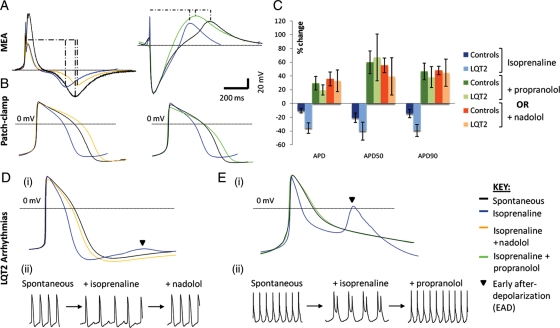
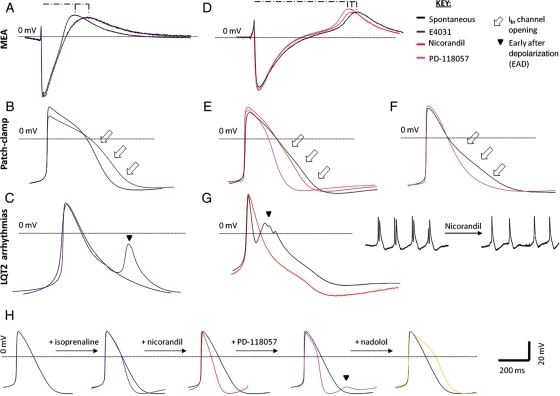
AIMS: Congenital long QT syndromes (LQTSs) are associated with prolonged ventricular repolarization and sudden cardiac death. Limitations to existing clinical therapeutic management strategies prompted us to develop a novel human in vitro drug-evaluation system for LQTS type 2 (LQT2) that will complement the existing in vitro and in vivo models. METHODS AND RESULTS: Skin fibroblasts from a patient with a KCNH2 G1681A mutation (encodes I(Kr) potassium ion channel) were reprogrammed to human induced pluripotent stem cells (hiPSCs), which were subsequently differentiated to functional cardiomyocytes. Relative to controls (including the patient's mother), multi-electrode array and patch-clamp electrophysiology of LQT2-hiPSC cardiomyocytes showed prolonged field/action potential duration. When LQT2-hiPSC cardiomyocytes were exposed to E4031 (an I(Kr) blocker), arrhythmias developed and these presented as early after depolarizations (EADs) in the action potentials. In contrast to control cardiomyocytes, LQT2-hiPSC cardiomyocytes also developed EADs when challenged with the clinically used stressor, isoprenaline. This effect was reversed by β-blockers, propranolol, and nadolol, the latter being used for the patient's therapy. Treatment of cardiomyocytes with experimental potassium channel enhancers, nicorandil and PD118057, caused action potential shortening and in some cases could abolish EADs. Notably, combined treatment with isoprenaline (enhancers/isoprenaline) caused EADs, but this effect was reversed by nadolol. CONCLUSIONS: Findings from this paper demonstrate that patient LQT2-hiPSC cardiomyocytes respond appropriately to clinically relevant pharmacology and will be a valuable human in vitro model for testing experimental drug combinations.
Overview
The claims and statistics of this paper haven’t been checked yet.
Free: it reads the open-access text and checks the first 5 claims that cite a source we can check. Create a free account to check every claim.
Integrity signals
Registry
Cites
Statistics
Figures
Verification
Claims the paper makes
The claims and statistics of this paper haven’t been checked yet.
Free: it reads the open-access text and checks the first 5 claims that cite a source we can check. Create a free account to check every claim.
Claims other papers make about this one
Each is checked against this paper’s own text: does it say what the citing paper says it does?
The source backs part of the claim, not all of it — or backs it for a different population, condition or comparison.
In the citing paper
“Traditionally, animal models, primary cells, embryonic stem cells (ESC), and immortalized cell lines derived from tumor cells are used to model a variety of human diseases [8,9,10,11].”
From Utility of iPSC-Derived Cells for Disease Modeling, Drug Development, and Cell Therapy (2022) · cites this paper as [10]
Experimental — accuracy not yet measuredThe cited source says what the claim attributes to it.
In the citing paper
“Matsa et al. used type-2 LQTS patients iPSC-derived cardiomyocytes to show that treatment with experimental potassium channel enhancers, nicorandil and PD118057, can cause action potential shortening [10].”
From Utility of iPSC-Derived Cells for Disease Modeling, Drug Development, and Cell Therapy (2022) · cites this paper as [10]
Self-check
Percentages, sums and reported differences re-computed from the paper’s own numbers.
The self-check needs the paper’s full text.
Citations
Cites
Induced Pluripotent Stem Cell Lines Derived from Human Somatic Cells
Yu, J., Vodyanik, M. A., Smuga-Otto, K., Antosiewicz-Bourget, J., Frane, J. L., Tian, S., Nie, J., Jonsdottir, G. A., Ruotti, V., Stewart, R., et al. (2007) · Science · doi:10.1126/science.1151526 · Cited by 10,310 · cited 2×
“Induced pluripotency involves reprogramming of somatic cells into human induced pluripotent stem cells (hiPSCs) by introducing genetic factors such as OCT4, SOX2, NANOG, and LIN28.”
Drug-induced prolongation of the QT interval
Roden, D. M. (2004) · New England Journal of Medicine · doi:10.1056/nejmra032426 · Cited by 1,965
Schwartz, P. J., Priori, S. G., Spazzolini, C., Moss, A. J., Vincent, G. M., Napolitano, C., Denjoy, I., Guicheney, P., Breithardt, G., Keating, M. T., et al. (2001) · Circulation · doi:10.1161/01.cir.103.1.89 · Cited by 1,779
hERG potassium channels and cardiac arrhythmia
Sanguinetti, M. C., & Tristani-Firouzi, M. (2006) · Nature · doi:10.1038/nature04710 · Cited by 1,572
Risk Stratification in the Long-QT Syndrome
Priori, S. G., Schwartz, P. J., Napolitano, C., Bloise, R., Ronchetti, E., Grillo, M., Vicentini, A., Spazzolini, C., Nastoli, J., Bottelli, G., et al. (2003) · New England Journal of Medicine · doi:10.1056/nejmoa022147 · Cited by 1,459
Patient-Specific Induced Pluripotent Stem-Cell Models for Long-QT Syndrome
Moretti, A., Bellin, M., Welling, A., Jung, C. B., Lam, J. T., Bott-Flügel, L., Dorn, T., Goedel, A., Höhnke, C., Hofmann, F., et al. (2010) · New England Journal of Medicine · doi:10.1056/nejmoa0908679 · Cited by 1,251
Modelling the long QT syndrome with induced pluripotent stem cells
Itzhaki, I., Maizels, L., Huber, I., Zwi-Dantsis, L., Caspi, O., Winterstern, A., Feldman, O., Gepstein, A., Arbel, G., Hammerman, H., et al. (2011) · Nature · doi:10.1038/nature09747 · Cited by 1,049
Mummery, C., Ward-van Oostwaard, D., Doevendans, P., Spijker, R., van den Brink, S., Hassink, R., van der Heyden, M., Opthof, T., Pera, M., de la Riviere, A. B., et al. (2003) · Circulation · doi:10.1161/01.cir.0000068356.38592.68 · Cited by 1,001
Effectiveness and Limitations of β-Blocker Therapy in Congenital Long-QT Syndrome
Moss, A. J., Zareba, W., Hall, W. J., Schwartz, P. J., Crampton, R. S., Benhorin, J., Vincent, G. M., Locati, E. H., Priori, S. G., Napolitano, C., et al. (2000) · Circulation · doi:10.1161/01.cir.101.6.616 · Cited by 841
Idiopathic long QT syndrome: Progress and questions
Schwartz, P. J. (1985) · American Heart Journal · doi:10.1016/0002-8703(85)90626-x · Cited by 629 · cited 1×
“manifestations varying from palpitations, syncope (fainting), and seizures(2,3) to cardiac arrest and sudden death.(4) Long QT syndrome has been associated with over 500 different mutations in at least 13 genes encoding cardiac ion channel proteins.”
Cited by
Items 201–300 of 387
Required G1 to Suppress Automaticity of iPSC-CMs Depends Strongly on I1 Model Structure
Fabbri, A., Goversen, B., Vos, M. A., van Veen, T. A. B., & de Boer, T. P. (2019) · Biophysical Journal · doi:10.1016/j.bpj.2019.08.040 · Cited by 20
Bayzigitov, D. R., Medvedev, S. P., Dementyeva, E. V., Афгановна, Б. С., Pokushalov, E. A., Karaskov, A. M., & Zakian, S. M. (2016) · Cardiology Research and Practice · doi:10.1155/2016/3582380 · Cited by 21
“Use of potassium channel activators, nicorandil and/or PD-118057, also led to decrease in the action potential duration; however, no arrhythmogenic early afterdepolarization was observed [27].”
Kuusela, J., Larsson, K., Shah, D. A., Prajapati, C., & Aalto‐Setälä, K. (2017) · Biology Open · doi:10.1242/bio.024216 · Cited by 19
Schwan, J., & Campbell, S. G. (2015) · Biomarker Insights · doi:10.4137/bmi.s23912 · Cited by 23
Song, Y., Zheng, Z., & Lian, J. (2022) · Frontiers in Cardiovascular Medicine · doi:10.3389/fcvm.2022.889519 · Cited by 18
Friedrichs, S., Malan, D., & Sasse, P. (2012) · Trends in Cardiovascular Medicine · doi:10.1016/j.tcm.2012.09.006 · Cited by 19
Evaluation of drug-mediated arrhythmic changes in spontaneous beating cardiomyocytes by AFM
Chen, A. T., & Zou, S. (2016) · The Analyst · doi:10.1039/c6an01577h · Cited by 18
Dolatshad, N. F., Hellen, N., Jabbour, R. J., Harding, S. E., & Földes, G. (2015) · Frontiers in Cell and Developmental Biology · doi:10.3389/fcell.2015.00076 · Cited by 20
Kalra, S., Montanaro, F., & Denning, C. N. (2016) · Journal of Neuromuscular Diseases · doi:10.3233/jnd-150133 · Cited by 18
Self-citationTixier, E., Raphel, F., Lombardi, D., & Gerbeau, J.-F. (2018) · Frontiers in Physiology · doi:10.3389/fphys.2017.01096 · Cited by 16
“The actual nature of the hiPSC-CM types is still quite unknown, to the authors knowledge, even though some studies suggest it is a mixture of atrial, ventricular and pacemaker cells (Matsa et al., 2011).”
Zhao, Z., Jeong, Y., Oyunbaatar, N., Pujari, R. B., Kanade, P. P., Kim, E., Lee, B., & Lee, D. (2022) · Sensors and Actuators B Chemical · doi:10.1016/j.snb.2022.131495 · Cited by 18
Generation of Cardiomyocytes from Pluripotent Stem Cells
Nakahama, H., & Pasquale, E. D. (2014) · Methods in molecular biology · doi:10.1007/7651_2014_173 · Cited by 18
Nakao, S., Ihara, D., Hasegawa, K., & Kawamura, T. (2020) · European Cardiology Review · doi:10.15420/ecr.2019.03 · Cited by 17
MultiElec: A MATLAB Based Application for MEA Data Analysis
Georgiadis, V., Stephanou, A., Townsend, P. A., & Jackson, T. (2015) · PLoS ONE · doi:10.1371/journal.pone.0129389 · Cited by 16
Hirose, S., Makiyama, T., Melgari, D., Yamamoto, Y., Wuriyanghai, Y., Yokoi, F., Nishiuchi, S., Harita, T., Hayano, M., Kohjitani, H., et al. (2020) · Frontiers in Cell and Developmental Biology · doi:10.3389/fcell.2020.00761 · Cited by 17
MicroRNAs regulating cell pluripotency and vascular differentiation
Howard, L., Kane, N. M., Milligan, G., & Baker, A. H. (2011) · Vascular Pharmacology · doi:10.1016/j.vph.2011.08.002 · Cited by 15
Modelling Human Channelopathies Using Induced Pluripotent Stem Cells: A Comprehensive Review
Müller, M., Seufferlein, T. T. W., Illing, A., & Homann, J. M. (2013) · Stem Cells International · doi:10.1155/2013/496501 · Cited by 18
Novak, A., Lorber, A., Itskovitz‐Eldor, J., & Binah, O. (2012) · Rambam Maimonides Medical Journal · doi:10.5041/rmmj.10086 · Cited by 17
ProspectiveIn VitroModels of Channelopathies and Cardiomyopathies
Kawaguchi, N., Hayama, E., Furutani, Y., & Nakanishi, T. (2012) · Stem Cells International · doi:10.1155/2012/439219 · Cited by 14
Sequiera, G. L., Mehta, A. K., Ooi, T. H., & SHIM, W. S. N. (2012) · Life Sciences · doi:10.1016/j.lfs.2012.10.020 · Cited by 14
Kuusela, J., Kim, J., Räsänen, E., & Aalto‐Setälä, K. (2016) · Stem Cell Reviews and Reports · doi:10.1007/s12015-016-9686-0 · Cited by 17
Friedrichs, S., Malan, D., Voß, Y., & Sasse, P. (2015) · Journal of Clinical Medicine · doi:10.3390/jcm4010102 · Cited by 16
Induced Pluripotent Stem Cells: Global Research Trends
Negoro, T., Okura, H., & Matsuyama, A. (2017) · BioResearch open access · doi:10.1089/biores.2017.0013 · Cited by 16
Micheu, M. M., & Rosca, A. (2021) · World Journal of Stem Cells · doi:10.4252/wjsc.v13.i4.281 · Cited by 17
Okata, S., Yuasa, S., Yamane, T., Furukawa, T., & Fukuda, K. (2013) · PubMed · Cited by 13
Wang, Z., Wang, L., Liu, W., Hu, D., Gao, Y., Ge, Q., Liu, X., Li, L., Wang, Y., Wang, S., et al. (2019) · Stem Cell Research · doi:10.1016/j.scr.2019.101483 · Cited by 14
Sensor-free and Sensor-based Heart-on-a-chip Platform: A Review of Design and Applications
Wan, H., Gu, C., Gan, Y., Wei, X., Zhu, K., Hu, N., & Wang, P. (2019) · Current Pharmaceutical Design · doi:10.2174/1381612825666190207170004 · Cited by 14
The best of the European Heart Journal: look back with pride
Lüscher, T. F., Gersh, B. J., Hendricks, G., Landmesser, U., Ruschitzka, F. T., & Wijns, W. C. (2012) · European Heart Journal · doi:10.1093/eurheartj/ehs098 · Cited by 14
Goulding, J., Kondrashov, A. V., Mistry, S. J., Melarangi, T., Vo, N. T. N., Hoang, D. M., White, C. W., Denning, C. N., Briddon, S. J., & Hill, S. J. (2021) · The FASEB Journal · doi:10.1096/fj.202002268r · Cited by 16
Self-citationSeparation of HCM and LQT Cardiac Diseases with Machine Learning of Ca2+ Transient Profiles
Joutsijoki, H., Penttinen, K., Juhola, M., & Aalto‐Setälä, K. (2019) · Methods of Information in Medicine · doi:10.1055/s-0040-1701484 · Cited by 15
Biodegradable polyacrylate copolymer coating for bio-functional magnesium alloy
Shi, H., Hong, L., Pan, K., Wei, W., Liu, X., & Li, X. (2021) · Progress in Organic Coatings · doi:10.1016/j.porgcoat.2021.106422 · Cited by 12
Structural analysis of hERG channel blockers and the implications for drug design
AlRawashdeh, S., Chandrasekaran, S., & Barakat, K. (2023) · Journal of Molecular Graphics and Modelling · doi:10.1016/j.jmgm.2023.108405 · Cited by 11
Concise Review: Induced Pluripotent Stem Cells as New Model Systems in Oncology
Laplane, L., Beke, A., Vainchenker, W., & Solary, É. (2015) · Stem Cells · doi:10.1002/stem.2099 · Cited by 11
Loya, K. (2014) · Elsevier eBooks · doi:10.1016/b978-0-12-386882-4.00011-6 · Cited by 16
MacFarlane, E. M., & Bruin, J. E. (2021) · Frontiers in Endocrinology · doi:10.3389/fendo.2020.604998 · Cited by 12
Zhu, Y., Wang, L., Cui, C., Qin, H., Chen, H., Chen, S., Lin, Y., Cheng, H., Jiang, X., & Chen, M. (2021) · Journal of Biomedical Research · doi:10.7555/jbr.35.20210045 · Cited by 13
KCNH2 encodes a nuclear-targeted polypeptide that mediates hERG1 channel gating and expression
Jain, A., Stack, O., Ghodrati, S., Sanchez-Conde, F. G., Ukachukwu, C. U., Salwi, S. M., Jiménez‐Vázquez, E. N., & Jones, D. K. (2023) · Proceedings of the National Academy of Sciences · doi:10.1073/pnas.2214700120 · Cited by 12
Induced Pluripotent Stem Cells in Cardiovascular Research
Sinnecker, D., Dirschinger, R. J., Goedel, A., Moretti, A., Lipp, P., & Laugwitz, K. (2012) · Reviews of physiology, biochemistry and pharmacology · doi:10.1007/112_2012_6 · Cited by 13
Vyas, V. S., & Lambiase, P. D. (2013) · Frontiers in Physiology · doi:10.3389/fphys.2013.00199 · Cited by 16
Perspectives and Challenges of Pluripotent Stem Cells in Cardiac Arrhythmia Research
Goedel, A., My, I., Sinnecker, D., & Moretti, A. (2017) · Current Cardiology Reports · doi:10.1007/s11886-017-0828-z · Cited by 13
Lieu, D. K., Turnbull, I. C., Costa, K. D., & Li, R. A. (2012) · Drug Discovery Today Disease Models · doi:10.1016/j.ddmod.2012.06.002 · Cited by 12
Zhao, Z., Zang, X., Niu, K., Song, W., Wang, X., Mügge, A., Aweimer, A., Hamdani, N., Zhou, X., Zhao, Y., et al. (2024) · EBioMedicine · doi:10.1016/j.ebiom.2024.105108 · Cited by 11
Harmer, S. C., & Tinker, A. (2016) · Biological Chemistry · doi:10.1515/hsz-2015-0306 · Cited by 10
Stem Cells and Progenitor Cells for Tissue-Engineered Solutions to Congenital Heart Defects
Gao, Y., & Jacot, J. G. (2015) · Biomarker Insights · doi:10.4137/bmi.s20058 · Cited by 10
Šarić, T., Halbach, M., Khalil, M., & Er, F. (2013) · Expert Opinion on Drug Discovery · doi:10.1517/17460441.2014.863275 · Cited by 14
Disease modeling of cardiac arrhythmias using human induced pluripotent stem cells
Liang, W., Gasparyan, L., Alqarawi, W., & Davis, D. R. (2019) · Expert Opinion on Biological Therapy · doi:10.1080/14712598.2019.1575359 · Cited by 11
Hancox, J. C., Stuart, G., & Harmer, S. C. (2020) · Journal of Congenital Cardiology · doi:10.1186/s40949-020-00037-9 · Cited by 10
Mohammadi, N., Fedele, L., Chakravarthy, P., Leonov, V., Tsansizi, L. I., Gu, H., Seyedmousavi, S., Cosson, M., Bernardo, A. S., Gorelik, J., et al. (2025) · The Journal of Physiology · doi:10.1113/jp287569 · Cited by 10
“We also characterized the proportion of ventricular, atrial and nodal-like hiPSC-CMs based on their APD90/APD50 ratio (Matsa et al., 2011).”
Pluripotent Stem Cells as a Platform for Cardiac Arrhythmia Drug Screening
Leyton-Mange, J. S., & Milan, D. J. (2014) · Current Treatment Options in Cardiovascular Medicine · doi:10.1007/s11936-014-0334-1 · Cited by 10
Yeo, H. C., Ting, S., Brena, R. M., Koh, G., Chen, A., Toh, S. Q., Lim, Y. M., Oh, S. K. W., & Lee, D. (2016) · Scientific Reports · doi:10.1038/srep31068 · Cited by 10
Induced pluripotent stem cell technology and inherited arrhythmia syndromes
Ross, S. B., Fraser, S. T., & Semsarian, C. (2017) · Heart Rhythm · doi:10.1016/j.hrthm.2017.08.013 · Cited by 10
iPCS Cell Modeling of Inherited Cardiac Arrhythmias
Shinnawi, R., & Gepstein, L. (2014) · Current Treatment Options in Cardiovascular Medicine · doi:10.1007/s11936-014-0331-4 · Cited by 11
Machine learning to differentiate diseased cardiomyocytes from healthy control cells
Juhola, M., Joutsijoki, H., Penttinen, K., & Aalto‐Setälä, K. (2019) · Informatics in Medicine Unlocked · doi:10.1016/j.imu.2019.01.006 · Cited by 9
Zanella, F., & Sheikh, F. (2014) · Methods in molecular biology · doi:10.1007/7651_2014_172 · Cited by 12
Human induced pluripotent stem cell-derived cardiomyocytes for disease modeling and drug discovery
Moriwaki, T., Tani, H., & Tohyama, S. (2025) · Frontiers in Bioengineering and Biotechnology · doi:10.3389/fbioe.2025.1687840 · Cited by 9
Wegener, M., Bader, A., & Giri, S. (2015) · Drug Discovery Today · doi:10.1016/j.drudis.2015.02.010 · Cited by 8
Using iPSC Models to Probe Regulation of Cardiac Ion Channel Function
Bruyneel, A. A. N., McKeithan, W. L., Feyen, D. A. M., & Mercola, M. A. (2018) · Current Cardiology Reports · doi:10.1007/s11886-018-1000-0 · Cited by 8
Cardiovascular Regeneration via Stem Cells and Direct Reprogramming: A Review
Lee, C.-S., Kim, J., Cho, H., & Kim, H.-S. (2022) · Korean Circulation Journal · doi:10.4070/kcj.2022.0005 · Cited by 8
Liebau, S., Kleger, A., Levin, M. G., & Yu, S. P. (2013) · Stem Cells International · doi:10.1155/2013/238635 · Cited by 8
New iPSC for old long QT syndrome modeling: Putting the evidence into perspective
Li, G., Cheng, G., Wu, J., Ma, S., & Sun, C. (2013) · Experimental Biology and Medicine · doi:10.1177/1535370213514000 · Cited by 8
Searching for new cardiovascular drugs: towards improved systems for drug screening?
Silvester, N. C., & George, C. H. (2011) · Expert Opinion on Drug Discovery · doi:10.1517/17460441.2011.625652 · Cited by 8
Molecular Insights into Short QT Syndrome
Perike, S., & McCauley, M. D. (2018) · Journal of Innovations in Cardiac Rhythm Management · doi:10.19102/icrm.2018.090302 · Cited by 7
Khan, R. S., Wani, T. U., Rather, A. H., Beigh, M. A., & Sheikh, F. A. (2021) · Springer eBooks · doi:10.1007/978-981-16-4420-7_4 · Cited by 7
Recapitulating Long-QT Syndrome Using Induced Pluripotent Stem Cell Technology
Dirschinger, R. J., Goedel, A., Moretti, A., Laugwitz, K., & Sinnecker, D. (2012) · Pediatric Cardiology · doi:10.1007/s00246-012-0286-8 · Cited by 7
Stem cells in pediatric cardiology
Patel, P., & Mital, S. R. (2013) · European Journal of Pediatrics · doi:10.1007/s00431-012-1920-4 · Cited by 8
Tadros, R., Cadrin‐Tourigny, J., Abadir, S., Rivard, L., Nattel, S., Talajic, M. R., & Khairy, P. (2015) · Expert Review of Cardiovascular Therapy · doi:10.1586/14779072.2015.1049156 · Cited by 8
Human Pluripotent Stem Cells for Genetic Disease Modeling and Drug Screening
Gauthier, M., Maury, Y., Peschanski, M., & Martinat, C. (2011) · Regenerative Medicine · doi:10.2217/rme.11.46 · Cited by 11
Jones, A. R. C., Edwards, D. H., Cummins, M. J., Williams, A. J., & George, C. H. (2016) · Frontiers in Cell and Developmental Biology · doi:10.3389/fcell.2015.00089 · Cited by 7
Jackson, A. O., Tang, H., & Yin, K. (2019) · Journal of Cardiovascular Translational Research · doi:10.1007/s12265-019-09891-4 · Cited by 7
Non-viral reprogramming and induced pluripotent stem cells for cardiovascular therapy
Panda, A., Gurusamy, N., Rajasingh, S., Carter, H.-K., Thomas, E. L., & Rajasingh, J. (2020) · Differentiation · doi:10.1016/j.diff.2019.12.001 · Cited by 8
Goktas, S. S., Kazci, Y. E., Tuncay, E., Torun, T., Akdeniz, C., Tuzcu, V., & Çağavi, E. (2022) · Journal of Cellular Physiology · doi:10.1002/jcp.30843 · Cited by 7
Wu, H., Hamilton, C., Porritt, H., Winbo, A., & Zeltner, N. (2024) · The Journal of Physiology · doi:10.1113/jp286416 · Cited by 7
“…these techniques, using hiPSC-CMs with KCNH2 gene variants re-creating the LQT2 phenotype, which exhibits a prolonged cardiac action potential, increased afterdepolarization frequency and reduced rapid rectifier potassium current (IKr) (Itzhaki et al., 2011; Matsa et al., 2011; Shah et al., 2020).”
Lui, K. O., Stachel, M., Lieu, D. K., Li, R. A., & Bu, L. (2012) · Drug Discovery Today Disease Models · doi:10.1016/j.ddmod.2012.09.001 · Cited by 7
Gowran, A., Rasponi, M., Visone, R., Nigro, P., Perrucci, G. L., Righetti, S., Zanobini, M., & Pompilio, G. (2016) · Stem Cells International · doi:10.1155/2016/4287158 · Cited by 7
“…system developed by the Chen group [124, 140] showed that, in order to fully recapitulate meaningful ARVC disease readouts, patient specific iPSC-CMs needed to be metabolically matured and stimulated with activators of the PPAR-gamma pathway which is hyperactivated in ARVC right ventricles [125].”
Heart Muscle Tissue Engineering: Advantages and Challenges in Cardiac Microtissues
Coffee, M., Biswanath, S., Bolesani, E., & Zweigerdt, R. (2020) · Learning materials in biosciences · doi:10.1007/978-3-030-33923-4_6 · Cited by 6
Cai, D., Zheng, Z., Jin, X., Fu, Y., Cen, L., Ye, J., Song, Y., & Lian, J. (2022) · Journal of Cardiovascular Translational Research · doi:10.1007/s12265-022-10298-x · Cited by 6
Li, Q., Wang, Y., Wang, B., Lv, T., & Zhang, P. (2025) · Reviews in Cardiovascular Medicine · doi:10.31083/rcm28251 · Cited by 6
Campbell, K. A., Terzic, A., & Nelson, T. J. (2015) · Regenerative Medicine · doi:10.2217/rme.15.41 · Cited by 5
Experimental Model of Cardiotoxicity
Erbaş, O., Altuntaş, İ., Çağlar, Ö., Özyılmaz, E., Sari, E., Üzümcü, İ., & Erbakan, K. (2022) · IntechOpen eBooks · doi:10.5772/intechopen.101401 · Cited by 6
“[142] Matsa E, Rajamohan D, Dick E, Young L, Mellor I, Staniforth A, et al.”
Maury, Y., Gauthier, M., Peschanski, M., & Martinat, C. (2011) · médecine/sciences · doi:10.1051/medsci/2011274023 · Cited by 8
Singh, B., Ram, C., Singh, D., Singh, N. P., Singh, A., Singh, R., & Verma, R. R. (2018) · Elsevier eBooks · doi:10.1016/b978-0-12-811446-9.00014-9 · Cited by 6
Slotvitsky, М. М., Tsvelaya, V. A., Frolova, S. R., Dement’eva, E. V., & Игоревич, А. К. (2018) · Vavilov Journal of Genetics and Breeding · doi:10.18699/vj18.346 · Cited by 5
Induzierte pluripotente Stammzellen: Eine neue Ressource in der modernen Medizin
Liebau, S., Stockmann, M., Illing, A., Seufferlein, T. T. W., & Kleger, A. (2014) · Der Internist · doi:10.1007/s00108-013-3397-2 · Cited by 9
Using induced pluripotent stem cells for drug discovery in arrhythmias
Teles, D., & Fine, B. M. (2024) · Expert Opinion on Drug Discovery · doi:10.1080/17460441.2024.2360420 · Cited by 6
“Nicorandil and PD-118057, experimental potassium channel enhancers, caused shortening of APD and reduced EADs, though this could be reversed by isoproterenol [38,41].”
Botti, S., Krause, R., & Pavarino, L. F. (2025) · The Journal of Physiology · doi:10.1113/jp287276 · Cited by 6
“Computational models have successfully replicated the dose-dependent effects of mexiletine on Na + channel function, corroborating its clinical efficacy (Matsa et al., 2011).”
Pluripotent Stem Cells to Model Human Cardiac Diseases
Calvin, C., & Charles, C. (2013) · InTech eBooks · doi:10.5772/54373 · Cited by 5
Clinical Potentials of Cardiomyocytes Derived from Patient-Specific Induced Pluripotent Stem Cells
Ng, K., Law, C.-Y., & Tse, H. (2014) · Journal of Clinical Medicine · doi:10.3390/jcm3041105 · Cited by 4
Stem and Progenitor Cells in Regenerative Pharmacology
Furth, M. E., Childers, M. K., & Reid, L. M. (2013) · Cambridge University Press eBooks · doi:10.1017/cbo9781139047357.008 · Cited by 4
Nos3−/− iPSCs model concordant signatures of in utero cardiac pathogenesis
Campbell, K. A., Li, X., Biendarra‐Tiegs, S. M., Terzic, A., & Nelson, T. J. (2015) · Journal of Molecular and Cellular Cardiology · doi:10.1016/j.yjmcc.2015.08.021 · Cited by 4
Human stem cell‐derived cardiomyocytes for pharmacological and toxicological modeling
Harding, S. E. (2011) · Annals of the New York Academy of Sciences · doi:10.1111/j.1749-6632.2011.06328.x · Cited by 4
Stem Cell Therapy to Treat Heart Failure
Földes, G., & Harding, S. E. (2011) · Elsevier eBooks · doi:10.1016/b978-0-08-088504-9.00157-4 · Cited by 7
Lee, Y., Koo, S. K., & Kim, J. (2021) · Stem Cell Research · doi:10.1016/j.scr.2021.102570 · Cited by 4
Paying the Toll in Nuclear Reprogramming
Liu, C., Himmati, F., & Sayed, N. (2017) · Frontiers in Cell and Developmental Biology · doi:10.3389/fcell.2017.00070 · Cited by 4
Malihi, G., Nikoui, V., & Elson, E. L. (2020) · Archives of Physiology and Biochemistry · doi:10.1080/13813455.2020.1802600 · Cited by 4
Choi, D.-K., Kim, Y.-K., HoonYu, J., Min, S., & Park, S.-W. (2021) · Progress in molecular biology and translational science · doi:10.1016/bs.pmbts.2021.01.020 · Cited by 5
Current Status of Genome Editing in Cardiovascular Medicine
Termglinchan, V., Karakikes, I., Seeger, T., & Wu, J. C. (2016) · Springer eBooks · doi:10.1007/978-3-319-34148-4_7 · Cited by 4
Li, G., HE, X., & Sun, C. (2014) · Molecular Medicine Reports · doi:10.3892/mmr.2014.2668 · Cited by 3
“To date, multiple iPSC models of inherited arrhythmias have been established (Table III C P V T , ca t ec ho l a m i n e r g i c po l y m o r ph i c v e n t r i c u l a r t ac hy ca r d i a ; R y R 2 , r y a nod i n e r ece p t o r i s o f o r m 2 ; L Q T , l ong Q T s ynd r o m e ; h E R G , hu m a n e t h e r - à -…”
Lee, Y., Park, H., Koo, S. K., & Kim, J. (2021) · Stem Cell Research · doi:10.1016/j.scr.2021.102521 · Cited by 3
Zhang, J., Qu, J., & Wang, J. (2014) · Europe PMC (PubMed Central) · Cited by 6
Clinical Application of Induced Pluripotent Stem Cells in Cardiovascular Medicine
Chi, H., Gao, S., Yang, X.-C., Cai, J., Zhao, W.-S., Sun, H., & Geng, Y. (2015) · Cardiology · doi:10.1159/000381280 · Cited by 5
Metadata
- Authors
- Matsa, E., Rajamohan, D., Dick, E., Young, L., Mellor, I., Staniforth, A., & Denning, C.
- Affiliations
- University of Nottingham (GB)
- Queen's Medical Centre (GB)
- Corresponding author
- Denning, Chris
- Venue
- European Heart Journal
- Publisher
- Oxford University Press (OUP)
- Published
- 2011-03-02
- Volume
- 32
- Issue
- 8
- Pages
- 952-962
- ISSN
- 0195-668X (ISSN-L)
- 1522-9645
- PMC
- PMC3076668
- OpenAlex
- W2155235762
- Cited by
- 389
- References
- 42
- Citations by year
- 2026: 4 · 2025: 8 · 2024: 7 · 2023: 10 · 2022: 14 · 2021: 23 · 2020: 19 · 2019: 22 · 2018: 21 · 2017: 30 · 2016: 38 · 2015: 45 · 2014: 42 · 2013: 44 · 2012: 45
- FWCI
- 32.44
- Type
- journal article
- Language
- en
- Open access
- green
- www.ncbi.nlm.nih.gov
- Licence
- cc-by-nc
- Locations
- European Heart Journal (publishedVersion)
- Europe PMC (PubMed Central) (publishedVersion, cc-by-nc)
- PubMed Central (publishedVersion, cc-by-nc)
- PubMed (publishedVersion)
- Funders
- British Heart Foundation (PG/09/027/27141)
- Medical Research Council
- Biotechnology and Biological Sciences Research Council (BB/E006159/1, BBS/B/06164)
- Topics
- Health Sciences › Medicine › Cardiology and Cardiovascular Medicine › Cardiac electrophysiology and arrhythmias
- Life Sciences › Biochemistry, Genetics and Molecular Biology › Molecular Biology › Pluripotent Stem Cells Research
- Life Sciences › Biochemistry, Genetics and Molecular Biology › Molecular Biology › Ion channel regulation and function
- Keywords
- long QT syndrome type 2, drug evaluation, early afterdepolarizations, action potential duration, isoproterenol, beta-blockers, propranolol, nadolol, nicorandil, sudden cardiac death, repolarization
- MeSH terms
- ERG1 Potassium Channel, Adolescent, Adrenergic beta-Agonists, Adrenergic beta-Antagonists, Anti-Arrhythmia Agents, Calcium Channel Blockers, Chromosomes, Human, Pair 7, Drug Evaluation, Preclinical, Electrocardiography, Female, Humans, Isoproterenol, Long QT Syndrome, Point Mutation, Nicorandil, Myocytes, Cardiac, Ether-A-Go-Go Potassium Channels, Induced Pluripotent Stem Cells
About these checks
Registry, retraction, Cites and statistics results are computed, not judged, with one exception: a printed reference that no index lists is read once by a model before it counts as a citation error. Claims are extracted by a model and kept only when their quote appears verbatim in the text; each cited source is then checked, with a model’s help, for whether it says what the claim relies on. Those verdicts can be wrong — read the claim’s quote and the cited source before relying on one.
Statistics and arithmetic are recomputed, not judged.
Confidence bands are shown only for fields calibrated on our annotated test set. None is calibrated yet, so no band is shown.
What counts as a claim ›How we measure confidence ›How we check this ›
Are you an author, or do you see a problem with this page? Request a review
Data sources
Bibliographic data: Semantic Scholar, OpenAlex, Crossref.
Contains information from the Semantic Scholar Academic Graph Datasets, made available under the ODC Attribution License (ODC-BY 1.0).
Semantic Scholar’s data is described in: Kinney, R., et al. (2023). The Semantic Scholar Open Data Platform. arXiv:2301.10140.
