

Drug evaluation in cardiomyocytes derived from human induced pluripotent stem cells carrying a long QT syndrome type 2 mutation
Open accessThe DOI matches its Crossref record; 41 of the 42 references it cites were found in a registry or an index.
Abstract
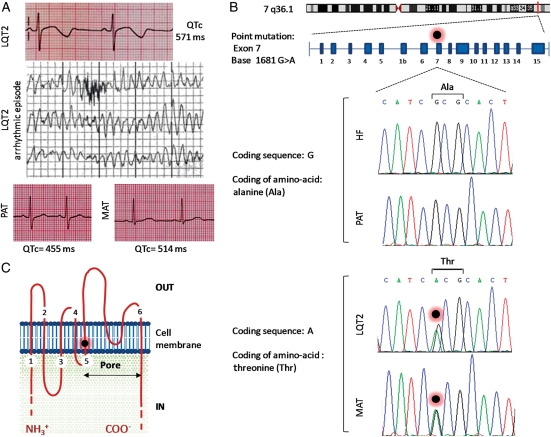
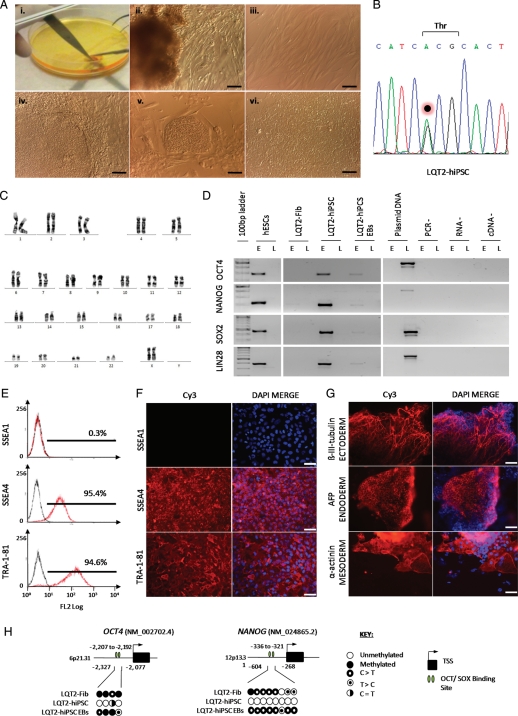
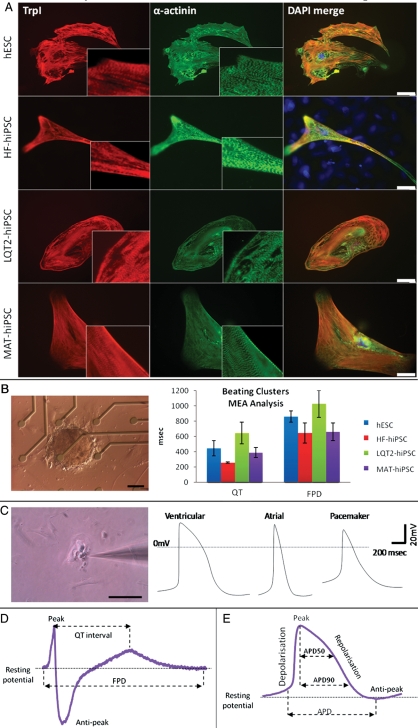
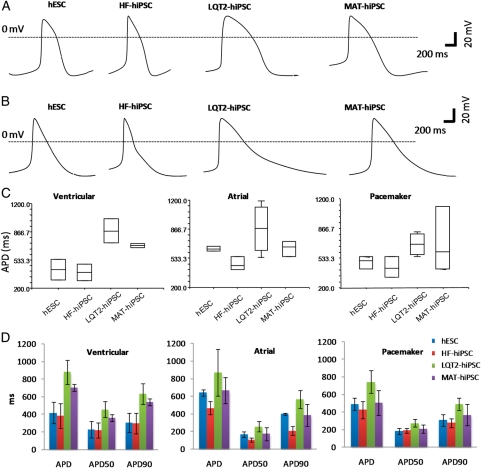
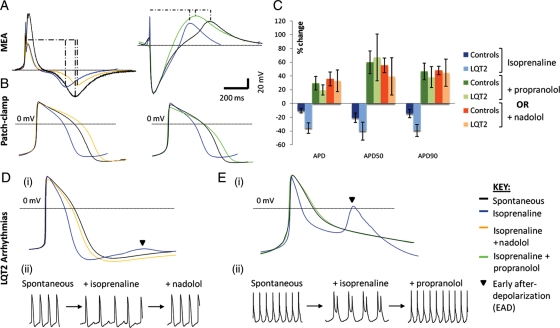
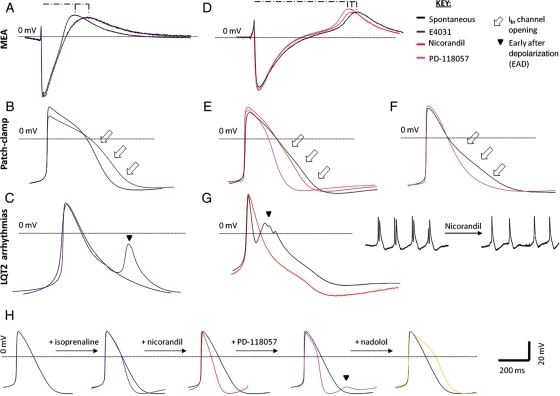
AIMS: Congenital long QT syndromes (LQTSs) are associated with prolonged ventricular repolarization and sudden cardiac death. Limitations to existing clinical therapeutic management strategies prompted us to develop a novel human in vitro drug-evaluation system for LQTS type 2 (LQT2) that will complement the existing in vitro and in vivo models. METHODS AND RESULTS: Skin fibroblasts from a patient with a KCNH2 G1681A mutation (encodes I(Kr) potassium ion channel) were reprogrammed to human induced pluripotent stem cells (hiPSCs), which were subsequently differentiated to functional cardiomyocytes. Relative to controls (including the patient's mother), multi-electrode array and patch-clamp electrophysiology of LQT2-hiPSC cardiomyocytes showed prolonged field/action potential duration. When LQT2-hiPSC cardiomyocytes were exposed to E4031 (an I(Kr) blocker), arrhythmias developed and these presented as early after depolarizations (EADs) in the action potentials. In contrast to control cardiomyocytes, LQT2-hiPSC cardiomyocytes also developed EADs when challenged with the clinically used stressor, isoprenaline. This effect was reversed by β-blockers, propranolol, and nadolol, the latter being used for the patient's therapy. Treatment of cardiomyocytes with experimental potassium channel enhancers, nicorandil and PD118057, caused action potential shortening and in some cases could abolish EADs. Notably, combined treatment with isoprenaline (enhancers/isoprenaline) caused EADs, but this effect was reversed by nadolol. CONCLUSIONS: Findings from this paper demonstrate that patient LQT2-hiPSC cardiomyocytes respond appropriately to clinically relevant pharmacology and will be a valuable human in vitro model for testing experimental drug combinations.
Overview
The claims and statistics of this paper haven’t been checked yet.
Free: it reads the open-access text and checks the first 5 claims that cite a source we can check. Create a free account to check every claim.
Integrity signals
Registry
Cites
Statistics
Figures
Verification
Claims the paper makes
The claims and statistics of this paper haven’t been checked yet.
Free: it reads the open-access text and checks the first 5 claims that cite a source we can check. Create a free account to check every claim.
Claims other papers make about this one
Each is checked against this paper’s own text: does it say what the citing paper says it does?
The source backs part of the claim, not all of it — or backs it for a different population, condition or comparison.
In the citing paper
“Traditionally, animal models, primary cells, embryonic stem cells (ESC), and immortalized cell lines derived from tumor cells are used to model a variety of human diseases [8,9,10,11].”
From Utility of iPSC-Derived Cells for Disease Modeling, Drug Development, and Cell Therapy (2022) · cites this paper as [10]
Experimental — accuracy not yet measuredThe cited source says what the claim attributes to it.
In the citing paper
“Matsa et al. used type-2 LQTS patients iPSC-derived cardiomyocytes to show that treatment with experimental potassium channel enhancers, nicorandil and PD118057, can cause action potential shortening [10].”
From Utility of iPSC-Derived Cells for Disease Modeling, Drug Development, and Cell Therapy (2022) · cites this paper as [10]
Self-check
Percentages, sums and reported differences re-computed from the paper’s own numbers.
The self-check needs the paper’s full text.
Citations
Cites
Induced Pluripotent Stem Cell Lines Derived from Human Somatic Cells
Yu, J., Vodyanik, M. A., Smuga-Otto, K., Antosiewicz-Bourget, J., Frane, J. L., Tian, S., Nie, J., Jonsdottir, G. A., Ruotti, V., Stewart, R., et al. (2007) · Science · doi:10.1126/science.1151526 · Cited by 10,310 · cited 2×
“Induced pluripotency involves reprogramming of somatic cells into human induced pluripotent stem cells (hiPSCs) by introducing genetic factors such as OCT4, SOX2, NANOG, and LIN28.”
Drug-induced prolongation of the QT interval
Roden, D. M. (2004) · New England Journal of Medicine · doi:10.1056/nejmra032426 · Cited by 1,965
Schwartz, P. J., Priori, S. G., Spazzolini, C., Moss, A. J., Vincent, G. M., Napolitano, C., Denjoy, I., Guicheney, P., Breithardt, G., Keating, M. T., et al. (2001) · Circulation · doi:10.1161/01.cir.103.1.89 · Cited by 1,779
hERG potassium channels and cardiac arrhythmia
Sanguinetti, M. C., & Tristani-Firouzi, M. (2006) · Nature · doi:10.1038/nature04710 · Cited by 1,572
Risk Stratification in the Long-QT Syndrome
Priori, S. G., Schwartz, P. J., Napolitano, C., Bloise, R., Ronchetti, E., Grillo, M., Vicentini, A., Spazzolini, C., Nastoli, J., Bottelli, G., et al. (2003) · New England Journal of Medicine · doi:10.1056/nejmoa022147 · Cited by 1,459
Patient-Specific Induced Pluripotent Stem-Cell Models for Long-QT Syndrome
Moretti, A., Bellin, M., Welling, A., Jung, C. B., Lam, J. T., Bott-Flügel, L., Dorn, T., Goedel, A., Höhnke, C., Hofmann, F., et al. (2010) · New England Journal of Medicine · doi:10.1056/nejmoa0908679 · Cited by 1,251
Modelling the long QT syndrome with induced pluripotent stem cells
Itzhaki, I., Maizels, L., Huber, I., Zwi-Dantsis, L., Caspi, O., Winterstern, A., Feldman, O., Gepstein, A., Arbel, G., Hammerman, H., et al. (2011) · Nature · doi:10.1038/nature09747 · Cited by 1,049
Mummery, C., Ward-van Oostwaard, D., Doevendans, P., Spijker, R., van den Brink, S., Hassink, R., van der Heyden, M., Opthof, T., Pera, M., de la Riviere, A. B., et al. (2003) · Circulation · doi:10.1161/01.cir.0000068356.38592.68 · Cited by 1,001
Effectiveness and Limitations of β-Blocker Therapy in Congenital Long-QT Syndrome
Moss, A. J., Zareba, W., Hall, W. J., Schwartz, P. J., Crampton, R. S., Benhorin, J., Vincent, G. M., Locati, E. H., Priori, S. G., Napolitano, C., et al. (2000) · Circulation · doi:10.1161/01.cir.101.6.616 · Cited by 841
Idiopathic long QT syndrome: Progress and questions
Schwartz, P. J. (1985) · American Heart Journal · doi:10.1016/0002-8703(85)90626-x · Cited by 629 · cited 1×
“manifestations varying from palpitations, syncope (fainting), and seizures(2,3) to cardiac arrest and sudden death.(4) Long QT syndrome has been associated with over 500 different mutations in at least 13 genes encoding cardiac ion channel proteins.”
Cited by
Burridge, P. W., Keller, G., Gold, J. D., & Wu, J. C. (2012) · Cell Stem Cell · doi:10.1016/j.stem.2011.12.013 · Cited by 670
“Studies to date have largely concentrated on recapitulating genetic disease phenotypes in vitro, such as long QT syndromes (Itzhaki et al., 2011a; Matsa et al., 2011; Moretti et al., 2010), Timothy syndrome (Yazawa et al., 2011), and LEOPARD syndrome (Carvajal-Vergara et al., 2010).”
Pluripotent stem cells in disease modelling and drug discovery
Avior, Y., Sagi, I., & Benvenisty, N. (2016) · Nature Reviews Molecular Cell Biology · doi:10.1038/nrm.2015.27 · Cited by 592
Liang, P., Lan, F., Lee, A. S., Gong, T., Sanchez-Freire, V., Wang, Y., Diecke, S., Sallam, K., Knowles, J. W., Wang, P. J., et al. (2013) · Circulation · doi:10.1161/circulationaha.113.001883 · Cited by 537
Screening out irrelevant cell-based models of disease
Horvath, P., Aulner, N., Bickle, M., Davies, A. M., Nery, E. D., Ebner, D., Montoya, M. C., Östling, P., Pietiäinen, V., Price, L. S., et al. (2016) · Nature Reviews Drug Discovery · doi:10.1038/nrd.2016.175 · Cited by 525
Karakikes, I., Ameen, M., Termglinchan, V., & Wu, J. C. (2015) · Circulation Research · doi:10.1161/circresaha.117.305365 · Cited by 478
Induced pluripotent stem cells: the new patient?
Bellin, M., Marchetto, M. C., Gage, F. H., & Mummery, C. L. (2012) · Nature Reviews Molecular Cell Biology · doi:10.1038/nrm3448 · Cited by 431
Induced Pluripotent Stem Cells and Their Use in Human Models of Disease and Development
Karagiannis, P., Takahashi, K., Saito, M., Yoshida, Y., Okita, K., Watanabe, A., Inoue, H., Yamashita, J. K., Todani, M., Nakagawa, M., et al. (2019) · Physiological Reviews · doi:10.1152/physrev.00039.2017 · Cited by 368
Navarrete, E. G., Liang, P., Lan, F., Sanchez-Freire, V., Simmons, C., Gong, T., Sharma, A., Burridge, P. W., Patlolla, B., Lee, A. S., et al. (2013) · Circulation · doi:10.1161/circulationaha.112.000570 · Cited by 302
Denning, C., Borgdorff, V., Crutchley, J., Firth, K. S. A., George, V., Kalra, S., Kondrashov, A., Hoang, M. D., Mosqueira, D., Patel, A., et al. (2016) · Biochimica et Biophysica Acta (BBA) - Molecular Cell Research · doi:10.1016/j.bbamcr.2015.10.014 · Cited by 293
Self-citationLahti, A. L., Kujala, V. J., Chapman, H., Koivisto, A.-P., Pekkanen-Mattila, M., Kerkelä, E., Hyttinen, J., Kontula, K., Swan, H., Conklin, B. R., et al. (2012) · Disease Models & Mechanisms · doi:10.1242/dmm.008409 · Cited by 288
“demonstrated that the APD of both atrial-like and ventricular-like iPSC cardiomyocytes was significantly prolonged when derived from an LQT2 patient with episodes of syncope, seizures and TdP (Matsa et al., 2011).”
InfluentialTranslation of Human-Induced Pluripotent Stem Cells
Sayed, N., Liu, C., & Wu, J. C. (2016) · Journal of the American College of Cardiology · doi:10.1016/j.jacc.2016.01.083 · Cited by 279
“LQT2 KCNH2 Prolonged AP duration, reduced cardiac potassium current I (Kr), and increased arrhythmogenicity Yes (54,55,71)”
Induced Pluripotent Stem Cells 10 Years Later: For Cardiac Applications
Yoshida, Y., & Yamanaka, S. (2017) · Circulation Research · doi:10.1161/circresaha.117.311080 · Cited by 264
Davis, R. P., Casini, S., van den Berg, C. W., Hoekstra, M., Remme, C. A., Dambrot, C., Salvatori, D., Oostwaard, D. W.-V., Wilde, A. A. M., Bezzina, C. R., et al. (2012) · Circulation · doi:10.1161/circulationaha.111.066092 · Cited by 264
Investigating human disease using stem cell models
Sterneckert, J. L., Reinhardt, P., & Schöler, H. R. (2014) · Nature Reviews Genetics · doi:10.1038/nrg3764 · Cited by 249
Mosqueira, D., Mannhardt, I., Bhagwan, J. R., Lis-Slimak, K., Katili, P., Scott, E., Hassan, M., Prondzynski, M., Harmer, S. C., Tinker, A., et al. (2018) · European Heart Journal · doi:10.1093/eurheartj/ehy249 · Cited by 238
“While single cell patch clamp can assess genotype-cardiac subtype correlations,25 we avoided this technique due to low technical throughput, selection bias, influence of cell density,26 and loss of electrical syncytium.”
Self-citationMusunuru, K., Sheikh, F., Gupta, R. M., Houser, S. R., Maher, K. O., Milan, D. J., Terzic, A., & Wu, J. C. (2018) · Circulation: Genomic and Precision Medicine · doi:10.1161/hcg.0000000000000043 · Cited by 229
Induced Pluripotent Stem Cells as a Disease Modeling and Drug Screening Platform
Ebert, A. D., Liang, P., & Wu, J. C. (2012) · Journal of Cardiovascular Pharmacology · doi:10.1097/fjc.0b013e318247f642 · Cited by 222
Liang, P., Sallam, K., Wu, H., Li, Y., Itzhaki, I., Garg, P., Zhang, Y., Termglichan, V., Lan, F., Gu, M., et al. (2016) · Journal of the American College of Cardiology · doi:10.1016/j.jacc.2016.07.779 · Cited by 214
Human Stem Cells for Modeling Heart Disease and for Drug Discovery
Matsa, E., Burridge, P. W., & Wu, J. C. (2014) · Science Translational Medicine · doi:10.1126/scitranslmed.3008921 · Cited by 209
Self-citationChurko, J. M., Garg, P., Treutlein, B., Venkatasubramanian, M., Wu, H., Lee, J., Wessells, Q. N., Chen, S.-Y., Chen, W.-Y., Chetal, K., et al. (2018) · Nature Communications · doi:10.1038/s41467-018-07333-4 · Cited by 207
Induced pluripotent stem cell derived cardiomyocytes as models for cardiac arrhythmias
Hoekstra, M., Mummery, C. L., Wilde, A. A. M., Bezzina, C. R., & Verkerk, A. O. (2012) · Frontiers in Physiology · doi:10.3389/fphys.2012.00346 · Cited by 204
Hayakawa, T., Kunihiro, T., Ando, T., Kobayashi, S., Matsui, E., Yada, H., Kanda, Y., Kurokawa, J., & Furukawa, T. (2014) · Journal of Molecular and Cellular Cardiology · doi:10.1016/j.yjmcc.2014.09.010 · Cited by 198
Karakikes, I., Stillitano, F., Nonnenmacher, M., Tzimas, C., Sanoudou, D., Termglinchan, V., Kong, C.-W., Rushing, S., Hansen, J., Ceholski, D., et al. (2015) · Nature Communications · doi:10.1038/ncomms7955 · Cited by 196
Bellin, M., Casini, S., Davis, R. P., D'Aniello, C., Haas, J., Ward-van Oostwaard, D., Tertoolen, L. G. J., Jung, C. B., Elliott, D. A., Welling, A., et al. (2013) · The EMBO Journal · doi:10.1038/emboj.2013.240 · Cited by 196
“5 eGFP/w hESC N996I CMs when compared to their wild-type counterparts, with values shorter than those reported in other LQT2 hiPSC models (Itzhaki et al , 2011; Matsa et al , 2011; Lahti et al , 2012), and did not observe any early-after depolarization in the mutated cells.”
InfluentialIn vitro Modeling of Ryanodine Receptor 2 Dysfunction Using Human Induced Pluripotent Stem Cells
Fatima, A., Xu, G., Shao, K., Papadopoulos, S., Lehmann, M., Arnáiz-Cot, J. J., Rosa, A. O., Nguemo, F., Matzkies, M., Dittmann, S., et al. (2011) · Cellular Physiology and Biochemistry · doi:10.1159/000335753 · Cited by 193
Induced pluripotent stem cells: at the heart of cardiovascular precision medicine
Chen, I. Y., Matsa, E., & Wu, J. C. (2016) · Nature Reviews Cardiology · doi:10.1038/nrcardio.2016.36 · Cited by 191
Self-citationHuman engineered heart tissue as a model system for drug testing
Eder, A., Vollert, I., Hansen, A., & Eschenhagen, T. (2016) · Advanced Drug Delivery Reviews · doi:10.1016/j.addr.2015.05.010 · Cited by 190
Disease characterization using LQTS-specific induced pluripotent stem cells
Egashira, T., Yuasa, S., Suzuki, T., Aizawa, Y., Yamakawa, H., Matsuhashi, T., Ohno, Y., Tohyama, S., Okata, S., Seki, T., et al. (2012) · Cardiovascular Research · doi:10.1093/cvr/cvs206 · Cited by 178
Rao, C., Prodromakis, T., Kolker, L., Chaudhry, U. A. R., Trantidou, T., Sridhar, A., Weekes, C., Camelliti, P., Harding, S. E., Darzi, A., et al. (2013) · Biomaterials · doi:10.1016/j.biomaterials.2012.11.055 · Cited by 176
Tzatzalos, E., Abilez, O. J., Shukla, P., & Wu, J. C. (2016) · Advanced Drug Delivery Reviews · doi:10.1016/j.addr.2015.09.010 · Cited by 162
“In a drug response study, an iPSC-CMmodel derived from long QT patients showed shortened repolarization upon treatment with the experimental potassium channel enhancers nicorandil and PD118057 [36].”
Smith, A. S. T., Macadangdang, J. R., Leung, W. W., Laflamme, M. A., & Kim, D. (2016) · Biotechnology Advances · doi:10.1016/j.biotechadv.2016.12.002 · Cited by 169
Long QT Syndrome: Genetics and Future Perspective
Wallace, E. J., Howard, L., Liu, M., O’Brien, T., Ward, D., Shen, S., & Prendiville, T. W. (2019) · Pediatric Cardiology · doi:10.1007/s00246-019-02151-x · Cited by 168
Lind, J. U., Yadid, M., Perkins, I., O'Connor, B. B., Eweje, F., Chantre, C. O., Hemphill, M. A., Yuan, H., Campbell, P. H., Vlassak, J. J., et al. (2017) · Lab Chip · doi:10.1039/c7lc00740j · Cited by 148
Atomic Force Mechanobiology of Pluripotent Stem Cell-Derived Cardiomyocytes
Liu, J., Sun, N., Bruce, M. A., Wu, J. C., & Butte, M. J. (2012) · PLoS ONE · doi:10.1371/journal.pone.0037559 · Cited by 138
Jonsson, M. K. B., Vos, M. A., Mirams, G. R., Duker, G., Sartipy, P., de Boer, T. P., & van Veen, T. A. B. (2012) · Journal of Molecular and Cellular Cardiology · doi:10.1016/j.yjmcc.2012.02.002 · Cited by 137
Paci, M., Hyttinen, J., Aalto‐Setälä, K., & Severi, S. (2013) · Annals of Biomedical Engineering · doi:10.1007/s10439-013-0833-3 · Cited by 150
Maturation status of sarcomere structure and function in human iPSC-derived cardiac myocytes
Bedada, F. B., Wheelwright, M., & Metzger, J. M. (2016) · Biochimica et Biophysica Acta (BBA) - Molecular Cell Research · doi:10.1016/j.bbamcr.2015.11.005 · Cited by 132
Li, J., Minami, I., Shiozaki, M., Yu, L., Yajima, S., Miyagawa, S., Shiba, Y., Morone, N., Fukushima, S., Yoshioka, M., et al. (2017) · Stem Cell Reports · doi:10.1016/j.stemcr.2017.09.007 · Cited by 137
“Previous single-cell- or cluster-based models have shown heart-specific functional properties (Zwi et al., 2009; Ma et al., 2011; Matsa et al., 2011); however, single cells or small cell clusters do not reproduce the functional activity of well-organized multicellular networks existing in the heart and cannot serve as…”
Matsa, E., Dixon, J. E., Medway, C., Georgiou, O., Patel, M. J., Morgan, K., Kemp, P. J., Staniforth, A., Mellor, I., & Denning, C. (2014) · European Heart Journal · doi:10.1093/eurheartj/eht067 · Cited by 126
Self-citationInduced Pluripotent Stem Cells in Cardiovascular Drug Discovery
Mercola, M., Colas, A., & Willems, E. (2013) · Circulation Research · doi:10.1161/circresaha.111.250266 · Cited by 122
Sala, L., Bellin, M., & Mummery, C. L. (2017) · British Journal of Pharmacology · doi:10.1111/bph.13577 · Cited by 121
Davis, R. P., van den Berg, C. W., Casini, S., Braam, S. R., & Mummery, C. L. (2011) · Trends in Molecular Medicine · doi:10.1016/j.molmed.2011.05.001 · Cited by 138
Induced Pluripotent Stem Cells and Their Potential for Basic and Clinical Sciences
Ye, L., Swingen, C., & Zhang, J. J. (2013) · Current Cardiology Reviews · doi:10.2174/157340313805076278 · Cited by 170
Spencer, C. I., Baba, S., Nakamura, K., Hua, E. A., Sears, M. A. F., Fu, C.-C., Zhang, J., Balijepalli, S., Tomoda, K., Hayashi, Y., et al. (2014) · Stem Cell Reports · doi:10.1016/j.stemcr.2014.06.003 · Cited by 120
“These results suggest that LQTS mutations act partly on cytosolic Ca2+ cycling, potentially providing a basis for functionally targeted interventions regardless of the specific mutation site.”
Induced Pluripotent Stem Cell–Derived Cardiomyocytes: Boutique Science or Valuable Arrhythmia Model?
Knollmann, B. C. (2013) · Circulation Research · doi:10.1161/circresaha.112.300567 · Cited by 118
Re-trafficking of hERG reverses long QT syndrome 2 phenotype in human iPS-derived cardiomyocytes
Mehta, A., Sequiera, G. L., Ramachandra, C. J. A., Sudibyo, Y., Chung, Y., Sheng, J., Wong, K. Y., Tan, T. H., Wong, P., Liew, R., et al. (2014) · Cardiovascular Research · doi:10.1093/cvr/cvu060 · Cited by 110
Mechanism of automaticity in cardiomyocytes derived from human induced pluripotent stem cells
Kim, J. J., Yang, L., Lin, B., Zhu, X., Sun, B., Kaplan, A. D., Bett, G. C. L., Rasmusson, R. L., London, B., & Salama, G. (2015) · Journal of Molecular and Cellular Cardiology · doi:10.1016/j.yjmcc.2015.01.013 · Cited by 108
Zhang, X.-H., Haviland, S., Wei, H., Šarić, T., Fatima, A., Hescheler, J., Cleemann, L., & Morad, M. (2013) · Cell Calcium · doi:10.1016/j.ceca.2013.04.004 · Cited by 108
Takeda, M., Miyagawa, S., Fukushima, S., Saito, A., Ito, E., Harada, A., Matsuura, R., Iseoka, H., Sougawa, N., Mochizuki‐Oda, N., et al. (2017) · Tissue Engineering Part C Methods · doi:10.1089/ten.tec.2017.0247 · Cited by 110
Matsa, E., Ahrens, J. H., & Wu, J. C. (2016) · Physiological Reviews · doi:10.1152/physrev.00036.2015 · Cited by 105
Self-citationMolecular pathogenesis of long QT syndrome type 2
Smith, J. L., Anderson, C. L., Burgess, D. E., Elayi, C. S., January, C. T., & Delisle, B. P. (2016) · Journal of Arrhythmia · doi:10.1016/j.joa.2015.11.009 · Cited by 115
Current status of drug screening and disease modelling in human pluripotent stem cells
Rajamohan, D., Matsa, E., Kalra, S., Crutchley, J., Patel, A., George, V., & Denning, C. (2013) · BioEssays · doi:10.1002/bies.201200053 · Cited by 99
Self-citationInduced pluripotent stem cell-derived cardiomyocytes for drug development and toxicity testing
Sinnecker, D., Laugwitz, K., & Moretti, A. (2014) · Pharmacology & Therapeutics · doi:10.1016/j.pharmthera.2014.03.004 · Cited by 101
Modelling sarcomeric cardiomyopathies in the dish: from human heart samples to iPSC cardiomyocytes
Eschenhagen, T., Mummery, C., & Knollmann, B. C. (2015) · Cardiovascular Research · doi:10.1093/cvr/cvv017 · Cited by 97
hERG 1b is critical for human cardiac repolarization
Jones, D. K., Liu, F., Vaidyanathan, R., Eckhardt, L. L., Trudeau, M. C., & Robertson, G. A. (2014) · Proceedings of the National Academy of Sciences · doi:10.1073/pnas.1414945111 · Cited by 109
Leyton-Mange, J. S., Mills, R. W., Macri, V., Jang, M. Y., Butte, F. N., Ellinor, P. T., & Milan, D. J. (2014) · Stem Cell Reports · doi:10.1016/j.stemcr.2014.01.003 · Cited by 103
Characterising the myocardial interstitial space: the clinical relevance of non-invasive imaging
White, S. K., Sado, D. M., Flett, A. S., & Moon, J. (2012) · Heart · doi:10.1136/heartjnl-2011-301515 · Cited by 97
Human pluripotent stem cell models of cardiac disease: from mechanisms to therapies
Brandão, K. O., Tabel, V. A., Atsma, D. E., Mummery, C. L., & Davis, R. P. (2017) · Disease Models & Mechanisms · doi:10.1242/dmm.030320 · Cited by 106
Modeling Cardiovascular Diseases with hiPSC-Derived Cardiomyocytes in 2D and 3D Cultures
Sacchetto, C., Vitiello, L., de Windt, L. J., Rampazzo, A., & Calore, M. (2020) · International Journal of Molecular Sciences · doi:10.3390/ijms21093404 · Cited by 91
Pluripotent Stem Cell Models of Human Heart Disease
Moretti, A., Laugwitz, K.-L., Dorn, T., Sinnecker, D., & Mummery, C. (2013) · Cold Spring Harbor Perspectives in Medicine · doi:10.1101/cshperspect.a014027 · Cited by 91
Mehta, A. K., Chung, Y. Y., Ng, A., Iskandar, F., Atan, S., Wei, H., Dusting, G. J., Sun, W. Y., Wong, P., & SHIM, W. S. N. (2011) · Cardiovascular Research · doi:10.1093/cvr/cvr132 · Cited by 97
Oikonomopoulos, A., Kitani, T., & Wu, J. C. (2018) · Molecular Therapy · doi:10.1016/j.ymthe.2018.02.026 · Cited by 95
Parrotta, E. I., Lucchino, V., Scaramuzzino, L., Scalise, S., & Cuda, G. (2020) · International Journal of Molecular Sciences · doi:10.3390/ijms21124354 · Cited by 88
High-purity enrichment of functional cardiovascular cells from human iPS cells
Lin, B., Kim, J. K., Li, Y., Pan, H., Carvajal‐Vergara, X., Salama, G., Cheng, T., Li, Y., Lo, C. W. Y., & Yang, L. (2012) · Cardiovascular Research · doi:10.1093/cvr/cvs185 · Cited by 90
Yamamoto, Y., Makiyama, T., Harita, T., Sasaki, K., Wuriyanghai, Y., Hayano, M., Nishiuchi, S., Kohjitani, H., Hirose, S., Chen, J., et al. (2017) · Human Molecular Genetics · doi:10.1093/hmg/ddx073 · Cited by 95
Sala, L., Yu, Z., Ward‐van Oostwaard, D., van Veldhoven, J. P., Moretti, A., Laugwitz, K., Mummery, C. L., IJzerman, A. P., & Bellin, M. (2016) · EMBO Molecular Medicine · doi:10.15252/emmm.201606260 · Cited by 87
“In contrast with findings described by others (Matsa et al, 2011), hERG modulation by LUF7346 completely reversed the severe effects of the potassium channel blocker AST in LQT2N996I hiPSC-CMs, confirming the efficacy of LUF7346 compared to other molecules reported so far in the literature.”
Fendyur, A., & Spira, M. E. (2012) · Frontiers in Neuroengineering · doi:10.3389/fneng.2012.00021 · Cited by 88
Fatima, A., Kaifeng, S., Dittmann, S., Xu, G., Gupta, M. K., Linke, M., Zechner, U., Nguemo, F., Milting, H., Farr, M., et al. (2013) · PLoS ONE · doi:10.1371/journal.pone.0083005 · Cited by 83
van den Heuvel, N. H. L., van Veen, T. A. B., Lim, B., & Jonsson, M. K. B. (2013) · Journal of Molecular and Cellular Cardiology · doi:10.1016/j.yjmcc.2013.12.011 · Cited by 94
Celiz, A. D., Smith, J. G. W., Patel, A. K., Hook, A. L., Rajamohan, D., George, V. T., Flatt, L., Patel, M. J., Epa, V. C., Singh, T., et al. (2015) · Advanced Materials · doi:10.1002/adma.201501351 · Cited by 81
Self-citationConcise Review: Drug Discovery in the Age of the Induced Pluripotent Stem Cell
Ko, H. C., & Gelb, B. D. (2014) · Stem Cells Translational Medicine · doi:10.5966/sctm.2013-0162 · Cited by 80
Zwi-Dantsis, L., Huber, I., Habib, M., Winterstern, A., Gepstein, A., Arbel, G., & Gepstein, L. (2013) · European Heart Journal · doi:10.1093/eurheartj/ehs096 · Cited by 78
Casini, S., Verkerk, A. O., & Remme, C. A. (2017) · Cardiovascular Drugs and Therapy · doi:10.1007/s10557-017-6735-0 · Cited by 83
Sallam, K., Li, Y., Sager, P. T., Houser, S. R., & Wu, J. C. (2015) · Circulation Research · doi:10.1161/circresaha.116.304494 · Cited by 74
Jouni, M., Si‐Tayeb, K., Es‐Salah‐Lamoureux, Z., Latypova, X., Champon, B., Caillaud, A., Rungoat, A., Charpentier, F., Loussouarn, G., Baró, I., et al. (2015) · Journal of the American Heart Association · doi:10.1161/jaha.115.002159 · Cited by 74
SIRPA, VCAM1 and CD34 identify discrete lineages during early human cardiovascular development
Skelton, R. J. P., Costa, M., Anderson, D. J., Bruveris, F., Finnin, B. W., Koutsis, K., Arasaratnam, D., White, A. J., Rafii, A., Ng, E., et al. (2014) · Stem Cell Research · doi:10.1016/j.scr.2014.04.016 · Cited by 83
Cell signalling pathways underlying induced pluripotent stem cell reprogramming
Hawkins, K., Joy, S., & McKay, T. R. (2014) · World Journal of Stem Cells · doi:10.4252/wjsc.v6.i5.620 · Cited by 85
McKeithan, W. L., Savchenko, A., Yu, M. S., Cerignoli, F., Bruyneel, A. A. N., Price, J. H., Colas, A. R., Miller, E. W., Cashman, J. R., & Mercola, M. (2017) · Frontiers in Physiology · doi:10.3389/fphys.2017.00766 · Cited by 71
Braam, S. R., Tertoolen, L. G. J., Casini, S., Matsa, E., Lu, H. R., Teisman, A. C. H., Passier, R. C., Denning, C. N., Gallacher, D. J., Towart, R., et al. (2012) · Stem Cell Research · doi:10.1016/j.scr.2012.08.007 · Cited by 80
Self-citationSharma, A., Wu, J. C., & Wu, S. M. (2013) · Stem Cell Research & Therapy · doi:10.1186/scrt380 · Cited by 76
Schelbert, E. B., Sabbah, H. N., Butler, J., & Gheorghiade, M. (2017) · Circulation Cardiovascular Imaging · doi:10.1161/circimaging.116.005619 · Cited by 71
Utility of iPSC-Derived Cells for Disease Modeling, Drug Development, and Cell Therapy
Nicholson, M. W., Ting, C.-Y., Chan, D. Z. H., Cheng, Y.-C., Lee, Y.-C., Hsu, C.-C., Huang, C.-Y., & Hsieh, P. C. H. (2022) · Cells · doi:10.3390/cells11111853 · Cited by 65
Standardization of pluripotent stem cell cultures for toxicity testing
Pistollato, F., Bremer-Hoffmann, S., Healy, L., Young, L., & Stacey, G. (2012) · Expert Opinion on Drug Metabolism & Toxicology · doi:10.1517/17425255.2012.639763 · Cited by 67
Self-citationHuman Pluripotent Stem Cell-Derived Cardiomyocytes as Research and Therapeutic Tools
Acimovic, I., Vilotic, A., Pesl, M., Lacampagne, A., Dvorak, P., Rotrekl, V., & Meli, A. C. (2014) · BioMed Research International · doi:10.1155/2014/512831 · Cited by 66
Blazeski, A., Zhu, R., Hunter, D. W., Weinberg, S. H., Zambidis, E. T., & Tung, L. (2012) · Progress in Biophysics and Molecular Biology · doi:10.1016/j.pbiomolbio.2012.07.013 · Cited by 66
Induced pluripotent stem cell–derived cardiomyocytes in studies of inherited arrhythmias
Priori, S. G., Napolitano, C., Di Pasquale, E., & Condorelli, G. (2013) · Journal of Clinical Investigation · doi:10.1172/jci62838 · Cited by 65
“Studies by Itzhaki et al. (33) and Matsa et al. (35) characterized cells derived from carriers of mutations localized in the pore region of the HERG channel (A561T and A614V), known to cause a severe form of LQTS.”
InfluentialCordeiro, J. M., Nesterenko, V. V., Sicouri, S., Goodrow, R. J., Treat, J. A., Desai, M., Wu, Y., Doss, M. X., Antzelevitch, C. N., & Diego, J. M. D. (2013) · Journal of Molecular and Cellular Cardiology · doi:10.1016/j.yjmcc.2013.03.014 · Cited by 75
van Mil, A., Balk, G. M., Neef, K., Buikema, J. W., Asselbergs, F. W., Wu, S. M., Doevendans, P. A., & Sluijter, J. P. G. (2018) · Cardiovascular Research · doi:10.1093/cvr/cvy208 · Cited by 65
Nanopatterned Human iPSC-Based Model of a Dystrophin-Null Cardiomyopathic Phenotype
Macadangdang, J. R., Guan, X., Smith, A. S. T., Lucero, R., Czerniecki, S., Childers, M. K., Mack, D. L., & Kim, D. (2015) · Cellular and Molecular Bioengineering · doi:10.1007/s12195-015-0413-8 · Cited by 67
Lin, Z. C., McGuire, A. F., Burridge, P. W., Matsa, E., Lou, H.-Y., Wu, J. C., & Cui, B. (2017) · Microsystems & Nanoengineering · doi:10.1038/micronano.2016.80 · Cited by 70
“The second disease we studied was long QT syndrome (LQTS), which is characterized by the delayed repolarization and therefore prolongation of the action potential and may be studied using hiPSC-CMs 28 .”
Self-citationThe case for induced pluripotent stem cell‐derived cardiomyocytes in pharmacological screening
Khan, J. M., Lyon, A. R., & Harding, S. E. (2013) · British Journal of Pharmacology · doi:10.1111/j.1476-5381.2012.02118.x · Cited by 63
Human pluripotent stem cells for disease modelling and drug screening
Maury, Y., Gauthier, M., Peschanski, M., & Martinat, C. (2011) · BioEssays · doi:10.1002/bies.201100071 · Cited by 76
Dick, E., Kalra, S., Anderson, D., George, V., Ritso, M., Laval, S. H., Barresi, R., Aartsma-Rus, A., Lochmüller, H., & Denning, C. (2013) · Stem Cells and Development · doi:10.1089/scd.2013.0135 · Cited by 61
“For single cell electrophysiology, whole-cell patch clamp was carried out on dissociated cells, an-alyzedinnormalcurrent-clampmode[14].”
InfluentialSelf-citationPaci, M., Hyttinen, J., Rodríguez, B., & Severi, S. (2015) · British Journal of Pharmacology · doi:10.1111/bph.13282 · Cited by 70
“…Kujala et al., 2012; Terrenoire et al., 2013), and due to their patient-specificity, in identifying drugs for specific diseases (Itzhaki et al., 2011, 2012; Matsa et al., 2011; Yazawa et al., 2011; Jung et al., 2012), even though none of them has yet been administered to patients (Knollmann, 2013).”
Human heart disease: lessons from human pluripotent stem cell-derived cardiomyocytes
Giacomelli, E., Mummery, C. L., & Bellin, M. (2017) · Cellular and Molecular Life Sciences · doi:10.1007/s00018-017-2546-5 · Cited by 60
Mata, A. D. L., Tajada, S., O’Dwyer, S. C., Matsumoto, C., Dixon, R. E., Hariharan, N., Moreno, C. M., & Santana, L. F. (2018) · Stem Cells · doi:10.1002/stem.2927 · Cited by 68
Kamdar, F. D., Das, S., Gong, W., Kamdar, A. K., Vetter, T. A., Shah, P., Ervasti, J. M., Townsend, D., Kamp, T. J., Wu, J. C., et al. (2020) · Journal of the American College of Cardiology · doi:10.1016/j.jacc.2019.12.066 · Cited by 64
Martins, A. M., Vunjak-Novakovic, G., & Reis, R. L. (2014) · Stem Cell Reviews and Reports · doi:10.1007/s12015-013-9487-7 · Cited by 59
“Human cardiac disease models generated so far to test various drugs using cardiomyocytes derived from patient-specific iPS cells recapitulated at least some features of the disease phenotype [84, 124, 125].”
Clinical applications of patient-specific induced pluripotent stem cells in cardiovascular medicine
Oh, Y., Wei, H., Ma, D., Sun, X., & Liew, R. (2012) · Heart · doi:10.1136/heartjnl-2011-301317 · Cited by 65
Blinova, K., Schocken, D., Patel, D., Daluwatte, C., Vicente, J., Wu, J. C., & Strauss, D. G. (2019) · Clinical and Translational Science · doi:10.1111/cts.12674 · Cited by 62
Metadata
- Authors
- Matsa, E., Rajamohan, D., Dick, E., Young, L., Mellor, I., Staniforth, A., & Denning, C.
- Affiliations
- University of Nottingham (GB)
- Queen's Medical Centre (GB)
- Corresponding author
- Denning, Chris
- Venue
- European Heart Journal
- Publisher
- Oxford University Press (OUP)
- Published
- 2011-03-02
- Volume
- 32
- Issue
- 8
- Pages
- 952-962
- ISSN
- 0195-668X (ISSN-L)
- 1522-9645
- PMC
- PMC3076668
- OpenAlex
- W2155235762
- Cited by
- 389
- References
- 42
- Citations by year
- 2026: 4 · 2025: 8 · 2024: 7 · 2023: 10 · 2022: 14 · 2021: 23 · 2020: 19 · 2019: 22 · 2018: 21 · 2017: 30 · 2016: 38 · 2015: 45 · 2014: 42 · 2013: 44 · 2012: 45
- FWCI
- 32.44
- Type
- journal article
- Language
- en
- Open access
- green
- www.ncbi.nlm.nih.gov
- Licence
- cc-by-nc
- Locations
- European Heart Journal (publishedVersion)
- Europe PMC (PubMed Central) (publishedVersion, cc-by-nc)
- PubMed Central (publishedVersion, cc-by-nc)
- PubMed (publishedVersion)
- Funders
- British Heart Foundation (PG/09/027/27141)
- Medical Research Council
- Biotechnology and Biological Sciences Research Council (BB/E006159/1, BBS/B/06164)
- Topics
- Health Sciences › Medicine › Cardiology and Cardiovascular Medicine › Cardiac electrophysiology and arrhythmias
- Life Sciences › Biochemistry, Genetics and Molecular Biology › Molecular Biology › Pluripotent Stem Cells Research
- Life Sciences › Biochemistry, Genetics and Molecular Biology › Molecular Biology › Ion channel regulation and function
- Keywords
- long QT syndrome type 2, drug evaluation, early afterdepolarizations, action potential duration, isoproterenol, beta-blockers, propranolol, nadolol, nicorandil, sudden cardiac death, repolarization
- MeSH terms
- ERG1 Potassium Channel, Adolescent, Adrenergic beta-Agonists, Adrenergic beta-Antagonists, Anti-Arrhythmia Agents, Calcium Channel Blockers, Chromosomes, Human, Pair 7, Drug Evaluation, Preclinical, Electrocardiography, Female, Humans, Isoproterenol, Long QT Syndrome, Point Mutation, Nicorandil, Myocytes, Cardiac, Ether-A-Go-Go Potassium Channels, Induced Pluripotent Stem Cells
About these checks
Registry, retraction, Cites and statistics results are computed, not judged, with one exception: a printed reference that no index lists is read once by a model before it counts as a citation error. Claims are extracted by a model and kept only when their quote appears verbatim in the text; each cited source is then checked, with a model’s help, for whether it says what the claim relies on. Those verdicts can be wrong — read the claim’s quote and the cited source before relying on one.
Statistics and arithmetic are recomputed, not judged.
Confidence bands are shown only for fields calibrated on our annotated test set. None is calibrated yet, so no band is shown.
What counts as a claim ›How we measure confidence ›How we check this ›
Are you an author, or do you see a problem with this page? Request a review
Data sources
Bibliographic data: Semantic Scholar, OpenAlex, Crossref.
Contains information from the Semantic Scholar Academic Graph Datasets, made available under the ODC Attribution License (ODC-BY 1.0).
Semantic Scholar’s data is described in: Kinney, R., et al. (2023). The Semantic Scholar Open Data Platform. arXiv:2301.10140.
