

Drug evaluation in cardiomyocytes derived from human induced pluripotent stem cells carrying a long QT syndrome type 2 mutation
Open accessThe DOI matches its Crossref record; 41 of the 42 references it cites were found in a registry or an index.
Abstract
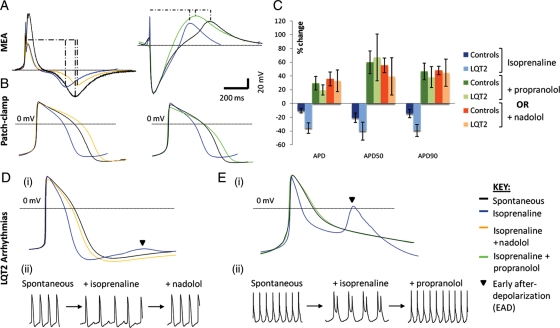
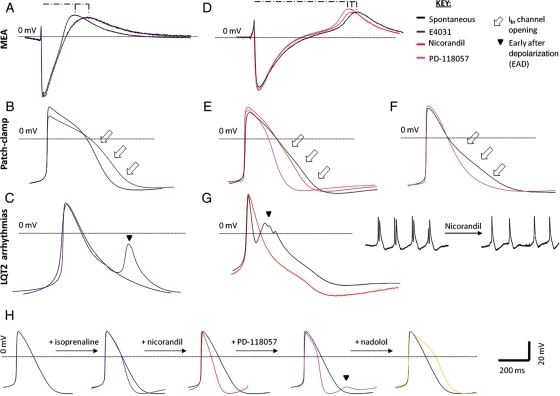
AIMS: Congenital long QT syndromes (LQTSs) are associated with prolonged ventricular repolarization and sudden cardiac death. Limitations to existing clinical therapeutic management strategies prompted us to develop a novel human in vitro drug-evaluation system for LQTS type 2 (LQT2) that will complement the existing in vitro and in vivo models. METHODS AND RESULTS: Skin fibroblasts from a patient with a KCNH2 G1681A mutation (encodes I(Kr) potassium ion channel) were reprogrammed to human induced pluripotent stem cells (hiPSCs), which were subsequently differentiated to functional cardiomyocytes. Relative to controls (including the patient's mother), multi-electrode array and patch-clamp electrophysiology of LQT2-hiPSC cardiomyocytes showed prolonged field/action potential duration. When LQT2-hiPSC cardiomyocytes were exposed to E4031 (an I(Kr) blocker), arrhythmias developed and these presented as early after depolarizations (EADs) in the action potentials. In contrast to control cardiomyocytes, LQT2-hiPSC cardiomyocytes also developed EADs when challenged with the clinically used stressor, isoprenaline. This effect was reversed by β-blockers, propranolol, and nadolol, the latter being used for the patient's therapy. Treatment of cardiomyocytes with experimental potassium channel enhancers, nicorandil and PD118057, caused action potential shortening and in some cases could abolish EADs. Notably, combined treatment with isoprenaline (enhancers/isoprenaline) caused EADs, but this effect was reversed by nadolol. CONCLUSIONS: Findings from this paper demonstrate that patient LQT2-hiPSC cardiomyocytes respond appropriately to clinically relevant pharmacology and will be a valuable human in vitro model for testing experimental drug combinations.
Overview
The claims and statistics of this paper haven’t been checked yet.
Free: it reads the open-access text and checks the first 5 claims that cite a source we can check. Create a free account to check every claim.
Integrity signals
Registry
Cites
Statistics
Figures
Verification
Claims the paper makes
The claims and statistics of this paper haven’t been checked yet.
Free: it reads the open-access text and checks the first 5 claims that cite a source we can check. Create a free account to check every claim.
Claims other papers make about this one
Each is checked against this paper’s own text: does it say what the citing paper says it does?
The source backs part of the claim, not all of it — or backs it for a different population, condition or comparison.
In the citing paper
“Traditionally, animal models, primary cells, embryonic stem cells (ESC), and immortalized cell lines derived from tumor cells are used to model a variety of human diseases [8,9,10,11].”
From Utility of iPSC-Derived Cells for Disease Modeling, Drug Development, and Cell Therapy (2022) · cites this paper as [10]
Experimental — accuracy not yet measuredThe cited source says what the claim attributes to it.
In the citing paper
“Matsa et al. used type-2 LQTS patients iPSC-derived cardiomyocytes to show that treatment with experimental potassium channel enhancers, nicorandil and PD118057, can cause action potential shortening [10].”
From Utility of iPSC-Derived Cells for Disease Modeling, Drug Development, and Cell Therapy (2022) · cites this paper as [10]
Self-check
Percentages, sums and reported differences re-computed from the paper’s own numbers.
The self-check needs the paper’s full text.
Citations
Cites
Induced Pluripotent Stem Cell Lines Derived from Human Somatic Cells
Yu, J., Vodyanik, M. A., Smuga-Otto, K., Antosiewicz-Bourget, J., Frane, J. L., Tian, S., Nie, J., Jonsdottir, G. A., Ruotti, V., Stewart, R., et al. (2007) · Science · doi:10.1126/science.1151526 · Cited by 10,310 · cited 2×
“Induced pluripotency involves reprogramming of somatic cells into human induced pluripotent stem cells (hiPSCs) by introducing genetic factors such as OCT4, SOX2, NANOG, and LIN28.”
Drug-induced prolongation of the QT interval
Roden, D. M. (2004) · New England Journal of Medicine · doi:10.1056/nejmra032426 · Cited by 1,965
Schwartz, P. J., Priori, S. G., Spazzolini, C., Moss, A. J., Vincent, G. M., Napolitano, C., Denjoy, I., Guicheney, P., Breithardt, G., Keating, M. T., et al. (2001) · Circulation · doi:10.1161/01.cir.103.1.89 · Cited by 1,779
hERG potassium channels and cardiac arrhythmia
Sanguinetti, M. C., & Tristani-Firouzi, M. (2006) · Nature · doi:10.1038/nature04710 · Cited by 1,572
Risk Stratification in the Long-QT Syndrome
Priori, S. G., Schwartz, P. J., Napolitano, C., Bloise, R., Ronchetti, E., Grillo, M., Vicentini, A., Spazzolini, C., Nastoli, J., Bottelli, G., et al. (2003) · New England Journal of Medicine · doi:10.1056/nejmoa022147 · Cited by 1,459
Patient-Specific Induced Pluripotent Stem-Cell Models for Long-QT Syndrome
Moretti, A., Bellin, M., Welling, A., Jung, C. B., Lam, J. T., Bott-Flügel, L., Dorn, T., Goedel, A., Höhnke, C., Hofmann, F., et al. (2010) · New England Journal of Medicine · doi:10.1056/nejmoa0908679 · Cited by 1,251
Modelling the long QT syndrome with induced pluripotent stem cells
Itzhaki, I., Maizels, L., Huber, I., Zwi-Dantsis, L., Caspi, O., Winterstern, A., Feldman, O., Gepstein, A., Arbel, G., Hammerman, H., et al. (2011) · Nature · doi:10.1038/nature09747 · Cited by 1,049
Mummery, C., Ward-van Oostwaard, D., Doevendans, P., Spijker, R., van den Brink, S., Hassink, R., van der Heyden, M., Opthof, T., Pera, M., de la Riviere, A. B., et al. (2003) · Circulation · doi:10.1161/01.cir.0000068356.38592.68 · Cited by 1,001
Effectiveness and Limitations of β-Blocker Therapy in Congenital Long-QT Syndrome
Moss, A. J., Zareba, W., Hall, W. J., Schwartz, P. J., Crampton, R. S., Benhorin, J., Vincent, G. M., Locati, E. H., Priori, S. G., Napolitano, C., et al. (2000) · Circulation · doi:10.1161/01.cir.101.6.616 · Cited by 841
Idiopathic long QT syndrome: Progress and questions
Schwartz, P. J. (1985) · American Heart Journal · doi:10.1016/0002-8703(85)90626-x · Cited by 629 · cited 1×
“manifestations varying from palpitations, syncope (fainting), and seizures(2,3) to cardiac arrest and sudden death.(4) Long QT syndrome has been associated with over 500 different mutations in at least 13 genes encoding cardiac ion channel proteins.”
Association of Long QT Syndrome Loci and Cardiac Events Among Patients Treated With β-Blockers
Priori, S. G. (2004) · JAMA · doi:10.1001/jama.292.11.1341 · Cited by 601
Characterization and culture of human embryonic stem cells
Hoffman, L. M., & Carpenter, M. K. (2005) · Nature Biotechnology · doi:10.1038/nbt1102 · Cited by 465
Moss, A. J., Zareba, W., Kaufman, E. S., Gartman, E., Peterson, D. R., Benhorin, J., Towbin, J. A., Keating, M. T., Priori, S. G., Schwartz, P. J., et al. (2002) · Circulation · doi:10.1161/hc0702.105124 · Cited by 397
The QT syndromes: long and short
Morita, H., Wu, J., & Zipes, D. P. (2008) · The Lancet · doi:10.1016/s0140-6736(08)61307-0 · Cited by 317 · cited 1×
“The hereditary long QT syndromes (LQTSs) are characterized by abnormal ventricular repolarization and are a recognized cause of sudden cardiac death (SCD) syndrome.(1) Patients with LQTS carry”
Implantable Cardioverter Defibrillator in High‐Risk Long QT Syndrome Patients
ZAREBA, W., MOSS, A. J., DAUBERT, J. P., HALL, W. J., ROBINSON, J. L., & ANDREWS, M. (2003) · Journal of Cardiovascular Electrophysiology · doi:10.1046/j.1540-8167.2003.02545.x · Cited by 314
Burridge, P. W., Anderson, D., Priddle, H., Barbadillo Muñoz, M. D., Chamberlain, S., Allegrucci, C., Young, L. E., & Denning, C. (2007) · Stem Cells · doi:10.1634/stemcells.2006-0598 · Cited by 301
Self-citationLehnart, S. E., Ackerman, M. J., Benson, D. W., Brugada, R., Clancy, C. E., Donahue, J. K., George, A. L., Grant, A. O., Groft, S. C., January, C. T., et al. (2007) · Circulation · doi:10.1161/circulationaha.107.711689 · Cited by 254
Transgenic Enrichment of Cardiomyocytes From Human Embryonic Stem Cells
Anderson, D., Self, T., Mellor, I. R., Goh, G., Hill, S. J., & Denning, C. (2007) · Molecular Therapy · doi:10.1038/sj.mt.6300303 · Cited by 231
Self-citationIon channels: Function unravelled by dysfunction
Jentsch, T. J., Hübner, C. A., & Fuhrmann, J. C. (2004) · Nature Cell Biology · doi:10.1038/ncb1104-1039 · Cited by 201
The action potential and comparative pharmacology of stem cell-derived human cardiomyocytes
Peng, S., Lacerda, A. E., Kirsch, G. E., Brown, A. M., & Bruening-Wright, A. (2010) · Journal of Pharmacological and Toxicological Methods · doi:10.1016/j.vascn.2010.01.014 · Cited by 183 · cited 5×
“Drug evaluation in LQT2 hiPSC cardiomyocytes 959 D ow nloaded from https://academ ic.oup.com /eurheartj/article/32/8/952/2398453 by guest on 04 M arch 2022 Long QT syndrome type 2–hiPSC myocytes were more sensitive to treatment with the Ikr channel blocker, E4031.”
InfluentialShimizu, W., & Antzelevitch, C. (2000) · Circulation · doi:10.1161/01.cir.102.6.706 · Cited by 182
Postmortem molecular screening in unexplained sudden death
Chugh, S. S., Senashova, O., Watts, A., Tran, P. T., Zhou, Z., Gong, Q., Titus, J. L., & Hayflick, S. J. (2004) · Journal of the American College of Cardiology · doi:10.1016/j.jacc.2003.11.052 · Cited by 173 · cited 2×
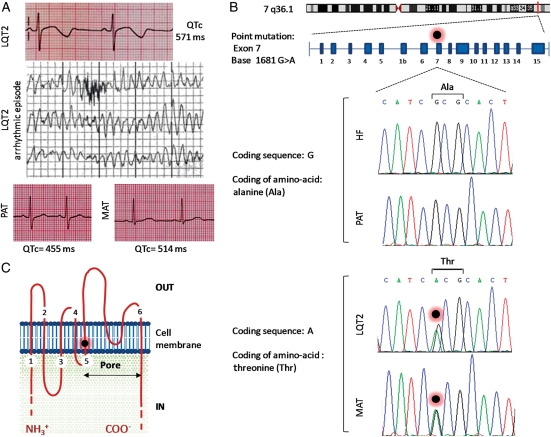
“The mutation causes an alanine to threonine substitution at position 561 of the encoded protein (p.Ala561Thr) and is located in the pore-forming region of the Ikr channel, at transmembrane segment S5 (Figure 1C), 20 and prevents post-translational maturation of KCNH2.”
Risk Stratification in the Long QT Syndrome
Mazzanti, A., Napolitano, C., & Priori, S. G. (2012) · Cardiac Electrophysiology Clinics · doi:10.1016/j.ccep.2011.12.006 · Cited by 132
Perry, M., Sanguinetti, M. C., & Mitcheson, J. S. (2010) · The Journal of Physiology · doi:10.1113/jphysiol.2010.194670 · Cited by 111
Shimizu, W., Tanabe, Y., Aiba, T., Inagaki, M., Kurita, T., Suyama, K., Nagaya, N., Taguchi, A., Aihara, N., Sunagawa, K., et al. (2002) · Journal of the American College of Cardiology · doi:10.1016/s0735-1097(02)01894-6 · Cited by 89
Molecular genetics of long QT syndrome
Bokil, N. J., Baisden, J. M., Radford, D. J., & SUMMERS, K. M. (2010) · Molecular Genetics and Metabolism · doi:10.1016/j.ymgme.2010.05.011 · Cited by 88 · cited 1×
“Long QT syndrome has been associated with over 500 different mutations in at least 13 genes encoding cardiac ion channel proteins.(5) The estimated genotype-to-phenotype correlation of 60–75% depends on”
Clinical and Genetic Characteristics of Long QT Syndrome
Medeiros‐Domingo, A., Iturralde-Torres, P., & Ackerman, M. J. (2007) · Revista Española de Cardiología (English Edition) · doi:10.1016/s1885-5857(08)60010-9 · Cited by 85 · cited 2×
“Combinatorial treatment could benefit cases where b-blocker treatment worsens bradycardia leading to a 23% increased incidence of cardiac events(13) or where arrhythmic events are caused during stimulation of the parasympathetic nervous system during sleep (22%).(6)”
A mutation in HERG Associated with Notched T waves in Long QT Syndrome
Dausse, E., Berthet, M., Denjoy, I., André-Fouet, X., Cruaud, C., Bennaceur, M., Fauré, S., Coumel, P., Schwartz, K., & Guicheney, P. (1996) · Journal of Molecular and Cellular Cardiology · doi:10.1006/jmcc.1996.0151 · Cited by 84
Clínica y genética en el síndrome de QT largo
Medeiros‐Domingo, A., Iturralde-Torres, P., & Ackerman, M. J. (2007) · Revista Española de Cardiología · doi:10.1157/13108280 · Cited by 77
Kong, C.-W., Akar, F., & Li, R. (2010) · Thrombosis and Haemostasis · doi:10.1160/th10-03-0189 · Cited by 62 · cited 1×
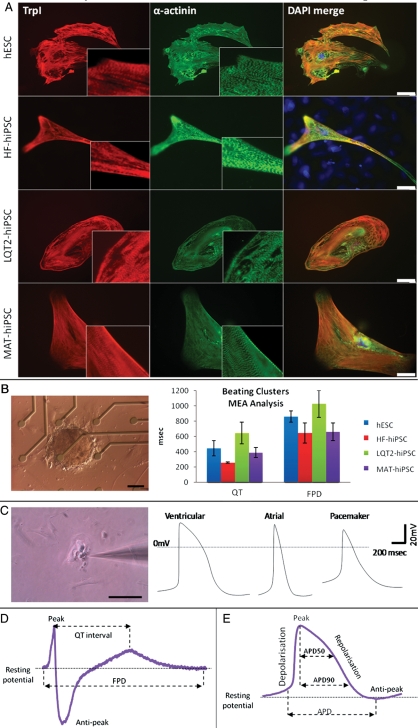
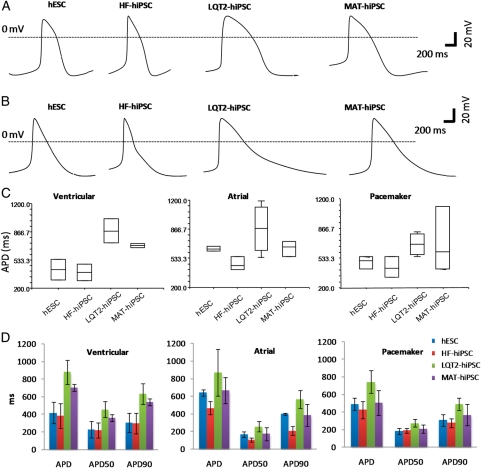
“expression of cardiac markers and electrophysiological properties that confirmed their functionality, as previously shown in hESCand hiPSC-derived cardiomyocytes.(31) Nevertheless, diseasespecific properties emerged in the LQT2–hiPSC myocytes, including prolongation of the FPD/APD in beating clusters as well as in atr…”
Pharmacological approach to the treatment of long and short QT syndromes
Patel, C., & Antzelevitch, C. N. (2008) · Pharmacology & Therapeutics · doi:10.1016/j.pharmthera.2008.02.001 · Cited by 53 · cited 4×
“Even though b-blockers are able to reduce the risk of cardiac episodes by 59%, 23% of LQT2 patients still experience cardiac episodes.(11) In these cases, and in patients otherwise felt to be at high risk of a cardiac event,(12) surgery is required for implantation of a cardioverter defibrillator (ICD).”
InfluentialhERG1 channel activators: A new anti-arrhythmic principle
Grunnet, M., Hansen, R. S., & Olesen, S. (2008) · Progress in Biophysics and Molecular Biology · doi:10.1016/j.pbiomolbio.2009.01.002 · Cited by 52
Long QT syndrome presenting as epileptic seizures in an adult
Hunt, D. P. J., & Tang, K. (2005) · Emergency Medicine Journal · doi:10.1136/emj.2003.007997 · Cited by 40
Characterization of novel KCNH2 mutations in type 2 long QT syndrome manifesting as seizures
Keller, D. I., Grenier, J., Christé, G., Dubouloz, F., Osswald, S., Brink, M., Ficker, E. K., & Chahine, M. (2009) · Canadian Journal of Cardiology · doi:10.1016/s0828-282x(09)70117-5 · Cited by 39 · cited 1×
“since auditory stimuli causing arousal from sleep are described as precipitants for ventricular arrhythmia in KCNH2 mutations.(3) A clinical episode of PMVT at rates of 230 bpm is shown in”
Pore mutants of HERG and KvLQT1 downregulate the reciprocal currents in stable cell lines
Ren, X.-Q., Liu, G. X., Darling, L. E. O., Zheng, R., Roder, K., Jindal, H. K., Centracchio, J. N., McDonald, T. V., & Koren, G. (2010) · American Journal of Physiology-Heart and Circulatory Physiology · doi:10.1152/ajpheart.00479.2009 · Cited by 30
Dick, E., Matsa, E., Bispham, J., Reza, M., Guglieri, M., Staniforth, A., Watson, S., Kumari, R., Lochmüller, H., Young, L. E., et al. (2010) · Stem Cell Research · doi:10.1016/j.scr.2010.10.002 · Cited by 25 · cited 3×
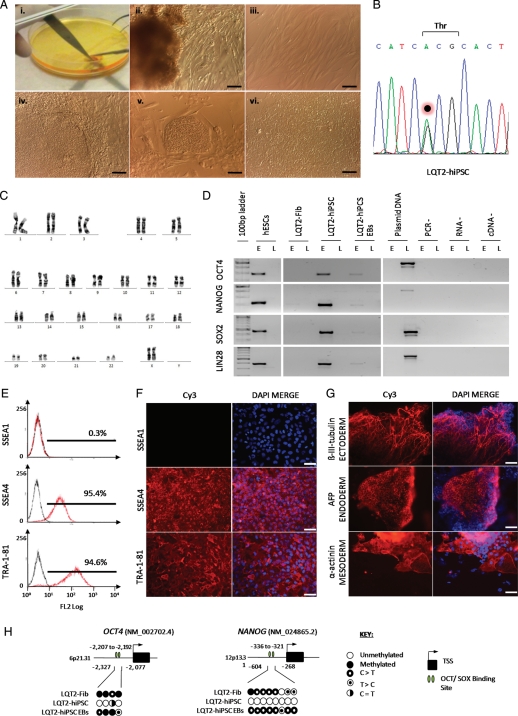
“by lentiviral delivery of human OCT4, SOX2, NANOG, and LIN28 (Figure 2; Supplementary material online, Figure S2).(18)”
InfluentialSelf-citationBiermann, J., Wu, K., Odening, K. E., Asbach, S., Koren, G., Peng, X., Zehender, M., Bode, C., & Brunner, M. P. (2010) · European Journal of Pharmacology · doi:10.1016/j.ejphar.2010.10.016 · Cited by 18
Clur, S. B., Chockalingam, P. S., Filippini, L. H., Widyanti, A. P., van Cruijsen, M., Blom, N. A., Alders, M., Hofman, N., & Wilde, A. A. M. (2009) · Pediatric Cardiology · doi:10.1007/s00246-009-9603-2 · Cited by 17 · cited 4×
“Auditory stimuli have been linked to 26% of episodes in LQT2 patients.25 Indeed, stress testing of patients via sympathetic stimulation by the b-adrenoreceptor agonist, isoprenaline, has been employed to exacerbate and diagnose LQTS.26 To determine whether arrhythmic events could be recapitulated in vitro, patient-spe…”
InfluentialYang, H., Sun, C., Cui, C., Xue, X.-L., Zhang, A., Li, H., Wang, D., & Shu, J. (2009) · Clinical and Experimental Pharmacology and Physiology · doi:10.1111/j.1440-1681.2009.05150.x · Cited by 13
Molecular genetics of long QT syndrome.
Keating, M. T. (1995) · PubMed · Cited by 8
Humphrey, S. J. (1998) · Methods and Findings in Experimental and Clinical Pharmacology · doi:10.1358/mf.1998.20.9.487525 · Cited by 5 · cited 1×
“b-Blockers have also been shown to attenuate nicorandil-induced tachycardia in canine in vivo models.(37) Combinatorial treatment could benefit cases where b-blocker treatment worsens bradycardia leading to a 23% increased incidence of cardiac events(13) or where arrhythmic events are caused during stimulation of the…”
Cited by
Burridge, P. W., Keller, G., Gold, J. D., & Wu, J. C. (2012) · Cell Stem Cell · doi:10.1016/j.stem.2011.12.013 · Cited by 670
“Studies to date have largely concentrated on recapitulating genetic disease phenotypes in vitro, such as long QT syndromes (Itzhaki et al., 2011a; Matsa et al., 2011; Moretti et al., 2010), Timothy syndrome (Yazawa et al., 2011), and LEOPARD syndrome (Carvajal-Vergara et al., 2010).”
Pluripotent stem cells in disease modelling and drug discovery
Avior, Y., Sagi, I., & Benvenisty, N. (2016) · Nature Reviews Molecular Cell Biology · doi:10.1038/nrm.2015.27 · Cited by 592
Liang, P., Lan, F., Lee, A. S., Gong, T., Sanchez-Freire, V., Wang, Y., Diecke, S., Sallam, K., Knowles, J. W., Wang, P. J., et al. (2013) · Circulation · doi:10.1161/circulationaha.113.001883 · Cited by 537
Screening out irrelevant cell-based models of disease
Horvath, P., Aulner, N., Bickle, M., Davies, A. M., Nery, E. D., Ebner, D., Montoya, M. C., Östling, P., Pietiäinen, V., Price, L. S., et al. (2016) · Nature Reviews Drug Discovery · doi:10.1038/nrd.2016.175 · Cited by 525
Karakikes, I., Ameen, M., Termglinchan, V., & Wu, J. C. (2015) · Circulation Research · doi:10.1161/circresaha.117.305365 · Cited by 478
Metadata
- Authors
- Matsa, E., Rajamohan, D., Dick, E., Young, L., Mellor, I., Staniforth, A., & Denning, C.
- Affiliations
- University of Nottingham (GB)
- Queen's Medical Centre (GB)
- Corresponding author
- Denning, Chris
- Venue
- European Heart Journal
- Publisher
- Oxford University Press (OUP)
- Published
- 2011-03-02
- Volume
- 32
- Issue
- 8
- Pages
- 952-962
- ISSN
- 0195-668X (ISSN-L)
- 1522-9645
- PMC
- PMC3076668
- OpenAlex
- W2155235762
- Cited by
- 389
- References
- 42
- Citations by year
- 2026: 4 · 2025: 8 · 2024: 7 · 2023: 10 · 2022: 14 · 2021: 23 · 2020: 19 · 2019: 22 · 2018: 21 · 2017: 30 · 2016: 38 · 2015: 45 · 2014: 42 · 2013: 44 · 2012: 45
- FWCI
- 32.44
- Type
- journal article
- Language
- en
- Open access
- green
- www.ncbi.nlm.nih.gov
- Licence
- cc-by-nc
- Locations
- European Heart Journal (publishedVersion)
- Europe PMC (PubMed Central) (publishedVersion, cc-by-nc)
- PubMed Central (publishedVersion, cc-by-nc)
- PubMed (publishedVersion)
- Funders
- British Heart Foundation (PG/09/027/27141)
- Medical Research Council
- Biotechnology and Biological Sciences Research Council (BB/E006159/1, BBS/B/06164)
- Topics
- Health Sciences › Medicine › Cardiology and Cardiovascular Medicine › Cardiac electrophysiology and arrhythmias
- Life Sciences › Biochemistry, Genetics and Molecular Biology › Molecular Biology › Pluripotent Stem Cells Research
- Life Sciences › Biochemistry, Genetics and Molecular Biology › Molecular Biology › Ion channel regulation and function
- Keywords
- long QT syndrome type 2, drug evaluation, early afterdepolarizations, action potential duration, isoproterenol, beta-blockers, propranolol, nadolol, nicorandil, sudden cardiac death, repolarization
- MeSH terms
- ERG1 Potassium Channel, Adolescent, Adrenergic beta-Agonists, Adrenergic beta-Antagonists, Anti-Arrhythmia Agents, Calcium Channel Blockers, Chromosomes, Human, Pair 7, Drug Evaluation, Preclinical, Electrocardiography, Female, Humans, Isoproterenol, Long QT Syndrome, Point Mutation, Nicorandil, Myocytes, Cardiac, Ether-A-Go-Go Potassium Channels, Induced Pluripotent Stem Cells
About these checks
Registry, retraction, Cites and statistics results are computed, not judged, with one exception: a printed reference that no index lists is read once by a model before it counts as a citation error. Claims are extracted by a model and kept only when their quote appears verbatim in the text; each cited source is then checked, with a model’s help, for whether it says what the claim relies on. Those verdicts can be wrong — read the claim’s quote and the cited source before relying on one.
Statistics and arithmetic are recomputed, not judged.
Confidence bands are shown only for fields calibrated on our annotated test set. None is calibrated yet, so no band is shown.
What counts as a claim ›How we measure confidence ›How we check this ›
Are you an author, or do you see a problem with this page? Request a review
Data sources
Bibliographic data: Semantic Scholar, OpenAlex, Crossref.
Contains information from the Semantic Scholar Academic Graph Datasets, made available under the ODC Attribution License (ODC-BY 1.0).
Semantic Scholar’s data is described in: Kinney, R., et al. (2023). The Semantic Scholar Open Data Platform. arXiv:2301.10140.
