

Drug evaluation in cardiomyocytes derived from human induced pluripotent stem cells carrying a long QT syndrome type 2 mutation
Open accessThe DOI matches its Crossref record; 41 of the 42 references it cites were found in a registry or an index.
Abstract
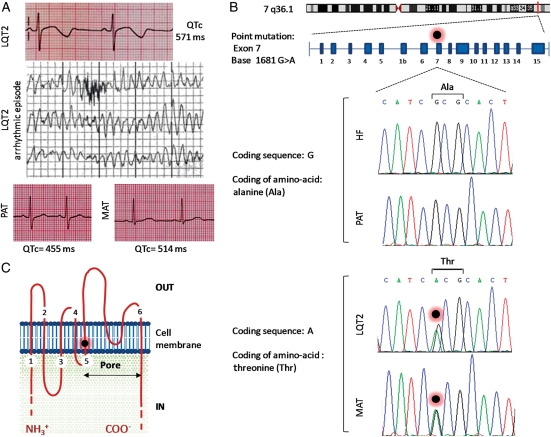
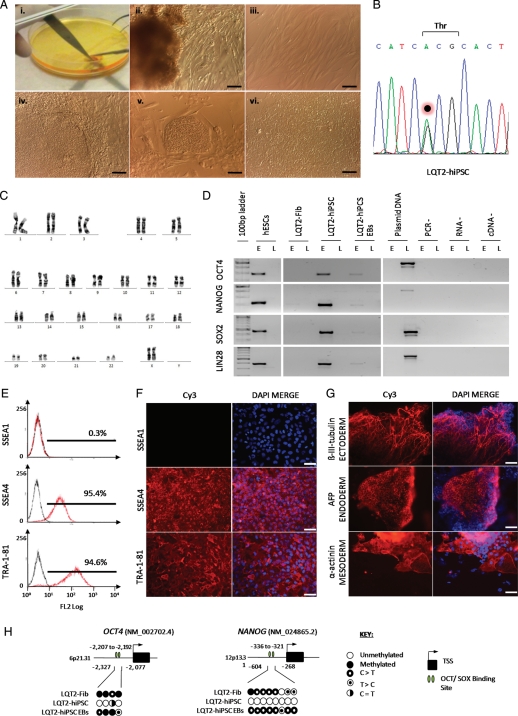
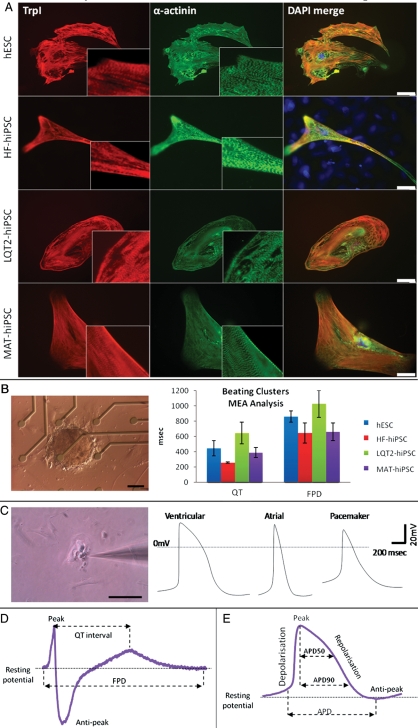
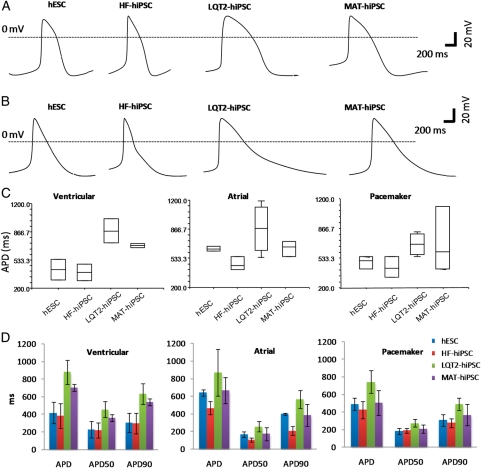
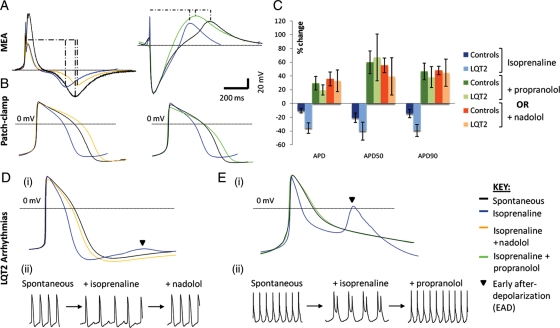
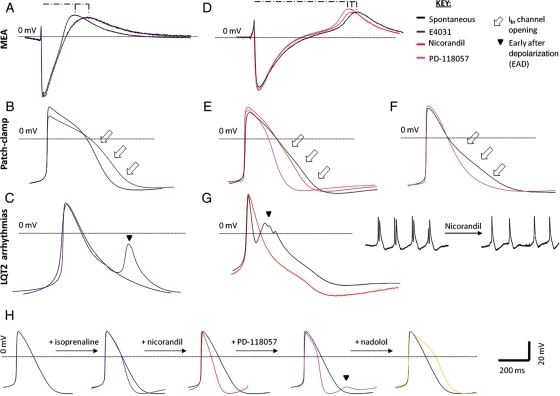
AIMS: Congenital long QT syndromes (LQTSs) are associated with prolonged ventricular repolarization and sudden cardiac death. Limitations to existing clinical therapeutic management strategies prompted us to develop a novel human in vitro drug-evaluation system for LQTS type 2 (LQT2) that will complement the existing in vitro and in vivo models. METHODS AND RESULTS: Skin fibroblasts from a patient with a KCNH2 G1681A mutation (encodes I(Kr) potassium ion channel) were reprogrammed to human induced pluripotent stem cells (hiPSCs), which were subsequently differentiated to functional cardiomyocytes. Relative to controls (including the patient's mother), multi-electrode array and patch-clamp electrophysiology of LQT2-hiPSC cardiomyocytes showed prolonged field/action potential duration. When LQT2-hiPSC cardiomyocytes were exposed to E4031 (an I(Kr) blocker), arrhythmias developed and these presented as early after depolarizations (EADs) in the action potentials. In contrast to control cardiomyocytes, LQT2-hiPSC cardiomyocytes also developed EADs when challenged with the clinically used stressor, isoprenaline. This effect was reversed by β-blockers, propranolol, and nadolol, the latter being used for the patient's therapy. Treatment of cardiomyocytes with experimental potassium channel enhancers, nicorandil and PD118057, caused action potential shortening and in some cases could abolish EADs. Notably, combined treatment with isoprenaline (enhancers/isoprenaline) caused EADs, but this effect was reversed by nadolol. CONCLUSIONS: Findings from this paper demonstrate that patient LQT2-hiPSC cardiomyocytes respond appropriately to clinically relevant pharmacology and will be a valuable human in vitro model for testing experimental drug combinations.
Overview
The claims and statistics of this paper haven’t been checked yet.
Free: it reads the open-access text and checks the first 5 claims that cite a source we can check. Create a free account to check every claim.
Integrity signals
Registry
Cites
Statistics
Figures
Verification
Claims the paper makes
The claims and statistics of this paper haven’t been checked yet.
Free: it reads the open-access text and checks the first 5 claims that cite a source we can check. Create a free account to check every claim.
Claims other papers make about this one
Each is checked against this paper’s own text: does it say what the citing paper says it does?
The source backs part of the claim, not all of it — or backs it for a different population, condition or comparison.
In the citing paper
“Traditionally, animal models, primary cells, embryonic stem cells (ESC), and immortalized cell lines derived from tumor cells are used to model a variety of human diseases [8,9,10,11].”
From Utility of iPSC-Derived Cells for Disease Modeling, Drug Development, and Cell Therapy (2022) · cites this paper as [10]
Experimental — accuracy not yet measuredThe cited source says what the claim attributes to it.
In the citing paper
“Matsa et al. used type-2 LQTS patients iPSC-derived cardiomyocytes to show that treatment with experimental potassium channel enhancers, nicorandil and PD118057, can cause action potential shortening [10].”
From Utility of iPSC-Derived Cells for Disease Modeling, Drug Development, and Cell Therapy (2022) · cites this paper as [10]
Self-check
Percentages, sums and reported differences re-computed from the paper’s own numbers.
The self-check needs the paper’s full text.
Citations
Cites
Induced Pluripotent Stem Cell Lines Derived from Human Somatic Cells
Yu, J., Vodyanik, M. A., Smuga-Otto, K., Antosiewicz-Bourget, J., Frane, J. L., Tian, S., Nie, J., Jonsdottir, G. A., Ruotti, V., Stewart, R., et al. (2007) · Science · doi:10.1126/science.1151526 · Cited by 10,310 · cited 2×
“Induced pluripotency involves reprogramming of somatic cells into human induced pluripotent stem cells (hiPSCs) by introducing genetic factors such as OCT4, SOX2, NANOG, and LIN28.”
Drug-induced prolongation of the QT interval
Roden, D. M. (2004) · New England Journal of Medicine · doi:10.1056/nejmra032426 · Cited by 1,965
Schwartz, P. J., Priori, S. G., Spazzolini, C., Moss, A. J., Vincent, G. M., Napolitano, C., Denjoy, I., Guicheney, P., Breithardt, G., Keating, M. T., et al. (2001) · Circulation · doi:10.1161/01.cir.103.1.89 · Cited by 1,779
hERG potassium channels and cardiac arrhythmia
Sanguinetti, M. C., & Tristani-Firouzi, M. (2006) · Nature · doi:10.1038/nature04710 · Cited by 1,572
Risk Stratification in the Long-QT Syndrome
Priori, S. G., Schwartz, P. J., Napolitano, C., Bloise, R., Ronchetti, E., Grillo, M., Vicentini, A., Spazzolini, C., Nastoli, J., Bottelli, G., et al. (2003) · New England Journal of Medicine · doi:10.1056/nejmoa022147 · Cited by 1,459
Patient-Specific Induced Pluripotent Stem-Cell Models for Long-QT Syndrome
Moretti, A., Bellin, M., Welling, A., Jung, C. B., Lam, J. T., Bott-Flügel, L., Dorn, T., Goedel, A., Höhnke, C., Hofmann, F., et al. (2010) · New England Journal of Medicine · doi:10.1056/nejmoa0908679 · Cited by 1,251
Modelling the long QT syndrome with induced pluripotent stem cells
Itzhaki, I., Maizels, L., Huber, I., Zwi-Dantsis, L., Caspi, O., Winterstern, A., Feldman, O., Gepstein, A., Arbel, G., Hammerman, H., et al. (2011) · Nature · doi:10.1038/nature09747 · Cited by 1,049
Mummery, C., Ward-van Oostwaard, D., Doevendans, P., Spijker, R., van den Brink, S., Hassink, R., van der Heyden, M., Opthof, T., Pera, M., de la Riviere, A. B., et al. (2003) · Circulation · doi:10.1161/01.cir.0000068356.38592.68 · Cited by 1,001
Effectiveness and Limitations of β-Blocker Therapy in Congenital Long-QT Syndrome
Moss, A. J., Zareba, W., Hall, W. J., Schwartz, P. J., Crampton, R. S., Benhorin, J., Vincent, G. M., Locati, E. H., Priori, S. G., Napolitano, C., et al. (2000) · Circulation · doi:10.1161/01.cir.101.6.616 · Cited by 841
Idiopathic long QT syndrome: Progress and questions
Schwartz, P. J. (1985) · American Heart Journal · doi:10.1016/0002-8703(85)90626-x · Cited by 629 · cited 1×
“manifestations varying from palpitations, syncope (fainting), and seizures(2,3) to cardiac arrest and sudden death.(4) Long QT syndrome has been associated with over 500 different mutations in at least 13 genes encoding cardiac ion channel proteins.”
Cited by
Items 301–387 of 387
Advances in Umbilical Cord Blood Therapy: Hematopoietic Stem Cell Transplantation and Beyond
Chow, T., Mueller, S., & Rogers, I. M. (2016) · Stem cell biology and regenerative medicine · doi:10.1007/978-3-319-29149-9_8 · Cited by 3
Human Pluripotent Stem Cell‐Derived Cardiomyocytes
Shukla, P., Garg, P., & Wu, J. C. (2016) · Wiley eBooks · doi:10.1002/9781119053248.ch22 · Cited by 3
Henze, S. (2016) · eDiss (Georg-August-Universität Göttingen) · doi:10.53846/goediss-6012 · Cited by 4
Modelling of Genetic Cardiac Diseases
Prajapati, C., & Aalto‐Setälä, K. (2019) · IntechOpen eBooks · doi:10.5772/intechopen.84965 · Cited by 2
Pinsky, A. M., Gao, X., Bains, S., Kim, C. J., Louradour, J., Odening, K. E., Tester, D. J., Giudicessi, J. R., & Ackerman, M. J. (2023) · Heart Rhythm · doi:10.1016/j.hrthm.2023.03.002 · Cited by 2
Pad, M., Nanni, L., Lahti, A., Severi, S., Aalto‐Setälä, K., & Hyttinen, J. (2011) · Archivio istituzionale della ricerca (Alma Mater Studiorum Università di Bologna) · Cited by 3
Utility of Human Stem Cells for Drug Discovery
Chintawar, S., Graf, M. R., & Cader, M. Z. (2014) · Royal Society of Chemistry eBooks · doi:10.1039/9781782620136-00162 · Cited by 2
Transformation to Inducible Pluripotent Stem Cells
Kodo, K., Ong, S., & Wu, J. C. (2015) · Elsevier eBooks · doi:10.1016/b978-0-12-801888-0.00020-5 · Cited by 3
Dirschinger, R. J., Dorn, T., & Moretti, A. (2019) · Cardiac and vascular biology · doi:10.1007/978-3-030-27371-2_10 · Cited by 2
Dasí, A., Hernández‐Romero, I., Gómez, J. F., Climent, A. M., Ferrero, J. M., & Trénor, B. (2021) · Computers in Biology and Medicine · doi:10.1016/j.compbiomed.2021.104796 · Cited by 3
Modeling Cardiac Congenital Diseases: From Mathematic Tools to Human Induced Pluripotent Stem Cells
Iop, L. (2014) · Conference Papers in Science · doi:10.1155/2014/369246 · Cited by 2
Human Stem‐Cell‐Derived Cardiomyocytes in Drug Discovery and Toxicity Testing
Szebényi, K., Péntek, A., Varga, N., Erdei, Z., Vőfély, G., Orbán, T. I., Sarkadi, B., & Apáti, Á. (2014) · Wiley eBooks · doi:10.1002/9781118856017.ch15 · Cited by 1
Restoring the resting potential brings maturity to induced stem cell–derived human cardiac myocytes
Clusin, W. T. (2013) · Heart Rhythm · doi:10.1016/j.hrthm.2013.10.015 · Cited by 3
Verkerk, A. O., Veerman, C. C., Hoekstra, M., Devalla, H. D., & Wilders, R. (2025) · Cells · doi:10.3390/cells14161226 · Cited by 1
van der Wilt, C. N., Veltrop, R. J. A., Janssens, M. H., Bakker, I. B. I., Stillitano, F., Sluijter, J. P. G., Laake, L. W. V., van der Velden, J., Villard, E., Montag, J., et al. (2025) · European Heart Journal Open · doi:10.1093/ehjopen/oeaf161 · Cited by 3
“51 52–54 These experiments also show promise for regenerative therapeutic options, including gene therapy and gene (genome) editing.”
Self-citationHuman Pluripotent Stem Cell-Derived Cardiomyocytes: Maturity and Electrophysiology
Kujala, V. J., Pekkanen-Mattila, M., & Aalto‐Setälä, K. (2011) · InTech eBooks · doi:10.5772/24625 · Cited by 1
Human Pluripotent Stem Cells and Drug Discovery: A New Beginning
Verma, V., Mehta, A. K., & Flora, S. J. S. (2016) · Defence Life Science Journal · doi:10.14429/dlsj.1.10060 · Cited by 1
Stem Cells in Regenerative Medicine: Prospects and Pitfalls
Zehravi, M., Shahid, O., Ghauri, A. K., Ghori, F. F., & Wahid, M. (2017) · National Journal of Health Sciences · doi:10.21089/njhs.23.0116 · Cited by 1
Stem Cell Therapy to Treat Heart Failure
Gara, E., Kosztin, A., Harding, S. E., & Földes, G. (2019) · Elsevier eBooks · doi:10.1016/b978-0-444-64046-8.00302-5 · Cited by 1
Liu, Z., Lami, B., Ikonomou, L., & Gu, M. (2023) · Seminars in Perinatology · doi:10.1016/j.semperi.2023.151729 · Cited by 1
Human Stem Cells for Drug Toxicity Evaluation: A Comprehensive Review
Idris, M. M., & Nawaz, S. S. (2025) · Journal of Current Toxicology and Venomics · doi:10.2174/0129505704335182241218112943 · Cited by 1
Generation of Patient Specific Stem Cells: A Human Model System
Simonsson, S., Boreström, C., & Asp, J. (2012) · InTech eBooks · doi:10.5772/35918 · Cited by 1
“Fibroblasts from patients with LQTS1 (Moretti et al., 2010) and LQTS2 (Itzhaki et al., 2011; Matsa et al., 2011) were reprogrammed and differentiated into the cardiac lineage.”
Cardiac Repolarization and Stem Cells: An Emerging Path Toward Precision Medicine
Gnecchi, M., Sala, L., & Schwartz, P. J. (2019) · Springer eBooks · doi:10.1007/978-3-030-22672-5_4 · Cited by 1
Human iPSCs and their uses in developmental toxicology
Edenfield, R. C., Siracusa, J. S., Wang, R., & Yu, X. (2021) · Elsevier eBooks · doi:10.1016/b978-0-12-822228-7.00012-6 · Cited by 1
How induced pluripotent stem cells changed the research status of polycystic ovary syndrome
Yu, Y. (2021) · Elsevier eBooks · doi:10.1016/b978-0-323-85765-9.00009-6 · Cited by 1
The HEART score for chest pain patients
Backus, B. E. (2012) · Utrecht University Repository (Utrecht University) · Cited by 1
High‐Throughput Screening Assays to Evaluate the Cardiotoxic Potential of Drugs
Mandenius, C., & Meyer, T. S. (2013) · Wiley eBooks · doi:10.1002/9781118538203.ch22 · Cited by 1
An Introduction to Cellular Reprogramming: The Plasticity of Cell Fates and Identities
Smith, K. P., Borowski, M., & Laning, J. C. (2014) · Wiley eBooks · doi:10.1002/9781118695746.ch8 · Cited by 1
Virus-free iPS-derived cardiomyocytes: a new piece in the puzzle of patient-tailored therapies
Barbuti, A. (2011) · Cardiovascular Research · doi:10.1093/cvr/cvr199 · Cited by 1
Mittal, N., & Domian, I. J. (2014) · Circulation Cardiovascular Genetics · doi:10.1161/circgenetics.114.000825 · Cited by 1
Cameron, K., Marriage, H. M., Hay, D. C., & Medine, C. N. (2015) · Wiley eBooks · doi:10.1002/9781118846193.ch9 · Cited by 1
Modelling genetic heart diseases with patient-specific induced pluripotent stem cells
Stauske, M. (2014) · eDiss (Georg-August-Universität Göttingen) · doi:10.53846/goediss-4692 · Cited by 1
Human pluripotent stem cells (hPSCs) for heart regeneration
Abilez, O. J., & Wu, J. C. (2014) · Elsevier eBooks · doi:10.1533/9780857096708.3.297
Haviland, S. S. (2013) · DigitalGeorgetown (Georgetown University Library)
Disease Models for the Genetic Cardiac Diseases
Pekkanen-Mattila, M., Rajala, K., & Aalto‐Setälä, K. (2013) · InTech eBooks · doi:10.5772/55773 · Cited by 1
Paci, M., Hyttinen, J., & Severi, S. (2012) · Archivio istituzionale della ricerca (Alma Mater Studiorum Università di Bologna)
Induced pluripotent stem cells and cell therapy
İskender, B., & Canatan, H. (2013) · Journal of Clinical and Experimental Investigations · doi:10.5799/ahinjs.01.2013.04.0346
Jambi, M. M., Ye, B., Gollob, M. H., & Davis, D. (2013) · Canadian Journal of Cardiology · doi:10.1016/j.cjca.2013.07.178
Hsu, Y., Shen, J.-W., & Lin, Y. (2015) · International Conference on Bio-Inspired Models of Network, Information and Computing Systems (BIONETICS) · doi:10.4108/icst.bict.2014.258051 · Cited by 1
Kawaguchi, N., Hayama, E., Furutani, Y., Shimada, M., Okita, K., Nagashima, Y., Takeuchi, D., Matsuoka, R., & Nakanishi, T. (2015) · Japanese Society of Pediatric Cardiology and Cardiac Surgery · doi:10.9794/jspccs.31.313
iPS Cells and Cardiomyopathies
Nakahama, H., & Pasquale, E. D. (2015) · Stem cell biology and regenerative medicine · doi:10.1007/978-3-319-18314-5_6
dos Santos, D. G. B. (2015) · Digital Library of Theses and Dissertations (Universidade de São Paulo) · doi:10.11606/t.5.2015.tde-12082015-155410 · Cited by 2
Diogo Gonçalves Biagi dos Santos
Paulo, S. (2015)
Modeling Arrhythmogenic Heart Disease with Patient-Specific Induced Pluripotent Stem Cells
Sinnecker, D., Goedel, A., Dirschinger, R. J., Moretti, A., & Laugwitz, K. (2013) · CRC Press eBooks · doi:10.1201/b14990-17
Kang, H. Y., & Jeung, E. (2016) · Stem cell biology and regenerative medicine · doi:10.1007/978-3-319-33270-3_2
Ahuja, V., Sharma, S., & Kamboj, R. (2016) · Royal Society of Chemistry eBooks · doi:10.1039/9781782626787-00124
Use of Stem Cells in Toxicology
Matz, P., Spitzhorn, L., Otte, J., Kawala, M.-A., Woestmann, J., Yigit, H., Wruck, W., & Adjaye, J. (2016) · Elsevier eBooks · doi:10.1016/b978-0-12-409547-2.12380-7
Differentiation of hiPSC-Derived Cardiomyocytes
Zanella, F., & Sheikh, F. (2016) · Springer eBooks · doi:10.1007/978-3-319-30582-0_13
Congenital Heart Diseases and Disease-specific iPS Cells
Kobayashi, J., Sano, S., & Oh, H. (2015) · Japanese Society of Pediatric Cardiology and Cardiac Surgery · doi:10.9794/jspccs.31.138
Modelling Brugada Syndrome using induced pluripotent stem cells
Sendfeld, F. (2015) · ERA
Li, W. (2017) · eDiss (Georg-August-Universität Göttingen) · doi:10.53846/goediss-6220
Zhang, J., Qu, J., & Wang, J. (2014)
Human iPSC-Derived Cardiac Myocytes: Toward an In Vitro Model of Cardiac Physiology
Wheelwright, M. (2017) · University of Minnesota Digital Conservancy (University of Minnesota)
OBSOLETE: Cardiac Biomechanics in Normal Physiology and Disease
Broughton, K. M. (2017) · Elsevier eBooks · doi:10.1016/b978-0-12-801238-3.11059-1
Elena Matsa: Lighting Fires for Heart Disease
Goldberg-Smith, P. (2017) · Circulation Research · doi:10.1161/circresaha.117.312018
Generation and Application of Human Pluripotent Stem Cell-Derived Cardiomyocytes
Schuldt, A. J. T., Romero‐Tejeda, M., & Burridge, P. W. (2017) · Cardiac and vascular biology · doi:10.1007/978-3-319-56106-6_4
Kurokawa, Y. K. (2017) · Open Scholarship Institutional Repository (Washington University in St. Louis) · doi:10.7936/k7db818f
Veronez, D. M. (2018) · Digital Library of Theses and Dissertations (Universidade de São Paulo) · doi:10.11606/t.3.2018.tde-27082018-134139
Induced Pluripotent Stem Cell-Derived Cardiomyocytes: Towards Personalized Therapeutic Strategies?
Sinnecker, D., & Moretti, A. (2018) · Cardiac and vascular biology · doi:10.1007/978-3-319-77812-9_16
Modeling Cardiomyopathies with iPSCs
Hulot, J. (2019) · Current human cell research and applications · doi:10.1007/978-981-13-3672-0_5
Yamamoto, Y., & Makiyama, T. (2019) · Japanese Journal of Electrocardiology · doi:10.5105/jse.39.273
Potta, S. P., Šarić, T., Heke, M., & Hescheler, J. (2013) · Springer eBooks · doi:10.1007/978-1-4614-7696-2_23
Induced pluripotent stem cells for treatment of heart failure
Miyagawa, S., & Sawa, Y. (2021) · Elsevier eBooks · doi:10.1016/b978-0-12-822229-4.00004-8
Induced Pluripotent Stem Cells
van Mil, A., Neef, K., Balk, G. M., Buikema, J. W., Sluijter, J. P. G., & Doevendans, P. A. (2020) · Springer eBooks · doi:10.1007/978-3-030-45457-9_26
Zhu, Y., Wang, L., Cui, C., Chen, S., Chen, H., Qin, H., Lin, Y., Cheng, H., Jiang, X., & Chen, M. (2020) · Research Square · doi:10.21203/rs.3.rs-70177/v1
Christidi, E. (2021) · cIRcle (University of British Columbia) · doi:10.14288/1.0402336
The Regenerative Medicine for Heart Failure: From Transplant Therapy to In Vitro Study
Miyagawa, S. (2021) · Japanese Society of Pediatric Cardiology and Cardiac Surgery · doi:10.9794/jspccs.37.73
Induced pluripotent stem cells for modeling of cardiac arrhythmias
Sayed, Z. R. A., Corli, M., Masurkar, N. D., & Hulot, J. (2021) · Elsevier eBooks · doi:10.1016/b978-0-323-85765-9.00002-3
Differentiation and Use of Cardiomyocytes Derived from Human Pluripotent Stem Cells
Földes, G., & Mioulane, M. (2012) · Springer eBooks · doi:10.1007/978-94-007-5645-8_7
Borchert, T. (2021) · eDiss (Georg-August-Universität Göttingen) · doi:10.53846/goediss-8874
Genome Editing in Cellular Disease Models
Theurey, P., Thiam, K., Chérifi, Y., Fraichard, A., & Rezza, A. (2022) · Wiley eBooks · doi:10.1002/9781119671404.ch6
Matsa, E., Sallam, K., & Wu, J. C. (2016) · Springer eBooks · doi:10.1007/978-4-431-55966-5_2
Self-citationStem Cell Therapy to Treat Heart Failure☆
Kosztin, A., Gara, E., Harding, S. E., & Földes, G. (2014) · Elsevier eBooks · doi:10.1016/b978-0-12-801238-3.04239-2 · Cited by 1
Cardiac Biomechanics in Normal Physiology and Disease
Broughton, K. M. (2017) · Elsevier eBooks · doi:10.1016/b978-0-12-809657-4.11059-2
Bhowmik, A. T., Zhao, S. R., & Wu, J. C. (2023) · bioRxiv (Cold Spring Harbor Laboratory) · doi:10.1101/2023.04.06.535946
Tyagi, R., & Sharma, S. S. (2023) · Springer eBooks · doi:10.1007/978-981-19-7834-0_6
Follin, B., Caluori, G., Dobrolińska, M. M., Stachura, J., Muzzamil, H., Wojakowski, W., Qayyum, A. A., & Jadczyk, T. (2023) · Springer eBooks · doi:10.1007/978-981-99-0722-9_3
Sinnecker, D., Dorn, T., Dirschinger, R. J., Goedel, A., Moretti, A., & Laugwitz, K. (2012) · Springer eBooks · doi:10.1007/978-94-007-5645-8_9
Kanthan, A. (2013) · The Sydney eScholarship Repository (The University of Sydney)
Laaref, A. M. (2017) · theses.fr (ABES) · doi:10.70675/c2cfd784z5dd2z47cez9ddcz4ee6e8af424e
Rudquist, E. V., Garmany, R., Dikiltas, O., Tester, D. J., Dasari, S., Giudicessi, J. R., & Ackerman, M. J. (2026) · Heart Rhythm · doi:10.1016/j.hrthm.2026.03.1891
The promise of biased ligands in therapeutics
Eiger, D. S., Smith, J. S., & Rajagopal, S. (2026) · Pharmacological Reviews · doi:10.1016/j.pharmr.2026.100160
Karami, N., Knafl, S., Wanzenboeck, H. D., & Prado‐Lòpez, S. (2026) · Frontiers in Electronics · doi:10.3389/felec.2026.1886715
“Due to the transient culture of adult cardiomyocytes, scientists have turned to human induced pluripotent stem cell derived cardiomyocytes and more recently organoids (Hsueh et al., 2023; Matsa et al., 2011).”
Loggia, D., Castagnola, G., & Hébert, T. E. (2026) · Cellular Signalling · doi:10.1016/j.cellsig.2026.112926
Paavola, K. (2015) · Tampere University Institutional Repository (Tampere University)
G, M. V. S. D. S. (2015) · Narayana Medical Journal
Metadata
- Authors
- Matsa, E., Rajamohan, D., Dick, E., Young, L., Mellor, I., Staniforth, A., & Denning, C.
- Affiliations
- University of Nottingham (GB)
- Queen's Medical Centre (GB)
- Corresponding author
- Denning, Chris
- Venue
- European Heart Journal
- Publisher
- Oxford University Press (OUP)
- Published
- 2011-03-02
- Volume
- 32
- Issue
- 8
- Pages
- 952-962
- ISSN
- 0195-668X (ISSN-L)
- 1522-9645
- PMC
- PMC3076668
- OpenAlex
- W2155235762
- Cited by
- 389
- References
- 42
- Citations by year
- 2026: 4 · 2025: 8 · 2024: 7 · 2023: 10 · 2022: 14 · 2021: 23 · 2020: 19 · 2019: 22 · 2018: 21 · 2017: 30 · 2016: 38 · 2015: 45 · 2014: 42 · 2013: 44 · 2012: 45
- FWCI
- 32.44
- Type
- journal article
- Language
- en
- Open access
- green
- www.ncbi.nlm.nih.gov
- Licence
- cc-by-nc
- Locations
- European Heart Journal (publishedVersion)
- Europe PMC (PubMed Central) (publishedVersion, cc-by-nc)
- PubMed Central (publishedVersion, cc-by-nc)
- PubMed (publishedVersion)
- Funders
- British Heart Foundation (PG/09/027/27141)
- Medical Research Council
- Biotechnology and Biological Sciences Research Council (BB/E006159/1, BBS/B/06164)
- Topics
- Health Sciences › Medicine › Cardiology and Cardiovascular Medicine › Cardiac electrophysiology and arrhythmias
- Life Sciences › Biochemistry, Genetics and Molecular Biology › Molecular Biology › Pluripotent Stem Cells Research
- Life Sciences › Biochemistry, Genetics and Molecular Biology › Molecular Biology › Ion channel regulation and function
- Keywords
- long QT syndrome type 2, drug evaluation, early afterdepolarizations, action potential duration, isoproterenol, beta-blockers, propranolol, nadolol, nicorandil, sudden cardiac death, repolarization
- MeSH terms
- ERG1 Potassium Channel, Adolescent, Adrenergic beta-Agonists, Adrenergic beta-Antagonists, Anti-Arrhythmia Agents, Calcium Channel Blockers, Chromosomes, Human, Pair 7, Drug Evaluation, Preclinical, Electrocardiography, Female, Humans, Isoproterenol, Long QT Syndrome, Point Mutation, Nicorandil, Myocytes, Cardiac, Ether-A-Go-Go Potassium Channels, Induced Pluripotent Stem Cells
About these checks
Registry, retraction, Cites and statistics results are computed, not judged, with one exception: a printed reference that no index lists is read once by a model before it counts as a citation error. Claims are extracted by a model and kept only when their quote appears verbatim in the text; each cited source is then checked, with a model’s help, for whether it says what the claim relies on. Those verdicts can be wrong — read the claim’s quote and the cited source before relying on one.
Statistics and arithmetic are recomputed, not judged.
Confidence bands are shown only for fields calibrated on our annotated test set. None is calibrated yet, so no band is shown.
What counts as a claim ›How we measure confidence ›How we check this ›
Are you an author, or do you see a problem with this page? Request a review
Data sources
Bibliographic data: Semantic Scholar, OpenAlex, Crossref.
Contains information from the Semantic Scholar Academic Graph Datasets, made available under the ODC Attribution License (ODC-BY 1.0).
Semantic Scholar’s data is described in: Kinney, R., et al. (2023). The Semantic Scholar Open Data Platform. arXiv:2301.10140.
