

A randomized trial of long-term remote monitoring of pacemaker recipients (The COMPAS trial)
Open accessThe DOI matches its Crossref record; 19 of the 19 references it cites were found in a registry or an index.
Abstract
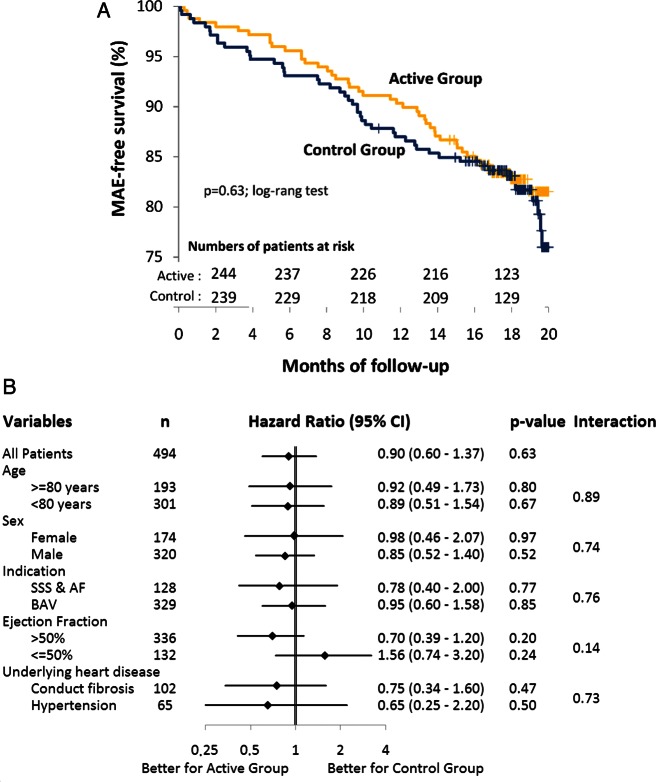
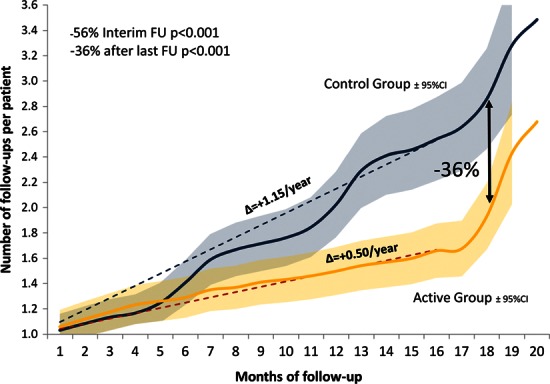
AIMS: Professional practice guidelines recommend that pacemaker recipients be followed regularly. However, the majority of scheduled ambulatory visits is unproductive and imposes a heavy burden on the health-care system. METHODS AND RESULTS: The COMPAS randomized, multicentre, non-inferiority trial examined the safety of long-term remote monitoring of pacemakers. Between December 2005 and January 2008, 538 patients were randomly assigned to remote monitoring follow-up (active group) vs. standard care (control group). The primary objective was to confirm that the proportion of patients who experienced at least one major adverse event (MAE), including all-cause death and hospitalizations for device-related or cardiovascular adverse events, was not >7% higher in the active than in the control group. MAE-free survivals and quality of life were compared in both groups. The characteristics of the study groups were similar. Over a follow-up of 18.3 months, 17.3% of patients in the active and 19.1% in the control group experienced at least one MAE (P < 0.01 for non-inferiority). Hospitalizations for atrial arrhythmias (6 vs. 18) and strokes (2 vs. 8) were fewer (P < 0.05), and the number of interim ambulatory visits was 56% lower (P < 0.001) in the active than the control group. Changes in pacemaker programming or drug regimens were made in 62% of visits in the active vs. 29% in the control group (P < 0.001). Quality of life remained unchanged in both groups. CONCLUSION: Remote monitoring was a safe alternative to conventional care and significantly lowered the number of ambulatory visits during long-term follow-up of permanently paced patients. ClinicalTrials.gov identifier: NCT00989326.
Overview
The claims and statistics of this paper haven’t been checked yet.
Free: it reads the open-access text and checks the first 5 claims that cite a source we can check. Create a free account to check every claim.
Integrity signals
Registry
Cites
Statistics
Figures
Verification
Claims the paper makes
The claims and statistics of this paper haven’t been checked yet.
Free: it reads the open-access text and checks the first 5 claims that cite a source we can check. Create a free account to check every claim.
Claims other papers make about this one
Each is checked against this paper’s own text: does it say what the citing paper says it does?
The source backs part of the claim, not all of it — or backs it for a different population, condition or comparison.
In the citing paper
“In the similar, more recent Chronicle Offers Management to Patients with Advanced Signs and Symptoms of Heart Failure (COMPAS) trial, both ambulatory visits and hospitalizations were fewer in those randomly assigned to remote follow-up.58”
From Managing with pacemakers and implantable cardioverter defibrillators (2013) · cites this paper as [58]
Experimental — accuracy not yet measured
Self-check
Percentages, sums and reported differences re-computed from the paper’s own numbers.
The self-check needs the paper’s full text.
Citations
Cites
(1992) · PubMed · Cited by 33,716
The MOS 36-ltem Short-Form Health Survey (SF-36): I. Conceptual Framework and Item Selection
Ware, J. E., & Sherbourne, C. D. (1992) · Medical Care · doi:10.1097/00005650-199206000-00002 · Cited by 30,033
ACC/AHA/HRS 2008 guidelines for device-based therapy of cardiac rhythm abnormalities
Epstein, A. E., DiMarco, J. P., Ellenbogen, K. A., Estes, N. A. M., Freedman, R. A., Gettes, L. S., Gillinov, A. M., Gregoratos, G., Hammill, S. C., Hayes, D. L., et al. (2008) · Journal of the American College of Cardiology · doi:10.1016/j.jacc.2008.02.032 · Cited by 2,546
Writing Committee Members, Epstein, A. E., DiMarco, J. P., Ellenbogen, K. A., Estes, N. A. M., Freedman, R. A., Gettes, L. S., Gillinov, A. M., Gregoratos, G., Hammill, S. C., et al. (2008) · Circulation · doi:10.1161/circualtionaha.108.189742 · Cited by 1,774
THE MOS 36- ITEM SHORT FORM HEALTH SURVEY (SF- 36) CONCEPTUAL FRAMEWORK AND ITEM SELECTION
J.E.Jr., W., & Sherburne, C. D. (1992) · Cited by 1,586
Authors/Task Force Members, Vardas, P. E., Auricchio, A., Blanc, J.-J., Daubert, J.-C., Drexler, H., Ector, H., Gasparini, M., Linde, C., Morgado, F. B., et al. (2007) · European Heart Journal · doi:10.1093/eurheartj/ehm305 · Cited by 902
Self-citationCleland, J. G. F., Louis, A. A., Rigby, A. S., Janssens, U., & Balk, A. H. M. M. (2005) · Journal of the American College of Cardiology · doi:10.1016/j.jacc.2005.01.050 · Cited by 700
Varma, N., Epstein, A. E., Irimpen, A., Schweikert, R., & Love, C. (2010) · Circulation · doi:10.1161/circulationaha.110.937409 · Cited by 594
The CONNECT (Clinical Evaluation of Remote Notification to Reduce Time to Clinical Decision) Trial
Crossley, G. H., Boyle, A., Vitense, H., Chang, Y., & Mead, R. H. (2011) · Journal of the American College of Cardiology · doi:10.1016/j.jacc.2010.12.012 · Cited by 526
Single-Chamber versus Dual-Chamber Pacing for High-Grade Atrioventricular Block
Toff, W. D., Camm, A. J., & Skehan, J. D. (2005) · New England Journal of Medicine · doi:10.1056/nejmoa042283 · Cited by 384
Cited by
Items 101–200 of 346
Ferrick, A. M., Raj, S. R., Deneke, T., Kojodjojo, P., López-Cabanillas, N., Abe, H., Bovéda, S., Chew, D. S., Choi, J., Dagres, N., et al. (2023) · Journal of Arrhythmia · doi:10.1002/joa3.12851 · Cited by 23
Morichelli, L., Porfili, A., Quarta, L., Sassi, A., & Ricci, R. P. (2014) · Journal of Interventional Cardiac Electrophysiology · doi:10.1007/s10840-014-9935-6 · Cited by 24
“Some studies reported no difference in quality of life and patient satisfaction when compared with conventional follow-up strategy [10, 11].”
ResultBrunetti, N. D., Molinari, G., Acquistapace, F., Zimotti, T., Parati, G., Indolfi, C., Fedele, F., & Carugo, S. (2020) · Open Heart · doi:10.1136/openhrt-2019-001157 · Cited by 21
Cardiac strangulation from epicardial pacemaker leads: diagnosis, treatment, and prevention
Takeuchi, D., & Tomizawa, Y. (2014) · General Thoracic and Cardiovascular Surgery · doi:10.1007/s11748-014-0483-x · Cited by 21
Yang, H., Kim, H., & Mtonga, K. (2014) · Peer-to-Peer Networking and Applications · doi:10.1007/s12083-014-0299-6 · Cited by 20
“For instance, hackers could access pacemakers from distance and deliver deadly shocks [7].”
BackgroundNishii, N., Miyoshi, A., Kubo, M., Miyamoto, M., Morimoto, Y., Kawada, S., Nakagawa, K., Watanabe, A., Nakamura, K., Morita, H., et al. (2017) · Journal of Cardiovascular Electrophysiology · doi:10.1111/jce.13399 · Cited by 21
“If someof the following abnormalitiesweredetected in theoutpatient clinic, lead failure was confirmed: (1) recurrent nonphysiological high-rate sensing (electrical noise); (2) a sudden pace/sense or highvoltage impedance change (>100% increase or>50%decrease) or rise in pace/sense conductor impedance to >1,500–2,500 Ω…”
BackgroundTelecardiología: pasado, presente y futuro
Sørensen, J. T., Clemmensen, P. M., & Sejersten, M. (2013) · Revista Española de Cardiología · doi:10.1016/j.recesp.2012.11.007 · Cited by 25
Cost efficiency and reimbursement of remote monitoring: a US perspective
Slotwiner, D. J., & Wilkoff, B. L. (2013) · EP Europace · doi:10.1093/europace/eut109 · Cited by 22
“strated that 78% of scheduled ICD follow-up visits and 71% of PM in-person visits do not result in device reprogramming, medication changes, or other changes in patient management.(7,10) These findings”
BackgroundA Systematic Review of Economic Evaluations of Pacemaker Telemonitoring Systems
López-Villegas, A., Catalán-Matamoros, D., Martín-Saborido, C., Villegas-Tripiana, I., & Robles-Musso, E. (2016) · Revista Española de Cardiología (English Edition) · doi:10.1016/j.rec.2015.06.020 · Cited by 19
Fazio, R. D., Giannoccaro, N. I., Carrasco, M., Velázquez, R., & Visconti, P. (2021) · Frontiers of Information Technology & Electronic Engineering · doi:10.1631/fitee.2100085 · Cited by 24
“The introduction of remote monitoring of the patient’s cardiovascular condition was proposed by Mabo et al. (2012), who reported the main results of the COMPASS trial, a randomized trial for long-term remote monitoring of patients implanted with a pacemaker.”
BackgroundCapucci, A., Simone, A. D., Luzi, M., Calvi, V. I., Stabile, G., D’Onofrio, A., Maffei, S., Leoni, L., Morani, G., Sangiuolo, R., et al. (2017) · EP Europace · doi:10.1093/europace/eux017 · Cited by 23
López‐Liria, R., López-Villegas, A., Enebakk, T., Thunhaug, H., Lappegård, K. T., & Catalán-Matamoros, D. (2019) · International Journal of Environmental Research and Public Health · doi:10.3390/ijerph16112001 · Cited by 28
“However, in a study on long-term telemonitoring of PM patients (the COMPAS randomised, multicentre, non-inferiority trial) [12], a comparative follow-up schedule with a home monitoring trial showed that the differences in HRQoL between the remotely monitored patients and those followed up using standard methods were n…”
BackgroundRemote monitoring of pacemakers
Ploux, S., Strik, M., Varma, N., Eschalier, R., & Bordachar, P. (2021) · Archives of cardiovascular diseases · doi:10.1016/j.acvd.2021.06.007 · Cited by 24
Remote Monitoring of CIEDs—For Both Safety, Economy and Convenience?
Lappegård, K. T., & Moe, F. (2021) · International Journal of Environmental Research and Public Health · doi:10.3390/ijerph19010312 · Cited by 20
“Whether an increased feeling of confidence can be translated into standard measures of quality of life is, however, uncertain, as results have been conflicting in nonrandomized [55] and randomized trials [42,56,57].”
Emerging Role of Digital Technology and Remote Monitoring in the Care of Cardiac Patients
Banchs, J. E., & Scher, D. M. (2015) · Medical Clinics of North America · doi:10.1016/j.mcna.2015.02.013 · Cited by 22
Detection of RF unsafe devices using a parallel transmission MR system
Graesslin, I., Krueger, S., Vernickel, P., Achtzehn, J., Nehrke, K., & Weiß, S. (2012) · Magnetic Resonance in Medicine · doi:10.1002/mrm.24558 · Cited by 18
Muller, A. M., Rybak, K., Klingenheben, T., Schumacher, B., Israel, C. W., Helms, T. M., Oeff, M., Perings, C. A., Sack, S., Piorkowski, C., et al. (2013) · Der Kardiologe · doi:10.1007/s12181-013-0496-1 · Cited by 22
Ogino, Y., Ishikawa, T., Ishigami, T., Matsumoto, K., Hosoda, J., Iguchi, K., Matsushita, H., Taguchi, Y., Horiguchi, Y., & Kimura, K. (2017) · Circulation Journal · doi:10.1253/circj.cj-16-1018 · Cited by 17
López-Villegas, A., Catalán-Matamoros, D., López‐Liria, R., Enebakk, T., Thunhaug, H., & Lappegård, K. T. (2018) · BMC Geriatrics · doi:10.1186/s12877-018-0911-3 · Cited by 22
Andersen, T. O., Nielsen, K. D., Moll, J., & Svendsen, J. H. (2019) · International Journal of Medical Informatics · doi:10.1016/j.ijmedinf.2019.06.021 · Cited by 19
Oliveira, M., Canesin, M. F., Marcolino, M., Ribeiro, A. L. P., Carvalho, A., Reddy, S., SANTOS, A. G. Z. L., Fernandes, M., Amaral, A., Rezende, A., et al. (2015) · Arquivos Brasileiros de Cardiologia · doi:10.5935/abc.20150057 · Cited by 86
Bautista-Mesa, R. J., López-Villegas, A., Peiró, S., Catalán-Matamoros, D., Robles‐Musso, E., López‐Liria, R., & Leal‐Costa, C. (2020) · BMC Geriatrics · doi:10.1186/s12877-020-01883-3 · Cited by 20
“Remote monitoring (RM), an alternative to conventional monitoring (CM) appeared two decades ago [1, 3, 4] in hospitals.”
BackgroundMethodResultLópez-Villegas, A., Catalán-Matamoros, D., Robles‐Musso, E., & Peiró, S. (2015) · Revista Española de Salud Pública · doi:10.4321/s1135-57272015000200004 · Cited by 16
Ošmera, O., & Bulava, A. (2014) · PubMed · Cited by 17
Clinical recognition of pacemaker battery depletion and automatic reprogramming
Sinha, S. K., Chrispin, J., Barth, A. S., Rickard, J., SPRAGG, D. D., Berger, R. D., Calkins, H. G., Tomaselli, G. F., & Marine, J. E. (2017) · Pacing and Clinical Electrophysiology · doi:10.1111/pace.13135 · Cited by 18
Zulfiqar, A., Vaudelle, O., Hajjam, M., Gény, B., Talha, S., Letourneau, D., Hajjam, J., Ervé, S., Hassani, A. H. E., & Andrès, E. (2020) · Journal of Clinical Medicine · doi:10.3390/jcm9123836 · Cited by 16
Sutton, R. (2013) · EP Europace · doi:10.1093/europace/eut108 · Cited by 15
Varma, N., Cygankiewicz, I., Turakhia, M. P., Heidbuchel, H., Hu, Y., Chen, L. Y., Couderc, J.-P., Cronin, E. M., Estep, J. D., Grieten, L., et al. (2021) · Cardiovascular Digital Health Journal · doi:10.1016/j.cvdhj.2020.11.004 · Cited by 20
“From a payer perspective, there was a trend for cost-saving given fewer and shorter hospitalizations, seen also in other trials (Crossley 2011, Guedon-Moreau 2014, Hindricks 2014, Mabo 2012).”
BackgroundLópez-Villegas, A., Catalán-Matamoros, D., Robles‐Musso, E., & Peiró, S. (2015) · Clinical Research in Cardiology · doi:10.1007/s00392-015-0921-5 · Cited by 15
Schmidt, C., Öner, A. Ö., Mann, M., Krockenberger, K., Abbondanzieri, M., Brandewiede, B., Brüge, A., Hostenkamp, G., Kaiser, A., Neumeyer, H., et al. (2018) · Trials · doi:10.1186/s13063-018-2502-1 · Cited by 14
López-Villegas, A., Catalán-Matamoros, D., Saborido, C. M., Villegas-Tripiana, I., & Robles‐Musso, E. (2015) · Revista Española de Cardiología · doi:10.1016/j.recesp.2015.06.021 · Cited by 17
Shen, Z., Zheng, F., Zhong, Z., Ding, S., & Wang, L. (2019) · Nursing and Health Sciences · doi:10.1111/nhs.12595 · Cited by 23
The Use of App-based Follow-up of Cardiac Implantable Electronic Devices
Roberts, P. R., & ElRefai, M. (2020) · Cardiac failure review · doi:10.15420/cfr.2019.13 · Cited by 15
“Furthermore, the Evaluate the Benefits of Pacemaker Follow-Up With HomeMonitoring (COMPAS) trial demonstrated that there were 66% fewer hospitalisations as a result of atrial arrhythmias and overall 56% fewer ambulatory visits for the remotely monitored pacemaker recipients.(12) This all translates into lower healthca…”
Unexpected high failure rate of a specific MicroPort/LivaNova/Sorin pacing lead
Haeberlin, A., Anwander, M.-T., Kueffer, T., Tholl, M., Baldinger, S. H., Servatius, H., Lam, A., Franzeck, F., Asatryan, B., Zurbuchen, A., et al. (2020) · Heart Rhythm · doi:10.1016/j.hrthm.2020.08.010 · Cited by 14
Varma, N., Cygankiewicz, I., Turakhia, M. P., Heidbüchel, H., Hu, Y., Chen, L. Y., Couderc, J., Cronin, E. M., Estep, J. D., Grieten, L., et al. (2021) · European Heart Journal - Digital Health · doi:10.1093/ehjdh/ztab001 · Cited by 22
Telecardiology: Past, Present and Future
Sørensen, J. T., Clemmensen, P. M., & Sejersten, M. (2013) · Revista Española de Cardiología (English Edition) · doi:10.1016/j.rec.2013.01.001 · Cited by 21
Incidence and predictors of pacemaker reprogramming: potential consequences for remote follow-up
Udo, E. O., van Hemel, N. M., Zuithoff, N. P. A., Barrett, M. J., RUITER, J. H., Doevendans, P. A., & Moons, K. G. M. (2013) · EP Europace · doi:10.1093/europace/eut002 · Cited by 14
“Therefore, efforts are undertaken to replace routine in-office technical PM check-up by a remote FU.(4,23) At present reprogramming of PM settings is the only action in PM FU that cannot be performed remotely, requiring in-office contact.”
BackgroundMoya‐Mitjans, À., Sancho-Tello, M. J., Arenal, Á., Fidalgo, M. L., Brugada, R., Ferrer, J. M., Merino, J. L., Mateas, F. R., & Mont, J. L. (2012) · Revista Española de Cardiología · doi:10.1016/j.recesp.2012.10.003 · Cited by 20
Comoretto, R. I., Facchin, D., Ghidina, M., Proclemer, A., & Gregori, D. (2017) · Journal of Evaluation in Clinical Practice · doi:10.1111/jep.12691 · Cited by 20
“482 Main comorbities Hypertension 84 (21) 94 (16) 88 (37) .”
Facchin, D., Baccillieri, S., GASPARINI, G., Zoppo, F., Allocca, G., Brieda, M., Verlato, R., & Proclemer, A. (2016) · International Journal of Cardiology · doi:10.1016/j.ijcard.2016.06.162 · Cited by 18
van Dongen, D. N., Tolsma, R. T., Fokkert, M. J., Badings, E., van der Sluis, A., Slingerland, R. J., Hof, A. W. J. V. ’., Riet, E. V. ‘., & Ottervanger, J. P. (2020) · Future Cardiology · doi:10.2217/fca-2019-0030 · Cited by 13
Atrial fibrillation: an arrhythmia that makes healthcare systems tremble.
Martignani, C., Massaro, G., Biffi, M., Ziacchi, M., & Diemberger, I. (2020) · Journal of Medical Economics · doi:10.1080/13696998.2020.1752220 · Cited by 15
Leitch, J. W., Asakai, H., Dawson, L., MEDI, C., Norman, M., Stevenson, I., Toal, E., Turnbull, S., & Young, G. D. (2022) · Heart Lung and Circulation · doi:10.1016/j.hlc.2022.05.001 · Cited by 12
Mittal, S., Movsowitz, C., & Varma, N. (2014) · Cardiology Clinics · doi:10.1016/j.ccl.2014.01.001 · Cited by 14
Russo, V., Rapacciuolo, A., Rago, A., Tavoletta, V., Vivo, S. D., Ammirati, G., Pergola, V., Ciriello, G. D., Napoli, P., Nigro, G., et al. (2022) · Journal of Arrhythmia · doi:10.1002/joa3.12685 · Cited by 13
Cruz, M. C., Monteiro, A. V., Portugal, G., Laranjo, S. M., Lousinha, A., Valente, B. T., Osório, P., Cunha, P. S., de Sousa, L., Oliveira, J. A., et al. (2019) · Congenital Heart Disease · doi:10.1111/chd.12767 · Cited by 12
The patient perspective on remote monitoring of implantable cardiac devices
Hillmann, H. A. K., Hansen, C., PRZIBILLE, O., & Duncker, D. (2023) · Frontiers in Cardiovascular Medicine · doi:10.3389/fcvm.2023.1123848 · Cited by 14
“It is non-inferior to in-person follow-up visits regarding patients with single or dual chamber pacemaker (PM) devices and activated automatic threshold algorithms (5), as well as patients with an implantable cardioverter-defibrillator (ICD) (4, 6–8).”
BackgroundMethodNagel, B. H. P., Janoušek, J., Köestenberger, M., Maier, R., Sauseng, W., Strenger, V., Gamillscheg, A., & Zartner, P. A. (2013) · Circulation Journal · doi:10.1253/circj.cj-13-0670 · Cited by 11
Nägele, H., Lipoldová, J., Oswald, H., Klein, G. G., Elvan, A., Vester, E. G., Bauer, W. R., Bondke, H., Reif, S., Daub, C., et al. (2015) · EP Europace · doi:10.1093/europace/euu349 · Cited by 11
Siebermair, J., Clauß, S., Martens, E., Schuessler, F., OVERSOHL, N., Haserück, N., Estner, H., Kääb, S., & Wakili, R. (2014) · Herz · doi:10.1007/s00059-014-4080-7 · Cited by 14
Manna, T., & Misra, I. S. (2019) · Physical Communication · doi:10.1016/j.phycom.2019.100713 · Cited by 12
DNVF-Memorandum – Gesundheits- und Medizin-Apps (GuMAs)
Krämer, U., Borges, U., Fischer, F., Hoffmann, W. U., Pobiruchin, M., & Vollmar, H. C. (2019) · Das Gesundheitswesen · doi:10.1055/a-1038-9173 · Cited by 13
Home Monitoring for Cardiovascular Implantable Electronic Devices
Leahy, R. A., & Davenport, E. E. (2015) · AACN Advanced Critical Care · doi:10.1097/nci.0000000000000110 · Cited by 14
“Remote monitoring is a safe and efficacious method of following CIEDs, and when RM is used for device surveillance, the frequency of clinic visits may be reduced.(18,21,22) It is important to restate that the recent RM consensus document recommends that CEID patients have at least one in-person device evaluation per y…”
BackgroundMethodResultInfluentialLópez‐Liria, R., López-Villegas, A., Leal‐Costa, C., Peiró, S., Robles‐Musso, E., Bautista-Mesa, R. J., Pérez, P. R., Lappegård, K. T., & Catalán-Matamoros, D. (2020) · International Journal of Environmental Research and Public Health · doi:10.3390/ijerph17041431 · Cited by 13
Sapp, J. A., Gillis, A. M., AbdelWahab, A. M., Nault, I., Nery, P. B., Healey, J. S., Raj, S. R., Lockwood, E. E., Sterns, L. D., Sears, S. F., et al. (2021) · CMAJ Open · doi:10.9778/cmajo.20200041 · Cited by 14
“38 In all of these prior studies, with the exception of COMPAS, 35 remote monitoring was combined with in-clinic visits.”
InfluentialZakeri, R., Morgan, J. M., Phillips, P., Kitt, S., Ng, G. A., McComb, J. M., Williams, S. G., Wright, D. J., Gill, J. S., Seed, A., et al. (2020) · International Journal of Cardiology · doi:10.1016/j.ijcard.2020.03.008 · Cited by 12
Portugal, G., Cunha, P. S., Valente, B. T., Feliciano, J., Lousinha, A., Alves, S., Braz, M., Pimenta, R., Delgado, A. S., Oliveira, M., et al. (2016) · International Journal of Cardiology · doi:10.1016/j.ijcard.2016.07.157 · Cited by 12
Lavalle, C., Magnocavallo, M., Bernardini, A., Vetta, G., Bianchi, V., Mattera, A., Mariani, M. V., Ammendola, E., Busacca, G., Piro, A., et al. (2022) · Journal of Interventional Cardiac Electrophysiology · doi:10.1007/s10840-022-01207-y · Cited by 10
Ploux, S., Eschalier, R., Varma, N., Ritter, P., Klotz, N., Haïssaguerre, M., & Bordachar, P. (2015) · Heart Rhythm · doi:10.1016/j.hrthm.2015.09.031 · Cited by 10
“Half of the patients are event-free during clinical trial follow-up, but still transmit 4 rEGMs per year.(1,9) The other half presents (in addition to these scheduled EGMs) eventtriggered EGMs that are (with the exception of those by Biotronik) accompanied by an rEGM.”
BackgroundTelemedicine and Cardiology in the Elderly in France: Inventory of Experiments
Zulfiqar, A., Hajjam, A., Gény, B., Talha, S., Hajjam, M., Hajjam, J., Ervé, S., & Andrès, E. (2019) · Advances in Preventive Medicine · doi:10.1155/2019/2102156 · Cited by 11
Bertomeu‐González, V., Pombo, M., Chimeno, J., Lillo, I. M., & Cano, Ó. (2020) · REC CardioClinics · doi:10.1016/j.rccl.2020.05.008 · Cited by 14
e-Health: A Future Solution for Optimized Management of Elderly Patients. GER-e-TEC™ Project
Zulfiqar, A., Lorenzo-Villalba, N., Zulfiqar, O.-A., Hajjam, M., Courbon, Q., Estéoulle, L., Gény, B., Talha, S., Letourneau, D., Hajjam, J., et al. (2020) · Medicines · doi:10.3390/medicines7080041 · Cited by 12
“The COMPAS [17] and ECOST [18] studies focused on pacemaker monitoring.”
MethodPorée, F., Kachenoura, A., Carrault, G., Molin, R. D., Mabo, P., & Hernandez, A. I. (2012) · IEEE Transactions on Biomedical Engineering · doi:10.1109/tbme.2012.2225428 · Cited by 10
“This work also opens the way to new telecardiology challenges, such as the optimal management of cardiac rhythm pathologies, the follow-up of implanted patients [22], [23], and the continuous control of implantable devices [24].”
Self-citationManagement of Device-detected Atrial High-rate Episodes
Tomson, T. T., & PASSMAN, R. S. (2015) · Cardiac Electrophysiology Clinics · doi:10.1016/j.ccep.2015.05.010 · Cited by 10
Soth-Hansen, M., Witt, C. T., Rasmussen, M. E., Kristensen, J., Gerdes, C., & Nielsen, J. C. (2018) · Heart Rhythm · doi:10.1016/j.hrthm.2018.05.025 · Cited by 9
Ren, X., Apostolakos, C., Vo, T.-H., Shaw, R. E., Shields, K., Banki, N. M., Zuckermann, D. W., Flint, A. C., Hongo, R. H., & Goldschlager, N. (2013) · Clinical Cardiology · doi:10.1002/clc.22207 · Cited by 10
Remote Monitoring for Implantable Defibrillators: A Nationwide Survey in Italy
Luzi, M., Simone, A. D., Leoni, L., Amellone, C., Pisanò, E., Favale, S., Iacoviello, M., Luise, R., Bongiorni, M. G., Stabile, G., et al. (2013) · Interactive Journal of Medical Research · doi:10.2196/ijmr.2824 · Cited by 10
Varma, N., & Auricchio, A. (2013) · EP Europace · doi:10.1093/europace/eut115 · Cited by 10
Parahuleva, M. S., Soydan, N., Divchev, D., Lüsebrink, U., Schieffer, B., & Erdoğan, A. (2017) · Clinical Cardiology · doi:10.1002/clc.22772 · Cited by 11
“On the other hand, lead failure was reported as a significant alert in ICD patients, perhaps because this is a failure in which RM has a clear advantage over the usual care.(6,14,15) This retrospective analysis does not address the link between reported alerts and patient outcomes.”
BackgroundRemote Monitoring for Chronic Disease Management
Ono, M., & Varma, N. (2018) · Cardiac Electrophysiology Clinics · doi:10.1016/j.ccep.2017.11.005 · Cited by 11
Contemporary Advances in Cardiac Remote Monitoring: A Comprehensive, Updated Mini-Review
Preda, A., Falco, R., Tognola, C., Carbonaro, M., Vargiu, S., Gallazzi, M., Baroni, M., Gigli, L., Varrenti, M., Colombo, G., et al. (2024) · Medicina · doi:10.3390/medicina60050819 · Cited by 11
“Considering a standard average interval of 6 months between outpatient follow-ups, it is evident that RM allows for a gain of 154 days per event (64 days per event in patients monitored every 3 months); a time interval comparable to the 144 days reported in the COMPAS study [16].”
ResultRemote Monitoring for Follow-up of Patients with Cardiac Implantable Electronic Devices
Ricci, R. P., Morichelli, L., & Varma, N. (2014) · Arrhythmia & Electrophysiology Review · doi:10.15420/aer.2014.3.2.123 · Cited by 9
Transvenous lead performance of implantable cardioverter‐defibrillators and pacemakers
Mori, H., Kato, R., Ikeda, Y., Tsutsui, K., Hoya, H., Tanaka, S., Iwanaga, S., Nakano, S., Muramatsu, T., Sumitomo, N., et al. (2021) · Pacing and Clinical Electrophysiology · doi:10.1111/pace.14154 · Cited by 8
Sane, M., Marjamaa, A., Toni, J., Pennanen, E., Aura, C., Torvinen, E., Karjalainen, L., Raatikainen, P., & Jarkko, K. (2023) · Pacing and Clinical Electrophysiology · doi:10.1111/pace.14792 · Cited by 11
“Sensing 294 248 (84) 16 (5) 0 (0) 29 (10) 0 (0) 1 (0.”
Remote monitoring of cardiac implantable electronic devices
Nishii, N. (2014) · Journal of Arrhythmia · doi:10.1016/j.joa.2014.03.009 · Cited by 10
“[8] reported that the median delay in medical intervention with inter-quartile was 17 (4–48) days in the RM group vs.”
BackgroundMorimoto, Y., Nishii, N., Tsukuda, S., Kawada, S., Miyamoto, M., Miyoshi, A., Nakagawa, K., Watanabe, A., Nakamura, K., Morita, H., et al. (2019) · Internal Medicine · doi:10.2169/internalmedicine.1905-18 · Cited by 9
“As previously reported, various abnormal events are detected by CIEDs follow-up, including atrial tachyarrhythmia (ATA), ventricular tachyarrhythmia (VTA), lead failure, and abnormal battery events (1-4).”
BackgroundInnovations in Heart Rhythm Disturbances: Cardiac Electrophysiology, Arrhythmias, and Cardiac Pacing
Moya‐Mitjans, À., Sancho-Tello, M. J., Arenal, Á., Fidalgo, M. L., Brugada, R., Ferrer, J. M., Merino, J. L., Mateas, F. R., & Mont, J. L. (2012) · Revista Española de Cardiología (English Edition) · doi:10.1016/j.rec.2012.10.003 · Cited by 10
“In 2012, a number of randomized studies have demonstrated that the use of HM reduces emergency department visits,(43) scheduled visits for device follow-up, and the time elapsed between detection and solution of clinical events.(44) In this respect, a consensus document(46) has also been published that summarizes the…”
BackgroundSilvetti, M. S., Saputo, F. A., Palmieri, R., Placidi, S., SANTUCCI, L. M., Mambro, C. D., Righi, D., & Drago, F. (2015) · Cardiology in the Young · doi:10.1017/s1047951114002613 · Cited by 8
Télésurveillance de la fibrillation auriculaire : étude de faisabilité et résultats sur 200 patients
Dary, P. (2013) · European Research in Telemedicine / La Recherche Européenne en Télémédecine · doi:10.1016/j.eurtel.2013.10.005 · Cited by 8
Subclinical Atrial Tachyarrhythmias:Implantable Devices and Remote Monitoring.
Maria, E. D., & Giacopelli, D. (2015) · PubMed Central · doi:10.4022/jafib.1249 · Cited by 8
Kawakami, H., Saito, M., Fujisawa, T., Nagai, T., Nishimura, K., Akazawa, Y., Miyoshi, T., Higaki, A., Seike, F., Higashi, H., et al. (2023) · Journal of Cardiology · doi:10.1016/j.jjcc.2023.06.003 · Cited by 9
Rotering, T. L., Hysong, S. J., Williams, K. E., Raitt, M. H., Whooley, M. A., & Dhruva, S. S. (2023) · Heart Rhythm O2 · doi:10.1016/j.hroo.2023.11.002 · Cited by 7
“These data often inform clinical decision-making, and RM has been demonstrated to reduce mortality, 1 – 4 inappropriate shocks among patients with ICDs, 5,6 emergency department visits, 7 hospitalizations, 4,8,9 and health care costs.”
BackgroundDo we need to monitor the percentage of biventricular pacing day by day?
Mazurek, M., Jędrzejczyk‐Patej, E., Lenarczyk, R., Liberska, A., Przybylska-Siedlecka, K., Kozieł, M., Morawski, S., Podolecki, T., Kowalczyk, J. P., Pruszkowska, P., et al. (2016) · International Journal of Cardiology · doi:10.1016/j.ijcard.2016.06.075 · Cited by 8
Active periodic electrograms in remote monitoring of pacemaker recipients: the PREMS study
Lazarus, A., Guy-Moyat, B., Mondoly, P., Pons, F., Quaglia, C., Elkaïm, J.-P., Bayle, S., & Victor, F. (2018) · EP Europace · doi:10.1093/europace/euy140 · Cited by 7
Self-citationXiong, S., Li, J., Tong, L., Hou, J. W., Yang, S., Qi, L., Chen, X., Luo, Y., Zhang, Z., Liu, H., et al. (2022) · Frontiers in Cardiovascular Medicine · doi:10.3389/fcvm.2022.871425 · Cited by 7
“Compared with inoffice visits alone, RM of CIEDs plus in-office visits resulted in significantly reduced number of unscheduled visits and improved outcomes, without increasing the risk of major adverse events (5, 6).”
BackgroundMcLaughlin, M. M., Raitt, M. H., Tarasovsky, G., Whooley, M. A., & Dhruva, S. S. (2024) · Journal of General Internal Medicine · doi:10.1007/s11606-023-08478-9 · Cited by 7
Are Electronic Cardiac Devices Still Evolving?
Mabo, P., & Carrault, G. (2014) · Yearbook of Medical Informatics · doi:10.15265/iy-2014-0021 · Cited by 7
Self-citationKutyifa, V., Zima, E., Molnár, L., Kuehne, C., Theiss, S., Herrmann, G., Gellér, L., & Merkely, B. P. (2013) · Cardiology Journal · doi:10.5603/cj.2013.0103 · Cited by 7
Portugal, G., Cunha, P. S., Valente, B. T., Feliciano, J., Lousinha, A., Alves, S., Braz, M., Pimenta, R., Delgado, A. S., Oliveira, M., et al. (2017) · Revista Portuguesa de Cardiologia · doi:10.1016/j.repc.2016.08.009 · Cited by 7
Santini, M., Santini, L., & Fusco, S. A. D. (2018) · Minerva Cardioangiologica · doi:10.23736/s0026-4725.18.04693-5 · Cited by 9
Leal‐Costa, C., López-Villegas, A., Catalán-Matamoros, D., Robles‐Musso, E., Lappegård, K. T., Bautista-Mesa, R. J., Peiró, S., & López‐Liria, R. (2020) · Healthcare · doi:10.3390/healthcare8020175 · Cited by 9
Catalán-Matamoros, D., López-Villegas, A., Leal‐Costa, C., Bautista-Mesa, R. J., Robles‐Musso, E., Pérez, P. R., & López‐Liria, R. (2021) · PLoS ONE · doi:10.1371/journal.pone.0261158 · Cited by 10
“All hospital visits should include an assessment of the patient’s clinical condition and device functioning, with readjustment or medication changes being made if determined necessary [7, 19].”
Background2025 Clinical practice guidelines for Bradyarrhythmias and conduction disorders
Revishvili, A. S. H., Glezer, M. G., Artyukhina, Е. А., Базаев, В. А., Batalov, R. E., Bockeria, L. A., Davtyan, K. V., Lebedev, D. S., Лебедева, В. К., Lyubimtseva, T. A., et al. (2026) · Russian Journal of Cardiology · doi:10.15829/1560-4071-2025-6669 · Cited by 8
Samartín, R. C., Cano, Ó., & Jiménez, M. P. (2014) · Revista Española de Cardiología (English Edition) · doi:10.1016/j.rec.2014.08.004 · Cited by 6
Rosa, S. A., Cunha, P. S., Lousinha, A., Valente, B. T., Delgado, A. S., Pimenta, R., Brás, M., Cruz, M. C., Portugal, G., Monteiro, A. V., et al. (2019) · Revista Portuguesa de Cardiologia · doi:10.1016/j.repc.2018.05.015 · Cited by 5
Dhruva, S. S., Raitt, M. H., Munson, S. J., Moore, H. J., Steele, P., Rosman, L., & Whooley, M. A. (2023) · JMIR Cardio · doi:10.2196/50973 · Cited by 6
“This is because RM has been demonstrated in randomized clinical trials and large observational studies to improve several important patient-centered outcomes, including reducing mortality [3-5], hospitalizations [4,6,7], and inappropriate ICD shocks [8].”
Cardiac Resynchronization Therapy Follow-up
Linde, C. M., & Braunschweig, F. (2015) · Cardiac Electrophysiology Clinics · doi:10.1016/j.ccep.2015.08.010 · Cited by 6
Simone, V. D., Zanotto, G., Guarise, P., Venturato, A., Cassinadri, E., Bassi, M., Bozzolin, M., Tondelli, S., Giacopelli, D., & Morando, G. (2019) · Journal of Cardiovascular Medicine · doi:10.2459/jcm.0000000000000822 · Cited by 7
Douarin, Y.-M. L., Traversino, Y., Graciet, A., Josseran, A., Bili, A.-B., Blaise, L., Châtellier, G., Coulonjou, H., Delval, C., Detournay, B., et al. (2019) · Therapies · doi:10.1016/j.therap.2019.11.003 · Cited by 6
Šafaříková, I., Bulava, A., & Hájek, P. (2020) · PubMed Central · doi:10.11909/j.issn.1671-5411.2020.07.008 · Cited by 9
Metadata
- Authors
- Mabo, P., Victor, F., Bazin, P., Ahres, S., Babuty, D., Da Costa, A., Binet, D., & Daubert, J.-C.
- Affiliations
- Inserm (FR)
- Saint Laurent Polyclinique (FR)
- Centre Hospitalier de Redon (FR)
- Centre Hospitalier Universitaire de Tours (FR)
- Corresponding author
- Mabo, Philippe
- Venue
- European Heart Journal
- Publisher
- Oxford University Press (OUP)
- Published
- 2011-11-29
- Volume
- 33
- Issue
- 9
- Pages
- 1105-1111
- ISSN
- 0195-668X (ISSN-L)
- 1522-9645
- PMC
- PMC3341630
- OpenAlex
- W2112916640
- Semantic Scholar
- 7b0357a05a4d8882e3f039eb74ac19e6317c2e1c
- Cited by
- 347
- References
- 19
- Citations by year
- 2026: 7 · 2025: 18 · 2024: 12 · 2023: 28 · 2022: 16 · 2021: 30 · 2020: 36 · 2019: 27 · 2018: 20 · 2017: 28 · 2016: 17 · 2015: 29 · 2014: 22 · 2013: 38 · 2012: 19
- FWCI
- 17.31
- Type
- journal article
- Language
- en
- Open access
- hybrid
- doi.org
- Licence
- cc-by-nc
- Locations
- European Heart Journal (publishedVersion, cc-by-nc)
- PubMed Central (publishedVersion, cc-by-nc)
- PubMed (publishedVersion)
- HAL (submittedVersion)
- Funders
- Commercializations Promotion Agency for R and D Outcomes
- Topics
- Health Sciences › Medicine › Cardiology and Cardiovascular Medicine › Cardiac pacing and defibrillation studies
- Health Sciences › Medicine › Public Health, Environmental and Occupational Health › Telemedicine and Telehealth Implementation
- Health Sciences › Medicine › Cardiology and Cardiovascular Medicine › Cardiac Health and Mental Health
- Keywords
- remote monitoring, cardiac pacemaker, permanent cardiac pacing, major adverse events, non-inferiority, hospitalization, atrial arrhythmias, stroke, quality of life, pacemaker programming, device safety
- MeSH terms
- Aged, Aged, 80 and over, Arrhythmias, Cardiac, Cardiac Pacing, Artificial, Female, Follow-Up Studies, Humans, Male, Pacemaker, Artificial, Postoperative Care, Treatment Outcome, Remote Consultation, Kaplan-Meier Estimate
About these checks
Registry, retraction, Cites and statistics results are computed, not judged, with one exception: a printed reference that no index lists is read once by a model before it counts as a citation error. Claims are extracted by a model and kept only when their quote appears verbatim in the text; each cited source is then checked, with a model’s help, for whether it says what the claim relies on. Those verdicts can be wrong — read the claim’s quote and the cited source before relying on one.
Statistics and arithmetic are recomputed, not judged.
Confidence bands are shown only for fields calibrated on our annotated test set. None is calibrated yet, so no band is shown.
What counts as a claim ›How we measure confidence ›How we check this ›
Are you an author, or do you see a problem with this page? Request a review
Data sources
Bibliographic data: Semantic Scholar, OpenAlex, Crossref.
Contains information from the Semantic Scholar Academic Graph Datasets, made available under the ODC Attribution License (ODC-BY 1.0).
Semantic Scholar’s data is described in: Kinney, R., et al. (2023). The Semantic Scholar Open Data Platform. arXiv:2301.10140.
