

A randomized trial of long-term remote monitoring of pacemaker recipients (The COMPAS trial)
Open accessThe DOI matches its Crossref record; 19 of the 19 references it cites were found in a registry or an index.
Abstract
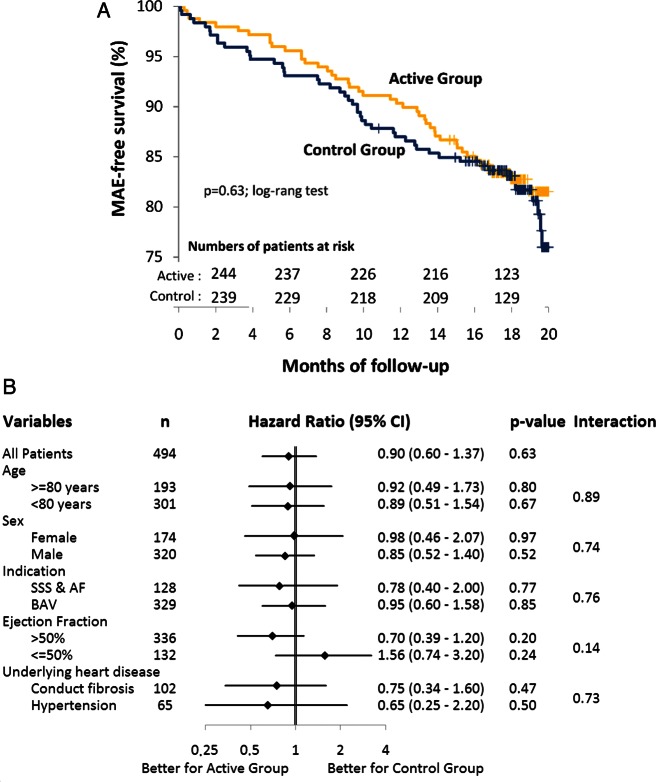
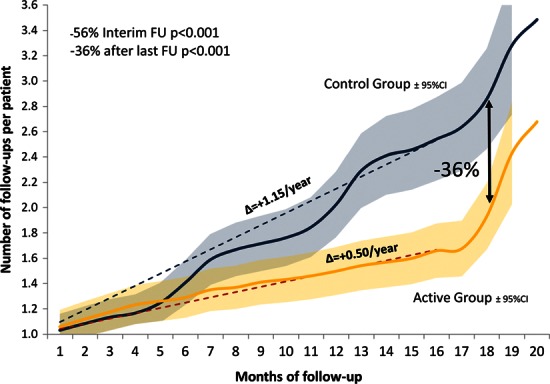
AIMS: Professional practice guidelines recommend that pacemaker recipients be followed regularly. However, the majority of scheduled ambulatory visits is unproductive and imposes a heavy burden on the health-care system. METHODS AND RESULTS: The COMPAS randomized, multicentre, non-inferiority trial examined the safety of long-term remote monitoring of pacemakers. Between December 2005 and January 2008, 538 patients were randomly assigned to remote monitoring follow-up (active group) vs. standard care (control group). The primary objective was to confirm that the proportion of patients who experienced at least one major adverse event (MAE), including all-cause death and hospitalizations for device-related or cardiovascular adverse events, was not >7% higher in the active than in the control group. MAE-free survivals and quality of life were compared in both groups. The characteristics of the study groups were similar. Over a follow-up of 18.3 months, 17.3% of patients in the active and 19.1% in the control group experienced at least one MAE (P < 0.01 for non-inferiority). Hospitalizations for atrial arrhythmias (6 vs. 18) and strokes (2 vs. 8) were fewer (P < 0.05), and the number of interim ambulatory visits was 56% lower (P < 0.001) in the active than the control group. Changes in pacemaker programming or drug regimens were made in 62% of visits in the active vs. 29% in the control group (P < 0.001). Quality of life remained unchanged in both groups. CONCLUSION: Remote monitoring was a safe alternative to conventional care and significantly lowered the number of ambulatory visits during long-term follow-up of permanently paced patients. ClinicalTrials.gov identifier: NCT00989326.
Overview
The claims and statistics of this paper haven’t been checked yet.
Free: it reads the open-access text and checks the first 5 claims that cite a source we can check. Create a free account to check every claim.
Integrity signals
Registry
Cites
Statistics
Figures
Verification
Claims the paper makes
The claims and statistics of this paper haven’t been checked yet.
Free: it reads the open-access text and checks the first 5 claims that cite a source we can check. Create a free account to check every claim.
Claims other papers make about this one
Each is checked against this paper’s own text: does it say what the citing paper says it does?
The source backs part of the claim, not all of it — or backs it for a different population, condition or comparison.
In the citing paper
“In the similar, more recent Chronicle Offers Management to Patients with Advanced Signs and Symptoms of Heart Failure (COMPAS) trial, both ambulatory visits and hospitalizations were fewer in those randomly assigned to remote follow-up.58”
From Managing with pacemakers and implantable cardioverter defibrillators (2013) · cites this paper as [58]
Experimental — accuracy not yet measured
Self-check
Percentages, sums and reported differences re-computed from the paper’s own numbers.
The self-check needs the paper’s full text.
Citations
Cites
(1992) · PubMed · Cited by 33,716
The MOS 36-ltem Short-Form Health Survey (SF-36): I. Conceptual Framework and Item Selection
Ware, J. E., & Sherbourne, C. D. (1992) · Medical Care · doi:10.1097/00005650-199206000-00002 · Cited by 30,033
ACC/AHA/HRS 2008 guidelines for device-based therapy of cardiac rhythm abnormalities
Epstein, A. E., DiMarco, J. P., Ellenbogen, K. A., Estes, N. A. M., Freedman, R. A., Gettes, L. S., Gillinov, A. M., Gregoratos, G., Hammill, S. C., Hayes, D. L., et al. (2008) · Journal of the American College of Cardiology · doi:10.1016/j.jacc.2008.02.032 · Cited by 2,546
Writing Committee Members, Epstein, A. E., DiMarco, J. P., Ellenbogen, K. A., Estes, N. A. M., Freedman, R. A., Gettes, L. S., Gillinov, A. M., Gregoratos, G., Hammill, S. C., et al. (2008) · Circulation · doi:10.1161/circualtionaha.108.189742 · Cited by 1,774
THE MOS 36- ITEM SHORT FORM HEALTH SURVEY (SF- 36) CONCEPTUAL FRAMEWORK AND ITEM SELECTION
J.E.Jr., W., & Sherburne, C. D. (1992) · Cited by 1,586
Authors/Task Force Members, Vardas, P. E., Auricchio, A., Blanc, J.-J., Daubert, J.-C., Drexler, H., Ector, H., Gasparini, M., Linde, C., Morgado, F. B., et al. (2007) · European Heart Journal · doi:10.1093/eurheartj/ehm305 · Cited by 902
Self-citationCleland, J. G. F., Louis, A. A., Rigby, A. S., Janssens, U., & Balk, A. H. M. M. (2005) · Journal of the American College of Cardiology · doi:10.1016/j.jacc.2005.01.050 · Cited by 700
Varma, N., Epstein, A. E., Irimpen, A., Schweikert, R., & Love, C. (2010) · Circulation · doi:10.1161/circulationaha.110.937409 · Cited by 594
The CONNECT (Clinical Evaluation of Remote Notification to Reduce Time to Clinical Decision) Trial
Crossley, G. H., Boyle, A., Vitense, H., Chang, Y., & Mead, R. H. (2011) · Journal of the American College of Cardiology · doi:10.1016/j.jacc.2010.12.012 · Cited by 526
Single-Chamber versus Dual-Chamber Pacing for High-Grade Atrioventricular Block
Toff, W. D., Camm, A. J., & Skehan, J. D. (2005) · New England Journal of Medicine · doi:10.1056/nejmoa042283 · Cited by 384
Cited by
2021 ESC Guidelines on cardiac pacing and cardiac resynchronization therapy
Glikson, M., Nielsen, J. C., Kronborg, M. B., Michowitz, Y., Auricchio, A., Barbash, I. M., Barrabés, J. A., Boriani, G., Braunschweig, F., Brignole, M., et al. (2021) · European Heart Journal · doi:10.1093/eurheartj/ehab364 · Cited by 2,019
Self-citationEpstein, A. E., DiMarco, J. P., Ellenbogen, K. A., Estes, N. A. M., Freedman, R. A., Gettes, L. S., Gillinov, A. M., Gregoratos, G., Hammill, S. C., Hayes, D. L., et al. (2013) · Circulation · doi:10.1161/cir.0b013e318276ce9b · Cited by 1,489
2021 ESC Guidelines on cardiac pacing and cardiac resynchronization therapy
Glikson, M., Nielsen, J. C., Kronborg, M. B., Michowitz, Y., Auricchio, A., Barbash, I. M., Barrabés, J. A., Boriani, G., Braunschweig, F., Brignole, M., et al. (2022) · EP Europace · doi:10.1093/europace/euab232 · Cited by 914
Self-citationInteractive telemedicine: effects on professional practice and health care outcomes
Flodgren, G., Rachas, A., Farmer, A. J., Inzitari, M., & Shepperd, S. (2015) · Cochrane Database of Systematic Reviews · doi:10.1002/14651858.cd002098.pub2 · Cited by 806
Tracy, C. M., Epstein, A. E., Darbar, D., DiMarco, J. P., Dunbar, S. B., Estes, N. A. M., Ferguson, T. B., Hammill, S. C., Karasik, P. E., Link, M. S., et al. (2013) · Journal of the American College of Cardiology · doi:10.1016/j.jacc.2012.11.007 · Cited by 732
Slotwiner, D., Varma, N., Akar, J. G., Annas, G., Beardsall, M., Fogel, R. I., Galizio, N. O., Glotzer, T. V., Leahy, R. A., Love, C. J., et al. (2015) · Heart Rhythm · doi:10.1016/j.hrthm.2015.05.008 · Cited by 532
“Another study (COMPAS trial) 25 suggested a bene fi t but was relatively underpowered.”
BackgroundDaubert, J.-C., Saxon, L., Adamson, P. B., Auricchio, A., Berger, R. D., Beshai, J. F., Breithard, O., Brignole, M., Cleland, J., DeLurgio, D. B., et al. (2012) · Heart Rhythm · doi:10.1016/j.hrthm.2012.07.025 · Cited by 467
Self-citationTracy, C. M., Epstein, A. E., Darbar, D., DiMarco, J. P., Dunbar, S. B., Estes, N. A. M., Ferguson, T. B., Hammill, S. C., Karasik, P. E., Link, M. S., et al. (2012) · Journal of the American College of Cardiology · doi:10.1016/j.jacc.2012.07.009 · Cited by 413
Tracy, C. M., Epstein, A. E., Darbar, D., DiMarco, J. P., Dunbar, S. B., Estes, N. A. M., Ferguson, T. B., Hammill, S. C., Karasik, P. E., Link, M. S., et al. (2012) · Circulation · doi:10.1161/cir.0b013e3182618569 · Cited by 369
Teleneurology and mobile technologies: the future of neurological care
Dorsey, E. R., Glidden, A. M., Holloway, M. R., Birbeck, G. L., & Schwamm, L. H. (2018) · Nature Reviews Neurology · doi:10.1038/nrneurol.2018.31 · Cited by 258
Task Force Chairs, Daubert, J.-C., Saxon, L., Adamson, P. B., Auricchio, A., Berger, R. D., Beshai, J. F., Breithard, O., Brignole, M., Cleland, J., et al. (2012) · Europace · doi:10.1093/europace/eus222 · Cited by 256
Self-citationVarma, N., Piccini, J. P., Snell, J., Fischer, A., Dalal, N., & Mittal, S. (2015) · Journal of the American College of Cardiology · doi:10.1016/j.jacc.2015.04.033 · Cited by 233
Lampert, R., Chung, E. H., Ackerman, M. J., Arroyo, A. R., Darden, D., Deo, R., Dolan, J., Etheridge, S. P., Gray, B. R., Harmon, K. G., et al. (2024) · Heart Rhythm · doi:10.1016/j.hrthm.2024.05.018 · Cited by 167
Tracy, C. M., Epstein, A. E., Darbar, D., DiMarco, J. P., Dunbar, S. B., Estes, N. A. M., Ferguson, T. B., Hammill, S. C., Karasik, P. E., Link, M. S., et al. (2012) · Heart Rhythm · doi:10.1016/j.hrthm.2012.08.021 · Cited by 162
Hindricks, G., Varma, N., Kacet, S., Lewalter, T., Søgaard, P., Guédon-Moreau, L., Proff, J., Gerds, T. A., Anker, S. D., & Torp-Pedersen, C. (2017) · European Heart Journal · doi:10.1093/eurheartj/ehx015 · Cited by 160
Ricci, R. P., Morichelli, L., D'Onofrio, A., Calò, L., Vaccari, D., Zanotto, G., Curnis, A., Buja, G., Rovai, N., & Gargaro, A. (2013) · EP Europace · doi:10.1093/europace/eus440 · Cited by 142
Ferrick, A. M., Raj, S. R., Deneke, T., Kojodjojo, P., López-Cabanillas, N., Abe, H., Bovéda, S., Chew, D. S., Choi, J., Dagres, N., et al. (2023) · Heart Rhythm · doi:10.1016/j.hrthm.2023.03.1525 · Cited by 147
Klersy, C., Boriani, G., De Silvestri, A., Mairesse, G. H., Braunschweig, F., Scotti, V., Balduini, A., Cowie, M. R., Leyva, F., & for the Health Economics Committee of the European Heart Rhythm Association (2016) · European Journal of Heart Failure · doi:10.1002/ejhf.470 · Cited by 120
Novel Methods and Technologies for 21st-Century Clinical Trials: A Review
Dorsey, E. R., Venuto, C., Venkataraman, V., Harris, D. A., & Kieburtz, K. (2015) · JAMA Neurology · doi:10.1001/jamaneurol.2014.4524 · Cited by 118
García-Fernández, F. J., Osca Asensi, J., Romero, R., Fernández Lozano, I., Larrazabal, J. M., Martínez Ferrer, J., Ortiz, R., Pombo, M., Tornés, F. J., & Moradi Kolbolandi, M. (2019) · European Heart Journal · doi:10.1093/eurheartj/ehz067 · Cited by 116
“Unlike previous studies, no patient was excluded because of PM dependency or ICD indication for secondary prevention.(4,6,8,14) Home monitoring(20) is a RM system that transmits automatically and daily the data stored in the CIED to the Biotronik HM-Service centre.”
BackgroundMethodResultInfluentialHeidbuchel, H., Hindricks, G., Broadhurst, P., Van Erven, L., Fernandez-Lozano, I., Rivero-Ayerza, M., Malinowski, K., Marek, A., Garrido, R. F. R., Loscher, S., et al. (2015) · European Heart Journal · doi:10.1093/eurheartj/ehu339 · Cited by 115
“8 Especially daily remote monitoring results in earlier detection of device and patient-related problems which translate into earlier clinical decision-making, less inappropriate shocks and improved device longevity.(7) – 9 The CONNECT trial also showed a significant reduction in the length of cardiovascular hospitali…”
BackgroundResultInfluentialLeclercq, C., Witt, H., Hindricks, G., Katra, R. P., Albert, D., Belliger, A., Cowie, M. R., Deneke, T., Friedman, P., Haschemi, M., et al. (2022) · EP Europace · doi:10.1093/europace/euac052 · Cited by 109
Boriani, G., Da Costa, A., Ricci, R. P., Quesada, A., Favale, S., Iacopino, S., Romeo, F., Risi, A., Mangoni di S Stefano, L., Navarro, X., et al. (2013) · Journal of Medical Internet Research · doi:10.2196/jmir.2608 · Cited by 108
Telemedicine and cardiac implants: what is the benefit?
Varma, N., & Ricci, R. P. (2013) · European Heart Journal · doi:10.1093/eurheartj/ehs388 · Cited by 102
“The recent COMPAS trial using HM indicated similar value for patients receiving pacemakers.(18) Certain caveats need to be considered.”
BackgroundMethodFerrick, A. M., Raj, S. R., Deneke, T., Kojodjojo, P., López-Cabanillas, N., Abe, H., Bovéda, S., Chew, D. S., Choi, J., Dagres, N., et al. (2023) · EP Europace · doi:10.1093/europace/euad123 · Cited by 114
“If, however, continuous connectivity is not present, the connectivity is inconsistent for any reason, there have been CIED alerts, or there are concomitant comorbidities, then more frequent in-person visits might be necessary.(37,125,126) If shorter follow-up intervals are necessary due to cardiac comorbidities, the m…”
BackgroundAdvances and Future Directions in Cardiac Pacemakers
Madhavan, M., Mulpuru, S. K., McLeod, C. J., Cha, Y., & Friedman, P. A. (2017) · Journal of the American College of Cardiology · doi:10.1016/j.jacc.2016.10.064 · Cited by 104
“Remotely monitored patients are also less likely to be hospitalized for atrial arrhythmias (52).”
BackgroundMairesse, G. H., Braunschweig, F., Klersy, K., Cowie, M. R., & Leyva, F. (2015) · EP Europace · doi:10.1093/europace/euu390 · Cited by 81
“A reduction in the risk of hospitalization for atrial arrhythmias or stroke was observed in the COMPAS trial.(6) In the ALTITUDE registry, involving 263 562 CIED patients, RM was associated with a 50% lower mortality, compared with usual care.”
BackgroundTelehealth for Pediatric Cardiology Practitioners in the Time of COVID-19
Chowdhury, D., Hope, K. D., Arthur, L., Weinberger, S. M., Ronai, C., Johnson, J. N., & Snyder, C. S. (2020) · Pediatric Cardiology · doi:10.1007/s00246-020-02411-1 · Cited by 85
Ricci, R. P., Vicentini, A., D’Onofrio, A., Sagone, A., Rovaris, G., Padeletti, L., Morichelli, L., Fusco, A., Vivo, S. D., Lombardi, L., et al. (2016) · Heart Rhythm · doi:10.1016/j.hrthm.2016.09.008 · Cited by 83
Varma, N., Cygankiewicz, I., Turakhia, M. P., Heidbuchel, H., Hu, Y.-F., Chen, L. Y., Couderc, J.-P., Cronin, E. M., Estep, J. D., Grieten, L., et al. (2021) · Circulation: Arrhythmia and Electrophysiology · doi:10.1161/circep.120.009204 · Cited by 74
Akar, J. G., Bao, H., Jones, P. W., Wang, Y., Varosy, P. D., Masoudi, F. A., Steín, K. M., Saxon, L. A., Normand, S. T., & Curtis, J. P. (2015) · Circulation Arrhythmia and Electrophysiology · doi:10.1161/circep.114.003030 · Cited by 71
Watanabe, E., Yamazaki, F., Goto, T., Asai, T., Yamamoto, T., Hirooka, K., Sato, T., Kasai, A., Ueda, M., Yamakawa, T., et al. (2020) · Circulation Arrhythmia and Electrophysiology · doi:10.1161/circep.119.007734 · Cited by 74
Tracy, C. M., Epstein, A. E., Darbar, D., Dimarco, J., Dunbar, S. B., Estes, N. A. M., Ferguson, T. B., Hammill, S. C., Karasik, P., Link, M. S., et al. (2012) · Journal of Thoracic and Cardiovascular Surgery · doi:10.1016/j.jtcvs.2012.08.032 · Cited by 70
Socio-economic effects and cost saving potential of remote patient monitoring (SAVE-HM trial)
Perl, S., Stiegler, P., Rotman, B., Prenner, G., Lercher, P., Anelli-Monti, M., Sereinigg, M., Riegelnik, V., Kvas, E., Kos, C., et al. (2013) · International Journal of Cardiology · doi:10.1016/j.ijcard.2013.10.019 · Cited by 66
“The recently published results of the TRUST-, ECOST- and CONNECT-trials [18,46,49] reveal the benefits of RMS concerning optimisation of patient management and therapeutic success due to early detection of symptomatic and asymptomatic events.”
BackgroundMethodResultInfluentialSvennberg, E., Caiani, E. G., Bruining, N., Desteghe, L., Han, J. K., Narayan, S. M., Rademakers, F. E., Sanders, P., & Duncker, D. (2023) · EP Europace · doi:10.1093/europace/euad176 · Cited by 73
Personalized and automated remote monitoring of atrial fibrillation
Rosier, A., Mabo, P., Temal, L., Van Hille, P., Dameron, O., Deléger, L., Grouin, C., Zweigenbaum, P., Jacques, J., Chazard, E., et al. (2016) · Europace · doi:10.1093/europace/euv234 · Cited by 57
“The aim of this study was to design a prototype mechanism for atrial fibrillation (AF) alerts (which represent the most frequent notifications in remote monitoring of CIEDs and are expected to lower patient morbidity), and to evaluate the efficacy and safety of this prototype.(6)”
BackgroundSelf-citationLenarda, A. D., Casolo, G., Gulizia, M. M., Aspromonte, N., Scalvini, S., Mortara, A., Alunni, G., Ricci, R. P., Mantovan, R., Russo, G., et al. (2017) · European Heart Journal Supplements · doi:10.1093/eurheartj/sux024 · Cited by 73
Remote monitoring of cardiac implantable electronic devices and disease management
Varma, N., Braunschweig, F., Burri, H., Hindricks, G., Linz, D., Michowitz, Y., Ricci, R. P., & Nielsen, J. C. (2023) · EP Europace · doi:10.1093/europace/euad233 · Cited by 72
“A sub-analysis of the randomized COMPAS trial 42 showed a significant reduction of hospitalizations for atrial arrhythmias and related stroke in the RM group.”
BackgroundMethodBurri, H., Sticherling, C., Wright, D., Makino, K., Smala, A. M., & Tilden, D. (2013) · EP Europace · doi:10.1093/europace/eut070 · Cited by 62
Telecardiology and its settings of application: An update
Molinari, G., Molinari, M., Biase, M. D., & Brunetti, N. D. (2017) · Journal of Telemedicine and Telecare · doi:10.1177/1357633x16689432 · Cited by 65
Ricci, R. P., Morichelli, L., D'ONOFRIO, A., Calò, L., Vaccari, D., Zanotto, G., Curnis, A., Buja, G., Rovai, N., & Gargaro, A. (2014) · Journal of Cardiovascular Electrophysiology · doi:10.1111/jce.12482 · Cited by 59
Hernandez-Madrid, A., Lewalter, T., Proclemer, A., Pison, L., Lip, G. Y. H., Blomstrom-Lundqvist, C., & conducted by the Scientific Initiatives Committee, E. H. R. A. (2014) · Europace · doi:10.1093/europace/eut414 · Cited by 54
Seiler, A. K., Biundo, E., Bacco, M. D., Rosemas, S. C., Nicolle, E., Lanctin, D., Hennion, J., Melis, M. D., & Heel, L. V. (2021) · JMIR Cardio · doi:10.2196/27720 · Cited by 55
“For in-person clinical visits, it was assumed that each patient would have a routine visit per year according to clinical guidelines [6] and a number of unscheduled visits (ie, device alert or symptom-driven) based on the frequencies reported in the remotely monitored arm of published RM trials for each CIED type [16-…”
MethodRemote monitoring and telemedicine in heart failure: implementation and benefits
Imberti, J. F., Tosetti, A., Mei, D. A., Maisano, A., & Boriani, G. (2021) · Current Cardiology Reports · doi:10.1007/s11886-021-01487-2 · Cited by 65
Ding, E., Han, D., Whitcomb, C., Bashar, S. K., Adaramola, O., Soni, A., Saczynski, J. S., Fitzgibbons, T. P., Moonis, M., Lubitz, S. A., et al. (2019) · JMIR Cardio · doi:10.2196/13850 · Cited by 59
“Early AF detection results in treatment with oral anticoagulants that reduce stroke risk by up to 70% [6], and daily home monitoring for AF among stroke survivors reduces stroke risk by ~18% as compared with conventional in-office ECGs when obtained every 6 to 12 months [34].”
BackgroundResultNew Appraisal of Atrial Fibrillation Burden and Stroke Prevention
PASSMAN, R. S., & Bernstein, R. A. (2016) · Stroke · doi:10.1161/strokeaha.115.009930 · Cited by 57
Varma, N., Cygankiewicz, I., Turakhia, M. P., Heidbüchel, H., Hu, Y., Chen, L. Y., Couderc, J., Cronin, E. M., Estep, J. D., Grieten, L., et al. (2021) · Annals of Noninvasive Electrocardiology · doi:10.1111/anec.12795 · Cited by 54
Amara, W., Montagnier, C., Cheggour, S., Boursier, M., Gully, C., BARNAY, C., Georger, F., Deplagne, A., Fromentin, S., Młotek, M., et al. (2017) · Pacing and Clinical Electrophysiology · doi:10.1111/pace.13062 · Cited by 57
Home Monitoring of Cardiac Devices in the Era of COVID-19
Miller, J. C., Skoll, D., & Saxon, L. A. (2020) · Current Cardiology Reports · doi:10.1007/s11886-020-01431-w · Cited by 53
Varma, N., Pavri, B. B., Stambler, B. S., Michalski, J., & TRUST Investigators (2012) · EP Europace · doi:10.1093/europace/eus410 · Cited by 49
Mittal, S., Piccini, J. P., Snell, J., Prillinger, J. B., Dalal, N., & Varma, N. (2016) · Journal of Interventional Cardiac Electrophysiology · doi:10.1007/s10840-016-0112-y · Cited by 49
“management that translates to fewer strokes and associated hospitalizations [18].”
BackgroundRemote monitoring of cardiac implantable electronic devices (CIED)
Zeitler, E. P., & Piccini, J. P. (2016) · Trends in Cardiovascular Medicine · doi:10.1016/j.tcm.2016.03.012 · Cited by 50
“(18) In ICD patients, the impact of RM on unscheduled in-office visits has been examined in five randomized studies.”
BackgroundMatthiesen, S., Diederichsen, S. Z., Hansen, M. K. H., Villumsen, C., Lassen, M. C. H., Jacobsen, P. K., Risum, N., Winkel, B. G., Philbert, B. T., Svendsen, J. H., et al. (2021) · JMIR Human Factors · doi:10.2196/26964 · Cited by 45
“This has reduced the number of in-office follow-ups [4,5] and increased survival rates [6] due to improved early detection of arrhythmias [7].”
BackgroundMalloy-Walton, L. E., Gingerich, J. C., Olson, M. D., & Atkins, D. L. (2013) · Pediatric Cardiology · doi:10.1007/s00246-013-0774-5 · Cited by 42
“These data are similar to the AWARE data, which found a decrease of 154 days, and the COMPAS data, which found a decrease of 144 days compared with conventional 6-month followup in the adult population [4, 5].”
ResultRemote follow-up and continuous remote monitoring, distinguished
Burri, H. (2013) · EP Europace · doi:10.1093/europace/eut071 · Cited by 38
“It was found that remote follow-up allowed delaying scheduled in-office visits for as much as 18 months after device implantation, without any significant difference in major adverse events compared with patients with routine follow-up.(4)”
BackgroundWang, H., Zhao, Y., Yu, L., Liu, J., Zwetsloot, I. M., Cabrera, J., & Tsui, K. (2020) · Journal of Medical Internet Research · doi:10.2196/19223 · Cited by 48
Varma, N., Cygankiewicz, I., Turakhia, M. P., Heidbüchel, H., Hu, Y., Chen, L. Y., Couderc, J., Cronin, E. M., Estep, J. D., Grieten, L., et al. (2021) · Journal of Arrhythmia · doi:10.1002/joa3.12461 · Cited by 41
Tolsma, R. T., Fokkert, M. J., van Dongen, D. N., Badings, E., van der Sluis, A., Slingerland, R. J., Riet, E. V. ‘., Ottervanger, J. P., & Hof, A. W. J. V. ’. (2021) · European Heart Journal Acute Cardiovascular Care · doi:10.1093/ehjacc/zuab109 · Cited by 52
Zanotto, G., D’Onofrio, A., Bella, P. E. D., Solimene, F., Pisanò, E., Iacopino, S., Dondina, C., Giacopelli, D., Gargaro, A., & Ricci, R. P. (2018) · Clinical Cardiology · doi:10.1002/clc.23108 · Cited by 38
(2018) · Europe PMC (PubMed Central) · Cited by 59
Dilaveris, P., Antoniou, C. K., Caiani, E. G., Casado-Arroyo, R., Climent, A. M., Cluitmans, M. J. M., Cowie, M., Doehner, W., Guerra, F., Jensen, M. T., et al. (2022) · European Heart Journal - Digital Health · doi:10.1093/ehjdh/ztac026 · Cited by 45
Managing with pacemakers and implantable cardioverter defibrillators
Lampert, R. (2013) · Circulation · doi:10.1161/circulationaha.113.001555 · Cited by 34
Dario, C., Delise, P., Gubian, L., Saccavini, C., BRANDOLINO, G., & Mancin, S. (2016) · Interactive Journal of Medical Research · doi:10.2196/ijmr.4270 · Cited by 38
“Confirming other studies [1,2,20,28-30], our analysis showed that the RM service could reduce in-clinic follow-ups that do not require specific interventions by clinicians.”
InfluentialRovaris, G., Solimene, F., D’Onofrio, A., Zanotto, G., Ricci, R. P., Mazzella, T., Iacopino, S., Bella, P. E. D., Maglia, G., Senatore, G., et al. (2018) · Heart Rhythm · doi:10.1016/j.hrthm.2018.02.023 · Cited by 34
Workflow, time and patient satisfaction from the perspectives of Home Monitoring
Ricci, R. P., & Morichelli, L. (2013) · EP Europace · doi:10.1093/europace/eut113 · Cited by 35
Maines, M., Palmisano, P., Greco, M. D., Melissano, D., Bonis, S. D., Baccillieri, S., Zanotto, G., D’Onofrio, A., Ricci, R. P., Ponti, R. D., et al. (2021) · Journal of Clinical Medicine · doi:10.3390/jcm10184086 · Cited by 34
Remote monitoring costs, benefits, and reimbursement: a European perspective
Chronaki, C. E., & Vardas, P. (2013) · Europace · doi:10.1093/europace/eut110 · Cited by 33
Ladapo, J. A., Turakhia, M. P., Ryan, M. P., Mollenkopf, S. A., & Reynolds, M. R. (2016) · The American Journal of Cardiology · doi:10.1016/j.amjcard.2016.02.015 · Cited by 33
Borrelli, N., Grimaldi, N., Papaccioli, G., Fusco, F., Palma, M., & Sarubbi, B. (2023) · International Journal of Environmental Research and Public Health · doi:10.3390/ijerph20105775 · Cited by 35
Cardiac remote monitoring in France
Maillard, N., Perrotton, F., Delage, E., Gourraud, J., Lande, G., Solnon, A., Probst, V., Grimandi, G., & Clouet, J. (2014) · Archives of cardiovascular diseases · doi:10.1016/j.acvd.2014.02.004 · Cited by 33
Remote Patient Monitoring: What Have We Learned and Where Are We Going?
Vandenberk, B., & Raj, S. R. (2023) · Current Cardiovascular Risk Reports · doi:10.1007/s12170-023-00720-7 · Cited by 40
Wollmann, C. G., Steiner, E. H., Vock, P., Ndikung, B., & Mayr, H. (2012) · Journal of Cardiovascular Magnetic Resonance · doi:10.1186/1532-429x-14-67 · Cited by 30
ANMCO/SIT Consensus Document: telemedicine for cardiovascular emergency networks
Caldarola, P., Gulizia, M. M., Gabrielli, D., Sicuro, M., Gennaro, L. D., Giammaria, M., Grieco, N. B., Grosseto, D., Mantovan, R., Mazzanti, M., et al. (2017) · European Heart Journal Supplements · doi:10.1093/eurheartj/sux028 · Cited by 32
Jang, J.-P., Lin, H.-T., Chen, Y.-J., HSIEH, M., & Huang, Y. (2020) · Circulation Journal · doi:10.1253/circj.cj-20-0633 · Cited by 29
Remote monitoring of implantable devices: should we continue to ignore it?
Bertini, M., Marcantoni, L., Toselli, T., & Ferrari, R. (2016) · International Journal of Cardiology · doi:10.1016/j.ijcard.2015.09.033 · Cited by 28
Samartín, R. C., Pérez, Ó. C., & Jiménez, M. P. (2014) · Revista Española de Cardiología · doi:10.1016/j.recesp.2014.08.004 · Cited by 28
Watanabe, E., Kasai, A., Fujii, E., Yamashiro, K., & Brugada, P. (2013) · Circulation Journal · doi:10.1253/circj.cj-13-0387 · Cited by 31
Remote monitoring of heart failure: benefits for therapeutic decision making
Martirosyan, M., Çalişkan, K., Theuns, D. A. M. J., & Szili‐Törok, T. (2017) · Expert Review of Cardiovascular Therapy · doi:10.1080/14779072.2017.1348229 · Cited by 31
“The COMPAS randomized, multicenter, non-inferiority trial (538 patients randomized to remote monitoring follow-up vs. standard care) examined the safety of long-term remote monitoring of pacemakers [70].”
MethodRemote monitoring of implantable cardiac devices: current state and future directions
Ganeshan, R., Enriquez, A. D., & Freeman, J. V. (2017) · Current Opinion in Cardiology · doi:10.1097/hco.0000000000000471 · Cited by 30
Focus on the Different Projects of Telemedicine Centered on the Elderly In France
Zulfiqar, A. A., Hajjam, A., & Andrès, E. (2019) · Current Aging Science · doi:10.2174/1874609812666190304115426 · Cited by 26
Disease management: atrial fibrillation and Home Monitoring
Ricci, R. P. (2013) · EP Europace · doi:10.1093/europace/eut114 · Cited by 26
“008, respectively.(13) However, this was not powered to test this hypothesis.”
BackgroundImpact of Remote Monitoring on Clinical Outcomes
Varma, N., & Ricci, R. P. (2015) · Journal of Cardiovascular Electrophysiology · doi:10.1111/jce.12829 · Cited by 30
Current clinical evidence for remote patient management
Guédon-Moreau, L., Mabo, P., & Kacet, S. (2013) · EP Europace · doi:10.1093/europace/eut119 · Cited by 27
Self-citationLópez-Villegas, A., Catalán-Matamoros, D., Robles‐Musso, E., & Peiró, S. (2015) · Geriatrics and gerontology international/Geriatrics & gerontology international · doi:10.1111/ggi.12612 · Cited by 26
Kawada, S., Nishii, N., Morimoto, Y., Miyoshi, A., Tachibana, M., Sugiyama, H., Nakagawa, K., Watanabe, A., Morita, H., & Ito, H. (2017) · Heart Rhythm · doi:10.1016/j.hrthm.2017.05.020 · Cited by 25
Douarin, Y.-M. L., Traversino, Y., Graciet, A., Josseran, A., Bili, A.-B., Blaise, L., Châtellier, G., Coulonjou, H., Delval, C., Detournay, B., et al. (2019) · Therapies · doi:10.1016/j.therap.2019.12.009 · Cited by 30
Guía ESC 2021 sobre estimulación cardiaca y terapia de resincronización
Glikson, M., Nielsen, J. C., Kronborg, M. B., Michowitz, Y., Auricchio, A., Barbash, I. M., Barrabés, J. A., Boriani, G., Braunschweig, F., Brignole, M., et al. (2022) · Revista Española de Cardiología · doi:10.1016/j.recesp.2021.10.025 · Cited by 37
Laurent, G., Amara, W., Mansourati, J., Bizeau, O., Couderc, P., Delarche, N., Garrigue, S., Guyomar, Y., Hermida, J.-S., Moini, C., et al. (2014) · Archives of cardiovascular diseases · doi:10.1016/j.acvd.2014.06.009 · Cited by 25
Recommendations on the utilization of telemedicine in cardiology
Working Group Rhythmology of the Austrian Cardiological Society, Gruska, M., Aigner, G., Altenberger, J., Burkart-Küttner, D., Fiedler, L., Gwechenberger, M., Lercher, P., Martinek, M., Nürnberg, M., et al. (2020) · Wiener klinische Wochenschrift · doi:10.1007/s00508-020-01762-2 · Cited by 29
Telemedicine and Geriatrics in France: Inventory of Experiments
Zulfiqar, A., Hajjam, A., Talha, S., Hajjam, M., Hajjam, J., Ervé, S., & Andrès, E. (2018) · Current Gerontology and Geriatrics Research · doi:10.1155/2018/9042180 · Cited by 26
Telecardiology during the Covid-19 pandemic: past mistakes and future hopes.
Simone, V. D., Guarise, P., Guardalben, S., Padovani, N., Tondelli, S., Sandrini, D., Visentin, E., & Zanotto, G. (2020) · PubMed Central · Cited by 31
Muniyappa, A. N., Raitt, M. H., Judson, G. L., Shen, H., Tarasovsky, G., Whooley, M. A., & Dhruva, S. S. (2022) · Heart Rhythm · doi:10.1016/j.hrthm.2022.04.025 · Cited by 24
Ricci, R. P., Vicentini, A., D’Onofrio, A., Sagone, A., Vincenti, A., Padeletti, L., Morichelli, L., Fusco, A., Vecchione, F., Presti, F. L., et al. (2013) · Journal of Interventional Cardiac Electrophysiology · doi:10.1007/s10840-013-9823-5 · Cited by 24
“Remote monitoring of CIED has previously been shown to safely reduce in-hospital visits by 50% [4, 19] and to reduce the duration of clinic visits as well as the time dedicated to followup by nurses and physicians [16, 20].”
BackgroundCost-utility analysis on telemonitoring of users with pacemakers: The PONIENTE study
López-Villegas, A., Catalán-Matamoros, D., Robles‐Musso, E., Bautista-Mesa, R. J., & Peiró, S. (2018) · Journal of Telemedicine and Telecare · doi:10.1177/1357633x18767184 · Cited by 25
Palmisano, P., Melissano, D., Zanotto, G., Perego, G. B., Toselli, T., Landolina, M., & Ricci, R. P. (2020) · Journal of Cardiovascular Medicine · doi:10.2459/jcm.0000000000000950 · Cited by 24
Remote follow-up of pacemakers in a selected population of debilitated elderly patients
Folino, A. F., Breda, R., Calzavara, P., Borghetti, F., COMISSO, J., Iliceto, S., & Buja, G. (2012) · EP Europace · doi:10.1093/europace/eus351 · Cited by 23
López-Villegas, A., Catalán-Matamoros, D., Peiró, S., Lappegård, K. T., & López‐Liria, R. (2020) · PLoS ONE · doi:10.1371/journal.pone.0226188 · Cited by 27
Hansen, C., Loges, C., Seidl, K., Eberhardt, F., Tröster, H., Petrov, K., Grönefeld, G., Bramlage, P., Birkenhauer, F., & Weiß, C. H. (2018) · BMC Cardiovascular Disorders · doi:10.1186/s12872-018-0864-7 · Cited by 24
Remote monitoring: Doomed to let down or an attractive promise?
Lucà, F., Cipolletta, L., Fusco, S. A. D., Iorio, A., Pozzi, A., Rao, C. M., Ingianni, N., Benvenuto, M., Madeo, A., Fiscella, D., et al. (2019) · IJC Heart & Vasculature · doi:10.1016/j.ijcha.2019.100380 · Cited by 27
Enhancing efficiency in a cardiac investigations department by increasing remote patient monitoring
Ryan, P., Mcgrath, C., Lawrie, I., Fitzsimons, C., O’Shea, J., & Brún, A. D. (2019) · International Journal for Quality in Health Care · doi:10.1093/intqhc/mzz065 · Cited by 23
Metadata
- Authors
- Mabo, P., Victor, F., Bazin, P., Ahres, S., Babuty, D., Da Costa, A., Binet, D., & Daubert, J.-C.
- Affiliations
- Inserm (FR)
- Saint Laurent Polyclinique (FR)
- Centre Hospitalier de Redon (FR)
- Centre Hospitalier Universitaire de Tours (FR)
- Corresponding author
- Mabo, Philippe
- Venue
- European Heart Journal
- Publisher
- Oxford University Press (OUP)
- Published
- 2011-11-29
- Volume
- 33
- Issue
- 9
- Pages
- 1105-1111
- ISSN
- 0195-668X (ISSN-L)
- 1522-9645
- PMC
- PMC3341630
- OpenAlex
- W2112916640
- Semantic Scholar
- 7b0357a05a4d8882e3f039eb74ac19e6317c2e1c
- Cited by
- 347
- References
- 19
- Citations by year
- 2026: 7 · 2025: 18 · 2024: 12 · 2023: 28 · 2022: 16 · 2021: 30 · 2020: 36 · 2019: 27 · 2018: 20 · 2017: 28 · 2016: 17 · 2015: 29 · 2014: 22 · 2013: 38 · 2012: 19
- FWCI
- 17.31
- Type
- journal article
- Language
- en
- Open access
- hybrid
- doi.org
- Licence
- cc-by-nc
- Locations
- European Heart Journal (publishedVersion, cc-by-nc)
- PubMed Central (publishedVersion, cc-by-nc)
- PubMed (publishedVersion)
- HAL (submittedVersion)
- Funders
- Commercializations Promotion Agency for R and D Outcomes
- Topics
- Health Sciences › Medicine › Cardiology and Cardiovascular Medicine › Cardiac pacing and defibrillation studies
- Health Sciences › Medicine › Public Health, Environmental and Occupational Health › Telemedicine and Telehealth Implementation
- Health Sciences › Medicine › Cardiology and Cardiovascular Medicine › Cardiac Health and Mental Health
- Keywords
- remote monitoring, cardiac pacemaker, permanent cardiac pacing, major adverse events, non-inferiority, hospitalization, atrial arrhythmias, stroke, quality of life, pacemaker programming, device safety
- MeSH terms
- Aged, Aged, 80 and over, Arrhythmias, Cardiac, Cardiac Pacing, Artificial, Female, Follow-Up Studies, Humans, Male, Pacemaker, Artificial, Postoperative Care, Treatment Outcome, Remote Consultation, Kaplan-Meier Estimate
About these checks
Registry, retraction, Cites and statistics results are computed, not judged, with one exception: a printed reference that no index lists is read once by a model before it counts as a citation error. Claims are extracted by a model and kept only when their quote appears verbatim in the text; each cited source is then checked, with a model’s help, for whether it says what the claim relies on. Those verdicts can be wrong — read the claim’s quote and the cited source before relying on one.
Statistics and arithmetic are recomputed, not judged.
Confidence bands are shown only for fields calibrated on our annotated test set. None is calibrated yet, so no band is shown.
What counts as a claim ›How we measure confidence ›How we check this ›
Are you an author, or do you see a problem with this page? Request a review
Data sources
Bibliographic data: Semantic Scholar, OpenAlex, Crossref.
Contains information from the Semantic Scholar Academic Graph Datasets, made available under the ODC Attribution License (ODC-BY 1.0).
Semantic Scholar’s data is described in: Kinney, R., et al. (2023). The Semantic Scholar Open Data Platform. arXiv:2301.10140.
