

Risk stratification for sudden cardiac death: current status and challenges for the future
Open accessThe DOI matches its Crossref record; 129 of the 129 references it cites were found in a registry or an index.
Abstract
Sudden cardiac death (SCD) remains a daunting problem. It is a major public health issue for several reasons: from its prevalence (20% of total mortality in the industrialized world) to the devastating psycho-social impact on society and on the families of victims often still in their prime, and it represents a challenge for medicine, and especially for cardiology. This text summarizes the discussions and opinions of a group of investigators with a long-standing interest in this field. We addressed the occurrence of SCD in individuals apparently healthy, in patients with heart disease and mild or severe cardiac dysfunction, and in those with genetically based arrhythmic diseases. Recognizing the need for more accurate registries of the global and regional distribution of SCD in these different categories, we focused on the assessment of risk for SCD in these four groups, looking at the significance of alterations in cardiac function, of signs of electrical instability identified by ECG abnormalities or by autonomic tests, and of the progressive impact of genetic screening. Special attention was given to the identification of areas of research more or less likely to provide useful information, and thereby more or less suitable for the investment of time and of research funds.
Overview
The claims and statistics of this paper haven’t been checked yet.
Free: it reads the open-access text and checks the first 5 claims that cite a source we can check. Create a free account to check every claim.
Integrity signals
Registry
Cites
Statistics
Figures
Verification
Claims the paper makes
The claims and statistics of this paper haven’t been checked yet.
Free: it reads the open-access text and checks the first 5 claims that cite a source we can check. Create a free account to check every claim.
Claims other papers make about this one
Each is checked against this paper’s own text: does it say what the citing paper says it does?
The cited source doesn’t support the claim as written.
In the citing paper
“Studies have demonstrated the correlation of depressed HRV with risk of mortality including cardiovascular death but not with SCD (Task Force of the European Society of Cardiology and the North American Society of Pacing and Electrophysiology, 1996;Sassi et al., 2015;Wellens et al., 2014).”
From 2017 ISHNE-HRS expert consensus statement on ambulatory ECG and external cardiac monitoring/telemetry (2017) · cites this paper as Wellens et al., 2014
Checked by a reasoning model — may be wrong.
Experimental — accuracy not yet measured
Self-check
Percentages, sums and reported differences re-computed from the paper’s own numbers.
The self-check needs the paper’s full text.
Citations
Cites
European Guidelines on cardiovascular disease prevention in clinical practice (version 2012)
Authors/Task Force Members:, Perk, J., De Backer, G., Gohlke, H., Graham, I., Reiner, Ž., Verschuren, M., Albus, C., Benlian, P., Boysen, G., et al. (2012) · European Heart Journal · doi:10.1093/eurheartj/ehs092 · Cited by 8,490
Authors/Task Force Members, Graham, I., Atar, D., Borch-Johnsen, K., Boysen, G., Burell, G., Cifkova, R., Dallongeville, J., De Backer, G., Ebrahim, S., et al. (2007) · European Heart Journal · doi:10.1093/eurheartj/ehm316 · Cited by 3,753
Rovere, M. T. L., Bigger, J. T., Marcus, F. I., Mortara, A., & Schwartz, P. J. (1998) · The Lancet · doi:10.1016/s0140-6736(97)11144-8 · Cited by 3,120
Self-citationAssessment of autonomic function in humans by heart rate spectral analysis
Pomeranz, B., Macaulay, R. J., Caudill, M. A., Kutz, I., Adam, D., Gordon, D., Kilborn, K. M., Barger, A. C., Shannon, D. C., Cohen, R. J., et al. (1985) · American Journal of Physiology-Heart and Circulatory Physiology · doi:10.1152/ajpheart.1985.248.1.h151 · Cited by 2,876 · cited 1×
“Validated models of spectral analysis of RR intervals permit assessing the strength of cardiac sympathetic and vagal modulations, especially when measuring responses to well-defined provocations.(56,57) The environmental data stability and accuracy of the analyses, including rejection of ectopic beats, are essential i…”
BackgroundZipes, D. P., & Wellens, H. J. J. (1998) · Circulation · doi:10.1161/01.cir.98.21.2334 · Cited by 2,744
Self-citationThe Seattle Heart Failure Model: Prediction of Survival in Heart Failure
Levy, W. C., Mozaffarian, D., Linker, D. T., Sutradhar, S. C., Anker, S. D., Cropp, A. B., Anand, I., Maggioni, A., Burton, P., Sullivan, M. D., et al. (2006) · Circulation · doi:10.1161/circulationaha.105.584102 · Cited by 2,021
Heart-rate Recovery Immediately After Exercise as a Predictor of Mortality
Cole, C. R., Blackstone, E. H., Pashkow, F. J., Snader, C. E., & Lauer, M. S. (1999) · New England Journal of Medicine · doi:10.1056/nejm199910283411804 · Cited by 1,935 · cited 1×
“Heart rate recovery after exercise has prognostic significance for both total and sudden cardiac mortality.(54,55) Validated models of spectral analysis of RR intervals permit assessing the strength of cardiac sympathetic and vagal modulations, especially when measuring responses to well-defined provocations.”
BackgroundCardiovascular disease in Europe: epidemiological update
Nichols, M., Townsend, N., Scarborough, P., & Rayner, M. (2013) · European Heart Journal · doi:10.1093/eurheartj/eht356 · Cited by 1,343
Go, A. S., Mozaffarian, D., Roger, V. L., Benjamin, E. J., Berry, J. D., Borden, W. B., Bravata, D. M., Dai, S., Ford, E. S., Fox, C. S., et al. (2013) · Circulation · doi:10.1161/cir.0b013e318282ab8f · Cited by 1,294
Montano, N., Ruscone, T. G., Porta, A., Lombardi, F., Pagani, M., & Malliani, A. (1994) · Circulation · doi:10.1161/01.cir.90.4.1826 · Cited by 1,108
Heart-Rate Profile during Exercise as a Predictor of Sudden Death
Jouven, X., Empana, J.-P., Schwartz, P. J., Desnos, M., Courbon, D., & Ducimetière, P. (2005) · New England Journal of Medicine · doi:10.1056/nejmoa043012 · Cited by 1,005
Self-citationThe long QT syndrome. Prospective longitudinal study of 328 families.
Moss, A. J., Schwartz, P. J., Crampton, R. S., Tzivoni, D., Locati, E. H., MacCluer, J., Hall, W. J., Weitkamp, L., Vincent, G. M., & Garson, A. (1991) · Circulation · doi:10.1161/01.cir.84.3.1136 · Cited by 968
Self-citationDefective Cardiac Parasympathetic Control in Patients with Heart Disease
Eckberg, D. L., Drabinsky, M., & Braunwald, E. (1971) · New England Journal of Medicine · doi:10.1056/nejm197110142851602 · Cited by 953 · cited 1×
“Autonomic nervous systemabnormalitiesmay becauseddirectly byautoimmune diseases and metabolic neuropathies, such as diabetes mellitus,(37,38) or indirectly by the ANS response to disturbed homoeostasis, as in congestive heart failure (HF).(39) Autonomic nervous system imbalance may cause clinically relevant perturbati…”
BackgroundLa Rovere, M. T., Pinna, G. D., Maestri, R., Mortara, A., Capomolla, S., Febo, O., Ferrari, R., Franchini, M., Gnemmi, M., Opasich, C., et al. (2003) · Circulation · doi:10.1161/01.cir.0000047275.25795.17 · Cited by 917
Long-Term Outcome Associated with Early Repolarization on Electrocardiography
Tikkanen, J. T., Anttonen, O., Junttila, M. J., Aro, A. L., Kerola, T., Rissanen, H. A., Reunanen, A., & Huikuri, H. V. (2009) · New England Journal of Medicine · doi:10.1056/nejmoa0907589 · Cited by 845 · cited 1×
“significance of early repolarization in the inferior/lateral leads of the 12-lead ECG over a mean follow-up of 30 years was determined.(26)”
BackgroundSelf-citationde Vreede-Swagemakers, J. J. M., Gorgels, A. P. M., Dubois-Arbouw, W. I., van Ree, J. W., Daemen, M. J. A. P., Houben, L. G. E., & Wellens, H. J. J. (1997) · Journal of the American College of Cardiology · doi:10.1016/s0735-1097(97)00355-0 · Cited by 842
Self-citationProlonged QTc Interval and Risk of Sudden Cardiac Death in a Population of Older Adults
Straus, S. M. J. M., Kors, J. A., De Bruin, M. L., van der Hooft, C. S., Hofman, A., Heeringa, J., Deckers, J. W., Kingma, J. H., Sturkenboom, M. C. J. M., Stricker, B. H. C., et al. (2006) · Journal of the American College of Cardiology · doi:10.1016/j.jacc.2005.08.067 · Cited by 833
Laslett, L. J., Alagona, P., Clark, B. A., Drozda, J. P., Saldivar, F., Wilson, S. R., Poe, C., & Hart, M. (2012) · Journal of the American College of Cardiology · doi:10.1016/j.jacc.2012.11.002 · Cited by 768 · cited 1×
“gender, smoking, blood pressure, total and LDL cholesterol, body mass index, and diabetes.(9,10) Some risk scores have added other lipid measurements, socio-economic factors or a family history of”
BackgroundNeural Activity and Ventricular Fibrillation
Bleich, H. L., Boro, E. S., Lown, B., & Verrier, R. L. (1976) · New England Journal of Medicine · doi:10.1056/nejm197605202942107 · Cited by 764
La Rovere, M. T., Pinna, G. D., Hohnloser, S. H., Marcus, F. I., Mortara, A., Nohara, R., Bigger, J. T., Camm, A. J., & Schwartz, P. J. (2001) · Circulation · doi:10.1161/01.cir.103.16.2072 · Cited by 697
Self-citationEuropean Guidelines on cardiovascular disease prevention in clinical practice (version 2012)
Perk, J., De Backer, G., Gohlke, H., Graham, I., Reiner, Ž., Verschuren, W. M. M., Albus, C., Benlian, P., Boysen, G., Cifkova, R., et al. (2012) · Atherosclerosis · doi:10.1016/j.atherosclerosis.2012.05.007 · Cited by 691
Schwartz, P. J., Rovere, M. T. L., & Vanoli, E. (1992) · PubMed · Cited by 686
Self-citationVanoli, E., De Ferrari, G. M., Stramba-Badiale, M., Hull, S. S., Foreman, R. D., & Schwartz, P. J. (1991) · Circulation Research · doi:10.1161/01.res.68.5.1471 · Cited by 681
Self-citationBauer, A., Kantelhardt, J. W., Barthel, P., Schneider, R., Mäkikallio, T., Ulm, K., Hnatkova, K., Schömig, A., Huikuri, H., Bunde, A., et al. (2006) · The Lancet · doi:10.1016/s0140-6736(06)68735-7 · Cited by 647 · cited 1×
“thetic and vagal control of sinus node activity, such as with HRT and deceleration capacity.(30,52,53) Autonomic nervous system function can also be assessed from heart rate responses to exercise”
BackgroundSelf-citationPredicting Sudden Death in the Population: The Paris Prospective Study I
Jouven, X., Desnos, M., Guerot, C., & Ducimetière, P. (1999) · Circulation · doi:10.1161/01.cir.99.15.1978 · Cited by 644
Berger, R. D., Kasper, E. K., Baughman, K. L., Marban, E., Calkins, H., & Tomaselli, G. F. (1997) · Circulation · doi:10.1161/01.cir.96.5.1557 · Cited by 614
Schwartz, P. J., Vanoli, E., Stramba-Badiale, M., De Ferrari, G. M., Billman, G. E., & Foreman, R. D. (1988) · Circulation · doi:10.1161/01.cir.78.4.969 · Cited by 576
Self-citationFramingham risk score and prediction of lifetime risk for coronary heart disease
Lloyd-Jones, D. M., Wilson, P. W. F., Larson, M. G., Beiser, A., Leip, E. P., D'Agostino, R. B., & Levy, D. (2004) · The American Journal of Cardiology · doi:10.1016/j.amjcard.2004.03.023 · Cited by 566 · cited 1×
“gender, smoking, blood pressure, total and LDL cholesterol, body mass index, and diabetes.(9,10) Some risk scores have added other lipid measurements, socio-economic factors or a family history of”
BackgroundBezzina, C. R., Barc, J., Mizusawa, Y., Remme, C. A., Gourraud, J.-B., Simonet, F., Verkerk, A. O., Schwartz, P. J., Crotti, L., Dagradi, F., et al. (2013) · Nature Genetics · doi:10.1038/ng.2712 · Cited by 542 · cited 1×
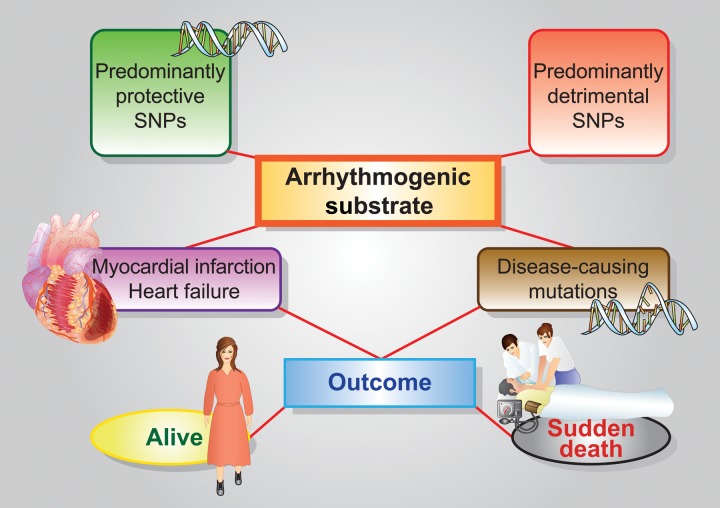
“Protective and arrhythmogenic SNPs may annul each other but if an individual inherits a series of SNPs acting predominantly in one direction, there may be an important effect on clinical outcome (Figure 1), and initial examples have been published.(98)”
BackgroundSelf-citationStecker, E. C., Vickers, C., Waltz, J., Socoteanu, C., John, B. T., Mariani, R., McAnulty, J. H., Gunson, K., Jui, J., & Chugh, S. S. (2006) · Journal of the American College of Cardiology · doi:10.1016/j.jacc.2005.11.045 · Cited by 542 · cited 7×
“The relation between LVEF and mode of death (SCD vs. non-SCD) in patients with CAD shows no significant difference in per cent of SCD for any range of LVEF.8 Similar findings characterize patients with HF in the CHARM programme.76 Thus, LVEF lacks both sensitivity and specificity for prediction of SCD risk.77,78 Multi…”
ResultInfluentialSudden Cardiac Death Caused by Coronary Heart Disease
Myerburg, R. J., & Junttila, M. J. (2012) · Circulation · doi:10.1161/circulationaha.111.023846 · Cited by 529 · cited 2×
“Finally, there is a lack of dynamic risk assessment studies over time.(17) At present, it remains largely unknown for which time interval a given risk assessment will optimally predict individual risk for SCD.”
BackgroundSelf-citationHeart rate variability, sleep and sleep disorders
Stein, P. K., & Pu, Y. (2012) · Sleep Medicine Reviews · doi:10.1016/j.smrv.2011.02.005 · Cited by 520 · cited 1×
“Autonomic nervous system tests are not influenced by usual clinical doses of beta-blockers,(52,59) whereas sleep abnormalities affect autonomic testing based on full 24-h data.(60) A consensus exists that the risk prediction power of ANS tests increases when quantifying autonomic responses to specific provocations rat…”
BackgroundPagidipati, N. J., & Gaziano, T. A. (2013) · Circulation · doi:10.1161/circulationaha.112.128413 · Cited by 504
Sudden cardiac death. Structure, function, and time-dependence of risk.
Myerburg, R. J., Kessler, K. M., & Castellanos, A. W. (1992) · PubMed · Cited by 484
Self-citationHeart Rate Turbulence: Standards of Measurement, Physiological Interpretation, and Clinical Use
Bauer, A., Malik, M., Schmidt, G., Barthel, P., Bonnemeier, H., Cygankiewicz, I., Guzik, P., Lombardi, F., Müller, A., Oto, A., et al. (2008) · Journal of the American College of Cardiology · doi:10.1016/j.jacc.2008.07.041 · Cited by 462 · cited 1×
“thetic and vagal control of sinus node activity, such as with HRT and deceleration capacity.(30,52,53) Autonomic nervous system function can also be assessed from heart rate responses to exercise”
BackgroundPanikkath, R., Reinier, K., Uy-Evanado, A., Teodorescu, C., Hattenhauer, J., Mariani, R., Gunson, K., Jui, J., & Chugh, S. S. (2011) · Circulation: Arrhythmia and Electrophysiology · doi:10.1161/circep.110.960658 · Cited by 449 · cited 1×
“A prolonged Tpeak–Tend interval measured in lead V5 seems independently associated with SCD, even when the QTc is normal.(25) In a study of”
BackgroundAutonomic nervous system and sudden cardiac death
Barron, H. V., & Lesh, M. D. (1996) · Journal of the American College of Cardiology · doi:10.1016/0735-1097(95)00615-x · Cited by 436
Baroreceptor reflex control of heart rate: a predictor of sudden cardiac death.
Billman, G. E., Schwartz, P. J., & Stone, H. L. (1982) · Circulation · doi:10.1161/01.cir.66.4.874 · Cited by 422 · cited 16×
“In particular, heart rate turbulence (HRT) and deceleration capacity were shown to select patients with preserved LV function who have similarly high risk of SCD as those with depressed LV function.30 In the combined Finnish and German database of survivors of acute myocardial infarction (AMI), nonsustained ventricula…”
BackgroundInfluentialSelf-citationvan Veldhuisen, D. J., Linssen, G. C. M., Jaarsma, T., van Gilst, W. H., Hoes, A. W., Tijssen, J. G. P., Paulus, W. J., Voors, A. A., & Hillege, H. L. (2013) · Journal of the American College of Cardiology · doi:10.1016/j.jacc.2012.12.044 · Cited by 414
Self-citationOdemuyiwa, O., Malik, M., Farrell, T., Bashir, Y., Poloniecki, J., & Camm, J. (1991) · The American Journal of Cardiology · doi:10.1016/0002-9149(91)90774-f · Cited by 370
Boogers, M. J., Borleffs, C. J. W., Henneman, M. M., van Bommel, R. J., van Ramshorst, J., Boersma, E., Dibbets-Schneider, P., Stokkel, M. P., van der Wall, E. E., Schalij, M. J., et al. (2010) · Journal of the American College of Cardiology · doi:10.1016/j.jacc.2009.12.066 · Cited by 368 · cited 1×
“Recently, the (123)-I MIBG defect score was found to independently predict ventricular arrhythmias causing appropriate ICD shocks.(71) The combination of traditional”
BackgroundBuxton, A. E., Lee, K. L., Hafley, G. E., Pires, L. A., Fisher, J. D., Gold, M. R., Josephson, M. E., Lehmann, M. H., & Prystowsky, E. N. (2007) · Journal of the American College of Cardiology · doi:10.1016/j.jacc.2007.04.095 · Cited by 356
Self-citationGorgels, A. (2003) · European Heart Journal · doi:10.1016/s0195-668x(03)00191-x · Cited by 350 · cited 7×
“To date, four genome-wide association studies (GWAS) on VF/SCD have been published111 –114 and one of the two SNPs that were identified in GWAS studies comes from AGNES, a study in patients with and without VF in the setting of a first AMI.111 A stark contrast is represented by studies based on mixed phenotypes as in…”
BackgroundInfluentialSelf-citationFamily History as a Risk Factor for Primary Cardiac Arrest
Friedlander, Y., Siscovick, D. S., Weinmann, S., Austin, M. A., Psaty, B. M., Lemaitre, R. N., Arbogast, P., Raghunathan, T. E., & Cobb, L. A. (1998) · Circulation · doi:10.1161/01.cir.97.2.155 · Cited by 336
Zile, M. R., Gaasch, W. H., Anand, I. S., Haass, M., Little, W. C., Miller, A. B., Lopez-Sendon, J., Teerlink, J. R., White, M., McMurray, J. J., et al. (2010) · Circulation · doi:10.1161/circulationaha.109.909614 · Cited by 335
Uretsky, B. F., Thygesen, K., Armstrong, P. W., Cleland, J. G., Horowitz, J. D., Massie, B. M., Packer, M., Poole-Wilson, P. A., & Ryden, L. (2000) · Circulation · doi:10.1161/01.cir.102.6.611 · Cited by 334
Greenland, P., Daviglus, M. L., Dyer, A. R., Liu, K., Huang, C.-F., Goldberger, J. J., & Stamler, J. (1999) · American Journal of Epidemiology · doi:10.1093/oxfordjournals.aje.a009901 · Cited by 319
Self-citationImpact of Genetics on the Clinical Management of Channelopathies
Schwartz, P. J., Ackerman, M. J., George, A. L., & Wilde, A. A. M. (2013) · Journal of the American College of Cardiology · doi:10.1016/j.jacc.2013.04.044 · Cited by 318
Self-citationPrediction of Mode of Death in Heart Failure: The Seattle Heart Failure Model
Mozaffarian, D., Anker, S. D., Anand, I., Linker, D. T., Sullivan, M. D., Cleland, J. G. F., Carson, P. E., Maggioni, A. P., Mann, D. L., Pitt, B., et al. (2007) · Circulation · doi:10.1161/circulationaha.106.687103 · Cited by 301
Nichols, M., Townsend, N., Scarborough, P., & Rayner, M. (2013) · European Heart Journal · doi:10.1093/eurheartj/eht159 · Cited by 289
Dekker, L. R. C., Bezzina, C. R., Henriques, J. P. S., Tanck, M. W., Koch, K. T., Alings, M. W., Arnold, A. E. R., de Boer, M.-J., Gorgels, A. P. M., Michels, H. R., et al. (2006) · Circulation · doi:10.1161/circulationaha.105.606145 · Cited by 286
Self-citationNOS1AP Is a Genetic Modifier of the Long-QT Syndrome
Crotti, L., Monti, M. C., Insolia, R., Peljto, A., Goosen, A., Brink, P. A., Greenberg, D. A., Schwartz, P. J., & George, A. L. (2009) · Circulation · doi:10.1161/circulationaha.109.879643 · Cited by 274
Self-citationSolomon, S. D., Wang, D., Finn, P., Skali, H., Zornoff, L., McMurray, J. J. V., Swedberg, K., Yusuf, S., Granger, C. B., Michelson, E. L., et al. (2004) · Circulation · doi:10.1161/01.cir.0000144474.65922.aa · Cited by 266 · cited 2×
“Similar findings characterize patients with HF in the CHARM programme.(76) Thus, LVEF lacks both sensitivity and specificity for prediction of SCD risk.”
BackgroundResultSelf-citationEmerging Biomarkers in Heart Failure
van Kimmenade, R. R. J., & Januzzi, J. L. (2012) · Clinical Chemistry · doi:10.1373/clinchem.2011.165720 · Cited by 257
Mäkikallio, T. H., Barthel, P., Schneider, R., Bauer, A., Tapanainen, J. M., Tulppo, M. P., Schmidt, G., & Huikuri, H. V. (2005) · European Heart Journal · doi:10.1093/eurheartj/ehi188 · Cited by 249
Self-citationPacker, D. L., Prutkin, J. M., Hellkamp, A. S., Mitchell, L. B., Bernstein, R. C., Wood, F., Boehmer, J. P., Carlson, M. D., Frantz, R. P., McNulty, S. E., et al. (2009) · Circulation · doi:10.1161/circulationaha.109.853689 · Cited by 244
Analysis of 12-Lead T-Wave Morphology for Risk Stratification After Myocardial Infarction
Zabel, M., Acar, B., Klingenheben, T., Franz, M. R., Hohnloser, S. H., & Malik, M. (2000) · Circulation · doi:10.1161/01.cir.102.11.1252 · Cited by 242
Self-citationPouleur, A.-C., Barkoudah, E., Uno, H., Skali, H., Finn, P. V., Zelenkofske, S. L., Belenkov, Y. N., Mareev, V., Velazquez, E. J., Rouleau, J. L., et al. (2010) · Circulation · doi:10.1161/circulationaha.110.940619 · Cited by 224
Ikeda, T., Yoshino, H., Sugi, K., Tanno, K., Shimizu, H., Watanabe, J., Kasamaki, Y., Yoshida, A., & Kato, T. (2006) · Journal of the American College of Cardiology · doi:10.1016/j.jacc.2006.06.075 · Cited by 212
How do Patients with Heart Failure with Preserved Ejection Fraction Die?
Chan, M. M. Y., & Lam, C. S. P. (2013) · European Journal of Heart Failure · doi:10.1093/eurjhf/hft062 · Cited by 211 · cited 5×
“Single risk factors in this population have limited utility, while analysis of multiple risk factors performs far better for prediction of total mortality and SCD, as it happens in patients with CAD.91 The most widely used model is the Seattle Heart Failure Model.”
BackgroundInfluentialFamily History and the Risk of Sudden Cardiac Death as a Manifestation of an Acute Coronary Event
Kaikkonen, K. S., Kortelainen, M.-L., Linna, E., & Huikuri, H. V. (2006) · Circulation · doi:10.1161/circulationaha.106.624593 · Cited by 211
Self-citationBrink, P. A., Crotti, L., Corfield, V., Goosen, A., Durrheim, G., Hedley, P., Heradien, M., Geldenhuys, G., Vanoli, E., Bacchini, S., et al. (2005) · Circulation · doi:10.1161/circulationaha.105.572453 · Cited by 201 · cited 1×
“role for heart rate is more recent and limited to specific genetic subgroups.(36) H.”
BackgroundSelf-citationQRS-T angle as a predictor of sudden cardiac death in a middle-aged general population
Aro, A. L., Huikuri, H. V., Tikkanen, J. T., Junttila, M. J., Rissanen, H. A., Reunanen, A., & Anttonen, O. (2012) · Europace · doi:10.1093/europace/eur393 · Cited by 196
Self-citationBauer, A., Barthel, P., Schneider, R., Ulm, K., Müller, A., Joeinig, A., Stich, R., Kiviniemi, A., Hnatkova, K., Huikuri, H., et al. (2009) · European Heart Journal · doi:10.1093/eurheartj/ehn540 · Cited by 194 · cited 10×
“thetic and vagal control of sinus node activity, such as with HRT and deceleration capacity.(30,52,53) Autonomic nervous system function can also be assessed from heart rate responses to exercise”
BackgroundMethodInfluentialSelf-citationBezzina, C. R., Pazoki, R., Bardai, A., Marsman, R. F., de Jong, J. S. S. G., Blom, M. T., Scicluna, B. P., Jukema, J. W., Bindraban, N. R., Lichtner, P., et al. (2010) · Nature Genetics · doi:10.1038/ng.623 · Cited by 192 · cited 3×
“Current practice guidelines for implantation of ICDs for primary prevention of SCD, based on these parameters, have demonstrated their clinical and cost-effectiveness but they do not impact the majority of patients who will die suddenly as a first cardiac event or during the onset of AMI.74,120 Apart from LVEF and NYH…”
ResultSelf-citationMontanez, A., Ruskin, J. N., Hebert, P. R., Lamas, G. A., & Hennekens, C. H. (2004) · Archives of Internal Medicine · doi:10.1001/archinte.164.9.943 · Cited by 190
Aro, A. L., Anttonen, O., Tikkanen, J. T., Junttila, M. J., Kerola, T., Rissanen, H. A., Reunanen, A., & Huikuri, H. V. (2011) · Circulation: Arrhythmia and Electrophysiology · doi:10.1161/circep.111.963561 · Cited by 177
Self-citationJouven, X., Empana, J. P., Escolano, S., Buyck, J. F., Tafflet, M., Desnos, M., & Ducimetière, P. (2009) · The American Journal of Cardiology · doi:10.1016/j.amjcard.2008.08.071 · Cited by 175
Biology of the blood–nerve barrier and its alteration in immune mediated neuropathies
Kanda, T. (2013) · Journal of Neurology, Neurosurgery & Psychiatry · doi:10.1136/jnnp-2012-302312 · Cited by 173
Dagres, N., & Hindricks, G. (2013) · European Heart Journal · doi:10.1093/eurheartj/eht109 · Cited by 169 · cited 1×
“Thus, LVEF lacks both sensitivity and specificity for prediction of SCD risk.(77,78) Multiple factors other than LVEF and NYHA class, and their interaction, may contribute useful information towards prediction of SCD risk.”
BackgroundPrognostic Implications of Baroreflex Sensitivity in Heart Failure Patients in the Beta-Blocking Era
La Rovere, M. T., Pinna, G. D., Maestri, R., Robbi, E., Caporotondi, A., Guazzotti, G., Sleight, P., & Febo, O. (2009) · Journal of the American College of Cardiology · doi:10.1016/j.jacc.2008.09.034 · Cited by 169
Arking, D. E., Junttila, M. J., Goyette, P., Huertas-Vazquez, A., Eijgelsheim, M., Blom, M. T., Newton-Cheh, C., Reinier, K., Teodorescu, C., Uy-Evanado, A., et al. (2011) · PLoS Genetics · doi:10.1371/journal.pgen.1002158 · Cited by 169 · cited 1×
“Genome-wide association studies have identified numerous ‘hits’,(110) but attempts to link them to SCD have so far not been successful.(112,117,118) Genetic screening has a high potential to contribute to the identification”
BackgroundSelf-citationCardiovascular disease in Europe 2016: an epidemiological update
Townsend, N. P., Wilson, L., Bhatnagar, P., Wickramasinghe, K., Rayner, M., & Nichols, M. (2016) · European Heart Journal · doi:10.1093/eurheartj/ehw468 · Cited by 153
Extended Mortality Benefit of Early Postinfarction Reperfusion
Ross, A. M., Coyne, K. S., Moreyra, E. A., Reiner, J. S., Greenhouse, S. W., Walker, P. L., Simoons, M. L., Draoui, Y. C., Califf, R. M., Topol, E. J., et al. (1998) · Circulation · doi:10.1161/01.cir.97.16.1549 · Cited by 152
Self-citationDe Ferrari, G. M., Sanzo, A., Bertoletti, A., Specchia, G., Vanoli, E., & Schwartz, P. J. (2007) · Journal of the American College of Cardiology · doi:10.1016/j.jacc.2007.08.043 · Cited by 149 · cited 1×
“Advanced age decreases but not eliminates the value of ANS tests in predicting poor outcome, as shown with baroreflex testing in elderly post-MI patients.(58) Autonomic nervous system tests are not influenced by usual clinical doses of beta-blockers,(52,59) whereas sleep abnormalities affect autonomic testing based on…”
BackgroundSelf-citationAmin, A. S., Giudicessi, J. R., Tijsen, A. J., Spanjaart, A. M., Reckman, Y. J., Klemens, C. A., Tanck, M. W., Kapplinger, J. D., Hofman, N., Sinner, M. F., et al. (2012) · European Heart Journal · doi:10.1093/eurheartj/ehr473 · Cited by 142 · cited 1×
“Most of them increase risk,(101) and sometimes QT interval duration, but recently also ‘protective’ SNPs have been recognized.(102,103) This is a critically important area of research because of its implications for individual risk prediction, both for the inherited channelopathies and SCD generally.”
BackgroundSelf-citationSpooner, P. M., Albert, C. M., Benjamin, E. J., Boineau, R., Elston, R. C., George, A. L., Jouven, X., Kuller, L. H., MacCluer, J. W., Marbán, E., et al. (2001) · Circulation · doi:10.1161/01.cir.103.19.2361 · Cited by 140
Self-citationClinical Guide to Cardiac Autonomic Tests
Malik, M. (1998) · Springer eBooks · doi:10.1007/978-94-017-1057-2 · Cited by 131
Self-citationAgreement Among Cardiovascular Disease Risk Calculators
Allan, G. M., Nouri, F., Korownyk, C., Kolber, M. R., Vandermeer, B., & McCormack, J. (2013) · Circulation · doi:10.1161/circulationaha.112.000412 · Cited by 130 · cited 1×
“The decision which risk calculator should be used has an important impact on risk categorization and absolute risk estimation, with broad implications for guidelines recommending therapies.(13) Moreover, as time passes, it is likely that country-specific risk patterns maychange, in parallelwith emerging socio-economic…”
BackgroundNeural Control of Heart Rate Is an Arrhythmia Risk Modifier in Long QT Syndrome
Schwartz, P. J., Vanoli, E., Crotti, L., Spazzolini, C., Ferrandi, C., Goosen, A., Hedley, P. L., Heradien, M. J., Bacchini, S., Turco, A., et al. (2008) · Journal of the American College of Cardiology · doi:10.1016/j.jacc.2007.09.069 · Cited by 120 · cited 1×
“Hyperreactive ANS reflexes leading to very abrupt RR interval changes in either direction appear to pose an increased risk in those LQTS patients (LQT1) whose genetic mutations impair the IKs current and who are thereby unable to appropriately adapt their QT interval to abrupt heart rate changes.(70) This is an exampl…”
BackgroundSelf-citationIndications for Implantable Cardioverter-Defibrillators Based on Evidence and Judgment
Myerburg, R. J., Reddy, V. Y., & Castellanos, A. (2009) · Journal of the American College of Cardiology · doi:10.1016/j.jacc.2009.03.078 · Cited by 112 · cited 3×
“strated their clinical and cost-effectiveness but they do not impact the majority of patients who will die suddenly as a first cardiac event or during the onset of AMI.(74,120) Apart from LVEF and NYHA Class,”
BackgroundSelf-citationAro, A. L., Anttonen, O. M., Tikkanen, J. T., Junttila, J. M., Kerola, T. V., Rissanen, H. A., Reunanen, A., & Huikuri, H. V. (2012) · Circulation · doi:10.1161/circulationaha.112.098681 · Cited by 106
Self-citationThe Population Burden of Heart Failure Attributable to Modifiable Risk Factors
Avery, C. L., Loehr, L. R., Baggett, C., Chang, P. P., Kucharska-Newton, A. M., Matsushita, K., Rosamond, W. D., & Heiss, G. (2012) · Journal of the American College of Cardiology · doi:10.1016/j.jacc.2012.07.022 · Cited by 103 · cited 1×
“about the appropriate intensity of intervention in relation to the level of risk.(14,15) The parameters used in the current risk scores are derived from population studies andhave limitedpower for individual”
MethodHamaguchi, S., Kinugawa, S., Sobirin, M. A., Goto, D., Tsuchihashi‐Makaya, M., Yamada, S., Yokoshiki, H., & Tsutsui, H. (2012) · Circulation Journal · doi:10.1253/circj.cj-11-1355 · Cited by 102 · cited 2×
“rates are somewhat lower in patients with HFpLVEF than in patients with HFrLVEF.(84)”
ResultPost-Mortem Cardiac 3-T Magnetic Resonance Imaging
Jackowski, C., Schwendener, N., Grabherr, S., & Persson, A. (2013) · Journal of the American College of Cardiology · doi:10.1016/j.jacc.2013.01.089 · Cited by 97 · cited 16×
“In particular, heart rate turbulence (HRT) and deceleration capacity were shown to select patients with preserved LV function who have similarly high risk of SCD as those with depressed LV function.30 In the combined Finnish and German database of survivors of acute myocardial infarction (AMI), nonsustained ventricula…”
InfluentialNarayanan, K., Reinier, K., Uy‐Evanado, A., Teodorescu, C., Chugh, H. S., Marijon, É., Gunson, K., Jui, J., & Chugh, S. S. (2013) · Circulation · doi:10.1161/circulationaha.113.002539 · Cited by 97
Scott, P. A., Barry, J., Roberts, P. R., & Morgan, J. M. (2009) · European Journal of Heart Failure · doi:10.1093/eurjhf/hfp123 · Cited by 92
B-type natriuretic peptide is a major predictor of ventricular tachyarrhythmias
Levine, Y. C., Rosenberg, M. A., Mittleman, M. A., Samuel, M., Methachittiphan, N., Link, M. S., Josephson, M. E., & Buxton, A. E. (2014) · Heart Rhythm · doi:10.1016/j.hrthm.2014.04.024 · Cited by 90
Self-citationAouizerat, B. E., Vittinghoff, E., Musone, S. L., Pawlikowska, L., Kwok, P., Olgin, J. E., & Tseng, Z. H. (2011) · BMC Cardiovascular Disorders · doi:10.1186/1471-2261-11-29 · Cited by 89
Wichterle, D., Simek, J., La Rovere, M. T., Schwartz, P. J., Camm, A. J., & Malik, M. (2004) · Circulation · doi:10.1161/01.cir.0000140765.71014.1c · Cited by 88
Self-citationSpooner, P. M., Albert, C. M., Benjamin, E. J., Boineau, R., Elston, R. C., George, A. L., Jouven, X., Kuller, L. H., MacCluer, J. W., Marbán, E., et al. (2001) · Circulation · doi:10.1161/01.cir.103.20.2447 · Cited by 88
Self-citationPorta, A., Tobaldini, E., Gnecchi‐Ruscone, T., & Montano, N. (2010) · American Journal of Physiology-Heart and Circulatory Physiology · doi:10.1152/ajpheart.01206.2009 · Cited by 86
Blangy, H., Sadoul, N., Dousset, B., Radauceanu, A., Fay, R., Aliot, E., & Zannad, F. (2007) · Europace · doi:10.1093/europace/eum102 · Cited by 81 · cited 1×
“Other biochemical markers being actively investigated for utility in risk stratification of HF or post-MI patients include markers of collagen turnover, and C-reactive protein.(97) There is far less clinical experience with these markers than BNP, and more data are needed before their potential role is clear.”
BackgroundFalcone, C., Buzzi, M. P., Klersy, C., & Schwartz, P. J. (2005) · Circulation · doi:10.1161/circulationaha.105.545111 · Cited by 77
Self-citationHuikuri, H. V., Exner, D. V., Kavanagh, K. M., Aggarwal, S. G., Mitchell, L. B., Messier, M. D., Becker, D., Sheldon, R. S., & Bloch Thomsen, P.-E. (2010) · Heart Rhythm · doi:10.1016/j.hrthm.2009.11.004 · Cited by 77
Self-citationDuchatelet, S., Crotti, L., Peat, R. A., Denjoy, I., Itoh, H., Berthet, M., Ohno, S., Fressart, V., Monti, M. C., Crocamo, C., et al. (2013) · Circulation Cardiovascular Genetics · doi:10.1161/circgenetics.113.000023 · Cited by 76 · cited 1×
“Most of them increase risk,(101) and sometimes QT interval duration, but recently also ‘protective’ SNPs have been recognized.(102,103) This is a critically important area of research because of its implications for individual risk prediction, both for the inherited channelopathies and SCD generally.”
BackgroundSelf-citationSudden Cardiac Death in Heart Failure Patients With Preserved Ejection Fraction
Adabağ, S., Smith, L. G., Anand, I. S., Berger, A. K., & Luepker, R. V. (2012) · Journal of Cardiac Failure · doi:10.1016/j.cardfail.2012.08.357 · Cited by 73 · cited 1×
“death due to progressive HF) in patients with HF and preserved LVEF (HFpLVEF) is roughly half of that in patients with HF and reduced LVEF (HFrLVEF).(82,83) In contrast, the”
BackgroundArking, D. E., Reinier, K., Post, W. S., Jui, J., Hilton, G., O’Connor, A., Prineas, R. J., Boerwinkle, E., Psaty, B. M., Tomaselli, G. F., et al. (2010) · PLoS ONE · doi:10.1371/journal.pone.0009879 · Cited by 70
Diabetic Autonomic Imbalance and Glycemic Variability
Fleischer, J. (2012) · Journal of Diabetes Science and Technology · doi:10.1177/193229681200600526 · Cited by 67
Vagal Reflexes Following an Exercise Stress Test
Crotti, L., Spazzolini, C., Porretta, A. P., Dagradi, F., Taravelli, E., Petracci, B., Vicentini, A., Pedrazzini, M., Rovere, M. T. L., Vanoli, E., et al. (2012) · Journal of the American College of Cardiology · doi:10.1016/j.jacc.2012.08.1009 · Cited by 63
Self-citationKolder, I. C. R. M., Tanck, M. W. T., & Bezzina, C. R. (2012) · Journal of Molecular and Cellular Cardiology · doi:10.1016/j.yjmcc.2011.12.014 · Cited by 61 · cited 1×
“Key barriers to the identification of these genetic factors have been restricted sample sizes, heterogeneity of the associated cardiac substrate, and the difficulty of ascertaining adequate phenotype information after cardiac arrest.(109) Especially heterogeneity of the substrate hampers successful gene finding in pop…”
BackgroundCommon Genetic Variants, QT Interval, and Sudden Cardiac Death in a Finnish Population-Based Study
Noseworthy, P. A., Havulinna, A. S., Porthan, K., Lahtinen, A. M., Jula, A., Karhunen, P. J., Perola, M., Oikarinen, L., KONTULA, K. K., Salomaa, V. V., et al. (2011) · Circulation Cardiovascular Genetics · doi:10.1161/circgenetics.110.959049 · Cited by 59
Merchant, F. M., Ikeda, T., Pedretti, R. F. E., Salerno‐Uriarte, J. A., Chow, T., Chan, P. S., Bartone, C. L., Hohnloser, S. H., Cohen, R. J., & Armoundas, A. A. (2012) · Heart Rhythm · doi:10.1016/j.hrthm.2012.03.014 · Cited by 58
Self-citationPrimary prevention of cardiovascular disease using validated risk scores: A systematic review
Willis, A., Davies, M. J., Yates, T. E., & Khunti, K. (2012) · Journal of the Royal Society of Medicine · doi:10.1258/jrsm.2012.110193 · Cited by 58 · cited 1×
“about the appropriate intensity of intervention in relation to the level of risk.(14,15) The parameters used in the current risk scores are derived from population studies andhave limitedpower for individual”
MethodBauer, A., Barthel, P., Müller, A., Ulm, K., Huikuri, H. V., Malík, M., & Schmidt, G. P. (2009) · Journal of Electrocardiology · doi:10.1016/j.jelectrocard.2009.07.013 · Cited by 56 · cited 2×
“In the Maastricht prospective registry, only 26% of SCD cases had a history of HF.72,74 The underlying cause of HF (coronary vs. non-CAD cardiomyopathy) influences mechanisms of arrhythmias, and mortality risk, with most studies finding significantly higher mortality in patients with CAD.85 Unfortunately, although app…”
BackgroundSelf-citationJouven, X., Schwartz, P. J., Escolano, S., Straczek, C., Tafflet, M., Desnos, M., Empana, J. P., & Ducimetiere, P. (2009) · European Heart Journal · doi:10.1093/eurheartj/ehp160 · Cited by 56
Self-citationSoliman, E. Z., Prineas, R. J., Case, L. D., Russell, G., Rosamond, W. D., Rea, T. D., Sotoodehnia, N., Post, W. S., Siscovick, D. S., Psaty, B. M., et al. (2011) · Heart · doi:10.1136/hrt.2010.215871 · Cited by 53
Barthel, P., Bauer, A., Müller, A., Junk, N., Huster, K. M., Ulm, K., Malik, M., & Schmidt, G. (2011) · Diabetes Care · doi:10.2337/dc11-0330 · Cited by 51 · cited 1×
“In cardiac patients, the strength of the association between ANS abnormalities, poor outcome, and cause-specific mortality, namely SCD, likely depends upon the underlying cardiac condition and upon the presence of diabetes or renal insufficiency.(40) Although obviously important, genetic predisposition to ANS abnormal…”
BackgroundBari, V., Valencia, J. F., Vallverdú, M., Girardengo, G., Marchi, A., Bassani, T., Caminal, P., Cerutti, S., George, A. L., Brink, P. A., et al. (2014) · PLoS ONE · doi:10.1371/journal.pone.0093808 · Cited by 50
Self-citationCheng, A., Dalal, D., Butcher, B., Norgard, S., Zhang, Y., Dickfeld, T. M., ELDADAH, Z. A., Ellenbogen, K. A., Güallar, E., & Tomaselli, G. F. (2013) · Journal of the American Heart Association · doi:10.1161/jaha.112.000083 · Cited by 47 · cited 1×
“A stark contrast is represented by studies based on mixed phenotypes as in ICD patients using appropriate shocks as endpoint.(115) – 117 Such patients are at risk of VF through many different mechanisms (pump failure in a scarred ventricle, different medications, electrolyte disorders, etc.”
Barthel, P., Bauer, A., Müller, A., Huster, K. M., Kanters, J. K., Paruchuri, V., Yang, X., Ulm, K., Malík, M., & Schmidt, G. P. (2012) · Heart Rhythm · doi:10.1016/j.hrthm.2012.04.017 · Cited by 44
Incidence and Predictors of Sudden Cardiac Death in Patients with Diastolic Heart Failure
Al‐Khatib, S. M., Shaw, L. K., O’Connor, C. M., Kong, M. H., & Califf, R. M. (2007) · Journal of Cardiovascular Electrophysiology · doi:10.1111/j.1540-8167.2007.00957.x · Cited by 39
Prognostic Value of Late Heart Rate Recovery After Treadmill Exercise
Johnson, N. P., & Goldberger, J. J. (2012) · The American Journal of Cardiology · doi:10.1016/j.amjcard.2012.02.046 · Cited by 37 · cited 1×
“Heart rate recovery after exercise has prognostic significance for both total and sudden cardiac mortality.(54,55) Validated models of spectral analysis of RR intervals permit assessing the strength of cardiac sympathetic and vagal modulations, especially when measuring responses to well-defined provocations.”
BackgroundSelf-citationCardiac Arrest Outside of a Hospital
Wellens, H. J. J., Gorgels, A. P. M., & de Munter, H. (2003) · Circulation · doi:10.1161/01.cir.0000067880.57844.62 · Cited by 35
Self-citationYap, Y. G., Duong, T., Bland, M., Malík, M., Torp-Pedersen, C. T., Køber, L., Gallagher, M. M., & Camm, A. J. (2007) · Heart · doi:10.1136/hrt.2006.102186 · Cited by 33
Self-citationMenotti, A., Lanti, M., Kromhout, D., BLACKBURN, H. W., Jacobs, D. R., Nissinen, A. M., Dontas, A. S., Kafatos, A., Nedeljković, S., & Adachi, H. (2008) · European Journal of Cardiovascular Prevention & Rehabilitation · doi:10.1097/hjr.0b013e328315789c · Cited by 33 · cited 1×
“levels of LDL cholesterol or blood pressure and subsequent cardiac events varies across countries.(11) Therefore, SCORE provides different tables for high- and low-risk countries in Europe.”
BackgroundSchwartz, P. J. (2010) · Heart Rhythm · doi:10.1016/j.hrthm.2010.12.035 · Cited by 27
Self-citationThe (possibly) deceptive figures of decreased coronary heart disease mortality in Europe: Figure 1
Danchin, N., Puymirat, É., & Simon, T. (2013) · European Heart Journal · doi:10.1093/eurheartj/eht362 · Cited by 19
Aiba, T., Kawata, H., Yokoyama, T., Hidaka, I., Takagi, H., Ishibashi, K., Nakajima, I., Yamada, Y., Miyamoto, K., Okamura, H., et al. (2015) · Japanese Journal of Electrocardiology · doi:10.5105/jse.34.345 · Cited by 19
Journal of Cardiovascular Electrophysiology—2009
Prystowsky, E. N. (2010) · Journal of Cardiovascular Electrophysiology · doi:10.1111/j.1540-8167.2010.01722.x · Cited by 17
Murray, S. S., Smith, E. N., Villarasa, N., Nahey, T., Lande, J. D., Goldberg, H., Shaw, M., ROSENTHAL, L. S., Ramza, B. M., Alaeddini, J., et al. (2012) · PLoS ONE · doi:10.1371/journal.pone.0025387 · Cited by 9
Albert, C. M., & Stevenson, W. G. (2013) · Circulation · doi:10.1161/circulationaha.113.005832 · Cited by 9
Summaries of Key Journal Articles
Eagle, K. A., Cannon, C. P., Armstrong, W. F., Bach, D. S., Baliga, R. R., Booher, A. M., Cotts, T. B., Cowger, J. A., Eitzman, D. T., Froehlich, J. B., et al. (2012) · Journal of the American College of Cardiology · doi:10.1016/j.jacc.2012.03.004 · Cited by 8
Autonomic Tests to Detect Cardiac Risk and Their Clinical Practicality
Malík, M. (2011) · Journal of Cardiovascular Electrophysiology · doi:10.1111/j.1540-8167.2010.01996.x · Cited by 6 · cited 3×
“status and challenges for the future† Hein J.J. Wellens1‡, Peter J. Schwartz2‡*, Fred W. Lindemans3‡, Alfred E. Buxton4, Jeffrey J. Goldberger5, Stefan H. Hohnloser6, Heikki V. Huikuri7, Stefan Kääb8,9, Maria Teresa La Rovere10, Marek Malik11, Robert J. Myerburg12, Maarten L. Simoons13, Karl Swedberg14, Jan Tijssen1…”
BackgroundWieneke, H., Spencker, S., Svendsen, J. H., Martínez, J. G., Strohmer, B., Toivonen, L., Marec, H. L., Garcia, J., Kaup, B., Soykan, O., et al. (2010) · EP Europace · doi:10.1093/europace/eup444 · Cited by 6
Sympathetic Innervation, Denervation, and Cardiac Arrhythmias
Vaseghi, M., Ajijola, O. A., Mahajan, A., & Shivkumar, K. (2013) · Elsevier eBooks · doi:10.1016/b978-1-4557-2856-5.00041-8 · Cited by 5
Drug-Induced Long QT Syndrome and Exome Sequencing
Crotti, L., & Schwartz, P. J. (2014) · Journal of the American College of Cardiology · doi:10.1016/j.jacc.2014.01.030 · Cited by 4
Self-citationSummaries of Key Journal Articles
Eagle, K. A., Cannon, C. P., Armstrong, W. F., Bach, D. S., Baliga, R. R., Booher, A. M., Cotts, T. B., Cowger, J. A., Eitzman, D. T., Froehlich, J. B., et al. (2012) · Journal of the American College of Cardiology · doi:10.1016/j.jacc.2012.05.007 · Cited by 3
Research works printed but not linked: 20
- 2006, Journal of the American College of Cardiology, 47, 1161, 10.1016/j.jacc.2005.11.045 · DOI · Paper page
- 2012, Clinical Chemistry, 58, 127, 10.1373/clinchem.2011.165720 · DOI · Paper page
- 2006, Journal of the American College of Cardiology, 47, 362, 10.1016/j.jacc.2005.08.067 · DOI · Paper page
- 2011, Circulation: Arrhythmia and Electrophysiology, 4, 441, 10.1161/circep.110.960658 · DOI · Paper page
- 2009, New England Journal of Medicine, 361, 2529, 10.1056/nejmoa0907589 · DOI · Paper page
- 2011, Circulation: Arrhythmia and Electrophysiology, 4, 704, 10.1161/circep.111.963561 · DOI · Paper page
- 2013, Journal of Neurology, Neurosurgery & Psychiatry, 84, 208, 10.1136/jnnp-2012-302312 · DOI · Paper page
- 1985, American Journal of Physiology - Gastrointestinal and Liver Physiology, 248, H151
- 2007, Journal of the American College of Cardiology, 50, 2285, 10.1016/j.jacc.2007.08.043 · DOI · Paper page
- 2012, Journal of the American College of Cardiology, 60, 2515, 10.1016/j.jacc.2012.08.1009 · DOI
- 2010, American Journal of Physiology - Gastrointestinal and Liver Physiology, 298, H1406
- 2013, Journal of the American College of Cardiology, 62, 617, 10.1016/j.jacc.2013.01.089 · DOI
- 2006, Journal of the American College of Cardiology, 48, 2268, 10.1016/j.jacc.2006.06.075 · DOI · Paper page
- 2007, Journal of the American College of Cardiology, 50, 1150, 10.1016/j.jacc.2007.04.095 · DOI · Paper page
- 2013, Journal of the American College of Cardiology, 61, 1498, 10.1016/j.jacc.2012.12.044 · DOI · Paper page
- 2013, Nature genetics, 45, 1044, 10.1038/ng.2712 · DOI · Paper page
- 2013, Journal of the American College of Cardiology, 62, 169, 10.1016/j.jacc.2013.04.044 · DOI · Paper page
- 2013, Circulation: Cardiovascular Genetics, 6, 354, 10.1161/circgenetics.113.000023 · DOI
- 2011, Circulation: Cardiovascular Genetics, 4, 305, 10.1161/circgenetics.110.959049 · DOI
- 2014, Journal of the American College of Cardiology, 63, 1438, 10.1016/j.jacc.2014.01.030 · DOI
Cited by
Priori, S. G., Blomström-Lundqvist, C., Mazzanti, A., Blom, N., Borggrefe, M., Camm, J., Elliott, P. M., Fitzsimons, D., Hatala, R., Hindricks, G., et al. (2015) · European Heart Journal · doi:10.1093/eurheartj/ehv316 · Cited by 3,893
(2015) · Europace · doi:10.1093/europace/euv319 · Cited by 1,592
European Resuscitation Council Guidelines 2021: Adult advanced life support
Soar, J., Böttiger, B. W., Carli, P., Couper, K., Deakin, C. D., Djärv, T., Lott, C., Olasveengen, T., Paal, P., Pellis, T., et al. (2021) · Resuscitation · doi:10.1016/j.resuscitation.2021.02.010 · Cited by 1,225
“Systematic evaluation in a clinic specialising in the care of those at risk for SCD is recommended in family members of young victims of SCD or those with a known cardiac disorder resulting in an increased risk of SCD. Identification of individuals with inherited conditions and screening of family members can help pre…”
BackgroundMethodInfluentialJ-Wave syndromes expert consensus conference report: Emerging concepts and gaps in knowledge
Antzelevitch, C., Yan, G.-X., Ackerman, M. J., Borggrefe, M., Corrado, D., Guo, J., Gussak, I., Hasdemir, C., Horie, M., Huikuri, H., et al. (2016) · Heart Rhythm · doi:10.1016/j.hrthm.2016.05.024 · Cited by 621
Self-citationClinical neurocardiology defining the value of neuroscience-based cardiovascular therapeutics
Shivkumar, K., Ajijola, O. A., Anand, I., Armour, J. A., Chen, P., Esler, M., De Ferrari, G. M., Fishbein, M. C., Goldberger, J. J., Harper, R. M., et al. (2016) · The Journal of Physiology · doi:10.1113/jp271870 · Cited by 308
“Specifically, assessment of reflex measures of autonomic function provide more information than tonic measures, which are affected by many variables (Wellens et al. 2014).”
BackgroundSelf-citation
Metadata
- Authors
- Wellens, H. J. J., Schwartz, P. J., Lindemans, F. W., Buxton, A. E., Goldberger, J. J., Hohnloser, S. H., Huikuri, H. V., Kaab, S., La Rovere, M. T., Malik, M., Myerburg, R. J., Simoons, M. L., Swedberg, K., Tijssen, J., Voors, A. A., & Wilde, A. A.
- Affiliations
- IRCCS Istituto Auxologico Italiano (IT)
- Medtronic (Netherlands) (NL)
- Beth Israel Deaconess Medical Center (US)
- Northwestern University (US)
- Goethe University Frankfurt (DE)
- Oulu University Hospital (FI)
- University of London (GB)
- University of Miami (US)
- Erasmus MC (NL)
- University of Gothenburg (SE)
- Amsterdam UMC Location University of Amsterdam (NL)
- University Medical Center Groningen (NL)
- King Abdulaziz University (SA)
- Corresponding author
- Schwartz, P. J.
- ORCID
- Venue
- European Heart Journal
- Publisher
- Oxford University Press (OUP)
- Published
- 2014-05-05
- Volume
- 35
- Issue
- 25
- Pages
- 1642-1651
- ISSN
- 0195-668X (ISSN-L)
- 1522-9645
- PMC
- PMC4076664
- OpenAlex
- W2162846687
- Cited by
- 405
- References
- 129
- Citations by year
- 2026: 13 · 2025: 24 · 2024: 26 · 2023: 28 · 2022: 31 · 2021: 34 · 2020: 35 · 2019: 42 · 2018: 35 · 2017: 55 · 2016: 43 · 2015: 34 · 2014: 5
- FWCI
- 31.32
- Type
- journal article
- Language
- en
- Open access
- hybrid
- doi.org
- Licence
- cc-by-nc
- Locations
- European Heart Journal (publishedVersion, cc-by-nc)
- PubMed Central (publishedVersion, cc-by-nc)
- PubMed (publishedVersion)
- EUR Research Repository (Erasmus University Rotterdam) (publishedVersion, other-oa)
- University of Groningen research database (University of Groningen / Centre for Information Technology) (publishedVersion)
- Data Archiving and Networked Services (DANS) (submittedVersion)
- EUR Research Repository (Erasmus University Rotterdam) (submittedVersion, other-oa)
- RePub (Erasmus University Rotterdam) (submittedVersion, other-oa)
- Research Publications (Maastricht University) (submittedVersion, cc-by-nc)
- Publication Server of Goethe University Frankfurt am Main (Goethe University Frankfurt) (submittedVersion, cc-by-nc)
- Pure Amsterdam UMC (submittedVersion)
- Spiral (Imperial College London) (submittedVersion, other-oa)
- University of Groningen research database (University of Groningen / Centre for Information Technology) (submittedVersion)
- Research Publications (Maastricht University) (submittedVersion, other-oa)
- Funders
- Foundation for Cardiovascular Research
- Medtronic Europe
- British Heart Foundation (PG/13/54/30358, PG/12/77/29857)
- Center for Translational Molecular Medicine (01C‐203, grant 01C‐203)
- Topics
- Health Sciences › Medicine › Cardiology and Cardiovascular Medicine › Cardiac electrophysiology and arrhythmias
- Health Sciences › Medicine › Cardiology and Cardiovascular Medicine › Cardiovascular Effects of Exercise
- Health Sciences › Medicine › Cardiology and Cardiovascular Medicine › Cardiac pacing and defibrillation studies
- Keywords
- sudden cardiac death, risk stratification, cardiac arrhythmias, autonomic function testing, electrocardiographic abnormalities, cardiac dysfunction, genetic screening
- MeSH terms
- Aged, Arrhythmias, Cardiac, Autonomic Nervous System Diseases, Electrocardiography, Female, Forecasting, Genetic Testing, Heart Failure, Heart Function Tests, Humans, Male, Middle Aged, Prognosis, Biomarkers, Ventricular Function, Left, Death, Sudden, Cardiac, Risk Assessment, Early Diagnosis
About these checks
Registry, retraction, Cites and statistics results are computed, not judged, with one exception: a printed reference that no index lists is read once by a model before it counts as a citation error. Claims are extracted by a model and kept only when their quote appears verbatim in the text; each cited source is then checked, with a model’s help, for whether it says what the claim relies on. Those verdicts can be wrong — read the claim’s quote and the cited source before relying on one.
Statistics and arithmetic are recomputed, not judged.
Confidence bands are shown only for fields calibrated on our annotated test set. None is calibrated yet, so no band is shown.
What counts as a claim ›How we measure confidence ›How we check this ›
Are you an author, or do you see a problem with this page? Request a review
Data sources
Bibliographic data: Semantic Scholar, OpenAlex, Crossref.
Contains information from the Semantic Scholar Academic Graph Datasets, made available under the ODC Attribution License (ODC-BY 1.0).
Semantic Scholar’s data is described in: Kinney, R., et al. (2023). The Semantic Scholar Open Data Platform. arXiv:2301.10140.
