

Familial hypercholesterolaemia in children and adolescents: gaining decades of life by optimizing detection and treatment
Open accessThe DOI matches its Crossref record, with a small difference in title or year; 149 of the 150 references it cites were found in a registry or an index.
Abstract
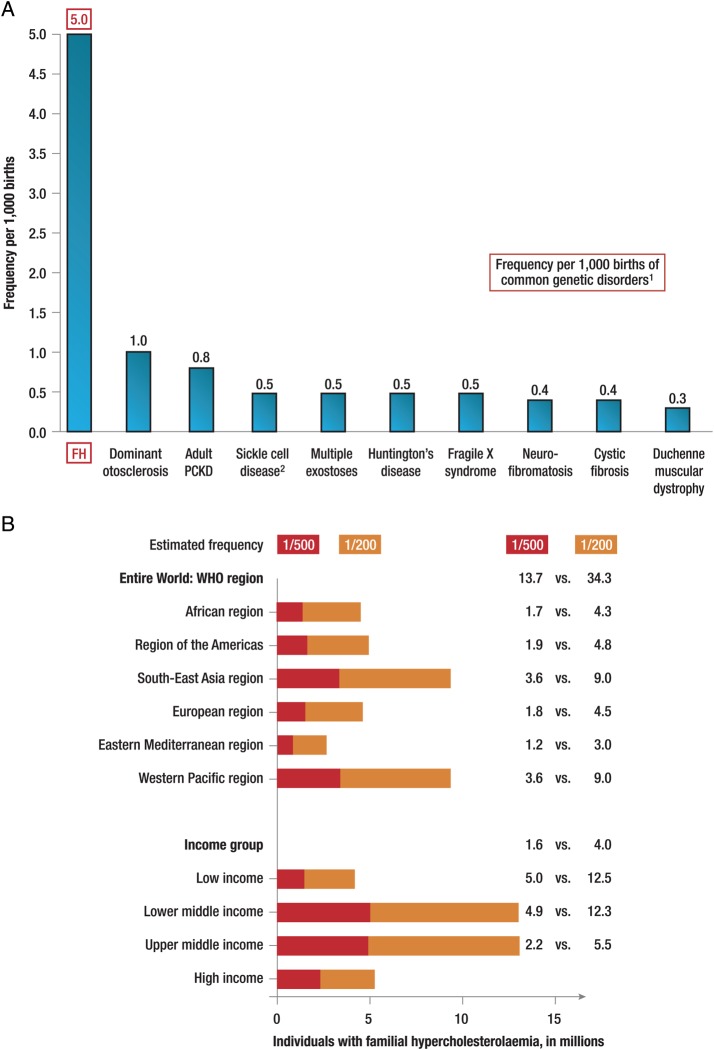
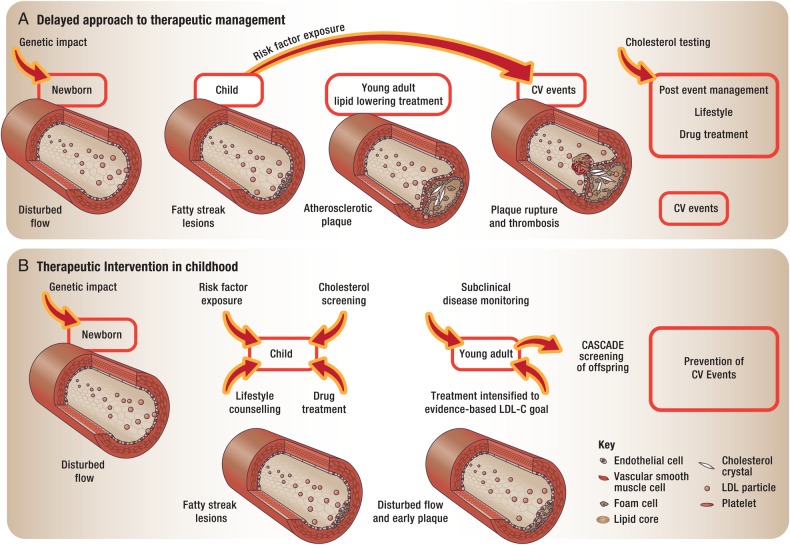
Familial hypercholesterolaemia (FH) is a common genetic cause of premature coronary heart disease (CHD). Globally, one baby is born with FH every minute. If diagnosed and treated early in childhood, individuals with FH can have normal life expectancy. This consensus paper aims to improve awareness of the need for early detection and management of FH children. Familial hypercholesterolaemia is diagnosed either on phenotypic criteria, i.e. an elevated low-density lipoprotein cholesterol (LDL-C) level plus a family history of elevated LDL-C, premature coronary artery disease and/or genetic diagnosis, or positive genetic testing. Childhood is the optimal period for discrimination between FH and non-FH using LDL-C screening. An LDL-C ≥5 mmol/L (190 mg/dL), or an LDL-C ≥4 mmol/L (160 mg/dL) with family history of premature CHD and/or high baseline cholesterol in one parent, make the phenotypic diagnosis. If a parent has a genetic defect, the LDL-C cut-off for the child is ≥3.5 mmol/L (130 mg/dL). We recommend cascade screening of families using a combined phenotypic and genotypic strategy. In children, testing is recommended from age 5 years, or earlier if homozygous FH is suspected. A healthy lifestyle and statin treatment (from age 8 to 10 years) are the cornerstones of management of heterozygous FH. Target LDL-C is <3.5 mmol/L (130 mg/dL) if >10 years, or ideally 50% reduction from baseline if 8-10 years, especially with very high LDL-C, elevated lipoprotein(a), a family history of premature CHD or other cardiovascular risk factors, balanced against the long-term risk of treatment side effects. Identifying FH early and optimally lowering LDL-C over the lifespan reduces cumulative LDL-C burden and offers health and socioeconomic benefits. To drive policy change for timely detection and management, we call for further studies in the young. Increased awareness, early identification, and optimal treatment from childhood are critical to adding decades of healthy life for children and adolescents with FH.
Overview
The claims and statistics of this paper haven’t been checked yet.
Free: it reads the open-access text and checks the first 5 claims that cite a source we can check. Create a free account to check every claim.
Integrity signals
Registry
Cites
Statistics
Figures
Verification
Claims the paper makes
The claims and statistics of this paper haven’t been checked yet.
Free: it reads the open-access text and checks the first 5 claims that cite a source we can check. Create a free account to check every claim.
Claims other papers make about this one
Each is checked against this paper’s own text: does it say what the citing paper says it does?
The source backs part of the claim, not all of it — or backs it for a different population, condition or comparison.
In the citing paper
“Monogenic disorders such as familial hypercholesterolemia (FH) can be easily recognized from the standard lipid panel without the need to measure apoB [31,32].”
From Quantifying atherogenic lipoproteins for lipid-lowering strategies: Consensus-based recommendations from EAS and EFLM (2020) · cites this paper as [32]
Experimental — accuracy not yet measuredThe source backs part of the claim, not all of it — or backs it for a different population, condition or comparison.
In the citing paper
“In a pediatric setting, reporting age-and gender-specific reference intervals is relevant for early identification of children with hyperlipidemia associated with premature atherosclerosis, especially FH [32].”
From Quantifying atherogenic lipoproteins for lipid-lowering strategies: Consensus-based recommendations from EAS and EFLM (2020) · cites this paper as [32]
Experimental — accuracy not yet measuredIn the citing paper
“Volanesorsen reduced plasma TGs by ∼70% and ApoC-III by 80-90% [349].”
From 2019 ESC/EAS guidelines for the management of dyslipidaemias: lipid modification to reduce cardiovascular risk (2019) · cites this paper as [349]
In the citing paper
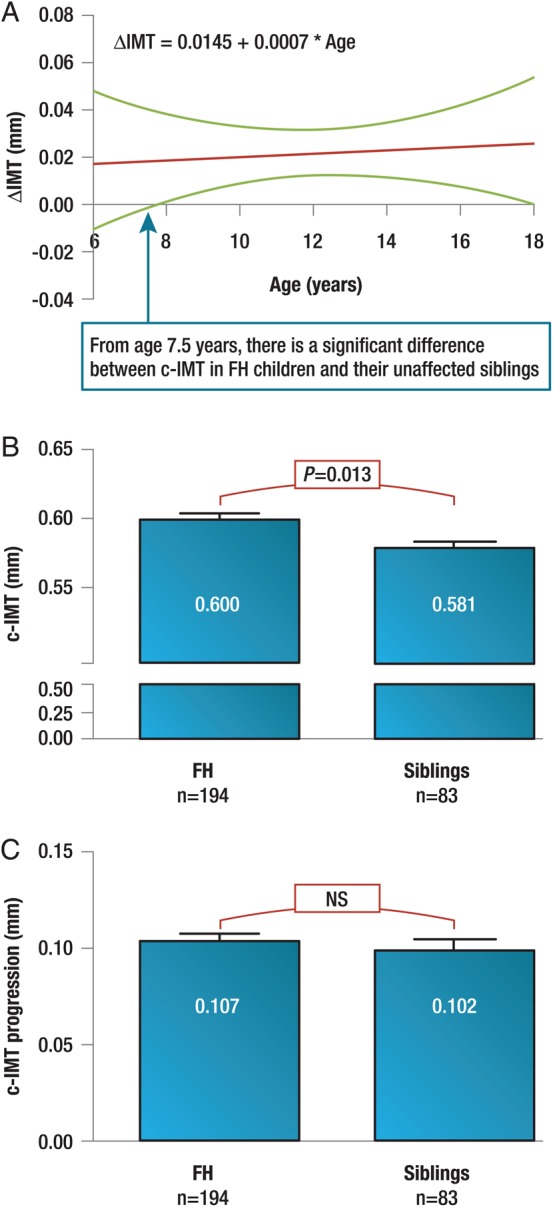
“Although placebo-controlled trials are missing in children, there are observational studies suggesting that early treatment can reduce LDL-C burden, improve endothelial function, substantially attenuate development of atherosclerosis and improve coronary outcomes. 303”
From 2016 ESC/EAS Guidelines for the Management of Dyslipidaemias (2016) · cites this paper as [303]
In the citing paper
“FH is diagnosed in children based on phenotypic criteria including elevated LDL-C plus a family history of elevated LDL-C, premature CAD and/or positive genetic testing. 303”
From 2016 ESC/EAS Guidelines for the Management of Dyslipidaemias (2016) · cites this paper as [303]
1 more claim about this paper
Create a free account to see every claim other papers make about this one.
Self-check
Percentages, sums and reported differences re-computed from the paper’s own numbers.
The self-check needs the paper’s full text.
Citations
Cites
A Receptor-Mediated Pathway for Cholesterol Homeostasis
Brown, M. S., & Goldstein, J. L. (1986) · Science · doi:10.1126/science.3513311 · Cited by 5,703
Berenson, G. S., Srinivasan, S. R., Bao, W., Newman, W. P., Tracy, R. E., & Wattigney, W. A. (1998) · New England Journal of Medicine · doi:10.1056/nejm199806043382302 · Cited by 4,032
ESC/EAS Guidelines for the management of dyslipidaemias
Reiner, Ž., Catapano, A. L., De Backer, G., Graham, I., Taskinen, M.-R., Wiklund, O., Agewall, S., Alegria, E., Chapman, M. J., Durrington, P., et al. (2011) · European Heart Journal · doi:10.1093/eurheartj/ehr158 · Cited by 3,549
Self-citationPrinciples and Practice of Screening for Disease.
(1968) · Annals of Internal Medicine · doi:10.7326/0003-4819-69-5-1085_2 · Cited by 3,066
Nordestgaard, B. G., Chapman, M. J., Humphries, S. E., Ginsberg, H. N., Masana, L., Descamps, O. S., Wiklund, O., Hegele, R. A., Raal, F. J., Defesche, J. C., et al. (2013) · European Heart Journal · doi:10.1093/eurheartj/eht273 · Cited by 2,761
Self-citationSystematic review and meta-analysis
(2019) · Providing Information for Health · doi:10.1201/9781315377315-19 · Cited by 2,659
Role of Oxidative Modifications in Atherosclerosis
Stocker, R., & Keaney, J. F. (2004) · Physiological Reviews · doi:10.1152/physrev.00047.2003 · Cited by 2,624 · cited 1×
“then accumulate in the artery wall, become oxidatively modified, and subsequently initiate an inflammatory response, which results in vascular injury and formation of atherosclerotic plaque.(25,26) Additional alterations in the lipoproteinprofile in FHmay involveelevated”
BackgroundLipoprotein(a) as a cardiovascular risk factor: current status
Nordestgaard, B. G., Chapman, M. J., Ray, K., Borén, J., Andreotti, F., Watts, G. F., Ginsberg, H., Amarenco, P., Catapano, A., Descamps, O. S., et al. (2010) · European Heart Journal · doi:10.1093/eurheartj/ehq386 · Cited by 1,807
Self-citationAllhoff, P., Laaser, U., & Heinrich, J. (1991) · Kompendium der Lipid-Studien · doi:10.1007/978-3-642-95642-3_7 · Cited by 1,329
Cuchel, M., Bruckert, E., Ginsberg, H. N., Raal, F. J., Santos, R. D., Hegele, R. A., Kuivenhoven, J. A., Nordestgaard, B. G., Descamps, O. S., Steinhagen-Thiessen, E., et al. (2014) · European Heart Journal · doi:10.1093/eurheartj/ehu274 · Cited by 1,057
Self-citation
Research works printed but not linked: 1
- Nherera LM Saving Lives, Saving Families: The Health, Social and Economic Advantages of Detecting and Treating Familial Hypercholesterolaemia (FH). Economics Chapter: Estimating the Benefits from Treatment and Increasing the Implementation of Cascading Screening http://heartuk.org.uk/files/uploads/documents/HUK_HealthEconomics_FINAL2012_2702.pdf (4 February 2015).
Cited by
Items 101–200 of 886
Santos, R. D., Ruzza, A., Hovingh, G. K., Stefanutti, C., Mach, F., Descamps, O. S., Bergeron, J., Wang, B., Bartuli, A., Buonuomo, P. S., et al. (2022) · The Lancet Diabetes & Endocrinology · doi:10.1016/s2213-8587(22)00221-2 · Cited by 57
Self-citationAntza, C., Gallo, A., Boutari, C., Ershova, A. I., Gürses, K. M., Lewek, J., Mirmaksudov, M., Silbernagel, G., Sandstedt, J., & Lebedeva, А. (2023) · Atherosclerosis · doi:10.1016/j.atherosclerosis.2023.117272 · Cited by 111
Universal screening for familial hypercholesterolemia in 2 populations
Šuštar, U., Kordonouri, O., Mlinarič, M., Kovač, J., Arens, S., Sedej, K., Bizjan, B. J., Podkrajšek, K. T., Danne, T., Battelino, T., et al. (2022) · Genetics in Medicine · doi:10.1016/j.gim.2022.06.010 · Cited by 59
Kotani, K., Șerban, M.-C., Penson, P. E., Lippi, G., & Banach, M. (2016) · Critical Reviews in Clinical Laboratory Sciences · doi:10.1080/10408363.2016.1188055 · Cited by 57
Brett, T., Qureshi, N., Gidding, S. S., & Watts, G. F. (2018) · Atherosclerosis · doi:10.1016/j.atherosclerosis.2018.08.019 · Cited by 56
Self-citationBogsrud, M. P., Græsdal, A., Johansen, D., Langslet, G., Hovland, A., Arnesen, K.-E., Mundal, L. J., Retterstøl, K., Wium, C., & Holven, K. B. (2019) · Journal of clinical lipidology · doi:10.1016/j.jacl.2019.01.010 · Cited by 53
PCSK9 in metabolism and diseases
Ajoolabady, A., Pratico, D., Mazidi, M., Davies, I. G., Lip, G. Y. H., Seidah, N., Libby, P., Kroemer, G., & Ren, J. (2025) · Metabolism · doi:10.1016/j.metabol.2024.156064 · Cited by 49
Pang, J., Hu, M., Lin, J., Miida, T., Nawawi, H. M., Park, J. E., Wu, X., Ramli, A. S., Kim, N., Kwok, S., et al. (2017) · BMJ Open · doi:10.1136/bmjopen-2017-017817 · Cited by 57
Self-citationHumphries, S. E., Cooper, J., Dale, P., & Ramaswami, U. (2018) · Journal of Clinical Lipidology · doi:10.1016/j.jacl.2017.11.005 · Cited by 48
“5 mmol/L if possible.(13) However, the age at which statin use should be started, or its intensity to best prevent the onset of adult premature CHD has not been rigorously established because there are no long-term randomized controlled outcome trials for ethical reasons.”
BackgroundSelf-citationKnowns and unknowns in the care of pediatric familial hypercholesterolemia
Martin, A. C., Gidding, S. S., Wiegman, A., & Watts, G. F. (2017) · Journal of Lipid Research · doi:10.1194/jlr.s074039 · Cited by 50
“to learn good habits than to break bad habits, all children with FH should receive advice on lifestyle modifications, incorporating a healthy diet low in saturated and trans-fat (77), regular exercise, and avoidance of cigarette smoking, including environmental tobacco smoke exposure (25, 78).”
BackgroundInfluentialSelf-citationBogsrud, M. P., Langslet, G., Wium, C., Johansen, D., Svilaas, A., & Holven, K. B. (2017) · Journal of clinical lipidology · doi:10.1016/j.jacl.2017.11.009 · Cited by 50
Mandraffino, G., Scicali, R., Rodríguez-Carrio, J., Savarino, F., Mamone, F., Scuruchi, M., Cinquegrani, M., Imbalzano, E., Di Pino, A., Piro, S., et al. (2020) · Journal of Clinical Lipidology · doi:10.1016/j.jacl.2020.01.015 · Cited by 48
Existing and emerging therapies for the treatment of familial hypercholesterolemia
Rosenson, R. S. (2021) · Journal of Lipid Research · doi:10.1016/j.jlr.2021.100060 · Cited by 53
Dyslipidemia in pediatrician’s practice
Burlutskaya, A. V., Tril, V. E., Polischuk, L. V., & Pokrovskii, V. M. (2021) · Reviews in Cardiovascular Medicine · doi:10.31083/j.rcm2203088 · Cited by 53
Thompson, G. R., Seed, M., Naoumova, R. P., Neuwirth, C. K. Y., Walji, S., Aitman, T. J., Scott, J., Myant, N. B., & Soutar, A. K. (2015) · Atherosclerosis · doi:10.1016/j.atherosclerosis.2015.09.029 · Cited by 49
Raal, F. J., Braamskamp, M. J., Selvey, S. L., Sensinger, C. H., & Kastelein, J. J. (2016) · Journal of Clinical Lipidology · doi:10.1016/j.jacl.2016.02.018 · Cited by 47
Self-citationOxidative burden in familial hypercholesterolemia
Mollazadeh, H., Carbone, F., Montecucco, F., Pirro, M., & Sahebkar, A. (2018) · Journal of Cellular Physiology · doi:10.1002/jcp.26466 · Cited by 52
“apolipoprotein E (ApoE) gene (Wiegman et al., 2015) and LDL receptor adaptor protein 1 (LDLRAP1), which encodes a protein required for clathrin-mediated internalization of the LDLR (Cenarro et al.”
BackgroundKhoury, M., Bigras, J., Cummings, E. A., Harris, K. C., Hegele, R. A., Henderson, M., Morrison, K. M., St‐Pierre, J., Wong, P. D., & McCrindle, B. W. (2022) · Canadian Journal of Cardiology · doi:10.1016/j.cjca.2022.05.002 · Cited by 65
“5.”
InfluentialSelf-citationGrenkowitz, T., Kassner, U., Wühle-Demuth, M., Salewsky, B., Rosada, A., Żemojtel, T., Hopfenmüller, W., Isermann, B., Borucki, K., Heigl, F., et al. (2016) · Atherosclerosis · doi:10.1016/j.atherosclerosis.2016.08.037 · Cited by 51
Self-citationAdemi, Z., Norman, R., Pang, J., Sijbrands, E. J. G., Watts, G. F., Hutten, B. A., & Wiegman, A. (2023) · Archives of Pediatrics and Adolescent Medicine · doi:10.1001/jamapediatrics.2023.0763 · Cited by 49
Self-citationFamilial Hypercholesterolaemia in 2020: A Leading Tier 1 Genomic Application
Pang, J., SULLIVAN, D. R., Brett, T., Kostner, K., Hare, D. L., & Watts, G. F. (2019) · Heart Lung and Circulation · doi:10.1016/j.hlc.2019.12.002 · Cited by 50
Self-citationAnagnostis, P. G., Vaitsi, K., Kleitsioti, P., Mantsiou, C. D., Pavlogiannis, K., Athyros, V. G., Mikhailidis, D. P., & Goulis, D. G. (2020) · Endocrine · doi:10.1007/s12020-020-02302-8 · Cited by 53
Martínez, M., Brodlie, S., Griesemer, A., Kato, T., Harren, P. A., Gordon, B. R., Parker, T. S., Levine, D. M., Tyberg, T. I., Starc, T. J., et al. (2016) · The American Journal of Cardiology · doi:10.1016/j.amjcard.2016.05.042 · Cited by 45
Saltijeral, A., de Isla, L. P., Alonso, R., Muñiz-Grijalvo, O., Díaz-Díaz, J. L., Fuentes, F. J., Mata, N., de Andrés, R., Díaz-Soto, G., Pastor, J., et al. (2017) · Revista Española de Cardiología · doi:10.1016/j.recesp.2016.10.012 · Cited by 45
Current Status of Familial Hypercholesterolemia in China: A Need for Patient FH Registry Systems
Chen, P., Chen, X., & Zhang, S. (2019) · Frontiers in Physiology · doi:10.3389/fphys.2019.00280 · Cited by 48
Statins in Children, an Update
Fiorentino, R., & Chiarelli, F. (2023) · International Journal of Molecular Sciences · doi:10.3390/ijms24021366 · Cited by 52
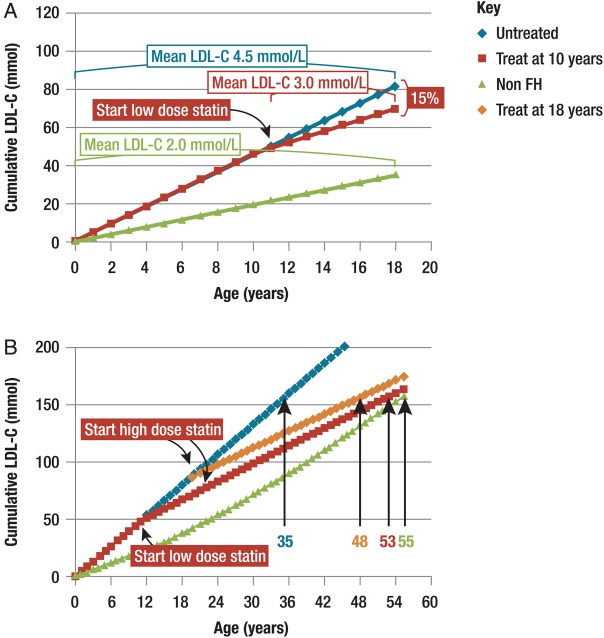
“In view of these observations, the efficacy of statins in pediatrics seems clear; children respond well to HMG-CoA reductase inhibitors and reduce their cumulative estimated atherosclerotic burden: when initiated early (from age 10 years), statins result in delaying the burden from age 35 to 53 years [42,43].”
BackgroundRallidis, L. S., Triantafyllis, A. S., Tsirebolos, G., Katsaras, D. N., Rallidi, M., Moutsatsou, P., & Lekakis, J. (2016) · Atherosclerosis · doi:10.1016/j.atherosclerosis.2016.03.023 · Cited by 44
My Approach to the Patient With Familial Hypercholesterolemia
Safarova, M. S., & Kullo, I. J. (2016) · Mayo Clinic Proceedings · doi:10.1016/j.mayocp.2016.04.013 · Cited by 48
2016 ESC/EAS Guidelines for the Management of Dyslipidaemias
Catapano, A. L., Graham, I. M., Backer, G. D., Wiklund, O., Chapman, M. J., Drexel, H., Hoes, A. W., Jennings, C. S., Landmesser, U., Pedersen, T. R., et al. (2016) · Kardiologia Polska · doi:10.5603/kp.2016.0157 · Cited by 65
Self-citationGenetics, Lifestyle, and Low-Density Lipoprotein Cholesterol in Young and Apparently Healthy Women
Balder, J.-W., Rimbert, A., Zhang, X., Viel, M., Kanninga, R., van Dijk, F., Lansberg, P. J., Sinke, R. J., & Kuivenhoven, J. A. (2018) · Circulation · doi:10.1161/circulationaha.117.032479 · Cited by 46
Self-citationCohen, H., Stefanutti, C., Giacomo, S. D., Morozzi, C., Widhalm, K., Bjelakovic, B. B., Berni, A., Martino, F., & Bosco, G. (2021) · Current Atherosclerosis Reports · doi:10.1007/s11883-021-00926-3 · Cited by 50
Statin Initiation During Childhood in Patients With Familial Hypercholesterolemia
Braamskamp, M. J. A. M., Kastelein, J. J. P., Kusters, D. M., Hutten, B. A., & Wiegman, A. (2016) · Journal of the American College of Cardiology · doi:10.1016/j.jacc.2015.11.021 · Cited by 40
Self-citationLangslet, G., Breazna, A., & Drogari, E. (2016) · Journal of clinical lipidology · doi:10.1016/j.jacl.2016.05.010 · Cited by 45
Tada, H., Okada, H., Nohara, A., Yamagishi, M., Takamura, M., & Kawashiri, M. (2021) · Circulation Journal · doi:10.1253/circj.cj-21-0193 · Cited by 46
Williams, K. J. (2023) · Arteriosclerosis Thrombosis and Vascular Biology · doi:10.1161/atvbaha.123.320065 · Cited by 48
Comparative aspects of the care of familial hypercholesterolemia in the “Ten Countries Study”
Pang, J., Chan, D. C., Hu, M., Muir, L. A., Kwok, S., Charng, M., Florkowski, C. M., George, P. M., Lin, J., Lợi, Đ. D., et al. (2019) · Journal of clinical lipidology · doi:10.1016/j.jacl.2019.01.009 · Cited by 45
“5 mmol/L plus a parent and/or an FH-causing mutation.(23) The diagnosis may also be defined acco ularly during cascade testing.”
BackgroundSelf-citationPederiva, C., Capra, M. E., Viggiano, C., Rovelli, V., Banderali, G., & Biasucci, G. (2021) · Life · doi:10.3390/life11040345 · Cited by 51
“HoFH is a rare disease, with an estimated prevalence of 1 per 160,000–300,000 subjects [7].”
BackgroundInfluentialSaltijeral, A., de Isla, L. P., Alonso, R., Muñiz-Grijalvo, O., Díaz-Díaz, J. L., Fuentes, F. J., Mata, N., de Andrés, R., Díaz-Soto, G., Pastor, J., et al. (2016) · Revista Española de Cardiología (English Edition) · doi:10.1016/j.rec.2016.10.010 · Cited by 46
Familial hypercholesterolemia in Canada: Initial results from the FH Canada national registry
Brunham, L. R., Ruel, I. L., Khoury, É., Hegele, R. A., Couture, P., Bergeron, J., Baass, A. W., Dufour, R., Francis, G. A., Cermakova, L., et al. (2018) · Atherosclerosis · doi:10.1016/j.atherosclerosis.2018.05.040 · Cited by 43
Self-citationZubielienė, K., Valterytė, G., Jonaitienė, N., Žaliaduonytė, D., & Zabiela, V. (2022) · Medicina · doi:10.3390/medicina58111665 · Cited by 49
Zuurbier, L. C., Defesche, J. C., & Wiegman, A. (2021) · Genes · doi:10.3390/genes12081168 · Cited by 40
“Worldwide, one baby with heFH is born every minute, and one baby with homozygous FH (hoFH) every day [9], but fortunately, FH is well detectable and treatable, and the above shows there is need to detect and treat it [10].”
BackgroundSelf-citationSanin, V., Schmieder, R. S., Ates, S., Schlieben, L. D., Wiehler, J., Sun, R., Decker, M., Sander, M., Holdenrieder, S., Kohlmayer, F., et al. (2022) · European Journal of Public Health · doi:10.1093/eurpub/ckac007 · Cited by 45
Santos, R. D., Wiegman, A., Caprio, S., Cariou, B., Averna, M., Poulouin, Y., Scemama, M., Manvelian, G., Garon, G., & Daniels, S. (2024) · JAMA Pediatrics · doi:10.1001/jamapediatrics.2023.6477 · Cited by 37
Self-citationMolecular basis of familial hypercholesterolemia
Bruikman, C. S., Hovingh, G. K., & Kastelein, J. J. P. (2017) · Current Opinion in Cardiology · doi:10.1097/hco.0000000000000385 · Cited by 35
Self-citationLuirink, I. K., Determeijer, J. J., Hutten, B. A., Wiegman, A., Bruckert, É., Schmitt, C. P., & Groothoff, J. W. (2018) · Journal of clinical lipidology · doi:10.1016/j.jacl.2018.10.011 · Cited by 39
Self-citationFutema, M., Ramaswami, U., Tichý, L., Bogsrud, M. P., Holven, K. B., van Lennep, J. E. R., Wiegman, A., Descamps, O. S., Leener, A. D., Fastré, E., et al. (2021) · Atherosclerosis · doi:10.1016/j.atherosclerosis.2021.01.008 · Cited by 42
Self-citationReijman, M. D., Schweizer, A., Peterson, A. L. H., Bruckert, E., Stratz, C., Defesche, J. C., Hegele, R. A., & Wiegman, A. (2022) · European Journal of Preventive Cardiology · doi:10.1093/eurjpc/zwac025 · Cited by 37
Self-citationBruckert, É., Caprio, S., Wiegman, A., Charng, M., Zárate-Morales, C. A., Baccara‐Dinet, M. T., Manvelian, G. Z., Ourliac, A., Scemama, M., & Daniels, S. R. (2022) · Arteriosclerosis Thrombosis and Vascular Biology · doi:10.1161/atvbaha.122.317793 · Cited by 41
Self-citationNavarese, E. P., Kołodziejczak, M. M., Dimitroulis, D., Wolff, G., Busch, H. L., Devito, F., Sionís, A., & Ciccone, M. M. (2015) · European Heart Journal - Cardiovascular Pharmacotherapy · doi:10.1093/ehjcvp/pvv045 · Cited by 38
Ibrahim, S., Reeskamp, L. F., Stroes, E. S. G., & Watts, G. F. (2020) · Current Opinion in Lipidology · doi:10.1097/mol.0000000000000714 · Cited by 40
“In children, phenotypic diagnosis of familial hypercholesterolemia is based on an LDL-C of at least 5 mmol/l, or an LDL-C of at least 4 mmol/l with family history of premature CAD and/or high baseline cholesterol in one parent [14].”
BackgroundSelf-citationCardiovascular Risk Estimation and Stratification Among Individuals with Hypercholesterolemia
Bosco, G., Mszar, R., Piro, S., Sabouret, P. F., & Gallo, A. (2024) · Current Atherosclerosis Reports · doi:10.1007/s11883-024-01225-3 · Cited by 43
Torvik, K., Narverud, I., Ottestad, I. O., Svilaas, A., Gran, J. M., Retterstøl, K., Ellingvåg, A., Strøm, E., Ose, L., Veierød, M. B., et al. (2016) · Atherosclerosis · doi:10.1016/j.atherosclerosis.2016.07.913 · Cited by 41
Self-citationLangslet, G., Johansen, A. K., Bogsrud, M. P., Narverud, I., Risstad, H., Retterstøl, K., & Holven, K. B. (2021) · American Journal of Preventive Cardiology · doi:10.1016/j.ajpc.2021.100180 · Cited by 42
“Guidelines therefore recommend lipid lowering therpy (LLT) to be initiated from around 10 years of age, with statins as the rst drug of choice [4] .”
BackgroundInfluentialAdvances in familial hypercholesterolaemia in children
Reijman, M. D., Kusters, D. M., & Wiegman, A. (2021) · The Lancet Child & Adolescent Health · doi:10.1016/s2352-4642(21)00095-x · Cited by 41
Self-citationChristensen, J. J., Ulven, S. M., Retterstøl, K., Narverud, I., Bogsrud, M. P., Henriksen, T., Bollerslev, J., Halvorsen, B. L., Aukrust, P., & Holven, K. B. (2017) · Atherosclerosis · doi:10.1016/j.atherosclerosis.2017.09.021 · Cited by 37
Rizos, C. V., Elisaf, M., Skoumas, I., Τζιόμαλος, Κ., Kotsis, V., Rallidis, L. S., Garoufi, A., Athyros, V. G., Skalidis, E. I., Kolovou, G. D., et al. (2018) · Atherosclerosis · doi:10.1016/j.atherosclerosis.2018.08.017 · Cited by 36
Luirink, I. K., Hutten, B. A., Greber‐Platzer, S., Kolovou, G. D., Dann, E. J., de Ferranti, S. D., Taylan, C., Bruckert, É., Saheb, S., Oh, J. S., et al. (2020) · Atherosclerosis · doi:10.1016/j.atherosclerosis.2020.01.031 · Cited by 36
Self-citationPrognostic impact of cascade screening for familial hypercholesterolemia on cardiovascular events
Tada, H., Okada, H., Nomura, A., Nohara, A., Yamagishi, M., Takamura, M., & Kawashiri, M. (2021) · Journal of clinical lipidology · doi:10.1016/j.jacl.2020.12.012 · Cited by 38
Cupido, A. J., Tromp, T. R., & Hovingh, G. K. (2021) · Current Opinion in Lipidology · doi:10.1097/mol.0000000000000741 · Cited by 37
Self-citationGreen, P., Neely, D., Humphries, S. E., Saunders, T., Gray, V., Gordon, L., Payne, J., Carter, S., Neuwirth, C. K. Y., Rees, A., et al. (2015) · Journal of Evaluation in Clinical Practice · doi:10.1111/jep.12481 · Cited by 37
“Importantly, patients with FH benefit most from early diagnosis and treatment, thus avoiding lifelong exposure to raised LDL-C with studies showing that diet, lifestyle and statin therapy from a young age substantially delays atherosclerosis progression and reduces cardiovascular risk [6].”
BackgroundSelf-citationProgress in the care of common inherited atherogenic disorders of apolipoprotein B metabolism
Ellis, K. L., Hooper, A. J., Burnett, J. R., & Watts, G. F. (2016) · Nature Reviews Endocrinology · doi:10.1038/nrendo.2016.69 · Cited by 35
Self-citationLipoprotein(a) in postmenopausal women: assessment of cardiovascular risk and therapeutic options
Anagnostis, P. G., Karras, S. Ν., Lambrinoudaki, I. V., Stevenson, J. C., & Goulis, D. G. (2016) · International Journal of Clinical Practice · doi:10.1111/ijcp.12903 · Cited by 36
Familial hypercholesterolaemia: history, diagnosis, screening, management and challenges
Schmidt, E. B., Hedegaard, B. S., & Retterstøl, K. (2020) · Heart · doi:10.1136/heartjnl-2019-316276 · Cited by 35
Pang, J., Lansberg, P. J., & Watts, G. F. (2016) · Journal of Atherosclerosis and Thrombosis · doi:10.5551/jat.34108 · Cited by 33
Self-citationNutritional Approach to Prevention and Treatment of Cardiovascular Disease in Childhood
Capra, M. E., Pederiva, C., Viggiano, C., Santis, R. D., Banderali, G., & Biasucci, G. (2021) · Nutrients · doi:10.3390/nu13072359 · Cited by 43
“Early treatment of FH can reduce the negative impact of high LDL-C levels, improving endothelial function, reducing atherosclerosis progression and the risk of cardiovascular disease [11].”
BackgroundTaranto, M. D. D., Giacobbe, C., Palma, D., Iannuzzo, G., Gentile, M., Calcaterra, I. L., Guardamagna, O., Auricchio, R., Minno, M. N. D. D., & Fortunato, G. (2021) · Clinical Genetics · doi:10.1111/cge.14036 · Cited by 42
“36 mmol/L) in case of a parent with a genetic diagnosis.(34) Unfortunately, in the most of countries the FH remain mainly genetically undiagnosed and consequently, this threshold could be applied only to few children.”
BackgroundIbrahim, S., Reeskamp, L. F., de Goeij, J. N., Hovingh, G. K., Planken, R. N., Bax, W. A., Min, J. K., Earls, J. P., Knaapen, P., Wiegman, A., et al. (2024) · European Journal of Preventive Cardiology · doi:10.1093/eurjpc/zwae028 · Cited by 35
Self-citationBarbagallo, F. D. G., Bosco, G., Marco, M. D., Scilletta, S., Miano, N., Musmeci, M., Martedì, M., González-Lleó, A. M., Ibarretxe, D., Francesco, E. M. D., et al. (2025) · Cardiovascular Diabetology · doi:10.1186/s12933-025-02683-y · Cited by 32
Self-citationAre Genetic Tests for Atherosclerosis Ready for Routine Clinical Use?
Paynter, N. P., Ridker, P. M., & Chasman, D. I. (2016) · Circulation Research · doi:10.1161/circresaha.115.306360 · Cited by 36
“the ethics and acceptability of genetic testing in children is a source of concern.(22) Wider use of genetic testing, either with”
BackgroundPediatric Dyslipidemia—Beyond Familial Hypercholesterolemia
Lazarte, J., & Hegele, R. A. (2020) · Canadian Journal of Cardiology · doi:10.1016/j.cjca.2020.03.020 · Cited by 32
Self-citationDubayee, M. A., Kayıkçıoğlu, M., van Lennep, J. E. R., Hergli, N., & Mata, P. (2022) · Advances in Therapy · doi:10.1007/s12325-022-02131-3 · Cited by 37
“8 mmol/L) in those at risk of CV events [3].”
Backgroundde Boer, L. M., Hutten, B. A., Zwinderman, A. H., & Wiegman, A. (2022) · European Heart Journal · doi:10.1093/eurheartj/ehac660 · Cited by 35
“LDL-C levels above 5 mmol/L or between 4 and 5 mmol/L with a family history of premature CVD), the child was classified as ‘probable FH’ (clinical presentation, mutation not detected).(8) Finally, if no FH-causing mutation was found and the child had no clinical presentation of FH (i.”
Self-citationGaudet, D., Langslet, G., Gidding, S. S., Luirink, I. K., Ruzza, A., Kurtz, C. E., Lu, C., Somaratne, R. M., Raal, F. J., & Wiegman, A. (2018) · Journal of clinical lipidology · doi:10.1016/j.jacl.2018.05.007 · Cited by 31
Self-citationIbarretxe, D., Rodríguez-Borjabad, C., Feliu, A., Ángel, B. J., Masana, L., & Plana, N. (2018) · Atherosclerosis · doi:10.1016/j.atherosclerosis.2018.09.039 · Cited by 32
Self-citationPCSK9 Inhibitors: A Technology Worth Paying For?
Weintraub, W. S., & Gidding, S. S. (2015) · PharmacoEconomics · doi:10.1007/s40273-015-0355-y · Cited by 33
Self-citationDetecting Familial hypercholesterolemia in children and adolescents: potential and challenges
Banderali, G., Capra, M. E., Biasucci, G., Stracquadaino, R., Viggiano, C., & Pederiva, C. (2022) · The Italian Journal of Pediatrics/Italian journal of pediatrics · doi:10.1186/s13052-022-01257-y · Cited by 32
“This emphasizes the importance of assessing the family history regarding cholesterol levels, CVD and confirmed or suspected related conditions for all children [2, 6].”
BackgroundInfluentialHorton, A., Martin, A. C., Srinivasan, S., Justo, R. N., Poplawski, N. K., SULLIVAN, D. R., Brett, T., Chow, C. K., Nicholls, S. J., Pang, J., et al. (2022) · Journal of Paediatrics and Child Health · doi:10.1111/jpc.16096 · Cited by 32
Self-citationFarnier, M., Civeira, F., Descamps, O. S., Kawashiri, M., Grigore, L., & Vohnout, B. (2017) · Atherosclerosis Supplements · doi:10.1016/s1567-5688(17)30022-3 · Cited by 30
Self-citationde Ferranti, S. D., Shrader, P., Linton, M. F., Knowles, J. W., Hudgins, L. C., Benuck, I., Kindt, I., O'Brien, E. C., Peterson, A. L., Ahmad, Z. S., et al. (2021) · The Journal of Pediatrics · doi:10.1016/j.jpeds.2020.09.042 · Cited by 27
Self-citationLife-Course Implications of Pediatric Risk Factors for Cardiovascular Disease
Falkner, B. E., & Gidding, S. S. (2021) · Canadian Journal of Cardiology · doi:10.1016/j.cjca.2021.02.001 · Cited by 30
Self-citationA Bibliometric Analysis of Familial Hypercholesterolemia From 2011 to 2021
Wei, N., Hu, Y., Liu, G., Li, S., Yuan, G., Shou, X., Zhang, X., Shi, J., & Zhai, H. (2022) · Current Problems in Cardiology · doi:10.1016/j.cpcardiol.2022.101151 · Cited by 29
Temporal trends in lipid screening and therapy among youth from 2002 to 2012
Zachariah, J. P. V., McNeal, C. J., Copeland, L. A., Fang-Hollingsworth, Y., Stock, E. M., Sun, F., Song, J. J., Gregory, S. T., Tom, J. O., Wright, E. A., et al. (2015) · Journal of clinical lipidology · doi:10.1016/j.jacl.2015.06.014 · Cited by 30
Kordonouri, O., Lange, K., Boettcher, I., Christoph, J., Marquardt, E., Tombois, C., Galuschka, L., Stiller, D., Mueller, I., Roloff, F., et al. (2018) · Atherosclerosis · doi:10.1016/j.atherosclerosis.2018.11.011 · Cited by 26
Intermediate-Term Efficacy and Tolerance of Statins in Children
Mamann, N., Lemale, J., Karsenty, A., Dubern, B., Girardet, J.-P., & Tounian, P. (2019) · The Journal of Pediatrics · doi:10.1016/j.jpeds.2019.03.032 · Cited by 26
Tada, H., Takamura, M., & Kawashiri, M. (2021) · Vascular Health and Risk Management · doi:10.2147/vhrm.s266249 · Cited by 38
Advancements in the Treatment of Homozygous Familial Hypercholesterolemia
Bajaj, A., & Cuchel, M. (2022) · Journal of Atherosclerosis and Thrombosis · doi:10.5551/jat.rv17065 · Cited by 32
Self-citationWilkins, J. T., Gidding, S. S., & Robinson, J. G. (2019) · Current Opinion in Lipidology · doi:10.1097/mol.0000000000000644 · Cited by 29
Self-citationHarada‐Shiba, M., Kastelein, J. J. P., Hovingh, G. K., Ray, K. K., Ohtake, A., Arisaka, O., Ohta, T., Okada, T., Suganami, H., & Wiegman, A. (2017) · Journal of Atherosclerosis and Thrombosis · doi:10.5551/jat.42242 · Cited by 26
Self-citationGenes Potentially Associated with Familial Hypercholesterolemia
Михайлова, С. В., Иванощук, Д. Е., Тимощенко, О. В., & Шахтшнейдер, Е. В. (2019) · Biomolecules · doi:10.3390/biom9120807 · Cited by 30
Lampropoulou, M., Chaini, M., Rigopoulos, N., Evangeliou, A., Papadopoulou‐Legbelou, K., & Koutelidakis, A. Ε. (2020) · Nutrients · doi:10.3390/nu12061600 · Cited by 30
Chua, Y.-A., Razman, A. Z., Ramli, A. S., Kasim, N. A. M., & Nawawi, H. M. (2021) · Journal of Atherosclerosis and Thrombosis · doi:10.5551/jat.57026 · Cited by 32
Lipid-lowering therapy and percutaneous coronary interventions
Koskinas, K. C., Mach, F., & Räber, L. (2021) · EuroIntervention · doi:10.4244/eij-d-20-00999 · Cited by 32
Martin, A. C., Hooper, A. J., Norman, R., Nguyen, L., Burnett, J. R., Bell, D. A., Brett, T., Garton‐Smith, J., Pang, J., Nowak, K. J., et al. (2021) · Journal of Paediatrics and Child Health · doi:10.1111/jpc.15700 · Cited by 26
Self-citationAl-Ashwal, A. A., Alnouri, F., Sabbour, H. M., Almahfouz, A., Al-Sayed, N., Razzaghy‐Azar, M., Al-Allaf, F. A., Al-Waili, K., Banerjee, Y., Genest, J. J., et al. (2015) · Current Vascular Pharmacology · doi:10.2174/1570161113666150827125040 · Cited by 25
“Recent European guidance on statin use in children with FH underscores the need to start therapy at 8 years of age [38], but in some instances this may be too late.”
Self-citationIdentifying familial hypercholesterolemia in acute coronary syndrome
Gencer, B., & Nanchen, D. (2016) · Current Opinion in Lipidology · doi:10.1097/mol.0000000000000311 · Cited by 30
It Is Now Time to Focus on Risk Before Age 40
Gidding, S. S., & Robinson, J. G. (2019) · Journal of the American College of Cardiology · doi:10.1016/j.jacc.2019.04.064 · Cited by 26
Self-citationVassiliou, V. S., Tsampasian, V., Abreu, A., Kurpas, D., Cavarretta, E., O’Flaherty, M., Colombet, Z., Siegrist, M., Smedt, D. D., & Marques-Vidal, P. M. (2023) · European Journal of Preventive Cardiology · doi:10.1093/eurjpc/zwad057 · Cited by 31
Proposal of a familial hypercholesterolemia paediatric diagnostic score (FH-PeDS)
Kafol, J., Miranda, B., Sikonja, R., Šikonja, J., Wiegman, A., Medeiros, A. M., Alves, A. C., Freiberger, T., Hutten, B. A., Mlinarič, M., et al. (2025) · European Journal of Preventive Cardiology · doi:10.1093/eurjpc/zwaf352 · Cited by 26
“1,23,24 Currently, no FH diagnostic scoring system has been fully developed for and validated in paediatric populations using real-world clinical data, where limitations due to the unreliability or incompleteness of family history are common.”
Self-citationWiegman, A., Bourbon, M., Freiberger, T., Gidding, S. S., Greber‐Platzer, S., Grošelj, U., Holven, K. B., Hudgins, L. C., Humphries, S. E., Hutten, B. A., et al. (2026) · European Heart Journal · doi:10.1093/eurheartj/ehag382 · Cited by 32
“4 However, it is increasingly recognized that treatment of FH should focus on reducing the cumulative burden of LDL-C, a strong predictor of ASCVD, 82,83 supporting earlier and more intense treatment to prevent the development of atherosclerosis in childhood.”
InfluentialSelf-citationAnalysis of Children and Adolescents with Familial Hypercholesterolemia
Minicocci, I., Pozzessere, S., Prisco, C., Montali, A., Costanzo, A. D., Martino, E., Martino, F., & Arca, M. (2017) · The Journal of Pediatrics · doi:10.1016/j.jpeds.2016.12.075 · Cited by 24
“On the other hand, there is considerable data available indicating that lipid-lowering statin therapy in children with HeFH shows efficacy in reducing LDL-C and halting atherosclerosis progression, with a good safety profile and no influence on growth trajectory.(1,27) Therefore, early detection and diagnosis of the d…”
Background
Metadata
- Authors
- Wiegman, A., Gidding, S. S., Watts, G. F., Chapman, M. J., Ginsberg, H. N., Cuchel, M., Ose, L., Averna, M., Boileau, C., Borén, J., Bruckert, E., Catapano, A. L., Defesche, J. C., Descamps, O. S., Hegele, R. A., Hovingh, G. K., Humphries, S. E., Kovanen, P. T., Kuivenhoven, J. A., Masana, L., Nordestgaard, B. G., Pajukanta, P., Parhofer, K. G., Raal, F. J., Ray, K. K., Santos, R. D., Stalenhoef, A. F. H., Steinhagen- Thiessen, E., Stroes, E. S., Taskinen, M.-R., Tybjærg-Hansen, A., & Wiklund, O.
- Affiliations
- Amsterdam UMC Location University of Amsterdam (NL)
- Alfred I. duPont Hospital for Children (US)
- The University of Western Australia (AU)
- Inserm (FR)
- Columbia University Irving Medical Center (US)
- University of Pennsylvania (US)
- Oslo University Hospital (NO)
- University of Palermo (IT)
- University of Gothenburg (SE)
- University of Milan (IT)
- Hôpital de Jolimont (BE)
- Western University (CA)
- University of London (GB)
- Wihuri Research Institute (FI)
- University Medical Center Groningen (NL)
- Universitat Rovira i Virgili (ES)
- University of Copenhagen (DK)
- University of California, Los Angeles (US)
- Ludwig-Maximilians-Universität München (DE)
- University of the Witwatersrand (ZA)
- Imperial College London (GB)
- Universidade de São Paulo (BR)
- Radboud University Medical Center (NL)
- University of Helsinki (FI)
- Sahlgrenska University Hospital (SE)
- Corresponding author
- Wiegman, Albert
- ORCID
- Wiegman, Albert
- Gidding, Samuel S.
- Watts, Gerald F.
- Chapman, M. John
- Ginsberg, Henry N.
- Cuchel, Marina
- Averna, Maurizio
- Borén, Jan
- Catapano, Alberico L.
- Defesche, Joep C.
- Descamps, Olivier S.
- Hegele, Robert A.
- Hovingh, G. Kees
- Humphries, Steve E.
- Kovanen, Petri T.
- Kuivenhoven, Jan Albert
- Masana, Luis
- Nordestgaard, Børge G.
- Pajukanta, Päivi
- Parhofer, Klaus G.
- Raal, Frederick J.
- Ray, Kausik K.
- Santos, Raul D.
- Stroes, Erik S.
- Taskinen, Marja-Riitta
- Wiklund, Olov
- Venue
- European Heart Journal
- Publisher
- Oxford University Press (OUP)
- Published
- 2015-05-25
- Volume
- 36
- Issue
- 36
- Pages
- 2425-2437
- ISSN
- 0195-668X (ISSN-L)
- 1522-9645
- PMC
- PMC4576143
- OpenAlex
- W2104299102
- Cited by
- 891
- References
- 150
- Citations by year
- 2026: 79 · 2025: 80 · 2024: 74 · 2023: 87 · 2022: 99 · 2021: 77 · 2020: 80 · 2019: 60 · 2018: 89 · 2017: 77 · 2016: 68 · 2015: 21
- FWCI
- 85.68
- Type
- journal article
- Language
- en
- Open access
- hybrid
- doi.org
- Licence
- cc-by-nc
- Locations
- European Heart Journal (publishedVersion, cc-by-nc)
- Europe PMC (PubMed Central) (publishedVersion, cc-by-nc)
- PubMed Central (publishedVersion, cc-by-nc)
- UWA Profiles and Research Repository (UWA) (publishedVersion, cc-by-nc)
- PubMed (publishedVersion)
- Research at the University of Copenhagen (University of Copenhagen) (publishedVersion, cc-by-nc)
- Rovira & Virgili repository (submittedVersion, cc-by)
- Data Archiving and Networked Services (DANS) (submittedVersion)
- UCL Discovery (University College London) (submittedVersion)
- Työväentutkimus Vuosikirja (submittedVersion)
- Nova Science Publishers (Nova Science Publishers, Inc.) (submittedVersion, other-oa)
- Pure Amsterdam UMC (submittedVersion, other-oa)
- University of Groningen research database (University of Groningen / Centre for Information Technology) (submittedVersion)
- Radboud Repository (Radboud University) (submittedVersion)
- Spiral (Imperial College London) (submittedVersion, other-oa)
- Radboud Repository (Radboud University) (submittedVersion, other-oa)
- Funders
- Amgen, Aegerion, AstraZeneca, Genzyme, Hoffman-La Roche, Kowa Europe, Novartis, and Sanofi-Aventis/Regeneron
- Topics
- Health Sciences › Medicine › Cardiology and Cardiovascular Medicine › Lipoproteins and Cardiovascular Health
- Health Sciences › Medicine › Cardiology and Cardiovascular Medicine › Lipid metabolism and disorders
- Life Sciences › Biochemistry, Genetics and Molecular Biology › Clinical Biochemistry › Metabolism and Genetic Disorders
- Keywords
- familial hypercholesterolemia, children and adolescents, family screening, phenotypic diagnosis, genetic testing, statin therapy, LDL cholesterol targets, premature coronary artery disease, life expectancy, cardiovascular risk, heterozygous familial hypercholesterolemia, lipoprotein(a)
- MeSH terms
- Adolescent, Adult, Child, Counseling, Diet, Economics, Medical, Female, Genetic Testing, Heterozygote, Homozygote, Humans, Hyperlipoproteinemia Type II, Life Expectancy, Middle Aged, Pregnancy, Pregnancy Complications, Risk Factors, Cost of Illness, Evidence-Based Medicine, Clinical Laboratory Techniques, Dietary Supplements, Early Diagnosis, Atherosclerosis, Medication Adherence, Young Adult, Carotid Intima-Media Thickness
About these checks
Registry, retraction, Cites and statistics results are computed, not judged, with one exception: a printed reference that no index lists is read once by a model before it counts as a citation error. Claims are extracted by a model and kept only when their quote appears verbatim in the text; each cited source is then checked, with a model’s help, for whether it says what the claim relies on. Those verdicts can be wrong — read the claim’s quote and the cited source before relying on one.
Statistics and arithmetic are recomputed, not judged.
Confidence bands are shown only for fields calibrated on our annotated test set. None is calibrated yet, so no band is shown.
What counts as a claim ›How we measure confidence ›How we check this ›
Are you an author, or do you see a problem with this page? Request a review
Data sources
Bibliographic data: Semantic Scholar, OpenAlex, Crossref.
Contains information from the Semantic Scholar Academic Graph Datasets, made available under the ODC Attribution License (ODC-BY 1.0).
Semantic Scholar’s data is described in: Kinney, R., et al. (2023). The Semantic Scholar Open Data Platform. arXiv:2301.10140.
