

Familial hypercholesterolaemia in children and adolescents: gaining decades of life by optimizing detection and treatment
Open accessThe DOI matches its Crossref record, with a small difference in title or year; 149 of the 150 references it cites were found in a registry or an index.
Abstract
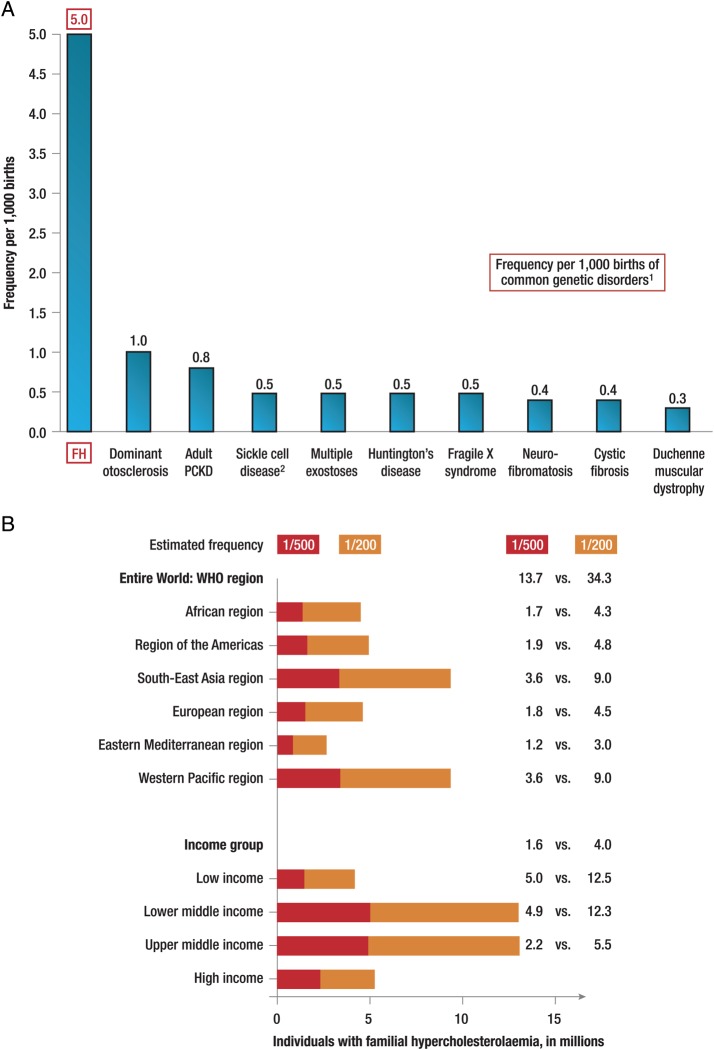
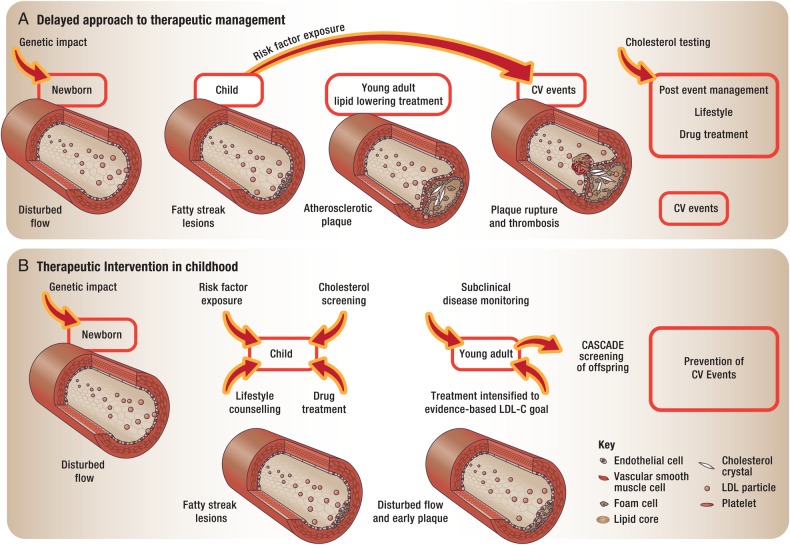
Familial hypercholesterolaemia (FH) is a common genetic cause of premature coronary heart disease (CHD). Globally, one baby is born with FH every minute. If diagnosed and treated early in childhood, individuals with FH can have normal life expectancy. This consensus paper aims to improve awareness of the need for early detection and management of FH children. Familial hypercholesterolaemia is diagnosed either on phenotypic criteria, i.e. an elevated low-density lipoprotein cholesterol (LDL-C) level plus a family history of elevated LDL-C, premature coronary artery disease and/or genetic diagnosis, or positive genetic testing. Childhood is the optimal period for discrimination between FH and non-FH using LDL-C screening. An LDL-C ≥5 mmol/L (190 mg/dL), or an LDL-C ≥4 mmol/L (160 mg/dL) with family history of premature CHD and/or high baseline cholesterol in one parent, make the phenotypic diagnosis. If a parent has a genetic defect, the LDL-C cut-off for the child is ≥3.5 mmol/L (130 mg/dL). We recommend cascade screening of families using a combined phenotypic and genotypic strategy. In children, testing is recommended from age 5 years, or earlier if homozygous FH is suspected. A healthy lifestyle and statin treatment (from age 8 to 10 years) are the cornerstones of management of heterozygous FH. Target LDL-C is <3.5 mmol/L (130 mg/dL) if >10 years, or ideally 50% reduction from baseline if 8-10 years, especially with very high LDL-C, elevated lipoprotein(a), a family history of premature CHD or other cardiovascular risk factors, balanced against the long-term risk of treatment side effects. Identifying FH early and optimally lowering LDL-C over the lifespan reduces cumulative LDL-C burden and offers health and socioeconomic benefits. To drive policy change for timely detection and management, we call for further studies in the young. Increased awareness, early identification, and optimal treatment from childhood are critical to adding decades of healthy life for children and adolescents with FH.
Overview
The claims and statistics of this paper haven’t been checked yet.
Free: it reads the open-access text and checks the first 5 claims that cite a source we can check. Create a free account to check every claim.
Integrity signals
Registry
Cites
Statistics
Figures
Verification
Claims the paper makes
The claims and statistics of this paper haven’t been checked yet.
Free: it reads the open-access text and checks the first 5 claims that cite a source we can check. Create a free account to check every claim.
Claims other papers make about this one
Each is checked against this paper’s own text: does it say what the citing paper says it does?
The source backs part of the claim, not all of it — or backs it for a different population, condition or comparison.
In the citing paper
“Monogenic disorders such as familial hypercholesterolemia (FH) can be easily recognized from the standard lipid panel without the need to measure apoB [31,32].”
From Quantifying atherogenic lipoproteins for lipid-lowering strategies: Consensus-based recommendations from EAS and EFLM (2020) · cites this paper as [32]
Experimental — accuracy not yet measuredThe source backs part of the claim, not all of it — or backs it for a different population, condition or comparison.
In the citing paper
“In a pediatric setting, reporting age-and gender-specific reference intervals is relevant for early identification of children with hyperlipidemia associated with premature atherosclerosis, especially FH [32].”
From Quantifying atherogenic lipoproteins for lipid-lowering strategies: Consensus-based recommendations from EAS and EFLM (2020) · cites this paper as [32]
Experimental — accuracy not yet measuredIn the citing paper
“Volanesorsen reduced plasma TGs by ∼70% and ApoC-III by 80-90% [349].”
From 2019 ESC/EAS guidelines for the management of dyslipidaemias: lipid modification to reduce cardiovascular risk (2019) · cites this paper as [349]
In the citing paper
“Although placebo-controlled trials are missing in children, there are observational studies suggesting that early treatment can reduce LDL-C burden, improve endothelial function, substantially attenuate development of atherosclerosis and improve coronary outcomes. 303”
From 2016 ESC/EAS Guidelines for the Management of Dyslipidaemias (2016) · cites this paper as [303]
In the citing paper
“FH is diagnosed in children based on phenotypic criteria including elevated LDL-C plus a family history of elevated LDL-C, premature CAD and/or positive genetic testing. 303”
From 2016 ESC/EAS Guidelines for the Management of Dyslipidaemias (2016) · cites this paper as [303]
1 more claim about this paper
Create a free account to see every claim other papers make about this one.
Self-check
Percentages, sums and reported differences re-computed from the paper’s own numbers.
The self-check needs the paper’s full text.
Citations
Cites
A Receptor-Mediated Pathway for Cholesterol Homeostasis
Brown, M. S., & Goldstein, J. L. (1986) · Science · doi:10.1126/science.3513311 · Cited by 5,703
Berenson, G. S., Srinivasan, S. R., Bao, W., Newman, W. P., Tracy, R. E., & Wattigney, W. A. (1998) · New England Journal of Medicine · doi:10.1056/nejm199806043382302 · Cited by 4,032
ESC/EAS Guidelines for the management of dyslipidaemias
Reiner, Ž., Catapano, A. L., De Backer, G., Graham, I., Taskinen, M.-R., Wiklund, O., Agewall, S., Alegria, E., Chapman, M. J., Durrington, P., et al. (2011) · European Heart Journal · doi:10.1093/eurheartj/ehr158 · Cited by 3,549
Self-citationPrinciples and Practice of Screening for Disease.
(1968) · Annals of Internal Medicine · doi:10.7326/0003-4819-69-5-1085_2 · Cited by 3,066
Nordestgaard, B. G., Chapman, M. J., Humphries, S. E., Ginsberg, H. N., Masana, L., Descamps, O. S., Wiklund, O., Hegele, R. A., Raal, F. J., Defesche, J. C., et al. (2013) · European Heart Journal · doi:10.1093/eurheartj/eht273 · Cited by 2,761
Self-citationSystematic review and meta-analysis
(2019) · Providing Information for Health · doi:10.1201/9781315377315-19 · Cited by 2,659
Role of Oxidative Modifications in Atherosclerosis
Stocker, R., & Keaney, J. F. (2004) · Physiological Reviews · doi:10.1152/physrev.00047.2003 · Cited by 2,624 · cited 1×
“then accumulate in the artery wall, become oxidatively modified, and subsequently initiate an inflammatory response, which results in vascular injury and formation of atherosclerotic plaque.(25,26) Additional alterations in the lipoproteinprofile in FHmay involveelevated”
BackgroundLipoprotein(a) as a cardiovascular risk factor: current status
Nordestgaard, B. G., Chapman, M. J., Ray, K., Borén, J., Andreotti, F., Watts, G. F., Ginsberg, H., Amarenco, P., Catapano, A., Descamps, O. S., et al. (2010) · European Heart Journal · doi:10.1093/eurheartj/ehq386 · Cited by 1,807
Self-citationAllhoff, P., Laaser, U., & Heinrich, J. (1991) · Kompendium der Lipid-Studien · doi:10.1007/978-3-642-95642-3_7 · Cited by 1,329
Cuchel, M., Bruckert, E., Ginsberg, H. N., Raal, F. J., Santos, R. D., Hegele, R. A., Kuivenhoven, J. A., Nordestgaard, B. G., Descamps, O. S., Steinhagen-Thiessen, E., et al. (2014) · European Heart Journal · doi:10.1093/eurheartj/ehu274 · Cited by 1,057
Self-citation
Research works printed but not linked: 1
- Nherera LM Saving Lives, Saving Families: The Health, Social and Economic Advantages of Detecting and Treating Familial Hypercholesterolaemia (FH). Economics Chapter: Estimating the Benefits from Treatment and Increasing the Implementation of Cascading Screening http://heartuk.org.uk/files/uploads/documents/HUK_HealthEconomics_FINAL2012_2702.pdf (4 February 2015).
Cited by
Items 601–700 of 886
Living with Cerebrotendinous Xanthomatosis: Patient, Caregiver, and Expert Perspectives
Steiner, R. D., DeBarber, A. E., Larson, A. A., Blanchard, B., Laurie, S., Odedara, N., Rosengrant, H., & Dutta, R. (2023) · Advances in Therapy · doi:10.1007/s12325-023-02687-8 · Cited by 2
“In children, xanthomas are often the reason parents seek medical attention before an FH diagnosis [12].”
BackgroundNatale, F., Franzese, R., Marotta, L., Mollo, N., Solimene, A., Luisi, E., Gentile, C., Loffredo, F. S., Golino, P., & Cimmino, G. (2024) · Life · doi:10.3390/life14060679 · Cited by 4
“According to the 2014 EAS consensus panel, treatment should be started at 8–10 years of age in children with HeFH [90] and at diagnosis in those with HoFH [86].”
MethodPeres, M., Moreira-Rosário, A., Padeira, G., Silva, P. G., Correia, C., Nunes, A., Garcia, E., Faria, A., Teixeira, D., Calhau, C., et al. (2024) · Nutrients · doi:10.3390/nu16132170 · Cited by 2
“Premature CHD was considered when it occurred before the age of 55 years in men and 60 years in women [46].”
BackgroundChaubal, G., Pakkala, A. K., Nanavati, A. J., Hatimi, H., Sinha, R., Verma, L., & Chaksota, H. (2023) · Indian Pediatrics Case Reports · doi:10.4103/ipcares.ipcares_29_23 · Cited by 2
Managing Dyslipidemia in Children: Current Approaches and the Potential of Artificial Intelligence
Abdullah, Zaheer, A., Saeed, H., Arshad, M. K., Zabeehullah, Iftikhar, U., Abid, A., Khan, M. H., Khan, A. S., & Akbar, A. (2024) · Cardiology in Review · doi:10.1097/crd.0000000000000816 · Cited by 2
Das, T., Mondal, S., Rawool, A., Tarafdar, S., & Ghosh, A. (2025) · Cureus · doi:10.7759/cureus.79252 · Cited by 2
“…less than 2 years old), if there is a history positive for premature ASCVD or hypercholesterolemia in the family, and possibly screening universally from 5 to 11 years as proposed by the current guidelines, might be beneficial for individual identification before the establishment of ASCVD [17].”
Hartz, J. C., Chiert, H., de Ferranti, S. D., & Powell‐Wiley, T. M. (2025) · JMIR Research Protocols · doi:10.2196/65105 · Cited by 2
Bihorel, S., Dingman, R. K., Mendell, J., Wang, Y., Banerjee, P., Pordy, R. C., Davis, J. D., DiCioccio, A. T., & Harnisch, L. O. (2025) · CPT Pharmacometrics & Systems Pharmacology · doi:10.1002/psp4.70016 · Cited by 4
Ain, Q., Nawaz, A., Khan, M., Šikonja, J., Batool, H., Zaheer, R., Khan, M. I., Ajmal, M., Sadiq, F., & Grošelj, U. (2025) · Lipids in Health and Disease · doi:10.1186/s12944-025-02529-2 · Cited by 7
“Organizations like the American Heart Association and European Atherosclerosis Society support targeted screening for children with risk factors such as obesity, diabetes, or a family history of early cardiovascular disease [10, 11].”
Kim, N., Do, D. L., Nguyen, M. T., Le, T., Le, H., & Truong, T. (2025) · Health Science Reports · doi:10.1002/hsr2.70579 · Cited by 3
Triple Assessments of Atherosclerosis in Patients With Heterozygous Familial Hypercholesterolemia
Tada, H., Kojima, N., Yamagami, K., Nomura, A., Nohara, A., Usui, S., Sakata, K., Kawashiri, M., & Takamura, M. (2025) · JACC Asia · doi:10.1016/j.jacasi.2025.04.011 · Cited by 4
Satyanarayanan, Y. V., Rayaprolu, V. L. G., Durugu, S. R., Katukuri, N., & Nemani, L. (2025) · Indian Journal of Cardiovascular Disease in Women · doi:10.25259/ijcdw_59_2025 · Cited by 2
Actual issues of lipid centers’ operation in Russian Federation
Boytsov, S., Катапано, А., Барбараш, О. Л., Владиславович, Е. М., Meshkov, A., Voevoda, M. I., Gurevich, V. S., Кашталап, В. В., Duplyakov, D. V., Vezikova, N. N., et al. (2021) · CARDIOVASCULAR THERAPY AND PREVENTION · doi:10.15829/1728-8800-2021-2759 · Cited by 2
Optimal Treatment using Statins from Childhood in Heterozygous Familial Hypercholesterolemia
Nohara, A. (2015) · Journal of Atherosclerosis and Thrombosis · doi:10.5551/jat.ed025 · Cited by 2
PCSK9-Inhibitoren: Neue Therapieoption im klinischen Alltag
Müller‐Wieland, D., & Marx, N. (2016) · Herz · doi:10.1007/s00059-016-4434-4 · Cited by 2
The year in cardiology 2015: prevention.
Chapman, M. J., Blankenberg, S., & Landmesser, U. (2016) · Cardiologia Croatica · doi:10.15836/ccar2016.218 · Cited by 3
Self-citationVarma, S., McIntyre, A. D., & Hegele, R. A. (2016) · JIMD Reports · doi:10.1007/8904_2016_29 · Cited by 2
“Given the proven ability of various LDL-lowering treatments to alter disease course and extend life, it is imperative to diagnose FH early and to begin appropriate management (Wiegman et al. 2015).”
BackgroundMethodSelf-citationLee, M., Barr, J., Kribs, S. W., & Filler, G. (2017) · BMJ Case Reports · doi:10.1136/bcr-2017-219538 · Cited by 2
Vascular profile of patient with familial hypercholesterolemia
Kandoria, A. K., Sondhi, S., Mahajan, K., & Mehta, A. (2017) · IHJ Cardiovascular Case Reports (CVCR) · doi:10.1016/j.ihjccr.2017.10.003 · Cited by 2
Fibroblast growth factor-23 in patients with homozygous familial hypercholesterolemia
Zamparini, J. M., Immelman, A., & Raal, F. J. (2018) · Journal of clinical lipidology · doi:10.1016/j.jacl.2018.02.009 · Cited by 2
Self-citationLee, C. J., Lee, J. H., Choi, S., Kim, S.-H., Kang, H., Lee, S., & Park, K. S. (2018) · Journal of Lipid and Atherosclerosis · doi:10.12997/jla.2018.7.2.122 · Cited by 3
Hyánek, J., Pehal, F., Dryahina, K., Dubská, L., Míková, B., Gombíková, L., Průcha, M., Kubů, S., Haláčková, P., & Feyreisl, J. (2019) · Clinical Journal of Obstetrics and Gynecology · doi:10.29328/journal.cjog.1001026 · Cited by 2
Schettler, V. J. J. (2020) · Dialyse aktuell · doi:10.1055/a-1190-8023 · Cited by 2
“[12] Wiegman A, Gidding SS, Watts GF et al.”
BackgroundPaetow, U., Kordonouri, O., & Schwab, K. O. (2022) · Klinische Pädiatrie · doi:10.1055/a-1721-2611 · Cited by 2
“Ursächliche Genmutationen des Apolipoprotein B100 (5 %) und des Proprotein Convertase Subtilisin/Kexin 9 (PCSK9) (1 %) sind seltener [30, 39].”
BackgroundInfluentialNoorian, S., Razmandeh, R., & Jazayeri, R. (2022) · Journal of Diabetes & Metabolic Disorders · doi:10.1007/s40200-022-01007-1 · Cited by 3
“79% of Mutations in the LDLR gene are caused by FH cases and mutations for 5% of FH cases [6, 8, 17].”
BackgroundA European screening programme for familial hypercholesterolaemia: a call to action
Gielen, S., & Weingärtner, O. (2023) · European Journal of Preventive Cardiology · doi:10.1093/eurjpc/zwad018 · Cited by 2
Gratton, J., Humphries, S. E., Schmidt, A. F., Patel, R. S., Sofat, R., Finan, C., Morris, J. K., Hingorani, A. D., & Futema, M. (2023) · BMJ Public Health · doi:10.1136/bmjph-2023-000021 · Cited by 3
Self-citationSafety of statin treatment in children with familial hypercholesterolemia: Filling the gaps
Rocha, V. Z., & Santos, R. D. (2017) · Journal of clinical lipidology · doi:10.1016/j.jacl.2017.11.007 · Cited by 2
“7%) were without statins over the age of 10 years, age by which statin initiation should be considered, according to the European(5) and UK NICE FH guidelines(12).”
BackgroundMethodSelf-citationGenetic analysis in a compound heterozygote family with familial hypercholesterolemia
Wang, F., Fan, Q., Tao, R., Gu, G., Zhang, R., & Xi, R. (2018) · Molecular Medicine Reports · doi:10.3892/mmr.2018.8904 · Cited by 2
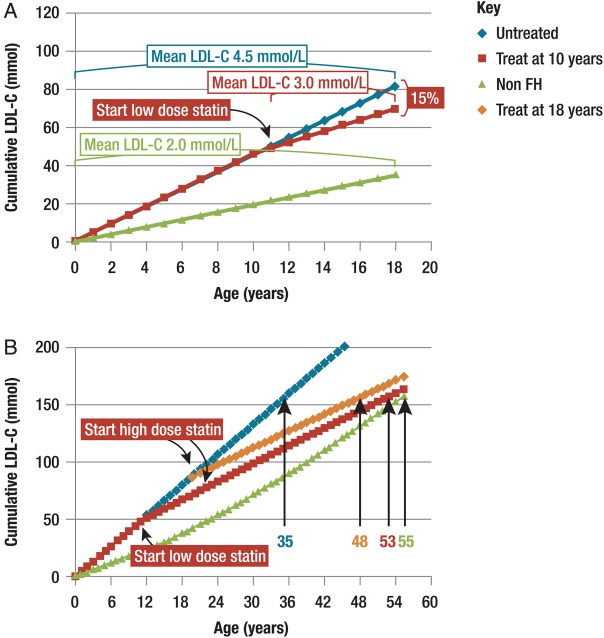
“Therefore, early diagnosis and early treatment may delay the cumulative burden of elevated LDL-C, reducing the risk of complications associated with atherosclerosis and coronary heart disease (34).”
Wiegman, A., & Hutten, B. A. (2017) · Expert Review of Clinical Pharmacology · doi:10.1080/17512433.2017.1362333 · Cited by 2
“for children older than 10 and ideally 50% reduction from pretreatment levels for those aged 8–10 years [5].”
BackgroundSelf-citationChoosing an ideal pharmacotherapeutic strategy for dyslipidemia in children
Nikolić, D., Corina, A., Toth, P. P., Hammad, L., & Rizzo, M. (2018) · Expert Opinion on Pharmacotherapy · doi:10.1080/14656566.2018.1552942 · Cited by 2
Izar, M. C. D. O., & Fonseca, F. A. H. (2022) · Arquivos Brasileiros de Cardiologia · doi:10.36660/abc.20220027 · Cited by 3
Making a quality diagnosis of familial hypercholesterolaemia in children
Watts, G. F., Pang, J., & Martin, A. C. (2025) · European Journal of Preventive Cardiology · doi:10.1093/eurjpc/zwaf353 · Cited by 2
Self-citationMoving from reactive to preventive medicine
Badimón, L., Padró, T., & Vilahur, G. (2022) · Elsevier eBooks · doi:10.1016/b978-0-12-823761-8.00003-3 · Cited by 1
Familial hypercholesterolaemia
McErlean, S., Mbakaya, B. C., & Kennedy, C. (2023) · BMJ · doi:10.1136/bmj-2022-073280 · Cited by 1
ROSUVASTATIN - THE MOST POTENT STATIN IN CARDIOVASCULAR DISEASE PREVENTION
Семенова, А. Е., & Сергиенко, И. В. (2018) · Eurasian heart journal · doi:10.38109/2225-1685-2018-2-28-41 · Cited by 2
Review on PCSK9: A Pertinent Therapeutic Target in Cardiovascular Disease
Singh, S. K., & Jha, M. K. (2023) · Current Bioactive Compounds · doi:10.2174/0115734072270060230921093431 · Cited by 1
Gregersen, I., Narverud, I., Christensen, J. J., Hovland, A., Øyri, L. K. L., Ueland, T., Retterstøl, K., Bogsrud, M. P., Aukrust, P., Halvorsen, B. L., et al. (2024) · Scandinavian Journal of Clinical and Laboratory Investigation · doi:10.1080/00365513.2024.2309617 · Cited by 1
Urbanová, V., Mrakava, J., Koubský, K., Aldhoon-Hainerová, I., & Rücklová, K. (2024) · Cor et Vasa · doi:10.33678/cor.2023.100 · Cited by 2
Cai, X., Peng, S., Mu, S., Lei, S., Li, J., Tang, X., & Qiu, F. (2024) · Expert Opinion on Drug Safety · doi:10.1080/14740338.2024.2389989 · Cited by 2
Homozygote familiäre Hypercholesterinämie - Teil 2: Fragen zu Therapie und Begleitung
Parhofer, K. G., Vogt, A., Binder, C. J., Ebenbichler, C. F., Greber‐Platzer, S., Harreiter, J., Kassner, U., Klose, G., Lang, I. M., Merkel, M., et al. (2024) · CardioVasc · doi:10.1007/s15027-024-3654-4 · Cited by 1
Self-citationvan den Bosch, S. E., Hutten, B. A., Revers, A., Schrauben, E. M., van Ooij, P., Nederveen, A. J., Corpeleijn, W. E., & Wiegman, A. (2025) · Atherosclerosis · doi:10.1016/j.atherosclerosis.2025.119175 · Cited by 1
Self-citationThanh, M. T., Vũ, D. C., Tran, M. T. C., Bui, T. P., Can, N. T. B., & Nguyen, K. N. (2025) · Molecular Genetics and Metabolism Reports · doi:10.1016/j.ymgmr.2025.101235 · Cited by 1
“Children achieved the treatment objective when there was a 50 % relative reduction in LDL-C from the pre-treatment LDL-C level or when LDL-C was less than 3.4 mmol/l [12].”
InfluentialFlyer, J. N., Freiberger, T., Ware, A. L., & Peterson, A. L. H. (2025) · American Journal of Preventive Cardiology · doi:10.1016/j.ajpc.2025.101262 · Cited by 4
“While pharmacological treatment for heterozygous FH typically begins between 8 and 10 years of age, lifestyle measures introduced from as early as 2 years of age can provide long-term cardiovascular benefit [61 – 63].”
Capra, M. E., Sodero, R., Travaglia, E., Banderali, G., Biasucci, G., & Pederiva, C. (2025) · Children · doi:10.3390/children12101364 · Cited by 4
“From a practical point of view, in addition to the lipid profile, relatives are tested for the genetic variant identified in the index case: in fact, the presence of the pathogenic variant confirms the diagnosis even in the presence of cholesterol levels just at the upper limits [25].”
Becker, M., Weiskorn, J., Wiegand, S., Röbl, M., Meißner, T., Schulz, E., Golembowski, S., Schwab, K. O., Meraner, D., & Holl, R. W. (2025) · Diabetes Care · doi:10.2337/dc25-1195 · Cited by 1
Becker, M., Vogrin, B., Kafol, J., Kern, B. Č., Collaborators, F.-F., & Grošelj, U. (2025) · Journal of Personalized Medicine · doi:10.3390/jpm15110510 · Cited by 1
“However, these systems were developed and validated in adults, which limits their applicability in pediatrics and contributes to low diagnosis rates among children [22,23].”
Abraham, N., Pavithran, P. V., Menon, U. V., Bhavani, N., Nair, V., Futema, M., Bhaskaran, R., Menon, R., Sekhar, S., Krishnan, S., et al. (2026) · Scientific Reports · doi:10.1038/s41598-026-40367-z · Cited by 2
Dyslipidemia in children: diagnosis, evaluation, and management
Khoury, M., Bigras, J., Cummings, E. A., Harris, K. C., Hegele, R. A., Henderson, M., Morrison, K. M., St‐Pierre, J., Wong, P. D., & McCrindle, B. W. (2026) · Paediatrics & Child Health · doi:10.1093/pch/pxag021 · Cited by 2
Self-citationChora, J. R., Karungi, I., Elshorbagy, A. K., Stevens, C. A. T., Vallejo‐Vaz, A. J., Dharmayat, K., Abifadel, M., Aguilar-Salinas, C. A., AlHabib, K. F., Almahmeed, W. A., et al. (2026) · European Journal of Preventive Cardiology · doi:10.1093/eurjpc/zwag198 · Cited by 1
Self-citationHannemann, A., Winter, D. R. N. T., Steinhagen-Thiessen, E., Giżewska, M., Ołtarzewski, M., Klein, J., Blankenstein, O., Henning, A., Zylla, S., Petersmann, A., et al. (2026) · The Journal of Pediatrics · doi:10.1016/j.jpeds.2026.115185 · Cited by 3
Self-citationTranslating Lipoprotein Genetics Into New Therapies
Hegele, R. A. (2026) · Circulation Research · doi:10.1161/circresaha.126.328828 · Cited by 2
Self-citationRodríguez‐Nóvoa, S., Hernández, P. M., Mayoral, I. H., Herranz, A., Roca, N. R., Alvarez, A. C., Onis, N. G., Alcorta, M. D., & Jiménez, C. R. (2026) · Atherosclerosis Plus · doi:10.1016/j.athplu.2026.100607 · Cited by 1
“Clinical diagnosis of FH is based on standardized criteria such as the Dutch Lipid Clinic Network (DLCN) score, which incorporates lipid values, clinical signs (xanthomas, corneal arcus), family history of hypercholesterolemia or premature ASCVD, and the presence of a pathogenic genetic variant [4].”
Treating lipid disorders and diabetes with novel and established drugs
Lüscher, T. F. (2015) · European Heart Journal · doi:10.1093/eurheartj/ehv410 · Cited by 1
Inborn Errors of Lipoprotein Metabolism Presenting in Childhood
Ramaswami, U., & Humphries, S. E. (2016) · Springer eBooks · doi:10.1007/978-3-662-49771-5_31 · Cited by 1
Self-citationWidhalm, K. (2019) · Springer Reference Medizin · doi:10.1007/978-3-642-54671-6_74-2 · Cited by 1
Miyazaki, A., Oguri, A., & Shimura, S. (2019) · Japanese Society of Pediatric Cardiology and Cardiac Surgery · doi:10.9794/jspccs.35.112 · Cited by 1
Use of statins in children with familial hypercholesterolemia
Sadykova, D. I., Shkolnikova, M. A., Галимова, Л. Ф., & Сластникова, Е. С. (2020) · Rossiyskiy Vestnik Perinatologii i Pediatrii (Russian Bulletin of Perinatology and Pediatrics) · doi:10.21508/1027-4065-2020-65-5-139-144 · Cited by 3
“Европейское общество атеросклероза рекомендует измерять уровни аланин- и аспартатаминотрансфераз (АлАТ и АсАТ) до начала терапии статинами, а затем каждые 3 мес на фоне лечения, если в анамнезе имеются заболевания печени или отмечалось увеличение уровня печеночных трансаминаз более чем в 3 раза от верней границы нормы…”
Sánchez, A., Bustos, P., Honorato, P., Burgos, C. F., Barriga, N., Jannes, C. E., Sáez, K. L., Alonso, R., Sylvia Asenjo, M., & Radojkovic, C. (2021) · Journal of clinical lipidology · doi:10.1016/j.jacl.2021.01.002 · Cited by 2
Genetic Disorders of Lipoprotein Metabolism: Diagnosis and Management
Cupido, A. J., Stoekenbroek, R. M., & Kastelein, J. J. P. (2016) · Springer eBooks · doi:10.1007/978-3-319-44203-7_21 · Cited by 1
Kawasaki, H., Yamasaki, S., Shintaku, H., & Fukita, S. (2022) · Children · doi:10.3390/children9040518 · Cited by 1
“Many of the hypercholesterolemia cases in children represent familial hypercholesterolemia [8].”
BackgroundEpidemiology of Cardiovascular Disease in Children
Gidding, S. S. (2018) · Springer eBooks · doi:10.1007/978-3-319-31107-4_13 · Cited by 1
Self-citation2022 Consensus Statement on the Management of Familial Hypercholesterolemia in Korea
Lee, C. J., Yoon, M., Kang, H., Kim, B. J., Choi, S. H., Jeong, I., Lee, S., & on behalf of Task Force Team for Familial Hypercholesterolemia, K. S. O. L. A. A. (2022) · Korean Journal of Medicine · doi:10.3904/kjm.2022.97.6.339 · Cited by 1
Chen, L., Peng, H., Wang, B., Yu, W., Ding, X., Gao, M., & Yu, Y. (2023) · Medicine · doi:10.1097/md.0000000000034247 · Cited by 3
A Case Report of Xanthoma in a Child: A Sign of Systemic Disease
Katakam, B. K., Sunki, K., Netha, G. N. R., & Rani, S. (2023) · Indian Journal of Paediatric Dermatology · doi:10.4103/ijpd.ijpd_178_21 · Cited by 1
Snyder, C., Beitelshees, A. L., & Chowdhury, D. (2023) · PubMed · Cited by 6
Caffarelli, C., Santamaria, F., Piro, E., Basilicata, S., D’Antonio, L., Tchana, B., Bernasconi, S., & Corsello, G. (2023) · The Italian Journal of Pediatrics/Italian journal of pediatrics · doi:10.1186/s13052-023-01522-8 · Cited by 2
“Some of the most typical signs of FH are: corneal arcus, xanthelasma and xanthomas [118].”
BackgroundSánchez-Hernández, R. M., & Wägner, A. M. (2024) · Diabetologia · doi:10.1007/s00125-024-06115-6 · Cited by 1
Safarova, M. S., de Groot, E., & Moriarty, P. M. (2023) · Journal of Clinical and Preventive Cardiology · doi:10.4103/jcpc.jcpc_3_23 · Cited by 1
FAMILY HYPERCHOLESTEROLEMIA IN PEDIATRIC PRACTICE: A SYSTEMATIC REVIEW
Burlutskaya, A. V., Tril, V. E., Statova, A. V., Savelyeva, N. V., Науменко, Г. В., Polyanskiy, A. V., Gurina, E. S., & Андреевна, И. Д. (2024) · Современные проблемы науки и образования · doi:10.17513/spno.33515 · Cited by 1
Pediatric Preventive Cardiology
Ward, K. M., Greco, M. M., Peterson, A. L. H., Matossian, D., & Benuck, I. (2024) · Springer eBooks · doi:10.1007/978-3-031-07563-6_107 · Cited by 1
Genetic testing in cardiovascular disease
Martin, A. C., Horton, A., & Srinivasan, S. (2024) · The Medical Journal of Australia · doi:10.5694/mja2.52479 · Cited by 1
Chamoieva, A., Mirmanova, Z., Zhalbinova, M. R., Rakhimova, S., Daniyarov, A. Z., Kairov, U., Baigalkanova, A. I., Mukarov, M., Bekbossynova, M. S., & Akilzhanova, A. R. (2024) · International Journal of Molecular Sciences · doi:10.3390/ijms252211882 · Cited by 2
Bento, V. F. R., Kaestner, T. L. D. L., de Vargas, A., Lopes, R. B., Scariot, F. P., Hollas, L. L., Olandoski, M., Baena, C. P., Bloch, K. V., & Faria‐Neto, J. R. (2025) · Arquivos Brasileiros de Cardiologia · doi:10.36660/abc.20240468 · Cited by 4
Bensabbahia, D., Achiwi, M. E., Atrassi, M., Abkari, A., & Gueddari, W. (2025) · Cureus · doi:10.7759/cureus.86219 · Cited by 1
“In severe forms, LDL apheresis may be necessary to improve lipid control and reduce cardiovascular risk [11].”
Pandey, S., Leider, M., Khan, M., & Grammatopoulos, D. K. (2016) · The Journal of Applied Laboratory Medicine · doi:10.1373/jalm.2016.020610 · Cited by 1
“3 million)/year (9); in the European Union, the healthcare cost savings would be around €86 million ($129 million) per year (10).”
BackgroundOptimizing Diet, Weight, and Exercise in Adults With Familial Hypercholesterolemia
DeBeasi, L. C. (2017) · The Journal for Nurse Practitioners · doi:10.1016/j.nurpra.2017.07.003 · Cited by 1
Genetic Contributions and Personalized Medicine
Hicks, J. K., & Dunnenberger, H. M. (2018) · Springer eBooks · doi:10.1007/978-3-319-71812-5_1 · Cited by 2
Strategies for identifying familial hypercholesterolaemia in non-specialist clinical settings
Qureshi, N., Weng, S. F., Tranter, J., Silva, M. L. D., Kai, J., & Leonardi‐Bee, J. (2018) · Cochrane Database of Systematic Reviews · doi:10.1002/14651858.cd012985 · Cited by 1
\tJair Baron Junior1, M. B. (2018) · Journal of Cardiology & Current Research · doi:10.15406/jccr.2018.11.00368 · Cited by 1
“Over the past two decades, several studies have compared invasive strategy to conservative (or selective invasive) strategy [8-13].”
BackgroundPredictive Genetic Testing in Multifactorial Disorders
Hostiuc, S. (2018) · Elsevier eBooks · doi:10.1016/b978-0-12-813764-2.00011-8 · Cited by 1
L’hypercholestérolémie familiale
Bruckert, É., & Gallo, A. (2017) · Bulletin de l Académie Nationale de Médecine · doi:10.1016/s0001-4079(19)30398-x · Cited by 3
Experience on statin therapy in paediatric age: retrospective study in a Portuguese referral centre
Gomes, H. A., Garcia, P., Diogo, L. M., Pires, A., & Martins, P. (2020) · Cardiology in the Young · doi:10.1017/s1047951120001158 · Cited by 2
Hypolipidemic treatment and target values of lipids
Kyselák, O., & Soška, V. (2018) · Interní medicína pro praxi · doi:10.36290/int.2018.015 · Cited by 1
Familial hypercholesterolaemia and cascade testing in general practice: Lessons from COVID-19
Garrahy, E., Heal, C. F., Hespe, C. M., Radford, J. C., Watts, G. F., & Brett, T. (2020) · Australian Journal of General Practice · doi:10.31128/ajgp-07-20-5517 · Cited by 1
Self-citationUltrasound and MRI Assessment of Cardiovascular Risk
Hussain, A., Brunner, G., & Nambi, V. (2020) · Contemporary cardiology · doi:10.1007/978-3-030-56279-3_17 · Cited by 1
Statins for Children with Familial Hypercholesterolemia
Sadykova, D. I., Галимова, Л. Ф., Сластникова, Е. С., Хабибрахманова, З. Р., & Guseva, N. (2021) · IntechOpen eBooks · doi:10.5772/intechopen.96007 · Cited by 1
Vuorio, A. F., Raal, F. J., & Kovanen, P. T. (2021) · Frontiers in Cardiovascular Medicine · doi:10.3389/fcvm.2021.657719 · Cited by 1
Self-citationAronow, W. S. (2021) · IntechOpen eBooks · doi:10.5772/intechopen.87280 · Cited by 1
Classifying Familial Hypercholesterolaemia: A Tree-based Machine Learning Approach
Rosli, M. M., Edward, J., Onn, M., Chua, Y.-A., Kasim, N. A. M., & Nawawi, H. M. (2021) · International Journal of Advanced Computer Science and Applications · doi:10.14569/ijacsa.2021.0120908 · Cited by 1
Changes in Rosuvastatin Pharmacokinetics During Postnatal Ontogenesis in Rats
Roušarová, J., Šíma, M., Kozlík, P., Křížek, T., & Slanař, O. (2021) · Journal of Pharmacy & Pharmaceutical Sciences · doi:10.18433/jpps32342 · Cited by 1
“Familial hypercholesterolemia (FH) represents a frequent genetic disorder phenotypically characterized by increased serum cholesterol and low-density lipoprotein (LDL) levels (1).”
BackgroundEditorial, A. (2021) · Russian Journal of Cardiology · doi:10.15829/1560-4071-2021-4798 · Cited by 1
Sanin, V., Schmieder, R. S., Ates, S., Schlieben, L. D., Wiehler, J., Sun, R., Decker, M., Sander, M., Holdenrieder, S., Kohlmayer, F., et al. (2022) · Medizinische Genetik · doi:10.1515/medgen-2022-2115 · Cited by 4
“…treat-ment of FH seem to be spreading the awareness and knowledge about the disease itself, implementing screening to diagnose FH early on and having a multidisciplinary treatment approach for catching potential psychological issues and ensuring a sufficient long-term therapy starting in childhood.”
Therapies for Lowering Low-Density Lipoprotein Cholesterol
Patni, N. (2023) · Springer eBooks · doi:10.1007/978-3-031-24113-0_6 · Cited by 1
New Treatments on the Horizon for Familial Hypercholesterolemia
Al‐Rasadi, K., & Al-Waili, K. (2017) · Oman Medical Journal · doi:10.5001/omj.2017.86 · Cited by 2
Hypercholesterolemia in children: Why and how to screen for it?
Girardet, J.-P., Bocquet, A., Chouraqui, J.-P., Darmaun, D., Feillet, F., Frelut, M., Hankard, R., Rozé, J., Siméoni, U., Turck, D., et al. (2018) · Archives de Pédiatrie · doi:10.1016/j.arcped.2018.01.005 · Cited by 1
Familial Hypercholesterolemia: Nip the Evil in the Bud
Aggarwal, B., & Gupta, N. (2018) · The Indian Journal of Pediatrics · doi:10.1007/s12098-018-2664-6 · Cited by 1
“About 15% of FH cases are either polygenic or are caused by other rarer monogenic mutations [2].”
BackgroundClassification of Hyperlipidemias and Dyslipidemias
Núñez-Cortes, J. E. M., & Pérez, J. J. M. (2018) · Elsevier eBooks · doi:10.1016/b978-0-12-801238-3.65816-6 · Cited by 1
Estudos da atividade do receptor da LDL em pacientes com Hipercolesterolemia Familial
Barbosa, T. K. A. (2019) · Digital Library of Theses and Dissertations (Universidade de São Paulo) · doi:10.11606/d.9.2019.tde-10062019-124422 · Cited by 1
Metabolic Disorders and the Skin
Jasmi, F. A., Galadari, H., Clayton, P. T., & Footitt, E. J. (2019) · Wiley eBooks · doi:10.1002/9781119142812.ch152 · Cited by 1
Metadata
- Authors
- Wiegman, A., Gidding, S. S., Watts, G. F., Chapman, M. J., Ginsberg, H. N., Cuchel, M., Ose, L., Averna, M., Boileau, C., Borén, J., Bruckert, E., Catapano, A. L., Defesche, J. C., Descamps, O. S., Hegele, R. A., Hovingh, G. K., Humphries, S. E., Kovanen, P. T., Kuivenhoven, J. A., Masana, L., Nordestgaard, B. G., Pajukanta, P., Parhofer, K. G., Raal, F. J., Ray, K. K., Santos, R. D., Stalenhoef, A. F. H., Steinhagen- Thiessen, E., Stroes, E. S., Taskinen, M.-R., Tybjærg-Hansen, A., & Wiklund, O.
- Affiliations
- Amsterdam UMC Location University of Amsterdam (NL)
- Alfred I. duPont Hospital for Children (US)
- The University of Western Australia (AU)
- Inserm (FR)
- Columbia University Irving Medical Center (US)
- University of Pennsylvania (US)
- Oslo University Hospital (NO)
- University of Palermo (IT)
- University of Gothenburg (SE)
- University of Milan (IT)
- Hôpital de Jolimont (BE)
- Western University (CA)
- University of London (GB)
- Wihuri Research Institute (FI)
- University Medical Center Groningen (NL)
- Universitat Rovira i Virgili (ES)
- University of Copenhagen (DK)
- University of California, Los Angeles (US)
- Ludwig-Maximilians-Universität München (DE)
- University of the Witwatersrand (ZA)
- Imperial College London (GB)
- Universidade de São Paulo (BR)
- Radboud University Medical Center (NL)
- University of Helsinki (FI)
- Sahlgrenska University Hospital (SE)
- Corresponding author
- Wiegman, Albert
- ORCID
- Wiegman, Albert
- Gidding, Samuel S.
- Watts, Gerald F.
- Chapman, M. John
- Ginsberg, Henry N.
- Cuchel, Marina
- Averna, Maurizio
- Borén, Jan
- Catapano, Alberico L.
- Defesche, Joep C.
- Descamps, Olivier S.
- Hegele, Robert A.
- Hovingh, G. Kees
- Humphries, Steve E.
- Kovanen, Petri T.
- Kuivenhoven, Jan Albert
- Masana, Luis
- Nordestgaard, Børge G.
- Pajukanta, Päivi
- Parhofer, Klaus G.
- Raal, Frederick J.
- Ray, Kausik K.
- Santos, Raul D.
- Stroes, Erik S.
- Taskinen, Marja-Riitta
- Wiklund, Olov
- Venue
- European Heart Journal
- Publisher
- Oxford University Press (OUP)
- Published
- 2015-05-25
- Volume
- 36
- Issue
- 36
- Pages
- 2425-2437
- ISSN
- 0195-668X (ISSN-L)
- 1522-9645
- PMC
- PMC4576143
- OpenAlex
- W2104299102
- Cited by
- 891
- References
- 150
- Citations by year
- 2026: 79 · 2025: 80 · 2024: 74 · 2023: 87 · 2022: 99 · 2021: 77 · 2020: 80 · 2019: 60 · 2018: 89 · 2017: 77 · 2016: 68 · 2015: 21
- FWCI
- 85.68
- Type
- journal article
- Language
- en
- Open access
- hybrid
- doi.org
- Licence
- cc-by-nc
- Locations
- European Heart Journal (publishedVersion, cc-by-nc)
- Europe PMC (PubMed Central) (publishedVersion, cc-by-nc)
- PubMed Central (publishedVersion, cc-by-nc)
- UWA Profiles and Research Repository (UWA) (publishedVersion, cc-by-nc)
- PubMed (publishedVersion)
- Research at the University of Copenhagen (University of Copenhagen) (publishedVersion, cc-by-nc)
- Rovira & Virgili repository (submittedVersion, cc-by)
- Data Archiving and Networked Services (DANS) (submittedVersion)
- UCL Discovery (University College London) (submittedVersion)
- Työväentutkimus Vuosikirja (submittedVersion)
- Nova Science Publishers (Nova Science Publishers, Inc.) (submittedVersion, other-oa)
- Pure Amsterdam UMC (submittedVersion, other-oa)
- University of Groningen research database (University of Groningen / Centre for Information Technology) (submittedVersion)
- Radboud Repository (Radboud University) (submittedVersion)
- Spiral (Imperial College London) (submittedVersion, other-oa)
- Radboud Repository (Radboud University) (submittedVersion, other-oa)
- Funders
- Amgen, Aegerion, AstraZeneca, Genzyme, Hoffman-La Roche, Kowa Europe, Novartis, and Sanofi-Aventis/Regeneron
- Topics
- Health Sciences › Medicine › Cardiology and Cardiovascular Medicine › Lipoproteins and Cardiovascular Health
- Health Sciences › Medicine › Cardiology and Cardiovascular Medicine › Lipid metabolism and disorders
- Life Sciences › Biochemistry, Genetics and Molecular Biology › Clinical Biochemistry › Metabolism and Genetic Disorders
- Keywords
- familial hypercholesterolemia, children and adolescents, family screening, phenotypic diagnosis, genetic testing, statin therapy, LDL cholesterol targets, premature coronary artery disease, life expectancy, cardiovascular risk, heterozygous familial hypercholesterolemia, lipoprotein(a)
- MeSH terms
- Adolescent, Adult, Child, Counseling, Diet, Economics, Medical, Female, Genetic Testing, Heterozygote, Homozygote, Humans, Hyperlipoproteinemia Type II, Life Expectancy, Middle Aged, Pregnancy, Pregnancy Complications, Risk Factors, Cost of Illness, Evidence-Based Medicine, Clinical Laboratory Techniques, Dietary Supplements, Early Diagnosis, Atherosclerosis, Medication Adherence, Young Adult, Carotid Intima-Media Thickness
About these checks
Registry, retraction, Cites and statistics results are computed, not judged, with one exception: a printed reference that no index lists is read once by a model before it counts as a citation error. Claims are extracted by a model and kept only when their quote appears verbatim in the text; each cited source is then checked, with a model’s help, for whether it says what the claim relies on. Those verdicts can be wrong — read the claim’s quote and the cited source before relying on one.
Statistics and arithmetic are recomputed, not judged.
Confidence bands are shown only for fields calibrated on our annotated test set. None is calibrated yet, so no band is shown.
What counts as a claim ›How we measure confidence ›How we check this ›
Are you an author, or do you see a problem with this page? Request a review
Data sources
Bibliographic data: Semantic Scholar, OpenAlex, Crossref.
Contains information from the Semantic Scholar Academic Graph Datasets, made available under the ODC Attribution License (ODC-BY 1.0).
Semantic Scholar’s data is described in: Kinney, R., et al. (2023). The Semantic Scholar Open Data Platform. arXiv:2301.10140.
