

Familial hypercholesterolaemia in children and adolescents: gaining decades of life by optimizing detection and treatment
Open accessThe DOI matches its Crossref record, with a small difference in title or year; 149 of the 150 references it cites were found in a registry or an index.
Abstract
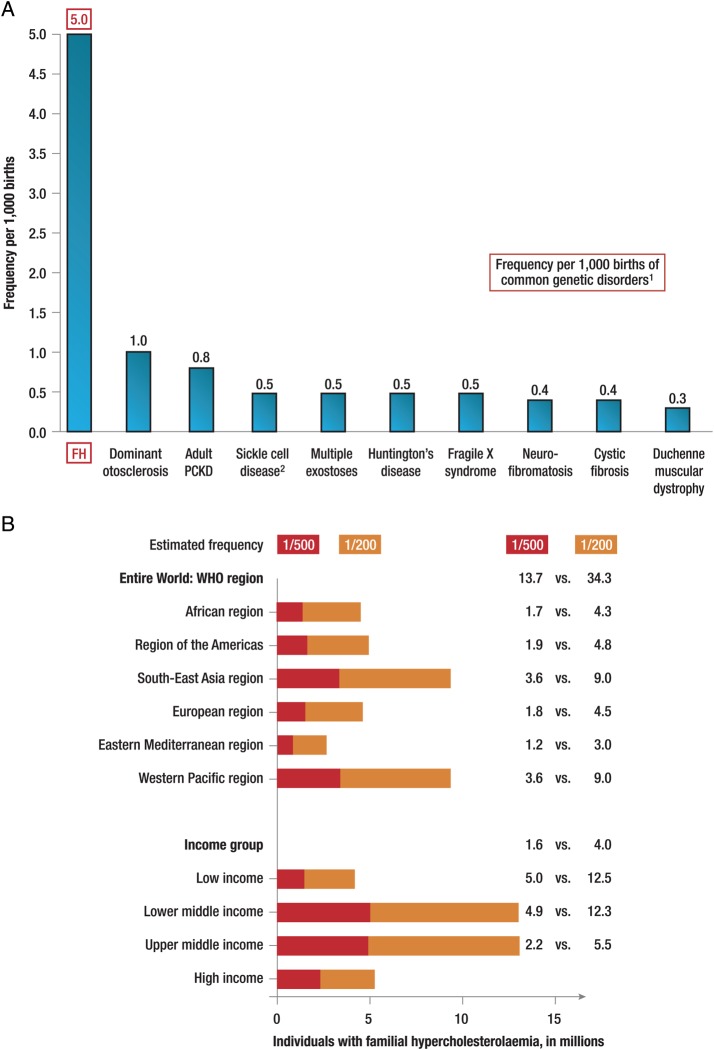
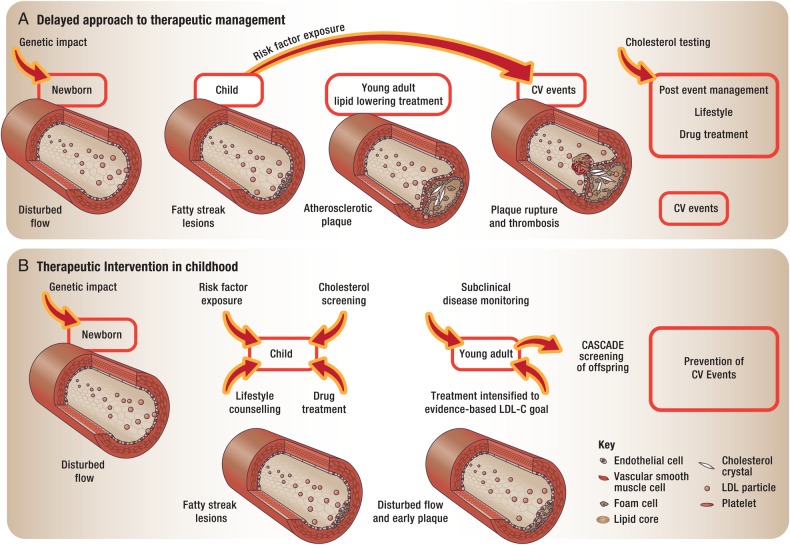
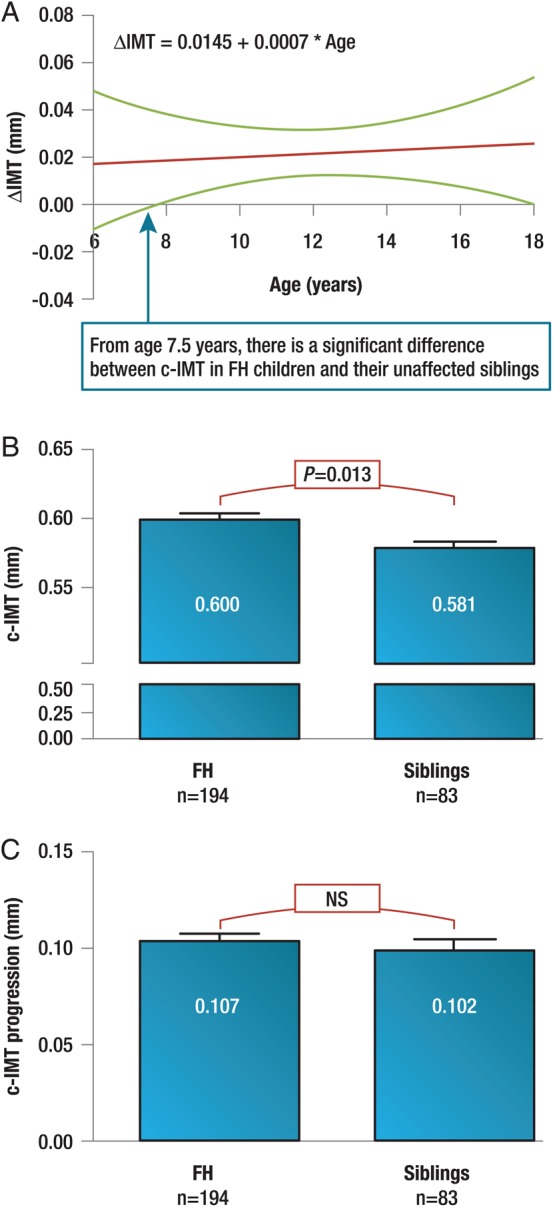
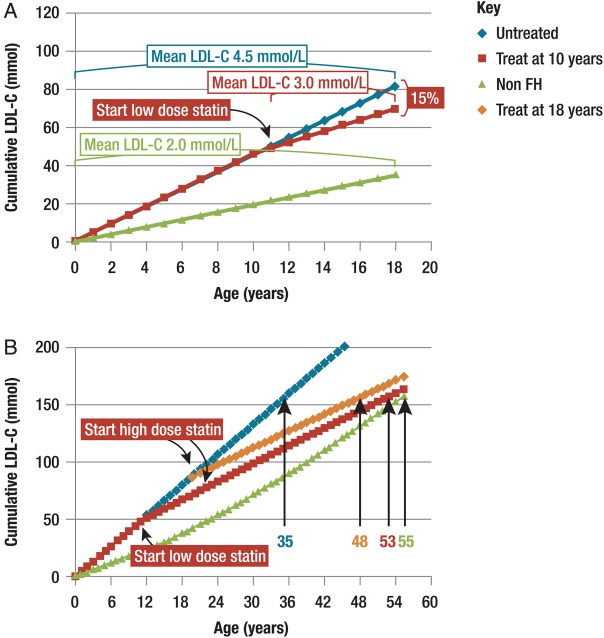
Familial hypercholesterolaemia (FH) is a common genetic cause of premature coronary heart disease (CHD). Globally, one baby is born with FH every minute. If diagnosed and treated early in childhood, individuals with FH can have normal life expectancy. This consensus paper aims to improve awareness of the need for early detection and management of FH children. Familial hypercholesterolaemia is diagnosed either on phenotypic criteria, i.e. an elevated low-density lipoprotein cholesterol (LDL-C) level plus a family history of elevated LDL-C, premature coronary artery disease and/or genetic diagnosis, or positive genetic testing. Childhood is the optimal period for discrimination between FH and non-FH using LDL-C screening. An LDL-C ≥5 mmol/L (190 mg/dL), or an LDL-C ≥4 mmol/L (160 mg/dL) with family history of premature CHD and/or high baseline cholesterol in one parent, make the phenotypic diagnosis. If a parent has a genetic defect, the LDL-C cut-off for the child is ≥3.5 mmol/L (130 mg/dL). We recommend cascade screening of families using a combined phenotypic and genotypic strategy. In children, testing is recommended from age 5 years, or earlier if homozygous FH is suspected. A healthy lifestyle and statin treatment (from age 8 to 10 years) are the cornerstones of management of heterozygous FH. Target LDL-C is <3.5 mmol/L (130 mg/dL) if >10 years, or ideally 50% reduction from baseline if 8-10 years, especially with very high LDL-C, elevated lipoprotein(a), a family history of premature CHD or other cardiovascular risk factors, balanced against the long-term risk of treatment side effects. Identifying FH early and optimally lowering LDL-C over the lifespan reduces cumulative LDL-C burden and offers health and socioeconomic benefits. To drive policy change for timely detection and management, we call for further studies in the young. Increased awareness, early identification, and optimal treatment from childhood are critical to adding decades of healthy life for children and adolescents with FH.
Overview
The claims and statistics of this paper haven’t been checked yet.
Free: it reads the open-access text and checks the first 5 claims that cite a source we can check. Create a free account to check every claim.
Integrity signals
Registry
Cites
Statistics
Figures
Verification
Claims the paper makes
The claims and statistics of this paper haven’t been checked yet.
Free: it reads the open-access text and checks the first 5 claims that cite a source we can check. Create a free account to check every claim.
Claims other papers make about this one
Each is checked against this paper’s own text: does it say what the citing paper says it does?
The source backs part of the claim, not all of it — or backs it for a different population, condition or comparison.
In the citing paper
“Monogenic disorders such as familial hypercholesterolemia (FH) can be easily recognized from the standard lipid panel without the need to measure apoB [31,32].”
From Quantifying atherogenic lipoproteins for lipid-lowering strategies: Consensus-based recommendations from EAS and EFLM (2020) · cites this paper as [32]
Experimental — accuracy not yet measuredThe source backs part of the claim, not all of it — or backs it for a different population, condition or comparison.
In the citing paper
“In a pediatric setting, reporting age-and gender-specific reference intervals is relevant for early identification of children with hyperlipidemia associated with premature atherosclerosis, especially FH [32].”
From Quantifying atherogenic lipoproteins for lipid-lowering strategies: Consensus-based recommendations from EAS and EFLM (2020) · cites this paper as [32]
Experimental — accuracy not yet measuredIn the citing paper
“Volanesorsen reduced plasma TGs by ∼70% and ApoC-III by 80-90% [349].”
From 2019 ESC/EAS guidelines for the management of dyslipidaemias: lipid modification to reduce cardiovascular risk (2019) · cites this paper as [349]
In the citing paper
“Although placebo-controlled trials are missing in children, there are observational studies suggesting that early treatment can reduce LDL-C burden, improve endothelial function, substantially attenuate development of atherosclerosis and improve coronary outcomes. 303”
From 2016 ESC/EAS Guidelines for the Management of Dyslipidaemias (2016) · cites this paper as [303]
In the citing paper
“FH is diagnosed in children based on phenotypic criteria including elevated LDL-C plus a family history of elevated LDL-C, premature CAD and/or positive genetic testing. 303”
From 2016 ESC/EAS Guidelines for the Management of Dyslipidaemias (2016) · cites this paper as [303]
1 more claim about this paper
Create a free account to see every claim other papers make about this one.
Self-check
Percentages, sums and reported differences re-computed from the paper’s own numbers.
The self-check needs the paper’s full text.
Citations
Cites
A Receptor-Mediated Pathway for Cholesterol Homeostasis
Brown, M. S., & Goldstein, J. L. (1986) · Science · doi:10.1126/science.3513311 · Cited by 5,703
Berenson, G. S., Srinivasan, S. R., Bao, W., Newman, W. P., Tracy, R. E., & Wattigney, W. A. (1998) · New England Journal of Medicine · doi:10.1056/nejm199806043382302 · Cited by 4,032
ESC/EAS Guidelines for the management of dyslipidaemias
Reiner, Ž., Catapano, A. L., De Backer, G., Graham, I., Taskinen, M.-R., Wiklund, O., Agewall, S., Alegria, E., Chapman, M. J., Durrington, P., et al. (2011) · European Heart Journal · doi:10.1093/eurheartj/ehr158 · Cited by 3,549
Self-citationPrinciples and Practice of Screening for Disease.
(1968) · Annals of Internal Medicine · doi:10.7326/0003-4819-69-5-1085_2 · Cited by 3,066
Nordestgaard, B. G., Chapman, M. J., Humphries, S. E., Ginsberg, H. N., Masana, L., Descamps, O. S., Wiklund, O., Hegele, R. A., Raal, F. J., Defesche, J. C., et al. (2013) · European Heart Journal · doi:10.1093/eurheartj/eht273 · Cited by 2,761
Self-citationSystematic review and meta-analysis
(2019) · Providing Information for Health · doi:10.1201/9781315377315-19 · Cited by 2,659
Role of Oxidative Modifications in Atherosclerosis
Stocker, R., & Keaney, J. F. (2004) · Physiological Reviews · doi:10.1152/physrev.00047.2003 · Cited by 2,624 · cited 1×
“then accumulate in the artery wall, become oxidatively modified, and subsequently initiate an inflammatory response, which results in vascular injury and formation of atherosclerotic plaque.(25,26) Additional alterations in the lipoproteinprofile in FHmay involveelevated”
BackgroundLipoprotein(a) as a cardiovascular risk factor: current status
Nordestgaard, B. G., Chapman, M. J., Ray, K., Borén, J., Andreotti, F., Watts, G. F., Ginsberg, H., Amarenco, P., Catapano, A., Descamps, O. S., et al. (2010) · European Heart Journal · doi:10.1093/eurheartj/ehq386 · Cited by 1,807
Self-citationAllhoff, P., Laaser, U., & Heinrich, J. (1991) · Kompendium der Lipid-Studien · doi:10.1007/978-3-642-95642-3_7 · Cited by 1,329
Cuchel, M., Bruckert, E., Ginsberg, H. N., Raal, F. J., Santos, R. D., Hegele, R. A., Kuivenhoven, J. A., Nordestgaard, B. G., Descamps, O. S., Steinhagen-Thiessen, E., et al. (2014) · European Heart Journal · doi:10.1093/eurheartj/ehu274 · Cited by 1,057
Self-citation
Research works printed but not linked: 1
- Nherera LM Saving Lives, Saving Families: The Health, Social and Economic Advantages of Detecting and Treating Familial Hypercholesterolaemia (FH). Economics Chapter: Estimating the Benefits from Treatment and Increasing the Implementation of Cascading Screening http://heartuk.org.uk/files/uploads/documents/HUK_HealthEconomics_FINAL2012_2702.pdf (4 February 2015).
Cited by
Mach, F., Baigent, C., Catapano, A. L., Koskinas, K. C., Casula, M., Badimon, L., Chapman, M. J., De Backer, G. G., Delgado, V., Ference, B. A., et al. (2020) · European Heart Journal · doi:10.1093/eurheartj/ehz455 · Cited by 8,961
Self-citationMach, F., Baigent, C., Catapano, A. L., Koskinas, K. C., Casula, M., Badimon, L., Chapman, M. J., De Backer, G. G., Delgado, V., Ference, B. A., et al. (2019) · Atherosclerosis · doi:10.1016/j.atherosclerosis.2019.08.014 · Cited by 4,854
Self-citationFerence, B. A., Ginsberg, H. N., Graham, I., Ray, K. K., Packard, C. J., Bruckert, E., Hegele, R. A., Krauss, R. M., Raal, F. J., Schunkert, H., et al. (2017) · European Heart Journal · doi:10.1093/eurheartj/ehx144 · Cited by 3,962
Self-citation2016 ESC/EAS Guidelines for the Management of Dyslipidaemias
Catapano, A. L., Graham, I., De Backer, G., Wiklund, O., Chapman, M. J., Drexel, H., Hoes, A. W., Jennings, C. S., Landmesser, U., Pedersen, T. R., et al. (2016) · European Heart Journal · doi:10.1093/eurheartj/ehw272 · Cited by 3,162
Self-citationPadmanabhan, A., Connelly‐Smith, L., Aqui, N., Balogun, R. A., Klingel, R., Meyer, E., Pham, H. P., Schneiderman, J., Witt, V., Wu, Y., et al. (2019) · Journal of Clinical Apheresis · doi:10.1002/jca.21705 · Cited by 2,230
2016 ESC/EAS Guidelines for the Management of Dyslipidaemias
Catapano, A. L., Graham, I., De Backer, G., Wiklund, O., Chapman, M. J., Drexel, H., Hoes, A. W., Jennings, C. S., Landmesser, U., Pedersen, T. R., et al. (2016) · Atherosclerosis · doi:10.1016/j.atherosclerosis.2016.08.018 · Cited by 1,582
“3 Familial hypercholesterolaemia in children FH is diagnosed in children based on phenotypic criteria including elevated LDL-C plus a family history of elevated LDL-C, premature CAD and/or positive genetic testing.(303) Testing during childhood is optimal to discriminate between FH and non-FH using LDL-C.”
BackgroundSelf-citationNordestgaard, B. G., Langsted, A., Mora, S., Kolovou, G., Baum, H., Bruckert, E., Watts, G. F., Sypniewska, G., Wiklund, O., Borén, J., et al. (2016) · European Heart Journal · doi:10.1093/eurheartj/ehw152 · Cited by 847
“LDL cholesterol in children >4 mmol/L Heterozygous familial hypercholesterolemia with high cardiovascular risk (45)”
BackgroundSelf-citationConnelly‐Smith, L., Alquist, C. R., Aqui, N. A., Hofmann, J. C., Klingel, R., Onwuemene, O. A., Patriquin, C. J., Pham, H. P., Sanchez, A. P., Schneiderman, J., et al. (2023) · Journal of Clinical Apheresis · doi:10.1002/jca.22043 · Cited by 684
20-Year Follow-up of Statins in Children with Familial Hypercholesterolemia
Luirink, I. K., Wiegman, A., Kusters, D. M., Hof, M. H., Groothoff, J. W., de Groot, E., Kastelein, J. J. P., & Hutten, B. A. (2019) · New England Journal of Medicine · doi:10.1056/nejmoa1816454 · Cited by 654
Self-citationClinical Genetic Testing for Familial Hypercholesterolemia
Sturm, A. C., Knowles, J. W., Gidding, S. S., Ahmad, Z. S., Ahmed, C. D., Ballantyne, C. M., Baum, S. J., Bourbon, M., Carrié, A., Cuchel, M., et al. (2018) · Journal of the American College of Cardiology · doi:10.1016/j.jacc.2018.05.044 · Cited by 615
“For children with HoFH, aggressive treatment is required at the time of diagnosis (40).”
BackgroundInfluentialSelf-citationNordestgaard, B. G., & Langsted, A. (2016) · Journal of Lipid Research · doi:10.1194/jlr.r071233 · Cited by 575
Self-citationLloyd-Jones, D. M., Morris, P. B., Ballantyne, C. M., Birtcher, K. K., Covington, A. M., DePalma, S. M., Minissian, M. B., Orringer, C. E., Smith, S. C., Waring, A. A., et al. (2022) · Journal of the American College of Cardiology · doi:10.1016/j.jacc.2022.07.006 · Cited by 569
Familial hypercholesterolaemia
Defesche, J. C., Gidding, S. S., Harada-Shiba, M., Hegele, R. A., Santos, R. D., & Wierzbicki, A. S. (2017) · Nature Reviews Disease Primers · doi:10.1038/nrdp.2017.93 · Cited by 453
Self-citationA Modern Approach to Dyslipidemia
Berberich, A. J., & Hegele, R. A. (2022) · Endocrine Reviews · doi:10.1210/endrev/bnab037 · Cited by 469
Self-citationLloyd-Jones, D. M., Morris, P. B., Ballantyne, C. M., Birtcher, K. K., Daly, D. D., DePalma, S. M., Minissian, M. B., Orringer, C. E., & Smith, S. C. (2016) · Journal of the American College of Cardiology · doi:10.1016/j.jacc.2016.03.519 · Cited by 459
“Patients with LDL $190 mg/dL are more likely to have HeFH or HoFH, genetic disorders associated with severe hypercholesterolemia, and a family history of severe hypercholesterolemia and premature ASCVD.”
BackgroundInfluentialSantos, R. D., Gidding, S. S., Hegele, R. A., Cuchel, M. A., Barter, P. J., Watts, G. F., Baum, S. J., Catapano, A. L., Chapman, M. J., Defesche, J. C., et al. (2016) · The Lancet Diabetes & Endocrinology · doi:10.1016/s2213-8587(16)30041-9 · Cited by 419
Self-citationLloyd-Jones, D. M., Morris, P. B., Ballantyne, C. M., Birtcher, K. K., Daly, D. D., DePalma, S. M., Minissian, M. B., Orringer, C. E., & Smith, S. C. (2017) · Journal of the American College of Cardiology · doi:10.1016/j.jacc.2017.07.745 · Cited by 377
“Cascade screening, a process of systematic assessment of close biological relatives, should be performed in all people with HeFH or HoFH to identify others with the disease who would benefit from treatment (38).”
BackgroundCuchel, M., Raal, F. J., Hegele, R. A., Al-Rasadi, K., Arca, M., Averna, M., Bruckert, E., Freiberger, T., Gaudet, D., Harada-Shiba, M., et al. (2023) · European Heart Journal · doi:10.1093/eurheartj/ehad197 · Cited by 359
Self-citationDiagnosis and Treatment of Heterozygous Familial Hypercholesterolemia
McGowan, M. P., Hosseini Dehkordi, S. H., Moriarty, P. M., & Duell, P. B. (2019) · Journal of the American Heart Association · doi:10.1161/jaha.119.013225 · Cited by 271
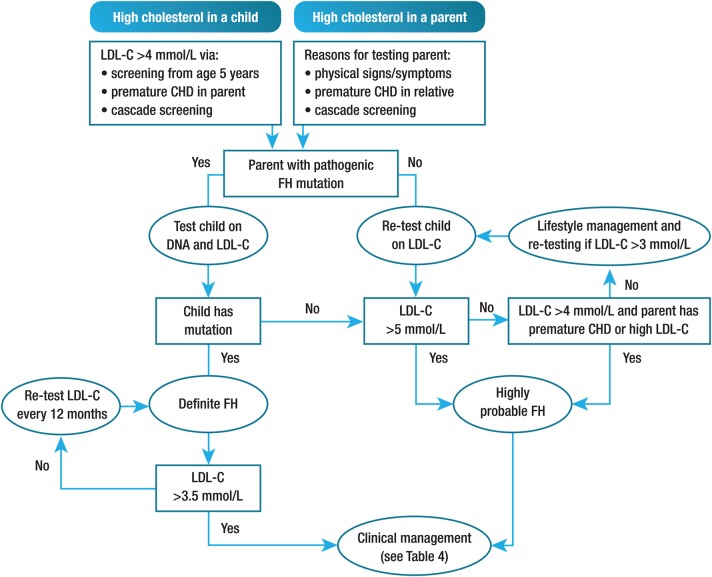
“A special flow chart to detect FH in children has been developed and tested by the European Atherosclerosis Society consensus panel.(29)”
BackgroundMethodCommunity, R. O. T. G. F. H., Wilemon, K. A., Patel, J., Aguilar-Salinas, C., Ahmed, C. D., Alkhnifsawi, M., Almahmeed, W., Alonso, R., Al-Rasadi, K., Badimon, L., et al. (2020) · JAMA Cardiology · doi:10.1001/jamacardio.2019.5173 · Cited by 256
Self-citationWatts, G. F., Gidding, S. S., Hegele, R. A., Raal, F. J., Sturm, A. C., Jones, L. K., Sarkies, M. N., Al-Rasadi, K., Blom, D. J., Daccord, M., et al. (2023) · Nature Reviews Cardiology · doi:10.1038/s41569-023-00892-0 · Cited by 250
Self-citation2026 ACC/AHA/AACVPR/ABC/ACPM/ADA/AGS/APhA/ASPC/NLA/PCNA Guideline on the Management of Dyslipidemia
Blumenthal, R. S., Morris, P. B., Gaudino, M., Johnson, H. M., Anderson, T. S., Bittner, V. A., Blankstein, R., Brewer, L. C., Cho, L., de Ferranti, S. D., et al. (2026) · JACC · doi:10.1016/j.jacc.2025.11.016 · Cited by 304
Nordestgaard, B. G., Langlois, M. R., Langsted, A., Chapman, M. J., Aakre, K. M., Baum, H., Borén, J., Bruckert, E., Catapano, A., Cobbaert, C., et al. (2020) · Atherosclerosis · doi:10.1016/j.atherosclerosis.2019.12.005 · Cited by 246
Self-citationStop Alzheimer’s before it starts
McDade, E., & Bateman, R. J. (2017) · Nature · doi:10.1038/547153a · Cited by 230
deGoma, E. M., Ahmad, Z. S., O’Brien, E. C., Kindt, I., Shrader, P., Newman, C. B., Pokharel, Y., Baum, S. J., Hemphill, L. C., Hudgins, L. C., et al. (2016) · Circulation: Cardiovascular Genetics · doi:10.1161/circgenetics.116.001381 · Cited by 224
Self-citationGuidelines for Diagnosis and Treatment of Familial Hypercholesterolemia 2017
Harada-Shiba, M., Arai, H., Ishigaki, Y., Ishibashi, S., Okamura, T., Ogura, M., Dobashi, K., Nohara, A., Bujo, H., Miyauchi, K., et al. (2018) · Journal of Atherosclerosis and Thrombosis · doi:10.5551/jat.cr003 · Cited by 221
Disorders of lipid metabolism. Clinical Guidelines 2023
Ezhov, M. V., Kukharchuk, V. V., Sergienko, I. V., Alieva, A. S., Antsiferov, M. B., Ansheles, A. A., Arabidze, G. G., Aronov, D. M., Arutyunov, G. P., Akhmedzhanov, N. M., et al. (2023) · Russian Journal of Cardiology · doi:10.15829/1560-4071-2023-5471 · Cited by 219
Langlois, M. R., Nordestgaard, B. G., Langsted, A., Chapman, M. J., Aakre, K. M., Baum, H., Borén, J., Bruckert, E., Catapano, A., Cobbaert, C., et al. (2020) · Clinical Chemistry and Laboratory Medicine (CCLM) · doi:10.1515/cclm-2019-1253 · Cited by 211
Self-citationHasbani, N. R., Ligthart, S., Brown, M. R., Heath, A. S., Bebo, A., Ashley, K. E., Boerwinkle, E., Morrison, A. C., Folsom, A. R., Aguilar, D., et al. (2022) · Circulation · doi:10.1161/circulationaha.121.053730 · Cited by 206
CCC- and WASH-mediated endosomal sorting of LDLR is required for normal clearance of circulating LDL
Bartuzi, P., Billadeau, D. D., Favier, R., Rong, S., Dekker, D., Fedoseienko, A., Fieten, H., Wijers, M., Levels, J. H., Huijkman, N., et al. (2016) · Nature Communications · doi:10.1038/ncomms10961 · Cited by 205
“One of the patients (V-2, 4 years of age) is too young, and plasma cholesterol levels are not informative in this case 17 .”
Self-citationNordestgaard, B. G., Langsted, A., Mora, S., Kolovou, G., Baum, H., Bruckert, E., Watts, G. F., Sypniewska, G., Wiklund, O., Borén, J., et al. (2016) · Clinical Chemistry · doi:10.1373/clinchem.2016.258897 · Cited by 198
Self-citationFamilial hypercholesterolemia treatments: Guidelines and new therapies
Raal, F. J., Hovingh, G. K., & Catapano, A. L. (2018) · Atherosclerosis · doi:10.1016/j.atherosclerosis.2018.06.859 · Cited by 194
Self-citationEvolocumab in Pediatric Heterozygous Familial Hypercholesterolemia
Santos, R. D., Ruzza, A., Hovingh, G. K., Wiegman, A., Mach, F., Kurtz, C. E., Hamer, A., Bridges, I., Bartuli, A., Bergeron, J., et al. (2020) · New England Journal of Medicine · doi:10.1056/nejmoa2019910 · Cited by 192
Self-citationThe LDL cumulative exposure hypothesis: evidence and practical applications
Ference, B. A., Braunwald, E., & Catapano, A. L. (2024) · Nature Reviews Cardiology · doi:10.1038/s41569-024-01039-5 · Cited by 176
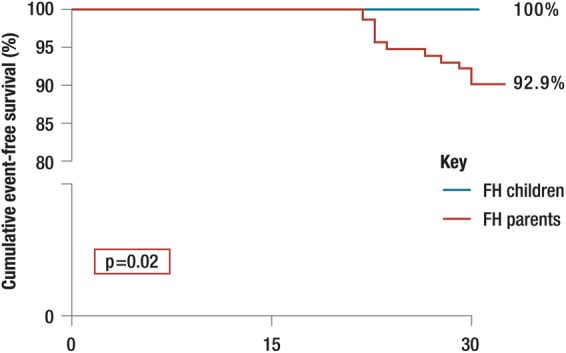
“In addition, young adults with familial hypercholesterolaemia who are treated with a statin from childhood onwards to lower LDL-C levels have a markedly lower risk of cardiovascular events than their untreated parents with familial hypercholesterolaemia at the same age 78–81 .”
Self-citationFamilial hypercholesterolaemia: A global call to arms
Vallejo-Vaz, A. J., Kondapally Seshasai, S. R., Cole, D., Hovingh, G. K., Kastelein, J. J. P., Mata, P., Raal, F. J., Santos, R. D., Soran, H., Watts, G. F., et al. (2015) · Atherosclerosis · doi:10.1016/j.atherosclerosis.2015.09.021 · Cited by 178
“estimated as ~1:500, contemporary data suggest an overall frequency of ~1:200e300, implying that >30million individuals could be affected worldwide [1,3,4,6].”
BackgroundSelf-citationPrevention of atherosclerosis from childhood
Raitakari, O., Pahkala, K., & Magnussen, C. G. (2022) · Nature Reviews Cardiology · doi:10.1038/s41569-021-00647-9 · Cited by 173
Landmesser, U., John Chapman, M., Farnier, M., Gencer, B., Gielen, S., Hovingh, G. K., Lüscher, T. F., Sinning, D., Tokgözoğlu, L., Wiklund, O., et al. (2016) · European Heart Journal · doi:10.1093/eurheartj/ehw480 · Cited by 162
Self-citationThe genetics and screening of familial hypercholesterolaemia
Henderson, R., O’Kane, M., McGilligan, V., & Watterson, S. (2016) · Journal of Biomedical Science · doi:10.1186/s12929-016-0256-1 · Cited by 155
“When extrapolated to the EU, the savings would yield about €86 million per year [18].”
BackgroundInfluentialAdvances in lipid-lowering therapy through gene-silencing technologies
Nordestgaard, B. G., Nicholls, S. J., Langsted, A., Ray, K. K., & Tybjærg‐Hansen, A. (2018) · Nature Reviews Cardiology · doi:10.1038/nrcardio.2018.3 · Cited by 155
Self-citationCanadian Cardiovascular Society Position Statement on Familial Hypercholesterolemia: Update 2018
Brunham, L. R., Ruel, I. L., Aljenedil, S., Rivière, J., Baass, A. W., Tu, J. V., Mancini, G. B. J., Raggi, P., Gupta, M., Couture, P., et al. (2018) · Canadian Journal of Cardiology · doi:10.1016/j.cjca.2018.09.005 · Cited by 165
“Cascade screening for FH(10) (lipid screening of first-degree relatives of individuals with FH and consideration of genetic testing) is recommended and has been shown to be effective in the Netherlands for the identification and treatment of new cases.(11) Opportunistic genetic screening of young individuals who prese…”
BackgroundSelf-citationFamilial hypercholesterolaemia: evolving knowledge for designing adaptive models of care
Watts, G. F., Gidding, S. S., Mata, P., Pang, J., SULLIVAN, D. R., Yamashita, S., Raal, F. J., Santos, R. D., & Ray, K. K. (2020) · Nature Reviews Cardiology · doi:10.1038/s41569-019-0325-8 · Cited by 153
Self-citationWriting Committee Members, Blumenthal, R. S., Morris, P. B., Gaudino, M., Johnson, H. M., Anderson, T. S., Bittner, V. A., Blankstein, R., Brewer, L. C., Cho, L., et al. (2026) · Circulation · doi:10.1161/cir.0000000000001423 · Cited by 122
Ahmad, F., McNally, E. M., Ackerman, M. J., Baty, L. C., Day, S. M., Kullo, I. J., Madueme, P. C., Maron, M. S., Martinez, M. W., Salberg, L., et al. (2019) · Circulation: Genomic and Precision Medicine · doi:10.1161/hcg.0000000000000054 · Cited by 122
Homozygous Familial Hypercholesterolemia
Nohara, A., Tada, H., Ogura, M., Okazaki, S., Ono, K., Shimano, H., Daida, H., Dobashi, K., Hayashi, T., Hori, M., et al. (2021) · Journal of Atherosclerosis and Thrombosis · doi:10.5551/jat.rv17050 · Cited by 145
Grošelj, U., Kovač, J., Šuštar, U., Mlinarič, M., Fras, Z., Podkrajšek, K. T., & Battelino, T. (2018) · Atherosclerosis · doi:10.1016/j.atherosclerosis.2018.06.858 · Cited by 131
Landstrom, A. P., Kim, J. J., Gelb, B. D., Helm, B. M., Kannankeril, P. J., Semsarian, C., Sturm, A. C., Tristani‐Firouzi, M., & Ware, S. M. (2021) · Circulation Genomic and Precision Medicine · doi:10.1161/hcg.0000000000000086 · Cited by 130
Vallejo-Vaz, A. J., Akram, A., Kondapally Seshasai, S. R., Cole, D., Watts, G. F., Hovingh, G. K., Kastelein, J. J. P., Mata, P., Raal, F. J., Santos, R. D., et al. (2016) · Atherosclerosis Supplements · doi:10.1016/j.atherosclerosissup.2016.10.001 · Cited by 111
Self-citationPackard, C., Chapman, M. J., Sibartie, M., Laufs, U., & Masana, L. (2021) · Heart · doi:10.1136/heartjnl-2020-318760 · Cited by 108
Self-citationInclisiran for the Treatment of Cardiovascular Disease: the Orion Clinical Development Program
Stoekenbroek, R. M., Kallend, D., Wijngaard, P. L., & Kastelein, J. J. (2018) · Future Cardiology · doi:10.2217/fca-2018-0067 · Cited by 106
Braamskamp, M. J. A. M., Langslet, G., McCrindle, B. W., Cassiman, D., Francis, G. A., Gagne, C., Gaudet, D., Morrison, K. M., Wiegman, A., Turner, T., et al. (2017) · Circulation · doi:10.1161/circulationaha.116.025158 · Cited by 101
“At the end of the trial performed by Wiegman et al,17 all children continued statin therapy and were followed up by the investigators.”
MethodSelf-citationIntegrated Guidance for Enhancing the Care of Familial Hypercholesterolaemia in Australia
Watts, G. F., SULLIVAN, D. R., Hare, D. L., Kostner, K., Horton, A., Bell, D. A., Brett, T., Trent, R. J., Poplawski, N. K., Martin, A. C., et al. (2020) · Heart Lung and Circulation · doi:10.1016/j.hlc.2020.09.943 · Cited by 111
“Our original model of care for FH [17] was signi fi cant in informing several international guidelines on FH [11,12].”
Self-citationEvinacumab for Pediatric Patients With Homozygous Familial Hypercholesterolemia
Wiegman, A., Greber-Platzer, S., Ali, S., Reijman, M. D., Brinton, E. A., Charng, M.-J., Srinivasan, S., Baker-Smith, C., Baum, S., Brothers, J. A., et al. (2024) · Circulation · doi:10.1161/circulationaha.123.065529 · Cited by 96
Self-citationObesity as a Causal Risk Factor for Aortic Valve Stenosis
Kaltoft, M., Langsted, A., & Nordestgaard, B. G. (2020) · Journal of the American College of Cardiology · doi:10.1016/j.jacc.2019.10.050 · Cited by 97
Self-citationJCS 2018 Guideline on Diagnosis of Chronic Coronary Heart Diseases
Yamagishi, M., Tamaki, N., Akasaka, T., Ikeda, T., Ueshima, K., Uemura, S., Otsuji, Y., Kihara, Y., Kimura, K., Kimura, T., et al. (2021) · Circulation Journal · doi:10.1253/circj.cj-19-1131 · Cited by 107
Gidding, S. S., Wiegman, A., Grošelj, U., Freiberger, T., Peretti, N., Dharmayat, K., Daccord, M., Bedlington, N., Šikonja, J., Ray, K. K., et al. (2022) · European Journal of Preventive Cardiology · doi:10.1093/eurjpc/zwac200 · Cited by 106
Self-citationPersonalized Intervention Based on Early Detection of Atherosclerosis
Nielsen, R. V., Fuster, V., Bundgaard, H., Fuster, J. J., Johri, A. M., Kofoed, K. F., Douglas, P. S., Diederichsen, A. C. P., Shapiro, M. D., Nicholls, S. J., et al. (2024) · Journal of the American College of Cardiology · doi:10.1016/j.jacc.2024.02.053 · Cited by 104
Self-citationGuidance for Pediatric Familial Hypercholesterolemia 2017
Harada‐Shiba, M., Ohta, T., Ohtake, A., Ogura, M., Dobashi, K., Nohara, A., Yamashita, S., Yokote, K., & Joint Working Group by Japan Pediatric Society and Japan Atherosclerosis Society for Making Guidance of Pediatric Familial Hypercholesterolemia (2018) · Journal of Atherosclerosis and Thrombosis · doi:10.5551/jat.cr002 · Cited by 92
Why patients with familial hypercholesterolemia are at high cardiovascular risk? Beyond LDL-C levels
Bianconi, V., Banach, M., & Pirro, M. (2020) · Trends in Cardiovascular Medicine · doi:10.1016/j.tcm.2020.03.004 · Cited by 100
“The Dutch ipid Clinic Network Score (DLCNS) and the United Kingdom Sion Broome Register criteria, which combine clinical, biochemical nd molecular genetic parameters, are the most commonly used riteria for the diagnosis of HeFH [14] .”
BackgroundMethodDharmayat, K., Vallejo‐Vaz, A. J., Stevens, C. A. T., Brandts, J., Lyons, A. R. M., Grošelj, U., Abifadel, M., Aguilar-Salinas, C. A., AlHabib, K. F., Al-Khnifsawi, M., et al. (2023) · The Lancet · doi:10.1016/s0140-6736(23)01842-1 · Cited by 109
“8 As with adults, the use of combination therapy was low, with only one in four male individuals and one in five female individuals with familial hypercholesterolaemia in this study having an LDL-C less than 3·4 mmol/L when taking LLM at registry entry; girls had a lower likelihood of reaching…”
BackgroundInfluentialSelf-citationGuidelines for the Diagnosis and Treatment of Pediatric Familial Hypercholesterolemia 2022
Harada‐Shiba, M., Ohtake, A., Sugiyama, D., Tada, H., Dobashi, K., Matsuki, K., Minamino, T., Yamashita, S., & Yamamoto, Y. (2023) · Journal of Atherosclerosis and Thrombosis · doi:10.5551/jat.cr006 · Cited by 97
Nordestgaard, B. G., & Benn, M. (2017) · European Heart Journal · doi:10.1093/eurheartj/ehx136 · Cited by 91
“Further, for personal or insurance reasons, some individuals are afraid of having a genetic diagnosis; however, Wiegman and co-workers in The Netherlands have shown that if cholesterol-lowering therapy is initiated early in children with FH mutations, coronary heart disease is no longer a problem: these individuals li…”
BackgroundSelf-citationHypercholesterolemia: The role of PCSK9
Melendez, Q. M., Krishnaji, S. T., Wooten, C. J., & Lopez, D. (2017) · Archives of Biochemistry and Biophysics · doi:10.1016/j.abb.2017.06.001 · Cited by 101
Familial hypercholesterolemia: A complex genetic disease with variable phenotypes
Taranto, M. D. D., Giacobbe, C., & Fortunato, G. (2019) · European Journal of Medical Genetics · doi:10.1016/j.ejmg.2019.103831 · Cited by 98
Omer, L., Hudson, E., Zheng, S., Hoying, J. B., Shan, Y., & Boyd, N. L. (2017) · Hepatology Communications · doi:10.1002/hep4.1110 · Cited by 82
“A critical issue for these patients is early identification and therapeutic intervention.((7)) Because FH is considered underdiagnosed, screening has been proposed for newborns.”
BackgroundRamaswami, U., Humphries, S. E., Priestley-Barnham, L., Green, P., Wald, D. S., Capps, N. E., Anderson, M., Dale, P., & Morris, A. A. M. (2019) · Atherosclerosis · doi:10.1016/j.atherosclerosis.2019.09.005 · Cited by 81
Self-citationAkkermansia muciniphila: A potential novel mechanism of nuciferine to improve hyperlipidemia
Yu, Y., Lu, J., Sun, L., Lyu, X., Chang, X., Mi, X. J., Hu, M., Wu, C., & Chen, X. (2020) · Biomedicine & Pharmacotherapy · doi:10.1016/j.biopha.2020.111014 · Cited by 80
Casula, M., Olmastroni, E., Pirillo, A., Catapano, A. L., Arca, M., Averna, M., Bertolini, S., Calandra, S., Catapano, A. L., Tarugi, P., et al. (2018) · Atherosclerosis · doi:10.1016/j.atherosclerosis.2018.08.013 · Cited by 78
“off for LDL-C levels in this specific group [11].”
BackgroundSelf-citationSteffen, B. T., Thanassoulis, G., Duprez, D. A., Stein, J. H., Karger, A. B., Tattersall, M. C., Kaufman, J. D., Guan, W., & Tsai, M. Y. (2019) · Arteriosclerosis Thrombosis and Vascular Biology · doi:10.1161/atvbaha.118.312267 · Cited by 78
Homozygous Familial Hypercholesterolemia in Spain: Prevalence and Phenotype–Genotype Relationship
Sánchez-Hernández, R. M., Civeira, F., Stef, M. A., Pérez‐Calahorra, S., Almagro, F., Plana, N., Novoa, F. J., de Aranzubía, P. S., Mosquera, D., Soler, C., et al. (2016) · Circulation Cardiovascular Genetics · doi:10.1161/circgenetics.116.001545 · Cited by 83
Pediatric lipid reference values in the general population: the Dutch Lifelines cohort study
Balder, J. W., Lansberg, P. J., Hof, M. H., Wiegman, A., Hutten, B. A., & Kuivenhoven, J. A. (2018) · Journal of Clinical Lipidology · doi:10.1016/j.jacl.2018.05.011 · Cited by 72
Self-citationChildhood Non-HDL Cholesterol and LDL Cholesterol and Adult Atherosclerotic Cardiovascular Events
Wu, F., Juonala, M., Jacobs, D. R., Daniels, S. R., Kähönen, M. A. P., Woo, J. G., Sinaiko, A. R., Viikari, J. S. A., Bazzano, L., Burns, T. L., et al. (2023) · Circulation · doi:10.1161/circulationaha.123.064296 · Cited by 79
Recent advances in genetic testing for familial hypercholesterolemia
Iacocca, M. A., & Hegele, R. A. (2017) · Expert Review of Molecular Diagnostics · doi:10.1080/14737159.2017.1332997 · Cited by 71
“Next-generation sequencing (NGS) has also shown that very rare heterozygous mutations in APOE and STAP1, as well as bi-allelic mutations in LIPA, ABCG5, and ABCG8, can sometimes cause an FH-like phenotype [1,4,5].”
BackgroundSelf-citationAtherosclerosis from Newborn to Adult—Epidemiology, Pathological Aspects, and Risk Factors
Luca, A.-C., David, S. G., David, A. G., Ţarcă, V., Pădureț, I. A., Mîndru, D. E., Roşu, S. T., Roşu, E. V., Adumitrăchioaiei, H., Bernic, J., et al. (2023) · Life · doi:10.3390/life13102056 · Cited by 90
“Due to chronically increased LDL cholesterol levels after the neonatal period, atherosclerotic changes in the coronary, carotid, and renal arteries occur that can cause aortic insufficiency, aortic, coronary, and renal stenosis, and systemic arterial hypertension [118,121,122].”
BackgroundScreening in children for familial hypercholesterolaemia: start now
Grošelj, U., Wiegman, A., & Gidding, S. S. (2022) · European Heart Journal · doi:10.1093/eurheartj/ehac224 · Cited by 77
Self-citationFamilial Hypercholesterolaemia Diagnosis and Management
Alonso, R., de Isla, L. P., Muñiz-Grijalvo, O., Díaz-Díaz, J. L., & Mata, P. (2018) · European Cardiology Review · doi:10.15420/ecr.2018:10:2 · Cited by 83
Ramaswami, U., Futema, M., Bogsrud, M. P., Holven, K. B., Roeters van Lennep, J., Wiegman, A., Descamps, O. S., Vrablik, M., Freiberger, T., Dieplinger, H., et al. (2020) · Atherosclerosis · doi:10.1016/j.atherosclerosis.2019.11.012 · Cited by 68
Self-citationMundal, L. J., Igland, J., Veierød, M. B., Holven, K. B., Ose, L., Selmer, R. M., Wisloff, T., Kristiansen, I. S., Tell, G. S., Leren, T. P., et al. (2018) · Heart · doi:10.1136/heartjnl-2017-312706 · Cited by 69
Self-citationHedegaard, B. S., Bork, C. S., Kaltoft, M., Klausen, I. C., Schmidt, E. B., Kamstrup, P. R., Langsted, A., & Nordestgaard, B. G. (2022) · Journal of the American College of Cardiology · doi:10.1016/j.jacc.2022.09.021 · Cited by 67
Self-citationThe role of genetic testing in dyslipidaemia
Berberich, A. J., & Hegele, R. A. (2019) · Pathology · doi:10.1016/j.pathol.2018.10.014 · Cited by 67
Self-citationPCSK9 inhibitors and cardiovascular disease: heralding a new therapeutic era
Chapman, M. J., Stock, J. K., & Ginsberg, H. N. (2015) · Current Opinion in Lipidology · doi:10.1097/mol.0000000000000239 · Cited by 65
Self-citationAdemi, Z., Norman, R., Pang, J., Liew, D., Zoungas, S., Sijbrands, E. J. G., Ference, B. A., Wiegman, A., & Watts, G. F. (2020) · Atherosclerosis · doi:10.1016/j.atherosclerosis.2020.05.007 · Cited by 64
Self-citationHegele, R. A., Gidding, S. S., Ginsberg, H. N., McPherson, R., Raal, F. J., Rader, D. J., Robinson, J. G., & Welty, F. K. (2015) · Arteriosclerosis, Thrombosis, and Vascular Biology · doi:10.1161/atvbaha.115.306442 · Cited by 63
Self-citationPećin, I., Hartgers, M. L., Hovingh, G. K., Dent, R. E., & Reiner, Ž. (2017) · European Journal of Preventive Cardiology · doi:10.1177/2047487317717346 · Cited by 70
“Furthermore, identifying FH in childhood enables treatment to be initiated early, which could result in improved long-term outcomes for patients, although research is needed to ascertain the exact age to begin treatment and the long-term safety of LLTs.(61) Unfortunately, screening programmes are not conducted on a la…”
BackgroundSelf-citationSchienkiewitz, A., Truthmann, J., Ernert, A., Wiegand, S., Schwab, K. O., & Scheidt‐Nave, C. (2019) · BMC Public Health · doi:10.1186/s12889-019-7901-z · Cited by 68
Hyperlipidemia and Cardiovascular Risk in Children and Adolescents
Mainieri, F., Bella, S. L., & Chiarelli, F. (2023) · Biomedicines · doi:10.3390/biomedicines11030809 · Cited by 92
“Thus, in HoFH patients, elevated LDL-C levels may be found at birth or even earlier due to detection in utero, and premature clinical manifestations, such as angina pectoris, could occur as early as adolescence, along with first cardiovascular events [49].”
BackgroundBalla, S., Ekpo, E., Wilemon, K. A., Knowles, J. W., & Rodríguez, F. (2020) · Current Atherosclerosis Reports · doi:10.1007/s11883-020-00881-5 · Cited by 65
Klevmoen, M., Bogsrud, M. P., Retterstøl, K., Svilaas, T., Vesterbekkmo, E. K., Hovland, A., Berge, C., Roeters van Lennep, J., & Holven, K. B. (2021) · Atherosclerosis · doi:10.1016/j.atherosclerosis.2021.09.003 · Cited by 58
Epidemiology of familial hypercholesterolaemia: Community and clinical
Vallejo‐Vaz, A. J., & Ray, K. K. (2018) · Atherosclerosis · doi:10.1016/j.atherosclerosis.2018.06.855 · Cited by 72
Self-citationThe Knowns and Unknowns of Contemporary Statin Therapy for Familial Hypercholesterolemia
Pang, J., Chan, D. C., & Watts, G. F. (2020) · Current Atherosclerosis Reports · doi:10.1007/s11883-020-00884-2 · Cited by 66
Self-citationPCSK9 Variants in Familial Hypercholesterolemia: A Comprehensive Synopsis
Guo, Q., Feng, X., & Zhou, Y. (2020) · Frontiers in Genetics · doi:10.3389/fgene.2020.01020 · Cited by 56
Braamskamp, M. J. A. M., Langslet, G., McCrindle, B. W., Cassiman, D. M., Francis, G. A., Gagné, C., Gaudet, D., Morrison, K. M., Wiegman, A., Turner, T. A., et al. (2015) · Journal of clinical lipidology · doi:10.1016/j.jacl.2015.07.011 · Cited by 57
Self-citationFamilial Hypercholesterolemia: New Horizons for Diagnosis and Effective Management
Mytilinaiou, M. G., Kyrou, I., Khan, M., Grammatopoulos, D. K., & Randeva, H. S. (2018) · Frontiers in Pharmacology · doi:10.3389/fphar.2018.00707 · Cited by 77
Campbell‐Salome, G., Jones, L. K., Masnick, M. F., Walton, N., Ahmed, C. D., Buchanan, A. H., Brangan, A., Esplin, E. D., Kann, D., Ladd, I., et al. (2021) · Circulation Genomic and Precision Medicine · doi:10.1161/circgen.120.003120 · Cited by 59
Self-citationRobinson, J. G., Jayanna, M. B., Brown, A. S., Aspry, K. E., Orringer, C. E., Gill, E. A., Goldberg, A. C., Jones, L. K., Maki, K. C., Dixon, D. L., et al. (2019) · Journal of clinical lipidology · doi:10.1016/j.jacl.2019.05.005 · Cited by 58
Prevalence of Familial Hypercholesterolemia in Adolescents: Potential Value of Universal Screening?
Pang, J., Martin, A. C., Mori, T. A., Beilin, L. J., & Watts, G. F. (2015) · The Journal of Pediatrics · doi:10.1016/j.jpeds.2015.11.019 · Cited by 55
Self-citationA Comparative Analysis of Phenotypic Predictors of Mutations in Familial Hypercholesterolemia
Chan, D. C., Pang, J., Hooper, A. J., Bell, D. A., Bates, T. R., Burnett, J. R., & Watts, G. F. (2018) · The Journal of Clinical Endocrinology & Metabolism · doi:10.1210/jc.2017-02622 · Cited by 60
Self-citationManagement of Familial Hypercholesterolemia: Current Status and Future Perspectives
Lui, D. T. W., Lee, A. C. H., & Tan, K. C. B. (2020) · Journal of the Endocrine Society · doi:10.1210/jendso/bvaa122 · Cited by 68
“and mortality of FH and treatment should start as early as possible (2,65).”
Lipoprotein metabolism in familial hypercholesterolemia
Chemello, K., García‐Nafría, J., Gallo, A., Martín, C., Lambert, G. C., & Blom, D. J. (2021) · Journal of Lipid Research · doi:10.1016/j.jlr.2021.100062 · Cited by 65
“Generally, treatment should be commenced at the age of 8–10 years and immediately following diagnosis in children with HeFH and HoFH, respectively (3, 4, 96).”
BackgroundAlonso, R., de Isla, L. P., Muñiz-Grijalvo, O., & Mata, P. (2020) · Vascular Health and Risk Management · doi:10.2147/vhrm.s192401 · Cited by 67
“Regarding psychological effects of genetic diagnosis, the European Consensus Statement recommended that they must be considered, with pretest counselling to parents being essential to the consent/assent procedure, and should take account of parental literacy.(27) Other limitations of US include cost and resource consu…”
BackgroundRecent Advances on Familial Hypercholesterolemia in Children and Adolescents
Mainieri, F., Tagi, V. M., & Chiarelli, F. (2022) · Biomedicines · doi:10.3390/biomedicines10051043 · Cited by 69
“If the parent presents a genetic diagnosis of FH, an LDL-C > 130 mg/dL found in the child is indicative of FH [4].”
BackgroundInfluential
Metadata
- Authors
- Wiegman, A., Gidding, S. S., Watts, G. F., Chapman, M. J., Ginsberg, H. N., Cuchel, M., Ose, L., Averna, M., Boileau, C., Borén, J., Bruckert, E., Catapano, A. L., Defesche, J. C., Descamps, O. S., Hegele, R. A., Hovingh, G. K., Humphries, S. E., Kovanen, P. T., Kuivenhoven, J. A., Masana, L., Nordestgaard, B. G., Pajukanta, P., Parhofer, K. G., Raal, F. J., Ray, K. K., Santos, R. D., Stalenhoef, A. F. H., Steinhagen- Thiessen, E., Stroes, E. S., Taskinen, M.-R., Tybjærg-Hansen, A., & Wiklund, O.
- Affiliations
- Amsterdam UMC Location University of Amsterdam (NL)
- Alfred I. duPont Hospital for Children (US)
- The University of Western Australia (AU)
- Inserm (FR)
- Columbia University Irving Medical Center (US)
- University of Pennsylvania (US)
- Oslo University Hospital (NO)
- University of Palermo (IT)
- University of Gothenburg (SE)
- University of Milan (IT)
- Hôpital de Jolimont (BE)
- Western University (CA)
- University of London (GB)
- Wihuri Research Institute (FI)
- University Medical Center Groningen (NL)
- Universitat Rovira i Virgili (ES)
- University of Copenhagen (DK)
- University of California, Los Angeles (US)
- Ludwig-Maximilians-Universität München (DE)
- University of the Witwatersrand (ZA)
- Imperial College London (GB)
- Universidade de São Paulo (BR)
- Radboud University Medical Center (NL)
- University of Helsinki (FI)
- Sahlgrenska University Hospital (SE)
- Corresponding author
- Wiegman, Albert
- ORCID
- Wiegman, Albert
- Gidding, Samuel S.
- Watts, Gerald F.
- Chapman, M. John
- Ginsberg, Henry N.
- Cuchel, Marina
- Averna, Maurizio
- Borén, Jan
- Catapano, Alberico L.
- Defesche, Joep C.
- Descamps, Olivier S.
- Hegele, Robert A.
- Hovingh, G. Kees
- Humphries, Steve E.
- Kovanen, Petri T.
- Kuivenhoven, Jan Albert
- Masana, Luis
- Nordestgaard, Børge G.
- Pajukanta, Päivi
- Parhofer, Klaus G.
- Raal, Frederick J.
- Ray, Kausik K.
- Santos, Raul D.
- Stroes, Erik S.
- Taskinen, Marja-Riitta
- Wiklund, Olov
- Venue
- European Heart Journal
- Publisher
- Oxford University Press (OUP)
- Published
- 2015-05-25
- Volume
- 36
- Issue
- 36
- Pages
- 2425-2437
- ISSN
- 0195-668X (ISSN-L)
- 1522-9645
- PMC
- PMC4576143
- OpenAlex
- W2104299102
- Cited by
- 891
- References
- 150
- Citations by year
- 2026: 79 · 2025: 80 · 2024: 74 · 2023: 87 · 2022: 99 · 2021: 77 · 2020: 80 · 2019: 60 · 2018: 89 · 2017: 77 · 2016: 68 · 2015: 21
- FWCI
- 85.68
- Type
- journal article
- Language
- en
- Open access
- hybrid
- doi.org
- Licence
- cc-by-nc
- Locations
- European Heart Journal (publishedVersion, cc-by-nc)
- Europe PMC (PubMed Central) (publishedVersion, cc-by-nc)
- PubMed Central (publishedVersion, cc-by-nc)
- UWA Profiles and Research Repository (UWA) (publishedVersion, cc-by-nc)
- PubMed (publishedVersion)
- Research at the University of Copenhagen (University of Copenhagen) (publishedVersion, cc-by-nc)
- Rovira & Virgili repository (submittedVersion, cc-by)
- Data Archiving and Networked Services (DANS) (submittedVersion)
- UCL Discovery (University College London) (submittedVersion)
- Työväentutkimus Vuosikirja (submittedVersion)
- Nova Science Publishers (Nova Science Publishers, Inc.) (submittedVersion, other-oa)
- Pure Amsterdam UMC (submittedVersion, other-oa)
- University of Groningen research database (University of Groningen / Centre for Information Technology) (submittedVersion)
- Radboud Repository (Radboud University) (submittedVersion)
- Spiral (Imperial College London) (submittedVersion, other-oa)
- Radboud Repository (Radboud University) (submittedVersion, other-oa)
- Funders
- Amgen, Aegerion, AstraZeneca, Genzyme, Hoffman-La Roche, Kowa Europe, Novartis, and Sanofi-Aventis/Regeneron
- Topics
- Health Sciences › Medicine › Cardiology and Cardiovascular Medicine › Lipoproteins and Cardiovascular Health
- Health Sciences › Medicine › Cardiology and Cardiovascular Medicine › Lipid metabolism and disorders
- Life Sciences › Biochemistry, Genetics and Molecular Biology › Clinical Biochemistry › Metabolism and Genetic Disorders
- Keywords
- familial hypercholesterolemia, children and adolescents, family screening, phenotypic diagnosis, genetic testing, statin therapy, LDL cholesterol targets, premature coronary artery disease, life expectancy, cardiovascular risk, heterozygous familial hypercholesterolemia, lipoprotein(a)
- MeSH terms
- Adolescent, Adult, Child, Counseling, Diet, Economics, Medical, Female, Genetic Testing, Heterozygote, Homozygote, Humans, Hyperlipoproteinemia Type II, Life Expectancy, Middle Aged, Pregnancy, Pregnancy Complications, Risk Factors, Cost of Illness, Evidence-Based Medicine, Clinical Laboratory Techniques, Dietary Supplements, Early Diagnosis, Atherosclerosis, Medication Adherence, Young Adult, Carotid Intima-Media Thickness
About these checks
Registry, retraction, Cites and statistics results are computed, not judged, with one exception: a printed reference that no index lists is read once by a model before it counts as a citation error. Claims are extracted by a model and kept only when their quote appears verbatim in the text; each cited source is then checked, with a model’s help, for whether it says what the claim relies on. Those verdicts can be wrong — read the claim’s quote and the cited source before relying on one.
Statistics and arithmetic are recomputed, not judged.
Confidence bands are shown only for fields calibrated on our annotated test set. None is calibrated yet, so no band is shown.
What counts as a claim ›How we measure confidence ›How we check this ›
Are you an author, or do you see a problem with this page? Request a review
Data sources
Bibliographic data: Semantic Scholar, OpenAlex, Crossref.
Contains information from the Semantic Scholar Academic Graph Datasets, made available under the ODC Attribution License (ODC-BY 1.0).
Semantic Scholar’s data is described in: Kinney, R., et al. (2023). The Semantic Scholar Open Data Platform. arXiv:2301.10140.
