

Low-density lipoprotein cholesterol targeting with pitavastatin + ezetimibe for patients with acute coronary syndrome and dyslipidaemia: the HIJ-PROPER study, a prospective, open-label, randomized trial
Open accessThe DOI matches its Crossref record; 52 of the 52 references it cites were found in a registry or an index.
Abstract
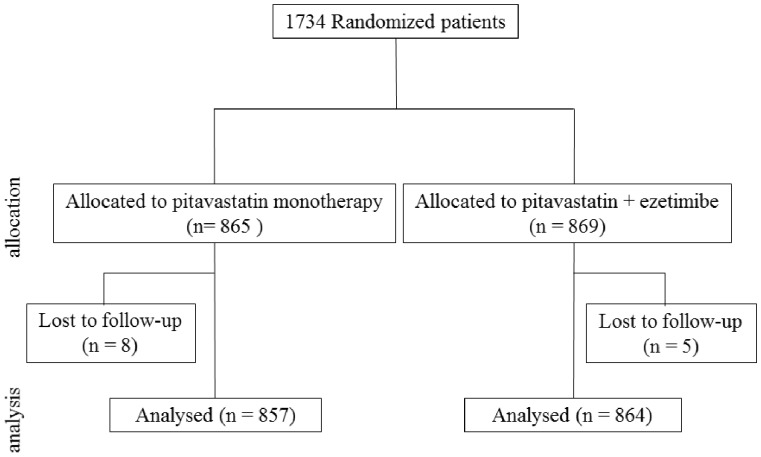
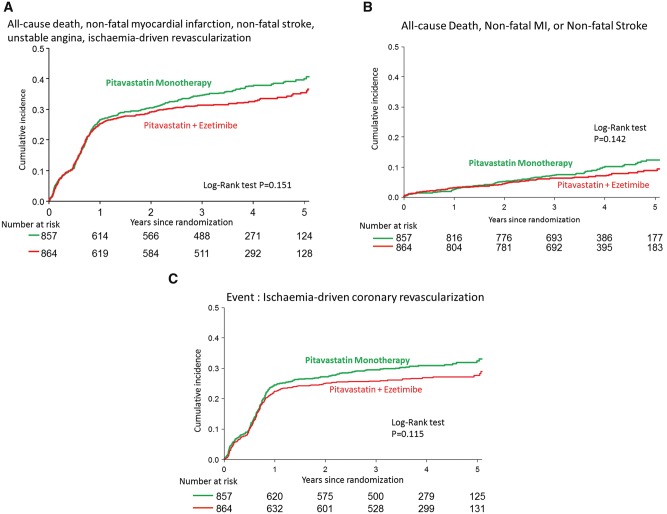
AIMS: To elucidate the effects of intensive LDL-C lowering treatment with a standard dose of statin and ezetimibe in patients with dyslipidaemia and high risk of coronary events, targeting LDL-C less than 70 mg/dL (1.8 mmol/L), compared with standard LDL-C lowering lipid monotherapy targeting less than 100 mg/dL (2.6 mmol/L). METHODS AND RESULTS: The HIJ-PROPER study is a prospective, randomized, open-label trial to assess whether intensive LDL-C lowering with standard-dose pitavastatin plus ezetimibe reduces cardiovascular events more than standard LDL-C lowering with pitavastatin monotherapy in patients with acute coronary syndrome (ACS) and dyslipidaemia. Patients were randomized to intensive lowering (target LDL-C < 70 mg/dL [1.8 mmol/L]; pitavastatin plus ezetimibe) or standard lowering (target LDL-C 90 mg/dL to 100 mg/dL [2.3-2.6 mmol/L]; pitavastatin monotherapy). The primary endpoint was a composite of all-cause death, non-fatal myocardial infarction, non-fatal stroke, unstable angina, and ischaemia-driven revascularization. Between January 2010 and April 2013, 1734 patients were enroled at 19 hospitals in Japan. Patients were followed for at least 36 months. Median follow-up was 3.86 years. Mean follow-up LDL-C was 65.1 mg/dL (1.68 mmol/L) for pitavastatin plus ezetimibe and 84.6 mg/dL (2.19 mmol/L) for pitavastatin monotherapy. LDL-C lowering with statin plus ezetimibe did not reduce primary endpoint occurrence in comparison with standard statin monotherapy (283/864, 32.8% vs. 316/857, 36.9%; HR 0.89, 95% CI 0.76-1.04, P = 0.152). In, ACS patients with higher cholesterol absorption, represented by elevated pre-treatment sitosterol, was associated with significantly lower incidence of the primary endpoint in the statin plus ezetimibe group (HR 0.71, 95% CI 0.56-0.91). CONCLUSION: Although intensive lowering with standard pitavastatin plus ezetimibe showed no more cardiovascular benefit than standard pitavastatin monotherapy in ACS patients with dyslipidaemia, statin plus ezetimibe may be more effective than statin monotherapy in patients with higher cholesterol absorption; further confirmation is needed. TRIAL NO: UMIN000002742, registered as an International Standard Randomized Controlled Trial.
Overview
The claims and statistics of this paper haven’t been checked yet.
Free: it reads the open-access text and checks the first 5 claims that cite a source we can check. Create a free account to check every claim.
Integrity signals
Registry
Cites
Statistics
Figures
Verification
Claims the paper makes
The claims and statistics of this paper haven’t been checked yet.
Free: it reads the open-access text and checks the first 5 claims that cite a source we can check. Create a free account to check every claim.
Claims other papers make about this one
Each is checked against this paper’s own text: does it say what the citing paper says it does?
The check wasn’t confident either way, so it gives no verdict — never disputed.
In the citing paper
“Emerging evidence highlights the frequent coexistence of MetS with T1DM, resulting in the so-called double diabetes increasing CVD risk [428].”
From 2019 ESC/EAS guidelines for the management of dyslipidaemias: lipid modification to reduce cardiovascular risk (2019) · cites this paper as [428]
Experimental — accuracy not yet measured
Self-check
Percentages, sums and reported differences re-computed from the paper’s own numbers.
The self-check needs the paper’s full text.
Citations
Cites
Toprak, O., Kurt, H., Sarı, Y., Şarkış, C., Us, H., & Kırık, A. (2017) · Kidney and Blood Pressure Research · doi:10.1159/000468530 · Cited by 29,627
Grundy, S. M., Bilheimer, D. W., Chait, A., Clark, L. T., Denke, M. A., Havel, R. J., Hazzard, W. R., Hulley, S. B., Hunninghake, D. B., Kreisberg, R. A., et al. (1993) · JAMA · doi:10.1001/jama.269.23.3015 · Cited by 27,947
Expert Panel on Detection, E. (2001) · JAMA: The Journal of the American Medical Association · doi:10.1001/jama.285.19.2486 · Cited by 26,011
European Guidelines on cardiovascular disease prevention in clinical practice (version 2012)
Authors/Task Force Members:, Perk, J., De Backer, G., Gohlke, H., Graham, I., Reiner, Ž., Verschuren, M., Albus, C., Benlian, P., Boysen, G., et al. (2012) · European Heart Journal · doi:10.1093/eurheartj/ehs092 · Cited by 8,490
OLSSON, A. G., McMurray, J. J. V., Thorgeirsson, G., Spaulding, C. M., Slattery, J., Pyörälà, K., Færgeman, O., Wright, R. S., Berg, K. M., Wilhelmsen, L., et al. (1994) · The Lancet · Cited by 8,467
Roffi, M., Patrono, C., Collet, J.-P., Mueller, C., Valgimigli, M., Andreotti, F., Bax, J. J., Borger, M. A., Brotons, C., Chew, D. P., et al. (2016) · European Heart Journal · doi:10.1093/eurheartj/ehv320 · Cited by 8,261
Stone, N. J., Robinson, J. G., Lichtenstein, A. H., Bairey Merz, C. N., Blum, C. B., Eckel, R. H., Goldberg, A. C., Gordon, D., Levy, D., Lloyd-Jones, D. M., et al. (2014) · Circulation · doi:10.1161/01.cir.0000437738.63853.7a · Cited by 7,081
Grundy, S. M., Cleeman, J. I., Merz, C. N. B., Brewer, H. B., Clark, L. T., Hunninghake, D. B., Pasternak, R. C., Smith, S. C., & Stone, N. J. (2004) · Circulation · doi:10.1161/01.cir.0000133317.49796.0e · Cited by 6,902
Cholesterol Treatment Trialists' (CTT) Collaboration (2010) · The Lancet · doi:10.1016/s0140-6736(10)61350-5 · Cited by 6,550
2016 European Guidelines on cardiovascular disease prevention in clinical practice
Piepoli, M. F., Hoes, A. W., Agewall, S., Albus, C., Brotons, C., Catapano, A. L., Cooney, M.-T., Corrà, U., Cosyns, B., Deaton, C., et al. (2016) · European Heart Journal · doi:10.1093/eurheartj/ehw106 · Cited by 6,457
Intensive versus Moderate Lipid Lowering with Statins after Acute Coronary Syndromes
Cannon, C. P., Braunwald, E., McCabe, C. H., Rader, D. J., Rouleau, J. L., Belder, R., Joyal, S. V., Hill, K. A., Pfeffer, M. A., & Skene, A. M. (2004) · New England Journal of Medicine · doi:10.1056/nejmoa040583 · Cited by 4,938
Ezetimibe Added to Statin Therapy after Acute Coronary Syndromes
Cannon, C. P., Blazing, M. A., Giugliano, R. P., McCagg, A., White, J. A., Theroux, P., Darius, H., Lewis, B. S., Ophuis, T. O., Jukema, J. W., et al. (2015) · New England Journal of Medicine · doi:10.1056/nejmoa1410489 · Cited by 4,487 · cited 1×
“Two recent studies that demonstrated the benefits of a combination of statin plus ezetimibe in patients with CAD support our choice of ezetimibe.(16,17) We hypothesized that we could achieve intensive LDL-C lowering by administering ezetimibe in conjunction with a standard dose of statin, and that this treatment would…”
Stone, N. J., Robinson, J. G., Lichtenstein, A. H., Bairey Merz, C. N., Blum, C. B., Eckel, R. H., Goldberg, A. C., Gordon, D., Levy, D., Lloyd-Jones, D. M., et al. (2014) · Journal of the American College of Cardiology · doi:10.1016/j.jacc.2013.11.002 · Cited by 3,845
SCANDINAVIANSIMVASTATINSURVIVAL (1994) · The Lancet · doi:10.1016/s0140-6736(94)90566-5 · Cited by 3,645
2014 AHA/ACC Guideline for the Management of Patients With Non–ST-Elevation Acute Coronary Syndromes
Amsterdam, E. A., Wenger, N. K., Brindis, R. G., Casey, D. E., Ganiats, T. G., Holmes, D. R., Jaffe, A. S., Jneid, H., Kelly, R. F., Kontos, M. C., et al. (2014) · Journal of the American College of Cardiology · doi:10.1016/j.jacc.2014.09.017 · Cited by 3,595
A Prospective Natural-History Study of Coronary Atherosclerosis
Stone, G. W., Maehara, A., Lansky, A. J., de Bruyne, B., Cristea, E., Mintz, G. S., Mehran, R., McPherson, J., Farhat, N., Marso, S. P., et al. (2011) · New England Journal of Medicine · doi:10.1056/nejmoa1002358 · Cited by 3,276
2016 ESC/EAS Guidelines for the Management of Dyslipidaemias
Catapano, A. L., Graham, I., De Backer, G., Wiklund, O., Chapman, M. J., Drexel, H., Hoes, A. W., Jennings, C. S., Landmesser, U., Pedersen, T. R., et al. (2016) · European Heart Journal · doi:10.1093/eurheartj/ehw272 · Cited by 3,162
Authors/Task Force Members, Hamm, C. W., Bassand, J.-P., Agewall, S., Bax, J., Boersma, E., Bueno, H., Caso, P., Dudek, D., Gielen, S., et al. (2011) · European Heart Journal · doi:10.1093/eurheartj/ehr236 · Cited by 3,080
Statins and risk of incident diabetes: A collaborative meta-analysis of randomised statin trials
Sattar, N., Preiss, D., Murray, H. M., Welsh, P., Buckley, B. M., de Craen, A. J., Seshasai, S. R. K., McMurray, J. J., Freeman, D. J., Jukema, J. W., et al. (2010) · The Lancet · doi:10.1016/s0140-6736(09)61965-6 · Cited by 2,436 · cited 1×
“Statins may also impact glucose metabolism and influence the development of diabetes.(28) Previous studies have demonstrated increased risk of new-onset diabetes with intensive statin therapy in comparison to standard statin therapy.”
2016 ESC/EAS Guidelines for the Management of Dyslipidaemias
Catapano, A. L., Graham, I., De Backer, G., Wiklund, O., Chapman, M. J., Drexel, H., Hoes, A. W., Jennings, C. S., Landmesser, U., Pedersen, T. R., et al. (2016) · Atherosclerosis · doi:10.1016/j.atherosclerosis.2016.08.018 · Cited by 1,582
Grundy, S. M., Cleeman, J. I., Bairey Merz, C. N., Brewer, H. B., Clark, L. T., Hunninghake, D. B., Pasternak, R. C., Smith, S. C., & Stone, N. J. (2004) · Journal of the American College of Cardiology · doi:10.1016/j.jacc.2004.07.001 · Cited by 1,550
Rosuvastatin in older patients with systolic heart failure
Kjekshus, J., Apetrei, E., Barrios, V., Böhm, M., Cleland, J. G. F., Cornel, J. H., Dunselman, P., Fonseca, C., Goudev, A., Grande, P., et al. (2007) · New England Journal of Medicine · doi:10.1056/nejmoa0706201 · Cited by 1,487
Amsterdam, E. A., Wenger, N. K., Brindis, R. G., Casey, D. E., Ganiats, T. G., Holmes, D. R., Jaffe, A. S., Jneid, H., Kelly, R. F., Kontos, M. C., et al. (2014) · Circulation · doi:10.1161/cir.0000000000000134 · Cited by 1,059
Decline in Rates of Death and Heart Failure in Acute Coronary Syndromes, 1999-2006
Fox, K. A. A., Steg, P. G., Eagle, K. A., Goodman, S. G., Anderson, F. A., Granger, C. B., Flather, M. D., Budaj, A., Quill, A., Gore, J. M., et al. (2007) · JAMA · doi:10.1001/jama.297.17.1892 · Cited by 879
Drug Treatment of Lipid Disorders
Knopp, R. H. (1999) · New England Journal of Medicine · doi:10.1056/nejm199908123410707 · Cited by 845
Lipoprotein Management in Patients With Cardiometabolic Risk
Brunzell, J. D., Davidson, M., Furberg, C. D., Goldberg, R. B., Howard, B. V., Stein, J. H., & Witztum, J. L. (2008) · Diabetes Care · doi:10.2337/dc08-9018 · Cited by 707
Inhibition of Intestinal Cholesterol Absorption by Ezetimibe in Humans
Sudhop, T., Lütjohann, D., Kodal, A., Igel, M., Tribble, D. L., Shah, S., Perevozskaya, I., & von Bergmann, K. (2002) · Circulation · doi:10.1161/01.cir.0000034044.95911.dc · Cited by 682 · cited 1×
“We decided to combine a statin with ezetimibe, an intestinal cholesterol transporter inhibitor that selectively inhibits cholesterol absorption by blocking the Niemann-Pick C1-like 1 receptor.(15) Two recent studies that demonstrated the benefits of a combination of statin plus ezetimibe in patients with CAD support o…”
Drug-Eluting or Bare-Metal Stents for Coronary Artery Disease
Bønaa, K. H., Mannsverk, J., Wiseth, R., Aaberge, L., Myreng, Y., Nygård, O., Nilsen, D. W., Kløw, N.-E., Uchto, M., Trovik, T., et al. (2016) · New England Journal of Medicine · doi:10.1056/nejmoa1607991 · Cited by 553
Tsujita, K., Sugiyama, S., Sumida, H., Shimomura, H., Yamashita, T., Yamanaga, K., Komura, N., Sakamoto, K., Oka, H., Nakao, K., et al. (2015) · Journal of the American College of Cardiology · doi:10.1016/j.jacc.2015.05.065 · Cited by 459 · cited 1×
“Two recent studies that demonstrated the benefits of a combination of statin plus ezetimibe in patients with CAD support our choice of ezetimibe.(16,17) We hypothesized that we could achieve intensive LDL-C lowering by administering ezetimibe in conjunction with a standard dose of statin, and that this treatment would…”
Self-citationRisk of incident diabetes among patients treated with statins: population based study
Carter, A. A., Gomes, T., Camacho, X., Juurlink, D. N., Shah, B. R., & Mamdani, M. M. (2013) · BMJ · doi:10.1136/bmj.f2610 · Cited by 404 · cited 1×
“Previous studies have demonstrated increased risk of new-onset diabetes with intensive statin therapy in comparison to standard statin therapy.(29) All of these factors suggest that a combined drug regimen, which would allow the targeting of lower LDL-C levels without the risk of high-dose statin therapy, might be ben…”
Appropriateness of Percutaneous Coronary Intervention
Chan, P. S., Patel, M. R., Klein, L. W., Krone, R. J., Dehmer, G. J., Kennedy, K., Nallamothu, B. K., Weaver, W. D., Masoudi, F. A., Rumsfeld, J. S., et al. (2011) · JAMA · doi:10.1001/jama.2011.916 · Cited by 367
Ramsden, C. E., Zamora, D., Majchrzak-Hong, S., Faurot, K. R., Broste, S. K., Frantz, R. P., Davis, J. M., Ringel, A., Suchindran, C. M., & Hibbeln, J. R. (2016) · BMJ · doi:10.1136/bmj.i1246 · Cited by 359 · cited 1×
“However, these cholesterol-lowering interventions were not associated with benefits in mortality from coronary heart disease or in all-cause mortality.(35) A recent cohort study also demonstrated that statin-taking coronary heart disease patients with LDL-C 70 mg/dL (1.”
Hiro, T., Kimura, T., Morimoto, T., Miyauchi, K., Nakagawa, Y., Yamagishi, M., Ozaki, Y., Kimura, K., Saito, S., Yamaguchi, T., et al. (2009) · Journal of the American College of Cardiology · doi:10.1016/j.jacc.2009.04.033 · Cited by 358
Waters, D. D., Brotons, C., Chiang, C.-W., Ferrières, J., Foody, J., Jukema, J. W., Santos, R. D., Verdejo, J., Messig, M., McPherson, R., et al. (2009) · Circulation · doi:10.1161/circulationaha.108.838466 · Cited by 306
New insights into the molecular actions of plant sterols and stanols in cholesterol metabolism
Calpe-Berdiel, L., Escolà-Gil, J. C., & Blanco-Vaca, F. (2009) · Atherosclerosis · doi:10.1016/j.atherosclerosis.2008.06.026 · Cited by 293 · cited 1×
“Serum cholesterol concentration is determined both by endogenous cholesterol from hepatic and extrahepatic synthesis and by exogenous cholesterol from intestinal absorption of dietary and biliary cholesterol.(33) Statins produce beneficial effects by inhibiting hepatic cholesterol synthesis but do not directly affect…”
Statin Therapy and Risks for Death and Hospitalization in Chronic Heart Failure
Go, A. S., Lee, W. Y., Yang, J., Lo, J. C., & Gurwitz, J. H. (2006) · JAMA · doi:10.1001/jama.296.17.2105 · Cited by 291
Miettinen, T. A., Gylling, H., Strandberg, T., & Sarna, S. (1998) · BMJ · doi:10.1136/bmj.316.7138.1127 · Cited by 257
Sabatine, M. S., Giugliano, R. P., Keech, A., Honarpour, N., Wang, H., Liu, T., Wasserman, S. M., Scott, R., Sever, P. S., & Pedersen, T. R. (2016) · American Heart Journal · doi:10.1016/j.ahj.2015.11.015 · Cited by 176
Khush, K. K., Waters, D. D., Bittner, V., Deedwania, P. C., Kastelein, J. J. P., Lewis, S. J., & Wenger, N. K. (2007) · Circulation · doi:10.1161/circulationaha.106.625574 · Cited by 172
Bangalore, S., Guo, Y., Samadashvili, Z., Blecker, S., & Hannan, E. L. (2016) · Circulation · doi:10.1161/circulationaha.115.021168 · Cited by 152
Raal, F., Panz, V., Immelman, A., & Pilcher, G. (2013) · Journal of the American Heart Association · doi:10.1161/jaha.112.000028 · Cited by 132 · cited 1×
“This limits the effectiveness of statin therapy.(14) In addition, most hyperlipidaemic patients will remain under treatment for years, and although lipids should be measured regularly to assess therapeutic response, such assessment is not always continued over the long term.”
Kasanuki, H., Hagiwara, N., Hosoda, S., Sumiyoshi, T., Honda, T., Haze, K., Nagashima, M., Yamaguchi, J.-I., Origasa, H., Urashima, M., et al. (2009) · European Heart Journal · doi:10.1093/eurheartj/ehp101 · Cited by 120
Self-citationCombination therapy for dyslipidemia: safety and regulatory considerations
Davidson, M. H. (2002) · The American Journal of Cardiology · doi:10.1016/s0002-9149(02)02970-3 · Cited by 105 · cited 1×
“This is of particular importance because statin-related adverse effects are dose-dependent and occur more commonly at the highest doses.(13) After statin therapy has been initiated, the patient should be assessed every 3–12 months as clinically indicated, since adherence to both medication and lifestyle regimens are r…”
Sakamoto, T., Kojima, S., Ogawa, H., Shimomura, H., Kimura, K., Ogata, Y., Sakaino, N., & Kitagawa, A. (2006) · The American Journal of Cardiology · doi:10.1016/j.amjcard.2005.11.031 · Cited by 100 · cited 2×
“The expected occurrence of a primary endpoint in the statin-monotherapy group was 10%, based on data from contemporary studies of UA pectoris and AMI with comparable follow-up time.(5,20,22) An initial sample size of 3000 patients was selected to afford 80% power to detect relative risk reduction of 20% in the 2266 N.”
Self-citationZheng, C., Azcutia, V., Aikawa, E., Figueiredo, J.-L., Croce, K., Sonoki, H., Sacks, F. M., Luscinskas, F. W., & Aikawa, M. (2013) · European Heart Journal · doi:10.1093/eurheartj/ehs271 · Cited by 98
Leibowitz, M., Karpati, T., Cohen-Stavi, C. J., Feldman, B., Hoshen, M., Bitterman, H., Suissa, S., & Balicer, R. D. (2016) · JAMA Internal Medicine · doi:10.1001/jamainternmed.2016.2751 · Cited by 78 · cited 1×
“8 mmol/L) or less.(36) Although the results of the present study are consistent with these two studies, expectations based on CTT analysis(2) continue to be widely emphasized.”
Critical appraisal of the role of pitavastatin in treating dyslipidemias and achieving lipid goals
Saitō, Y. (2009) · Vascular Health and Risk Management · doi:10.2147/vhrm.s5551 · Cited by 56 · cited 1×
“Its unique chemical structure provides potent efficacy against dyslipidaemia, high systemic bioavailability, and favourable oral absorption.(9) It offers potent anti-inflammatory effects,(10) and provides equivalent regression of plaque volume at lower doses than conventional statins in ACS patients.”
Kasanuki, H., Honda, T., Haze, K., Sumiyoshi, T., Horie, T., Yagi, M., Yamaguchi, J., Ishii, Y., Fujii, S.-Y., Nagashima, M., et al. (2005) · American Heart Journal · doi:10.1016/j.ahj.2004.10.001 · Cited by 52
Self-citationNagashima, M., Koyanagi, R., Kasanuki, H., Hagiwara, N., Yamaguchi, J., Atsuchi, N., Honda, T., Haze, K., Sumiyoshi, T., Urashima, M., et al. (2007) · The American Journal of Cardiology · doi:10.1016/j.amjcard.2007.01.024 · Cited by 30 · cited 2×
“The expected occurrence of a primary endpoint in the statin-monotherapy group was 10%, based on data from contemporary studies of UA pectoris and AMI with comparable follow-up time.(5,20,22) An initial sample size of 3000 patients was selected to afford 80% power to detect relative risk reduction of 20% in the 2266 N.”
Self-citationTargeting PCSK9 for Therapeutic Gains
Shapiro, M. D., Fazio, S., & Tavori, H. (2015) · Current Atherosclerosis Reports · doi:10.1007/s11883-015-0499-4 · Cited by 28
Kawada‐Watanabe, E., Ogawa, H., Koyanagi, R., Arashi, H., Yamaguchi, J., Matsui, K., & Hagiwara, N. (2016) · Journal of Cardiology · doi:10.1016/j.jjcc.2016.05.002 · Cited by 9
Self-citation
Cited by
Mach, F., Baigent, C., Catapano, A. L., Koskinas, K. C., Casula, M., Badimon, L., Chapman, M. J., De Backer, G. G., Delgado, V., Ference, B. A., et al. (2020) · European Heart Journal · doi:10.1093/eurheartj/ehz455 · Cited by 8,961
Mach, F., Baigent, C., Catapano, A. L., Koskinas, K. C., Casula, M., Badimon, L., Chapman, M. J., De Backer, G. G., Delgado, V., Ference, B. A., et al. (2019) · Atherosclerosis · doi:10.1016/j.atherosclerosis.2019.08.014 · Cited by 4,854
Anderson, T. J., Grégoire, J., Pearson, G. J., Barry, A. R., Couture, P., Dawes, M., Francis, G. A., Genest, J., Grover, S., Gupta, M., et al. (2016) · Canadian Journal of Cardiology · doi:10.1016/j.cjca.2016.07.510 · Cited by 1,173
Pearson, G. J., Thanassoulis, G., Anderson, T. J., Barry, A. R., Couture, P., Dayan, N., Francis, G. A., Genest, J., Grégoire, J., Grover, S. A., et al. (2021) · Canadian Journal of Cardiology · doi:10.1016/j.cjca.2021.03.016 · Cited by 843
JCS 2018 Guideline on Diagnosis and Treatment of Acute Coronary Syndrome
Kimura, K., Kimura, T., Ishihara, M., Nakagawa, Y., Nakao, K., Miyauchi, K., Sakamoto, T., Tsujita, K., Hagiwara, N., Miyazaki, S., et al. (2019) · Circulation Journal · doi:10.1253/circj.cj-19-0133 · Cited by 565
Self-citation
Metadata
- Authors
- Hagiwara, N., Kawada-Watanabe, E., Koyanagi, R., Arashi, H., Yamaguchi, J., Nakao, K., Tobaru, T., Tanaka, H., Oka, T., Endoh, Y., Saito, K., Uchida, T., Matsui, K., & Ogawa, H.
- Affiliations
- Tokyo Women's Medical University (JP)
- Department of Cardiology, The Heart Institute of Japan, Tokyo Women’s Medical University, 8-1, Kawada-cho, Shinjuku, Tokyo, 162-8666, Japan
- Division of Cardiology, Cardiovascular Center, Saisei-Kai Kumamoto Hospital, 5-3-1 Chikami, Minami-ku, Kumamoto-shi, Kumamoto 861-4193, Japan
- Department of Cardiology, Sakakibara Heart Institute, 3-16-1 Asahi-cho, Fuchu-shi, Tokyo 183-0003, Japan
- Tokyo Metropolitan Tama Medical Center (JP)
- Seirei Hamamatsu General Hospital (JP)
- Department of Cardiology, Saisei-Kai Kurihashi Hospital, 714-6 Kouemon, Kuki-shi, Saitama 349-1105, Japan
- Department of Cardiology, Nishiarai Heart Center, 1-12-8, Nishiarai-honcho, Adachi-Ku, Tokyo 123-0845, Japan
- Sendai Medical Center (JP)
- Kumamoto University Hospital (JP)
- Corresponding author
- Ogawa, Hiroshi
- Venue
- European Heart Journal
- Publisher
- Oxford University Press (OUP)
- Published
- 2017-04-18
- Volume
- 38
- Issue
- 29
- Pages
- 2264-2276
- ISSN
- 0195-668X (ISSN-L)
- 1522-9645
- PMC
- PMC5837267
- OpenAlex
- W2606701238
- Semantic Scholar
- 2885ba8ab3f03247763a38d62b04ef39a9e1a264
- Cited by
- 136
- References
- 52
- Citations by year
- 2026: 12 · 2025: 12 · 2024: 22 · 2023: 12 · 2022: 14 · 2021: 16 · 2020: 14 · 2019: 16 · 2018: 13 · 2017: 4
- FWCI
- 13.17
- Type
- journal article
- Language
- en
- Open access
- hybrid
- doi.org
- Licence
- cc-by-nc
- Locations
- European Heart Journal (publishedVersion, cc-by-nc)
- PubMed Central (publishedVersion, cc-by-nc)
- PubMed (publishedVersion)
- Topics
- Health Sciences › Medicine › Cardiology and Cardiovascular Medicine › Lipoproteins and Cardiovascular Health
- Health Sciences › Medicine › Cardiology and Cardiovascular Medicine › Acute Myocardial Infarction Research
- Life Sciences › Biochemistry, Genetics and Molecular Biology › Cancer Research › Cancer, Lipids, and Metabolism
- Keywords
- pitavastatin, ezetimibe, LDL cholesterol lowering, acute coronary syndrome, dyslipidemia, intensive lipid-lowering therapy, sitosterol, cholesterol absorption, cardiovascular events, primary prevention, statin monotherapy
- MeSH terms
- Ezetimibe, ST Elevation Myocardial Infarction, Non-ST Elevated Myocardial Infarction, Aged, Angina, Unstable, Anticholesteremic Agents, Dose-Response Relationship, Drug, Drug Therapy, Combination, Female, Follow-Up Studies, Humans, Cholesterol, LDL, Male, Prospective Studies, Quinolines, Treatment Outcome, Hydroxymethylglutaryl-CoA Reductase Inhibitors, Dyslipidemias, Kaplan-Meier Estimate, Acute Coronary Syndrome
About these checks
Registry, retraction, Cites and statistics results are computed, not judged, with one exception: a printed reference that no index lists is read once by a model before it counts as a citation error. Claims are extracted by a model and kept only when their quote appears verbatim in the text; each cited source is then checked, with a model’s help, for whether it says what the claim relies on. Those verdicts can be wrong — read the claim’s quote and the cited source before relying on one.
Statistics and arithmetic are recomputed, not judged.
Confidence bands are shown only for fields calibrated on our annotated test set. None is calibrated yet, so no band is shown.
What counts as a claim ›How we measure confidence ›How we check this ›
Are you an author, or do you see a problem with this page? Request a review
Data sources
Bibliographic data: Semantic Scholar, OpenAlex, Crossref.
Contains information from the Semantic Scholar Academic Graph Datasets, made available under the ODC Attribution License (ODC-BY 1.0).
Semantic Scholar’s data is described in: Kinney, R., et al. (2023). The Semantic Scholar Open Data Platform. arXiv:2301.10140.
