

Differential effects of endurance, interval, and resistance training on telomerase activity and telomere length in a randomized, controlled study
Open accessThe DOI matches its Crossref record; 49 of the 54 references it cites were found in a registry or an index.
Abstract
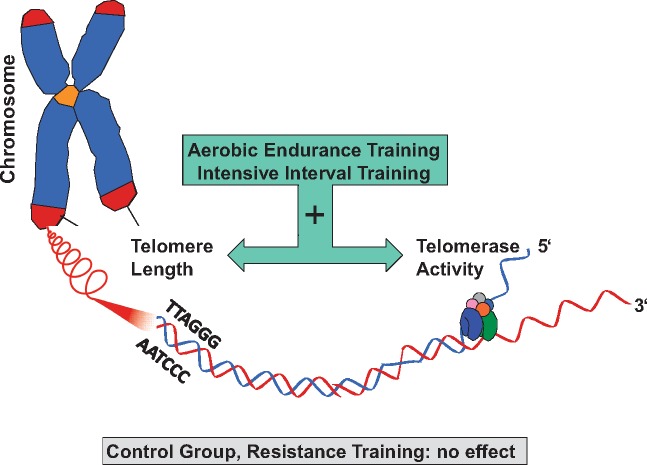
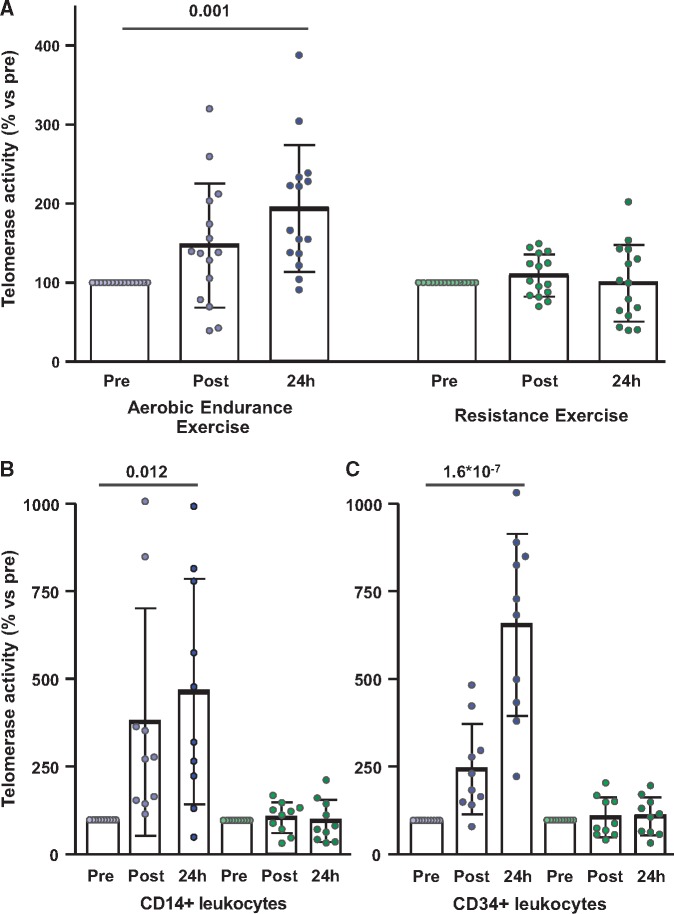
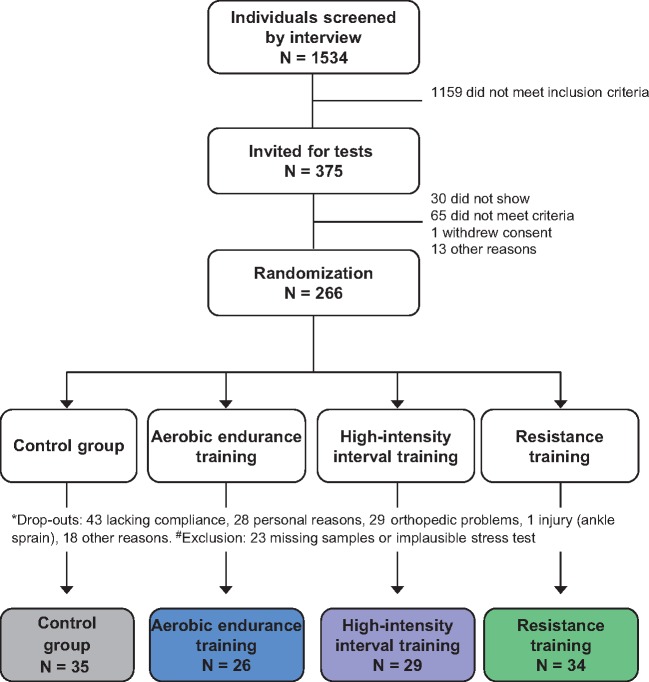
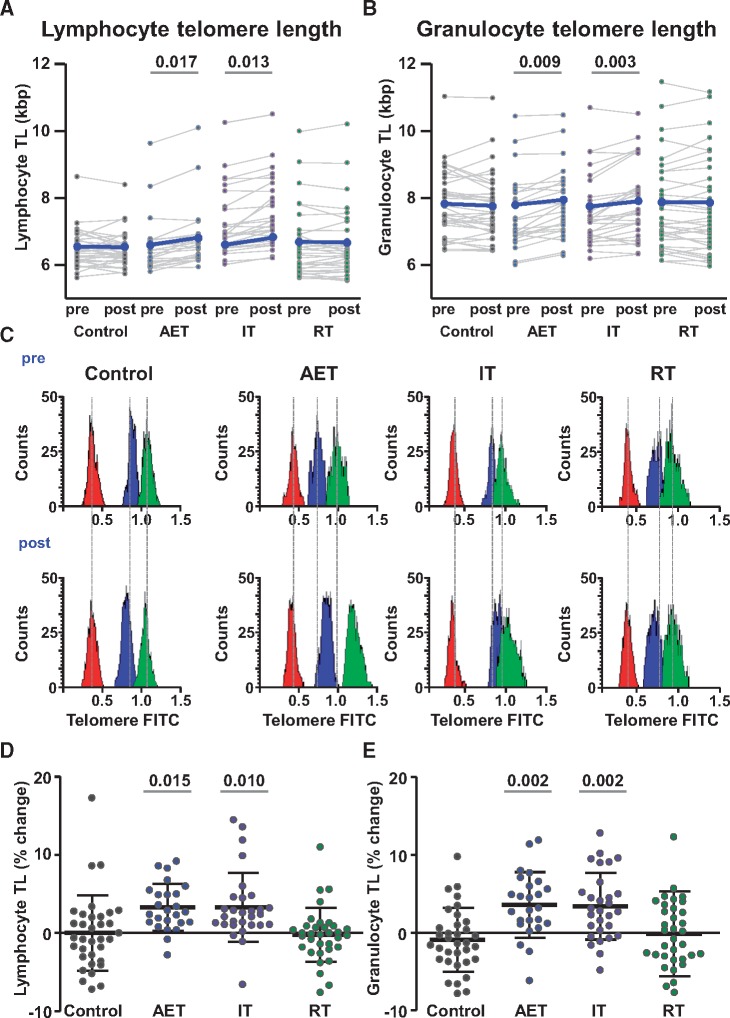
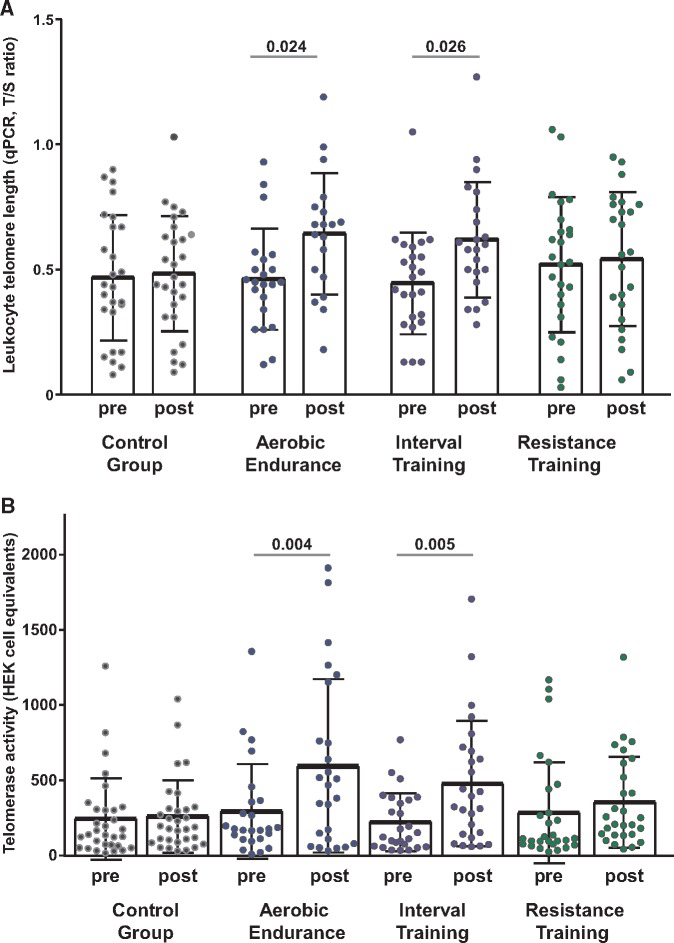
Aims: It is unknown whether different training modalities exert differential cellular effects. Telomeres and telomere-associated proteins play a major role in cellular aging with implications for global health. This prospective training study examines the effects of endurance training, interval training (IT), and resistance training (RT) on telomerase activity and telomere length (TL). Methods and results: One hundred and twenty-four healthy previously inactive individuals completed the 6 months study. Participants were randomized to three different interventions or the control condition (no change in lifestyle): aerobic endurance training (AET, continuous running), high-intensive IT (4 × 4 method), or RT (circle training on 8 devices), each intervention consisting of three 45 min training sessions per week. Maximum oxygen uptake (VO2max) was increased by all three training modalities. Telomerase activity in blood mononuclear cells was up-regulated by two- to three-fold in both endurance exercise groups (AET, IT), but not with RT. In parallel, lymphocyte, granulocyte, and leucocyte TL increased in the endurance-trained groups but not in the RT group. Magnet-activated cell sorting with telomerase repeat-ampliflication protocol (MACS-TRAP) assays revealed that a single bout of endurance training-but not RT-acutely increased telomerase activity in CD14+ and in CD34+ leucocytes. Conclusion: This randomized controlled trial shows that endurance training, IT, and RT protocols induce specific cellular pathways in circulating leucocytes. Endurance training and IT, but not RT, increased telomerase activity and TL which are important for cellular senescence, regenerative capacity, and thus, healthy aging.
Overview
The claims and statistics of this paper haven’t been checked yet.
Free: it reads the open-access text and checks the first 5 claims that cite a source we can check. Create a free account to check every claim.
Integrity signals
Registry
Cites
Statistics
Figures
Verification
Claims the paper makes
The claims and statistics of this paper haven’t been checked yet.
Free: it reads the open-access text and checks the first 5 claims that cite a source we can check. Create a free account to check every claim.
Claims other papers make about this one
Each is checked against this paper’s own text: does it say what the citing paper says it does?
The cited source says what the claim attributes to it.
In the citing paper
“Aerobic exercise (45 min/session, thrice a week for six months) also increased telomerase activity [666].”
From Global consensus on optimal exercise recommendations for enhancing healthy longevity in older adults (ICFSR) (2025) · cites this paper as [666]
Self-check
Percentages, sums and reported differences re-computed from the paper’s own numbers.
The self-check needs the paper’s full text.
Citations
Cites
López-Otín, C., Blasco, M. A., Partridge, L., Serrano, M., & Kroemer, G. (2013) · Cell · doi:10.1016/j.cell.2013.05.039 · Cited by 14,982
European Guidelines on cardiovascular disease prevention in clinical practice (version 2012)
Authors/Task Force Members:, Perk, J., De Backer, G., Gohlke, H., Graham, I., Reiner, Ž., Verschuren, M., Albus, C., Benlian, P., Boysen, G., et al. (2012) · European Heart Journal · doi:10.1093/eurheartj/ehs092 · Cited by 8,490
Specific Association of Human Telomerase Activity with Immortal Cells and Cancer
Kim, N. W., Piatyszek, M. A., Prowse, K. R., Harley, C. B., West, M. D., Ho, P. L. C., Coviello, G. M., Wright, W. E., Weinrich, S. L., & Shay, J. W. (1994) · Science · doi:10.1126/science.7605428 · Cited by 7,091
2016 European Guidelines on cardiovascular disease prevention in clinical practice
Piepoli, M. F., Hoes, A. W., Agewall, S., Albus, C., Brotons, C., Catapano, A. L., Cooney, M.-T., Corrà, U., Cosyns, B., Deaton, C., et al. (2016) · European Heart Journal · doi:10.1093/eurheartj/ehw106 · Cited by 6,457
A PGC1-α-dependent myokine that drives brown-fat-like development of white fat and thermogenesis
Boström, P., Wu, J., Jedrychowski, M. P., Korde, A., Ye, L., Lo, J. C., Rasbach, K. A., Boström, E. A., Choi, J. H., Long, J. Z., et al. (2012) · Nature · doi:10.1038/nature10777 · Cited by 4,810
Telomere measurement by quantitative PCR
Cawthon, R. M. (2002) · Nucleic Acids Research · doi:10.1093/nar/30.10.e47 · Cited by 3,487 · cited 2×
“In order to account for the methodological challenges of TL measurements in humans, especially with regard to PCR,(36) two established independent methods were used.(8,12,13,22,23) Both assays were carefully controlled (details described in Supplementary material online, Methods).”
MethodAuthors/Task Force Members, Piepoli, M. F., Hoes, A. W., Agewall, S., Albus, C., Brotons, C., Catapano, A. L., Cooney, M.-T., Corrà, U., Cosyns, B., et al. (2016) · European Journal of Preventive Cardiology · doi:10.1177/2047487316653709 · Cited by 1,334
Weston, K. S., Wisløff, U., & Coombes, J. S. (2014) · British Journal of Sports Medicine · doi:10.1136/bjsports-2013-092576 · Cited by 1,274 · cited 2×
“Compared with conventional aerobic endurance training (AET), high-intensity interval training (IT) is believed to be a more effective and time-efficient training method for improving cardiorespiratory fitness.(5) However, few randomized comparisons of different training modalities have been reported, and it is unknown…”
BackgroundPollock, M. L., Franklin, B. A., Balady, G. J., Chaitman, B. L., Fleg, J. L., Fletcher, B., Limacher, M., Piña, I. L., Stein, R. A., Williams, M., et al. (2000) · Circulation · doi:10.1161/01.cir.101.7.828 · Cited by 1,058 · cited 1×
“Endurance training and RT induce a number of differential haemodynamic, metabolic, and/or neurohumoral responses, both acute and chronic.(4,39,40) Precise comparisons between endurance and a resistance exercise protocols are scarce.”
BackgroundLaufs, U., Werner, N., Link, A., Endres, M., Wassmann, S., Jürgens, K., Miche, E., Böhm, M., & Nickenig, G. (2004) · Circulation · doi:10.1161/01.cir.0000109141.48980.37 · Cited by 857
Self-citationLeucocyte telomere length and risk of cardiovascular disease: systematic review and meta-analysis
Haycock, P. C., Heydon, E. E., Kaptoge, S., Butterworth, A. S., Thompson, A., & Willeit, P. (2014) · BMJ · doi:10.1136/bmj.g4227 · Cited by 856 · cited 5×
“While the two endurance-based training protocols markedly increased telomerase activity and TL after 6 months, the strength-based protocol did not.37 So far, only one prospective study addressed the effects of training on TL.38 Melk et al. trained n = 59 men for 210 minutes per week for 6 months.”
BackgroundInfluentialChronic inflammation induces telomere dysfunction and accelerates ageing in mice
Jurk, D., Wilson, C., Passos, J. F., Oakley, F., Correia-Melo, C., Greaves, L., Saretzki, G., Fox, C., Lawless, C., Anderson, R., et al. (2014) · Nature Communications · doi:10.1038/ncomms5172 · Cited by 819 · cited 1×
“Importantly, telomere dysfunction by chronic inflammation, as in cardiovascular disease, can induce cellular senescence without telomere shortening.(42) Training responses are characterized by an inter-individual variability.”
BackgroundExercise and the Cardiovascular System: Clinical Science and Cardiovascular Outcomes
Lavie, C. J., Arena, R., Swift, D. L., Johannsen, N. M., Sui, X., Lee, D.-C., Earnest, C. P., Church, T. S., O’Keefe, J. H., Milani, R. V., et al. (2015) · Circulation Research · doi:10.1161/circresaha.117.305205 · Cited by 782 · cited 1×
“Endurance training and RT induce a number of differential haemodynamic, metabolic, and/or neurohumoral responses, both acute and chronic.(4,39,40) Precise comparisons between endurance and a resistance exercise protocols are scarce.”
BackgroundBrouilette, S. W., Moore, J. S., McMahon, A. D., Thompson, J. R., Ford, I., Shepherd, J., Packard, C. J., & Samani, N. J. (2007) · The Lancet · doi:10.1016/s0140-6736(07)60071-3 · Cited by 745
Telomere shortening in atherosclerosis
Samani, N. J., Boultby, R., Butler, R., Thompson, J. R., & Goodall, A. H. (2001) · The Lancet · doi:10.1016/s0140-6736(01)05633-1 · Cited by 609 · cited 1×
“This may be important for the mechanism of cardiovascular prevention by exercise, because increased telomere erosion is associated with disease incidence and severity.(8,11,41) Importantly, telomere dysfunction by chronic inflammation, as in cardiovascular disease, can induce cellular senescence without telomere short…”
BackgroundMcDermott, M. M., Ades, P., Guralnik, J. M., Dyer, A., Ferrucci, L., Liu, K., Nelson, M., Lloyd-Jones, D., Van Horn, L., Garside, D., et al. (2009) · JAMA · doi:10.1001/jama.2008.962 · Cited by 449 · cited 1×
“This is reflected by drop-out rates in the literature which are comparable to our study.(43,44) The protocol involved fresh isolation of MNC from peripheral blood after each blood draw.”
ResultFlow cytometry and FISH to measure the average length of telomeres (flow FISH)
Baerlocher, G. M., Vulto, I., de Jong, G., & Lansdorp, P. M. (2006) · Nature Protocols · doi:10.1038/nprot.2006.263 · Cited by 449 · cited 3×
“A telomere-specific green fluorescent peptide nucleic acid (PNA) probe (FITC-PNA, Panagene, Korea, via Cambridge Research Biochemicals, UK; sequence: FITC-OO-CCCTAA-CCCTAA-CCCTAA) was used to specifically bind telomeres.(13,23) Telomere fluorescence intensity was measured in different blood cell populations, namely ly…”
MethodOrnish, D., Lin, J., Chan, J. M., Epel, E., Kemp, C., Weidner, G., Marlin, R., Frenda, S. J., Magbanua, M. J. M., Daubenmier, J., et al. (2013) · The Lancet Oncology · doi:10.1016/s1470-2045(13)70366-8 · Cited by 390 · cited 6×
“While the two endurance-based training protocols markedly increased telomerase activity and TL after 6 months, the strength-based protocol did not.37 So far, only one prospective study addressed the effects of training on TL.38 Melk et al. trained n = 59 men for 210 minutes per week for 6 months.”
BackgroundInfluentialPhysical Exercise Prevents Cellular Senescence in Circulating Leukocytes and in the Vessel Wall
Werner, C., Fürster, T., Widmann, T., Pöss, J., Roggia, C., Hanhoun, M., Scharhag, J., Büchner, N., Meyer, T., Kindermann, W., et al. (2009) · Circulation · doi:10.1161/circulationaha.109.861005 · Cited by 380 · cited 13×
“In order to account for the methodological challenges of TL measurements in humans, especially with regard to PCR,(36) two established independent methods were used.(8,12,13,22,23) Both assays were carefully controlled (details described in Supplementary material online, Methods).”
BackgroundMethodSelf-citationCortisol and epinephrine control opposing circadian rhythms in T cell subsets
Dimitrov, S., Benedict, C., Heutling, D., Westermann, J., Born, J., & Lange, T. (2009) · Blood · doi:10.1182/blood-2008-11-190769 · Cited by 368 · cited 1×
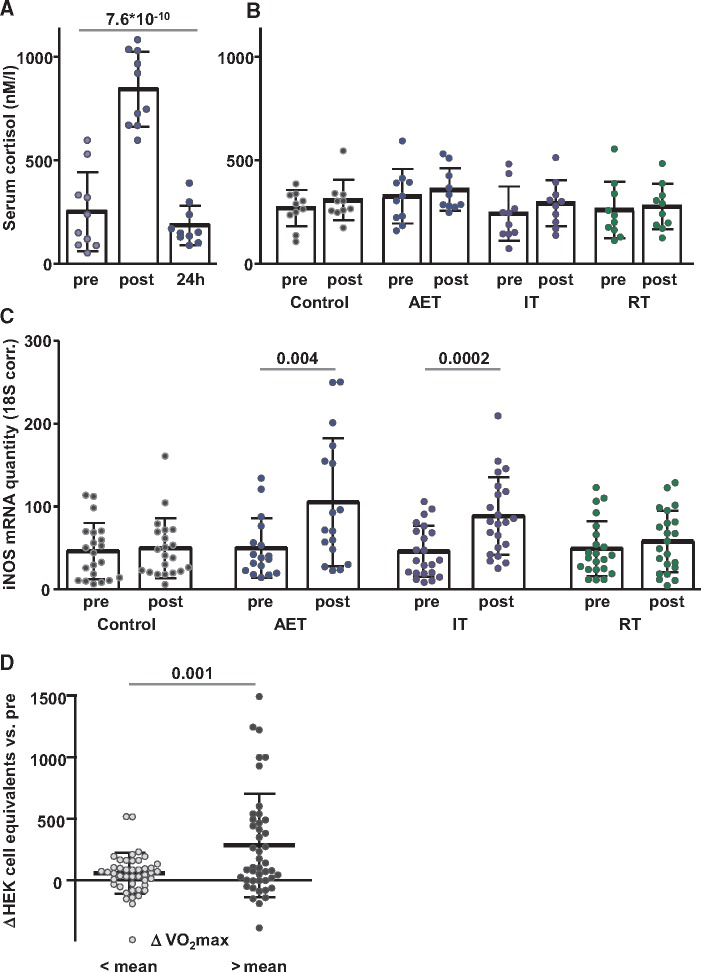
“Assessment of stress hormones confirmed marked up-regulation of cortisol after the extreme physical stress of marathon running.(35) However, the chronic levels of cortisol did not differ between the four groups before and after the training period in the chronic exercise study.”
BackgroundIrisin and exercise training in humans – Results from a randomized controlled training trial
Hecksteden, A., Wegmann, M., Steffen, A., Kraushaar, J., Morsch, A., Ruppenthal, S., Kaestner, L., & Meyer, T. (2013) · BMC Medicine · doi:10.1186/1741-7015-11-235 · Cited by 248 · cited 9×
“Southern blot determination of terminal restriction fragment length The detailed procedure using the TeloTAGGG Telomere Length Assay Kit is described in the Supplementary material online, Methods.”
BackgroundMethodSelf-citationSchuler, G., Adams, V., & Goto, Y. (2013) · European Heart Journal · doi:10.1093/eurheartj/eht111 · Cited by 244 · cited 1×
“These include exercise capacity, endothelial function, insulin sensitivity, autonomic function, and blood pressure as well as a reduction of abdominal fat, lipid metabolism, adverse psychosocial, and inflammatory parameters.(1,2) Endurance training and resistance training (RT) alone or in combination are recommended f…”
BackgroundWerner, C., Hanhoun, M., Widmann, T., Kazakov, A., Semenov, A., Pöss, J., Bauersachs, J., Thum, T., Pfreundschuh, M., Müller, P., et al. (2008) · Journal of the American College of Cardiology · doi:10.1016/j.jacc.2008.04.034 · Cited by 239
Self-citationFarzaneh-Far, R., Cawthon, R. M., Na, B., Browner, W. S., Schiller, N. B., & Whooley, M. A. (2008) · Arteriosclerosis, Thrombosis, and Vascular Biology · doi:10.1161/atvbaha.108.167049 · Cited by 187
Wilson, W. R. W., Herbert, K. E., Mistry, Y., Stevens, S. E., Patel, H. R., Hastings, R. A., Thompson, M. M., & Williams, B. (2008) · European Heart Journal · doi:10.1093/eurheartj/ehn386 · Cited by 185 · cited 2×
“We and others have demonstrated that changes in blood cell telomeres and their associated factors reflect changes in the vessel wall and the myocardium.(13,14) This may be important for the mechanism of cardiovascular prevention by exercise, because increased telomere erosion is associated with disease incidence and s…”
Background2016 European Guidelines on cardiovascular disease prevention in clinical practice
Piepoli, M. F., Hoes, A. W., Agewall, S., Albus, C., Brotons, C., Catapano, A. L., Cooney, M.-T., Corrà, U., Cosyns, B., Deaton, C., et al. (2016) · Revista Española de Cardiología (English Edition) · doi:10.1016/j.rec.2016.09.009 · Cited by 176
Kraus, W. E., Bittner, V., Appel, L., Blair, S. N., Church, T., Després, J.-P., Franklin, B. A., Miller, T. D., Pate, R. R., Taylor-Piliae, R. E., et al. (2015) · Circulation · doi:10.1161/cir.0000000000000203 · Cited by 161
Spyridopoulos, I., Hoffmann, J., Aicher, A., Brümmendorf, T. H., Doerr, H. W., Zeiher, A. M., & Dimmeler, S. (2009) · Circulation · doi:10.1161/circulationaha.109.854299 · Cited by 143
Matsubara, T., Miyaki, A., Akazawa, N., Choi, Y., Ra, S.-G., Tanahashi, K., Kumagai, H., Oikawa, S., & Maeda, S. (2014) · American Journal of Physiology-Heart and Circulatory Physiology · doi:10.1152/ajpheart.00429.2013 · Cited by 134 · cited 1×
“Insulin-like growth factor-1, alpha-Klotho, and irisin have been proposed to correlate with exercise-induced effects.(16,20,25,26) AlphaKlotho was discretely up-regulated after 6 months endurance exercise (Supplementary material online, Table S4).”
BackgroundEarly Telomerase Inactivation Accelerates Aging Independently of Telomere Length
Xie, Z., Jay, K. A., Smith, D. L., Zhang, Y., Liu, Z., Zheng, J., Tian, R., Li, H., & Blackburn, E. H. (2015) · Cell · doi:10.1016/j.cell.2015.02.002 · Cited by 122 · cited 3×
“The process of telomere attrition plays both a causal as well as a potentiating role in human disease processes and is susceptible to life style factors.(7,10,28) Telomere length in circulating leucocytes has been linked to cardiovascular risk factors and diseases.”
BackgroundWalther, C., Gaede, L., Adams, V., Gelbrich, G., Leichtle, A., Erbs, S., Sonnabend, M., Fikenzer, K., Körner, A., Kiess, W., et al. (2009) · Circulation · doi:10.1161/circulationaha.109.865808 · Cited by 121
Self-citationEffects of physical activity in telomere length: Systematic review and meta-analysis
Mundstock, E., Zatti, H., Louzada, F. M., Oliveira, S. G., Guma, F. T. C. R., Paris, M. M., Rueda, A. M. B., Machado, D. G., Stein, R. T., Jones, M. H., et al. (2015) · Ageing Research Reviews · doi:10.1016/j.arr.2015.02.004 · Cited by 117 · cited 9×
“In order to account for the methodological challenges of TL measurements in humans, especially with regard to PCR,(36) two established independent methods were used.(8,12,13,22,23) Both assays were carefully controlled (details described in Supplementary material online, Methods).”
BackgroundMethodInfluentialChilton, W., Marques, F. Z., West, J. S., Kannourakis, G., Berzins, S. P., O’Brien, B. J., & Charchar, F. J. (2014) · PLoS ONE · doi:10.1371/journal.pone.0092088 · Cited by 107 · cited 4×
“Data on the acute effects of exercise on TL and telomereassociated proteins after a single or a few bouts of exercise are scarce, especially with regard to RT.(30,31) Here, we present the first data of a cross-over study in healthy young volunteers directly comparing endurance and resistance exercise.”
ResultInfluentialLudlow, A. T., Ludlow, L. W., & Roth, S. M. (2013) · BioMed Research International · doi:10.1155/2013/601368 · Cited by 93 · cited 5×
“While the two endurance-based training protocols markedly increased telomerase activity and TL after 6 months, the strength-based protocol did not.37 So far, only one prospective study addressed the effects of training on TL.38 Melk et al. trained n = 59 men for 210 minutes per week for 6 months.”
BackgroundInfluentialChronic and acute effects of endurance training on telomere length
Borghini, A., Giardini, G., Tonacci, A., Mastorci, F., Mercuri, A., Sposta, S. M., Moretti, S., Andreassi, M. G., & Pratali, L. (2015) · Mutagenesis · doi:10.1093/mutage/gev038 · Cited by 88
Pattyn, N., Vanhees, L., Cornelissen, V. A., Coeckelberghs, E., De Maeyer, C., Goetschalckx, K., Possemiers, N., Wuyts, K., Van Craenenbroeck, E. M., & Beckers, P. J. (2016) · European Journal of Preventive Cardiology · doi:10.1177/2047487316631200 · Cited by 80 · cited 1×
“These data confirm the recent SAINTEX-CAD study.(32) While acute endurance exercise-induced up-regulation of leucocytes,(33) the cell numbers of leucocytes, monocytes, lymphocytes, CD3þ, CD4þ, CD8þ, CD19þ, CD19þ, CD16þ/56þ, CD3þ, and A”
ResultThe telomere lengthening conundrum - it could be biology
Melissa Bateson, B., & Nettle, D. (2016) · Aging Cell · doi:10.1111/acel.12555 · Cited by 72
Exercise Dose, Exercise Adherence, and Associated Health Outcomes in the TIGER Study
Miller, F. L., O’Connor, D. P., Herring, M. P., Sailors, M. H., Jackson, A. S., Dishman, R. K., & Bray, M. S. (2014) · Medicine & Science in Sports & Exercise · doi:10.1249/mss.0b013e3182a038b9 · Cited by 64 · cited 1×
“This is reflected by drop-out rates in the literature which are comparable to our study.(43,44) The protocol involved fresh isolation of MNC from peripheral blood after each blood draw.”
ResultHigh-Intensity Training Reduces CD8+ T-cell Redistribution in Response to Exercise
WITARD, O. C., TURNER, J. E., JACKMAN, S. R., Tipton, K. D., JEUKENDRUP, A. E., KIES, A. K., & Bosch, J. A. (2012) · Medicine & Science in Sports & Exercise · doi:10.1249/mss.0b013e318257d2db · Cited by 59
Telomere Biology in Heart Failure
Wong, L. S. M., de Boer, R. A., Samani, N. J., van Veldhuisen, D. J., & van der Harst, P. (2008) · European Journal of Heart Failure · doi:10.1016/j.ejheart.2008.08.007 · Cited by 58 · cited 2×
“This may be important for the mechanism of cardiovascular prevention by exercise, because increased telomere erosion is associated with disease incidence and severity.(8,11,41) Importantly, telomere dysfunction by chronic inflammation, as in cardiovascular disease, can induce cellular senescence without telomere short…”
BackgroundBennaceur, K., Atwill, M., Al Zhrany, N., Hoffmann, J., Keavney, B., Breault, D., Richardson, G., von Zglinicki, T., Saretzki, G., & Spyridopoulos, I. (2014) · Atherosclerosis · doi:10.1016/j.atherosclerosis.2014.07.020 · Cited by 51 · cited 1×
“The process of telomere attrition plays both a causal as well as a potentiating role in human disease processes and is susceptible to life style factors.(7,10,28) Telomere length in circulating leucocytes has been linked to cardiovascular risk factors and diseases.”
BackgroundImprovement of biological age by physical activity
Melk, A., Tegtbur, U., Hilfiker‐Kleiner, D., Eberhard, J., Saretzki, G. C., Eulert, C., Kerling, A., Nelius, A.-K., Hömme, M., Strunk, D., et al. (2014) · International Journal of Cardiology · doi:10.1016/j.ijcard.2014.07.236 · Cited by 46 · cited 4×
“While the two endurance-based training protocols markedly increased telomerase activity and TL after 6 months, the strength-based protocol did not.37 So far, only one prospective study addressed the effects of training on TL.38 Melk et al. trained n = 59 men for 210 minutes per week for 6 months.”
BackgroundInfluentialZietzer, A., Buschmann, E. E., Janke, D., Li, L., Brix, M., Meýborg, H., Stawowy, P., Jungk, C., Buschmann, I. R., & Hillmeister, P. (2016) · Acta Physiologica · doi:10.1111/apha.12820 · Cited by 45 · cited 4×
“Data on the acute effects of exercise on TL and telomereassociated proteins after a single or a few bouts of exercise are scarce, especially with regard to RT.(30,31) Here, we present the first data of a cross-over study in healthy young volunteers directly comparing endurance and resistance exercise.”
ResultInfluentialExercise Promotes Collateral Artery Growth Mediated by Monocytic Nitric Oxide
Schirmer, S. H., Millenaar, D., Werner, C. M., Schuh, L. K., Degen, A., Bettink, S., Lipp, P., van Rooijen, N., Meyer, T., Böhm, M., et al. (2015) · Arteriosclerosis Thrombosis and Vascular Biology · doi:10.1161/atvbaha.115.305806 · Cited by 41 · cited 2×
“via NO, potentially contribute to the observed cellular effects.(17) Endothelial NO synthase and telomerase activity have shown to be linked in a signalling pathway mediating exercise-induced vascular protection.”
BackgroundSelf-citationMarathon running increases circulating endothelial- and thrombocyte-derived microparticles
Schwarz, V., Düsing, P., Liman, T., Werner, C., Herm, J., Bachelier, K., Krüll, M., Brechtel, L. M., Jungehulsing, G. J., Haverkamp, W., et al. (2017) · European Journal of Preventive Cardiology · doi:10.1177/2047487317744364 · Cited by 35 · cited 3×
“In the acute exercise study, IGF-1 showed a biphasic response after both running and RT (Supplementary material online, Table S2) as described.27 As positive control, cortisol was quantitated in n = 10 participants of the Berlin Marathon.24 As expected, the physical stress of a marathon markedly increased serum cortis…”
MethodSelf-citationMoneta, G. L. (2009) · Yearbook of Vascular Surgery · doi:10.1016/s0749-4041(09)79181-x · Cited by 28
The GH-IGF-I Response to Typical Field Sports Practices in Adolescent Athletes: A Summary
Eliakim, A., Cooper, D. M., & Nemet, D. (2014) · Pediatric Exercise Science · doi:10.1123/pes.2014-0159 · Cited by 22 · cited 1×
“In the acute exercise study, IGF-1 showed a biphasic response after both running and RT (Supplementary material online, Table S2) as described.(27) As positive control, cortisol was quantitated in n = 10 participants of the Berlin Marathon.”
MethodFowler, R., Maiorana, A., JENKINS, S. C., Gain, K. R., O’Driscoll, G., & Gabbay, E. (2012) · European Journal of Preventive Cardiology · doi:10.1177/2047487312445424 · Cited by 15 · cited 1×
“Endurance training and RT induce a number of differential haemodynamic, metabolic, and/or neurohumoral responses, both acute and chronic.(4,39,40) Precise comparisons between endurance and a resistance exercise protocols are scarce.”
BackgroundSpyridopoulos, I., Hoffmann, J., Aicher, A., Brümmendorf, T. H., Doerr, H. W., Zeiher, A. M., & Dimmeler, S. (2009) · RWTH Publications (RWTH Aachen) · Cited by 9
Cited by
Izquierdo, M., de Souto Barreto, P., Arai, H., Bischoff-Ferrari, H. A., Cadore, E. L., Cesari, M., Chen, L.-K., Coen, P. M., Courneya, K. S., Duque, G., et al. (2025) · The Journal of nutrition, health and aging · doi:10.1016/j.jnha.2024.100401 · Cited by 273
The association of resistance training with mortality: A systematic review and meta-analysis
Saeidifard, F., Medina-Inojosa, J. R., West, C. P., Olson, T. P., Somers, V. K., Bonikowske, A. R., Prokop, L. J., Vinciguerra, M., & Lopez-Jimenez, F. (2019) · European Journal of Preventive Cardiology · doi:10.1177/2047487319850718 · Cited by 216
“found that, in contrast to endurance training, resistance training was not associated with telomerase activity and length, suggesting that resistance training had no anti-aging effect.(34) This may explain why the potentially beneficial effects of resistance training in survival were modest when compared with enduranc…”
ResultCellular senescence in cardiac diseases
Shimizu, I., & Minamino, T. (2019) · Journal of Cardiology · doi:10.1016/j.jjcc.2019.05.002 · Cited by 167
Wu, Z., Zhu-ying, W., Gao, H.-E., Zhou, X.-F., & Li, F. (2021) · Experimental Gerontology · doi:10.1016/j.exger.2021.111345 · Cited by 153
Physical Exercise and Selective Autophagy: Benefit and Risk on Cardiovascular Health
Wu, N. N., Tian, H., Chen, P., Wang, D., Ren, J., & Zhang, Y. (2019) · Cells · doi:10.3390/cells8111436 · Cited by 129
“Given that physical inactivity is a well-known independent risk factor for all-cause mortality, regular physical exercise may offer profound health benefits in many aspects including cardiac performance, exercise tolerance, endothelial function, inflammatory response, insulin sensitivity, autonomic regulation, and blo…”
Background
Metadata
- Authors
- Werner, C. M., Hecksteden, A., Morsch, A., Zundler, J., Wegmann, M., Kratzsch, J., Thiery, J., Hohl, M., Bittenbring, J. T., Neumann, F., Böhm, M., Meyer, T., & Laufs, U.
- Affiliations
- Universitätsklinikum des Saarlandes (DE)
- Saarland University (DE)
- Deutsche Hochschule für Prävention und Gesundheitsmanagement (DE)
- University Hospital Leipzig (DE)
- Klinik für Innere Medizin I, Onkologie, Hämatologie, Klinische Immunologie und Rheumatologie, Universitätsklinikum des Saarlandes, Geb. 41.1/IMED, Homburg/Saar, Germany
- Corresponding author
- Werner, Christian M
- ORCID
- Venue
- European Heart Journal
- Publisher
- Oxford University Press (OUP)
- Published
- 2018-11-28
- Volume
- 40
- Issue
- 1
- Pages
- 34-46
- ISSN
- 0195-668X (ISSN-L)
- 1522-9645
- PMC
- PMC6312574
- OpenAlex
- W2903198713
- Cited by
- 194
- References
- 54
- Citations by year
- 2026: 9 · 2025: 24 · 2024: 18 · 2023: 29 · 2022: 27 · 2021: 32 · 2020: 26 · 2019: 26 · 2018: 3
- FWCI
- 14.92
- Type
- journal article
- Language
- en
- Open access
- hybrid
- doi.org
- Licence
- Locations
- European Heart Journal (publishedVersion, cc-by-nc)
- Europe PMC (PubMed Central) (publishedVersion, cc-by-nc)
- PubMed Central (publishedVersion, cc-by-nc)
- PubMed (publishedVersion)
- Funders
- Corona Foundation (S199/10060/2014)
- Deutsche Forschungsgemeinschaft (SFB TRR 219)
- Topics
- Life Sciences › Biochemistry, Genetics and Molecular Biology › Cell Biology › Telomeres, Telomerase, and Senescence
- Health Sciences › Medicine › Physiology (medical) › Exercise and Physiological Responses
- Health Sciences › Medicine › Physiology (medical) › Cardiovascular and exercise physiology
- Keywords
- telomerase activity, telomere length, endurance training, interval training, resistance training, cellular aging, cellular senescence, blood mononuclear cells, CD14+ monocytes, acute exercise effects, healthy aging, VO2max
- MeSH terms
- Adult, Female, Humans, Male, Middle Aged, Physical Endurance, Prospective Studies, Telomere, Telomerase, Resistance Training, Telomere Homeostasis
About these checks
Registry, retraction, Cites and statistics results are computed, not judged, with one exception: a printed reference that no index lists is read once by a model before it counts as a citation error. Claims are extracted by a model and kept only when their quote appears verbatim in the text; each cited source is then checked, with a model’s help, for whether it says what the claim relies on. Those verdicts can be wrong — read the claim’s quote and the cited source before relying on one.
Statistics and arithmetic are recomputed, not judged.
Confidence bands are shown only for fields calibrated on our annotated test set. None is calibrated yet, so no band is shown.
What counts as a claim ›How we measure confidence ›How we check this ›
Are you an author, or do you see a problem with this page? Request a review
Data sources
Bibliographic data: Semantic Scholar, OpenAlex, Crossref.
Contains information from the Semantic Scholar Academic Graph Datasets, made available under the ODC Attribution License (ODC-BY 1.0).
Semantic Scholar’s data is described in: Kinney, R., et al. (2023). The Semantic Scholar Open Data Platform. arXiv:2301.10140.
