

In vitro fermentation of B-GOS: impact on faecal bacterial populations and metabolic activity in autistic and non-autistic children
Open accessThe DOI matches its Crossref record; 57 of the 59 references it cites were found in a registry or an index.
Abstract
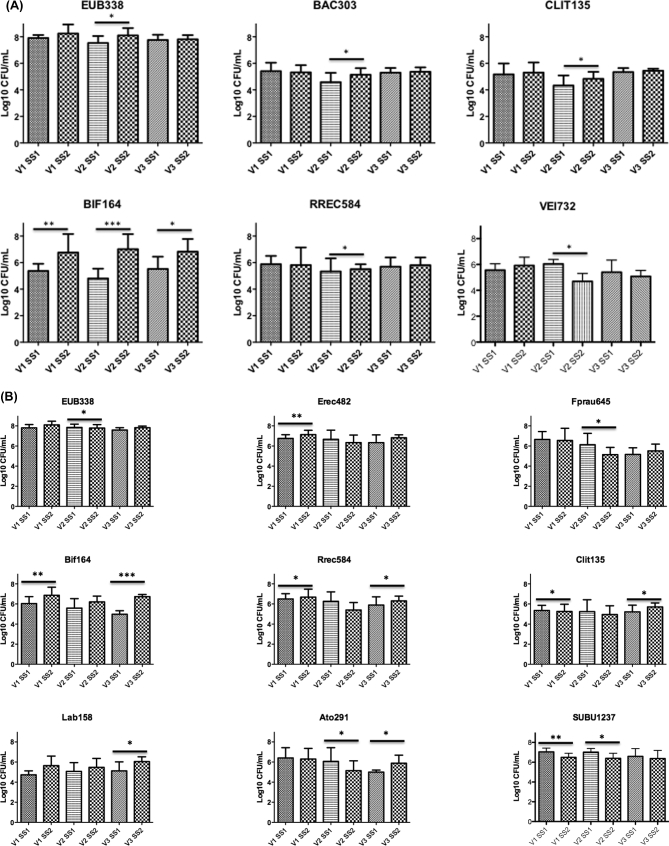
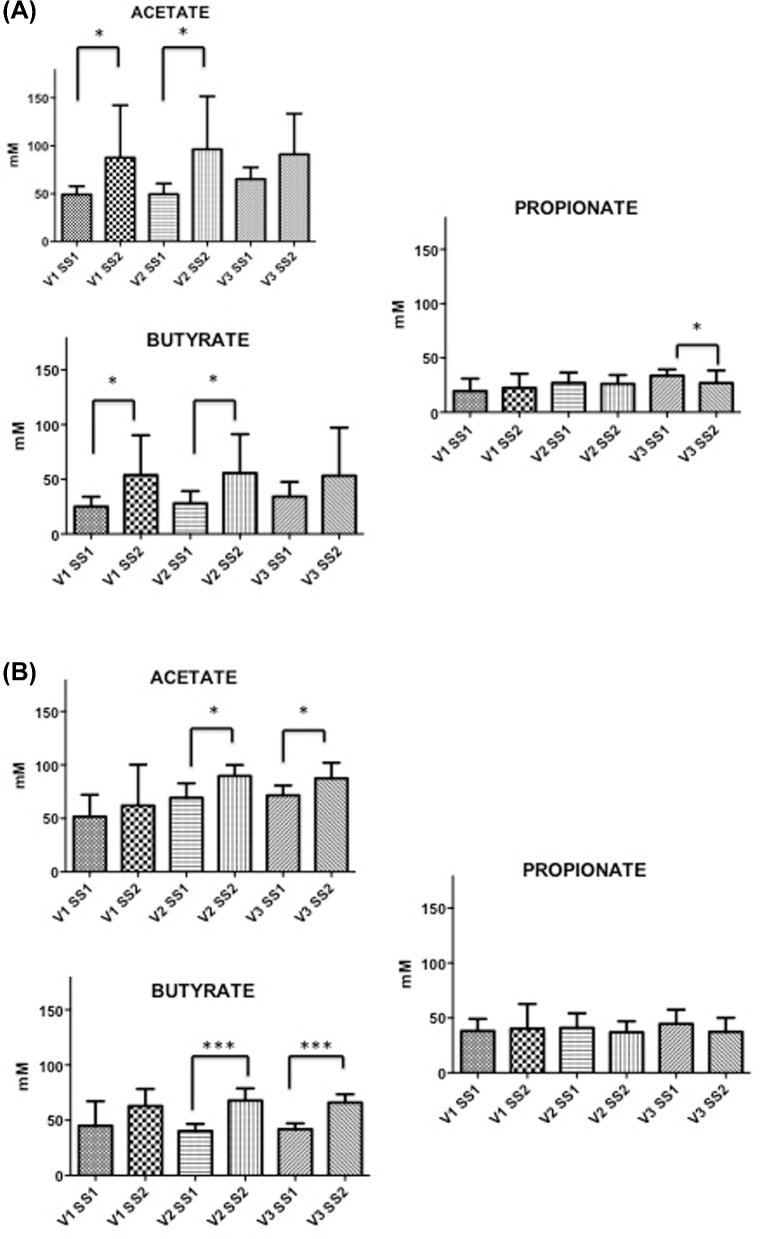
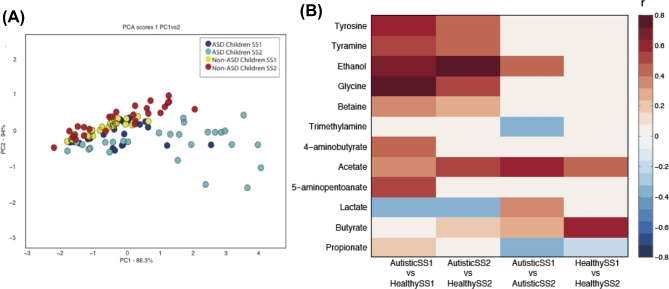
Children with autism spectrum disorders (ASD) often suffer gastrointestinal problems consistent with imbalances in the gut microbial population. Treatment with antibiotics or pro/prebiotics has been postulated to regulate microbiota and improve gut symptoms, but there is a lack of evidence for such approaches, especially for prebiotics. This study assessed the influence of a prebiotic galactooligosaccharide (B-GOS) on gut microbial ecology and metabolic function using faecal samples from autistic and non-autistic children in an in vitro gut model system. Bacteriology was analysed using flow cytometry combined with fluorescence in situ hybridization and metabolic activity by HPLC and 1H-NMR. Consistent with previous studies, the microbiota of children with ASD contained a higher number of Clostridium spp. and a lower number of bifidobacteria compared with non-autistic children. B-GOS administration significantly increased bifidobacterial populations in each compartment of the models, both with autistic and non-autistic-derived samples, and lactobacilli in the final vessel of non-autistic models. In addition, changes in other bacterial population have been seen in particular for Clostridium, Rosburia, Bacteroides, Atopobium, Faecalibacterium prausnitzii, Sutterella spp. and Veillonellaceae. Furthermore, the addition of B-GOS to the models significantly altered short-chain fatty acid production in both groups, and increased ethanol and lactate in autistic children.
Overview
The claims and statistics of this paper haven’t been checked yet.
Free: it reads the open-access text and checks the first 5 claims that cite a source we can check. Create a free account to check every claim.
Integrity signals
Registry
Cites
Statistics
Figures
Verification
Claims the paper makes
The claims and statistics of this paper haven’t been checked yet.
Free: it reads the open-access text and checks the first 5 claims that cite a source we can check. Create a free account to check every claim.
Claims other papers make about this one
Each is checked against this paper’s own text: does it say what the citing paper says it does?
The cited source says what the claim attributes to it.
In the citing paper
“The preclinical studies revealed that animals given propionate intracerebroventricularly presented behavioral and physiological symptoms corresponding to autism ASD, which can be used as an animal model of autism [262,289].”
From The Role of Microbiota-Gut-Brain Axis in Neuropsychiatric and Neurological Disorders (2021) · cites this paper as [262]
In the citing paper
“Increased blood serotonin and GABA concentrations were detected in autistic children [262,263]”
From The Role of Microbiota-Gut-Brain Axis in Neuropsychiatric and Neurological Disorders (2021) · cites this paper as [262]
In the citing paper
“Administration of galactooligosaccharide to gut models inoculated with fecal samples from children suffering from this disease resulted in reduced levels of Sutterella spp., Bacteroides, Clostridial cluster IX, Escherichia coli, Veillonellaceae, Ruminococcus spp., Clostridium leptum, Faecalibacterium prausnitzii and in increased growth of Bifidobacteria.Moreover, elevated levels of butyrate along”
From The Role of Microbiota-Gut-Brain Axis in Neuropsychiatric and Neurological Disorders (2021) · cites this paper as [262]
Self-check
Percentages, sums and reported differences re-computed from the paper’s own numbers.
The self-check needs the paper’s full text.
Citations
Cites
Gut–brain axis: How the microbiome influences anxiety and depression
Foster, J. A., & McVey Neufeld, K.-A. (2013) · Trends in Neurosciences · doi:10.1016/j.tins.2013.01.005 · Cited by 2,460 · cited 1×
“Several studies have demonstrated the role of the gut microbiota in neurodevelopment and mental health (Foster and McVey Neufeld 2013), and there is increasing evidence associating gut microbial dysbiosis with GI problems that might affect autistic children.”
Daims, H., Brühl, A., Amann, R., Schleifer, K.-H., & Wagner, M. (1999) · Systematic and Applied Microbiology · doi:10.1016/s0723-2020(99)80053-8 · Cited by 2,274 · cited 2×
“1998; Daims et al. 1999; Harmsen et al .”
InfluentialRegulation of short-chain fatty acid production
Macfarlane, S., & Macfarlane, G. T. (2003) · Proceedings of the Nutrition Society · doi:10.1079/pns2002207 · Cited by 1,939
Wallner, G., Amann, R., & Beisker, W. (1993) · Cytometry · doi:10.1002/cyto.990140205 · Cited by 1,212
Manz, W., Amann, R., Ludwig, W., Vancanneyt, M., & Schleifer, K.-H. (1996) · Microbiology · doi:10.1099/13500872-142-5-1097 · Cited by 1,175
Adams, J. B., Johansen, L. J., Powell, L. D., Quig, D., & Rubin, R. A. (2011) · BMC Gastroenterology · doi:10.1186/1471-230x-11-22 · Cited by 1,076 · cited 1×
“It was hypothesised that this was due to a compromised microbiota characterised by a lower number of bifidobacteria, consistent with microbial signatures observed here (Adams et al .”
Franks, A. H., Harmsen, H. J. M., Raangs, G. C., Jansen, G. J., Schut, F., & Welling, G. W. (1998) · Applied and Environmental Microbiology · doi:10.1128/aem.64.9.3336-3345.1998 · Cited by 1,056
Links between diet, gut microbiota composition and gut metabolism
Flint, H. J., Duncan, S. H., Scott, K. P., & Louis, P. (2015) · Proceedings of the Nutrition Society · doi:10.1017/s0029665114001463 · Cited by 1,020 · cited 1×
“2009; Flint et al .”
Pyrosequencing study of fecal microflora of autistic and control children
Finegold, S. M., Dowd, S. E., Gontcharova, V., Liu, C., Henley, K. E., Wolcott, R. D., Youn, E., Summanen, P. H., Granpeesheh, D., Dixon, D., et al. (2010) · Anaerobe · doi:10.1016/j.anaerobe.2010.06.008 · Cited by 977 · cited 1×
“Desulfovibrio group was found to be 10 times higher in the gut microbiota of autistic children comparedwith controls (Finegold et al. 2010; Finegold 2011).”
Reduced incidence of Prevotella and other fermenters in intestinal microflora of autistic children
Kang, D.-W., Park, J. G., Ilhan, Z. E., Wallstrom, G., LaBaer, J., Adams, J. B., & Krajmalnik-Brown, R. (2013) · PLoS ONE · doi:10.1371/journal.pone.0068322 · Cited by 976 · cited 1×
“in autistic individuals (Kang et al. 2013) with high genus Sutterella spp.”
Cited by
Items 101–113 of 113
Shah, F., & Dwivedi, M. (2022) · Springer eBooks · doi:10.1007/978-981-16-6760-2_4 · Cited by 2
Hayes, M. (2021) · NCSU Libraries Repository (North Carolina State University Libraries)
INTERVENÇÃO COM PROBIÓTICOS EM CRIANÇAS COM AUTISMO ASSOCIADO À SINTOMAS GASTROINTESTINAIS
Filho, P. F. P., Nogueira, T. B. D. S. D. S., & Nogueira, R. B. D. S. D. S. (2022) · Revista Contemporânea · doi:10.56083/rcv2n3-014 · Cited by 1
Intestinal Flora Composition and Exploration of New Therapeutic Methods in Children with Autism
Zhang, Y., Li, R., & Chang, X. (2022) · Journal of Medicine and Surgery Research · doi:10.55375/jmsr.2022.2.1
Fowler, S. P., Gimeno, D., Swartz, M. D., Granados, P. S., Heilbrun, L. P., & Palmer, R. F. (2024) · Nutrients · doi:10.3390/nu16050676
Gut Microbiome in Autistic Spectrum Disorders
Pencheva, V., Pavlov, I. A., Dobrikova, D., Aleksandrova, E., & Kolevski, A. (2024) · Nature Cell and Science · doi:10.61474/ncs.2024.00004
“49 Probiotics are defined as “live microorganisms which, when administered in adequate amounts, confer a health benefit on the host”.”
Eastwood, J., van Hemert, S., Poveda, C. G., Elmore, S., Williams, C. M., Lamport, D. J., & Walton, G. (2025) · Journal of Applied Microbiology · doi:10.1093/jambio/lxaf272
Li, Y., Zhong, J., Shen, Y., Gong, J., Feng, Y., Lan, W., & Hou, X. (2026) · npj Biofilms and Microbiomes · doi:10.1038/s41522-026-00962-4 · Cited by 1
“Consistent withpriorclinicalstudies 19,20,59 , this research identi fi edsigni fi cantly reduced levels of acetate, butyrate, caproate, and isocaproate in the feces and plasma of VPA-induced ASD-like rats.”
The Gut Microbiota and Autism Spectrum Disorder: Current Research and Therapeutic Insights
Zheng, M., Wei, X., Chen, R., Wang, C., & Xin, L. (2026) · Behavioral Sciences · doi:10.3390/bs16040559
“These microbial and metabolic changes were accompanied by improvements in autism-related behavioral symptoms (Grimaldi et al., 2017).”
Al‐Beltagi, M., Saeed, N. K., & Elbeltagi, Y. M. (2026) · World Journal of Clinical Pediatrics · doi:10.5409/wjcp.121115
Performance of the new generation of probiotics: a narrative review
Jafari, B., Kashi, K. K., & Behrouzi, A. (2026) · فصلنامه علوم پزشکی دانشگاه آزاد اسلامی واحد پزشکی تهران · doi:10.66224/iau.36.1.1
Caderno de Resumos Expandidos da I Mostra Multiprofissional de Saúde IBMR/FIOCRUZ
Freitas, H. (2024) · Cadernos Acadêmicos
Liu, Y., Yang, G., Su, L., Wang, H., Zhou, Q., Yao, P., Jing, C., Bai, Y., & Feng, Z. (2026) · Frontiers in Microbiology · doi:10.3389/fmicb.2026.1962324
Metadata
- Authors
- Grimaldi, R., Cela, D., Swann, J. R., Vulevic, J., Gibson, G. R., Tzortzis, G., & Costabile, A.
- Affiliations
- University of Reading (GB)
- Democritus University of Thrace (GR)
- Imperial College London (GB)
- University of Roehampton (GB)
- Corresponding author
- Grimaldi, Roberta
- ORCID
- Venue
- FEMS Microbiology Ecology
- Publisher
- Oxford University Press (OUP)
- Published
- 2016-11-16
- Volume
- 93
- Issue
- 2
- Pages
- fiw233
- ISSN
- 0168-6496 (ISSN-L)
- 1574-6941
- PMC
- PMC5155555
- OpenAlex
- W2553893874
- Cited by
- 109
- References
- 59
- Citations by year
- 2026: 8 · 2025: 9 · 2024: 11 · 2023: 12 · 2022: 17 · 2021: 13 · 2020: 13 · 2019: 16 · 2018: 6 · 2017: 4
- FWCI
- 4.51
- Type
- journal article
- Language
- en
- Open access
- hybrid
- doi.org
- Licence
- cc-by-nc
- Locations
- FEMS Microbiology Ecology (publishedVersion, cc-by-nc)
- PubMed Central (publishedVersion, cc-by-nc)
- PubMed (publishedVersion)
- ePrints Soton (University of Southampton) (acceptedVersion)
- CentAUR (University of Reading) (submittedVersion)
- HighWire Press Open Archive (submittedVersion)
- Spiral (Imperial College London) (submittedVersion, other-oa)
- Funders
- Biotechnology and Biological Sciences Research Council (BB/M006484/1, BB/N005953/1)
- Topics
- Life Sciences › Biochemistry, Genetics and Molecular Biology › Molecular Biology › Gut microbiota and health
- Health Sciences › Nursing › Nutrition and Dietetics › Microbial Metabolites in Food Biotechnology
- Life Sciences › Agricultural and Biological Sciences › Food Science › Probiotics and Fermented Foods
- Keywords
- galactooligosaccharides, prebiotics, autism spectrum disorder, gut microbiota, in vitro gut model, fecal bacteria, Bifidobacterium, Clostridium, short-chain fatty acids, gut fermentation, ethanol production, lactate, children
- MeSH terms
- Anti-Bacterial Agents, Autistic Disorder, Bacteroides, Bifidobacterium, Child, Clostridium, Fatty Acids, Volatile, Feces, Fermentation, Humans, Lactobacillus, Oligosaccharides, In Situ Hybridization, Fluorescence, Lactic Acid, Prebiotics, Microbiota
About these checks
Registry, retraction, Cites and statistics results are computed, not judged, with one exception: a printed reference that no index lists is read once by a model before it counts as a citation error. Claims are extracted by a model and kept only when their quote appears verbatim in the text; each cited source is then checked, with a model’s help, for whether it says what the claim relies on. Those verdicts can be wrong — read the claim’s quote and the cited source before relying on one.
Statistics and arithmetic are recomputed, not judged.
Confidence bands are shown only for fields calibrated on our annotated test set. None is calibrated yet, so no band is shown.
What counts as a claim ›How we measure confidence ›How we check this ›
Are you an author, or do you see a problem with this page? Request a review
Data sources
Bibliographic data: Semantic Scholar, OpenAlex, Crossref.
Contains information from the Semantic Scholar Academic Graph Datasets, made available under the ODC Attribution License (ODC-BY 1.0).
Semantic Scholar’s data is described in: Kinney, R., et al. (2023). The Semantic Scholar Open Data Platform. arXiv:2301.10140.
