

The DOI matches its Crossref record; 64 of the 64 references it cites were found in a registry or an index.
Evolutionary genomics of yeast pathogens in the Saccharomycotina
Open accessAbstract
Saccharomycotina comprises a diverse group of yeasts that includes numerous species of industrial or clinical relevance. Opportunistic pathogens within this clade are often assigned to the genus Candida but belong to phylogenetically distant lineages that also comprise non-pathogenic species. This indicates that the ability to infect humans has evolved independently several times among Saccharomycotina. Although the mechanisms of infection of the main groups of Candida pathogens are starting to be unveiled, we still lack sufficient understanding of the evolutionary paths that led to a virulent phenotype in each of the pathogenic lineages. Deciphering what genomic changes underlie the evolutionary emergence of a virulence trait will not only aid the discovery of novel virulence mechanisms but it will also provide valuable information to understand how new pathogens emerge, and what clades may pose a future danger. Here we review recent comparative genomics efforts that have revealed possible evolutionary paths to pathogenesis in different lineages, focusing on the main three agents of candidiasis worldwide: Candida albicans, C. parapsilosis and C. glabrata We will discuss what genomic traits may facilitate the emergence of virulence, and focus on two different genome evolution mechanisms able to generate drastic phenotypic changes and which have been associated to the emergence of virulence: gene family expansion and interspecies hybridization.
Overview
The claims and statistics of this paper haven’t been checked yet.
Run the check — free, no account needed. It reads the open-access text and checks the sources it cites.
Integrity signals
Registry
Cites
Statistics
Figures
Verification
Claims the paper makes
The claims and statistics of this paper haven’t been checked yet.
Run the check — free, no account needed. It reads the open-access text and checks the sources it cites.
Claims other papers make about this one
Each is checked against this paper’s own text: does it say what the citing paper says it does?
In the citing paper
“although the four most common Candida (C. albicans, C. glabrata, C. parapsilosis, and C. tropicalis) can account for more than 80% of the cases, there is a long list with over 30 Candida that have been identified as candidemia agents [9]”
From Evolutionary Emergence of Drug Resistance in Candida Opportunistic Pathogens (2018) · cites this paper as [9]
In the citing paper
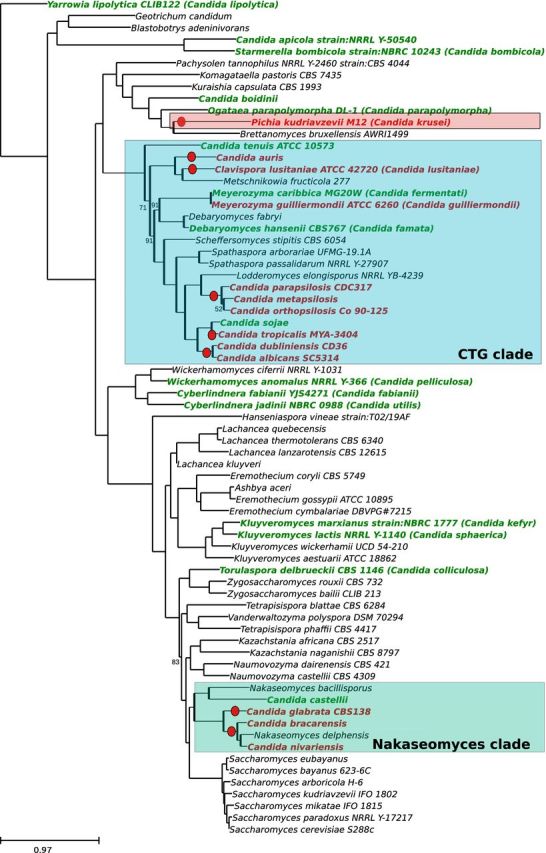
“When highlighted on a phylogenetic tree, Candida opportunistic pathogens belong to distinct lineages, which are interspersed with non-pathogenic relatives [9].”
From Evolutionary Emergence of Drug Resistance in Candida Opportunistic Pathogens (2018) · cites this paper as [9]
Self-check
Percentages, sums and reported differences re-computed from the paper’s own numbers.
The self-check needs the paper’s full text.
Citations
Cites
Epidemiology of Invasive Candidiasis: a Persistent Public Health Problem
Pfaller, M. A., & Diekema, D. J. (2007) · Clinical Microbiology Reviews · doi:10.1128/cmr.00029-06 · Cited by 4,174 · cited 5×
“Lastly, C. tropicalis infections are usually restricted to patients with neutropenia and other blood malignancies and usually respond to azole antifungals (Pfaller and Diekema 2007; Guinea et al. 2014).”
BackgroundResultInfluentialKurtzman, C. P., & Lodder, J. (1972) · Mycologia · doi:10.2307/3758036 · Cited by 3,441
Molecular evidence for an ancient duplication of the entire yeast genome
Wolfe, K. H., & Shields, D. C. (1997) · Nature · doi:10.1038/42711 · Cited by 1,785
Dujon, B., Sherman, D., Fischer, G., Durrens, P., Casaregola, S., Lafontaine, I., de Montigny, J., Marck, C., Neuvéglise, C., Talla, E., et al. (2004) · Nature · doi:10.1038/nature02579 · Cited by 1,623
Comparative Genomics of Listeria Species
Glaser, P., Frangeul, L., Buchrieser, C., Rusniok, C., Amend, A., Baquero, F., Berche, P., Blöcker, H., Brandt, P., Chakraborty, T., et al. (2001) · Science · doi:10.1126/science.1063447 · Cited by 1,505
RAxML-III: a fast program for maximum likelihood-based inference of large phylogenetic trees
Stamatakis, A., Ludwig, T. G., & Meier, H. (2004) · Bioinformatics · doi:10.1093/bioinformatics/bti191 · Cited by 1,429
Turning a hobby into a job: How duplicated genes find new functions
Conant, G. C., & Wolfe, K. H. (2008) · Nature Reviews Genetics · doi:10.1038/nrg2482 · Cited by 1,281
Growth of Candida albicans hyphae
Sudbery, P. E. (2011) · Nature Reviews Microbiology · doi:10.1038/nrmicro2636 · Cited by 1,110
Evolution of pathogenicity and sexual reproduction in eight Candida genomes
Butler, G., Rasmussen, M. D., Lin, M. F., Santos, M. A. S., Sakthikumar, S., Munro, C. A., Rheinbay, E., Grabherr, M., Forche, A., Reedy, J. L., et al. (2009) · Nature · doi:10.1038/nature08064 · Cited by 1,065
ESCMID† and ECMM‡ joint clinical guidelines for the diagnosis and management of mucormycosis 2013
Cornely, O. A., Arıkan-Akdağlı, S., Dannaoui, É., Groll, A. H., Lagrou, K., Chakrabarti, A., Lanternier, F., Pagano, L., Skiada, A., Akova, M., et al. (2014) · Clinical Microbiology and Infection · doi:10.1111/1469-0691.12371 · Cited by 864
Cited by
Sorted by citations
Muñoz, J. F., Gade, L., Chow, N. A., Loparev, V. N., Juieng, P., Berkow, E. L., Farrer, R. A., Litvintseva, A. P., & Cuomo, C. A. (2018) · Nature Communications · doi:10.1038/s41467-018-07779-6 · Cited by 458
Fungal evolution: major ecological adaptations and evolutionary transitions
Naranjo-Ortíz, M. A., & Gabaldón, T. (2019) · Biological reviews/Biological reviews of the Cambridge Philosophical Society · doi:10.1111/brv.12510 · Cited by 412
Self-citationEvolutionary Emergence of Drug Resistance in Candida Opportunistic Pathogens
Ksiezopolska, E., & Gabaldón, T. (2018) · Genes · doi:10.3390/genes9090461 · Cited by 230
Self-citationEvolution of the human pathogenic lifestyle in fungi
Rokas, A. (2022) · Nature Microbiology · doi:10.1038/s41564-022-01112-0 · Cited by 240
Molecular Mechanisms Associated with Antifungal Resistance in Pathogenic Candida Species
Czajka, K. M., Venkataraman, K., Brabant-Kirwan, D., Santi, S. A., Verschoor, C. P., Appanna, V. D., Singh, R. I., Saunders, D., & Tharmalingam, S. (2023) · Cells · doi:10.3390/cells12222655 · Cited by 207
Fungal evolution: cellular, genomic and metabolic complexity
Naranjo-Ortíz, M. A., & Gabaldón, T. (2020) · Biological reviews/Biological reviews of the Cambridge Philosophical Society · doi:10.1111/brv.12605 · Cited by 164
Self-citationThe Quiet and Underappreciated Rise of Drug-Resistant Invasive Fungal Pathogens
Arastehfar, A., Lass-Flörl, C., Garcia-Rubio, R., Daneshnia, F., Ilkit, M., Boekhout, T., Gabaldon, T., & Perlin, D. S. (2020) · Journal of Fungi · doi:10.3390/jof6030138 · Cited by 145
Hagen, F., Lumbsch, H. T., Arsić-Arsenijević, V. S., Badali, H., Bertout, S., Billmyre, R. B., Bragulat, M. R., Cabañes, F. J., Carbia, M., Chakrabarti, A., et al. (2017) · mSphere · doi:10.1128/msphere.00238-17 · Cited by 148
Recent trends in molecular diagnostics of yeast infections: from PCR to NGS
Arastehfar, A. A., Boekhout, T., Butler, G., Cesare, G. B. D., Dolk, E., Gabaldón, T., Hafez, A. I., Hube, B., Hagen, F., Hovhannisyan, H., et al. (2019) · FEMS Microbiology Reviews · doi:10.1093/femsre/fuz015 · Cited by 144
Self-citationCarreté, L., Ksiezopolska, E., Pegueroles, C., Gómez-Molero, E., Saus, E., Iraola-Guzmán, S., Loska, D., Bader, O., Fairhead, C., & Gabaldón, T. (2018) · Current Biology · doi:10.1016/j.cub.2017.11.027 · Cited by 118
Self-citationGroenewald, M., Hittinger, C. T., Bensch, K., Opulente, D. A., Shen, X., Li, Y., Liu, C., LaBella, A. L., Zhou, X., Limtong, S., et al. (2023) · Studies in Mycology · doi:10.3114/sim.2023.105.01 · Cited by 110
Timmermans, B., De Las Peñas, A., Castaño, I., & Van Dijck, P. (2018) · Journal of Fungi · doi:10.3390/jof4020060 · Cited by 109
The life and times of yeasts in traditional food fermentations
Tofalo, R., Fusco, V., Böhnlein, C., Kabisch, J., Logrieco, A. F., Habermann, D., Cho, G., Benomar, N., Abriouel, H., Schmidt‐Heydt, M., et al. (2019) · Critical Reviews in Food Science and Nutrition · doi:10.1080/10408398.2019.1677553 · Cited by 109
Pekmezovic, M., Hovhannisyan, H., Gresnigt, M. S., Iracane, E., Oliveira-Pacheco, J., Siscar-Lewin, S., Seemann, E., Qualmann, B., Kalkreuter, T., Müller, S., et al. (2021) · Nature Microbiology · doi:10.1038/s41564-021-00875-2 · Cited by 96
Self-citationHybridization and emergence of virulence in opportunistic human yeast pathogens
Mixão, V., & Gabaldón, T. (2017) · Yeast · doi:10.1002/yea.3242 · Cited by 91
Self-citationPathogenic budding yeasts isolated outside of clinical settings
Opulente, D. A., Langdon, Q. K., Buh, K. V., Haase, M. A. B., Sylvester, K., Moriarty, R. V., Jarzyna, M., Considine, S. L., Schneider, R. M., & Hittinger, C. T. (2019) · FEMS Yeast Research · doi:10.1093/femsyr/foz032 · Cited by 91
Hybridization and the origin of new yeast lineages
Gabaldón, T. (2020) · FEMS Yeast Research · doi:10.1093/femsyr/foaa040 · Cited by 76
Self-citationGenomes shed light on the secret life of Candida glabrata: not so asexual, not so commensal
Gabaldón, T., & Fairhead, C. (2018) · Current Genetics · doi:10.1007/s00294-018-0867-z · Cited by 74
Self-citationPlasmid-Based CRISPR-Cas9 Gene Editing in Multiple Candida Species
Lombardi, L., Oliveira-Pacheco, J., & Butler, G. (2019) · mSphere · doi:10.1128/msphere.00125-19 · Cited by 67
Mixão, V., Hansen, A. P., Saus, E., Boekhout, T., Lass‐Flörl, C., & Gabaldón, T. (2019) · Frontiers in Genetics · doi:10.3389/fgene.2019.00383 · Cited by 59
Self-citationNon-Saccharomyces yeasts for beer production: Insights into safety aspects and considerations
Miguel, G. A., Carlsen, S., Arneborg, N., Saerens, S., Laulund, S., & Knudsen, G. M. (2022) · International Journal of Food Microbiology · doi:10.1016/j.ijfoodmicro.2022.109951 · Cited by 73
Understanding the microbial fibre degrading communities & processes in the equine gut
Wunderlich, G., Bull, M. K., Ross, T., Rose, M. T., & Chapman, B. (2023) · Animal Microbiome · doi:10.1186/s42523-022-00224-6 · Cited by 54
Evolution of the complex transcription network controlling biofilm formation in Candida species
Mancera, E., Nocedal, I., Hammel, S., Gulati, M., Mitchell, K. F., Andes, D. R., Nobile, C. J., Butler, G., & Johnson, A. D. (2021) · eLife · doi:10.7554/elife.64682 · Cited by 51
CRISPR-Based Genetic Manipulation of Candida Species: Historical Perspectives and Current Approaches
Uthayakumar, D., Sharma, J., Wensing, L. F., & Shapiro, R. S. (2021) · Frontiers in Genome Editing · doi:10.3389/fgeed.2020.606281 · Cited by 53
Adaptation to iron deficiency in human pathogenic fungi
Martínez‐Pastor, M. T., & Puig, S. (2020) · Biochimica et Biophysica Acta (BBA) - Molecular Cell Research · doi:10.1016/j.bbamcr.2020.118797 · Cited by 47
Opportunistic yeast pathogen Candida spp.: Secreted and membrane-bound virulence factors
Lim, S. J., Ali, M. S. M., Sabri, S., Noor, N. D. M., Salleh, A. B., & Oslan, S. N. (2021) · Medical Mycology · doi:10.1093/mmy/myab053 · Cited by 43
Maximizing Power in Phylogenetics and Phylogenomics: A Perspective Illuminated by Fungal Big Data
Dornburg, A., Townsend, J. P., & Wang, Z. (2017) · Advances in genetics · doi:10.1016/bs.adgen.2017.09.007 · Cited by 39
The long non-coding RNA landscape of Candida yeast pathogens
Hovhannisyan, H., & Gabaldón, T. (2021) · Nature Communications · doi:10.1038/s41467-021-27635-4 · Cited by 36
Self-citationRecognition and delineation of yeast genera based on genomic data: Lessons from Trichosporonales
Takashima, M., Manabe, R., Nishimura, Y., Endoh, R., Ohkuma, M., Sriswasdi, S., Sugita, T., & Iwasaki, W. (2019) · Fungal Genetics and Biology · doi:10.1016/j.fgb.2019.04.013 · Cited by 33
Carboxylic Acid Transporters in Candida Pathogenesis
Alves, R. M. A., Sousa-Silva, M., Vieira, D., Soares, P. A., Chebaro, Y., Lorenz, M. C., Casal, M., Soares‐Silva, I., & Paiva, S. (2020) · mBio · doi:10.1128/mbio.00156-20 · Cited by 29
Genome sequence of the opportunistic human pathogen Magnusiomyces capitatus
Brejová, B., Lichancová, H., Brázdovič, F., Hegedűsová, E., Jakúbková, M., Hodorová, V., Džugasová, V., Baláž, A., Zeiselová, L., Cillingová, A., et al. (2018) · Current Genetics · doi:10.1007/s00294-018-0904-y · Cited by 28
Parallel expansion and divergence of an adhesin family in pathogenic yeasts
Smoak, R. A., Snyder, L. F., Fassler, J. S., & He, B. Z. (2023) · GENETICS · doi:10.1093/genetics/iyad024 · Cited by 25
Arastehfar, A., Daneshnia, F., Hovhannisyan, H., Fuentes, D., Cabrera, N., Quinteros, C., Ilkit, M., Ünal, N., Hilmioğlu-Polat, S., Jabeen, K., et al. (2023) · mBio · doi:10.1128/mbio.01180-23 · Cited by 27
“The appearance of petite mutants has also been noted in clinical samples obtained from patients infected with Candida glabrata (2, 12), a prominent human fungal pathogen more closely related to S. cerevisiae than to C. albicans (13).”
BackgroundSelf-citationNarayanan, A., Vadnala, R. N., Ganguly, P., Selvakumar, P., Rudramurthy, S. M., Prasad, R., Chakrabarti, A., Siddharthan, R., & Sanyal, K. (2021) · mBio · doi:10.1128/mbio.00905-21 · Cited by 25
Mixão, V., Hegedűsová, E., Saus, E., Pryszcz, L. P., Cillingová, A., Nosek, J., & Gabaldón, T. (2021) · DNA Research · doi:10.1093/dnares/dsab006 · Cited by 25
Self-citationIs Natural Population of Candida tropicalis Sexual, Parasexual, and/or Asexual?
Xu, J. (2021) · Frontiers in Cellular and Infection Microbiology · doi:10.3389/fcimb.2021.751676 · Cited by 25
Antivirulence and avirulence genes in human pathogenic fungi
Siscar-Lewin, S., Hube, B., & Brunke, S. (2019) · Virulence · doi:10.1080/21505594.2019.1688753 · Cited by 25
Takashima, M., Sriswasdi, S., Manabe, R., Ohkuma, M., Sugita, T., & Iwasaki, W. (2017) · Yeast · doi:10.1002/yea.3284 · Cited by 24
Genetic Modification of Closely Related Candida Species
Mancera, E., Frazer, C., Porman, A. M., Ruiz‐Castro, S., Johnson, A. D., & Bennett, R. J. (2019) · Frontiers in Microbiology · doi:10.3389/fmicb.2019.00357 · Cited by 22
Mead, M. E., Steenwyk, J. L., Silva, L. P., de Castro, P. A., Saeed, N., Hillmann, F., Goldman, G. H., & Rokas, A. (2021) · Genetics · doi:10.1093/genetics/iyab066 · Cited by 21
Shokoohi, G., Javidnia, J., Mirhendi, H., Jahromi, A. R., Rezaei‐Matehkolaei, A., Ansari, S., Maryami, F., Goodarzi, S., & Romeo, O. (2021) · Mycoses · doi:10.1111/myc.13280 · Cited by 22
Elalouf, A., Elalouf, H., & Rosenfeld, A. (2023) · Frontiers in Immunology · doi:10.3389/fimmu.2023.1292625 · Cited by 20
Molecular Typing of Candida glabrata
Gabaldón, T., Gómez-Molero, E., & Bader, O. (2019) · Mycopathologia · doi:10.1007/s11046-019-00388-x · Cited by 22
Self-citationProtein-Protein Interactions in Candida albicans
Schoeters, F., & Dijck, P. V. (2019) · Frontiers in Microbiology · doi:10.3389/fmicb.2019.01792 · Cited by 19
Wronska, A. K., Haak, M. P., Geraats, E. H., Slot, E. B., van den Broek, M. A., Pronk, J. T., & Daran, J.-M. G. (2020) · Applied and Environmental Microbiology · doi:10.1128/aem.00270-20 · Cited by 18
Hovhannisyan, H., Saus, E., Księżopolska, E., & Gabaldón, T. (2020) · mSphere · doi:10.1128/msphere.00282-20 · Cited by 17
Self-citationKsiezopolska, E., Schikora-Tamarit, M. À., Carlos Nunez-Rodriguez, J., & Gabaldón, T. (2024) · Frontiers in Cellular and Infection Microbiology · doi:10.3389/fcimb.2024.1416509 · Cited by 15
Self-citationGabaldón, T. (2024) · Microbiology and Molecular Biology Reviews · doi:10.1128/mmbr.00029-23 · Cited by 15
Self-citationNguni, T. L., Abrantes, P. M. D. S., McArthur, C. P., Klaasen, J. A., & Fielding, B. C. (2021) · Journal of Herbal Medicine · doi:10.1016/j.hermed.2021.100503 · Cited by 13
Zhang, L., Huang, C. S., Malskær, A. H., Jespersen, L., Arneborg, N., & Johansen, P. G. (2020) · Current Microbiology · doi:10.1007/s00284-020-02185-y · Cited by 13
Genomic and physiological signatures of adaptation in pathogenic fungi
Guerreiro, M. A., Yurkov, A., Nowrousian, M., Broders, K. D., & Stukenbrock, E. H. (2026) · Nature Communications · doi:10.1038/s41467-026-68330-6 · Cited by 13
Evolution of the ability to evade host innate immune defense by Talaromyces marneffei
Zhang, Z., Li, B., Chai, Z., Yang, Z., Zhang, F., Kang, F., Ren, H., Jin, Y., & Yue, J. (2023) · International Journal of Biological Macromolecules · doi:10.1016/j.ijbiomac.2023.127597 · Cited by 11
King, W. R., Singer, J. R., Warman, M., Wilson, D., Hube, B., Lager, I., & Patton, J. L. (2023) · Journal of Biological Chemistry · doi:10.1016/j.jbc.2023.105543 · Cited by 12
Hovhannisyan, H., & Gabaldón, T. (2018) · Current topics in microbiology and immunology · doi:10.1007/82_2018_122 · Cited by 11
Self-citationHigh-Resolution Genome-Wide Occupancy in Candida spp. Using ChEC-seq
Tebbji, F., Khemiri, I., & Sellam, A. (2020) · mSphere · doi:10.1128/msphere.00646-20 · Cited by 11
Muzio, L. D., Cairone, F., Cesa, S., Sergi, C., Tirillò, J., Angiolella, L., Giammarino, A., Giusiano, G., Petralito, S., Casadei, M. A., et al. (2024) · Carbohydrate Polymer Technologies and Applications · doi:10.1016/j.carpta.2024.100485 · Cited by 10
Schutz, K., Melie, T., Smith, S. D., & Quandt, C. A. (2024) · Microbial Genomics · doi:10.1099/mgen.0.001233 · Cited by 13
The role of non-standard translation in Candida albicans pathogenesis
Bezerra, A. R., Oliveíra, C., Correia, I., Guimarães, A. R., Sousa, G., Carvalho, M. J., Moura, G. R., & Santos, M. A. S. (2021) · FEMS Yeast Research · doi:10.1093/femsyr/foab032 · Cited by 8
Nahas, J. V., Iosue, C. L., Shaik, N. F., Selhorst, K., He, B. Z., & Wykoff, D. D. (2018) · G3 Genes Genomes Genetics · doi:10.1534/g3.118.200303 · Cited by 8
Experimental evolution of drug resistance in human fungal pathogens
Gerstein, A. C., & Sethi, P. (2022) · Current Opinion in Genetics & Development · doi:10.1016/j.gde.2022.101965 · Cited by 9
Takashima, M., & Sugita, T. (2019) · Medical Mycology Journal · doi:10.3314/mmj.19.003 · Cited by 8
Larini, I., Ferrara, M., Troiano, E., Gatto, V., Mulè, G., Vitulo, N., Capozzi, V., Salvetti, E., Felis, G. E., & Torriani, S. (2025) · Applied Microbiology and Biotechnology · doi:10.1007/s00253-025-13515-0 · Cited by 7
Oszust, K., Szpilska, K., Gryta, A., Panek, J., Pylak, M., Lipa, T., & Frąc, M. (2023) · Postharvest Biology and Technology · doi:10.1016/j.postharvbio.2023.112442 · Cited by 8
Ahaik, I., Nunez‐Rodriguez, J. C., Abrini, J., Bouhdid, S., & Gabaldón, T. (2024) · Journal of Fungi · doi:10.3390/jof10060373 · Cited by 7
Self-citationHamm, P. S., Gadek, C. R., Mann, M., Steinberg, M. I., Montoya, K. N., Behnia, M., Gyllenhaal, E. F., Brady, S. S., Takano, O. M., Williamson, J. L., et al. (2025) · Communications Biology · doi:10.1038/s42003-025-08041-8 · Cited by 6
Genetic modification of Candida maltosa, a non-pathogenic CTG species, reveals EFG1 function
Chávez-Tinoco, M., García-Ortega, L. F., & Mancera, E. (2024) · Microbiology · doi:10.1099/mic.0.001447 · Cited by 6
Activity and expression of Candida glabrata vacuolar proteases in autophagy-like conditions
Cortez-Sánchez, J. L., Cortés-Acosta, E., Cueto-Hernández, V. M., Reyes‐Maldonado, E., Hernández, G., Villa‐Tanaca, L., & Ibarra, J. A. (2018) · FEMS Yeast Research · doi:10.1093/femsyr/foy006 · Cited by 5
Monapathi, M. E., Bezuidenhout, C. C., & Rhode, O. H. J. (2020) · Water SA · doi:10.17159/wsa/2020.v46.i4.9072 · Cited by 5
Comparative transcriptomics of THP-1 monocytes in response to different pathogensPreprint
Thuer, E., & Gabaldón, T. (2017) · bioRxiv (Cold Spring Harbor Laboratory) · doi:10.1101/155853 · Cited by 4
Self-citationYan, K., Chen, Y., Zhao, M., Li, Y., & He, J. (2025) · Atmosphere · doi:10.3390/atmos16060641 · Cited by 4
Natural trait variation across Saccharomycotina species
Wang, J.-T. J., Steenwyk, J. L., & Brem, R. B. (2024) · FEMS Yeast Research · doi:10.1093/femsyr/foae002 · Cited by 4
Iosue, C. L., Gulotta, A. P., Selhorst, K. B., Mody, A. C., Barbour, K. M., Marcotte, M. J., Bui, L. N., Leone, S. G., Lang, E. C., Hughes, G. H., et al. (2019) · G3 Genes Genomes Genetics · doi:10.1534/g3.119.400897 · Cited by 4
Candida vaginitis: the importance of mitochondria and type I interferon signalling
Papon, N., & Naglik, J. R. (2021) · Mucosal Immunology · doi:10.1038/s41385-021-00424-4 · Cited by 4
Changes in nomenclature, virulence factors, and antifungal resistance of the genus Candida
Fernandes, M. A. A., de Aguiar, F. L. L., Coutinho, M. G. S., de Brito, É. H. S., Coelho, C. G. V., & Fontenelle, R. O. D. S. (2025) · Frontiers in Fungal Biology · doi:10.3389/ffunb.2025.1677892 · Cited by 4
The Genome of the CTG(Ser1) Yeast Scheffersomyces stipitis Is Plastic
Vega, S. B. P., Armitage, A. D., Bates, H. J., Harrison, R. J., & Buscaino, A. (2021) · mBio · doi:10.1128/mbio.01871-21 · Cited by 3
Candida sojae: First report of a human infection
Chrenková, V., Vadkertiová, R., Vlachova, K., Babjuk, M., Lischke, R., Bébrová, E., & Hubáček, P. (2022) · Journal de Mycologie Médicale · doi:10.1016/j.mycmed.2022.101309 · Cited by 3
Hovhannisyan, H., Rodríguez, A., Saus, E., Vaneechoutte, M., & Gabaldón, T. (2023) · Frontiers in Cellular and Infection Microbiology · doi:10.3389/fcimb.2023.1093178 · Cited by 3
Self-citationManso, J. A., Carabias, A., Sárkány, Z., de Pereda, J. M., Pereira, P. J. B., & Macedo‐Ribeiro, S. (2023) · mBio · doi:10.1128/mbio.00638-23 · Cited by 3
Probing RNA structural landscapes across Candida yeast genomes
Chorostecki, U., Saus, E., & Gabaldón, T. (2024) · Frontiers in Microbiology · doi:10.3389/fmicb.2024.1362067 · Cited by 2
Self-citationCandida: Friend and Foe of Humans
Bhakt, P., Battu, A., & Kaur, R. (2018) · Springer eBooks · doi:10.1007/978-981-13-1577-0_22 · Cited by 2
Carreté, L., Księżopolska, E., Pegueroles, C., Gómez-Molero, E., Saus, E., Iraola‐Guzmán, S., Loska, D., Bader, O., Fairhead, C., & Gabaldón, T. (2017) · bioRxiv (Cold Spring Harbor Laboratory) · doi:10.1101/105791 · Cited by 2
Self-citationUrinary Tract Infections: Fungi (Candida spp.)
Silao, F. G. S., Álvarez, F. J., Taladtad, F. F., Viloria, T. A. M. D., & Ljungdahl, P. O. (2021) · Elsevier eBooks · doi:10.1016/b978-0-12-818731-9.00140-3 · Cited by 3
Schutz, K., Melie, T., Smith, S. D., & Quandt, C. A. (2023) · bioRxiv (Cold Spring Harbor Laboratory) · doi:10.1101/2023.04.13.536682 · Cited by 2
Advances in Genomics of Human Fungal Pathogens
Kollath, D. R., Teixeira, M. D. M., & Barker, B. M. (2018) · Population genomics · doi:10.1007/13836_2018_41 · Cited by 1
Kriti, D., Barazandeh, M., Ogbede, J. U., Giaever, G. N., & Nislow, C. (2026) · G3 Genes Genomes Genetics · doi:10.1093/g3journal/jkag067 · Cited by 1
Wei, K., Arlotto, M., Overhulse, J. M., Dinh, T., Zhou, Y., Dupper, N. J., Yang, J., Kashemirov, B. A., Dawi, H., Garnaud, C., et al. (2025) · Advanced Science · doi:10.1002/advs.202404260 · Cited by 1
Identification of Yeasts: to see the closest relatives
TAKASHIMA, M. (2021) · JOURNAL OF THE BREWING SOCIETY OF JAPAN · doi:10.6013/jbrewsocjapan.116.674 · Cited by 1
Narayanan, A., Vadnala, R. N., Ganguly, P., Selvakumar, P., Rudramurthy, S. M., Prasad, R., Chakrabarti, A., Siddharthan, R., & Sanyal, K. (2021) · bioRxiv (Cold Spring Harbor Laboratory) · doi:10.1101/2021.01.29.428909 · Cited by 1
de Jong, A. W., Boden, S., Zandijk, A., Kortsinoglou, A. M., van den Ende, B. G., Francisco, E. C., Nefeli, P. K., Kouvelis, V. N., Zhou, M., & Hagen, F. (2024) · bioRxiv (Cold Spring Harbor Laboratory) · doi:10.1101/2024.05.16.594571 · Cited by 2
Felix, G. N. (2023) · Digital Library of Theses and Dissertations (Universidade de São Paulo) · doi:10.11606/t.5.2023.tde-16062023-113452
AL-DARRAJI, Z. D. G., & Mohammed-Ameen, M. K. (2023) · Biodiversitas Journal of Biological Diversity · doi:10.13057/biodiv/d240761
Wood Metabolites of Myrcia insularis Gardner (Myrtaceae) have Potential Anti-Candida Activity
Ferreira, G. D. A., Campbell, G., Passos, M. D. S., Taveira, G. B., Gevú, K. V., Vieira, I. J. C., Gomes, V. M., & Cunha, M. D. (2023) · Floresta e Ambiente · doi:10.1590/2179-8087-floram-2022-0049
Genome-wide RNA structural determination in Candida yeast pathogensPreprint
Chorostecki, U., Saus, E., & Gabaldón, T. (2023) · bioRxiv (Cold Spring Harbor Laboratory) · doi:10.1101/2023.12.27.573417
Self-citationPathogenicity Strategies of Candida Species During Interactions with Epithelial Cells
Pekmezovic, M. G., Hube, B., & Gresnigt, M. S. (2024) · The mycota · doi:10.1007/978-3-031-64853-3_2
Unveiling the molecular architecture of Candida auris ribosome
Atamas, A., Stetsenko, A., Incarnato, D., Valero, A. M., Rogachev, A. V., Billerbeck, S., & Guskov, A. (2026) · Structure · doi:10.1016/j.str.2026.08.005
Mitra, S., Sharma, P., & Ganguly, K. (2025) · Cureus · doi:10.7759/cureus.87949
Meza‐Davalos, T., García-Ortega, L. F., & Mancera, E. (2025) · Molecular Microbiology · doi:10.1111/mmi.70012
Lim, S. J., Noor, N. D. M., Sabri, S., Ali, M. S. M., Kumari, P., Kumari, S., Gaur, N. A., Salleh, A. B., & Oslan, S. N. (2025) · Microbial Pathogenesis · doi:10.1016/j.micpath.2025.107937
Wang, X., Yang, Z., Li, Y., Dong, T.-X., Kuang, Y., & Li, H. (2025) · Microbiology Spectrum · doi:10.1128/spectrum.00872-25
Dubois, V., Marcet‐Houben, M., Fuentes, D., Księżopolska, E., Gliosca, L., & Gabaldón, T. (2025) · bioRxiv (Cold Spring Harbor Laboratory) · doi:10.1101/2025.10.23.684142
Self-citation
Metadata
- Authors
- Gabaldón, T., Naranjo-Ortíz, M. A., & Marcet-Houben, M.
- Affiliations
- Institució Catalana de Recerca i Estudis Avançats (ES)
- Universitat Pompeu Fabra (ES)
- Corresponding author
- Gabaldón, Toni
- Venue
- FEMS Yeast Research
- Publisher
- Oxford University Press (OUP)
- Published
- 2016-08-03
- Volume
- 16
- Issue
- 6
- Pages
- fow064
- ISSN
- 1567-1356 (ISSN-L)
- 1567-1364
- PMC
- PMC5815160
- OpenAlex
- W2488745281
- Cited by
- 105
- References
- 64
- Citations by year
- 2026: 6 · 2025: 10 · 2024: 11 · 2023: 16 · 2022: 4 · 2021: 17 · 2020: 10 · 2019: 13 · 2018: 11 · 2017: 7
- FWCI
- 0.93
- Type
- journal article
- Language
- en
- Open access
- hybrid
- doi.org
- Licence
- cc-by-nc
- Locations
- FEMS Yeast Research (publishedVersion, cc-by-nc)
- PubMed Central (publishedVersion, cc-by-nc)
- PubMed (publishedVersion)
- RECERCAT (Consorci de Serveis Universitaris de Catalunya) (publishedVersion, other-oa)
- Repositori digital de la UPF (Universitat Pompeu Fabra) (publishedVersion, cc-by-nc)
- HighWire Press Open Archive (submittedVersion)
- Funders
- European Commission (H2020-MSCA-ITN, H2020-MSCA-ITN-2014, 2007–2013, FP7 2007-2013, 642095, FP7-PEOPLE-2013, FP7/2007, FP7‐PEOPLE‐ 2013‐ITN, 606786, H2020-MSCA)
- Ministerio de Economía y Competitividad (642095, SEV‐2012‐0208, BIO2012-37161)
- Horizon 2020 Framework Programme (MSCA-ITN-2014, FP7/2007-2013, H2020MSCA‐ITN‐2014, H2020-MSCA, H2020-MSCA-ITN-2014-642095, 642095, H2020-MSCA-ITN)
- Agència de Gestió d'Ajuts Universitaris i de Recerca (SGR857)
- European Regional Development Fund (H2020-MSCA-ITN-2014, FP7/2007‐2013, 2007 – 2013)
- FP7 People: Marie-Curie Actions (FP7-PEOPLE-2013-ITN-606786, 2007-2013, 2013‐ITN‐606786, FP7-PEOPLE-2013-ITN, FP7/2007‐2013/, FP7-PEOPLE-2013)
- Topics
- Life Sciences › Biochemistry, Genetics and Molecular Biology › Molecular Biology › Fungal and yeast genetics research
- Life Sciences › Immunology and Microbiology › Microbiology › Yeasts and Rust Fungi Studies
- Health Sciences › Medicine › Infectious Diseases › Antifungal resistance and susceptibility
- Keywords
- Saccharomycotina, pathogenic yeasts, Candida, candidiasis, virulence evolution, Candida albicans, Candida parapsilosis, Candida glabrata, comparative genomics, gene family expansion, interspecific hybridization, genome evolution, opportunistic pathogens
- MeSH terms
- Ascomycota, Evolution, Molecular, Genomics, Virulence Factors
About these checks
Registry, retraction, Cites and statistics results are computed, not judged, with one exception: a printed reference that no index lists is read once by a model before it counts as a citation error. Claims are extracted by a model and kept only when their quote appears verbatim in the text; each cited source is then checked, with a model’s help, for whether it says what the claim relies on. Those verdicts can be wrong — read the claim’s quote and the cited source before relying on one.
Statistics and arithmetic are recomputed, not judged.
Confidence bands are shown only for fields calibrated on our annotated test set. None is calibrated yet, so no band is shown.
What counts as a claim ›How we measure confidence ›How we check this ›
Are you an author, or do you see a problem with this page? Request a review
