

Short-term Low-Dose mTORC1 Inhibition in Aged Rats Counter-Regulates Age-Related Gene Changes and Blocks Age-Related Kidney Pathology
Open accessThe DOI matches its Crossref record; 33 of the 34 references it cites were found in a registry or an index, and 1 are not checked yet.
Abstract
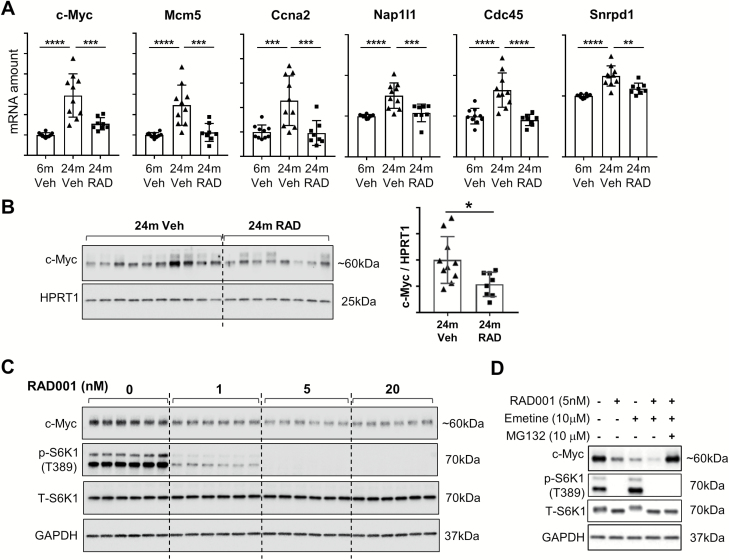
Rapalogs, inhibitors of mTORC1 (mammalian target of rapamycin complex 1), increase life span and delay age-related phenotypes in many species. However, the molecular mechanisms have not been fully elucidated. We determined gene expression changes comparing 6- and 24-month-old rats in the kidney, liver, and skeletal muscle, and asked which of these changes were counter-regulated by a clinically-translatable (short-term and low-concentration) treatment, with a rapalog (RAD001). Surprisingly, RAD001 had a more pronounced effect on the kidney under this regimen in comparison to the liver or skeletal muscle. Histologic evaluation of kidneys revealed that the severity of chronic progressive nephropathy lesions was lower in kidneys from 24-month-old rats treated with RAD001 compared with vehicle. In addition to other gene expression changes, c-Myc, which has been shown to regulate aging, was induced by aging in the kidney and counter-regulated by RAD001. RAD001 caused a decrease in c-Myc protein, which could be rescued by a proteasome inhibitor. These findings point to settings for use of mTORC1 inhibitors to treat age-related disorders, and highlight c-Myc regulation as one of the potential mechanisms by which mTORC1 inhibition is perturbing age-related phenotypes.
Overview
The claims and statistics of this paper haven’t been checked yet.
Free: it reads the open-access text and checks the first 5 claims that cite a source we can check. Create a free account to check every claim.
Integrity signals
Registry
Cites
Statistics
Figures
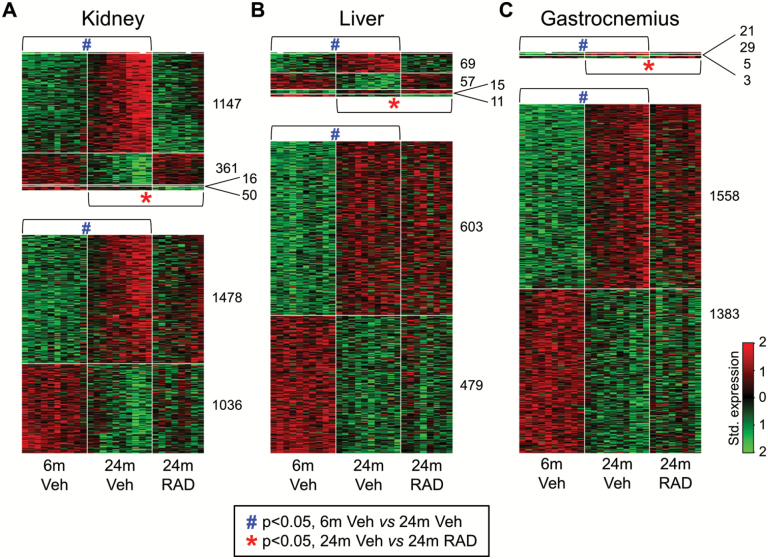
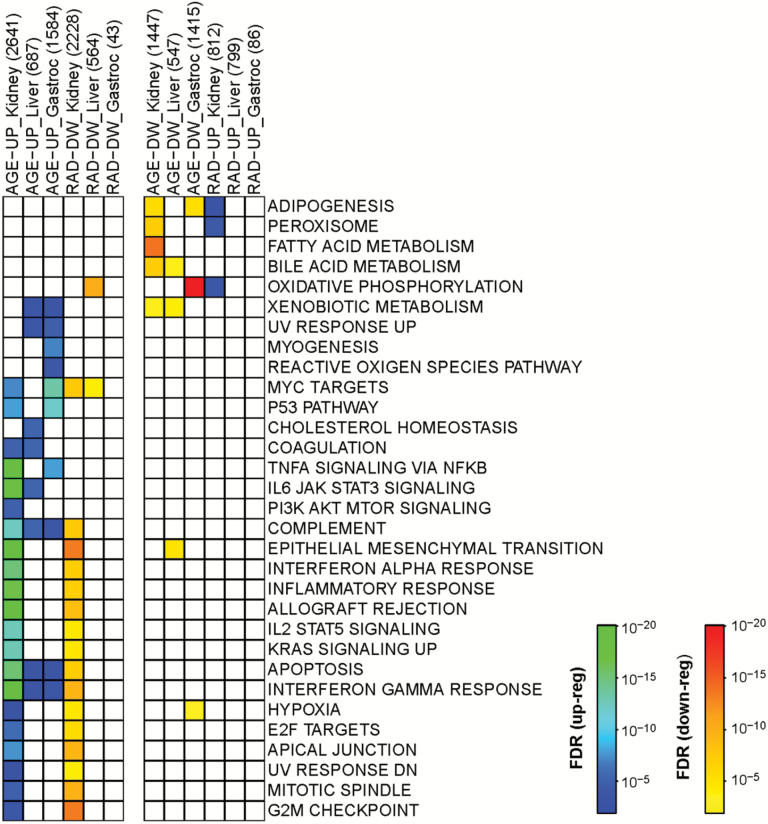
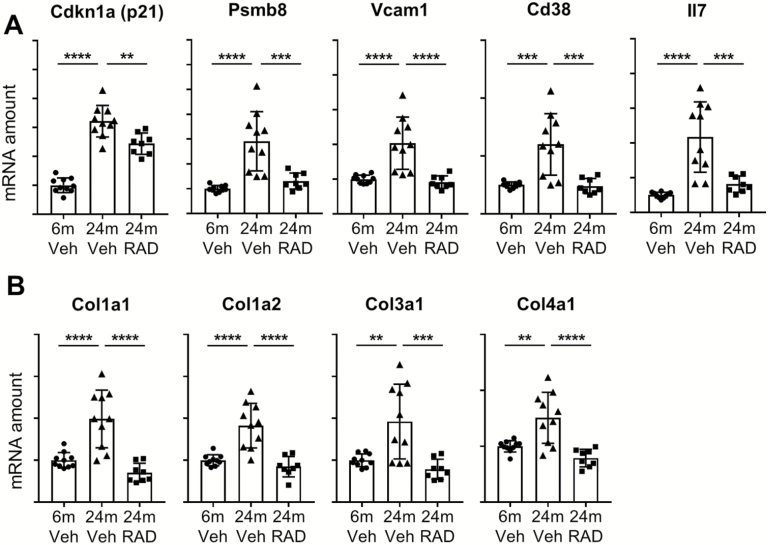
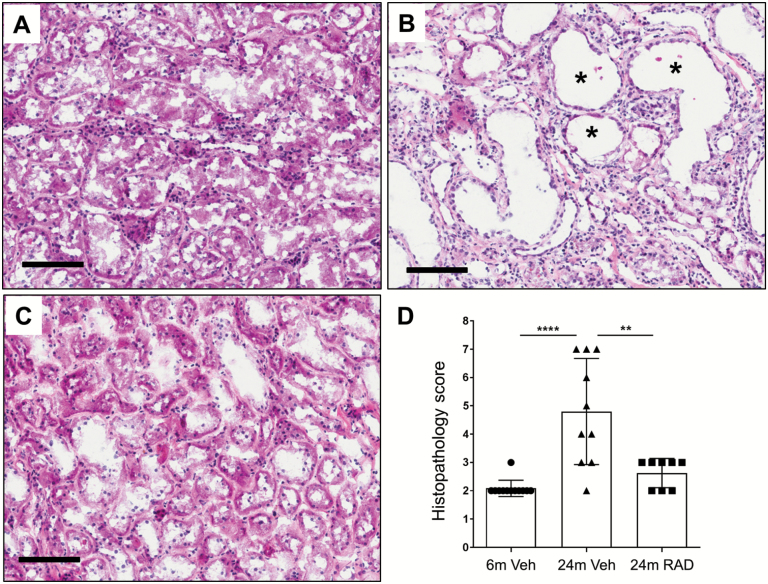
Verification
Claims the paper makes
The claims and statistics of this paper haven’t been checked yet.
Free: it reads the open-access text and checks the first 5 claims that cite a source we can check. Create a free account to check every claim.
Claims other papers make about this one
Each is checked against this paper’s own text: does it say what the citing paper says it does?
In the citing paper
“Another study demonstrated that short-term inhibition of mTORC1 with a low dose of everolimus in 24-month-old rats dramatically reduced age-related kidney disease and even counter-regulated age-related gene expression changes in the kidney185.”
From Autophagy in kidney homeostasis and disease (2020) · cites this paper as [185]
Self-check
Percentages, sums and reported differences re-computed from the paper’s own numbers.
The self-check needs the paper’s full text.
Citations
Cites
STAR: ultrafast universal RNA-seq aligner
Dobin, A., Davis, C. A., Schlesinger, F., Drenkow, J., Zaleski, C., Jha, S., Batut, P., Chaisson, M., & Gingeras, T. R. (2013) · Bioinformatics · doi:10.1093/bioinformatics/bts635 · Cited by 51,709
The Molecular Signatures Database Hallmark Gene Set Collection
Liberzon, A., Birger, C., Thorvaldsdóttir, H., Ghandi, M., Mesirov, J. P., & Tamayo, P. (2015) · Cell Systems · doi:10.1016/j.cels.2015.12.004 · Cited by 13,807
Chronic Inflammation (Inflammaging) and Its Potential Contribution to Age-Associated Diseases
Franceschi, C., & Campisi, J. (2014) · The Journals of Gerontology Series A: Biological Sciences and Medical Sciences · doi:10.1093/gerona/glu057 · Cited by 3,891 · cited 1×
“There are many studies that demonstrate inflammatory signaling increases with age (8,30,31), and this was seen in the kidney in the current study.”
BackgroundRapamycin fed late in life extends lifespan in genetically heterogeneous mice
Harrison, D. E., Strong, R., Sharp, Z. D., Nelson, J. F., Astle, C. M., Flurkey, K., Nadon, N. L., Wilkinson, J. E., Frenkel, K., Carter, C. S., et al. (2009) · Nature · doi:10.1038/nature08221 · Cited by 3,766 · cited 2×
“Inhibition of the mammalian target of rapamycin (mTORC1) pathway is perhaps the best-validated pharmacological intervention to forestall agerelated phenotypic changes; inhibition of mTORC1 using rapamycin can extend murine life span, including in settings where the treatment is initiated relatively late in life (9,10,…”
BackgroundKenyon, C. J. (2010) · Nature · doi:10.1038/nature08980 · Cited by 2,739 · cited 1×
“Quite a few other mechanisms have been put forth as potentially regulating age-related conditions, and life span (16).”
BackgroundAgeing as a Risk Factor for Disease
Niccoli, T., & Partridge, L. (2012) · Current Biology · doi:10.1016/j.cub.2012.07.024 · Cited by 1,831
The Laboratory Rat: Relating Its Age With Human's.
(2013) · Europe PMC (PubMed Central) · Cited by 1,705
mTOR is a key modulator of ageing and age-related disease
Johnson, S. C., Rabinovitch, P. S., & Kaeberlein, M. (2013) · Nature · doi:10.1038/nature11861 · Cited by 1,676
Autophagy maintains stemness by preventing senescence
García-Prat, L., Martínez-Vicente, M., Perdiguero, E., Ortet, L., Rodríguez-Ubreva, J., Rebollo, E., Ruiz-Bonilla, V., Gutarra, S., Ballestar, E., Serrano, A. L., et al. (2016) · Nature · doi:10.1038/nature16187 · Cited by 1,355 · cited 1×
“As to mechanism, treatment with rapamycin has been shown to reverse signs of senescence in stem cells (7,13,14) and decrease inflammation (8,15).”
BackgroundIn Vivo Amelioration of Age-Associated Hallmarks by Partial Reprogramming.
Ocampo, A., Reddy, P., Martinez-Redondo, P., Platero-Luengo, A., Hatanaka, F., Hishida, T., Li, M., Lam, D., Kurita, M., Beyret, E., et al. (2016) · Cell · doi:10.1016/j.cell.2016.11.052 · Cited by 988 · cited 1×
“A distinct study very recently demonstrated that transient upregulation of the Yamanaka factors, the four genes which are required to epigentically reprogram cells to their dedifferentiated form, inducing the formation of induced-pluripotent cells, could significantly increase life span (28).”
Background
Cited by
Measuring biological aging in humans: a quest
Ferrucci, L., Gonzalez‐Freire, M., Fabbri, E., Simonsick, E., Tanaka, T., Moore, Z., Salimi, S., Sierra, F., & de Cabo, R. (2020) · Aging Cell · doi:10.1111/acel.13080 · Cited by 781
“Accordingly, pretreatment with rapamycin analogs that inhibit TORC1 enhances immune function and reduces infections in the elderly (Mannick et al., 2014; Shavlakadze et al., 2018).”
BackgroundAutophagy in kidney homeostasis and disease
Tang, C., Livingston, M. J., Liu, Z., & Dong, Z. (2020) · Nature Reviews Nephrology · doi:10.1038/s41581-020-0309-2 · Cited by 496
Control of satellite cell function in muscle regeneration and its disruption in ageing
Sousa-Victor, P., García-Prat, L., & Muñoz-Cánoves, P. (2022) · Nature Reviews Molecular Cell Biology · doi:10.1038/s41580-021-00421-2 · Cited by 476
Lysosome: The metabolic signaling hub
Lamming, D. W., & Bar‐Peled, L. (2019) · Traffic · doi:10.1111/tra.12617 · Cited by 173
Shavlakadze, T., Morris, M., Fang, J., Wang, S. X., Zhu, J., Zhou, W., Tse, H. W., Mondragon-Gonzalez, R., Roma, G., & Glass, D. J. (2019) · Cell Reports · doi:10.1016/j.celrep.2019.08.043 · Cited by 170
Self-citationThe central moTOR of metabolism
Simcox, J., & Lamming, D. W. (2022) · Developmental Cell · doi:10.1016/j.devcel.2022.02.024 · Cited by 174
Joseph, G. A., Wang, S. X., Jacobs, C. E., Zhou, W., Kimble, G. C., Tse, H. W., Eash, J. K., Shavlakadze, T., & Glass, D. J. (2019) · Molecular and Cellular Biology · doi:10.1128/mcb.00141-19 · Cited by 158
“The low-dose rapalog treatment used in the human study was reverse-translated to rats, where it was shown that intervention late in life could prevent signs of age-related kidney pathology (17).”
BackgroundSelf-citationConnecting omics signatures and revealing biological mechanisms with iLINCS
Pilarczyk, M., Fazel-Najafabadi, M., Kouril, M., Shamsaei, B., Vasiliauskas, J., Niu, W., Mahi, N., Zhang, L., Clark, N. A., Ren, Y., et al. (2022) · Nature Communications · doi:10.1038/s41467-022-32205-3 · Cited by 153
“To verify that mTOR signaling modulation is also detectible in complex tissues we used iLINCS to re-analyze the effect of rapamycin in aged rat livers 45 (GEO dataset GSE108978).”
MethodThe road ahead for health and lifespan interventions
Gonzalez-Freire, M., Diaz-Ruiz, A., Hauser, D., Martinez-Romero, J., Ferrucci, L., Bernier, M., & de Cabo, R. (2020) · Ageing Research Reviews · doi:10.1016/j.arr.2020.101037 · Cited by 118
Sebastiani, P., Federico, A., Morris, M., Gurinovich, A., Tanaka, T., Chandler, K. B., Andersen, S. L., Denis, G., Costello, C. E., Ferrucci, L., et al. (2021) · Aging Cell · doi:10.1111/acel.13290 · Cited by 103
“Myc target genes have been shown to increase as a function of age in rats and are counter-regulated by mTORC1 inhibition (Shavlakadze et al., 2018), and thus, the increase observed in centenarians is consistent with centenarians expressing normal age-related changes, only much later than usual…”
BackgroundSelf-citationEvaluation of off-label rapamycin use to promote healthspan in 333 adults
Kaeberlein, T. L., Green, A. S., Haddad, G., Hudson, J., Isman, A., Nyquist, A., Rosen, B. S., Suh, Y., Zalzala, S., Zhang, X., et al. (2023) · GeroScience · doi:10.1007/s11357-023-00818-1 · Cited by 70
“In addition to increasing lifespan, rapamycin has numerous healthspan benefits in rodents such as lower cancer incidence [20, 30], improved cognitive function [31, 32], improved kidney function [33], preservation of tendon [34], improved intestinal function and reduced gut dysbiosis [28, 35], preservation of ovarian f…”
BackgroundChu, Y., Lan, R. S.-L., Huang, R., Feng, H., Kumar, R., Dayal, S., Chan, K., & Dai, D. (2020) · Aging Cell · doi:10.1111/acel.13154 · Cited by 68
“Conversely, inhibiting mTOR by rapalogs attenuated aging-associated nephropathy (Shavlakadze et al., 2018).”
BackgroundARDD 2020: from aging mechanisms to interventions
Mkrtchyan, G. V., Abdelmohsen, K., Andreux, P., Bagdonaite, I., Barzilai, N., Brunak, S., Cabreiro, F., de Cabo, R., Campisi, J., Cuervo, A. M., et al. (2020) · Aging · doi:10.18632/aging.202454 · Cited by 58
Self-citationNext Generation Strategies for Geroprotection via mTORC1 Inhibition
Dumas, S. N., & Lamming, D. W. (2020) · The Journals of Gerontology: Series A · doi:10.1093/gerona/glz056 · Cited by 53
Gene Therapy Strategies Targeting Aging-Related Diseases
Yu, J., Li, T., & Zhu, J. (2022) · Aging and Disease · doi:10.14336/ad.2022.00725 · Cited by 70
“, rapamycin and its analogs) induce autophagy [18-22] These strategies are currently at different stages of development, and their actual therapeutic efficacy as well as the adverse reactions are still far from satisfactory.”
BackgroundSelf-citationHan, X., & Sun, Z. (2020) · Hypertension · doi:10.1161/hypertensionaha.120.14642 · Cited by 51
Bischof, E. Y., Siow, R. C. M., Zhavoronkov, A. A., & Kaeberlein, M. R. (2021) · The Lancet Healthy Longevity · doi:10.1016/s2666-7568(20)30068-4 · Cited by 42
Energy restriction in renal protection
Wang, S., Cai, G., & Chen, X. (2018) · British Journal Of Nutrition · doi:10.1017/s0007114518002684 · Cited by 42
“Mammalian target of rapamycin complex 1 (mTORC1) inhibition in aged rats can regulate age-related gene changes in the kidney and block agerelated chronic progressive nephropathy((14)).”
BackgroundSelf-citationFranzin, R., Stasi, A., Ranieri, E., Netti, G. S., Cantaluppi, V., Gesualdo, L., Stallone, G., & Castellano, G. (2021) · Frontiers in Pharmacology · doi:10.3389/fphar.2021.630419 · Cited by 42
“Based on this study in patients, Shavlakadze et al. translated the same dose and duration of the treatment in a mouse model of aging in rats (Shavlakadze et al., 2018); by using rats aged 22.5 months (approximately comparable to a 60-year-old person), the authors evaluated the outcome of an…”
BackgroundInfluentialGao, D., Wang, S., Lin, Y., & Sun, Z. (2020) · Redox Biology · doi:10.1016/j.redox.2020.101692 · Cited by 39
Self-citationEbner, N., Anker, S. D., & von Haehling, S. (2020) · Journal of Cachexia Sarcopenia and Muscle · doi:10.1002/jcsm.12552 · Cited by 39
“In the last years, it has been shown that mTORC1 inhibition increases mass in sarcopenic muscle.(7) The sustained mTORC1 activity in aging rat skeletal muscle results in up-regulation of mTORC1 pathway components and concomitant loss of muscle mass.”
BackgroundWang, Y., Wang, Y., Yang, M., & Ma, X. (2021) · Biomedicine & Pharmacotherapy · doi:10.1016/j.biopha.2020.111191 · Cited by 34
Self-citationPsat1-generated α-ketoglutarate and glutamine promote muscle stem cell activation and regeneration
Ciuffoli, V., Feng, X., Jiang, K., Acevedo-Luna, N., Ko, K. D., Wang, A. H. J., Riparini, G., Khateb, M., Glancy, B. C., Dell’Orso, S., et al. (2024) · Genes & Development · doi:10.1101/gad.351428.123 · Cited by 42
The complement system in liver diseases: Evidence-based approach and therapeutic options
Lung, T., Sakem, B., Risch, L., Würzner, R., Colucci, G., Cerny, A., & Nydegger, U. E. (2019) · Journal of Translational Autoimmunity · doi:10.1016/j.jtauto.2019.100017 · Cited by 40
Ebner, N., Anker, S. D., & von Haehling, S. (2019) · Journal of Cachexia Sarcopenia and Muscle · doi:10.1002/jcsm.12408 · Cited by 38
Marmoset as a Model to Study Kidney Changes Associated With Aging
Lee, H. J., González, O., Dick, E. J., Donati, A., Féliers, D., Choudhury, G. G., Ross, C. N., Venkatachalam, M. A., Tardif, S. D., & Kasinath, B. S. (2018) · The Journals of Gerontology Series A · doi:10.1093/gerona/gly237 · Cited by 29
“In support of an important role for mTORC1 in kidney dysfunction in aging rats, Shavlakadze and colleagues (42) have shown that RAD001, a rapalog, ameliorates aging-related kidney parenchymal lesions.”
Almendáriz-Palacios, C., Mousseau, D. D., Eskiw, C. H., & Gillespie, Z. E. (2020) · International Journal of Molecular Sciences · doi:10.3390/ijms21239220 · Cited by 31
“HEK293 cells (liver cancer cell model) (1–20 nm, 24 h) [226] ↓ ↓ c-Myc HGPS Fibroblasts (0.”
BackgroundLi, N., Chen, Y., Wang, Q., Liu, X., Han, C., Qu, C., Guan, X., Zou, W., Wang, X., Li, A., et al. (2025) · Stem Cell Research & Therapy · doi:10.1186/s13287-025-04481-5 · Cited by 30
“Although mTORC1 was essential for muscle growth, its hyperactivation in aged muscle and SCs aligned with observations in rodent sarcopenia models, suggesting partial mTORC1 suppression might mitigate disease progression [126, 127].”
Self-citationThe interaction between cellular senescence and chronic kidney disease as a therapeutic opportunity
Zhao, J.-L., Qiao, X.-H., Mao, J., Liu, F., & Fu, H. (2022) · Frontiers in Pharmacology · doi:10.3389/fphar.2022.974361 · Cited by 27
PPARα/β Activation Alleviates Age-Associated Renal Fibrosis in Sprague Dawley Rats
Chung, K. W., Ha, S., Kim, S. M., Kim, D. H., An, H. J., Lee, E. K., Moon, H. R., & Chung, H. Y. (2019) · The Journals of Gerontology Series A · doi:10.1093/gerona/glz083 · Cited by 29
Acarbose suppresses symptoms of mitochondrial disease in a mouse model of Leigh syndrome
Bitto, A., Grillo, A. S., Ito, T. K., Stanaway, I. B., Nguyen, B., Ying, K., Tung, H., Smith, K., Tran, N., Velikanje, G., et al. (2023) · Nature Metabolism · doi:10.1038/s42255-023-00815-w · Cited by 22
Data-driven transcriptomics analysis identifies PCSK9 as a novel key regulator in liver aging
Arif, M., Mátyás, C., Mukhopadhyay, P., Yokus, B., Trojnár, E., Pálóczi, J., Paes‐Leme, B., Zhao, S., Lohoff, F. W., Haskó, G., et al. (2023) · GeroScience · doi:10.1007/s11357-023-00928-w · Cited by 21
“These approaches have been successfully employed to elucidate the molecular profiles of aging using various omics data, including transcriptomics [7, 8], metabolomics [9, 10], and proteomics [11], from various tissues and blood samples.”
MethodBarnett, B. G., Wesselowski, S. R., Gordon, S. G., Saunders, A. B., Promislow, D., Schwartz, S. M., Chou, L., Evans, J. B., Kaeberlein, M. R., & Creevy, K. E. (2023) · Frontiers in Veterinary Science · doi:10.3389/fvets.2023.1168711 · Cited by 17
“Rodent rapamycin studies have shown numerous benefits, including increased lifespan (17–23), improved cognitive and muscle function (22, 24, 25), reduced tumorigenesis (26), prevention of retinopathy (27), restoration of stem cell function (9, 28), reversal of immune declines (9), reversal of periodontal disease (29,…”
BackgroundRapamycin Added to Diet in Late Mid-Life Delays Age-Related Hearing Loss in UMHET4 Mice
Altschuler, R. A., Kabara, L. L., Martin, C., Kanicki, A. C., Stewart, C. E., Kohrman, D. C., & Dolan, D. F. (2021) · Frontiers in Cellular Neuroscience · doi:10.3389/fncel.2021.658972 · Cited by 25
“The literature also suggests that late life intermittent administration of rapamycin and rapamycin-like compounds (“rapalogs”) with less side-effects in people, can also increase life span and decrease age-related declines (Anisimov et al., 2011; Arriola Apelo et al., 2016; Shavlakadze et al., 2018; Quarles and Rabino…”
BackgroundColeman, A. E., Creevy, K. E., Anderson, R. M., Reed, M. J., Fajt, V. R., Aicher, K. M., Atiee, G. F., Barnett, B. G., Baumwart, R. D., Boudreau, B., et al. (2025) · GeroScience · doi:10.1007/s11357-024-01484-7 · Cited by 25
“In addition to longer lifespan, slowing of age-related declines in cardiac [28–30], cognitive [31], renal [32], immune system [27], and intestinal [18, 33] function have been reported following treat-ment with rapamycin or rapalogs.”
Sills, A. M., Artavia, J. M., DeRosa, B. D., Ross, C. N., & Salmon, A. B. (2019) · American Journal of Primatology · doi:10.1002/ajp.22927 · Cited by 17
Intermittent mTOR Inhibition Reverses Kidney Aging in Old Rats
Francesco, A. D., Díaz‐Ruiz, A., de Cabo, R., & Bernier, M. (2018) · The Journals of Gerontology Series A · doi:10.1093/gerona/gly023 · Cited by 16
Obert, L., & Frazier, K. S. (2019) · Toxicologic Pathology · doi:10.1177/0192623319861367 · Cited by 14
“These studies suggest that these 2 genes, mTORC1 and c-Myc, may be involved in regulating age-related renal changes through effects on epigenetic mechanisms.(242) Other specific genes responsible for CPN in rats have not yet been identified, nor have there been extensive genomic Obert and Frazier 809”
BackgroundHe, J., Burova, E., Taduriyasas, C., Ni, M., Adler, C., Wei, Y. Z., Negron, N., Xiong, K., Bai, Y., Shavlakadze, T., et al. (2025) · Proceedings of the National Academy of Sciences · doi:10.1073/pnas.2425992122 · Cited by 13
“This IFN - stimulated gene indicates increased IFN signaling consistent with a proinflammatory phenotype, corroborated by prior studies in other tissues ( 73 , 81 ).”
Self-citationThe Discovery of Druggable Anti-aging Agents
Yalcin, G., & Lee, C. (2020) · Annals of Geriatric Medicine and Research · doi:10.4235/agmr.20.0092 · Cited by 12
Koopmans, P. J., Jones, R. G., Cabrera, A. R., Morena, F., Greene, N. P., McCarthy, J. J., Ismaeel, A., Wen, Y., & Murach, K. A. (2026) · Advanced Science · doi:10.1002/advs.202521633 · Cited by 12
Update of cellular senescence in kidney fibrosis: from mechanism to potential interventions
Yang, L., Ma, L., Fu, P., & Nie, J. (2025) · Frontiers of Medicine · doi:10.1007/s11684-024-1117-z · Cited by 13
RTB101 and immune function in the elderly: Interpreting an unsuccessful clinical trial
Kaeberlein, M. R. (2020) · Translational Medicine of Aging · doi:10.1016/j.tma.2020.01.002 · Cited by 10
Yadav, D. K., Adhikari, V. P., Ling, Q., & Liang, T. (2021) · Frontiers in Medicine · doi:10.3389/fmed.2021.756922 · Cited by 13
“Not surprisingly, in a previous preclinical and clinical study, mTORi has shown to be effective in improving the cardiovascular and renal function (30, 31), reducing the gut dysbiosis (32), reverse immunosenescence (33), and remodeling an immune function in the elderly with a reduction in the infection (33, 34).”
BackgroundStanfield, B., Leroux, B., Kaeberlein, M. R., Jones, J., & Lucas, R. (2026) · Journal of Cachexia Sarcopenia and Muscle · doi:10.1002/jcsm.70274 · Cited by 12
Glass, D. J., & Lamming, D. W. (2018) · Nutrition and Healthy Aging · doi:10.3233/nha-180045 · Cited by 6
“tissues benefiting from short-term rapamycin treat17 ment include (in rodents) the heart [5], hematopoietic 18 stem cells [6], and the kidney [7], and (in humans) the 19 immune system [8].”
BackgroundSelf-citationMashinchian, O., Hong, X., Michaud, J., Migliavacca, E., Lefebvre, G. C., Boss, C., Franceschi, F. D., Moal, E. L., Collerette-Tremblay, J., Isern, J., et al. (2022) · eLife · doi:10.7554/elife.57393 · Cited by 6
“…systemic environment has been shown to improve the function of muscle, heart, liver, brain, and other tissues in aged mice (Baht et al., 2015; Conboy et al., 2005; Katsimpardi et al., 2014; Loffredo et al., 2013; Ruckh et al., 2012; Sinha et al., 2014; Smith et al., 2015; Villeda et al., 2011).”
BackgroundLamming, D. W. (2023) · Elsevier eBooks · doi:10.1016/b978-0-12-823679-6.00002-3 · Cited by 4
Aging rate indicators and the search for anti-aging drugs
Austad, S. N., Kaeberlein, M. R., & Miller, R. A. (2026) · Frontiers in Science · doi:10.3389/fsci.2026.1821393 · Cited by 5
“These fi ndings are consistent with several studies on rapamycin in UM-HET3 and C57BL/6 mice, indicating that rapamycin delays age-related decline in cognitive function (73, 74), the kidneys (75), the tendons (76), the ovaries (77), hearing (78), and the intestines (79, 80).”
Pharmacokinetics of long-term low-dose oral rapamycin in four healthy middle-aged companion dogsPreprint
Evans, J. B., Morrison, A. J., Javors, M. A., Lopez‐Cruzan, M., Promislow, D., Kaeberlein, M. R., & Creevy, K. E. (2021) · bioRxiv (Cold Spring Harbor Laboratory) · doi:10.1101/2021.01.20.427425 · Cited by 3
Reasons for Exclusion of Apparently Healthy Mature Adult and Senior Dogs From a Clinical Trial
Gibbs, N. H., Michalski, H., Promislow, D., Kaeberlein, M. R., & Creevy, K. E. (2021) · Frontiers in Veterinary Science · doi:10.3389/fvets.2021.651698 · Cited by 3
“Recent research has shown benefits of subimmunosuppressive doses of rapamycin in invertebrates and mice (25, 26), including lengthened lifespan (27, 28) and protection against multiple age-associated health outcomes, including reduced cancer incidence (29, 30), maintenance of cognitive function (31, 32), rejuvenation…”
BackgroundSenomorphic, senolytic, and rejuvenation therapies
Zhu, X. Y., & Lerman, L. O. (2021) · Elsevier eBooks · doi:10.1016/b978-0-12-823318-4.00025-1 · Cited by 4
Nadeem, J., Parveen, A., & Kim, S. Y. (2023) · Preprints.org · doi:10.20944/preprints202309.1932.v1 · Cited by 1
The Age-Dependent Resident Myonuclear Multi-Omic Response to a Skeletal Muscle Hypertrophic StimulusPreprint
Koopmans, P. J., Jones, R. G., Cabrera, A. R., da Silva, F. M., Greene, N. P., McCarthy, J. J., Ismaeel, A., Wen, Y., & Murach, K. A. (2025) · bioRxiv (Cold Spring Harbor Laboratory) · doi:10.1101/2025.10.29.685384 · Cited by 2
A review of rapamycin in companion dogs
Ryave, J., & Coleman, A. E. (2025) · Journal of Veterinary Science · doi:10.4142/jvs.25219 · Cited by 2
“Improvements in cardiac, cognitive, and kidney function have also been demonstrated in aged mice and aged rats administered rapamycin [80-82].”
Injury and regeneration in renal aging
Bábíčková, J., Yang, H., & Fogo, A. B. (2021) · Elsevier eBooks · doi:10.1016/b978-0-12-823318-4.00032-9
Acarbose suppresses symptoms of mitochondrial disease in a mouse model of Leigh SyndromePreprint
Bitto, A., Grillo, A. S., Stanaway, I. B., Nguyen, B. M. G., Ying, K., Tung, H., Smith, K., Tran, N., Velikanje, G., Urfer, S. R., et al. (2022) · bioRxiv (Cold Spring Harbor Laboratory) · doi:10.1101/2022.01.31.478591
Aranha, L. M., da Silva, P. R., Garcia, D. F., dos Santos, L. B. R., Sato, J. R., Santos, G. V., Braghetto, K. R., & Piemonte, M. E. P. (2026) · medRxiv · doi:10.64898/2026.06.02.26354715
Lapp, S. C., Kalafut, K. C., Cissé, M. Y., Tighanimine, K., Rosenthal, D. M., Doxsey, W. G., Hui, S., Inouye, K., Morrow1, C. E., Cormerais, Y., et al. (2026) · JCI Insight · doi:10.1172/jci.insight.210523
Metadata
- Authors
- Shavlakadze, T., Zhu, J., Wang, S., Zhou, W., Morin, B., Egerman, M. A., Fan, L., Wang, Y., Iartchouk, O., Meyer, A., Valdez, R. A., Mannick, J. B., Klickstein, L. B., & Glass, D. J.
- Affiliations
- Novartis Institutes for Biomedical Research, Cambridge, Massachusetts
- Genomics Institute of the Novartis Research Foundation (US)
- Novartis Institutes for BioMedical Research (CH)
- Corresponding author
- Glass, David J
- ORCID
- Venue
- The Journals of Gerontology: Series A
- Publisher
- Oxford University Press (OUP)
- Published
- 2018-01-03
- Volume
- 73
- Issue
- 7
- Pages
- 845-852
- ISSN
- 1079-5006 (ISSN-L)
- 1758-535X
- PMC
- PMC6001891
- OpenAlex
- W2782332875
- Cited by
- 59
- References
- 33
- Citations by year
- 2026: 5 · 2025: 6 · 2024: 1 · 2023: 6 · 2022: 6 · 2021: 10 · 2020: 10 · 2019: 9 · 2018: 6
- FWCI
- 3.46
- Type
- journal article
- Language
- en
- Open access
- hybrid
- doi.org
- Licence
- Locations
- The Journals of Gerontology Series A (publishedVersion, cc-by-nc-nd)
- Europe PMC (PubMed Central) (publishedVersion, cc-by-nc-nd)
- PubMed Central (publishedVersion, cc-by-nc-nd)
- PubMed (publishedVersion)
- Funders
- Novartis
- Topics
- Life Sciences › Biochemistry, Genetics and Molecular Biology › Aging › Genetics, Aging, and Longevity in Model Organisms
- Life Sciences › Biochemistry, Genetics and Molecular Biology › Molecular Biology › PI3K/AKT/mTOR signaling in cancer
- Life Sciences › Biochemistry, Genetics and Molecular Biology › Cell Biology › Autophagy in Disease and Therapy
- Keywords
- mTORC1 inhibition, rapalogs, everolimus, aging, chronic progressive nephropathy, c-Myc, gene expression changes, proteasome inhibition, liver, skeletal muscle
- MeSH terms
- Everolimus, Mechanistic Target of Rapamycin Complex 1, Aging, Animals, Drug Administration Schedule, Enzyme Inhibitors, Humans, Kidney, Liver, Longevity, Male, Gene Expression, Rats, Sprague-Dawley, Muscle, Skeletal, Gene Expression Profiling, Rats, Renal Insufficiency, Chronic, HEK293 Cells, TOR Serine-Threonine Kinases
About these checks
Registry, retraction, Cites and statistics results are computed, not judged, with one exception: a printed reference that no index lists is read once by a model before it counts as a citation error. Claims are extracted by a model and kept only when their quote appears verbatim in the text; each cited source is then checked, with a model’s help, for whether it says what the claim relies on. Those verdicts can be wrong — read the claim’s quote and the cited source before relying on one.
Statistics and arithmetic are recomputed, not judged.
Confidence bands are shown only for fields calibrated on our annotated test set. None is calibrated yet, so no band is shown.
What counts as a claim ›How we measure confidence ›How we check this ›
Are you an author, or do you see a problem with this page? Request a review
Data sources
Bibliographic data: Semantic Scholar, OpenAlex, Crossref.
Contains information from the Semantic Scholar Academic Graph Datasets, made available under the ODC Attribution License (ODC-BY 1.0).
Semantic Scholar’s data is described in: Kinney, R., et al. (2023). The Semantic Scholar Open Data Platform. arXiv:2301.10140.
