

ESHRE guideline: endometriosis
Open accessThe DOI matches its Crossref record; 231 of the 250 references it cites were found in a registry or an index; 42 of the 130 sources its claims cite were checked for support.
Abstract
European Society of Human Reproduction and Embryology (ESHRE) clinical guideline on diagnosis and management of endometriosis. Focuses on recommendations for surgical and medical management of pain and infertility. Provides guidance on when to perform surgery for deep infiltrating endometriosis.
Overview
CoChat Summary
TL;DR
This 2022 ESHRE guideline provides 109 recommendations on the diagnosis and management of endometriosis, covering pain, infertility, recurrence, adolescents, menopause, extrapelvic and asymptomatic disease, prevention, and cancer. It updates prior ESHRE guidelines, with five topics where significant changes in clinical practice are expected.
Key findings
- The guideline contains 109 recommendations: 79 supported by research data and 30 good practice points (GPPs), plus 30 research recommendations.
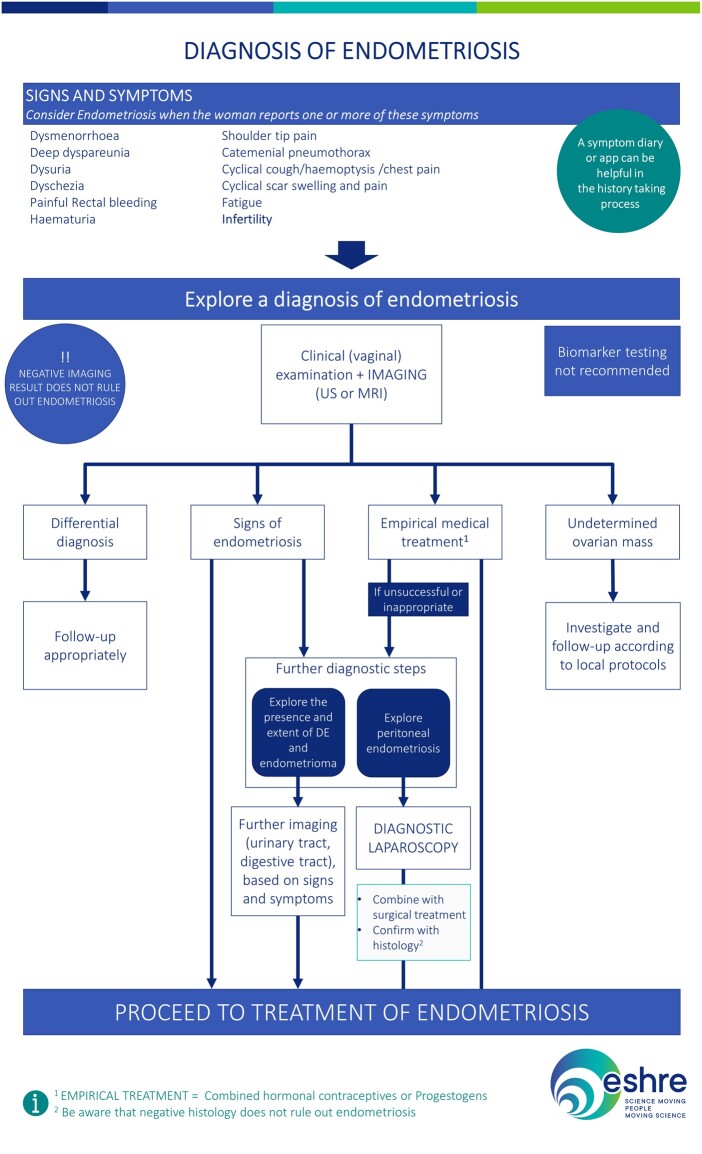
- The diagnostic process challenges laparoscopy and histology as gold standard tests; it recommends imaging (ultrasound or MRI) in the diagnostic work-up, advises against biomarkers for diagnosis, and reserves laparoscopy for patients with negative imaging or unsuccessful/inappropriate empirical treatment.
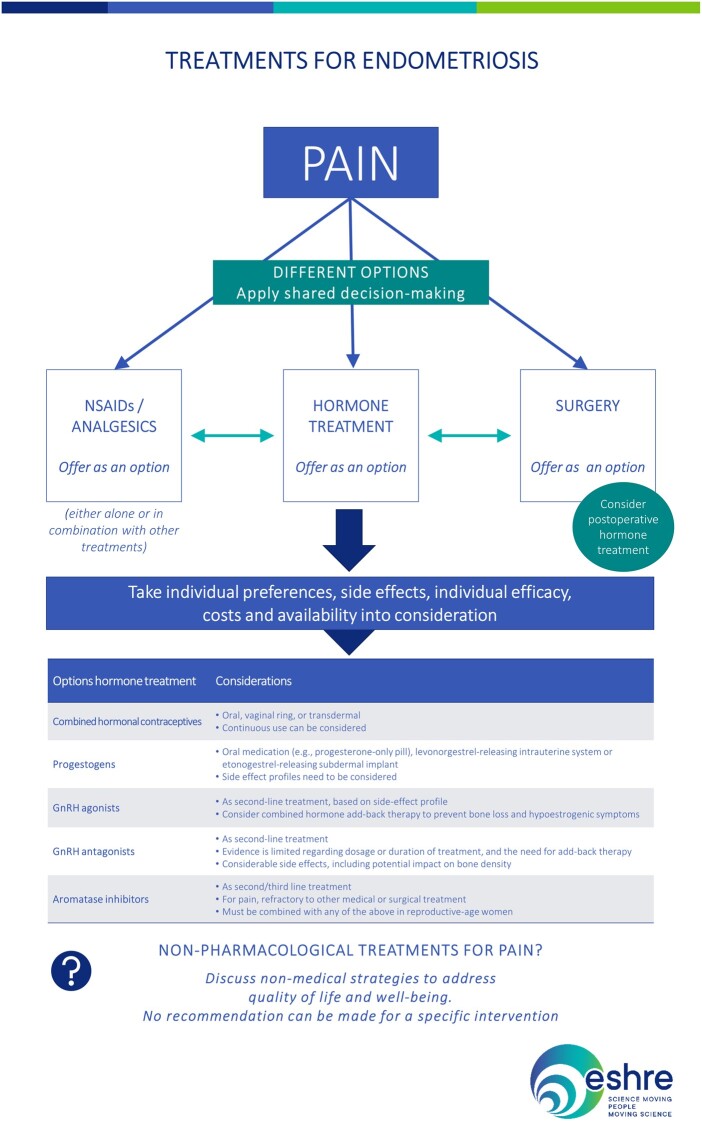
- Treatment options for endometriosis-associated pain include analgesics/NSAIDs, hormonal treatments (combined hormonal contraceptives, progestogens, GnRH agonists or antagonists, aromatase inhibitors), and surgery; five topics with significant changes include the diagnostic process, GnRH antagonists as second-line, postoperative medical treatment for pain, no extended GnRH agonist before ART, and use of the endometriosis fertility index (EFI).
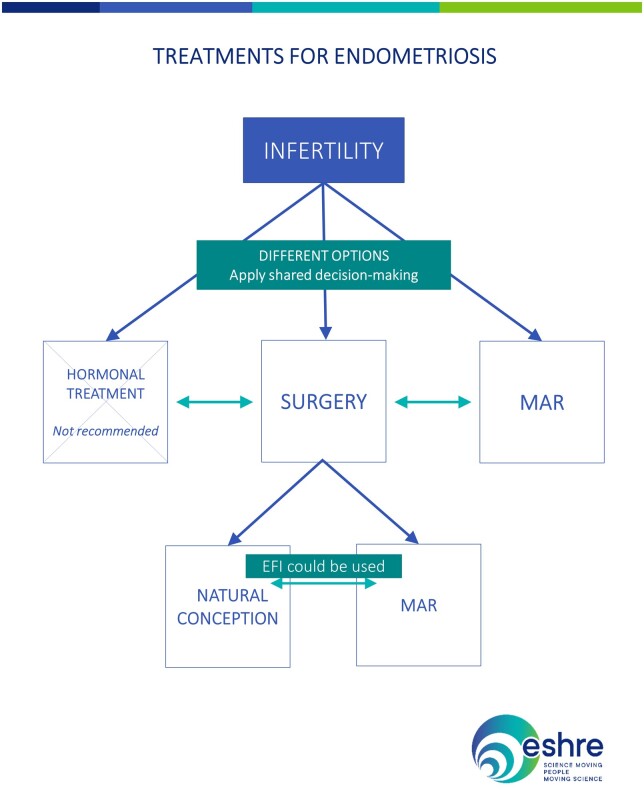
- For endometriosis-associated infertility, surgery and/or medically assisted reproduction are feasible; ovarian suppression, pentoxifylline/anti-inflammatory drugs/letrozole outside ovulation induction, and routine surgery before ART for rASRM stage I/II or endometrioma are not recommended.
Methods
- The guideline was developed according to ESHRE’s structured methodology; 42 key questions were formulated (7 narrative, 35 PICO), with PubMed/MEDLINE and Cochrane searches from inception to 1 December 2020, limited to English-language studies.
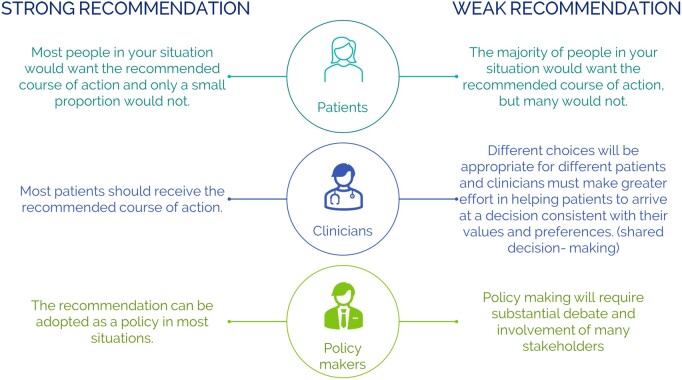
- Evidence was assessed and summarized in evidence tables; recommendations were drafted by specialist subgroups, discussed in core guideline development group meetings until consensus, labelled strong or weak, and graded High, Moderate, Low, or Very low; GPPs were added where relevant.
- A stakeholder review ran from 24 June to 15 August 2021; 56.5% of the 253 comments resulted in an adaptation or correction. The guideline will be considered for update 4 years after publication, with an intermediate assessment at 2 years.
Limitations
- Stated: the guideline describes different management options but, based on existing evidence, no firm recommendations could be formulated on the most appropriate treatments; for specific clinical issues such as asymptomatic endometriosis or extrapelvic endometriosis, evidence is too scarce to make evidence-based recommendations.
- Stated: there is an urgent need for more research on the most appropriate diagnostic and treatment options and on the natural course of the disease.
- Evident from the text: many recommendations are weak or based on low/very low-quality evidence or GPPs; no prognostic markers exist to select patients who would benefit from surgery; no specific non-medical intervention can be recommended; and heterogeneity prevented conclusions on surgical techniques for deep endometriosis-associated pain.
Model-written summary. Check it against the paper before relying on it.
Integrity signals
Registry
Cites
Statistics
Figures
Verification
Claims the paper makes
30 Valid · 5 Not valid · 26 Not checked · 25 Own results and interpretations
At least one cited source doesn’t support this claim or points to a different paper, and none confirmed it — see the verdicts below.
In the paper
“Clinicians may consider operative laparoscopy for the treatment of endometrioma-associated infertility as it may increase their chance of natural pregnancy, although no data from comparative studies exist (Dan and Limin, 2013; Alborzi et al., 2019; Candiani et al., 2020).”
§ ESHRE guideline: endometriosis† > Results > Treatment of endometriosis-associated infertility
What the sources say
- Not checked — no full text of the sourcecites Dan and Limin, 2013 matched to “Laparoscopic ovarian cystectomy versus fenestration/coagulation or laser vaporization for the treatment of endometriomas: a meta-analysis of randomized controlled trials” (2013) source
- Disputedcites Alborzi et al., 2019 matched to “The success of various endometrioma treatments in infertility: a systematic review and meta-analysis of prospective studies” (2019) sourceExperimental — accuracy not yet measured
The Results describe a prospective randomized trial comparing two laparoscopic treatments for endometriomas and reporting pregnancy rates after treatment without medication. That contradicts the categorical claim that no comparative-study data exist for operative laparoscopy and natural pregnancy. The trial compares two operations, however, not surgery against no surgery. (LLM, conf=0.83)
Checked by a reasoning model — may be wrong.
- Not checked — no full text of the sourcecites Candiani et al., 2020 matched to “Recurrence Rate after “One-Step” CO2 Fiber Laser Vaporization versus Cystectomy for Ovarian Endometrioma: A 3-Year Follow-up Study” (2020) source
hedged- Asserted: passes — The authors put it forward as true.
- Checkable: passes — It can be checked against evidence.
- Load-bearing: passes — The paper’s conclusions depend on it.
- Based: passes — The paper gives a reason why it holds.
The cited sources support only part of this claim — read each source’s verdict below.
In the paper
“Both GnRH antagonist and agonist protocols can be offered based on patients’ and physicians’ preferences as no difference in pregnancy or live birth rate has been demonstrated (Pabuccu et al., 2007; Rodriguez-Purata et al., 2013; Bastu et al., 2014; Kolanska et al., 2017; Drakopoulos et al., 2018).”
§ ESHRE guideline: endometriosis† > Results > Treatment of endometriosis-associated infertility
What the sources say
- Not checked — no full text of the sourcecites Pabuccu et al., 2007 matched to “GnRH agonist and antagonist protocols for stage I-II endometriosis and endometrioma in in vitro fertilization/intracytoplasmic sperm injection cycles” (2007) source
- Not checked — no full text of the sourcecites Rodriguez-Purata et al., 2013 matched to “Endometriosis and IVF: are agonists really better? Analysis of 1180 cycles with the propensity score matching” (2013) source
- Partly supportedcites Bastu et al., 2014 matched to “Comparison of ovulation induction protocols after endometrioma resection” (2014) sourceExperimental — accuracy not yet measured
The Results (Table 2; page not provided) show no significant difference in pregnancy or ongoing-pregnancy rates between protocols among IVF patients who had undergone endometrioma resection. The Conclusions (page not provided) call for further studies evaluating live birth rates, so this paper does not establish that live birth rates are similar. Its study population is also narrower than women with endometriosis generally. (LLM, conf=0.91)
boosted- Asserted: passes — The authors put it forward as true.
- Checkable: passes — It can be checked against evidence.
- Load-bearing: passes — The paper’s conclusions depend on it.
- Based: passes — The paper gives a reason why it holds.
The cited sources support only part of this claim — read each source’s verdict below.
In the paper
“Women with endometriosis can be reassured regarding the safety of ART since the recurrence rates are not increased compared to those women not undergoing ART (Benaglia et al., 2008; Somigliana et al., 2019).”
§ ESHRE guideline: endometriosis† > Results > Treatment of endometriosis-associated infertility
What the sources say
- Could not verifycites Benaglia et al., 2008 matched to “Endometrioma and oocyte retrieval-induced pelvic abscess: a clinical concern or an exceptional complication?” (2008) sourceExperimental — accuracy not yet measured
The Abstract (page unavailable) says the study estimated pelvic-abscess frequency after oocyte retrieval in women with endometriomas. Searches for endometriosis recurrence after IVF and a comparison with women not undergoing IVF found no passage addressing either point. (LLM, conf=0.76)
- Partly supportedcites Somigliana et al., 2019 matched to “Ovarian stimulation and endometriosis progression or recurrence: a systematic review” (2019) sourceExperimental — accuracy not yet measured
The Discussion (page unavailable) describes moderately supported, reassuring evidence that IVF has a limited impact on endometriosis recurrence. But the claim extends that reassurance to ART generally: the review's discussion of IUI (page unavailable) identifies a possible increased recurrence risk, and the Discussion says the evidence is incomplete. (LLM, conf=0.88)
plain- Asserted: passes — The authors put it forward as true.
- Checkable: passes — It can be checked against evidence.
- Load-bearing: passes — The paper’s conclusions depend on it.
- Based: passes — The paper gives a reason why it holds.
- Could not verify
The cited sources support only part of this claim — read each source’s verdict below.
In the paper
“The extended administration of GnRH agonist prior to ART treatment to improve live birth rate in infertile women with endometriosis is not recommended, as the benefit is uncertain (Georgiou et al., 2019; Cao et al., 2020; Kaponis et al., 2020).”
§ ESHRE guideline: endometriosis† > Results > Treatment of endometriosis-associated infertility
What the sources say
- Not checked — no full text of the sourcecites Georgiou et al., 2019 matched to “Long-term GnRH agonist therapy before in vitro fertilisation (IVF) for improving fertility outcomes in women with endometriosis” (2019) source
- Partly supportedcites Cao et al., 2020 matched to “The effectiveness of different down-regulating protocols on in vitro fertilization-embryo transfer in endometriosis: a meta-analysis” (2020) sourceExperimental — accuracy not yet measured
The Discussion reports that a Cochrane review found uncertain effects of long-term GnRH agonist therapy on pregnancy outcomes in infertile patients with endometriosis. Cao et al. do not establish uncertainty specifically for live birth rate or recommend against extended treatment; their own analysis reports improved clinical pregnancy rates in some groups. (LLM, conf=0.82)
- Not checked — no full text of the sourcecites Kaponis et al., 2020 matched to “Ultralong administration of gonadotropin-releasing hormone agonists before in vitro fertilization improves fertilization rate but not clinical pregnancy rate in women with mild endometriosis: a prospective, randomized, controlled trial” (2020) source
plain- Asserted: passes — The authors put it forward as true.
- Checkable: passes — It can be checked against evidence.
- Load-bearing: passes — The paper’s conclusions depend on it.
- Based: passes — The paper gives a reason why it holds.
The cited sources support only part of this claim — read each source’s verdict below.
In the paper
“Presacral neurectomy (PSN) is beneficial for treatment of endometriosis-associated midline pain as an adjunct to conventional laparoscopic surgery, but it should be stressed that PSN requires a high degree of skill and is associated with an increased risk of adverse effects such as intraoperative bleeding, and postoperative constipation, urinary urgency and painless first stage of labour (Miller e”
§ ESHRE guideline: endometriosis† > Results > Treatment of endometriosis-associated pain
What the sources say
- Partly supportedcites Miller et al., 2020 matched to “Clinical utility of presacral neurectomy as an adjunct to conservative endometriosis surgery: systematic review and meta-analysis of controlled studies” (2020) sourceExperimental — accuracy not yet measured
The Discussion reports that adjunctive presacral neurectomy reduced treatment failure for endometriosis-related midline pain. However, the Conclusion limits the finding to well-selected patients and says it *may* provide greater relief; the Results include both laparoscopic and open surgery, rather than establishing the benefit specifically for conventional laparoscopic surgery. (LLM, conf=0.84)
plainstates a cause- Asserted: passes — The authors put it forward as true.
- Checkable: passes — It can be checked against evidence.
- Load-bearing: passes — The paper’s conclusions depend on it.
- Based: passes — The paper gives a reason why it holds.
- Partly supported
54 more claims · 22 with their cited sources checked
Create a free account to see all 86 claims and every source verdict.
- Probably not a substantial claim. 26
- It may state two separate claims as one. 3
Claims other papers make about this one
Each is checked against this paper’s own text: does it say what the citing paper says it does?
The source backs part of the claim, not all of it — or backs it for a different population, condition or comparison.
In the citing paper
“although the major associations have difficulty siding sharply in favour of one treatment over another”
From IVF/ICSI or surgery as first approach for the treatment of infertility associated with ovarian and deep infiltrating endometriosis? A systematic review and meta-analysis. (2026) · cites this paper as Becker et al., 2022
Experimental — accuracy not yet measuredThe source backs part of the claim, not all of it — or backs it for a different population, condition or comparison.
In the citing paper
“it appears that, for some of them, patients with ovarian endometriomas (OMA) should not be referred for surgery, except in cases of pelvic pain”
From IVF/ICSI or surgery as first approach for the treatment of infertility associated with ovarian and deep infiltrating endometriosis? A systematic review and meta-analysis. (2026) · cites this paper as Becker et al., 2022
Experimental — accuracy not yet measuredThe source backs part of the claim, not all of it — or backs it for a different population, condition or comparison.
In the citing paper
“Therefore, optimal HRT in young women who have undergone pelvic clearance for endometriosis remains uncertain.”
From HRT in Women Undergoing Pelvic Clearance for Endometriosis—A Case Report and a National Survey (2023) · cites this paper as [10]
Experimental — accuracy not yet measuredThe source backs part of the claim, not all of it — or backs it for a different population, condition or comparison.
In the citing paper
“This has led the British Menopause Society (BMS) and European Society of Human Reproduction and Embryology (ESHRE) to recommend continuous C-HRT and avoidance of EO-HRT in this group of women at least until age of natural menopause [9,10].”
From HRT in Women Undergoing Pelvic Clearance for Endometriosis—A Case Report and a National Survey (2023) · cites this paper as [10]
Experimental — accuracy not yet measuredThe source backs part of the claim, not all of it — or backs it for a different population, condition or comparison.
In the citing paper
“Danazol is no longer recommended as a first-line therapy due to its bothersome side effect profile, such as acne, edema, vaginal spotting, weight gain, muscle cramps, deepening of voice, and increase in facial hair [ 79 ].”
From Thoracic Endometriosis Syndrome: A Comprehensive Review and Multidisciplinary Approach to Management (2024) · cites this paper as [79]
Experimental — accuracy not yet measured
3 more claims about this paper
Create a free account to see every claim other papers make about this one.
Citations
Cites
Zondervan, K. T., Becker, C. M., & Missmer, S. A. (2020) · New England Journal of Medicine · doi:10.1056/nejmra1810764 · Cited by 2,249
Self-citationESHRE guideline: management of women with endometriosis
Dunselman, G. A. J., Vermeulen, N., Becker, C., Calhaz-Jorge, C., D'Hooghe, T., De Bie, B., Heikinheimo, O., Horne, A. W., Kiesel, L., Nap, A., et al. (2014) · Human Reproduction · doi:10.1093/humrep/det457 · Cited by 2,211 · cited 2×
“The current guideline and recommendations are an update of the ESHRE endometriosis guidelines published in 2013 and 2005 (Kennedy et al. , 2005; Dunselman et al. , 2014).”
Self-citationEskenazi, B., & Warner, M. L. (1997) · Obstetrics and Gynecology Clinics of North America · doi:10.1016/s0889-8545(05)70302-8 · Cited by 1,617
ESHRE guideline for the diagnosis and treatment of endometriosis
Kennedy, S., Bergqvist, A., Chapron, C., D’Hooghe, T., Dunselman, G., Greb, R., Hummelshoj, L., Prentice, A., & Saridogan, E. (2005) · Human Reproduction · doi:10.1093/humrep/dei135 · Cited by 1,584
Pearce, C. L., Templeman, C., Rossing, M. A., Lee, A., Near, A. M., Webb, P. M., Nagle, C. M., Doherty, J. A., Cushing-Haugen, K. L., Wicklund, K. G., et al. (2012) · The Lancet Oncology · doi:10.1016/s1470-2045(11)70404-1 · Cited by 939 · cited 1×
“Routine US monitoring of asymptomatic endometriosis can be considered (Maouris, 1991; Alca´zar et al. , 2005; Pearce et al. , 2012; Serati et al. , 2013).”
High prevalence of endometriosis in infertile women with normal ovulation and normospermic partners
Meuleman, C., Vandenabeele, B., Fieuws, S., Spiessens, C., Timmerman, D., & D'Hooghe, T. (2009) · Fertility and Sterility · doi:10.1016/j.fertnstert.2008.04.056 · Cited by 606
Cervical cancer and use of hormonal contraceptives: a systematic review
Smith, J. S., Green, J., de Gonzalez, A. B., Appleby, P., Peto, J., Plummer, M., Franceschi, S., & Beral, V. (2003) · The Lancet · doi:10.1016/s0140-6736(03)12949-2 · Cited by 544
Imaging modalities for the non-invasive diagnosis of endometriosis
Nisenblat, V., Bossuyt, P. M., Farquhar, C., Johnson, N., & Hull, M. L. (2016) · Cochrane Database of Systematic Reviews · doi:10.1002/14651858.cd009591.pub2 · Cited by 538 · cited 2×
“…in endometrial tissue, blood, menstrual or uterine fluids to diagnose endometriosis (Mol et al. , 1998; May et al. , 2010; May et al. , 2011; Liu et al. , 2015; Cosar et al. , 2016; Gupta et al. , 2016; Hirsch et al. , 2016; Nisenblat et al. , 2016a; Vanhie et al. , 2019; Moustafa et al. , 2020).”
Sutton, C. J. G., Ewen, S. P., Whitelaw, N., & Haines, P. (1994) · Fertility and Sterility · doi:10.1016/s0015-0282(16)56990-8 · Cited by 525
Wentzensen, N., Poole, E. M., Trabert, B., White, E., Arslan, A. A., Patel, A. V., Setiawan, V. W., Visvanathan, K., Weiderpass, E., Adami, H.-O., et al. (2016) · Journal of Clinical Oncology · doi:10.1200/jco.2016.66.8178 · Cited by 514 · cited 1×
“…about the risk of malignancy associated with the use of hormonal contraceptives (Smith et al. , 2003; Zucchetto et al. , 2009; Gierisch et al. , 2013; Havrilesky et al. , 2013; Braganza et al. , 2014; Berlanda et al. , 2016; Wentzensen et al. , 2016; Butt et al. , 2018; Michels et al. , 2018).”
Cited by
Pathophysiology, diagnosis, and management of endometriosis
Horne, A. W., & Missmer, S. A. (2022) · BMJ · doi:10.1136/bmj-2022-070750 · Cited by 661
Self-citationEndometriosis-associated infertility: From pathophysiology to tailored treatment
Bonavina, G., & Taylor, H. S. (2022) · Frontiers in Endocrinology · doi:10.3389/fendo.2022.1020827 · Cited by 319
Diagnosis and management of endometriosis
Allaire, C., Bedaiwy, M. A., & Yong, P. J. (2023) · Canadian Medical Association Journal · doi:10.1503/cmaj.220637 · Cited by 303
As-Sanie, S., Mackenzie, S. C., Morrison, L., Schrepf, A., Zondervan, K. T., Horne, A. W., & Missmer, S. A. (2025) · JAMA · doi:10.1001/jama.2025.2975 · Cited by 249
Self-citationTargeting Oxidative Stress Involved in Endometriosis and Its Pain
Clower, L., Fleshman, T., Geldenhuys, W. J., & Santanam, N. (2022) · Biomolecules · doi:10.3390/biom12081055 · Cited by 145
Corte, P. D., Klinghardt, M., von Stockum, S., & Heinemann, K. (2024) · BJOG An International Journal of Obstetrics & Gynaecology · doi:10.1111/1471-0528.17973 · Cited by 209
“These guidelines aim for increased awareness among healthcare providers about the diagnostic criteria of endometriosis and thus may lead to earlier recognition and referral of affected individuals for specialist evaluation.”
Endometriosis: Part I. Basic concept
Wang, P., Yang, S., Chang, W.-H., Liu, C., Lee, F., & Lee, W.-L. (2022) · Taiwanese Journal of Obstetrics and Gynecology · doi:10.1016/j.tjog.2022.08.002 · Cited by 161
A long-acting anti–IL-8 antibody improves inflammation and fibrosis in endometriosis
Nishimoto-Kakiuchi, A., Sato, I., Nakano, K., Ohmori, H., Kayukawa, Y., Tanimura, H., Yamamoto, S., Sakamoto, Y., Nakamura, G., Maeda, A., et al. (2023) · Science Translational Medicine · doi:10.1126/scitranslmed.abq5858 · Cited by 117
Epidemiology of infertility in women with endometriosis
Maggiore, U. L. R., Chiappa, V., Ceccaroni, M., Roviglione, G., Savelli, L., Ferrero, S., Raspagliesi, F., & Bascio, L. S. (2024) · Best Practice & Research Clinical Obstetrics & Gynaecology · doi:10.1016/j.bpobgyn.2023.102454 · Cited by 144
Self-citationThree Types of Endometriosis: Pathogenesis, Diagnosis and Treatment. State of the Art
Imperiale, L., Nisolle, M., Noël, J., & Fastrez, M. (2023) · Journal of Clinical Medicine · doi:10.3390/jcm12030994 · Cited by 129
“The diagnosis is usually made through surgical visualization, ideally laparoscopy, although the recent guidelines from ESHRE suggest that actual imaging modalities for some types of endometriosis could be sufficient in the diagnosis process [3].”
BackgroundMethodInfluentialSelf-citationOală, I. E., Mitranovici, M.-I., Chiorean, D. M., Irimia, T., Crișan, A., Melinte, I. M., Cotruș, T., Tudorache, V., Moraru, L., Moraru, R., et al. (2024) · Diagnostics · doi:10.3390/diagnostics14030312 · Cited by 136
“Also, the most important treatment is surgery: ablation, excision of endometriotic lesions, surgical interruption of pelvic nerve pathways, surgery for deep endometriosis, and hysterectomy for endometriosis-associated pain [41].”
BackgroundGiudice, L. C., Oskotsky, T., Falako, S., Opoku‐Anane, J., & Sirota, M. (2023) · The FASEB Journal · doi:10.1096/fj.202300907 · Cited by 131
Arterial Hypertension in Women: State of the Art and Knowledge Gaps
Chapman, N., Ching, S. M., Конради, А. О., Nuyt, A. M., Khan, T., Twumasi-Ankrah, B., Cho, E. J., Schutte, A. E., Touyz, R. M., Steckelings, U. M., et al. (2023) · Hypertension · doi:10.1161/hypertensionaha.122.20448 · Cited by 111
Amin, A., Bhuiyan, M. R. I., Hossain, R., Molla, C., Poli, T. A., & Milon, M. N. U. (2024) · Business Strategy & Development · doi:10.1002/bsd2.363 · Cited by 86
Maulenkul, T., Sabitova, A., Makhadiyeva, D., Dautova, A., Terzić, M., Oshibayeva, A., Moldaliyev, I. S., Аязбеков, А. К., Maimakov, T., Saruarov, Y. G., et al. (2024) · BMC Women s Health · doi:10.1186/s12905-024-03369-5 · Cited by 143
Society of Radiologists in Ultrasound Consensus on Routine Pelvic US for Endometriosis
Young, S. W., Jha, P., Chamié, L. P., Rodgers, S. K., Kho, R. M., Horrow, M. M., Glanc, P., Feldman, M., Groszmann, Y. S., Khan, Z., et al. (2024) · Radiology · doi:10.1148/radiol.232191 · Cited by 105
Didžiokaitė, G., Biliūtė, G., Gudaitė, J., & Kvedarienė, V. (2023) · International Journal of Molecular Sciences · doi:10.3390/ijms24043809 · Cited by 101
Avery, J., Deslandes, A., Freger, S., Leonardi, M., Lo, G., Carneiro, G., Condous, G. S., Hull, M. L., Hull, M. L., Carneiro, G., et al. (2023) · Fertility and Sterility · doi:10.1016/j.fertnstert.2023.12.008 · Cited by 109
The bidirectional relationship between endometriosis and microbiome
Uzuner, C., Mak, J., El‐Assaad, F., & Condous, G. S. (2023) · Frontiers in Endocrinology · doi:10.3389/fendo.2023.1110824 · Cited by 88
A Lifelong Impact on Endometriosis: Pathophysiology and Pharmacological Treatment
Chen, L.-H., Lo, W.-C., Huang, H.-Y., & Wu, H. (2023) · International Journal of Molecular Sciences · doi:10.3390/ijms24087503 · Cited by 111
“This controversial evidence is insufficient to recommend the extended administration of GnRH agonist prior to ART treatment [40].”
BackgroundInfluentialCuffaro, F., Russo, E., & Amedei, A. (2024) · International Journal of Molecular Sciences · doi:10.3390/ijms25126473 · Cited by 98
“Endometriosis (EM) is a chronic, inflammatory disease characterized by the presence of ectopic endometrial tissue outside the uterine cavity [1,2].”
BackgroundInfluentialValidation of a salivary miRNA signature of endometriosis—interim data
Bendifallah, S., Dabi, Y., Suisse, S., Delbos, L., Spiers, A., Poilblanc, M., Golfier, F., Jornea, L., Bouteiller, D., Fernandez, H., et al. (2023) · NEJM Evidence · doi:10.1056/evidoa2200282 · Cited by 71
Hormonal drugs for the treatment of endometriosis
Capezzuoli, T., Rossi, M., Torre, F. L., Vannuccini, S., & Petraglia, F. (2022) · Current Opinion in Pharmacology · doi:10.1016/j.coph.2022.102311 · Cited by 91
Danilidis, A., Grigoriadis, G., Kalaitzopoulos, D. R., Angioni, S. L., Kalkan, Ü., Crestani, A., Merlot, B., & Roman, H. (2023) · Journal of Clinical Medicine · doi:10.3390/jcm12165324 · Cited by 85
“Cystectomy has, traditionally, been considered superior to non-excisional approaches in terms of chances of spontaneous conception, supported by two RCTs comparing cystectomy to cyst coagulation using bipolar current [29,30,144,145].”
BackgroundMethodRadiology State-of-the-art Review: Endometriosis Imaging Interpretation and Reporting
VanBuren, W. M., Feldman, M., Shenoy‐Bhangle, A. S., Sakala, M. D., Young, S. W., Chamié, L. P., Giudice, L. C., Hindman, N. M., Tong, A. Y., Rabban, J. T., et al. (2024) · Radiology · doi:10.1148/radiol.233482 · Cited by 77
Endometriosis and Adolescence: The Impact of Dysmenorrhea
Martire, F. G., Piccione, E., Exacoustós, C., & Zupi, E. (2023) · Journal of Clinical Medicine · doi:10.3390/jcm12175624 · Cited by 91
“The ESRHE guidelines [13] advise clinicians to treat adolescent girls with hormonal contraceptives or progestins to reduce endometriosis-related pain.”
BackgroundMethodInfluentialMartire, F. G., Russo, C., Selntigia, A., Nocita, E., Soreca, G., Lazzeri, L., Zupi, E., & Exacoustós, C. (2022) · Fertility and Sterility · doi:10.1016/j.fertnstert.2022.12.004 · Cited by 78
Keckstein, J., Hoopmann, M., Merz, E., Grab, D., Weichert, J., Helmy-Bader, S., Wölfler, M. M., Bajka, M., Mechsner, S., Schäfer, S. D., et al. (2022) · Archives of Gynecology and Obstetrics · doi:10.1007/s00404-022-06766-z · Cited by 72
Self-citationEndometrial receptivity in adenomyosis and/or endometriosis
Pirtea, P., de Ziegler, D., & Ayoubi, J. M. (2023) · Fertility and Sterility · doi:10.1016/j.fertnstert.2023.03.004 · Cited by 65
Economic Implications of Endometriosis: A Review
Darbà, J., & Marsà, A. (2022) · PharmacoEconomics · doi:10.1007/s40273-022-01211-0 · Cited by 86
The known, the unknown and the future of the pathophysiology of endometriosis
Ochoa Bernal, M. A., & Fazleabas, A. T. (2024) · International Journal of Molecular Sciences · doi:10.3390/ijms25115815 · Cited by 59
“…would be now recommended in patients with negative imaging Laparoscopy would be now recommended in patients with negative imaging results and/or where empirical treatment was unsuccessful or inappropriate [14]. results and/or where empirical treatment was unsuccessful or inappropriate [14].”
BackgroundBecker, C. M., Johnson, N. P., As‐Sanie, S., Ferreira, J. C. A., Abrão, M. S., Wilk, K., Imm, S. J., Mathur, V. S., Perry, J. S., Wagman, R. B., et al. (2024) · Human Reproduction · doi:10.1093/humrep/dead263 · Cited by 83
Self-citationLessons from implementing the Australian National Action Plan for Endometriosis
Armour, M., Avery, J., Leonardi, M., Niekerk, L. M. V., Druitt, M. L., Parker, M. A., Girling, J. E., McKinnon, B. D., Mikocka‐Walus, A. A., Ng, C. H. M., et al. (2022) · Reproduction and Fertility · doi:10.1530/raf-22-0003 · Cited by 60
Pino, I., Belloni, G. M., Barbera, V., Solima, E., Radice, D., Angioni, S. L., Arena, S., Bergamini, V., Candiani, M., Maiorana, A., et al. (2022) · The European Journal of Contraception & Reproductive Health Care · doi:10.1080/13625187.2022.2128644 · Cited by 70
“Also for these reasons, the current clinical practice guidelines continue to advocate laparoscopic surgery with histological confirmation as the gold standard for diagnosis of endometriosis [7].”
BackgroundSelf-citationEndometriosis-Associated Ovarian Cancer: From Molecular Pathologies to Clinical Relevance
Steinbuch, S. C., Lüß, A.-M., Eltrop, S., Götte, M., & Kiesel, L. (2024) · International Journal of Molecular Sciences · doi:10.3390/ijms25084306 · Cited by 80
“Likewise, the ESHRE guideline concludes that “both diagnostic laparoscopy and imaging combined with empirical treatment (hormonal contraceptives or progestogens) can be considered in women suspected of endometriosis” [3].”
BackgroundInfluentialSelf-citationMartire, F. G., Giorgi, M., d’Abate, C., Colombi, I., Ginetti, A., Cannoni, A., Fedele, F., Exacoustós, C., Centini, G., Zupi, E., et al. (2024) · Journal of Clinical Medicine · doi:10.3390/jcm13020550 · Cited by 67
“According to the European Society of Human Reproduction and Embryology (ESHRE) guidelines [5], offering surgery to young women for a histological diagnosis of endometriosis is no longer considered appropriate nowadays.”
BackgroundMethodInfluentialGeng, R., Huang, X., Li, L., Guo, X., Wang, Q., Zheng, Y., & Guo, X. (2022) · Frontiers in Immunology · doi:10.3389/fimmu.2022.1037504 · Cited by 57
“Goserelin and dienogest are considered as first-line drug therapy for endometriosis (47).”
BackgroundCondous, G. S., Gerges, B., Thomassin‐Naggara, I., Becker, C. M., Tomassetti, C., Krentel, H., van Herendael, B. J., Malzoni, M., Abrão, M. S., Sarıdoğan, E., et al. (2024) · Ultrasound in Obstetrics and Gynecology · doi:10.1002/uog.27560 · Cited by 70
Self-citationEndometriosis: recent advances that could accelerate diagnosis and improve care
Griffiths, M. J., Horne, A. W., Gibson, D. A., Roberts, N., & Saunders, P. T. K. (2024) · Trends in Molecular Medicine · doi:10.1016/j.molmed.2024.06.008 · Cited by 83
Self-citationTime for global health policy and research leaders to prioritize endometriosis
Giudice, L. C., Horne, A. W., & Missmer, S. A. (2023) · Nature Communications · doi:10.1038/s41467-023-43913-9 · Cited by 64
Self-citationThe role of CD8+ T cells in endometriosis: a systematic review
Kisovar, A., Becker, C. M., Granne, I., & Southcombe, J. H. (2023) · Frontiers in Immunology · doi:10.3389/fimmu.2023.1225639 · Cited by 58
“Imaging techniques have recently been recognized as a reliable diagnostic alternative to invasive procedures but they still have signi fi cant limitations for the detection of early disease (74).”
Self-citationMuzii, L., Tucci, C. D., Galati, G., Carbone, F., Palaia, I., Bogani, G., Perniola, G., Tomao, F., Kontopantelis, E., & Donato, V. D. (2023) · Reproductive Sciences · doi:10.1007/s43032-023-01266-0 · Cited by 59
“Among the available medical therapies, combined oral contraceptives (COC) and progestins are usually considered first-line options [6, 7].”
Backgroundvan Haaps, A. P., Wijbers, J. V., Schreurs, A. M. F., Vlek, S. L., Tuynman, J. B., Bie, B. D., de Vogel, A. L., van Wely, M., & Mijatovic, V. (2023) · Human Reproduction · doi:10.1093/humrep/dead214 · Cited by 78
“Treatment options for endometriosis include hormonal therapy, surgery, pain management, and/or treatment with ART (Becker et al. , 2022).”
InfluentialSelf-citationAssessing the true prevalence of endometriosis: A narrative review of literature data
Harder, C., Velho, R. V., Brandes, I., Sehouli, J., & Mechsner, S. (2024) · International Journal of Gynecology & Obstetrics · doi:10.1002/ijgo.15756 · Cited by 88
Swift, B., Taneri, B., Becker, C. M., Basarir, H., Naci, H., Missmer, S. A., Zondervan, K. T., & Rahmioğlu, N. (2023) · European Journal of Public Health · doi:10.1093/eurpub/ckad216 · Cited by 73
Self-citationDonnez, J., Becker, C. M., Taylor, H. S., Carmona, F., Donnez, O., Horne, A. W., Paszkowski, M., Petraglia, F., Renner, S. P., Patel, A., et al. (2024) · Human Reproduction · doi:10.1093/humrep/deae076 · Cited by 69
Self-citationThomassin‐Naggara, I., Monroc, M., Chauveau, B., Fauconnier, A., Verpillat, P., Dabi, Y., Gavrel, M., Bolze, P., Daraï, É., Touboul, C., et al. (2023) · JAMA Network Open · doi:10.1001/jamanetworkopen.2023.11686 · Cited by 50
Current Updates on the Role of Microbiome in Endometriosis: A Narrative Review
Ser, H., Yong, S.-J. A., Shafiee, M. N., Mokhtar, N. M., & Ali, R. A. R. (2023) · Microorganisms · doi:10.3390/microorganisms11020360 · Cited by 61
“Examples of Endometriosis Guidelines and its level of evidence in treating infertility [56,58,77,78].”
BackgroundEndometriosis and autoimmunity
Blanco, L. P., Salmeri, N., Temkin, S. M., Shanmugam, V. K., & Stratton, P. (2025) · Autoimmunity Reviews · doi:10.1016/j.autrev.2025.103752 · Cited by 61
Cano-Herrera, G., Nehmad, S. S., Gascón, J. R. D. C., Vionet, A. M., van Tienhoven, X. A., Martínez, M. F. O., Álvarez, M. M., Rivero, M. X. V., Torres, M. F. L., Valverde, M. J. B., et al. (2024) · Biomedicines · doi:10.3390/biomedicines12071476 · Cited by 86
Zhang, Y., Zhang, S., Zhao, Z., Wang, C., Shuai, X., & Wang, F. (2022) · Fertility and Sterility · doi:10.1016/j.fertnstert.2022.08.860 · Cited by 61
Vercellini, P., Bandini, V., Viganò, P., Stefano, G. D., Merli, C. E. M., & Somigliana, E. (2023) · Human Reproduction · doi:10.1093/humrep/dead229 · Cited by 54
Zippl, A. L., Reiser, E., & Seeber, B. (2023) · Fertility and Sterility · doi:10.1016/j.fertnstert.2023.12.033 · Cited by 68
Self-citationThe role of small extracellular vesicle-miRNAs in endometriosis
Nazri, H. M., Greaves, E., Quenby, S. M., Dragovic, R., Tapmeier, T. T., & Becker, C. M. (2023) · Human Reproduction · doi:10.1093/humrep/dead216 · Cited by 55
Self-citationLong-term risk of repeated surgeries in women managed for endometriosis: a 1,092 patient-series
Roman, H., Chanavaz‐Lacheray, I., Hennetier, C., Tuech, J., Dennis, T., Verspyck, É., & Merlot, B. (2023) · Fertility and Sterility · doi:10.1016/j.fertnstert.2023.05.156 · Cited by 55
Circulating microRNAs as Non-Invasive Biomarkers in Endometriosis Diagnosis—A Systematic Review
Vanhie, A., Caron, E., Vermeersch, E., Dorien, O., Tomassetti, C., Meuleman, C., Mestdagh, P., & D’Hooghe, T. M. (2024) · Biomedicines · doi:10.3390/biomedicines12040888 · Cited by 53
“Endometriosis affects about 2 to 10% of all women of reproductive age, 50% of infertile women and even 2 to 5% of postmenopausal women [7,8].”
BackgroundSelf-citationAvery, J., Knox, S., Deslandes, A., Leonardi, M., Lo, G., Wang, H., Zhang, Y., Holdsworth‐Carson, S. J., Nguyen, T. T. T., Condous, G. S., et al. (2023) · Fertility and Sterility · doi:10.1016/j.fertnstert.2023.12.017 · Cited by 56
Vercellini, P., Bandini, V., Viganò, P., Ambruoso, D., Cetera, G. E., & Somigliana, E. (2023) · Human Reproduction · doi:10.1093/humrep/dead206 · Cited by 53
Riemma, G., FRANCISCIS, P. D., Verde, M. L., Ravo, M., Fumiento, P., Fasulo, D. D., Corte, L. D., Ronsini, C., Torella, M., & Cobellis, L. (2022) · International Journal of Gynecology & Obstetrics · doi:10.1002/ijgo.14621 · Cited by 47
Pant, A., Moar, K., Arora, T. K., & Maurya, P. K. (2023) · Clinica Chimica Acta · doi:10.1016/j.cca.2023.117563 · Cited by 53
Social Media, Endometriosis, and Evidence-Based Information: An Analysis of Instagram Content
Adler, H., Lewis, M., Ng, C. H. M., Brooks, C., Leonardi, M., Mikocka‐Walus, A. A., Bush, D., Semprini, A. C., Wilkinson-Tomey, J., Condous, G. S., et al. (2024) · Healthcare · doi:10.3390/healthcare12010121 · Cited by 48
Clinical Diagnosis and Early Medical Management for Endometriosis: Consensus from Asian Expert Group
Kim, M.-R., Chapron, C., Römer, T., Aguilar, A., Chalermchockcharoenkit, A., Chatterjee, S., Đào, L. T. A., Fong, Y. F., Hendarto, H., Hidayat, S. T., et al. (2022) · Healthcare · doi:10.3390/healthcare10122515 · Cited by 49
“, side effects, compliance, cost) [51].”
Superficial Endometriosis at Ultrasound Examination—A Diagnostic Criteria Proposal
Pedrassani, M., Guerriero, S., Pascual, M. A., AJOSSA, S., Graupera, B., Pagliuca, M., Podgaec, S., Camargos, E., de Oliveira, Y. V., & Alcázar, J. L. (2023) · Diagnostics · doi:10.3390/diagnostics13111876 · Cited by 49
“In fact, current guidelines establish that laparoscopy is needed for diagnosing superficial endometriosis [12].”
BackgroundGete, D. G., Doust, J. A., Mortlock, S., Montgomery, G. W., & Mishra, G. D. (2023) · Maturitas · doi:10.1016/j.maturitas.2023.04.272 · Cited by 68
Endometriosis and Adenomyosis: From Pathogenesis to Follow-Up
Martire, F. G., Costantini, E., d’Abate, C., Schettini, G., Sorrenti, G., Centini, G., Zupi, E., & Lazzeri, L. (2025) · Current Issues in Molecular Biology · doi:10.3390/cimb47050298 · Cited by 52
“The prevalence of endometriosis is around 13–15% of the general female population of Western countries, rising to 30–40% of women with pelvic pain and up to 50–60% of women with infertility [1].”
InfluentialRecurrence after surgery for endometrioma: a systematic review and meta-analyses
Veth, V. B., Keukens, A., Reijs, A., Bongers, M. Y., Mijatovic, V., Coppus, S. F. P. J., & Maas, J. W. M. (2024) · Fertility and Sterility · doi:10.1016/j.fertnstert.2024.07.033 · Cited by 59
“All included studies used surgical treatment options as described by the working group of the European Society for Gynaecological Endoscopy, European Society of Human Reproduction and Embryology, and World Endome-triosis Society to ensure that this review re fl ects common clinical practice (3).”
Self-citationGonadotropin-releasing hormone analogues for endometriosis
Veth, V. B., van de Kar, M. M., Duffy, J. M., van Wely, M., Mijatovic, V., & Maas, J. W. (2023) · Cochrane Database of Systematic Reviews · doi:10.1002/14651858.cd014788.pub2 · Cited by 39
Self-citationYan, H., Shi, J., Li, X., Dai, Y., Wu, Y., Zhang, J., Gu, Z., Zhang, C., & Leng, J. (2022) · Fertility and Sterility · doi:10.1016/j.fertnstert.2022.08.856 · Cited by 48
Endometriosis in Adolescents with Obstructive Anomalies of the Reproductive Tract
Kapczuk, K., Zajączkowska, W., Madziar, K., & Kędzia, W. (2023) · Journal of Clinical Medicine · doi:10.3390/jcm12052007 · Cited by 43
“The true prevalence of pelvic endometriosis in the general population of adolescent and young adult women (under the age of 20) remains unknown [13].”
BackgroundChaggar, P., Tellum, T., Thanatsis, N., De Braud, L. V., Setty, T., & Jurkovic, D. (2023) · Ultrasound in Obstetrics & Gynecology · doi:10.1002/uog.26175 · Cited by 38
Mijatovic, V., & Vercellini, P. (2024) · Human Reproduction · doi:10.1093/humrep/dead262 · Cited by 81
Self-citationPathophysiology and Clinical Implications of Ovarian Endometriomas
Nezhat, F. R., Cathcart, A. M., Nezhat, C., & NEZHAT, C. R. (2024) · Obstetrics and Gynecology · doi:10.1097/aog.0000000000005587 · Cited by 55
“39,83 In contrast, the American Society for Reproductive Medicine 2012 guidelines recommend that patients with American Society for Reproductive Medicine stage III – IV endometriosis with endometrioma larger than 4 cm should consider cystectomy for diagnosis, oocyte access, and possibly ovarian…”
BackgroundExpectant, Medical, and Surgical Management of Ovarian Endometriomas
Muzii, L., Galati, G., Mattei, G., Chinè, A., Perniola, G., Donato, V. D., Tucci, C. D., & Palaia, I. (2023) · Journal of Clinical Medicine · doi:10.3390/jcm12051858 · Cited by 52
“These medical treatments are based primarily on the inhibition of ovarian function, so medical or hormonal therapy should not be used in patients with associated infertility [6,7].”
BackgroundMethodInfluentialDeep Endometriosis and Infertility: What Is the Impact of Surgery?
Daniilidis, A., Angioni, S. L., Michele, S. D., Dinas, K. D., Gkrozou, F., & D’Alterio, M. N. (2022) · Journal of Clinical Medicine · doi:10.3390/jcm11226727 · Cited by 51
“Other reproductive tests, such as their partner’s sperm analysis, should be explored [41].”
BackgroundInfluentialSelf-citationBrunelli, A. C., Brito, L. G. O., Moro, F. A. S., Jales, R. M., Yela, D. A., & Benetti‐Pinto, C. L. (2022) · Ultrasound in Medicine & Biology · doi:10.1016/j.ultrasmedbio.2022.11.006 · Cited by 48
Novel pharmacological therapies for the treatment of endometriosis
Buggio, L., Dridi, D., Barbàra, G., Merli, C. E. M., Cetera, G. E., & Vercellini, P. (2022) · Expert Review of Clinical Pharmacology · doi:10.1080/17512433.2022.2117155 · Cited by 46
Maciel, C., Ferreira, H., Djokovic, D., Tun, J. K., Keckstein, J., Rizzo, S., & Manganaro, L. (2023) · Insights into Imaging · doi:10.1186/s13244-023-01466-x · Cited by 47
Hormonal Treatment of Endometriosis: A Narrative Review
Piriyev, E., Schiermeier, S., & Römer, T. (2025) · Pharmaceuticals · doi:10.3390/ph18040588 · Cited by 34
The Role of Dietary Fats in the Development and Treatment of Endometriosis
Marcinkowska, A., & Górnicka, M. (2023) · Life · doi:10.3390/life13030654 · Cited by 48
“According to the latest ESHRE guidelines (2022), laparoscopy with biopsy, previously considered the gold standard method for diagnosing endometriosis, is not necessarily the best and required method for an accurate diagnosis today [9].”
MethodMikuš, M., Goldštajn, M. Š., Brlečić, I., Dumančić, S., Laganà, A. S., Chiàntera, V., Vujić, G., & Ćorić, M. (2022) · International Journal of Molecular Sciences · doi:10.3390/ijms231810902 · Cited by 36
Self-citationAbrão, M. S., Andres, M. P., Gingold, J. A., Rius, M., Neto, J. S., Gonçalves, M. O., Giovanni, A. D., Malzoni, M., & Carmona, F. (2022) · Journal of Minimally Invasive Gynecology · doi:10.1016/j.jmig.2022.11.003 · Cited by 38
Bao, C., Wang, H., & Fang, H. (2022) · Frontiers in Immunology · doi:10.3389/fimmu.2022.758440 · Cited by 40
Advances in targeting estrogen synthesis and receptors in patients with endometriosis
Clemenza, S., Vannuccini, S., Ruotolo, A., Capezzuoli, T., & Petraglia, F. (2022) · Expert Opinion on Investigational Drugs · doi:10.1080/13543784.2022.2152325 · Cited by 38
The Emerging Role of Menstrual-Blood-Derived Stem Cells in Endometriosis
Cordeiro, M. R., Carvalhos, C. A., & Figueiredo-Dias, M. (2022) · Biomedicines · doi:10.3390/biomedicines11010039 · Cited by 36
Dietary and Nutritional Interventions for the Management of Endometriosis
Abulughod, N., Valakas, S., & El‐Assaad, F. (2024) · Nutrients · doi:10.3390/nu16233988 · Cited by 64
Fertility preservation in women with endometriosis
Marca, A. L., Semprini, M., Mastellari, E., Donno, V., Capuzzo, M., Alboni, C., & Giulini, S. (2025) · Human Reproduction Open · doi:10.1093/hropen/hoaf012 · Cited by 48
Natural progression of deep pelvic endometriosis in women who opt for expectant management
Knez, J., Bean, E., Nijjar, S., Tellum, T., Chaggar, P., & Jurkovic, D. (2023) · Acta Obstetricia Et Gynecologica Scandinavica · doi:10.1111/aogs.14491 · Cited by 37
Cooper, K. G., Bhattacharya, S., DANIELS, J. P., Horne, A. W., Clark, T. J., Sarıdoğan, E., Cheed, V., Pirie, D., Melyda, M., Monahan, M., et al. (2024) · BMJ · doi:10.1136/bmj-2023-079006 · Cited by 48
Self-citationExpression of HOXA10 Gene in Women with Endometriosis: A Systematic Review
Lazim, N., Elias, M. H., Sutaji, Z., Karim, A., Abu, M. A., Ugusman, A., Syafruddin, S. E., Mokhtar, M. H., & Ahmad, M. F. (2023) · International Journal of Molecular Sciences · doi:10.3390/ijms241612869 · Cited by 40
“ESHRE guidelines state that no biomarkers measured in serum or peritoneal fluid for the diagnosis of endometriosis are currently recommended [41].”
BackgroundCirillo, M., Argento, F. R., Attanasio, M., Becatti, M., Ladisa, I., Fiorillo, C., Coccia, M. E., & Fatini, C. (2023) · Biomedicines · doi:10.3390/biomedicines11020450 · Cited by 38
“Endometriosis is a chronic, debilitating disease affecting roughly 10% (190 million) of reproductive-age women globally [3].”
BackgroundEndometriosis is associated with pregnancy loss: a nationwide historical cohort study
Boje, A. D., Egerup, P., Westergaard, D., Bertelsen, M.-L. M. F., Nyegaard, M., Hartwell, D., Lidegaard, Ø., & Nielsen, H. S. (2023) · Fertility and Sterility · doi:10.1016/j.fertnstert.2022.12.042 · Cited by 34
Oxidative Imbalance in Endometriosis-Related Infertility—The Therapeutic Role of Antioxidants
Dymanowska-Dyjak, I., Frankowska, K., Abramiuk, M., & Polak, G. (2024) · International Journal of Molecular Sciences · doi:10.3390/ijms25126298 · Cited by 50
“To date, there is no single appropriate management method for the treatment of endometriosis-associated infertility, and both surgery and assisted reproductive techniques (ARTs) could be offered [13,14].”
MethodClinical Characteristics and Local Histopathological Modulators of Endometriosis and Its Progression
Istrate-Ofiţeru, A.-M., Mogoantă, C. A., Zorilă, G. L., Roşu, G. C., Drăguşin, R. C., Berbecaru, E.-I.-A., Zorilă, M. V., Comănescu, C. M., Mogoantă, S. Ş., Văduva, C.-C., et al. (2024) · International Journal of Molecular Sciences · doi:10.3390/ijms25031789 · Cited by 39
Kooij, J. J. S., de Jong, M., Agnew‐Blais, J. C., Amoretti, S., Madsen, K. B., Barclay, I., Bölte, S., Skoglund, C. B., Broughton, T., Carucci, S., et al. (2025) · Frontiers in Global Women s Health · doi:10.3389/fgwh.2025.1613628 · Cited by 45
Thoracic Endometriosis Syndrome: A Comprehensive Review and Multidisciplinary Approach to Management
Nezhat, C., Amirlatifi, N., Najmi, Z., & Tsuei, A. (2024) · Journal of Clinical Medicine · doi:10.3390/jcm13247602 · Cited by 36
Herranz‐Blanco, B., Daoud, E., Viganò, P., García-Velasco, J. A., & Colli, E. (2023) · Biomolecules · doi:10.3390/biom13071052 · Cited by 42
“Regardless of the lesion type and location, the interpretation of imaging findings is highly dependent on a clinician’s experience and skill, hindering their utility [10].”
BackgroundInfluentialThe Role of NK and T Cells in Endometriosis
Reis, J. L., Rosa, N. N., Martins, C. G., Ângelo‐Dias, M., Borrego, L. M., & de Lima, J. J. A. V. (2024) · International Journal of Molecular Sciences · doi:10.3390/ijms251810141 · Cited by 35
Mick, I., Freger, S., van Keizerswaard, J., Gholiof, M., & Leonardi, M. (2024) · Therapeutic Advances in Reproductive Health · doi:10.1177/26334941241277759 · Cited by 53
“…limitation remains the regionally dependent extensive surgical wait times associated with laparoscopy and regional variations in costs, specialists, and surgical availability, 205–208 as well as the availability of pre-surgical imaging, 65,68,209–211 limiting patients from receiving adequate care.”
BackgroundI Am the 1 in 10—What Should I Eat? A Research Review of Nutrition in Endometriosis
Piecuch, M., Garbicz, J., Waliczek, M., Malinowska-Borowska, J., & Rozentryt, P. (2022) · Nutrients · doi:10.3390/nu14245283 · Cited by 43
“Diagnostic laparoscopy with biopsy, previously considered the gold standard in identification of EMS, has been presented in the latest ESHRE guidelines (2022) as among the possible options, not necessarily the best and required for an accurate diagnosis [6].”
MethodEndometriosis, staging, infertility and assisted reproductive technology: time for a rethink
Ata, B., & Somigliana, E. (2024) · Reproductive BioMedicine Online · doi:10.1016/j.rbmo.2024.103943 · Cited by 38
Self-citation
Metadata
- Authors
- Becker, C. M., Bokor, A., Heikinheimo, O., Horne, A., Jansen, F., Kiesel, L., King, K., Kvaskoff, M., Nap, A., Petersen, K., Saridogan, E., Tomassetti, C., van Hanegem, N., Vulliemoz, N., Vermeulen, N., ESHRE Endometriosis Guideline Group, Altmäe, S., Ata, B., Ball, E., Barra, F., Bastu, E., Bianco-Anil, A., Knudsen, U. B., Brubel, R., Cambitzi, J., Cantineau, A., Cheong, Y., Daniilidis, A., De Bie, B., Exacoustos, C., Ferrero, S., Gelbaya, T., Goetz-Collinet, J., Hudelist, G., Hussain, M., Indrielle-Kelly, T., Khazali, S., Kumar, S. L., Leone Roberti Maggiore, U., Maas, J. W. M., McLaughlin, H., Metello, J., Mijatovic, V., Miremadi, Y., Muteshi, C., Nisolle, M., Oral, E., Pados, G., Parades, D., Pluchino, N., Supramaniam, P. R., Schick, M., Seeber, B., Seracchioli, R., Laganà, A. S., Stavroulis, A., Tebache, L., Uncu, G., Van den Broeck, U., van Peperstraten, A., Vereczkey, A., Wolthuis, A., Bahat, P. Y., & Yazbeck, C.
- Affiliations
- University of Oxford (GB)
- Semmelweis University (HU)
- University of Helsinki (FI)
- MRC Centre for Reproductive Health (GB)
- EndoHome—Endometriosis Association Belgium , Belgium
- University Hospital Münster (DE)
- Individual Endometriosis Advocate , Ireland
- Inserm (FR)
- Radboud University Nijmegen (NL)
- University College London Hospitals NHS Foundation Trust (GB)
- Department of Obstetrics and Gynaecology, University College London Hospital , London, UK
- Universitair Ziekenhuis Leuven (BE)
- Department of Reproductive Medicine and Gynecology, University Medical Center Utrecht , Utrecht, The Netherlands
- Department of Woman Mother Child, Fertility Medicine and Gynaecological Endocrinology, Lausanne University Hospital , Lausanne, Switzerland
- European Society of Human Reproduction and Embryology (BE)
- Aarhus University (DK)
- Centre Hospitalier Universitaire Vaudois (CH)
- Bursa Uludağ Üni̇versi̇tesi̇ (TR)
- Corresponding author
- Becker, Christian M
- ORCID
- Becker, Christian M
- Bokor, Attila
- Heikinheimo, Oskari
- Horne, Andrew
- Kiesel, Ludwig
- King, Kathleen
- Kvaskoff, Marina
- Nap, Annemiek
- Tomassetti, Carla
- Vermeulen, Nathalie
- Altmäe, Signe
- Ball, Elizabeth
- Barra, Fabio
- Knudsen, Ulla Breth
- Cantineau, Astrid
- Cheong, Ying
- Daniilidis, Angelos
- Hudelist, Gernot
- Indrielle-Kelly, Tereza
- Khazali, Shaheen
- Maas, Jacques W M
- Metello, José
- Mijatovic, Velja
- Muteshi, Charles
- Nisolle, Michelle
- Oral, Engin
- Pados, George
- Pluchino, Nicola
- Supramaniam, Prasanna Raj
- Schick, Maren
- Seeber, Beata
- Seracchioli, Renato
- Laganà, Antonio Simone
- Uncu, Gürkan
- Wolthuis, Albert
- Bahat, Pınar Yalçın
- Yazbeck, Chadi
- Venue
- Human Reproduction Open
- Publisher
- Oxford University Press (OUP)
- Published
- 2022-01-01
- Volume
- 2022
- Issue
- 2
- Pages
- hoac009-hoac009
- ISSN
- 2399-3529 (ISSN-L)
- PMC
- PMC8951218
- OpenAlex
- W4214754424
- Semantic Scholar
- 9b3b56ba47277eeae136f9c369e90b91f4b39fc2
- Cited by
- 1,712
- References
- 250
- Citations by year
- 2026: 482 · 2025: 452 · 2024: 401 · 2023: 278 · 2022: 97
- FWCI
- 258.47
- Type
- journal article
- Language
- en
- Open access
- gold
- doi.org
- Licence
- Locations
- Human Reproduction Open (publishedVersion, cc-by-nc)
- PubMed Central (publishedVersion, cc-by-nc)
- PubMed (publishedVersion)
- Cineca Institutional Research Information System (Tor Vergata University) (publishedVersion, other-oa)
- Research Publications (Maastricht University) (publishedVersion, cc-by-nc)
- Pure Amsterdam UMC (publishedVersion, cc-by)
- SERVAL (Université de Lausanne) (publishedVersion, cc-by-nc)
- Repository of the Academy's Library (Library of the Hungarian Academy of Sciences) (acceptedVersion)
- ePrints Soton (University of Southampton) (acceptedVersion)
- IRIS (submittedVersion, cc-by-nc)
- Lirias (submittedVersion, cc-by)
- Archivio istituzionale della ricerca (Alma Mater Studiorum Università di Bologna) (submittedVersion, cc-by-nc)
- Työväentutkimus Vuosikirja (submittedVersion)
- ORBi (University of Liège) (submittedVersion, other-oa)
- Edinburgh Research Explorer (University of Edinburgh) (submittedVersion, cc-by-nc)
- Radboud Repository (Radboud University) (submittedVersion)
- Radboud Repository (Radboud University) (submittedVersion, other-oa)
- Funders
- ESHRE
- Topics
- Health Sciences › Medicine › Reproductive Medicine › Endometriosis Research and Treatment
- Health Sciences › Medicine › Obstetrics and Gynecology › Gynecological conditions and treatments
- Health Sciences › Medicine › Obstetrics and Gynecology › Ectopic Pregnancy Diagnosis and Management
- Keywords
- endometriosis, endometriosis diagnosis, endometriosis-associated pain, endometriosis-associated infertility, asymptomatic endometriosis, extrapelvic endometriosis, endometriosis prevention, medical treatment
About these checks
Registry, retraction, Cites and statistics results are computed, not judged, with one exception: a printed reference that no index lists is read once by a model before it counts as a citation error. Claims are extracted by a model and kept only when their quote appears verbatim in the text; each cited source is then checked, with a model’s help, for whether it says what the claim relies on. Those verdicts can be wrong — read the claim’s quote and the cited source before relying on one.
The claim verdicts this report counts are experimental: their accuracy is not yet measured.
A language model drew the claims from the paper on 2026-10-12, under version 3 of the claim definition (model deepseek-v4.1-flash, prompt extract-v3).
A second model labelled each claim on 2026-10-12 (model jev-1.13-20260917, definition revision gold-guideline-v0.2).
Cited sources are checked with a language model’s help (gpt-6-sol).
Statistics and arithmetic are recomputed, not judged.
Confidence bands are shown only for fields calibrated on our annotated test set. None is calibrated yet, so no band is shown.
What counts as a claim ›How we measure confidence ›How we check this ›
Are you an author, or do you see a problem with this page? Request a review
Data sources
Bibliographic data: Semantic Scholar, OpenAlex, Crossref.
Contains information from the Semantic Scholar Academic Graph Datasets, made available under the ODC Attribution License (ODC-BY 1.0).
Semantic Scholar’s data is described in: Kinney, R., et al. (2023). The Semantic Scholar Open Data Platform. arXiv:2301.10140.
