

Infertility prevalence and the methods of estimation from 1990 to 2021: a systematic review and meta-analysis
Open accessThe DOI matches its Crossref record; 62 of the 62 references it cites were found in a registry or an index.
Abstract
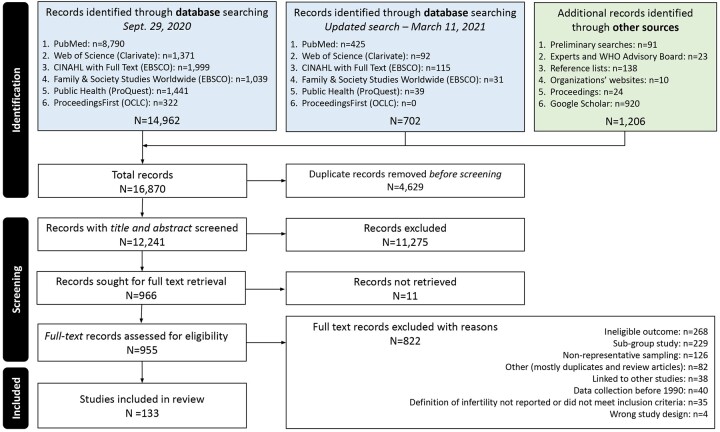
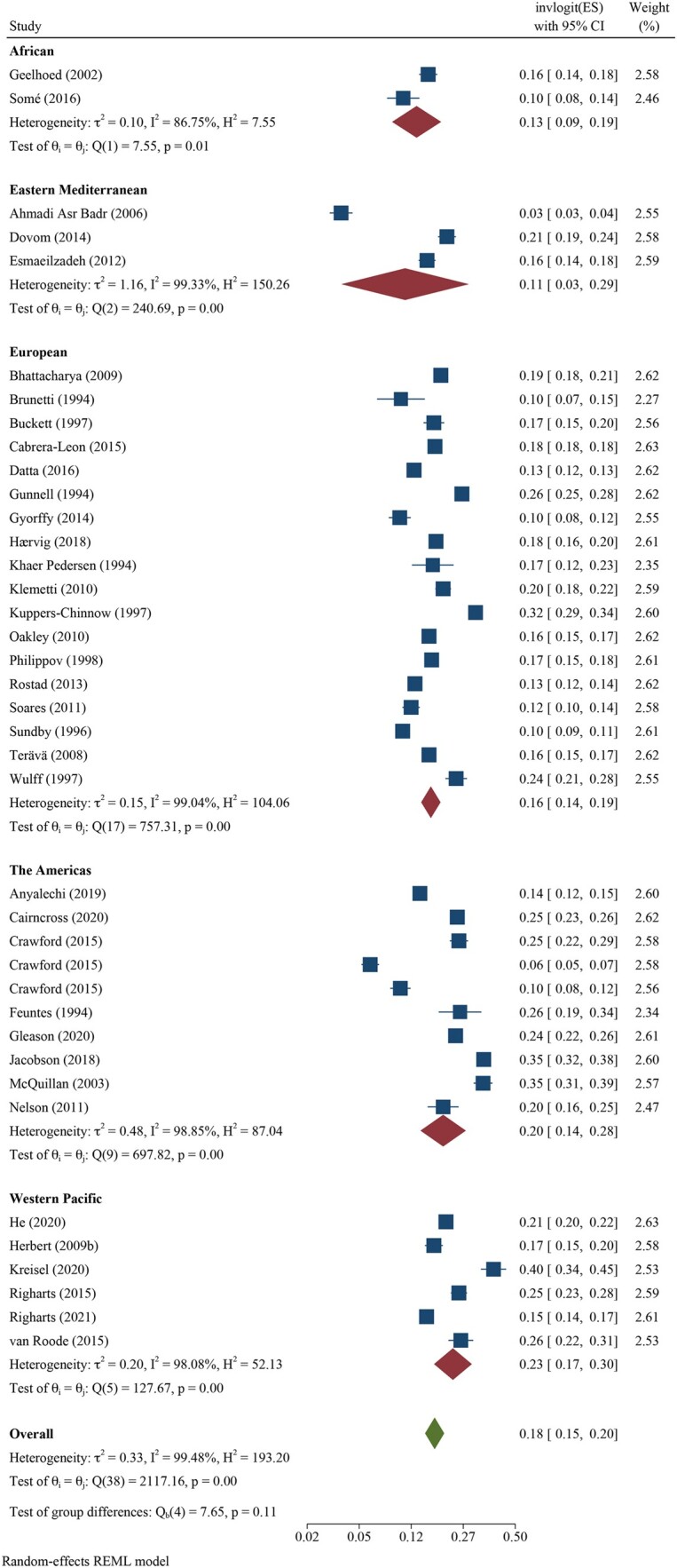
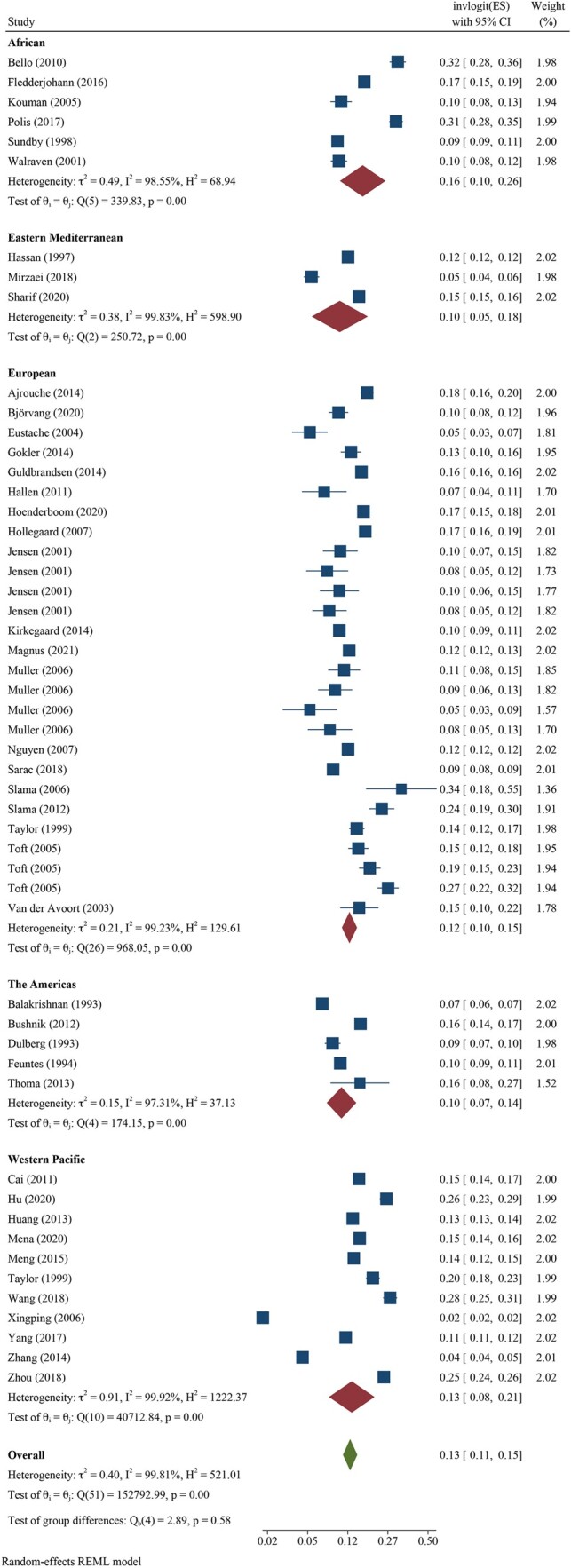
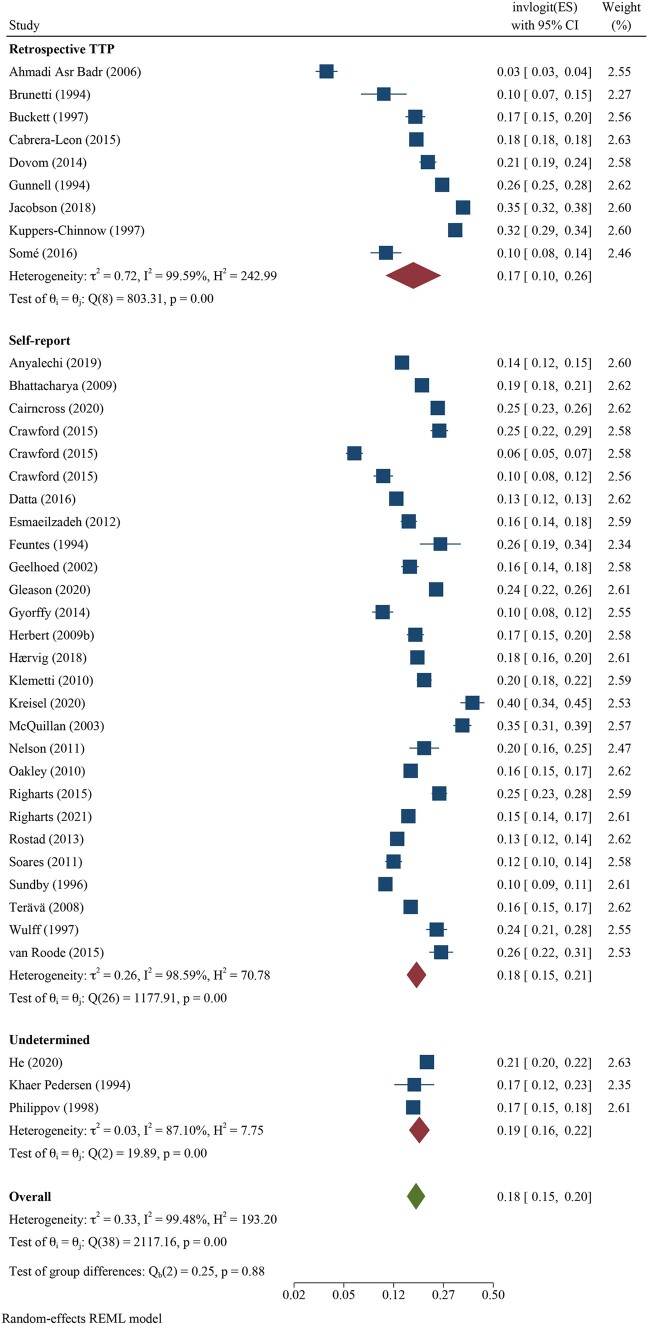
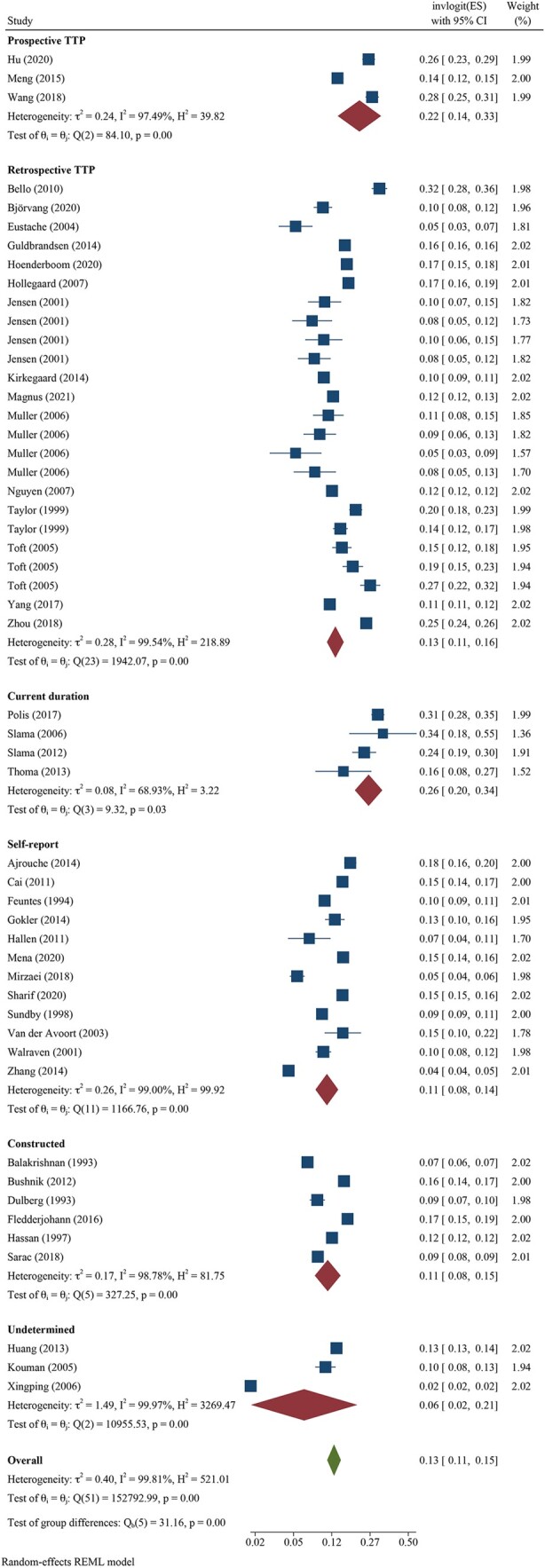
STUDY QUESTION: What is the contemporary prevalence of infertility in world populations and how do they differ by methodological and study characteristics? SUMMARY ANSWER: Pooled estimates of lifetime and period prevalence of 12-month infertility were 17.5% and 12.6%, respectively, but this varied by study population and methodological approach. WHAT IS KNOWN ALREADY: Infertility affects millions of individuals worldwide. Accurate measures of its magnitude are needed to effectively address and manage the condition. There are distinct challenges and variation in how infertility is defined and measured, limiting comparability of estimates across studies. Further research is needed to understand whether and how differences in methodological approaches and study characteristics account for heterogeneity in estimates. STUDY DESIGN, SIZE, DURATION: We conducted a systematic review and meta-analysis. Six electronic databases, websites of relevant organizations, and conference proceedings were systematically searched. Searches were limited to those published between 1 January 1990 and 11 March 2021, with no language restrictions. PARTICIPANTS/MATERIALS, SETTING, METHODS: Descriptive and random-effects meta-analysis models were used to examine range of estimates and generate estimates of pooled lifetime and period prevalence of 12-month infertility, respectively, among representative populations. Meta-regression using restricted maximum likelihood was applied to account for definitional and study characteristics and to obtain adjusted estimates. Risk of bias was assessed with a validated tool. MAIN RESULTS AND THE ROLE OF CHANCE: The search yielded 12 241 unique records of which 133 studies met the criteria for the systematic review. There were 65 and 69 studies that provided data for lifetime and period prevalence of 12-month infertility, respectively. Five methodological approaches were identified: prospective time-to-pregnancy (TTP) design, current duration design, retrospective TTP design, self-reported infertility measure and constructed infertility measure. Ranges for lifetime (3.3–39.7%) and period estimates (1.6–34.0%) were similar and wide even after accounting for methodological and study characteristics. Pooled estimates of lifetime and period prevalence were 17.5% (95% CI: 15.0, 20.3, n = 37 studies, I2 = 99.5%) and 12.6% (95% CI: 10.7, 14.6, n = 43 studies, I2 = 99.8%), respectively, with some variation in magnitude by region and methodological approach, but with most CIs overlapping. LIMITATIONS, REASONS FOR CAUTION: Pooled estimates generated from meta-analysis were derived from 12-month infertility prevalence estimates that were heterogeneous across different domains, even after adjusting for definitional and study characteristics. The number of studies was small for certain strata from which pooled estimates were derived (e.g. there were only two studies for lifetime prevalence in Africa). WIDER IMPLICATIONS OF THE FINDINGS: While findings show a high prevalence of infertility globally and regionally, it also reveals variation in measures to ascertain and compare infertility prevalence. More systematic and comprehensive collection of data using a consistent definition is needed to improve infertility prevalence estimates at global, regional and country-levels. STUDY FUNDING/COMPETING INTEREST(S): This work was supported by the World Health Organization. The authors have no conflicts of interest. REGISTRATION NUMBER: PROSPERO CRD42020211704
Overview
The claims and statistics of this paper haven’t been checked yet.
Free: it reads the open-access text and checks the first 5 claims that cite a source we can check. Create a free account to check every claim.
Integrity signals
Registry
Cites
Statistics
Figures
Verification
Claims the paper makes
The claims and statistics of this paper haven’t been checked yet.
Free: it reads the open-access text and checks the first 5 claims that cite a source we can check. Create a free account to check every claim.
Claims other papers make about this one
Each is checked against this paper’s own text: does it say what the citing paper says it does?
The source backs part of the claim, not all of it — or backs it for a different population, condition or comparison.
In the citing paper
“While the global decline in fertility rate is due to multiple societal and environmental changes, it is important to emphasize that globally between 48 million couples and 186 million individuals of reproductive age live with infertility (World Health Organization, 2020; Cox et al., 2022).”
From Declining global fertility rates and the implications for family planning and family building: an IFFS consensus document based on a narrative review of the literature (2024) · cites this paper as Cox et al., 2022
Experimental — accuracy not yet measuredThe source backs part of the claim, not all of it — or backs it for a different population, condition or comparison.
In the citing paper
“The definition of infertility and its prevalence and burden of disease are controversial.”
From Declining global fertility rates and the implications for family planning and family building: an IFFS consensus document based on a narrative review of the literature (2024) · cites this paper as Cox et al., 2022
Experimental — accuracy not yet measuredThe source backs part of the claim, not all of it — or backs it for a different population, condition or comparison.
In the citing paper
“Until publication of the recent WHO document, the most comprehensive systematic review covering infertility studies from 1990 to 2021 gave pooled estimates for period and lifetime infertility prevalence of 12.6% (95% CI 10.7, 14.6) and 17.5% (95% CI 15.0, 20.3), respectively, when estimated among all study participants regardless of risk of pregnancy (Cox et al., 2022; World Health Organization, 2”
From Declining global fertility rates and the implications for family planning and family building: an IFFS consensus document based on a narrative review of the literature (2024) · cites this paper as Cox et al., 2022
Experimental — accuracy not yet measuredThe cited source says what the claim attributes to it.
In the citing paper
“Different categories of infertility definitions (clinical, epidemiological, demographic) in conjunction with variations in methodology and study populations give rise to wide-ranging estimates (Gnoth et al., 2005; Barratt et al., 2017; Cox et al., 2022; World Health Organization, 2023).”
From Declining global fertility rates and the implications for family planning and family building: an IFFS consensus document based on a narrative review of the literature (2024) · cites this paper as Cox et al., 2022
Self-check
Percentages, sums and reported differences re-computed from the paper’s own numbers.
The self-check needs the paper’s full text.
Citations
Cites
The PRISMA 2020 statement: An updated guideline for reporting systematic reviews
Page, M. J., McKenzie, J. E., Bossuyt, P. M., Boutron, I., Hoffmann, T. C., Mulrow, C. D., Shamseer, L., Tetzlaff, J. M., Akl, E. A., Brennan, S. E., et al. (2021) · BMJ · doi:10.1136/bmj.n71 · Cited by 108,283
Rayyan-a web and mobile app for systematic reviews.
Ouzzani, M., Hammady, H., Fedorowicz, Z., & Elmagarmid, A. (2016) · Systematic Reviews · doi:10.1186/s13643-016-0384-4 · Cited by 26,092
Dermyshi, E., Wang, Y., Yan, C., Hong, W., Qiu, G., Gong, X., & Zhang, T. (2017) · Neonatology · doi:10.1159/000454668 · Cited by 24,451
Meta-analysis of Observational Studies in Epidemiology<SUBTITLE>A Proposal for Reporting</SUBTITLE>
Stroup, D. F. (2000) · JAMA · doi:10.1001/jama.283.15.2008 · Cited by 20,623
The PRISMA 2020 statement: an updated guideline for reporting systematic reviews
Page, M. J., McKenzie, J., Bossuyt, P., Boutron, I., Hoffmann, T., mulrow, C., Shamseer, L., Tetzlaff, J., Akl, E., Brennan, S. E., et al. (2020) · doi:10.31222/osf.io/v7gm2_v1 · Cited by 8,090
PRESS Peer Review of Electronic Search Strategies: 2015 Guideline Statement
McGowan, J., Sampson, M., Salzwedel, D. M., Cogo, E., Foerster, V., & Lefebvre, C. (2016) · Journal of Clinical Epidemiology · doi:10.1016/j.jclinepi.2016.01.021 · Cited by 5,700 · cited 1×
“Two health informationists external to the project peer reviewed the search strategy for PubMed using the Peer Review of Electronic Search Strategies (PRESS) tool (McGowan et al., 2016).”
The PRISMA 2020 statement: an updated guideline for reporting systematic reviews
Page, M. J., McKenzie, J., Bossuyt, P., Boutron, I., Hoffmann, T., mulrow, C., Shamseer, L., Tetzlaff, J., Akl, E., Brennan, S. E., et al. (2020) · doi:10.31222/osf.io/v7gm2 · Cited by 5,177
Funnel plots for detecting bias in meta-analysis
Sterne, J. A. C., & Egger, M. (2001) · Journal of Clinical Epidemiology · doi:10.1016/s0895-4356(01)00377-8 · Cited by 3,779 · cited 2×
“…for publication bias, we generated funnel plots, which were found to be symmetrical, suggesting lower potential for publication bias; however, caution should be used in interpreting these results given limitations on the interpretation of funnel plots for this purpose (Sterne and Egger, 2001).”
GRADE guidelines: a new series of articles in the Journal of Clinical Epidemiology
Guyatt, G. H., Oxman, A. D., Schünemann, H. J., Tugwell, P., & Knottnerus, A. (2011) · Journal of Clinical Epidemiology · doi:10.1016/j.jclinepi.2010.09.011 · Cited by 3,094 · cited 2×
“Lastly, we did not use the GRADE approach (Guyatt et al., 2011) to rate the quality of evidence and strength of recommendations since there was a lack of formal guidance for use of this approach in reviews of prevalence (Migliavaca et al., 2020).”
Hoy, D., Brooks, P., Woolf, A., Blyth, F., March, L., Bain, C., Baker, P., Smith, E., & Buchbinder, R. (2012) · Journal of Clinical Epidemiology · doi:10.1016/j.jclinepi.2011.11.014 · Cited by 2,555 · cited 1×
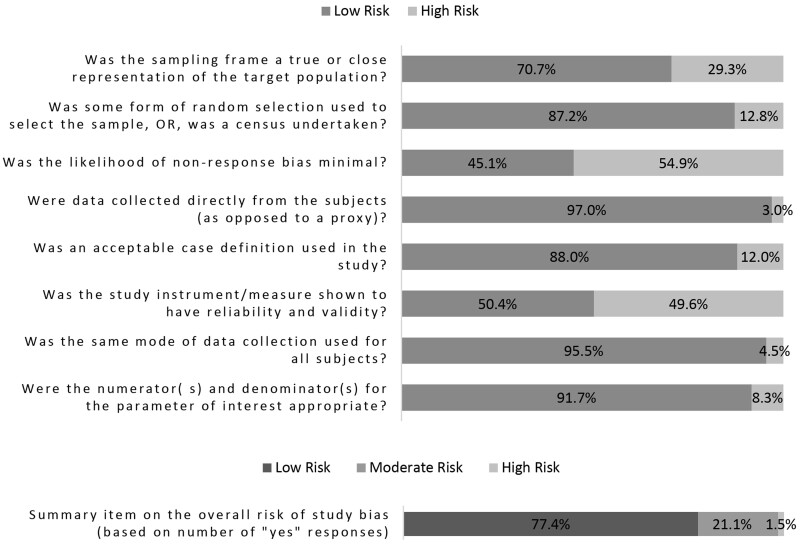
“We assessed the risk of bias for each study using the Hoy et al. (2012) risk of bias tool that was slightly modified by the study team to better fit with infertility definitions assessed in this review (Supplementary Table SIV).”
Research works printed but not linked: 2
- Schmid, 2021, Handbook of Meta-Analysis
- StataCorp, 2019, Stata Statistical Software: Release 16
Cited by
Items 101–200 of 671
Psychological aspects of infertility
Wischmann, T. H. (2024) · Medizinische Genetik · doi:10.1515/medgen-2024-2029 · Cited by 10
Huang, J., Liao, Y., Yu, M., Zhu, J., Yang, Z., Wu, H., & Zhao, Y. M. (2025) · Journal of Assisted Reproduction and Genetics · doi:10.1007/s10815-025-03429-1 · Cited by 10
Ye, X., Xiao-xia, S., Zhou, S., Chen, G., & Wang, L. (2025) · BMC Public Health · doi:10.1186/s12889-025-21395-2 · Cited by 10
Appiah, D., & Ganle, J. K. (2024) · BMC Medical Ethics · doi:10.1186/s12910-024-01113-0 · Cited by 10
Araya, B. M., Vélez, M. P., Gelaye, K. A., Dyer, S., Andualem, H. T., & Aldersey, H. M. (2025) · International Journal of Gynecology & Obstetrics · doi:10.1002/ijgo.70001 · Cited by 10
Spermbots and Their Applications in Assisted Reproduction: Current Progress and Future Perspectives
Zhang, Y., Wang, M., Zhang, T., Wang, H., Chen, Y., Zhou, T., & Yang, R. (2024) · International Journal of Nanomedicine · doi:10.2147/ijn.s465548 · Cited by 10
Prevalence and help-seeking for infertility in a population with a low fertility rate
Lee, M.-C., Chien, P.-S., Zhou, Y., & Yu, T. (2024) · PLoS ONE · doi:10.1371/journal.pone.0306572 · Cited by 10
Czétány, P., Balló, A., Márk, L., Török, Á., Szántó, Á., & Máté, G. (2024) · International Journal of Molecular Sciences · doi:10.3390/ijms25073627 · Cited by 10
Micromanagement: how the male reproductive microbiome shapes male fertility
Kuribayashi, S., Naik, N. C., Miller, A. W., & Lundy, S. D. (2026) · Fertility and Sterility · doi:10.1016/j.fertnstert.2026.01.019 · Cited by 10
Zhang, X., Wu, L., Li, H., Zhang, S., & Hua, W. (2025) · Frontiers in Nutrition · doi:10.3389/fnut.2025.1583805 · Cited by 9
Adda, I. A., Naab, F., Armah, D., Kyei, J. M., Yahaya, A., & Bobtoyah, T. W. (2025) · Sexual & Reproductive Healthcare · doi:10.1016/j.srhc.2025.101065 · Cited by 9
Exploring Iranian men’s experiences of infertility through qualitative content analysis
Nouri, P., Shariat, P., Janatolmakan, M., Andayeshgar, B., & Khatony, A. (2024) · Discover Psychology · doi:10.1007/s44202-024-00316-1 · Cited by 9
Bar-Chama, N. C., Elsheikh, B., Hewamadduma, C., Guittari, C. J., Gorni, K., & Mueller, L. A. (2024) · Neurology and Therapy · doi:10.1007/s40120-024-00626-5 · Cited by 9
Racial and ethnic disparities in fecundability: a North American preconception cohort study
Wise, L. A., Hoffman, M. N., Lovett, S. M., Geller, R. J., Schrager, N. L., Ukah, U. V., Wesselink, A. K., Abrams, J. A., Boynton‐Jarrett, R., Kuohung, W., et al. (2025) · Human Reproduction · doi:10.1093/humrep/deaf067 · Cited by 9
Seminal plasma microbiomes, sperm parameters, and cryopreservation in a healthy fertile population
Fu, L., Lou, Y., Guo, Y. L., Zhou, F., Ma, J., Wang, S., Gu, Y., Fu, B., & Lu, W. (2024) · Frontiers in Microbiology · doi:10.3389/fmicb.2024.1401326 · Cited by 9
Guo, R., Ding, B., Hu, K., Wang, K., Tang, D., Wang, X., Sun, J., Li, K., Cheng, H., Xu, C., et al. (2024) · Andrology · doi:10.1111/andr.13676 · Cited by 9
Higley, C. M., Waligora, K. D., Clore, J. R., Timmons, S. C., & Kuzmanov, A. (2024) · Toxicology and Industrial Health · doi:10.1177/07482337241287967 · Cited by 9
Health-seeking behavior for infertility: A systematic review and meta–analysis
Elumalai, R., Jaisankar, S., Bagepally, B. S., Vembu, R., & Bhatnagar, T. (2025) · European Journal of Obstetrics & Gynecology and Reproductive Biology · doi:10.1016/j.ejogrb.2025.114777 · Cited by 8
Novel STAG3 variant causes oligoasthenoteratozoospermia with high sperm aneuploidy rate
Tsabai, P. N., Pavlova, N. S., Валерьевич, Ш. Т., Kumykova, Z. K., Stupko, O. K., Kochetkova, T. O., Lobanova, N. N., Goltsov, A. Y., Leukhina, O. O., Shubina, J., et al. (2025) · Journal of Assisted Reproduction and Genetics · doi:10.1007/s10815-025-03417-5 · Cited by 8
Fertility preferences adjusted: reimagining parenthood in response to the uncertainty of infertility
Lazzari, E. (2025) · Genus · doi:10.1186/s41118-025-00248-1 · Cited by 8
Infertility and Seeking Medical Help to Have a Child Vary Across Migrant Origin Groups in Germany
Milewski, N., Passet-Wittig, J., & Bujard, M. (2025) · Population Research and Policy Review · doi:10.1007/s11113-024-09921-3 · Cited by 8
Schipper, M. C., Boxem, A. J., Blaauwendraad, S. M., Mulders, A. G. M. G. J., Jaddoe, V. W. V., & Gaillard, R. (2024) · BMC Medicine · doi:10.1186/s12916-024-03718-z · Cited by 8
Chronological age enhances aging phenomena and protein nitration in oocyte
Goud, P. T., Goud, A. P., Camp, O. G., Bai, D., Gonik, B., Diamond, M. P., & Abu‐Soud, H. M. (2023) · Frontiers in Endocrinology · doi:10.3389/fendo.2023.1251102 · Cited by 8
Impact of selenium and selenoproteins on idiopathic male infertility: a comprehensive review
Zećevic, N. P., Šarac, I., Perović, M., Zeković, M., & Stojsavljević, A. (2026) · Frontiers in Nutrition · doi:10.3389/fnut.2025.1702028 · Cited by 8
Paulsen, B. S., Barrachina, F., Piechota, S., Noblett, A. D., Johnson, M., Kats, S., Lew, C. I., Marchante, M., Figueroa, A. B., Granada, I. G., et al. (2026) · Cell stem cell · doi:10.1016/j.stem.2025.12.020 · Cited by 8
Li, J., Shen, L., Wang, K., Wu, S., Wang, Y., Pan, Y., Chen, S., Zhao, T., Zhao, Y., Niu, L., et al. (2025) · Cell Communication and Signaling · doi:10.1186/s12964-025-02054-w · Cited by 8
DOROFTEI, B. I., Ilie, O., Dabuleanu, A., Selaru, I., Lunguleac, G., Doroftei, M., & Ilea, C. G. (2026) · Acta Obstetricia Et Gynecologica Scandinavica · doi:10.1111/aogs.70138 · Cited by 7
Fu, Y., Sun, X., Kayimu, K., Chen, G., Wang, Y., & Yang, F. (2024) · Reproductive Health · doi:10.1186/s12978-024-01906-x · Cited by 7
Effects of Perfluorobutane Sulfonate (PFBS) on Female Reproduction, Pregnancy, and Birth Outcomes
Mellouk, N., Marchese, M. J., Gao, F., Liang, S., & Feng, L. (2025) · Obstetrical & Gynecological Survey · doi:10.1097/ogx.0000000000001440 · Cited by 7
Semantic segmentation of human blastocyst images using deep CNNs and vision transformers
Miled, W. S., Ghali, R., Chtourou, S., & Akhloufi, M. A. (2025) · Network Modeling Analysis in Health Informatics and Bioinformatics · doi:10.1007/s13721-025-00560-y · Cited by 7
Wang, L., Li, H., & Zhou, W. (2024) · Fertility and Sterility · doi:10.1016/j.fertnstert.2024.09.025 · Cited by 7
Torkel, S., Moran, L., Wang, R., Villani, A. M., Mantzioris, E., Norman, R. J., & Cowan, S. (2025) · Reproductive Biology and Endocrinology · doi:10.1186/s12958-025-01387-y · Cited by 7
Chen, R., Zeng, D., Li, Y., Huang, R., Sun, D., & Li, T. (2024) · International Journal of Gynecology & Obstetrics · doi:10.1002/ijgo.15959 · Cited by 7
Global prevalence of infertility: a systematic review and meta-analysis of Community-based studiesPreprint
Zhu, H., Zhou, X., Li, R., Gao, Q., Wang, X., Cheng, P., Liu, R., Yin, C., & Hao, Y. (2023) · Authorea · doi:10.22541/au.169535894.43892783/v1 · Cited by 7
Nationwide prevalence of infertility in Iranian couples: findings from a 2019 study
Taheripanah, R., Haghdoost, A.-A., Baneshi, M. R., Yazdanpanah, M., Salehi, F., Akbari, N., & Safari‐Faramani, R. (2025) · BMC Public Health · doi:10.1186/s12889-025-22974-z · Cited by 7
Primary infertility care-seeking and service provision in Bangladesh: a mixed-method study
Haider, M. M., Rahman, F. N., Amin, M. T., Sathi, S. S., Alam, M. M., Nusaiba, Jamil, K., & Nahar, Q. (2025) · Journal of Global Health Economics and Policy · doi:10.7189/001c.142171 · Cited by 7
Ding, Y., Hong, Y., Zou, Y., Wang, X., Liu, X., Jiang, X., Hu, M., Shan, J., Liu, B., & Zhou, H. (2024) · Combinatorial Chemistry & High Throughput Screening · doi:10.2174/0113862073351630241128182125 · Cited by 7
Bowman, J. D., Silva, N., Schüftan, E., Almeida, J. M., Correia, R. B., Oliveira, R. A., Tüttelmann, F., Enard, D., Navarro‐Costa, P., & Lynch, V. J. (2026) · eLife · doi:10.7554/elife.94563 · Cited by 7
Endometrial Microbiome and Implantation: From Basic Knowledge to Clinical Medicine
Hiratsuka, D., Matsuo, M., & Hirota, Y. (2026) · Reproductive Medicine and Biology · doi:10.1002/rmb2.70040 · Cited by 7
Non-human primates as a translational model for the study of male reproductive health
Edenfield, R. C., Bash, J. C., Shorey‐Kendrick, L. E., D'Mello, R. J., Rice-Stitt, T. L., Hagen, O. L., Graham, J. A., Orwig, K. E., Easley, C. A., Hedges, J. C., et al. (2025) · Nature Reviews Urology · doi:10.1038/s41585-025-01062-2 · Cited by 7
Park, Y.-J., Hwang, S.-M., Pang, W., Ryu, D., Gedda, G., & Pang, M. (2025) · Ecotoxicology and Environmental Safety · doi:10.1016/j.ecoenv.2025.118790 · Cited by 7
Bergenheim, S. J., Saupstad, M., Colombo, C., Møller, J. E., Bogstad, J. W., Freiesleben, N. L. C., Behrendt-Møller, I., Prætorius, L., Oxlund, B. S., Nøhr, B., et al. (2024) · Human Reproduction · doi:10.1093/humrep/deae260 · Cited by 7
Zhu, T., Zhu, Y., Jiang, X., Zhang, X., Wang, B., Chen, Y., Zhao, Y., Wang, Y., Zhou, Q., Han, Z., et al. (2025) · Advanced Science · doi:10.1002/advs.202508538 · Cited by 7
Management of pregnancy and childbirth in Glanzmann thrombasthenia: A case series and review
Rutten, K. H. G., Tsiamita, O., Thillo, Q. V., Raheja, P., Kaler, M. K., van Galen, K. P. M., Hogg, M., Bowles, L., Schutgens, R. E. G., & Sivapalaratnam, S. (2025) · British Journal of Haematology · doi:10.1111/bjh.70056 · Cited by 7
Panagiotopoulos, D., Andriopoulou, T., Spanou, V. M., Droggiti, D., Gkavogianni, T., Giamarellos‐Bourboulis, E. J., & Panagopoulos, P. (2023) · American Journal of Reproductive Immunology · doi:10.1111/aji.13764 · Cited by 7
Ahmadi, P., Bayat, N., & Abbasi, B. (2024) · Journal of Nutritional Science · doi:10.1017/jns.2024.81 · Cited by 6
Jackuliak, P., Jankovský, M., Kovářová, M., Voller, J., Feitscherova, C., & Varga, I. (2025) · Frontiers in Cell and Developmental Biology · doi:10.3389/fcell.2025.1582039 · Cited by 6
Addressing the Rehabilitation Needs of Women Experiencing Infertility in Ethiopia: Time for Action
Araya, B. M., Vélez, M. P., Gelaye, K. A., Dyer, S., & Aldersey, H. M. (2024) · International Journal of Environmental Research and Public Health · doi:10.3390/ijerph21040475 · Cited by 6
Gender inequality and utilization of ART: an international cross-sectional and longitudinal analysis
Fitzgerald, O., Dyer, S., Zegers-Hochschild, F., Keller, E., Adamson, G. D., & Chambers, G. M. (2023) · Human Reproduction · doi:10.1093/humrep/dead225 · Cited by 6
Editorial: Minimally invasive surgery as a mean of improving fertility: What do we know so far?
Naem, A., & Laganà, A. S. (2023) · Frontiers in Surgery · doi:10.3389/fsurg.2023.1203816 · Cited by 6
Bornstein, M., Gemmill, A., Norris, A. H., Huber‐Krum, S., & Gipson, J. D. (2023) · PLOS Global Public Health · doi:10.1371/journal.pgph.0001646 · Cited by 6
Self-citationA Cross-Sectional Study of Mental Illnesses Among Infertile Women in Saudi Arabia
Alsahel, M., & Alghamdi, M. (2024) · Cureus · doi:10.7759/cureus.63823 · Cited by 6
Histone hyperacetylation disrupts spermatogonial stem cells homeostasis and impairs spermiogenesis
Ou, X., Yang, J., Du, G., Yang, L., Zhong, R., Long, F., Huang, H., Zeng, H., & Shao, L. (2025) · Stem Cell Research & Therapy · doi:10.1186/s13287-025-04385-4 · Cited by 6
Liu, C., Liu, C., Tian, W., Yao, W., Yu, M., Zhang, M., Yuan, X.-Q., Deng, Y.-L., Lu, W., Li, Y., et al. (2024) · Environmental Research · doi:10.1016/j.envres.2024.120412 · Cited by 6
Lin, C. H. X., Gaillard, R., Mulders, A. G. M. G. J., Jaddoe, V. W. V., & Schipper, M. C. (2026) · Human Reproduction · doi:10.1093/humrep/deag023 · Cited by 6
The Long Path to Motherhood: Personal Growth and Well-Being During Medically Assisted Reproduction
Mijalevich‐Soker, E., Meir, R., & Ben‐Ari, O. T. –. (2025) · Behavioral Sciences · doi:10.3390/bs15121694 · Cited by 6
Li, H., Wang, H., Xu, X., Li, Q., Sun, X., & Jing, Z. (2025) · Reproductive Toxicology · doi:10.1016/j.reprotox.2025.109047 · Cited by 6
Application of testicular organ culture system for the evaluation of spermatogenesis impairment
Nakagiri, H., Ogawa, T., Ikeda, N., Terasaka, S., Nukada, Y., & Miyazawa, M. (2024) · Scientific Reports · doi:10.1038/s41598-024-71561-6 · Cited by 6
Lebedeva, D. A., Igonina, T. N., Brusentsev, E. Y., Shavshaeva, N. A., & Amstislavsky, S. Y. (2024) · Российский физиологический журнал им И М Сеченова · doi:10.31857/s0869813924060044 · Cited by 5
Zhang, L., Peng, Y., Song, Y., Zhang, Y., Qin, Q., Ying, M., Bi, Y., & Yin, P. (2024) · Toxics · doi:10.3390/toxics13010015 · Cited by 5
Fecundability in Association With Everyday and Lifetime Discrimination
Ukah, U. V., Lovett, S. M., Boynton‐Jarrett, R., Abrams, J. A., Wesselink, A. K., Hoffman, M. N., Williams, D. R., Wise, L. A., & Ncube, C. N. (2025) · JAMA Network Open · doi:10.1001/jamanetworkopen.2025.20597 · Cited by 5
Pathak, B. G., Mburu, G., Habib, N., Kabra, R., Kiarie, J. N., Chowdhury, R., Dhabhai, N., & Mazumder, S. (2025) · BMJ Public Health · doi:10.1136/bmjph-2024-001740 · Cited by 5
Self-citationThe fertility cascade: infertility prevalence, access to treatment, and successful live birth
Boyer, T. M., Tran, L., Fang, M., Selvin, E., & Minhas, A. (2025) · American Journal of Obstetrics and Gynecology · doi:10.1016/j.ajog.2025.08.016 · Cited by 5
Meng, L., Öberg, A. S., Sandström, A., & Reilly, M. (2024) · American Journal of Obstetrics and Gynecology · doi:10.1016/j.ajog.2024.10.035 · Cited by 5
Kumaresan, A., Yadav, P., Hofmann, A., Sinha, M. K., King, J. P. E. S., Nag, P., Mishra, J. S., & Kumar, S. (2025) · Biology of Reproduction · doi:10.1093/biolre/ioaf167 · Cited by 5
Ruíz-Alonso, M., Gómez, C., Stankewicz, T., Castellón, J. A., Díez‐Juan, A., Gómez, E., Rubio, C., Simón, C., & Valbuena, D. (2025) · Scientific Reports · doi:10.1038/s41598-025-01056-5 · Cited by 5
Ahmadi, S. A., Moeini, S., Ketabchi, E., Sheikhrobat, M. V., & Shamsaei, M. (2024) · Gynecology and Obstetrics Clinical Medicine · doi:10.1136/gocm-2024-000045 · Cited by 5
Yuan, Y., Li, Y., Hu, J., Deng, Y., & Zhang, H. (2024) · BMJ Open · doi:10.1136/bmjopen-2023-080890 · Cited by 5
Gong, Y., Huang, G., Wang, X.-Y., Tang, Y., Li, J., Dai, L., Zhou, Y., Yang, P., & Chen, Y. (2025) · Ecotoxicology and Environmental Safety · doi:10.1016/j.ecoenv.2025.119354 · Cited by 5
Ashley‐Martin, J., Hammond, J., & Vélez, M. P. (2024) · Reproductive Toxicology · doi:10.1016/j.reprotox.2024.108578 · Cited by 5
Ma, Y., Xu, D., Huo, Z., Wang, X., Chen, Y., & Han, X. (2025) · Journal of Hazardous Materials · doi:10.1016/j.jhazmat.2025.140253 · Cited by 5
Huang, K., Zhang, Z., Hu, M., Zhao, J., Li, Z., Hu, C., Bai, S., Wu, Y., Wu, Y., Hu, X., et al. (2024) · International Journal of Hygiene and Environmental Health · doi:10.1016/j.ijheh.2024.114474 · Cited by 5
Akizuki, Y., Maeda, E., Okinaga, C., Sato, M., Mouri, Y., Takagishi, Y., Biswakarma, R., & Harper, J. C. (2025) · Sex Education · doi:10.1080/14681811.2025.2523306 · Cited by 5
Deoxycholic Acid Impairs Human Sperm Quality and Function Through Oxidative Stress-Driven Damage
Serafini, S., Pranov, E., Bauer, K. T., Onochie, C., & O’Flaherty, C. (2025) · Antioxidants · doi:10.3390/antiox14111271 · Cited by 5
Yang, Y., Xue, X., Zhou, J., Qiu, Z., Wang, B., Yin, Z., Ou, G., & Zhou, Q. (2024) · Heliyon · doi:10.1016/j.heliyon.2024.e36680 · Cited by 5
de la Fuente, E., Subhi‐Issa, N., Villegas-Mendiola, Á., Palacios-Ortega, M., Ochoa‐Grullón, J., Guevara‐Hoyer, K., Laborda, R. G., Pilar‐Suárez, L., Ruíz, M. D. M., Escorial, M. P. G., et al. (2025) · Medwave · doi:10.5867/medwave.2025.05.3037 · Cited by 5
Habibi, F., Azizi, M., Peyvandi, S., Nikbakht, R., Setareh, J., Ahmadi, M., & Shahhosseini, Z. (2025) · Sleep Medicine X · doi:10.1016/j.sleepx.2025.100151 · Cited by 5
Raudonis, V., Bartašienė, R., Minajeva, A., Saare, M., Drejerienė, E., Kozlovskaja-Gumbrienė, A., & Salumets, A. (2024) · Applied Sciences · doi:10.3390/app14135715 · Cited by 5
Estifeeva, T. M., Kalinichenko, G. L., Morokov, E. S., Fedotkina, E. P., Sencha, A. N., Barmin, R. A., & Rudakovskaya, P. G. (2025) · Medical Physics · doi:10.1002/mp.70097 · Cited by 5
Shi, M., Ma, S., Huang, L., Huang, C., Wang, J., Qin, X., Luo, Y., Xiong, Y., He, N., & Zeng, J. (2024) · Reproductive Sciences · doi:10.1007/s43032-024-01568-x · Cited by 5
Fucarino, A., Mohamadi, Y., Cappello, F., Scalia, F., Russo, G., Gullo, G., & Noori, L. (2026) · Proteomes · doi:10.3390/proteomes14020019 · Cited by 4
Sousa, E., Nery, S. F., Casalechi, M., Thimóteo, L. C., Paiva, S. P. C., Filho, A. L. D. S., & dos Reis, F. M. (2023) · Reproductive BioMedicine Online · doi:10.1016/j.rbmo.2023.01.020 · Cited by 4
Physical activity, sedentary time and sperm DNA fragmentation index in healthy Japanese men
Li, H., Hao, W., Maeda, E., Kumazawa, Y., Takahashi, K., Tanaka, T., Yokota, I., Terada, Y., Nomura, K., Okada, H., et al. (2025) · Reproductive BioMedicine Online · doi:10.1016/j.rbmo.2025.105015 · Cited by 4
Huang, G., Li, J., Zhou, L., Duan, T., Deng, L., Yang, P., & Gong, Y. (2024) · Toxics · doi:10.3390/toxics12080613 · Cited by 4
Deep learning-based prediction of individualized Real-time FSH doses in GnRH agonist long protocols
Kong, N., Xia, Y., Wang, Z., Zhang, H., Duan, L., Zhu, Y., Huang, C., Yan, G., Mei, J., Li, W.-J., et al. (2025) · Journal of Translational Medicine · doi:10.1186/s12967-025-06562-8 · Cited by 4
Bell, S. O., Makumbi, F. E., Sarria, I., Kibira, S. P. S., & Zimmerman, L. A. (2024) · Reproductive Health · doi:10.1186/s12978-024-01750-z · Cited by 4
A scoping review of the psychosocial aspects of infertility in the Middle East
Mateane, W., Eder, C., Mutumba-Nakalembe, M. J., Salie, M., Vorster, Z., Jenkins, D., Silingile, K., & Roomaney, R. (2026) · Middle East Fertility Society Journal · doi:10.1186/s43043-026-00317-1 · Cited by 4
Zhong, L., Gu, J., Li, C., Sun, S., Chen, M. G. M., Li, Y., Ding, Y., Ni, L., & Yang, Y. (2025) · The Journal of Sexual Medicine · doi:10.1093/jsxmed/qdag118.483 · Cited by 4
Sun, F., Wang, W., Ding, G., Wang, Y., Liu, H., Chi, Y., Guo, Y., Ma, X., Ma, J., & Wu, J. (2025) · PLoS ONE · doi:10.1371/journal.pone.0331617 · Cited by 4
Simonsen, C., Eisenberg, M. L., & Lindahl‐Jacobsen, R. (2025) · European Journal of Obstetrics & Gynecology and Reproductive Biology · doi:10.1016/j.ejogrb.2025.114747 · Cited by 4
Evaluating Selective Quality Control in Mammalian Oogenesis: Evidence and Opportunities
Zussman, J. W., Skinner, D. J., Wagner, D. E., Shvartsman, S. Y., & Laird, D. J. (2025) · Annual Review of Genetics · doi:10.1146/annurev-genet-021925-093551 · Cited by 4
Seminal cell-free nucleic acids as possible biomarker in male infertility: a mini-review article
Javidmehr, D., Fesahat, F., Hassani, F., Talebi, A. R., & Shahverdi, A. (2024) · African Journal of Urology · doi:10.1186/s12301-024-00450-1 · Cited by 4
Li, L., Feng, L., Li, Q., Zhou, Y., Liu, S., Song, H., Kang, S., Chen, H., Cong, H., & Liu, S. (2026) · Microbial Biotechnology · doi:10.1111/1751-7915.70330 · Cited by 4
Sun, D., Li, H., Lin, B., Li, L., & Jia, C. X. (2024) · Health Care For Women International · doi:10.1080/07399332.2024.2430340 · Cited by 4
Delivering care to women with congenital heart disease: the role of clinical nurse specialist
Habibi, H., McDonnell, E. J., Tongol, C., Johnson, M. R., Patel, R., Montanaro, C., Gatzoulis, M. Α., & Rafiq, I. (2024) · British Journal of Midwifery · doi:10.12968/bjom.2024.32.6.318 · Cited by 4
Hu, R., Jin, L., Li, Q., Fan, P., Fan, W., & Xu, J. (2026) · Journal of Ovarian Research · doi:10.1186/s13048-026-02040-x · Cited by 4
Liu, L., Yang, H., Lei, A., & You, H. (2024) · Trials · doi:10.1186/s13063-024-08324-1 · Cited by 4
“What's wrong with me?”: Women's perceptions of gendered infertility stigma
Bornstein, M., Church, A. C., Masterson, K., Gipson, J. D., & Norris, A. H. (2025) · Social Science & Medicine · doi:10.1016/j.socscimed.2025.118913 · Cited by 4
Self-citationSleep behaviors and time-to-pregnancy: results from a Guangzhou City cohort
Zhang, Y., Gu, D., Xie, Y., & Li, B. (2025) · Reproductive Health · doi:10.1186/s12978-025-02106-x · Cited by 4
Gokyer, D., Salpeter, N., Hughes, L. M., Lee, H. C., Lohman, M., Atazhanova, T., Kleinhans, A., Riley, J. K., Pavone, M. E., Duncan, F. E., et al. (2025) · Journal of Visualized Experiments · doi:10.3791/69122 · Cited by 4
Metadata
- Authors
- Cox, C. M., Thoma, M. E., Tchangalova, N., Mburu, G., Bornstein, M. J., Johnson, C. L., & Kiarie, J.
- Affiliations
- Independent Consultant , Shoreview, MN, USA
- University of Maryland, College Park (US)
- World Health Organization (CH)
- The Ohio State University (US)
- University of Minnesota (US)
- Corresponding author
- Cox, C M
- Venue
- Human Reproduction Open
- Publisher
- Oxford University Press (OUP)
- Published
- 2022-01-01
- Volume
- 2022
- Issue
- 4
- Pages
- hoac051-hoac051
- ISSN
- 2399-3529 (ISSN-L)
- PMC
- PMC9725182
- OpenAlex
- W4308825553
- Semantic Scholar
- 7f1190ba473fbb50e35e7f6275a7df4c6b37f440
- Cited by
- 506
- References
- 60
- Citations by year
- 2026: 162 · 2025: 189 · 2024: 124 · 2023: 31
- FWCI
- 13.80
- Type
- journal article
- Language
- en
- Open access
- gold
- doi.org
- Locations
- Human Reproduction Open (publishedVersion, cc-by)
- PubMed Central (publishedVersion, cc-by)
- PubMed (publishedVersion)
- Funders
- World Health Organization
- Topics
- Health Sciences › Medicine › Reproductive Medicine › Reproductive Health and Technologies
- Health Sciences › Medicine › Public Health, Environmental and Occupational Health › Reproductive Health and Contraception
- Social Sciences › Gender Studies › Demographic Trends and Gender Preferences
- Keywords
- infertility prevalence, lifetime prevalence, period prevalence, time to pregnancy, study characteristics, meta-regression, risk of bias
About these checks
Registry, retraction, Cites and statistics results are computed, not judged, with one exception: a printed reference that no index lists is read once by a model before it counts as a citation error. Claims are extracted by a model and kept only when their quote appears verbatim in the text; each cited source is then checked, with a model’s help, for whether it says what the claim relies on. Those verdicts can be wrong — read the claim’s quote and the cited source before relying on one.
Statistics and arithmetic are recomputed, not judged.
Confidence bands are shown only for fields calibrated on our annotated test set. None is calibrated yet, so no band is shown.
What counts as a claim ›How we measure confidence ›How we check this ›
Are you an author, or do you see a problem with this page? Request a review
Data sources
Bibliographic data: Semantic Scholar, OpenAlex, Crossref.
Contains information from the Semantic Scholar Academic Graph Datasets, made available under the ODC Attribution License (ODC-BY 1.0).
Semantic Scholar’s data is described in: Kinney, R., et al. (2023). The Semantic Scholar Open Data Platform. arXiv:2301.10140.
