

Infertility prevalence and the methods of estimation from 1990 to 2021: a systematic review and meta-analysis
Open accessThe DOI matches its Crossref record; 62 of the 62 references it cites were found in a registry or an index.
Abstract
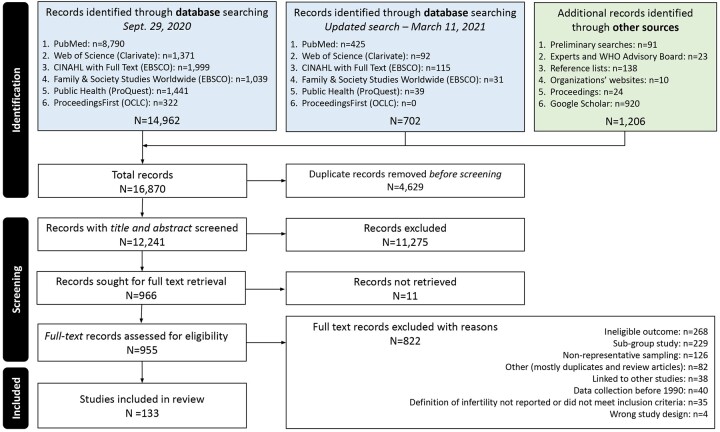
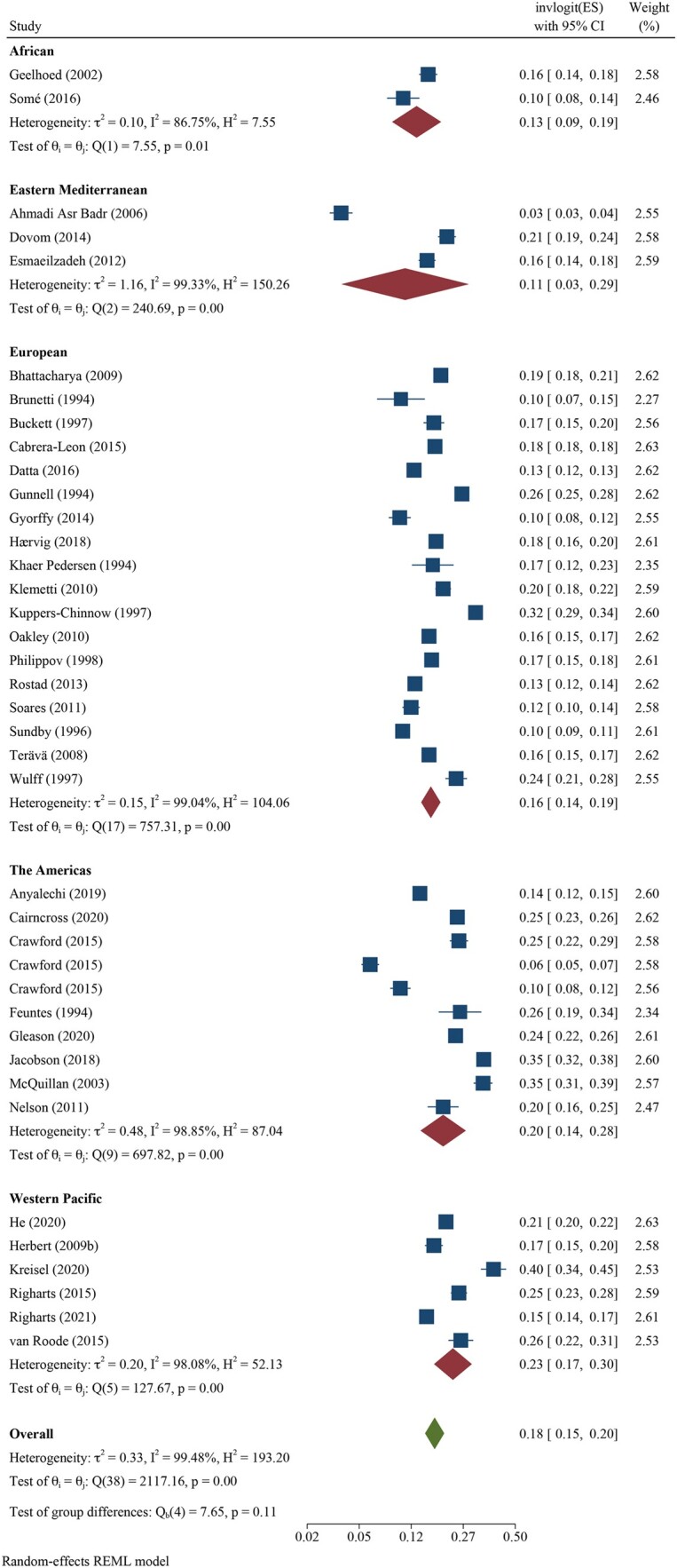
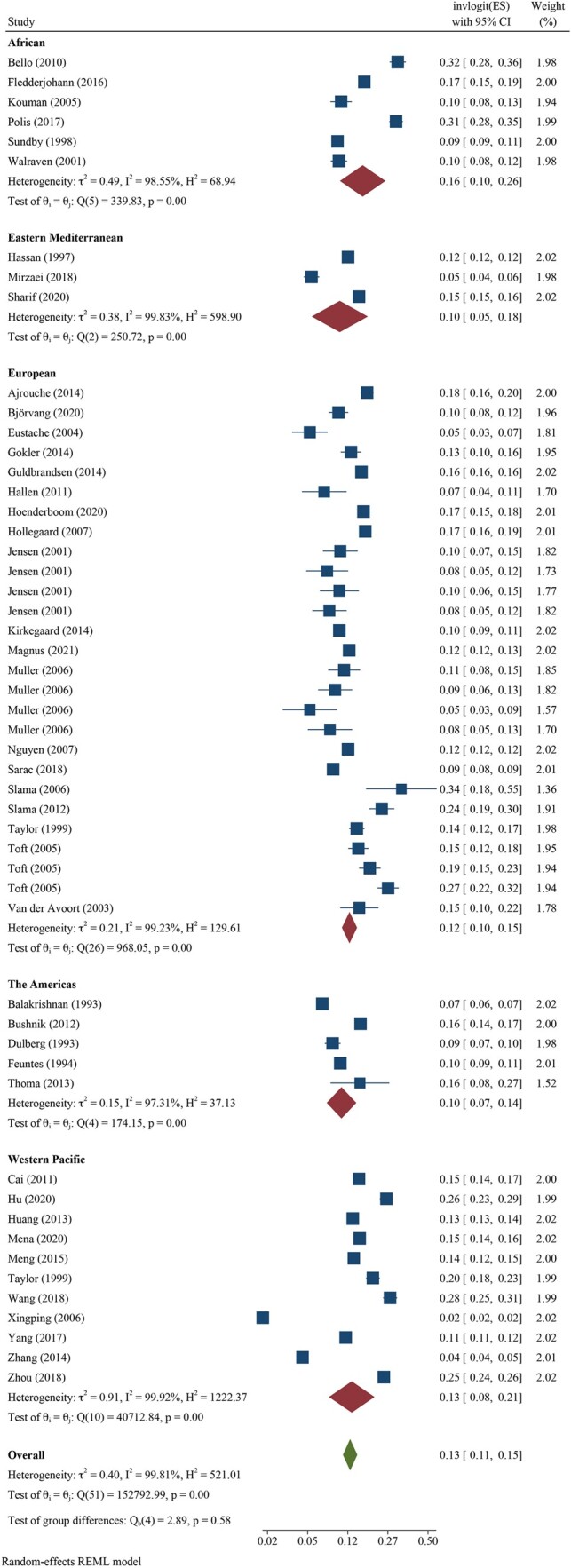
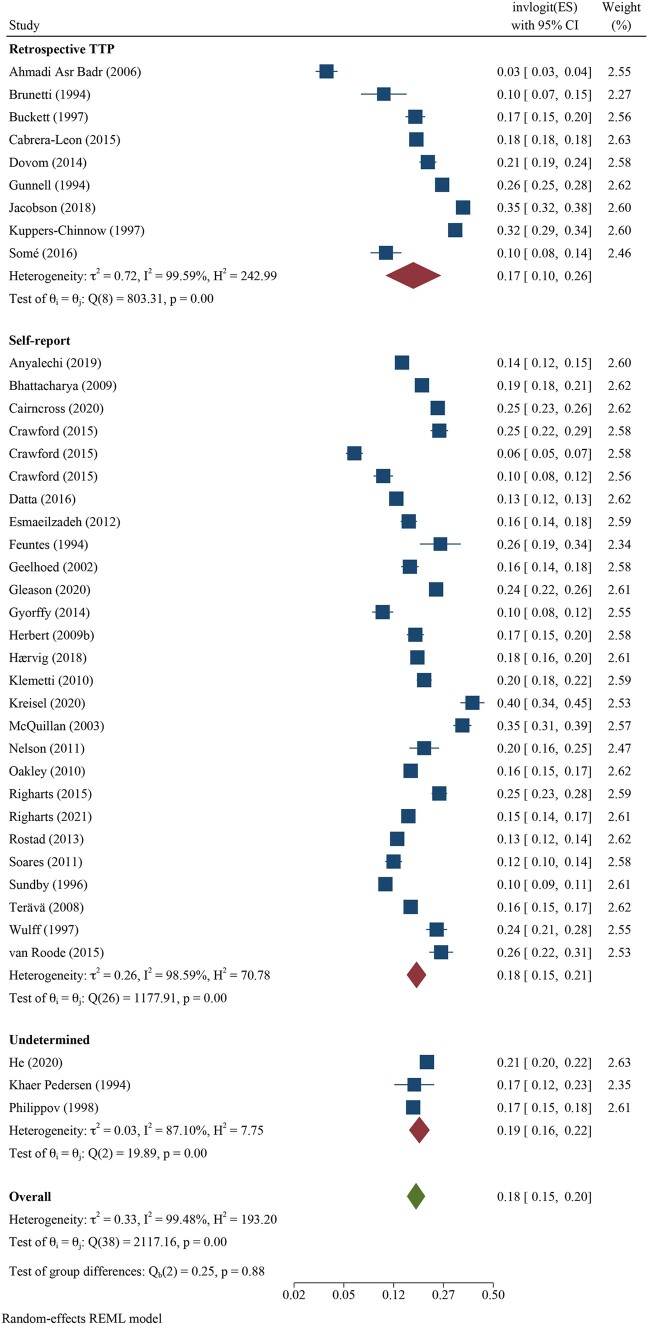
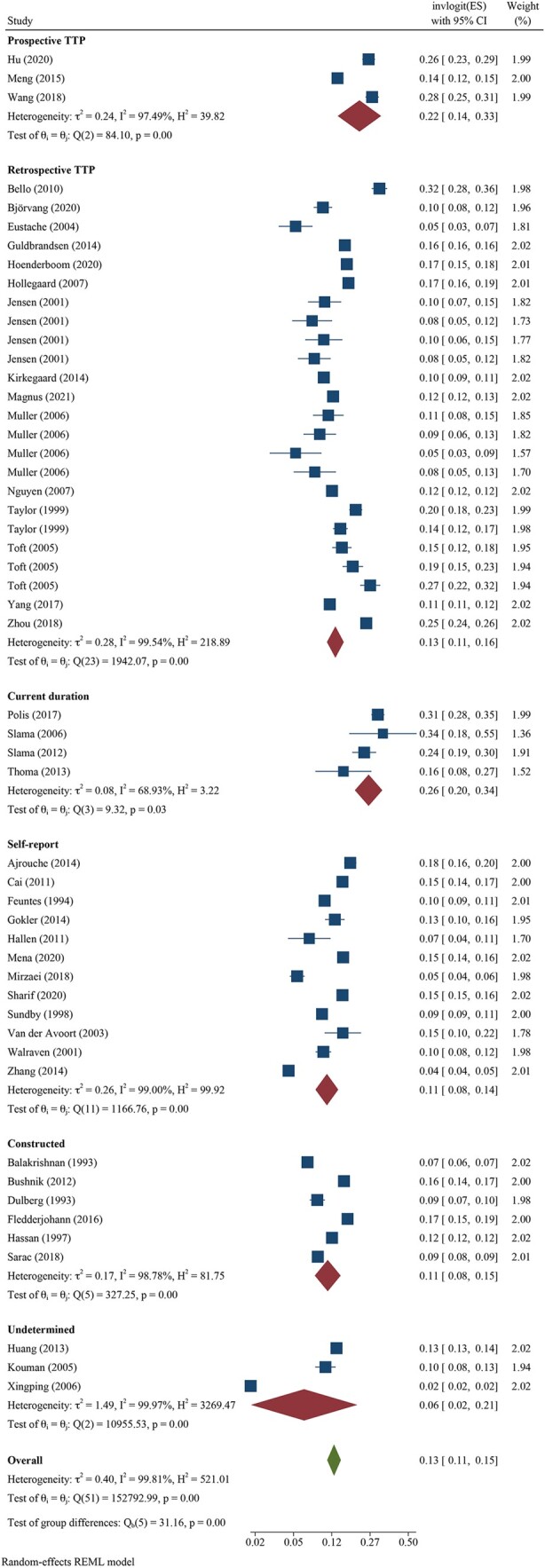
STUDY QUESTION: What is the contemporary prevalence of infertility in world populations and how do they differ by methodological and study characteristics? SUMMARY ANSWER: Pooled estimates of lifetime and period prevalence of 12-month infertility were 17.5% and 12.6%, respectively, but this varied by study population and methodological approach. WHAT IS KNOWN ALREADY: Infertility affects millions of individuals worldwide. Accurate measures of its magnitude are needed to effectively address and manage the condition. There are distinct challenges and variation in how infertility is defined and measured, limiting comparability of estimates across studies. Further research is needed to understand whether and how differences in methodological approaches and study characteristics account for heterogeneity in estimates. STUDY DESIGN, SIZE, DURATION: We conducted a systematic review and meta-analysis. Six electronic databases, websites of relevant organizations, and conference proceedings were systematically searched. Searches were limited to those published between 1 January 1990 and 11 March 2021, with no language restrictions. PARTICIPANTS/MATERIALS, SETTING, METHODS: Descriptive and random-effects meta-analysis models were used to examine range of estimates and generate estimates of pooled lifetime and period prevalence of 12-month infertility, respectively, among representative populations. Meta-regression using restricted maximum likelihood was applied to account for definitional and study characteristics and to obtain adjusted estimates. Risk of bias was assessed with a validated tool. MAIN RESULTS AND THE ROLE OF CHANCE: The search yielded 12 241 unique records of which 133 studies met the criteria for the systematic review. There were 65 and 69 studies that provided data for lifetime and period prevalence of 12-month infertility, respectively. Five methodological approaches were identified: prospective time-to-pregnancy (TTP) design, current duration design, retrospective TTP design, self-reported infertility measure and constructed infertility measure. Ranges for lifetime (3.3–39.7%) and period estimates (1.6–34.0%) were similar and wide even after accounting for methodological and study characteristics. Pooled estimates of lifetime and period prevalence were 17.5% (95% CI: 15.0, 20.3, n = 37 studies, I2 = 99.5%) and 12.6% (95% CI: 10.7, 14.6, n = 43 studies, I2 = 99.8%), respectively, with some variation in magnitude by region and methodological approach, but with most CIs overlapping. LIMITATIONS, REASONS FOR CAUTION: Pooled estimates generated from meta-analysis were derived from 12-month infertility prevalence estimates that were heterogeneous across different domains, even after adjusting for definitional and study characteristics. The number of studies was small for certain strata from which pooled estimates were derived (e.g. there were only two studies for lifetime prevalence in Africa). WIDER IMPLICATIONS OF THE FINDINGS: While findings show a high prevalence of infertility globally and regionally, it also reveals variation in measures to ascertain and compare infertility prevalence. More systematic and comprehensive collection of data using a consistent definition is needed to improve infertility prevalence estimates at global, regional and country-levels. STUDY FUNDING/COMPETING INTEREST(S): This work was supported by the World Health Organization. The authors have no conflicts of interest. REGISTRATION NUMBER: PROSPERO CRD42020211704
Overview
The claims and statistics of this paper haven’t been checked yet.
Free: it reads the open-access text and checks the first 5 claims that cite a source we can check. Create a free account to check every claim.
Integrity signals
Registry
Cites
Statistics
Figures
Verification
Claims the paper makes
The claims and statistics of this paper haven’t been checked yet.
Free: it reads the open-access text and checks the first 5 claims that cite a source we can check. Create a free account to check every claim.
Claims other papers make about this one
Each is checked against this paper’s own text: does it say what the citing paper says it does?
The source backs part of the claim, not all of it — or backs it for a different population, condition or comparison.
In the citing paper
“While the global decline in fertility rate is due to multiple societal and environmental changes, it is important to emphasize that globally between 48 million couples and 186 million individuals of reproductive age live with infertility (World Health Organization, 2020; Cox et al., 2022).”
From Declining global fertility rates and the implications for family planning and family building: an IFFS consensus document based on a narrative review of the literature (2024) · cites this paper as Cox et al., 2022
Experimental — accuracy not yet measuredThe source backs part of the claim, not all of it — or backs it for a different population, condition or comparison.
In the citing paper
“The definition of infertility and its prevalence and burden of disease are controversial.”
From Declining global fertility rates and the implications for family planning and family building: an IFFS consensus document based on a narrative review of the literature (2024) · cites this paper as Cox et al., 2022
Experimental — accuracy not yet measuredThe source backs part of the claim, not all of it — or backs it for a different population, condition or comparison.
In the citing paper
“Until publication of the recent WHO document, the most comprehensive systematic review covering infertility studies from 1990 to 2021 gave pooled estimates for period and lifetime infertility prevalence of 12.6% (95% CI 10.7, 14.6) and 17.5% (95% CI 15.0, 20.3), respectively, when estimated among all study participants regardless of risk of pregnancy (Cox et al., 2022; World Health Organization, 2”
From Declining global fertility rates and the implications for family planning and family building: an IFFS consensus document based on a narrative review of the literature (2024) · cites this paper as Cox et al., 2022
Experimental — accuracy not yet measuredThe cited source says what the claim attributes to it.
In the citing paper
“Different categories of infertility definitions (clinical, epidemiological, demographic) in conjunction with variations in methodology and study populations give rise to wide-ranging estimates (Gnoth et al., 2005; Barratt et al., 2017; Cox et al., 2022; World Health Organization, 2023).”
From Declining global fertility rates and the implications for family planning and family building: an IFFS consensus document based on a narrative review of the literature (2024) · cites this paper as Cox et al., 2022
Self-check
Percentages, sums and reported differences re-computed from the paper’s own numbers.
The self-check needs the paper’s full text.
Citations
Cites
The PRISMA 2020 statement: An updated guideline for reporting systematic reviews
Page, M. J., McKenzie, J. E., Bossuyt, P. M., Boutron, I., Hoffmann, T. C., Mulrow, C. D., Shamseer, L., Tetzlaff, J. M., Akl, E. A., Brennan, S. E., et al. (2021) · BMJ · doi:10.1136/bmj.n71 · Cited by 108,283
Rayyan-a web and mobile app for systematic reviews.
Ouzzani, M., Hammady, H., Fedorowicz, Z., & Elmagarmid, A. (2016) · Systematic Reviews · doi:10.1186/s13643-016-0384-4 · Cited by 26,092
Dermyshi, E., Wang, Y., Yan, C., Hong, W., Qiu, G., Gong, X., & Zhang, T. (2017) · Neonatology · doi:10.1159/000454668 · Cited by 24,451
Meta-analysis of Observational Studies in Epidemiology<SUBTITLE>A Proposal for Reporting</SUBTITLE>
Stroup, D. F. (2000) · JAMA · doi:10.1001/jama.283.15.2008 · Cited by 20,623
The PRISMA 2020 statement: an updated guideline for reporting systematic reviews
Page, M. J., McKenzie, J., Bossuyt, P., Boutron, I., Hoffmann, T., mulrow, C., Shamseer, L., Tetzlaff, J., Akl, E., Brennan, S. E., et al. (2020) · doi:10.31222/osf.io/v7gm2_v1 · Cited by 8,090
PRESS Peer Review of Electronic Search Strategies: 2015 Guideline Statement
McGowan, J., Sampson, M., Salzwedel, D. M., Cogo, E., Foerster, V., & Lefebvre, C. (2016) · Journal of Clinical Epidemiology · doi:10.1016/j.jclinepi.2016.01.021 · Cited by 5,700 · cited 1×
“Two health informationists external to the project peer reviewed the search strategy for PubMed using the Peer Review of Electronic Search Strategies (PRESS) tool (McGowan et al., 2016).”
The PRISMA 2020 statement: an updated guideline for reporting systematic reviews
Page, M. J., McKenzie, J., Bossuyt, P., Boutron, I., Hoffmann, T., mulrow, C., Shamseer, L., Tetzlaff, J., Akl, E., Brennan, S. E., et al. (2020) · doi:10.31222/osf.io/v7gm2 · Cited by 5,177
Funnel plots for detecting bias in meta-analysis
Sterne, J. A. C., & Egger, M. (2001) · Journal of Clinical Epidemiology · doi:10.1016/s0895-4356(01)00377-8 · Cited by 3,779 · cited 2×
“…for publication bias, we generated funnel plots, which were found to be symmetrical, suggesting lower potential for publication bias; however, caution should be used in interpreting these results given limitations on the interpretation of funnel plots for this purpose (Sterne and Egger, 2001).”
GRADE guidelines: a new series of articles in the Journal of Clinical Epidemiology
Guyatt, G. H., Oxman, A. D., Schünemann, H. J., Tugwell, P., & Knottnerus, A. (2011) · Journal of Clinical Epidemiology · doi:10.1016/j.jclinepi.2010.09.011 · Cited by 3,094 · cited 2×
“Lastly, we did not use the GRADE approach (Guyatt et al., 2011) to rate the quality of evidence and strength of recommendations since there was a lack of formal guidance for use of this approach in reviews of prevalence (Migliavaca et al., 2020).”
Hoy, D., Brooks, P., Woolf, A., Blyth, F., March, L., Bain, C., Baker, P., Smith, E., & Buchbinder, R. (2012) · Journal of Clinical Epidemiology · doi:10.1016/j.jclinepi.2011.11.014 · Cited by 2,555 · cited 1×
“We assessed the risk of bias for each study using the Hoy et al. (2012) risk of bias tool that was slightly modified by the study team to better fit with infertility definitions assessed in this review (Supplementary Table SIV).”
Research works printed but not linked: 2
- Schmid, 2021, Handbook of Meta-Analysis
- StataCorp, 2019, Stata Statistical Software: Release 16
Cited by
Items 601–671 of 671
Spices, Oils, and Teas: A Comprehensive Review Exploring Impact on Female Fertility
Vasa, R. (2025) · International Journal of Women s Health and Wellness · doi:10.23937/2474-1353/1510165
METTU, S., & PARWEEN, K. (2025) · International Journal For Multidisciplinary Research · doi:10.36948/ijfmr.2025.v07i03.49006
Driving change: aligning reproductive medicine research funding with disease impact
Barratt, C. L. R. (2025) · Human Reproduction · doi:10.1093/humrep/deaf166
Sperm deoxyribonucleic acid damage and repair
Kasimanickam, R. K. (2025) · Clinical Theriogenology · doi:10.58292/ct.v17.12235
26. TẾ BÀO GỐC - ỨNG DỤNG LIÊN QUAN ĐẾN CƠ QUAN SINH SẢN CỦA NAM & NỮ
Đà, P. X., Phương, N. T. M., & Dũng, N. V. (2025) · Tạp chí Y học Cộng đồng · doi:10.52163/yhc.v66icd14.3078
Effectiveness of in vitro fertilization in women with hypothyroidism-related endocrine infertility
Shodieva, K., Jilonova, A., & Nasirova, K. K. (2025) · Austrian Journal of Technical and Natural Sciences · doi:10.29013/ajt-25-7.8-105-112
Hiền, N. V., Kông, P. C., & Vinh, T. Đ. (2025) · Tạp chí Y học Cộng đồng · doi:10.52163/yhc.v66icd17.3391
Association Between In Vitro Infertility Treatment and Breast Cancer Risk: A Systematic Review
Makhsosi, B. R., Esfandiari, S., Rahimi, P., Mazidimoradi, A., Allahqoli, L., Towhidi, F., Hamidian, M., & Salehiniya, H. (2025) · Indian Journal of Gynecologic Oncology · doi:10.1007/s40944-025-01053-6
Pharmacists’ knowledge, attitudes, and practices toward the management of couple infertility
Azonbakin, S. A., Chabi, Y., Bi, E. G., Tokpo, J., Tuo-Iwaka, A., SOGLO, G., GANFON, H., & Laleye, A. (2025) · BMC Medical Education · doi:10.1186/s12909-025-08058-x
Mathur, S., Jawad, K., Dayal, S., Mahmood, T., Seth, S., & Mathur, S. B. (2025) · Medical Research Journal · doi:10.5603/mrj.107629
Anemia in Infertility: A Prospective Study on Prevalence, Morphology, and Reproductive Outcomes
Khurana, A., Solanki, D., Premdeep, H., Nalukettil, B. B., & Khurana, H. (2025) · Journal of Marine Medical Society · doi:10.4103/jmms.jmms_116_25
Novel missense variants in COX15 cause oocyte degeneration and female infertility
Yu, R., Zhang, X., Dou, Q., Li, C., Ye, Z., Xu, F., Xiong, C., Chen, B., Wang, W., Li, Q., et al. (2025) · Journal of Assisted Reproduction and Genetics · doi:10.1007/s10815-025-03751-8
Investigating the contributors to female infertility: A comprehensive study
Patel, P. D., Londhe, P., & Gadhvi, M. H. (2025) · International Journal of Clinical Obstetrics and Gynaecology · doi:10.33545/gynae.2025.v9.i6d.1752
Chen, G., Jin, S., Zhang, L., Liu, P., & Cheng, M. (2025) · Research Square · doi:10.21203/rs.3.rs-8142666/v1
A culture platform to reconstitute human foetal testes
Roelse, C. M., de Mooij, C. L., Cabrita, B., Fei, C.-F., van der Helm, T., Trimp, M., Hillenius, S., Czukiewska, S. M., Boubakri, M., & Lopes, S. M. C. D. S. (2025) · Biology of Reproduction · doi:10.1093/biolre/ioaf267
Gonçalves, M. D. S. (2024) · Portuguese National Funding Agency for Science, Research and Technology (RCAAP Project by FCT) · doi:10.34626/1rmd-4w21
Expositions aux pesticides en milieu professionnel et caractéristiques spermatiques humaines
Mallet, A. (2024) · HAL
Ethical dilemmas and concerns of nurses - midwives regarding assisted reproduction
Γάκη, Α. Δ., & Γάκη, Α. Δ. (2024) · University of Thessaly Institutional Repository (University of Thessaly) · doi:10.26253/heal.uth.39753
Enukashvily, N. I., Smolyaninova, A. R., Babenchuk, I. A., Gallyamova, V. A., Bashendjieva, K. O., Ponomartsev, N. V., Tatishcheva, J. A., & Kalugina, A. S. (2025) · Russian Journal of Bioorganic Chemistry · doi:10.1134/s1068162025604653
Kumari, A., Asnani, M., Agarwal, A. T. D., Singh, R., & Agrawal, S. (2025) · Journal of Family Medicine and Primary Care · doi:10.4103/jfmpc.jfmpc_885_25
Уразбаева, Г. Т., Terlikbayeva, A., Иманбаева, Ж. А., Байгазиева, Г. Ж., & Каюпова, Л. С. (2025) · Репродуктивная медицина (Центральная Азия) · doi:10.37800/rm.4.2025.552
Zhang, L., Mahemuti, M., Yakupu, Z., Li, C., Maimaiti, Y., Pang, M., Gan, X., Zhao, Q., Huang, W., & Jiapaer, Z. (2026) · Reproductive BioMedicine Online · doi:10.1016/j.rbmo.2026.105477
Kızıldemir, Y. Z., Uyanıkoğlu, H., İNCEBIYIK, M., KALIR, H., Karsli, S. E., Okuyan, I. I., Kahveci, B., Civelek, M., & Emral, C. K. (2026) · Journal of Assisted Reproduction and Genetics · doi:10.1007/s10815-026-03811-7
He said, she said: How third-party presence shapes infertility reporting in couples
Lazzari, E., Milewski, N., & Passet-Wittig, J. (2026) · Demographic Research · doi:10.4054/demres.2026.54.6
In Silico Promoter Motif Analysis of Human Fertility-Related Genes
Hristov, D., & Stojanov, D. (2026) · Applied Biosciences · doi:10.3390/applbiosci5010014
Maringo, G., Oneko, O., Mlay, P. S., Gamassa, E., Batchu, N., Swai, P., Mlay, J., Gaffur, R., Lugata, J., Mchome, B. L., et al. (2026) · Reproductive Female and Child Health · doi:10.1002/rfc2.70061
Aleknavičienė, K., Šukys, M., Žemeckienė, Ž., Žilaitienė, B., & Ugenskienė, R. (2026) · Diagnostics · doi:10.3390/diagnostics16060896
Raubaitė, L. (2025) · Lithuanian University of Health Sciences
Kabra, S. V., & Ninave, S. (2026) · Indian Journal of Clinical Anaesthesia · doi:10.18231/j.ijca.15817.1775625785
Álvarez-Solorza, I., Argueta‐Figueroa, L., & Bustamante-Montes, L. P. (2026) · Horizonte Sanitario · doi:10.19136/hs.a25.2.6146
Hiên, Đ. T. T., Anh, V. L., & Tùng, T. T. (2026) · Tạp chí Nghiên cứu Y học · doi:10.52852/tcncyh.v201i4.5128
Korkmaz, O., Karabulut, S., Yılmaz, E., & Delikara, N. (2026) · International Journal of Reproductive BioMedicine (IJRM) · doi:10.18502/ijrm.v24i4.21169
Intergenerational fecundity and infertility: a cohort study
Langergaard, M. J., Ernst, A., Håberg, S. E., & Ramlau‐Hansen, C. H. (2026) · Fertility and Sterility · doi:10.1016/j.fertnstert.2026.06.018
de Azevedo, B. A. (2026) · RIUnB Institutional Repository (University of Brasília)
He, L., Ke, Q., Li, H., Huang, W. Y., Tian, Y., Zhang, W., & Ma, T. (2026) · BMC Pregnancy and Childbirth · doi:10.1186/s12884-026-09662-5
Impact of Environmental Conditions During IVF Laboratory Handling on Sperm Quality
Czétány, P., Balló, A., Márk, L., Farkas, N., Szántó, Á., & Máté, G. (2026) · International Journal of Molecular Sciences · doi:10.3390/ijms27177641
Innovation in Management of Ejaculatory Duct Obstruction
Kosgi, R. G., Sr., Balagobi, B., & Malhotra, V. (2026) · Springer eBooks · doi:10.1007/978-3-032-29112-7_12
Désirée, M.-E. N., Bilkissou, M., Tchounzou, R., Tatah, N. H., Diane, K. O., Ngaba, G. P., Emile, M., & Sobngwi, E. (2026) · Journal of Clinical Obstetrics and Gynecology Research · doi:10.52338/jocogr.2026.6067
Beltrán-Rosel, A., Ligero-López, J., Ornat, L., Urbáez, E. M., Tébar-Fuentes, R., Goñi, P., López-Alonso, B., Elías-Escribano, A. D., Artigas, P., Fantozzi, C., et al. (2026) · Infectious Diseases of Poverty · doi:10.1186/s40249-026-01502-0
., B. (2026) · International journal of applied research · doi:10.22271/allresearch.2026.v12.i9b.14096
Wen, Q., Chen, J., Ou, Y., Tang, N., Yao, C., & Ma, Y. (2026) · International Journal of Women s Health · doi:10.2147/ijwh.s624226
Nisa, S. U., Nisa, S. U., Mushtaq, Q., & Aziz, R. (2026) · Journal of Islamabad Medical & Dental College · doi:10.35787/jimdc.v15i3.1520
Lv, Y., Fang, J., Yang, H., He, J., Xia, L., & Wu, H. (2026) · Frontiers in Endocrinology · doi:10.3389/fendo.2026.1968836
Unveiling the Genetic Contribution to Male Infertility: FSHR, and LHCGR Polymorphisms
A. Sesho Narendra, K. G. K., Kumari, K. G., & Sudhakar, G. (2024) · Journal of chemical health risks
Family Planning and Reproductive Health in Primary Healthcare Centers
Gharawi, N. A. H. (2023) · Letters in High Energy Physics
Конакбаев, Е. Ж., Жанбырбекулы, У. Ж., Октамбоев, Э. С., Абишев, А. С., & Жапаров, У. C. (2026) · Репродуктивная медицина (Центральная Азия) · doi:10.37800/rm.3.2026.808
Khanam, I., & Ahmad, H. A. (2025) · The Research of Medical Science Review
Elintavat ja miehen lisääntymisterveys
Sarkola, M., Kaartinen, N., & Klami, R. (2026) · Helda - University of Helsinki Institutional Repository
Ming, S., Huang, Y., Huang, Y., Wu, W., Zhong, J., Xu, W., & 黄, 晓. (2026) · Journal of International Medical Research · doi:10.1177/03000605261493752
Ibrahim, A. M. H., Adam, W. M., AHMED, F. A., Bushra, A. K., Tadesse, M., Abdi, A. N., Tadesse, M., & Prajapati, A. N. (2026) · International Journal of Innovative Research in Technology · doi:10.64643/ijirt208546
HuLing, H., Su, W., Li, L., Meng, F., Gong, F., Zhao, H., Lin, G., Zhang, H., & Zheng, W. (2026) · Journal of Assisted Reproduction and Genetics · doi:10.1007/s10815-026-04063-1
Peñafiel-Jaramillo, K. M., Viteri-Villa, M. F., & Tisalema, N. (2026) · CIENCIAMATRIA · doi:10.35381/cm.v12i6.3358
Özel, M. K., Şahin, F., Aşir, F., & Çetin, M. T. (2026) · Life · doi:10.3390/life16101750
Sánchez, J. R., & Rodríguez, D. R. D. (2026) · Revista de Ciencias Médicas de Pinar del Río
Yang, H., Li, D., & 刘丽娟 (2026) · Digital Health · doi:10.1177/20552076261502887
Hadagalimath, M. G., & Asagi, R. E. (2026) · International Journal of Reproduction Contraception Obstetrics and Gynecology · doi:10.18203/2320-1770.ijrcog20264006
Xie, M., Zhang, Y., Zu, C., Ruan, L., Li, K., Guo, R., & Tang, D. (2026) · Journal of Assisted Reproduction and Genetics · doi:10.1007/s10815-026-04069-9
TURLI OVARIAL REZERVGA EGA BEMORLARDA YRT PROTOKOLLARINI INDIVIDUALLASHTIRISH
Шопулотова, З. А. (2026) · Journal of Biomedicine and Practice
Eichmann, J., Kalder, M., Ziller, V., & Kostev, K. (2026) · Medical Sciences · doi:10.3390/medsci14070749
Ibrahim, A. M. H., & yare, A. A. ). A. (. (2026) · Research Square · doi:10.21203/rs.3.rs-11183757/v1
Tavakoli, F., Hasanpoor‐Azghady, S. B., Nia, H. S., Moini, A., & Morshed-Behbahani, B. (2026) · BMJ Open · doi:10.1136/bmjopen-2026-124764
Shi, Y., Ye, H., Hu, Y., Wang, H., Zheng, H., Zhang, X., Wang, B., Yin, J., Ba, L., & Hong, X. (2026) · International Journal of Women s Health · doi:10.2147/ijwh.s653381
Ramezanzadeh, M., Kanannejad, Z., & Kanannejad, Z. (2026) · Reproductive Medicine · doi:10.3390/reprodmed7040068
LRH-1 coordinates metabolic and epigenetic programs that establish luteal cell identity
Gagnon, F., Brunelle, M., Morin, F., Sharifi, E., Garneau, D., Murphy, B. D., & Gévry, N. Y. (2026) · Nature Communications · doi:10.1038/s41467-026-79411-x
Hofsink, N., Lei, Y., van Zomeren, K. C., Nagy, R. A., Nguyen, P. M., Groen, H., Connelly, M. A., Hoek, A., Cantineau, A. E. P., & Tietge, U. J. F. (2026) · Analytical Chemistry · doi:10.1021/acs.analchem.6c05833
Munir, A., Asif, H., Fatima, M., Ali, M., & Munir, A. (2026) · Allied Medical Research Journal · doi:10.59564/amrj/04.04/013
Advancing Embryo Transfer in Assisted Reproductive Technology
(2026) · Frontiers research topics · doi:10.3389/978-2-8325-9042-3
Juliá, M. G., Pacheco-Rendón, R. M., Santos, J. M. D. L., Muñoz, D., Beltrán, D., Gámiz, P., Escrich, L., Viloria, T., Trinidad, R., Rivera‐Egea, R., et al. (2026) · Human Reproduction · doi:10.1093/humrep/deag176
Trusova, E. D., Krapivin, M. I., Staroverov, D. A., Sagurova, Y. M., Komarova, E. M., Efimova, O. A., & Pendina, A. A. (2025) · Medical genetics (Research Centre of Medical Genetics of the Russian Academy of Medical Sciences) · doi:10.25557/2073-7998.2025.09.131-134
Metadata
- Authors
- Cox, C. M., Thoma, M. E., Tchangalova, N., Mburu, G., Bornstein, M. J., Johnson, C. L., & Kiarie, J.
- Affiliations
- Independent Consultant , Shoreview, MN, USA
- University of Maryland, College Park (US)
- World Health Organization (CH)
- The Ohio State University (US)
- University of Minnesota (US)
- Corresponding author
- Cox, C M
- Venue
- Human Reproduction Open
- Publisher
- Oxford University Press (OUP)
- Published
- 2022-01-01
- Volume
- 2022
- Issue
- 4
- Pages
- hoac051-hoac051
- ISSN
- 2399-3529 (ISSN-L)
- PMC
- PMC9725182
- OpenAlex
- W4308825553
- Semantic Scholar
- 7f1190ba473fbb50e35e7f6275a7df4c6b37f440
- Cited by
- 506
- References
- 60
- Citations by year
- 2026: 162 · 2025: 189 · 2024: 124 · 2023: 31
- FWCI
- 13.80
- Type
- journal article
- Language
- en
- Open access
- gold
- doi.org
- Locations
- Human Reproduction Open (publishedVersion, cc-by)
- PubMed Central (publishedVersion, cc-by)
- PubMed (publishedVersion)
- Funders
- World Health Organization
- Topics
- Health Sciences › Medicine › Reproductive Medicine › Reproductive Health and Technologies
- Health Sciences › Medicine › Public Health, Environmental and Occupational Health › Reproductive Health and Contraception
- Social Sciences › Gender Studies › Demographic Trends and Gender Preferences
- Keywords
- infertility prevalence, lifetime prevalence, period prevalence, time to pregnancy, study characteristics, meta-regression, risk of bias
About these checks
Registry, retraction, Cites and statistics results are computed, not judged, with one exception: a printed reference that no index lists is read once by a model before it counts as a citation error. Claims are extracted by a model and kept only when their quote appears verbatim in the text; each cited source is then checked, with a model’s help, for whether it says what the claim relies on. Those verdicts can be wrong — read the claim’s quote and the cited source before relying on one.
Statistics and arithmetic are recomputed, not judged.
Confidence bands are shown only for fields calibrated on our annotated test set. None is calibrated yet, so no band is shown.
What counts as a claim ›How we measure confidence ›How we check this ›
Are you an author, or do you see a problem with this page? Request a review
Data sources
Bibliographic data: Semantic Scholar, OpenAlex, Crossref.
Contains information from the Semantic Scholar Academic Graph Datasets, made available under the ODC Attribution License (ODC-BY 1.0).
Semantic Scholar’s data is described in: Kinney, R., et al. (2023). The Semantic Scholar Open Data Platform. arXiv:2301.10140.
