

Collider scope: when selection bias can substantially influence observed associations
Open accessPublished version of a preprint
The DOI matches its Crossref record; 39 of the 39 references it cites were found in a registry or an index.
Abstract
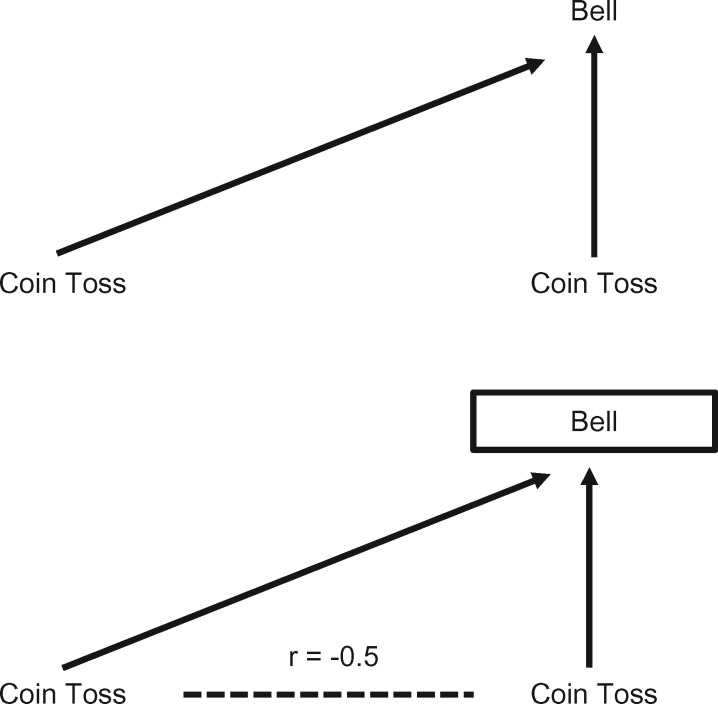
Large-scale cross-sectional and cohort studies have transformed our understanding of the genetic and environmental determinants of health outcomes. However, the representativeness of these samples may be limited-either through selection into studies, or by attrition from studies over time. Here we explore the potential impact of this selection bias on results obtained from these studies, from the perspective that this amounts to conditioning on a collider (i.e. a form of collider bias). Whereas it is acknowledged that selection bias will have a strong effect on representativeness and prevalence estimates, it is often assumed that it should not have a strong impact on estimates of associations. We argue that because selection can induce collider bias (which occurs when two variables independently influence a third variable, and that third variable is conditioned upon), selection can lead to substantially biased estimates of associations. In particular, selection related to phenotypes can bias associations with genetic variants associated with those phenotypes. In simulations, we show that even modest influences on selection into, or attrition from, a study can generate biased and potentially misleading estimates of both phenotypic and genotypic associations. Our results highlight the value of knowing which population your study sample is representative of. If the factors influencing selection and attrition are known, they can be adjusted for. For example, having DNA available on most participants in a birth cohort study offers the possibility of investigating the extent to which polygenic scores predict subsequent participation, which in turn would enable sensitivity analyses of the extent to which bias might distort estimates.
Overview
The claims and statistics of this paper haven’t been checked yet.
Free: it reads the open-access text and checks the first 5 claims that cite a source we can check. Create a free account to check every claim.
Integrity signals
Registry
Cites
Statistics
Figures


Verification
Claims the paper makes
The claims and statistics of this paper haven’t been checked yet.
Free: it reads the open-access text and checks the first 5 claims that cite a source we can check. Create a free account to check every claim.
Claims other papers make about this one
Each is checked against this paper’s own text: does it say what the citing paper says it does?
The source backs part of the claim, not all of it — or backs it for a different population, condition or comparison.
In the citing paper
“The latter is supported by the observation that the proportion of smokers and the proportion with no qualifications-reflecting social position-were considerably lower than in the background population, and that the 5-year mortality rate was several-fold lower than in the UK population as a whole.38,39”
From A common variant in CCDC93 protects against myocardial infarction and cardiovascular mortality by regulating endosomal trafficking of low-density lipoprotein receptor (2020) · cites this paper as [38]
Experimental — accuracy not yet measuredIn the citing paper
“Importantly, initial UK Biobank data inclusion of a subset of participants recruited for a study of smoking and lung function in the first analysis17, which may have resulted in collider bias31 and contributed to the initial lower genetic correlation.”
From Transancestral GWAS of alcohol dependence reveals common genetic underpinnings with psychiatric disorders (2018) · cites this paper as [31]
In the citing paper
“In either of these situations, controlling for such a covariate could bias the MR effect estimate.55–57”
From Mendelian randomization (2022) · cites this paper as [55]
Self-check
Percentages, sums and reported differences re-computed from the paper’s own numbers.
The self-check needs the paper’s full text.
Citations
Cites
Statistical Analysis With Missing Data
Lahiff, M., Little, R. J. A., & Rubin, D. B. (1989) · Journal of the American Statistical Association · doi:10.2307/2289883 · Cited by 17,265
Statistical Analysis with Missing Data
Little, R. J. A., & Rubin, D. B. (2002) · Wiley Series in Probability and Statistics · doi:10.1002/9781119013563 · Cited by 8,473
An atlas of genetic correlations across human diseases and traits
ReproGen Consortium, Bulik-Sullivan, B., Psychiatric Genomics Consortium, Genetic Consortium for Anorexia Nervosa of the Wellcome Trust Case Control Consortium 3, Finucane, H. K., Anttila, V., Gusev, A., Day, F. R., Loh, P.-R., Duncan, L., et al. (2015) · Nature Genetics · doi:10.1038/ng.3406 · Cited by 4,255 · cited 1×
“For this reason, studies using polygenic scores, genome-wide allelic scores (20), and/or whole-genome genetic correlations (21, 22) are most at risk of producing biased and potentially misleading results where there is reason to believe the study sample is not representative of the study population but the mechanism o…”
BackgroundBoyd, A., Golding, J., Macleod, J., Lawlor, D. A., Fraser, A., Henderson, J., Molloy, L., Ness, A., Ring, S., & Davey Smith, G. (2013) · International Journal of Epidemiology · doi:10.1093/ije/dys064 · Cited by 2,996
A structural approach to selection bias
Hernán, M. A., Hernández-Díaz, S., & Robins, J. M. (2004) · Epidemiology · doi:10.1097/01.ede.0000135174.63482.43 · Cited by 2,844 · cited 1×
“Statistical adjustment of the XY association for a variable Z is equivalent to observing this association in a sub-population where all individuals share the same value of Z (1, 13).”
BackgroundCohort Profile: The Avon Longitudinal Study of Parents and Children: ALSPAC mothers cohort
Fraser, A., Macdonald-Wallis, C., Tilling, K., Boyd, A., Golding, J., Davey Smith, G., Henderson, J., Macleod, J., Molloy, L., Ness, A., et al. (2013) · International Journal of Epidemiology · doi:10.1093/ije/dys066 · Cited by 2,494 · cited 1×
“Initially, 14 541 pregnant women who were expected to give birth between 1 April 1991 and 31 December 1992 were recruited into the study in the South West region of England.(19) The study website contains details of all data available through a fully searchable data dictionary: [http://www.”
MethodSelf-citationEndogenous Selection Bias: The Problem of Conditioning on a Collider Variable
Elwert, F., & Winship, C. (2014) · Annual Review of Sociology · doi:10.1146/annurev-soc-071913-043455 · Cited by 1,168 · cited 1×
“There are other ways in which ascertainment can generate biases.(31) For example, Figure 3 (panel B) shows a situation in which entry into a study is conditional upon the value of the phenotype (but not the outcome of interest) and where the phenotype does not cause the outcome, but the phenotype and outcome are corre…”
BackgroundWhy Representativeness Should Be Avoided
Rothman, K. J., Gallacher, J. E., & Hatch, E. E. (2013) · International Journal of Epidemiology · doi:10.1093/ije/dys223 · Cited by 861
Lee, S. H., Yang, J., Goddard, M. E., Visscher, P. M., & Wray, N. R. (2012) · Bioinformatics · doi:10.1093/bioinformatics/bts474 · Cited by 635
Smith, G. D., Lawlor, D. A., Harbord, R., Timpson, N., Day, I., & Ebrahim, S. (2007) · PLoS Medicine · doi:10.1371/journal.pmed.0040352 · Cited by 569 · cited 1×
“In particular, for genetic variants, where conventional confounding is low (11), it has been argued, even by those concerned about selection bias, that any problems associated with a lack of representativeness may be modest (10, 12).”
Background
Research works printed but not linked: 3
- Asendorpf, 2012, Bias due to controlling a collider: A potentially important issue for personality research, Eur J Pers, 26, 391
- Office for National Statistics, 2014, Adult Smoking Habits in Great Britain: 2014
- Office for National Statistics, 2011, Census: 2011
Cited by
Items 801–865 of 865
Melbourne, C. (2019) · Figshare
Teleka, S. (2021) · Lund University Publications (Lund University)
Biel, R. K. (2023) · eScholarship@McGill (McGill) · doi:10.82308/22618
Joannès, C. (2022) · theses.fr (ABES) · doi:10.70675/a7e926d6zfceaz478ez9b53z31520f214ce7
Polygenic prediction of treatment response for precision medicine is vulnerable to collider biasPreprint
Tudball, M., Cirulli, E. T., Holmes, M. V., Smith, G. D., & Richards, J. B. (2026) · medRxiv · doi:10.64898/2026.10.18.26365857
Polygenic risk score and 20-year prostate cancer-specific mortality and survival
Plym, A., Wang, A., Stopsack, K. H., Zhang, Y., Baras, A., Drake, I., Clements, M., Penney, K. L., Giovannucci, E. L., Kibel, A. S., et al. (2026) · Communications Medicine · doi:10.1038/s43856-026-01603-9
Additional file 1 of Is occupational physical activity associated with mortality in UK Biobank?
Pearce, M., Strain, T., Wijndaele, K., Sharp, S. J., Mok, A., & Brage, S. (2021) · Figshare · doi:10.6084/m9.figshare.15064149
Piryaei, M., Zahedi, A. S., Halimi, A., Akbarzadeh, M., Jahangiri, M., Hedayati, M., Hadaegh, F., Momenan, A. A., Azizi, F., DANESHPOUR, M. S., et al. (2025) · BMC Genomics · doi:10.1186/s12864-025-12369-0
Navigating Selection Bias in Genome-wide Association Studies (GWAS)Preprint
Barry, C.-J. S., Gholipourshahraki, T., Kutalik, Z., Vilhjálmsson, B. J., & Agerbo, E. (2026) · arXiv (Cornell University) · doi:10.48550/arxiv.2611.09429
Behrouzi, B. (2024) · TSpace (University of Toronto)
Next-Generation Mendelian Randomization: Advanced and Reliable Methods for Complex Causal Inference
Tian, H. (2024) · Apollo (University of Cambridge) · doi:10.17863/cam.113069
Pathway‐Specific Polygenic Risk Scores and Cardiorenal Complications in Asians With Type 2 Diabetes
Gurung, R. L., Zheng, H., Tan, J. L. I., Liu, S., Liu, J., Ang, K., Subramaniam, T., Sum, C. F., & Lim, S. C. (2026) · Diabetes Obesity and Metabolism · doi:10.1111/dom.70741
Husein, N. K., Ho, M. P., Lin, K., Chan, D. K. E., Hayashi, S., Sachdev, S. P., Hassanzadeh, T., Jiang, J., Sachdev, P. S., & Wen, W. X. (2026) · medRxiv · doi:10.64898/2026.10.09.26365181
Behavioural outcomes and neuropathology associated with mild traumatic brain injury
Kennedy, E. (2019) · Bristol Research (University of Bristol)
Franses, P. H. (2024) · Cambridge University Press eBooks · doi:10.1017/9781009428033.009
Backhaus, J., Frickmann, H., Hahn, A., Zautner, A. E., Kann, S., & Heimesaat, M. M. (2025) · European Journal of Microbiology and Immunology · doi:10.1556/1886.2025.00054
Factors influencing malignant tumor development in cats from a multicenter retrospective study
Fonti, N., Carnio, A., Cocumelli, C., Dhein, E. S., Eleni, C., Galietta, V., Guscetti, F., Lachi, A., Parisi, F., Poli, A., et al. (2026) · Scientific Reports · doi:10.1038/s41598-026-35379-8
Genomic Analyses of the Relationship between Neuroticism and Alzheimer's Disease
Akbarian, N. (2024) · TSpace (University of Toronto)
Edmunds, G. L., Smalley, M. J., Beck, S., Errington, R. J., Gould, S., Winter, H., Brodbelt, D. C., & O’Neill, D. G. (2021) · Figshare · doi:10.6084/m9.figshare.14189961
Life course socioeconomic adversity and its implications for musculoskeletal ageing
Yusuf, M. A. (2023) · e-space (Manchester Metropolitan University)
The epidemiology of hormones and prostate cancer
Watts, E. L. (2019) · Oxford University Research Archive (ORA) (University of Oxford) · doi:10.5287/ora-yr6rkkqzb
Hanff, A.-M. (2024) · Research Publications (Maastricht University) · doi:10.26481/dis.20250113ah
Strotmann, R.-S., & Hoffmann, H. (2020) · Lund University Publications Student Papers (Lund University)
Assumption-Lean Inference for Causal and Statistical Questions in the Era of Machine Learning
Hines, O. (2023) · LSHTM Research Online (London School of Hygiene and Tropical Medicine) · doi:10.17037/pubs.04670988
Genetic and methodological aspects of statin-induced lipid response
Smit, R. A. J. (2019) · Leiden Repository (Leiden University)
Bukasa, L. (2024) · UCL Discovery (University College London)
Shin, J. (2020) · Adelaide Research & Scholarship (AR&S) (University of Adelaide)
Friel, C. (2024) · Enlighten: Theses (The University of Glasgow) · doi:10.5525/gla.thesis.84235
Liu, C. (2025) · Apollo (University of Cambridge) · doi:10.17863/cam.119297
Tektonidis, A. (2020) · Radar (Oxford Brookes University) · doi:10.12681/eadd/53471
Wang, Z., & Liu, Y. (2026) · medRxiv · doi:10.64898/2026.07.17.26357845
Qiu, J., Li, Y., Zhu, G., & Liu, X. (2026) · Genes · doi:10.3390/genes17111371
Hearing, Cognition, And Social Isolation In Older Adults: A Pluralist Approach
Dhanda, N. (2023) · Aston Publications Explorer (Aston University) · doi:10.48780/publications.aston.ac.uk.00045370
Transformation of family structures and its influence on child learning outcomes in Ghana
Mefful, J., Abukari, M., & Nunoo, J. (2026) · Discover Sustainability · doi:10.1007/s43621-025-02490-1
Cocomello, L., Taylor, K., Caputo, M., Cornish, R. P., & Lawlor, D. A. (2022) · doi:10.3389/fcvm.2022.870474.s001
Topics In The Quantitative Analysis of Complex Trait Genetic Architectures
Border, R. (2019) · CU Scholar (University of Colorado Boulder)
Thanaj, M., Basty, N., Whitcher, B., Sorokin, E. P., Liu, Y., Srinivasan, R., Cule, M., Thomas, E. L., & Bell, J. D. (2024) · doi:10.3389/fphys.2024.1288657.s001
Turner, N. L. (2018) · Bristol Research (University of Bristol)
Age-dependent genetic effects on body mass index in the UK Biobank: a SNP-level approach
Hirzinger, J. S., Werme, J., de Leeuw, C., Verhulst, B., Posthuma, D., & Brouwer, R. M. (2026) · Communications Biology · doi:10.1038/s42003-026-10980-9
Wolford, B. N. (2021) · Deep Blue (University of Michigan) · doi:10.7302/2855
Roy, R., Salatzki, J., Condurache, D.-G., Ristić, M., Lewandowski, A. J., & Raisi‐Estabragh, Z. (2026) · International Journal of Epidemiology · doi:10.1093/ije/dyag241
Causal blind spots when using prediction models for treatment decisionsPreprint
van Geloven, N., Keogh, R. H., van Amsterdam, W. A. C., Cinà, G., Krijthe, J. H., Peek, N. B., Luijken, K., Magliacane, S., Morzywołek, P., van Ommen, T., et al. (2024) · Pure Amsterdam UMC
Codling, S. (2024) · Repository@Hull (Worktribe) (University of Hull)
Howson, J. M. M. (2018) · Apollo (University of Cambridge) · doi:10.17863/cam.34132
Richardson, T. G., Smith, G. D., & Munafo, M. R. (2017) · bioRxiv (Cold Spring Harbor Laboratory) · doi:10.1101/231969
Seyed Khoei, N., Wagner, K.-H., Sedlmeier, A. M., Gunter, M. J., Murphy, N., & Freisling, H. (2022) · Figshare · doi:10.6084/m9.figshare.19613651
Slingerland, S. R. (2024) · TU/e Research Portal
Saied, A., & Horsfall, L. (2024) · UCL Discovery (University College London)
Pan, H., Wu, P., Sun, K., Xie, Z., Qiu, Z., Zhang, Q., Tian, Z., Hou, X., Gao, S., Chen, Y., et al. (2026) · BMC Pulmonary Medicine · doi:10.1186/s12890-025-04098-7
Tetsunaga, T., Miyasaka, T., Sugano, N., Mitani, S., Sakai, T., Fujiwara, K., Takahashi, D., Ando, W., & Harada, Y. (2026) · BMC Musculoskeletal Disorders · doi:10.1186/s12891-026-09708-x
Mothers face immediate, but family-size dependent, costs of sons in preindustrial FinlandPreprint
Young, E. A., van Dorp, L., Lahdenperä, M., Lummaa, V., & Dugdale, H. L. (2026) · bioRxiv (Cold Spring Harbor Laboratory) · doi:10.64898/2026.04.08.717249
García, O. R. (2026) · Communities in ADDI (University of the Basque Country)
Schmitzer, A.-G., Potop, V., Voinea, L., Schmitzer, S., Arghirescu, A. M., Muşat, A. A. M., Marinescu, M. C., Ciuluvica, R. C., Georgevici, A., & Gheorghe, A. G. (2026) · Journal of Clinical Medicine · doi:10.3390/jcm15166437
Nazary‐Moghadam, S., Ziaee, A., Mirinezhad, S., & Jafarzadeh, S. (2026) · Scientific Reports · doi:10.1038/s41598-026-75784-7
Zhou, X., & Shan, N. (2026) · HemaSphere · doi:10.1002/hem3.70519
Peng, L., Jing, J., Ma, J., He, S., Gao, X., & Wang, T. (2022) · doi:10.3389/fpubh.2022.995664.s002
Goulet, D., O’Loughlin, J., & Sylvestre, M.-P. (2021) · doi:10.3389/fgene.2021.690335.s001
Thal, S. B., Riddell, H., Daws, C., Hunter, J., Luhar, M., & MYERS, B. J. (2026) · Drugs Education Prevention and Policy · doi:10.1080/09687637.2026.2762884
Metadata
- Authors
- Munafò, M. R., Tilling, K., Taylor, A. E., Evans, D. M., & Davey Smith, G.
- Affiliations
- MRC Integrative Epidemiology Unit
- University of Bristol (GB)
- UK Centre for Tobacco & Alcohol Studies (GB)
- Translational Research Institute (AU)
- Venue
- International Journal of Epidemiology
- Publisher
- Oxford University Press (OUP)
- Published
- 2017-09-27
- Volume
- 47
- Issue
- 1
- Pages
- 226-235
- ISSN
- 0300-5771 (ISSN-L)
- 1464-3685
- PMC
- PMC5837306
- OpenAlex
- W2528374605
- Cited by
- 813
- References
- 39
- Citations by year
- 2026: 59 · 2025: 58 · 2024: 106 · 2023: 96 · 2022: 130 · 2021: 121 · 2020: 97 · 2019: 84 · 2018: 45 · 2017: 17
- FWCI
- 45.84
- Type
- journal article
- Language
- en
- Open access
- hybrid
- doi.org
- Licence
- Locations
- International Journal of Epidemiology (publishedVersion, cc-by)
- PubMed Central (publishedVersion, cc-by)
- PubMed (publishedVersion)
- Explore Bristol Research (submittedVersion, cc-by)
- Bristol Research (University of Bristol) (submittedVersion, cc-by)
- Funders
- Wellcome Trust (102215/2/13/2)
- University of Bristol (MC_UU_12013/2, MC_UU_12013/8, MC_UU_12013/1, MC_UU_12013/4, MC_UU_12013/6, MC_UU_12013/9)
- BBSRC (BBI025751/1, BB/I025263/1)
- MRC
- ESRC
- NIH
- Medical Research Council
- British Heart Foundation
- Cancer Research UK
- Economic and Social Research Council
- National Institute for Health Research
- Topics
- Physical Sciences › Mathematics › Statistics and Probability › Statistical Methods in Epidemiology
- Life Sciences › Biochemistry, Genetics and Molecular Biology › Genetics › Genetic Associations and Epidemiology
- Physical Sciences › Mathematics › Statistics and Probability › Advanced Causal Inference Techniques
- Keywords
- selection bias, collider bias, study attrition, sample representativeness, polygenic risk score, bias correction
- MeSH terms
- Cross-Sectional Studies, Humans, Cohort Studies, Selection Bias, Patient Selection
About these checks
Registry, retraction, Cites and statistics results are computed, not judged, with one exception: a printed reference that no index lists is read once by a model before it counts as a citation error. Claims are extracted by a model and kept only when their quote appears verbatim in the text; each cited source is then checked, with a model’s help, for whether it says what the claim relies on. Those verdicts can be wrong — read the claim’s quote and the cited source before relying on one.
Statistics and arithmetic are recomputed, not judged.
Confidence bands are shown only for fields calibrated on our annotated test set. None is calibrated yet, so no band is shown.
What counts as a claim ›How we measure confidence ›How we check this ›
Are you an author, or do you see a problem with this page? Request a review
Data sources
Bibliographic data: Semantic Scholar, OpenAlex, Crossref.
Contains information from the Semantic Scholar Academic Graph Datasets, made available under the ODC Attribution License (ODC-BY 1.0).
Semantic Scholar’s data is described in: Kinney, R., et al. (2023). The Semantic Scholar Open Data Platform. arXiv:2301.10140.
