

Δ 9-Tetrahydrocannabinol During Adolescence Reprograms the Nucleus Accumbens Transcriptome, Affecting Reward Processing, Impulsivity, and Specific Aspects of Cocaine Addiction-Like Behavior in a Sex-Dependent Manner
Open accessThe DOI matches its Crossref record; 94 of the 94 references it cites were found in a registry or an index.
Abstract
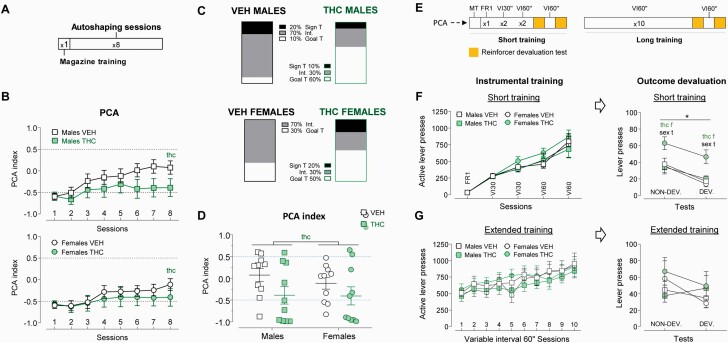
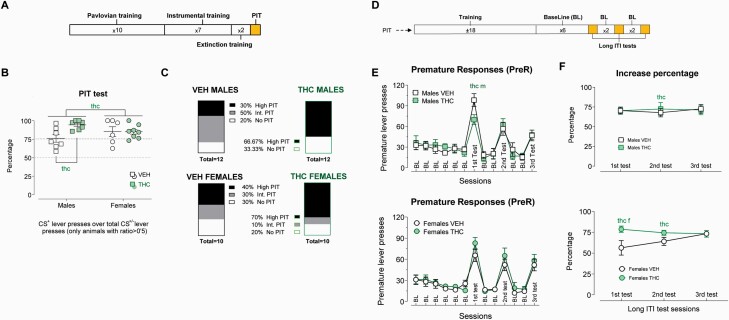
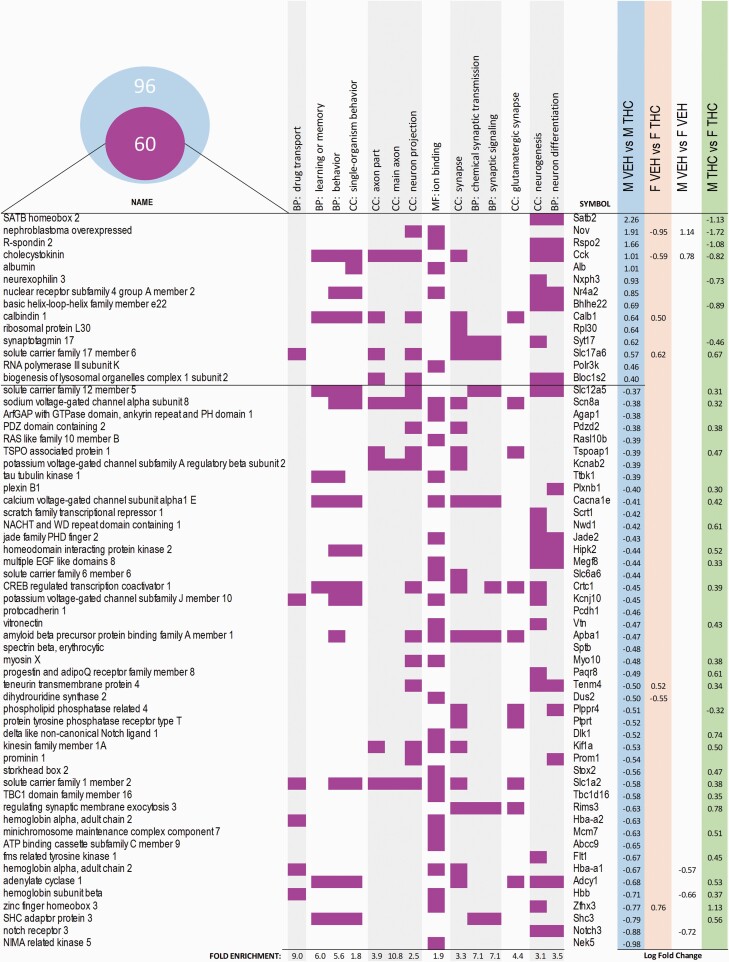
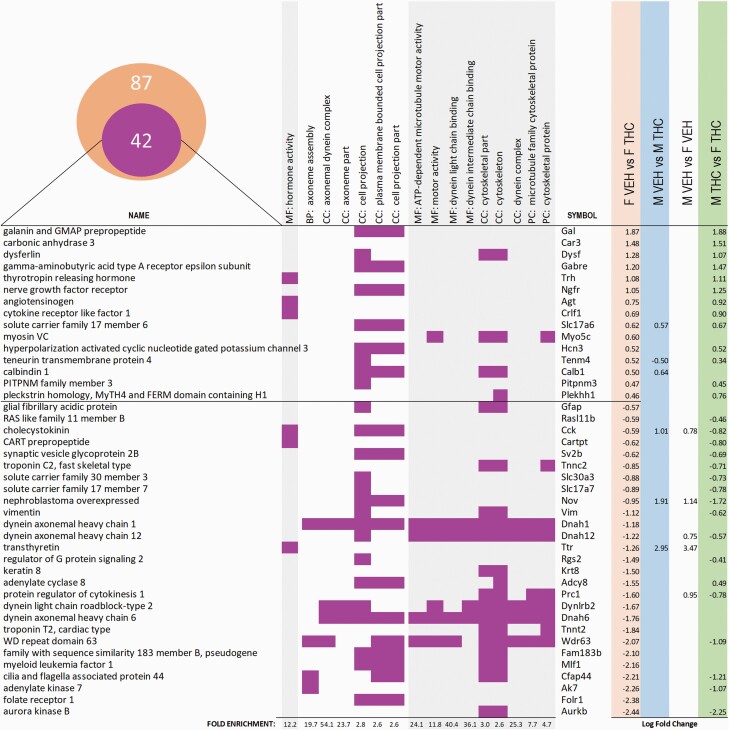
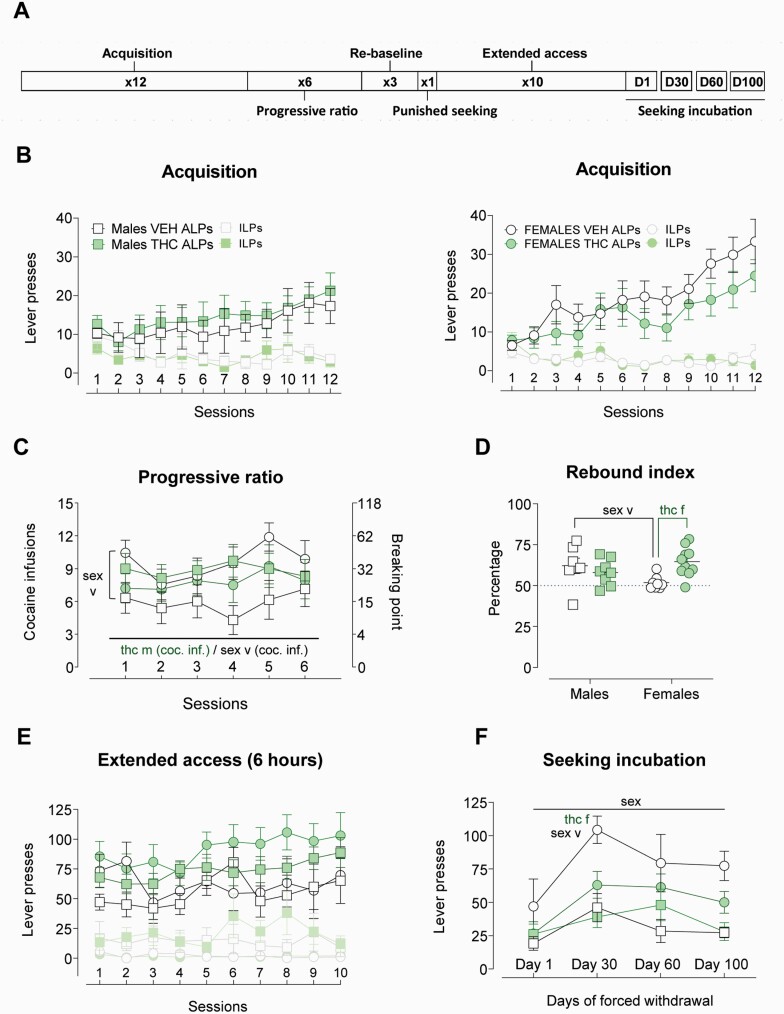
BACKGROUND: Cannabis exposure during adolescence is associated with emotional and motivational alterations that may entail an enhanced risk of developing psychiatric disorders. In rodent models, exposure to cannabinoids during adolescence leads to increased self-administration of opiates and cocaine, however, the psychological and neural mechanisms and the sex-specificity of this phenomenon are largely unknown. METHODS: We exposed male and female adolescent rats to Δ9-tetrahydrocannabinol (THC) and studied at adulthood the effects of such treatment on psychological processes related to reward, such as Pavlovian conditioned approach, Pavlovian to instrumental transfer, habit formation and waiting impulsivity. In the light of these data and given the involvement of the nucleus accumbens in the processes examined, we performed an RNASeq transcriptomic study and assessed cocaine addiction-like behavior. RESULTS: THC exposure increased goal-tracking (in males and females) and enhanced Pavlovian to instrumental transfer (especially in males) but did not affect habit formation. THC-exposed rats exhibited subtle, state-dependent changes in premature responding in the 2-CSRTT task. RNASeq data showed gene expression alterations in a marked sex-specific manner. While no effects were found on the acquisition of cocaine self-administration or punished drug-seeking, rats exposed to THC self-administered more cocaine under a progressive ratio schedule (males), had a higher rebound upon returning to continuous access to the drug (females) and showed reduced drug-seeking after 30 days of withdrawal (females). CONCLUSIONS: Adolescent THC affects specific aspects of reward- (and cocaine-) guided behavior and the function of a key brain region mediating these effects, in a remarkable sex-specific manner.
Overview
The claims and statistics of this paper haven’t been checked yet.
Free: it reads the open-access text and checks the first 5 claims that cite a source we can check. Create a free account to check every claim.
Integrity signals
Registry
Cites
Statistics
Figures
Verification
Claims the paper makes
The claims and statistics of this paper haven’t been checked yet.
Free: it reads the open-access text and checks the first 5 claims that cite a source we can check. Create a free account to check every claim.
Claims other papers make about this one
Each is checked against this paper’s own text: does it say what the citing paper says it does?
The cited source says what the claim attributes to it.
In the citing paper
“Differences in DEGs following adolescent THC exposure have also been shown in the NAc [138].”
From Consequences of adolescent drug use (2023) · cites this paper as [138]
Self-check
Percentages, sums and reported differences re-computed from the paper’s own numbers.
The self-check needs the paper’s full text.
Citations
Cites
The adolescent brain and age-related behavioral manifestations
Spear, L. P. (2000) · Neuroscience & Biobehavioral Reviews · doi:10.1016/s0149-7634(00)00014-2 · Cited by 5,433 · cited 2×
“Adolescence is a crucial period of development characterized by profound changes in psychological and neural processes (Spear, 2000; Paus et al., 2008; Blakemore, 2012).”
BackgroundWhy do many psychiatric disorders emerge during adolescence?
Paus, T., Keshavan, M., & Giedd, J. N. (2008) · Nature Reviews Neuroscience · doi:10.1038/nrn2513 · Cited by 3,123 · cited 1×
“Adolescence is a crucial period of development characterized by profound changes in psychological and neural processes (Spear, 2000; Paus et al., 2008; Blakemore, 2012).”
BackgroundMi, H., Muruganujan, A., Ebert, D., Huang, X., & Thomas, P. D. (2019) · Nucleic Acids Research · doi:10.1093/nar/gky1038 · Cited by 3,033 · cited 1×
“Gene ontologies and pathways enrichment and overrepresentation were calculated with the online tools and databases of PANTHER Classification System (Mi et al., 2019) for every gene subset obtained in the differential analysis.”
MethodEvidence for Addiction-like Behavior in the Rat
Deroche-Gamonet, V., Belin, D., & Piazza, P. V. (2004) · Science · doi:10.1126/science.1099020 · Cited by 1,135 · cited 2×
“, 2018), a cardinal feature of addictionlike behavior typically evaluated using punished CSA procedures (Deroche-Gamonet et al., 2004; Belin et al., 2008).”
BackgroundKandel, D. B., Yamaguchi, K., & Chen, K. (1992) · Journal of Studies on Alcohol · doi:10.15288/jsa.1992.53.447 · Cited by 1,039
A selective role for dopamine in stimulus-reward learning
Flagel, S. B., Clark, J. J., Robinson, T. E., Mayo, L., Czuj, A., Willuhn, I., Akers, C. A., Clinton, S. M., Phillips, P. E. M., & Akil, H. (2011) · Nature · doi:10.1038/nature09588 · Cited by 1,026
High Impulsivity Predicts the Switch to Compulsive Cocaine-Taking
Belin, D., Mar, A. C., Dalley, J. W., Robbins, T. W., & Everitt, B. J. (2008) · Science · doi:10.1126/science.1158136 · Cited by 989 · cited 2×
“, 2018), a cardinal feature of addictionlike behavior typically evaluated using punished CSA procedures (Deroche-Gamonet et al., 2004; Belin et al., 2008).”
BackgroundNotch signalling regulates stem cell numbers in vitro and in vivo
Androutsellis-Theotokis, A., Leker, R. R., Soldner, F., Hoeppner, D. J., Ravin, R., Poser, S. W., Rueger, M. A., Bae, S.-K., Kittappa, R., & McKay, R. D. G. (2006) · Nature · doi:10.1038/nature04940 · Cited by 956
From the ventral to the dorsal striatum: devolving views of their roles in drug addiction
Everitt, B. J., & Robbins, T. W. (2013) · Neuroscience & Biobehavioral Reviews · doi:10.1016/j.neubiorev.2013.02.010 · Cited by 675
Imaging brain development: The adolescent brain
Blakemore, S.-J. (2012) · NeuroImage · doi:10.1016/j.neuroimage.2011.11.080 · Cited by 649
Research works printed but not linked: 2
- Biscaia M, Fernández B, Higuera-Matas A, Miguéns M, Viveros MP, García-Lecumberri C, Ambrosio E (2008b) Sex-dependent effects of periadolescent exposure to the cannabinoid agonist CP-55,940 on morphine self-administration behaviour and the endogenous opioid system. Neuropharmacology 54: 863– 873. 18329053 · DOI
- Rotzinger S, Vaccarino FJ (2003) Cholecystokinin receptor subtypes: role in the modulation of anxiety-related and reward-related behaviours in animal models. J Psychiatry Neurosci 28: 171– 181. 12790157 PMC161741
Cited by
Consequences of adolescent drug use
Steinfeld, M. R., & Torregrossa, M. M. (2023) · Translational Psychiatry · doi:10.1038/s41398-023-02590-4 · Cited by 237
“Importantly, the authors reported that NAc D2 receptors were responsible for nicotine-induced increases in microglial activation in adolescent rats, as well as the increased cocaine self-administration that was also observed.”
BackgroundInfluentialFerland, J. N., Ellis, R. J., Betts, G., Silveira, M. M., de Firmino, J. B., Winstanley, C. A., & Hurd, Y. L. (2022) · JAMA Psychiatry · doi:10.1001/jamapsychiatry.2022.3915 · Cited by 35
Cannabinoid CB1 receptor-sensitive neurodevelopmental processes and trajectories
Tseng, K. Y., & Molla, H. M. (2025) · Molecular Psychiatry · doi:10.1038/s41380-025-03057-2 · Cited by 22
Early life adversity: Epigenetic regulation underlying drug addiction susceptibility
Winter, J. J., Rodríguez-Acevedo, K. L., Dittrich, M., & Heller, E. A. (2023) · Molecular and Cellular Neuroscience · doi:10.1016/j.mcn.2023.103825 · Cited by 19
Synaptic pruning during adolescence shapes adult social behavior in both males and females
Kirkland, J. M., Edgar, E. L., Patel, I., Feustel, P. J., Belin, S., & Kopec, A. M. (2024) · Developmental Psychobiology · doi:10.1002/dev.22473 · Cited by 19
Astrocytic transcriptional and epigenetic mechanisms of drug addiction
Holt, L. M., & Nestler, E. J. (2023) · Journal of Neural Transmission · doi:10.1007/s00702-023-02716-4 · Cited by 20
“1, GLT1, and GFAP, with some sex-specific effects (Orihuel et al. 2021).”
Halbout, B., Hutson, C., Hua, L., Inshishian, V. C., Mahler, S. V., & Ostlund, S. B. (2023) · Psychopharmacology · doi:10.1007/s00213-023-06352-4 · Cited by 18
“In other more recent studies, rats with a history of adolescent cannabinoid exposure displayed normal or even enhanced sensitivity to reward devaluation (Ferland et al. 2022; Orihuel et al. 2021).”
BackgroundResultInfluentialKing’uyu, D. N., Edgar, E. L., Figueroa, C., Kirkland, J. M., & Kopec, A. M. (2024) · Behavioral Neuroscience · doi:10.1037/bne0000567 · Cited by 9
Felice, M. D., Szkudlarek, H. J., Uzuneser, T. C., Rodríguez-Ruiz, M., Sarikahya, M. H., Pusparajah, M., Lazo, J. P. G., Whitehead, S. N., Yeung, K. K. ‐., Rushlow, W. J., et al. (2024) · Biological Psychiatry Global Open Science · doi:10.1016/j.bpsgos.2024.100361 · Cited by 10
The CB1 receptor: linking impulsivity and substance use disorder
Belmont, O. A., Becerril-Meléndez, L. A., & Méndez‐Díaz, M. (2025) · Frontiers in Neuroscience · doi:10.3389/fnins.2025.1621242 · Cited by 8
Orihuel, J., Capellán, R., Casquero‐Veiga, M., Soto‐Montenegro, M. L., Desco, M., Oteo, M., Ibanez-Moragues, M., Magro, N., Luján-Rodríguez, V. M., Morcillo, M. Á., et al. (2023) · European Neuropsychopharmacology · doi:10.1016/j.euroneuro.2023.05.005 · Cited by 7
Self-citationKangas, B. D., Deshpande, H. U., Withey, S. L., Spealman, R. D., Bergman, J., & Kohut, S. J. (2024) · Neuropsychopharmacology · doi:10.1038/s41386-024-02024-9 · Cited by 5
“…to slow the acquisition of reward-predictive cues [29], whereas other reports have documented enhancement of motivation, evident by increased goal-tracking behavior and enhanced Pavlovian-to-instrumental transfer [30] or by increased response rates and palatable food-seeking behavior [27, 31, 32].”
Miederer, I., Schmitt, U., Bausbacher, N., Röhrich, J., Mildenberger, P. C., Lutz, B., Tüscher, O., & Schreckenberger, M. (2023) · Cannabis and Cannabinoid Research · doi:10.1089/can.2022.0268 · Cited by 3
Cornelissen, F. E. M., Vries, T. J. D., & Pattij, T. (2025) · Current Addiction Reports · doi:10.1007/s40429-025-00682-3 · Cited by 2
Multisystem regulation of reward and addiction: beyond the dopaminergic system
Arias-Carrión, Ó., Ortega‐Robles, E., Treviño, M., Guerra‐Crespo, M., Manjarrez, E., & Pöppel, E. (2026) · Frontiers in Pharmacology · doi:10.3389/fphar.2026.1840096 · Cited by 3
“…THC exposure increases Pavlovian-to-instrumental transfer, indicating exaggerated influence of reward-predictive cues on action selection and aligning cannabinoid effects with incentive-sensitization and habit-formation frameworks (Miller et al., 2019; Scherma et al., 2020; Orihuel et al., 2021).”
Felice, M. D., Szkudlarek, H. J., Jones, M., Uzuneser, T. C., Sarikahya, M. H., Whitehead, S. N., Rushlow, W. J., & Laviolette, S. R. (2025) · Psychopharmacology · doi:10.1007/s00213-025-06817-8 · Cited by 1
“…differentially impacted the activity of transcription factors associated with emotional processing in PFC, Hipp, and NAc (Rubino et al. 2008), suppressed hippocampal neurogenesis (Realini et al. 2011; Cuccurazzu et al. 2018), and reprogrammed the transcriptome of the NAc (Orihuel et al. 2021 ).”
Influentiallnc15qD3 expression in the NAc shell regulates the reconsolidation of opioid reward memories
Li, X., Xie, B., Luo, Y., Lu, Y., Zhang, M., Wang, X., Yu, H., Zhang, L., Cong, B., Wen, D., et al. (2025) · Progress in Neuro-Psychopharmacology and Biological Psychiatry · doi:10.1016/j.pnpbp.2025.111433 · Cited by 1
Zuo, Y., Libster, A. M., Gurha, A., Formoli, N., Liaw, L., Sun, D., Turner, A. V., Iemolo, A., & Telese, F. (2025) · bioRxiv (Cold Spring Harbor Laboratory) · doi:10.1101/2025.04.03.646846 · Cited by 1
“Thus, alterations in gene regulatory networks within cell types of the NAc during this critical developmental period may shape long-term behavioral outcomes 11,19,20 .”
Fernández, M. M. (2023) · UNED repository · Cited by 1
Acosta-Vargas, J., Heras-Martinez, N. D. L., Marcos, A., Nozal, L., Crego, A. L., Ucha, M., & Higuera‐Matas, A. (2026) · Neuropharmacology · doi:10.1016/j.neuropharm.2026.110843
Self-citationEstes, M. K., Guda, V., Thompson, E., de Oliveira, D. R., Nowak, D. B., Hillard, C. J., & Mantsch, J. R. (2026) · Psychopharmacology · doi:10.1007/s00213-026-07030-x
Sex and Gender Differences in Cannabis Use Disorder
Mostallino, R., & Fattore, L. (2026) · Springer eBooks · doi:10.1007/978-3-032-12239-1_12
Martinez, M. X., Ruiz, C. M., Perrone, C. R., Inshishian, V. C., Castillo, E., & Mahler, S. V. (2026) · Addiction Neuroscience · doi:10.1016/j.addicn.2026.100282
Metadata
- Authors
- Orihuel, J., Capellán, R., Roura-Martínez, D., Ucha, M., Ambrosio, E., & Higuera-Matas, A.
- Affiliations
- Universidad Nacional de Educación a Distancia (ES)
- Department of Psychobiology, School of Psychology, National University for Distance Learning (UNED), Madrid, Spain
- Venue
- International Journal of Neuropsychopharmacology
- Publisher
- Oxford University Press (OUP)
- Published
- 2021-08-26
- Volume
- 24
- Issue
- 11
- Pages
- 920-933
- ISSN
- 1461-1457 (ISSN-L)
- 1469-5111
- PMC
- PMC8598305
- OpenAlex
- W3195111299
- Semantic Scholar
- 4e1cb0bb00b681816b316b395ac8eb18d934ea58
- Cited by
- 23
- References
- 94
- Citations by year
- 2026: 5 · 2025: 6 · 2024: 3 · 2023: 8 · 2022: 1
- FWCI
- 1.75
- Type
- journal article
- Language
- en
- Open access
- gold
- doi.org
- Licence
- Locations
- The International Journal of Neuropsychopharmacology (publishedVersion, cc-by-nc)
- PubMed Central (publishedVersion, cc-by-nc)
- PubMed (publishedVersion)
- Espacio Tiempo y Forma Serie I Prehistoria y Arqueología (publishedVersion, cc-by-nc)
- Funders
- Spanish Ministry of Health, Social Services and Equality (RTA-RD16/0017/0022)
- Nacional Sobre Drogas (2016I073, 2017I042)
- Ministry of Science (PID2019-104523RB-I00, PID2019-111594RB-100)
- UNED
- European Union (JUST/2017/AG-DRUG-806996-JUSTSO)
- BBVA Foundation
- Ministry of Science and Innovation (BES-2011-043814)
- Topics
- Health Sciences › Medicine › Pharmacology (medical) › Cannabis and Cannabinoid Research
- Life Sciences › Neuroscience › Cellular and Molecular Neuroscience › Neurotransmitter Receptor Influence on Behavior
- Life Sciences › Neuroscience › Cognitive Neuroscience › Neural and Behavioral Psychology Studies
- Keywords
- delta-9-tetrahydrocannabinol, adolescent cannabis exposure, nucleus accumbens, sex differences, reward processing, impulsivity, cocaine self-administration, Pavlovian-to-instrumental transfer, Pavlovian conditioned approach, habit formation, gene expression reprogramming, premature responding
- MeSH terms
- Animals, Behavior, Animal, Brain, Habits, Impulsive Behavior, Male, Nucleus Accumbens, Reinforcement, Psychology, Reward, Self Administration, Sex Characteristics, Dronabinol, Cocaine-Related Disorders, Rats, Drug-Seeking Behavior, Transcriptome
About these checks
Registry, retraction, Cites and statistics results are computed, not judged, with one exception: a printed reference that no index lists is read once by a model before it counts as a citation error. Claims are extracted by a model and kept only when their quote appears verbatim in the text; each cited source is then checked, with a model’s help, for whether it says what the claim relies on. Those verdicts can be wrong — read the claim’s quote and the cited source before relying on one.
Statistics and arithmetic are recomputed, not judged.
Confidence bands are shown only for fields calibrated on our annotated test set. None is calibrated yet, so no band is shown.
What counts as a claim ›How we measure confidence ›How we check this ›
Are you an author, or do you see a problem with this page? Request a review
Data sources
Bibliographic data: Semantic Scholar, OpenAlex, Crossref.
Contains information from the Semantic Scholar Academic Graph Datasets, made available under the ODC Attribution License (ODC-BY 1.0).
Semantic Scholar’s data is described in: Kinney, R., et al. (2023). The Semantic Scholar Open Data Platform. arXiv:2301.10140.
