

The DOI matches its Crossref record; 54 of the 55 references it cites were found in a registry or an index.
Impact of Overweight and Obesity on US Papillary Thyroid Cancer Incidence Trends (1995–2015)
Open accessAbstract
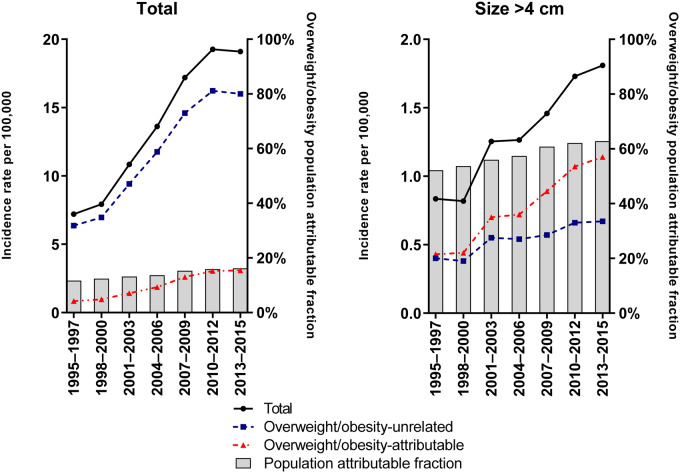
Background: Since the early 1980s, papillary thyroid cancer (PTC) incidence rates and the prevalence of obesity, a risk factor for PTC, have increased substantially in the United States. We estimated the proportion of PTC incidence in the United States attributable to overweight and obesity during 1995–2015. Methods: National Institutes of Health-AARP Diet and Health Study cohort data (n = 457 331 participants, 50–71 years and cancer-free at baseline) were used to estimate multivariable-adjusted hazard ratios (HRs) for PTC across body mass index categories. Population attributable fractions (PAFs) were calculated using estimated hazard ratios and annual overweight and obesity prevalence estimates from the National Health Interview Survey. PAF estimates were combined with Surveillance, Epidemiology, and End Results-13 data to calculate annual percent changes in PTC incidence rates attributable (and unrelated) to overweight and obesity. Results: Overweight (25.0–29.0 kg/m2) and obesity (≥30.0 kg/m2) were associated with 1.26-fold (95% confidence interval [CI] = 1.05- to 1.52-fold) and 1.30-fold (95% CI = 1.05- to 1.62-fold) increased risks of PTC, respectively, and nearly threefold (HR = 2.93, 95% CI = 1.25 to 6.87) and greater than fivefold (HR = 5.42, 95% CI = 2.24 to 13.1) increased risks of large (>4 cm) PTCs compared with normal weight (18.5–24.9 kg/m2). During 1995–2015, PAF estimates for overweight and obesity increased from 11.4% to 16.2% for all PTCs and from 51.4% to 63.2% for large PTCs. Overweight or obesity accounted for 13.6% and 57.8% of the annual percent changes in total (5.9%/y) and large (4.5%/y) PTC incidence rates, respectively, during 1995–2015. Conclusions: Overweight and obesity may have contributed importantly to the rapid rise in PTC incidence during 1995–2015. By 2015, we estimate that one of every six PTCs diagnosed among adults 60 years or older, including nearly two-thirds of large PTCs, were attributable to overweight and obesity.
Overview
The claims and statistics of this paper haven’t been checked yet.
Run the check — free, no account needed. It reads the open-access text and checks the sources it cites.
Integrity signals
Registry
Cites
Statistics
Figures
Verification
Claims the paper makes
The claims and statistics of this paper haven’t been checked yet.
Run the check — free, no account needed. It reads the open-access text and checks the sources it cites.
Claims other papers make about this one
Each is checked against this paper’s own text: does it say what the citing paper says it does?
The source backs part of the claim, not all of it — or backs it for a different population, condition or comparison.
In the citing paper
“a recent study estimated that 16% of the cancers overall and 63% of large tumors in the United States were attributable to obesity, 157”
From Global cancer statistics 2022: GLOBOCAN estimates of incidence and mortality worldwide for 36 cancers in 185 countries. (2024) · cites this paper as [157]
Experimental — accuracy not yet measuredThe cited source says what the claim attributes to it.
In the citing paper
“the relatively high proportion of obese patients among those receiving treatment could produce a bias, since excess weight is a risk factor for thyroid malignancies.22,63”
From Glucagon‐like peptide‐1 receptor agonists and risk of thyroid cancer: A systematic review and meta‐analysis of randomized controlled trials (2024) · cites this paper as [63]
Self-check
Percentages, sums and reported differences re-computed from the paper’s own numbers.
The self-check needs the paper’s full text.
Citations
Cites
Haugen, B. R., Alexander, E. K., Bible, K. C., Doherty, G. M., Mandel, S. J., Nikiforov, Y. E., Pacini, F., Randolph, G. W., Sawka, A. M., Schlumberger, M., et al. (2016) · Thyroid® · doi:10.1089/thy.2015.0020 · Cited by 16,535 · cited 2×
“Several clinical recommendations recently have been introduced or changed in response to concerns about thyroid cancer overdiagnosis and overtreatment (30,52), which may have contributed to the plateauing of PTC incidence rates since 2009 (1).”
Self-citationCooper, D. S., Doherty, G. M., Haugen, B. R., Kloos, R. T., Lee, S. L., Mandel, S. J., Mazzaferri, E. L., McIver, B., Pacini, F., Schlumberger, M., et al. (2009) · Thyroid · doi:10.1089/thy.2009.0110 · Cited by 6,707
Prevalence of Obesity Among Adults and Youth: United States, 2015-2016.
Hales, C. M., Carroll, M. D., Fryar, C. D., & Ogden, C. L. (2017) · PubMed · Cited by 3,889
Body Fatness and Cancer — Viewpoint of the IARC Working Group
Lauby-Secretan, B., Scoccianti, C., Loomis, D., Grosse, Y., Bianchini, F., & Straif, K. (2016) · New England Journal of Medicine · doi:10.1056/nejmsr1606602 · Cited by 3,596
Increasing Incidence of Thyroid Cancer in the United States, 1973-2002
Davies, L., & Welch, H. G. (2006) · JAMA · doi:10.1001/jama.295.18.2164 · Cited by 3,379
Cancer Epidemiology and Prevention
Schottenfeld, D. (2006) · doi:10.1093/acprof:oso/9780195149616.001.0001 · Cited by 3,376
Trends in Thyroid Cancer Incidence and Mortality in the United States, 1974-2013
Lim, H., Devesa, S. S., Sosa, J. A., Check, D., & Kitahara, C. M. (2017) · JAMA · doi:10.1001/jama.2017.2719 · Cited by 2,159
Self-citationOgden, C. L., Yanovski, S. Z., Carroll, M. D., & Flegal, K. M. (2007) · Gastroenterology · doi:10.1053/j.gastro.2007.03.052 · Cited by 1,561 · cited 1×
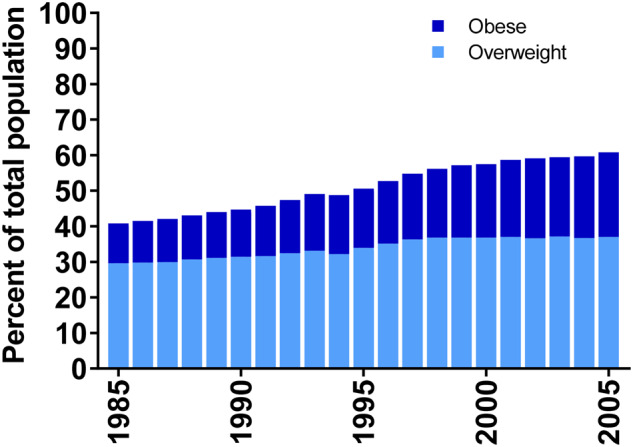
“Considering the tremendous increase in obesity prevalence among US adults since the early 1980s (from 15% in 1980 to nearly 40% in 2015–2016) (18,19), excess adiposity could have contributed appreciably to the observed temporal increases in US PTC incidence rates.”
Worldwide Thyroid-Cancer Epidemic? The Increasing Impact of Overdiagnosis
Vaccarella, S., Franceschi, S., Bray, F., Wild, C. P., Plummer, M., & Dal Maso, L. (2016) · New England Journal of Medicine · doi:10.1056/nejmp1604412 · Cited by 1,145
The changing incidence of thyroid cancer
Kitahara, C. M., & Sosa, J. A. (2016) · Nature Reviews Endocrinology · doi:10.1038/nrendo.2016.110 · Cited by 1,061 · cited 3×
“In the current study, we did not attempt to quantify the impact on PTC incidence trends of changes in medical practice, which appear to affect mostly small localized PTCs (29,31), or other environmental and lifestyle factors for PTC (4).”
Self-citationTuttle, R. M., Haugen, B. R., & Perrier, N. D. (2017) · Thyroid · doi:10.1089/thy.2017.0102 · Cited by 736 · cited 1×
“and >4 cm, corresponding to size thresholds used by the American Joint Committee on Cancer thyroid cancer staging system (21)].”
Obesity and cancer: the role of dysfunctional adipose tissue
van Kruijsdijk, R. C. M., van der Wall, E., & Visseren, F. L. J. (2009) · Cancer Epidemiology, Biomarkers & Prevention · doi:10.1158/1055-9965.epi-09-0372 · Cited by 715
Variance estimation for complex surveys using replication techniques
Rust, K., & Rao, J. (1996) · Statistical Methods in Medical Research · doi:10.1177/096228029600500305 · Cited by 662 · cited 1×
“Annual population attributable fractions (PAFs) (24,25) were calculated from the estimated hazard ratios (relative risks) derived from the NIH-AARP Diet and Health Study and prevalence estimates from NHIS as”
Biological Mechanisms Linking Obesity and Cancer Risk: New Perspectives
Roberts, D. L., Dive, C., & Renehan, A. G. (2010) · Annual Review of Medicine · doi:10.1146/annurev.med.080708.082713 · Cited by 615 · cited 3×
“…biological mechanisms underlying the relationship between adiposity and thyroid cancer are not fully understood, there have been tremendous advancements in knowledge regarding the complex mechanisms by which excess adiposity influences the induction and progression of cancer more generally (39–41).”
Design and Serendipity in Establishing a Large Cohort with Wide Dietary Intake Distributions
Schatzkin, A. G., Subar, A. F., Thompson, F. E., Harlan, L. C., Tangrea, J. A., Hollenbeck, A. R., Hurwitz, P. E., Coyle, L. M., Schussler, N., Michaud, D. S., et al. (2001) · American Journal of Epidemiology · doi:10.1093/aje/154.12.1119 · Cited by 608 · cited 1×
“…(NIH-AARP) is a large US cohort study that was established in 1995–1996 when 567 169 members of AARP (formerly known as the American Association of Retired Persons), aged 50–71years, satisfactorily completed a mailed baseline questionnaire inquiring about health and lifestyle characteristics (20).”
Stommel, M., & Schoenborn, C. A. (2009) · BMC Public Health · doi:10.1186/1471-2458-9-421 · Cited by 599
Noone, A., Cronin, K. A., Altekruse, S. F., Howlader, N., Lewis, D. R., Petkov, V. I., & Penberthy, L. (2016) · Cancer Epidemiology Biomarkers & Prevention · doi:10.1158/1055-9965.epi-16-0520 · Cited by 429 · cited 1×
“United States in 2019 will be attributable to overweight and obesity [and 2350 of the 3700 large [>4 cm] PTCs, assuming 8% of all diagnosed PTCs are >4 cm (28)].”
The prognostic value of primary tumor size in papillary and follicular thyroid carcinoma
Machens, A., Holzhausen, H.-J., & Dralle, H. (2005) · Cancer · doi:10.1002/cncr.21055 · Cited by 371 · cited 1×
“Larger tumor size is associated with disease-specific survival and recurrence (36,37), and anaplastic thyroid cancers are highly lethal undifferentiated tumors that appear to evolve as part of the natural course of untreated differentiated thyroid cancer (38).”
Cancer Epidemiology and Prevention
(2017) · Oxford University Press eBooks · doi:10.1093/oso/9780190238667.001.0001 · Cited by 365
Haugen, B. R., Sawka, A. M., Alexander, E. K., Bible, K. C., Caturegli, P., Doherty, G. M., Mandel, S. J., Morris, J. C., Nassar, A., Pacini, F., et al. (2017) · Thyroid · doi:10.1089/thy.2016.0628 · Cited by 341
Self-citationDavies, L., Morris, L. G. T., Haymart, M. R., Chen, A. Y., Goldenberg, D., Morris, J., Ogilvie, J. B., Terris, D. J., Netterville, J. L., Wong, R. J., et al. (2015) · Endocrine Practice · doi:10.4158/ep14466.dscr · Cited by 327 · cited 2×
“In the current study, we did not attempt to quantify the impact on PTC incidence trends of changes in medical practice, which appear to affect mostly small localized PTCs (29,31), or other environmental and lifestyle factors for PTC (4).”
US Preventive Services Task Force, Bibbins-Domingo, K. B., Grossman, D. C., Curry, S. J., Barry, M. J., Davidson, K. W., Doubeni, C. A., Epling, J. W., Kemper, A. R., Krist, A. H., et al. (2017) · JAMA · doi:10.1001/jama.2017.4011 · Cited by 315
Risk factors for thyroid cancer: an epidemiological review focused on nutritional factors
Maso, L. D., Bosetti, C., Vecchia, C. L., & Franceschi, S. (2008) · Cancer Causes & Control · doi:10.1007/s10552-008-9219-5 · Cited by 284 · cited 1×
“For decades, the etiology of thyroid cancer remained elusive, with few known modifiable risk factors apart from childhood and adolescent exposure to ionizing radiation and iodine deficiency (4,5).”
Incident cancer burden attributable to excess body mass index in 30 European countries
Renehan, A. G., Soerjomataram, I., Tyson, M., Egger, M., Zwahlen, M., Coebergh, J. W. W., & Buchan, I. E. (2009) · International Journal of Cancer · doi:10.1002/ijc.24803 · Cited by 284 · cited 1×
“…time from questionnaire to PTC diagnosis in the NIH-AARP study of 8.9years and available evidence regarding the latency period for other obesity–cancer associations (26)], PAFs based on overweight and obesity prevalence estimates for a given year were applied to PTC incidence rates 10years later.”
Adiposity and risk of thyroid cancer: A systematic review and meta-analysis
Schmid, D., Ricci, C., Behrens, G., & Leitzmann, M. F. (2015) · Obesity Reviews · doi:10.1111/obr.12321 · Cited by 244 · cited 1×
“…analyses have emerged, showing consistent positive associations for BMI and other indicators of adiposity (eg, waist circumference and weight change) with both thyroid cancer incidence (all histologic types apart from medullary carcinoma) and, to a greater extent, thyroid cancer mortality (9–12).”
Impact of Obesity on Medical Imaging and Image-Guided Intervention
Uppot, R. N., Sahani, D. V., Hahn, P. F., Gervais, D. A., & Müeller, P. R. (2007) · American Journal of Roentgenology · doi:10.2214/ajr.06.0409 · Cited by 214 · cited 1×
“The lack of an association for small PTCs could reflect the greater challenges in detecting nodules of this size in obese patients through palpation or imaging (33,34).”
Kitahara, C. M., McCullough, M. L., Franceschi, S., Rinaldi, S., Wolk, A., Neta, G. I., Adami, H., Anderson, K. E., Andreotti, G., Freeman, L. E. B., et al. (2016) · Thyroid · doi:10.1089/thy.2015.0319 · Cited by 203
Self-citationCohort study of thyroid cancer in a San Francisco Bay area population
Iribarren, C., Haselkorn, T., Tekawa, I. S., & FRIEDMAN, G. D. (2001) · International Journal of Cancer · doi:10.1002/ijc.1377 · Cited by 196
Obesity and Cancer: Evidence, Impact, and Future Directions
Colditz, G. A., & Peterson, L. L. (2017) · Clinical Chemistry · doi:10.1373/clinchem.2017.277376 · Cited by 191 · cited 2×
“…biological mechanisms underlying the relationship between adiposity and thyroid cancer are not fully understood, there have been tremendous advancements in knowledge regarding the complex mechanisms by which excess adiposity influences the induction and progression of cancer more generally (39–41).”
Body size and thyroid cancer in two million Norwegian men and women
Engeland, A., Tretli, S., Akslen, L. A., & Bjørge, T. (2006) · British Journal of Cancer · doi:10.1038/sj.bjc.6603249 · Cited by 145 · cited 2×
“Journal Journal of the National Cancer Institute, 112(8)”
A pooled analysis of thyroid cancer studies. V. Anthropometric factors
Maso, L. D., Vecchia, C. L., Franceschi, S., Preston‐Martin, S., Ron, E., Levi, F., Mack, W. J., Mark, S. D., McTiernan, A., Kolonel, L. N., et al. (2000) · Cancer Causes & Control · doi:10.1023/a:1008938520101 · Cited by 136
Infant Mortality Rates in Rural and Urban Areas in the United States, 2014.
Ely, D., Driscoll, A. K., & Matthews, T. J. (2017) · PubMed · Cited by 127
Body size and risk of differentiated thyroid carcinomas: Findings from the EPIC study
Rinaldi, S., Lise, M., Clavel‐Chapelon, F., Boutron‐Ruault, M., Guillas, G., Overvad, K., Tjønneland, A. M., Halkjær, J., Lukanova, A., Kaaks, R., et al. (2012) · International Journal of Cancer · doi:10.1002/ijc.27601 · Cited by 122
Kim, H. J., Kim, N. K., Choi, J. H., Sohn, S. Y., Kim, S. W., Jin, S., Jang, H. W., Suh, S., Min, Y., Chung, J. H., et al. (2012) · Clinical Endocrinology · doi:10.1111/j.1365-2265.2012.04506.x · Cited by 116 · cited 1×
“Moreover, results from clinical studies have shown that obese PTC patients tend to present with more advanced-stage disease and clinically aggressive tumor characteristics (14–16), which may be attributable to a direct effect of excess adiposity on thyroid cancer growth and progression (17).”
Trésallet, C., Seman, M., Tissier, F., Buffet, C., Lupinacci, R. M., Vuarnesson, H., Leenhardt, L., & Ménégaux, F. (2014) · Surgery · doi:10.1016/j.surg.2014.04.020 · Cited by 91
Leptin-R and its association with PI3K/AKT signaling pathway in papillary thyroid carcinoma
Shahab Uddin, M. S., Bavi, P. P., Siraj, A. K., Ahmed, M., Al-Rasheed, M. M., Hussain, A. R., Ahmed, M., Amin, T. M., Alzahrani, A. S., Al‐Dayel, F., et al. (2009) · Endocrine Related Cancer · doi:10.1677/erc-09-0153 · Cited by 87
Kitahara, C. M., Gamborg, M., de González, A. B., Sørensen, T. I. A., & Baker, J. L. (2013) · Cancer Research · doi:10.1158/0008-5472.can-13-2228 · Cited by 86 · cited 1×
“…using data from younger populations, because PTC risk may be more strongly associated with excess adiposity in adolescence and young adulthood (9,51), possibly reflecting greater susceptibility to the effects of metabolic and hormonal influences during periods of development and/or greater…”
Self-citationAn update in international trends in incidence rates of thyroid cancer, 1973–2007
James, B. C., Mitchell, J. M., Jeon, H. D., Vasilottos, N., Grogan, R. H., & Aschebrook‐Kilfoy, B. (2018) · Cancer Causes & Control · doi:10.1007/s10552-018-1023-2 · Cited by 86
Tam, S. H., Amit, M., Boonsripitayanon, M., Busaidy, N. L., Cabanillas, M. E., Waguespack, S. G., Gross, N. D., Grubbs, E. G., Williams, M. D., Lai, S. Y., et al. (2018) · Thyroid · doi:10.1089/thy.2017.0513 · Cited by 76 · cited 1×
“Larger tumor size is associated with disease-specific survival and recurrence (36,37), and anaplastic thyroid cancers are highly lethal undifferentiated tumors that appear to evolve as part of the natural course of untreated differentiated thyroid cancer (38).”
Kim, W. G., Park, J. W., Willingham, M. C., & Cheng, S.-Y. (2013) · Endocrinology · doi:10.1210/en.2013-1128 · Cited by 70 · cited 1×
“With regard to differentiated thyroid cancer specifically, recent epidemiologic and molecular studies support a possible mediating role of insulin and IGF-I, inflammatory, and leptin signaling pathways (17,42–48).”
Preston, S. H., Fishman, E., & Stokes, A. (2015) · Annals of Epidemiology · doi:10.1016/j.annepidem.2015.07.012 · Cited by 59 · cited 8×
“Unlike other national surveillance data, however, NHIS captured height and weight on an annual basis over the calendar period of interest, which enabled us to calculate annual estimates of PAF.”
InfluentialAdipokines and inflammation markers and risk of differentiated thyroid carcinoma: The EPIC study
Dossus, L., Franceschi, S., Biessy, C., Navionis, A., Travis, R. C., Weiderpass, E., Scalbert, A., Romieu, I., Tjønneland, A. M., Olsen, A., et al. (2017) · International Journal of Cancer · doi:10.1002/ijc.31172 · Cited by 55
Anaplastic Thyroid Cancer Evolved From Papillary Carcinoma
Wiseman, S. M., Loree, T. R., Hicks, W. L., Rigual, N., Winston, J. S., Tan, D., Anderson, G. R., & Stoler, D. L. (2003) · Archives of Otolaryngology - Head and Neck Surgery · doi:10.1001/archotol.129.1.96 · Cited by 54
Schmidt, J. A., Allen, N. E., Almquist, M., Franceschi, S., Rinaldi, S., Tipper, S. J., Tsilidis, K. K., Weiderpass, E., Overvad, K., Tjønneland, A. M., et al. (2014) · Cancer Epidemiology Biomarkers & Prevention · doi:10.1158/1055-9965.epi-13-1210-t · Cited by 53
Son, H., Lee, H., Kang, K., & Lee, I. (2018) · Surgical Oncology · doi:10.1016/j.suronc.2018.03.001 · Cited by 53
Choi, J. S., Kim, E., Moon, H. J., & Kwak, J. Y. (2014) · Endocrine · doi:10.1007/s12020-014-0293-z · Cited by 46
Inhibition of STAT3 activity delays obesity-induced thyroid carcinogenesis in a mouse model
Park, J., Han, C. R., Zhao, L., Willingham, M., & Cheng, S.-Y. (2015) · Endocrine-Related Cancer · doi:10.1530/erc-15-0417 · Cited by 42 · cited 1×
“With regard to differentiated thyroid cancer specifically, recent epidemiologic and molecular studies support a possible mediating role of insulin and IGF-I, inflammatory, and leptin signaling pathways (17,42–48).”
Mechanisms Linking Obesity and Thyroid Cancer Development and Progression in Mouse Models
Kim, W. G., & Cheng, S.-Y. (2018) · Hormones and Cancer · doi:10.1007/s12672-017-0320-7 · Cited by 39 · cited 1×
“Moreover, results from clinical studies have shown that obese PTC patients tend to present with more advancedstage disease and clinically aggressive tumor characteristics (14–16), which may be attributable to a direct effect of excess adiposity on thyroid cancer growth and progression (17).”
Metformin and JQ1 synergistically inhibit obesity-activated thyroid cancer
Park, S., Willingham, M. C., Qi, J., & Cheng, S.-Y. (2018) · Endocrine Related Cancer · doi:10.1530/erc-18-0071 · Cited by 31
Graubard, B. I., Flegal, K. M., Williamson, D. F., & Gail, M. H. (2006) · Statistics in Medicine · doi:10.1002/sim.2734 · Cited by 27 · cited 1×
“Annual population attributable fractions (PAFs) (24,25) were calculated from the estimated hazard ratios (relative risks) derived from the NIH-AARP Diet and Health Study and prevalence estimates from NHIS as”
Expression of Leptin Receptor and Effects of Leptin on Papillary Thyroid Carcinoma Cells
Celano, M., Maggisano, V., Lepore, S. M., Sponziello, M., Pecce, V., Verrienti, A., Durante, C., Maranghi, M., Lucia, P., Bulotta, S., et al. (2019) · International Journal of Endocrinology · doi:10.1155/2019/5031696 · Cited by 21
Risk-Based Ultrasound Screening for Thyroid Cancer in Obese Patients is Cost-Effective
Cham, S., Zanocco, K. A., Sturgeon, C., Yeh, M. W., & Harari, A. (2014) · Thyroid · doi:10.1089/thy.2013.0470 · Cited by 16 · cited 1×
“The lack of an association for small PTCs could reflect the greater challenges in detecting nodules of this size in obese patients through palpation or imaging (33,34).”
Method of Detection of Well-Differentiated Thyroid Cancers in Obese and Non-Obese Patients
Zagzag, J., Malone, M. K., LoPresti, M. A., Ogilvie, J. B., Patel, K. N., & Heller, K. S. (2016) · PLoS ONE · doi:10.1371/journal.pone.0152768 · Cited by 12 · cited 1×
“On the other hand, a recent study found no difference in the method of initial detection of differentiated thyroid cancer (palpation, imaging, incidental) by obesity status (35).”
Caregiving for Older Adults with Obesity in the United States
Ankuda, C. K., Harris, J. A., Ornstein, K. A., Levine, D. A., Langa, K. M., & Kelley, A. S. (2017) · Journal of the American Geriatrics Society · doi:10.1111/jgs.14918 · Cited by 7
Cited by
Sorted by citations
Sung, H., Ferlay, J., Siegel, R. L., Laversanne, M., Soerjomataram, I., Jemal, A., & Bray, F. (2021) · CA: A Cancer Journal for Clinicians · doi:10.3322/caac.21660 · Cited by 108,699
Bray, F., Laversanne, M., Sung, H., Ferlay, J., Siegel, R. L., Soerjomataram, I., & Jemal, A. (2024) · CA: a cancer journal for clinicians · doi:10.3322/caac.21834 · Cited by 27,064
Ringel, M. D., Sosa, J. A., Baloch, Z. W., Bischoff, L. A., Bloom, G., Brent, G. A., Brock, P. L., Chou, R., Flavell, R. R., Goldner, W. S., et al. (2025) · Thyroid · doi:10.1177/10507256251363120 · Cited by 891
Self-citationPizzato, M., Li, M., Vignat, J., Laversanne, M., Singh, D., Vecchia, C. L., & Vaccarella, S. (2022) · The Lancet Diabetes & Endocrinology · doi:10.1016/s2213-8587(22)00035-3 · Cited by 744
Annual report to the nation on the status of cancer, part 1: National cancer statistics
Cronin, K. A., Scott, S., Firth, A. U., Sung, H., Henley, S. J., Sherman, R., Siegel, R. L., Anderson, R. N., Kohler, B., Benard, V. B., et al. (2022) · Cancer · doi:10.1002/cncr.34479 · Cited by 577
“Prior studies have shown increases in both incidence and death rates of distant‐stage thyroid cancer from the 1990s to the early 2010s,(86,87) suggesting that there is a genuine increase in the risk of thyroid cancer that likely reflects changes in the prevalence of underlying risk factors, such as excess body weight.…”
Metadata
- Authors
- Kitahara, C. M., Pfeiffer, R. M., Sosa, J. A., & Shiels, M. S.
- Affiliations
- Division of Cancer Epidemiology and Genetics (US)
- University of California, San Francisco (US)
- Corresponding author
- Kitahara, Cari M
- Venue
- JNCI: Journal of the National Cancer Institute
- Publisher
- Oxford University Press (OUP)
- Published
- 2019-12-05
- Volume
- 112
- Issue
- 8
- Pages
- 810-817
- ISSN
- 0027-8874 (ISSN-L)
- 1460-2105
- PMC
- PMC7825478
- OpenAlex
- W2981876570
- Cited by
- 142
- References
- 55
- Citations by year
- 2026: 11 · 2025: 18 · 2024: 22 · 2023: 25 · 2022: 32 · 2021: 20 · 2020: 13
- FWCI
- 13.59
- Type
- journal article
- Language
- en
- Open access
- hybrid
- doi.org
- Licence
- Locations
- JNCI Journal of the National Cancer Institute (publishedVersion, cc-by-nc)
- Europe PMC (PubMed Central) (publishedVersion, cc-by-nc)
- PubMed Central (publishedVersion, cc-by-nc)
- PubMed (publishedVersion)
- eScholarship (California Digital Library) (submittedVersion)
- eScholarship (California Digital Library) (submittedVersion, cc-by-nc)
- Funders
- Intramural Research Program of the National Cancer Institute at the National Institutes of Health
- NIH
- Topics
- Health Sciences › Medicine › Endocrinology, Diabetes and Metabolism › Thyroid Cancer Diagnosis and Treatment
- Health Sciences › Medicine › Oncology › Cancer Risks and Factors
- Health Sciences › Medicine › Oncology › Global Cancer Incidence and Screening
- Keywords
- papillary thyroid carcinoma, overweight, obesity, body mass index, cancer incidence trends, population attributable fraction, obesity as cancer risk factor, AARP Diet and Health Study
- MeSH terms
- Thyroid Cancer, Papillary, Aged, Female, Humans, Male, Middle Aged, Obesity, Risk Factors, Thyroid Neoplasms, United States, Cohort Studies, Body Mass Index, Incidence, Prevalence, SEER Program, Overweight
About these checks
Registry, retraction, Cites and statistics results are computed, not judged, with one exception: a printed reference that no index lists is read once by a model before it counts as a citation error. Claims are extracted by a model and kept only when their quote appears verbatim in the text; each cited source is then checked, with a model’s help, for whether it says what the claim relies on. Those verdicts can be wrong — read the claim’s quote and the cited source before relying on one.
Statistics and arithmetic are recomputed, not judged.
Confidence bands are shown only for fields calibrated on our annotated test set. None is calibrated yet, so no band is shown.
What counts as a claim ›How we measure confidence ›How we check this ›
Are you an author, or do you see a problem with this page? Request a review
