

GENCODE 2021
Open accessThe DOI matches its Crossref record; 33 of the 34 references it cites were found in a registry or an index.
Abstract
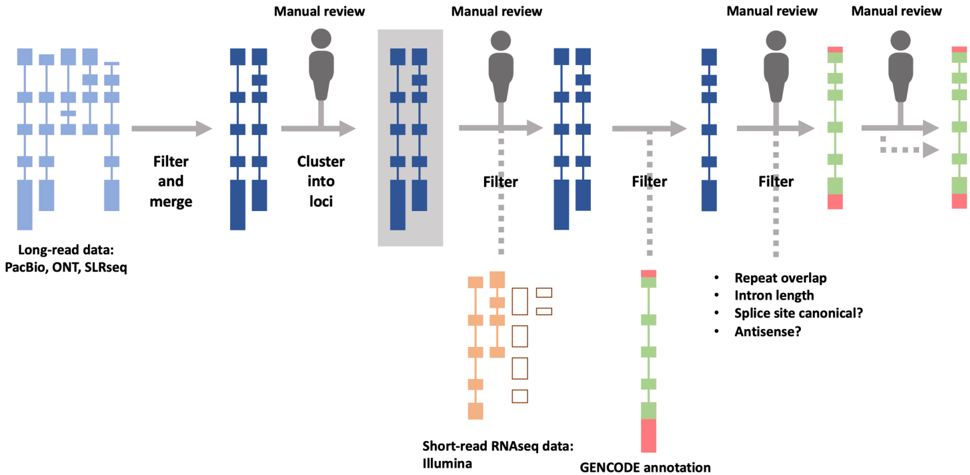
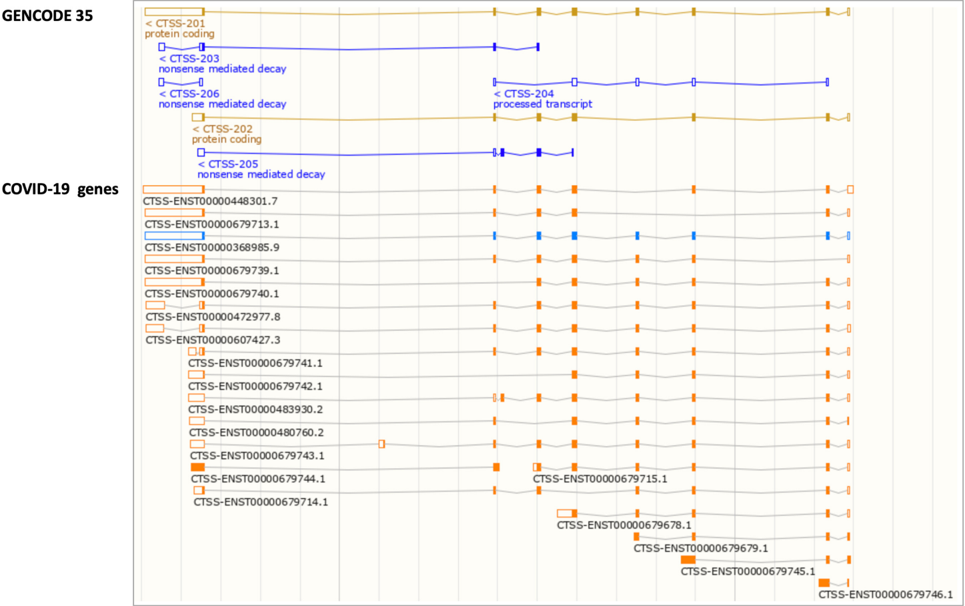
The GENCODE project annotates human and mouse genes and transcripts supported by experimental data with high accuracy, providing a foundational resource that supports genome biology and clinical genomics. GENCODE annotation processes make use of primary data and bioinformatic tools and analysis generated both within the consortium and externally to support the creation of transcript structures and the determination of their function. Here, we present improvements to our annotation infrastructure, bioinformatics tools, and analysis, and the advances they support in the annotation of the human and mouse genomes including: the completion of first pass manual annotation for the mouse reference genome; targeted improvements to the annotation of genes associated with SARS-CoV-2 infection; collaborative projects to achieve convergence across reference annotation databases for the annotation of human and mouse protein-coding genes; and the first GENCODE manually supervised automated annotation of lncRNAs. Our annotation is accessible via Ensembl, the UCSC Genome Browser and https://www.gencodegenes.org.
Overview
The claims and statistics of this paper haven’t been checked yet.
Free: it reads the open-access text and checks the first 5 claims that cite a source we can check. Create a free account to check every claim.
Integrity signals
Registry
Cites
Statistics
Figures
Verification
Claims the paper makes
The claims and statistics of this paper haven’t been checked yet.
Free: it reads the open-access text and checks the first 5 claims that cite a source we can check. Create a free account to check every claim.
Claims other papers make about this one
Each is checked against this paper’s own text: does it say what the citing paper says it does?
The source backs part of the claim, not all of it — or backs it for a different population, condition or comparison.
In the citing paper
“We used the human GENCODE V38 (Ensembl 104) gene annotation (22), which implies that each gene is intact in Boreoeutheria”
From Integrating gene annotation with orthology inference at scale (2023) · cites this paper as [22]
Experimental — accuracy not yet measuredThe cited source says what the claim attributes to it.
In the citing paper
“As a homology-based method, TOGA benefits from the quality and comprehensiveness of the human and mouse input annotation (21, 22).”
From Integrating gene annotation with orthology inference at scale (2023) · cites this paper as [22]
The cited source says what the claim attributes to it.
In the citing paper
“Second, we used TOGA with the mouse GENCODE M25 annotation (22) as the reference. This resulted in a higher BUSCO completeness for 98.5% (Ensembl) and 64% (NCBI) of the species (Fig. 3A,B, Tables S6–S7).”
From Integrating gene annotation with orthology inference at scale (2023) · cites this paper as [22]
The check wasn’t confident either way, so it gives no verdict — never disputed.
In the citing paper
“TOGA annotations have a higher completeness score for 97% (Ensembl) and 91.5% (NCBI) of the species (Fig. 3A,B, Tables S6–S7), increasing annotation completeness of conserved genes by an average of 4.1% or ~377 genes (Ensembl) and 0.7% or ~64 genes (NCBI) (fig. S30).”
From Integrating gene annotation with orthology inference at scale (2023) · cites this paper as [22]
Experimental — accuracy not yet measured
Self-check
Percentages, sums and reported differences re-computed from the paper’s own numbers.
The self-check needs the paper’s full text.
Citations
Cites
The Human Genome Browser at UCSC
Kent, W. J., Sugnet, C. W., Furey, T. S., Roskin, K. M., Pringle, T. H., Zahler, A. M., & Haussler, A. D. (2002) · Genome Research · doi:10.1101/gr.229102 · Cited by 10,400 · cited 3×
“Each release is versioned and made available immediately upon release from Ensembl (6) and https // www.gencodegenes.org with release on the UCSC Genome Browser (33) normally following shortly thereafter.”
BackgroundUniProt: a worldwide hub of protein knowledge
The UniProt Consortium (2019) · Nucleic Acids Research · doi:10.1093/nar/gky1049 · Cited by 7,698
Perez-Riverol, Y., Csordas, A., Bai, J., Bernal-Llinares, M., Hewapathirana, S., Kundu, D. J., Inuganti, A., Griss, J., Mayer, G., Eisenacher, M., et al. (2019) · Nucleic Acids Research · doi:10.1093/nar/gky1106 · Cited by 6,693 · cited 2×
“To support the automated analysis of proteomics data for genome annotation we collaborated with the PRIDE (25) proteomics repository at EMBL-EBI to build a reprocess-”
MethodO'Leary, N. A., Wright, M. W., Brister, J. R., Ciufo, S., Haddad, D., McVeigh, R., Rajput, B., Robbertse, B., Smith-White, B., Ako-Adjei, D., et al. (2016) · Nucleic Acids Research · doi:10.1093/nar/gkv1189 · Cited by 6,357
GENCODE: The reference human genome annotation for The ENCODE Project
Harrow, J., Frankish, A., Gonzalez, J. M., Tapanari, E., Diekhans, M., Kokocinski, F., Aken, B. L., Barrell, D., Zadissa, A., Searle, S., et al. (2012) · Genome Research · doi:10.1101/gr.135350.111 · Cited by 4,585
Self-citationA SARS-CoV-2 protein interaction map reveals targets for drug repurposing
Gordon, D. E., Jang, G. M., Bouhaddou, M., Xu, J., Obernier, K., White, K. M., O’Meara, M. J., Rezelj, V. V., Guo, J. Z., Swaney, D. L., et al. (2020) · Nature · doi:10.1038/s41586-020-2286-9 · Cited by 4,405 · cited 1×
“Our list of genes for reannotation comes from several sources including recently published drug re-purposing studies identifying host proteins associated with other related coronaviruses (14) and human proteins found to physically associate with SARS-CoV-2 viral proteins in the cell (15).”
BackgroundSelf-citationThe landscape of long noncoding RNAs in the human transcriptome
Iyer, M. K., Niknafs, Y. S., Malik, R., Singhal, U., Sahu, A., Hosono, Y., Barrette, T. R., Prensner, J. R., Evans, J. R., Zhao, S., et al. (2015) · Nature Genetics · doi:10.1038/ng.3192 · Cited by 2,738 · cited 1×
“miTranscriptome (28), NONCODE (29), FANTOM CAT (30)).”
Network-based drug repurposing for novel coronavirus 2019-nCoV/SARS-CoV-2
Zhou, Y., Hou, Y., Shen, J., Huang, Y., Martin, W., & Cheng, F. (2020) · Cell Discovery · doi:10.1038/s41421-020-0153-3 · Cited by 1,597 · cited 1×
“Our list of genes for reannotation comes from several sources including recently published drug repurposing studies identifying host proteins associated with other related coronaviruses (14) and human proteins found to physically associate with SARS-CoV-2 viral proteins in the cell (15).”
BackgroundInterferon-stimulated genes and their antiviral effector functions
Schoggins, J. W., & Rice, C. M. (2011) · Current Opinion in Virology · doi:10.1016/j.coviro.2011.10.008 · Cited by 1,289 · cited 1×
“We also included genes curated by UniProt (4) and the Human Cell Atlas project (16) as well as interferonstimulated genes with known antiviral activity (17).”
MethodYates, A. D., Achuthan, P., Akanni, W., Allen, J., Allen, J., Alvarez-Jarreta, J., Amode, M. R., Armean, I. M., Azov, A. G., Bennett, R., et al. (2019) · Nucleic Acids Research · doi:10.1093/nar/gkz966 · Cited by 1,152 · cited 2×
“The Ensembl / GENCODE geneset is a merge of the manual gene annotation created by the Ensembl-HAVANA team (methods and validation described in 6–8) and the automated annotation produced by the Ensembl Geneb-uild team (9,10).”
MethodSelf-citation
Cited by
Items 301–400 of 1,003
Kochavi, A., Nagel, R., Körner, P.-R., Bleijerveld, O. B., Lin, C., Huinen, Z. R., Malka, Y., Proost, N., van de Ven, M., Feng, X., et al. (2024) · Nucleic Acids Research · doi:10.1093/nar/gkae1110 · Cited by 20
LncRNAs Ride the Storm of Epigenetic Marks
Gaggi, G., Hausman, C., Cho, S., Badalamenti, B., Trinh, B. Q., Ruscio, A. D., & Ummarino, S. (2025) · Genes · doi:10.3390/genes16030313 · Cited by 19
“They also arise from “pseudogenes,” which are abundant in metazoan genomes [13]; nearly 10,000 have been identified in the mouse genome [14] and almost 15,000 in the human genome [12–15].”
Chromatin-dependent motif syntax defines differentiation trajectories
Durdu, S., Iskar, M., Isbel, L., Hoerner, L., Wirbelauer, C., Burger, L., Heß, D., Iešmantavičius, V., & Schübeler, D. (2025) · Molecular Cell · doi:10.1016/j.molcel.2025.07.005 · Cited by 19
OR7A10 GPCR engineering boosts CAR-NK therapy against solid tumours
Yang, L., Renauer, P. A., Tang, K., Saskin, J., Zhou, L., Zou, C., Lee, S.-H., Fox, M. L., Johnson-Noya, S., Weiss, B., et al. (2026) · Nature · doi:10.1038/s41586-026-10149-8 · Cited by 19
Functional Roles of Non-coding RNAs in the Interaction Between Host and Influenza A Virus
Sajjad, N., Wang, S., Liu, P., Chen, J., Chi, X., Liu, S., & Ma, S. (2021) · Frontiers in Microbiology · doi:10.3389/fmicb.2021.742984 · Cited by 20
ZNF281 Promotes Colon Fibroblast Activation in TGFβ1-Induced Gut Fibrosis
Laudadio, I., Bastianelli, A., Fulci, V., Carissimi, C., Colantoni, E., Palone, F., Vitali, R., Lorefice, E., Cucchiara, S., Negroni, A., et al. (2022) · International Journal of Molecular Sciences · doi:10.3390/ijms231810261 · Cited by 19
Mardones, M. D., & Gupta, K. (2022) · International Journal of Molecular Sciences · doi:10.3390/ijms231912030 · Cited by 19
Araújo, D. S., Nguyen, C., Hu, X., Mikhaylova, A. V., Gignoux, C. R., Ardlie, K., Taylor, K. D., Durda, P., Liu, Y., Papanicolaou, G., et al. (2023) · Human Genetics and Genomics Advances · doi:10.1016/j.xhgg.2023.100216 · Cited by 23
NAP-seq reveals multiple classes of structured noncoding RNAs with regulatory functions
Liu, S., Huang, J., Zhou, J., Chen, S., Zheng, W., Liu, C., Lin, Q., Zhang, P., Wu, D., He, S., et al. (2024) · Nature Communications · doi:10.1038/s41467-024-46596-y · Cited by 21
“…utility of NAP-seq-NGS for identifying previously uncharacterized napRNAs compared to the GENCODE database (human release 30 and mouse release 23) 25 , in different cells and under different conditions, we further pro fi led the transcriptomes of 3 different stress responses (poly (I:C),…”
Pletenev, I. A., Bazarevich, M., Zagirova, D., Kononkova, A. D., Cherkasov, A. V., Efimova, O., Tiukacheva, E. A., Morozov, K. V., Ulianov, K. A., Komkov, D., et al. (2024) · Nucleic Acids Research · doi:10.1093/nar/gkae271 · Cited by 20
Nguyen, M.-U., Iqbal, J., Potgieter, S., Huang, W., Pfeffer, J., Woo, S., Zhao, C., Lawlor, M. A., Yang, R. K., Rizly, R., et al. (2024) · Science Advances · doi:10.1126/sciadv.adl1584 · Cited by 20
Inter-chromosomal contacts demarcate genome topology along a spatial gradient
Mokhtaridoost, M., Chalmers, J. J., Soleimanpoor, M., McMurray, B. J., Lato, D. F., Nguyen, S. C., Musienko, V., Nash, J. O., Espeso‐Gil, S., Ahmed, S., et al. (2024) · Nature Communications · doi:10.1038/s41467-024-53983-y · Cited by 19
Asim, M. N., Ibrahim, M. A., Asif, T., & Dengel, A. R. (2025) · Heliyon · doi:10.1016/j.heliyon.2024.e41488 · Cited by 21
Asim, M. N., Ibrahim, M. A., Zaib, A., & Dengel, A. R. (2025) · Frontiers in Medicine · doi:10.3389/fmed.2025.1503229 · Cited by 20
Noncoding RNAs in apoptosis: identification and function
Tüncel, Ö., Kara, M., Yaylak, B., Erdoğan, İ., & Akgül, B. (2021) · TURKISH JOURNAL OF BIOLOGY · doi:10.3906/biy-2109-35 · Cited by 23
“According to the up-to-date annotation of the GENCODE Project, the human genome consists of 60,880 genes including 17,957 lncRNAs and 19,954 protein coding genes (Frankish et al., 2021).”
MethodA standardised nomenclature for long non‐coding RNAs
Seal, R. L., Tweedie, S., & Bruford, E. A. (2022) · IUBMB Life · doi:10.1002/iub.2663 · Cited by 22
The Role of Non-Coding RNAs in Chromosomal Instability in Cancer
Mohapatra, S., Winkle, M., Ton, A. N., Nguyen, D., & Călin, G. A. (2022) · Journal of Pharmacology and Experimental Therapeutics · doi:10.1124/jpet.122.001357 · Cited by 19
Barberet, J., Ducreux, B., Bruno, C., Guilleman, M., Simonot, R., Lieury, N., Guilloteau, A., Bourc’his, D., & Fauque, P. (2022) · Journal of Ovarian Research · doi:10.1186/s13048-022-01064-3 · Cited by 20
Toward a comprehensive catalog of regulatory elements
Fan, K., Pfister, E. L., & Weng, Z. (2023) · Human Genetics · doi:10.1007/s00439-023-02519-3 · Cited by 20
RNA-Chrom: a manually curated analytical database of RNA–chromatin interactome
Ryabykh, G. K., Kuznetsov, S. V., Korostelev, Y., Sigorskikh, A. I., Zharikova, A. A., & Mironov, A. A. (2023) · Database · doi:10.1093/database/baad025 · Cited by 19
Pacholewska, A., Lienhard, M., Brüggemann, M., Hänel, H., Bilalli, L., Königs, A., Heß, F., Becker, K., Köhrer, K., Kaiser, J., et al. (2024) · Genome Research · doi:10.1101/gr.279327.124 · Cited by 19
Optimal decision-making in high-throughput virtual screening pipelines
Woo, H.-M., Qian, X., Tan, L., Jha, S., Alexander, F. J., Dougherty, E. R., & Yoon, B.-J. (2023) · Patterns · doi:10.1016/j.patter.2023.100875 · Cited by 18
Wong, L.-S., Wei, L., Wang, G., Law, C., Tsang, F. H., Chin, W., Ng, I. O., & Wong, C. (2022) · Cellular and Molecular Gastroenterology and Hepatology · doi:10.1016/j.jcmgh.2022.07.017 · Cited by 19
High Sox2 expression predicts taste lineage competency of lingual progenitors in vitro
Shechtman, L. A., Scott, J. K., Larson, E. D., Isner, T. J., Johnson, B. J., Gaillard, D., Dempsey, P. J., & Barlow, L. A. (2023) · Development · doi:10.1242/dev.201375 · Cited by 18
Calcineurin regulates aldosterone production via dephosphorylation of NFATC4
Berber, M., Leng, S., Wengi, A., Winter, D. V., Odermatt, A., Beuschlein, F., Loffing, J., Breault, D. T., & Pentón, D. (2023) · JCI Insight · doi:10.1172/jci.insight.157027 · Cited by 19
CVD-associated SNPs with regulatory potential reveal novel non-coding disease genes
Zhu, C., Baumgarten, N., Wu, M., Wang, Y., Das, A. P., Kaur, J., Ardakani, F. B., Duong, T. T., Pham, D. M., Duda, M., et al. (2023) · Human Genomics · doi:10.1186/s40246-023-00513-4 · Cited by 19
Silc1 long noncoding RNA is an immediate-early gene promoting efficient memory formation
Perry, R. B., Tsoory, M., Tolmasov, M., & Ulitsky, I. (2023) · Cell Reports · doi:10.1016/j.celrep.2023.113168 · Cited by 19
Kerr, L., Kafetzopoulos, I., Grima, R., & Sproul, D. (2023) · PLoS Genetics · doi:10.1371/journal.pgen.1010958 · Cited by 18
“Using the command line, we derived bed files of hg38 gene locations using annotation files from Gencode (v. 41) [73].”
MethodPrediction of protein-RNA interactions from single-cell transcriptomic data
Fiorentino, J., Armaos, A., Colantoni, A., & Tartaglia, G. G. (2024) · Nucleic Acids Research · doi:10.1093/nar/gkae076 · Cited by 20
“We restricted the gene sets for selection to protein-coding and lncRNAs, according to the annotation in Gencode V41 ( 57 ).”
MethodThe TGFβ Induced MicroRNAome of the Trabecular Meshwork
Doyle, C., Callaghan, B., Roodnat, A. W., Armstrong, L., Lester, K., Simpson, D. A. C., Atkinson, S. D., Sheridan, C., McKenna, D. J., & Willoughby, C. E. (2024) · Cells · doi:10.3390/cells13121060 · Cited by 19
“Following quality control, the Subread and RSubread packages [43] were used to align the remaining sequences to the human genome reference (GRCh38) from the Human GENCODE Gene Set [44].”
MethodPLEKv2: predicting lncRNAs and mRNAs based on intrinsic sequence features and the coding-net model
Li, A., Zhou, H., Xiong, S., Li, J., Mallik, S., Fei, R., Liu, Y., Zhou, H., Wang, X., Hei, X., et al. (2024) · BMC Genomics · doi:10.1186/s12864-024-10662-y · Cited by 18
“We downloaded human lncRNA (Release 38) and mRNA (Release 206) transcript data from the GENCODE [21] and RefSeq [22] databases to construct human models.”
MethodPOU4F3 Is a Sensitive and Specific Marker of Merkel Cell Carcinoma
Karpiński, P., Mendez-Pena, J. E., Wu, C.-L., Akalin, A., Cornejo, K. M., Hung, Y. P., & Hoang, M. P. (2024) · Modern Pathology · doi:10.1016/j.modpat.2024.100627 · Cited by 18
Multigenerational cell tracking of DNA replication and heritable DNA damage
Παναγόπουλος, Α., Stout, M., Kilic, S., Leary, P., Vornberger, J., Pasti, V., Galarreta, A., Lezaja, A., Kirschenbühler, K., Imhof, R., et al. (2025) · Nature · doi:10.1038/s41586-025-08986-0 · Cited by 19
“…counts of the RNA-seq reads was performed using the Kallisto Bioconductor R package 77 with the GENCODE human genome build GRCh38.p13 (release 37) 78 ; differential expression using the generalized linear model as implemented by the edgeR Bioconductor R package 79 ; and Gene Ontology (GO) term…”
de Lajarte, A. A., Taillades, Y. J. M. D., Aruda, J., Bongrand, P., Wightman, F. F., Salazar, D., Allan, M. F., Kalicki, C. H., L’Esperance-Kerckhoff, C., Kashi, A., et al. (2026) · Science Advances · doi:10.1126/sciadv.adz4967 · Cited by 18
“To generate the human mRNA library, all human protein-coding transcripts were downloaded from GENCODE Release 43 [ 29.”
Subnuclear genome compartmentalization controls bivalent chromatin activity
Ahanger, S. H., Semenza, E. R., Zhang, C., Gil, E., Cole, M. A., Lu, S. H.-A., Wang, L., Kriegstein, A. R., & Lim, D. A. (2026) · Nature · doi:10.1038/s41586-026-10832-w · Cited by 19
Ansari, A. H., Kumar, M., Sarkar, S., Maiti, S., & Chakraborty, D. (2023) · eLife · doi:10.7554/elife.77976 · Cited by 18
Levy, R., Regev, T. A., Paes, W., Gumpert, N., Shvefel, S. C., Bartok, O., Dayan-Rubinov, M., Alon, M., Shmueli, M. D., Levin, Y., et al. (2023) · Molecular & Cellular Proteomics · doi:10.1016/j.mcpro.2023.100519 · Cited by 21
“Furthermore, peptides were compared against long noncoding transcripts obtained from GeneCode v.38 (32).”
BackgroundMann, M. W., Fu, Y., Gearhart, R. L., Xu, X., Roberts, D. S., Li, Y., Zhou, J., Ge, Y., & Brasier, A. R. (2023) · Frontiers in Immunology · doi:10.3389/fimmu.2023.1212770 · Cited by 18
Bryce-Smith, S., Bürri, D., Gazzara, M. R., Herrmann, C., Danecka, W., Fitzsimmons, C. M., Wan, Y. K., Zhuang, F., Fansler, M. M., Fernández, J. M., et al. (2023) · RNA · doi:10.1261/rna.079849.123 · Cited by 18
“These include the window size for an allowable match between GT-PAS and predicted PAS (PD-PAS), as well as which transcriptome annotation to use when running each tool (e.g., RefSeq, GENCODE, custom).”
InfluentialGill, M. E., Rohmer, A., Erkek, S., Liang, C.-Y., Chun, S., Ozonov, E. A., & Peters, A. H. F. M. (2023) · Genome Research · doi:10.1101/gr.278060.123 · Cited by 21
Cui, Y., Arnold, F. J., Li, J. S., Wu, J., Wang, D., Philippe, J., Colwin, M. R., Michels, S., Chen, C., Sallam, T., et al. (2025) · Nature Genetics · doi:10.1038/s41588-024-02057-2 · Cited by 19
“30) transcriptome reference), LeafCutter 31 for splicing events, our previously developed DaPars2 (refs.”
Single-cell DNA methylome and 3D genome atlas of human subcutaneous adipose tissue
Chen, Z. J., Das, S. S., Kar, A., Lee, S. H., Abuhanna, K. D., Alvarez, M., Sukhatme, M. G., Wang, Z., Gelev, K. Z., Heffel, M. G., et al. (2025) · Nature Genetics · doi:10.1038/s41588-025-02300-4 · Cited by 17
Self-citationFunctional Determinants and Evolutionary Consequences of Pleiotropy in Complex and Mendelian Traits
Barbitoff, Y. A., Богайчук, П., Pavlova, N. S., Malysheva, P. V., & Predeus, A. V. (2025) · Molecular Biology and Evolution · doi:10.1093/molbev/msaf232 · Cited by 17
“Following clumping, the closest gene was retrieved for each of the identified lead SNPs using BEDTools (Quinlan and Hall 2010) and the GENCODE v19 human gene annotation file (Frankish et al. 2021 ).”
Guo, Q., Wang, P., Liu, Q., Hao, Y., Gao, Y., Qi, Y., Xu, R., Chen, H., Xin, M., Wu, X., et al. (2022) · Nucleic Acids Research · doi:10.1093/nar/gkac892 · Cited by 18
“Gene annotation files were collected from GENCODE (release 41, GRCh38) (26) to identify different types of genes, including protein-coding genes, long noncoding RNAs (lncRNAs), pseudogenes, etc. Datasets with more than 100 cells were retained in CellTracer.”
Self-citationKoehn, O. J., Lorimer, E., Unger, B., Harris, R. M., Das, A. S., Suazo, K. F., Auger, S. A., Distefano, M. D., Prokop, J. W., & Williams, C. L. (2023) · Journal of Biological Chemistry · doi:10.1016/j.jbc.2023.104698 · Cited by 18
Park, K., Yoon, Y. A., & Park, J. (2023) · Genes · doi:10.3390/genes14101875 · Cited by 17
“…accessed accessed on 10 August 2023) were downloaded from the UCSC Table browser (h tt ps://genome.ucsc.edu/cgi-bin/hgTables, on 10 August 2023) were downloaded from the UCSC Table browser (https //genome.ucsc.edu/cgi-bin/hgTables, accessed on 10 August 2023) [16,17]. on 10 August 2023) [16,17].”
MethodHodara, E., Mades, A., Swartz, L., Iqbal, M., Xu, T., Bsteh, D., Farnham, P., Rhie, S. K., & Goldkorn, A. (2023) · NAR Cancer · doi:10.1093/narcan/zcad054 · Cited by 18
“MeRIP-seq ( MeRIP followed by sequencing ) reads were aligned to human genome hg38 with reference annotation GENCODE v39 and counted using STAR ( version 2.7.0 ) ( 30 ,31 ) .”
MethodInfluentialGene coexpression networks reveal a broad role for lncRNAs in inflammatory bowel disease
Johnson, J. L., Sargsyan, D., Neiman, E. M., Hart, A. B., Stojmirović, A., Kosoy, R., Irizar, H., Suárez‐Fariñas, M., Song, W., Argmann, C., et al. (2024) · JCI Insight · doi:10.1172/jci.insight.168988 · Cited by 17
“The identification and annotation of noncoding genes are iterative and ongoing processes and multiple reference sets exist (58).”
BackgroundBanerjee, A., Ataman, M., Smialek, M. J., Mookherjee, D., Rabl, J., Mironov, A. A., Mues, L., Enkler, L., Coto‐Llerena, M., Schmidt, A., et al. (2024) · Nucleic Acids Research · doi:10.1093/nar/gkae630 · Cited by 18
“…as indicated by significantly lower scores in CRISPR ( 23 ) and RNAi screening ( 24 ) (data available at the DepMap portal https:// depmap.org/ portal/ ). mRNAs encoding RP genes were extracted from the v36 version of the GENCODE comprehensive annotation of the hg38 human genome assembly ( 25 ).”
MethodMeng, C., Lin, K., Shi, W., Teng, H., Wan, X., DeBruine, A., Wang, Y., Liang, X., Leo, J., Chen, F., et al. (2025) · Nature Communications · doi:10.1038/s41467-025-59381-2 · Cited by 19
“For differential expression analysis, the number of fragments for each gene from GENCODE 81 was quanti fi ed using htseq-count from the HTSeq package (version 0.6.0) 82 .”
InfluentialHadjinicolaou, A., Ngo, K. J., Conway, D. Y., Provias, J., Baker, S. K., Brady, L., Bennett, C. L., Spada, A. R. L., Fogel, B. L., & Yoon, G. (2021) · Acta Neuropathologica Communications · doi:10.1186/s40478-021-01277-5 · Cited by 17
Integrative dissection of gene regulatory elements at base resolution
Chen, Z., Javed, N. M., Moore, M. M., Wu, J., Sun, G., Vinyard, M. E., Collins, A., Pinello, L., Najm, F. J., & Bernstein, B. (2023) · Cell Genomics · doi:10.1016/j.xgen.2023.100318 · Cited by 18
“6 (Patro et al., 2017) and the GENCODE V38 annotation (Frankish et al., 2021) with the seqBias, gcBias, posBias, and validateMappings flags enabled.”
Dot1l cooperates with Npm1 to repress endogenous retrovirus MERVL in embryonic stem cells
Zhao, X., Li, X., Sun, H., Zhao, X., Gao, T., Shi, P., Chen, F., Liu, L., & Lu, X. (2023) · Nucleic Acids Research · doi:10.1093/nar/gkad640 · Cited by 19
Single-cell gene expression prediction from DNA sequence at large contextsPreprint
Schweßinger, R., Deasy, J., Woodruff, R. T., Young, S., & Branson, K. (2023) · bioRxiv (Cold Spring Harbor Laboratory) · doi:10.1101/2023.07.26.550634 · Cited by 20
Plata-Gómez, A. B., de Prado-Rivas, L., Sanz, A., Deleyto-Seldas, N., García, F., de la Calle Arregui, C., Silva, C., Caleiras, E., Graña-Castro, O., Piñeiro-Yáñez, E., et al. (2024) · Nature Communications · doi:10.1038/s41467-024-46032-1 · Cited by 16
Molecular recording of cellular protein kinase activity with chemical labeling
Sun, D., Ng, S. W., Zheng, Y. R., Shu, X., Schwan, N., Breuer, P., Hoffmann, D. C., Michel, J., Azorín, D. D., Boonekamp, K. E., et al. (2025) · Nature Chemical Biology · doi:10.1038/s41589-025-01949-6 · Cited by 16
Schmidt, J. R., Haupt, J., Riemschneider, S., Kämpf, C., Löffler, D., Blumert, C., Reiche, K., Koehl, U., Kalkhof, S., & Lehmann, J. (2023) · Frontiers in Immunology · doi:10.3389/fimmu.2023.1156493 · Cited by 17
Rahmouni, M., Marco, L. D., Spadoni, J., Tison, M., Santos, R. M., Labib, T., Noirel, J., Tamouza, R., Limou, S., Delaneau, O., et al. (2023) · Frontiers in Immunology · doi:10.3389/fimmu.2023.1305856 · Cited by 17
Impact of genome build on RNA-seq interpretation and diagnostics
Ungar, R. A., Goddard, P. C., Jensen, T. D., Degalez, F., Smith, K. S., Jin, C. A., Undiagnosed Diseases Network, Bonner, D. E., Bernstein, J. A., Wheeler, M. T., et al. (2024) · The American Journal of Human Genetics · doi:10.1016/j.ajhg.2024.05.005 · Cited by 18
Adlhart, M., Hoffmann, D. E., Polyansky, A. A., & Žagrović, B. (2025) · Proceedings of the National Academy of Sciences · doi:10.1073/pnas.2413721122 · Cited by 16
“Uniquely aligned reads were then used for analysis with the publicly available rG4 - seeker software (65), with GENCODE v.45 (68) annotations for definition of transcriptomic regions.”
Mustfa, S. A., Dimitrievska, M., Wang, C., Gu, C., Sun, N., Romańczuk, K., Karpiński, P., Łaczmański, Ł., McGrath, J. A., Jacków‐Malinowska, J., et al. (2025) · Advanced Materials · doi:10.1002/adma.202414728 · Cited by 16
Zuazo-Gaztelu, I., Lawrence, D. A., Oikonomidi, I., Marsters, S. A., Pechuan-Jorge, X., Gaspar, C. J., Kan, D., Segal, E., Clark, K., Beresini, M. H., et al. (2025) · PLoS Biology · doi:10.1371/journal.pbio.3003086 · Cited by 16
“Transcript annotation was based on the Gencode genes database [88].”
Hu, W., Foord, C., Hsu, J., Fan, L., Corley, M. J., Lanjewar, S. N., Xu, S., Belchikov, N., He, Y., Pang, A. P. S., et al. (2025) · Nature Biotechnology · doi:10.1038/s41587-025-02734-5 · Cited by 19
Fahmi, N. A., Saha, S., Song, Q., Lou, Q., Yong, J., & Zhang, W. (2025) · Experimental & Molecular Medicine · doi:10.1038/s12276-025-01496-z · Cited by 16
Aging-regulated TUG1 is dispensable for endothelial cell function
Gimbel, A. T., Koziarek, S., Theodorou, K., Schulz, J. F., Stanicek, L., Kremer, V., Ali, T., Günther, S., Kumar, S., Jo, H., et al. (2022) · PLoS ONE · doi:10.1371/journal.pone.0265160 · Cited by 16
Soussi, S., Savchenko, L., Rovina, D., Iacovoni, J. S., Gottinger, A., Vialettes, M., Pioner, J. M., Farini, A., Mallia, S., Rabino, M., et al. (2023) · Biology Direct · doi:10.1186/s13062-023-00398-2 · Cited by 16
Moyers, B. A., Partridge, E. C., Mackiewicz, M., Betti, M. J., Darji, R., Meadows, S. K., Newberry, K. M., Brandsmeier, L. A., Wold, B. J., Mendenhall, E. M., et al. (2023) · Genome Research · doi:10.1101/gr.278205.123 · Cited by 17
Apostolides, M. J., Wang, J., Saberi, A., Choi, B., Mittmann, T., Poursina, A., Namini, A. M., Salehi, D., Perron, G., Navickas, A., et al. (2024) · bioRxiv (Cold Spring Harbor Laboratory) · doi:10.1101/2024.07.11.603067 · Cited by 16
Wnt-directed CXCL12-expressing apical papilla progenitor cells drive tooth root formation
Nagata, M., Gadhvi, G. T., Komori, T., Arai, Y., Manabe, H., Chu, A. K. Y., Kaur, R., Ali, M. A., Yang, Y., Tsutsumi-Arai, C., et al. (2025) · Nature Communications · doi:10.1038/s41467-025-61048-x · Cited by 15
Self-citationBai, W.-Y., Liu, S., Duan, Z., Yang, J.-J., Chen, J., Hou, J., Wu, L., Li, N., Qi, T., & Yang, J. (2026) · Nature Genetics · doi:10.1038/s41588-026-02612-z · Cited by 16
Missing lnc(RNAs) in Alzheimer’s Disease?
Policarpo, R., & d’Ydewalle, C. V. O. (2021) · Genes · doi:10.3390/genes13010039 · Cited by 15
Alternative splicing is coupled to gene expression in a subset of variably expressed genes
Karlebach, G., Steinhaus, R., Daniš, D., Devoucoux, M., Anczuków, O., Sheynkman, G., Seelow, D., & Robinson, P. N. (2024) · npj Genomic Medicine · doi:10.1038/s41525-024-00432-w · Cited by 16
“TheGRCh38GENCODEannotationsofthehuman genome comprise 683,196 exons.”
Data-driven insights to inform splice-altering variant assessment
Sullivan, P. J., Quinn, J. M. W., Ajuyah, P., Pinese, M., Davis, R. L., & Cowley, M. J. (2025) · The American Journal of Human Genetics · doi:10.1016/j.ajhg.2025.02.012 · Cited by 16
The impact of a high fat diet and platelet activation on pre-metastatic niche formation
Hergueta‐Redondo, M., Sánchez‐Redondo, S., Hurtado, B., Santos, V., Pérez‐Martínez, M., Ximénez‐Embún, P., McDowell, S. A. C., Mazariegos, M. S., Mata, G., Torres-Ruiz, R., et al. (2025) · Nature Communications · doi:10.1038/s41467-025-57938-9 · Cited by 16
Self-citationUncovering hidden enhancers through unbiased in vivo testing
Mannion, B. J., Tran, S., Plajzer-Frick, I., Novak, C. S., Afzal, V., Akiyama, J. A., Sospedra-Arrufat, I., Barton, S., Beckman, E., Garvin, T. H., et al. (2025) · Nature Communications · doi:10.1038/s41467-025-62497-0 · Cited by 16
Human spinal interneurons repair the injured rat spinal cord through synaptic integration
Zholudeva, L. V., Agrawal, A., Fortino, T. A., Hurley, P., Kwong, W., Pelonero, A., Vila, O. F., Williams, M., McDevitt, T. C., Lane, M. A., et al. (2026) · Science Translational Medicine · doi:10.1126/scitranslmed.aea7461 · Cited by 15
The Evolution of G-quadruplex Structure in mRNA Untranslated Region
Qi, T., Xu, Y., Zhou, T., & Gu, W. (2021) · Evolutionary Bioinformatics · doi:10.1177/11769343211035140 · Cited by 15
Reciprocal modulation of long noncoding RNA EMS and p53 regulates tumorigenesis
Wang, C., Yang, Y., Wu, X., Li, J., Liu, K., Fang, D., Li, B., Shan, G., Mei, X., Wang, F., et al. (2022) · Proceedings of the National Academy of Sciences · doi:10.1073/pnas.2111409119 · Cited by 16
Self-citationLong Non-Coding RNAs: The New Frontier into Understanding the Etiology of Alcohol Use Disorder
Denham, A. N., Drake, J., Gavrilov, M., Taylor, Z. N., Bacanu, S., & Vladimirov, V. I. (2022) · Non-Coding RNA · doi:10.3390/ncrna8040059 · Cited by 15
Pillalamarri, V., Shi, W., Say, C., Yang, S. Y., Lane, J., Güallar, E., Pankratz, N., & Arking, D. E. (2022) · Human Genetics and Genomics Advances · doi:10.1016/j.xhgg.2022.100147 · Cited by 15
IsoVis – a webserver for visualization and annotation of alternative RNA isoforms
Wan, C. Y., Davis, J., Chauhan, M., Gleeson, J., Prawer, Y. D. J., Paoli‐Iseppi, R. D., Wells, C. A., Choi, J., & Clark, M. B. (2024) · Nucleic Acids Research · doi:10.1093/nar/gkae343 · Cited by 15
“Studies in other species have found similar results ( 1–4 ).”
ResultImpact of human gene annotations on RNA-seq differential expression analysis
Hamaguchi, Y., Zeng, C., & Hamada, M. (2021) · BMC Genomics · doi:10.1186/s12864-021-08038-7 · Cited by 16
“For example, in GENCODE human gene annotation release 31, released in 2019, a total of 17858 novel lncRNA transcripts, approximately 60% compared with the previous release, were added [1] (see Additional File 1: Figure S1).”
BackgroundHita, A., Brocart, G., Fernandez, A., Rehmsmeier, M., Alemany, A., & Schvartzman, S. (2022) · BMC Bioinformatics · doi:10.1186/s12859-021-04544-3 · Cited by 17
Small polymorphisms are a source of ancestral bias in structural variant breakpoint placement
Audano, P. A., & Beck, C. R. (2024) · Genome Research · doi:10.1101/gr.278203.123 · Cited by 18
Charting the regulatory landscape of TP53 on transposable elements in cancer
Qu, X., Liang, Y., McCornack, C. R., Xing, X., Schmidt, H. K., Tomlinson, C., Fronick, C. C., Belter, E. A., Macias-Velasco, J. F., & Wang, T. (2025) · Genome Research · doi:10.1101/gr.279398.124 · Cited by 15
Genetic architecture of plasma metabolome in 254,825 individuals
Qiang, Y., Wang, Y., He, X., Deng, Y., Ge, Y., Wu, B., You, J., Feng, J., Cheng, W., & Yu, J. (2025) · Nature Communications · doi:10.1038/s41467-025-62126-w · Cited by 17
“Using the human GENCODE resource 71 , we initially retrieved protein-coding genes within a 1-Mb genomic region surrounding each of the unique causal variants.”
Green, B. L., Gamble, L. A., Diggs, L. P., Nousome, D., Patterson, J. C., Joughin, B. A., Gasmi, B., Lux, S. C., Samaranayake, S. G., Miettinen, M., et al. (2023) · Molecular Cancer Research · doi:10.1158/1541-7786.mcr-23-0122 · Cited by 14
Liu, X., Sun, P., Bao, X., Cao, Y., Wang, L., & Wang, Q. (2024) · Medicine · doi:10.1097/md.0000000000038052 · Cited by 18
“The classes of DEGs were annotated using the GENECODE data-base (Release 45) [38] (https://www.gencodegenes.org/human/), from which differentially expressed miRNAs (DE-miRNAs) were extracted.”
MethodChromosomal structural rearrangements implicate long non-coding RNAs in rare germline disorders
Andersen, R., Alkuraya, I. F., Ajeesh, A., Sakamoto, T., Mena, E. L., Amr, S. S., Romi, H., Kenna, M. A., Robson, C. D., Wilch, E., et al. (2024) · Human Genetics · doi:10.1007/s00439-024-02693-y · Cited by 14
Lee, D., Koo, B., Kim, S., Byun, J., Hong, J., Shin, D.-Y., Sun, C.-H., Kim, J., Song, J., Jaiswal, S., et al. (2025) · Nature Communications · doi:10.1038/s41467-024-55691-z · Cited by 17
Noncanonical circRNA biogenesis driven by alpha and gamma herpesviruses
Dremel, S. E., Kopardé, V. N., Arbuckle, J. H., Hogan, C. H., Kristie, T. M., Krug, L. T., Conrad, N. K., & Ziegelbauer, J. M. (2025) · The EMBO Journal · doi:10.1038/s44318-025-00398-0 · Cited by 14
“Mouse: mm39, gencode.vM29 (Frankish et al, 2020).”
InfluentialA versatile toolbox for determining IRES activity in cells and embryonic tissues
Koch, P., Zhang, Z., Genuth, N. R., Susanto, T. T., Haimann, M., Khmelinskaia, A., Byeon, G. W., Dey, S., Barna, M., & Leppek, K. (2025) · The EMBO Journal · doi:10.1038/s44318-025-00404-5 · Cited by 15
Wilson, A., Dasyam, N., O'Hagan, F., Farrell, D. M., Turner, C., Jay, A., Schmidt, A., Beddow, R., Lillis, T., Chin, T., et al. (2025) · Scientific Reports · doi:10.1038/s41598-025-95903-0 · Cited by 16
Jiang, H., Fu, D., Pasupuleti, S. K., Ramdas, B., Long, A., Ramadan, A. M., Yang, J., Kumar, R., Hartman, J. H., Kendrick, B. J., et al. (2025) · Nature Communications · doi:10.1038/s41467-025-61647-8 · Cited by 14
“Human Genome hg38 was used for the alignment, and gencode.v42 was used for gene annotation and coordinates 90 .”
Traxel, S., Schmidt, F., Beerli, C., Vuong, D.-V., Speck, R. F., & Bredl, S. (2025) · Journal for ImmunoTherapy of Cancer · doi:10.1136/jitc-2024-011057 · Cited by 13
“44 Hallmark and custom pathways GSEA was performed using the GSEA function of the Bioconductor R package clusterProfiler (V.4.13.0) 44 and the hallmark gene sets (MSigDb V.2023.2) 45 on R V.4.4.0.”
InfluentialKrawczyńska, N., Wang, Y., Lim, K., Gupta, A. D., Molino, R. J. E. J., Lenczowski, A., Abughazaleh, M., Bendre, S. V., Fei, Y., Kim, H., et al. (2025) · Cancer Letters · doi:10.1016/j.canlet.2025.218105 · Cited by 15
Transcriptomic Analysis of the Human Habenula in Schizophrenia
Yalcinbas, E. A., Ajanaku, B., Nelson, E. D., Garcia-Flores, R., Eagles, N. J., Montgomery, K. D., Stolz, J. M., Wu, J. H., Divecha, H. R., Chandra, A., et al. (2025) · American Journal of Psychiatry · doi:10.1176/appi.ajp.20240776 · Cited by 14
Aguado‐Alvaro, L. P., Garitano, N., Esser‐Skala, W., Sayers, J. R., del Valle, C., Alameda, D., Mendieta-Esteban, J., Calleja-Cervantes, M. E., Goñi‐Salaverri, A., Zazpe, J., et al. (2025) · Nature Communications · doi:10.1038/s41467-025-66597-9 · Cited by 15
“…77 ;(2) alignment against the mouse (mm10) or human (GRCh38) reference genome was performed using STAR (v.2.7.3) 78 ; (3) gene expression quanti fi cation using read counts of exonic gene regions was carried out with featureCounts 79 ; and (4) the gene annotation reference was Gencode v45 80 .”
InfluentialNing, J., Wang, F., Zhu, K., Li, B., Shu, Q., & Liu, W. (2021) · Frontiers in Genetics · doi:10.3389/fgene.2021.779155 · Cited by 14
Biometal Dyshomeostasis in Olfactory Mucosa of Alzheimer’s Disease Patients
Lampinen, R., Górová, V., Avesani, S., Liddell, J. R., Penttilä, E., Závodná, T., Krejčík, Z., Lehtola, J.-M., Saari, T. T., Kalapudas, J., et al. (2022) · International Journal of Molecular Sciences · doi:10.3390/ijms23084123 · Cited by 15
Metadata
- Authors
- Frankish, A., Diekhans, M., Jungreis, I., Lagarde, J., Loveland, J. E., Mudge, J. M., Sisu, C., Wright, J. C., Armstrong, J., Barnes, I., Berry, A., Bignell, A., Boix, C., Carbonell Sala, S., Cunningham, F., Di Domenico, T., Donaldson, S., Fiddes, I. T., García Girón, C., Gonzalez, J. M., Grego, T., Hardy, M., Hourlier, T., Howe, K. L., Hunt, T., Izuogu, O. G., Johnson, R., Martin, F. J., Martínez, L., Mohanan, S., Muir, P., Navarro, F. C. P., Parker, A., Pei, B., Pozo, F., Riera, F. C., Ruffier, M., Schmitt, B. M., Stapleton, E., Suner, M.-M., Sycheva, I., Uszczynska-Ratajczak, B., Wolf, M. Y., Xu, J., Yang, Y. T., Yates, A., Zerbino, D., Zhang, Y., Choudhary, J. S., Gerstein, M., Guigó, R., Hubbard, T. J. P., Kellis, M., Paten, B., Tress, M. L., & Flicek, P.
- Affiliations
- European Bioinformatics Institute (GB)
- University of California, Santa Cruz (US)
- Broad Institute (US)
- Barcelona Institute of Science and Technology (ES)
- Yale University (US)
- Institute of Cancer Research (GB)
- Centre for Genomic Regulation (CRG), The Barcelona Institute for Science and Technology, Dr. Aiguader 88, Barcelona, E-08003 Catalonia, Spain
- Bioinformatics Unit, Spanish National Cancer Research Centre (CNIO), Madrid, Spain
- European Molecular Biology Laboratory, European Bioinformatics Institute, Wellcome Genome Campus, Hinxton, Cambridge CB10 1SD, UK
- University of Bern (CH)
- Department of Molecular Biophysics and Biochemistry, Yale University, New Haven, CT 06520, USA
- Spanish National Cancer Research Centre (ES)
- Centre of New Technologies, University of Warsaw, Warsaw, Poland
- Harvard University (US)
- Universitat Pompeu Fabra (ES)
- Guy's Hospital (GB)
- Corresponding author
- Flicek, Paul
- ORCID
- Frankish, Adam
- Diekhans, Mark
- Jungreis, Irwin
- Lagarde, Julien
- Loveland, Jane E
- Mudge, Jonathan M
- Sisu, Cristina
- Wright, James C
- Armstrong, Joel
- Barnes, If
- Berry, Andrew
- Bignell, Alexandra
- Boix, Carles
- Cunningham, Fiona
- Donaldson, Sarah
- Fiddes, Ian T
- García Girón, Carlos
- Grego, Tiago
- Hardy, Matthew
- Hourlier, Thibaut
- Howe, Kevin L
- Hunt, Toby
- Izuogu, Osagie G
- Johnson, Rory
- Martin, Fergal J
- Mohanan, Shamika
- Pozo, Fernando
- Ruffier, Magali
- Schmitt, Bianca M
- Suner, Marie-Marthe
- Yang, Yucheng T
- Yates, Andrew
- Zerbino, Daniel
- Zhang, Yan
- Choudhary, Jyoti S
- Gerstein, Mark
- Guigó, Roderic
- Hubbard, Tim J P
- Kellis, Manolis
- Paten, Benedict
- Tress, Michael L
- Flicek, Paul
- Venue
- Nucleic Acids Research
- Publisher
- Oxford University Press (OUP)
- Published
- 2020-12-03
- Volume
- 49
- Issue
- D1
- Pages
- D916-D923
- ISSN
- 0305-1048 (ISSN-L)
- 1362-4962
- PMC
- PMC7778937
- OpenAlex
- W3111061871
- Cited by
- 1,334
- References
- 34
- Citations by year
- 2026: 181 · 2025: 264 · 2024: 365 · 2023: 302 · 2022: 171 · 2021: 47 · 2020: 1
- FWCI
- 44.45
- Type
- journal article
- Language
- en
- Open access
- gold
- doi.org
- Licence
- Locations
- Nucleic Acids Research (publishedVersion, cc-by)
- PubMed Central (publishedVersion, cc-by)
- PubMed (publishedVersion)
- Repositori digital de la UPF (Universitat Pompeu Fabra) (submittedVersion, other-oa)
- Bern Open Repository and Information System (University of Bern) (submittedVersion, cc-by)
- Brunel University Research Archive (BURA) (Brunel University London) (submittedVersion)
- DSpace@MIT (Massachusetts Institute of Technology) (submittedVersion, cc-by-nc)
- Research Portal (King's College London) (submittedVersion, other-oa)
- Funders
- National Institutes of Health (U41HG007234)
- Wellcome Trust (WT108749/Z/15/Z, WT200990/Z/16/Z)
- European Molecular Biology Laboratory
- Swiss National Science Foundation
- University of Bern
- Topics
- Life Sciences › Biochemistry, Genetics and Molecular Biology › Molecular Biology › Genomics and Phylogenetic Studies
- Life Sciences › Biochemistry, Genetics and Molecular Biology › Molecular Biology › RNA Research and Splicing
- Life Sciences › Biochemistry, Genetics and Molecular Biology › Molecular Biology › Genomics and Chromatin Dynamics
- Keywords
- GENCODE, genome annotation, transcript annotation, human genome, mouse genome, SARS-CoV-2, protein-coding genes, Ensembl, UCSC Genome Browser
- MeSH terms
- COVID-19, SARS-CoV-2, Animals, Humans, Pseudogenes, Transcription, Genetic, Computational Biology, Internet, Genomics, Databases, Genetic, Mice, Epidemics, Molecular Sequence Annotation, RNA, Long Noncoding
About these checks
Registry, retraction, Cites and statistics results are computed, not judged, with one exception: a printed reference that no index lists is read once by a model before it counts as a citation error. Claims are extracted by a model and kept only when their quote appears verbatim in the text; each cited source is then checked, with a model’s help, for whether it says what the claim relies on. Those verdicts can be wrong — read the claim’s quote and the cited source before relying on one.
Statistics and arithmetic are recomputed, not judged.
Confidence bands are shown only for fields calibrated on our annotated test set. None is calibrated yet, so no band is shown.
What counts as a claim ›How we measure confidence ›How we check this ›
Are you an author, or do you see a problem with this page? Request a review
Data sources
Bibliographic data: Semantic Scholar, OpenAlex, Crossref.
Contains information from the Semantic Scholar Academic Graph Datasets, made available under the ODC Attribution License (ODC-BY 1.0).
Semantic Scholar’s data is described in: Kinney, R., et al. (2023). The Semantic Scholar Open Data Platform. arXiv:2301.10140.
