

GENCODE 2021
Open accessThe DOI matches its Crossref record; 33 of the 34 references it cites were found in a registry or an index.
Abstract
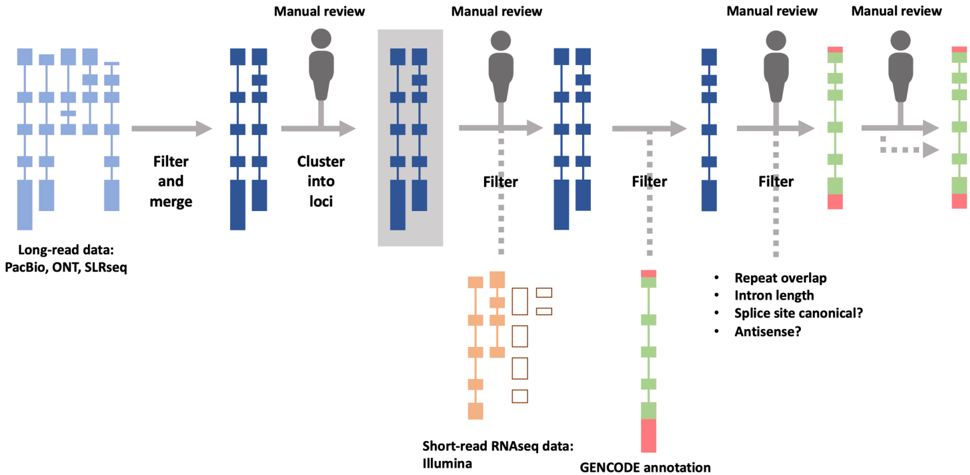
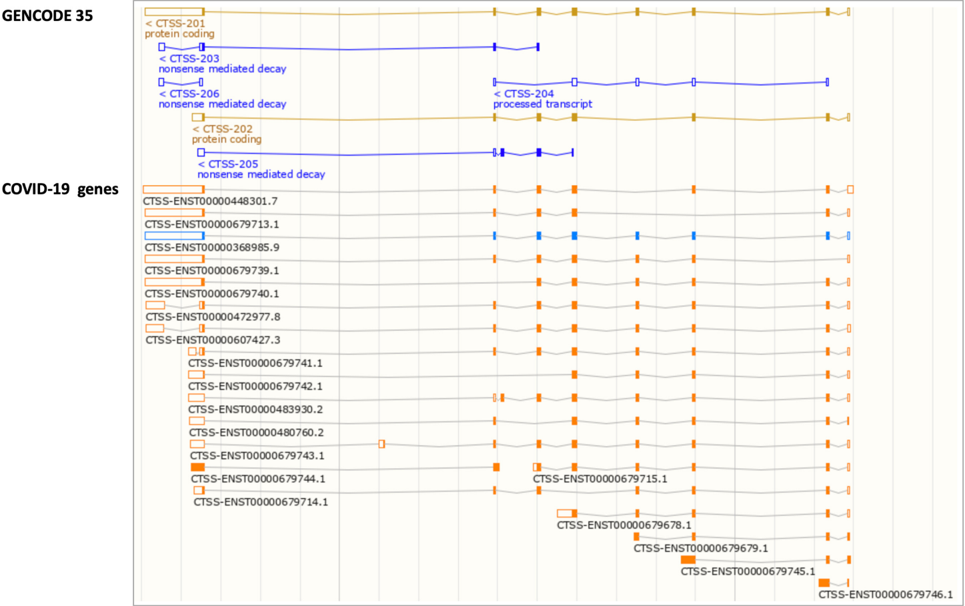
The GENCODE project annotates human and mouse genes and transcripts supported by experimental data with high accuracy, providing a foundational resource that supports genome biology and clinical genomics. GENCODE annotation processes make use of primary data and bioinformatic tools and analysis generated both within the consortium and externally to support the creation of transcript structures and the determination of their function. Here, we present improvements to our annotation infrastructure, bioinformatics tools, and analysis, and the advances they support in the annotation of the human and mouse genomes including: the completion of first pass manual annotation for the mouse reference genome; targeted improvements to the annotation of genes associated with SARS-CoV-2 infection; collaborative projects to achieve convergence across reference annotation databases for the annotation of human and mouse protein-coding genes; and the first GENCODE manually supervised automated annotation of lncRNAs. Our annotation is accessible via Ensembl, the UCSC Genome Browser and https://www.gencodegenes.org.
Overview
The claims and statistics of this paper haven’t been checked yet.
Free: it reads the open-access text and checks the first 5 claims that cite a source we can check. Create a free account to check every claim.
Integrity signals
Registry
Cites
Statistics
Figures
Verification
Claims the paper makes
The claims and statistics of this paper haven’t been checked yet.
Free: it reads the open-access text and checks the first 5 claims that cite a source we can check. Create a free account to check every claim.
Claims other papers make about this one
Each is checked against this paper’s own text: does it say what the citing paper says it does?
The source backs part of the claim, not all of it — or backs it for a different population, condition or comparison.
In the citing paper
“We used the human GENCODE V38 (Ensembl 104) gene annotation (22), which implies that each gene is intact in Boreoeutheria”
From Integrating gene annotation with orthology inference at scale (2023) · cites this paper as [22]
Experimental — accuracy not yet measuredThe cited source says what the claim attributes to it.
In the citing paper
“As a homology-based method, TOGA benefits from the quality and comprehensiveness of the human and mouse input annotation (21, 22).”
From Integrating gene annotation with orthology inference at scale (2023) · cites this paper as [22]
The cited source says what the claim attributes to it.
In the citing paper
“Second, we used TOGA with the mouse GENCODE M25 annotation (22) as the reference. This resulted in a higher BUSCO completeness for 98.5% (Ensembl) and 64% (NCBI) of the species (Fig. 3A,B, Tables S6–S7).”
From Integrating gene annotation with orthology inference at scale (2023) · cites this paper as [22]
The check wasn’t confident either way, so it gives no verdict — never disputed.
In the citing paper
“TOGA annotations have a higher completeness score for 97% (Ensembl) and 91.5% (NCBI) of the species (Fig. 3A,B, Tables S6–S7), increasing annotation completeness of conserved genes by an average of 4.1% or ~377 genes (Ensembl) and 0.7% or ~64 genes (NCBI) (fig. S30).”
From Integrating gene annotation with orthology inference at scale (2023) · cites this paper as [22]
Experimental — accuracy not yet measured
Self-check
Percentages, sums and reported differences re-computed from the paper’s own numbers.
The self-check needs the paper’s full text.
Citations
Cites
The Human Genome Browser at UCSC
Kent, W. J., Sugnet, C. W., Furey, T. S., Roskin, K. M., Pringle, T. H., Zahler, A. M., & Haussler, A. D. (2002) · Genome Research · doi:10.1101/gr.229102 · Cited by 10,400 · cited 3×
“Each release is versioned and made available immediately upon release from Ensembl (6) and https // www.gencodegenes.org with release on the UCSC Genome Browser (33) normally following shortly thereafter.”
BackgroundUniProt: a worldwide hub of protein knowledge
The UniProt Consortium (2019) · Nucleic Acids Research · doi:10.1093/nar/gky1049 · Cited by 7,698
Perez-Riverol, Y., Csordas, A., Bai, J., Bernal-Llinares, M., Hewapathirana, S., Kundu, D. J., Inuganti, A., Griss, J., Mayer, G., Eisenacher, M., et al. (2019) · Nucleic Acids Research · doi:10.1093/nar/gky1106 · Cited by 6,693 · cited 2×
“To support the automated analysis of proteomics data for genome annotation we collaborated with the PRIDE (25) proteomics repository at EMBL-EBI to build a reprocess-”
MethodO'Leary, N. A., Wright, M. W., Brister, J. R., Ciufo, S., Haddad, D., McVeigh, R., Rajput, B., Robbertse, B., Smith-White, B., Ako-Adjei, D., et al. (2016) · Nucleic Acids Research · doi:10.1093/nar/gkv1189 · Cited by 6,357
GENCODE: The reference human genome annotation for The ENCODE Project
Harrow, J., Frankish, A., Gonzalez, J. M., Tapanari, E., Diekhans, M., Kokocinski, F., Aken, B. L., Barrell, D., Zadissa, A., Searle, S., et al. (2012) · Genome Research · doi:10.1101/gr.135350.111 · Cited by 4,585
Self-citationA SARS-CoV-2 protein interaction map reveals targets for drug repurposing
Gordon, D. E., Jang, G. M., Bouhaddou, M., Xu, J., Obernier, K., White, K. M., O’Meara, M. J., Rezelj, V. V., Guo, J. Z., Swaney, D. L., et al. (2020) · Nature · doi:10.1038/s41586-020-2286-9 · Cited by 4,405 · cited 1×
“Our list of genes for reannotation comes from several sources including recently published drug re-purposing studies identifying host proteins associated with other related coronaviruses (14) and human proteins found to physically associate with SARS-CoV-2 viral proteins in the cell (15).”
BackgroundSelf-citationThe landscape of long noncoding RNAs in the human transcriptome
Iyer, M. K., Niknafs, Y. S., Malik, R., Singhal, U., Sahu, A., Hosono, Y., Barrette, T. R., Prensner, J. R., Evans, J. R., Zhao, S., et al. (2015) · Nature Genetics · doi:10.1038/ng.3192 · Cited by 2,738 · cited 1×
“miTranscriptome (28), NONCODE (29), FANTOM CAT (30)).”
Network-based drug repurposing for novel coronavirus 2019-nCoV/SARS-CoV-2
Zhou, Y., Hou, Y., Shen, J., Huang, Y., Martin, W., & Cheng, F. (2020) · Cell Discovery · doi:10.1038/s41421-020-0153-3 · Cited by 1,597 · cited 1×
“Our list of genes for reannotation comes from several sources including recently published drug repurposing studies identifying host proteins associated with other related coronaviruses (14) and human proteins found to physically associate with SARS-CoV-2 viral proteins in the cell (15).”
BackgroundInterferon-stimulated genes and their antiviral effector functions
Schoggins, J. W., & Rice, C. M. (2011) · Current Opinion in Virology · doi:10.1016/j.coviro.2011.10.008 · Cited by 1,289 · cited 1×
“We also included genes curated by UniProt (4) and the Human Cell Atlas project (16) as well as interferonstimulated genes with known antiviral activity (17).”
MethodYates, A. D., Achuthan, P., Akanni, W., Allen, J., Allen, J., Alvarez-Jarreta, J., Amode, M. R., Armean, I. M., Azov, A. G., Bennett, R., et al. (2019) · Nucleic Acids Research · doi:10.1093/nar/gkz966 · Cited by 1,152 · cited 2×
“The Ensembl / GENCODE geneset is a merge of the manual gene annotation created by the Ensembl-HAVANA team (methods and validation described in 6–8) and the automated annotation produced by the Ensembl Geneb-uild team (9,10).”
MethodSelf-citation
Cited by
Items 101–200 of 1,003
Yao, S., Harder, A., Darki, F., Chang, Y.-W., Li, A., Nikouei, K., Volpe, G., Lundström, J. N., Zeng, J., Wray, N. R., et al. (2025) · Nature Communications · doi:10.1038/s41467-024-55611-1 · Cited by 72
Genomic mutation landscape of skin cancers from DNA repair-deficient xeroderma pigmentosum patients
Yurchenko, A. A., Rajabi, F., Lajus, T. B. P., Fassihi, H., Lehmann, A. R., Nishigori, C., Wang, J., Padioleau, I., Владимирович, Г. К., Panunzi, L. G., et al. (2023) · Nature Communications · doi:10.1038/s41467-023-38311-0 · Cited by 63
A roadmap for the functional annotation of protein families: a community perspective
de Crécy-lagard, V., Amorin de Hegedus, R., Arighi, C., Babor, J., Bateman, A., Blaby, I., Blaby-Haas, C., Bridge, A. J., Burley, S. K., Cleveland, S., et al. (2022) · Database · doi:10.1093/database/baac062 · Cited by 56
“Indeed, it is well established that different isoforms can have different functions, but, to date, less than 1% of human isoforms are annotated (106, 107).”
BackgroundSelf-citationSperm sequencing reveals extensive positive selection in the male germline
Neville, M. D. C., Lawson, A. R. J., Sanghvi, R., Abascal, F., Pham, M. H., Cagan, A., Nicola, P. A., Bayzetinova, T., Baez‐Ortega, A., Roberts, K., et al. (2025) · Nature · doi:10.1038/s41586-025-09448-3 · Cited by 65
lncRNASNP v3: an updated database for functional variants in long non-coding RNAs
Yang, Y., Wang, D., Miao, Y., Wu, X., Luo, H., Cao, W., Yang, W., Yang, J., Guo, A., & Gong, J. (2022) · Nucleic Acids Research · doi:10.1093/nar/gkac981 · Cited by 59
Self-citationSystematic investigation of allelic regulatory activity of schizophrenia-associated common variants
McAfee, J. C., Lee, S., Lee, J., Bell, J., Krupa, O., Davis, J. E., Insigne, K. D., Bond, M. L., Zhao, N., Boyle, A. P., et al. (2023) · Cell Genomics · doi:10.1016/j.xgen.2023.100404 · Cited by 65
Regulatory T cells converted from Th1 cells in tumors suppress cancer immunity via CD39
Tan, S.-N., Hao, J., Ge, J., Yang, Y., Liu, L. H., Jia, H., Lin, M., Zhao, X., Wang, G., Yang, Z., et al. (2025) · The Journal of Experimental Medicine · doi:10.1084/jem.20240445 · Cited by 63
Self-citationPriego, N., de Pablos-Aragoneses, A., Perea-García, M., Pieri, V., Hernández-Oliver, C., Álvaro‐Espinosa, L., Rojas, A., Sánchez, O., Steindl, A., Caleiras, E. J., et al. (2024) · Cancer Discovery · doi:10.1158/2159-8290.cd-24-0134 · Cited by 60
Strauch, Y. L., Lord, J., Niranjan, M., & Baralle, D. (2022) · PLoS ONE · doi:10.1371/journal.pone.0269159 · Cited by 59
“Although newer versions improve accuracy and coverage of both resources [39, 40], and we too observed a higher quality of data, comparisons of models trained on new and old versions revealed differences in accuracy were negligible.”
Najafi, S. (2022) · Journal of Cancer Research and Clinical Oncology · doi:10.1007/s00432-022-04328-z · Cited by 64
Engineered CRISPR-Cas12a for higher-order combinatorial chromatin perturbations
Hsiung, C. C. ‐., Wilson, C. M., Sambold, N. A., Dai, R., Chen, Q., Teyssier, N., Misiukiewicz, S., Arab, A., O’Loughlin, T. A., Cofsky, J. C., et al. (2024) · Nature Biotechnology · doi:10.1038/s41587-024-02224-0 · Cited by 57
Four Core Genotypes mice harbour a 3.2MB X-Y translocation that perturbs Tlr7 dosage
Panten, J., Prete, S., Cleland, J., Saunders, L. M., van Riet, J., Schneider, A., Ginno, P. A., Schneider, N., Koch, M.-L., Chen, X., et al. (2024) · Nature Communications · doi:10.1038/s41467-024-52640-8 · Cited by 56
“Alignment of trimmed reads was performed against GRCm39 (M31) with GENCODE (v31) annotations 24 using STARSolo (v2.”
MethodThe chromatin landscape of pathogenic transcriptional cell states in rheumatoid arthritis
Weinand, K., Sakaue, S., Nathan, A., Jonsson, A. H., Zhang, F., Watts, G. F. M., Suqri, M. A., Zhu, Z., Accelerating Medicines Partnership Program: Rheumatoid Arthritis and Systemic Lupus Erythematosus (AMP RA/SLE) Network, Albrecht, J., et al. (2024) · Nature Communications · doi:10.1038/s41467-024-48620-7 · Cited by 56
Obox4 promotes zygotic genome activation upon loss of Dux
Guo, Y., Kitano, T., Inoue, K., Murano, K., Hirose, M., Li, T. D., Sakashita, A., Ishizu, H., Ogonuki, N., Matoba, S., et al. (2024) · eLife · doi:10.7554/elife.95856 · Cited by 58
Makabe, K., Okada, H., Tachibana, N., Ishikura, H., Ito, N., Tanaka, M., Chijimatsu, R., Terashima, A., Yano, F., Asaka, M., et al. (2024) · Arthritis Research & Therapy · doi:10.1186/s13075-024-03354-1 · Cited by 55
“The reference index was created using GRCm39.primaryassembly.genome.fa and gencode.vM31.primary_assembly.annotation.gtf, each downloaded from GENCODE [21].”
MethodMouse Genome Informatics (MGI): latest news from MGD and GXD
Ringwald, M., Richardson, J. E., Baldarelli, R. M., Blake, J. A., Kadin, J. A., Smith, C. L., & Bult, C. J. (2021) · Mammalian Genome · doi:10.1007/s00335-021-09921-0 · Cited by 57
“The unified gene catalog is generated by combining the mouse genome annotations generated by GenCode/Ensembl (Frankish et al. 2021) and NCBI (https:// www. ncbi. nlm. nih. gov/ genome/ annot ation_ euk/ proce ss/) into a canonical, non-redundant catalog of mouse genes and other genome features for…”
MethodInfluentialBEND: Benchmarking DNA Language Models on biologically meaningful tasks
Marin, F. I., Teufel, F., Horlacher, M., Madsen, D., Pultz, D., Winther, O., & Boomsma, W. (2023) · International Conference on Learning Representations · doi:10.48550/arxiv.2311.12570 · Cited by 73
“Data GENCODE (Frankish et al., 2021) gene annotations were processed to construct sequences of nucleotide labels y ∈ { E F , D F , I F , A F , E R , D R , I R , A R , NC } for each gene.”
BackgroundMethodInfluentialGenome-scale pan-cancer interrogation of lncRNA dependencies using CasRx
Montero, J. J., Trozzo, R., Sugden, M., Öllinger, R., Belka, A., Zhigalova, E., Waetzig, P., Engleitner, T., Schmidt‐Supprian, M., Saur, D., et al. (2024) · Nature Methods · doi:10.1038/s41592-024-02190-0 · Cited by 55
“The total number of annotated lncRNAs is roughly 4.5 times higher than that of protein-coding genes 6,10 , yet only a few have been studied mechanistically so far.”
InfluentialLi, Z., Zhang, Y., Fang, J., Xu, Z., Zhang, H., Mao, M., Chen, Y., Zhang, L., & Pian, C. (2022) · Bioinformatics · doi:10.1093/bioinformatics/btac812 · Cited by 53
Self-citationGenome annotation: from human genetics to biodiversity genomics
Guigó, R. (2023) · Cell Genomics · doi:10.1016/j.xgen.2023.100375 · Cited by 49
Self-citationDeciphering the impact of genetic variation on human polyadenylation using APARENT2
Linder, J., Koplik, S. E., Kundaje, A., & Seelig, G. (2022) · Genome Biology · doi:10.1186/s13059-022-02799-4 · Cited by 49
Arthur, T. D., Nguyen, J., Henson, B. A., D’Antonio‐Chronowska, A., Jaureguy, J., Silva, N., Arias, A. D., Benaglio, P., Berggren, W. T., Borja, V., et al. (2025) · Cell Genomics · doi:10.1016/j.xgen.2025.100775 · Cited by 54
QUADRatlas: the RNA G-quadruplex and RG4-binding proteins database
Bourdon, S., Herviou, P., Dumas, L., Destefanis, E., Zen, A., Cammas, A., Millevoi, S., & Dassi, E. (2022) · Nucleic Acids Research · doi:10.1093/nar/gkac782 · Cited by 47
Uveal melanoma immunogenomics predict immunotherapy resistance and susceptibility
Leonard‐Murali, S., Bhaskarla, C., Yadav, G. S., Maurya, S. K., Galiveti, C. R., Tobin, J. A., Kann, R. J., Ashwat, E., Murphy, P. S., Chakka, A. B., et al. (2024) · Nature Communications · doi:10.1038/s41467-024-46906-4 · Cited by 50
Mottawea, W., Yousuf, B., Sultan, S., Ahmed, T. A., Yeo, J., Hüttmann, N., Li, Y., Bouhlel, N. E., Hassan, H., Zhang, X., et al. (2024) · Microbiology Spectrum · doi:10.1128/spectrum.01368-24 · Cited by 49
Astroglial Hmgb1 regulates postnatal astrocyte morphogenesis and cerebrovascular maturation
Andrade, M. F., Comin, C. H., Dyken, P. C. V., Ouellette, J., Raman‐Nair, J., Blakeley, N., Liu, Q. Y., Leclerc, S., Pan, Y., Liu, Z., et al. (2023) · Nature Communications · doi:10.1038/s41467-023-40682-3 · Cited by 49
“Mouse (Mus musculus) referencegenome(versionGRCm39) 105 and corresponding annotation were used as reference for RNA-seq data alignment process.”
Man, C. H., Lam, W., Dang, C. C., Zeng, X.-Y., Zheng, L., Chan, N. N.-M., Ng, K.-L., Chan, K.-C., Kwok, T.-H., Ng, T. C.-C., et al. (2023) · Blood · doi:10.1182/blood.2023019782 · Cited by 47
Performance Evaluation of SpliceAI for the Prediction of Splicing of NF1 Variants
Ha, C., Kim, J., & Jang, J. (2021) · Genes · doi:10.3390/genes12091308 · Cited by 48
Epigenetic regulation of human non-coding RNA gene transcription
Morselli, M., & Dieci, G. (2022) · Biochemical Society Transactions · doi:10.1042/bst20210860 · Cited by 47
TPP1 promoter mutations cooperate with TERT promoter mutations to lengthen telomeres in melanoma
Chun‐on, P., Hinchie, A. M., Beale, H. C., Silva, A. A. G., Rush, E. A., Sander, C., Connelly, C. J., Seynnaeve, B. K. N., Kirkwood, J. M., Vaske, O. M., et al. (2022) · Science · doi:10.1126/science.abq0607 · Cited by 44
Ni, Q., Chen, X., Zhang, P., Yang, L., Lu, Y., Xiao, F., Wu, B., Wang, H., Zhou, W., & Dong, X. (2022) · Orphanet Journal of Rare Diseases · doi:10.1186/s13023-022-02279-9 · Cited by 50
Zhang, J., Pan, T., Zhou, W., Zhang, Y., Xu, G., Xu, Q., Li, S., Gao, Y., Wang, Z., Xu, J., et al. (2022) · Journal of Experimental & Clinical Cancer Research · doi:10.1186/s13046-022-02478-z · Cited by 46
Self-citationDeep structured learning for variant prioritization in Mendelian diseases
(2023) · doi:10.1038/s41467-023-39306-7 · Cited by 43
“We worked with the GRCh37 coordinates for each variant and employed the Gencode V33 Basic annotation of the human genome (lifted over to GRCh37 coordinates) 46 .”
En, A., Bogireddi, H., Thomas, B., Stutzman, A. V., Ikegami, S., LaForest, B., Almakki, O., Pytel, P., Moskowitz, I. P. G., & Ikegami, K. (2024) · Cell Reports · doi:10.1016/j.celrep.2024.114284 · Cited by 43
Goes, F. S., Collado‐Torres, L., Zandi, P. P., Huuki-Myers, L. A., Tao, R., Jaffe, A. E., Pertea, G. M., Shin, J. H., Weinberger, D. R., Kleinman, J. E., et al. (2025) · Nature Communications · doi:10.1038/s41467-025-59115-4 · Cited by 48
ASCancer Atlas: a comprehensive knowledgebase of alternative splicing in human cancers
Wu, S., Huang, Y., Zhang, M., Gong, Z., Wang, G., Zheng, X., Zong, W., Zhao, W., Xing, P., Li, R., et al. (2022) · Nucleic Acids Research · doi:10.1093/nar/gkac955 · Cited by 46
Sánchez-Aguilera, A., Masmudi‐Martín, M., Navas-Olivé, A., Baena, P., Hernández-Oliver, C., Priego, N., Cordón-Barris, L., Álvaro‐Espinosa, L., García‐Martín, S., Martínez, S., et al. (2023) · Cancer Cell · doi:10.1016/j.ccell.2023.07.010 · Cited by 44
Dissection of a CTCF topological boundary uncovers principles of enhancer-oncogene regulation
Kim, K. L., Rahme, G. J., Goel, V. Y., El Farran, C. A., Hansen, A. S., & Bernstein, B. E. (2024) · Molecular Cell · doi:10.1016/j.molcel.2024.02.007 · Cited by 40
A multiplex single-cell RNA-Seq pharmacotranscriptomics pipeline for drug discovery
Dini, A., Barker, H. R., Piki, E., Sharma, S., Raivola, J., Murumägi, A., & Ungureanu, D. (2024) · Nature Chemical Biology · doi:10.1038/s41589-024-01761-8 · Cited by 44
Readout of histone methylation by Trim24 locally restricts chromatin opening by p53
Isbel, L., Iskar, M., Durdu, S., Weiss, J., Grand, R. S., Hietter-Pfeiffer, E., Kozicka, Z., Michael, A. K., Burger, L., Thomä, N. H., et al. (2023) · Nature Structural & Molecular Biology · doi:10.1038/s41594-023-01021-8 · Cited by 44
Xiao, B., Liu, Y., Chandrasiri, I., Adjei‐Sowah, E., Mereness, J. A., Yan, M., & Benoit, D. S. W. (2023) · Small · doi:10.1002/smll.202305336 · Cited by 42
Zhang, W., Zhang, Y., Min, Z., Mo, J., Ju, Z., Guan, W. X., Zeng, B., Liu, Y., Chen, J., Zhang, Q., et al. (2021) · Nucleic Acids Research · doi:10.1093/nar/gkab850 · Cited by 43
“To implement the Web Service tool, we firstly down-loaded the annotation file of ‘gencode.v28.annotation.gff3’ in GENCODE (17).”
Self-citationArunima, A., van Schaik, E. J., & Samuel, J. E. (2023) · Frontiers in Cellular and Infection Microbiology · doi:10.3389/fcimb.2023.1160198 · Cited by 43
AI approaches for the discovery and validation of drug targets
Wenteler, A., Cabrera, C., Wei, W., Neduva, V., & Barnes, M. R. (2024) · Cambridge Prisms Precision Medicine · doi:10.1017/pcm.2024.4 · Cited by 53
Polenkowski, M., de Lara, S. B., Allister, A. B., Nguyen, T. T. T., Tamura, T., & Tran, D. D. H. (2021) · International Journal of Molecular Sciences · doi:10.3390/ijms23010058 · Cited by 41
Mikheenko, A., Prjibelski, A. D., Joglekar, A., & Tilgner, H. (2022) · Genome Research · doi:10.1101/gr.276405.121 · Cited by 40
Perteghella, T., Kaur, G., Sala, S. C., Gonzalez-Martinez, J., Hunt, T., Mądry, T., Jungreis, I., Degalez, F., Arnan, C., Nurtdinov, R., et al. (2024) · bioRxiv (Cold Spring Harbor Laboratory) · doi:10.1101/2024.10.29.620654 · Cited by 44
Self-citationLong-read sequencing for 29 immune cell subsets reveals disease-linked isoforms
Inamo, J., Suzuki, A., Ueda, M. T., Yamaguchi, K., Nishida, H., Suzuki, K., Kaneko, Y., Takeuchi, T., Hatano, H., Ishigaki, K., et al. (2024) · Nature Communications · doi:10.1038/s41467-024-48615-4 · Cited by 42
Interpreting cis-regulatory interactions from large-scale deep neural networks
Toneyan, S., & Koo, P. K. (2024) · Nature Genetics · doi:10.1038/s41588-024-01923-3 · Cited by 41
“Most putative CREs mostly do not overlap with existing CRE annotations; only 27% of enhancer tiles and 24% of silencer tiles overlap with promoter annotations 26 or enhancer annotations 43 .”
A subcellular map of translational machinery composition and regulation at the single-molecule level
Zhang, Z., Xu, A., Bai, Y., Chen, Y., Cates, K., Kerr, C. H., Bermudez, A., Susanto, T. T., Wysong, K., Garcia-Marques, F. J., et al. (2025) · Science · doi:10.1126/science.adn2623 · Cited by 39
Skin-Expressing lncRNAs in Inflammatory Responses
Shefler, A., Patrick, M. T., Wasikowski, R., Chen, J., Sarkar, M. K., Gudjonsson, J. E., & Tsoi, L. C. (2022) · Frontiers in Genetics · doi:10.3389/fgene.2022.835740 · Cited by 40
Yang, Y., Shi, L., Fu, X., Ma, G., Yang, Z., Li, Y., Zhou, Y., Yuan, L., Xia, Y., Zhong, X., et al. (2022) · PLoS Biology · doi:10.1371/journal.pbio.3001682 · Cited by 40
Self-citationRen, Z., Jiang, L., Di, Y., Zhang, D., Gong, J., Gong, J., Jiang, Q., Fu, Z., Sun, P., Zhou, B., et al. (2024) · Bioinformatics · doi:10.1093/bioinformatics/btae330 · Cited by 41
“Protein and transcript sequences were then extracted from the GENCODE database (Frankish et al. 2021) using the gene identifier and transcript identifier.”
MethodEpigenetic erosion of H4K20me1 induced by inflammation drives aged stem cell ferroptosis
Blanc, R. S., Shah, N., Hachmer, S., Salama, N., Meng, F. W., Mousaei, A., Puri, G., Hwang, J. H., Wacker, E. E., Yang, B. A., et al. (2025) · Nature Aging · doi:10.1038/s43587-025-00902-5 · Cited by 41
“7.9a with the following parameters: ‘—twopass Mode Basic–runMode alignReads–outSAMtype BAM Unsorted – outSAMstrandField intron-Motif–outFilterIntronMotifs RemoveNoncanonical –outReadsUn-mapped Fastx’ 71,72 .”
Non-coding Natural Antisense Transcripts: Analysis and Application
Krappinger, J. C., Bonstingl, L., Pansy, K., Sallinger, K., Wreglesworth, N. I., Grinninger, L., Deutsch, A. J. A., Heliebi, A. E., Kroneis, T., McFarlane, R. J., et al. (2021) · Journal of Biotechnology · doi:10.1016/j.jbiotec.2021.08.005 · Cited by 44
Zhang, H., Wang, Y., Pan, Z., Sun, X., Mou, M., Zhang, B., Li, Z., Li, H., & Zhu, F. (2022) · Briefings in Bioinformatics · doi:10.1093/bib/bbac411 · Cited by 38
Hughes, B. W., Siemsen, B. M., Tsvetkov, E., Berto, S., Kumar, J., Cornbrooks, R. G., Akiki, R. M., Cho, J. Y., Carter, J. S., Snyder, K. K., et al. (2023) · eLife · doi:10.7554/elife.75631 · Cited by 37
A draft UAE-based Arab pangenome reference
Nassir, N., Almarri, M. A., Kumail, M., Mohamed, N., Balan, B., Hanif, S., AlObathani, M., Jamalalail, B. A., ElSokary, H. A., Kondaramage, D., et al. (2025) · Nature Communications · doi:10.1038/s41467-025-61645-w · Cited by 43
“We annotated the graph using the ChrM annotations from GENCODE (v38) 42 , facilitating the identi fi cation of mitochondrial genes.”
Werner, J. M., Ballouz, S., Hover, J., & Gillis, J. (2022) · Developmental Cell · doi:10.1016/j.devcel.2022.07.007 · Cited by 40
Techniques for investigating lncRNA transcript functions in neurodevelopment
Srinivas, T., Soares, E. S., & Guil, S. (2023) · Molecular Psychiatry · doi:10.1038/s41380-023-02377-5 · Cited by 40
“A brief overview of lncRNA genomic, structural, and biological features Several iterations of lncRNA classi fi cation based on genomic position [6, 7, 20] have resulted in the knowledge that lncRNAs may be transcribed, processed, and/or derived from such regions throughout the genome as introns,…”
BackgroundSORC: an integrated spatial omics resource in cancer
Zhou, W., Su, M., Jiang, T., Yang, Q., Sun, Q., Xu, K., Shi, J., Yang, C., Ding, N., Li, Y., et al. (2023) · Nucleic Acids Research · doi:10.1093/nar/gkad820 · Cited by 37
“We created a gene sorting file from the human CRCh38 (V43) assembly ( 25 ), which included the chromosomal start and end positions of genes.”
Self-citationSeetharam, A. S., Vu, H., Choi, S., Khan, T., Sheridan, M. A., Ezashi, T., Roberts, R. M., & Tuteja, G. (2022) · Stem Cell Reports · doi:10.1016/j.stemcr.2022.04.014 · Cited by 36
Splicing activates transcription from weak promoters upstream of alternative exons
Urióstegui-Arcos, M., Mick, S. T., Shi, Z., Rahman, R., & Fiszbein, A. (2023) · Nature Communications · doi:10.1038/s41467-023-39200-2 · Cited by 37
Gustafson, J. A., Gibson, S. B., Damaraju, N., Zalusky, M. P., Hoekzema, K., Twesigomwe, D., Yang, L., Snead, A. A., Richmond, P. A., Coster, W. D., et al. (2024) · medRxiv · doi:10.1101/2024.03.05.24303792 · Cited by 36
“The coordinates of each DMR were expanded by 10 kbp and intersected with protein-coding genes based on Gencode v35 gene models using plyranges left_overlap_join (Frankish et al. 2021).”
BackgroundMethodDissecting the cis-regulatory syntax of transcription initiation with deep learningPreprint
Cochran, K., Yin, M., Mantripragada, A., Schreiber, J. M., Marinov, G. K., Shah, S. R., Yu, H., Lis, J. T., & Kundaje, A. B. (2024) · bioRxiv (Cold Spring Harbor Laboratory) · doi:10.1101/2024.05.28.596138 · Cited by 38
“Second, all peaks that were not already labeled ”At TSS” were labeled as being in a gene body if their center was located within any GENCODE transcript, or as intergenic otherwise.”
InfluentialNuclear actin structure regulates chromatin accessibility
Sen, B., Xie, Z., Thomas, M. D., Pattenden, S. G., Howard, S., McGrath, C., Styner, M., Uzer, G., Furey, T. S., & Rubin, J. (2024) · Nature Communications · doi:10.1038/s41467-024-48580-y · Cited by 35
Smolen, C., Jensen, M., Dyer, L. M., Pizzo, L., Tyryshkina, A., Banerjee, D., Rohan, L., Huber, E., Khattabi, L. E., Prontera, P., et al. (2023) · The American Journal of Human Genetics · doi:10.1016/j.ajhg.2023.10.015 · Cited by 40
Severens, J. F., Karakaslar, E. O., van der Reijden, B. A., Sánchez‐López, E., van den Berg, R. R., Halkes, C. J. M., van Balen, P., Veelken, H., Reinders, M. J. T., Griffioen, M., et al. (2024) · Leukemia · doi:10.1038/s41375-024-02137-6 · Cited by 38
“We classi fi ed samples with missing data and “ No RGA found ” as “ Inconclusive ” .”
Long non-coding RNAs direct the SWI/SNF complex to cell type-specific enhancers
Oo, J. A., Warwick, T., Pálfi, K., Lam, F., McNicoll, F., Prieto‐Garcia, C., Günther, S., Cao, C., Zhou, Y., Gavrilov, A. A., et al. (2025) · Nature Communications · doi:10.1038/s41467-024-55539-6 · Cited by 36
Multiplex generation and single-cell analysis of structural variants in mammalian genomes
Pinglay, S., Lalanne, J., Daza, R. M., Kottapalli, S., Quaisar, F., Koeppel, J., Garge, R. K., Li, X., Lee, D. S., & Shendure, J. (2025) · Science · doi:10.1126/science.ado5978 · Cited by 37
A global study for acute myeloid leukemia with RARG rearrangement
Zhu, H., Qin, Y., Zhang, Z., Liu, Y., Wen, L., You, M. J., Zhang, C., Such, E., Luo, H. L., Yuan, H., et al. (2023) · Blood Advances · doi:10.1182/bloodadvances.2022008364 · Cited by 37
Comparative landscape of genetic dependencies in human and chimpanzee stem cells
She, R., Fair, T., Schaefer, N. K., Saunders, R. A., Pavlovic, B. J., Weissman, J. S., & Pollen, A. A. (2023) · Cell · doi:10.1016/j.cell.2023.05.043 · Cited by 35
“…for homologous transcripts from human and chimpanzee reference genomes, we downloaded human protein and transcript sequences from Gencode release 36 146 and chimpanzee protein and transcript sequences from the Comparative Annotation Toolkit 147 annotation on reference version panTro6 produced as…”
Towards in silico CLIP-seq: predicting protein-RNA interaction via sequence-to-signal learning
Horlacher, M., Wagner, N., Moyon, L., Kuret, K., Goedert, N., Salvatore, M., Ule, J., Gagneur, J., Winther, O., & Marsico, A. (2023) · Genome biology · doi:10.1186/s13059-023-03015-7 · Cited by 37
“We explored first whether RBPNet can infer signal on entire transcripts by first selecting genes from GENECODE (Release 40) [14] from hold-out chromosomes and subsequently performing RBPNet predictions using models for all ENCODE RBPs. Figure 2f and g show RBPNet predictions (total track) on…”
BackgroundMethodInfluentialLi, R., Zhu, J., Zhong, W., & Jia, Z. (2021) · bioRxiv (Cold Spring Harbor Laboratory) · doi:10.1101/2021.06.29.449134 · Cited by 39
Mouse B2 SINE elements function as IFN-inducible enhancers
Horton, I., Kelly, C. J., Dziulko, A., Simpson, D. M., & Chuong, E. B. (2023) · eLife · doi:10.7554/elife.82617 · Cited by 38
Private information leakage from single-cell count matrices
Walker, C. R., Li, X., Chakravarthy, M., Lounsbery-Scaife, W., Choi, Y. A., Singh, R., & Gürsoy, G. (2024) · Cell · doi:10.1016/j.cell.2024.09.012 · Cited by 35
Chromatin accessibility landscape of mouse early embryos revealed by single-cell NanoATAC-seq2
Li, M., Jiang, Z., Xu, X., Wu, X., Liu, Y., Chen, K., Liao, Y., Li, W., Wang, X., Guo, Y., et al. (2025) · Science · doi:10.1126/science.adp4319 · Cited by 36
Extrusion fountains are restricted by WAPL-dependent cohesin release and CTCF barriers
Liu, N. Q., Magnitov, M. D., Schijns, M. M. G. A., van Schaik, T., Teunissen, H., van Steensel, B., & de Wit, E. (2025) · Nucleic Acids Research · doi:10.1093/nar/gkaf549 · Cited by 34
The β -TrCP-Mediated Pathway Cooperates with the Keap1-Mediated Pathway in Nrf2 Degradation In Vivo
Kuga, A., Tsuchida, K., Panda, H., Horiuchi, M., Otsuki, A., Taguchi, K., Katsuoka, F., Suzuki, M., & Yamamoto, M. P. (2022) · Molecular and Cellular Biology · doi:10.1128/mcb.00563-21 · Cited by 39
Small molecule quercetin binds MALAT1 triplex and modulates its cellular function
Rakheja, I., Ansari, A. H., Ray, A., Joshi, D. C., & Maiti, S. (2022) · Molecular Therapy — Nucleic Acids · doi:10.1016/j.omtn.2022.09.016 · Cited by 34
McCabe, A., Zaheed, O., McDade, S. S., & Dean, K. A. (2023) · Frontiers in Cell and Developmental Biology · doi:10.3389/fcell.2023.1104514 · Cited by 36
TDP-43 safeguards the embryo genome from L1 retrotransposition
Li, T. D., Murano, K., Kitano, T., Guo, Y., Negishi, L., & Siomi, H. (2022) · Science Advances · doi:10.1126/sciadv.abq3806 · Cited by 34
Grigorev, K. A., Nelson, T. M., Overbey, E. G., Houerbi, N., Kim, J., Najjar, D., Damle, N., Afshin, E. E., Ryon, K. A., Thierry‐Mieg, J., et al. (2024) · Nature Communications · doi:10.1038/s41467-024-48929-3 · Cited by 36
“…Oxford Nanopore Technologies (ONT), pipeline-transcriptome-de 21 ; the pipeline considers reads aligned to the Gencode v41 transcriptomic reference 22 , includes multi-mapping reads, quanti fi es expression based on individual transcripts, collapses transcript counts into gene counts, and obtains…”
InfluentialGlass, M. R., Waxman, E. A., Yamashita, S., Lafferty, M. J., Beltran, A. A., Farah, T. M., Patel, N. K., Singla, R., Matoba, N., Ahmed, S. M., et al. (2024) · Stem Cell Reports · doi:10.1016/j.stemcr.2024.07.008 · Cited by 35
“Raw data was aligned using Salmon (Srivastava et al. 2020) to a reference transcriptome including spliced+intron reads using Gencode (V40) (Frankish et al. 2021) annotation made with make_splici_txome function in the roe package (https://github.com/COMBINE-lab/roe).”
MethodFeng, Y., Wang, Z., Chien, K., Chen, H., Liang, Y., Hua, X., & Chiu, C. (2022) · Nucleic Acids Research · doi:10.1093/nar/gkac302 · Cited by 35
Multi-view graph neural network with cascaded attention for lncRNA-miRNA interaction prediction
Li, H., Wu, B., Sun, M., Ye, Y., Zhu, Z., & Chen, K. (2023) · Knowledge-Based Systems · doi:10.1016/j.knosys.2023.110492 · Cited by 34
Stergioti, E. M., Manolakou, T., Sentis, G., Samiotaki, M. K., Kapsala, N., Fanouriakis, A., Boumpas, D. T., & Banos, A. (2023) · Clinical Immunology · doi:10.1016/j.clim.2023.109765 · Cited by 37
Proteogenomics reveals sex-biased aging genes and coordinated splicing in cardiac aging
Han, Y., Wennersten, S. A., Wright, J. M., Ludwig, R. W., Lau, E., & Lam, M. P. Y. (2022) · American Journal of Physiology-Heart and Circulatory Physiology · doi:10.1152/ajpheart.00244.2022 · Cited by 31
Self-citationMetadata integrity in bioinformatics: Bridging the gap between data and knowledge
Caliskan, A., Dangwal, S., & Dandekar, T. (2023) · Computational and Structural Biotechnology Journal · doi:10.1016/j.csbj.2023.10.006 · Cited by 32
“…GSE155241 [51]) with STAR alignment (version 2.7.10a) [52], using the comprehensive gene annotation PRI and the genome sequence, primary assembly (GRCh38) PRI of GENCODE version 39 [53,54] and transcript quantification with RSEM (version 1.3.1) [55], the resulting files were analysed in RStudio.”
MethodInfluentialSpliceVarDB: A comprehensive database of experimentally validated human splicing variants
Sullivan, P. J., Quinn, J. M. W., Wu, W., Pinese, M., & Cowley, M. J. (2024) · The American Journal of Human Genetics · doi:10.1016/j.ajhg.2024.08.002 · Cited by 32
“29 Splice regions were calculated as specific distances from the closest canonical exon, including 5 0 and 3 0 untranslated regions (UTRs).”
Clinical validation of RNA sequencing for Mendelian disorder diagnostics
Zhao, S., Macakova, K., Sinson, J. C., Dai, H., Rosenfeld, J. A., Zapata, G. E., Li, S., Ward, P. A., Wang, C., Qu, C., et al. (2025) · The American Journal of Human Genetics · doi:10.1016/j.ajhg.2025.02.006 · Cited by 33
Common Features in lncRNA Annotation and Classification: A Survey
Klapproth, C., Sen, R., Stadler, P. F., Findeiß, S., & Fallmann, J. (2021) · Non-Coding RNA · doi:10.3390/ncrna7040077 · Cited by 36
Enguita, F. J., Leitão, A. L., McDonald, J. T., Zaksas, V., Das, S., Galeano, D., Taylor, D. M., Wurtele, E. S., Saravia-Butler, A., Baylin, S. B., et al. (2022) · Theranostics · doi:10.7150/thno.73268 · Cited by 33
Boeddrich, A., Haenig, C., Neuendorf, N., Blanc, E., Ivanov, A., Kirchner, M., Schleumann, P., Bayraktaroğlu, I., Richter, M., Molenda, C., et al. (2023) · Genome Medicine · doi:10.1186/s13073-023-01206-2 · Cited by 39
A systematic benchmark of machine learning methods for protein–RNA interaction prediction
Horlacher, M., Cantini, G., Hesse, J., Schinke, P., Goedert, N., Londhe, S., Moyon, L., & Marsico, A. (2023) · Briefings in Bioinformatics · doi:10.1093/bib/bbad307 · Cited by 32
“[40], we did not lift over genomic positions from GRCh37 to GRCh38, but instead used genome and GENCODE [70] versions for the GRCh37 assembly for all downstream processing of this dataset.”
Proteogenomic characterization of age and sex interactions in cardiac gene expression
Han, Y., Wennersten, S. A., Wright, J., Ludwig, R. W., Lau, E., & Lam, M. P. Y. (2022) · doi:10.1101/2022.05.11.491401 · Cited by 31
Self-citationXu, G. J., Loberg, M. A., Gallant, J., Sheng, Q., Chen, S., Lehmann, B. D., Shaddy, S. M., Tigue, M. L., Phifer, C. J., Wang, L., et al. (2023) · Cell Genomics · doi:10.1016/j.xgen.2023.100409 · Cited by 33
“10) 57 and aligned to the GENCODE GRCh38.p13 genome 51 using STAR (v2.”
MethodSingle-cell and spatial transcriptomics: Bridging current technologies with long-read sequencing
Yuan, C. U., Quah, F. X., & Hemberg, M. (2024) · Molecular Aspects of Medicine · doi:10.1016/j.mam.2024.101255 · Cited by 32
Selem, N. A., Youness, R. A., & Gad, M. Z. (2021) · Non-coding RNA Research · doi:10.1016/j.ncrna.2021.11.001 · Cited by 30
Jiang, F., Hedaya, O. M., Khor, E., Wu, J., Auguste, M., & Yao, P. (2023) · Nucleic Acids Research · doi:10.1093/nar/gkad322 · Cited by 29
Metadata
- Authors
- Frankish, A., Diekhans, M., Jungreis, I., Lagarde, J., Loveland, J. E., Mudge, J. M., Sisu, C., Wright, J. C., Armstrong, J., Barnes, I., Berry, A., Bignell, A., Boix, C., Carbonell Sala, S., Cunningham, F., Di Domenico, T., Donaldson, S., Fiddes, I. T., García Girón, C., Gonzalez, J. M., Grego, T., Hardy, M., Hourlier, T., Howe, K. L., Hunt, T., Izuogu, O. G., Johnson, R., Martin, F. J., Martínez, L., Mohanan, S., Muir, P., Navarro, F. C. P., Parker, A., Pei, B., Pozo, F., Riera, F. C., Ruffier, M., Schmitt, B. M., Stapleton, E., Suner, M.-M., Sycheva, I., Uszczynska-Ratajczak, B., Wolf, M. Y., Xu, J., Yang, Y. T., Yates, A., Zerbino, D., Zhang, Y., Choudhary, J. S., Gerstein, M., Guigó, R., Hubbard, T. J. P., Kellis, M., Paten, B., Tress, M. L., & Flicek, P.
- Affiliations
- European Bioinformatics Institute (GB)
- University of California, Santa Cruz (US)
- Broad Institute (US)
- Barcelona Institute of Science and Technology (ES)
- Yale University (US)
- Institute of Cancer Research (GB)
- Centre for Genomic Regulation (CRG), The Barcelona Institute for Science and Technology, Dr. Aiguader 88, Barcelona, E-08003 Catalonia, Spain
- Bioinformatics Unit, Spanish National Cancer Research Centre (CNIO), Madrid, Spain
- European Molecular Biology Laboratory, European Bioinformatics Institute, Wellcome Genome Campus, Hinxton, Cambridge CB10 1SD, UK
- University of Bern (CH)
- Department of Molecular Biophysics and Biochemistry, Yale University, New Haven, CT 06520, USA
- Spanish National Cancer Research Centre (ES)
- Centre of New Technologies, University of Warsaw, Warsaw, Poland
- Harvard University (US)
- Universitat Pompeu Fabra (ES)
- Guy's Hospital (GB)
- Corresponding author
- Flicek, Paul
- ORCID
- Frankish, Adam
- Diekhans, Mark
- Jungreis, Irwin
- Lagarde, Julien
- Loveland, Jane E
- Mudge, Jonathan M
- Sisu, Cristina
- Wright, James C
- Armstrong, Joel
- Barnes, If
- Berry, Andrew
- Bignell, Alexandra
- Boix, Carles
- Cunningham, Fiona
- Donaldson, Sarah
- Fiddes, Ian T
- García Girón, Carlos
- Grego, Tiago
- Hardy, Matthew
- Hourlier, Thibaut
- Howe, Kevin L
- Hunt, Toby
- Izuogu, Osagie G
- Johnson, Rory
- Martin, Fergal J
- Mohanan, Shamika
- Pozo, Fernando
- Ruffier, Magali
- Schmitt, Bianca M
- Suner, Marie-Marthe
- Yang, Yucheng T
- Yates, Andrew
- Zerbino, Daniel
- Zhang, Yan
- Choudhary, Jyoti S
- Gerstein, Mark
- Guigó, Roderic
- Hubbard, Tim J P
- Kellis, Manolis
- Paten, Benedict
- Tress, Michael L
- Flicek, Paul
- Venue
- Nucleic Acids Research
- Publisher
- Oxford University Press (OUP)
- Published
- 2020-12-03
- Volume
- 49
- Issue
- D1
- Pages
- D916-D923
- ISSN
- 0305-1048 (ISSN-L)
- 1362-4962
- PMC
- PMC7778937
- OpenAlex
- W3111061871
- Cited by
- 1,334
- References
- 34
- Citations by year
- 2026: 181 · 2025: 264 · 2024: 365 · 2023: 302 · 2022: 171 · 2021: 47 · 2020: 1
- FWCI
- 44.45
- Type
- journal article
- Language
- en
- Open access
- gold
- doi.org
- Licence
- Locations
- Nucleic Acids Research (publishedVersion, cc-by)
- PubMed Central (publishedVersion, cc-by)
- PubMed (publishedVersion)
- Repositori digital de la UPF (Universitat Pompeu Fabra) (submittedVersion, other-oa)
- Bern Open Repository and Information System (University of Bern) (submittedVersion, cc-by)
- Brunel University Research Archive (BURA) (Brunel University London) (submittedVersion)
- DSpace@MIT (Massachusetts Institute of Technology) (submittedVersion, cc-by-nc)
- Research Portal (King's College London) (submittedVersion, other-oa)
- Funders
- National Institutes of Health (U41HG007234)
- Wellcome Trust (WT108749/Z/15/Z, WT200990/Z/16/Z)
- European Molecular Biology Laboratory
- Swiss National Science Foundation
- University of Bern
- Topics
- Life Sciences › Biochemistry, Genetics and Molecular Biology › Molecular Biology › Genomics and Phylogenetic Studies
- Life Sciences › Biochemistry, Genetics and Molecular Biology › Molecular Biology › RNA Research and Splicing
- Life Sciences › Biochemistry, Genetics and Molecular Biology › Molecular Biology › Genomics and Chromatin Dynamics
- Keywords
- GENCODE, genome annotation, transcript annotation, human genome, mouse genome, SARS-CoV-2, protein-coding genes, Ensembl, UCSC Genome Browser
- MeSH terms
- COVID-19, SARS-CoV-2, Animals, Humans, Pseudogenes, Transcription, Genetic, Computational Biology, Internet, Genomics, Databases, Genetic, Mice, Epidemics, Molecular Sequence Annotation, RNA, Long Noncoding
About these checks
Registry, retraction, Cites and statistics results are computed, not judged, with one exception: a printed reference that no index lists is read once by a model before it counts as a citation error. Claims are extracted by a model and kept only when their quote appears verbatim in the text; each cited source is then checked, with a model’s help, for whether it says what the claim relies on. Those verdicts can be wrong — read the claim’s quote and the cited source before relying on one.
Statistics and arithmetic are recomputed, not judged.
Confidence bands are shown only for fields calibrated on our annotated test set. None is calibrated yet, so no band is shown.
What counts as a claim ›How we measure confidence ›How we check this ›
Are you an author, or do you see a problem with this page? Request a review
Data sources
Bibliographic data: Semantic Scholar, OpenAlex, Crossref.
Contains information from the Semantic Scholar Academic Graph Datasets, made available under the ODC Attribution License (ODC-BY 1.0).
Semantic Scholar’s data is described in: Kinney, R., et al. (2023). The Semantic Scholar Open Data Platform. arXiv:2301.10140.
