

The DOI matches its Crossref record; 12 of the 12 references it cites were found in a registry or an index.
Precise and broad scope genome editing based on high-specificity Cas9 nickases
Abstract
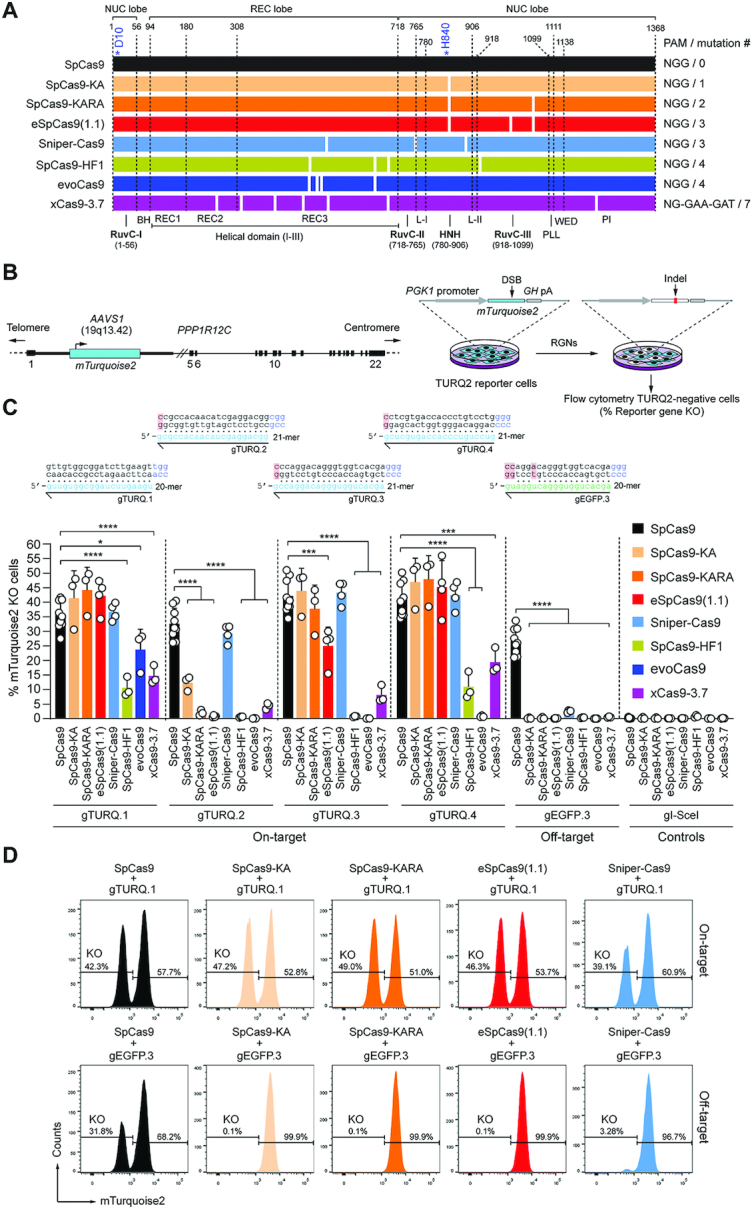
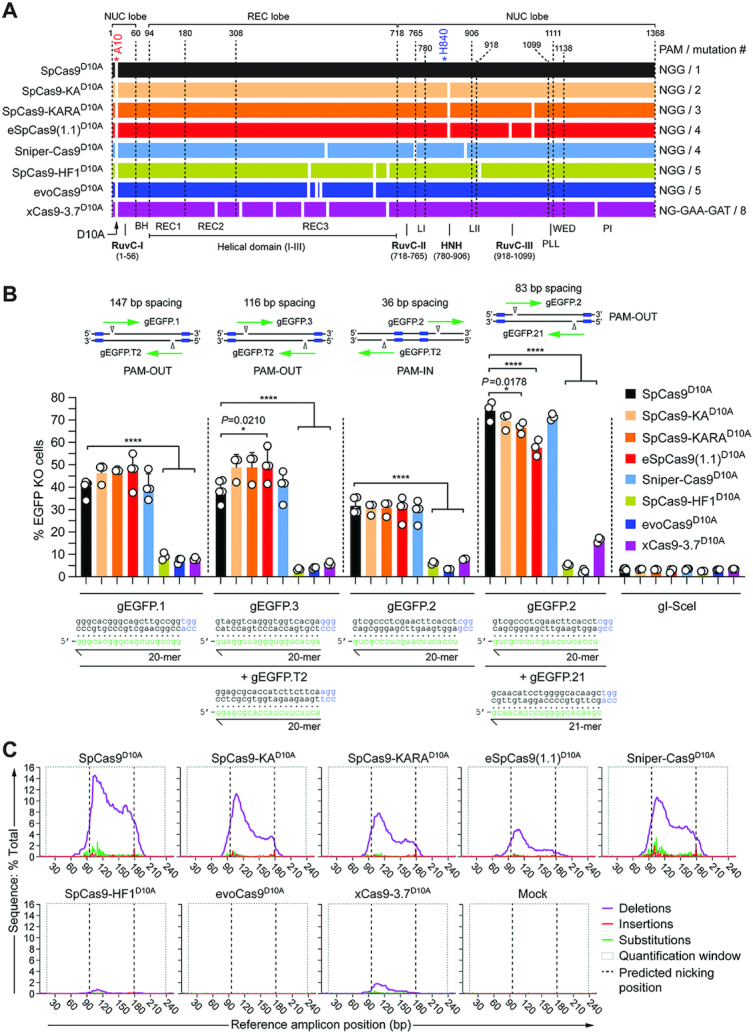
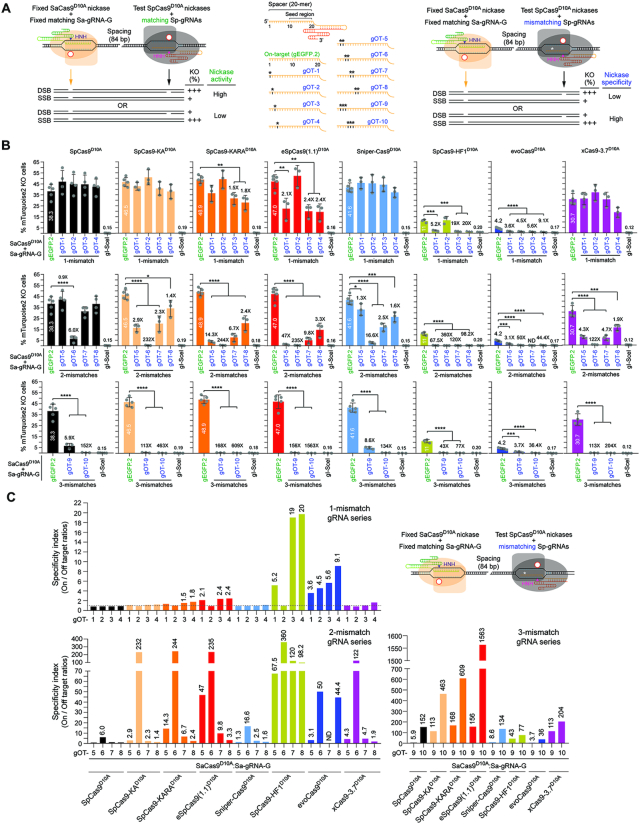
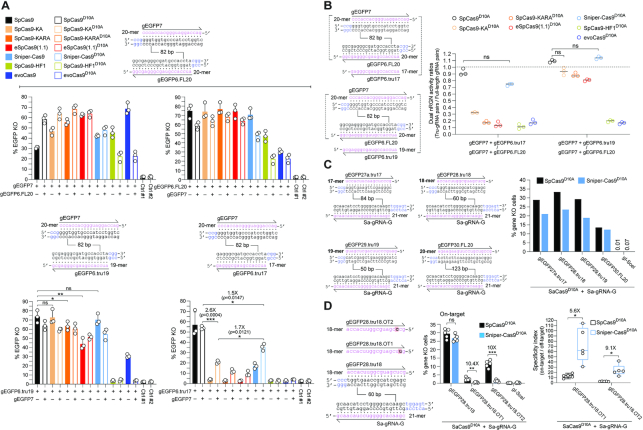
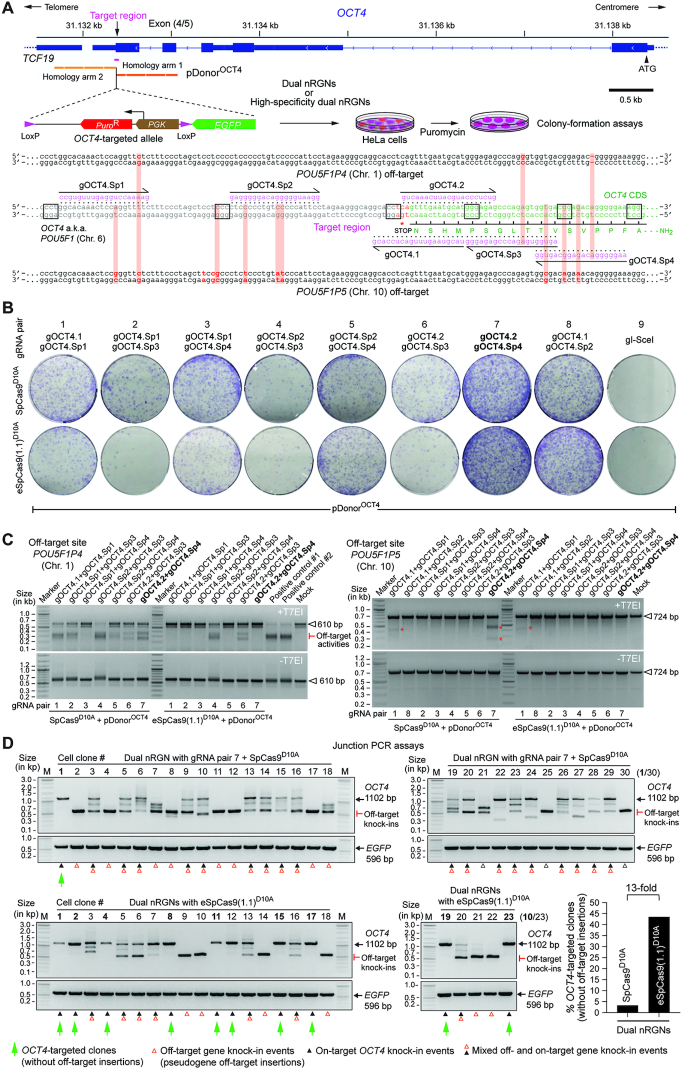
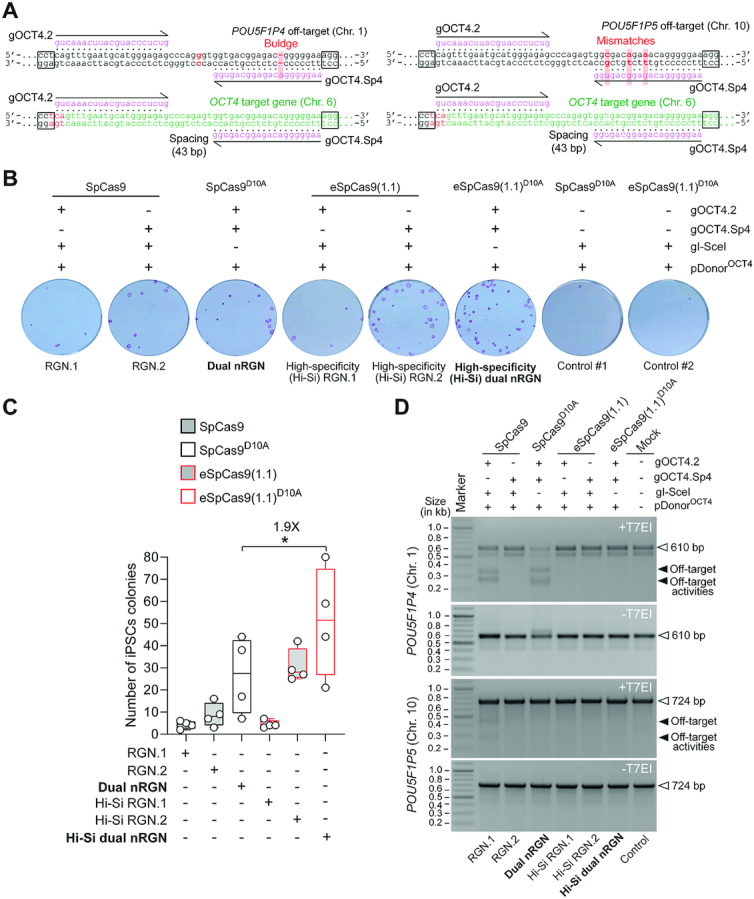
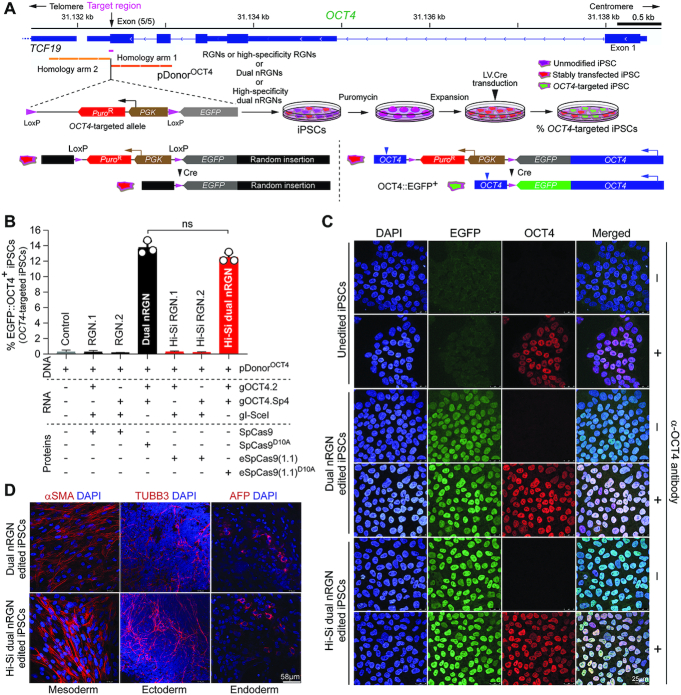
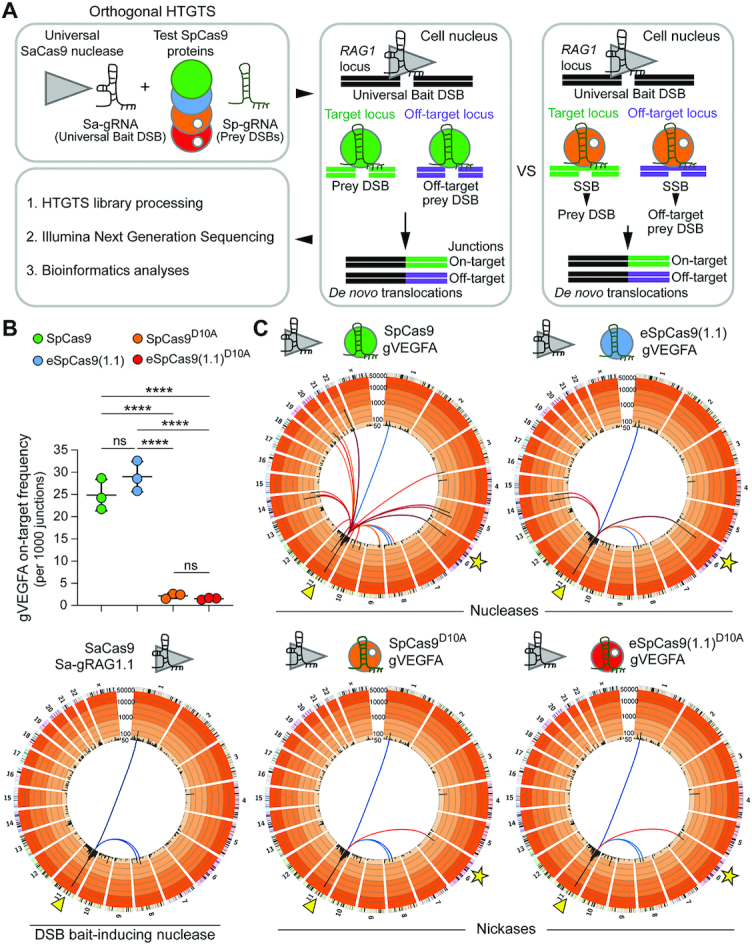
RNA-guided nucleases (RGNs) based on CRISPR systems permit installing short and large edits within eukaryotic genomes. However, precise genome editing is often hindered due to nuclease off-target activities and the multiple-copy character of the vast majority of chromosomal sequences. Dual nicking RGNs and high-specificity RGNs both exhibit low off-target activities. Here, we report that high-specificity Cas9 nucleases are convertible into nicking Cas9D10A variants whose precision is superior to that of the commonly used Cas9D10A nickase. Dual nicking RGNs based on a selected group of these Cas9D10A variants can yield gene knockouts and gene knock-ins at frequencies similar to or higher than those achieved by their conventional counterparts. Moreover, high-specificity dual nicking RGNs are capable of distinguishing highly similar sequences by ‘tiptoeing’ over pre-existing single base-pair polymorphisms. Finally, high-specificity RNA-guided nicking complexes generally preserve genomic integrity, as demonstrated by unbiased genome-wide high-throughput sequencing assays. Thus, in addition to substantially enlarging the Cas9 nickase toolkit, we demonstrate the feasibility in expanding the range and precision of DNA knockout and knock-in procedures. The herein introduced tools and multi-tier high-specificity genome editing strategies might be particularly beneficial whenever predictability and/or safety of genetic manipulations are paramount.
Overview
The claims and statistics of this paper haven’t been checked yet.
Run the check — free, no account needed. It reads the open-access text and checks the sources it cites.
Integrity signals
Registry
Cites
Statistics
Figures
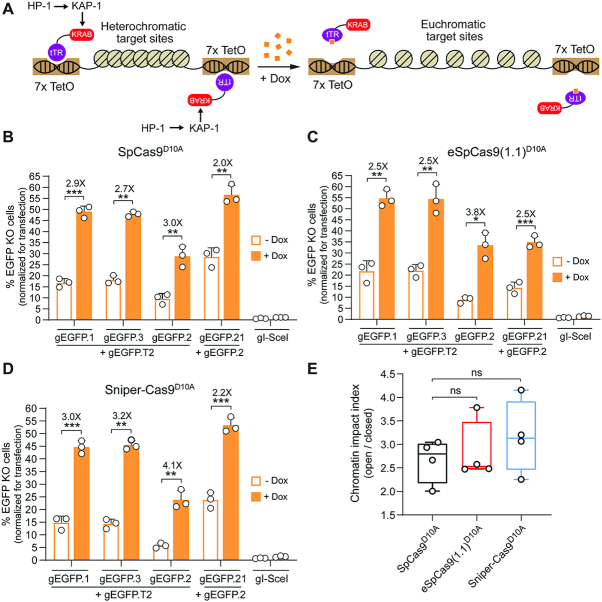
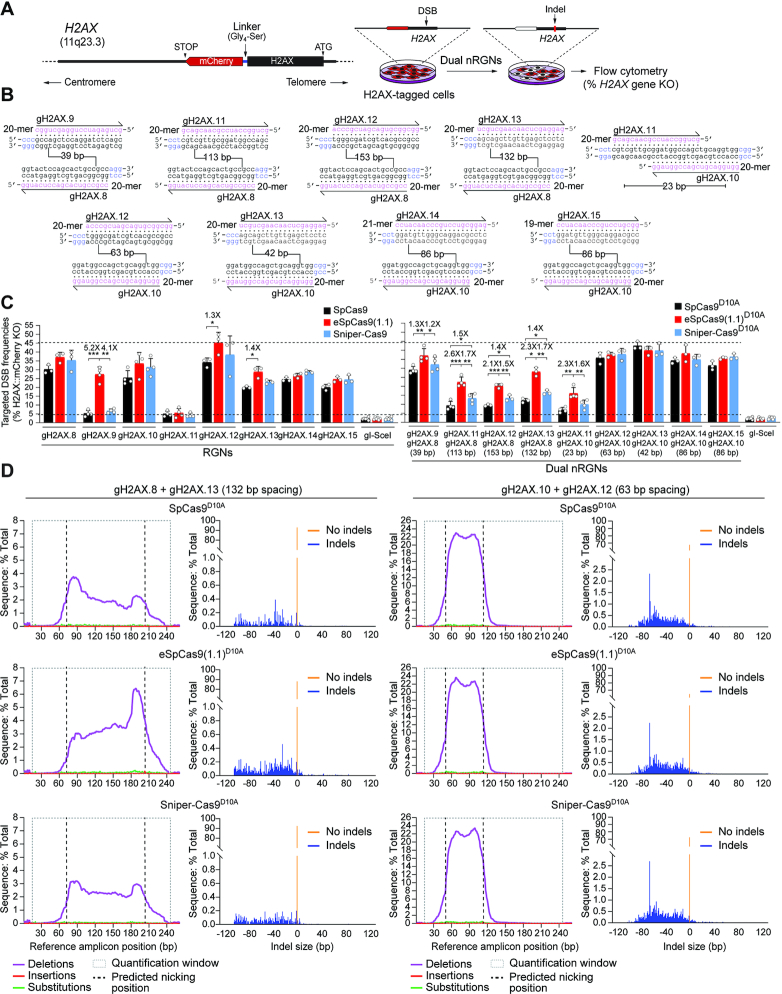
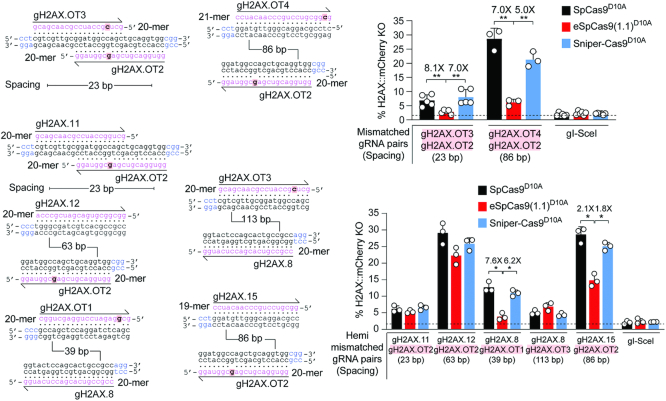
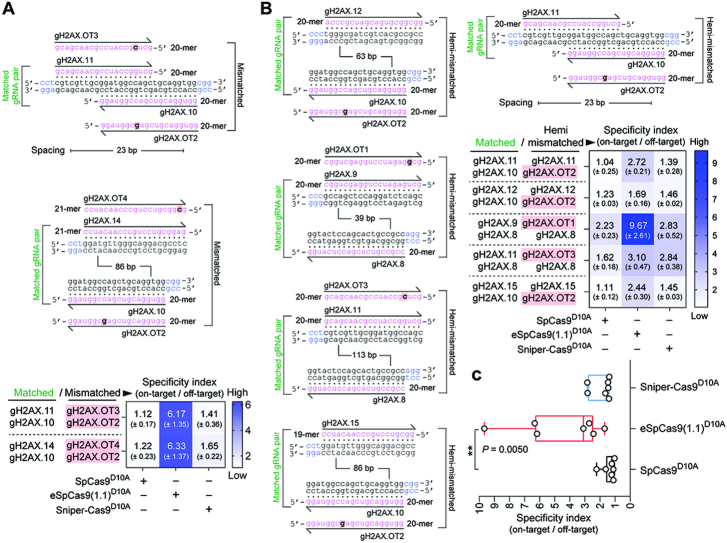
Verification
Claims the paper makes
The claims and statistics of this paper haven’t been checked yet.
Run the check — free, no account needed. It reads the open-access text and checks the sources it cites.
Claims other papers make about this one
Each is checked against this paper’s own text: does it say what the citing paper says it does?
In the citing paper
“It has been reported that the use of the inactivated RuvC domain of Cas-9 with sgRNA can reduce the off-target effect by 100 to 1500 times.70”
From Mechanism and Applications of CRISPR/Cas-9-Mediated Genome Editing (2021) · cites this paper as [70]
Self-check
Percentages, sums and reported differences re-computed from the paper’s own numbers.
The self-check needs the paper’s full text.
Citations
Cites
High-fidelity CRISPR-Cas9 nucleases with no detectable genome-wide off-target effects
Kleinstiver, B. P., Pattanayak, V., Prew, M. S., Tsai, S. Q., Nguyen, N. T., Zheng, Z., & Joung, J. K. (2016) · Nature · doi:10.1038/nature16526 · Cited by 2,673
Rationally engineered Cas9 nucleases with improved specificity
Slaymaker, I. M., Gao, L., Zetsche, B., Scott, D. A., Yan, W. X., & Zhang, F. (2016) · Science · doi:10.1126/science.aad5227 · Cited by 2,414
Improving CRISPR-Cas nuclease specificity using truncated guide RNAs
Fu, Y., Sander, J. D., Reyon, D., Cascio, V. M., & Joung, J. K. (2014) · Nature Biotechnology · doi:10.1038/nbt.2808 · Cited by 1,993 · cited 3×
“Concerning the latter aspect, after selecting Sniper-Cas9D10A, we provide a proofof-concept for a three-tier precision gene editing strategy based on integrating into the dual nRGN concept (18,19), the truncated gRNA (40) and high-specificity nickase principles.”
BackgroundMethodMali, P., Aach, J., Stranges, P. B., Esvelt, K. M., Moosburner, M., Kosuri, S., Yang, L., & Church, G. M. (2013) · Nature Biotechnology · doi:10.1038/nbt.2675 · Cited by 1,752
Evolved Cas9 variants with broad PAM compatibility and high DNA specificity
Hu, J. H., Miller, S. M., Geurts, M. H., Tang, W., Chen, L., Sun, N., Zeina, C. M., Gao, X., Rees, H. A., Lin, Z., et al. (2018) · Nature · doi:10.1038/nature26155 · Cited by 1,552
Pattanayak, V., Lin, S., Guilinger, J. P., Ma, E., Doudna, J. A., & Liu, D. R. (2013) · Nature Biotechnology · doi:10.1038/nbt.2673 · Cited by 1,487 · cited 2×
“In keeping with these data, the 10–12 nts most proximal to the PAM have been proposed to constitute a ‘seed region’ in which DNA-gRNA mismatches are particularly detrimental for RGN activity (1,9).”
BackgroundTargeted nucleotide editing using hybrid prokaryotic and vertebrate adaptive immune systems
Nishida, K., Arazoe, T., Yachie, N., Banno, S., Kakimoto, M., Tabata, M., Mochizuki, M., Miyabe, A., Araki, M., Hara, K. Y., et al. (2016) · Science · doi:10.1126/science.aaf8729 · Cited by 1,349
Genome-wide detection of DNA double-stranded breaks induced by engineered nucleases
Frock, R. L., Hu, J., Meyers, R. M., Ho, Y.-J., Kii, E., & Alt, F. W. (2015) · Nature Biotechnology · doi:10.1038/nbt.3101 · Cited by 673
Piercing the dark matter: bioinformatics of long-range sequencing and mapping
Sedlazeck, F. J., Lee, H., Darby, C. A., & Schatz, M. C. (2018) · Nature Reviews Genetics · doi:10.1038/s41576-018-0003-4 · Cited by 530 · cited 1×
“Yet, for the most part, eukaryotic genomes consist of such recurrent multiple-copy regions that include retroelements, amplified gene clusters, gene paralogs and pseudogenes (53).”
BackgroundA highly specific SpCas9 variant is identified by in vivo screening in yeast
Casini, A., Olivieri, M., Petris, G., Montagna, C., Reginato, G., Maule, G., Lorenzin, F., Prandi, D., Romanel, A., Demichelis, F., et al. (2018) · Nature Biotechnology · doi:10.1038/nbt.4066 · Cited by 493
Research works printed but not linked: 50
- Jiang, 2017, CRISPR–Cas9 structures and mechanisms, Annu. Rev. Biophys., 46, 505, 10.1146/annurev-biophys-062215-010822 · DOI · Paper page
- Anders, 2014, Structural basis of PAM-dependent target DNA recognition by the Cas9 endonuclease, Nature, 513, 569, 10.1038/nature13579 · DOI · Paper page
- Jinek, 2012, A programmable dual-RNA-guided DNA endonuclease in adaptive bacterial immunity, Science, 337, 816, 10.1126/science.1225829 · DOI · Paper page
- Ran, 2015, In vivo genome editing using Staphylococcus aureus Cas9, Nature, 520, 186, 10.1038/nature14299 · DOI · Paper page
- Chandrasegaran, 2016, Origins of programmable nucleases for genome engineering, J. Mol. Biol., 428, 963, 10.1016/j.jmb.2015.10.014 · DOI
- Cradick, 2013, CRISPR/Cas9 systems targeting beta-globin and CCR5 genes have substantial off-target activity, Nucleic Acids Res., 41, 9584, 10.1093/nar/gkt714 · DOI · Paper page
- Fu, 2013, High-frequency off-target mutagenesis induced by CRISPR-Cas nucleases in human cells, Nat. Biotechnol., 31, 822, 10.1038/nbt.2623 · DOI · Paper page
- Hsu, 2013, DNA targeting specificity of RNA-guided Cas9 nucleases, Nat. Biotechnol., 31, 827, 10.1038/nbt.2647 · DOI · Paper page
- Cho, 2014, Analysis of off-target effects of CRISPR/Cas-derived RNA-guided endonucleases and nickases, Genome Res., 24, 132, 10.1101/gr.162339.113 · DOI · Paper page
- Lin, 2014, CRISPR/Cas9 systems have off-target activity with insertions or deletions between target DNA and guide RNA sequences, Nucleic Acids Res., 42, 7473, 10.1093/nar/gku402 · DOI · Paper page
- Zhang, 2014, Comparison of non-canonical PAMs for CRISPR/Cas9-mediated DNA cleavage in human cells, Sci. Rep., 4, 5405, 10.1038/srep05405 · DOI
- Chen, 2020, Expanding the editable genome and CRISPR–Cas9 versatility using DNA cutting-free gene targeting based on in trans paired nicking, Nucleic Acids Res., 48, 974, 10.1093/nar/gkz1121 · DOI
- Chen, 2018, DNA, RNA, and protein tools for editing the genetic information in human cells, iScience, 6, 247, 10.1016/j.isci.2018.08.001 · DOI
- Cong, 2013, Multiplex genome engineering using CRISPR/Cas systems, Science, 339, 819, 10.1126/science.1231143 · DOI · Paper page
- Mali, 2013, RNA-guided human genome engineering via Cas9, Science, 339, 823, 10.1126/science.1232033 · DOI · Paper page
- Ran, 2013, Double nicking by RNA-guided CRISPR Cas9 for enhanced genome editing specificity, Cell, 154, 1380, 10.1016/j.cell.2013.08.021 · DOI · Paper page
- Caldecott, 2014, DNA single-strand break repair, Exp. Cell Res., 329, 2, 10.1016/j.yexcr.2014.08.027 · DOI
- Vriend, 2017, Nick-initiated homologous recombination: protecting the genome, one strand at a time, DNA Repair (Amst), 50, 1, 10.1016/j.dnarep.2016.12.005 · DOI
- Gopalappa, 2018, Paired D10A Cas9 nickases are sometimes more efficient than individual nucleases for gene disruption, Nucleic Acids Res., 46, e71, 10.1093/nar/gky222 · DOI
- Lee, 2018, Directed evolution of CRISPR–Cas9 to increase its specificity, Nat. Commun., 9, 3048, 10.1038/s41467-018-05477-x · DOI · Paper page
- Chen, 2017, In trans paired nicking triggers seamless genome editing without double-stranded DNA cutting, Nat. Commun., 8, 657, 10.1038/s41467-017-00687-1 · DOI
- Gonçalves, 2004, Stable transduction of large DNA by high-capacity adeno-associated virus/adenovirus hybrid vectors, Virology, 321, 287, 10.1016/j.virol.2004.01.007 · DOI
- Chen, 2016, Probing the impact of chromatin conformation on genome editing tools, Nucleic Acids Res., 44, 6482, 10.1093/nar/gkw524 · DOI
- Chen, 2017, The chromatin structure differentially impacts high-specificity CRISPR–Cas9 nuclease strategies, Mol. Ther. Nucleic Acids, 8, 558, 10.1016/j.omtn.2017.08.005 · DOI
- Maggio, 2020, Integrating gene delivery and gene-editing technologies by adenoviral vector transfer of optimized CRISPR–Cas9 components, Gene Ther., 27, 209, 10.1038/s41434-019-0119-y · DOI
- Hu, 2016, Detecting DNA double-stranded breaks in mammalian genomes by linear amplification-mediated high-throughput genome-wide translocation sequencing, Nat. Protoc., 11, 853, 10.1038/nprot.2016.043 · DOI
- Clement, 2019, CRISPResso2 provides accurate and rapid genome editing sequence analysis, Nat. Biotechnol., 37, 224, 10.1038/s41587-019-0032-3 · DOI
- Goedhart, 2012, Structure-guided evolution of cyan fluorescent proteins towards a quantum yield of 93%, Nat. Commun., 3, 751, 10.1038/ncomms1738 · DOI
- Kulcsar, 2017, Crossing enhanced and high fidelity SpCas9 nucleases to optimize specificity and cleavage, Genome Biol., 18, 190, 10.1186/s13059-017-1318-8 · DOI
- Kim, 2017, Rescue of high-specificity Cas9 variants using sgRNAs with matched 5′ nucleotides, Genome Biol., 18, 218, 10.1186/s13059-017-1355-3 · DOI
- Zhang, 2017, Perfectly matched 20-nucleotide guide RNA sequences enable robust genome editing using high-fidelity SpCas9 nucleases, Genome Biol., 18, 191, 10.1186/s13059-017-1325-9 · DOI
- Shen, 2014, Efficient genome modification by CRISPR–Cas9 nickase with minimal off-target effects, Nat. Methods, 11, 399, 10.1038/nmeth.2857 · DOI · Paper page
- Takahashi, 2007, Induction of pluripotent stem cells from adult human fibroblasts by defined factors, Cell, 131, 861, 10.1016/j.cell.2007.11.019 · DOI · Paper page
- Liu, 2014, Stem cells: balancing resistance and sensitivity to DNA damage, Trends Cell Biol., 24, 268, 10.1016/j.tcb.2014.03.002 · DOI
- Ihry, 2018, p53 inhibits CRISPR–Cas9 engineering in human pluripotent stem cells, Nat. Med., 24, 939, 10.1038/s41591-018-0050-6 · DOI · Paper page
- Haapaniemi, 2018, CRISPR–Cas9 genome editing induces a p53-mediated DNA damage response, Nat. Med., 24, 927, 10.1038/s41591-018-0049-z · DOI · Paper page
- Hockemeyer, 2011, Genetic engineering of human pluripotent cells using TALE nucleases, Nat. Biotechnol., 29, 731, 10.1038/nbt.1927 · DOI
- Zhu, 2015, A CRISPR/Cas-mediated selection-free knockin strategy in human embryonic stem cells, Stem Cell Rep., 4, 1103, 10.1016/j.stemcr.2015.04.016 · DOI
- Kuzminov, 2001, Single-strand interruptions in replicating chromosomes cause double-strand breaks, Proc. Natl. Acad. Sci. U.S.A., 98, 8241, 10.1073/pnas.131009198 · DOI
- Brunet, 2018, Induction of chromosomal translocations with CRISPR–Cas9 and other nucleases: understanding the repair mechanisms that give rise to translocations, Adv. Exp. Med. Biol., 1044, 15, 10.1007/978-981-13-0593-1_2 · DOI
- Maggio, 2015, Genome editing at the crossroads of delivery, specificity, and fidelity, Trends. Biotechnol., 33, 280, 10.1016/j.tibtech.2015.02.011 · DOI
- Chen, 2016, Engineered viruses as genome editing devices, Mol. Ther., 24, 447, 10.1038/mt.2015.164 · DOI
- Kim, 2018, Genetic disease risks can be misestimated across global populations, Genome Biol., 19, 179, 10.1186/s13059-018-1561-7 · DOI · Paper page
- Tam, 2019, Benefits and limitations of genome-wide association studies, Nat. Rev. Genet., 20, 467, 10.1038/s41576-019-0127-1 · DOI
- Lessard, 2017, Human genetic variation alters CRISPR–Cas9 on- and off-targeting specificity at therapeutically implicated loci, Proc. Natl. Acad. Sci. U.S.A., 114, E11257, 10.1073/pnas.1714640114 · DOI
- Nakajima, 2018, Precise and efficient nucleotide substitution near genomic nick via noncanonical homology-directed repair, Genome Res., 28, 223, 10.1101/gr.226027.117 · DOI
- Hyodo, 2020, Tandem paired nicking promotes precise genome editing with scarce interference by p53, Cell Rep., 30, 1195, 10.1016/j.celrep.2019.12.064 · DOI
- Komor, 2016, Programmable editing of a target base in genomic DNA without double-stranded DNA cleavage, Nature, 533, 420, 10.1038/nature17946 · DOI · Paper page
- Gaudelli, 2017, Programmable base editing of A*T to G*C in genomic DNA without DNA cleavage, Nature, 551, 464, 10.1038/nature24644 · DOI · Paper page
- Anzalone, 2019, Search-and-replace genome editing without double-strand breaks or donor DNA, Nature, 576, 149, 10.1038/s41586-019-1711-4 · DOI · Paper page
Cited by
Sorted by citations
Mechanism and Applications of CRISPR/Cas-9-Mediated Genome Editing
Mengstie, M. A., & Wondimu, B. Z. (2021) · Biologics: Targets and Therapy · doi:10.2147/btt.s326422 · Cited by 478
Metadata
- Authors
- Wang, Q., Liu, J., Janssen, J. M., Le Bouteiller, M., Frock, R. L., & Gonçalves, M. A. F. V.
- Affiliations
- Department of Cell and Chemical Biology, Leiden University Medical Center, Einthovenweg 20, 2333 ZC Leiden, The Netherlands
- Department of Radiation Oncology, Division of Radiation and Cancer Biology, Stanford University School of Medicine, 269 Campus Dr. Stanford, CA 94305, USA
- Venue
- Nucleic Acids Research
- Publisher
- Oxford University Press (OUP)
- Published
- 2021-01-04
- Volume
- 49
- Issue
- 2
- Pages
- 1173-1198
- ISSN
- 0305-1048
- 1362-4962
- PMC
- PMC7826261
- Cited by
- 41
- References
- 12
- Language
- en
- Funders
- Prinses Beatrix Spierfonds (W.OR16-13)
- Dutch Duchenne (17.012)
About these checks
Registry, retraction, Cites and statistics results are computed, not judged, with one exception: a printed reference that no index lists is read once by a model before it counts as a citation error. Claims are extracted by a model and kept only when their quote appears verbatim in the text; each cited source is then checked, with a model’s help, for whether it says what the claim relies on. Those verdicts can be wrong — read the claim’s quote and the cited source before relying on one.
Statistics and arithmetic are recomputed, not judged.
Confidence bands are shown only for fields calibrated on our annotated test set. None is calibrated yet, so no band is shown.
What counts as a claim ›How we measure confidence ›How we check this ›
Are you an author, or do you see a problem with this page? Request a review
