

Long-range activation of FKBP51 transcription by the androgen receptor via distal intronic enhancers
Open accessThe DOI matches its Crossref record; 57 of the 57 references it cites were found in a registry or an index.
Abstract
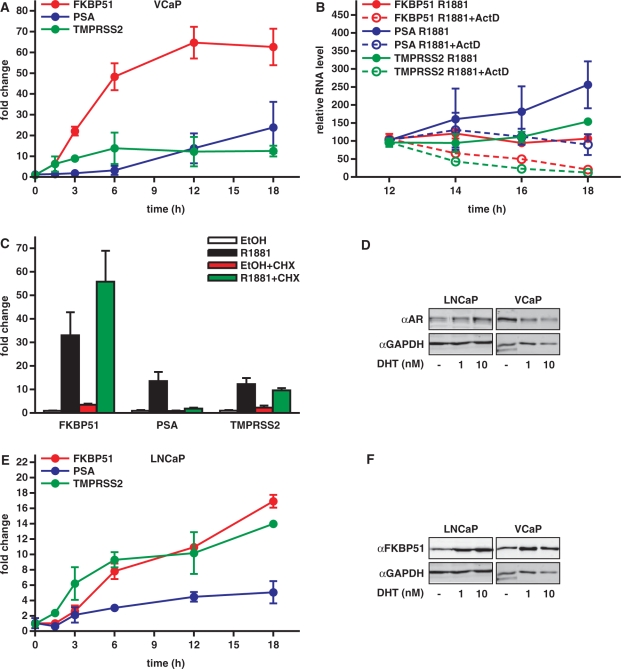
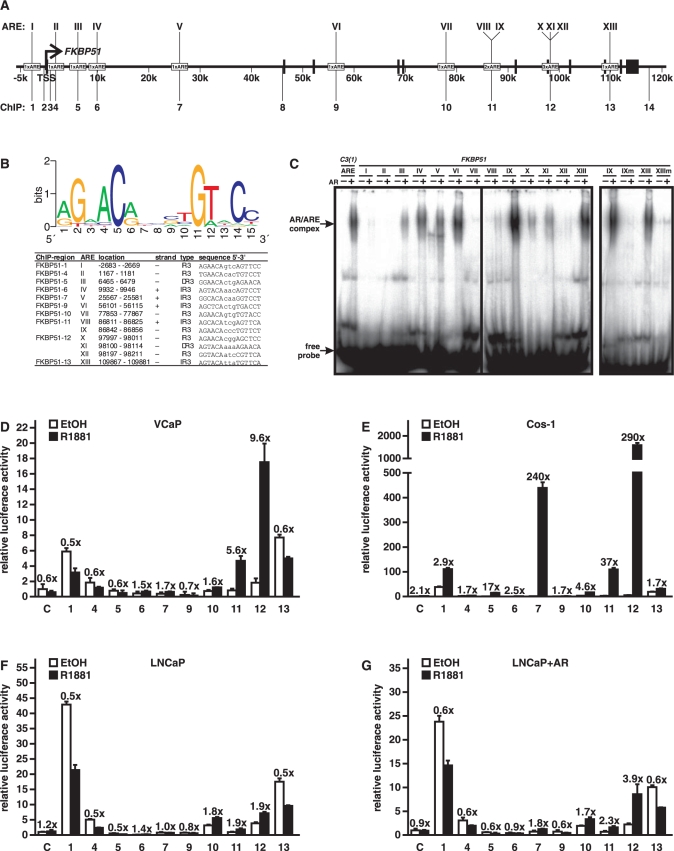
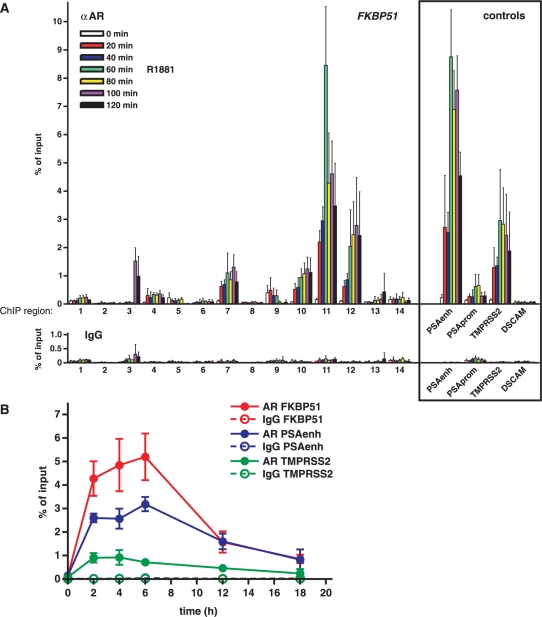
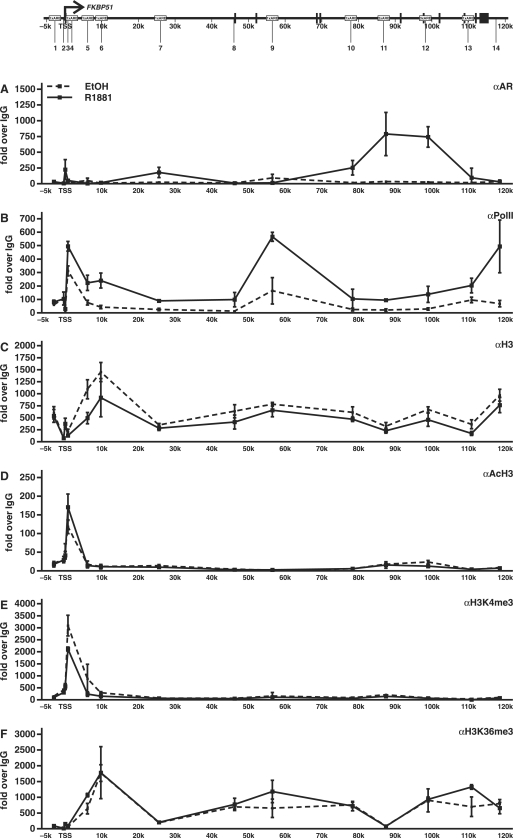
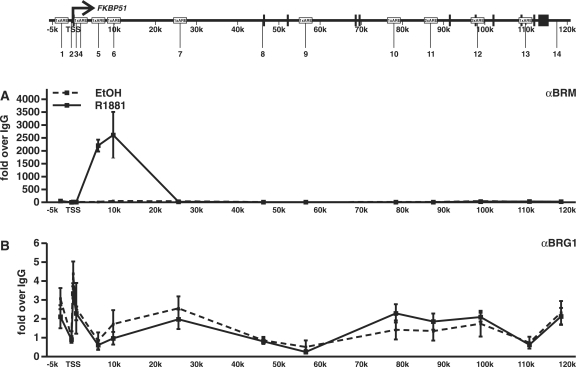
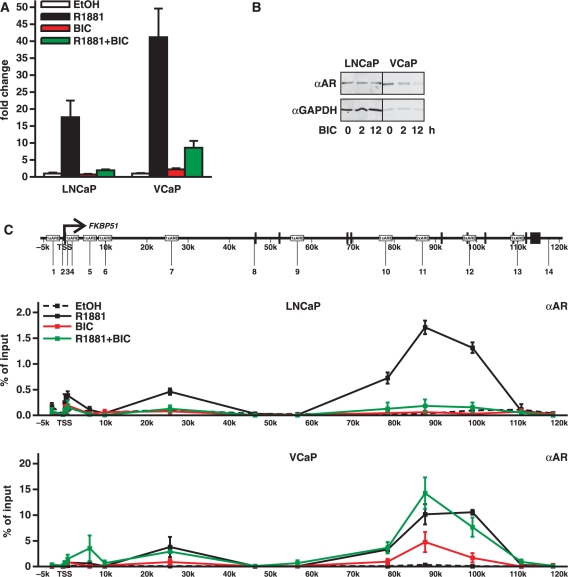
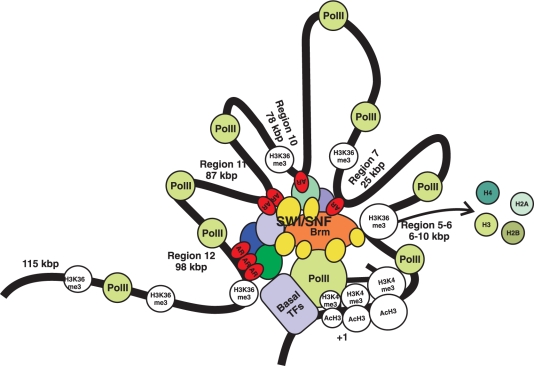
Androgen receptor (AR) is a ligand-controlled transcription factor frequently deregulated in prostate carcinomas. Since there is scarce information on the action of AR on the chromatin level, we have elucidated the molecular mechanisms underlying the androgen-dependent regulation of immunophilin FKBP51 in prostate cancer cells. In comparison to the canonical AR target PSA, FKBP51 is more rapidly and strongly induced by androgen, with the regulation occurring merely at the transcriptional level. FKBP51 locus harbors 13 in silico-predicted androgen response elements (AREs), with most of them located downstream from transcription start site (TSS) and capable of binding AR in vitro. Chromatin immunoprecipitation assays in VCaP and LNCaP prostate cancer cells indicate that activation of the locus by the AR relies on four major intronic sites, with the compound ARE-containing sites >or=90 kb downstream from the TSS playing critical roles. Binding of agonist-loaded AR onto these sites in vivo was accompanied with significant recruitment of RNA polymerase II and BRM-containing chromatin remodeling complexes to the FKBP51 locus, which resulted in changes in the histone density of the locus. Our results indicate that very distal AREs act as genuine and robust enhancers, highlighting the importance of long-range regulation of transcription by the AR.
Overview
The claims and statistics of this paper haven’t been checked yet.
Free: it reads the open-access text and checks the first 5 claims that cite a source we can check. Create a free account to check every claim.
Integrity signals
Registry
Cites
Statistics
Figures
Verification
Claims the paper makes
The claims and statistics of this paper haven’t been checked yet.
Free: it reads the open-access text and checks the first 5 claims that cite a source we can check. Create a free account to check every claim.
Claims other papers make about this one
Each is checked against this paper’s own text: does it say what the citing paper says it does?
The cited source says what the claim attributes to it.
In the citing paper
“both natural androgens (dihydrotestosterone) and synthetic analogs (R1881) cause upregulation of FKBP51 expression [20, 52-56] by a direct binding of AR to enhancer elements in the FKBP51 (fkbp5) gene [57, 58]”
From FKBP51 – a selective modulator of glucocorticoid and androgen sensitivity (2011) · cites this paper as [58]
Self-check
Percentages, sums and reported differences re-computed from the paper’s own numbers.
The self-check needs the paper’s full text.
Citations
Cites
Chromatin modifications and their function
Kouzarides, T. (2007) · Cell · doi:10.1016/j.cell.2007.02.005 · Cited by 10,883
The Role of Chromatin during Transcription
Li, B., Carey, M., & Workman, J. L. (2007) · Cell · doi:10.1016/j.cell.2007.01.015 · Cited by 3,533 · cited 3×
“Major epigenetic mechanisms that regulate chromatin structure include modifications of nucleosomes and DNA methylation (6,7).”
BackgroundMolecular determinants of resistance to antiandrogen therapy
Chen, C. D., Welsbie, D. S., Tran, C., Baek, S. H., Chen, R., Vessella, R., Rosenfeld, M. G., & Sawyers, C. L. (2004) · Nature Medicine · doi:10.1038/nm972 · Cited by 2,278 · cited 1×
“Since increased AR protein levels have been reported to convert antiandrogens, such as bicalutamide, to agonists (35), it was of interest to investigate whether the difference in the amount of AR between VCaP and LNCaP cells is manifested in a differential response to the pure antagonist bicalutamide (BIC).”
BackgroundActive Genes Are Tri-Methylated at K4 of Histone H3
Santos-Rosa, H., Schneider, R., Bannister, A. J., Sherriff, J., Bernstein, B. E., Emre, N. C. T., Schreiber, S. L., Mellor, J., & Kouzarides, T. (2002) · Nature · doi:10.1038/nature01080 · Cited by 2,138
Steroid Receptor Interactions with Heat Shock Protein and Immunophilin Chaperones*
Pratt, W. B., & Toft, D. O. (1997) · Endocrine Reviews · doi:10.1210/edrv.18.3.0303 · Cited by 1,791 · cited 2×
“FKBP51 (FKBP5) encodes a 51 kDa FK506-binding protein that belongs to the immunophilin protein family (41).”
BackgroundAndrogen Receptor in Prostate Cancer
Heinlein, C. A., & Chang, C. (2004) · Endocrine Reviews · doi:10.1210/er.2002-0032 · Cited by 1,780
Métivier, R., Penot, G., Hübner, M. R., Reid, G., Brand, H., Koš, M., & Gannon, F. (2003) · Cell · doi:10.1016/s0092-8674(03)00934-6 · Cited by 1,431
Genome-wide analysis of estrogen receptor binding sites
Carroll, J. S., Meyer, C. A., Song, J., Li, W., Geistlinger, T. R., Eeckhoute, J., Brodsky, A. S., Keeton, E. K., Fertuck, K. C., Hall, G. F., et al. (2006) · Nature Genetics · doi:10.1038/ng1901 · Cited by 1,377 · cited 1×
“For example, genome-wide screening of estrogen receptor binding sites by ChIP combined with tiled microarray analysis indicated that only a minority of estrogen receptor-binding sites localize within 1 kb promoter-proximal regions (52).”
BackgroundFoxA1 Translates Epigenetic Signatures into Enhancer-Driven Lineage-Specific Transcription
Lupien, M., Eeckhoute, J., Meyer, C. A., Wang, Q., Zhang, Y., Li, W., Carroll, J. S., Liu, X. S., & Brown, M. (2008) · Cell · doi:10.1016/j.cell.2008.01.018 · Cited by 983 · cited 1×
“The role of other ‘pioneering’ transcription factors binding close to steroid receptor-occupied sites may also be important (20,47), as GATA2 was shown to cooperate with the PR in the regulation of Fkbp51 (46).”
BackgroundRosenfeld, M. G., Lunyak, V. V., & Glass, C. K. (2006) · Genes & Development · doi:10.1101/gad.1424806 · Cited by 952
Cited by
The effects of early life stress on the epigenome: From the womb to adulthood and even before
Provençal, N., & Binder, E. B. (2015) · Experimental Neurology · doi:10.1016/j.expneurol.2014.09.001 · Cited by 255
Discovery of non-ETS gene fusions in human prostate cancer using next-generation RNA sequencing
Pflueger, D., Terry, S., Sboner, A., Habegger, L., Esgueva, R., Lin, P.-C., Svensson, M. A., Kitabayashi, N., Moss, B. J., MacDonald, T. Y., et al. (2011) · Genome Research · doi:10.1101/gr.110684.110 · Cited by 201
“Both of these 59 partners are known androgen-regulated genes (Makkonen et al. 2009), and KLK2 has been reported as a 59 gene fusion partner to ETV4 (Hermans et al. 2008).”
BackgroundSteroid up-regulation of FKBP51 and its role in hormone signaling
Jääskeläinen, T., Makkonen, H., & Palvimo, J. J. (2011) · Current Opinion in Pharmacology · doi:10.1016/j.coph.2011.04.006 · Cited by 167
Self-citationDeterminants of Receptor- and Tissue-Specific Actions in Androgen Signaling
Pihlajamaa, P., Sahu, B., & Jänne, O. A. (2015) · Endocrine Reviews · doi:10.1210/er.2015-1034 · Cited by 141
The role of FKBP5 in cancer aetiology and chemoresistance
Li, L., Lou, Z., & Wang, L. (2010) · British Journal of Cancer · doi:10.1038/sj.bjc.6606014 · Cited by 145
“…Febbo et al (2005) had identified FKBP5 as an androgen-inducible gene, and demonstrated a physical interaction between FKBP5 and AR. Recent studies have identified a long-range activation of FKBP5 transcription in prostate cancer cells by the AR via distal intronic enhancers (Makkonen et al, 2009).”
BackgroundInfluentialGlucocorticoid receptor activates poised FKBP51 locus through long-distance interactions
Paakinaho, V., Makkonen, H., Jääskeläinen, T., & Palvimo, J. J. (2010) · Molecular Endocrinology · doi:10.1210/me.2009-0443 · Cited by 122
“We therefore analyzed the AR loading to the region 3 that remained outside the chr6:35676714-35521362 region scanned in our previous study (37).”
BackgroundMethodInfluentialSelf-citationAndrogen regulation of gene expression.
(2010) · Advances in cancer research · doi:10.1016/s0065-230x(10)07005-3 · Cited by 117
Ianculescu, I., Wu, D., Siegmund, K. D., & Stallcup, M. R. (2011) · Journal of Biological Chemistry · doi:10.1074/jbc.m111.300194 · Cited by 116
“AREs for the FKBP5 gene have been identified previously (37).”
BackgroundPeriyasamy, S., Hinds, T., Shemshedini, L., Shou, W., & Sanchez, E. R. (2010) · Oncogene · doi:10.1038/onc.2009.458 · Cited by 108
“Androgens regulate expression of the FKBP51 gene (fkbp5) via a direct interaction between the AR and distal enhancers located in the fifth and seventh introns of fkbp5 (Magee et al., 2006; Makkonen et al., 2009).”
Tiwari, A. K., Zai, C. C. H., Likhodi, O., Lisker, A., Singh, D., de Souza, R. P., Batra, P., Zaidi, S. H. E., Chen, S., Liu, F., et al. (2010) · Neuropsychopharmacology · doi:10.1038/npp.2009.235 · Cited by 120
“In other genes, regions within the 50untranslated region and in introns have been reported to affect gene expression (Makkonen et al, 2009; Ott et al, 2009).”
BackgroundPaxillin mediates extranuclear and intranuclear signaling in prostate cancer proliferation
Sen, A., Castro, I. D., DeFranco, D. B., Deng, F.-M., Melamed, J., Kapur, P., Raj, G. V., Rossi, R. M., & Hammes, S. R. (2012) · Journal of Clinical Investigation · doi:10.1172/jci62044 · Cited by 119
Chaperoning steroidal physiology: Lessons from mouse genetic models of Hsp90 and its cochaperones
Sanchez, E. R. (2012) · Biochimica et Biophysica Acta (BBA) - Molecular Cell Research · doi:10.1016/j.bbamcr.2011.11.006 · Cited by 94
FKBP51 – a selective modulator of glucocorticoid and androgen sensitivity
Stechschulte, L. A., & Sanchez, E. R. (2011) · Current Opinion in Pharmacology · doi:10.1016/j.coph.2011.04.012 · Cited by 92
“Moreover, both natural androgens (dihydrotestosterone) and synthetic analogs (R1881) cause upregulation of FKBP51 expression [20,52 ,53–56] by a direct binding of AR to enhancer elements in the FKBP51 (fkbp5) gene [57,58], suggesting an auto-regulatory pathway designed to increase androgen sensitivity.”
BackgroundGaligniana, N. M., Ballmer, L. T., Toneatto, J., Erlejman, A. G., Lagadari, M., & Galigniana, M. D. (2012) · Journal of Neurochemistry · doi:10.1111/j.1471-4159.2012.07775.x · Cited by 77
“2007) and is a positive regulator of the androgen receptor (Makkonen et al. 2009; Periyasamy et al. 2010).”
BackgroundPasqualini, L., Bu, H., Puhr, M., Narisu, N., Rainer, J., Schlick, B., Schäfer, G., Angelova, M., Trajanoski, Z., Börno, S. T., et al. (2015) · Molecular Endocrinology · doi:10.1210/me.2014-1358 · Cited by 79
Sutinen, P., Malinen, M., Heikkinen, S., & Palvimo, J. J. (2014) · Nucleic Acids Research · doi:10.1093/nar/gku543 · Cited by 78
Self-citationRegulation of masculinization: androgen signalling for external genitalia development
Matsushita, S., Suzuki, K., Murashima, A., Kajioka, D., Acebedo, A. R., Miyagawa, S., Haraguchi, R., Ogino, Y., & Yamada, G. (2018) · Nature Reviews Urology · doi:10.1038/s41585-018-0008-y · Cited by 76
Toropainen, S., Malinen, M., Kaikkonen, S., Rytinki, M. M., Jääskeläinen, T. J., Sahu, B., Jänne, O. A., & Palvimo, J. J. (2014) · Nucleic Acids Research · doi:10.1093/nar/gku1375 · Cited by 76
“VCaP cells was obtained from American Type Culture Collection (ATCC) and maintained as previously described (27).”
MethodSelf-citationDose- and time-dependent glucocorticoid receptor signaling in podocytes
Guess, A. J., Agrawal, S., Wei, C., Ransom, R. F., Benndorf, R., & Smoyer, W. E. (2010) · American Journal of Physiology-Renal Physiology · doi:10.1152/ajprenal.00161.2010 · Cited by 66
Wiley, J. W., Higgins, G. A., & Athey, B. D. (2015) · Neurogastroenterology & Motility · doi:10.1111/nmo.12706 · Cited by 75
“In addition, certain genes, such as MMTV (mouse mammary tumor virus) and FKBP5 are transcriptionally poised for specific GR control, fitting into a model of tissue-specific gene expression (11, 89, 90, 91, 92).”
Constitutive Activity of the Androgen Receptor
Chan, S. C., & Dehm, S. M. (2014) · Advances in pharmacology · doi:10.1016/b978-0-12-417197-8.00011-0 · Cited by 71
Molecular genetics of prostate cancer: emerging appreciation of genetic complexity
Barbieri, C. E., Demichelis, F., & Rubin, M. A. (2011) · Histopathology · doi:10.1111/j.1365-2559.2011.04041.x · Cited by 70
Tannour‐Louet, M., Han, S., Louet, J., Zhang, B., Romero, K., Addai, J. B., Şahin, A. A., Cheung, S. W., & Lamb, D. J. (2014) · Nature Medicine · doi:10.1038/nm.3580 · Cited by 61
Androgen receptor-driven chromatin looping in prostate cancer
Wu, D., Zhang, C., Shen, Y., Nephew, K. P., & Wang, Q. (2011) · Trends in Endocrinology and Metabolism · doi:10.1016/j.tem.2011.07.006 · Cited by 62
Histone H2B ubiquitin ligases RNF20 and RNF40 in androgen signaling and prostate cancer cell growth
Jääskeläinen, T. J., Makkonen, H., Visakorpi, T., Kim, J., Roeder, R. G., & Palvimo, J. J. (2011) · Molecular and Cellular Endocrinology · doi:10.1016/j.mce.2011.11.025 · Cited by 59
Self-citationZhang, Z., Chng, K. R., Lingadahalli, S., Chen, Z., Liu, M. H., Do, H. H., Cai, S., Rinaldi, N. J., Poh, H. M., Li, G., et al. (2019) · Genome Research · doi:10.1101/gr.230243.117 · Cited by 58
“1G; Magee et al. 2006; Makkonen et al. 2009; Chng et al. 2012; Tan et al. 2012; Sahu et al. 2014) but with unclear roles.”
BackgroundDynamic SUMOylation Is Linked to the Activity Cycles of Androgen Receptor in the Cell Nucleus
Rytinki, M. M., Kaikkonen, S., Sutinen, P., Paakinaho, V., Rahkama, V., & Palvimo, J. J. (2012) · Molecular and Cellular Biology · doi:10.1128/mcb.00753-12 · Cited by 54
Self-citationCoregulator control of androgen receptor action by a novel nuclear receptor-binding motif
Jehle, K., Cato, L., Neeb, A., Muhle-Goll, C., Jung, N., Smith, E. W., Buzon, V., Carbó, L. R., Estébanez-Perpiñá, E., Schmitz, K., et al. (2014) · Journal of Biological Chemistry · doi:10.1074/jbc.m113.534859 · Cited by 53
“This sequence is strikingly similar to the GARRPR motif we identified, but it is completely different from the LXXLL coactivator motif that binds the AF-2 domain of the AR. Nonetheless, there are differences in the functional consequences of the binding of FKBP52 and Bag-1L to the AR-LBD.”
BackgroundInfluentialMakkonen, H., Kauhanen, M., Jääskeläinen, T. J., & Palvimo, J. J. (2010) · Molecular and Cellular Endocrinology · doi:10.1016/j.mce.2010.08.008 · Cited by 57
“The experiments were performed essentially as previously described (Makkonen et al., 2009) using the same rabbit antiserum against AR that was used for immunoblotting.”
BackgroundMethodSelf-citationBu, H., Schweiger, M. R., Manke, T., Wunderlich, A., Timmermann, B., Kerick, M., Pasqualini, L., Shehu, E., Fuchsberger, C., Cato, A. C. B., et al. (2013) · FEBS Journal · doi:10.1111/febs.12118 · Cited by 55
Genome architecture and the role of transcription
Papantonis, A., & Cook, P. R. (2010) · Current Opinion in Cell Biology · doi:10.1016/j.ceb.2010.03.004 · Cited by 57
“Results from 3C and FISH substantiate the long-held view that enhancers contact target promoters both in cis [14,28 – 31] and trans [15] (Figure 1b).”
BackgroundChromatin architecture defines the glucocorticoid response
Burd, C. J., & Archer, T. K. (2013) · Molecular and Cellular Endocrinology · doi:10.1016/j.mce.2013.03.020 · Cited by 48
Cyclin D1 Is a Selective Modifier of Androgen-dependent Signaling and Androgen Receptor Function
Comstock, C. E. S., Augello, M. A., Schiewer, M. J., Karch, J. M., Burd, C. J., Ertel, A., Knudsen, E. S., Jessen, W. J., Aronow, B. J., & Knudsen, K. E. (2011) · Journal of Biological Chemistry · doi:10.1074/jbc.m110.170720 · Cited by 48
Nuclear Mobility and Activity of FOXA1 with Androgen Receptor Are Regulated by SUMOylation
Sutinen, P., Rahkama, V., Rytinki, M. M., & Palvimo, J. J. (2014) · Molecular Endocrinology · doi:10.1210/me.2014-1035 · Cited by 44
“COS-1 and LNCaP cells were from American Type Culture Collection, and maintained as described (26, 27).”
Self-citationBu, H., Narisu, N., Schlick, B., Rainer, J., Manke, T., Schäfer, G., Pasqualini, L., Chines, P. S., Schweiger, M. R., Fuchsberger, C., et al. (2015) · Human Mutation · doi:10.1002/humu.22909 · Cited by 46
“This role is similar to another SNP located in the TMPRSS2 enhancer that also reduces AR transactivation [Clinckemalie et al., 2013].”
MethodInfluentialMatilainen, J. M., Malinen, M., Turunen, M. M., Carlberg, C., & Vaïsänen, S. (2010) · Journal of Biological Chemistry · doi:10.1074/jbc.m110.124073 · Cited by 44
Androgen Receptor Gene Rearrangements: New Perspectives on Prostate Cancer Progression
Brand, L. J., & Dehm, S. M. (2013) · Current Drug Targets · doi:10.2174/1389450111314040005 · Cited by 44
Maity, S. N., Titus, M. A., Gyftaki, R., Wu, G., Lu, J.-F., Ramachandran, S., Li-Ning-Tapia, E. M., Logothetis, C. J., Araujo, J. C., & Efstathiou, E. (2016) · Scientific Reports · doi:10.1038/srep35354 · Cited by 42
“FKBP51-ARE-luciferase [FKBP51-( − 3)], a reporter construct under control of androgen-responsive enhancer of the FKBP51 gene was kindly provided by Dr. Jorma J. Palvimo, University of Eastern Finland 26,27 .”
Toropainen, S., Niskanen, E. A., Malinen, M., Sutinen, P., Kaikkonen, M. U., & Palvimo, J. J. (2016) · Scientific Reports · doi:10.1038/srep33510 · Cited by 45
Self-citationMoon, S. J., Jeong, B. C., Kim, H. J., Lim, J. E., Kwon, G. Y., & Kim, J. H. (2017) · Oncogene · doi:10.1038/s41388-017-0047-5 · Cited by 41
FKBPs in chromatin modification and cancer
Yao, Y., Liang, Y., Huang, H.-H., & Yang, W. (2011) · Current Opinion in Pharmacology · doi:10.1016/j.coph.2011.03.005 · Cited by 41
Prostaglandin 15d-PGJ2 Inhibits Androgen Receptor Signaling in Prostate Cancer Cells
Kaikkonen, S., Paakinaho, V., Sutinen, P., Levonen, A., & Palvimo, J. J. (2012) · Molecular Endocrinology · doi:10.1210/me.2012-1313 · Cited by 38
Self-citationPleiotropic roles in cancer biology for multifaceted proteins FKBPs
Romano, S., D’Angelillo, A., & Romano, M. F. (2015) · Biochimica et Biophysica Acta (BBA) - General Subjects · doi:10.1016/j.bbagen.2015.01.004 · Cited by 37
Kanno, Y., Ota, R., Someya, K., Kusakabe, T., Kato, K., & Inouye, Y. (2013) · Biological and Pharmaceutical Bulletin · doi:10.1248/bpb.b13-00231 · Cited by 30
Steroid Receptor-Associated Immunophilins: A Gateway to Steroid Signalling.
Ratajczak, T., Cluning, C., & Ward, B. K. (2015) · Europe PMC (PubMed Central) · Cited by 41
Perturbing Enhancer Activity in Cancer Therapy
Hamdan, F. H., & Johnsen, S. A. (2019) · Cancers · doi:10.3390/cancers11050634 · Cited by 34
Seo, W., Jeong, B. C., Yu, E. J., Kim, H. J., Kim, S.-H., Lim, J. E., Kwon, G. Y., Lee, H. M., & Kim, J. H. (2013) · Nucleic Acids Research · doi:10.1093/nar/gkt644 · Cited by 29
“Although GATA2 is required for PSA, TMPRSS2 and KLK2 expression (5,18), GATA2 does not play a significant role in androgen-regulated FKBP5 expression (19).”
BackgroundMorozov, V. M., Riva, A., Sarwar, S., Kim, W.-J., Li, J., Zhou, L. J., Licht, J. D., Daaka, Y., & Ishov, A. M. (2023) · Nucleic Acids Research · doi:10.1093/nar/gkad700 · Cited by 29
Böttcher, R., Dulla, K., van Strijp, D., Dits, N. F. J., Verhoef, E. I., Baillie, G. S., van Leenders, G. J. L. H., Houslay, M. D., Jenster, G. W., & Hoffmann, R. (2016) · Oncotarget · doi:10.18632/oncotarget.12204 · Cited by 29
“However, given the fact that PDE4D5 was significantly down-regulated in LNCaP upon AR stimulation as well, we believe that AR directly influences PDE4D isoform expression through interaction with proximal or distal regulatory elements [52, 53].”
BackgroundAgam, G., Atawna, B., Damri, O., & Azab, A. N. (2024) · Cells · doi:10.3390/cells13100801 · Cited by 27
“…as expressed in those in which were positively associated which were positively associated leukemia [73]; and FKBP51 was identified as leukemia [73]; and FKBP51 was identified as leukemia [73]; and FKBP51 was identified as ( F ) TD2M— FKBP5 DNA methylation correlated with adiposity, insulin…”
BackgroundInfluentialKanno, Y., Hikosaka, R., Zhang, S., Inoue, Y., Nakahama, T., Kato, K., Yamaguchi, A., Tominaga, N., Kohra, S., Arizono, K., et al. (2011) · Biological and Pharmaceutical Bulletin · doi:10.1248/bpb.34.318 · Cited by 28
Androgen receptor co-regulatory networks in castration-resistant prostate cancer
Sung, Y. Y., & Cheung, E. C. W. (2013) · Endocrine Related Cancer · doi:10.1530/erc-13-0326 · Cited by 27
“…from the mapping of AR binding sites (ARBS) is that AR is preferentially distributed at distal regulatory regions of genes (Tan et al. 2012), a result consistent with previous reports showing that AR may regulate transcription through chromatin looping (Wang et al. 2007, Makkonen et al. 2009).”
ResultImmunohistochemical analysis of FKBP51 in human cancers
Staibano, S., Mascolo, M., Ilardi, G., Siano, M., & Rosa, G. D. (2011) · Current Opinion in Pharmacology · doi:10.1016/j.coph.2011.04.001 · Cited by 23
Restoration of FKBP51 protein promotes the progression of castration resistant prostate cancer
Yu, J., Sun, L., Hao, T., Zhang, B., Chen, X., Li, H., Zhang, Z., Zhu, S., Quan, C., Niu, Y., et al. (2019) · Annals of Translational Medicine · doi:10.21037/atm.2019.11.127 · Cited by 22
FKBP51 regulates decidualization through Ser473 dephosphorylation of AKT
Wei, M., Gao, Y., Lu, B., Jiao, Y., Liu, X., Cui, B., Hu, S., Sun, L., Mao, S., Dong, J., et al. (2018) · Reproduction · doi:10.1530/rep-17-0625 · Cited by 21
Androgen receptor transcriptionally regulates semaphorin 3C in a GATA2-dependent manner
Tam, K. J., Dalal, K., Hsing, M., Cheng, C. W., Khosravi, S., Yenki, P., Tse, C., Peacock, J. W., Sharma, A., Chiang, Y. T., et al. (2016) · Oncotarget · doi:10.18632/oncotarget.14168 · Cited by 20
Bertucci, P. Y., Nacht, A. S., Alló, M., Rocha-Viegas, L., Ballaré, C., Soronellas, D., Castellano, G., Zaurín, R., Kornblihtt, A. R., Beato, M., et al. (2013) · Nucleic Acids Research · doi:10.1093/nar/gkt327 · Cited by 20
“Supporting our observations, local recruitment of chromatin remodelers and a decrease in histone density were found at four AR intronic sites located 90 kb downstream from the TSS of the fkbp51 locus in VCaP and LNCaP prostate cancer cells, in response to the comercial androgen R1881 (64).”
BackgroundSmith, E., Palethorpe, H. M., Ruszkiewicz, A. R., Edwards, S., Leach, D. A., Underwood, T., Need, E. F., & Drew, P. A. (2015) · Digestive Diseases and Sciences · doi:10.1007/s10620-015-3909-0 · Cited by 19
ID4 promotes AR expression and blocks tumorigenicity of PC3 prostate cancer cells
Komaragiri, S. K., Bostanthirige, D. H., Morton, D. J., Patel, D. J., Joshi, J., Upadhyay, S. K., & Chaudhary, J. (2016) · Biochemical and Biophysical Research Communications · doi:10.1016/j.bbrc.2016.07.092 · Cited by 19
Ratajczak, T. (2015) · Current Molecular Pharmacology · doi:10.2174/1874467208666150519113639 · Cited by 18
Central Neuroepigenetic Regulation of the Hypothalamic–Pituitary–Adrenal Axis
Dick, A. L. W., & Provençal, N. (2018) · Progress in molecular biology and translational science · doi:10.1016/bs.pmbts.2018.04.006 · Cited by 19
The role of TET proteins in stress-induced neuroepigenetic and behavioural adaptations
Dick, A., & Chen, A. (2021) · Neurobiology of Stress · doi:10.1016/j.ynstr.2021.100352 · Cited by 20
“…(DEX, synthetic GR agonist) induced stable DNA demethylation of glucocorticoid response elements (GREs) in vitro (Thomassin et al., 2001; Makkonen et al., 2009), as well as within stress responsive genes such as intronic demethylation of GREs within the Fkbp5 locus (encoding the GR…”
BackgroundInactivation of ID 4 promotes a CRPC phenotype with constitutive AR activation through FKBP 52
Joshi, J., Patel, D., Morton, D. J., Sharma, P., Zou, J., Bostanthirige, D. H., Gorantla, Y., Nagappan, P., Komaragiri, S. K., Sivils, J. C., et al. (2017) · Molecular Oncology · doi:10.1002/1878-0261.12028 · Cited by 17
“, 2003), FKBP51 (Makkonen et al., 2009), TMPRSS2 (Menon et al.”
InfluentialFKBP51 protects 661w cell culture from staurosporine-induced apoptosis.
Daudt, D., & Yorio, T. (2011) · PubMed Central · Cited by 19
Analysis of Androgen Receptor Activity by Reporter Gene Assays
Makkonen, H., Jääskeläinen, T. J., Rytinki, M. M., & Palvimo, J. J. (2011) · Methods in molecular biology · doi:10.1007/978-1-61779-243-4_5 · Cited by 15
Self-citationZhu, Z., Shi, M., Hu, W., Estrella, H., Engebretsen, J., Nichols, T., Briere, D. M., Hosea, N. A., Los, G., Rejto, P. A., et al. (2012) · BMC Genomics · doi:10.1186/1471-2164-13-355 · Cited by 12
“This is consistent with previous reports that AR often acts through distal enhancer elements [10,13,19].”
Quan, Z., Li, T., Xia, Y., Liu, J., Du, Z., Luo, C., He, Y., & Wu, X. (2020) · Cell Death and Disease · doi:10.1038/s41419-020-02917-9 · Cited by 10
Role of FK506 binding protein 5 (FKBP5) in osteoclast differentiation
Kimura, M., Nagai, T., Matsushita, R., Hashimoto, A., Miyashita, T., & Hirohata, S. (2012) · Modern Rheumatology · doi:10.1007/s10165-012-0809-4 · Cited by 11
Chen, Y., Liu, Z., Wang, Y., Zhuang, J., Peng, Y., Mo, X., Chen, J., Shi, Y., Yu, M., Cai, W., et al. (2020) · Experimental and Therapeutic Medicine · doi:10.3892/etm.2020.8450 · Cited by 10
“In addition, mutant p53 cells were found to be sensitive to chemotherapy and to show decreased AKT expression (24,25).”
BackgroundWang, H., Wei, X., Zhang, D., Li, W., & Hu, Y. (2022) · BMC Molecular and Cell Biology · doi:10.1186/s12860-022-00453-2 · Cited by 8
SWI/SNF chromatin remodelers in prostate cancer progression
Ordonez‐Rubiano, S. C., Strohmier, B. P., Sood, S., & Dykhuizen, E. C. (2024) · Frontiers in Epigenetics and Epigenomics · doi:10.3389/freae.2023.1337345 · Cited by 8
FKBP5 associated CD8 T cell infiltration is a novel prognostic biomarker in luminal B breast cancer
Tong, F., Lu, G., Zang, J., Hao, D., Xu, W., Chen, J., Ding, Q., & Xiong, H. (2023) · Journal of International Medical Research · doi:10.1177/03000605231211771 · Cited by 8
Stücheli, S., Araya, S., Ercan, C., Moser, S. O., Gallon, J., Jenö, P., Piscuoglio, S., Terracciano, L., & Odermatt, A. (2022) · Cancers · doi:10.3390/cancers14133074 · Cited by 6
“FKBP5 expression is not exclusively regulated by the AR, but also by progesterone and glucocorticoid receptors.”
BackgroundInfluentialRole of FKBP5 in adipose tissue function: Implications for obesity and insulin sensitivity
Laterveer, R., Hetty, S., Mathioudaki, A., Lundqvist, M., Svensson, M. K. E., Sundbom, M., Katsogiannos, P., Eriksson, J. W., & Pereira, M. J. (2025) · Molecular and Cellular Endocrinology · doi:10.1016/j.mce.2025.112718 · Cited by 3
“FKBP5 has been reported as a downstream target of androgen receptor, the receptor for testosterone, and prior studies suggest that increased AR signaling can enhance FKBP5 expression (Magee et al., 2006; Makkonen et al., 2009).”
Androgen Receptor in Health and Disease
Marcelli, M. (2017) · Springer eBooks · doi:10.1007/978-3-319-46086-4_2 · Cited by 3
Liu, L., Cheng, J., Wei, F., Pang, L., Zhi, Z., Yang, W., & Tan, W. (2021) · Organogenesis · doi:10.1080/15476278.2020.1860424 · Cited by 3
Androgen receptor: acting in the three-dimensional chromatin landscape of prostate cancer cells
Makkonen, H., & Palvimo, J. J. (2011) · Hormone Molecular Biology and Clinical Investigation · doi:10.1515/hmbci.2010.055 · Cited by 2
Self-citationVaïsänen, S., Matilainen, J. M., & Carlberg, C. (2011) · Dermato-Endocrinology · doi:10.4161/derm.15803 · Cited by 2
Kanno, Y., Saito, N., Saito, R., Kosuge, T., Shizu, R., Yatsu, T., Hosaka, T., Nemoto, K., Kato, K., & Yoshinari, K. (2022) · Experimental Cell Research · doi:10.1016/j.yexcr.2022.113333 · Cited by 2
Androgen Receptor in Health and Disease
Hohl, A., & Marcelli, M. (2023) · Springer eBooks · doi:10.1007/978-3-031-31501-5_2 · Cited by 2
FKBP5 (FK506 binding protein 5)
Ellsworth, K., & Wang, L. (2014) · Atlas of Genetics and Cytogenetics in Oncology and Haematology · doi:10.4267/2042/53641 · Cited by 1
“Androgen receptor (AR) is a transcription factor, regulating expression of multiple genes, including FKBP5 (Makkonen et al., 2009).”
BackgroundStress-Mediated Regulation of the DNA Methylome
Dick, A. L. W., & Chen, A. (2020) · Elsevier eBooks · doi:10.1016/b978-0-12-813156-5.00004-2 · Cited by 1
XENOSENSOR REGULATION OF ENZYMES AND TRANSPORTERS IN DRUG EXPOSURE AND DISEASE
Merrell, M. D. (2011) · UA Campus Repository (The University of Arizona)
Overexpression of Androgen Receptor in Prostate Cancer
Urbanucci, A. (2012) · Tampere University Institutional Repository (Tampere University) · Cited by 1
SUMOylation in the Regulation of Androgen Receptor and Pioneer Factor FOXA1 in Prostate Cancer Cells
Sutinen, P. (2015) · UEF eRepo (University of Eastern Finland)
ID4 and FKBP52 Interaction Regulates Androgen Receptor Activity: Mechanistic Insight
Joshi, J. (2016) · Atlanta University Center Robert W. Woodruff Library (Atlanta University Center Robert W. Woodruff Library)
Mechanism of action of ID4 as a tumor suppressor
Komaragiri, S. K. (2016) · Atlanta University Center Robert W. Woodruff Library (Atlanta University Center Robert W. Woodruff Library)
Genome-wide regulation of glucocorticoid signaling by SUMO modifications
Paakinaho, V. (2014) · UEF eRepo (University of Eastern Finland)
Self-citationAtlas of Genetics and Cytogenetics in Oncology and Haematology
Ellsworth, K. A., & Wang, L. (2014)
Bostanthirige, D. H., Komaragiri, S. K., Joshi, J., Al-Zahrani, M., Saini, I., Jain, S. R., Bowen, N. J., Havrda, M. C., & Chaudhary, J. (2021) · Oncoscience · doi:10.18632/oncoscience.524 · Cited by 1
“Fkbp51 [19] and Pbsn [20] are direct transcriptional targets of Ar.”
BackgroundAndrogenrezeptor in Gesundheit und Krankheit
Hohl, A., & Marcelli, M. (2024) · Springer eBooks · doi:10.1007/978-3-031-65245-5_2
Tannour‐Louet, M., & Lamb, D. J. (2025) · Springer eBooks · doi:10.1007/978-3-031-96376-6_20
Wang, H., Wei, X., Zhang, D., Li, W., & Hu, Y. (2022) · Figshare · doi:10.6084/m9.figshare.21638820
Early life stress and gene regulation from a psycho-biological perspective
Müller, S. (2023) · Dokumentenrepositorium der RUB (Ruhr University Bochum) · doi:10.13154/294-9591
Kukkonen, K., Afyounian, E., Rauhala, H. E., Nykter, M., Urbanucci, A., Latonen, L., & Visakorpi, T. (2026) · Nucleic Acids Research · doi:10.1093/nar/gkag891
“This equation is a modified version of the decay function described in the ArchR Bioconductor package [ 39 ], with slower decay rate (50 000 instead of 5000) to reflect the broader regulatory range of AR, which frequently influences genes located 50–100 kb away [ 40 , 41 ].”
BindingDB (2017) · UC San Diego · doi:10.7270/q2qz28tm
Androgen Receptor and Steroidogenesis Pathway Control
Romano, S., Bisogni, R., & Romano, M. F. (2013) · Springer eBooks · doi:10.1007/978-94-007-7149-9_4
Metadata
- Authors
- Makkonen, H., Kauhanen, M., Paakinaho, V., Jääskeläinen, T., & Palvimo, J. J.
- Affiliations
- University of Eastern Finland (FI)
- Corresponding author
- Palvimo, Jorma J.
- Venue
- Nucleic Acids Research
- Publisher
- Oxford University Press (OUP)
- Published
- 2009-05-11
- Volume
- 37
- Issue
- 12
- Pages
- 4135-4148
- ISSN
- 0305-1048 (ISSN-L)
- 1362-4962
- PMC
- PMC2709584
- OpenAlex
- W2160770622
- Cited by
- 97
- References
- 57
- Citations by year
- 2026: 1 · 2025: 2 · 2024: 3 · 2023: 3 · 2022: 4 · 2021: 3 · 2020: 3 · 2019: 3 · 2018: 3 · 2017: 3 · 2016: 7 · 2015: 9 · 2014: 10 · 2013: 10 · 2012: 7
- FWCI
- 9.29
- Type
- journal article
- Language
- en
- Open access
- gold
- doi.org
- Licence
- Locations
- Nucleic Acids Research (publishedVersion, cc-by-nc)
- PubMed Central (publishedVersion, cc-by-nc)
- PubMed (publishedVersion)
- Topics
- Life Sciences › Biochemistry, Genetics and Molecular Biology › Cancer Research › Prostate Cancer Treatment and Research
- Life Sciences › Biochemistry, Genetics and Molecular Biology › Molecular Biology › Genomics and Chromatin Dynamics
- Life Sciences › Biochemistry, Genetics and Molecular Biology › Molecular Biology › Chromatin Remodeling and Cancer
- Keywords
- androgen receptor, FKBP51, immunophilins, long-range transcriptional regulation, androgen response element, prostate cancer, chromatin remodeling, BRM, RNA polymerase II recruitment, androgen-dependent gene expression
- MeSH terms
- Tacrolimus Binding Protein 5, Androgen Antagonists, Anilides, Binding Sites, Chromatin, Enhancer Elements, Genetic, Histones, Humans, Introns, Male, Nitriles, Prostatic Neoplasms, Receptors, Androgen, Tosyl Compounds, Transcription, Genetic, Transcriptional Activation, Metribolone, Gene Expression Regulation, Neoplastic, Tacrolimus Binding Proteins, Chromatin Assembly and Disassembly, Testosterone Congeners, Cell Line, Tumor
About these checks
Registry, retraction, Cites and statistics results are computed, not judged, with one exception: a printed reference that no index lists is read once by a model before it counts as a citation error. Claims are extracted by a model and kept only when their quote appears verbatim in the text; each cited source is then checked, with a model’s help, for whether it says what the claim relies on. Those verdicts can be wrong — read the claim’s quote and the cited source before relying on one.
Statistics and arithmetic are recomputed, not judged.
Confidence bands are shown only for fields calibrated on our annotated test set. None is calibrated yet, so no band is shown.
What counts as a claim ›How we measure confidence ›How we check this ›
Are you an author, or do you see a problem with this page? Request a review
Data sources
Bibliographic data: Semantic Scholar, OpenAlex, Crossref.
Contains information from the Semantic Scholar Academic Graph Datasets, made available under the ODC Attribution License (ODC-BY 1.0).
Semantic Scholar’s data is described in: Kinney, R., et al. (2023). The Semantic Scholar Open Data Platform. arXiv:2301.10140.
