

Updates in Rhea—An expert curated resource of biochemical reactions
Open accessThe DOI matches its Crossref record; 26 of the 26 references it cites were found in a registry or an index.
Abstract
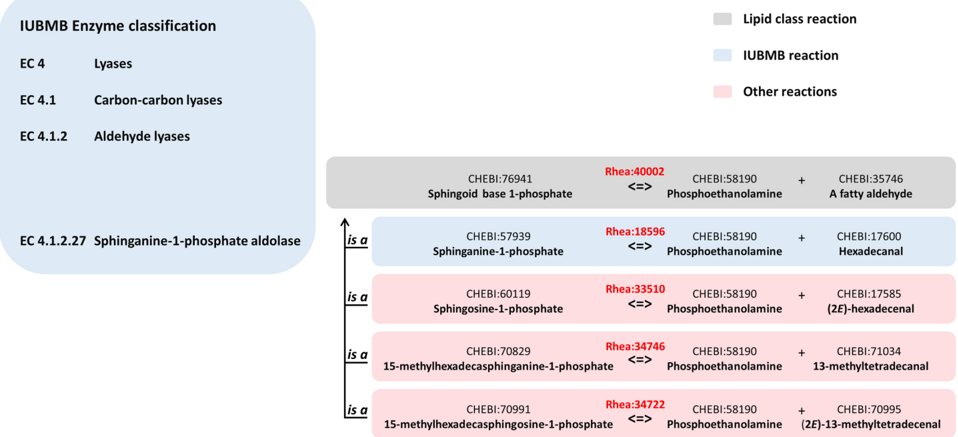
Rhea (http://www.rhea-db.org) is a comprehensive and non-redundant resource of expert-curated biochemical reactions designed for the functional annotation of enzymes and the description of metabolic networks. Rhea describes enzyme-catalyzed reactions covering the IUBMB Enzyme Nomenclature list as well as additional reactions, including spontaneously occurring reactions, using entities from the ChEBI (Chemical Entities of Biological Interest) ontology of small molecules. Here we describe developments in Rhea since our last report in the database issue of Nucleic Acids Research. These include the first implementation of a simple hierarchical classification of reactions, improved coverage of the IUBMB Enzyme Nomenclature list and additional reactions through continuing expert curation, and the development of a new website to serve this improved dataset.
Overview
The claims and statistics of this paper haven’t been checked yet.
Free: it reads the open-access text and checks the first 5 claims that cite a source we can check. Create a free account to check every claim.
Integrity signals
Registry
Cites
Statistics
Figures
Verification
Claims the paper makes
The claims and statistics of this paper haven’t been checked yet.
Free: it reads the open-access text and checks the first 5 claims that cite a source we can check. Create a free account to check every claim.
Claims other papers make about this one
Each is checked against this paper’s own text: does it say what the citing paper says it does?
The check wasn’t confident either way, so it gives no verdict — never disputed.
In the citing paper
“to date, the automatic simultaneous use of more than one database is an unresolved challenge”
From Traceability, reproducibility and wiki-exploration for “à-la-carte” reconstructions of genome-scale metabolic models (2018) · cites this paper as [59]
Experimental — accuracy not yet measured
Self-check
Percentages, sums and reported differences re-computed from the paper’s own numbers.
The self-check needs the paper’s full text.
Citations
Cites
KEGG as a reference resource for gene and protein annotation
Kanehisa, M., Sato, Y., Kawashima, M., Furumichi, M., & Tanabe, M. (2016) · Nucleic Acids Research · doi:10.1093/nar/gkv1070 · Cited by 7,387
The Reactome pathway Knowledgebase
Fabregat, A., Sidiropoulos, K., Garapati, P., Gillespie, M., Hausmann, K., Haw, R., Jassal, B., Jupe, S., Korninger, F., McKay, S., et al. (2016) · Nucleic Acids Research · doi:10.1093/nar/gkv1351 · Cited by 5,605
Caspi, R., Billington, R., Ferrer, L., Foerster, H., Fulcher, C. A., Keseler, I. M., Kothari, A., Krummenacker, M., Latendresse, M., Mueller, L. A., et al. (2016) · Nucleic Acids Research · doi:10.1093/nar/gkv1164 · Cited by 3,395
Bairoch, A. (2000) · Nucleic Acids Research · doi:10.1093/nar/28.1.304 · Cited by 1,129
ChEBI in 2016: Improved services and an expanding collection of metabolites
Hastings, J., Owen, G., Dekker, A., Ennis, M., Kale, N., Muthukrishnan, V., Turner, S., Swainston, N., Mendes, P., & Steinbeck, C. (2016) · Nucleic Acids Research · doi:10.1093/nar/gkv1031 · Cited by 1,083
Phylogenetic-based propagation of functional annotations within the Gene Ontology consortium
Gaudet, P., Livstone, M. S., Lewis, S. E., & Thomas, P. D. (2011) · Briefings in Bioinformatics · doi:10.1093/bib/bbr042 · Cited by 901 · cited 1×
“It can be used to annotate extant members of this orthologous group as well as ancestral functions in phylogenetic trees (20) at a greater level of precision than the generic ‘aldehyde lyase’ annotation EC 4.”
MethodThe BioPAX community standard for pathway data sharing
Demir, E., Cary, M. P., Paley, S., Fukuda, K., Lemer, C., Vastrik, I., Wu, G., D'Eustachio, P., Schaefer, C., Luciano, J., et al. (2010) · Nature Biotechnology · doi:10.1038/nbt.1666 · Cited by 745 · cited 3×
“Reaction data in BioPax2 (24), RXN (25) and CMLReact (26) formats can also be obtained using RESTful web services at http://www.rhea-db. org/webservice.”
MethodHaug, K., Salek, R. M., Conesa, P., Hastings, J., de Matos, P., Rijnbeek, M., Mahendraker, T., Williams, M., Neumann, S., Rocca-Serra, P., et al. (2013) · Nucleic Acids Research · doi:10.1093/nar/gks1004 · Cited by 651 · cited 1×
“Knowledgebases that use Rhea for the annotation of enzyme and metabolite data include the SwissLipids knowledgebase for lipid biology (7), the EBI Enzyme portal (8), the MetaboLights repository of metabolomics data (9) and IntEnz (5).”
MethodDalby, A., Nourse, J. G., Hounshell, W. D., Gushurst, A. K. I., Grier, D. L., Leland, B. A., & Laufer, J. (1992) · Journal of Chemical Information and Computer Sciences · doi:10.1021/ci00007a012 · Cited by 642 · cited 4×
“Reaction data in BioPax2 (24), RXN (25) and CMLReact (26) formats can also be obtained using RESTful web services at http://www.rhea-db. org/webservice.”
MethodInfluentialVallenet, D., Belda, E., Calteau, A., Cruveiller, S., Engelen, S., Lajus, A., Le Fèvre, F., Longin, C., Mornico, D., Roche, D., et al. (2013) · Nucleic Acids Research · doi:10.1093/nar/gks1194 · Cited by 385 · cited 1×
“Resources that use Rhea for the annotation of metabolic networks and models include MetaNetX (10,11) and Microscope (12).”
Method
Cited by
UniProt: the universal protein knowledgebase in 2021
The UniProt Consortium, Bateman, A., Martin, M.-J., Orchard, S., Magrane, M., Agivetova, R., Ahmad, S., Alpi, E., Bowler-Barnett, E. H., Britto, R., et al. (2021) · Nucleic Acids Research · doi:10.1093/nar/gkaa1100 · Cited by 6,372
“Rhea (14) uses the chemical ontology ChEBI (Chemical Entities of Biological Interest) (15) to describe reaction participants, their chemical structures and chemical transformations.”
MethodSelf-citationThe Gene Ontology Resource: 20 years and still GOing strong
The Gene Ontology Consortium (2019) · Nucleic Acids Research · doi:10.1093/nar/gky1055 · Cited by 4,747
“GO also maintains cross-references between terms and multiple widelyused external resources, including Reactome (21), The Annotated Reactions Database (Rhea) (22), Enzyme Commission (EC; http://www.”
BackgroundThe Reactome Pathway Knowledgebase
Fabregat, A., Jupe, S., Matthews, L., Sidiropoulos, K., Gillespie, M., Garapati, P., Haw, R., Jassal, B., Korninger, F., May, B., et al. (2018) · Nucleic Acids Research · doi:10.1093/nar/gkx1132 · Cited by 2,855
“A variety of online resources capture aspects of this information at the level of individual reactions such as Rhea (1) or at the level of reaction sequences spanning various domains of biology such as KEGG (2), MetaCyc (3) or PANTHER (4).”
BackgroundEnsembl Genomes 2020—enabling non-vertebrate genomic research
Howe, K. L., Contreras-Moreira, B., De Silva, N., Maslen, G., Akanni, W., Allen, J., Alvarez-Jarreta, J., Barba, M., Bolser, D. M., Cambell, L., et al. (2020) · Nucleic Acids Research · doi:10.1093/nar/gkz890 · Cited by 466
Vallenet, D., Calteau, A., Dubois, M., Amours, P., Bazin, A., Beuvin, M., Burlot, L., Bussell, X., Fouteau, S., Gautreau, G., et al. (2019) · Nucleic Acids Research · doi:10.1093/nar/gkz926 · Cited by 346
“By defining shared semantic standards, RDF is a way to integrate MicroScope data with other complementary databases such as UniProt (13) and Rhea (32) and to support cross-resource queries using a SPARQL endpoint.”
MethodRibeiro, A. J. M., Holliday, G. L., Furnham, N., Tyzack, J. D., Ferris, K., & Thornton, J. M. (2018) · Nucleic Acids Research · doi:10.1093/nar/gkx1012 · Cited by 235
“RHEA (13) describes reactions using ChEBI (14) identifiers to define reactants and products, and provides an RXN file for each reaction.”
MethodThe BRENDA enzyme information system–From a database to an expert system
Schomburg, I., Jeske, L., Ulbrich, M., Placzek, S., Chang, A., & Schomburg, D. (2017) · Journal of Biotechnology · doi:10.1016/j.jbiotec.2017.04.020 · Cited by 222
Genome-Scale Metabolic Modeling Enables In-Depth Understanding of Big Data
Passi, A., Tibocha-Bonilla, J. D., Kumar, M., Tec-Campos, D., Zengler, K., & Zuniga, C. (2021) · Metabolites · doi:10.3390/metabo12010014 · Cited by 169
“In addition to published and curated GEMs, and GEMs available in BiGG [34,84], several reaction databases, such as KEGG REACTION [85], MetaCyc [86,87], MetaNetX [88], Rhea [89], SwissLipids [90], TransportDB [91], and TCDB [74], provide metabolomics and reactions information.”
MethodMoretti, S., Tran, V. D. T., Mehl, F., Ibberson, M., & Pagni, M. (2021) · Nucleic Acids Research · doi:10.1093/nar/gkaa992 · Cited by 177
“RHEA (9) rheaGb 1494 1490 21 rheaPb 228 195 0 SABIO-RK (10) sabiorkM 8944 8899 1713 TheSEED (11) seedM 33995 21630 4964 SwissLipids (12) slm 777657 1833 624”
Self-citationReview on the Computational Genome Annotation of Sequences Obtained by Next-Generation Sequencing
Ejigu, G. F., & Jung, J. (2020) · Biology · doi:10.3390/biology9090295 · Cited by 182
“Rhea [80] enables the functional annotation of enzymes and description of metabolic pathways based on an expert-curated non-redundant resource of biochemical reactions.”
MethodReinforcement Learning for Bioretrosynthesis
Koch, M., Duigou, T., & Faulon, J. (2019) · ACS Synthetic Biology · doi:10.1021/acssynbio.9b00447 · Cited by 157
“We establish the sequences to reaction rules associations based on Rhea (v98)(Morgat et al. 2017), MetaCyc (v21.”
MethodAite, M., Chevallier, M., Frioux, C., Trottier, C., Got, J., Cortés, M. P., Mendoza, S. N., Carrier, G., Dameron, O., Guillaudeux, N., et al. (2018) · PLOS Computational Biology · doi:10.1371/journal.pcbi.1006146 · Cited by 137
“Even though important progress has been made [45,59], to date, the automatic simultaneous use of more than one database is an unresolved challenge and the correct consolidation of the information still requires significant manual effort [60].”
RetroRules: a database of reaction rules for engineering biology
Duigou, T., Du, M., Carbonell, P., & Faulon, J. (2018) · Nucleic Acids Research · doi:10.1093/nar/gky940 · Cited by 130
“0 with Rhea release 81 (15) and UniProt release 2017 04 (16).”
BackgroundPathway design using de novo steps through uncharted biochemical spaces
Kumar, A., Wang, L., Ng, C. Y., & Maranas, C. D. (2018) · Nature Communications · doi:10.1038/s41467-017-02362-x · Cited by 114
“For example, reaction rule R1 was reported to utilize ATP as a cofactor 36 , whereas the manually approved Rhea database 37 and KEGG 20 denote it as a reversible reaction without utilization of ATP.”
MethodEnzyme annotation in UniProtKB using Rhea
Morgat, A., Lombardot, T., Coudert, E., Axelsen, K., Neto, T. B., Gehant, S., Bansal, P., Bolleman, J., Gasteiger, E., de Castro, E., et al. (2020) · Bioinformatics · doi:10.1093/bioinformatics/btz817 · Cited by 99
Self-citationMédigue, C., Calteau, A., Cruveiller, S., Gachet, M., Gautreau, G., Josso, A., Lajus, A., Langlois, J., Pereira, H., Planel, R., et al. (2017) · Briefings in Bioinformatics · doi:10.1093/bib/bbx113 · Cited by 84
Chemical data intelligence for sustainable chemistry
Weber, J. M., Guo, Z., Zhang, C., Schweidtmann, A. M., & Lapkin, A. A. (2021) · Chemical Society Reviews · doi:10.1039/d1cs00477h · Cited by 87
An overview of graph databases and their applications in the biomedical domain
Reina, S. T., Rincón, M., & Martínez‐Tomás, R. (2021) · Database · doi:10.1093/database/baab026 · Cited by 83
“Built on Neo4j, Biochem4j (82) provides an integrated, queryable database that warehouses chemical, reaction, enzyme and taxonomic data from ChEBI (94), MNXref (95), Rhea (96), KEGG, UniProt and the NCBI Taxonomy resources.”
BackgroundUpdates in Rhea: SPARQLing biochemical reaction data
Lombardot, T., Morgat, A., Axelsen, K. B., Aimo, L., Hyka‐Nouspikel, N., Niknejad, A., Ignatchenko, A., Xénarios, I., Coudert, E., Redaschi, N., et al. (2018) · Nucleic Acids Research · doi:10.1093/nar/gky876 · Cited by 71
“Here, we describe recent developments in Rhea since our last publication (3), including the development of an RDF (resource description framework) representation of Rhea reaction data and a SPARQL endpoint to serve it.”
BackgroundMethodInfluentialSelf-citationThe automated Galaxy-SynBioCAD pipeline for synthetic biology design and engineering
Hérisson, J., Duigou, T., Du, M., Bazi-Kabbaj, K., Sabeti-Azad, M., Buldum, G., Telle, O., Moubayed, Y. E., Carbonell, P., Swainston, N., et al. (2022) · Nature Communications · doi:10.1038/s41467-022-32661-x · Cited by 54
“The use of reaction rules allows estimating the outcomes of chemical transformations based on the generalization of reactions available in knowledge data-basessuchasBRENDA 52 ,MetaCyC 52 ,Rhea 53 ,orMetaNetX 54 .”
LipidLynxX: a data transfer hub to support integration of large scale lipidomics datasetsPreprint
Ni, Z., & Fedorova, M. (2020) · bioRxiv (Cold Spring Harbor Laboratory) · doi:10.1101/2020.04.09.033894 · Cited by 56
“Authors developed an open-source tool Metabolomics2Networks as a stand-alone python library and within MetExplore webserver allowing ChEBI ontology-based mapping.”
BackgroundMethodInfluentialMass Spectrometry for Natural Product Discovery
Louie, K., Kosina, S. M., Hu, Y., Otani, H., de Raad, M., Kuftin, A., Mouncey, N. J., Bowen, B. P., & Northen, T. R. (2020) · Elsevier eBooks · doi:10.1016/b978-0-12-409547-2.14834-6 · Cited by 61
novoPathFinder: a webserver of designing novel-pathway with integrating GEM-model
Ding, S., Tian, Y. T., Cai, P., Zhang, D., Cheng, X., Sun, D., Yuan, L., Chen, J., Tu, W., Wei, D., et al. (2020) · Nucleic Acids Research · doi:10.1093/nar/gkaa230 · Cited by 49
“(ii) Reactions: Without considering transport reactions and reactions that involved genetic compounds, there are 20 942 one-way reactions in the Rhea database (release: 105) (13), which served as referenced data for the extraction of chemical transformations.”
BackgroundInfluentialMetabolic Modeling of Streptococcus mutans Reveals Complex Nutrient Requirements of an Oral Pathogen
Jijakli, K., & Jensen, P. A. (2019) · mSystems · doi:10.1128/msystems.00529-19 · Cited by 48
“The Metacyc (56), RHEA (57), ModelSEED (25), BiGG (58), and ChEBI (59) databases were used as secondary sources for metabolic reactions.”
Discovery of Toxin-Degrading Enzymes with Positive Unlabeled Deep Learning
Zhang, D., Xing, H., Liu, D., Han, M., Cai, P., Lin, H., Tian, Y. T., Guo, Y. J., Sun, B., Le, Y., et al. (2024) · ACS Catalysis · doi:10.1021/acscatal.3c04461 · Cited by 41
MAGI: A Method for Metabolite Annotation and Gene Integration
Erbilgin, O., Rübel, O., Louie, K., Trinh, M., de Raad, M., Wildish, T., Udwary, D., Hoover, C. A., Deutsch, S., Northen, T. R., et al. (2019) · ACS Chemical Biology · doi:10.1021/acschembio.8b01107 · Cited by 36
Data-Driven Prediction of Molecular Biotransformations in Food Fermentation
Zhang, D., Jia, C., Sun, D., Gao, C., Fu, D., Cai, P., & Hu, Q. (2023) · Journal of Agricultural and Food Chemistry · doi:10.1021/acs.jafc.3c01172 · Cited by 30
Hoyt, C. T., Domingo‐Fernándéz, D., & Hofmann‐Apitius, M. (2018) · Database · doi:10.1093/database/bay126 · Cited by 25
Machine learning-assisted retrosynthesis planning: Current status and future prospects
Wei, Y., Shan, L., Qiu, T., Lu, D., & Liu, Z. (2024) · Chinese Journal of Chemical Engineering · doi:10.1016/j.cjche.2024.10.014 · Cited by 22
PrecursorFinder: a customized biosynthetic precursor explorer
Yuan, L., Tian, Y. T., Ding, S., Liu, Y., Fu, C., Zhang, T., Tu, W., Chen, J., & Hu, Q. (2018) · Bioinformatics · doi:10.1093/bioinformatics/bty838 · Cited by 20
Design and application of a knowledge network for automatic prioritization of drug mechanisms
Mayers, M., Tu, R., Steinecke, D., Li, T. S., Queralt-Rosiñach, N., & Su, A. I. (2022) · Bioinformatics · doi:10.1093/bioinformatics/btac205 · Cited by 20
Redefining the coenzyme A transferase superfamily with a large set of manually annotated proteins
Hackmann, T. J. (2022) · Protein Science · doi:10.1002/pro.4277 · Cited by 19
Yeast Genome-Scale Metabolic Models for Simulating Genotype–Phenotype Relations
Castillo, S., Patil, K. R., & Jouhten, P. (2019) · Progress in molecular and subcellular biology · doi:10.1007/978-3-030-13035-0_5 · Cited by 18
Data-driven rational biosynthesis design: from molecules to cell factories
Fu, C., Yuan, L., Ding, S., Tian, Y. T., & Hu, Q. (2019) · Briefings in Bioinformatics · doi:10.1093/bib/bbz065 · Cited by 14
Recent advances in genome annotation and synthetic biology for the development of microbial chassis
Hamese, S., Mugwanda, K., Takundwa, M. M., Prinsloo, E., & Raj, D. B. T. G. (2023) · Journal of Genetic Engineering and Biotechnology · doi:10.1186/s43141-023-00598-3 · Cited by 13
“The annotations in Rhea are based on expert-curated, non-redundant information on biochemical reactions [43] InterPro InterPro provides functional analysis of proteins by classifying them into families and predicting domains and important sites [53] NCBI Blast BLAST is a program that identifies…”
MethodEcoSynther: A Customized Platform To Explore the Biosynthetic Potential in E. coli
Ding, S., Liao, X., Tu, W., Wu, L., Tian, Y. T., Sun, Q., Chen, J., & Hu, Q. (2017) · ACS Chemical Biology · doi:10.1021/acschembio.7b00605 · Cited by 12
First Genome-Scale Metabolic Model of Dolosigranulum pigrum Confirms Multiple Auxotrophies
Renz, A., Widerspick, L., & Dräger, A. (2021) · Metabolites · doi:10.3390/metabo11040232 · Cited by 13
A genome-scale metabolic network reconstruction of extremely halophilic bacterium Salinibacter ruber
Bagheri, M., Marashi, S., & Amoozegar, M. A. (2019) · PLoS ONE · doi:10.1371/journal.pone.0216336 · Cited by 14
Egorova, K. S., Смирнова, Н. С., & Toukach, F. V. (2020) · Glycobiology · doi:10.1093/glycob/cwaa107 · Cited by 10
Breuza, L., Arighi, C. N., Argoud‐Puy, G., Casals‐Casas, C., Estreicher, A., Famiglietti, M. L., Georghiou, G. P., Gos, A., Gruaz-Gumowski, N., Hinz, U. G., et al. (2020) · Journal of Alzheimer s Disease · doi:10.3233/jad-200206 · Cited by 8
Self-citationA Bioinformatics View of Glycan–Virus Interactions
Mercier, P. L., Mariethoz, J., Maillard, J. L., Bonnardel, F., Imberty, A., Ricard‐Blum, S., & Lisacek, F. (2019) · Viruses · doi:10.3390/v11040374 · Cited by 8
“org Enzymatic reactions Describes virus specific enzyme reactions Find substrate and product of CAZyme reaction Curated 2011 [34]”
BackgroundKnowledge Beacons: Web services for data harvesting of distributed biomedical knowledge
Hannestad, L., Dančík, V., Godden, M., Suen, I. W., Huellas-Bruskiewicz, K. C., Good, B. M., Mungall, C., & Bruskiewich, R. (2021) · PLoS ONE · doi:10.1371/journal.pone.0231916 · Cited by 6
“rhea Rhea Annotated Biochemical Reactions database [12] https://www.”
BackgroundCF-Targeter: A Rational Biological Cell Factory Targeting Platform for Biosynthetic Target Chemicals
Ding, S., Cai, P., Yuan, L., Tian, Y. T., Tu, W., Zhang, D., Cheng, X., Sun, D., Chen, J., & Hu, Q. (2019) · ACS Synthetic Biology · doi:10.1021/acssynbio.9b00070 · Cited by 6
Constraint-Based Modeling of Diatoms Metabolism and Quantitative Biology Approaches
Kumar, M., Zúñiga, C., Tibocha‐Bonilla, J. D., Smith, S. R., Coker, J. K. C., Allen, A. E., & Zengler, K. (2022) · Springer eBooks · doi:10.1007/978-3-030-92499-7_26 · Cited by 5
Galaxy-SynBioCAD: Synthetic Biology Design Automation tools in Galaxy workflowsPreprint
Du, M., Duigou, T., Hérisson, J., Carbonell, P., Swainston, N., Zulkower, V., Shah, F., Faure, L., Mahdy, M., Soudier, P., et al. (2020) · bioRxiv (Cold Spring Harbor Laboratory) · doi:10.1101/2020.06.14.145730 · Cited by 6
“The use of reaction rules allows estimating the outcomes of chemical transformation based on the generalization of reactions available in knowledge DBs such as BRENDA 37 , MetaCyC 38 , Rhea 39 , or MetaNetX 40 .”
MethodSlenter, D., Kutmon, M., Evelo, C. T., & Willighagen, E. (2024) · Digital Discovery · doi:10.1039/d3dd00069a · Cited by 4
Genome-scale metabolic model of Staphylococcus epidermidis ATCC 12228 matches in vitro conditions
Leonidou, N., Renz, A., Winnerling, B., Grekova, A., Grein, F., & Dräger, A. (2025) · mSystems · doi:10.1128/msystems.00418-25 · Cited by 4
Upadhyay, V., Anand, M., & Maranas, C. D. (2025) · PLoS Computational Biology · doi:10.1371/journal.pcbi.1012516 · Cited by 4
BioNorm: deep learning-based event normalization for the curation of reaction databases
Lou, P., Yepes, A. J., Zai, Z., Zheng, Q., Zhang, X., & Li, C. (2019) · Bioinformatics · doi:10.1093/bioinformatics/btz571 · Cited by 4
Cheng, X., Sun, D., Zhang, D., Tian, Y. T., Ding, S., Cai, P., & Hu, Q. (2020) · Bioinformatics · doi:10.1093/bioinformatics/btaa036 · Cited by 3
GROOLS: reactive graph reasoning for genome annotation through biological processes
Mercier, J., Josso, A., Médigue, C., & Vallenet, D. (2018) · BMC Bioinformatics · doi:10.1186/s12859-018-2126-1 · Cited by 4
“After manual inspection of some results, many discrepancies were found to be annotation mapping problems with UniPathway reactions (i.e. EC numbers or Meta-Cyc/RHEA reactions are not correctly cross-referenced) or incomplete pathway definition (i.e. missing variant) as illustrated in the second example below.”
MethodAssessing and Resolving Model Misspecifications in Metabolic Flux Analysis
Gunawan, R., & Hutter, S. (2017) · Bioengineering · doi:10.3390/bioengineering4020048 · Cited by 2
“KEGG [21], MetaCyc [22], RHEA [23]), one could efficaciously put together a list of possible missing reactions in the overdetermined MFA.”
BackgroundHemizygous loss of helicases promotes genomic instability and cancer development
Voßgröne, K., Favero, F., Kashyap, K., Gonzalez, F. G. R., Olsen, A. V., Li, X., Mardin, B. R., Weischenfeldt, J., & Sørensen, C. S. (2026) · Science Advances · doi:10.1126/sciadv.adv4540 · Cited by 2
“To enable a comprehensive analysis of mutations in enzyme families, we first categorized genes belonging to the seven main enzyme classes: oxidoreductases, transferases, hydrolases, lyases, isomerases, ligases, and translocases ( 9 ).”
MAGI: A method for metabolite, annotation, and gene integrationPreprint
Erbilgin, O., Rübel, O., Louie, K. B., Trinh, M., de Raad, M., Wildish, T., Udwary, D., Hoover, C. A., Deutsch, S., Northen, T. R., et al. (2017) · bioRxiv (Cold Spring Harbor Laboratory) · doi:10.1101/204362 · Cited by 2
Ehrhart, F., Mélius, J., Cirillo, E., Kutmon, M., Willighagen, E., Coort, S. L., Curfs, L., & Evelo, C. T. (2018) · F1000Research · doi:10.12688/f1000research.15708.1 · Cited by 1
“Publisher Full Text Morgat A, Lombardot T, Axelsen KB, et al.: Updates in Rhea - an expert curated resource of biochemical reactions.”
BackgroundInfluentialTowards the construction of GSMN-based community model for an oral biofilm
Winter, K. D., Ghesquière, J., Teughels, W., Waldherr, S., & Bernaerts, K. (2019) · IFAC-PapersOnLine · doi:10.1016/j.ifacol.2019.12.257 · Cited by 1
Discovering life’s directed metabolic (sub)paths to interpret biochemical markers using the DSMNPreprint
Slenter, D., Kutmon, M., Evelo, C. T., & Willighagen, E. (2022) · ChemRxiv · doi:10.26434/chemrxiv-2022-q1fv1 · Cited by 1
Computer-aided design (CAD) tools for bioproduction and biosensing pathway engineering
Delépine, B. (2017) · theses.fr (ABES) · doi:10.70675/9f678581z328cz412aza6a6z889b9da1baaf · Cited by 1
Cirillo (2019) · Research Publications (Maastricht University) · doi:10.26481/dis.20190118ec
Similarity-guided Monte Carlo Tree Search for bio-retrosynthesisPreprint
Koch, M., Duigou, T., & Faulon, J. (2019) · Research Explorer (The University of Manchester) · doi:10.1101/800474
“We establish the sequences to reaction rules associations based on Rhea (v98)(Morgat et al. 2017), MetaCyc (v21.”
MethodΚουτσανδρέας, Θ., & Κουτσανδρέας, Θ. (2021) · DSpace - NTUA (National Technical University of Athens) · doi:10.26240/heal.ntua.21609 · Cited by 1
Discovering life’s directed metabolic (sub)paths to interpret biochemical markers using the DSMNPreprint
Slenter, D., Kutmon, M., Evelo, C. T., & Willighagen, E. (2023) · ChemRxiv · doi:10.26434/chemrxiv-2022-q1fv1-v2
The Rhea SPARQL endpoint supports integrated analyses of genome, proteome and metabolome
Lombardot, T., Morgat, A., Géhant, S., Redaschi, N., & Bridge, A. (2018) · Figshare · doi:10.6084/m9.figshare.7326662
Self-citationThe Rhea SPARQL endpoint supports integrated analyses of genome, proteome and metabolome
Lombardot, T., Morgat, A., Géhant, S., Redaschi, N., & Bridge, A. (2018) · Figshare · doi:10.6084/m9.figshare.7346102
Self-citationGarg, P., Mishra, S., Srivastava, P., & Jamal, F. (2025) · Elsevier eBooks · doi:10.1016/b978-0-443-21980-1.00008-5
Computational modeling to design and analyze synthetic metabolic circuits
Koch, M. (2019) · theses.fr (ABES) · doi:10.70675/c62d36ffz8c11z4509zad56ze764c2cee027
Heiman, T. J. (2026) · bioRxiv (Cold Spring Harbor Laboratory) · doi:10.64898/2026.10.06.756997
FAIRsharing record for: Mechanism and Catalytic Site Atlas
FAIRsharing Team, & Lister, A. (2018) · FAIRsharing.org · doi:10.25504/fairsharing.brubdi
FAIRsharing record for: Ensembl Genomes
FAIRsharing Team (2018) · FAIRsharing.org · doi:10.25504/fairsharing.923a0p
FAIRsharing record for: Ensembl Bacteria
FAIRsharing Team (2018) · FAIRsharing.org · doi:10.25504/fairsharing.zsgmvd
FAIRsharing record for: Ensembl Fungi
FAIRsharing Team (2018) · FAIRsharing.org · doi:10.25504/fairsharing.bg5xqs
FAIRsharing record for: Ensembl Protists
FAIRsharing Team (2018) · FAIRsharing.org · doi:10.25504/fairsharing.ad1zae
FAIRsharing record for: Ensembl Metazoa
FAIRsharing Team (2018) · FAIRsharing.org · doi:10.25504/fairsharing.c23cqq
FAIRsharing record for: Ensembl Plants
FAIRsharing Team (2018) · FAIRsharing.org · doi:10.25504/fairsharing.j8g2cv
Metadata
- Authors
- Morgat, A., Lombardot, T., Axelsen, K. B., Aimo, L., Niknejad, A., Hyka-Nouspikel, N., Coudert, E., Pozzato, M., Pagni, M., Moretti, S., Rosanoff, S., Onwubiko, J., Bougueleret, L., Xenarios, I., Redaschi, N., & Bridge, A.
- Affiliations
- SIB Swiss Institute of Bioinformatics (CH)
- European Bioinformatics Institute (GB)
- Corresponding author
- Morgat, Anne
- ORCID
- Venue
- Nucleic Acids Research
- Publisher
- Oxford University Press (OUP)
- Published
- 2016-10-26
- Volume
- 45
- Issue
- D1
- Pages
- D415-D418
- ISSN
- 0305-1048 (ISSN-L)
- 1362-4962
- PMC
- PMC5397180
- OpenAlex
- W2543238710
- Cited by
- 65
- References
- 26
- Citations by year
- 2026: 1 · 2025: 3 · 2024: 2 · 2023: 5 · 2022: 5 · 2021: 5 · 2020: 10 · 2019: 16 · 2018: 11 · 2017: 7
- FWCI
- 7.11
- Type
- journal article
- Language
- en
- Open access
- gold
- doi.org
- Licence
- Locations
- Nucleic Acids Research (publishedVersion, cc-by)
- Europe PMC (PubMed Central) (publishedVersion, cc-by)
- PubMed Central (publishedVersion, cc-by)
- PubMed (publishedVersion)
- SERVAL (Université de Lausanne) (publishedVersion, other-oa)
- IRIS (submittedVersion, other-oa)
- HighWire Press Open Archive (submittedVersion)
- Funders
- European Bioinformatics Institute
- Australian Government
- SystemsX.ch
- Staatssekretariat für Bildung, Forschung und Innovation
- Topics
- Life Sciences › Biochemistry, Genetics and Molecular Biology › Molecular Biology › Bioinformatics and Genomic Networks
- Health Sciences › Medicine › Health Informatics › Biomedical Text Mining and Ontologies
- Life Sciences › Biochemistry, Genetics and Molecular Biology › Molecular Biology › Microbial Metabolic Engineering and Bioproduction
- Keywords
- biochemical reactions, enzymatic reactions, expert curation, ChEBI ontology, reaction classification, metabolic networks, database updates
About these checks
Registry, retraction, Cites and statistics results are computed, not judged, with one exception: a printed reference that no index lists is read once by a model before it counts as a citation error. Claims are extracted by a model and kept only when their quote appears verbatim in the text; each cited source is then checked, with a model’s help, for whether it says what the claim relies on. Those verdicts can be wrong — read the claim’s quote and the cited source before relying on one.
Statistics and arithmetic are recomputed, not judged.
Confidence bands are shown only for fields calibrated on our annotated test set. None is calibrated yet, so no band is shown.
What counts as a claim ›How we measure confidence ›How we check this ›
Are you an author, or do you see a problem with this page? Request a review
Data sources
Bibliographic data: Semantic Scholar, OpenAlex, Crossref.
Contains information from the Semantic Scholar Academic Graph Datasets, made available under the ODC Attribution License (ODC-BY 1.0).
Semantic Scholar’s data is described in: Kinney, R., et al. (2023). The Semantic Scholar Open Data Platform. arXiv:2301.10140.
