

The DOI matches its Crossref record; 42 of the 42 references it cites were found in a registry or an index; 2 of the 32 sources its claims cite were checked for support.
Cell Model Passports-a hub for clinical, genetic and functional datasets of preclinical cancer models
Open accessAbstract
In vitro cancer cell cultures are facile experimental models used widely for research and drug development. Many cancer cell lines are available and efforts are ongoing to derive new models representing the histopathological and molecular diversity of tumours. Cell models have been generated by multiple laboratories over decades and consequently their annotation is incomplete and inconsistent. Furthermore, the relationships between many patient-matched and derivative cell lines have been lost, and accessing information and datasets is time-consuming and difficult. Here, we describe the Cell Model Passports database; cellmodelpassports.sanger.ac.uk, which provides details of cell model relationships, patient and clinical information, as well as access to associated genetic and functional datasets. The Passports database currently contains curated details and standardized annotation for >1200 cell models, including cancer organoid cultures. The Passports will be updated with newly derived cell models and datasets as they are generated. Users can navigate the database via tissue, cancer-type, genetic feature and data availability to select a model most suitable for specific applications. A flexible REST-API provides programmatic data access and exploration. The Cell Model Passports are a valuable tool enabling access to high-dimensional genomic and phenotypic cancer cell model datasets empowering diverse research applications.
Overview
AI snapshot
Written from the paper’s full text.
TL;DR
Cell Model Passports is a database and web/API resource that curates >1200 cancer cell models, including organoids, with patient/sample/model relationships and links to genomic and drug sensitivity datasets. It aims to improve model selection, data integration, and reproducibility by standardizing annotation and identifiers.
Key findings
- The Passports database contains curated details and standardized annotation for >1200 cell models, including cancer organoid cultures; over 30 attributes may be annotated per model, with lineage captured via 29 tissue categories, 44 cancer types, and 194 cancer type detail categories.
- It provides >3500 genetic datasets and >1000 drug sensitivity datasets; 85% of cell models have associated somatic nucleotide variant, gene expression, copy number variation, or methylation datasets, and mutation status is provided for 455 cancer driver genes with drug profiling of ∼250 compounds from GDSC.
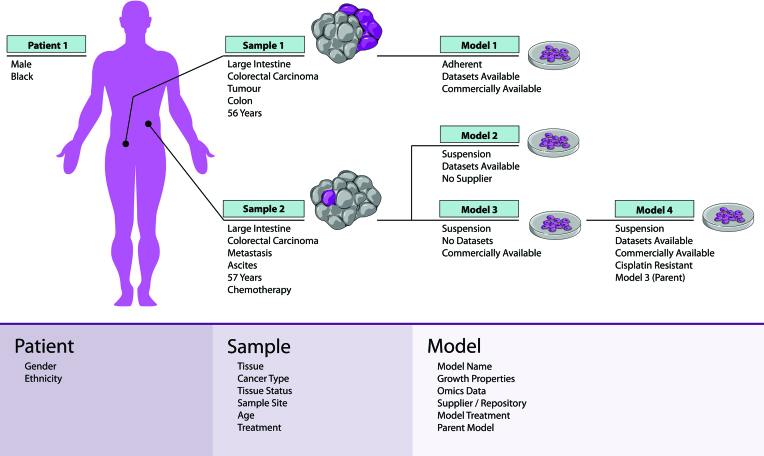
- The resource captures patient–sample–model hierarchies and parent–child model relationships, using unique identifiers such as RRID, COSMIC, and CCLE, and STR/fingerprinting to confirm model–patient associations and reduce mis-identification.
- Access is available through a web interface and a REST API following JSONAPI v1.0, with processed gene-level datasets and links to raw data.
Methods
- Database construction used PostgreSQL v9.6 hosted at the Wellcome Sanger Institute; the REST API was developed in Python 3.6 with Flask v0.12 and SQLAlchemy v1.2, and the web interface used React v16.4 with Bootstrap v4.0.
- Curation compiled information from commercial cell banks (ATCC, DSMZ, JCRB, ECACC), academic collaborators, Cellosaurus, CCLE, and publications; a constrained vocabulary was developed, and the patient/sample/model hierarchy was established using annotation plus resources cataloging mis-identified and synonymous models, with STR/fingerprinting to confirm associations.
- The foundational model set includes >1200 established cancer cell lines and newly derived organoid models, including those used in the Sanger GDSC project and models from the Human Cancer Models Initiative; genomic features include microsatellite stability status, ploidy, mutational burden, and mutation status of 455 cancer driver genes.
Limitations
- The paper states that currently all datasets have been generated by the Sanger Institute, and that the Passports currently focus on high quality and consistent datasets generated by the Wellcome Sanger Institute; future expansion to external resources is planned.
- The paper states that the Passports will incorporate newly generated datasets from initiatives such as the Dependency Map at Sanger, indicating that some relevant datasets are not yet included.
- Evident from the text: no formal user evaluation, benchmarking, or performance assessment of the web interface or API is reported; the paper is primarily descriptive of the resource.
Model-written summary. Check it against the paper before relying on it.
Integrity signals
Registry
Cites
Statistics
Figures
Verification
Claims the paper makes
21 No basis given · 12 Not checked yet · 5 Own interpretation · 5 Own result · 2 Own method · 1 Partly supported · accuracy not yet measured
The cited sources support only part of this claim — read each source’s verdict below.
In the paper
“Second, cBioPortal and COSMIC are primarily focused on patient tumour genomic data.”
§ Cell Model Passports—a hub for clinical, genetic and functional datasets of preclinical cancer models > DISCUSSION
What the sources say
- Partly supportedcites [36] Cerami, 2012, The cBio cancer genomics portal: an open platform for exploring multidimensional cancer genomics data, Cancer Discov. sourceExperimental — accuracy not yet measured
The passage on portal data sets (section labeled Abstract; page not provided) describes cBioPortal’s cancer genomic data, organized by patient and gene, supporting that part of the claim. Our copy does not address COSMIC, so it cannot support the statement about both resources. (LLM, conf=0.88)
- Partly supportedcites [20] Forbes, 2017, COSMIC: somatic cancer genetics at high-resolution, Nucleic Acids Res. sourceExperimental — accuracy not yet measured
The Introduction and Database Content sections describe COSMIC as a repository of somatic mutations from human tumours, including patient cohorts, supporting the COSMIC part of the claim. The paper also describes a separate COSMIC cell-line database, but it does not address cBioPortal; a search for cBioPortal found no passage supporting that part of the sentence. (LLM, conf=0.87)
plain- Asserted: passes — The authors put it forward as true.
- Checkable: passes — It can be checked against evidence.
- Load-bearing: passes — The paper’s conclusions depend on it.
- Based: passes — The paper gives a reason why it holds.
- Partly supported
The paper states this without a source or data behind it here, so there is nothing to check it against. The quote shows it is in the paper.
In the paper
“Users can navigate the database via tissue, cancer-type, genetic feature and data availability to select a model most suitable for specific applications.”
§ Cell Model Passports—a hub for clinical, genetic and functional datasets of preclinical cancer models > Abstract
plain- Asserted: passes — The authors put it forward as true.
- Checkable: passes — It can be checked against evidence.
- Load-bearing: passes — The paper’s conclusions depend on it.
- Based: passes — The paper gives a reason why it holds.
The paper states this without a source or data behind it here, so there is nothing to check it against. The quote shows it is in the paper.
In the paper
“The Cell Model Passports is a central portal providing manual or programmatic access to a cancer cell model database containing curated patient, sample and model relationship information as well as genomic and functional datasets.”
§ Cell Model Passports—a hub for clinical, genetic and functional datasets of preclinical cancer models > INTRODUCTION
plain- Asserted: passes — The authors put it forward as true.
- Checkable: passes — It can be checked against evidence.
- Load-bearing: passes — The paper’s conclusions depend on it.
- Based: passes — The paper gives a reason why it holds.
A result the paper reports from its own data — it cites no other source for it, so there is none to check. The quote shows it is in the paper.
In the paper
“The Passports database currently contains curated details and standardized annotation for >1200 cell models, including cancer organoid cultures.”
- Also stated in: § MODEL ANNOTATIONS · plain
“More than 1200 established cancer cell lines and newly derived organoid models comprise the foundational model set of the Passports, including all those utilized in the Sanger’s GDSC project (5, 18) as well as cell models generated as part of the Human Cancer Models Initiative.”
§ Cell Model Passports—a hub for clinical, genetic and functional datasets of preclinical cancer models > Abstract
plainn = 1,200- Asserted: passes — The authors put it forward as true.
- Checkable: passes — It can be checked against evidence.
- Load-bearing: passes — The paper’s conclusions depend on it.
- Based: passes — The paper gives a reason why it holds.
- Also stated in: § MODEL ANNOTATIONS · plain
None of the sources cited for this claim have been checked yet.
In the paper
“The Passport model name is accompanied by synonyms and most importantly unique identifiers utilized by established resources such as Research Resource Identifiers (RRID) (19), the Catalogue of Somatic Mutations in Cancer (COSMIC) (20) and CCLE (6) to aid data integration and alignment.”
§ Cell Model Passports—a hub for clinical, genetic and functional datasets of preclinical cancer models > MODEL ANNOTATIONS
What the sources say
- Not checked yetcites [19] Bairoch, 2018, The Cellosaurus, a Cell-Line Knowledge Resource, J. Biomol. Tech. source
- Not checked yetcites [20] Forbes, 2017, COSMIC: somatic cancer genetics at high-resolution, Nucleic Acids Res. source
- Not checked yetcites [6] Barretina, 2012, The cancer cell line encyclopedia enables predictive modelling of anticancer drug sensitivity, Nature source
plaincorrelational- Asserted: passes — The authors put it forward as true.
- Checkable: passes — It can be checked against evidence.
- Load-bearing: passes — The paper’s conclusions depend on it.
- Based: passes — The paper gives a reason why it holds.
The paper states this without a source or data behind it here, so there is nothing to check it against. The quote shows it is in the paper.
In the paper
“The Passports currently focus on high quality and consistent datasets generated by the Wellcome Sanger Institute, but in the future will expand to include cell models and datasets generated by external resources while maintaining an emphasis on quality and curation.”
§ Cell Model Passports—a hub for clinical, genetic and functional datasets of preclinical cancer models > DISCUSSION
plain- Asserted: passes — The authors put it forward as true.
- Checkable: passes — It can be checked against evidence.
- Load-bearing: unclear — It is unclear whether the paper’s conclusions depend on it.
- Based: passes — The paper gives a reason why it holds.
In the paper
“Annotation of genomic features has been provided for each model via the exploitation of the available genomic datasets. Features include microsatellite stability status, ploidy, mutational burden and the mutation status of 455 cancer driver genes (18).”
§ Cell Model Passports—a hub for clinical, genetic and functional datasets of preclinical cancer models > MODEL ANNOTATIONS
What the sources say
- Not checked yetcites [18] Iorio, 2016, A landscape of pharmacogenomic interactions in cancer, Cell source
plain- Asserted: passes — The authors put it forward as true.
- Checkable: passes — It can be checked against evidence.
- Load-bearing: passes — The paper’s conclusions depend on it.
- Based: passes — The paper gives a reason why it holds.
The paper states this without a source or data behind it here, so there is nothing to check it against. The quote shows it is in the paper.
In the paper
“All genes with an HGNC-approved symbol as of April 2018 are currently included in the Passports, including those without a protein product.”
§ Cell Model Passports—a hub for clinical, genetic and functional datasets of preclinical cancer models > MODEL ANNOTATIONS > Datasets
plain- Asserted: passes — The authors put it forward as true.
- Checkable: passes — It can be checked against evidence.
- Load-bearing: unclear — It is unclear whether the paper’s conclusions depend on it.
- Based: passes — The paper gives a reason why it holds.
The paper states this without a source or data behind it here, so there is nothing to check it against. The quote shows it is in the paper.
In the paper
“Model lineage, a requirement for tissue-specific analyses, is provided through three progressively granular fields: ‘Tissue’ (n = 29 categories), ‘Cancer Type’ (n = 44) and ‘Cancer Type Detail’ (n = 194).”
§ Cell Model Passports—a hub for clinical, genetic and functional datasets of preclinical cancer models > MODEL ANNOTATIONS
plain- Asserted: passes — The authors put it forward as true.
- Checkable: passes — It can be checked against evidence.
- Load-bearing: unclear — It is unclear whether the paper’s conclusions depend on it.
- Based: passes — The paper gives a reason why it holds.
A result the paper reports from its own data — it cites no other source for it, so there is none to check. The quote shows it is in the paper.
In the paper
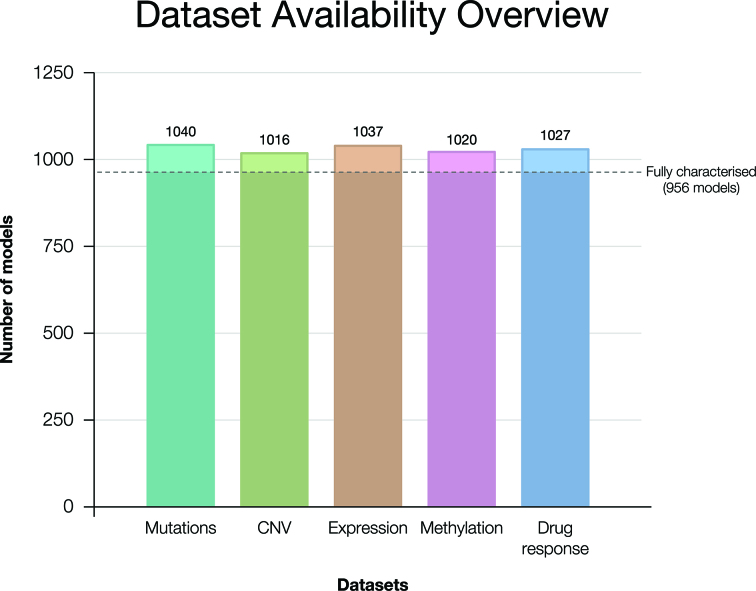
“Most cell models (85%) have associated somatic nucleotide variant, gene expression, copy number variation or methylation datasets (Figure 2 and Supplementary Table S2).”
§ Cell Model Passports—a hub for clinical, genetic and functional datasets of preclinical cancer models > MODEL ANNOTATIONS > Datasets
plaincorrelational- Asserted: passes — The authors put it forward as true.
- Checkable: passes — It can be checked against evidence.
- Load-bearing: passes — The paper’s conclusions depend on it.
- Based: passes — The paper gives a reason why it holds.
- It may state two separate claims as one. 20
- Probably not a substantial claim. 15
None of the sources cited for this claim have been checked yet.
In the paper
“More than 1200 established cancer cell lines and newly derived organoid models comprise the foundational model set of the Passports, including all those utilized in the Sanger’s GDSC project (5, 18) as well as cell models generated as part of the Human Cancer Models Initiative.”
§ Cell Model Passports—a hub for clinical, genetic and functional datasets of preclinical cancer models > MODEL ANNOTATIONS
What the sources say
plainn = 1,200- Asserted: passes — The authors put it forward as true.
- Checkable: passes — It can be checked against evidence.
- Load-bearing: passes — The paper’s conclusions depend on it.
- Based: passes — The paper gives a reason why it holds.
It may state two separate claims as one.
The paper states this without a source or data behind it here, so there is nothing to check it against. The quote shows it is in the paper.
In the paper
“A flexible REST-API provides programmatic data access and exploration.”
- Also stated in: § API · plain
“Programmatic access to the Cell Model Passports database is available through a flexible API.”
§ Cell Model Passports—a hub for clinical, genetic and functional datasets of preclinical cancer models > Abstract
plaindirect- Asserted: passes — The authors put it forward as true.
- Checkable: passes — It can be checked against evidence.
- Load-bearing: fails — The paper’s conclusions may not depend on it.
- Based: passes — The paper gives a reason why it holds.
Probably not a substantial claim. The paper’s conclusions may not depend on it.
- Also stated in: § API · plain
A result the paper reports from its own data — it cites no other source for it, so there is none to check. The quote shows it is in the paper.
In the paper
“Here, we describe the Cell Model Passports database; cellmodelpassports.sanger.ac.uk, which provides details of cell model relationships, patient and clinical information, as well as access to associated genetic and functional datasets.”
§ Cell Model Passports—a hub for clinical, genetic and functional datasets of preclinical cancer models > Abstract
plain- Asserted: passes — The authors put it forward as true.
- Checkable: passes — It can be checked against evidence.
- Load-bearing: passes — The paper’s conclusions depend on it.
- Based: passes — The paper gives a reason why it holds.
It may state two separate claims as one.
The paper states this without a source or data behind it here, so there is nothing to check it against. The quote shows it is in the paper.
In the paper
“To facilitate access to available resources, all relationships between resources are fully annotated within the API, including API URLs to related resources.”
§ Cell Model Passports—a hub for clinical, genetic and functional datasets of preclinical cancer models > ACCESSING AND SEARCHING FOR MODEL INFORMATION AND DATASETS > API
plain- Asserted: passes — The authors put it forward as true.
- Checkable: passes — It can be checked against evidence.
- Load-bearing: fails — The paper’s conclusions may not depend on it.
- Based: passes — The paper gives a reason why it holds.
Probably not a substantial claim. The paper’s conclusions may not depend on it.
A result the paper reports from its own data — it cites no other source for it, so there is none to check. The quote shows it is in the paper.
In the paper
“Over 3500 genetic datasets and more than 1000 drug sensitivity datasets are available.”
§ Cell Model Passports—a hub for clinical, genetic and functional datasets of preclinical cancer models > MODEL ANNOTATIONS > Datasets
plain- Asserted: passes — The authors put it forward as true.
- Checkable: passes — It can be checked against evidence.
- Load-bearing: passes — The paper’s conclusions depend on it.
- Based: passes — The paper gives a reason why it holds.
It may state two separate claims as one.
The paper states this without a source or data behind it here, so there is nothing to check it against. The quote shows it is in the paper.
In the paper
“Any dataset values that were mapped to genes without an official gene symbol have been discarded from processing, but continue to be available in raw data downloads.”
§ Cell Model Passports—a hub for clinical, genetic and functional datasets of preclinical cancer models > MODEL ANNOTATIONS > Datasets
plaindirect- Asserted: passes — The authors put it forward as true.
- Checkable: passes — It can be checked against evidence.
- Load-bearing: fails — The paper’s conclusions may not depend on it.
- Based: passes — The paper gives a reason why it holds.
Probably not a substantial claim. The paper’s conclusions may not depend on it. It may state two separate claims as one.
The paper states this without a source or data behind it here, so there is nothing to check it against. The quote shows it is in the paper.
In the paper
“The website enables users to search and/or filter for cell models via a variety of features as well as providing access to datasets.”
§ Cell Model Passports—a hub for clinical, genetic and functional datasets of preclinical cancer models > ACCESSING AND SEARCHING FOR MODEL INFORMATION AND DATASETS > Web-based access
plain- Asserted: passes — The authors put it forward as true.
- Checkable: passes — It can be checked against evidence.
- Load-bearing: passes — The paper’s conclusions depend on it.
- Based: passes — The paper gives a reason why it holds.
Probably not a substantial claim. It may state two separate claims as one.
The paper states this without a source or data behind it here, so there is nothing to check it against. The quote shows it is in the paper.
In the paper
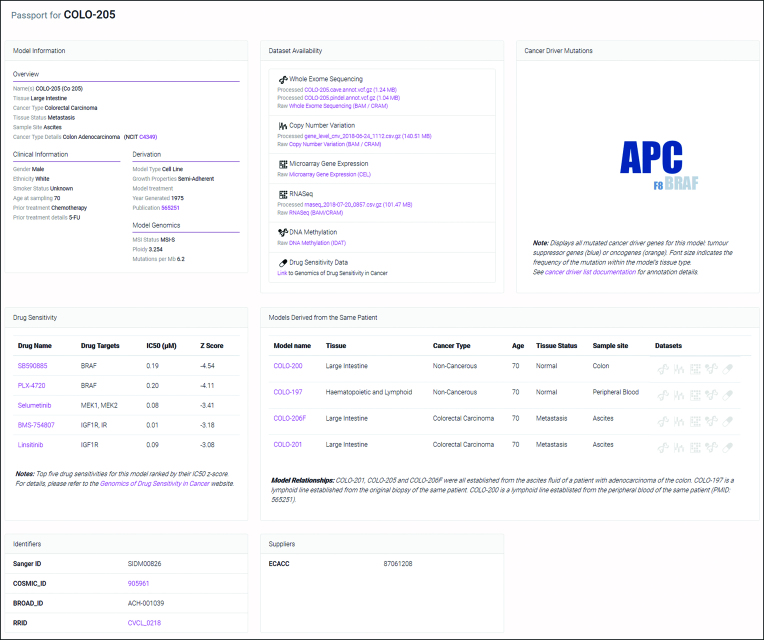
“Cancer driver mutation status for a model is provided as a word cloud, where text size represents the prevalence of mutations in a gene for all cell models of the same tissue type, and the colour differentiates between tumour suppressors and oncogenes.”
§ Cell Model Passports—a hub for clinical, genetic and functional datasets of preclinical cancer models > ACCESSING AND SEARCHING FOR MODEL INFORMATION AND DATASETS > Web-based access
plain- Asserted: passes — The authors put it forward as true.
- Checkable: passes — It can be checked against evidence.
- Load-bearing: fails — The paper’s conclusions may not depend on it.
- Based: passes — The paper gives a reason why it holds.
Probably not a substantial claim. The paper’s conclusions may not depend on it. It may state two separate claims as one.
The paper states this without a source or data behind it here, so there is nothing to check it against. The quote shows it is in the paper.
In the paper
“The search and filter functions allow users to not only conduct direct queries for an individual model or cancer, but also combine filters to identify a cohort of cell models with a particular set of characteristics.”
§ Cell Model Passports—a hub for clinical, genetic and functional datasets of preclinical cancer models > ACCESSING AND SEARCHING FOR MODEL INFORMATION AND DATASETS > Web-based access
plaindirect- Asserted: passes — The authors put it forward as true.
- Checkable: passes — It can be checked against evidence.
- Load-bearing: fails — The paper’s conclusions may not depend on it.
- Based: passes — The paper gives a reason why it holds.
Probably not a substantial claim. The paper’s conclusions may not depend on it. It may state two separate claims as one.
The paper states this without a source or data behind it here, so there is nothing to check it against. The quote shows it is in the paper.
In the paper
“Models in the Passports have been derived from primary, metastatic, pre-cancerous and normal samples as indicated by ‘Tissue Status’, the anatomical site from which the sample was obtained ‘Sample Site’ is also provided.”
§ Cell Model Passports—a hub for clinical, genetic and functional datasets of preclinical cancer models > MODEL ANNOTATIONS
plain- Asserted: passes — The authors put it forward as true.
- Checkable: passes — It can be checked against evidence.
- Load-bearing: unclear — It is unclear whether the paper’s conclusions depend on it.
- Based: passes — The paper gives a reason why it holds.
It may state two separate claims as one.
The paper states this without a source or data behind it here, so there is nothing to check it against. The quote shows it is in the paper.
In the paper
“The Cell Model Passport is a centralized cell model hub, providing a platform for researchers to investigate key patient and sample information, manually and programmatically access multiple genetic and functional datasets, and facilitate integration of data from different sources through mapping of unique identifiers.”
§ Cell Model Passports—a hub for clinical, genetic and functional datasets of preclinical cancer models > DISCUSSION
plain- Asserted: passes — The authors put it forward as true.
- Checkable: passes — It can be checked against evidence.
- Load-bearing: passes — The paper’s conclusions depend on it.
- Based: passes — The paper gives a reason why it holds.
It may state two separate claims as one.
The paper states this without a source or data behind it here, so there is nothing to check it against. The quote shows it is in the paper.
In the paper
“Multiple information panels are displayed on the Model Page (Figure 3). ‘Model Information’ is provided for all models while additional panels are dependent upon availability of relevant information.”
§ Cell Model Passports—a hub for clinical, genetic and functional datasets of preclinical cancer models > ACCESSING AND SEARCHING FOR MODEL INFORMATION AND DATASETS > Web-based access
plain- Asserted: passes — The authors put it forward as true.
- Checkable: passes — It can be checked against evidence.
- Load-bearing: fails — The paper’s conclusions may not depend on it.
- Based: passes — The paper gives a reason why it holds.
Probably not a substantial claim. The paper’s conclusions may not depend on it. It may state two separate claims as one.
The paper states this without a source or data behind it here, so there is nothing to check it against. The quote shows it is in the paper.
In the paper
“The processed datasets provide gene-level information, rather than segment or transcript, allowing direct integration and cross-comparisons with other datasets within the Passports.”
§ Cell Model Passports—a hub for clinical, genetic and functional datasets of preclinical cancer models > MODEL ANNOTATIONS > Datasets
plaindirect- Asserted: passes — The authors put it forward as true.
- Checkable: passes — It can be checked against evidence.
- Load-bearing: passes — The paper’s conclusions depend on it.
- Based: passes — The paper gives a reason why it holds.
It may state two separate claims as one.
The paper states this without a source or data behind it here, so there is nothing to check it against. The quote shows it is in the paper.
In the paper
“The processed files and a description of cancer driver gene status for each model facilitates access for non-informaticians.”
§ Cell Model Passports—a hub for clinical, genetic and functional datasets of preclinical cancer models > MODEL ANNOTATIONS > Datasets
plaindirect- Asserted: passes — The authors put it forward as true.
- Checkable: fails — It may be too vague to check against evidence.
- Load-bearing: fails — The paper’s conclusions may not depend on it.
- Based: passes — The paper gives a reason why it holds.
Probably not a substantial claim. It may be too vague to check against evidence. The paper’s conclusions may not depend on it.
The paper states this without a source or data behind it here, so there is nothing to check it against. The quote shows it is in the paper.
In the paper
“Data files are hosted on a robust S3 object store platform or in third party repositories; the Cell Model Passport database contains links to these files together with associated metadata.”
§ Cell Model Passports—a hub for clinical, genetic and functional datasets of preclinical cancer models > ACCESSING AND SEARCHING FOR MODEL INFORMATION AND DATASETS > Data files
plaincorrelational- Asserted: passes — The authors put it forward as true.
- Checkable: passes — It can be checked against evidence.
- Load-bearing: fails — The paper’s conclusions may not depend on it.
- Based: passes — The paper gives a reason why it holds.
Probably not a substantial claim. The paper’s conclusions may not depend on it. It may state two separate claims as one.
The paper states this without a source or data behind it here, so there is nothing to check it against. The quote shows it is in the paper.
In the paper
“Endpoints are available for lists of patients, samples, models, identifiers, files, all processed datasets and cancer driver mutations.”
§ Cell Model Passports—a hub for clinical, genetic and functional datasets of preclinical cancer models > ACCESSING AND SEARCHING FOR MODEL INFORMATION AND DATASETS > API
plain- Asserted: passes — The authors put it forward as true.
- Checkable: passes — It can be checked against evidence.
- Load-bearing: fails — The paper’s conclusions may not depend on it.
- Based: passes — The paper gives a reason why it holds.
Probably not a substantial claim. The paper’s conclusions may not depend on it.
The paper states this without a source or data behind it here, so there is nothing to check it against. The quote shows it is in the paper.
In the paper
“Drug sensitivity data obtained from the GDSC project are also reported showing the compounds to which a model is most sensitive.”
§ Cell Model Passports—a hub for clinical, genetic and functional datasets of preclinical cancer models > ACCESSING AND SEARCHING FOR MODEL INFORMATION AND DATASETS > Web-based access
plain- Asserted: passes — The authors put it forward as true.
- Checkable: passes — It can be checked against evidence.
- Load-bearing: fails — The paper’s conclusions may not depend on it.
- Based: passes — The paper gives a reason why it holds.
Probably not a substantial claim. The paper’s conclusions may not depend on it.
The paper states this without a source or data behind it here, so there is nothing to check it against. The quote shows it is in the paper.
In the paper
“There are two categories of files, each with their own database table: generic files and model files.”
§ Cell Model Passports—a hub for clinical, genetic and functional datasets of preclinical cancer models > ACCESSING AND SEARCHING FOR MODEL INFORMATION AND DATASETS > Data files
plaincorrelational- Asserted: passes — The authors put it forward as true.
- Checkable: passes — It can be checked against evidence.
- Load-bearing: fails — The paper’s conclusions may not depend on it.
- Based: passes — The paper gives a reason why it holds.
Probably not a substantial claim. The paper’s conclusions may not depend on it. It may state two separate claims as one.
None of the sources cited for this claim have been checked yet.
In the paper
“The lack of a consistent controlled vocabulary to describe cell line metadata and the large number of synonymous identifiers makes data integration and cross-referencing of datasets burdensome (14, 15).”
§ Cell Model Passports—a hub for clinical, genetic and functional datasets of preclinical cancer models > INTRODUCTION
What the sources say
plaindirect- Asserted: passes — The authors put it forward as true.
- Checkable: passes — It can be checked against evidence.
- Load-bearing: passes — The paper’s conclusions depend on it.
- Based: passes — The paper gives a reason why it holds.
It may state two separate claims as one.
In the paper
“In addition, key patient and clinical information has been lost including relationships between cell lines originally derived from the same patient or sample (13).”
§ Cell Model Passports—a hub for clinical, genetic and functional datasets of preclinical cancer models > INTRODUCTION
What the sources say
- Not checked yetcites [13] Vermeulen, 1998, Did the four human cancer cell lines DLD-1, HCT-15, HCT-8, and HRT-18 originate from one and the same patient, Cancer Genet. Cytogenet. source
plain- Asserted: passes — The authors put it forward as true.
- Checkable: passes — It can be checked against evidence.
- Load-bearing: passes — The paper’s conclusions depend on it.
- Based: passes — The paper gives a reason why it holds.
It may state two separate claims as one.
None of the sources cited for this claim have been checked yet.
In the paper
“Many models have inadvertently been cross-contaminated (9–11) or are associated with numerous synonymous identifiers (11, 12).”
§ Cell Model Passports—a hub for clinical, genetic and functional datasets of preclinical cancer models > INTRODUCTION
What the sources say
- Not checked yetcites [9] Gartler, 1968, Apparent Hela cell contamination of human heteroploid cell lines, Nature source
- Not checked yetcites [10] Nelson-Rees, 1974, Banded marker chromosomes as indicators of intraspecies cellular contamination, Science source
- Not checked yetcites [11] Lorsch, 2014, Cell Biology. Fixing problems with cell lines, Science source
- Not checked yetcites [12] Luong, 2011, A call for standardized naming and reporting of human ESC and iPSC lines, Cell Stem Cell source
plaincorrelational- Asserted: passes — The authors put it forward as true.
- Checkable: passes — It can be checked against evidence.
- Load-bearing: passes — The paper’s conclusions depend on it.
- Based: passes — The paper gives a reason why it holds.
It may state two separate claims as one.
A conclusion the paper draws from its own results — it cites no other source for it, so there is none to check. The quote shows it is in the paper.
In the paper
“Therefore, a clear understanding of the characteristics and source of the model used to generate a given dataset is important for reproducibility of results.”
§ Cell Model Passports—a hub for clinical, genetic and functional datasets of preclinical cancer models > INTRODUCTION
boosteddirect- Asserted: passes — The authors put it forward as true.
- Checkable: fails — It may be too vague to check against evidence.
- Load-bearing: passes — The paper’s conclusions depend on it.
- Based: passes — The paper gives a reason why it holds.
Probably not a substantial claim. It may be too vague to check against evidence.
What the paper did — it cites no source for this, so there is none to check. The quote shows it is in the paper.
In the paper
“By default, models sharing common ancestry are assigned to separate samples of a single patient, unless evidence is available indicating otherwise. This relatively conservative approach ensures data can be accurately attributed to the specific cell model, thereby improving reproducibility between users of the same or related models.”
§ Cell Model Passports—a hub for clinical, genetic and functional datasets of preclinical cancer models > DATABASE CONSTRUCTION > Curation
plaindirect- Asserted: passes — The authors put it forward as true.
- Checkable: passes — It can be checked against evidence.
- Load-bearing: passes — The paper’s conclusions depend on it.
- Based: passes — The paper gives a reason why it holds.
Probably not a substantial claim. It may state two separate claims as one.
None of the sources cited for this claim have been checked yet.
In the paper
“First, Cellosaurus and cBioPortal do not provide cell model functional information, while PharmacoDB does not contain genomic annotation of the cell models and has limited sample/model information.”
§ Cell Model Passports—a hub for clinical, genetic and functional datasets of preclinical cancer models > DISCUSSION
What the sources say
- Not checked yetcites [19] Bairoch, 2018, The Cellosaurus, a Cell-Line Knowledge Resource, J. Biomol. Tech. source
- Not checked yetcites [35] Smirnov, 2018, PharmacoDB: an integrative database for mining in vitro anticancer drug screening studies, Nucleic Acids Res. source
- Not checked yetcites [36] Cerami, 2012, The cBio cancer genomics portal: an open platform for exploring multidimensional cancer genomics data, Cancer Discov. source
plain- Asserted: passes — The authors put it forward as true.
- Checkable: passes — It can be checked against evidence.
- Load-bearing: passes — The paper’s conclusions depend on it.
- Based: passes — The paper gives a reason why it holds.
It may state two separate claims as one.
None of the sources cited for this claim have been checked yet.
In the paper
“Furthermore, with recent technological advancements (e.g. organoid models and conditionally reprogrammed cell lines), a new generation of cancer cell models is being derived to allow full representation of the histopathological and molecular diversity of tumours (37–42).”
§ Cell Model Passports—a hub for clinical, genetic and functional datasets of preclinical cancer models > DISCUSSION
What the sources say
- Not checked yetcites [37] van de Wetering, 2015, Prospective derivation of a living organoid biobank of colorectal cancer patients, Cell source
- Not checked yetcites [38] Broutier, 2017, Human primary liver cancer-derived organoid cultures for disease modeling and drug screening, Nat. Med. source
- Not checked yetcites [39] Sachs, 2018, A living biobank of breast cancer organoids captures disease heterogeneity, Cell source
- Not checked yetcites [40] Tiriac, 2018, Organoid profiling identifies common responders to chemotherapy in pancreatic cancer, Cancer Discov. source
- Not checked yetcites [41] Boj, 2015, Organoid models of human and mouse ductal pancreatic cancer, Cell source
- Not checked yetcites [42] Nanki, 2018, Divergent routes toward Wnt and R-spondin niche independency during human gastric carcinogenesis, Cell source
plaindirect- Asserted: passes — The authors put it forward as true.
- Checkable: passes — It can be checked against evidence.
- Load-bearing: fails — The paper’s conclusions may not depend on it.
- Based: passes — The paper gives a reason why it holds.
Probably not a substantial claim. The paper’s conclusions may not depend on it.
What the paper did — it cites no source for this, so there is none to check. The quote shows it is in the paper.
In the paper
“Currently, all datasets have been generated by the Sanger Institute and consequently there is a direct relationship between the cell model described and the datasets provided, mitigating the risk of mis-identification and genetic drift.”
§ Cell Model Passports—a hub for clinical, genetic and functional datasets of preclinical cancer models > MODEL ANNOTATIONS > Datasets
plaindirect- Asserted: passes — The authors put it forward as true.
- Checkable: passes — It can be checked against evidence.
- Load-bearing: unclear — It is unclear whether the paper’s conclusions depend on it.
- Based: passes — The paper gives a reason why it holds.
It may state two separate claims as one.
A conclusion the paper draws from its own results — it cites no other source for it, so there is none to check. The quote shows it is in the paper.
In the paper
“In summary, the Cell Model Passports provide a resource to reduce the mis-identification of cell models, facilitate data integration and subsequently improve experimental reproducibility in cancer research and related fields.”
§ Cell Model Passports—a hub for clinical, genetic and functional datasets of preclinical cancer models > DISCUSSION
plaindirect- Asserted: passes — The authors put it forward as true.
- Checkable: passes — It can be checked against evidence.
- Load-bearing: passes — The paper’s conclusions depend on it.
- Based: passes — The paper gives a reason why it holds.
It may state two separate claims as one.
The paper relies on this without support.
Datasets associated with cell models are often inaccessible to non-computational, wet-lab scientists.
“Furthermore, these datasets are often inaccessible to non-computational, wet-lab scientists.”
The paper relies on this without support.
It is often difficult to determine what information is available for a particular cell line and how to access these data.
“Although many cell lines have been genetically and functionally characterized, it is often difficult to determine what information is available for a particular cell line and how to access these data.”
Claims other papers make about this one
Each is checked against this paper’s own text: does it say what the citing paper says it does?
In the citing paper
“''Fitness Scores'' that were calculated from large-scale genome-wide CRISPR/Cas9 screens across 31 independent CRC cell lines and represent a quantitative measure of the reduction of cell viability elicited by a gene inactivation via CRISPR/Cas9 (https://score.depmap.sanger.ac.uk) (Behan et al., 2019;van der Meer et al., 2019).”
From Degradation of CCNK/CDK12 is a druggable vulnerability of colorectal cancer (2021) · cites this paper as van der Meer et al., 2019
Citations
Cites
Cerami, E., Gao, J., Dogrusoz, U., Gross, B. E., Sumer, S. O., Aksoy, B. A., Jacobsen, A., Byrne, C. J., Heuer, M. L., Larsson, E., et al. (2012) · Cancer Discovery · doi:10.1158/2159-8290.cd-12-0095 · Cited by 17,455
Lynch, T. J., Bell, D. W., Sordella, R., Gurubhagavatula, S., Okimoto, R. A., Brannigan, B. W., Harris, P. L., Haserlat, S. M., Supko, J. G., Haluska, F. G., et al. (2004) · New England Journal of Medicine · doi:10.1056/nejmoa040938 · Cited by 11,486
The Cancer Cell Line Encyclopedia enables predictive modelling of anticancer drug sensitivity
Barretina, J., Caponigro, G., Stransky, N., Venkatesan, K., Margolin, A. A., Kim, S., Wilson, C. J., Lehár, J., Kryukov, G. V., Sonkin, D., et al. (2012) · Nature · doi:10.1038/nature11003 · Cited by 7,950
Improved survival with vemurafenib in melanoma with BRAF V600E mutation
Chapman, P. B., Hauschild, A., Robert, C., Haanen, J. B., Ascierto, P., Larkin, J., Dummer, R., Garbe, C., Testori, A., Maio, M., et al. (2011) · New England Journal of Medicine · doi:10.1056/nejmoa1103782 · Cited by 7,720 · cited 1×
“…of anti-cancer drugs, such as the epidermal growth factor receptor (EGFR) inhibitor gefitinib for the treatment of non-small-cell lung cancer (1), inhibitors of the protein kinase BRAF in melanoma (2) and anaplastic lymphoma kinase (ALK) inhibitors for ALK-fusion positive lung cancer (3).”
BackgroundCrizotinib versus Chemotherapy in Advanced ALK -Positive Lung Cancer
Shaw, A. T., Kim, D.-W., Nakagawa, K., Seto, T., Crinó, L., Ahn, M.-J., De Pas, T., Besse, B., Solomon, B. J., Blackhall, F., et al. (2013) · New England Journal of Medicine · doi:10.1056/nejmoa1214886 · Cited by 3,381
Alley, M. C., Scudiero, D. A., Monks, A. P., Hursey, M. L., Czerwiński, M., Fine, D. L., Abbott, B. J., Mayo, J. G., Shoemaker, R. H., & Boyd, M. R. (1988) · PubMed · Cited by 3,082
Systematic identification of genomic markers of drug sensitivity in cancer cells
Garnett, M. J., Edelman, E. J., Heidorn, S. J., Greenman, C. D., Dastur, A., Lau, K. W., Greninger, P., Thompson, I. R., Luo, X., Soares, J., et al. (2012) · Nature · doi:10.1038/nature11005 · Cited by 2,456
Self-citationProspective Derivation of a Living Organoid Biobank of Colorectal Cancer Patients
van de Wetering, M., Francies, H. E., Francis, J. M., Bounova, G., Iorio, F., Pronk, A., van Houdt, W., van Gorp, J., Taylor-Weiner, A., Kester, L., et al. (2015) · Cell · doi:10.1016/j.cell.2015.03.053 · Cited by 2,408
Self-citationGiard, D. J., Aaronson, S. A., Todaro, G. J., Arnstein, P., Kersey, J. H., Dosik, H., & Parks, W. P. (1973) · JNCI Journal of the National Cancer Institute · doi:10.1093/jnci/51.5.1417 · Cited by 2,336
Organoid models of human and mouse ductal pancreatic cancer
Boj, S. F., Hwang, C.-I., Baker, L. A., Chio, I. I. C., Engle, D. D., Corbo, V., Jager, M., Ponz-Sarvise, M., Tiriac, H., Spector, M. S., et al. (2015) · Cell · doi:10.1016/j.cell.2014.12.021 · Cited by 2,150
Cited by
Sorted by citations
Prioritization of cancer therapeutic targets using CRISPR–Cas9 screens
Behan, F. M., Iorio, F., Picco, G., Gonçalves, E., Beaver, C. M., Migliardi, G., Santos, R., Rao, Y., Sassi, F., Pinnelli, M., et al. (2019) · Nature · doi:10.1038/s41586-019-1103-9 · Cited by 1,338
Self-citationEffective drug combinations in breast, colon and pancreatic cancer cells
Jaaks, P., Coker, E. A., Vis, D. J., Edwards, O., Carpenter, E. F., Leto, S. M., Dwane, L., Sassi, F., Lightfoot, H., Barthorpe, S., et al. (2022) · Nature · doi:10.1038/s41586-022-04437-2 · Cited by 469
Self-citationCancer Cell Lines Are Useful Model Systems for Medical Research
Mirabelli, P., Coppola, L., & Salvatore, M. (2019) · Cancers · doi:10.3390/cancers11081098 · Cited by 346
Integrated cross-study datasets of genetic dependencies in cancer
Pacini, C., Dempster, J. M., Boyle, I., Gonçalves, E., Najgebauer, H., Karakoç, E., van der Meer, D. J., Barthorpe, A. S., Lightfoot, H. W., Jaaks, P., et al. (2021) · Nature Communications · doi:10.1038/s41467-021-21898-7 · Cited by 299
Self-citationDrugComb: an integrative cancer drug combination data portal
Zagidullin, B., Aldahdooh, J., Zheng, S., Wang, W., Wang, Y., Saad, J. J., Malyutina, A., Jafari, M., Tanoli, Z., Pessia, A., et al. (2019) · Nucleic Acids Research · doi:10.1093/nar/gkz337 · Cited by 270
Pan-cancer proteomic map of 949 human cell lines
Gonçalves, E., Poulos, R. C., Cai, Z., Barthorpe, S., Manda, S. S., Lucas, N., Beck, A., Bucio-Noble, D., Dausmann, M., Hall, C., et al. (2022) · Cancer Cell · doi:10.1016/j.ccell.2022.06.010 · Cited by 239
Self-citationArtificial intelligence, machine learning, and drug repurposing in cancer
Tanoli, Z., Vähä-Koskela, M. J. V., & Aittokallio, T. A. (2021) · Expert Opinion on Drug Discovery · doi:10.1080/17460441.2021.1883585 · Cited by 229
Phenotypic plasticity and genetic control in colorectal cancer evolution
Househam, J., Heide, T., Cresswell, G. D., Spiteri, I., Kimberley, C., Zapata, L., Lynn, C., James, C. T., Mossner, M., Fernández-Mateos, J., et al. (2022) · Nature · doi:10.1038/s41586-022-05311-x · Cited by 187
Picco, G., Chen, E. D., García‐Alonso, L., Behan, F. M., Gonçalves, E., Bignell, G. R., Matchan, A., Fu, B., Banerjee, R., Anderson, E., et al. (2019) · Nature Communications · doi:10.1038/s41467-019-09940-1 · Cited by 128
Self-citationDrugComb update: a more comprehensive drug sensitivity data repository and analysis portal
Zheng, S., Aldahdooh, J., Shadbahr, T., Wang, Y., Aldahdooh, D., Bao, J., Wang, W., & Tang, J. P. (2021) · Nucleic Acids Research · doi:10.1093/nar/gkab438 · Cited by 135
Dwane, L., Behan, F. M., Gonçalves, E., Lightfoot, H. W., Yang, W., van der Meer, D. J., Shepherd, R., Pignatelli, M., Iorio, F., & Garnett, M. J. (2020) · Nucleic Acids Research · doi:10.1093/nar/gkaa882 · Cited by 120
Self-citationPicco, G., Cattaneo, C. M., van Vliet, E. J., Crisafulli, G., Rospo, G., Consonni, S., Vieira, S. F., Sánchez-Rodríguez, I., Cancelliere, C., Banerjee, R., et al. (2021) · Cancer Discovery · doi:10.1158/2159-8290.cd-20-1508 · Cited by 112
Self-citationPacini, C., Duncan, E., Gonçalves, E., Gilbert, J. G. R., Bhosle, S. G., Horswell, S. D., Karakoç, E., Lightfoot, H. W., Curry, E. W., Muyas, F., et al. (2024) · Cancer Cell · doi:10.1016/j.ccell.2023.12.016 · Cited by 116
Self-citationDrug mechanism‐of‐action discovery through the integration of pharmacological and CRISPR screens
Gonçalves, E., Segura‐Cabrera, A., Pacini, C., Picco, G., Behan, F. M., Jaaks, P., Coker, E. A., van der Meer, D., Barthorpe, A. S., Lightfoot, H. W., et al. (2020) · Molecular Systems Biology · doi:10.15252/msb.20199405 · Cited by 106
Self-citationDegradation of CCNK/CDK12 is a druggable vulnerability of colorectal cancer
Dieter, S. M., Siegl, C., Codó, P. L., Huerta, M., Ostermann-Parucha, A. L., Schulz, E., Zowada, M. K., Martin, S., Laaber, K., Nowrouzi, A., et al. (2021) · Cell Reports · doi:10.1016/j.celrep.2021.109394 · Cited by 95
Base editing screens map mutations affecting interferon-γ signaling in cancer
Coelho, M. A., Cooper, S., Strauß, M. E., Karakoç, E., Bhosle, S. G., Gonçalves, E., Picco, G., Burgold, T., Cattaneo, C. M., Veninga, V., et al. (2023) · Cancer Cell · doi:10.1016/j.ccell.2022.12.009 · Cited by 94
Self-citationNovel WRN Helicase Inhibitors Selectively Target Microsatellite-Unstable Cancer Cells
Picco, G., Rao, Y., Saedi, A. A., Lee, Y., Vieira, S. F., Bhosle, S. G., May, K., Herranz, C., Walker, S. J., Shenje≠, R., et al. (2024) · Cancer Discovery · doi:10.1158/2159-8290.cd-24-0052 · Cited by 72
Self-citationBase editing screens define the genetic landscape of cancer drug resistance mechanisms
Coelho, M. A., Strauß, M. E., Watterson, A., Cooper, S., Bhosle, S. G., Illuzzi, G., Karakoç, E., Dinçer, C., Vieira, S. F., Sharma, M., et al. (2024) · Nature Genetics · doi:10.1038/s41588-024-01948-8 · Cited by 65
Self-citationAtlas of Lobular Breast Cancer Models: Challenges and Strategic Directions
Sflomos, G., Schipper, K., Koorman, T., Fitzpatrick, A., Oesterreich, S., Lee, A. V., Jonkers, J., Brunton, V. G., Christgen, M., Isacke, C. M., et al. (2021) · Cancers · doi:10.3390/cancers13215396 · Cited by 51
Seo, H., Tkachuk, D., Ho, C., Mammoliti, A., Rezaie, A., Tonekaboni, S. A. M., & Haibe‐Kains, B. (2020) · Nucleic Acids Research · doi:10.1093/nar/gkaa421 · Cited by 50
Lord, C. J., Quinn, N., & Ryan, C. J. (2020) · eLife · doi:10.7554/elife.58925 · Cited by 46
The 26th annual Nucleic Acids Research database issue and Molecular Biology Database Collection
Rigden, D. J., & Fernández, X. M. (2018) · Nucleic Acids Research · doi:10.1093/nar/gky1267 · Cited by 48
A suspension technique for efficient large-scale cancer organoid culturing and perturbation screens
Price, S., Bhosle, S. G., Gonçalves, E., Li, X., McClurg, D. P., Barthorpe, S., Beck, A., Hall, C., Lightfoot, H. W., Farrow, L., et al. (2022) · Scientific Reports · doi:10.1038/s41598-022-09508-y · Cited by 47
Self-citationZhou, Y., Dai, Q., Xu, Y., Wu, S., Cheng, M., & Zhao, B. T. (2025) · npj Precision Oncology · doi:10.1038/s41698-025-01082-6 · Cited by 50
Large-scale Pan-cancer Cell Line Screening Identifies Actionable and Effective Drug Combinations
Bashi, A. C., Coker, E. A., Bulusu, K. C., Jaaks, P., Crafter, C., Lightfoot, H. W., Milo, M., McCarten, K., Jenkins, D. F., van der Meer, D. J., et al. (2024) · Cancer Discovery · doi:10.1158/2159-8290.cd-23-0388 · Cited by 43
Self-citationDrug-adapted cancer cell lines as preclinical models of acquired resistance
Michaelis, M., Wass, M. N., & Cinatl, J. J. (2019) · Cancer Drug Resistance · doi:10.20517/cdr.2019.005 · Cited by 47
CELLector: Genomics-Guided Selection of Cancer In Vitro Models
Najgebauer, H., Yang, M., Francies, H. E., Pacini, C., Stronach, E. A., Garnett, M. J., Sáez-Rodríguez, J., & Iorio, F. (2020) · Cell Systems · doi:10.1016/j.cels.2020.04.007 · Cited by 43
Self-citationSynthetic augmentation of cancer cell line multi-omic datasets using unsupervised deep learning
Cai, Z., Apolinário, S., Baião, A. R., Pacini, C., Sousa, M. D., Vinga, S., Reddel, R. R., Robinson, P. J., Garnett, M. J., Zhong, Q., et al. (2024) · Nature Communications · doi:10.1038/s41467-024-54771-4 · Cited by 49
Self-citationBéal, J., Pantolini, L., Noël, V., Barillot, E., & Calzone, L. (2021) · PLoS Computational Biology · doi:10.1371/journal.pcbi.1007900 · Cited by 47
A systematic evaluation of deep learning methods for the prediction of drug synergy in cancer
Baptista, D., Ferreira, P. G., & Rocha, M. (2023) · PLoS Computational Biology · doi:10.1371/journal.pcbi.1010200 · Cited by 39
Multi-omics based and AI-driven drug repositioning for epigenetic therapy in female malignancies
Salvati, A., Melone, V., Giordano, A., Lamberti, J., Palumbo, D., Palo, L., Rea, D., Memoli, D., Simonis, V., Alexandrova, E., et al. (2025) · Journal of Translational Medicine · doi:10.1186/s12967-025-06856-x · Cited by 40
Lenoir, W. F., Morgado, M. C., DeWeirdt, P. C., McLaughlin, M. E., Griffith, A. L., Sangree, A. K., Feeley, M. N., Anvar, N. E., Kim, E., Bertolet, L. L., et al. (2021) · Nature Communications · doi:10.1038/s41467-021-26867-8 · Cited by 31
Wang, X., Zhu, H., Chen, D., Yu, Y., Liu, Q., & Liu, Q. (2023) · Bioinformatics · doi:10.1093/bioinformatics/btad351 · Cited by 31
Computational estimation of quality and clinical relevance of cancer cell lines
Trastulla, L., Noorbakhsh, J., Vazquez, F., McFarland, J., & Iorio, F. (2022) · Molecular Systems Biology · doi:10.15252/msb.202211017 · Cited by 31
Mooney, B., Negri, G. L., Shyp, T., Delaidelli, A., Zhang, H., Miko, S. E. S., Weiner, A. K., Radaoui, A. B., Shraim, R., Lizardo, M. M., et al. (2023) · Clinical Cancer Research · doi:10.1158/1078-0432.ccr-23-2187 · Cited by 31
Baird, L., & Yamamoto, M. P. (2023) · Redox Biology · doi:10.1016/j.redox.2023.102904 · Cited by 31
Page, C. L., Amuzu, S., Rahimi, K., Gotlieb, W. H., Ragoussis, J., & Tonin, P. N. (2020) · Seminars in Cancer Biology · doi:10.1016/j.semcancer.2020.08.005 · Cited by 30
Mechanism of activation and the rewired network: New drug design concepts
Nussinov, R., Zhang, M., Maloney, R., Tsai, C., Yavuz, B. R., Tunçbağ, N., & Jang, H. (2021) · Medicinal Research Reviews · doi:10.1002/med.21863 · Cited by 30
Kurz, C. G., Preuß, F., Tjaden, A., Cusack, M., Amrhein, J. A., Chatterjee, D., Mathea, S., Berger, L. M., Berger, B., Krämer, A., et al. (2022) · Journal of Medicinal Chemistry · doi:10.1021/acs.jmedchem.2c00173 · Cited by 30
Optimization of Cas12a for multiplexed genome-scale transcriptional activation
Griffith, A. L., Zheng, F., McGee, A. V., Miller, N., Szegletes, Z. M., Reint, G., Gademann, F., Nwolah, I., Hegde, M., Liu, Y. V., et al. (2023) · Cell Genomics · doi:10.1016/j.xgen.2023.100387 · Cited by 28
A pan-cancer survey of cell line tumor similarity by feature-weighted molecular profiles
Sinha, R., Luna, A., Schultz, N. D., & Sander, C. (2021) · Cell Reports Methods · doi:10.1016/j.crmeth.2021.100039 · Cited by 28
Looking at the BiG picture: incorporating bipartite graphs in drug response prediction
Hostallero, D. E., Li, Y., & Emad, A. (2022) · Bioinformatics · doi:10.1093/bioinformatics/btac383 · Cited by 28
Ancestry matters: Building inclusivity into preclinical study design
Zaaijer, S., & Capes‐Davis, A. (2021) · Cell · doi:10.1016/j.cell.2021.03.041 · Cited by 27
Vinceti, A., Karakoç, E., Pacini, C., Perron, U., Lucia, R. R. D., Garnett, M. J., & Iorio, F. (2021) · BMC Genomics · doi:10.1186/s12864-021-08129-5 · Cited by 27
Self-citationCEN‐tools: an integrative platform to identify the contexts of essential genes
Sharma, S., Dinçer, C., Weidemüller, P., Wright, G. J., & Petsalaki, E. (2020) · Molecular Systems Biology · doi:10.15252/msb.20209698 · Cited by 25
PPM1D in Solid and Hematologic Malignancies: Friend and Foe?
Zhang, L., Hsu, J. I., & Goodell, M. A. (2022) · Molecular Cancer Research · doi:10.1158/1541-7786.mcr-21-1018 · Cited by 29
Novel NRF2 ‐activated cancer treatments utilizing synthetic lethality
Baird, L., Kensler, T. W., & Yamamoto, M. P. (2022) · IUBMB Life · doi:10.1002/iub.2680 · Cited by 26
MYC is a clinically significant driver of mTOR inhibitor resistance in breast cancer
Bhin, J., Yemelyanenko, J., Chao, X., Klarenbeek, S., Opdam, M., Malka, Y., Hoekman, L., Kruger, D. T., Bleijerveld, O. B., Brambillasca, C. S., et al. (2023) · The Journal of Experimental Medicine · doi:10.1084/jem.20211743 · Cited by 28
Grillone, K., Ascrizzi, S., Cremaschi, P., Amato, J., Polerà, N., Croci, O., Rocca, R., Riillo, C., Conforti, F., Graziano, R., et al. (2024) · Blood · doi:10.1182/blood.2023021991 · Cited by 23
Pan-cancer clinical impact of latent drivers from double mutations
Yavuz, B. R., Tsai, C., Nussinov, R., & Tunçbağ, N. (2023) · Communications Biology · doi:10.1038/s42003-023-04519-5 · Cited by 25
RAGE engagement by SARS-CoV-2 enables monocyte infection and underlies COVID-19 severity
Angioni, R., Bonfanti, M., Caporale, N., Sánchez‐Rodríguez, R., Munari, F., Savino, A., Pasqualato, S., Buratto, D., Pagani, I., Bertoldi, N., et al. (2023) · Cell Reports Medicine · doi:10.1016/j.xcrm.2023.101266 · Cited by 24
Szalai, B., & Veres, D. V. (2023) · Frontiers in Systems Biology · doi:10.3389/fsysb.2023.1126044 · Cited by 21
Kim, N., Hwang, C. Y., Kim, T., Kim, H., & Cho, K. (2023) · Cancer Research · doi:10.1158/0008-5472.can-22-1559 · Cited by 21
Functional genomics approaches to improve pre‐clinical drug screening and biomarker discovery
Nguyen, L. V., & Caldas, C. (2021) · EMBO Molecular Medicine · doi:10.15252/emmm.202013189 · Cited by 19
Dinçer, C., Kaya, T., Keskin, Ö., Gürsoy, A., & Tunçbağ, N. (2019) · PLoS Computational Biology · doi:10.1371/journal.pcbi.1006789 · Cited by 17
Zhou, Y., Sun, Y., Huang, D., & Li, M. J. (2020) · Frontiers in Genetics · doi:10.3389/fgene.2020.00053 · Cited by 19
Absolute copy number fitting from shallow whole genome sequencing dataPreprint
Sauer, C. M., Eldridge, M., Vias, M., Hall, J. A. M., Boyle, S. E., Macintyre, G., Bradley, T. P., Markowetz, F. M., & Brenton, J. D. (2021) · bioRxiv (Cold Spring Harbor Laboratory) · doi:10.1101/2021.07.19.452658 · Cited by 17
Defining the landscape of metabolic dysregulations in cancer metastasis
Kader, S. A., Dib, S. S., Achkar, I. W., Thareja, G., Suhre, K., Rafii, A., & Halama, A. (2021) · Clinical & Experimental Metastasis · doi:10.1007/s10585-021-10140-9 · Cited by 18
Park, B., Raha, P., Pankovich, J., & Bazett, M. (2022) · Cancers · doi:10.3390/cancers15010028 · Cited by 18
Predicting anticancer synergistic drug combinations based on multi-task learning
Chen, D., Wang, X., Zhu, H., Jiang, Y., Li, Y., Liu, Q., & Liu, Q. (2023) · BMC Bioinformatics · doi:10.1186/s12859-023-05524-5 · Cited by 18
From organoids to bedside: Advances in modeling, decoding and targeting of colorectal cancer
Betge, J., & Jackstadt, R. (2022) · International Journal of Cancer · doi:10.1002/ijc.34297 · Cited by 17
CREAMMIST: an integrative probabilistic database for cancer drug response prediction
Yingtaweesittikul, H., Wu, J., Mongia, A., Peres, R., Ko, K. K. K., Nagarajan, N., & Suphavilai, C. (2022) · Nucleic Acids Research · doi:10.1093/nar/gkac911 · Cited by 19
Chen, X., Qian, W., Song, Z., Li, Q.-X., & Guo, S. (2020) · NAR Genomics and Bioinformatics · doi:10.1093/nargab/lqaa060 · Cited by 19
Perron, U., Grassi, E., Chatzipli, A., Viviani, M., Karakoç, E., Trastulla, L., Brochier, L. M., Isella, C., Zanella, E. R., Klett, H., et al. (2024) · Nature Communications · doi:10.1038/s41467-024-53163-y · Cited by 17
Jaiswal, A., Gautam, P., Pietilä, E. A., Timonen, S., Nordström, N., Akimov, Y. A., Sipari, N., Tanoli, Z., Fleischer, T., Lehti, K., et al. (2021) · Molecular Systems Biology · doi:10.15252/msb.20209526 · Cited by 15
Kimmel, G. J., Dane, M. A., Heiser, L. M., Altrock, P. M., & Andor, N. (2020) · Cancer Research · doi:10.1158/0008-5472.can-20-1231 · Cited by 14
IGF2BP3-EGFR-AKT axis promotes breast cancer MDA-MB-231 cell growth
Jing, X., Han, C., Li, Q., Li, F., Zhang, J., Jiang, Q., Zhao, F., Guo, C., Chen, J., Jiang, T., et al. (2023) · Biochimica et Biophysica Acta (BBA) - Molecular Cell Research · doi:10.1016/j.bbamcr.2023.119542 · Cited by 15
PDCM Finder: an open global research platform for patient-derived cancer models
Perova, Z., Martinez, M., Mandloi, T., López, F., Halmagyi, C., Follette, A., Mason, J., Newhauser, S., Begley, D. A., Krupke, D. M., et al. (2022) · Nucleic Acids Research · doi:10.1093/nar/gkac1021 · Cited by 15
Scalable and universal prediction of cellular phenotypes enables in silico experimentsPreprint
Ji, Y., Tejada-Lapuerta, A., Schmacke, N. A., Zheng, Z., Zhang, X., Khan, S., Rothenaigner, I., Tschuck, J., Hadian, K., Hornung, V., et al. (2024) · bioRxiv (Cold Spring Harbor Laboratory) · doi:10.1101/2024.08.12.607533 · Cited by 18
PTEN loss confers sensitivity to rapalogs in clear cell renal cell carcinoma
Liu, X.-L., Zhang, G., Huang, S., Shi, W.-H., Ye, L.-X., Ren, Z., Zhang, J., Liu, S., Yu, L., & Li, Y.-L. (2022) · Acta Pharmacologica Sinica · doi:10.1038/s41401-022-00862-1 · Cited by 14
Haplotype-specific assembly of shattered chromosomes in esophageal adenocarcinomas
Ijaz, J., Harry, E. F., Raine, K. M., Menzies, A. H., Beal, K. M., Quail, M. A., Zumalave, S., Jung, H., Coorens, T. H. H., Lawson, A. R. J., et al. (2024) · Cell Genomics · doi:10.1016/j.xgen.2023.100484 · Cited by 14
Self-citationOhnmacht, A. J., Rajamani, A., Avar, G., Kutkaite, G., Gonçalves, E., Saur, D., & Menden, M. P. (2023) · Communications Biology · doi:10.1038/s42003-023-05198-y · Cited by 12
The LL-100 Cell Lines Panel: Tool for Molecular Leukemia–Lymphoma Research
Drexler, H. G., & Quentmeier, H. (2020) · International Journal of Molecular Sciences · doi:10.3390/ijms21165800 · Cited by 15
Advancing CRISPR with deep learning: A comprehensive review of models and databases
Alipanahi, R., Safari, L., & Khanteymoori, A. (2025) · Molecular Therapy — Nucleic Acids · doi:10.1016/j.omtn.2025.102691 · Cited by 14
Circadian transcriptome of pancreatic adenocarcinoma unravels chronotherapeutic targets
Sharma, D., Adnan, D., Abdel-Reheem, M. K., Anafi, R. C., Leary, D. D., & Bishehsari, F. (2024) · JCI Insight · doi:10.1172/jci.insight.177697 · Cited by 12
M3NetFlow: A multi-scale multi-hop graph AI model for integrative multi-omic data analysis
Zhang, H., Goedegebuure, S. P., Ding, L., DeNardo, D., Fields, R. C., Province, M., Chen, Y., Payne, P., & Li, F. (2025) · iScience · doi:10.1016/j.isci.2025.111920 · Cited by 12
Vis, D. J., Jaaks, P., Aben, N., Coker, E. A., Barthorpe, S., Beck, A., Hall, C., Hall, J. A. M., Lightfoot, H. W., Lleshi, E., et al. (2024) · Cell Reports Medicine · doi:10.1016/j.xcrm.2024.101687 · Cited by 11
Self-citationKleandrova, V. V., Cordeiro, M. N. D. S., & Speck‐Planche, A. (2024) · Applied Sciences · doi:10.3390/app14209344 · Cited by 11
Normalization Strategies for Lipidome Data in Cell Line Panels
Leegwater, H., Zhang, Z., Zhang, X., Hankemeier, T., Harms, A. C., Zweemer, A. J. M., Dévédec, S. E. L., & Kindt, A. S. D. (2024) · Journal of Chemometrics · doi:10.1002/cem.3636 · Cited by 10
Prognostic Significance of Dysregulated Epigenomic and Chromatin Modifiers in Cervical Cancer
Paul, A. M., Pillai, M. R., & Kumar, R. (2021) · Cells · doi:10.3390/cells10102665 · Cited by 10
Voutsadakis, I. A. (2023) · Journal of Clinical Medicine · doi:10.3390/jcm12020411 · Cited by 10
Highlights from the 1st European cancer dependency map symposium and workshop
Trastulla, L., Savino, A., Beltrão, P., Cortés‐Ciriano, I., Fenici, P., Garnett, M. J., Guerini, I., Bigas, N. L., Mattaj, I. W., Petsalaki, E., et al. (2023) · FEBS Letters · doi:10.1002/1873-3468.14699 · Cited by 9
Self-citationBayó, C., Castellano, G., Marín, F., Castillo‐Iturra, J., Ocaña, T., Kumari, H., Pellisé, M., Moreira, L., Rivero, L., Daca-Álvarez, M., et al. (2025) · Journal for ImmunoTherapy of Cancer · doi:10.1136/jitc-2024-011177 · Cited by 8
Fischer, P., Schmid, M., Ohradanova‐Repic, A., Schneeweiss, R., Hadatsch, J., Grünert, O., Benedum, J., Rohrer, A. M., Staudinger, F., Schatzlmaier, P., et al. (2025) · Cell Death and Disease · doi:10.1038/s41419-025-07873-w · Cited by 13
A tumour-derived organoid biobank maps cancer gene dependencies
Herranz‐Ors, C., Bhosle, S. G., Beck, A. E., Gilbert, J. G. R., Picco, G., Valle-Inclán, J. E., Muyas, F., Valentini, S., Andres, A. E., Ansari, R., et al. (2026) · Nature · doi:10.1038/s41586-026-10830-y · Cited by 12
Self-citationVoutsadakis, I. A. (2022) · Medicina · doi:10.3390/medicina58101498 · Cited by 8
Using DeepSignalingFlow to mine signaling flows interpreting mechanism of synergy of cocktails
Zhang, H., Chen, Y., Payne, P., & Li, F. (2024) · npj Systems Biology and Applications · doi:10.1038/s41540-024-00421-w · Cited by 15
In Silico Prediction of Tumor Neoantigens with TIminer
Kirchmair, A., & Finotello, F. (2020) · Methods in molecular biology · doi:10.1007/978-1-0716-0327-7_9 · Cited by 8
Cell line models for drug discovery in PIK3CA-mutated colorectal cancers
Voutsadakis, I. A. (2022) · Medical Oncology · doi:10.1007/s12032-022-01695-y · Cited by 8
Üstünel, Ş., Sternbach, S., Prévôt, M. E., Freeman, E. J., McDonough, J. A., Clements, R. J., & Hegmann, E. (2023) · Journal of Applied Polymer Science · doi:10.1002/app.53883 · Cited by 8
Pettirossi, V., Venanzi, A., Rosseto, A. S., Schiavoni, G., Santi, A., Tasselli, L., Naccari, M., Pensato, V., Pucciarini, A., Martelli, M. P., et al. (2023) · Leukemia · doi:10.1038/s41375-022-01788-7 · Cited by 7
Liu, Y., Zhao, M., & Qu, H. (2023) · Biology · doi:10.3390/biology12030357 · Cited by 7
Cell Surface Receptor Identification Using Genome-Scale CRISPR/Cas9 Genetic Screens
Sharma, S., & Wright, G. J. (2020) · Journal of Visualized Experiments · doi:10.3791/60803 · Cited by 7
Cellular Fitness Phenotypes of Cancer Target Genes from Oncobiology to Cancer Therapeutics
George, B., Pillai, P. M., Paul, A. M., Revikumar, A., Leitzel, K. E., Ali, S. M., Sandiford, O. A., Lipton, A., Rameshwar, P., Hortobágyi, G. N., et al. (2021) · Cells · doi:10.3390/cells10020433 · Cited by 7
Gao, F., Hu, K., Zheng, P., Shi, H., & Ke, X. (2023) · Cancer Medicine · doi:10.1002/cam4.5756 · Cited by 6
Multiaction Pt(IV) Complexes: Cytotoxicity in Ovarian Cancer Cell Lines and Mechanistic Studies
Tabrizi, L., Jones, A. M., Romero‐Canelón, I., & Erxleben, A. (2024) · Inorganic Chemistry · doi:10.1021/acs.inorgchem.4c01586 · Cited by 6
Cell Surface Receptor Identification Using Genome-Scale CRISPR/Cas9 Genetic Screens
Sharma, S., & Wright, G. J. (2020) · Journal of Visualized Experiments · doi:10.3791/60803-v · Cited by 6
Park, T. Y., Leiserson, M. D. M., Klau, G. W., & Raphael, B. J. (2022) · Cell Genomics · doi:10.1016/j.xgen.2022.100099 · Cited by 8
Effectively utilizing publicly available databases for cancer target evaluation
Croft, D. R., Lodhia, P., Lourenco, S. D. S., & MacKay, C. (2023) · NAR Cancer · doi:10.1093/narcan/zcad035 · Cited by 7
The EFFECT benchmark suite: measuring cancer sensitivity prediction performance - without the bias
Szalai, B., Gáspár, I., Kaszás, V., Mérő, L., Sztilkovics, M., & Szalay, K. Z. (2023) · doi:10.1101/2023.10.02.560281 · Cited by 5
Metadata
- Authors
- van der Meer, D., Barthorpe, S., Yang, W., Lightfoot, H., Hall, C., Gilbert, J., Francies, H. E., & Garnett, M. J.
- Affiliations
- Wellcome Sanger Institute, Wellcome Genome Campus, Cambridge, CB10 1SA, UK
- Wellcome Sanger Institute (GB)
- Corresponding author
- Francies, Hayley E
- Garnett, Mathew J
- Venue
- Nucleic Acids Research
- Publisher
- Oxford University Press (OUP)
- Published
- 2018-09-27
- Volume
- 47
- Issue
- D1
- Pages
- D923-D929
- ISSN
- 0305-1048 (ISSN-L)
- 1362-4962
- PMC
- PMC6324059
- OpenAlex
- W2893209354
- Semantic Scholar
- a3d79f0a93ca5e44a28c400635b41f824442ac63
- Cited by
- 195
- References
- 42
- Citations by year
- 2026: 21 · 2025: 32 · 2024: 27 · 2023: 35 · 2022: 22 · 2021: 31 · 2020: 17 · 2019: 8 · 2018: 1
- FWCI
- 4.31
- Type
- journal article
- Language
- en
- Open access
- gold
- doi.org
- Licence
- Locations
- Nucleic Acids Research (publishedVersion, cc-by)
- Europe PMC (PubMed Central) (publishedVersion, cc-by)
- PubMed Central (publishedVersion, cc-by)
- PubMed (publishedVersion)
- Funders
- Cancer Research UK (C44943/A22536)
- Stand Up To Cancer (SU2C-AACRDT1213)
- Wellcome Trust (102696)
- Wellcome Sanger Institute (206194)
- Topics
- Life Sciences › Biochemistry, Genetics and Molecular Biology › Cancer Research › Cancer Genomics and Diagnostics
- Health Sciences › Medicine › Oncology › Cancer Cells and Metastasis
- Physical Sciences › Computer Science › Information Systems › Research Data Management Practices
- Keywords
- cancer cell lines, preclinical cancer models, tumor organoids, REST API, database curation, drug development models
- MeSH terms
- Drug Development, Antineoplastic Agents, Humans, Models, Biological, Organoids, Databases, Factual, Genomics, Cell Line, Tumor, Datasets as Topic
About these checks
Registry, retraction, Cites and statistics results are computed, not judged, with one exception: a printed reference that no index lists is read once by a model before it counts as a citation error. Claims are extracted by a model and kept only when their quote appears verbatim in the text; each cited source is then checked, with a model’s help, for whether it says what the claim relies on. Those verdicts can be wrong — read the claim’s quote and the cited source before relying on one.
A language model drew the claims from the paper on 2026-10-10, under version 3 of the claim definition (model deepseek-v4.1-flash, prompt extract-v3).
A second model labelled each claim on 2026-10-10 (model jev-1.13-20260917, definition revision gold-guideline-v0.2).
Cited sources are checked with a language model’s help (gpt-6-sol).
Statistics and arithmetic are recomputed, not judged.
Confidence bands are shown only for fields calibrated on our annotated test set. None is calibrated yet, so no band is shown.
What counts as a claim ›How we measure confidence ›How we check this ›
Are you an author, or do you see a problem with this page? Request a review
