

The Weng'an biota and the Ediacaran radiation of multicellular eukaryotes
Open accessThe DOI matches its Crossref record; 153 of the 157 references it cites were found in a registry or an index.
Abstract
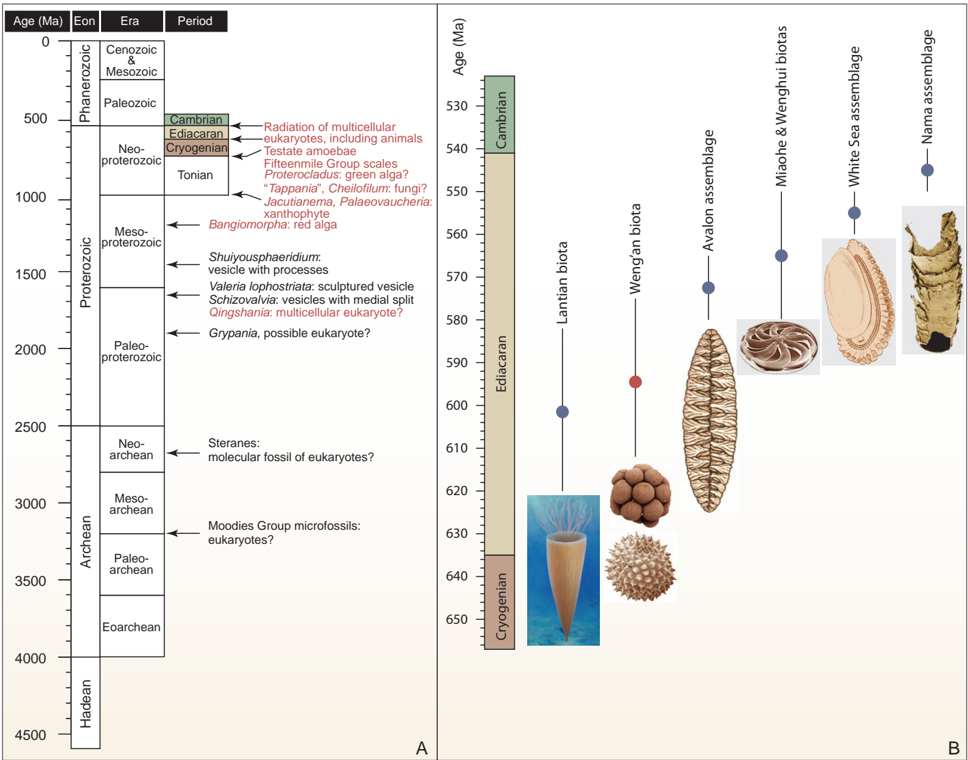
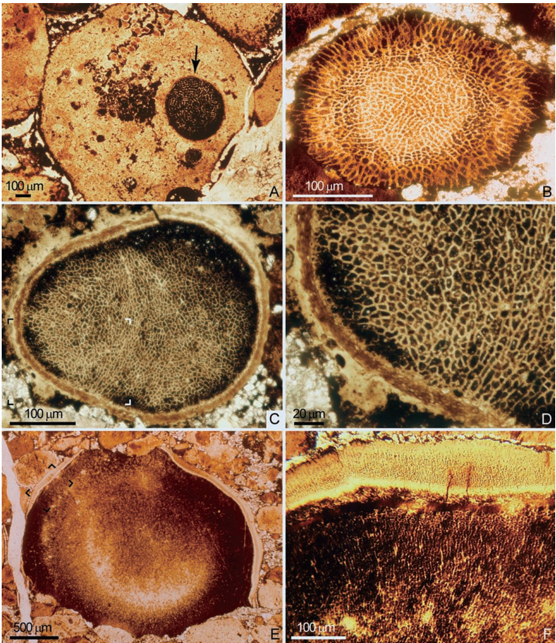
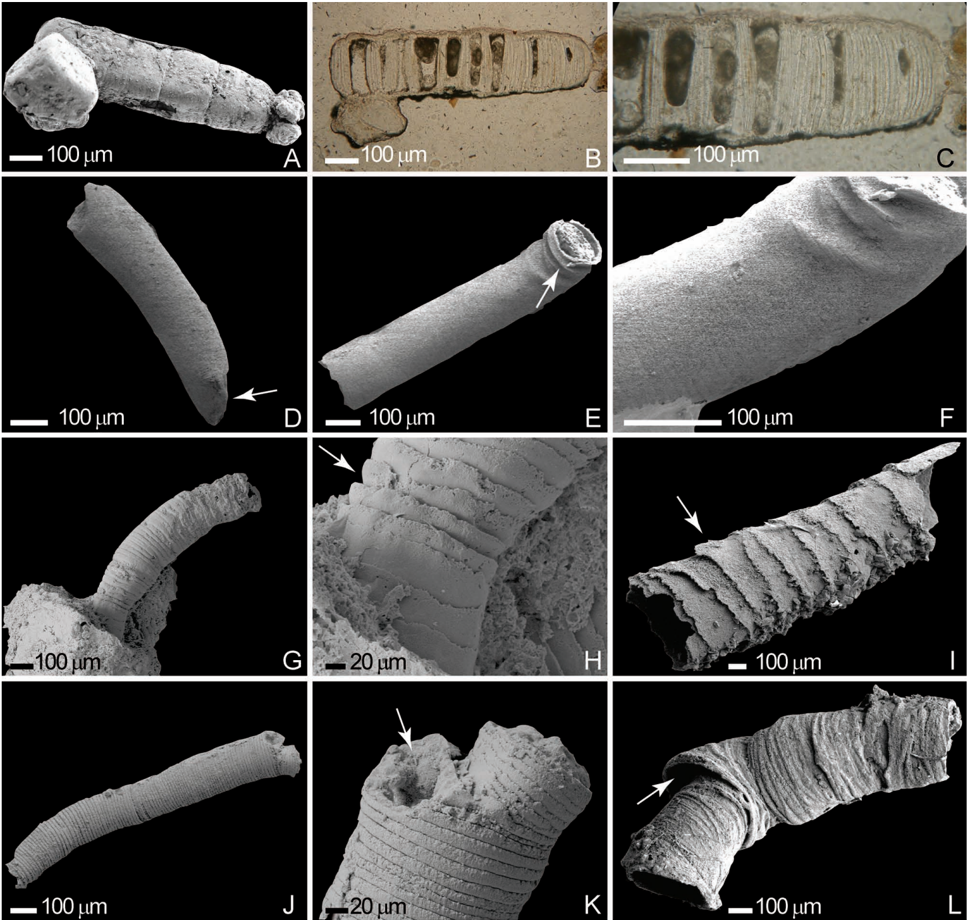
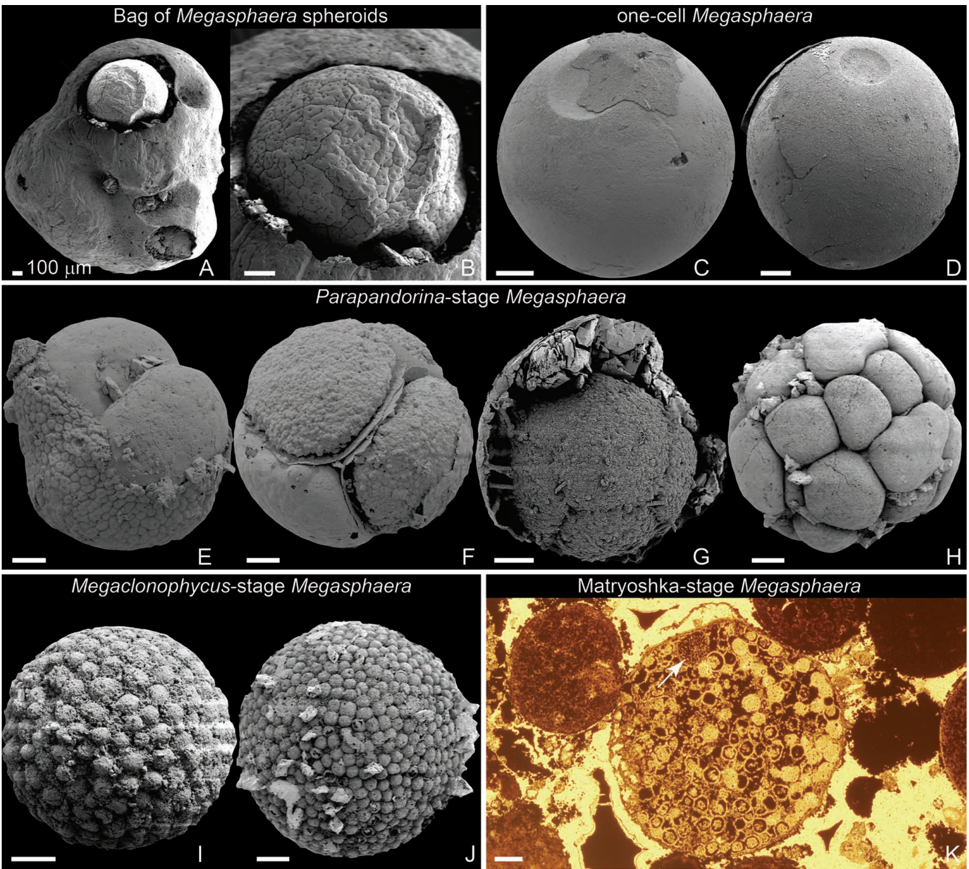
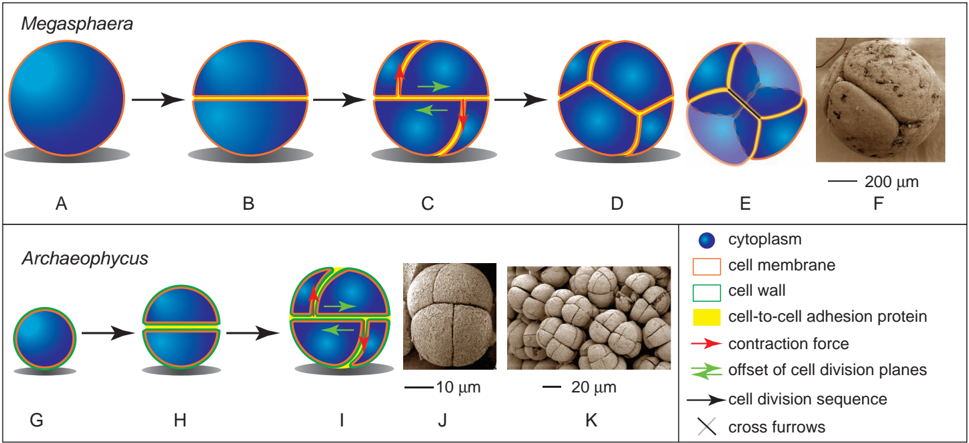
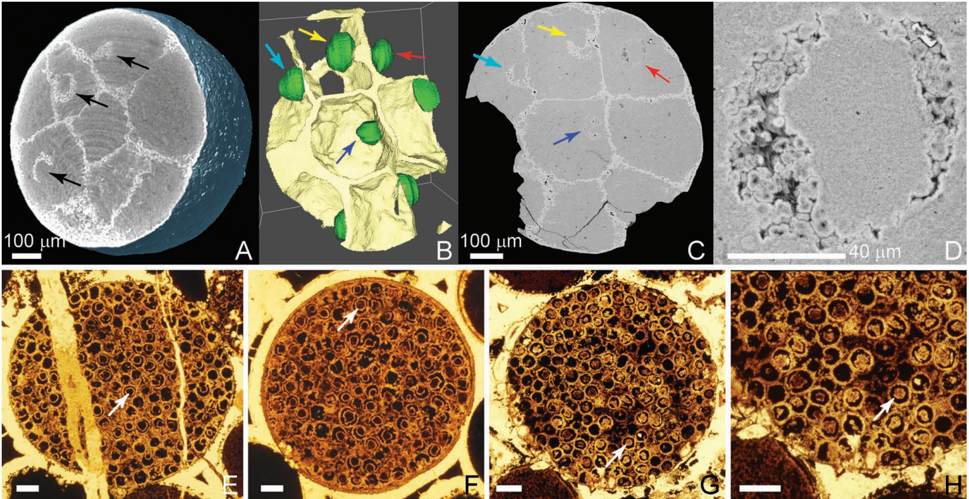
The rise of multicellularity represents a major evolutionary transition and it occurred independently in multiple eukaryote clades. Although simple multicellular organisms may have evolved in the Mesoproterozoic Era or even earlier, complex multicellular eukaryotes began to diversify only in the Ediacaran Period, just before the Cambrian explosion. Thus, the Ediacaran fossil record can provide key paleontological evidence about the early radiation of multicellular eukaryotes that ultimately culminated in the Cambrian explosion. The Ediacaran Weng'an biota in South China hosts exceptionally preserved eukaryote fossils, including various acanthomorphic acritarchs, pseudoparenchymatous thalli, tubular microfossils, and spheroidal fossils such as Megasphaera, Helicoforamina, Spiralicellula, and Caveasphaera. Many of these fossils have been interpreted as multicellular eukaryotes, although alternative interpretations have also been proposed. In this review, we critically examine these various interpretations, focusing particularly on Megasphaera, which has been variously interpreted as a sulfur-oxidizing bacterium, a unicellular protist, a mesomycetozoean-like holozoan, a volvocine green alga, a stem-group animal, or a crown-group animal. We conclude that Megasphaera is a multicellular eukaryote with evidence for cell-to-cell adhesion, a flexible membrane unconstrained by a rigid cell wall, spatial cellular differentiation, germ–soma separation, and programmed cell death. These features are inconsistent with the bacterium, unicellular protist, and mesomycetozoean-like holozoan interpretations. Thus, the surviving hypotheses, particularly the stem-group animal and algal interpretations, should be further tested with additional evidence. The Weng'an biota also hosts cellularly differentiated pseudoparenchymatous thalli with specialized reproductive structures indicative of an affinity with florideophyte red algae. The other Weng'an fossils reviewed here may also be multicellular eukaryotes, although direct cellular evidence is lacking in some and phylogenetic affinities are poorly constrained in others. The Weng'an biota offers many research opportunities to resolve the life histories and phylogenetic diversity of early multicellular eukaryotes and to illuminate the evolutionary prelude to the Cambrian explosion.
Overview
The claims and statistics of this paper haven’t been checked yet.
Free: it reads the open-access text and checks the first 5 claims that cite a source we can check. Create a free account to check every claim.
Integrity signals
Registry
Cites
Statistics
Figures
Verification
Claims the paper makes
The claims and statistics of this paper haven’t been checked yet.
Free: it reads the open-access text and checks the first 5 claims that cite a source we can check. Create a free account to check every claim.
Claims other papers make about this one
Each is checked against this paper’s own text: does it say what the citing paper says it does?
The source backs part of the claim, not all of it — or backs it for a different population, condition or comparison.
In the citing paper
“Though a stem-group animal interpretation cannot yet be ruled out, affinities with other eukaryotic lineages, including algal and protist clades, are at least equally likely and require further investigation [27, 71, 73, 74].”
From The origin of animals: Can molecular clocks and the fossil record be reconciled? (2017) · cites this paper as [71]
Experimental — accuracy not yet measuredThe source backs part of the claim, not all of it — or backs it for a different population, condition or comparison.
In the citing paper
“TheWeng'anbiotaoftheDoushantuoFormation,SouthChina,is likely to predate the classical Ediacaran macrobiota [71].”
From The origin of animals: Can molecular clocks and the fossil record be reconciled? (2017) · cites this paper as [71]
Experimental — accuracy not yet measuredThe source backs part of the claim, not all of it — or backs it for a different population, condition or comparison.
In the citing paper
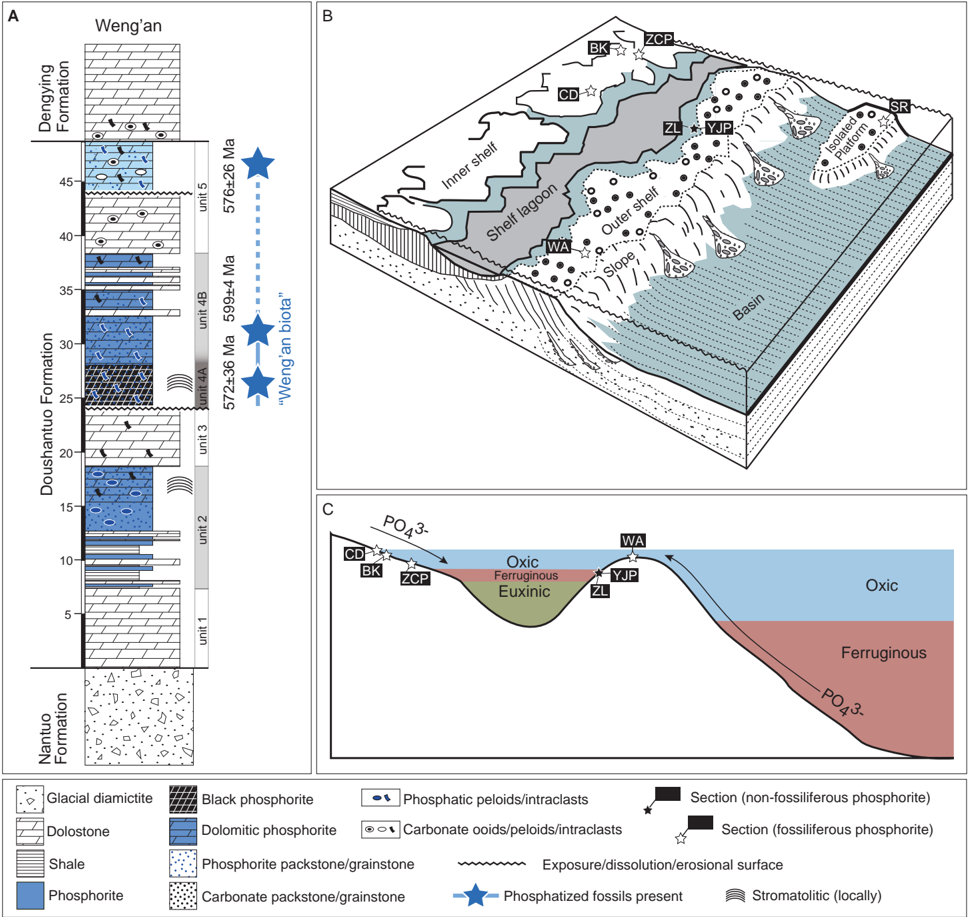
“The DoushantuoFormationcanbedatedto635-551Ma,andalthough the age of the fossiliferous units is poorly constrained within this interval, they are most likely 570-600Ma [71].”
From The origin of animals: Can molecular clocks and the fossil record be reconciled? (2017) · cites this paper as [71]
Experimental — accuracy not yet measuredThe source backs part of the claim, not all of it — or backs it for a different population, condition or comparison.
In the citing paper
“the first fossil evidence for metazoans (the Doushantuo embryos) about 600 Ma”
From Early metazoan life: divergence, environment and ecology (2015) · cites this paper as [28]
Experimental — accuracy not yet measuredThe cited source says what the claim attributes to it.
In the citing paper
“likely early metazoan embryos have been described from the Doushantuo Formation in south China approximately 600 Ma [28]”
From Early metazoan life: divergence, environment and ecology (2015) · cites this paper as [28]
1 more claim about this paper
Create a free account to see every claim other papers make about this one.
Self-check
Percentages, sums and reported differences re-computed from the paper’s own numbers.
The self-check needs the paper’s full text.
Citations
Cites
The Major Transitions in Evolution
Maynard Smith, J., & Szathmary, E. (1997) · Oxford University Press eBooks · doi:10.1093/oso/9780198502944.001.0001 · Cited by 2,551 · cited 1×
“INTRODUCTION The evolution of multicellularity, best exemplified by the rise of animals, represents a major transition in the history of life [1] and had transformative geobiological and ecological impacts.”
BackgroundThe Revised Classification of Eukaryotes
Adl, S. M., Simpson, A. G. B., Lane, C. E., Lukeš, J., Bass, D., Bowser, S. S., Brown, M. W., Burki, F., Dunthorn, M., Hampl, V., et al. (2012) · Journal of Eukaryotic Microbiology · doi:10.1111/j.1550-7408.2012.00644.x · Cited by 1,680 · cited 5×
“A life cycle with an endospore stage occurs convergently in many eukaryote groups [117], and cannot be used to uniquely identify Megasphaera as mesomycetozoean-like holozoans.”
BackgroundInfluentialU-Pb Ages from the Neoproterozoic Doushantuo Formation, China
Condon, D., Zhu, M., Bowring, S., Wang, W., Yang, A., & Jin, Y. (2005) · Science · doi:10.1126/science.1107765 · Cited by 1,329 · cited 2×
“[90] argue that the karstification surface atop unit 3 may be a glacio-eustatic response to the ~582 Ma Gaskiers glaciation [92], implying that the Weng’an biota would be constrained”
BackgroundThe Amphimedon queenslandica genome and the evolution of animal complexity
Srivastava, M., Simakov, O., Chapman, J., Fahey, B., Gauthier, M. E. A., Mitros, T., Richards, G. S., Conaco, C., Dacre, M., Hellsten, U., et al. (2010) · Nature · doi:10.1038/nature09201 · Cited by 1,049 · cited 1×
“likely a stem-group metazoan [51], although it is not entirely clear whether living sponges have (or the earliest animals had) true gastrulation and epithelia [153-155].”
BackgroundThe Trichoplax genome and the nature of placozoans
Srivastava, M., Begovic, E., Chapman, J., Putnam, N. H., Hellsten, U., Kawashima, T., Kuo, A., Mitros, T., Salamov, A., Carpenter, M. L., et al. (2008) · Nature · doi:10.1038/nature07191 · Cited by 889
Three-dimensional preservation of algae and animal embryos in a Neoproterozoic phosphorite
Xiao, S., Zhang, Y., & Knoll, A. H. (1998) · Nature · doi:10.1038/35318 · Cited by 783 · cited 6×
“17 Megasphaera was compared with embryos of crown-group animals [16, 136].”
BackgroundInfluentialSelf-citationThe Evolution of Multicellularity: A Minor Major Transition?
Grosberg, R. K., & Strathmann, R. R. (2007) · Annual Review of Ecology, Evolution, and Systematics · doi:10.1146/annurev.ecolsys.36.102403.114735 · Cited by 732 · cited 2×
“Multicellularity evolved independently at least 25 times among eukaryotes [2-4], and complex multicellularity—characterized by intercellular communication and, commonly, tissue differentiation controlled by regulatory gene networks—occurs in a handful of eukaryotic groups [5, 6].”
BackgroundButterfield, N. J. (2000) · Paleobiology · doi:10.1666/0094-8373(2000)026<0386:bpngns>2.0.co;2 · Cited by 714 · cited 1×
“Multicellular eukaryotes may have evolved in the late Paleoproterozoic and certainly by the Mesoproterozoic (1600–1000 Ma) [9-11], although their diversity remained relatively low until in the Ediacaran Period (Fig.”
BackgroundBiostratigraphic and Geochronologic Constraints on Early Animal Evolution
Grotzinger, J. P., Bowring, S. A., Saylor, B. Z., & Kaufman, A. J. (1995) · Science · doi:10.1126/science.270.5236.598 · Cited by 701 · cited 1×
“[17], Miaohe biota and the equivalent Wenghui biota [18-21], White Sea assemblage [22], and Nama assemblage [23].”
BackgroundEukaryotic organisms in Proterozoic oceans
Knoll, A. H., Javaux, E. J., Hewitt, D., & Cohen, P. (2006) · Philosophical Transactions of the Royal Society B: Biological Sciences · doi:10.1098/rstb.2006.1843 · Cited by 701 · cited 1×
“[7-9].”
Research works printed but not linked: 27
- 10. Yan, Y and Liu, Z. Significance of eukaryotic organisms in the microfossil flora of the Changcheng System. Acta Micropale- ontol Sin 1993; 10: 167-80.
- 25. Zou, C and Li, J. The first discovery of algal phosphorite. Acta Geol Sin-Engl Ed 1965; 6: 80-5.
- 26. Zhu, S and Wang, Y. Phosphatic stromatolites in Kaiyang phosphorite de- posits, Guizhou, China. In: Symposium of 5th International Field Workshop and Seminar on Phosphorite. Beijing: Geological Publishing House, 1984, 143-64.
- 27. Zhou, M, Sheng, Z and Zhu, S. Sinian phosphatic stromatolites in South China. In: Symposium of 5th International Field Workshop and Seminar on Phospho- rite. Beijing: Geological Publishing House, 1984, 129-42.
- 28. Zhu, S, Wang, Y and Zhang, L. Formation of the Kaiyang phosphorites in China as relates to ancient microorganisms. In: Symposium of 5th International Field Workshop and Seminar on Phosphorite. Beijing: Geological Publishing House, 1984, 165-93.
- 29. Zhu, S and Wang, Y. Phosphatic stromatolites and microfossils from the Doushantuo age in the central Guizhou. In: Wang, Y, Yin, G and Zheng, S et al. (eds). The Upper Precambrian and Sinian-Cambrian Boundary in Guizhou. Guiyang: The People's Publishing House of Guizhou, 1984, 93-105.
- 30. Zhao, D. The discovery of phosphatic red algae in the Sinian Doushantuo For- mation. Acta Sedimentol Sin 1986; 4: 126-7.
- 31. Dong, Y, Ji, Q and Wang, S. The discovery of the trace fossils of microbes in the rocks of Sinian Doushantuo Formation, Southwest China. Acta Geol Sin- Engl Ed 1984; 1984: 346-7.
- 32. Chen, J. The Dawn of Animal World. Nanjing: Jiangsu Science and Technology Press, 2004.
- 36. Chen, M and Liu, K. The geological significance of newly discovered microfos- sils from the upper Sinian (Doushantuo age) phosphorites. Acta Geol Sin- Engl Ed 1986; 1: 46-53.
- 38. Xue, Y, Tang, T and Yu, C. Discovery of the oldest skeletal fossils from upper Sinian Doushantuo Formation in Weng'an, Guizhou, and its significance. Acta Palaeontol Sin 1992; 31: 530-9.
- 40. Xue, Y, Tang, T and Yu, C et al. Large spheroidal chlorophyta fossils from the Doushantuo Formation phosphoric sequence (late Sinian), central Guizhou, South China. Acta Palaeontol Sin 1995; 34: 688-706.
- 46. Zhang, Y and Yuan, X. [The discovery of sexual reproductive structures in ter- minal Proterozoic multicellular red algae]. Sci China (Series B) 1995; 25: 749- 54 (in Chinese).
- 50. Xue, Y, Zhou, C and Tang, T. "Animal embryos", a misinterpretation of Neo- proterozoic microfossils. Acta Micropal Sin 1999; 16: 1-4.
- 51. Xiao, S and Knoll, AH. Embryos or algae? A reply. Acta Micropal Sin 1999; 16: 313-23.
- 58. Li, C-W, Chen, J-Y and Hua, T-E. Interpreting late Precambrian microfossils: response. Science 1998; 282: 1783. REVIEW · DOI · Paper page
- 59. Li, G, Xue, Y and Zhou, C. Late Proterozoic tubular fossils from the Doushantuo Formation of Weng'an, Guizhou, China. Palaeoworld 1997;7:29-37.
- 62. Li, Y, Zhang, XL and Guo, JF et al. New materials of phosphatized cylin- drical and tabulate microfossils from the Neoproterozoic Doushantuo For- mation at Weng'an, Guizhou, South China. Acta Palaeontol Sin 2003; 42: 200-7.
- 65. Liu, P, Yin, C and Chen, S et al. Affinity, distribution and stratigraphic signifi- cation of tubular microfossils from Ediacaran Doushantuo Formation in South China. Acta Palaeontol Sin 2010; 49: 308-24.
- 82. Yin, C, Liu, Y and Gao, L et al. Phosphatized Biota in Early Sinian (Ediacaran)- Weng'an Biota and Its Environment. Beijing: Geological Publishing House, 2007.
- 83. Ye, L, Chen, Q and Zhao, D et al. The Phosphorites of China. Beijing: Science Press, 1989.
- 100. Zhao, D. Pelletal phosphorites of the Doushantuo Formation in Sinian Period. Acta Petrol Sin 1985; 1: 41-50.
- Zhou, 1998, Stratigraphy and sedimentary environment of the Upper Sinian Doushantuo Formation in Weng'an phosphorite deposit, Guizhou Province, J Stratigr, 22, 308
- Wu, 2006, The geochemistry of phosphorite of Doushantuo Formation in Weng'an, China: insights from trace elements and REE, J East China Inst Technol, 29, 108
- Graham, 2000, Algae
- Bengtson, 2005, Mineralized skeletons and early animal evolution, 101
- Yin, 2003, New advances in the study of the Sinian Doushantuo acritarch genus Tianzhushania, Geol Bull China, 22, 87
Cited by
Items 101–173 of 173
Sun, W., Yin, Z., Donoghue, P. C. J., Liu, P., Shang, X., & Zhu, M. (2019) · Palaeoworld · doi:10.1016/j.palwor.2019.04.004 · Cited by 8
Molecular dating of the blood pigment hemocyanin provides new insight into the origin of animals
Costa-Paiva, E. M., Mello, B., Bezerra, B. S., Coates, C. J., Halanych, K. M., Brown, F. D., Leme, J. D. M., & Trindade, R. I. F. (2021) · Geobiology · doi:10.1111/gbi.12481 · Cited by 8
Enhanced phosphorus regeneration linked to Ediacaran ocean oxygenation
Xu, D., Wang, X., Stüeken, E. E., Xu, W., Qin, Z., Hao, J., Shi, X., & Tang, D. (2025) · Communications Earth & Environment · doi:10.1038/s43247-025-02463-2 · Cited by 8
“Elevated seawater P and ensuing ocean oxygenation may have stimulated animal evolution, as documented in the Weng ’ an biota 57 (Fig.”
New holozoans with cellular resolution from the early Ediacaran Weng'an Biota, SW China
Yin, Z., Sun, W., Reitner, J., & Zhu, M. (2022) · Journal of the Geological Society · doi:10.1144/jgs2021-061 · Cited by 7
Developmental biology of Spiralicellula and the Ediacaran origin of crown metazoans
Sun, W., Yin, Z., Liu, P., Zhu, M., & Donoghue, P. (2024) · Proceedings of the Royal Society B: Biological Sciences · doi:10.1098/rspb.2024.0101 · Cited by 5
“This is evidenced by the thousands of cells that compose ‘ Megaclonophycus ’ -stage specimens attributed to Megasphaera [8,9,22,31,49].”
BackgroundWang, X., Dong, L., Ma, H., Lang, X., & Wang, R. (2024) · Global and Planetary Change · doi:10.1016/j.gloplacha.2024.104546 · Cited by 7
Stratigraphic Framework of the Cryogenian in China
Yu, Y., Ye, Q., Zhang, K., He, W., Song, B., Xu, Y., Kou, X., Wang, J., & Yang, F. (2020) · Acta Geologica Sinica - English Edition · doi:10.1111/1755-6724.14553 · Cited by 7
“Microcontinental blocks of northeastern China such as Erguna, Xing‘an, and Jiamusi were originally assumed to be affined to Siberia or North China.”
BackgroundInfluentialOgg, J. G., Ogg, G. M., & Gradstein, F. M. (2016) · Elsevier eBooks · doi:10.1016/b978-0-444-59467-9.00004-2 · Cited by 7
Landon, E. N. U., Liu, P., Yin, Z., Sun, W., Shang, X., & Donoghue, P. C. J. (2019) · Palaeoworld · doi:10.1016/j.palwor.2019.05.005 · Cited by 7
Qiu, H., Feng, L., Chu, X., Li, L., Zhang, X., & Li, J. (2022) · Acta Geologica Sinica - English Edition · doi:10.1111/1755-6724.14924 · Cited by 6
“…great interest not only because of their economic value, but also because they provide an unusually clear window on Ediacaran-Cambrian life and environments (Zhang et al., 1998; Xiao et al., 2000, 2010, 2014; Yin et al., 2007; Jiang et al., 2007; Muscente et al., 2015; Bottjer et al., 2020).”
BackgroundInfluentialThe Rising of Paleontology in China: A Century-Long Road
Zhou, Z. (2022) · Biology · doi:10.3390/biology11081104 · Cited by 7
The macroalga Bosworthia from the Cambrian Burgess Shale and Kaili biotas of North America and China
Wu, M., LoDuca, S. T., Zhao, Y., & Xiao, S. (2016) · Review of Palaeobotany and Palynology · doi:10.1016/j.revpalbo.2016.04.001 · Cited by 7
Self-citationCunningham, J. A., Vargas, K., Marone, F., Bengtson, S., & Donoghue, P. C. J. (2016) · Evolution & Development · doi:10.1111/ede.12210 · Cited by 6
Preserve Precambrian fossil heritage from mining
Yang, H., Ma, M., Flower, R. J., Thompson, J. R., & Ge, W. (2017) · Nature Ecology & Evolution · doi:10.1038/s41559-017-0266-8 · Cited by 6
Seeding the Solar System with Life: Mars, Venus, Earth, Moon, Protoplanets
Joseph, R. G., Planchon, O., Gibson, C. H., & Schild, R. E. (2020) · Open Astronomy · doi:10.1515/astro-2020-0019 · Cited by 6
“As determined by molecular clock studies, metazoans began populating Earth 750 to 800mya (Erin 2015) although the first fossil evidence of metazoans (the Doushantuo embryos) do not appear in the geological record until 600 mya (Xiao et al. 2014).”
BackgroundInfluentialAuthigenesis, biomineralization, and carbon-sulfur cycling in the Ediacaran ocean
Cui, H. (2015) · University Libraries (University of Maryland) · doi:10.13016/m2rd91 · Cited by 6
Hippertt, J., Rudnitzki, I. D., Morais, L., Freitas, B. T., Romero, G. R., Babinski, M., Leite, M. G. P., Leme, J. D. M., Júnior, H. A. N., Nogueira, L. B., et al. (2024) · Precambrian Research · doi:10.1016/j.precamres.2024.107383 · Cited by 5
Reexamination and reidentification of ocean oxygenation event in the wake of the Marinoan glaciation
Li, R., Zhou, X., Guo, C., Huang, T., Wang, Z., Huang, K., Peng, P., Wang, X., Du, T., Xue, D., et al. (2025) · Earth and Planetary Science Letters · doi:10.1016/j.epsl.2025.119312 · Cited by 6
The terminal Ediacaran Tongshan Lagerstätte from South China
Hou, J., Wang, X., Hou, Z.-S., Ramezani, J., Tang, Q., & Shen, S. (2025) · Nature Communications · doi:10.1038/s41467-025-65176-2 · Cited by 6
“1c) 85 , compared to just about 2 – 3Ma for the Cambrian ones 86 , limit our ability in understanding the evolutionary patterns and processes prior to the Cambrian explosion.”
Plummer, P. S. (2024) · Australian Journal of Earth Sciences · doi:10.1080/08120099.2024.2364710 · Cited by 6
“…that have recently emerged out of China, namely the Lantian (Wan et al ., 2016; Yang et al ., 2022; Yuan et al ., 2011) and Miaohe/Wenghui (Xiao et al ., 2014), the former pushing the start date of metazoan evolution back possibly 40 million years towards the start of the Ediacaran Period…”
Zhang, Y., & Zhang, X. (2022) · Precambrian Research · doi:10.1016/j.precamres.2022.106645 · Cited by 5
Experimental evolution of multicellularity via cuboidal cell packing in fission yeast
Pineau, R. M., Kahn, P. C., Lac, D. T., Belpaire, T. E. R., Denning, M. G., Wong, W., Ratcliff, W. C., & Bozdag, G. O. (2024) · Evolution Letters · doi:10.1093/evlett/qrae024 · Cited by 4
“…binary fission instead have alternating division planes, then 3D structures with repeating cubic subunits of cells (composed of tetrads or octads) (Xiao et al., 2014) can result—a morphology that has been termed “cuboidal packing” (Xiao et al., 1998) (see Supplementary Figure S1 for a schematic…”
Fernandes, H. A., dos Santos, G. L., Pereira, L. G., Rimi, L. T., Pescarini, T., Elias, E., Bedoya-Rueda, C., Cardoso-Lucas, V., Rodrigues, L., Mazzamuto, K., et al. (2025) · Precambrian Research · doi:10.1016/j.precamres.2025.107887 · Cited by 4
Seawater temperatures during the early to middle Ediacaran: Phosphate oxygen isotope records
Fan, H., Chen, Z., Zhang, F., Zhu, C., Du, S., Zhang, Y., Wen, H., Khan, D., & Algeo, T. J. (2025) · Chemical Geology · doi:10.1016/j.chemgeo.2025.122642 · Cited by 4
Dzul, E. R., Loron, C., Agić, H., Donaldson, S., Knoll, P., & McMahon, S. (2025) · Journal of Paleontology · doi:10.1017/jpa.2025.10119 · Cited by 4
Ouyang, Q., Zhou, C., Lang, X., Qu, Y., Shi, H., Sun, Y., & Chen, Z. (2025) · Geobiology · doi:10.1111/gbi.70034 · Cited by 4
“Due to the relatively simple morphology, consensus has not been reached regarding the biological affinity of Archaeophycus (Xiao et al. 2014; Cunningham et al. 2017).”
InfluentialSelf-citationImpact of Chinese palaeontology on evolutionary research
Ma, X., Wang, G., & Wang, M. (2022) · Philosophical Transactions of the Royal Society B Biological Sciences · doi:10.1098/rstb.2021.0029 · Cited by 4
Cui, L., Liu, W., Li, J., & Zhang, X. (2024) · Palaeogeography Palaeoclimatology Palaeoecology · doi:10.1016/j.palaeo.2024.112339 · Cited by 5
New materials of acanthomorphic acritarchs from the Ediacaran Weng'an Biota (South China)
Wu, J., Sun, W., Shang, X., Liu, P., Zhu, M., & Yin, Z. (2024) · Journal of Paleontology · doi:10.1017/jpa.2024.16 · Cited by 4
“A generalized stratigraphic column of the Doushantuo Formation in this area is displayed in Figure 1.3 (Xiao et al., 2014b; Cunning-ham et al., 2017).”
InfluentialWaskom, M. E., Losso, S. R., & Ortega‐Hernández, J. (2025) · Palaeontology · doi:10.1111/pala.70009 · Cited by 4
Are the new Ediacaran Doushantuo embryo-like fossils early metazoans? A reply
Chen, L., Xiao, S., Pang, K., Zhou, C., & Yuan, X. (2015) · Palaeoworld · doi:10.1016/j.palwor.2015.08.001 · Cited by 4
Self-citationAn examination of the evolution of Ediacaran paleoenvironmental and paleoecological research
Tarhan, L. G., & Laflamme, M. (2015) · Palaeogeography Palaeoclimatology Palaeoecology · doi:10.1016/j.palaeo.2015.04.012 · Cited by 4
Lee, S., Xu, H., & Xiao, S. (2025) · Geology · doi:10.1130/g53415.1 · Cited by 3
Self-citationPeriodic ocean oxygenation events during the mid-Ediacaran
Li, Z., Chen, Z., Daines, S. J., Zhang, F., & Lenton, T. M. (2026) · Nature Geoscience · doi:10.1038/s41561-025-01883-1 · Cited by 6
“Blue circles represent δ 13 C carb data, which have paired δ 238 U carb records 11–13 . b , δ 238 U carb profiles from global sections. c , Fossil records, Lantian biota 50 , Weng’an biota 51 and Ediacaran macro-biota (Avalon) 52 .”
Ouyang, Q., Zhou, C., Pang, K., & Chen, Z. (2021) · Palaeoworld · doi:10.1016/j.palwor.2021.03.001 · Cited by 3
Self-citationZhang, X., An, Y., Chen, Y., Du, W., & Wang, L. (2023) · Precambrian Research · doi:10.1016/j.precamres.2023.107255 · Cited by 3
Germ‐soma differentiation and reproduction in a new species of early Cambrian acritarch
Liu, W., Yin, Z., Pan, B., Shen, B., Dong, L., & Li, G. (2023) · Palaeontology · doi:10.1111/pala.12687 · Cited by 2
First SHRIMP Zircon U-Pb Dating Constraints for the Ediacaran Wenghui Biota
Zhao, M., Tang, F., Mussini, G., Li, Y., Zhang, H., Chen, J., & Gao, L. (2025) · Journal of Earth Science · doi:10.1007/s12583-024-0013-4 · Cited by 2
“…(Wang W et al., 2022; Guan et al., 2017;Yuan et al., 2013, 2011), the Weng’an biota in central Guizhou Province (Yin et al., 2022; Zhou et al., 2017; Xiao et al., 2014), and the Wenghui biota in Northeast Guizhou Province (Li Y L et al., 2023; Wang Y et al., 2022, 2020, 2016,, 2011, 2009, 2008,…”
Sawaki, Y., Namba, K., Aikawa, T., Tahata, M., Ohno, T., Komiya, T., & Han, J. (2025) · Palaeogeography Palaeoclimatology Palaeoecology · doi:10.1016/j.palaeo.2025.113270 · Cited by 3
Nanoscale characterization of Ediacaran microfossils from lower Doushantuo formation chert nodules
Cheng, S., Feng, L., Zhang, C., Cui, L., Liu, W., Qiu, H., Shi, H., Chu, X., Zhang, X., & Li, J. (2024) · Chemical Geology · doi:10.1016/j.chemgeo.2024.122250 · Cited by 2
周, 传., 袁, 训., Xiao, S., 陈, 哲., & 华, 洪. (2018) · SCIENTIA SINICA Terrae · doi:10.1360/n072017-00230 · Cited by 3
Self-citationDistinguishing geobiological signatures from organic matter in the Ediacaran chert nodules
Long, H. C. D., Yang, H., & Qu, Y. (2023) · Precambrian Research · doi:10.1016/j.precamres.2023.107045 · Cited by 2
Mohammed, A., Polys, N. F., Cunningham, J. J., Munson, J. M., Chutkowski, J., Liang, H., Park, D., Rockne, R. C., Woodall, R. T., & Esparza, C. (2023) · international conference on 3D web technology · doi:10.1145/3611314.3625831 · Cited by 2
“…dynamics via MRI in normal and diseased human brains, we may see that tracking fluid flow during brain cancer development or neurodegenerative disease progression may offer a useful tool in the diagnostic arsenal [Jin and Munson 2023 and paleobiology [Meyer et al. 2014, 2017; Xiao et al. 2014].”
MethodSelf-citationRen, M. (2025) · Sedimentary Geology · doi:10.1016/j.sedgeo.2025.106847 · Cited by 1
Preservation potential of Cambrian small shelly fossils in different microfacies, North China
Hu, Y., Topper, T. P., Strotz, L. C., Liang, Y., Liu, F., Fu, R., Song, B., Wang, Z., Pan, B., & Zhang, Z. (2025) · Geoscience Frontiers · doi:10.1016/j.gsf.2025.102108 · Cited by 1
Cao, H., Wang, Z., Chen, F., Wei, K., Huang, H., Chen, Q., & Chen, C. (2025) · Global and Planetary Change · doi:10.1016/j.gloplacha.2025.104958 · Cited by 2
You, H., Shang, X., & Liu, P. (2026) · Precambrian Research · doi:10.1016/j.precamres.2026.108061 · Cited by 1
��, Ï., ��, �., ��, �., ��, �., & ��, �. (2019) · SCIENTIA SINICA Terrae · doi:10.1360/sste-2019-0183 · Cited by 1
Cao, K., She, Z., Chen, Q., Jiao, L., Xiao, Q., Cheng, M., Zhang, Z., Luo, G., & Papineau, D. (2024) · Palaeogeography Palaeoclimatology Palaeoecology · doi:10.1016/j.palaeo.2024.112400 · Cited by 2
“…events (She et al., 2014; Ji et al., 2019; Zhang et al., 2019; Yu et al., 2023), as well as preserves abundant three-dimensional and cellular microfossils, including putative metazoans, multicellular algae, acritarchs and protists (Xiao et al., 1998; Liu et al., 2014; Xiao et al., 2014).”
Santos, G. M. D. P. (2018) · Digital Library of Theses and Dissertations (Universidade de São Paulo) · doi:10.11606/t.44.2018.tde-26042018-092122 · Cited by 2
Toniolo, T. D. F. (2023) · Digital Library of Theses and Dissertations (Universidade de São Paulo) · doi:10.11606/t.44.2023.tde-09112023-081950 · Cited by 3
Soldatenko, Y. (2018) · theses.fr (ABES) · doi:10.70675/b62062f8z8b0ez41d8zafb9z39e3ec0f3107 · Cited by 2
Lole Durbin, O. M., Anttila, E. S. C., Briggs, D. E. G., Macdonald, F. A., & Anderson, R. P. (2026) · Science Advances · doi:10.1126/sciadv.aeg6289 · Cited by 1
“These depositional conditions and facies associations are directly analogous to those inferred for the granular phosphorites hosting the Weng’an Biota [figure 3C in ( 64 )].”
Exceptional Preservation and Bias in the Fossil Record
Hawkins, A. D. (2017) · VTechWorks (Virginia Tech)
Temporim, F. A. (2021) · Digital Library of Theses and Dissertations (Universidade de São Paulo) · doi:10.11606/t.14.2021.tde-27012022-122612
Zhang, S., Wang, X., Wang, H., Tang, Q., Zhang, F., & Lü, D. (2022) · Earth Science-Journal of China University of Geosciences · doi:10.3799/dqkx.2022.839
What are the Limiting Environmental Factors for the Evolution of Early Eukaryotic Diversity?
Zhang, S., Wang, X., Wang, H., Tang, Q., Zhang, F., & Lü, D. (2023) · Journal of Earth Science · doi:10.1007/s12583-023-1876-5
“However, the first major adaptive radiation in complex multi‐ cellular eukaryotes did not occur until ~0.635 Ga (Xiao et al., 2014).”
BackgroundInfluentialSimulation of Ediacaran Cloudina tubular growth model via electrochemical synthesis
Cao, J., Meng, F., & Cai, Y. (2024) · Journal of Asian Earth Sciences · doi:10.1016/j.jseaes.2024.106056
Ning-feng, M., Chen, C., Ye, Q., An, Z., jun, H., & Jinnan, T. (2025) · Earth Science-Journal of China University of Geosciences · doi:10.3799/dqkx.2025.107
What’s New with the Old Ones: Updates on Analytical Methods for Fossil Research
Ghervase, L., & Dinu, M. (2025) · Chemosensors · doi:10.3390/chemosensors13090328
Rimi, L. T., Leme, J. D. M., & Toniolo, T. D. F. (2024) · doi:10.11606/003234995
Late Ordovician calcified peyssonnelialean red algae: systematics and evolutionary significance
Zhuang, W., Braga, J. C., Liu, L., Wu, Y., & Riding, R. (2025) · Proceedings of the Royal Society B Biological Sciences · doi:10.1098/rspb.2025.2328 · Cited by 1
Lu, L., Duda, J., Schönig, J., & Reitner, J. (2026) · Lethaia · doi:10.18261/let.60.1.1 · Cited by 1
Du, W., Wang, X., Wang, Y., Uesugi, K., Yasutake, M., & Komiya, T. (2026) · Scientific Reports · doi:10.1038/s41598-026-42410-5
Developmental biology of the Ediacaran Megaclonophycus from the Weng’an Biota
Flett, K. E., Cracknell, K., Yamahuchi, J. S. C., Cunningham, J. A., Zhu, M., Yin, Z., & Donoghue, P. C. J. (2026) · Biology Letters · doi:10.1098/rsbl.2025.0592
Ikouanga, J. N. (2022) · theses.fr (ABES) · doi:10.70675/517bc20az272dz47d9z8666zdab526cbee66 · Cited by 2
Cheng, S., Feng, L., Yang, Y., Chu, X., Zhang, X., & Li, J. (2026) · Geophysical Research Letters · doi:10.1029/2025gl121528
“While its tetrad arrangement resembles both chroococcalean cyanobacteria (Pan et al., 2022) and carposporangia of Porphyra at the tetraspore stage (Zhang et al., 1998), convergent evolution among cyanobacteria, red algae, green algae, and multicellular algae cannot be ruled out (Xiao et al., 2014).”
The Tooth of Time: Witnesses to History − China on the Verge of Opening-up
Hoffman, P. F. (2026) · Geoscience Canada · doi:10.12789/geocanj.2026.53.231
Luo, J., Zhang, S., Min, X., Hua, H., Gong, M., Dai, Q., Bai, L., Hou, Y., Wang, X., Wang, X., et al. (2026) · Gondwana Research · doi:10.1016/j.gr.2026.06.013
The selenium cycling variation corresponding to the evolution of early animals in the Weng'an biota
Ren, Z., Long, J., Zhang, S., Du, Y., Long, T., Chen, Y., & Luo, K. (2026) · Chemical Geology · doi:10.1016/j.chemgeo.2026.123622
Wei, K., Cao, H., Wang, Z., An, Z., Chen, F., Huang, H., Chen, C., & Zeng, Y. (2026) · Palaeogeography Palaeoclimatology Palaeoecology · doi:10.1016/j.palaeo.2026.114146
Ouyang, Q., Wu, C., Li, G., & Chuanming, Z. (2026) · Weiti gushengwu xuebao · doi:10.3724/micropals-2026026
The late Ediacaran Kotlin Crisis: Insights from the macroalgal fossil record
Zhang, L., Wang, Z., Zhang, J., Duan, C., Wu, Y., Zhai, F., Fu, S., Ye, Q., Lang, X., Luo, J., et al. (2026) · Precambrian Research · doi:10.1016/j.precamres.2026.108284
Metadata
- Authors
- Xiao, S., Muscente, A. D., Chen, L., Zhou, C., Schiffbauer, J. D., Wood, A. D., Polys, N. F., & Yuan, X.
- Affiliations
- Virginia Tech (US)
- Chinese Academy of Sciences (CN)
- University of Missouri (US)
- Venue
- National Science Review
- Publisher
- Oxford University Press (OUP)
- Published
- 2014-12-01
- Volume
- 1
- Issue
- 4
- Pages
- 498-520
- ISSN
- 2053-714X (ISSN-L)
- 2095-5138
- OpenAlex
- W2318212640
- Cited by
- 172
- References
- 157
- Citations by year
- 2026: 12 · 2025: 18 · 2024: 17 · 2023: 16 · 2022: 14 · 2021: 14 · 2020: 16 · 2019: 10 · 2018: 15 · 2017: 17 · 2016: 15 · 2015: 8
- FWCI
- 9.74
- Type
- journal article
- Language
- en
- Open access
- hybrid
- doi.org
- Locations
- National Science Review (publishedVersion, cc-by)
- HighWire Press Open Archive (submittedVersion)
- Funders
- National Science Foundation (1250800, KZZD-EW-02, 1124062)
- Chinese Academy of Sciences (KZZD‐EW‐02, 2013CB835000)
- Ministry of Science and Technology of the People's Republic of China (2013CB835000, KZZD-EW-02)
- Topics
- Physical Sciences › Earth and Planetary Sciences › Paleontology › Paleontology and Stratigraphy of Fossils
- Life Sciences › Agricultural and Biological Sciences › Ecology, Evolution, Behavior and Systematics › Protist diversity and phylogeny
- Physical Sciences › Earth and Planetary Sciences › Paleontology › Paleontology and Evolutionary Biology
- Keywords
- Weng'an Biota, Ediacaran, multicellular eukaryotes, Cambrian explosion, Megasphaera, acritarchs, programmed cell death, cell-cell adhesion, early animal evolution, Ediacaran fossils
About these checks
Registry, retraction, Cites and statistics results are computed, not judged, with one exception: a printed reference that no index lists is read once by a model before it counts as a citation error. Claims are extracted by a model and kept only when their quote appears verbatim in the text; each cited source is then checked, with a model’s help, for whether it says what the claim relies on. Those verdicts can be wrong — read the claim’s quote and the cited source before relying on one.
Statistics and arithmetic are recomputed, not judged.
Confidence bands are shown only for fields calibrated on our annotated test set. None is calibrated yet, so no band is shown.
What counts as a claim ›How we measure confidence ›How we check this ›
Are you an author, or do you see a problem with this page? Request a review
Data sources
Bibliographic data: Semantic Scholar, OpenAlex, Crossref.
Contains information from the Semantic Scholar Academic Graph Datasets, made available under the ODC Attribution License (ODC-BY 1.0).
Semantic Scholar’s data is described in: Kinney, R., et al. (2023). The Semantic Scholar Open Data Platform. arXiv:2301.10140.
