

Relationship between the gut microbiome and brain function
Open accessThe DOI matches its Crossref record; 165 of the 165 references it cites were found in a registry or an index.
Abstract
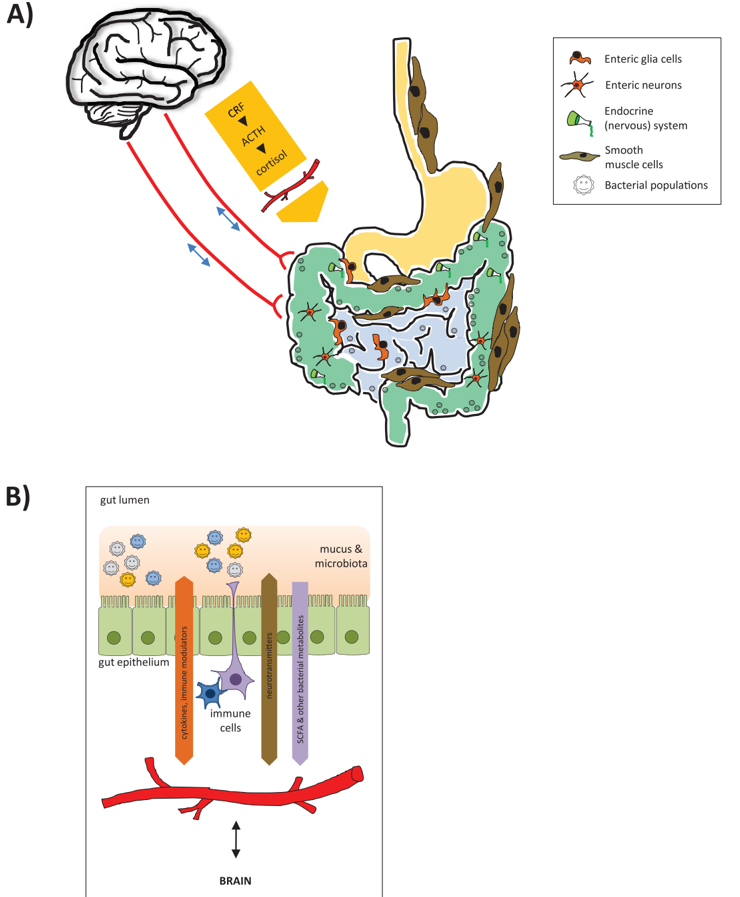
It has become increasingly evident in recent years that the gut microbiome and the brain communicate in a bidirectional manner, with each possibly affecting the other's functions. Substantial research has aimed to understand the mechanisms of this interaction and to outline strategies for preventing or treating nervous system-related disturbances. This review explores the evidence demonstrating how the gut microbiome may affect brain function in adults, thereby having an impact on stress, anxiety, depression, and cognition. In vitro, in vivo, and human studies reporting an association between a change in the gut microbiome and functional changes in the brain are highlighted, as are studies outlining the mechanisms by which the brain affects the microbiome and the gastrointestinal tract. Possible modes of action to explain how the gut microbiome and the brain functionally affect each other are proposed. Supplemental probiotics to combat brain-related dysfunction offer a promising approach, provided future research elucidates their mode of action and possible side effects. Further studies are warranted to establish how pre- and probiotic interventions may help to balance brain function in healthy and diseased individuals.
Overview
The claims and statistics of this paper haven’t been checked yet.
Free: it reads the open-access text and checks the first 5 claims that cite a source we can check. Create a free account to check every claim.
Integrity signals
Registry
Cites
Statistics
Figures
Verification
Claims the paper makes
The claims and statistics of this paper haven’t been checked yet.
Free: it reads the open-access text and checks the first 5 claims that cite a source we can check. Create a free account to check every claim.
Claims other papers make about this one
Each is checked against this paper’s own text: does it say what the citing paper says it does?
In the citing paper
“which are fermentation end products of non-digested carbohydrates, act both in the brain via free fatty acid receptors FFAR2 and FFAR3, and in the gut.In the brain, they have an impact on the production of neurotransmitters and catecholamines [280,282] and partially they affect the reward system, synaptic plasticity, and memory formation [286,287].In the intestine, they influence water and”
From The Role of Microbiota-Gut-Brain Axis in Neuropsychiatric and Neurological Disorders (2021) · cites this paper as [286]
Self-check
Percentages, sums and reported differences re-computed from the paper’s own numbers.
The self-check needs the paper’s full text.
Citations
Cites
1 retracted
Mohammadi, A. A., Jazayeri, S., Khosravi-Darani, K., Solati, Z., Mohammadpour, N., Asemi, Z., Adab, Z., Djalali, M., Tehrani-Doost, M., Hosseini, M., et al. (2016) · Nutritional Neuroscience · doi:10.1179/1476830515y.0000000023 · Cited by 239
RetractedAn obesity-associated gut microbiome with increased capacity for energy harvest
Turnbaugh, P. J., Ley, R. E., Mahowald, M. A., Magrini, V., Mardis, E. R., & Gordon, J. I. (2006) · Nature · doi:10.1038/nature05414 · Cited by 12,444
Diet rapidly and reproducibly alters the human gut microbiome
David, L. A., Maurice, C. F., Carmody, R. N., Gootenberg, D. B., Button, J. E., Wolfe, B. E., Ling, A. V., Devlin, A. S., Varma, Y., Fischbach, M. A., et al. (2014) · Nature · doi:10.1038/nature12820 · Cited by 10,100 · cited 1×
“For example, short-term consumption of diets composed entirely of animal or plant products rapidly changes structures of the microbial community, overwhelming interindividual differences in microbial gene expression.(14) Scientific evidence accumulated in recent years suggests that the gut microbiota affects some aspe…”
Human gut microbiome viewed across age and geography
Yatsunenko, T., Rey, F. E., Manary, M. J., Trehan, I., Dominguez-Bello, M. G., Contreras, M., Magris, M., Hidalgo, G., Baldassano, R. N., Anokhin, A. P., et al. (2012) · Nature · doi:10.1038/nature11053 · Cited by 7,815
Turnbaugh, P. J., Ley, R. E., Hamady, M., Fraser-Liggett, C. M., Knight, R., & Gordon, J. I. (2007) · Nature · doi:10.1038/nature06244 · Cited by 6,091 · cited 1×
“various microorganisms, whose collective genome is termed the gut microbiome.(10) Advances in DNA sequenc-”
Diversity, stability and resilience of the human gut microbiota
Lozupone, C. A., Stombaugh, J. I., Gordon, J. I., Jansson, J. K., & Knight, R. (2012) · Nature · doi:10.1038/nature11550 · Cited by 5,533 · cited 1×
“In healthy adults, the gut microbiota is dominated by only a few phyla, as noted above, and is characterized by a wide diversity of bacterial species.(17) The human microbiome changes with age, normally becoming less diverse in the elderly as a result of higher numbers of Bacteroides species and reduced numbers of Clo…”
Host-Bacterial Mutualism in the Human Intestine
Bäckhed, F., Ley, R. E., Sonnenburg, J. L., Peterson, D. A., & Gordon, J. I. (2005) · Science · doi:10.1126/science.1104816 · Cited by 5,277
Host-gut microbiota metabolic interactions
Nicholson, J. K., Holmes, E., Kinross, J., Burcelin, R., Gibson, G., Jia, W., & Pettersson, S. (2012) · Science · doi:10.1126/science.1223813 · Cited by 4,760 · cited 1×
“Furthermore, neuroactive metabolites of microbiota, such as short-chain fatty acids, constitute a route of information flow between the gut and the brain.(133) Despite the information provided by the above-mentioned research, the role of microorganisms in the regulation of neuronal activity is far from being fully und…”
Metagenomic Analysis of the Human Distal Gut Microbiome
Gill, S. R., Pop, M., DeBoy, R. T., Eckburg, P. B., Turnbaugh, P. J., Samuel, B. S., Gordon, J. I., Relman, D. A., Fraser-Liggett, C. M., & Nelson, K. E. (2006) · Science · doi:10.1126/science.1124234 · Cited by 4,699 · cited 1×
“reaches up to 50 different phyla, 1000 different bacterial species, and 10(14) viable bacteria per gram of luminal content.(11,12) The density of the human microbiome is highest”
Mind-altering microorganisms: the impact of the gut microbiota on brain and behaviour
Cryan, J. F., & Dinan, T. G. (2012) · Nature Reviews Neuroscience · doi:10.1038/nrn3346 · Cited by 4,572 · cited 6×
“nisms by which the human host responds to commensal and pathogenic bacteria.(16) Communication between the”
Influential
Research works printed but not linked: 2
- Jagmag, 2016, Exploring the relationship between gut microbiome and depression, Trends Gastroenterol, 1, 1
- Savidge, 2011, S-nitrosothiol signals in the enteric nervous system: lessons learnt from big brother, Front Neurosci, 5
Cited by
Human gut microbiota/microbiome in health and diseases: a review
Gomaa, E. Z. (2020) · Antonie van Leeuwenhoek · doi:10.1007/s10482-020-01474-7 · Cited by 1,294
“The increased BBB integrity limits entry of undesirable metabolites into brain tissue (Mohajeri et al. 2018).”
BackgroundThe Role of Microbiota-Gut-Brain Axis in Neuropsychiatric and Neurological Disorders
Socała, K., Doboszewska, U., Szopa, A., Serefko, A., Włodarczyk, M., Zielińska, A., Poleszak, E., Fichna, J., & Wlaź, P. (2021) · Pharmacological Research · doi:10.1016/j.phrs.2021.105840 · Cited by 857
Nutrition in adolescent growth and development
Norris, S. A., Frongillo, E. A., Black, M. M., Dong, Y., Fall, C., Lampl, M., Liese, A. D., Naguib, M., Prentice, A., Rochat, T., et al. (2022) · The Lancet · doi:10.1016/s0140-6736(21)01590-7 · Cited by 518
Steptoe, A. (2019) · Annual Review of Public Health · doi:10.1146/annurev-publhealth-040218-044150 · Cited by 474
The role of the microbiome for human health: From basic science to clinical applications
Mohajeri, M. H., Brummer, R. J. M., Rastall, R. A., Weersma, R. K., Harmsen, H. J. M., Faas, M., & Eggersdorfer, M. (2018) · European Journal of Nutrition · doi:10.1007/s00394-018-1703-4 · Cited by 440
Self-citationThe Possible Role of the Microbiota-Gut-Brain-Axis in Autism Spectrum Disorder
Srikantha, P., & Mohajeri, M. H. (2019) · International Journal of Molecular Sciences · doi:10.3390/ijms20092115 · Cited by 400
“In some neurodegenerative models butyrate was found to ameliorate symptoms [121].”
BackgroundSelf-citationChanges of colonic bacterial composition in Parkinson's disease and other neurodegenerative diseases
Gerhardt, S., & Mohajeri, M. H. (2018) · Nutrients · doi:10.3390/nu10060708 · Cited by 298
“Changes in the composition of colonic microbiota are found in PD and several other NDs [26,27].”
BackgroundSelf-citationImmordino-Yang, M. H., Darling-Hammond, L., & Krone, C. R. (2019) · Educational Psychologist · doi:10.1080/00461520.2019.1633924 · Cited by 296
“Across the life span, quality of diet is related to quality of the gut microbiome, which is related to physical and emotional health and cognitive functioning (Mohajeri, La Fata, Steinert, & Weber, 2018; Sarkar et al., 2018).”
BackgroundThe Commensal Microbiota and Viral Infection: A Comprehensive Review
Li, N., Ma, W.-T., Pang, M., Fan, Q.-L., & Hua, J.-L. (2019) · Frontiers in Immunology · doi:10.3389/fimmu.2019.01551 · Cited by 283
Bacteriophages in Natural and Artificial Environments
Batinovic, S., Wassef, F., Knowler, S. A., Rice, D. T. F., Stanton, C. R., Rose, J., Tucci, J., Nittami, T., Vinh, A., Drummond, G. R., et al. (2019) · Pathogens · doi:10.3390/pathogens8030100 · Cited by 253
“For example, change to the composition of the microbiome in the human body is known to impact on other biological functions, including the immune system and mood [2,3].”
BackgroundDehhaghi, M., Kazemi Shariat Panahi, H., & Guillemin, G. J. (2019) · International Journal of Tryptophan Research · doi:10.1177/1178646919852996 · Cited by 245
Chakrabarti, A., Geurts, L., Hoyles, L., Iozzo, P., Kraneveld, A. D., La Fata, G., Miani, M., Patterson, E., Pot, B., Shortt, C., et al. (2022) · Cellular and Molecular Life Sciences · doi:10.1007/s00018-021-04060-w · Cited by 237
“How? How does the gut microbiota influence brain development [13] and function [14]? Are brain disorders potentially shaped by the gut microbiota [15]? What role does diet play and what is its scope in influencing the microbiota–gut–brain axis [16, 17]? How do dietary supplements exert their apparent effect(s) on stre…”
BackgroundInfluence of Early Life, Diet, and the Environment on the Microbiome
Dong, T. S., & Gupta, A. (2019) · Clinical Gastroenterology and Hepatology · doi:10.1016/j.cgh.2018.08.067 · Cited by 218
“In recent years there is growing evidence that there are bidirectional communication pathways between the gut microbiome and the brain, and recent studies have highlighted that this communication takes place through various processes including the vagus nerve, gut hormone signaling, inflammatory processes, and neurotr…”
The impact of dietary macronutrient intake on cognitive function and the brain
Muth, A.-K., & Park, S. Q. (2021) · Clinical Nutrition · doi:10.1016/j.clnu.2021.04.043 · Cited by 186
The Role of Gut Bacterial Metabolites in Brain Development, Aging and Disease
Tran, S. M.-S., & Mohajeri, M. H. (2021) · Nutrients · doi:10.3390/nu13030732 · Cited by 210
“BA, among all SCFAs, is the most important HDACI to modulate brain function through epigenetic processes [57] and thus, altered BA levels might potentially modify neuronal function.”
BackgroundSelf-citationThe seminal microbiome in health and disease
Altmäe, S., Franasiak, J. M., & Mändar, R. (2019) · Nature Reviews Urology · doi:10.1038/s41585-019-0250-y · Cited by 195
Ashique, S., Mohanto, S., Ahmed, M. G., Mishra, N., Garg, A., Chellappan, D. K., Omara, T., Iqbal, S., & Kahwa, I. (2024) · Heliyon · doi:10.1016/j.heliyon.2024.e34092 · Cited by 185
“Furthermore, the collected study data on the MGBA has shown that the linkage between intestinal cells, ENS, and CNS is facilitated by several metabolic pathways [8,9].”
BackgroundRetractedAsaoka, D., Xiao, J., Takeda, T., Yanagisawa, N., Yamazaki, T., Matsubara, Y., Sugiyama, H., Endo, N., Higa, M., Kasanuki, K., et al. (2022) · Journal of Alzheimer's Disease · doi:10.3233/jad-220148 · Cited by 156
“In addition, several studies looking at the possible alterations in gut microbiota identified a shift of microbial populations towards a pro-inflammatory flora [6, 7].”
Ma, T., Jin, H., Kwok, L.-Y., Sun, Z., Liong, M.-T., & Zhang, H. (2021) · Neurobiology of Stress · doi:10.1016/j.ynstr.2021.100294 · Cited by 152
“The intestinal microbiota widely participates in the synthesis/release of various hormones and gut-brain axis-related neurotransmitters, which then modulate the brain function and host behavior (Strandwitz, 2018; Mohajeri et al., 2018).”
BackgroundThe Contribution of Gut Microbiota–Brain Axis in the Development of Brain Disorders
Maiuolo, J., Gliozzi, M., Musolino, V., Carresi, C., Scarano, F., Nucera, S., Scicchitano, M., Oppedisano, F., Bosco, F., Ruga, S., et al. (2021) · Frontiers in Neuroscience · doi:10.3389/fnins.2021.616883 · Cited by 165
“In particular, significantly decreased Clostridium leptum and Clostridium saccharolyticum were observed in AD as well as an increased Bacteroidetes phylum and Alistipes genus (Gerhardt and Mohajeri, 2018).”
BackgroundProbiotics and gut microbiome − Prospects and challenges in remediating heavy metal toxicity
Arun, K. B., Madhavan, A., Sindhu, R., Emmanual, S., Binod, P., Pugazhendhi, A., Sirohi, R., Rajasekharan, R., Awasthi, M. K., Gnansounou, E., et al. (2021) · Journal of Hazardous Materials · doi:10.1016/j.jhazmat.2021.126676 · Cited by 154
Exploring the gut microbiota: lifestyle choices, disease associations, and personal genomics
Matute, S. P., & Iyavoo, S. (2023) · Frontiers in Nutrition · doi:10.3389/fnut.2023.1225120 · Cited by 155
Yang, Z., Li, J., Gui, X., Shi, X., Bao, Z., Han, H., & Li, M. D. (2020) · Molecular Psychiatry · doi:10.1038/s41380-020-0729-1 · Cited by 153
“tation from healthy hosts improves depressive symptoms [95, 96].”
BackgroundLignans and Gut Microbiota: An Interplay Revealing Potential Health Implications
Senizza, A., Rocchetti, G., Mosele, J. I., Patrone, V., Callegari, M. L., Morelli, L., & Lucini, L. (2020) · Molecules · doi:10.3390/molecules25235709 · Cited by 146
Gut Microbiome and Depression: How Microbes Affect the Way We Think
Limbana, T., Khan, F., & Eskander, N. (2020) · Cureus · doi:10.7759/cureus.9966 · Cited by 115
Gut microbiota-derived metabolites and their importance in neurological disorders
Swer, N. M., Venkidesh, B. S., Murali, T. S., & Mumbrekar, K. D. (2022) · Molecular Biology Reports · doi:10.1007/s11033-022-08038-0 · Cited by 133
“However, the effects of metabolites are influenced by the epithelial barrier intactness, dietary components like fibres and fruits, geographic location, and ethnicity to which the host belongs [24].”
BackgroundEffects of regulating intestinal microbiota on anxiety symptoms: A systematic review
Yang, B., Wei, J., Ju, P., & Chen, J. (2019) · General Psychiatry · doi:10.1136/gpsych-2019-100056 · Cited by 110
Unraveling the Gut Microbiota: Implications for Precision Nutrition and Personalized Medicine
Abeltino, A., Hatem, D., Serantoni, C., Riente, A., Giulio, M. M. D., Spirito, M. D., Maio, F. D., & Maulucci, G. (2024) · Nutrients · doi:10.3390/nu16223806 · Cited by 131
“The relationship between the microbiota and the nervous system, known as the microbiota–gut–brain axis, underscores the intricate communication between the gut microbiota and the brain, exerting profound effects on both physical and mental health [155,156].”
Leaky Gut and Autoimmunity: An Intricate Balance in Individuals Health and the Diseased State
Paray, B. A., Albeshr, M. F., Jan, A. T., & Rather, I. A. (2020) · International Journal of Molecular Sciences · doi:10.3390/ijms21249770 · Cited by 124
“Reports suggest that during the development of IBD, a defective intestinal barrier displays the expression of cytokines, IFN-γ, and TNF-α, thereby initiating inflammation [73].”
BackgroundInfluentialPham, V. T., & Mohajeri, M. H. (2018) · Beneficial Microbes · doi:10.3920/bm2017.0164 · Cited by 125
Self-citationThe Impact of Microbiota on the Gut–Brain Axis: Examining the Complex Interplay and Implications
Chaudhry, T. S., Senapati, S. G., Gadam, S., Mannam, H. P. S. S., Voruganti, H. V., Abbasi, Z., Abhinav, T., Challa, A. B., Pallipamu, N., Bheemisetty, N., et al. (2023) · Journal of Clinical Medicine · doi:10.3390/jcm12165231 · Cited by 121
“The combined effect of prebiotics and probiotics on the gut microbiome-brain axis may lead to improvements in mood, reduced stress levels, and enhanced cognitive function in this individual [145].”
BackgroundThe Potential Influence of the Bacterial Microbiome on the Development and Progression of ADHD
Bull-Larsen, S., & Mohajeri, M. H. (2019) · Nutrients · doi:10.3390/nu11112805 · Cited by 106
“So far, there are three known means of communication between these compartments: Neural, immune, and endocrine [4,38].”
BackgroundSelf-citationProbiotics and prebiotics: focus on psychiatric disorders – a systematic review
Barbosa, R. S. D., & Vieira-Coelho, M. A. (2020) · Nutrition Reviews · doi:10.1093/nutrit/nuz080 · Cited by 93
Ischemic stroke and intestinal flora: an insight into brain–gut axis
Hu, W., Kong, X., Wang, H., Li, Y., & Luo, Y. (2022) · European journal of medical research · doi:10.1186/s40001-022-00691-2 · Cited by 110
The emerging role of probiotics in neurodegenerative diseases: new hope for Parkinson’s disease?
d’Angelo, M., Cimini, A., Castelli, V., Quintiliani, M., Benedetti, E., & Cifone, M. G. (2020) · Neural Regeneration Research · doi:10.4103/1673-5374.295270 · Cited by 99
“ENS is also affected by bacterial metabolites, comprising propionic acid and acetic acid, which promote the sympathetic nervous system activation, with consequent impacts on memory and learning processes (Mohajeri et al., 2018).”
BackgroundGu, F., Zhu, S., Hou, J., Tang, Y., Liu, J., Xu, Q., & Sun, H. (2023) · Microbiome · doi:10.1186/s40168-023-01535-9 · Cited by 93
Depression and coronary heart disease: mechanisms, interventions, and treatments
Xu, L., Zhai, X., Shi, D., & Zhang, Y. (2024) · Frontiers in Psychiatry · doi:10.3389/fpsyt.2024.1328048 · Cited by 99
Tremblay, A., Lingrand, L., Maillard, M., Feuz, B., & Tompkins, T. A. (2020) · Progress in Neuro-Psychopharmacology and Biological Psychiatry · doi:10.1016/j.pnpbp.2020.110142 · Cited by 96
Philips, C. A., Ahamed, R., Rajesh, S., Abduljaleel, J. K. P., & Augustine, P. (2022) · Journal of Clinical and Experimental Hepatology · doi:10.1016/j.jceh.2022.01.001 · Cited by 81
Analysis of the fecal microbiota of fast- and slow-growing rainbow trout (Oncorhynchus mykiss)
Chapagain, P., Arivett, B. A., Cleveland, B. M., Walker, D. M., & Salem, M. (2019) · BMC Genomics · doi:10.1186/s12864-019-6175-2 · Cited by 93
Wu, Y., Wang, Y., Hu, A., Shu, X., Huang, W., Liu, J., Wang, B., Zhang, R., Yue, M., & Yang, C. (2022) · Frontiers in Nutrition · doi:10.3389/fnut.2022.946096 · Cited by 101
“As the main part of gut–brain axis, the gut microbiota is a biological barrier against pathogen infection, and its alterations play a pivotal role in modulating brain functions (61).”
BackgroundTransgenerational epigenetic inheritance: from phenomena to molecular mechanisms
Liberman, N., Wang, S. Y., & Greer, E. L. (2019) · Current Opinion in Neurobiology · doi:10.1016/j.conb.2019.09.012 · Cited by 84
Gut microbiota signature in treatment-naïve attention-deficit/hyperactivity disorder
Richarte, V., Sánchez-Mora, C., Corrales, M., Fadeuilhe, C., Vilar-Ribó, L., Arribas, L., Garcia, E., Rosales-Ortiz, S. K., Arias-Vasquez, A., Soler-Artigas, M., et al. (2021) · Translational Psychiatry · doi:10.1038/s41398-021-01504-6 · Cited by 75
Kaur, H., Singh, Y., Singh, S., & Singh, R. B. (2020) · Genome · doi:10.1139/gen-2020-0136 · Cited by 78
Pain Biomarkers in Fibromyalgia Syndrome: Current Understanding and Future Directions
Favretti, M., Iannuccelli, C., & Franco, M. D. (2023) · International Journal of Molecular Sciences · doi:10.3390/ijms241310443 · Cited by 83
New Insights Into the Comorbidity of Coronary Heart Disease and Depression
Wu, Y., Zhu, B., Chen, Z., Duan, J., Luo, A., Yang, L., & Yang, C. (2019) · Current Problems in Cardiology · doi:10.1016/j.cpcardiol.2019.03.002 · Cited by 77
The Gut Microbiome as a Therapeutic Target for Cognitive Impairment
Sun, Y., Baptista, L. C., Roberts, L. M., Jumbo-Lucioni, P., McMahon, L. L., Buford, T. W., & Carter, C. S. (2020) · The Journals of Gerontology: Series A · doi:10.1093/gerona/glz281 · Cited by 70
“This relationship has been reviewed in depth elsewhere (15,16).”
BackgroundJohnson, D., Letchumanan, V., Thum, C. C., Thurairajasingam, S., & Lee, L. (2023) · Nutrients · doi:10.3390/nu15061382 · Cited by 78
Han, S., Joo, M.-K., Kim, J.-K., Jeung, W., Kang, H., & Kim, D. (2020) · Nutrients · doi:10.3390/nu12040901 · Cited by 66
“Gut microbiota also modulates the immune and neural systems in the intestine via the microbiota-gut-brain (MGB) axis [9,10].”
Chronic Kidney Disease and Cancer: Inter-Relationships and Mechanisms
Hu, M., Wang, Q., Liu, B., Ma, Q., Zhang, T., Huang, T., Lv, Z., & Wang, R. (2022) · Frontiers in Cell and Developmental Biology · doi:10.3389/fcell.2022.868715 · Cited by 75
Drugs and Bugs: The Gut-Brain Axis and Substance Use Disorders
Simpson, S., Mclellan, R., Wellmeyer, E., Matalon, F., & George, O. (2021) · Journal of Neuroimmune Pharmacology · doi:10.1007/s11481-021-10022-7 · Cited by 70
Gut-Brain Axis a Key Player to Control Gut Dysbiosis in Neurological Diseases
Pan, I., Issac, P. K., Rahman, M. M., Guru, A., & Arockiaraj, J. (2023) · Molecular Neurobiology · doi:10.1007/s12035-023-03691-3 · Cited by 67
Jain, A., Madkan, S., & Patil, P. (2023) · Cureus · doi:10.7759/cureus.47861 · Cited by 74
“Postbiotics, bioactive substances created by probiotics during fermentation, also show promise since they can deliver comparable advantages without requiring live microorganisms [34].”
BackgroundPham, V. T., Seifert, N., Richard, N., Raederstorff, D., Steinert, R. E., Prudence, K., & Mohajeri, M. H. (2018) · PeerJ · doi:10.7717/peerj.5288 · Cited by 69
“the intestinal pathogenesis such as IBS and IBD in addition to extra intestinal diseases including obesity, metabolic syndrome, depression, diabetes and so on (Carding et al., 2015; Mohajeri et al., 2018).”
BackgroundSelf-citationPei, Y., Yan, L., Li, H., Jiang, C., & Wang, L. (2023) · Frontiers in Aging Neuroscience · doi:10.3389/fnagi.2023.1174599 · Cited by 65
Vitamin B12 produced by gut bacteria modulates cholinergic signalling
Kang, W. K., Florman, J., Araya, A., Fox, B. W., Thackeray, A., Schroeder, F. C., Walhout, A. J. M., & Alkema, M. J. (2024) · Nature Cell Biology · doi:10.1038/s41556-023-01299-2 · Cited by 62
“Changes in gut microbiota have been linked to several neurological conditions, including autism, anxiety, depression, schizophrenia, neurodegeneration and migraine 2–4 .”
Zeibich, L., Koebele, S. V., Bernaud, V. E., Ilhan, Z. E., Dirks, B., Northup-Smith, S. N., Neeley, R., Maldonado, J., Nirmalkar, K., Files, J. A., et al. (2021) · Frontiers in Cellular and Infection Microbiology · doi:10.3389/fcimb.2021.702628 · Cited by 65
Wang, J., Hu, J.-Q., Song, Y.-J., Yin, J., Wang, Y., Peng, B., Zhang, B.-W., Liu, J.-M., Dong, L., & Wang, S. (2022) · Foods · doi:10.3390/foods11020151 · Cited by 59
“Short-chain fatty acids (SCFAs) are beneficial products metabolized by the gut microbiota, and their positive therapeutic effects on aging have been reported extensively in the literature [13,14].”
BackgroundJena, P. K., Sheng, L., Nguyen, M. V. L., Lucente, J. D., Hu, Y. C., Li, Y., Maezawa, I., Jin, L., & Wan, Y. Y. (2020) · Biomarker Research · doi:10.1186/s40364-020-00239-8 · Cited by 60
Ayonrinde, O. T., Ayonrinde, O., Adams, L. A., Sanfilippo, F. M., O’Sullivan, T. A., Robinson, M., Oddy, W. H., & Olynyk, J. K. (2020) · Scientific Reports · doi:10.1038/s41598-020-58543-0 · Cited by 59
Alteration of Gut Microbiota in Autism Spectrum Disorder: An Overview
Oh, D., & Cheon, K.-A. A. (2020) · Journal of korean Academy of Child and Adolescent Psychiatry · doi:10.5765/jkacap.190039 · Cited by 60
Chen, X., Zhang, W., Lin, Z., Zheng, C., Chen, S., Zhou, H., & Liu, Z. (2023) · Frontiers in Cellular and Infection Microbiology · doi:10.3389/fcimb.2023.1103189 · Cited by 55
Mohammadi, G., Dargahi, L., Naserpour, T., Mirzanejad, Y., Alizadeh, S. A., Peymani, A., & Nassiri‐Asl, M. (2018) · International Microbiology · doi:10.1007/s10123-018-00051-3 · Cited by 60
“case, the modification of intestinal microbes by probiotics has been shown to have beneficial effects in various neurological pathways and molecular mechanism in CNS disorders (AitBelgnaoui et al. 2014; Nimgampalle and Kuna 2017; Mohajeri et al. 2018).”
BackgroundLink between Viral Infections, Immune System, Inflammation and Diet
Suardi, C., Cazzaniga, E., Graci, S., Dongo, D., & Palestini, P. (2021) · International Journal of Environmental Research and Public Health · doi:10.3390/ijerph18052455 · Cited by 59
“Gastrointestinal distress can be caused by anxious states, stress, or depressive states [51].”
BackgroundSingh, N., Singh, V., Nand, S., Mishra, V., Vamanu, E., & Singh, M. P. (2022) · Biomedicine & Pharmacotherapy · doi:10.1016/j.biopha.2022.113958 · Cited by 57
Gut Microbiota Mediates Lactobacillus rhamnosus GG Alleviation of Deoxynivalenol-Induced Anorexia
Bai, Y., Meng, Q., Wang, C., Ma, K., Li, J., Li, J., & Shan, A. (2023) · Journal of Agricultural and Food Chemistry · doi:10.1021/acs.jafc.2c08076 · Cited by 57
New perspectives on sex differences in learning and memory
Fleischer, A. W., & Frick, K. M. (2023) · Trends in Endocrinology and Metabolism · doi:10.1016/j.tem.2023.06.003 · Cited by 54
“Additionally, recent work on gut – brain interactions elucidated sex-speci fi c innate and diet-induced interactions, which could manifest as differences in memory [83,84].”
Update on the gut microbiome in health and diseases
Salvadori, M., & Rosso, G. (2024) · World Journal of Methodology · doi:10.5662/wjm.v14.i1.89196 · Cited by 59
“On the other hand, the gut microbiome releases SCFAs and other metabolites influencing brain function, whereas several neurotransmitters are involved in the bidirectional communication between the host and the microbiota[78].”
Matin, S., & Dadkhah, M. (2024) · Brain Research Bulletin · doi:10.1016/j.brainresbull.2024.110882 · Cited by 53
Qiu, Y., Chen, X., Yan, X., Wang, J., Yu, G., Ma, W., Xiao, B., Quinones, S., Tian, X., & Ren, X. (2020) · Environment International · doi:10.1016/j.envint.2020.105763 · Cited by 48
Regulation of Microbiota by Vitamin D Receptor: A Nuclear Weapon in Metabolic Diseases
Bakke, D., Chatterjee, I., Agrawal, A., Dai, Y. D., & Sun, J. (2018) · Nuclear Receptor Research · doi:10.11131/2018/101377 · Cited by 51
Vidot, H., Cvejic, E., Finegan, L. J., Shores, E. A., Bowen, D. G., Strasser, S. I., McCaughan, G. W., Carey, S., Allman-Farinelli, M., & Shackel, N. A. (2019) · Nutrients · doi:10.3390/nu11081810 · Cited by 48
“It is generally accepted that the development of HE is, in part, a consequence of a systemic inflammatory state with increased circulating levels of ammonia arising from dysbiosis and alterations in gut permeability [12] Since the late 1980s, when the concept of the gut–liver–brain axis was first introduced, there has…”
BackgroundLiaqat, H., Parveen, A., & Kim, S. Y. (2022) · International Journal of Molecular Sciences · doi:10.3390/ijms232314968 · Cited by 53
“The brain and gut are operational in a two-directional manner; they can influence each other’s roles and remarkably affect anxiety, stress, depression, and cognition [41].”
BackgroundGut microbiome-gut brain axis-depression: interconnection
Patel, R. A., Panche, A. N., & Harke, S. N. (2024) · The World Journal of Biological Psychiatry · doi:10.1080/15622975.2024.2436854 · Cited by 49
“Neurotransmitters play a crucial role in regulating the gut-brain axis (Mohajeri et al. 2018), and the gut microbiota has been associated with gastrointestinal and extragastrointestinal diseases (Figure 6) (Doroszkiewicz et al. 2021).”
Dietary Fatty Acids and Microbiota-Brain Communication in Neuropsychiatric Diseases
Marrone, M. C., & Coccurello, R. (2019) · Biomolecules · doi:10.3390/biom10010012 · Cited by 45
“From this view, prototypical appears one animal study in which stress-induced hyperthermia, increase of corticosterone levels, anxiety- and depression-like behaviors were reduced by the chronic treatment with Lactobacillus rhamnosus (JB-1) probiotic [14,34].”
BackgroundGut-brain axis: gut dysbiosis and psychiatric disorders in Alzheimer’s and Parkinson’s disease
Denman, C. R., Park, S. M., & Jo, J. (2023) · Frontiers in Neuroscience · doi:10.3389/fnins.2023.1268419 · Cited by 47
“Our growing understanding that alterations in the gut microbiome can have downstream effects on brain function highlights the complex and multifaceted interactions of the gut microbiome (Mohajeri et al., 2018; Zhu et al., 2020).”
BackgroundGeorge, A. K., Behera, J., Homme, R. P., Tyagi, N., Tyagi, S. C., & Singh, M. (2021) · Molecular Neurobiology · doi:10.1007/s12035-021-02357-2 · Cited by 50
The Gut–Brain–Microbiota Connection and Its Role in Autism Spectrum Disorders
Młynarska, E., Barszcz, E., Budny, E., Gajewska, A., Kopeć, K., Wasiak, J., Rysz, J., & Franczyk, B. (2025) · Nutrients · doi:10.3390/nu17071135 · Cited by 44
“Additionally, SCFAs possess neuroprotective properties and, through epigenetic modifications, enhance memory formation and neural plasticity [49,50,55].”
The Effect of a Probiotic Complex on the Gut-Brain Axis: A Translational Study
Nobile, V., Giardina, S., & Puoci, F. (2021) · Neuropsychobiology · doi:10.1159/000518385 · Cited by 46
“An increasing body of evidence highlights the supporting role of probiotics in the relationship between the gut and the brain due to their ability to produce and stimulate the expression of useful molecules such as SCFAs, serotonin, and GABA [48–50].”
BackgroundCannavale, C. N., Mysonhimer, A. R., Bailey, M. A., Cohen, N. J., Holscher, H. D., & Khan, N. A. (2022) · Nutritional Neuroscience · doi:10.1080/1028415x.2022.2046963 · Cited by 44
Tiwari, S., & Paramanik, V. (2025) · Molecular Neurobiology · doi:10.1007/s12035-025-04708-9 · Cited by 41
The role of nutrition and gut microbiome in childhood brain development and behavior
Jiang, Y., & Li, Y. (2025) · Frontiers in Nutrition · doi:10.3389/fnut.2025.1590172 · Cited by 71
“In addition to its influence on mental health, the gut microbiome also plays a significant role in cognitive function, particularly during critical developmental periods (108).”
Tan, X., Zhang, L., Wang, D., Guan, S., Lu, P., Xu, X., & Xu, H. (2021) · Aging · doi:10.18632/aging.203746 · Cited by 38
“Although not fully understood, this complex interaction involves multiple physiological systems such as the gastrointestinal system and its gut microbiota, nervous systems, the immune system and the neuroendocrine system [72].”
BackgroundAygün, H., Akın, A. T., Kızılaslan, N., Sümbül, O., & Karabulut, D. (2022) · Epilepsy & Behavior · doi:10.1016/j.yebeh.2022.108588 · Cited by 39
Cheema, A. S., Trevenen, M., Turlach, B. A., Fürst, A., Roman, A. S., Bode, L., Gridneva, Z., Lai, C. T., Stinson, L. F., Payne, M. S., et al. (2022) · International Journal of Molecular Sciences · doi:10.3390/ijms23052804 · Cited by 41
“Aberrations to the early-life gut microbiota have been linked to various disorders, such as obesity [3], type 1 diabetes [4], allergies [5], asthma [6], and neurological diseases [7].”
BackgroundActive Multiple-Sampling Capsule for Gut Microbiome
Park, S., Lee, H., Kim, D., Kee, H., & Park, S. (2022) · IEEE/ASME Transactions on Mechatronics · doi:10.1109/tmech.2022.3155534 · Cited by 39
Association between gut microbiota and its functional metabolites with prenatal depression in women
Xie, T., Fan, X., Pang, H., Zang, T., Ni, W., Liu, J., Li, Z., Li, S., Zhu, Q., Slack, J. E., et al. (2023) · Neurobiology of Stress · doi:10.1016/j.ynstr.2023.100592 · Cited by 36
“Gut microbiota and its functional metabolites may regulate memory, emotion, cognition, and behavior by affecting inflammatory cytokines, hypothalamic-pituitary-adrenal (HPA) axis function, neurotransmitters, and neurons (Mohajeri et al., 2018).”
Yoon, S., Cho, H., Nam, Y., Park, M., Lim, A., Kim, J., Park, J., & Kim, W. (2021) · Journal of Microbiology and Biotechnology · doi:10.4014/jmb.2109.09025 · Cited by 37
“In particular, the effects of an adequate gut microbiome and probiotic supplementation on type 2 diabetes, obesity, cardiovascular diseases, and a variety of human diseases have recently been recognized [5-7].”
BackgroundGaillard, V., Chastant‐Maillard, S., England, G., Forman, O. P., German, A. J., Suchodolski, J. S., Villaverde, C., Chavatte‐Palmer, P., & Péron, F. (2022) · Frontiers in Veterinary Science · doi:10.3389/fvets.2022.944821 · Cited by 41
“Evidence from various species also links the composition of the gut microbiota with neurocognitive and behavioral development, building the concept of a microbiome-gut-brain axis (138, 209, 210).”
BackgroundIntestinal Microflora Changes in Patients with Mild Alzheimer’s Disease in a Chinese Cohort
Wang, Y., Li, L., Zhao, X., Sui, S., Wang, Q., Shi, G., Xu, H.-L., Zhang, X., He, Y., & Gu, J. (2022) · Journal of Alzheimer s Disease · doi:10.3233/jad-220076 · Cited by 35
Cai, X. T., Ren, F., & Yao, Y. (2025) · International Immunopharmacology · doi:10.1016/j.intimp.2025.114034 · Cited by 35
Pham, V. T., Seifert, N., Richard, N., Raederstorff, D., Steinert, R. E., Prudence, K., & Mohajeri, M. H. (2018) · PeerJ · doi:10.7717/peerj.5288/correction-1 · Cited by 34
Self-citationGut microbiota and autism spectrum disorders: a bidirectional Mendelian randomization study
Li, Z., Liu, S., Liu, F., Dai, N., Liang, R., Lv, S., & Bao, L. (2023) · Frontiers in Cellular and Infection Microbiology · doi:10.3389/fcimb.2023.1267721 · Cited by 34
Crocetta, A., Liloia, D., Costa, T., Duca, S., Cauda, F., & Manuello, J. (2024) · Frontiers in Nutrition · doi:10.3389/fnut.2024.1446854 · Cited by 37
“However, it is noteworthy to note that even though fewer studies have explored the reverse—how the brain impacts gut functions (20–24)—there is interesting and significant evidence in this direction.”
BackgroundAgarwala, S., Naik, B., & Ramachandra, N. B. (2021) · Brain Behavior & Immunity - Health · doi:10.1016/j.bbih.2021.100269 · Cited by 36
Comparative analysis of the oral microbiome of burning mouth syndrome patients
Lee, B.-M., Park, J. W., Jo, J. H., Oh, B., & Chung, G. (2022) · Journal of Oral Microbiology · doi:10.1080/20002297.2022.2052632 · Cited by 33
Impact of intestinal dysbiosis on breast cancer metastasis and progression
Zhang, J., Xie, Q., Huo, X., Liu, Z., Da, M., Yuan, M., Zhao, Y. D., & Shen, G. (2022) · Frontiers in Oncology · doi:10.3389/fonc.2022.1037831 · Cited by 35
“Circulating SCFAs produced by gut microbiota metabolism affect the integrity of the blood-brain barrier (BBB) by increasing the production of tight junction proteins, and increased BBB integrity reduces the entry of undesirable metabolites into brain tissue and strengthens the defense mechanisms of the blood-brain bar…”
BackgroundGarcía-Sanmartín, J., Bobadilla, M., Mirpuri, E., Grifoll, V., Pérez-Clavijo, M., & Martínez, A. (2022) · Antioxidants · doi:10.3390/antiox11040695 · Cited by 34
“Today, a new paradigm is gaining great support, namely the connection among diet, changes in the gut microbiota, and modifications on brain physiopathology [19,20].”
BackgroundMicrobiota-Gut-Brain Axis in Major Depression: A New Therapeutic Approach
Kim, I. B., Park, S., & Kim, Y. (2023) · Advances in experimental medicine and biology · doi:10.1007/978-981-19-7376-5_10 · Cited by 33
Nanoarmour-shielded single-cell factory for bacteriotherapy of Parkinson's disease
Zhou, X., Guo, Q., Guo, M., Li, B., Peng, W., Wang, D., Ming, D., & Zheng, B. (2021) · Journal of Controlled Release · doi:10.1016/j.jconrel.2021.09.009 · Cited by 31
Metadata
- Authors
- Mohajeri, M. H., La Fata, G., Steinert, R. E., & Weber, P.
- Affiliations
- Department of Human Nutrition, DSM Nutritional Products, Basel, Switzerland
- Corresponding author
- Mohajeri, M Hasan
- Venue
- Nutrition Reviews
- Publisher
- Oxford University Press (OUP)
- Published
- 2018-04-26
- Volume
- 76
- Issue
- 7
- Pages
- 481-496
- ISSN
- 0029-6643 (ISSN-L)
- 1753-4887
- OpenAlex
- W2801009528
- Cited by
- 376
- References
- 165
- Citations by year
- 2026: 24 · 2025: 48 · 2024: 51 · 2023: 52 · 2022: 74 · 2021: 54 · 2020: 37 · 2019: 22 · 2018: 14
- FWCI
- 3.12
- Type
- journal article
- Language
- en
- Open access
- hybrid
- doi.org
- Licence
- Locations
- Nutrition Reviews (publishedVersion, cc-by-nc-nd)
- PubMed (publishedVersion)
- Funders
- DSM Nutritional Products
- Topics
- Life Sciences › Biochemistry, Genetics and Molecular Biology › Molecular Biology › Gut microbiota and health
- Life Sciences › Agricultural and Biological Sciences › Food Science › Probiotics and Fermented Foods
- Health Sciences › Medicine › Gastroenterology › Gastrointestinal motility and disorders
- Keywords
- gut microbiota, gut-brain axis, brain function, stress, anxiety, depression, cognition, probiotics, prebiotics, neurodegeneration
- MeSH terms
- Gastrointestinal Microbiome, Adult, Anxiety, Brain, Depression, Female, Humans, Male, Nervous System Physiological Phenomena, Stress, Psychological, Probiotics, Gastrointestinal Tract
About these checks
Registry, retraction, Cites and statistics results are computed, not judged, with one exception: a printed reference that no index lists is read once by a model before it counts as a citation error. Claims are extracted by a model and kept only when their quote appears verbatim in the text; each cited source is then checked, with a model’s help, for whether it says what the claim relies on. Those verdicts can be wrong — read the claim’s quote and the cited source before relying on one.
Statistics and arithmetic are recomputed, not judged.
Confidence bands are shown only for fields calibrated on our annotated test set. None is calibrated yet, so no band is shown.
What counts as a claim ›How we measure confidence ›How we check this ›
Are you an author, or do you see a problem with this page? Request a review
Data sources
Bibliographic data: Semantic Scholar, OpenAlex, Crossref.
Contains information from the Semantic Scholar Academic Graph Datasets, made available under the ODC Attribution License (ODC-BY 1.0).
Semantic Scholar’s data is described in: Kinney, R., et al. (2023). The Semantic Scholar Open Data Platform. arXiv:2301.10140.
