

The DOI matches its Crossref record; 165 of the 165 references it cites were found in a registry or an index.
Relationship between the gut microbiome and brain function
Open accessAbstract
It has become increasingly evident in recent years that the gut microbiome and the brain communicate in a bidirectional manner, with each possibly affecting the other's functions. Substantial research has aimed to understand the mechanisms of this interaction and to outline strategies for preventing or treating nervous system-related disturbances. This review explores the evidence demonstrating how the gut microbiome may affect brain function in adults, thereby having an impact on stress, anxiety, depression, and cognition. In vitro, in vivo, and human studies reporting an association between a change in the gut microbiome and functional changes in the brain are highlighted, as are studies outlining the mechanisms by which the brain affects the microbiome and the gastrointestinal tract. Possible modes of action to explain how the gut microbiome and the brain functionally affect each other are proposed. Supplemental probiotics to combat brain-related dysfunction offer a promising approach, provided future research elucidates their mode of action and possible side effects. Further studies are warranted to establish how pre- and probiotic interventions may help to balance brain function in healthy and diseased individuals.
Overview
The claims and statistics of this paper haven’t been checked yet.
Free: it reads the open-access text and checks the first 5 claims that cite a source we can check. Create a free account to check every claim.
Integrity signals
Registry
Cites
Statistics
Figures
Verification
Claims the paper makes
The claims and statistics of this paper haven’t been checked yet.
Free: it reads the open-access text and checks the first 5 claims that cite a source we can check. Create a free account to check every claim.
Claims other papers make about this one
Each is checked against this paper’s own text: does it say what the citing paper says it does?
In the citing paper
“which are fermentation end products of non-digested carbohydrates, act both in the brain via free fatty acid receptors FFAR2 and FFAR3, and in the gut.In the brain, they have an impact on the production of neurotransmitters and catecholamines [280,282] and partially they affect the reward system, synaptic plasticity, and memory formation [286,287].In the intestine, they influence water and”
From The Role of Microbiota-Gut-Brain Axis in Neuropsychiatric and Neurological Disorders (2021) · cites this paper as [286]
Self-check
Percentages, sums and reported differences re-computed from the paper’s own numbers.
The self-check needs the paper’s full text.
Citations
Cites
1 retracted
Mohammadi, A. A., Jazayeri, S., Khosravi-Darani, K., Solati, Z., Mohammadpour, N., Asemi, Z., Adab, Z., Djalali, M., Tehrani-Doost, M., Hosseini, M., et al. (2016) · Nutritional Neuroscience · doi:10.1179/1476830515y.0000000023 · Cited by 239
RetractedAn obesity-associated gut microbiome with increased capacity for energy harvest
Turnbaugh, P. J., Ley, R. E., Mahowald, M. A., Magrini, V., Mardis, E. R., & Gordon, J. I. (2006) · Nature · doi:10.1038/nature05414 · Cited by 12,444
Diet rapidly and reproducibly alters the human gut microbiome
David, L. A., Maurice, C. F., Carmody, R. N., Gootenberg, D. B., Button, J. E., Wolfe, B. E., Ling, A. V., Devlin, A. S., Varma, Y., Fischbach, M. A., et al. (2014) · Nature · doi:10.1038/nature12820 · Cited by 10,100 · cited 1×
“For example, short-term consumption of diets composed entirely of animal or plant products rapidly changes structures of the microbial community, overwhelming interindividual differences in microbial gene expression.(14) Scientific evidence accumulated in recent years suggests that the gut microbiota affects some aspe…”
Human gut microbiome viewed across age and geography
Yatsunenko, T., Rey, F. E., Manary, M. J., Trehan, I., Dominguez-Bello, M. G., Contreras, M., Magris, M., Hidalgo, G., Baldassano, R. N., Anokhin, A. P., et al. (2012) · Nature · doi:10.1038/nature11053 · Cited by 7,815
Turnbaugh, P. J., Ley, R. E., Hamady, M., Fraser-Liggett, C. M., Knight, R., & Gordon, J. I. (2007) · Nature · doi:10.1038/nature06244 · Cited by 6,091 · cited 1×
“various microorganisms, whose collective genome is termed the gut microbiome.(10) Advances in DNA sequenc-”
Diversity, stability and resilience of the human gut microbiota
Lozupone, C. A., Stombaugh, J. I., Gordon, J. I., Jansson, J. K., & Knight, R. (2012) · Nature · doi:10.1038/nature11550 · Cited by 5,533 · cited 1×
“In healthy adults, the gut microbiota is dominated by only a few phyla, as noted above, and is characterized by a wide diversity of bacterial species.(17) The human microbiome changes with age, normally becoming less diverse in the elderly as a result of higher numbers of Bacteroides species and reduced numbers of Clo…”
Host-Bacterial Mutualism in the Human Intestine
Bäckhed, F., Ley, R. E., Sonnenburg, J. L., Peterson, D. A., & Gordon, J. I. (2005) · Science · doi:10.1126/science.1104816 · Cited by 5,277
Host-gut microbiota metabolic interactions
Nicholson, J. K., Holmes, E., Kinross, J., Burcelin, R., Gibson, G., Jia, W., & Pettersson, S. (2012) · Science · doi:10.1126/science.1223813 · Cited by 4,760 · cited 1×
“Furthermore, neuroactive metabolites of microbiota, such as short-chain fatty acids, constitute a route of information flow between the gut and the brain.(133) Despite the information provided by the above-mentioned research, the role of microorganisms in the regulation of neuronal activity is far from being fully und…”
Metagenomic Analysis of the Human Distal Gut Microbiome
Gill, S. R., Pop, M., DeBoy, R. T., Eckburg, P. B., Turnbaugh, P. J., Samuel, B. S., Gordon, J. I., Relman, D. A., Fraser-Liggett, C. M., & Nelson, K. E. (2006) · Science · doi:10.1126/science.1124234 · Cited by 4,699 · cited 1×
“reaches up to 50 different phyla, 1000 different bacterial species, and 10(14) viable bacteria per gram of luminal content.(11,12) The density of the human microbiome is highest”
Mind-altering microorganisms: the impact of the gut microbiota on brain and behaviour
Cryan, J. F., & Dinan, T. G. (2012) · Nature Reviews Neuroscience · doi:10.1038/nrn3346 · Cited by 4,572 · cited 6×
“nisms by which the human host responds to commensal and pathogenic bacteria.(16) Communication between the”
InfluentialBravo, J. A., Forsythe, P., Chew, M. V., Escaravage, E., Savignac, H. M., Dinan, T. G., Bienenstock, J., & Cryan, J. F. (2011) · Proceedings of the National Academy of Sciences · doi:10.1073/pnas.1102999108 · Cited by 3,888 · cited 9×
“Lactobacillus rhamnosus was shown to alter emotional behavior and central GABA receptor expression in vivo via the vagus nerve, thereby decreasing both anxiety and depression-like symptoms in mice.(51) Messaoudi et al.”
InfluentialGut microbiota regulate motor deficits and neuroinflammation in a model of Parkinson's disease
Sampson, T. R., Debelius, J. W., Thron, T., Janssen, S., Shastri, G. G., Ilhan, Z. E., Challis, C., Schretter, C. E., Rocha, S., Gradinaru, V., et al. (2016) · Cell · doi:10.1016/j.cell.2016.11.018 · Cited by 3,622 · cited 4×
“The influence of gut microbiota on neuroinflammation and motor deficits was demonstrated recently in an animal model of Parkinson’s disease.(84) Sampson et al.”
InfluentialHost microbiota constantly control maturation and function of microglia in the CNS
Erny, D., Hrabě de Angelis, A. L., Jaitin, D., Wieghofer, P., Staszewski, O., David, E., Keren-Shaul, H., Mahlakoiv, T., Jakobshagen, K., Buch, T., et al. (2015) · Nature Neuroscience · doi:10.1038/nn.4030 · Cited by 3,569 · cited 7×
“These results suggest that commensal microbiota can affect the postnatal development of the HPA stress response in mice.69 Recent work in germ-free mice demonstrated hypermyelinated areas in the prefrontal cortex and de- fective microglial cells with reduced capacity for activation after bacterial or viral challenge.3…”
InfluentialNormal gut microbiota modulates brain development and behavior
Heijtz, R. D., Wang, S., Anuar, F., Qian, Y., Björkholm, B., Samuelsson, A., Hibberd, M. L., Forssberg, H., & Pettersson, S. (2011) · Proceedings of the National Academy of Sciences · doi:10.1073/pnas.1010529108 · Cited by 3,228
Development of the Human Infant Intestinal Microbiota
Palmer, C., Bik, E. M., DiGiulio, D. B., Relman, D. A., & Brown, P. O. (2007) · PLoS Biology · doi:10.1371/journal.pbio.0050177 · Cited by 2,877 · cited 2×
“Bifidobacterium, Lactobacillus, Enterobacteriaceae, and Staphylococcus are the most populous organisms in the GI of the healthy, vaginally delivered infant GI tract, followed by Veillonella and Lachnospiraceae.(22) The composition of the infant’s gut microbiota is unstable until approximately 2 years of age, ie, until…”
Sudo, N., Chida, Y., Aiba, Y., Sonoda, J., Oyama, N., Yu, X., Kubo, C., & Koga, Y. (2004) · The Journal of Physiology · doi:10.1113/jphysiol.2004.063388 · Cited by 2,735 · cited 10×
“Sudo et al.(69) were among the first groups to study the effect of the microbiome on the HPA axis.”
InfluentialGut–brain axis: How the microbiome influences anxiety and depression
Foster, J. A., & McVey Neufeld, K.-A. (2013) · Trends in Neurosciences · doi:10.1016/j.tins.2013.01.005 · Cited by 2,460 · cited 4×
“stress and behavior responses to environmental stimuli.(26)”
InfluentialAltered fecal microbiota composition in patients with major depressive disorder
Jiang, H., Ling, Z., Zhang, Y., Mao, H., Ma, Z., Yin, Y., Wang, W., Tang, W., Tan, Z., Shi, J., et al. (2015) · Brain, Behavior, and Immunity · doi:10.1016/j.bbi.2015.03.016 · Cited by 2,275 · cited 3×
“These reports revealed a negative correlation between Faecalibacterium organisms and the severity of depressive symptoms and an altered composition of the gut microbiota in acutely depressed patients.(106) Patients with depression show changes in counts of both gram-positive and gram-negative bacteria.”
Factors influencing the composition of the intestinal microbiota in early infancy
Penders, J., Thijs, C., Vink, C., Stelma, F. F., Snijders, B., Kummeling, I., van den Brandt, P. A., & Stobberingh, E. E. (2006) · PEDIATRICS · doi:10.1542/peds.2005-2824 · Cited by 2,232
The Corticosteroid Receptor Hypothesis of Depression
Holsboer, F. (2000) · Neuropsychopharmacology · doi:10.1016/s0893-133x(00)00159-7 · Cited by 2,181 · cited 1×
“directly and indirectly controlled by neural activity throughout the forebrain and brainstem.(63) It not only”
Zheng, P., Zeng, B., Zhou, C., Liu, M., Fang, Z., Xu, X., Zeng, L., Chen, J., Fan, S., Du, X., et al. (2016) · Molecular Psychiatry · doi:10.1038/mp.2016.44 · Cited by 2,023 · cited 1×
“The transplanted mice developed depressive-like behaviors.(83) This strongly hints for the involvement of the gut microbiome in regulating depressive symptoms in humans.”
Clarke, G., Grenham, S., Scully, P., Fitzgerald, P., Moloney, R. D., Shanahan, F., Dinan, T. G., & Cryan, J. F. (2013) · Molecular Psychiatry · doi:10.1038/mp.2012.77 · Cited by 1,893 · cited 1×
“Animal studies suggest that the microbiome may influence neurodevelopment.(87,88,71) Short-chain fatty acids, the major metabolites produced by the microbiome, are implicated in the functionality of the blood– brain barrier and thus have a direct role in determining the accessibility of circulating factors to the brai…”
Composition, variability, and temporal stability of the intestinal microbiota of the elderly
Claesson, M. J., Cusack, S., O'Sullivan, O., Greene-Diniz, R., de Weerd, H., Flannery, E., Marchesi, J. R., Falush, D., Dinan, T., Fitzgerald, G., et al. (2011) · Proceedings of the National Academy of Sciences · doi:10.1073/pnas.1000097107 · Cited by 1,754 · cited 1×
“The human microbiome changes with age, normally becoming less diverse in the elderly as a result of higher numbers of Bacteroides species and reduced numbers of Clostridium groups.(23) Even if the microbiome of adults is relatively stable when compared with that of infants or elderly, several factors can dramatically…”
Bercik, P., Denou, E., Collins, J., Jackson, W., Lu, J., Jury, J., Deng, Y., Blennerhassett, P., Macri, J., McCoy, K. D., et al. (2011) · Gastroenterology · doi:10.1053/j.gastro.2011.04.052 · Cited by 1,748 · cited 4×
“Vagotomy experiments underline the importance of the vagus nerve for microbiota–gut–brain communication, even though this connection does not seem to be necessary for all microbes.(27,50) There is great interest in clarifying how probiotic species modulate neuronal pathways, thereby affecting neuronal function and beh…”
InfluentialThe enteric nervous system and neurogastroenterology
Furness, J. B. (2012) · Nature Reviews Gastroenterology & Hepatology · doi:10.1038/nrgastro.2012.32 · Cited by 1,619 · cited 3×
“nal interaction between the GI tract and the brain is facilitated by efferent and afferent nerves.(32) As a”
Gut/brain axis and the microbiota
Mayer, E. A., Tillisch, K., & Gupta, A. (2015) · Journal of Clinical Investigation · doi:10.1172/jci76304 · Cited by 1,503 · cited 1×
“the central, autonomic, and enteric nervous systems, the immune system, and the endocrine system.(16,26,30,31)”
Neufeld, K. M., Kang, N., Bienenstock, J., & Foster, J. A. (2011) · Neurogastroenterology & Motility · doi:10.1111/j.1365-2982.2010.01620.x · Cited by 1,392 · cited 2×
“A study by Neufeld et al.(86) showed that the expression of an N-methyl-D-aspartate (NMDA) receptor subunit (NMDArec2B) is reduced in the amygdala (a region implicated in the emotional processing of external cues) of germ-free animals.”
Principles and clinical implications of the brain-gut-enteric microbiota axis
Rhee, S. H., Pothoulakis, C., & Mayer, E. A. (2009) · Nature Reviews Gastroenterology & Hepatology · doi:10.1038/nrgastro.2009.35 · Cited by 1,342
Reigstad, C. S., Salmonson, C. E., III, J. F. R., Szurszewski, J. H., Linden, D. R., Sonnenburg, J. L., Farrugia, G., & Kashyap, P. C. (2015) · The FASEB Journal · doi:10.1096/fj.14-259598 · Cited by 1,335 · cited 1×
“Tryptophan is the precursor of serotonin, which therefore links diet, the microbiome, neurotransmission, and effects on behavioral change to each other.(156) This is supported by the findings of Desbonnet et al.”
Messaoudi, M., Lalonde, R., Violle, N., Javelot, H., Desor, D., Nejdi, A., Bisson, J.-F., Rougeot, C., Pichelin, M., Cazaubiel, M., et al. (2011) · British Journal of Nutrition · doi:10.1017/s0007114510004319 · Cited by 1,324 · cited 3×
“Messaoudi et al.(73) studied probiotic treatment with a combination of L helveticus and Bifidobacterium longum in rats and”
The composition of the gut microbiota throughout life, with an emphasis on early life
Rodríguez, J. M., Murphy, K., Stanton, C., Ross, R. P., Kober, O. I., Juge, N., Avershina, E., Rudi, K., Narbad, A., Jenmalm, M. C., et al. (2015) · Microbial Ecology in Health & Disease · doi:10.3402/mehd.v26.26050 · Cited by 1,318 · cited 2×
“Notably, developing embryos are exposed to bacteria in utero.(20) While infants born vaginally receive a seed of their microbiota during passage through the birth canal via exposure to maternal vaginal and perhaps fecal microbes, infants born by cesarean delivery receive their first major exposure to bacteria from the…”
Psychobiotics: A novel class of psychotropic
Dinan, T. G., Stanton, C., & Cryan, J. F. (2013) · Biological Psychiatry · doi:10.1016/j.biopsych.2013.05.001 · Cited by 1,287 · cited 2×
“opments of the microbiota for use as potential psychotropic therapies.(109) Since there are seemingly endless”
Recovery of learning and memory is associated with chromatin remodelling
Fischer, A., Sananbenesi, F., Wang, X., Dobbin, M., & Tsai, L.-H. (2007) · Nature · doi:10.1038/nature05772 · Cited by 1,227 · cited 2×
“In animal models of Alzheimer’s disease, butyrate showed positive effects on pathology and memory performance.(125,126) In models of other neurodegenerative disorders, including Parkinson’s disease,(127) amyotrophic lateral sclerosis,(128) Huntington’s disease,(129) and ataxia,(130) butyrate exhibited neuroprotective…”
Consumption of fermented milk product with probiotic modulates brain activity
Tillisch, K., Labus, J., Kilpatrick, L., Jiang, Z., Stains, J., Ebrat, B., Guyonnet, D., Legrain–Raspaud, S., Trotin, B., Naliboff, B., et al. (2013) · Gastroenterology · doi:10.1053/j.gastro.2013.02.043 · Cited by 1,192
γ-Aminobutyric acid production by culturable bacteria from the human intestine
Barrett, E., Ross, R. P., O'Toole, P. W., Fitzgerald, G. F., & Stanton, C. (2012) · Journal of Applied Microbiology · doi:10.1111/j.1365-2672.2012.05344.x · Cited by 1,156 · cited 1×
“Lastly, several strains of Lactobacillus brevis, Bifidobacterium adolescentis, Bifidobacterium dentium, and B infantis have been reported to be GABA producers.(159) In addition, Romano et al.”
Regulation of histone acetylation during memory formation in the hippocampus
Levenson, J. M., O'Riordan, K. J., Brown, K. D., Trinh, M. A., Molfese, D. L., & Sweatt, J. D. (2004) · Journal of Biological Chemistry · doi:10.1074/jbc.m402229200 · Cited by 1,131 · cited 1×
“Among these, butyrate is shown to be brain active and capable of facilitating long-term potentiation and the formation of long-term memory in rats via an extracellular signalregulated kinase (ERK)-dependent signaling mechanism.(123) These early reports were confirmed by subsequent studies showing that sodium butyrate…”
Bailey, M. T., Dowd, S. E., Galley, J. D., Hufnagle, A. R., Allen, R. G., & Lyte, M. (2011) · Brain, Behavior, and Immunity · doi:10.1016/j.bbi.2010.10.023 · Cited by 1,123
Kelly, J. R., Kennedy, P. J., Cryan, J. F., Dinan, T. G., Clarke, G., & Hyland, N. P. (2015) · Frontiers in Cellular Neuroscience · doi:10.3389/fncel.2015.00392 · Cited by 1,110 · cited 1×
“In vivo data have been instrumental in showing that the excitability of enteric and vagal afferent neurons may be modulated by the microbiota(131) and that the brain modulates intestinal motility, intestinal secretion, and immune function.(161) Research in preclinical models suggests that the effect of the microbiome…”
Control of brain development, function, and behavior by the microbiome
Sampson, T. R., & Mazmanian, S. K. (2015) · Cell Host & Microbe · doi:10.1016/j.chom.2015.04.011 · Cited by 1,093 · cited 1×
“Short-chain fatty acids, the major metabolites produced by the microbiome, are implicated in the functionality of the blood– brain barrier and thus have a direct role in determining the accessibility of circulating factors to the brain.(122) Short-chain fatty acids may control gene transcription in the brain via epige…”
Microbiota and neurodevelopmental windows: implications for brain disorders
Borre, Y. E., O’Keeffe, G. W., Clarke, G., Stanton, C., Dinan, T. G., & Cryan, J. F. (2014) · Trends in Molecular Medicine · doi:10.1016/j.molmed.2014.05.002 · Cited by 1,089 · cited 3×
“While infants born vaginally receive a seed of their microbiota during passage through the birth canal via exposure to maternal vaginal and perhaps fecal microbes, infants born by cesarean delivery receive their first major exposure to bacteria from their mother’s skin and the hospital environment.(21) Bifidobacterium…”
O'Mahony, S. M., Marchesi, J. R., Scully, P., Codling, C., Ceolho, A.-M., Quigley, E. M. M., Cryan, J. F., & Dinan, T. G. (2009) · Biological Psychiatry · doi:10.1016/j.biopsych.2008.06.026 · Cited by 1,069
Correlation between the human fecal microbiota and depression
Naseribafrouei, A., Hestad, K., Avershina, E., Sekelja, M., Linløkken, A., Wilson, R., & Rudi, K. (2014) · Neurogastroenterology & Motility · doi:10.1111/nmo.12378 · Cited by 1,044 · cited 2×
“Some researchers have reported that the composition of the microbiome was different in patients with major depressive disorder than in their healthy counterparts,(83,106) but others failed to confirm this.(107) Mechanistically fascinating is the result of 1 study (Table 1) in which germ-free mice were inoculated with…”
Gut microbes and the brain: paradigm shift in neuroscience
Mayer, E. A., Knight, R., Mazmanian, S. K., Cryan, J. F., & Tillisch, K. (2014) · The Journal of Neuroscience · doi:10.1523/jneurosci.3299-14.2014 · Cited by 1,033 · cited 1×
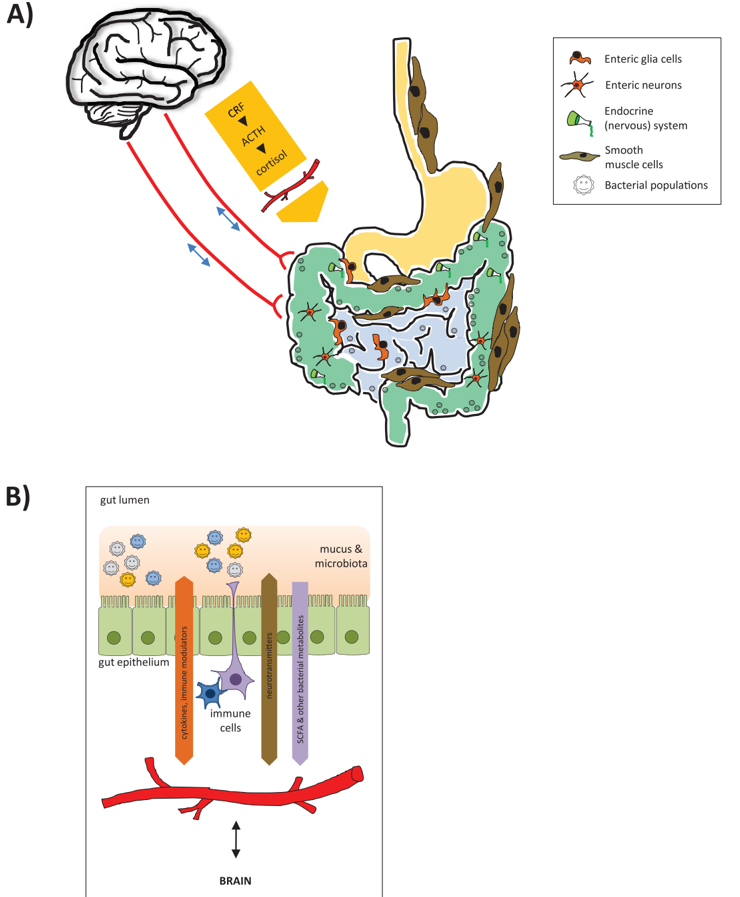
“Scientific evidence accumulated in recent years suggests that the gut microbiota affects some aspects of brain function and behavior, including emotional behavior and related brain systems.(15) Figure 1 schematically outlines routes of communication between the gut and the brain.”
Effects of the probiotic Bifidobacterium infantis in the maternal separation model of depression
Desbonnet, L., Garrett, L., Clarke, G., Kiely, B., Cryan, J. F., & Dinan, T. G. (2010) · Neuroscience · doi:10.1016/j.neuroscience.2010.08.005 · Cited by 999 · cited 2×
“depressive-like symptoms can be reversed by the administration of probiotic bacteria such as B infantis.(70) Moreover,”
The microbiome-gut-brain axis: from bowel to behavior
Cryan, J. F., & O’Mahony, S. M. (2011) · Neurogastroenterology & Motility · doi:10.1111/j.1365-2982.2010.01664.x · Cited by 990
Desbonnet, L., Garrett, L., Clarke, G., Bienenstock, J., & Dinan, T. G. (2008) · Journal of Psychiatric Research · doi:10.1016/j.jpsychires.2008.03.009 · Cited by 952 · cited 1×
“modulate serotonin levels in the frontal cortex, and modulate cortical dopamine metabolites, thereby ameliorating depressive symptoms.(74) In addition, rat studies”
Akbari, E., Asemi, Z., Daneshvar Kakhaki, R., Bahmani, F., Kouchaki, E., Tamtaji, O. R., Hamidi, G. A., & Salami, M. (2016) · Frontiers in Aging Neuroscience · doi:10.3389/fnagi.2016.00256 · Cited by 946
Intestinal microbiota in functional bowel disorders: a Rome foundation report
Simrén, M., Barbara, G., Flint, H. J., Spiegel, B. M. R., Spiller, R. C., Vanner, S., Verdu, E. F., Whorwell, P. J., & Zoetendal, E. G. (2013) · Gut · doi:10.1136/gutjnl-2012-302167 · Cited by 939 · cited 1×
“For example, stress conditions can cause abdominal pain and constipation.(148,152,163) In addition, psychological stress has been shown to shift the microbial colonization on the mucosal surface and alter the susceptibility of the host to infection.”
Bacterial infection causes stress-induced memory dysfunction in mice
Gareau, M. G., Wine, E., Rodrigues, D. M., Cho, J. H., Whary, M. T., Philpott, D. J., MacQueen, G., & Sherman, P. M. (2011) · Gut · doi:10.1136/gut.2009.202515 · Cited by 909
Extinction of emotional learning: contribution of medial prefrontal cortex
Morgan, M. A., Romanski, L. M., & LeDoux, J. E. (1993) · Neuroscience Letters · doi:10.1016/0304-3940(93)90241-c · Cited by 897 · cited 1×
“The incoming information from the gut via the vagus nerve to the brain is processed in the nucleus tractus solitarius, which has large projections that include the parabrachial nucleus, which further projects to the prefrontal cortex as well as the amygdala, a region susceptible to microbial transcriptional regulation…”
The neuropharmacology of butyrate: the bread and butter of the microbiota-gut-brain axis
Stilling, R. M., van de Wouw, M., Clarke, G., Stanton, C., Dinan, T. G., & Cryan, J. F. (2016) · Neurochemistry International · doi:10.1016/j.neuint.2016.06.011 · Cited by 891 · cited 1×
“The mechanisms of involvement of the gut microbiota in brain function and disorders, including anxiety and depression, may be related to the ability of the microbiota to synthesize soluble factors (eg, neuromodulators) and modulate their absorption and function.(134) A study by Neufeld et al.”
Microbiota is essential for social development in the mouse
Desbonnet, L., Clarke, G., Shanahan, F., Dinan, T. G., & Cryan, J. F. (2014) · Molecular Psychiatry · doi:10.1038/mp.2013.65 · Cited by 866 · cited 2×
“Animal studies suggest that the microbiome may influence neurodevelopment.(87,88,71) Short-chain fatty acids, the major metabolites produced by the microbiome, are implicated in the functionality of the blood– brain barrier and thus have a direct role in determining the accessibility of circulating factors to the brai…”
Bäckhed, F., Fraser, C. M., Ringel, Y., Sanders, M. E., Sartor, R. B., Sherman, P. M., Versalovic, J., Young, V., & Finlay, B. B. (2012) · Cell Host & Microbe · doi:10.1016/j.chom.2012.10.012 · Cited by 836
The role of microbiome in central nervous system disorders
Wang, Y., & Kasper, L. H. (2014) · Brain Behavior and Immunity · doi:10.1016/j.bbi.2013.12.015 · Cited by 803 · cited 1×
“The interaction with the nerve cells is indirect and involves enteric glia, a collection of glial cells residing within the walls of the intestinal tract(137,138) and within epithelial and smooth muscle cells,(46) interstitial cells of Cajal,(135) and immune cells.(139) Enteric glia are crucial for the above-mentioned…”
Romano, K. A., Vivas, E. I., Amador-Noguez, D., & Rey, F. E. (2015) · mBio · doi:10.1128/mbio.02481-14 · Cited by 777 · cited 3×
“In addition, Romano et al.(160) reported that the intestinal microbiota composition modulates the bioavailability of choline.”
InfluentialAkkasheh, G., Kashani-Poor, Z., Tajabadi-Ebrahimi, M., Jafari, P., Akbari, H., Taghizadeh, M., Memarzadeh, M. R., Asemi, Z., & Esmaillzadeh, A. (2016) · Nutrition · doi:10.1016/j.nut.2015.09.003 · Cited by 767 · cited 1×
“Lastly, probiotic treatment (containing Lactobacillus acidophilus, Lactobacillus casei, and Bifidobacterium bifidum) for 8 weeks in patients with major depressive disorder was reported to improve clinical signs of depression as assessed by the Beck Depression Inventory in a recent randomized, double-blind, placebo-con…”
Gut microbiota depletion from early adolescence in mice: implications for brain and behaviour
Desbonnet, L., Clarke, G., Traplin, A., O’Sullivan, O., Crispie, F., Moloney, R. D., Cotter, P. D., Dinan, T. G., & Cryan, J. F. (2015) · Brain Behavior and Immunity · doi:10.1016/j.bbi.2015.04.004 · Cited by 760 · cited 2×
“Moreover, the consequences of antibiotic treatment resemble the findings in germ-free animals, such as deficits in social and cognitive behaviors, increased anxiety, and reduced microglial activation and expression of brain-derived neurotrophic factor.(27,34,35) The role of the microbiome in influencing the crosstalk…”
Kynurenine pathway metabolism and the microbiota-gut-brain axis
Kennedy, P. J., Cryan, J. F., Dinan, T. G., & Clarke, G. (2017) · Neuropharmacology · doi:10.1016/j.neuropharm.2016.07.002 · Cited by 724
Fröhlich, E. E., Farzi, A., Mayerhofer, R., Reichmann, F., Jačan, A., Wagner, B., Zinser, E., Bordag, N., Magnes, C., Fröhlich, E., et al. (2016) · Brain Behavior and Immunity · doi:10.1016/j.bbi.2016.02.020 · Cited by 720
Ferrante, R. J., Kubilus, J. K., Lee, J., Ryu, H., Beesen, A., Zucker, B., Smith, K., Kowall, N. W., Ratan, R. R., Luthi-Carter, R., et al. (2003) · The Journal of Neuroscience · doi:10.1523/jneurosci.23-28-09418.2003 · Cited by 693
Bercik, P., Verdu, E. F., Foster, J. A., Macri, J., Potter, M., Huang, X., Malinowski, P., Jackson, W., Blennerhassett, P., Neufeld, K. A., et al. (2010) · Gastroenterology · doi:10.1053/j.gastro.2010.06.063 · Cited by 674 · cited 3×
“Vagotomy experiments underline the importance of the vagus nerve for microbiota–gut–brain communication, even though this connection does not seem to be necessary for all microbes.(27,50) There is great interest in clarifying how probiotic species modulate neuronal pathways, thereby affecting neuronal function and beh…”
Steenbergen, L., Sellaro, R., van Hemert, S., Bosch, J. A., & Colzato, L. S. (2015) · Brain, Behavior, and Immunity · doi:10.1016/j.bbi.2015.04.003 · Cited by 671 · cited 1×
“Several studies in humans (Table 2) support the data from animal studies and show that the gut microbiota may play a role in modulating depression and anxiety.(73,97,105) Some researchers have reported that the composition of the microbiome was different in patients with major depressive disorder than in their healthy…”
The neurobiology of stress and gastrointestinal disease
MAYER, E. A. (2000) · Gut · doi:10.1136/gut.47.6.861 · Cited by 666 · cited 1×
“In addition, gastrointestinal dysfunction such as bowel diseases are frequently accompanied by comorbid psychiatric conditions.(44,45) The ENS, which is part of the automatic nervous system, innervates the wall of the GI tract, covering the entire length from the esophagus to the anus.”
Regulation of prefrontal cortex myelination by the microbiota
Hoban, A. E., Stilling, R. M., Ryan, F. J., Shanahan, F., Dinan, T. G., Claesson, M. J., Clarke, G., & Cryan, J. F. (2016) · Translational Psychiatry · doi:10.1038/tp.2016.42 · Cited by 635 · cited 1×
“Recent work in germ-free mice demonstrated hypermyelinated areas in the prefrontal cortex and defective microglial cells with reduced capacity for activation after bacterial or viral challenge.(36) This suggests that germ-free mice have a compromised ability to mount appropriate immune responses in the CNS.”
Luczynski, P., McVey Neufeld, K.-A., Oriach, C. S., Clarke, G., Dinan, T. G., & Cryan, J. F. (2016) · International Journal of Neuropsychopharmacology · doi:10.1093/ijnp/pyw020 · Cited by 632 · cited 1×
“Research in preclinical models suggests that the effect of the microbiome on behavior may be related to changes in the amygdala and hippocampus.(67,162) A significant difference in the volume and dendritic morphology of the amygdala and hippocampus was observed between conventionally colonized mice and germ-free mice,…”
Ait-Belgnaoui, A., Durand, H., Cartier, C., Chaumaz, G., Eutamene, H., Ferrier, L., Houdeau, E., Fioramonti, J., Bueno, L., & Theodorou, V. (2012) · Psychoneuroendocrinology · doi:10.1016/j.psyneuen.2012.03.024 · Cited by 612 · cited 1×
“Another gram-positive bacterium, Lactobacillus farciminis, is also able to reverse stress-induced elevation of HPA axis activity and neuroinflammation in vivo.(110) Lactobacillus rhamnosus was shown to alter emotional behavior and central GABA receptor expression in vivo via the vagus nerve, thereby decreasing both an…”
Inflammasome signaling affects anxiety- and depressive-like behavior and gut microbiome composition
Wong, M.-L., Inserra, A., Lewis, M. D., Mastronardi, C. A., Leong, L., Choo, J., Kentish, S., Xie, P., Morrison, M., Wesselingh, S. L., et al. (2016) · Molecular Psychiatry · doi:10.1038/mp.2016.46 · Cited by 568
Impact of consuming a milk drink containing a probiotic on mood and cognition
Benton, D., Williams, C., & Brown, A. (2007) · European Journal of Clinical Nutrition · doi:10.1038/sj.ejcn.1602546 · Cited by 554 · cited 2×
“These data are in line with those from an older study in which supplementation with probiotic yogurt improved the mood status of healthy elderly individuals, especially those with decreased mood scores at baseline.(97) Lastly, probiotic treatment (containing Lactobacillus acidophilus, Lactobacillus casei, and Bifidoba…”
The epidemiology of irritable bowel syndrome in North America: a systematic review1
Saito, Y. A., Schoenfeld, P., & Locke, G. R. (2002) · The American Journal of Gastroenterology · doi:10.1111/j.1572-0241.2002.05913.x · Cited by 548 · cited 1×
“reaches up to 50 different phyla, 1000 different bacterial species, and 10(14) viable bacteria per gram of luminal content.(11,12) The density of the human microbiome is highest”
Schmidt, K., Cowen, P. J., Harmer, C. J., Tzortzis, G., Errington, S., & Burnet, P. W. J. (2015) · Psychopharmacology · doi:10.1007/s00213-014-3810-0 · Cited by 522 · cited 2×
“No effects were found after the administration of fructooligosaccharides, indicating the specificity of the observed effects.(104) Thus, the above-mentioned studies indicate that the neuroendocrine function of the brain can be affected by the gut microbiome.”
Tryptophan metabolism in the central nervous system: medical implications
Ruddick, J. P., Evans, A. K., Nutt, D. J., Lightman, S. L., Rook, G. A. W., & Lowry, C. A. (2006) · Expert Reviews in Molecular Medicine · doi:10.1017/s1462399406000068 · Cited by 519 · cited 1×
“There is considerable evidence that the microbiome plays a role in modulating mood disorders, stress, and anxiety, all conditions that are influenced by serotonergic neurotransmission.(33,154) Bravo et al.”
Allen, A. P., Hutch, W., Borre, Y. E., Kennedy, P. J., Temko, A., Boylan, G., Murphy, E., Cryan, J. F., Dinan, T. G., & Clarke, G. (2016) · Translational Psychiatry · doi:10.1038/tp.2016.191 · Cited by 513 · cited 3×
“To further validate that preclinical results could be translated to healthy humans, Allen et al.(98) tested whether the consumption of B longum strain 1714 affects brain-related functions.”
InfluentialAdult hippocampal neurogenesis is regulated by the microbiome
Ogbonnaya, E. S., Clarke, G., Shanahan, F., Dinan, T. G., Cryan, J. F., & O’Leary, O. F. (2015) · Biological Psychiatry · doi:10.1016/j.biopsych.2014.12.023 · Cited by 491 · cited 1×
“matory reactions within the brain by modulating the activation of microglial cells(35) and affecting myelination(36) and neurogenesis in adult brains.(37) Fecal transplanta-”
Gareau, M. G., Jury, J., MacQueen, G., Sherman, P. M., & Perdue, M. H. (2007) · Gut · doi:10.1136/gut.2006.117176 · Cited by 472
Activation of neuronal P2X7 receptor–pannexin-1 mediates death of enteric neurons during colitis
Gulbransen, B. D., Bashashati, M., Hirota, S. A., Gui, X., Roberts, J. A., MacDonald, J. A., Muruve, D. A., McKay, D. M., Beck, P. L., Mawe, G. M., et al. (2012) · Nature Medicine · doi:10.1038/nm.2679 · Cited by 443
Savidge, T. C., Newman, P., Pothoulakis, C., Ruhl, A., Neunlist, M., Bourreille, A., Hurst, R., & Sofroniew, M. V. (2007) · Gastroenterology · doi:10.1053/j.gastro.2007.01.051 · Cited by 428
Savignac, H. M., Kiely, B., Dinan, T. G., & Cryan, J. F. (2014) · Neurogastroenterology & Motility · doi:10.1111/nmo.12427 · Cited by 418 · cited 1×
“Moreover, levodopa, serotonin, dopamine, and noradrenaline were detected during the late growth phase of E coli K-12 cultures,(158) and L plantarum has been reported to produce acetylcholine.(94) Lastly, several strains of Lactobacillus brevis, Bifidobacterium adolescentis, Bifidobacterium dentium, and B infantis have…”
Novel functional roles for enteric glia in the gastrointestinal tract
Gulbransen, B. D., & Sharkey, K. A. (2012) · Nature Reviews Gastroenterology & Hepatology · doi:10.1038/nrgastro.2012.138 · Cited by 411
Govindarajan, N., Agis-Balboa, R. C., Walter, J., Sananbenesi, F., & Fischer, A. (2011) · Journal of Alzheimer's Disease · doi:10.3233/jad-2011-110080 · Cited by 405 · cited 1×
“In animal models of Alzheimer’s disease, butyrate showed positive effects on pathology and memory performance.(125,126) In models of other neurodegenerative disorders, including Parkinson’s disease,(127) amyotrophic lateral sclerosis,(128) Huntington’s disease,(129) and ataxia,(130) butyrate exhibited neuroprotective…”
A users guide to HPA axis research
Spencer, R. L., & Deak, T. (2017) · Physiology & Behavior · doi:10.1016/j.physbeh.2016.11.014 · Cited by 405 · cited 1×
“sponse to stress in addition to other metabolic and immune-related functions.(66) Finally, the role of the immune system in”
Galley, J. D., Nelson, M. C., Yu, Z., Dowd, S. E., Walter, J., Kumar, P. S., Lyte, M., & Bailey, M. T. (2014) · BMC Microbiology · doi:10.1186/1471-2180-14-189 · Cited by 400
Knights, D., Ward, T. L., McKinlay, C. E., Miller, H., Gonzalez, A., McDonald, D., & Knight, R. (2014) · Cell Host & Microbe · doi:10.1016/j.chom.2014.09.013 · Cited by 396 · cited 1×
“Even if the microbiome of adults is relatively stable when compared with that of infants or elderly, several factors can dramatically influence its composition over a relatively short period of time.(24) Such factors include antibiotic treatment, stress, infection, host genetics, and diet.”
Savignac, H. M., Corona, G., Mills, H., Chen, L., Spencer, J. P. E., Tzortzis, G., & Burnet, P. W. J. (2013) · Neurochemistry International · doi:10.1016/j.neuint.2013.10.006 · Cited by 377 · cited 2×
“Savignac et al.(93) confirmed the involvement of the microbiome in gene expression by showing that feeding prebiotics elevates levels of brain-derived neurotrophic factor, NMDA receptor subunits, and D-serine in the rat brain.”
Anatomy and physiology of the enteric nervous system
Costa, M., Brookes, S. J. H., & Hennig, G. W. (2000) · Gut · doi:10.1136/gut.47.suppl_4.iv15 · Cited by 367
The Utility of Probiotics in the Treatment of Irritable Bowel Syndrome: A Systematic Review
Brenner, D. M., Moeller, M. J., Chey, W. D., & Schoenfeld, P. S. (2009) · The American Journal of Gastroenterology · doi:10.1038/ajg.2009.25 · Cited by 362
Alemi, F., Poole, D. P., Chiu, J., Schoonjans, K., Cattaruzza, F., Grider, J. R., Bunnett, N. W., & Corvera, C. U. (2013) · Gastroenterology · doi:10.1053/j.gastro.2012.09.055 · Cited by 362 · cited 1×
“Bile acids are also able to modulate neuronal activity, thus affecting both the host and microbiota, for example, by activating G protein–coupled bile acid receptors on intrinsic primary afferent neurons.(145) This effect, however, depends on the specific bile acid, as some promote bacterial growth, whereas others inh…”
Microbiota controls the homeostasis of glial cells in the gut lamina propria
Kabouridis, P. S., Lasrado, R., McCallum, S., Chng, S. H., Snippert, H. J., Clevers, H., Pettersson, S., & Pachnis, V. (2015) · Neuron · doi:10.1016/j.neuron.2014.12.037 · Cited by 358
Ryu, H., Smith, K., Camelo, S. I., Carreras, I., Lee, J., Iglesias, A. H., Dangond, F., Cormier, K. A., Cudkowicz, M. E., H. Brown, R., et al. (2005) · Journal of Neurochemistry · doi:10.1111/j.1471-4159.2005.03077.x · Cited by 353
Postinfectious Irritable Bowel Syndrome-A Meta-Analysis
Halvorson, H. A., Schlett, C. D., & Riddle, M. S. (2006) · The American Journal of Gastroenterology · doi:10.1111/j.1572-0241.2006.00654.x · Cited by 352
Luczynski, P., Whelan, S. O., O'Sullivan, C., Clarke, G., Shanahan, F., Dinan, T. G., & Cryan, J. F. (2016) · European Journal of Neuroscience · doi:10.1111/ejn.13291 · Cited by 346 · cited 2×
“Research in preclinical models suggests that the effect of the microbiome on behavior may be related to changes in the amygdala and hippocampus.(67,162) A significant difference in the volume and dendritic morphology of the amygdala and hippocampus was observed between conventionally colonized mice and germ-free mice,…”
Dhiman, R. K., Rana, B., Agrawal, S., Garg, A., Chopra, M., Thumburu, K. K., Khattri, A., Malhotra, S., Duseja, A., & Chawla, Y. K. (2014) · Gastroenterology · doi:10.1053/j.gastro.2014.08.031 · Cited by 339 · cited 1×
“These data are in agreement with an older report showing that VSL#3 treatment reduced circulating TNF-a levels, which were associated with improved neuropsychiatric outcomes in patients with chronic liver disease.(90) Thus, TNF-a causes sickness behaviors in the murine model by cerebral microglial activation and the r…”
The gut-brain axis: the missing link in depression
Evrensel, A., & Ceylan, M. E. (2015) · Clinical Psychopharmacology and Neuroscience · doi:10.9758/cpn.2015.13.3.239 · Cited by 338 · cited 1×
“Therefore, a healthy diet could have a preventive effect against depression.(111)”
LYTE, M., LI, W., OPITZ, N., GAYKEMA, R., & GOEHLER, L. (2006) · Physiology & Behavior · doi:10.1016/j.physbeh.2006.06.019 · Cited by 334 · cited 1×
“with a pathogen, Citrobacter rodentium, induced anxiety-like behavior.(52) Moreover, the abnormal gut”
Sorg, J. A., & Sonenshein, A. L. (2010) · Journal of Bacteriology · doi:10.1128/jb.00610-10 · Cited by 332 · cited 1×
“This effect, however, depends on the specific bile acid, as some promote bacterial growth, whereas others inhibit it.(146,147) Quorum sensing, used by bacteria to coordinate gene expression according to the density of their local population, represents a communication route within the gut by which bacteria may react t…”
Jašarević, E., Howerton, C. L., Howard, C. D., & Bale, T. L. (2015) · Endocrinology · doi:10.1210/en.2015-1177 · Cited by 329
Gacias, M., Gaspari, S., Santos, P.-M. G., Tamburini, S., Andrade, M., Zhang, F., Shen, N., Tolstikov, V., Kiebish, M. A., Dupree, J. L., et al. (2016) · eLife · doi:10.7554/elife.13442 · Cited by 308 · cited 1×
“A recent study confirmed the above findings by showing that the gut microbiome determines behavioral changes in another model, ie, the nonobese diabetic mouse.(82) The transfer of intestinal microbiota from nonobese diabetic mice to C57BL/6 mice was sufficient to induce social avoidance and changes in gene expression…”
McVey Neufeld, K. A., Mao, Y. K., Bienenstock, J., Foster, J. A., & Kunze, W. A. (2013) · Neurogastroenterology & Motility · doi:10.1111/nmo.12049 · Cited by 299 · cited 2×
“Afterhyperpolarization neurons are less excitable in germ-free mice, an abnormality that is normalized after conventionalization with gut microbiota.(55,57,58) In addition, expression of the calciumbinding protein calbindin in the enteric neurons in the gut of conventionalized germ-free mice was similar to”
Microbial endocrinology: how stress influences susceptibility to infection
Freestone, P. P. E., Sandrini, S. M., Haigh, R. D., & Lyte, M. (2008) · Trends in Microbiology · doi:10.1016/j.tim.2007.11.005 · Cited by 299
Evaluation of 16S rDNA-Based Community Profiling for Human Microbiome Research
Jumpstart Consortium Human Microbiome Project Data Generation Working Group (2012) · PLoS ONE · doi:10.1371/journal.pone.0039315 · Cited by 297
Structural & functional consequences of chronic psychosocial stress on the microbiome & host
Bharwani, A., Mian, M. F., Foster, J. A., Surette, M. G., Bienenstock, J., & Forsythe, P. (2016) · Psychoneuroendocrinology · doi:10.1016/j.psyneuen.2015.10.001 · Cited by 293
Davari, S., Talaei, S. A., Alaei, H., & salami, M. (2013) · Neuroscience · doi:10.1016/j.neuroscience.2013.02.055 · Cited by 290 · cited 1×
“To date, the majority of mechanistic evidence for the involvement of the gut microbiota in cognition is provided by animal experiments of induced infections,(80,121) antibiotic and dietary manipulations,(34,76,77,78) and probiotic interventions.(78,79) Animal studies suggest that the microbiome may influence neurodeve…”
(2009) · PubMed · Cited by 285
Probiotics for managing caries and periodontitis: Systematic review and meta-analysis
Gruner, D., Paris, S., & Schwendicke, F. (2016) · Journal of Dentistry · doi:10.1016/j.jdent.2016.03.002 · Cited by 284
Golubeva, A. V., Crampton, S., Desbonnet, L., Edge, D., O'Sullivan, O., Lomasney, K. W., Zhdanov, A. V., Crispie, F., Moloney, R. D., Borre, Y. E., et al. (2015) · Psychoneuroendocrinology · doi:10.1016/j.psyneuen.2015.06.002 · Cited by 283
Stress at the intestinal surface: catecholamines and mucosa–bacteria interactions
Lyte, M., Vulchanova, L., & Brown, D. R. (2011) · Cell and Tissue Research · doi:10.1007/s00441-010-1050-0 · Cited by 281 · cited 2×
“In addition, psychological stress has been shown to shift the microbial colonization on the mucosal surface and alter the susceptibility of the host to infection.(152) Moreover, the ENS and the immune system both play important roles in the development of irritable bowel disease.”
Ohland, C. L., Kish, L., Bell, H., Thiesen, A., Hotte, N., Pankiv, E., & Madsen, K. L. (2013) · Psychoneuroendocrinology · doi:10.1016/j.psyneuen.2013.02.008 · Cited by 273 · cited 1×
“To date, the majority of mechanistic evidence for the involvement of the gut microbiota in cognition is provided by animal experiments of induced infections,(80,121) antibiotic and dietary manipulations,(34,76,77,78) and probiotic interventions.(78,79) Animal studies suggest that the microbiome may influence neurodeve…”
Walker, E. F., Trotman, H. D., Pearce, B. D., Addington, J., Cadenhead, K. S., Cornblatt, B. A., Heinssen, R., Mathalon, D. H., Perkins, D. O., Seidman, L. J., et al. (2013) · Biological Psychiatry · doi:10.1016/j.biopsych.2013.02.016 · Cited by 269
Communication between gastrointestinal bacteria and the nervous system
Bravo, J. A., Julio-Pieper, M., Forsythe, P., Kunze, W., Dinan, T. G., Bienenstock, J., & Cryan, J. F. (2012) · Current Opinion in Pharmacology · doi:10.1016/j.coph.2012.09.010 · Cited by 261 · cited 1×
“The major route of central communication between the gut and the brain is the vagus nerve.(16,131) The incoming information from the gut via the vagus nerve to the brain is processed in the nucleus tractus solitarius, which has large projections that include the parabrachial nucleus, which further projects to the pref…”
Li, W., Dowd, S. E., Scurlock, B., Acosta-Martinez, V., & Lyte, M. (2009) · Physiology & Behavior · doi:10.1016/j.physbeh.2008.12.004 · Cited by 246
The QseC Adrenergic Signaling Cascade in Enterohemorrhagic E. coli (EHEC)
Hughes, D. T., Clarke, M. B., Yamamoto, K., Rasko, D. A., & Sperandio, V. (2009) · PLoS Pathogens · doi:10.1371/journal.ppat.1000553 · Cited by 244
Perez-Burgos, A., Wang, B., Mao, Y.-K., Mistry, B., Neufeld, K.-A. M., Bienenstock, J., & Kunze, W. (2013) · American Journal of Physiology-Gastrointestinal and Liver Physiology · doi:10.1152/ajpgi.00128.2012 · Cited by 235 · cited 2×
“Afterhyperpolarization neurons are less excitable in germ-free mice, an abnormality that is normalized after conventionalization with gut microbiota.(55,57,58) In addition, expression of the calciumbinding protein calbindin in the enteric neurons in the gut of conventionalized germ-free mice was similar to”
Systemic or intrahippocampal delivery of histone deacetylase inhibitors facilitates fear extinction.
Lattal, K. M., Barrett, R. M., & Wood, M. A. (2007) · Behavioral Neuroscience · doi:10.1037/0735-7044.121.5.1125 · Cited by 234
Stilling, R. M., Ryan, F. J., Hoban, A. E., Shanahan, F., Clarke, G., Claesson, M. J., Dinan, T. G., & Cryan, J. F. (2015) · Brain Behavior and Immunity · doi:10.1016/j.bbi.2015.07.009 · Cited by 233 · cited 6×
“Therefore, some have proposed it be tested experi- mentally to treat cognitive impairment and neurological disorders ranging from depression to neurodegenerative diseases in humans (reviewed by Stilling et al.71).”
InfluentialReber, S. O., Siebler, P. H., Donner, N. C., Morton, J. T., Smith, D. G., Kopelman, J. M., Lowe, K. R., Wheeler, K. J., Fox, J. H., Hassell, J. E., et al. (2016) · Proceedings of the National Academy of Sciences · doi:10.1073/pnas.1600324113 · Cited by 233
Badawy, A. A.-B. (2017) · Neuropharmacology · doi:10.1016/j.neuropharm.2015.11.015 · Cited by 228 · cited 3×
“transmitters, and neuroactive microbial metabolites such as short-chain fatty acids.(16,33) How these metabo-”
Lyte, M., Varcoe, J. J., & Bailey, M. T. (1998) · Physiology & Behavior · doi:10.1016/s0031-9384(98)00145-0 · Cited by 218 · cited 1×
“was shown to induce anxiety-like behavior without inducing immune activation in mice.(81) As noted, in vivo models”
Gut Microbiota: The Conductor in the Orchestra of Immune–Neuroendocrine Communication
El Aidy, S., Dinan, T. G., & Cryan, J. F. (2015) · Clinical Therapeutics · doi:10.1016/j.clinthera.2015.03.002 · Cited by 215 · cited 1×
“the central, autonomic, and enteric nervous systems, the immune system, and the endocrine system.(16,26,30,31)”
Martin‐Cabezas, R., Davideau, J., Tenenbaum, H., & Huck, O. (2016) · Journal of Clinical Periodontology · doi:10.1111/jcpe.12545 · Cited by 210
Enteric glia: the most alimentary of all glia
Grubišić, V., & Gulbransen, B. D. (2017) · The Journal of Physiology · doi:10.1113/jp271021 · Cited by 207 · cited 1×
“Thus, enteric glial cells regulate intestinal barrier function, immune responses, intestinal secretion, and gut motility and are hypothesized to be moderators of neurotransmission and neuroplasticity in the intestine.(144) Bile acids are also able to modulate neuronal activity, thus affecting both the host and microbi…”
Collins, S. M., Kassam, Z., & Bercik, P. (2013) · Current Opinion in Microbiology · doi:10.1016/j.mib.2013.06.004 · Cited by 205 · cited 1×
“change behavioral characteristics of mammals by altering brain chemistry.(38)”
Brain imaging approaches to the study of functional GI disorders: A Rome Working Team Report
Mayer, E. A., Aziz, Q., Coen, S., Kern, M., Labus, J. S., Lane, R., Kuo, B., Naliboff, B., & Tracey, I. (2009) · Neurogastroenterology & Motility · doi:10.1111/j.1365-2982.2009.01304.x · Cited by 204 · cited 1×
“Irritable bowel syndrome (IBS) and inflammatory bowel disease in humans are 2 conditions that exemplify the consequences of a faulty gut–brain communication.(39,40) The involvement of the gut microbiota in the pathophysiology of IBS has been shown repeatedly, as symptoms of IBS develop after the disruption of the micr…”
Host microbiota modulates development of social preference in mice
Arentsen, T., Raith, H., Qian, Y., Forssberg, H., & Heijtz, R. D. (2015) · Microbial Ecology in Health & Disease · doi:10.3402/mehd.v26.29719 · Cited by 200 · cited 1×
“Germ-free mice exhibit learning deficits(80) and show anxiolytic-like behavior and reduced sociability.(88,89) In addition, they also demonstrate an exaggerated HPA stress response.”
Chenodeoxycholate Is an Inhibitor of Clostridium difficile Spore Germination
Sorg, J. A., & Sonenshein, A. L. (2009) · Journal of Bacteriology · doi:10.1128/jb.01260-08 · Cited by 199 · cited 1×
“This effect, however, depends on the specific bile acid, as some promote bacterial growth, whereas others inhibit it.(146,147) Quorum sensing, used by bacteria to coordinate gene expression according to the density of their local population, represents a communication route within the gut by which bacteria may react t…”
Farrugia, G., & Szurszewski, J. H. (2014) · Gastroenterology · doi:10.1053/j.gastro.2014.04.041 · Cited by 192 · cited 1×
“Gaseous metabolites of bacteria, including carbon monoxide, hydrogen sulfide, nitric oxide, and others, are also implicated in the neuronal control of gut functions by muscarinic cholinergic, vasoactive intestinal peptide.(135,136) The interaction with the nerve cells is indirect and involves enteric glia, a collectio…”
Microbiota-gut-brain axis and cognitive function
Gareau, M. G. (2014) · Advances in Experimental Medicine and Biology · doi:10.1007/978-1-4939-0897-4_16 · Cited by 189
D'Mello, C., Ronaghan, N., Zaheer, R., Dicay, M., Le, T., MacNaughton, W. K., Surrette, M. G., & Swain, M. G. (2015) · Journal of Neuroscience · doi:10.1523/jneurosci.0575-15.2015 · Cited by 187 · cited 3×
“Thus, TNF-a causes sickness behaviors in the murine model by cerebral microglial activation and the recruitment of monocytes into the brain vasculature and brain parenchyma.(72) The mechanisms of organ inflammation in the peripheral organs, leading to alteration of brain functions, are of great importance for the desi…”
InfluentialThe participation of the sympathetic innervation of the gastrointestinal tract in disease states
Lomax, A. E., Sharkey, K. A., & Furness, J. B. (2010) · Neurogastroenterology & Motility · doi:10.1111/j.1365-2982.2009.01381.x · Cited by 184 · cited 1×
“In addition, the innervation of the GI tract by the sympathetic nervous system controls the motility, fluid exchange, and blood flow in the gut of healthy individuals.(165) Lastly, human studies show that the HPA axis is dysregulated in depression; however, this can be reversed after the resolution of depression.”
The neurobiology of post-traumatic stress disorder
Bisson, J. I. (2009) · Psychiatry · doi:10.1016/j.mppsy.2009.04.018 · Cited by 178
Antibiotics increase functional abdominal symptoms
Maxwell, P. (2002) · The American Journal of Gastroenterology · doi:10.1016/s0002-9270(01)03990-9 · Cited by 176 · cited 1×
“The involvement of the gut microbiota in the pathophysiology of IBS has been shown repeatedly, as symptoms of IBS develop after the disruption of the microbiome due to acute gastroenteritis (ie, postinfectious IBS)(41,42) or following the use of antibiotics.(43) In addition, gastrointestinal dysfunction such as bowel…”
Shishov, V. A., Kirovskaya, T. A., Kudrin, V. S., & Oleskin, A. V. (2009) · Applied Biochemistry and Microbiology · doi:10.1134/s0003683809050068 · Cited by 174
Chung, Y.-C., Jin, H.-M., Cui, Y., Kim, D. S., Jung, J. M., Park, J.-I., Jung, E.-S., Choi, E.-K., & Chae, S.-W. (2014) · Journal of Functional Foods · doi:10.1016/j.jff.2014.07.007 · Cited by 173 · cited 1×
“Probiotic treatment (L helveticus IDCC3801) of healthy elderly individuals was shown to improve scores on cognitive fatigue tests.(100) Another study suggests that consumption of a”
The organisation of the autonomic nervous system: Peripheral connections
Furness, J. B. (2006) · Autonomic Neuroscience · doi:10.1016/j.autneu.2006.05.003 · Cited by 161 · cited 1×
“Apart from the ENS, the vagus nerve is instrumental for the flow of information from the gut to the brain.(32,49) Vagotomy experiments underline the importance of the vagus nerve for microbiota–gut–brain communication, even though this connection does not seem to be necessary for all microbes.”
Mayer, E. A., Tillisch, K., & Bradesi, S. (2006) · Alimentary Pharmacology & Therapeutics · doi:10.1111/j.1365-2036.2006.03078.x · Cited by 154 · cited 1×
“Irritable bowel syndrome (IBS) and inflammatory bowel disease in humans are 2 conditions that exemplify the consequences of a faulty gut–brain communication.(39,40) The involvement of the gut microbiota in the pathophysiology of IBS has been shown repeatedly, as symptoms of IBS develop after the disruption of the micr…”
Özoğul, F. (2004) · European Food Research and Technology · doi:10.1007/s00217-004-0988-0 · Cited by 149 · cited 1×
“It is worth noting that several bacterial strains, such as L lactis subsp cremoris, L lactis subsp lactis, Lactobacillus plantarum, and S thermophilus, have been shown to produce monogenic amines, including serotonin.(157) Moreover, levodopa, serotonin, dopamine, and noradrenaline were detected during the late growth…”
Probiotics normalize the gut-brain-microbiota axis in immunodeficient mice
Smith, C. J., Emge, J. R., Berzins, K., Lung, L., Khamishon, R., Shah, P., Rodrigues, D. M., Sousa, A. J., Reardon, C., Sherman, P. M., et al. (2014) · American Journal of Physiology-Gastrointestinal and Liver Physiology · doi:10.1152/ajpgi.00238.2014 · Cited by 143 · cited 1×
“immune system in maintaining intestinal and brain health.(68)”
Sharma, S., Taliyan, R., & Singh, S. (2015) · Behavioural Brain Research · doi:10.1016/j.bbr.2015.05.052 · Cited by 142
McVey Neufeld, K. A., Perez‐Burgos, A., Mao, Y. K., Bienenstock, J., & Kunze, W. A. (2015) · Neurogastroenterology & Motility · doi:10.1111/nmo.12534 · Cited by 142 · cited 1×
“mals was significantly less than that in either the conventionalized mice or the controls.(59,60) Calbindin”
Adding fuel to the fire: the impact of stress on the ageing brain
Prenderville, J. A., Kennedy, P. J., Dinan, T. G., & Cryan, J. F. (2015) · Trends in Neurosciences · doi:10.1016/j.tins.2014.11.001 · Cited by 136
Zhang, Q., Wu, Y., & Fei, X. (2016) · International Journal of Food Sciences and Nutrition · doi:10.1080/09637486.2016.1181156 · Cited by 132
Perez‐Burgos, A., Wang, L., McVey Neufeld, K., Mao, Y., Ahmadzai, M., Janssen, L. J., Stanisz, A. M., Bienenstock, J., & Kunze, W. A. (2015) · The Journal of Physiology · doi:10.1113/jp270229 · Cited by 123 · cited 1×
“mals was significantly less than that in either the conventionalized mice or the controls.(59,60) Calbindin”
Catecholamines Modulate Escherichia coli O157:H7 Adherence to Murine Cecal Mucosa
Chen, C., Brown, D. R., Xie, Y., Green, B. T., & Lyte, M. (2003) · Shock · doi:10.1097/01.shk.0000073867.66587.e0 · Cited by 120 · cited 1×
“For example, stress conditions can cause abdominal pain and constipation.(148,152,163) In addition, psychological stress has been shown to shift the microbial colonization on the mucosal surface and alter the susceptibility of the host to infection.”
Schwille-Kiuntke, J., Enck, P., Zendler, C., Krieg, M., Polster, A. V., Klosterhalfen, S., Autenrieth, I. B., Zipfel, S., & Frick, J.-S. (2011) · Neurogastroenterology & Motility · doi:10.1111/j.1365-2982.2011.01779.x · Cited by 110
Neuropeptides and inflammatory bowel disease
Margolis, K. G., & Gershon, M. D. (2009) · Current Opinion in Gastroenterology · doi:10.1097/mog.0b013e328331b69e · Cited by 110 · cited 1×
“Both the ENS and the CNS can modulate intestinal inflammation through secretion of neuropeptides or other soluble molecules.(164) In addition, the innervation of the GI tract by the sympathetic nervous system controls the motility, fluid exchange, and blood flow in the gut of healthy individuals.”
Chou, A.-H., Chen, S.-Y., Yeh, T., Weng, Y.-H., & Wang, H. (2010) · Neurobiology of Disease · doi:10.1016/j.nbd.2010.10.019 · Cited by 95
Wu, R., Pasyk, M., Wang, B., Forsythe, P., Bienenstock, J., Mao, Y., Sharma, P., Stanisz, A. M., & Kunze, W. (2013) · Neurogastroenterology & Motility · doi:10.1111/nmo.12072 · Cited by 90 · cited 1×
“Afterhyperpolarization neurons are less excitable in germ-free mice, an abnormality that is normalized after conventionalization with gut microbiota.(55,57,58) In addition, expression of the calciumbinding protein calbindin in the enteric neurons in the gut of conventionalized germ-free mice was similar to”
Galligan, J. J., Furness, J. B., & Costa, M. (1989) · Gastroenterology · doi:10.1016/0016-5085(89)91683-1 · Cited by 84 · cited 1×
“The ability of the ENS system to adapt to altering microbial populations in the GI tract has been known for over 30 years.(56) Indeed, the ENS responds to changing bacterial populations by adapting the neuronal physiology and by changing gene expression.”
Kim, G., Arseneault-Bréard, J., Monaco, F. F., Beaudoin, A., Bah, T. M., Tompkins, T. A., Godbout, R., & Rousseau, G. (2012) · British Journal Of Nutrition · doi:10.1017/s0007114512003807 · Cited by 74
MacEachern, S. J., Patel, B. A., Keenan, C. M., Dicay, M. S., Chapman, K., McCafferty, D., Savidge, T., Beck, P. L., MacNaughton, W. K., & Sharkey, K. A. (2015) · Gastroenterology · doi:10.1053/j.gastro.2015.04.007 · Cited by 70
Role of enteric neurotransmission in host defense and protection of the gastrointestinal tract
Sharkey, K. A., & Savidge, T. (2013) · Autonomic Neuroscience · doi:10.1016/j.autneu.2013.12.006 · Cited by 69 · cited 1×
“In addition, the gut also receives input from the vagus nerve and from central spinal and sacral afferent terminals.(32,46) An important feature of the ENS is that it can operate independently of the spinal cord and brain despite being connected to the CNS.”
Jafarnejad, S., Shab‐Bidar, S., Speakman, J. R., Parastui, K., Daneshi‐Maskooni, M., & Djafarian, K. (2016) · Nutrition in Clinical Practice · doi:10.1177/0884533616639399 · Cited by 68
MacEachern, S. J., Patel, B. A., McKay, D. M., & Sharkey, K. A. (2011) · The Journal of Physiology · doi:10.1113/jphysiol.2011.207902 · Cited by 63
Chen, C., Lyte, M., Stevens, M. P., Vulchanova, L., & Brown, D. R. (2006) · European Journal of Pharmacology · doi:10.1016/j.ejphar.2006.03.081 · Cited by 56
What’s bugging your teen?—The microbiota and adolescent mental health
McVey Neufeld, K.-A., Luczynski, P., Seira Oriach, C., Dinan, T. G., & Cryan, J. F. (2016) · Neuroscience & Biobehavioral Reviews · doi:10.1016/j.neubiorev.2016.06.005 · Cited by 56 · cited 1×
“microorganisms to the gut tissue by building a protective biofilm.(25) It is now known that the benefits of human–”
Boucsein, C., Nawrot, M. P., Schnepel, P., & Aertsen, A. (2011) · Frontiers in Neuroscience · doi:10.3389/fnins.2011.00031 · Cited by 47 · cited 1×
“Gaseous metabolites of bacteria, including carbon monoxide, hydrogen sulfide, nitric oxide, and others, are also implicated in the neuronal control of gut functions by muscarinic cholinergic, vasoactive intestinal peptide.(135,136) The interaction with the nerve cells is indirect and involves enteric glia, a collectio…”
Meyer, J., Fullmer, C. S., Wasserman, R. H., Komm, B. S., & Haussler, M. R. (1992) · Journal of Bone and Mineral Research · doi:10.1002/jbmr.5650070412 · Cited by 44 · cited 1×
“depends on vitamin D concentrations in the nerve and intestinal cells.(61,62) These findings may indicate that the”
Epigenetic Regulation of Enteric Neurotransmission by Gut Bacteria
Savidge, T. (2016) · Frontiers in Cellular Neuroscience · doi:10.3389/fncel.2015.00503 · Cited by 37
Psychological stress and colitis
Mayer, E. A. (2000) · Gut · doi:10.1136/gut.46.5.595 · Cited by 30 · cited 1×
“In addition, gastrointestinal dysfunction such as bowel diseases are frequently accompanied by comorbid psychiatric conditions.(44,45) The ENS, which is part of the automatic nervous system, innervates the wall of the GI tract, covering the entire length from the esophagus to the anus.”
Calbindin-D in peripheral nerve cells is vitamin D and calcium dependent.
Lee, Y. S., Taylor, A. N., Reimers, T. J., Edelstein, S., Fullmer, C. S., & Wasserman, R. H. (1987) · Proceedings of the National Academy of Sciences · doi:10.1073/pnas.84.20.7344 · Cited by 29 · cited 1×
“depends on vitamin D concentrations in the nerve and intestinal cells.(61,62) These findings may indicate that the”
Oike, H., AOKI-YOSHIDA, A., Kimoto‐Nira, H., Yamagishi, N., Tomita, S., Sekiyama, Y., Wakagi, M., Sakurai, M., Ippoushi, K., Suzuki, C., et al. (2016) · Scientific Reports · doi:10.1038/srep23556 · Cited by 27
Ohland, C., Pankiv, E., Baker, G. B., & Madsen, K. L. (2015) · Nutritional Neuroscience · doi:10.1179/1476830515y.0000000034 · Cited by 18 · cited 2×
“For example, it is known that a Western diet changes the gut microbiome and induces anxiolytic effects in mice.(155) The synthesis of serotonin as well as the availability of its precursor tryptophan is highly regulated during the life span.”
The enteric nervous system in health and disease
Costa, M., GLISE, H., & SJÖDAHL, R. (2000) · Gut · doi:10.1136/gut.47.suppl_4.iv1 · Cited by 17 · cited 4×
“An important feature of the ENS is that it can operate independently of the spinal cord and brain despite being connected to the CNS.(47,48) Apart from the ENS, the vagus nerve is instrumental for the flow of information from the gut to the brain.”
InfluentialErmokhina, O. V., Belkina, G. G., Oleskina, Y. P., Фаттахов, С. Г., & Yurina, N. P. (2009) · Applied Biochemistry and Microbiology · doi:10.1134/s0003683809050160 · Cited by 7
Probiotics (Br J Surg 2001; 88: 161-2).
Kennedy, R. J., Kirk, S. J., & Gardiner, K. R. (2001) · British journal of surgery · doi:10.1046/j.1365-2168.2001.01850-12.x · Cited by 6
Society for Microbial Ecology,Microbial Ecology in Health and Disease, and the Future
Midtvedt, T. (2013) · Microbial Ecology in Health and Disease · doi:10.3402/mehd.v24i0.23315 · Cited by 1
Bailey (1999) · doi:10.1002/(sici)1098-2302(199909)35:2<146::aid-dev7>3.0.co;2-g
Research works printed but not linked: 2
- Jagmag, 2016, Exploring the relationship between gut microbiome and depression, Trends Gastroenterol, 1, 1
- Savidge, 2011, S-nitrosothiol signals in the enteric nervous system: lessons learnt from big brother, Front Neurosci, 5
Cited by
Human gut microbiota/microbiome in health and diseases: a review
Gomaa, E. Z. (2020) · Antonie van Leeuwenhoek · doi:10.1007/s10482-020-01474-7 · Cited by 1,294
“The increased BBB integrity limits entry of undesirable metabolites into brain tissue (Mohajeri et al. 2018).”
BackgroundThe Role of Microbiota-Gut-Brain Axis in Neuropsychiatric and Neurological Disorders
Socała, K., Doboszewska, U., Szopa, A., Serefko, A., Włodarczyk, M., Zielińska, A., Poleszak, E., Fichna, J., & Wlaź, P. (2021) · Pharmacological Research · doi:10.1016/j.phrs.2021.105840 · Cited by 857
Nutrition in adolescent growth and development
Norris, S. A., Frongillo, E. A., Black, M. M., Dong, Y., Fall, C., Lampl, M., Liese, A. D., Naguib, M., Prentice, A., Rochat, T., et al. (2022) · The Lancet · doi:10.1016/s0140-6736(21)01590-7 · Cited by 518
Steptoe, A. (2019) · Annual Review of Public Health · doi:10.1146/annurev-publhealth-040218-044150 · Cited by 474
The role of the microbiome for human health: From basic science to clinical applications
Mohajeri, M. H., Brummer, R. J. M., Rastall, R. A., Weersma, R. K., Harmsen, H. J. M., Faas, M., & Eggersdorfer, M. (2018) · European Journal of Nutrition · doi:10.1007/s00394-018-1703-4 · Cited by 440
Self-citation
Metadata
- Authors
- Mohajeri, M. H., La Fata, G., Steinert, R. E., & Weber, P.
- Affiliations
- Department of Human Nutrition, DSM Nutritional Products, Basel, Switzerland
- Corresponding author
- Mohajeri, M Hasan
- Venue
- Nutrition Reviews
- Publisher
- Oxford University Press (OUP)
- Published
- 2018-04-26
- Volume
- 76
- Issue
- 7
- Pages
- 481-496
- ISSN
- 0029-6643 (ISSN-L)
- 1753-4887
- OpenAlex
- W2801009528
- Cited by
- 376
- References
- 165
- Citations by year
- 2026: 24 · 2025: 48 · 2024: 51 · 2023: 52 · 2022: 74 · 2021: 54 · 2020: 37 · 2019: 22 · 2018: 14
- FWCI
- 3.12
- Type
- journal article
- Language
- en
- Open access
- hybrid
- doi.org
- Licence
- Locations
- Nutrition Reviews (publishedVersion, cc-by-nc-nd)
- PubMed (publishedVersion)
- Funders
- DSM Nutritional Products
- Topics
- Life Sciences › Biochemistry, Genetics and Molecular Biology › Molecular Biology › Gut microbiota and health
- Life Sciences › Agricultural and Biological Sciences › Food Science › Probiotics and Fermented Foods
- Health Sciences › Medicine › Gastroenterology › Gastrointestinal motility and disorders
- Keywords
- gut microbiota, gut-brain axis, brain function, stress, anxiety, depression, cognition, probiotics, prebiotics, neurodegeneration
- MeSH terms
- Gastrointestinal Microbiome, Adult, Anxiety, Brain, Depression, Female, Humans, Male, Nervous System Physiological Phenomena, Stress, Psychological, Probiotics, Gastrointestinal Tract
About these checks
Registry, retraction, Cites and statistics results are computed, not judged, with one exception: a printed reference that no index lists is read once by a model before it counts as a citation error. Claims are extracted by a model and kept only when their quote appears verbatim in the text; each cited source is then checked, with a model’s help, for whether it says what the claim relies on. Those verdicts can be wrong — read the claim’s quote and the cited source before relying on one.
Statistics and arithmetic are recomputed, not judged.
Confidence bands are shown only for fields calibrated on our annotated test set. None is calibrated yet, so no band is shown.
What counts as a claim ›How we measure confidence ›How we check this ›
Are you an author, or do you see a problem with this page? Request a review
Data sources
Bibliographic data: Semantic Scholar, OpenAlex, Crossref.
Contains information from the Semantic Scholar Academic Graph Datasets, made available under the ODC Attribution License (ODC-BY 1.0).
Semantic Scholar’s data is described in: Kinney, R., et al. (2023). The Semantic Scholar Open Data Platform. arXiv:2301.10140.
