

Macroeconomic Effects From Government Purchases and Taxes *
The DOI matches its Crossref record; 34 of the 35 references it cites were found in a registry or an index, and 1 are not checked yet.
Abstract
For U.S. annual data that include World War II, the estimated multiplier for temporary defense spending is 0.4–0.5 contemporaneously and 0.6–0.7 over 2 years. If the change in defense spending is “permanent” (gauged by Ramey's defense news variable), the multipliers are higher by 0.1–0.2. Since all estimated multipliers are significantly less than 1, greater spending crowds out other components of GDP, particularly investment. The lack of good instruments prevents estimation of reliable multipliers for nondefense purchases; multipliers in the literature of two or more likely reflect reverse causation from GDP to nondefense purchases. Increases in average marginal income tax rates (measured by a newly constructed time series) have significantly negative effects on GDP. When interpreted as a tax multiplier, the magnitude is around 1.1. The combination of the estimated spending and tax multipliers implies that the balanced-budget multiplier for defense spending is negative. We have some evidence that tax changes affect GDP mainly through substitution effects, rather than wealth effects.
Overview
The claims and statistics of this paper haven’t been checked yet.
Free: it reads the open-access text and checks the first 5 claims that cite a source we can check. Create a free account to check every claim.
Integrity signals
Registry
Cites
Statistics
Figures
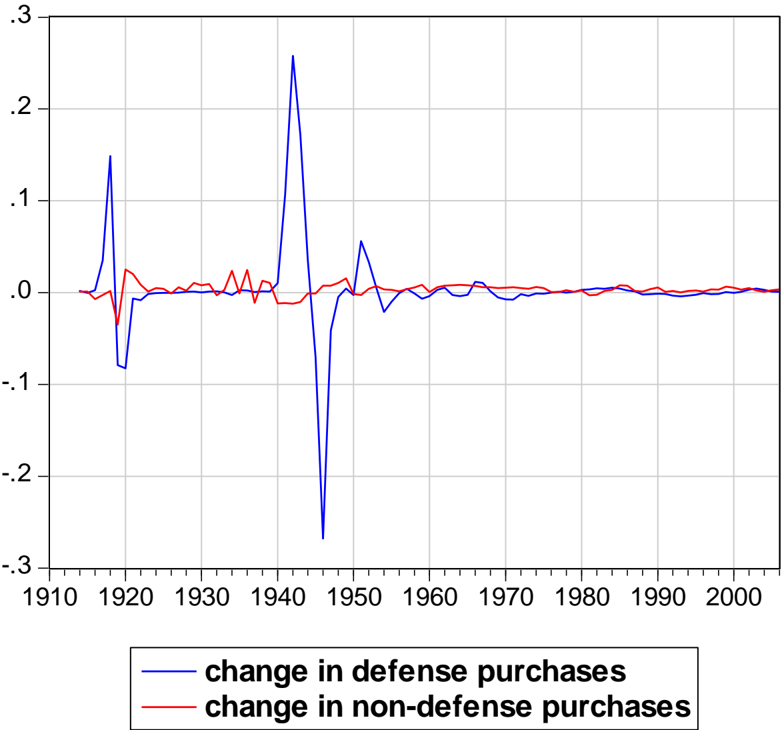
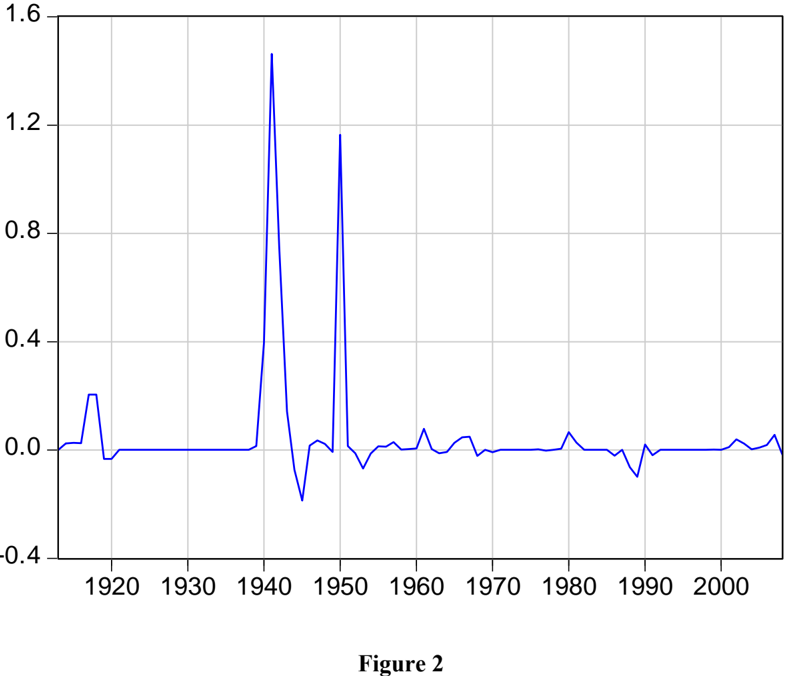
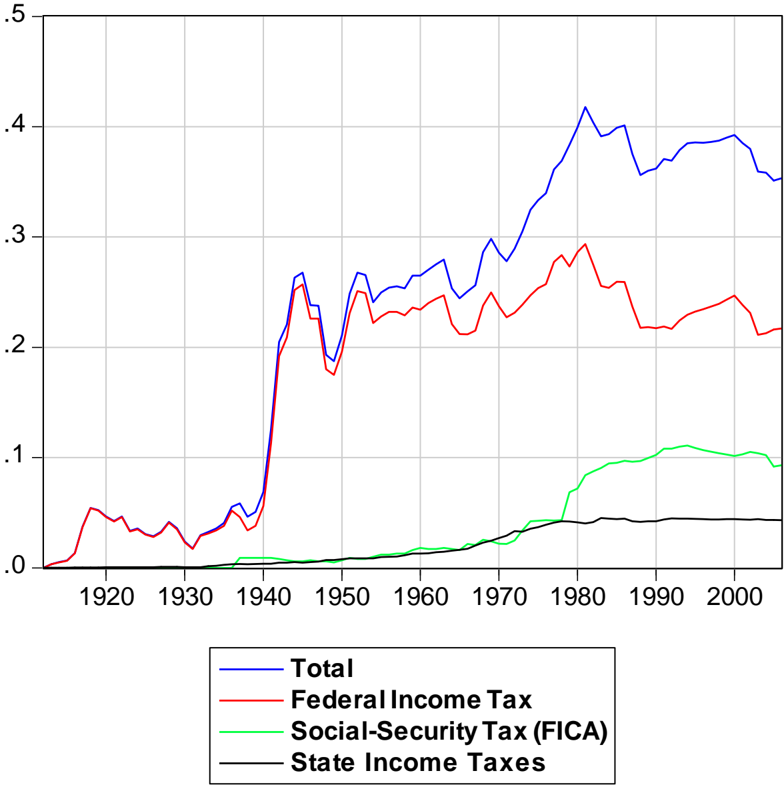
Verification
Claims the paper makes
The claims and statistics of this paper haven’t been checked yet.
Free: it reads the open-access text and checks the first 5 claims that cite a source we can check. Create a free account to check every claim.
Claims other papers make about this one
Each is checked against this paper’s own text: does it say what the citing paper says it does?
The source backs part of the claim, not all of it — or backs it for a different population, condition or comparison.
In the citing paper
“empirically that a cut in τ by 1 percentage point raises the level of per capita GDP by 0.5 percent over the next two years (their table II, columns 1 and 4).”
From Macroeconomic Effects of the 2017 Tax Reform (2018) · cites this paper as Barro and Redlick (2011)
Experimental — accuracy not yet measuredThe cited source says what the claim attributes to it.
In the citing paper
“If they stacked (summed) their GDP level effects between their Ramsey model and their reduced-form model based on that of Barro and Charles Redlick (2011), then the headline, 10th-year GDP that they report in their table 1 would be nearly four times larger-1.55percent instead of 0.4 percent.”
From Macroeconomic Effects of the 2017 Tax Reform (2018) · cites this paper as Barro and Charles Redlick (2011)
The cited source says what the claim attributes to it.
In the citing paper
“Doing so results in a predicted increase in the GDP growth rate for 2018-19 of 0.9 percentage point per year.”
From Macroeconomic Effects of the 2017 Tax Reform (2018) · cites this paper as Barro and Redlick (2011)
In the citing paper
“We take the marginal tax rate in the U.S. from Barro and Redlick (2011), who report a value of 0.353 for 2006.”
From Beyond GDP? Welfare across Countries and Time (2016) · cites this paper as Barro and Redlick (2011)
In the citing paper
“For the same period, Barro and Redlick (2011) report a slightly higher income-weighted average marginal tax rate-around 37%.”
From Optimal Tax Progressivity: An Analytical Framework* (2017) · cites this paper as Barro and Redlick 2011
Self-check
Percentages, sums and reported differences re-computed from the paper’s own numbers.
The self-check needs the paper’s full text.
Citations
Cites
On the Determination of the Public Debt
Barro, R. J. (1979) · Journal of Political Economy · doi:10.1086/260807 · Cited by 3,268
Self-citationBlanchard, O., & Perotti, R. (2002) · The Quarterly Journal of Economics · doi:10.1162/003355302320935043 · Cited by 2,910
The Macroeconomic Effects of Tax Changes: Estimates Based on a New Measure of Fiscal Shocks
Romer, C. D., & Romer, D. H. (2010) · American Economic Review · doi:10.1257/aer.100.3.763 · Cited by 2,139
Blanchard, O., & Perotti, R. (1999) · National Bureau of Economic Research · doi:10.3386/w7269 · Cited by 1,890
Shadow Prices, Market Wages, and Labor Supply
Heckman, J. (1974) · Econometrica · doi:10.2307/1913937 · Cited by 1,852
Identifying Government Spending Shocks: It's all in the Timing*
Ramey, V. A. (2011) · The Quarterly Journal of Economics · doi:10.1093/qje/qjq008 · Cited by 1,661
Forecasting Output and Inflation: The Role of Asset Prices
Stock, J. H., & Watson, M. W. (2003) · Journal of Economic Literature · doi:10.1257/002205103322436197 · Cited by 1,076
Costly capital reallocation and the effects of government spending
Ramey, V. A., & Shapiro, M. D. (1998) · Carnegie-Rochester Conference Series on Public Policy · doi:10.1016/s0167-2231(98)00020-7 · Cited by 1,061
Forecasting Output and Inflation: The Role of Asset Prices
Stock, J. H., & Watson, M. W. (2003) · Journal of Economic Literature · doi:10.1257/jel.41.3.788 · Cited by 862
Output Effects of Government Purchases
Barro, R. J. (1981) · Journal of Political Economy · doi:10.1086/261024 · Cited by 669
Self-citation
Research works printed but not linked: 5
- Barro, R.J. (1984). Macroeconomics , New York, Wiley.
- ———, 1984, Macroeconomics
- Barro, R.J. and J.F. Ursua (2008). 'Consumption Disasters since 1870,' Brookings Papers on Economic Activity , spring, 255-335.
- Kendrick, J.W. (1961). Productivity Trends in the United States , Princeton NJ, Princeton University Press.
- Redlick, C.J. (2009). Average Marginal Tax Rates in the United States: A New Empirical Study of their Predictability and Macroeconomic Effects, 1913-2006 , unpublished undergraduate thesis, Harvard University.
Cited by
Items 101–200 of 1,001
Private debt overhang and the government spending multiplier: Evidence for the United States
Bernardini, M., & Peersman, G. (2018) · Journal of Applied Econometrics · doi:10.1002/jae.2618 · Cited by 102
Resurrecting the Role of the Product Market Wedge in Recessions
Bils, M., Klenow, P. J., & Malin, B. (2018) · American Economic Review · doi:10.1257/aer.20151260 · Cited by 102
The Time for Austerity: Estimating the Average Treatment Effect of Fiscal Policy
Francisco, F. R. B. O. S., Jordà, Ò., & Taylor, A. M. (2013) · Federal Reserve Bank of San Francisco, Working Paper Series · doi:10.24148/wp2013-25 · Cited by 101
Fiscal policies in the euro area: Revisiting the size of spillovers
Alloza, M., Burriel, P., & Pérez, J. J. (2019) · Journal of Macroeconomics · doi:10.1016/j.jmacro.2019.103132 · Cited by 100
BUSINESS TAXATION AND ECONOMIC PERFORMANCE IN HIERARCHICAL GOVERNMENT STRUCTURESPreprint
Revelli, F. (2012) · Documents de treball IEB · Cited by 99
Using State Pension Shocks to Estimate Fiscal Multipliers since the Great Recession
Shoag, D. (2013) · American Economic Review · doi:10.1257/aer.103.3.121 · Cited by 98
Fiscal Volatility Shocks and Economic Activity
Fernández‐Villaverde, J., Guerron-Quintana, P. A., Kuester, K., & Rubio-Ramírez, J. F. (2012) · Working paper · doi:10.21799/frbp.wp.2011.32 · Cited by 98
Government spending and economic growth in the OECD countries
Connolly, M., & Li, C. (2016) · Journal of Economic Policy Reform · doi:10.1080/17487870.2016.1213168 · Cited by 98
D’Acunto, F., Hoang, D., & Weber, M. (2018) · AEA Papers and Proceedings · doi:10.1257/pandp.20181061 · Cited by 97
Inference in Bayesian Proxy-SVARs
Arias, J. E., Rubio-Ramírez, J. F., & Waggoner, D. F. (2021) · Journal of Econometrics · doi:10.1016/j.jeconom.2020.12.004 · Cited by 97
Government Spending and Private Activity
Ramey, V. (2012) · National Bureau of Economic Research · doi:10.3386/w17787 · Cited by 95
U.S. Monetary and Fiscal Policy in the 1930s
Fishback, P. (2010) · Oxford Review of Economic Policy · doi:10.3386/w16477 · Cited by 91
Rearmament to the Rescue? New Estimates of the Impact of “Keynesian” Policies in 1930s' Britain
Crafts, N. F. R., & Mills, T. C. (2013) · The Journal of Economic History · doi:10.1017/s0022050713000880 · Cited by 90
Public investment, time to build, and the zero lower bound
Bouakez, H., Guillard, M., & Roulleau-Pasdeloup, J. (2016) · Review of Economic Dynamics · doi:10.1016/j.red.2016.09.001 · Cited by 87
Is Fiscal Policy More Effective in Uncertain Times or During Recessions?Preprint
Alloza, M. (2017) · SSRN Electronic Journal · doi:10.2139/ssrn.3024538 · Cited by 86
What Have We Learned about Fiscal Policy from the Crisis?
Romer, D. (2012) · The MIT Press eBooks · doi:10.7551/mitpress/9451.003.0011 · Cited by 84
How is Tax Policy Conducted over the Business Cycle?
Végh, C. A., & Vuletin, G. (2012) · American Economic Association eBooks · doi:10.1596/29303 · Cited by 83
On financing retirement with an aging population
McGrattan, E. R., & Prescott, E. C. (2017) · Quantitative Economics · doi:10.3982/qe648 · Cited by 82
Non-linear effects of tax changes on output: The role of the initial level of taxation
Gunter, S. R., Riera‐Crichton, D., Végh, C. A., & Vuletin, G. (2021) · Journal of International Economics · doi:10.1016/j.jinteco.2021.103450 · Cited by 82
The Multiplier for Federal Spending in the States During the Great Depression
Fishback, P., & Kachanovskaya, V. (2015) · The Journal of Economic History · doi:10.1017/s0022050715000054 · Cited by 80
Local Government Spending Multipliers and Financial Distress: Evidence from Japanese Prefectures
Brüeckner, M., & Tuladhar, A. (2013) · The Economic Journal · doi:10.1111/ecoj.12076 · Cited by 79
The growth effects of tax rates in the OECD
Gemmell, N., Kneller, R., & Sanz, I. (2014) · Canadian Journal of Economics/Revue canadienne d économique · doi:10.1111/caje.12105 · Cited by 78
Fiscal Stimulus and Consumer Debt
Demyanyk, Y. S., Loutskina, E., & Murphy, D. (2019) · The Review of Economics and Statistics · doi:10.1162/rest_a_00796 · Cited by 78
The Time for Austerity: Estimating the Average Treatment Effect of Fiscal Policy
Jordà, Ò., & Taylor, A. (2013) · National Bureau of Economic Research · doi:10.3386/w19414 · Cited by 77
Capital Taxation During the U.S. Great Depression
McGrattan, E. R. (2012) · The Quarterly Journal of Economics · doi:10.1093/qje/qjs022 · Cited by 75
What Determines Government Spending Multipliers?
Müller, G. J., Meier, A., & Corsetti, G. (2012) · IMF Working Paper · doi:10.5089/9781475504217.001 · Cited by 75
Tax multipliers: Pitfalls in measurement and identification
Riera‐Crichton, D., Végh, C. A., & Vuletin, G. (2016) · Journal of Monetary Economics · doi:10.1016/j.jmoneco.2016.03.003 · Cited by 74
The state-dependent effects of tax shocks
Sims, E., & Wolff, J. (2018) · European Economic Review · doi:10.1016/j.euroecorev.2018.05.002 · Cited by 74
Owyang, M. T., Ramey, V., & Zubairy, S. (2013) · National Bureau of Economic Research · doi:10.3386/w18769 · Cited by 74
Economic growth and crime: Is there an asymmetric relationship?
Goulas, E., & Zervoyianni, A. (2015) · Economic Modelling · doi:10.1016/j.econmod.2015.04.014 · Cited by 73
Fiscal consolidation and climate policy: An overlapping generations perspective
Rausch, S. (2013) · Energy Economics · doi:10.1016/j.eneco.2013.09.009 · Cited by 72
Fiscal news and macroeconomic volatility
Born, B., Peter, A., & Pfeifer, J. (2013) · Journal of Economic Dynamics and Control · doi:10.1016/j.jedc.2013.06.011 · Cited by 70
Government Spending and Private Activity
Ramey, V. (2013) · University of Chicago Press eBooks · doi:10.7208/chicago/9780226018584.003.0002 · Cited by 69
Tax Cuts For Whom? Heterogeneous Effects of Income Tax Changes on Growth and Employment
Zidar, O. M. (2015) · National Bureau of Economic Research · doi:10.3386/w21035 · Cited by 68
Learning by Necessity: Government Demand, Capacity Constraints, and Productivity Growth
Ilzetzki, E. (2024) · American Economic Review · doi:10.1257/aer.20230033 · Cited by 67
Toffolutti, V., & Suhrcke, M. (2019) · Economics & Human Biology · doi:10.1016/j.ehb.2019.03.002 · Cited by 67
Small Business vulnerability to floods and the effects of disaster loans
Davlasheridze, M., & Geylani, P. C. (2017) · Small Business Economics · doi:10.1007/s11187-017-9859-5 · Cited by 67
Zheng, S., & Wen, J. (2024) · International Review of Economics & Finance · doi:10.1016/j.iref.2024.103578 · Cited by 48
How large is the local fiscal multiplier? Evidence from Chinese counties
Qingwang, G., Liu, C., & Ma, G. (2015) · Journal of Comparative Economics · doi:10.1016/j.jce.2015.06.002 · Cited by 65
International fiscal spillovers
Faccini, R., Mumtaz, H., & Surico, P. (2015) · Journal of International Economics · doi:10.1016/j.jinteco.2015.11.009 · Cited by 65
Optimal Public Expenditure with Inefficient Unemployment
Michaillat, P., & Saez, E. (2018) · The Review of Economic Studies · doi:10.1093/restud/rdy030 · Cited by 65
Fiscal multipliers: new evidence from a large panel of countries
Koh, W. C. (2016) · Oxford Economic Papers · doi:10.1093/oep/gpw066 · Cited by 65
The Heterogeneous Effects of Government Spending: It’s All About Taxes
Ferrière, A., & Navarro, G. (2024) · The Review of Economic Studies · doi:10.1093/restud/rdae032 · Cited by 65
Fiscal policy as a source of economic growth
Kudrin, A., & Knobel, A. (2017) · Voprosy Ekonomiki · doi:10.32609/0042-8736-2017-10-5-26 · Cited by 65
Fiscal multipliers in advanced and developing countries: Evidence from military spending
Sheremirov, V., & Spirovska, S. (2022) · Journal of Public Economics · doi:10.1016/j.jpubeco.2022.104631 · Cited by 64
The Impact of Taxes on Income Mobility
Alloza, M. (2017) · International Tax and Public Finance · doi:10.1007/s10797-020-09629-y · Cited by 63
Austerity in the Aftermath of the Great Recession
House, C., Proebsting, C., & Tesar, L. L. (2017) · National Bureau of Economic Research · doi:10.3386/w23147 · Cited by 62
Fiscal multipliers in Emerging Market Economies: Can we learn something from Advanced Economies?
Hory, M.-P. (2015) · International Economics · doi:10.1016/j.inteco.2015.11.002 · Cited by 62
Fiscal Policy after the Great Recession
Alesina, A. (2012) · Atlantic Economic Journal · doi:10.1007/s11293-012-9337-z · Cited by 61
The Heterogeneous Effects of Government Spending: It’s All About Taxes
Ferrière, A., & Navarro, G. (2018) · International Finance Discussion Paper · doi:10.17016/ifdp.2018.1237 · Cited by 61
Do Government Spending Multipliers Depend on the Sign of the Shock?
Zeev, N. B., Ramey, V., & Zubairy, S. (2023) · AEA Papers and Proceedings · doi:10.1257/pandp.20231071 · Cited by 61
The Intellectual Spoils of War? Defense R&D, Productivity, and International Spillovers
Moretti, E., Steinwender, C., & Reenen, J. M. V. (2025) · The Review of Economics and Statistics · doi:10.1162/rest_a_01293 · Cited by 143
Natural Experiments in Macroeconomics
Fuchs-Schuendeln, N., & Hassan, T. A. (2015) · National Bureau of Economic Research · doi:10.3386/w21228 · Cited by 60
Analysing the effects of fiscal policy shocks in the South African economy
Jooste, C., Liu, G., & Naraidoo, R. (2013) · Economic Modelling · doi:10.1016/j.econmod.2013.02.011 · Cited by 59
The Output and Welfare Effects of Government Spending Shocks over the Business Cycle
Sims, E., & Wolff, J. (2013) · National Bureau of Economic Research · doi:10.3386/w19749 · Cited by 59
Public debt in economies with heterogeneous agents
Bhandari, A., Evans, D., Golosov, M., & Sargent, T. J. (2017) · Journal of Monetary Economics · doi:10.1016/j.jmoneco.2017.09.007 · Cited by 58
Rethinking Expectations: The Way Forward for Macroeconomics
(2013) · Princeton University Press eBooks · doi:10.1515/9781400846450 · Cited by 57
Cross-Country Spillovers from Fiscal Consolidations
Goujard, A. (2013) · OECD Economics Department working papers · doi:10.1787/5k3txn1mbw8x-en · Cited by 57
Federle, J., Meier, A., Müller, G. J., Mutschler, W., & Schularick, M. (2024) · Econstor (Econstor) · Cited by 57
Fiscal multipliers in good times and bad times
Arin, K. P., Koray, F., & Spagnolo, N. (2015) · Journal of Macroeconomics · doi:10.1016/j.jmacro.2015.01.002 · Cited by 57
A POLITICAL ECONOMY THEORY OF FISCAL POLICY AND UNEMPLOYMENT
Battaglini, M., & Coate, S. (2015) · Journal of the European Economic Association · doi:10.1111/jeea.12136 · Cited by 56
Pennings, S. M. (2021) · American Economic Review · doi:10.1257/aer.20190240 · Cited by 56
The Age of Fragmentation: A History of Contemporary Economic Thought
Roncaglia, A. (2019) · Cambridge University Press eBooks · doi:10.1017/9781108777766 · Cited by 55
Identification in Macroeconomics
Nakamura, E., & Steinsson, J. (2017) · National Bureau of Economic Research · doi:10.3386/w23968 · Cited by 55
Historical natural experiments: bridging economics and economic history
Cantoni, D., & Yuchtman, N. (2021) · Elsevier eBooks · doi:10.1016/b978-0-12-815874-6.00016-2 · Cited by 54
Estimating Fiscal multipliers in the Eurozone. A Nonlinear Panel Data Approach.Preprint
Perdichizzi, S. (2017) · RePEc: Research Papers in Economics · Cited by 54
The Missing Intercept: A Demand Equivalence Approach
Wolf, C. K. (2023) · American Economic Review · doi:10.1257/aer.20211751 · Cited by 53
Time-varying government spending multipliers in the UK
Glocker, C., Sestieri, G., & Towbin, P. (2019) · Journal of Macroeconomics · doi:10.1016/j.jmacro.2019.02.003 · Cited by 53
Corporate Taxation and Productivity Catch‐Up: Evidence from European Firms
Gemmell, N., Kneller, R., McGowan, D., Sanz, I., & Sanz, J. F. S. (2018) · Scandinavian Journal of Economics · doi:10.1111/sjoe.12212 · Cited by 52
The Effect of Public Spending on Private Investment
Kim, T.-H., & Nguyen, Q. H. (2015) · European Finance Review · doi:10.1093/rof/rfz003 · Cited by 52
Defense Government Spending Is Contractionary, Civilian Government Spending Is Expansionary
Perotti, R. (2014) · National Bureau of Economic Research · doi:10.3386/w20179 · Cited by 52
Vagliasindi, M., & Gorgulu, N. (2021) · World Bank, Washington, DC eBooks · doi:10.1596/1813-9450-9796 · Cited by 51
Klein, M. (2017) · Journal of money credit and banking · doi:10.1111/jmcb.12424 · Cited by 51
Born, B., Müller, G. J., & Pfeifer, J. (2014) · RECERCAT (Consorci de Serveis Universitaris de Catalunya) · Cited by 51
News Shocks in Open Economies: Evidence from Giant Oil Discoveries
Arezki, R., Ramey, V., & Sheng, L. (2015) · National Bureau of Economic Research · doi:10.3386/w20857 · Cited by 50
Self-defeating austerity? Evidence from 1930s' Britain
Crafts, N. F. R., & Mills, T. C. (2015) · European Review of Economic History · doi:10.1093/ereh/heu024 · Cited by 50
State-Dependent Local Projections: Understanding Impulse Response Heterogeneity
Cloyne, J. S., Jordà, Ò., & Taylor, A. M. (2023) · National Bureau of Economic Research · doi:10.3386/w30971 · Cited by 50
Sovereign Risk, Fiscal Policy, and Macroeconomic Stability
Kuester, K., Mueller, G., Corsetti, G., & Meier, A. (2012) · IMF Working Paper · doi:10.5089/9781463933180.001 · Cited by 50
Beyond GDP? Welfare across Countries and Time
Jones, C., & Klenow, P. (2010) · doi:10.3386/w16352 · Cited by 49
Federle, J., Meier, A., Müller, G. J., Mutschler, W., & Schularick, M. H. (2026) · American Economic Review · doi:10.1257/aer.20241355 · Cited by 48
The Labor Productivity PuzzlePreprint
McGrattan, E. R., & Prescott, E. C. (2012) · doi:10.21034/wp.694 · Cited by 48
A New Identification of Fiscal Shocks Based on the Information FlowPreprint
Ricco, G. (2015) · SSRN Electronic Journal · doi:10.2139/ssrn.2621656 · Cited by 47
Revenue- versus spending-based fiscal consolidation announcements: Multipliers and follow-up
Beetsma, R. M. W. J., Furtuna, O., Giuliodori, M., & Mumtaz, H. (2021) · Journal of International Economics · doi:10.1016/j.jinteco.2021.103455 · Cited by 47
Transfer Payments and the Macroeconomy: The Effects of Social Security Benefit Increases, 1952–1991
Romer, C. D., & Romer, D. H. (2016) · American Economic Journal: Macroeconomics · doi:10.1257/mac.20140348 · Cited by 46
To Cut or Not to Cut? On the Impact of Corporate Taxes on Employment and Income
Ljungqvist, A. P., & Smolyansky, M. (2016) · Finance and Economics Discussion Series · doi:10.17016/feds.2016.006 · Cited by 46
Fiscal Consolidation: Taking Stock of Success Factors, Impact, and Design
Balasundharam, V., Basdevant, O., Benicio, D., Ceber, A., Kim, Y., Mazzone, L., Selim, H., & Yang, Y. (2023) · IMF Working Paper · doi:10.5089/9798400235221.001 · Cited by 45
Monetary Policy, Real Activity, and Credit Spreads: Evidence from Bayesian Proxy SVARs
Caldara, D., & Herbst, E. P. (2016) · Finance and Economics Discussion Series · doi:10.17016/feds.2016.049 · Cited by 45
Gjerstad, S. D., & Smith, V. L. (2014) · Thammasat University Digital Collections · doi:10.1016/j.joep.2015.08.003 · Cited by 45
Guns and growth: The economic consequences of defense buildupsPreprint
Ilzetzki, E. (2025) · RePEc: Research Papers in Economics · Cited by 45
The effects of public spending externalities
Ercolani, V., & Azevedo, J. V. E. (2014) · Journal of Economic Dynamics and Control · doi:10.1016/j.jedc.2014.06.016 · Cited by 45
Econometric Modelling of Tax Impact on Economic Growth: Panel Evidence from OECD Countries
Andrašić, J., Kalaš, B., Mirović, V., Milenković, N., & Miloš, P. (2018) · ECONOMIC COMPUTATION AND ECONOMIC CYBERNETICS STUDIES AND RESEARCH · doi:10.24818/18423264/52.4.18.14 · Cited by 44
Liu, B., & Ge, J. (2022) · Journal of Environmental Management · doi:10.1016/j.jenvman.2022.117106 · Cited by 44
Fiscal Multipliers and Their Relevance in a Currency Union – A Survey
Illing, G., & Watzka, S. (2014) · German Economic Review · doi:10.1111/geer.12020 · Cited by 43
The Heterogeneous Responses of Consumption between Poor and Rich to Government Spending Shocks
Ma, E. (2018) · Journal of money credit and banking · doi:10.1111/jmcb.12593 · Cited by 42
Implications of Tax Policy for Innovation and Aggregate Productivity Growth
Ferraro, D., Ghazi, S., & Peretto, P. F. (2017) · European Economic Review · doi:10.1016/j.euroecorev.2020.103590 · Cited by 42
Mr. Keynes Meets the Classics: Government Spending and the Real Exchange Rate
Born, B., D’Ascanio, F., Müller, G. J., & Pfeifer, J. (2023) · Journal of Political Economy · doi:10.1086/727707 · Cited by 42
Estimating the Impact of Taxes on the Economic Growth in the United States
Kalaš, B., Mirović, V., & Andrašić, J. (2017) · Economic Themes · doi:10.1515/ethemes-2017-0027 · Cited by 41
The impact of sustainable public procurement on corporate ESG performance—The Chinese evidence
Li, R., & Cao, F. (2023) · PLoS ONE · doi:10.1371/journal.pone.0292286 · Cited by 41
Quantifying multipliers in Italy: does fiscal policy composition matter?
Deleidi, M. (2021) · Oxford Economic Papers · doi:10.1093/oep/gpab028 · Cited by 41
The relationship between taxes and economic growth: Evidence from Serbia and Croatia
Kalaš, B., Mirović, V., & Milenković, N. (2018) · The European Journal of Applied Economics · doi:10.5937/ejae15-18056 · Cited by 41
Metadata
- Authors
- Barro, R. J., & Redlick, C. J.
- Venue
- The Quarterly Journal of Economics
- Publisher
- Oxford University Press (OUP)
- Published
- 2011-02
- Volume
- 126
- Issue
- 1
- Pages
- 51-102
- ISSN
- 0033-5533 (ISSN-L)
- 1531-4650
- OpenAlex
- W2135359744
- Cited by
- 837
- References
- 34
- FWCI
- 155.37
- Type
- journal article
- Language
- en
- Open access
- closed
About these checks
Registry, retraction, Cites and statistics results are computed, not judged, with one exception: a printed reference that no index lists is read once by a model before it counts as a citation error. Claims are extracted by a model and kept only when their quote appears verbatim in the text; each cited source is then checked, with a model’s help, for whether it says what the claim relies on. Those verdicts can be wrong — read the claim’s quote and the cited source before relying on one.
Statistics and arithmetic are recomputed, not judged.
Confidence bands are shown only for fields calibrated on our annotated test set. None is calibrated yet, so no band is shown.
What counts as a claim ›How we measure confidence ›How we check this ›
Are you an author, or do you see a problem with this page? Request a review
Data sources
Bibliographic data: Semantic Scholar, OpenAlex, Crossref.
Contains information from the Semantic Scholar Academic Graph Datasets, made available under the ODC Attribution License (ODC-BY 1.0).
Semantic Scholar’s data is described in: Kinney, R., et al. (2023). The Semantic Scholar Open Data Platform. arXiv:2301.10140.
