

Macroeconomic Effects From Government Purchases and Taxes *
The DOI matches its Crossref record; 34 of the 35 references it cites were found in a registry or an index, and 1 are not checked yet.
Abstract
For U.S. annual data that include World War II, the estimated multiplier for temporary defense spending is 0.4–0.5 contemporaneously and 0.6–0.7 over 2 years. If the change in defense spending is “permanent” (gauged by Ramey's defense news variable), the multipliers are higher by 0.1–0.2. Since all estimated multipliers are significantly less than 1, greater spending crowds out other components of GDP, particularly investment. The lack of good instruments prevents estimation of reliable multipliers for nondefense purchases; multipliers in the literature of two or more likely reflect reverse causation from GDP to nondefense purchases. Increases in average marginal income tax rates (measured by a newly constructed time series) have significantly negative effects on GDP. When interpreted as a tax multiplier, the magnitude is around 1.1. The combination of the estimated spending and tax multipliers implies that the balanced-budget multiplier for defense spending is negative. We have some evidence that tax changes affect GDP mainly through substitution effects, rather than wealth effects.
Overview
The claims and statistics of this paper haven’t been checked yet.
Free: it reads the open-access text and checks the first 5 claims that cite a source we can check. Create a free account to check every claim.
Integrity signals
Registry
Cites
Statistics
Figures
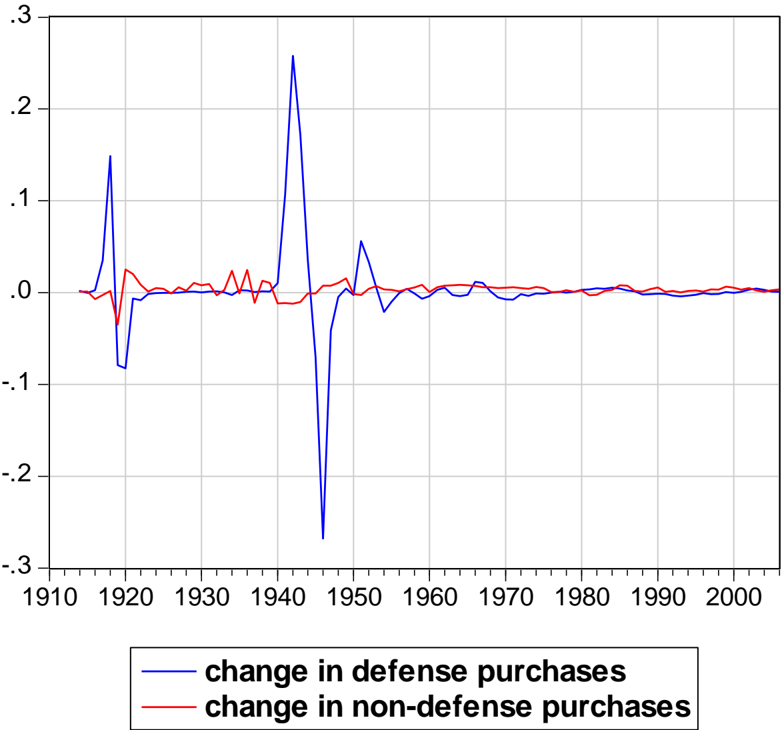
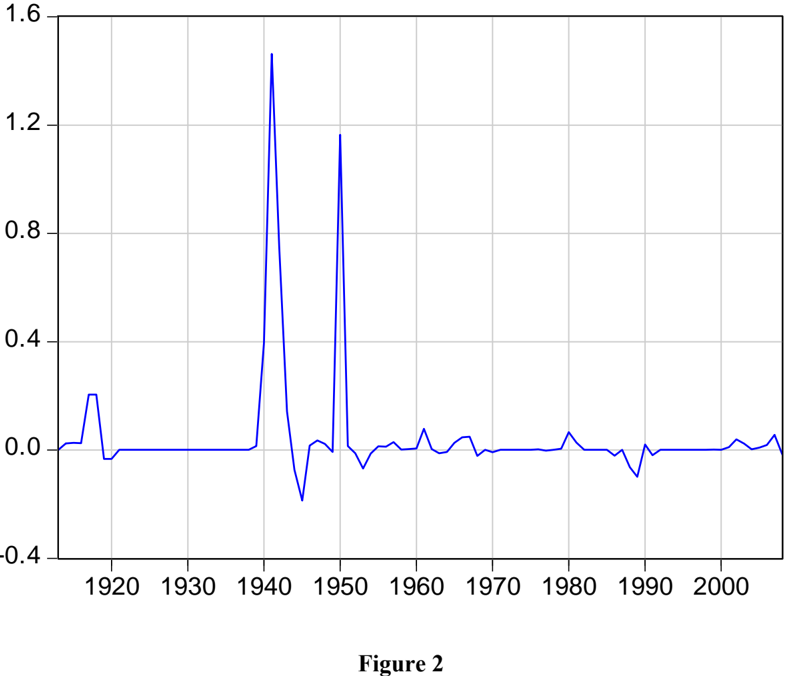
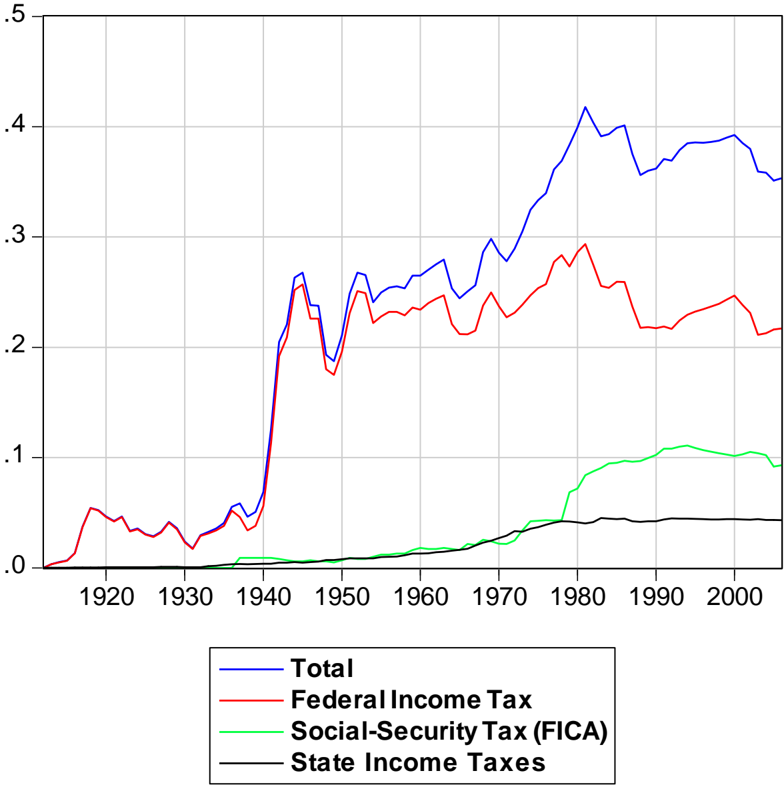
Verification
Claims the paper makes
The claims and statistics of this paper haven’t been checked yet.
Free: it reads the open-access text and checks the first 5 claims that cite a source we can check. Create a free account to check every claim.
Claims other papers make about this one
Each is checked against this paper’s own text: does it say what the citing paper says it does?
The source backs part of the claim, not all of it — or backs it for a different population, condition or comparison.
In the citing paper
“empirically that a cut in τ by 1 percentage point raises the level of per capita GDP by 0.5 percent over the next two years (their table II, columns 1 and 4).”
From Macroeconomic Effects of the 2017 Tax Reform (2018) · cites this paper as Barro and Redlick (2011)
Experimental — accuracy not yet measuredThe cited source says what the claim attributes to it.
In the citing paper
“If they stacked (summed) their GDP level effects between their Ramsey model and their reduced-form model based on that of Barro and Charles Redlick (2011), then the headline, 10th-year GDP that they report in their table 1 would be nearly four times larger-1.55percent instead of 0.4 percent.”
From Macroeconomic Effects of the 2017 Tax Reform (2018) · cites this paper as Barro and Charles Redlick (2011)
The cited source says what the claim attributes to it.
In the citing paper
“Doing so results in a predicted increase in the GDP growth rate for 2018-19 of 0.9 percentage point per year.”
From Macroeconomic Effects of the 2017 Tax Reform (2018) · cites this paper as Barro and Redlick (2011)
In the citing paper
“We take the marginal tax rate in the U.S. from Barro and Redlick (2011), who report a value of 0.353 for 2006.”
From Beyond GDP? Welfare across Countries and Time (2016) · cites this paper as Barro and Redlick (2011)
In the citing paper
“For the same period, Barro and Redlick (2011) report a slightly higher income-weighted average marginal tax rate-around 37%.”
From Optimal Tax Progressivity: An Analytical Framework* (2017) · cites this paper as Barro and Redlick 2011
Self-check
Percentages, sums and reported differences re-computed from the paper’s own numbers.
The self-check needs the paper’s full text.
Citations
Cites
On the Determination of the Public Debt
Barro, R. J. (1979) · Journal of Political Economy · doi:10.1086/260807 · Cited by 3,268
Self-citationBlanchard, O., & Perotti, R. (2002) · The Quarterly Journal of Economics · doi:10.1162/003355302320935043 · Cited by 2,910
The Macroeconomic Effects of Tax Changes: Estimates Based on a New Measure of Fiscal Shocks
Romer, C. D., & Romer, D. H. (2010) · American Economic Review · doi:10.1257/aer.100.3.763 · Cited by 2,139
Blanchard, O., & Perotti, R. (1999) · National Bureau of Economic Research · doi:10.3386/w7269 · Cited by 1,890
Shadow Prices, Market Wages, and Labor Supply
Heckman, J. (1974) · Econometrica · doi:10.2307/1913937 · Cited by 1,852
Identifying Government Spending Shocks: It's all in the Timing*
Ramey, V. A. (2011) · The Quarterly Journal of Economics · doi:10.1093/qje/qjq008 · Cited by 1,661
Forecasting Output and Inflation: The Role of Asset Prices
Stock, J. H., & Watson, M. W. (2003) · Journal of Economic Literature · doi:10.1257/002205103322436197 · Cited by 1,076
Costly capital reallocation and the effects of government spending
Ramey, V. A., & Shapiro, M. D. (1998) · Carnegie-Rochester Conference Series on Public Policy · doi:10.1016/s0167-2231(98)00020-7 · Cited by 1,061
Forecasting Output and Inflation: The Role of Asset Prices
Stock, J. H., & Watson, M. W. (2003) · Journal of Economic Literature · doi:10.1257/jel.41.3.788 · Cited by 862
Output Effects of Government Purchases
Barro, R. J. (1981) · Journal of Political Economy · doi:10.1086/261024 · Cited by 669
Self-citation
Research works printed but not linked: 5
- Barro, R.J. (1984). Macroeconomics , New York, Wiley.
- ———, 1984, Macroeconomics
- Barro, R.J. and J.F. Ursua (2008). 'Consumption Disasters since 1870,' Brookings Papers on Economic Activity , spring, 255-335.
- Kendrick, J.W. (1961). Productivity Trends in the United States , Princeton NJ, Princeton University Press.
- Redlick, C.J. (2009). Average Marginal Tax Rates in the United States: A New Empirical Study of their Predictability and Macroeconomic Effects, 1913-2006 , unpublished undergraduate thesis, Harvard University.
Cited by
Items 201–300 of 1,001
LLMs outperform outsourced human coders on complex textual analysis
Bermejo, V., Gago, A., Gálvez, R. H., & Harari, N. (2025) · Scientific Reports · doi:10.1038/s41598-025-23798-y · Cited by 24
Cross‐Country Spillovers from Fiscal Consolidations
Goujard, A. (2017) · Fiscal Studies · doi:10.1111/1475-5890.12096 · Cited by 40
A Fiscal Stimulus and Jobless Recovery
Cantore, C., Levine, P. L., & Melina, G. (2014) · Scandinavian Journal of Economics · doi:10.1111/sjoe.12066 · Cited by 39
Fiscal Austerity and the Multiplier in Times of Crisis
Müller, G. J. (2014) · German Economic Review · doi:10.1111/geer.12027 · Cited by 39
Inequality, Business Cycles, and Monetary-Fiscal Policy
Bhandari, A., Evans, D., Golosov, M., & Sargent, T. J. (2018) · National Bureau of Economic Research · doi:10.3386/w24710 · Cited by 39
Has the Eurozone become less fragile? Some empirical tests
GRAUWE, P. D., & Ji, Y. (2015) · Journal of Policy Modeling · doi:10.1016/j.jpolmod.2015.03.003 · Cited by 39
Macroeconomic effects of tax rate and base changes: Evidence from fiscal consolidations
Dabla‐Norris, E., & Lima, F. (2023) · European Economic Review · doi:10.1016/j.euroecorev.2023.104399 · Cited by 38
Castelnuovo, E., & LIM, G. C. (2019) · Australian Economic Review · doi:10.1111/1467-8462.12313 · Cited by 37
What drives the short-run costs of fiscal consolidation? Evidence from OECD countries
Banerjee, R., & Zampolli, F. (2019) · Economic Modelling · doi:10.1016/j.econmod.2019.01.023 · Cited by 37
Optimal Capital Versus Labor Taxation with Innovation-Led Growth
Aghion, P., Akcigit, U., & Fernández‐Villaverde, J. (2013) · National Bureau of Economic Research · doi:10.3386/w19086 · Cited by 37
The Growth Points of Regional Economy and Regression Estimation for Branch Investment Multipliers
Goridko, N., & Нижегородцев, Р. М. (2018) · Economy of Regions · doi:10.17059/2018-1-3 · Cited by 37
Heterogeneity and Government Revenues: Higher Taxes at the Top?Preprint
Guner, N., Lopez-Daneri, M., & Ventura, G. (2015) · SSRN Electronic Journal · doi:10.2139/ssrn.2650543 · Cited by 37
State-Dependent Local Projections: Understanding Impulse Response Heterogeneity
Cloyne, J. S., NBER, CEPR, Jordà, Ò., Francisco, F. R. B. O. S., Taylor, A. M., NBER, & CEPR (2023) · Federal Reserve Bank of San Francisco, Working Paper Series · doi:10.24148/wp2023-05 · Cited by 37
Are Large Deficits and Debt Dangerous?
Boskin, M. J. (2020) · AEA Papers and Proceedings · doi:10.2139/ssrn.3535317 · Cited by 37
Asymmetric reactions of the US natural gas market and economic activity
Nguyen, B. H., & Okimoto, T. (2018) · Energy Economics · doi:10.1016/j.eneco.2018.12.015 · Cited by 36
Private and Public Debt: Are Emerging Markets at Risk?
Bernardini, M., & Forni, L. (2017) · IMF Working Paper · doi:10.5089/9781475588170.001 · Cited by 36
The Near Term Growth Impact of the Tax Cuts and Jobs Act
Dallas, F. R. B. O., & Mertens, K. (2018) · Federal Reserve Bank of Dallas, Working Papers · doi:10.24149/wp1803 · Cited by 36
IS FISCAL POLICY MORE EFFECTIVE DURING RECESSIONS?
Alloza, M. (2022) · International Economic Review · doi:10.1111/iere.12571 · Cited by 36
Government solvency and financial markets: Dynamic panel estimates for the European Monetary Union
Theofilakou, A., & Stournaras, Y. (2011) · Economics Letters · doi:10.1016/j.econlet.2011.12.024 · Cited by 36
EXPECTATIONS, STAGNATION, AND FISCAL POLICY: A NONLINEAR ANALYSIS
Evans, G. W., Honkapohja, S., & Mitra, K. (2022) · International Economic Review · doi:10.1111/iere.12573 · Cited by 35
Jerow, S., & Wolff, J. (2020) · Journal of Economic Dynamics and Control · doi:10.1016/j.jedc.2022.104559 · Cited by 35
Nonlinear effects of fiscal policy over the business cycle
Biolsi, C. (2017) · Journal of Economic Dynamics and Control · doi:10.1016/j.jedc.2017.03.003 · Cited by 35
Polarization and the growth of low‐skill service jobs in Spanish local labor markets
Consoli, D., & Sánchez‐Barrioluengo, M. (2018) · Journal of Regional Science · doi:10.1111/jors.12409 · Cited by 34
Chang, A. C., & Li, P. (2018) · Economic Inquiry · doi:10.1111/ecin.12567 · Cited by 34
Back to the Drawing Board for Macroeconomics
Ormerod, P., & Helbing, D. (2012) · Cited by 34
Exchange-Rate Regimes and the Effectiveness of Fiscal Policy
Karras, G. (2011) · Journal of Economic Integration · doi:10.11130/jei.2011.26.1.29 · Cited by 34
Does The Composition of Public Expenditure matter to Economic Growth for Kenya
Mudaki, J., & Warren, M. (2012) · Journal of Economics and Sustainable Development · Cited by 34
Owyang, M. T., Ramey, V., & Zubairy, S. (2013) · doi:10.20955/wp.2013.004 · Cited by 34
How does the Bond Market Perceive Government Interventions?Preprint
Ulrich, M. (2010) · SSRN Electronic Journal · doi:10.2139/ssrn.1566932 · Cited by 34
The Macroeconomic Implications of US Market Power in Safe AssetsPreprint
Choi, J. I., Kirpalani, R., & Perez, D. J. (2022) · SSRN Electronic Journal · doi:10.2139/ssrn.4293633 · Cited by 34
Wen, Z. (2019) · Economic Modelling · doi:10.1016/j.econmod.2019.07.006 · Cited by 33
On Financing Retirement with an Aging Population
McGrattan, E. R., & Prescott, E. C. (2013) · National Bureau of Economic Research · doi:10.3386/w18760 · Cited by 33
The macroeconomic effects of tax changes: Evidence using real-time data for the European Union
van der Wielen, W. (2020) · Economic Modelling · doi:10.1016/j.econmod.2020.03.007 · Cited by 33
Klein, M., & Winkler, R. C. (2021) · Journal of Applied Econometrics · doi:10.1002/jae.2835 · Cited by 33
Ten Years after the Financial Crisis: What Have We Learned from the Renaissance in Fiscal Research?
Ramey, V. (2019) · National Bureau of Economic Research · doi:10.3386/w25531 · Cited by 32
The Effects of Government Spending in the Eurozone
Gabriel, R. D., Klein, M., & Pessoa, A. S. (2020) · Journal of the European Economic Association · doi:10.1093/jeea/jvad006 · Cited by 32
The effects of government spending shocks: Evidence from U.S. states
Atems, B. (2018) · Regional Science and Urban Economics · doi:10.1016/j.regsciurbeco.2018.11.008 · Cited by 32
The Aging of the Baby Boomers: Demographics and Propagation of Tax Shocks
Ferraro, D., & Fiori, G. (2016) · American Economic Journal Macroeconomics · doi:10.1257/mac.20160419 · Cited by 32
FBBVA Lecture 2023 . The Importance of Modeling Income Taxes over Time: U.S. Reforms and Outcomes
Borella, M., Nardi, M. D., Pak, M., Russo, N., & Yang, F. (2022) · Journal of the European Economic Association · doi:10.1093/jeea/jvad053 · Cited by 32
Banking Crises, Output Loss, and Fiscal Policy
Turrini, A., Roeger, W., & Székely, I. P. (2011) · CESifo Economic Studies · doi:10.1093/cesifo/ifr026 · Cited by 32
Government spending multipliers in (un)certain times
Fritsche, J. P., Klein, M., & Rieth, M. H. (2021) · Journal of Public Economics · doi:10.1016/j.jpubeco.2021.104513 · Cited by 32
The composition of public spending and the inflationary effects of fiscal policy shocks
Klein, M., & Linnemann, L. (2023) · European Economic Review · doi:10.1016/j.euroecorev.2023.104460 · Cited by 31
International Differences in Fiscal Policy During the Global Crisis
Bénétrix, A. S., & Lane, P. R. (2010) · National Bureau of Economic Research · doi:10.3386/w16346 · Cited by 31
How do tax reductions motivate technological innovation?
Yue, Z., Yang, G., & Wang, H. (2023) · Humanities and Social Sciences Communications · doi:10.1057/s41599-023-02305-6 · Cited by 31
Fiscal and monetary policy effects in three South Eastern European economies
Petrevski, G., Bogoev, J., & Tevdovski, D. (2015) · Empirical Economics · doi:10.1007/s00181-015-0932-0 · Cited by 31
FISCAL POLICY MULTIPLIERS IN AN RBC MODEL WITH LEARNING
Mitra, K., Evans, G. W., & Honkapohja, S. (2017) · Macroeconomic Dynamics · doi:10.1017/s1365100516001176 · Cited by 31
The Local Economic Impacts of Military Personnel
Zou, B. (2017) · Journal of Labor Economics · doi:10.1086/696141 · Cited by 30
Macroeconomics of Persistent Slumps
Hall, R. E. (2016) · Handbook of macroeconomics · doi:10.1016/bs.hesmac.2016.03.010 · Cited by 30
State Fiscal Policies and Transitory Income Fluctuations
Hines, J. R. (2010) · Brookings Papers on Economic Activity · doi:10.1353/eca.2010.0017 · Cited by 30
FISCAL POLICY AND LENDING RELATIONSHIPS
Melina, G., & VILLA, S. (2014) · Economic Inquiry · doi:10.1111/ecin.12051 · Cited by 30
Jones, P. M., Olson, E., & Wohar, M. E. (2014) · Journal of Macroeconomics · doi:10.1016/j.jmacro.2014.08.006 · Cited by 30
Short and Long-Run Effects of Public Investment: Theoretical Premises and Empirical Evidence
Scandizzo, P. L., & Pierleoni, M. R. (2020) · Theoretical Economics Letters · doi:10.4236/tel.2020.104050 · Cited by 30
Canning, P., & Stacy, B. W. (2019) · RePEc: Research Papers in Economics · doi:10.22004/ag.econ.291963 · Cited by 30
Stimulus on the Home Front: The State-Level Effects of WWII Spending
Brunet, G. (2026) · The Review of Economics and Statistics · doi:10.1162/rest_a_01432 · Cited by 30
Historical Natural Experiments: Bridging Economics and Economic History
Cantoni, D., & Yuchtman, N. (2020) · National Bureau of Economic Research · doi:10.3386/w26754 · Cited by 29
Fiscal Policy and Unemployment
Battaglini, M., & Coate, S. (2011) · National Bureau of Economic Research · doi:10.3386/w17562 · Cited by 29
Fishback, P. (2016) · National Bureau of Economic Research · doi:10.3386/w21925 · Cited by 29
Yanıkkaya, H., & Turan, T. (2018) · The Singapore Economic Review · doi:10.1142/s0217590818500170 · Cited by 29
Multipliers of unexpected increases in defense spending: An empirical investigation
Zeev, N. B., & Pappa, E. (2015) · Journal of Economic Dynamics and Control · doi:10.1016/j.jedc.2015.06.004 · Cited by 29
Fiscal Spillovers: The Importance of Macroeconomic and Policy Conditions in Transmission
Blagrave, P., Ho, G., Koloskova, K., & Vesperoni, E. R. (2017) · Spillover Notes · doi:10.5089/9781484320303.062 · Cited by 29
China’s Fiscal Multiplier and Its State Dependence
Zhang, W., Zhang, Y., Zheng, X., & Zhang, L. (2018) · Manchester School · doi:10.1111/manc.12235 · Cited by 29
How Does Defense Spending Affect Economic Growth?
Rooney, B., Johnson, G. L., & Priebe, M. (2021) · RAND Corporation eBooks · doi:10.7249/rr-a739-2 · Cited by 29
The Economic Impact and Financing of Infrastructure Spending
Cohen, I., Freiling, T., & Robinson, E. P. (2012) · Cited by 29
Government Spending Multipliers Under the Zero Lower Bound: Evidence from JapanPreprint
Miyamoto, W., Nguyen, T. L., & Sergeyev, D. (2016) · SSRN Electronic Journal · doi:10.2139/ssrn.2865510 · Cited by 29
The Role of Institutional Quality on the Effects of Fiscal Stimulus
Avellán, L., Galindo, A., & León-Díaz, J. (2020) · doi:10.18235/0002316 · Cited by 28
Blomquist, J., & Nordin, M. (2016) · Regional Science and Urban Economics · doi:10.1016/j.regsciurbeco.2016.12.001 · Cited by 28
Tax and Spending Shocks in the Open Economy: Are the Deficits Twins?
Klein, M., & Linnemann, L. (2019) · European Economic Review · doi:10.2139/ssrn.3466057 · Cited by 28
Identification of Systematic Monetary PolicyPreprint
Hack, L., Istrefi, K., & Meier, M. (2023) · SSRN Electronic Journal · doi:10.2139/ssrn.4594060 · Cited by 28
Li, S., & Bai, T. (2023) · Finance research letters · doi:10.1016/j.frl.2023.104881 · Cited by 28
How does population aging affect the effectiveness of fiscal stimulus over the business cycle?
Honda, J., & Miyamoto, H. (2021) · Journal of Macroeconomics · doi:10.1016/j.jmacro.2021.103288 · Cited by 28
Decomposing the Fiscal Multiplier
Cloyne, J. S., Jordà, Ò., Francisco, F. R. B. O. S., & Taylor, A. M. (2020) · Federal Reserve Bank of San Francisco, Working Paper Series · doi:10.24148/wp2020-12 · Cited by 28
A European defence industrial strategy in a hostile worldPreprint
Mejino-López, J., & Wolff, G. B. (2024) · RePEc: Research Papers in Economics · Cited by 28
Divide and rule: redistribution in a model with differentiated candidates
Matakos, K., & Xefteris, D. (2016) · Economic Theory · doi:10.1007/s00199-016-0967-2 · Cited by 27
Leduc, S., & Wilson, D. J. (2012) · National Bureau of Economic Research · doi:10.3386/w18042 · Cited by 27
The fiscal state-dependent effects of capital income tax cuts
Fotiou, A., Shen, W., & Yang, S.-C. S. (2020) · Journal of Economic Dynamics and Control · doi:10.1016/j.jedc.2020.103860 · Cited by 27
How can government spending stimulate consumption?
Murphy, D. (2014) · Review of Economic Dynamics · doi:10.1016/j.red.2014.09.006 · Cited by 27
Taxes and Growth: New Narrative Evidence from Interwar Britain
Cloyne, J. S., Dimsdale, N. H., & Postel‐Vinay, N. (2018) · National Bureau of Economic Research · doi:10.3386/w24659 · Cited by 27
Housework and fiscal expansions
Gnocchi, S., Hauser, D., & Pappa, E. (2016) · Journal of Monetary Economics · doi:10.1016/j.jmoneco.2016.04.003 · Cited by 26
Health, Longevity, and Welfare Inequality of Older Americans
Miller, R., & Bairoliya, N. (2023) · The Review of Economics and Statistics · doi:10.1162/rest_a_01103 · Cited by 26
Technological Change and Countries' Tax Policy Design
Bruehne, A., Jacob, M., & Schütt, H. H. (2019) · Management Science · doi:10.1287/mnsc.2021.03955 · Cited by 26
Is Government Spending a Free Lunch? -- Evidence from ChinaPreprint
Wang, X., & Wen, Y. (2013) · SSRN Electronic Journal · doi:10.2139/ssrn.2235627 · Cited by 26
Ekonomik Krizlerin Değişmeyen İmdatçısı: Maliye Politikası
ŞEN, H., & Kaya, A. (2015) · Sosyoekonomi · doi:10.17233/se.96843 · Cited by 26
Inference in Bayesian Proxy-SVARs
Arias, J. E., Rubio-Ramírez, J. F., & Waggoner, D. F. (2018) · Working paper · doi:10.21799/frbp.wp.2018.25 · Cited by 26
Identifying Government Spending Shocks and Multipliers in Korea
Lee, E. K., & Park, K. (2019) · Journal of Asian Economics · doi:10.1016/j.asieco.2021.101366 · Cited by 26
PAYROLL TAXES, SOCIAL INSURANCE, AND BUSINESS CYCLES
Burda, M. C., & Weder, M. (2015) · Journal of the European Economic Association · doi:10.1111/jeea.12145 · Cited by 25
Tax structure and economic growth in India: insights from ARDL model
Neog, Y., & Gaur, A. K. (2020) · Indian Growth and Development Review · doi:10.1108/igdr-05-2019-0048 · Cited by 25
Fiscal Foresight, Limited Information and the Effects of Government Spending Shocks
Fragetta, M., & Gasteiger, E. (2013) · Oxford Bulletin of Economics and Statistics · doi:10.1111/obes.12036 · Cited by 25
Is fiscal policy effective in Brazil? An empirical analysis
Holland, M., Marçal, E. F., & de Prince, D. (2019) · The Quarterly Review of Economics and Finance · doi:10.1016/j.qref.2019.03.002 · Cited by 25
Tax Cuts for Whom? Heterogeneous Effects of Income Tax Changes on Growth and EmploymentPreprint
Zidar, O. M. (2017) · SSRN Electronic Journal · doi:10.2139/ssrn.2925402 · Cited by 24
The impact of tax structure on investment: an empirical assessment for OECD countries
Alves, J. (2019) · Public Sector Economics · doi:10.3326/pse.43.3.4 · Cited by 24
German macro: how it's different and why that matters
Bratsiotis, G. J. (2016) · RePEc: Research Papers in Economics · Cited by 24
Fiscal Space and the Size of the Fiscal MultiplierPreprint
Metelli, L., & Pallara, K. (2020) · SSRN Electronic Journal · doi:10.2139/ssrn.3710114 · Cited by 24
Panel Data Evidence on the Effects of Fiscal Policy Shocks in the EU New Member States
Borys, P., Ciżkowicz, P., & Rzońca, A. (2014) · Fiscal Studies · doi:10.1111/j.1475-5890.2014.12028.x · Cited by 24
Regional Consumption Responses and the Aggregate Fiscal Multiplier
Louis, F. R. B. O. S., Dupor, B., Karabarbounis, M., Richmond, F. R. B. O., Kudlyak, M., Francisco, F. R. B. O. S., & Mehkari, M. S. (2021) · Federal Reserve Bank of Richmond Working Papers · doi:10.21144/wp18-04r · Cited by 23
Conley, T. G., & Dupor, B. (2011) · Cited by 23
Sticky wages, private consumption, and Fiscal multipliers
Dupor, B., Li, J., & Li, R. (2019) · Journal of Macroeconomics · doi:10.1016/j.jmacro.2019.103157 · Cited by 23
The sectoral origins of heterogeneous spending multipliers
Bouakez, H., Rachedi, O., & Santoro, E. (2025) · Journal of Public Economics · doi:10.1016/j.jpubeco.2025.105404 · Cited by 22
Advanced Macroeconomics: An Easy Guide
Campante, F. R., Sturzenegger, F., & Velasco, A. (2021) · LSE Press eBooks · doi:10.31389/lsepress.ame · Cited by 22
Opening up Military Innovation: Causal Effects of ‘Bottom-Up’ Reforms to U.S. Defense ResearchPreprint
Howell, S. T., Rathje, J. M., Reenen, J. M. V., & Wong, J. (2021) · SSRN Electronic Journal · doi:10.2139/ssrn.3825034 · Cited by 22
Opening Up Military Innovation: Causal Effects of Reforms to US Defense Research
Howell, S. T., Rathje, J. M., Reenen, J. M. V., & Wong, J. (2025) · Journal of Political Economy · doi:10.1086/737235 · Cited by 22
Metadata
- Authors
- Barro, R. J., & Redlick, C. J.
- Venue
- The Quarterly Journal of Economics
- Publisher
- Oxford University Press (OUP)
- Published
- 2011-02
- Volume
- 126
- Issue
- 1
- Pages
- 51-102
- ISSN
- 0033-5533 (ISSN-L)
- 1531-4650
- OpenAlex
- W2135359744
- Cited by
- 837
- References
- 34
- FWCI
- 155.37
- Type
- journal article
- Language
- en
- Open access
- closed
About these checks
Registry, retraction, Cites and statistics results are computed, not judged, with one exception: a printed reference that no index lists is read once by a model before it counts as a citation error. Claims are extracted by a model and kept only when their quote appears verbatim in the text; each cited source is then checked, with a model’s help, for whether it says what the claim relies on. Those verdicts can be wrong — read the claim’s quote and the cited source before relying on one.
Statistics and arithmetic are recomputed, not judged.
Confidence bands are shown only for fields calibrated on our annotated test set. None is calibrated yet, so no band is shown.
What counts as a claim ›How we measure confidence ›How we check this ›
Are you an author, or do you see a problem with this page? Request a review
Data sources
Bibliographic data: Semantic Scholar, OpenAlex, Crossref.
Contains information from the Semantic Scholar Academic Graph Datasets, made available under the ODC Attribution License (ODC-BY 1.0).
Semantic Scholar’s data is described in: Kinney, R., et al. (2023). The Semantic Scholar Open Data Platform. arXiv:2301.10140.
