

Characterization of Psychotic Experiences in Adolescence Using the Specific Psychotic Experiences Questionnaire: Findings From a Study of 5000 16-Year-Old Twins
Open accessThe DOI matches its Crossref record; 50 of the 51 references it cites were found in a registry or an index.
Abstract
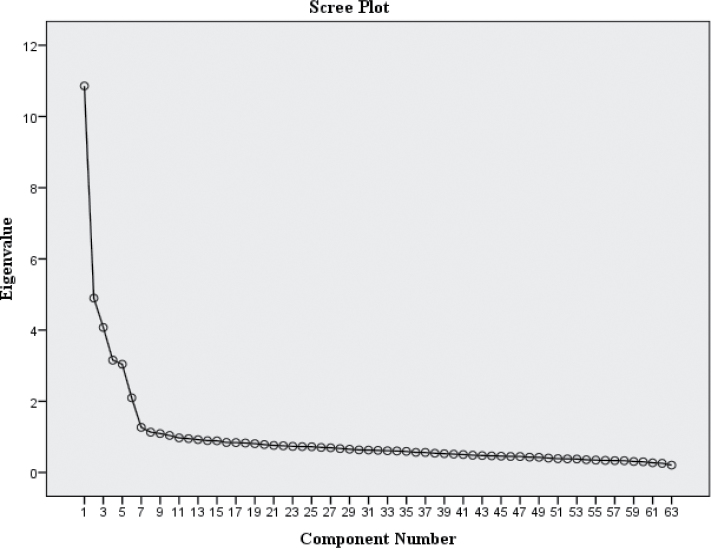
We aimed to characterize multiple psychotic experiences, each assessed on a spectrum of severity (ie, quantitatively), in a general population sample of adolescents. Over five thousand 16-year-old twins and their parents completed the newly devised Specific Psychotic Experiences Questionnaire (SPEQ); a subsample repeated it approximately 9 months later. SPEQ was investigated in terms of factor structure, intersubscale correlations, frequency of endorsement and reported distress, reliability and validity, associations with traits of anxiety, depression and personality, and sex differences. Principal component analysis revealed a 6-component solution: paranoia, hallucinations, cognitive disorganization, grandiosity, anhedonia, and parent-rated negative symptoms. These components formed the basis of 6 subscales. Correlations between different experiences were low to moderate. All SPEQ subscales, except Grandiosity, correlated significantly with traits of anxiety, depression, and neuroticism. Scales showed good internal consistency, test-retest reliability, and convergent validity. Girls endorsed more paranoia, hallucinations, and cognitive disorganization; boys reported more grandiosity and anhedonia and had more parent-rated negative symptoms. As in adults at high risk for psychosis and with psychotic disorders, psychotic experiences in adolescents are characterized by multiple components. The study of psychotic experiences as distinct dimensional quantitative traits is likely to prove an important strategy for future research, and the SPEQ is a self- and parent-report questionnaire battery that embodies this approach.
Overview
The claims and statistics of this paper haven’t been checked yet.
Free: it reads the open-access text and checks the first 5 claims that cite a source we can check. Create a free account to check every claim.
Integrity signals
Registry
Cites
Statistics
Figures
Verification
Claims the paper makes
The claims and statistics of this paper haven’t been checked yet.
Free: it reads the open-access text and checks the first 5 claims that cite a source we can check. Create a free account to check every claim.
Claims other papers make about this one
Each is checked against this paper’s own text: does it say what the citing paper says it does?
The source backs part of the claim, not all of it — or backs it for a different population, condition or comparison.
In the citing paper
“The empirical research indicates that non-affective psychotic diagnoses such as schizophrenia actually contain multiple independent experiences, including paranoia, grandiosity, and hallucinations”
From The role of sleep dysfunction in the occurrence of delusions and hallucinations: A systematic review (2015) · cites this paper as Ronald et al., 2014
Experimental — accuracy not yet measured
Self-check
Percentages, sums and reported differences re-computed from the paper’s own numbers.
The self-check needs the paper’s full text.
Citations
Cites
Genetics of Food Intake Self-Regulation in Childhood: Literature Review and Research Opportunities
Faith, M. S., Carnell, S., & Kral, T. V. E. (2013) · Human Heredity · doi:10.1159/000353879 · Cited by 7,601
Scale for the Assessment of Negative Symptoms (SANS)*
(1989) · British Journal of Psychiatry · doi:10.1192/s0007125000291502 · Cited by 2,701
Scale for the Assessment of Negative Symptoms
Andreasen, N. C. (2014) · PsycTESTS Dataset · doi:10.1037/t12696-000 · Cited by 1,866
(1995) · International Journal of Methods in Psychiatric Research · Cited by 1,847
The Scale for the Assessment of Negative Symptoms (SANS): Conceptual and Theoretical Foundations
Andreasen, N. C. (1989) · British Journal of Psychiatry · doi:10.1192/s0007125000291496 · Cited by 1,530
The Psychosis High-Risk State: A Comprehensive State-of-the-Art Review
Fusar-Poli, P., Borgwardt, S., Bechdolf, A., Addington, J., Riecher-Rössler, A., Schultze-Lutter, F., Keshavan, M., Wood, S., Ruhrmann, S., Seidman, L. J., et al. (2013) · JAMA Psychiatry · doi:10.1001/jamapsychiatry.2013.269 · Cited by 1,483
Self-citationLinscott, R. J., & van Os, J. (2013) · Psychological Medicine · doi:10.1017/s0033291712001626 · Cited by 1,181
Poulton, R., Caspi, A., Moffitt, T. E., Cannon, M., Murray, R., & Harrington, H. (2000) · Archives of General Psychiatry · doi:10.1001/archpsyc.57.11.1053 · Cited by 1,141
Anticipatory and consummatory components of the experience of pleasure: A scale development study
Gard, D. E., Gard, M. G., Kring, A. M., & John, O. P. (2006) · Journal of Research in Personality · doi:10.1016/j.jrp.2005.11.001 · Cited by 1,015
Psychological investigation of the structure of paranoia in a non-clinical population
Freeman, D., Garety, P. A., Bebbington, P. E., Smith, B., Rollinson, R., Fowler, D., Kuipers, E., Ray, K., & Dunn, G. (2005) · British Journal of Psychiatry · doi:10.1192/bjp.186.5.427 · Cited by 786 · cited 2×
“Paranoia was assessed with 15 items from the Paranoia Checklist.(21) Hallucinations were assessed with 9 items from the Cardiff Anomalous Perceptions Scale.”
MethodSelf-citation
Cited by
Items 101–200 of 231
Psychotic experiences as a health indicator: A provisional framework
Oh, H. Y., DeVylder, J., & Koyanagi, A. (2021) · International Journal of Social Psychiatry · doi:10.1177/0020764021992809 · Cited by 18
“Psychotic experiences are moderately heritable (Ronald et al., 2014; Sieradzka et al., 2015) and overlap partly with chronic health conditions (Legge et al., 2019; Pain et al., 2018; Ronald & Pain, 2018) and health behaviors (Taylor et al., 2015).”
BackgroundWastler, H. M., & Núñez, D. (2022) · Frontiers in Psychiatry · doi:10.3389/fpsyt.2022.983250 · Cited by 18
“The overall model was significant χ2(4) = 652.”
BackgroundFekih‐Romdhane, F., Farah, N., Malaeb, D. N., Cheour, M., Obeïd, S., & Hallit, S. R. (2023) · International Journal of Mental Health and Addiction · doi:10.1007/s11469-023-01011-3 · Cited by 17
“Finally, the prevalence (Laurens et al., 2007; Zammit et al., 2013), nature of symptoms endorsed (Ronald et al., 2014; Scott et al., 2008), related distress (Stainton et al., 2021), and outcome (Welham et al., 2009) of PEs have been shown to differ according to gender.”
Confirmatory factor analysis of psychotic-like experiences in a general population sample
Therman, S., & Ziermans, T. B. (2015) · Psychiatry Research · doi:10.1016/j.psychres.2015.12.023 · Cited by 17
Morrison, A. P., Pyle, M., Byrne, R. E., Broome, M. R., Freeman, D. H., Johns, L., James, A. C., Husain, N., Whale, R., MacLennan, G., et al. (2021) · Health Technology Assessment · doi:10.3310/hta25040 · Cited by 16
Self-citationLiao, J., Mooney, L. J., Zhu, Y., Valdez, J., Yoo, C. K., & Hser, Y. (2019) · Psychiatry Research · doi:10.1016/j.psychres.2019.03.010 · Cited by 16
“We selected the “Paranoia subscale” from the Specific Psychotic Experiences Questionnaire (SPEQ) (Ronald et al., 2013) that included five self-report subscales (paranoia, hallucinations, cognitive disorganization, grandiosity, and anhedonia).”
BackgroundMethodKuranova, A., Booij, S. H., de Jonge, P., Jeronimus, B. F., Lin, A. P., Wardenaar, K. J., Wichers, M., & Wigman, J. T. W. (2020) · Schizophrenia Research · doi:10.1016/j.schres.2020.05.019 · Cited by 16
Havers, L., Cardno, A. G., Freeman, D. H., & Ronald, A. (2022) · Schizophrenia Bulletin Open · doi:10.1093/schizbullopen/sgac009 · Cited by 16
Self-citationGenetic and Geographical Associations With Six Dimensions of Psychotic Experiences in Adolesence
Maxwell, J. M., Ronald, A., Cardno, A. G., Breen, G. D., Rimfeld, K., & Vassos, E. (2022) · Schizophrenia Bulletin · doi:10.1093/schbul/sbac149 · Cited by 15
Self-citationBird, J. C., Loe, B. S., Kirkham, M., Fergusson, E. C., Shearn, C., Stratford, H. J., Teale, A., Waite, F., & Freeman, D. H. (2020) · Schizophrenia Research · doi:10.1016/j.schres.2020.03.046 · Cited by 15
Self-citationPsychosis in adolescents in Africa: A scoping review for current understanding and future directions
Adjorlolo, S., & Setordzi, M. (2021) · Cogent Psychology · doi:10.1080/23311908.2021.1949173 · Cited by 16
“Studies targeting children, adolescents and young adults are extremely important as they offer a unique opportunity to optimize interventions to promote better functional outcomes (Larsen et al., 2007; Ronald et al., 2013; Welsh & Tiffin, 2014).”
BackgroundHodgekins, J., Lower, R., Wilson, J., Cole, H., Ugochukwu, U., Maxwell, S. L., & Fowler, D. G. (2018) · British Journal of Clinical Psychology · doi:10.1111/bjc.12178 · Cited by 15
Kaman, S., Sharma, A., & Banerjee, R. (2022) · Current Psychiatry Research and Reviews · doi:10.2174/2666082218666220823153739 · Cited by 14
A Twin Study on the Association Between Psychotic Experiences and Tobacco Use During Adolescence
Barkhuizen, W., Taylor, M. J., Freeman, D. H., & Ronald, A. (2018) · Journal of the American Academy of Child & Adolescent Psychiatry · doi:10.1016/j.jaac.2018.06.037 · Cited by 14
Self-citationPyle, M., Broome, M. R., Joyce, E., MacLennan, G., Norrie, J. D., Freeman, D. H., Fowler, D. G., Haddad, P. M., Shiers, D., Hollis, C. P., et al. (2019) · Trials · doi:10.1186/s13063-019-3506-1 · Cited by 14
“(DOC 121 kb) Abbreviations ANNSERS: Antipsychotic Non-Neurological Side Effects Scale; APs: Antipsychotic medication; AQ-10: Autism Spectrum Quotient 10-item version; ASD: Autistic spectrum disorder; AUDIT: Alcohol Use Disorders Identification Test; BFT: Behavioural family therapy; BNF: British National Formulary; CAM…”
BackgroundSelf-citationFekih‐Romdhane, F., Houissa, L., Loch, A. A., Cheour, M., & Hallit, S. R. (2024) · Child and Adolescent Psychiatry and Mental Health · doi:10.1186/s13034-024-00825-w · Cited by 13
“In addition, sex differences were noticed regarding aspects of psychotic symptoms, with female adolescents being more likely to experience persecutory ideation and subclinical hallucinations compared to males [46, 47].”
BackgroundWaite, F., Kabir, T., Johns, L., Mollison, J., Tsiachristas, A., Petit, A., Černis, E., Maughan, D. L., & Freeman, D. H. (2020) · BMJ Open · doi:10.1136/bmjopen-2020-045235 · Cited by 13
Self-citationCannabis Associated Mental Health Effects: A Review
Kancherla, N., Jeyanthi, K., Abbas, R., Sathi, T. S. C. R., Upadhyay, A., & Garlapati, S. K. P. (2021) · Journal of Pharmacy And Bioallied Sciences · doi:10.4103/jpbs.jpbs_388_21 · Cited by 15
“[20] A recent study observed that the occlusal plane angle in the mandibular autorotation group was steeper when compared to the nonautorotation group.”
InfluentialLink, B. G., & Phelan, J. C. (2017) · Cambridge University Press eBooks · doi:10.1017/9781316471289.024 · Cited by 13
Barone, A., Billeci, M., D'Amore, S., Prisco, M. D., Simone, G. D., Ermini, E., Freda, V., Iannotta, F., Luciani, A., Pistone, L., et al. (2022) · Journal of Community Psychology · doi:10.1002/jcop.22886 · Cited by 13
Cardno, A., Selzam, S., Freeman, D., & Ronald, A. (2021) · Psychiatric Research and Clinical Practice · doi:10.1176/appi.prcp.20200010 · Cited by 10
“ganization; and (3) paranoia or hallucinations, and negative symptoms, and their associations with 11 schizophrenia‐”
InfluentialSelf-citationKeith, V. M., & Brown, D. R. (2017) · Cambridge University Press eBooks · doi:10.1017/9781316471289.019 · Cited by 12
Specificity of Polygenic Scores for Psychiatric Disorders Beyond Transdiagnostic Genetic Risk
Keser, E., Liao, W., Allegrini, A. G., Eley, T. C., Rimfeld, K., Malanchini, M., & Plomin, R. J. (2026) · JAMA Network Open · doi:10.1001/jamanetworkopen.2025.48518 · Cited by 12
Catone, G., Salerno, F., Muzzo, G., Lanzara, V., & Gritti, A. (2021) · Rivista di psichiatria · doi:10.1708/3594.35768 · Cited by 11
Cognitive Behavioural Therapies for Psychosis
Johns, L., Isham, L., & Manser, R. (2019) · Elsevier eBooks · doi:10.1016/b978-0-12-815012-2.00015-8 · Cited by 11
Horwitz, A. V. (2017) · Cambridge University Press eBooks · doi:10.1017/9781316471289.004 · Cited by 11
Havers, L., von Stumm, S., Cardno, A. G., Freeman, D. H., & Ronald, A. (2022) · Psychological Medicine · doi:10.1017/s0033291722002914 · Cited by 10
“The observed association between male sex and the most elevated negative symptoms trajectory class adds to findings that have reported cross-sectional associations between negative symptoms and male sex (Dominguez et al., 2010; Maric et al., 2003; Ronald et al., 2014).”
BackgroundMethodInfluentialSelf-citationGayer-Anderson, C. E., Knowles, G., Beards, S., Turner, A. M., Stanyon, D., Davis, S., Blakey, R., Lowis, K., Dorn, L., Ofori, A., et al. (2024) · Social Psychiatry and Psychiatric Epidemiology · doi:10.1007/s00127-024-02701-6 · Cited by 10
Adjorlolo, S., Anum, A., & Adjorlolo, P. K. (2021) · Psychiatry Research · doi:10.1016/j.psychres.2021.113991 · Cited by 10
Newman‐Taylor, K., McSherry, P., & Stopa, L. L. (2019) · Behavioural and Cognitive Psychotherapy · doi:10.1017/s1352465819000419 · Cited by 10
Rosenfield, S., Kato, K., & Smith, D. T. (2017) · Cambridge University Press eBooks · doi:10.1017/9781316471289.017 · Cited by 10
Denis, D., Eley, T. C., Rijsdijk, F. V., Zavos, H. M. S., Keers, R., Espie, C. A., Luik, A. I., Badini, I., Derveeuw, S., Romero, A., et al. (2017) · BMJ Open · doi:10.1136/bmjopen-2017-017177 · Cited by 9
Havers, L., Taylor, M. J., & Ronald, A. (2019) · Journal of Child Psychology and Psychiatry · doi:10.1111/jcpp.13045 · Cited by 9
“This is broadly in line with past findings suggesting that grandiosity does not always link with other psychopathology at this age (Ronald et al., 2014).”
InfluentialSelf-citationWell-Being across the Life Course
Mirowsky, J., & Ross, C. E. (2017) · Cambridge University Press eBooks · doi:10.1017/9781316471289.021 · Cited by 9
The Measurement of Mental Disorder
Wakefield, J. C., & Schmitz, M. F. (2017) · Cambridge University Press eBooks · doi:10.1017/9781316471289.005 · Cited by 9
Wilkinson, H. R., Johns, L., Batchelor, R., & Lau‐Zhu, A. (2025) · The British Journal of Psychiatry · doi:10.1192/bjp.2025.86 · Cited by 8
“67 A systematic review of cognitive – behavioural therapy for sleep problems in psychosis This table reports the effect of CBT in alleviating other clinical symptoms.”
Shakoor, S., McGuire, P. K., Cardno, A. G., Freeman, D. H., & Ronald, A. (2017) · Journal of Child Psychology and Psychiatry · doi:10.1111/jcpp.12839 · Cited by 8
“However, the SPEQ measure has shown good reliability and validity (Ronald et al., 2014).”
BackgroundMethodInfluentialSelf-citationIsham, L., Loe, B. S., Hicks, A., Wilson, N., Bentall, R. P., & Freeman, D. H. (2023) · Schizophrenia Bulletin · doi:10.1093/schbul/sbad016 · Cited by 8
Self-citationDefining Mental Disorders: Sociological Investigations into the Classification of Mental Disorders
Whooley, O. (2017) · Cambridge University Press eBooks · doi:10.1017/9781316471289.006 · Cited by 8
Schlier, B., Ellett, L., Thompson, E., Gaudiano, B. A., Krkovic, K., & Kingston, J. L. (2024) · Research on Child and Adolescent Psychopathology · doi:10.1007/s10802-024-01187-9 · Cited by 8
“…of Psy-chotic Experiences, Stefanis et al., 2002; Paranoia Scale, Fenigstein & Vanable, 1992; Revised Green et al. Paranoid Thoughts Scale [R-GPTS], Freeman et al., 2021), or with minor changes to age-appropriate language (e.g., Specific Psychotic Experiences Questionnaire, Ronald et al., 2014).”
BackgroundUnravelling Distress in Psychotic‐Like Experiences: A Systematic Review of Non‐Clinical Populations
Rockenschaub, J., Renner, A., Friedrich, F., Berger, M., Mielacher, C., Trimmel, M., Hinterbuchinger, B., & Mossaheb, N. (2026) · Early Intervention in Psychiatry · doi:10.1111/eip.70175 · Cited by 7
Beattie, L., Robb, F. M., Spanswick, M., Henry, A. L., Waxmonsky, J. A., & Gumley, A. I. (2023) · Early Intervention in Psychiatry · doi:10.1111/eip.13388 · Cited by 7
“The Specific Psychotic Experiences Questionnaire (SPEQ) – Hallu-cinations (Bell et al., 2005; Ronald et al., 2013) is used to assess hallucinations over the past month.”
MethodFreeman, D. H., Dunn, G., Startup, H. M., & Kingdon, D. (2015) · Efficacy and Mechanism Evaluation · doi:10.3310/eme02010 · Cited by 7
Self-citationCatone, G., Gritti, A., Russo, K., Santangelo, P., Iuliano, R., Bravaccio, C., & Pisano, S. (2020) · Behavioral Sciences · doi:10.3390/bs10080122 · Cited by 7
“SPEQ also included five other dimensions: hallucinations, cognitive disorganization, grandiosity, and anhedonia.”
BackgroundInfluentialPiltz, L. M., Carpendale, E. J., & Laurens, K. R. (2023) · International Journal of Methods in Psychiatric Research · doi:10.1002/mpr.1962 · Cited by 8
“…some studies and meta ‐ analyses observing higher PLE prevalence in males (Karcher et al., 2020; Laurens & Cullen, 2016; van Os et al., 2009), in females (Karcher et al., 2014; Ronald et al., 2014), or a lack of gender differences (Dhossche et al., 2002; Johns et al., 2004; Ndetei et al., 2012).”
BackgroundJanuška, J., Straková, A., Turcek, M., Vašečková, B., Forgáčová, Ľ., Heretik, A., Pečeňák, J., & Hajdúk, M. (2021) · Psychosis · doi:10.1080/17522439.2021.1907773 · Cited by 6
Sleurs, D., Dubertret, C., Pignon, B., Tebeka, S., & Strat, Y. L. (2022) · Journal of Psychosomatic Research · doi:10.1016/j.jpsychores.2022.111128 · Cited by 7
Psychotic‐like experiences and adverse life events in young people. Does gender matter?
Adjorlolo, S., Awortwe, V., Anum, A., Huang, K., & Mamah, D. T. (2023) · Child and Adolescent Mental Health · doi:10.1111/camh.12674 · Cited by 6
Lim, K. X., Oginni, O. A., Rimfeld, K., Pingault, J., & Rijsdijk, F. V. (2022) · Behavior Genetics · doi:10.1007/s10519-022-10114-x · Cited by 6
Catone, G., Senese, V. P., Pascotto, A., Pisano, S., & Broome, M. R. (2024) · European Child & Adolescent Psychiatry · doi:10.1007/s00787-024-02563-y · Cited by 5
“…of adolescents and showed very good psychometric properties (Cronbach α = 0.93, test–retest reliability across a 9-month interval r = 0.66, p < 0.001) [22]; the scale was translated to Italian and used in a clinical study of patients with anxiety disorder [13], showing good psychometric properties.”
InfluentialSleep and paranoia: A systematic review and meta-analysis
Brown, P., Reeve, S., Hotton, M., Steer, N., & Steel, C. (2024) · Clinical Psychology Review · doi:10.1016/j.cpr.2024.102503 · Cited by 5
Jenner, L., Payne, M., Waite, F., Beckwith, H., Diamond, R., Isham, L., Collett, N., Emsley, R., & Freeman, D. H. (2025) · Schizophrenia Bulletin · doi:10.1093/schbul/sbaf083 · Cited by 5
“…by the Insomnia Severity Index 44 ), beliefs about self and other people (measured by the BCSS 45 ), anomalous experiences (measured by the SPEQ 46 ), jumping to conclusions (measured by the beads task 47 ), possibility of being mistaken (measured on a 0-100% scale 48 ) and safety-seeking…”
Self-citationLong, M., Zhang, P., & Shi, J. (2024) · Children · doi:10.3390/children11080969 · Cited by 5
Work and Unemployment as Stressors
Limonic, L., & Lennon, M. C. (2017) · Cambridge University Press eBooks · doi:10.1017/9781316471289.015 · Cited by 5
Sociological Approaches to Mental Illness
Thoits, P. A. (2017) · Cambridge University Press eBooks · doi:10.1017/9781316471289.010 · Cited by 6
Daydreaming and grandiose delusions: development of the Qualities of Daydreaming Scale
Isham, L., Loe, B. S., Hicks, A., Wilson, N., Bentall, R. P., & Freeman, D. H. (2024) · Behavioural and Cognitive Psychotherapy · doi:10.1017/s1352465824000018 · Cited by 5
“The Specific Psychotic Experiences Questionnaire-Grandiosity subscale (SPEQ-G; see Supplementary material) is a self-report measure of grandiosity with good psychometric properties (Ronald et al ., 2014).”
BackgroundSelf-citationValidation of the Spanish-language Cardiff Anomalous Perception Scale
Tamayo-Agudelo, W., Jaén‐Moreno, M. J., León-Campos, M. O., Holguín-Lew, J. C., Luque, R., & Bell, V. (2019) · PLoS ONE · doi:10.1371/journal.pone.0213425 · Cited by 5
Johnson, R. J., Hobfoll, S. E., & Beulaygue, I. C. (2017) · Cambridge University Press eBooks · doi:10.1017/9781316471289.022 · Cited by 5
Cultural Diversity and Mental Health Treatment
Woo, B., Walton, E. C., & Takeuchi, D. T. (2017) · Cambridge University Press eBooks · doi:10.1017/9781316471289.029 · Cited by 5
Fekih‐Romdhane, F., Malaeb, D. N., Obeïd, S., Dabbous, M., Sakr, F., Hallit, R. R., & Hallit, S. R. (2023) · International Journal of Mental Health and Addiction · doi:10.1007/s11469-023-01133-8 · Cited by 5
“…findings in this regard remain mixed, with a number of studies and meta ‐ analyses indicating a higher prevalence of PLEs either in females (Karcher et al., 2014; Ronald et al., 2014; Yung et al., 2009) or in males (Karcher et al., 2020; Laurens & Cullen, 2016; Jim Van Os et al., 2009).”
Dissociation in non-affective psychosis: a felt sense of anomaly
Černis, E. (2020) · Oxford University Research Archive (ORA) (University of Oxford) · doi:10.5287/ora-rbkrmakmk · Cited by 7
Freeman, D. H., Emsley, R., Rosebrock, L. E., Morrison, A. P., Chapman, K., Common, S., Dudley, R. E. J., Isham, L., Kabir, T., Kenny, A., et al. (2025) · BMJ Open · doi:10.1136/bmjopen-2025-104580 · Cited by 4
Self-citationYu, M., Du, Y., Liu, K., Liang, X., Huang, C., He, R., Lei, W., Chen, J., Chen, J., Tan, Y., et al. (2021) · Journal of Affective Disorders · doi:10.1016/j.jad.2021.04.038 · Cited by 5
Marital Status and Mental Health
Williams, K., Frech, A., & Carlson, D. L. (2017) · Cambridge University Press eBooks · doi:10.1017/9781316471289.020 · Cited by 4
Kiernan, G., Kohl, P., Tas, E., Berg, F., Wolf, M., Nguyen, P.-M., Valmaggia, L., & Rus‐Calafell, M. (2025) · Social Psychiatry and Psychiatric Epidemiology · doi:10.1007/s00127-025-02871-x · Cited by 3
Cardno, A. G., Heuvelman, H., Legge, S. E., Walters, J., Zammit, S., & Jones, H. J. (2025) · BJPsych Open · doi:10.1192/bjo.2025.10825 · Cited by 3
“11 Schizophrenia PRS has been associated with the positive and negative dimensions 13,14,23 – 25 and self-rated cognitive disorganisation.”
InfluentialSelf-citationPsychotic experiences associate with a Bias Against Disconfirmatory Evidence (BADE) in adolescence
Hollowell, A., & Ronald, A. (2020) · Schizophrenia Research · doi:10.1016/j.schres.2020.03.004 · Cited by 3
Self-citationTiffin, P. A., & Paton, L. W. (2019) · Child and Adolescent Mental Health · doi:10.1111/camh.12312 · Cited by 3
What Outcomes Should the Study of Mental Health Try to Explain?
Schnittker, J. (2017) · Cambridge University Press eBooks · doi:10.1017/9781316471289.008 · Cited by 3
Mental Health in Cross-Cultural Context
Lefley, H. P. (2017) · Cambridge University Press eBooks · doi:10.1017/9781316471289.011 · Cited by 3
Mental Illness and the Criminal Justice System
Hiday, V. A., & Ray, B. R. (2017) · Cambridge University Press eBooks · doi:10.1017/9781316471289.028 · Cited by 3
Mapping the uncanny : Assessing dimensions of psychotic-like experiences for clinical utility
Therman, S. (2014) · Helda - University of Helsinki Institutional Repository · Cited by 3
Auditory hallucinations in youth: occurrence, clinical significance and intervention strategies
Maijer, K. (2019) · University of Groningen research database (University of Groningen / Centre for Information Technology) · doi:10.33612/diss.94597038 · Cited by 4
There and back again: a dynamical perspective on psychological resilience
Kuranova, A. (2022) · University of Groningen research database (University of Groningen / Centre for Information Technology) · doi:10.33612/diss.223532259 · Cited by 3
Haenschel, C., Krupıć, D., Hoff, A., Corr, P. J., Gaigg, S., & Fett, A.-K. J. (2023) · Early Intervention in Psychiatry · doi:10.1111/eip.13404 · Cited by 2
“…including affective dimensions (Dolphin et al., 2015; Fonseca-Pedrero, Inchausti, et al., 2018; Varghese et al., 2011; Yung et al., 2009), anxiety (Ronald et al., 2014), self-harm, suicidal ideation and behaviours (Capra et al., 2015; Fonseca-Pedrero, Inchausti, et al., 2018; Honings et al.,…”
BackgroundMorosan, L., Almeida, E., van der Tuin, S., van den Berg, D. P. G., Booij, S. H., & Wigman, J. T. W. (2024) · Schizophrenia Research · doi:10.1016/j.schres.2024.06.005 · Cited by 2
“Paranoia manifestations are present in the general population and across the clinical stages for psychosis and they precede the development of severe forms of psychotic symptoms (Bebbington et al., 2013; Elahi et al., 2017; Ronald et al., 2014; Wong and Raine, 2018).”
BackgroundComputerised adaptive testing across the paranoia continuum
Freeman, D. H., Lambe, S., Waite, F., Rosebrock, L. E., Morrison, A. P., Chapman, K., Dudley, R. E. J., Common, S., Jones, J., Kabir, T., et al. (2025) · BMJ Mental Health · doi:10.1136/bmjment-2025-302099 · Cited by 2
Self-citationPescosolido, B. A., & Boyer, C. A. (2017) · Cambridge University Press eBooks · doi:10.1017/9781316471289.025 · Cited by 2
Perinatal risk factors and subclinical hypomania: A prospective community study
González-Calvo, I., Ronald, A., Shakoor, S., Taylor, M. J., Eley, T. C., & Hosang, G. M. (2024) · Journal of Affective Disorders · doi:10.1016/j.jad.2024.07.118 · Cited by 2
Self-citationEpilogue: The Three Solitudes of the Sociology of Mental Health
Avison, W. R. (2017) · Cambridge University Press eBooks · doi:10.1017/9781316471289.034 · Cited by 2
Kiyono, T., Ando, S., Morishima, R., Fujikawa, S., Kanata, S., Morimoto, Y., Endo, K., Yamasaki, S., Usami, S., Hiraiwa‐Hasegawa, M., et al. (2022) · Schizophrenia Research · doi:10.1016/j.schres.2022.05.027 · Cited by 2
de Jong, Y., Boon, A. E., Mulder, C. L., & van der Gaag, M. (2024) · Early Intervention in Psychiatry · doi:10.1111/eip.13597 · Cited by 2
“We found a number of similarities with the work of other researchers, one similarity being the higher prevalence of PLEs in females (Ronald et al., 2014; Wigman, van Winkel, et al., 2011).”
Cairns, A. J. J., Taylor, C. D. J., & KELLY, J. A. (2024) · Behavioural and Cognitive Psychotherapy · doi:10.1017/s1352465824000237 · Cited by 2
Michelini, G., Liao, W., Lu, S. D., Caserini, C., Eley, T. C., Ronald, A., Wilson, S., Malanchini, M., & Rimfeld, K. (2026) · Molecular Psychiatry · doi:10.1038/s41380-026-03714-0 · Cited by 2
“…of child neurodevelopmental traits (ADHD and autism at ages 7, 12 and 16; learning, motor, speech dif fi culties and other dif fi culties/disabilities at age 7), internalizing problems, externalizing behaviors, psychotic experiences (age 16 only), and eating problems (age 16 only) [49, 50, 53].”
Self-citationThe HIV-Mental Health Challenge
Walkup, J. T., & Crystal, S. (2017) · Cambridge University Press eBooks · doi:10.1017/9781316471289.032 · Cited by 2
The Mental Health Consumers/Survivors Movement in the US
McLean, A. (2017) · Cambridge University Press eBooks · doi:10.1017/9781316471289.031 · Cited by 2
Dai, A. (2023) · eScholarship@McGill (McGill) · doi:10.82308/24928 · Cited by 2
Swearingen, K. M. V., Hull, T. D., Sarma, K. V., & Stamatis, C. A. (2026) · arXiv (Cornell University) · doi:10.48550/arxiv.2606.28241 · Cited by 2
Preventing Adolescent Suicidal Behavior: Integrating Sociology and Public Health
Crosby, A. E., & Willis, L. A. (2017) · Cambridge University Press eBooks · doi:10.1017/9781316471289.030 · Cited by 1
Watson, D. P., Adams, E. L., & Jackson, J. R. (2017) · Cambridge University Press eBooks · doi:10.1017/9781316471289.033 · Cited by 1
Community Mental Health Care Organizations
Dobransky, K. M. (2017) · Cambridge University Press eBooks · doi:10.1017/9781316471289.026 · Cited by 1
The Social Context of Mental Health and Illness: Introduction to Part II
Scheid, T. L., & Wright, E. R. (2017) · Cambridge University Press eBooks · doi:10.1017/9781316471289.012 · Cited by 1
Yilmaz, M. (2019) · Figshare · Cited by 2
Integrating Service Delivery Systems for Persons with Severe Mental Illness
Cuddeback, G. S., & MORRISSEY, J. P. (2017) · Cambridge University Press eBooks · doi:10.1017/9781316471289.027 · Cited by 1
Fonseca‐Pedrero, E., Giráldez, S. L., Paíno, M., Sierra‐Baigrie, S., & Muñiz, J. (2016) · Springer eBooks · doi:10.1007/978-3-319-32132-5_294-2 · Cited by 1
Fonseca‐Pedrero, E., Giráldez, S. L., Paíno, M., Sierra‐Baigrie, S., & Muñiz, J. (2018) · Springer eBooks · doi:10.1007/978-3-319-33228-4_294 · Cited by 1
Papageorgiou, K. G. (2025) · doi:10.12681/eadd/59954 · Cited by 1
“Psychotic experiences were assessed using the Specific Psychotic Experiences Questionnaire (SPEQ; Ronald et al., 2014) that includes five self-report subscales:”
MethodChildhood bullying and paranoid thinking
Jack, A. H. (2017) · Nottingham ePrints (University of Nottingham)
Pain, O. (2018) · Birkbeck Institutional Research Online (BiRO) - Theses · doi:10.18743/pub.00040326
Cafferkey, K. (2018) · Ulster University Research Portal (Ulster University)
Metadata
- Authors
- Ronald, A., Sieradzka, D., Cardno, A. G., Haworth, C. M. A., McGuire, P., & Freeman, D.
- Affiliations
- University of London (GB)
- University of Leeds (GB)
- King's College London (GB)
- University of Oxford (GB)
- Corresponding author
- Ronald, Angelica
- Venue
- Schizophrenia Bulletin
- Publisher
- Oxford University Press (OUP)
- Published
- 2013-09-23
- Volume
- 40
- Issue
- 4
- Pages
- 868-877
- ISSN
- 0586-7614 (ISSN-L)
- 1745-1701
- PMC
- PMC4059437
- OpenAlex
- W2108313446
- Cited by
- 211
- References
- 51
- Citations by year
- 2026: 11 · 2025: 10 · 2024: 12 · 2023: 11 · 2022: 15 · 2021: 23 · 2020: 10 · 2019: 17 · 2018: 17 · 2017: 51 · 2016: 8 · 2015: 14 · 2014: 9
- FWCI
- 7.32
- Type
- journal article
- Language
- en
- Open access
- hybrid
- doi.org
- Licence
- cc-by
- Locations
- Schizophrenia Bulletin (publishedVersion, cc-by)
- Europe PMC (PubMed Central) (publishedVersion, cc-by)
- PubMed Central (publishedVersion, cc-by)
- PubMed (publishedVersion)
- BIROn (Birkbeck, University of London) (acceptedVersion)
- White Rose Research Online (University of Leeds, The University of Sheffield, University of York) (acceptedVersion)
- Warwick Research Archive Portal (University of Warwick) (submittedVersion)
- Research Portal (King's College London) (submittedVersion, other-oa)
- Bristol Research (University of Bristol) (submittedVersion)
- Explore Bristol Research (submittedVersion)
- Funders
- Medical Research Council (G0901245, G0902308, G0500079, G1100559)
- Economic and Social Research Council (1099627)
- Topics
- Health Sciences › Medicine › Psychiatry and Mental health › Schizophrenia research and treatment
- Social Sciences › Arts and Humanities › Philosophy › Mental Health and Psychiatry
- Life Sciences › Neuroscience › Cognitive Neuroscience › Hallucinations in medical conditions
- Keywords
- psychotic experiences, adolescents
- MeSH terms
- Adolescent, Anxiety, Delusions, Depression, Female, United Kingdom, Hallucinations, Humans, Male, Paranoid Disorders, Personality, Psychotic Disorders, Severity of Illness Index, Sex Distribution, Principal Component Analysis, Anhedonia
About these checks
Registry, retraction, Cites and statistics results are computed, not judged, with one exception: a printed reference that no index lists is read once by a model before it counts as a citation error. Claims are extracted by a model and kept only when their quote appears verbatim in the text; each cited source is then checked, with a model’s help, for whether it says what the claim relies on. Those verdicts can be wrong — read the claim’s quote and the cited source before relying on one.
Statistics and arithmetic are recomputed, not judged.
Confidence bands are shown only for fields calibrated on our annotated test set. None is calibrated yet, so no band is shown.
What counts as a claim ›How we measure confidence ›How we check this ›
Are you an author, or do you see a problem with this page? Request a review
Data sources
Bibliographic data: Semantic Scholar, OpenAlex, Crossref.
Contains information from the Semantic Scholar Academic Graph Datasets, made available under the ODC Attribution License (ODC-BY 1.0).
Semantic Scholar’s data is described in: Kinney, R., et al. (2023). The Semantic Scholar Open Data Platform. arXiv:2301.10140.
