

Characterization of Psychotic Experiences in Adolescence Using the Specific Psychotic Experiences Questionnaire: Findings From a Study of 5000 16-Year-Old Twins
Open accessThe DOI matches its Crossref record; 50 of the 51 references it cites were found in a registry or an index.
Abstract
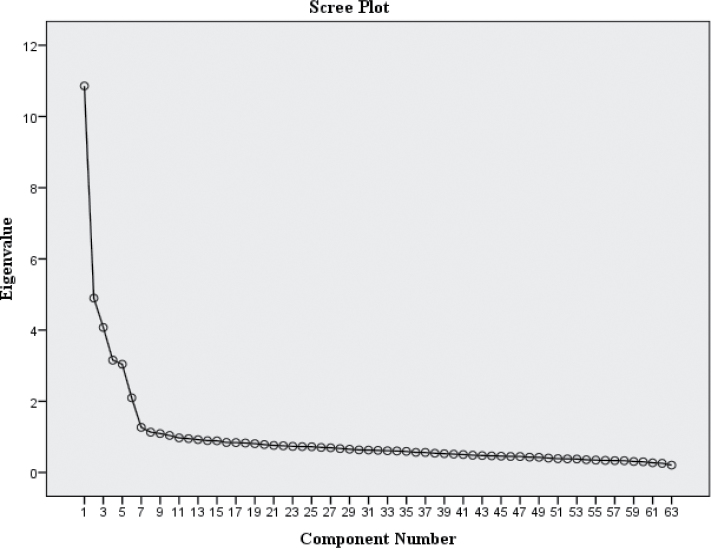
We aimed to characterize multiple psychotic experiences, each assessed on a spectrum of severity (ie, quantitatively), in a general population sample of adolescents. Over five thousand 16-year-old twins and their parents completed the newly devised Specific Psychotic Experiences Questionnaire (SPEQ); a subsample repeated it approximately 9 months later. SPEQ was investigated in terms of factor structure, intersubscale correlations, frequency of endorsement and reported distress, reliability and validity, associations with traits of anxiety, depression and personality, and sex differences. Principal component analysis revealed a 6-component solution: paranoia, hallucinations, cognitive disorganization, grandiosity, anhedonia, and parent-rated negative symptoms. These components formed the basis of 6 subscales. Correlations between different experiences were low to moderate. All SPEQ subscales, except Grandiosity, correlated significantly with traits of anxiety, depression, and neuroticism. Scales showed good internal consistency, test-retest reliability, and convergent validity. Girls endorsed more paranoia, hallucinations, and cognitive disorganization; boys reported more grandiosity and anhedonia and had more parent-rated negative symptoms. As in adults at high risk for psychosis and with psychotic disorders, psychotic experiences in adolescents are characterized by multiple components. The study of psychotic experiences as distinct dimensional quantitative traits is likely to prove an important strategy for future research, and the SPEQ is a self- and parent-report questionnaire battery that embodies this approach.
Overview
The claims and statistics of this paper haven’t been checked yet.
Free: it reads the open-access text and checks the first 5 claims that cite a source we can check. Create a free account to check every claim.
Integrity signals
Registry
Cites
Statistics
Figures
Verification
Claims the paper makes
The claims and statistics of this paper haven’t been checked yet.
Free: it reads the open-access text and checks the first 5 claims that cite a source we can check. Create a free account to check every claim.
Claims other papers make about this one
Each is checked against this paper’s own text: does it say what the citing paper says it does?
The source backs part of the claim, not all of it — or backs it for a different population, condition or comparison.
In the citing paper
“The empirical research indicates that non-affective psychotic diagnoses such as schizophrenia actually contain multiple independent experiences, including paranoia, grandiosity, and hallucinations”
From The role of sleep dysfunction in the occurrence of delusions and hallucinations: A systematic review (2015) · cites this paper as Ronald et al., 2014
Experimental — accuracy not yet measured
Self-check
Percentages, sums and reported differences re-computed from the paper’s own numbers.
The self-check needs the paper’s full text.
Citations
Cites
Genetics of Food Intake Self-Regulation in Childhood: Literature Review and Research Opportunities
Faith, M. S., Carnell, S., & Kral, T. V. E. (2013) · Human Heredity · doi:10.1159/000353879 · Cited by 7,601
Scale for the Assessment of Negative Symptoms (SANS)*
(1989) · British Journal of Psychiatry · doi:10.1192/s0007125000291502 · Cited by 2,701
Scale for the Assessment of Negative Symptoms
Andreasen, N. C. (2014) · PsycTESTS Dataset · doi:10.1037/t12696-000 · Cited by 1,866
(1995) · International Journal of Methods in Psychiatric Research · Cited by 1,847
The Scale for the Assessment of Negative Symptoms (SANS): Conceptual and Theoretical Foundations
Andreasen, N. C. (1989) · British Journal of Psychiatry · doi:10.1192/s0007125000291496 · Cited by 1,530
The Psychosis High-Risk State: A Comprehensive State-of-the-Art Review
Fusar-Poli, P., Borgwardt, S., Bechdolf, A., Addington, J., Riecher-Rössler, A., Schultze-Lutter, F., Keshavan, M., Wood, S., Ruhrmann, S., Seidman, L. J., et al. (2013) · JAMA Psychiatry · doi:10.1001/jamapsychiatry.2013.269 · Cited by 1,483
Self-citationLinscott, R. J., & van Os, J. (2013) · Psychological Medicine · doi:10.1017/s0033291712001626 · Cited by 1,181
Poulton, R., Caspi, A., Moffitt, T. E., Cannon, M., Murray, R., & Harrington, H. (2000) · Archives of General Psychiatry · doi:10.1001/archpsyc.57.11.1053 · Cited by 1,141
Anticipatory and consummatory components of the experience of pleasure: A scale development study
Gard, D. E., Gard, M. G., Kring, A. M., & John, O. P. (2006) · Journal of Research in Personality · doi:10.1016/j.jrp.2005.11.001 · Cited by 1,015
Psychological investigation of the structure of paranoia in a non-clinical population
Freeman, D., Garety, P. A., Bebbington, P. E., Smith, B., Rollinson, R., Fowler, D., Kuipers, E., Ray, K., & Dunn, G. (2005) · British Journal of Psychiatry · doi:10.1192/bjp.186.5.427 · Cited by 786 · cited 2×
“Paranoia was assessed with 15 items from the Paranoia Checklist.(21) Hallucinations were assessed with 9 items from the Cardiff Anomalous Perceptions Scale.”
MethodSelf-citation
Cited by
Items 201–231 of 231
Theoretical Perspectives on Mental Health and Illness: Introduction to Part I
Scheid, T. L., & Wright, E. R. (2017) · Cambridge University Press eBooks · doi:10.1017/9781316471289.003
Mental Health Systems and Policy: Introduction to Part III
Scheid, T. L., & Wright, E. R. (2017) · Cambridge University Press eBooks · doi:10.1017/9781316471289.023
Biological Approaches to Psychiatric Disorders: A Sociological Approach
Schwartz, S., & Corcoran, C. M. (2017) · Cambridge University Press eBooks · doi:10.1017/9781316471289.009
Association Between Paranoia And Anorexia Nervosa In Adolescents: What Factors Are Involved?Preprint
Catone, G., Salerno, F., Muzzo, G., Lanzara, V., & Gritti, A. (2020) · Research Square · doi:10.21203/rs.2.24625/v1
(2017) · Cambridge University Press eBooks · doi:10.1017/9781316471289.001
Mechanic, D. (2017) · Cambridge University Press eBooks · doi:10.1017/9781316471289.002
(2017) · Cambridge University Press eBooks · doi:10.1017/9781316471289.035
Problems of worldview through the eyes of students of the Far North
Antonova, Y., & Vinokurova, V. (2023) · Journal of Political Research · doi:10.12737/2587-6295-2023-7-1-91-103
Chronotype and psychopathology: insights from a genetically informative design
Madrid‐Valero, J. J., Ordoñana, J. R., Eley, T. C., & Gregory, A. M. (2025) · SLEEP · doi:10.1093/sleep/zsaf231
“Paranoia was assessed by 15 (ranging from 0 to 75) items and hallucinations by 9 items (ranging from 0 to 45), both rated on a 6-point scale (0–5) [35].”
CBT for psychosis with a young adult experiencing grandiose beliefs: a case study
Brown, P., Isham, L., & Johns, L. (2025) · The Cognitive Behaviour Therapist · doi:10.1017/s1754470x25100214
“There is also considerable evidence for the independence of psychotic experiences, including the independence of different types of delusion, e.g. persecutory vs grandiose (Ronald et al ., 2014; Sheffield et al ., 2021; Zavos et al ., 2014).”
Childhood trauma and subclinical hypomania in early adulthood: A genetically informative study
González-Calvo, I., Ronald, A., Havers, L., Lawrence, E. G., Taylor, M. J., & Hosang, G. M. (2025) · European Psychiatry · doi:10.1192/j.eurpsy.2025.10117
“Hypomania at age 16 (N = 2,943, 57% female) was assessed as part of the Longitudinal Experiences And Perceptions project (LEAP) [49].”
Self-citationHarmful grandiose delusions: developing a cognitive model
Isham, L. (2023) · Oxford University Research Archive (ORA) (University of Oxford) · doi:10.5287/ora-zv8j9jrap
Brown, P. (2024) · Oxford University Research Archive (ORA) (University of Oxford) · doi:10.5287/ora-b78rg7qxx
Kirkham, M. (2022) · Oxford University Research Archive (ORA) (University of Oxford) · doi:10.5287/ora-6rrj57ood
McGovern, J. (2024) · Oxford University Research Archive (ORA) (University of Oxford) · doi:10.5287/ora-6qzdp6mne
Bowler, A. (2024) · BIROn (Birkbeck, University of London) · doi:10.18743/pub.00054773
Insomnia in psychosis: prevalence and implementation of an intervention
Robb, F. M. (2021) · Enlighten: Theses (The University of Glasgow) · doi:10.5525/gla.thesis.82491
General and cyber-paranoia in non-clinical adolescents
Wasterfall, P. (2025) · ePrints Soton (University of Southampton)
Tang, Q., Xu, Y., Gong, J., & Sun, X. (2026) · Child Abuse & Neglect · doi:10.1016/j.chiabu.2026.107928
Hz. Ali's personality and religiousness
YILDIRIM, Ü. (2025) · Hitit University Institutional Repository
Fekih‐Romdhane, F., Marrakchi, S., Laranjeira, C., Ghrissi, F., Cheour, M., Haj, M. E., & Hallit, S. R. (2026) · Early Intervention in Psychiatry · doi:10.1111/eip.70172
“For instance, while some empirical studies reported that females were more likely to endorse subclinical hallucinatory experiences (Morokuma et al. 2017; Ronald et al. 2014), others found no significant sex differences (Adjorlolo and Anum 2021; Kompus et al. 2015).”
Psychotic-Like Experiences and Sleep Disturbances in Early Adolescence: A Network Analysis
Siljeström, L. A., Kravariti, E., Vitoratou, S., Bates, K. E., & Fuhrmann, D. (2026) · Clinical Psychological Science · doi:10.1177/21677026261471804
Johnson, M. R., Bower, J. L., & Reeve, S. (2026) · Journal of Psychiatric Research · doi:10.1016/j.jpsychires.2026.06.028
Reeve, S., Sheaves, B., Loe, B. S., & Freeman, D. H. (2026) · SLEEP Advances · doi:10.1093/sleepadvances/zpag072
“Paranoia and hallucinations were assessed using the respective subscales of the Specif ic Psychotic Experiences Scale (SPEQ) [ 35].”
Self-citationTubiolo, P. N., Patel, Y., Trepiccione, A., Jonas, K. G., Moeller, S. J., Abi‐Dargham, A., Kotov, R., Snellenberg, J. X. V., & Perlman, G. (2026) · Biological Psychiatry Cognitive Neuroscience and Neuroimaging · doi:10.1016/j.bpsc.2026.09.002
Marinescu, I., Hodgekins, J., & Reeve, S. (2026) · Research Square · doi:10.21203/rs.3.rs-10851333/v1
Do Psychological Interventions Reduce Paranoia in Adolescents? A Systematic Review
Tierney-Sutton, L., Taylor, C. D. J., Pile, V., Watling, D., Lobo, S., Courten, E., & Kingston, J. L. (2026) · Clinical Child and Family Psychology Review · doi:10.1007/s10567-026-00587-1
Purdon, R. C., Carpendale, E. J., & Laurens, K. R. (2026) · Schizophrenia Research · doi:10.1016/j.schres.2026.09.003
Schizophrenia spectrum disorders
Sheaves, B., & Freeman, D. (2021) · Oxford University Research Archive (ORA) (University of Oxford)
Self-citation
Metadata
- Authors
- Ronald, A., Sieradzka, D., Cardno, A. G., Haworth, C. M. A., McGuire, P., & Freeman, D.
- Affiliations
- University of London (GB)
- University of Leeds (GB)
- King's College London (GB)
- University of Oxford (GB)
- Corresponding author
- Ronald, Angelica
- Venue
- Schizophrenia Bulletin
- Publisher
- Oxford University Press (OUP)
- Published
- 2013-09-23
- Volume
- 40
- Issue
- 4
- Pages
- 868-877
- ISSN
- 0586-7614 (ISSN-L)
- 1745-1701
- PMC
- PMC4059437
- OpenAlex
- W2108313446
- Cited by
- 211
- References
- 51
- Citations by year
- 2026: 11 · 2025: 10 · 2024: 12 · 2023: 11 · 2022: 15 · 2021: 23 · 2020: 10 · 2019: 17 · 2018: 17 · 2017: 51 · 2016: 8 · 2015: 14 · 2014: 9
- FWCI
- 7.32
- Type
- journal article
- Language
- en
- Open access
- hybrid
- doi.org
- Licence
- cc-by
- Locations
- Schizophrenia Bulletin (publishedVersion, cc-by)
- Europe PMC (PubMed Central) (publishedVersion, cc-by)
- PubMed Central (publishedVersion, cc-by)
- PubMed (publishedVersion)
- BIROn (Birkbeck, University of London) (acceptedVersion)
- White Rose Research Online (University of Leeds, The University of Sheffield, University of York) (acceptedVersion)
- Warwick Research Archive Portal (University of Warwick) (submittedVersion)
- Research Portal (King's College London) (submittedVersion, other-oa)
- Bristol Research (University of Bristol) (submittedVersion)
- Explore Bristol Research (submittedVersion)
- Funders
- Medical Research Council (G0901245, G0902308, G0500079, G1100559)
- Economic and Social Research Council (1099627)
- Topics
- Health Sciences › Medicine › Psychiatry and Mental health › Schizophrenia research and treatment
- Social Sciences › Arts and Humanities › Philosophy › Mental Health and Psychiatry
- Life Sciences › Neuroscience › Cognitive Neuroscience › Hallucinations in medical conditions
- Keywords
- psychotic experiences, adolescents
- MeSH terms
- Adolescent, Anxiety, Delusions, Depression, Female, United Kingdom, Hallucinations, Humans, Male, Paranoid Disorders, Personality, Psychotic Disorders, Severity of Illness Index, Sex Distribution, Principal Component Analysis, Anhedonia
About these checks
Registry, retraction, Cites and statistics results are computed, not judged, with one exception: a printed reference that no index lists is read once by a model before it counts as a citation error. Claims are extracted by a model and kept only when their quote appears verbatim in the text; each cited source is then checked, with a model’s help, for whether it says what the claim relies on. Those verdicts can be wrong — read the claim’s quote and the cited source before relying on one.
Statistics and arithmetic are recomputed, not judged.
Confidence bands are shown only for fields calibrated on our annotated test set. None is calibrated yet, so no band is shown.
What counts as a claim ›How we measure confidence ›How we check this ›
Are you an author, or do you see a problem with this page? Request a review
Data sources
Bibliographic data: Semantic Scholar, OpenAlex, Crossref.
Contains information from the Semantic Scholar Academic Graph Datasets, made available under the ODC Attribution License (ODC-BY 1.0).
Semantic Scholar’s data is described in: Kinney, R., et al. (2023). The Semantic Scholar Open Data Platform. arXiv:2301.10140.
