

Characterization of Psychotic Experiences in Adolescence Using the Specific Psychotic Experiences Questionnaire: Findings From a Study of 5000 16-Year-Old Twins
Open accessThe DOI matches its Crossref record; 50 of the 51 references it cites were found in a registry or an index.
Abstract
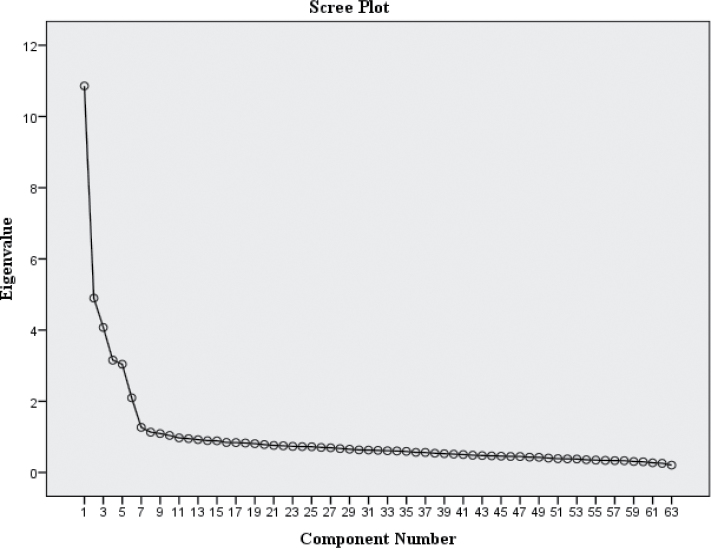
We aimed to characterize multiple psychotic experiences, each assessed on a spectrum of severity (ie, quantitatively), in a general population sample of adolescents. Over five thousand 16-year-old twins and their parents completed the newly devised Specific Psychotic Experiences Questionnaire (SPEQ); a subsample repeated it approximately 9 months later. SPEQ was investigated in terms of factor structure, intersubscale correlations, frequency of endorsement and reported distress, reliability and validity, associations with traits of anxiety, depression and personality, and sex differences. Principal component analysis revealed a 6-component solution: paranoia, hallucinations, cognitive disorganization, grandiosity, anhedonia, and parent-rated negative symptoms. These components formed the basis of 6 subscales. Correlations between different experiences were low to moderate. All SPEQ subscales, except Grandiosity, correlated significantly with traits of anxiety, depression, and neuroticism. Scales showed good internal consistency, test-retest reliability, and convergent validity. Girls endorsed more paranoia, hallucinations, and cognitive disorganization; boys reported more grandiosity and anhedonia and had more parent-rated negative symptoms. As in adults at high risk for psychosis and with psychotic disorders, psychotic experiences in adolescents are characterized by multiple components. The study of psychotic experiences as distinct dimensional quantitative traits is likely to prove an important strategy for future research, and the SPEQ is a self- and parent-report questionnaire battery that embodies this approach.
Overview
The claims and statistics of this paper haven’t been checked yet.
Free: it reads the open-access text and checks the first 5 claims that cite a source we can check. Create a free account to check every claim.
Integrity signals
Registry
Cites
Statistics
Figures
Verification
Claims the paper makes
The claims and statistics of this paper haven’t been checked yet.
Free: it reads the open-access text and checks the first 5 claims that cite a source we can check. Create a free account to check every claim.
Claims other papers make about this one
Each is checked against this paper’s own text: does it say what the citing paper says it does?
The source backs part of the claim, not all of it — or backs it for a different population, condition or comparison.
In the citing paper
“The empirical research indicates that non-affective psychotic diagnoses such as schizophrenia actually contain multiple independent experiences, including paranoia, grandiosity, and hallucinations”
From The role of sleep dysfunction in the occurrence of delusions and hallucinations: A systematic review (2015) · cites this paper as Ronald et al., 2014
Experimental — accuracy not yet measured
Self-check
Percentages, sums and reported differences re-computed from the paper’s own numbers.
The self-check needs the paper’s full text.
Citations
Cites
Genetics of Food Intake Self-Regulation in Childhood: Literature Review and Research Opportunities
Faith, M. S., Carnell, S., & Kral, T. V. E. (2013) · Human Heredity · doi:10.1159/000353879 · Cited by 7,601
Scale for the Assessment of Negative Symptoms (SANS)*
(1989) · British Journal of Psychiatry · doi:10.1192/s0007125000291502 · Cited by 2,701
Scale for the Assessment of Negative Symptoms
Andreasen, N. C. (2014) · PsycTESTS Dataset · doi:10.1037/t12696-000 · Cited by 1,866
(1995) · International Journal of Methods in Psychiatric Research · Cited by 1,847
The Scale for the Assessment of Negative Symptoms (SANS): Conceptual and Theoretical Foundations
Andreasen, N. C. (1989) · British Journal of Psychiatry · doi:10.1192/s0007125000291496 · Cited by 1,530
The Psychosis High-Risk State: A Comprehensive State-of-the-Art Review
Fusar-Poli, P., Borgwardt, S., Bechdolf, A., Addington, J., Riecher-Rössler, A., Schultze-Lutter, F., Keshavan, M., Wood, S., Ruhrmann, S., Seidman, L. J., et al. (2013) · JAMA Psychiatry · doi:10.1001/jamapsychiatry.2013.269 · Cited by 1,483
Self-citationLinscott, R. J., & van Os, J. (2013) · Psychological Medicine · doi:10.1017/s0033291712001626 · Cited by 1,181
Poulton, R., Caspi, A., Moffitt, T. E., Cannon, M., Murray, R., & Harrington, H. (2000) · Archives of General Psychiatry · doi:10.1001/archpsyc.57.11.1053 · Cited by 1,141
Anticipatory and consummatory components of the experience of pleasure: A scale development study
Gard, D. E., Gard, M. G., Kring, A. M., & John, O. P. (2006) · Journal of Research in Personality · doi:10.1016/j.jrp.2005.11.001 · Cited by 1,015
Psychological investigation of the structure of paranoia in a non-clinical population
Freeman, D., Garety, P. A., Bebbington, P. E., Smith, B., Rollinson, R., Fowler, D., Kuipers, E., Ray, K., & Dunn, G. (2005) · British Journal of Psychiatry · doi:10.1192/bjp.186.5.427 · Cited by 786 · cited 2×
“Paranoia was assessed with 15 items from the Paranoia Checklist.(21) Hallucinations were assessed with 9 items from the Cardiff Anomalous Perceptions Scale.”
MethodSelf-citationThe clinical assessment interview for negative symptoms (CAINS): Final development and validation
Kring, A. M., Gur, R. E., Blanchard, J. J., Horan, W. P., & Reise, S. P. (2013) · American Journal of Psychiatry · doi:10.1176/appi.ajp.2012.12010109 · Cited by 726
Kelleher, I., Connor, D., Clarke, M. C., Devlin, N., Harley, M., & Cannon, M. (2012) · Psychological Medicine · doi:10.1017/s0033291711002960 · Cited by 686 · cited 1×
“5%).(18) Across paranoia, 1%–23% reported having paranoid thoughts as weekly or more often, which was a slightly lower range than that reported by adults.”
ResultThe Structure of Negative Symptoms Within Schizophrenia: Implications for Assessment
Blanchard, J. J., & Cohen, A. S. (2006) · Schizophrenia Bulletin · doi:10.1093/schbul/sbj013 · Cited by 649
Childhood Anxiety Sensitivity Index
Silverman, W. K., Fleisig, W., Rabian, B., & Peterson, R. A. (1991) · Journal of Clinical Child Psychology · doi:10.1207/s15374424jccp2002_7 · Cited by 634
Measuring Delusional Ideation: The 21-Item Peters et al. Delusions Inventory (PDI)
Peters, E., Joseph, S., Day, S., & Garety, P. (2004) · Schizophrenia Bulletin · doi:10.1093/oxfordjournals.schbul.a007116 · Cited by 607
Fusar-Poli, P., Nelson, B., Valmaggia, L., Yung, A. R., & McGuire, P. K. (2014) · Schizophrenia Bulletin · doi:10.1093/schbul/sbs136 · Cited by 589
Self-citationPsychotic-like experiences in the general population: characterizing a high-risk group for psychosis
Kelleher, I., & Cannon, M. (2011) · Psychological Medicine · doi:10.1017/s0033291710001005 · Cited by 569
Dominguez, M. D. G., Wichers, M., Lieb, R., Wittchen, H.-U., & van Os, J. (2011) · Schizophrenia Bulletin · doi:10.1093/schbul/sbp022 · Cited by 468
Yung, A. R., Nelson, B., Baker, K., Buckby, J. A., Baksheev, G., & Cosgrave, E. M. (2009) · Australian & New Zealand Journal of Psychiatry · doi:10.1080/00048670802607188 · Cited by 371
Kelleher, I., Harley, M., Murtagh, A., & Cannon, M. (2011) · Schizophrenia Bulletin · doi:10.1093/schbul/sbp057 · Cited by 352
Short scales for measuring schizotypy
Mason, O., Linney, Y., & Claridge, G. (2005) · Schizophrenia Research · doi:10.1016/j.schres.2005.06.020 · Cited by 351
Bell, V., Halligan, P. W., & Ellis, H. D. (2006) · Schizophrenia Bulletin · doi:10.1093/schbul/sbj014 · Cited by 288
Varghese, D., Scott, J., Welham, J., Bor, W., Najman, J., O'Callaghan, M., Williams, G., & McGrath, J. (2011) · Schizophrenia Bulletin · doi:10.1093/schbul/sbp083 · Cited by 273
Armando, M., Nelson, B., Yung, A. R., Ross, M., Birchwood, M., Girardi, P., & Nastro, P. F. (2010) · Schizophrenia Research · doi:10.1016/j.schres.2010.03.001 · Cited by 271
Neuroticism and low self-esteem as risk factors for psychosis
Krabbendam, L., Janssen, I., Bak, M., Bijl, R. V., de Graaf, R., & van Os, J. (2002) · Social Psychiatry and Psychiatric Epidemiology · doi:10.1007/s127-002-8207-y · Cited by 259
Haworth, C. M. A., Davis, O. S. P., & Plomin, R. (2013) · Twin Research and Human Genetics · doi:10.1017/thg.2012.91 · Cited by 259
Self-citationFreeman, D., Stahl, D., McManus, S., Meltzer, H., Brugha, T., Wiles, N., & Bebbington, P. (2012) · Social Psychiatry and Psychiatric Epidemiology · doi:10.1007/s00127-011-0433-1 · Cited by 246
Self-citationEtiological and Clinical Features of Childhood Psychotic Symptoms: Results From a Birth Cohort
Polanczyk, G., Moffitt, T. E., Arseneault, L., Cannon, M., Ambler, A., Keefe, R. S. E., Houts, R., Odgers, C. L., & Caspi, A. (2010) · Archives of General Psychiatry · doi:10.1001/archgenpsychiatry.2010.14 · Cited by 246
Blanchard, J. J., Kring, A. M., Horan, W. P., & Gur, R. (2011) · Schizophrenia Bulletin · doi:10.1093/schbul/sbq104 · Cited by 239
Psychometric Properties of an Abbreviated Instrument of the Five-Factor Model
Mullins-Sweatt, S. N., Jamerson, J. E., Samuel, D. B., Olson, D. R., & Widiger, T. A. (2006) · Assessment · doi:10.1177/1073191106286748 · Cited by 235
Lataster, T., van Os, J., Drukker, M., Henquet, C., Feron, F., Gunther, N., & Myin-Germeys, I. (2006) · Social Psychiatry and Psychiatric Epidemiology · doi:10.1007/s00127-006-0060-4 · Cited by 212
The Structure of The Extended Psychosis Phenotype in Early Adolescence--A Cross-sample Replication
Wigman, J. T. W., Vollebergh, W. A. M., Raaijmakers, Q. A. W., Iedema, J., van Dorsselaer, S., Ormel, J., Verhulst, F. C., & van Os, J. (2011) · Schizophrenia Bulletin · doi:10.1093/schbul/sbp154 · Cited by 200
Fusar-Poli, P., Byrne, M., Badger, S., Valmaggia, L. R., & McGuire, P. K. (2013) · European Psychiatry · doi:10.1016/j.eurpsy.2012.08.002 · Cited by 197
Self-citationLaursen, T. M., & Munk-Olsen, T. (2007) · The Journal of Clinical Psychiatry · doi:10.4088/jcp.v68n1106 · Cited by 195 · cited 1×
“Psychotic disorders such as schizophrenia and bipolar disorder typically begin in early adulthood sometime after the age of 18 years.(1) This makes studying psychotic experiences in adolescence, just prior to the most common age of onset of clinical disorder, especially interesting.”
BackgroundDemjaha, A., Valmaggia, L., Stahl, D., Byrne, M., & McGuire, P. (2012) · Schizophrenia Bulletin · doi:10.1093/schbul/sbq088 · Cited by 194
Self-citationDominguez, M.-D.-G., Saka, M. C., Lieb, R., Wittchen, H.-U., & van Os, J. (2010) · American Journal of Psychiatry · doi:10.1176/appi.ajp.2010.09060883 · Cited by 188
Social anhedonia and schizotypy in a community sample: the Maryland longitudinal study of schizotypy
Blanchard, J. J., Collins, L. M., Aghevli, M., Leung, W. W., & Cohen, A. S. (2011) · Schizophrenia Bulletin · doi:10.1093/schbul/sbp107 · Cited by 187
Self‐report psychiatric symptoms in twins and their nontwin relatives: Are twins different?
Kendler, K. S., Martin, N. G., Heath, A. C., & Eaves, L. J. (1995) · American Journal of Medical Genetics · doi:10.1002/ajmg.1320600622 · Cited by 141
Cannabis, COMT and psychotic experiences
Zammit, S., Owen, M. J., Evans, J., Heron, J., & Lewis, G. (2011) · British Journal of Psychiatry · doi:10.1192/bjp.bp.111.091421 · Cited by 117
The psychosis high-risk state: A comprehensive state-of-the-art review
Fusar‐Poli, P., Borgwardt, S., Bechdolf, A., Addington, J., Riecher‐Rössler, A., Schultze-Lutter, F., Keshavan, M., Wood, S., Ruhrmann, S., Seidman, L. J., et al. (2013) · Bern Open Repository and Information System (University of Bern) · Cited by 113
Self-citationPsychotic-like experiences and depressive symptoms in a community sample of adolescents
Barragan, M., Laurens, K. R., Navarro, J. B., & Obiols, J. E. (2011) · European Psychiatry · doi:10.1016/j.eurpsy.2010.12.007 · Cited by 104
Sex differences in psychosis: normal or pathological?
SPAUWEN, J., Krabbendam, L., Lieb, R., Wïttchen, H., & van Os, J. (2003) · Schizophrenia Research · doi:10.1016/s0920-9964(03)00063-x · Cited by 104
Wigman, J. T. W., van Os, J., Thiery, E., Derom, C., Collip, D., Jacobs, N., & Wichers, M. (2013) · PLoS ONE · doi:10.1371/journal.pone.0059559 · Cited by 100
Trajectories of change in self-reported psychotic-like experiences in childhood and adolescence
Thapar, A., Heron, J. E., Jones, R. B., Owen, M. J., Lewis, G., & Zammit, S. (2012) · Schizophrenia Research · doi:10.1016/j.schres.2012.06.024 · Cited by 69
Psychotic-like experiences are associated with violent behavior in adolescents
Kinoshita, Y., Shimodera, S., Nishida, A., Kinoshita, K., Watanabe, N., Oshima, N., Akechi, T., Sasaki, T., Inoue, S., Furukawa, T. A., et al. (2010) · Schizophrenia Research · doi:10.1016/j.schres.2010.08.028 · Cited by 56
Lin, A. P., Wigman, J. T. W., Nelson, B., Wood, S. J., Vollebergh, W., van Os, J., & Yung, A. R. (2012) · Comprehensive Psychiatry · doi:10.1016/j.comppsych.2012.06.011 · Cited by 48
Wigman, J. T. W., Collip, D., Wichers, M., Delespaul, P., Derom, C., Thiery, E., Vollebergh, W. A. M., Lataster, T., Jacobs, N., Myin-Germeys, I., et al. (2013) · PLoS ONE · doi:10.1371/journal.pone.0054653 · Cited by 46
Phenotypic and genetic differentiation of anxiety-related behaviors in middle childhood
Hallett, V., Ronald, A., Rijsdijk, F., & Eley, T. C. (2009) · Depression and Anxiety · doi:10.1002/da.20539 · Cited by 38
Self-citationOshima, N., Nishida, A., Fukushima, M., Shimodera, S., Kasai, K., Okazaki, Y., & Sasaki, T. (2010) · Early Intervention in Psychiatry · doi:10.1111/j.1751-7893.2010.00186.x · Cited by 30
Cognition Checklist for Mania—Revised
Beck, A. T., Colis, M. J., Steer, R. A., Madrak, L., & Goldberg, J. F. (2006) · Psychiatry Research · doi:10.1016/j.psychres.2006.01.016 · Cited by 24
Cited by
Freeman, D., Sheaves, B., Goodwin, G. M., Yu, L.-M., Nickless, A., Harrison, P. J., Emsley, R., Luik, A. I., Foster, R. G., Wadekar, V., et al. (2017) · The Lancet Psychiatry · doi:10.1016/s2215-0366(17)30328-0 · Cited by 652
Self-citationRosenfield, S., & Mouzon, D. (2013) · Handbooks of Sociology and Social Research · doi:10.1007/978-94-007-4276-5_14 · Cited by 494
Advances in understanding and treating persecutory delusions: a review
Freeman, D., & Garety, P. (2014) · Social Psychiatry and Psychiatric Epidemiology · doi:10.1007/s00127-014-0928-7 · Cited by 348
“The empirical research indicates that within these diagnoses are multiple independent experiences, such as paranoia, hallucinations, grandiosity, thought disorder, and anhedonia [13, 20–22].”
BackgroundSelf-citationGenetic Relationships Between Schizophrenia, Bipolar Disorder, and Schizoaffective Disorder
Cardno, A. G., & Owen, M. J. (2014) · Schizophrenia Bulletin · doi:10.1093/schbul/sbu016 · Cited by 286
Self-citationThe role of sleep dysfunction in the occurrence of delusions and hallucinations: A systematic review
Reeve, S., Sheaves, B., & Freeman, D. (2015) · Clinical Psychology Review · doi:10.1016/j.cpr.2015.09.001 · Cited by 273
“…90 (Revised) (Derogatis, 1994); SLEEP-50 = (Spoormaker, Verbeek, van den Bout, & Klip, 2005); SPEQ = Specific Psychotic Experiences Questionnaire (Ronald et al., 2014); SSPS = State Social Paranoia Scale (Freeman et al., 2007); SSS = Stanford Sleepiness Scale (Hoddes, Zarcone, Smythe, Phillips,…”
BackgroundInfluentialSelf-citation
Metadata
- Authors
- Ronald, A., Sieradzka, D., Cardno, A. G., Haworth, C. M. A., McGuire, P., & Freeman, D.
- Affiliations
- University of London (GB)
- University of Leeds (GB)
- King's College London (GB)
- University of Oxford (GB)
- Corresponding author
- Ronald, Angelica
- Venue
- Schizophrenia Bulletin
- Publisher
- Oxford University Press (OUP)
- Published
- 2013-09-23
- Volume
- 40
- Issue
- 4
- Pages
- 868-877
- ISSN
- 0586-7614 (ISSN-L)
- 1745-1701
- PMC
- PMC4059437
- OpenAlex
- W2108313446
- Cited by
- 211
- References
- 51
- Citations by year
- 2026: 11 · 2025: 10 · 2024: 12 · 2023: 11 · 2022: 15 · 2021: 23 · 2020: 10 · 2019: 17 · 2018: 17 · 2017: 51 · 2016: 8 · 2015: 14 · 2014: 9
- FWCI
- 7.32
- Type
- journal article
- Language
- en
- Open access
- hybrid
- doi.org
- Licence
- cc-by
- Locations
- Schizophrenia Bulletin (publishedVersion, cc-by)
- Europe PMC (PubMed Central) (publishedVersion, cc-by)
- PubMed Central (publishedVersion, cc-by)
- PubMed (publishedVersion)
- BIROn (Birkbeck, University of London) (acceptedVersion)
- White Rose Research Online (University of Leeds, The University of Sheffield, University of York) (acceptedVersion)
- Warwick Research Archive Portal (University of Warwick) (submittedVersion)
- Research Portal (King's College London) (submittedVersion, other-oa)
- Bristol Research (University of Bristol) (submittedVersion)
- Explore Bristol Research (submittedVersion)
- Funders
- Medical Research Council (G0901245, G0902308, G0500079, G1100559)
- Economic and Social Research Council (1099627)
- Topics
- Health Sciences › Medicine › Psychiatry and Mental health › Schizophrenia research and treatment
- Social Sciences › Arts and Humanities › Philosophy › Mental Health and Psychiatry
- Life Sciences › Neuroscience › Cognitive Neuroscience › Hallucinations in medical conditions
- Keywords
- psychotic experiences, adolescents
- MeSH terms
- Adolescent, Anxiety, Delusions, Depression, Female, United Kingdom, Hallucinations, Humans, Male, Paranoid Disorders, Personality, Psychotic Disorders, Severity of Illness Index, Sex Distribution, Principal Component Analysis, Anhedonia
About these checks
Registry, retraction, Cites and statistics results are computed, not judged, with one exception: a printed reference that no index lists is read once by a model before it counts as a citation error. Claims are extracted by a model and kept only when their quote appears verbatim in the text; each cited source is then checked, with a model’s help, for whether it says what the claim relies on. Those verdicts can be wrong — read the claim’s quote and the cited source before relying on one.
Statistics and arithmetic are recomputed, not judged.
Confidence bands are shown only for fields calibrated on our annotated test set. None is calibrated yet, so no band is shown.
What counts as a claim ›How we measure confidence ›How we check this ›
Are you an author, or do you see a problem with this page? Request a review
Data sources
Bibliographic data: Semantic Scholar, OpenAlex, Crossref.
Contains information from the Semantic Scholar Academic Graph Datasets, made available under the ODC Attribution License (ODC-BY 1.0).
Semantic Scholar’s data is described in: Kinney, R., et al. (2023). The Semantic Scholar Open Data Platform. arXiv:2301.10140.
