

Linking Light Exposure and Subsequent Sleep: A Field Polysomnography Study in Humans
Open accessThe DOI matches its Crossref record; 74 of the 78 references it cites were found in a registry or an index.
Abstract
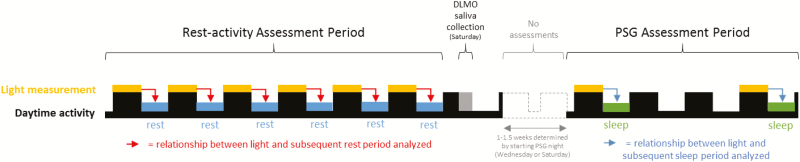
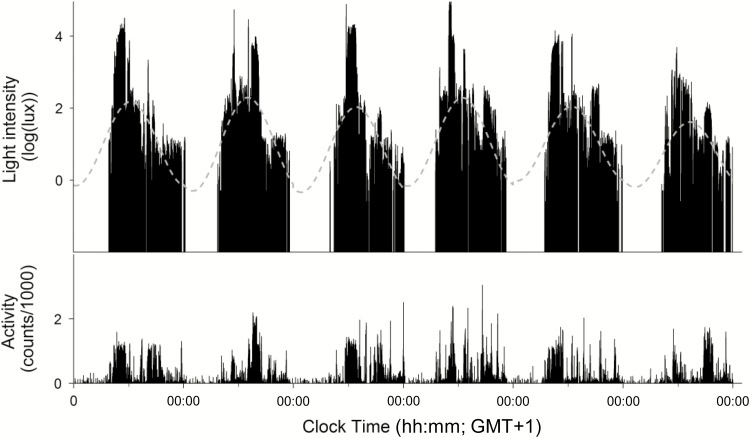
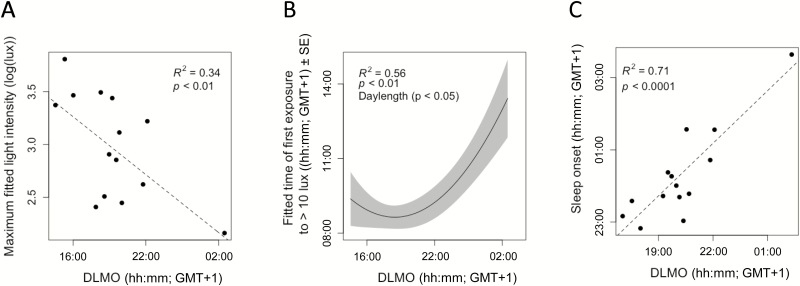
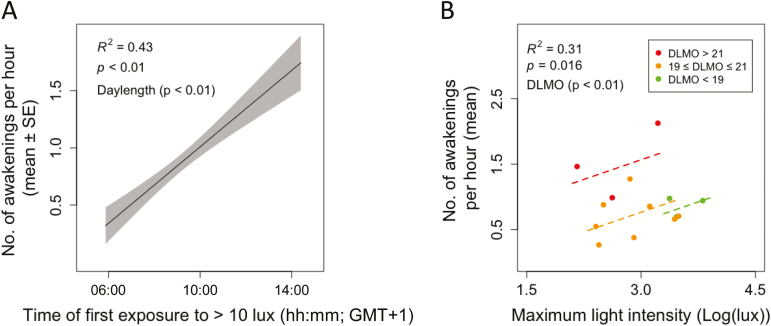
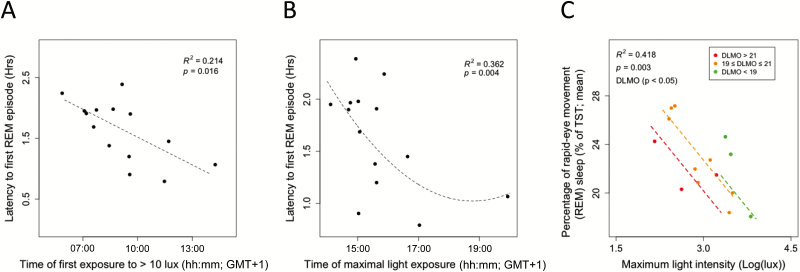
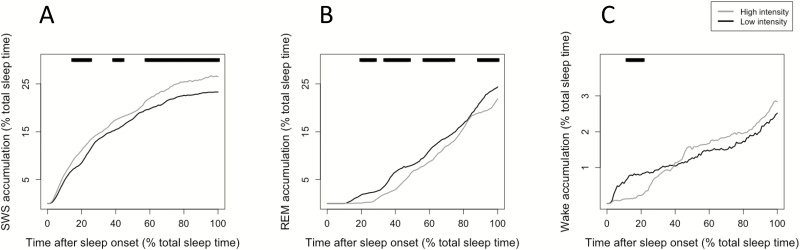
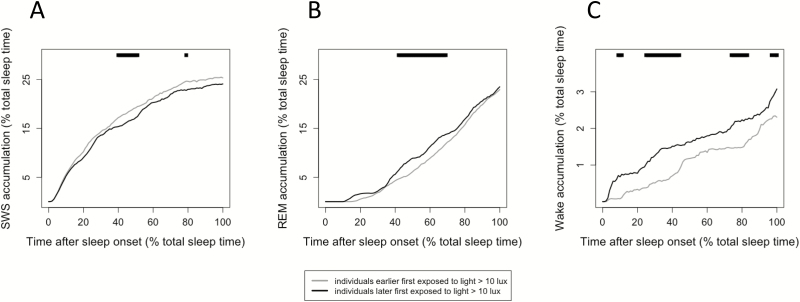
Study objectives: To determine the effect of light exposure on subsequent sleep characteristics under ambulatory field conditions. Methods: Twenty healthy participants were fitted with ambulatory polysomnography (PSG) and wrist-actigraphs to assess light exposure, rest-activity, sleep quality, timing, and architecture. Laboratory salivary dim-light melatonin onset was analyzed to determine endogenous circadian phase. Results: Later circadian clock phase was associated with lower intensity (R2 = 0.34, χ2(1) = 7.19, p < .01), later light exposure (quadratic, controlling for daylength, R2 = 0.47, χ2(3) = 32.38, p < .0001), and to later sleep timing (R2 = 0.71, χ2(1) = 20.39, p < .0001). Those with later first exposure to more than 10 lux of light had more awakenings during subsequent sleep (controlled for daylength, R2 = 0.36, χ2(2) = 8.66, p < .05). Those with later light exposure subsequently had a shorter latency to first rapid eye movement (REM) sleep episode (R2 = 0.21, χ2(1) = 5.77, p < .05). Those with less light exposure subsequently had a higher percentage of REM sleep (R2 = 0.43, χ2(2) = 13.90, p < .001) in a clock phase modulated manner. Slow-wave sleep accumulation was observed to be larger after preceding exposure to high maximal intensity and early first light exposure (p < .05). Conclusions: The quality and architecture of sleep is associated with preceding light exposure. We propose that light exposure timing and intensity do not only modulate circadian-driven aspects of sleep but also homeostatic sleep pressure. These novel ambulatory PSG findings are the first to highlight the direct relationship between light and subsequent sleep, combining knowledge of homeostatic and circadian regulation of sleep by light. Upon confirmation by interventional studies, this hypothesis could change current understanding of sleep regulation and its relationship to prior light exposure. Clinical trial details: This study was not a clinical trial. The study was ethically approved and nationally registered (NL48468.042.14).
Overview
The claims and statistics of this paper haven’t been checked yet.
Free: it reads the open-access text and checks the first 5 claims that cite a source we can check. Create a free account to check every claim.
Integrity signals
Registry
Cites
Statistics
Figures
Verification
Claims the paper makes
The claims and statistics of this paper haven’t been checked yet.
Free: it reads the open-access text and checks the first 5 claims that cite a source we can check. Create a free account to check every claim.
Claims other papers make about this one
Each is checked against this paper’s own text: does it say what the citing paper says it does?
The source backs part of the claim, not all of it — or backs it for a different population, condition or comparison.
In the citing paper
“Several studies report that daytime exposure to white light enriched in short-wavelength content was associated with increased evening fatigue [91], and sleep quality [16, 39, 91], decreased sleep-onset latency [39], and increased slow-wave sleep accumulation [92], which is related to the dissipation of the homeostatic sleep pressure [1, 14, 34].”
From Effects of light on human circadian rhythms, sleep and mood (2019) · cites this paper as [92]
Experimental — accuracy not yet measuredThe cited source says what the claim attributes to it.
In the citing paper
“In this context, Wams and colleagues [92] report that participants with later exposure to light >10 lx had more nocturnal awakenings and less slow-wave sleep.”
From Effects of light on human circadian rhythms, sleep and mood (2019) · cites this paper as [92]
Self-check
Percentages, sums and reported differences re-computed from the paper’s own numbers.
The self-check needs the paper’s full text.
Citations
Cites
Fitting Linear Mixed-Effects Models Using lme4
Bates, D., Mächler, M., Bolker, B., & Walker, S. (2015) · Journal of Statistical Software · doi:10.18637/jss.v067.i01 · Cited by 86,835
The Pittsburgh Sleep Quality Index: a new instrument for psychiatric practice and research
Buysse, D. J., Reynolds, C. F., Monk, T. H., Berman, S. R., & Kupfer, D. J. (1989) · Psychiatry Research · doi:10.1016/0165-1781(89)90047-4 · Cited by 35,234
Simultaneous Inference in General Parametric Models
Hothorn, T., Bretz, F., & Westfall, P. (2008) · Biometrical Journal · doi:10.1002/bimj.200810425 · Cited by 13,847 · cited 1×
“The resulting p-values were corrected for multiplicity using the single-step method.(61) Throughout the results section, all results are written as +quadratic term if the quadratic of the independent variable (either light parameter or DLMO) significantly contributed to the model; +daylength if daylength significantly…”
MethodPhototransduction by retinal ganglion cells that set the circadian clock
Berson, D. M., Dunn, F. A., & Takao, M. (2002) · Science · doi:10.1126/science.1067262 · Cited by 3,629 · cited 1×
“In mammals, light information is projected to the circadian pacemaker or synchronizer (located in the hypothalamic suprachiasmatic nucleus, SCN(1)) via intrinsically photosensitive retinal ganglion cells (ipRGCs).(2) Light entrainment is modulated, not only by the duration of light exposure, but also by its intensity…”
BackgroundLife between Clocks: Daily Temporal Patterns of Human Chronotypes
Roenneberg, T., Wirz-Justice, A., & Merrow, M. (2003) · Journal of Biological Rhythms · doi:10.1177/0748730402239679 · Cited by 2,662
Fitting Linear Mixed-Effects Models Using lme4
Bates, D. M., Maechler, M., Bolker, B. M., & Walker, S. (2014) · arXiv (Cornell University) · doi:10.3929/ethz-b-000105397 · Cited by 2,541
A psychometric evaluation of the Beck Depression Inventory–II.
Dozois, D. J. A., Dobson, K. S., & Ahnberg, J. L. (1998) · Psychological Assessment · doi:10.1037/1040-3590.10.2.83 · Cited by 1,517
Exogenous and Endogenous Components in Circadian Rhythms
Aschoff, J. (1960) · Cold Spring Harbor Symposia on Quantitative Biology · doi:10.1101/sqb.1960.025.01.004 · Cited by 1,479 · cited 1×
“Moreover, according to Aschoff’s rule, diurnal animals will lengthen intrinsic period with lower light intensity.(69,70) Although we only found that lower maximal light intensities were associated with subsequent longer rest durations, studies with high intensity light interventions have previously focused on the timi…”
BackgroundChang, A.-M., Aeschbach, D., Duffy, J. F., & Czeisler, C. A. (2015) · Proceedings of the National Academy of Sciences · doi:10.1073/pnas.1418490112 · Cited by 1,430
Timing of human sleep: recovery process gated by a circadian pacemaker
Daan, S., Beersma, D. G., & Borbely, A. A. (1984) · American Journal of Physiology-Regulatory, Integrative and Comparative Physiology · doi:10.1152/ajpregu.1984.246.2.r161 · Cited by 1,419 · cited 1×
“These relationships are most probably due to the influence of light on the entrainment of the circadian clock, which drives process C in sleep regulation, which in turn will shift the timing of sleep.(6,7) Because humans have on average an intrinsic circadian period longer than 24 hours (24.”
BackgroundSelf-citation
Research works printed but not linked: 4
- Daan S, Hut RA Circadian Clock, Program, Oscillator, Pacemaker, Synchroniser? In: Honma K, Honma S, eds. Circadian Clocks. Hokkaido University Press; 2016: 21– 32.
- Dijk D, Edgar DM Circadian and homeostatic control of wakefulness and sleep. In: Turek F, Zee P, eds. Regulation of Sleep and Wakefulness. New York: Marcel Dekker, Inc; 1999: 111– 147.
- Cleveland WS, Grosse E, Shyu WM Local regression models. In: Chambers JM, Hastie TJ, eds. Statistical Models in S. Wadsworth & Brooks/Cole. California, USA: Pacific Grove; 1992.
- de la Iglesia HO, Fernández-Duque E, Golombek DA Access to electric light is associated with shorter sleep duration in a traditionally hunter-gatherer community. J Biol Rhythms. 2015; 30(4): 342– 350. 26092820 PMC5320422 · DOI · Paper page
Cited by
Effects of light on human circadian rhythms, sleep and mood
Blume, C., Garbazza, C., & Spitschan, M. (2019) · Somnologie · doi:10.1007/s11818-019-00215-x · Cited by 695
“In this context, Wams and colleagues [92] report that participants with later exposure to light >10 lx had more nocturnalawakeningsand less slow-wave sleep.”
BackgroundThe role of insufficient sleep and circadian misalignment in obesity
Chaput, J.-P., McHill, A. W., Cox, R. C., Broussard, J. L., Dutil, C., da Costa, B. G. G., Sampasa-Kanyinga, H., & Wright, K. P. (2023) · Nature Reviews Endocrinology · doi:10.1038/s41574-022-00747-7 · Cited by 649
The relevance of daylight for humans
Wirz-Justice, A., Skene, D. J., & Münch, M. (2021) · Biochemical Pharmacology · doi:10.1016/j.bcp.2020.114304 · Cited by 204
A review of the environmental parameters necessary for an optimal sleep environment
Caddick, Z. A., Gregory, K., Arsintescu, L., & Flynn-Evans, E. E. (2018) · Building and Environment · doi:10.1016/j.buildenv.2018.01.020 · Cited by 198
“Later first exposure to morning light is associated with increased waking, shorter REM latency, and reduced self-reported sleep quality compared to earlier exposure to morning light (category 2A) [116].”
BackgroundBurns, A. C., Saxena, R., Vetter, C., Phillips, A. J. K., Lane, J. M., & Cain, S. W. (2021) · Journal of Affective Disorders · doi:10.1016/j.jad.2021.08.056 · Cited by 193
The Role of Daylight for Humans: Gaps in Current Knowledge
Münch, M., Wirz-Justice, A., Brown, S. A., Kantermann, T., Martiny, K., Stefani, O., Vetter, C., Wright, K. P., Wulff, K., & Skene, D. J. (2020) · Clocks & Sleep · doi:10.3390/clockssleep2010008 · Cited by 158
“Does daylight and/or mixed daylight/electric light conditions during the day mediate better sleep quality at night, and if yes, how? There is some evidence that indoor and/or outdoor bright light exposure during the day leads to longer sleep duration and increases sleep quality as was shown in laboratory and field stu…”
BackgroundCircadian rhythm phase shifts caused by timed exercise vary with chronotype
Thomas, J. M., Kern, P. A., Bush, H., McQuerry, K., Black, W. S., Clasey, J. L., & Pendergast, J. S. (2020) · JCI Insight · doi:10.1172/jci.insight.134270 · Cited by 174
“A conventional DLMO protocol was conducted, with sample collection beginning 8 hours before habitual bedtime (67, 68).”
MethodThe role of the circadian system in the etiology and pathophysiology of ADHD: time to redefine ADHD?
Bijlenga, D., Vollebregt, M. A., Kooij, J. J. S., & Arns, M. (2019) · ADHD Attention Deficit and Hyperactivity Disorders · doi:10.1007/s12402-018-0271-z · Cited by 137
Sleep and mental health in athletes during COVID-19 lockdown
Facer-Childs, E. R., Hoffman, D., Tran, J. N., Drummond, S. P. A., & Rajaratnam, S. M. W. (2021) · Sleep · doi:10.1093/sleep/zsaa261 · Cited by 123
Light modulation of human clocks, wake, and sleep
Prayag, A. S., Münch, M., Aeschbach, D., Chellappa, S. L., & Gronfier, C. (2019) · Clocks & Sleep · doi:10.3390/clockssleep1010017 · Cited by 122
Light, lighting and human health
Boyce, P. (2022) · Lighting Research & Technology · doi:10.1177/14771535211010267 · Cited by 112
Impacts of artificial light at night on sleep: A review and prospectus
Aulsebrook, A. E., Jones, T. M., Mulder, R. A., & Lesku, J. A. (2018) · Journal of Experimental Zoology Part A Ecological and Integrative Physiology · doi:10.1002/jez.2189 · Cited by 130
Bright daytime light enhances circadian amplitude in a diurnal mammal
Bano-Otalora, B., Martial, F., Harding, C., Bechtold, D. A., Allen, A. E., Brown, T. M., Belle, M. D. C., & Lucas, R. J. (2021) · Proceedings of the National Academy of Sciences · doi:10.1073/pnas.2100094118 · Cited by 94
White and Amber Light at Night Disrupt Sleep Physiology in Birds
Aulsebrook, A. E., Connelly, F., Johnsson, R. D., Jones, T. M., Mulder, R. A., Hall, M. L., Vyssotski, A. L., & Lesku, J. A. (2020) · Current Biology · doi:10.1016/j.cub.2020.06.085 · Cited by 101
te Kulve, M., Schlangen, L. J. M., & van Marken Lichtenbelt, W. D. (2019) · Scientific Reports · doi:10.1038/s41598-019-52352-w · Cited by 71
Circadian Rhythms and Melatonin Metabolism in Patients With Disorders of Gut-Brain Interactions
Fowler, S., Hoedt, E. C., Talley, N. J., Keely, S., & Burns, G. L. (2022) · Frontiers in Neuroscience · doi:10.3389/fnins.2022.825246 · Cited by 66
“Adapted from Wang et al. (2014) International Journal of Molecular Sciences.”
MethodChronotype and environmental light exposure in a student population
Porcheret, K., Wald, L., Fritschi, L., Gerkema, M., Gordijn, M., Merrrow, M., Rajaratnam, S. M. W., Rock, D., Sletten, T. L., Warman, G., et al. (2018) · Chronobiology International · doi:10.1080/07420528.2018.1482556 · Cited by 58
“In 20 healthy young adults (mean age of 23), later light onset and offset has been associated with later melatonin onset as assessed using dim light melatonin onset (Wams et al. 2017).”
BackgroundSelf-citationde Zeeuw, J., Papakonstantinou, A., Nowozin, C., Stotz, S., Zaleska, M., Hädel, S., Bes, F., Münch, M. Y., & Kunz, D. (2019) · Journal of Biological Rhythms · doi:10.1177/0748730419847845 · Cited by 61
“…nighttime measurements of light-dependent responses are most likely different from those of daytime responses, as was shown, for example, for objective alertness in the wake electroencephalogram (EEG; Rahman et al., 2014) and for the effects of daytime light exposure on sleep (Wams et al., 2017).”
BackgroundTowards a framework for light-dosimetry studies: Methodological considerations
Hartmeyer, S. L., Webler, F. S., & Andersen, M. (2022) · Lighting Research & Technology · doi:10.1177/14771535221103258 · Cited by 64
Spitschan, M., Smolders, K., Vandendriessche, B., Bent, B., Bakker, J. P., Rodriguez-Chavez, I. R., & Vetter, C. (2022) · DIGITAL HEALTH · doi:10.1177/20552076221144858 · Cited by 54
White Light During Daytime Does Not Improve Alertness in Well-rested Individuals
Lok, R., Woelders, T., Gordijn, M. C. M., Hut, R. A., & Beersma, D. G. M. (2018) · Journal of Biological Rhythms · doi:10.1177/0748730418796036 · Cited by 59
“, 1993), and because positive effects of daytime light exposure on other NIF responses (such as sleep, health, mood, and mental disorders) have been reported (Dijk et al., 1991; Figueiro et al., 2017; Graw et al., 1999; Wams et al., 2017).”
BackgroundSelf-citationPeeters, S., Smolders, K. C. H. J., Vogels, I. M. L. C., & de Kort, Y. A. W. (2021) · Journal of Environmental Psychology · doi:10.1016/j.jenvp.2021.101583 · Cited by 58
Šmotek, M., Fárková, E., Manková, D., & Kopřivová, J. (2020) · Sleep Health · doi:10.1016/j.sleh.2019.11.007 · Cited by 53
Seasonality of human sleep: Polysomnographic data of a neuropsychiatric sleep clinic
Seidler, A., Weihrich, K. S., Bes, F., de Zeeuw, J., & Kunz, D. (2023) · Frontiers in Neuroscience · doi:10.3389/fnins.2023.1105233 · Cited by 43
Gou, Z., Gou, B., Liao, W., Bao, Y., & Deng, Y. (2023) · Building and Environment · doi:10.1016/j.buildenv.2023.110616 · Cited by 51
Light, Sleep and Performance in Diurnal Birds
Aulsebrook, A. E., Johnsson, R. D., & Lesku, J. A. (2021) · Clocks & Sleep · doi:10.3390/clockssleep3010008 · Cited by 50
Höhn, C., Hahn, M. A., Gruber, G., Pletzer, B. A., Cajochen, C., & Hoedlmoser, K. (2024) · Brain Communications · doi:10.1093/braincomms/fcae173 · Cited by 63
Cajochen, C., Stefani, O., Schöllhorn, I., Lang, D., & Chellappa, S. L. (2022) · Lighting Research & Technology · doi:10.1177/14771535221078765 · Cited by 47
Evidence That Homeostatic Sleep Regulation Depends on Ambient Lighting Conditions during Wakefulness
Cajochen, C., Reichert, C., Maire, M., Schlangen, L. J. M., Schmidt, C., Viola, A., & Gabel, V. (2019) · Clocks & Sleep · doi:10.3390/clockssleep1040040 · Cited by 40
“Although, there is evidence for a link between light exposure and subsequent sleep in the field [23], the results from this laboratory study need further validation under less controlled situations.”
ResultInfluentialKnufinke, M., Fittkau‐Koch, L., Møst, E. I. S., Kompier, M. A. J., & Nieuwenhuys, A. (2019) · European Journal of Sport Science · doi:10.1080/17461391.2018.1544278 · Cited by 37
“The current effects may be strengthened by additionally increasing morning- and daytime light exposure, which has already been shown to facilitate circadian entrainment and improve sleep estimates among populations with circadian rhythm- and neurological disorders (Khalsa, Jewett, Cajochen, & Czeisler, 2003; Van Somer…”
BackgroundEarly chronotype with advanced activity rhythms and dim light melatonin onset in a rural population
Ruiz, F. S., Beijamini, F., Beale, A. D., Gonçalves, B. D. S. B., Vartanian, D., Taporoski, T. P., Middleton, B., Krieger, J. E., Vallada, H., Arendt, J., et al. (2020) · Journal of Pineal Research · doi:10.1111/jpi.12675 · Cited by 48
Böhmer, M. N., Hamers, P. C. M., Bindels, P., Oppewal, A., Someren, E. J. W. V., & Festen, D. A. M. (2021) · Sleep Health · doi:10.1016/j.sleh.2021.06.001 · Cited by 41
“Five studies received an overall “good” rating.(19,34,36,43,49) Sixteen studies were rated as “fair.”
BackgroundInfluentialTowards a framework for light-dosimetry studies: Quantification metrics
Hartmeyer, S. L., & Andersen, M. (2023) · Lighting Research & Technology · doi:10.1177/14771535231170500 · Cited by 41
“143,146 Note that the metrics MLiT, FLiT and LLiT integrate information about light levels and are thus dependent on the selection of appropriate thresholds.”
BackgroundLiao, C., Akimoto, M., Bivolarova, M. P., Sekhar, C., Laverge, J., Fan, X., Lan, L., & Wargocki, P. L. (2021) · The Science of The Total Environment · doi:10.1016/j.scitotenv.2021.149209 · Cited by 38
Hamilton, J. L., Hutchinson, E., Evankovich, M. R., Ladouceur, C. D., & Silk, J. S. (2022) · Journal of Sleep Research · doi:10.1111/jsr.13611 · Cited by 47
“Limited space in one’s home and reduced ability to be outside for regular physical activities may lead to spending more time in one’s room and limit exposure to natural light, which can disrupt sleep and circadian rhythms (Wams et al., 2017).”
Measuring light exposure in daily life: A review of wearable light loggers
van Duijnhoven, J., Hartmeyer, S. L., Didikoğlu, A., Stefani, O., Houser, K. W., Kalavally, V., & Spitschan, M. (2025) · Building and Environment · doi:10.1016/j.buildenv.2025.112771 · Cited by 51
Nieuwenhuys, A., Dora, J., Knufinke-Meyfroyt, M., Beckers, D. G. J., Rietjens, G. J., & Helmhout, P. H. (2020) · Applied Ergonomics · doi:10.1016/j.apergo.2020.103295 · Cited by 35
Optimized office lighting advances melatonin phase and peripheral heat loss prior bedtime
Benedetti, M., Maierová, L., Cajochen, C., Scartezzini, J., & Münch, M. Y. (2022) · Scientific Reports · doi:10.1038/s41598-022-07522-8 · Cited by 33
Messika, A., Toledano, Y., Hadar, E., Shmuel, E., Tauman, R., Shamir, R., & Froy, O. (2022) · American Journal of Obstetrics & Gynecology MFM · doi:10.1016/j.ajogmf.2022.100660 · Cited by 30
Lighting scheme recommendation for interior workplace to adjust the phase-advance jet lag
Hou, D., He, S., Dai, C., Chen, S., Chen, H., & Lin, Y. (2021) · Building and Environment · doi:10.1016/j.buildenv.2021.107913 · Cited by 28
Bidirectional association between light exposure and sleep in adolescents
Estevan, I., Tassino, B., Vetter, C., & da Silva, A. C. R. (2021) · Journal of Sleep Research · doi:10.1111/jsr.13501 · Cited by 28
Human-Centric Lighting Research and Policy in the Melanopsin Age
Spitschan, M., & Joyce, D. S. (2023) · Policy Insights from the Behavioral and Brain Sciences · doi:10.1177/23727322231196896 · Cited by 33
“…& Andersen, 2023; Hartmeyer et al., 2022; Spitschan et al., 2022), have established some key links between real-world light exposure and a range of outcomes, such as sleep architecture (Wams et al., 2017), circadian entrainment (Woelders et al., 2017), and body mass index (BMI) (Reid et al., 2014).”
BackgroundCircadian de(regulation) in physiology: implications for disease and treatment
de Assis, L. V. M., & Kramer, A. (2024) · Genes & Development · doi:10.1101/gad.352180.124 · Cited by 37
Characterizing the modern light environment and its influence on circadian rhythms
Khodasevich, D., Tsui, S., Keung, D., Skene, D. J., Revell, V. L., & Martinez, M. E. (2021) · Proceedings of the Royal Society B Biological Sciences · doi:10.1098/rspb.2021.0721 · Cited by 32
Many faces of sleep regulation: beyond the time of day and prior wake time
Duhart, J. M., Inami, S., & Koh, K. (2021) · FEBS Journal · doi:10.1111/febs.16320 · Cited by 25
Fernandez, F. (2022) · Nature and Science of Sleep · doi:10.2147/nss.s251712 · Cited by 30
Abboushi, B., Safranek, S., Bermudez, E. R.-F., Pratoomratana, S., Chen, Y., Poplawski, M. E., & Davis, R. G. (2022) · Frontiers in Built Environment · doi:10.3389/fbuil.2022.787289 · Cited by 30
Evening light environments can be designed to consolidate and increase the duration of REM-sleep
Vethe, D., Drews, H. J., Scott, J. L., Engstrøm, M., Heglum, H. S. A., Grønli, J., Wisor, J. P., Sand, T., Lydersen, S., Kjørstad, K., et al. (2022) · Scientific Reports · doi:10.1038/s41598-022-12408-w · Cited by 22
He, M., Ru, T., Li, S., Li, Y., & Zhou, G. (2022) · Journal of Sleep Research · doi:10.1111/jsr.13724 · Cited by 32
“…either a higher level or a larger amount of daytime light was associated with an earlier sleep–wake phase (Gasperetti et al., 2021; Harrison, 2004; Wams et al., 2017), shorter objective sleep latency (SL), higher objective sleep efficiency (SE; Figueiro & Rea, 2016), and higher subjective sleep…”
BackgroundZhao, Y., Paulus, M. P., Tapert, S. F., Bagot, K. S., Constable, R. T., Yaggi, H. K., Redeker, N. S., & Potenza, M. N. (2024) · Journal of Behavioral Addictions · doi:10.1556/2006.2024.00016 · Cited by 33
Night‐to‐night associations between light exposure and sleep health
Mead, M. P., Reid, K. J., & Knutson, K. L. (2022) · Journal of Sleep Research · doi:10.1111/jsr.13620 · Cited by 20
“While 10 lux is commonly used (Cho et al., 2016; Kubota et al., 2002; Wams et al., 2017), there is no standard lux level to test associations between light and sleep.”
BackgroundSleepiness is a signal to go to bed: data and model simulations
Shochat, T., Santhi, N., Herer, P., Dijk, D., & Skeldon, A. C. (2021) · SLEEP · doi:10.1093/sleep/zsab123 · Cited by 46
“Often cited factors are evening light exposure [65], caffeine [66], evening screen time [67] and social media use [68].”
BackgroundObjective sleep assessments for healthy people in environmental research: A literature review
Xu, X., & Lian, Z. (2022) · Indoor Air · doi:10.1111/ina.13034 · Cited by 22
Effects of adjustable dynamic bedroom lighting in a maternity ward
Canazei, M., Pohl, W., Weninger, J., Bliem, H. R., Weiss, E. M., Koch, C., Berger, A., Firulovic, B., & Marth, C. (2019) · Journal of Environmental Psychology · doi:10.1016/j.jenvp.2019.01.010 · Cited by 19
Fernandez, F. (2022) · Dove Medical Press (Taylor and Francis Group) · Cited by 18
Sleep, light exposure at night, and psychological wellbeing during pregnancy
Ng, C. M., Kaur, S., Kok, E. Y., Chew, W. L., Takahashi, M., & Shibata, S. (2023) · BMC Public Health · doi:10.1186/s12889-023-16655-y · Cited by 21
“Recently, light exposure has been linked to psychological wellbeing in various populations, along with sleep as a possible influence [8].”
BackgroundGasperetti, C. E., Dolsen, E. A., & Harvey, A. G. (2020) · Sleep Medicine · doi:10.1016/j.sleep.2020.11.014 · Cited by 20
“Although actigraphy is commonly used to measure light (Auger et al., 2011; Wams et al., 2017; Wright et al., 2013), light sensors are at the wrist and may not capture light at the eye.”
BackgroundMethodResultInfluentialMinz, S., & Pati, A. K. (2019) · Biological Rhythm Research · doi:10.1080/09291016.2019.1616889 · Cited by 16
Usability and Acceptability of a Corneal-Plane α-Opic Light Logger in a 24-h Field Trial
Balajadia, E., Garcia, S., Stampfli, J., Schrader, B., Guidolin, C., & Spitschan, M. (2023) · Digital Biomarkers · doi:10.1159/000531404 · Cited by 15
Sleep-Dependent Directional Interactions of the Central Nervous System-Cardiorespiratory Network
Yang, J., Pan, Y., Wang, T., Zhang, X., Wen, J., & Luo, Y. (2020) · IEEE Transactions on Biomedical Engineering · doi:10.1109/tbme.2020.3009950 · Cited by 19
Starreveld, D. E. J., Habers, G. E. A., Valdimarsdottir, H. B., Kessels, R., Daniels, L. A., van Leeuwen, F. E., & Bleiker, E. M. A. (2021) · Journal of Biological Rhythms · doi:10.1177/0748730420987327 · Cited by 19
“A recent study suggested an improvement of sleep quality after light therapy (Wams et al., 2017).”
Vitale, J. A., Borghi, S., Codella, R., Lastella, M., Nédélec, M., Banfi, G., & Torre, A. L. (2021) · Biology of Sport · doi:10.5114/biolsport.2021.109950 · Cited by 18
Wallace, D. A., Evenson, K. R., Isasi, C. R., Patel, S. R., Sotres‐Alvarez, D., Zee, P. C., Redline, S. S., Scheer, F. A. J. L., & Sofer, T. (2025) · The Science of The Total Environment · doi:10.1016/j.scitotenv.2025.178839 · Cited by 15
“Sleep patterns may also be influenced by light exposure (Wams et al., 2017) (or vice versa).”
Ferrante, G. R., & Leone, M. J. (2023) · Journal of Sleep Research · doi:10.1111/jsr.13974 · Cited by 20
“The latter was expected taking into consideration that sunlight is an important synchronizer of humans' circadian clocks affecting their behaviour, in particular modifying their sleep timings (Leone et al., 2020; Roenneberg et al., 2007; Wams et al., 2017).”
BackgroundA novel method for making laser cut panel based daylight collector coupled to a tubular light guide
Singh, S., Bisht, D. S., & Garg, H. (2021) · Solar Energy · doi:10.1016/j.solener.2021.02.015 · Cited by 13
Rynders, C. A., Bowen, A. E., Cooper, E., Brinton, J. T., HIGGINS, J. A., Nadeau, K. J., Wright, K. P., & Simon, S. L. (2022) · Journal of Biological Rhythms · doi:10.1177/07487304221123455 · Cited by 14
“Furthermore, high levels of light exposure from electronics, particularly late at night, may further delay sleep timing and the circadian system (Wams et al., 2017; Hisler et al., 2020).”
BackgroundChronotype, sleep hygiene, and sleep characteristics among athletes of different disciplines
Borghi, S., Bizzozero, S., Vitale, J. A., Tallini, E., Corazza, F., Torre, A. L., Banfi, G., & Codella, R. (2024) · International Journal of Sports Medicine · doi:10.1055/a-2421-9310 · Cited by 17
Liao, Y., Zhang, W. Y., Chen, S., Wu, X., He, K., Wang, M., Lan, Y., & Qi, F. (2024) · Journal of Affective Disorders · doi:10.1016/j.jad.2024.10.073 · Cited by 14
PER3 gene regulation of sleep-wake behavior as a function of latitude
Leocádio-Miguel, M. A., Carneiro, B. T. S., Ximenes-da-Silva, A., Caumo, W., Kassisse, D. M. G., & Pedrazzoli, M. (2018) · Sleep Health · doi:10.1016/j.sleh.2018.10.002 · Cited by 13
He, L., Zhao, W., Gao, Y., Gao, X., & Lei, X. (2021) · International Journal of Psychophysiology · doi:10.1016/j.ijpsycho.2021.07.001 · Cited by 13
Lok, R., Woelders, T., Gordijn, M. C. M., van Koningsveld, M. J., Oberman, K., Fuhler, S., Beersma, D. G. M., & Hut, R. A. (2022) · Journal of Biological Rhythms · doi:10.1177/07487304221096910 · Cited by 16
“Several studies report elevated amounts and intensities of NREM sleep in response to increased daytime daylight exposure (Wams et al., 2017) or decreased sleep quality after diminished artificial light exposure during the daytime (Korf et al., 2017).”
BackgroundResultInfluentialSelf-citationEffects of light on biological functions and human sleep
Blume, C., & Münch, M. Y. (2025) · Handbook of clinical neurology · doi:10.1016/b978-0-323-90918-1.00008-3 · Cited by 14
Spitschan, M., Kervezee, L., Stefani, O., Gordijn, M. C. M., Veitch, J. A., & Lok, R. (2025) · BMJ Public Health · doi:10.1136/bmjph-2025-003205 · Cited by 14
Self-citationGabinet, N. M. (2024) · Exploration of neuroscience · doi:10.37349/en.2024.00057 · Cited by 11
Light exposure differs by sex in the US, with females receiving less bright light
Wallace, D. A. (2024) · npj Biological Timing and Sleep · doi:10.1038/s44323-024-00016-y · Cited by 17
“Prior community-based studies of light exposure have utilized body-worn devices, such as with wrist-worn actigraphs, to investigate the in fl u-ence of light on health, such as sleep 11 .”
Wearing an eye mask during overnight sleep improves episodic learning and alertness
Greco, V., Bergamo, D., Cuoccio, P., Konkoly, K. R., Lombardo, K. M., & Lewis, P. A. (2022) · SLEEP · doi:10.1093/sleep/zsac305 · Cited by 10
Individual light history matters to deal with the Antarctic summer
Castillo, J., Tonon, A. C., Hidalgo, M. P. L., da Silva, A. C. R., & Tassino, B. (2023) · Scientific Reports · doi:10.1038/s41598-023-39315-y · Cited by 10
“Although it is clear that photic history will affect subsequent response to light, only a few studies have focused on light exposure differences to assess phase shifts in real-life conditions 15,39,71 .”
Associations between real‐life light exposure patterns and sleep behaviour in adolescents
Lopes, L. D. C., Vallim, J. R. D. S., Tufik, S., Louzada, F. M., & D’Almeida, V. (2024) · Journal of Sleep Research · doi:10.1111/jsr.14315 · Cited by 11
“Diurnal preferences are also associated with the level of light exposure: morning-types had greater exposure to light during the day (Galina et al., 2021) and evening-types experienced a later timing in their initial exposure to light (Wams et al., 2017).”
Mechanisms mediating the effects of light on sleep and alertness: current challenges
Tam, S. K. E., Bannerman, D. M., & Peirson, S. N. (2020) · Current Opinion in Physiology · doi:10.1016/j.cophys.2020.01.005 · Cited by 9
Hammad, G. H., Wulff, K., Skene, D. J., Münch, M. Y., & Spitschan, M. (2024) · LEUKOS The Journal of the Illuminating Engineering Society of North America · doi:10.1080/15502724.2023.2296863 · Cited by 14
“…et al. 2015; Okudaira et al. 1983; Savides et al. 1986; Scheuermaier et al. 2010; Smolders et al. 2013; Spitschan et al. 2022; Thorne et al. 2009; Wams et al. 2017; Woelders et al. 2017), differing in calibration properties, position, data pre-processing and recording intervals (Hartmeyer et al.…”
Relationships between light exposure and aspects of cognitive function in everyday life
Didikoğlu, A., Woelders, T., Bickerstaff, L., Mohammadian, N., Johnson, S. J., van Tongeren, M., Casson, A. J., Brown, T. M., & Lucas, R. J. (2025) · Communications Psychology · doi:10.1038/s44271-025-00373-9 · Cited by 12
Self-citationKahn, M., Barnett, N. R., & Gradisar, M. (2022) · The Journal of Sex Research · doi:10.1080/00224499.2022.2092050 · Cited by 9
“These behaviors may also involve exposure to light, and result in elevated core body temperature and emotional distress (e.g., in reaction to infant crying), which are all potentially arousing (Kahn et al., 2018; Szymusiak, 2018; Wams et al., 2017).”
BackgroundAssociations of light exposure patterns with sleep among Dutch children: The ABCD cohort study
Stefanopoulou, M., Ruhé, N., Portengen, L., van Wel, L., Vrijkotte, T. G. M., Vermeulen, R. C. H., & Huss, A. (2024) · Journal of Sleep Research · doi:10.1111/jsr.14184 · Cited by 8
“Others reported exposure to light later in the evening was associated with delayed sleep times, but found no difference in sleep duration (Wams et al., 2017) or no sleep problems were observed (Xu et al., 2023).”
Living in Biological Darkness II: Impact of Winter Habitual Daytime Light on Night‐Time Sleep
Nowozin, C., Wahnschaffe, A., de Zeeuw, J., Papakonstantinou, A., Hädel, S., Rodenbeck, A., Bes, F., & Kunz, D. (2025) · European Journal of Neuroscience · doi:10.1111/ejn.16647 · Cited by 9
Manyanga, T., Barnes, J. D., Chaput, J., Guerrero, M., Katzmarzyk, P. T., Mire, E. F., Prista, A., & Tremblay, M. S. (2019) · American Journal of Human Biology · doi:10.1002/ajhb.23341 · Cited by 9
“…& Harvey, 2014), wake-up times (Carissimi et al., 2016), availability and excessive use of screens in the bedroom (Falbe et al., 2015; Hysing et al., 2015), artificial light (Aulsebrook, Jones, Mulder, & Lesku, 2018), length of daylight (Wams et al., 2017), and other contextual or cultural factors.”
BackgroundSleep architecture is related to the season of PSG recording in 8-month-old infants
Kärki, A., Paavonen, E. J., Satomaa, A., Saarenpää‐Heikkilä, O., & Himanen, S. (2020) · Chronobiology International · doi:10.1080/07420528.2020.1754845 · Cited by 10
Nyarko, S. H., & Xiao, Q. (2024) · Clocks & Sleep · doi:10.3390/clockssleep6020016 · Cited by 7
Biller, A. M., Fatima, N., Hamberger, C., Hainke, L., Plankl, V., Nadeem, A., Kramer, A., Hecht, M., & Spitschan, M. (2024) · Journal of Sleep Research · doi:10.1111/jsr.14225 · Cited by 9
“…circadian rhythms and influences melatonin production (Blume et al., 2019; Cajochen et al., 2022; Chellappa et al., 2013; Duffy & Wright, 2005; Wams et al., 2017), the change in relative abundance and timing of light across the year in locations further away from the equator could have an…”
Stevenson, S., Suppiah, H. T., Ruddy, J. D., Murphy, S., & Driller, M. W. (2024) · Nature and Science of Sleep · doi:10.2147/nss.s471017 · Cited by 10
“39 The cohort in this study spent a considerable amount of time training outdoors (~2.5 hours on average each day), which may be higher than the general population 37 and those of a similar age, who have been reported to only spending 9% of their waking day in light levels above 1000 lux.”
BackgroundInfluentialIn the light: towards developing metrics of light regularity
Wallace, D. A. (2023) · SLEEP · doi:10.1093/sleep/zsad114 · Cited by 7
Cui, Y., Kwan, M., & Liu, Y. (2025) · Environmental Science & Technology · doi:10.1021/acs.est.5c08270 · Cited by 7
Sleep architecture is related to birth season in 1-month-old infants
Kärki, A., Paavonen, E. J., Satomaa, A., Saarenpää‐Heikkilä, O., Huhtala, H., & Himanen, S. (2019) · Chronobiology International · doi:10.1080/07420528.2019.1629449 · Cited by 7
“Artificial light during daytime and evenings may have played a role in suppressing the amount of R sleep in group D, because on the other hand, higher maximal light intensity during daytime has resulted in a lower percentage of REM sleep during subsequent night sleep in healthy adults (Wams et al. 2017).”
BackgroundTOWARDS A FRAMEWORK FOR LIGHT-DOSIMETRY STUDIES: METHODOLOGICAL CONSIDERATIONS
Hartmeyer, S. L., Webler, F. S., & Andersen, M. (2021) · doi:10.25039/x48.2021.op16 · Cited by 6
The Treatment of Dually Diagnosed Individuals with Sleep Disturbances and Intellectual Disabilities
McPherson, P., Kaushal, M., & Kothapalli, V. (2020) · Autism and child psychopathology series · doi:10.1007/978-3-030-46835-4_36 · Cited by 7
The optimization effects of daytime light exposure on sleep and its mechanisms
Meiheng, H. E., Ru, T., Li, L., Siyu, L. I., ZHANG, C., & Zhou, G. (2023) · Advances in Psychological Science · doi:10.3724/sp.j.1042.2023.01698 · Cited by 4
“…et al., 2004)。另一项研究结果发现,24 小时内 的平均光强度与有晚睡偏好的青少年客观入睡时间及次日清醒时间呈负相关;最后暴露 在>10 lx 的时间与客观入睡时间呈正相关,与主客观的整体睡眠时长呈负相关(Gasperetti et al., 2021)。此外,有田野研究考查室内办公环境中员工日间光暴露与睡眠的关系,结果发现, 日光暴露总量与主观睡眠质量呈正相关(Hubalek et…”
Bugalho, P., Meira, B., & Magriço, M. (2023) · Parkinsonism & Related Disorders · doi:10.1016/j.parkreldis.2023.105891 · Cited by 4
Overview of wearable light loggers: State-of-the-art and outlookPreprint
van Duijnhoven, J., Hartmeyer, S. L., Didikoğlu, A., Stefani, O., Houser, K. W., Kalavally, V., & Spitschan, M. (2024) · doi:10.36227/techrxiv.171742550.06025656/v1 · Cited by 4
Evaluations of effects of sleep surfaces on athletic performance in youth
Maruyama, T., Sato, S., Matsumura, M., Ono, T., Nishida, M., & Nishino, S. (2020) · Scientific Reports · doi:10.1038/s41598-020-68795-5 · Cited by 8
Slaap en verstandelijke beperking
Smits, A. (2020) · Bohn Stafleu van Loghum eBooks · doi:10.1007/978-90-368-2524-5_22 · Cited by 3
Season is related to the slow wave and sigma activity of infants and toddlers
Kärki, A., Satomaa, A., Huhtala, H., Saastamoinen, A., Saarenpää‐Heikkilä, O., Paavonen, E. J., & Himanen, S. (2022) · Sleep Medicine · doi:10.1016/j.sleep.2022.09.006 · Cited by 5
Metadata
- Authors
- Wams, E. J., Woelders, T., Marring, I., van Rosmalen, L., Beersma, D. G. M., Gordijn, M. C. M., & Hut, R. A.
- Affiliations
- University of Groningen (NL)
- Corresponding author
- Wams, Emma J
- Venue
- Sleep
- Publisher
- Oxford University Press (OUP)
- Published
- 2017-10-11
- Volume
- 40
- Issue
- 12
- ISSN
- 0161-8105 (ISSN-L)
- 1550-9109
- PMC
- PMC5806586
- OpenAlex
- W2766454292
- Cited by
- 143
- References
- 78
- Citations by year
- 2026: 14 · 2025: 12 · 2024: 23 · 2023: 16 · 2022: 24 · 2021: 21 · 2020: 14 · 2019: 11 · 2018: 7
- FWCI
- 5.37
- Type
- journal article
- Language
- en
- Open access
- hybrid
- doi.org
- Licence
- cc-by-nc
- Locations
- SLEEP (publishedVersion, cc-by-nc)
- PubMed Central (publishedVersion, cc-by-nc)
- PubMed (publishedVersion)
- University of Groningen research database (University of Groningen / Centre for Information Technology) (submittedVersion, cc-by-nc)
- Funders
- Nederlandse Organisatie voor Wetenschappelijk Onderzoek (12185)
- Topics
- Life Sciences › Neuroscience › Endocrine and Autonomic Systems › Circadian rhythm and melatonin
- Social Sciences › Psychology › Experimental and Cognitive Psychology › Sleep and related disorders
- Life Sciences › Neuroscience › Cognitive Neuroscience › Sleep and Wakefulness Research
- Keywords
- light exposure, sleep timing, circadian phase, light intensity, sleep architecture, REM sleep, slow-wave sleep, sleep latency, sleep awakenings, homeostatic sleep pressure, dim light melatonin onset, ambulatory polysomnography
- MeSH terms
- Adult, Circadian Rhythm, Female, Humans, Lighting, Male, Melatonin, Saliva, Sleep, Sleep, REM, Polysomnography, Actigraphy, Circadian Clocks
About these checks
Registry, retraction, Cites and statistics results are computed, not judged, with one exception: a printed reference that no index lists is read once by a model before it counts as a citation error. Claims are extracted by a model and kept only when their quote appears verbatim in the text; each cited source is then checked, with a model’s help, for whether it says what the claim relies on. Those verdicts can be wrong — read the claim’s quote and the cited source before relying on one.
Statistics and arithmetic are recomputed, not judged.
Confidence bands are shown only for fields calibrated on our annotated test set. None is calibrated yet, so no band is shown.
What counts as a claim ›How we measure confidence ›How we check this ›
Are you an author, or do you see a problem with this page? Request a review
Data sources
Bibliographic data: Semantic Scholar, OpenAlex, Crossref.
Contains information from the Semantic Scholar Academic Graph Datasets, made available under the ODC Attribution License (ODC-BY 1.0).
Semantic Scholar’s data is described in: Kinney, R., et al. (2023). The Semantic Scholar Open Data Platform. arXiv:2301.10140.
